
This chart describes the Skylab student experiment Ultraviolet (UV) From Pulsars, proposed by Neal W. Sharnon of Atlanta, Georgia. This experiment was to observe several pulsars with Skylab's UV spectrometer to determine their intensities in that portion of their spectra. A more detailed description of a pulsar's electromagnetic emission profile would be expected to further define means by which its energy is released. Unfortunately, upon examination of the photographic plates containing the data from the experiment, it was found that an alignment error of the spectrometer prevented detection of any of the pulsars. In March 1972, NASA and the National Science Teachers Association selected 25 experiment proposals for flight on Skylab. Science advisors from the Marshall Space Flight Center aided and assisted the students in developing the proposals for flight on Skylab.
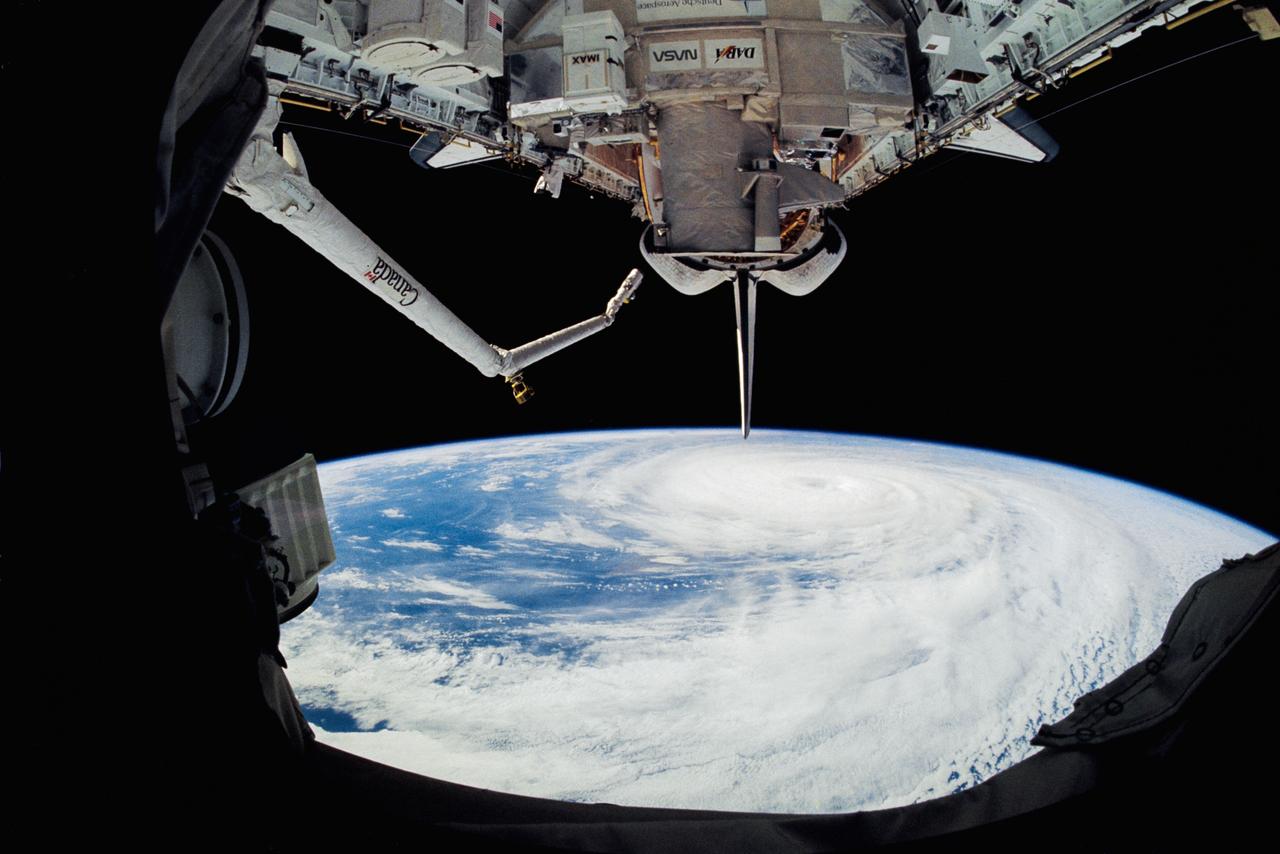
One of the STS-51 astronauts used a "fish-eye" lens on a 35mm cmaera to photograph this view of Hurricane Kenneth in the Pacific Ocean. The Orbiting Retrievable Far and Extreme Ultraviolet Spectrometer/Shuttle Pallet Satellite (ORFEUS/SPAS) is still in the cargo bay. The Remote Manipulator System (RMS) is extended towards the open payload bay.
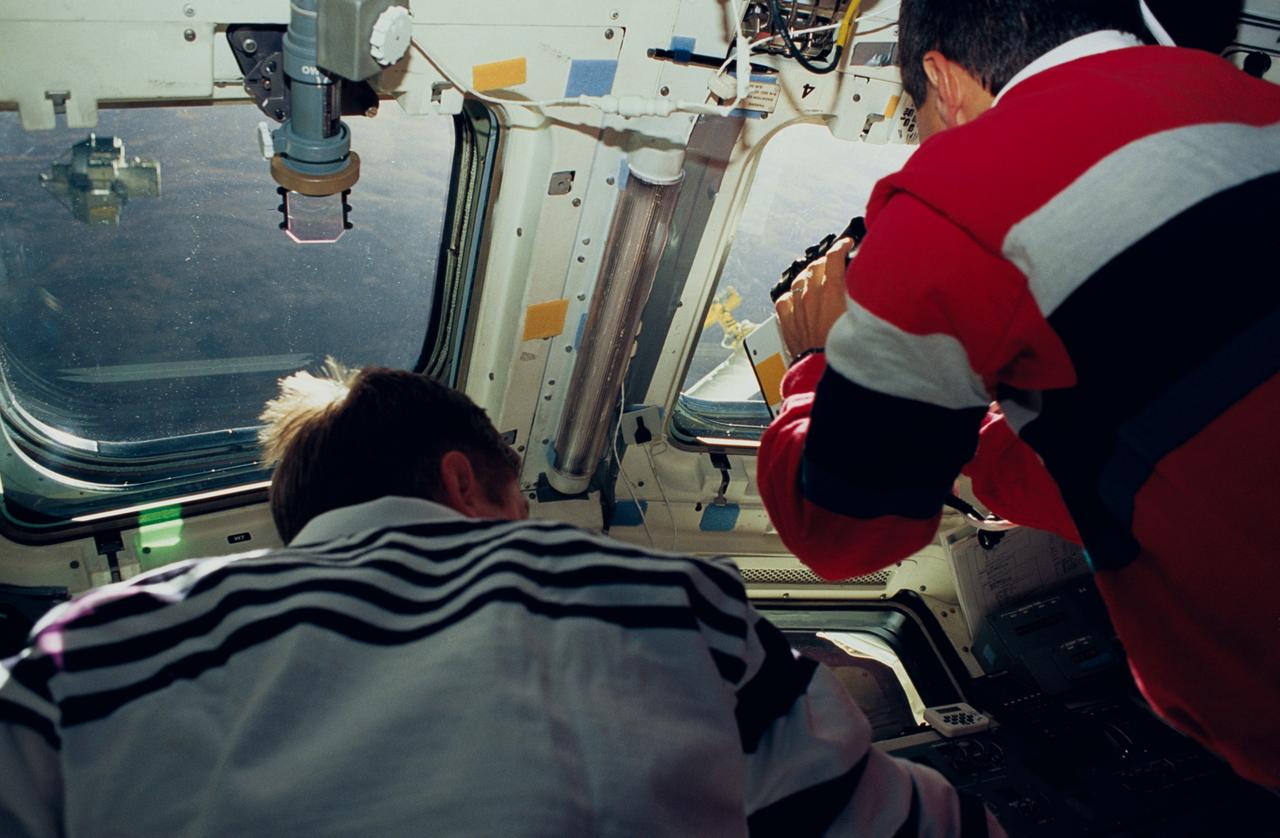
Astronauts Frank L. Culbertson Jr., STS-51 mission commander, and Daniel W. Bursch, mission specialist, are seen on Discovery's flight deck. The two were supporting operations free-flying Orbiting and Retrievable Far and Extreme Ultraviolet Spectrometer (ORFEUS) and its Shuttle Pallet Satellite (SPAS), pictured through the left window.

Three of NASA contributions to the ESA Rosetta mission are pictured here: an ultraviolet spectrometer called Alice top, the Ion and Electron Sensor IES bottom left, and the Microwave Instrument for Rosetta Orbiter MIRO bottom right.
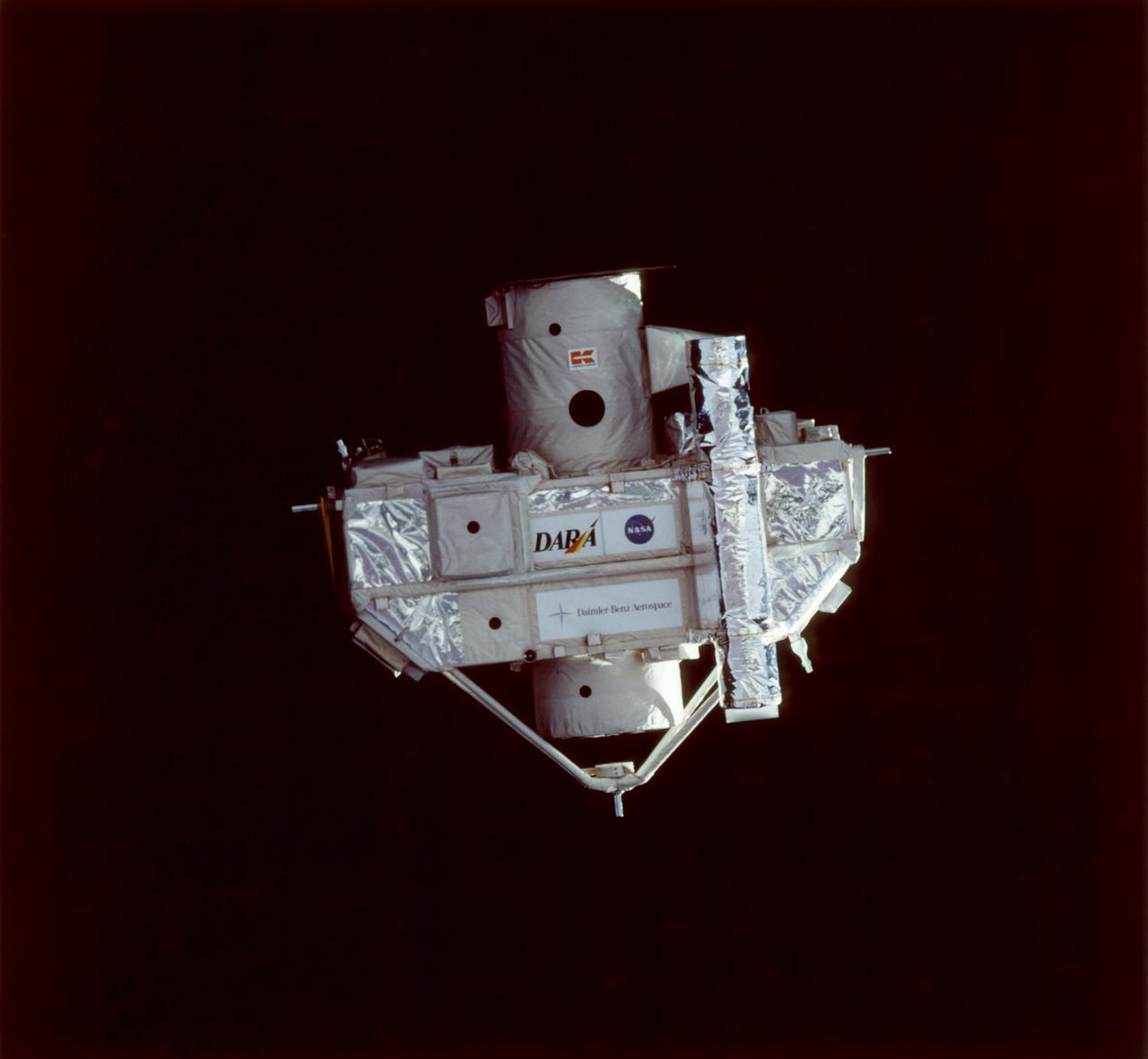
This STS-80 onboard photograph shows the Orbiting Retrievable Far and Extreme Ultraviolet Spectrometer-Shuttle Pallet Satellite II (ORFEUS-SPAS II), photographed during approach by the Space Shuttle Orbiter Columbia for retrieval. Built by the German Space Agency, DARA, the ORFEUS-SPAS II, a free-flying satellite, was dedicated to astronomical observations at very short wavelengths to: investigate the nature of hot stellar atmospheres, investigate the cooling mechanisms of white dwarf stars, determine the nature of accretion disks around collapsed stars, investigate supernova remnants, and investigate the interstellar medium and potential star-forming regions. Some 422 observations of almost 150 astronomical objects were completed, including the Moon, nearby stars, distant Milky Way stars, stars in other galaxies, active galaxies, and quasar 3C273. The STS-80 mission was launched November 19, 1996.
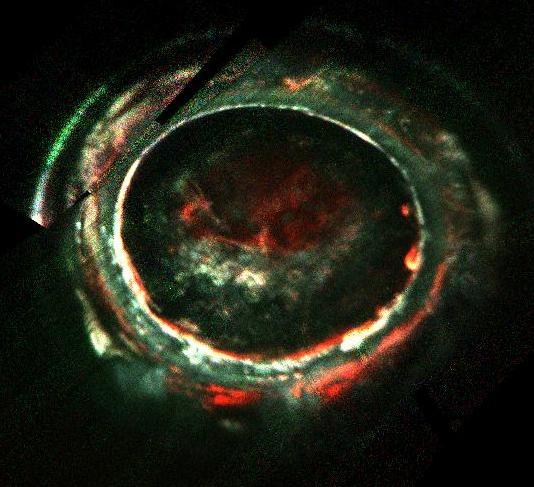
This image, created with data from Juno's Ultraviolet Imaging Spectrometer (UVS), marks the path of Juno's readings of Jupiter's auroras, highlighting the electron measurements that show the discovery of the so-called discrete auroral acceleration processes indicated by the "inverted Vs" in the lower panel (Figure 1). This signature points to powerful magnetic-field-aligned electric potentials that accelerate electrons toward the atmosphere to energies that are far greater than what drive the most intense aurora at Earth. Scientists are looking into why the same processes are not the main factor in Jupiter's most powerful auroras. https://photojournal.jpl.nasa.gov/catalog/PIA21937
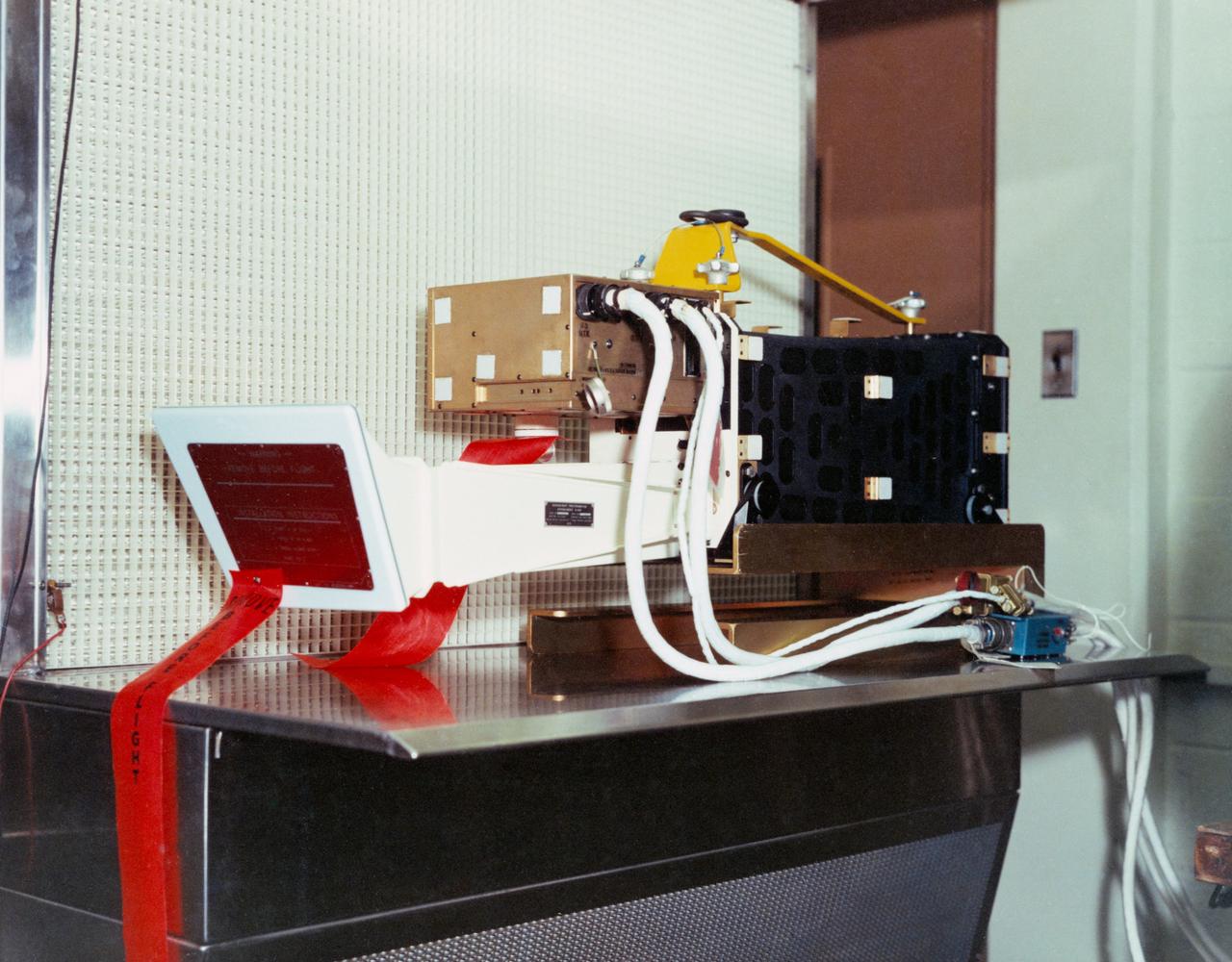
S72-53470 (November 1972) --- The Far-Ultraviolet Spectrometer, Experiment S-169, one of the lunar orbital science experiments which will be mounted in the SIM bay of the Apollo 17 Service Module. Controls for activating and deactivating the experiment and for opening and closing a protective cover are located in the Command Module. Atomic composition, density and scale height for several constituents of the lunar atmosphere will be measured by the far-ultraviolet spectrometer. Solar far-UV radiation reflected from the lunar surface as well as UV radiation emitted by galactic sources also will be detected by the instrument.

This is a reconstructed view of Jupiter's northern lights through the filters of Juno's Ultraviolet Imaging Spectrometer (UVS) instrument on Dec. 11, 2016, as the Juno spacecraft approached Jupiter, passed over its poles, and plunged towards the equator. Such measurements present a real challenge for the spacecraft's science instruments: Juno flies over Jupiter's poles at 30 miles (50 kilometers) per second -- more than 100,000 miles per hour -- speeding past auroral forms in a matter of seconds. https://photojournal.jpl.nasa.gov/catalog/PIA21938
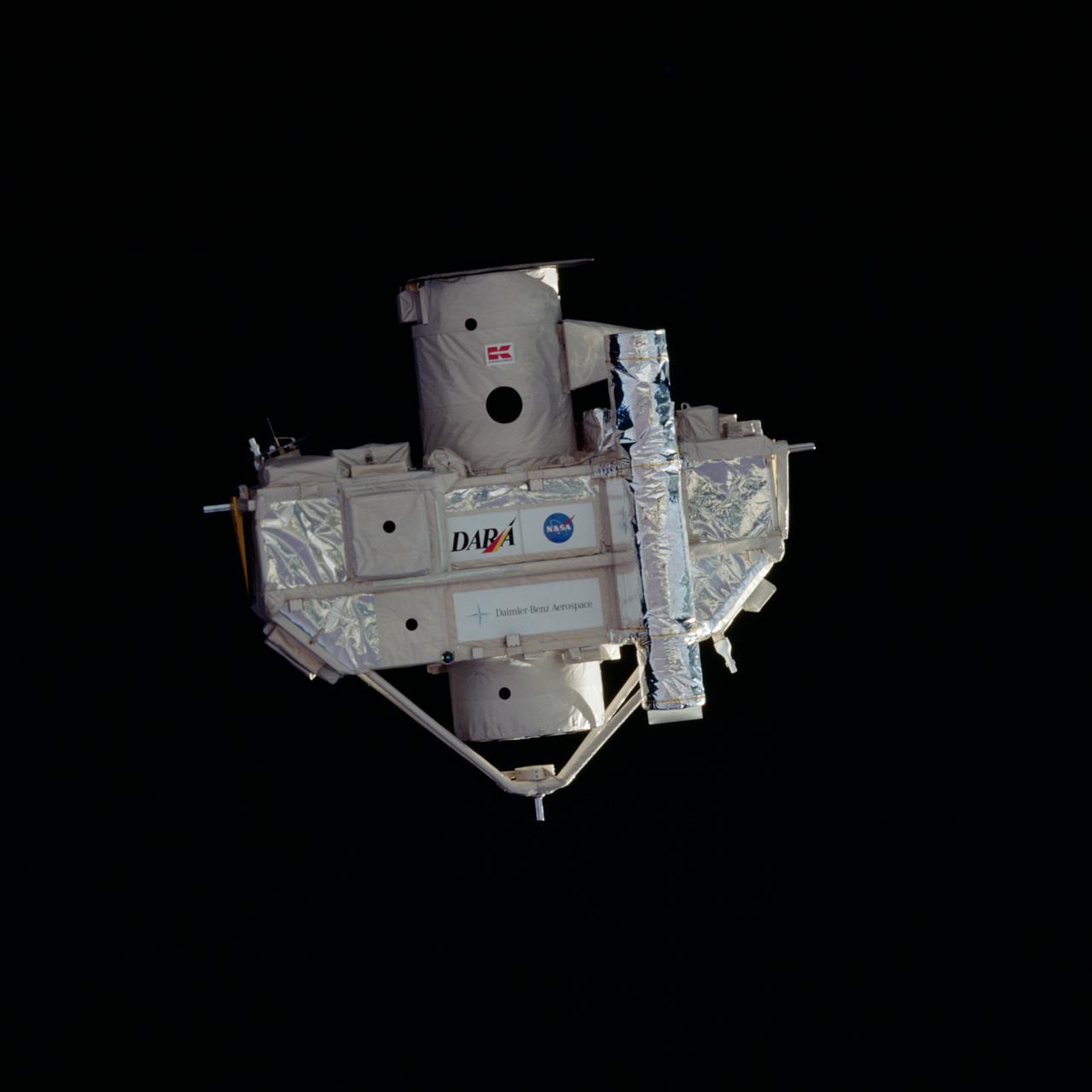
STS080-719-005 (19 Nov.-7 Dec. 1996) --- The Orbiting Retrievable Far and Extreme Ultraviolet Spectrometer-Shuttle Pallet Satellite (ORFEUS-SPAS) appears suspended in space during approach by the space shuttle Columbia.
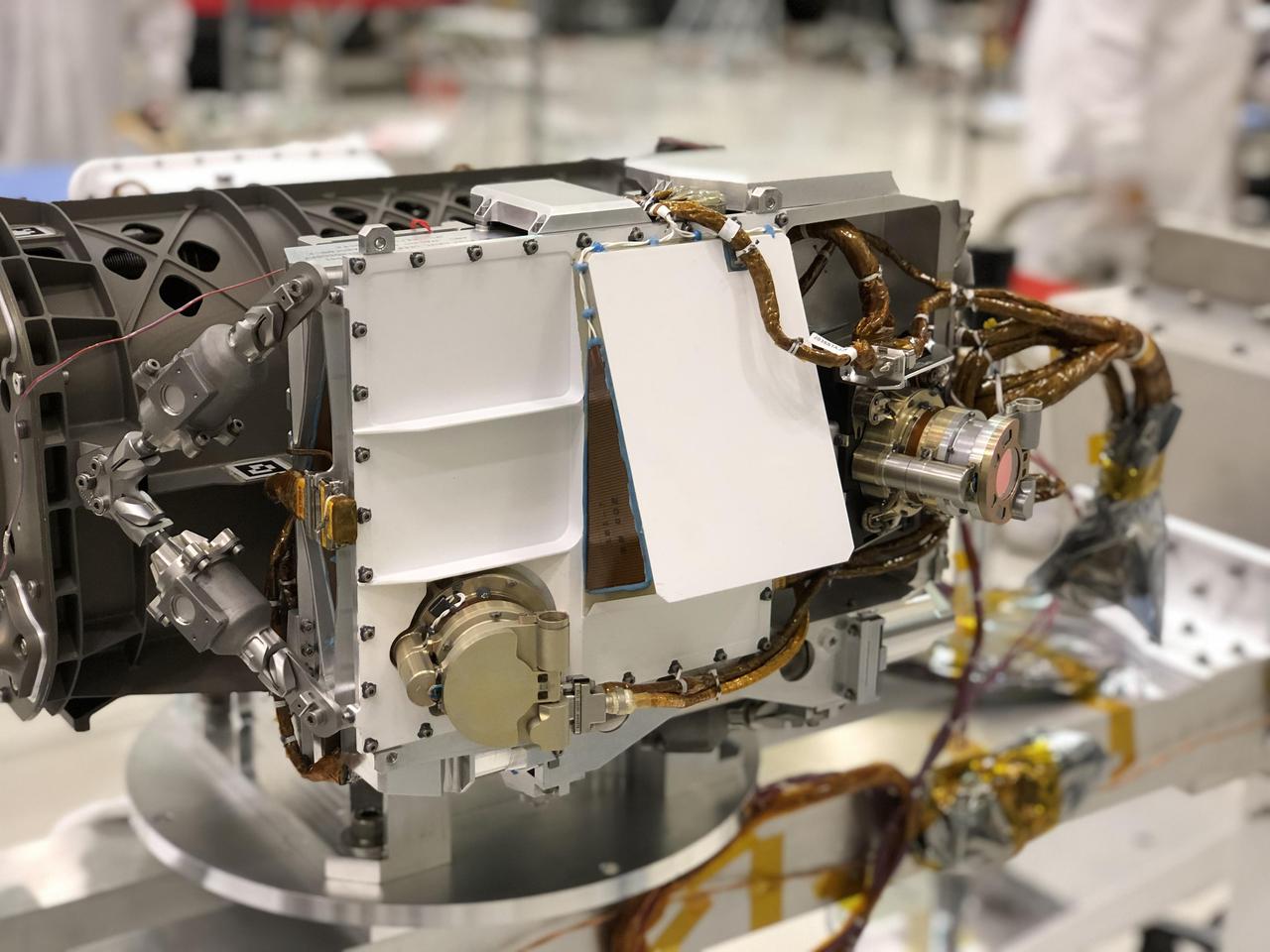
The SHERLOC instrument is located at the end of the robotic arm on NASA's Mars 2020 rover. SHERLOC (short for Scanning Habitable Environments with Raman & Luminescence for Organics and Chemicals) is a spectrometer that will provide fine-scale imaging and use an ultraviolet laser to determine fine-scale mineralogy and detect organic compounds on Mars. https://photojournal.jpl.nasa.gov/catalog/PIA23621
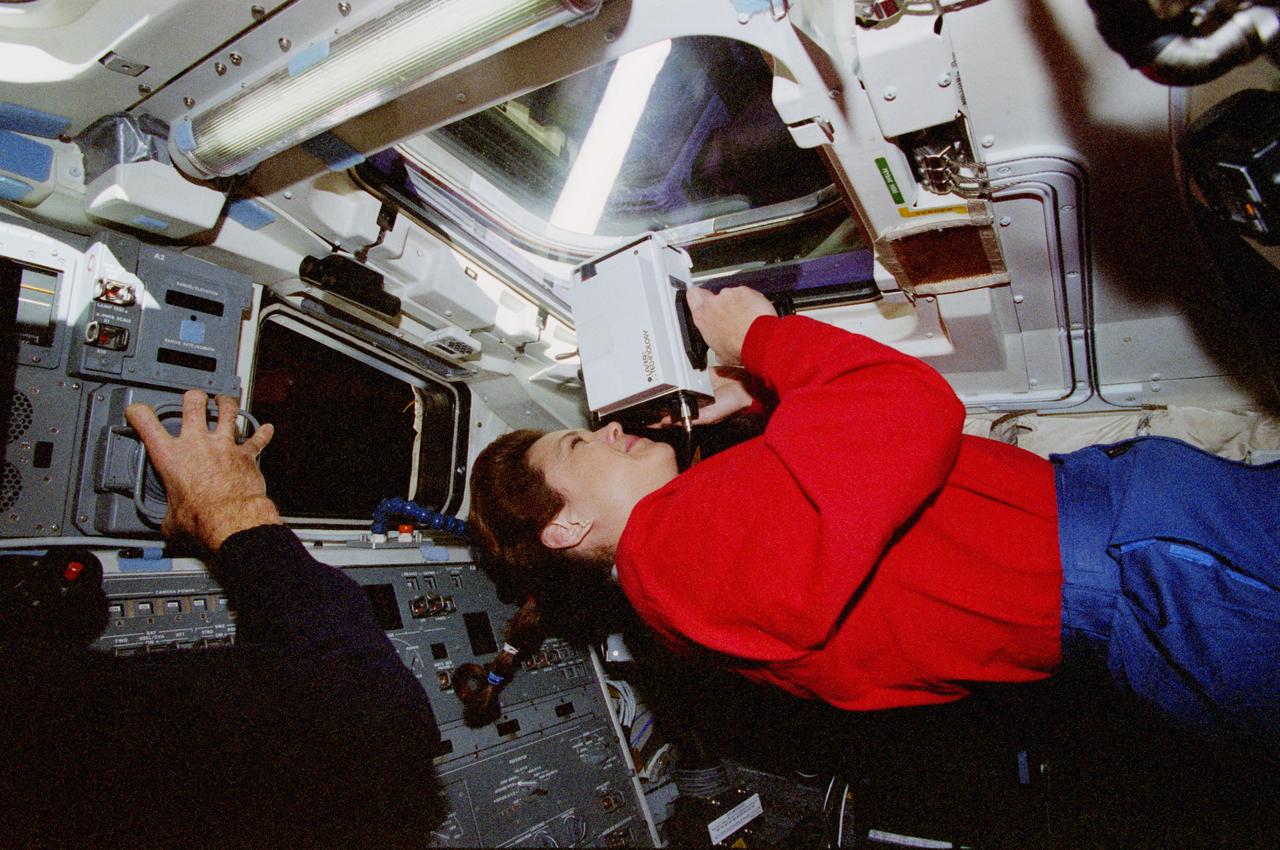
STS080-370-022 (19 Nov.-7 Dec. 1996) --- Astronaut Tamara E. Jernigan, STS-80 mission specialist, uses a laser ranging device during the space shuttle Columbia's rendezvous operations with the Orbiting Retrievable Far and Extreme Ultraviolet Spectrometer - Shuttle Pallet Satellite (ORFEUS-SPAS).
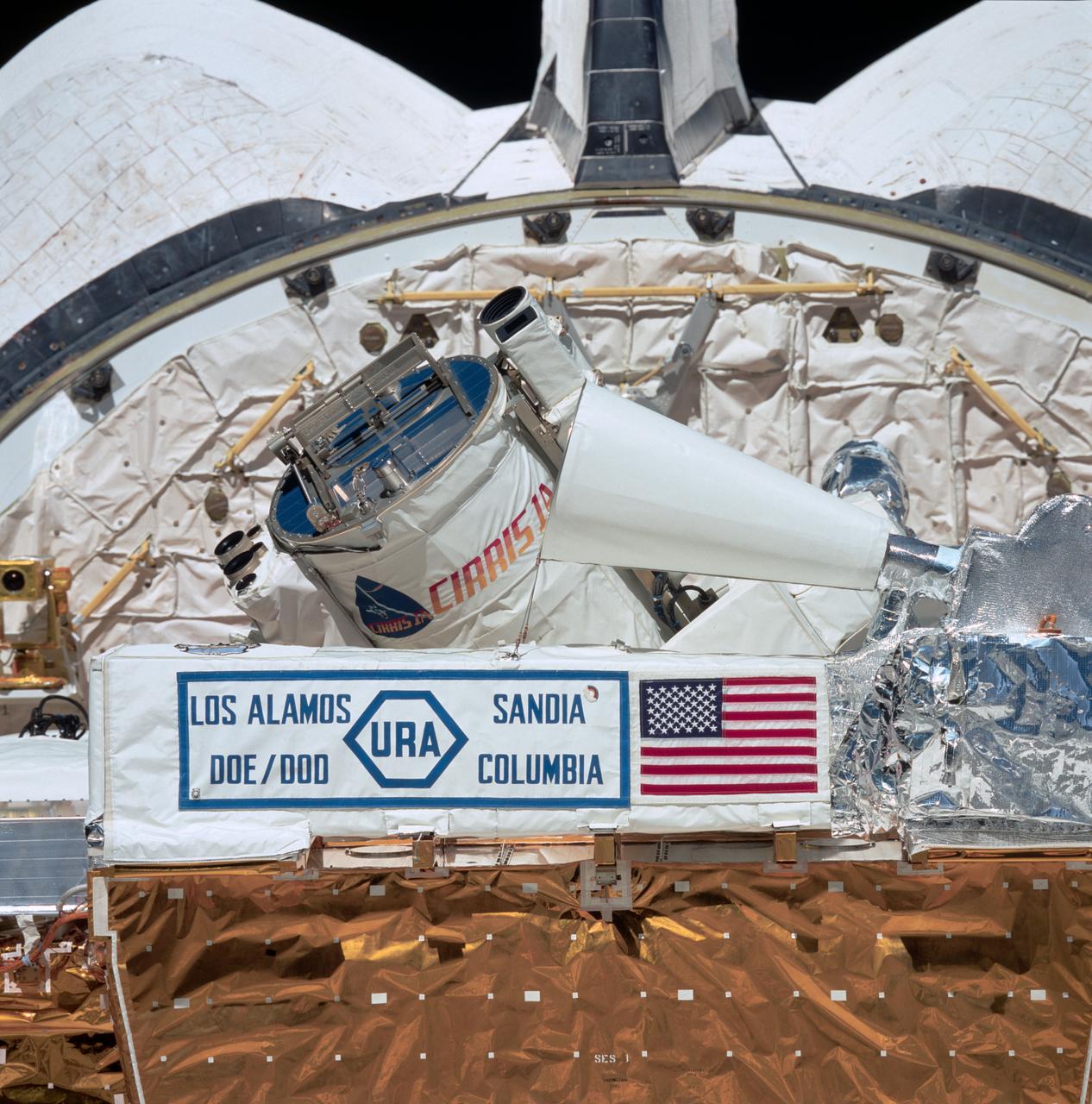
STS039-85-073 (28 April- 6 May 1991) --- This 70mm frame, taken from inside the crew cabin, shows a close-up view of the Air Force Program (AFP) 675 package. AFP-675 consists of the Cryogenic Infrared Radiance Instrumentation for Shuttle (CIRRIS)-1A; Far Ultraviolet Camera (FAR-UV) Experiment; Horizon Ultraviolet Program (HUP); Quadruple Ion Neutral Mass Spectrometer (QINMS); and the Uniformly Redundant Array (URA). Much of that hardware is backdropped here against the aft cargo bay bulkhead of Discovery.
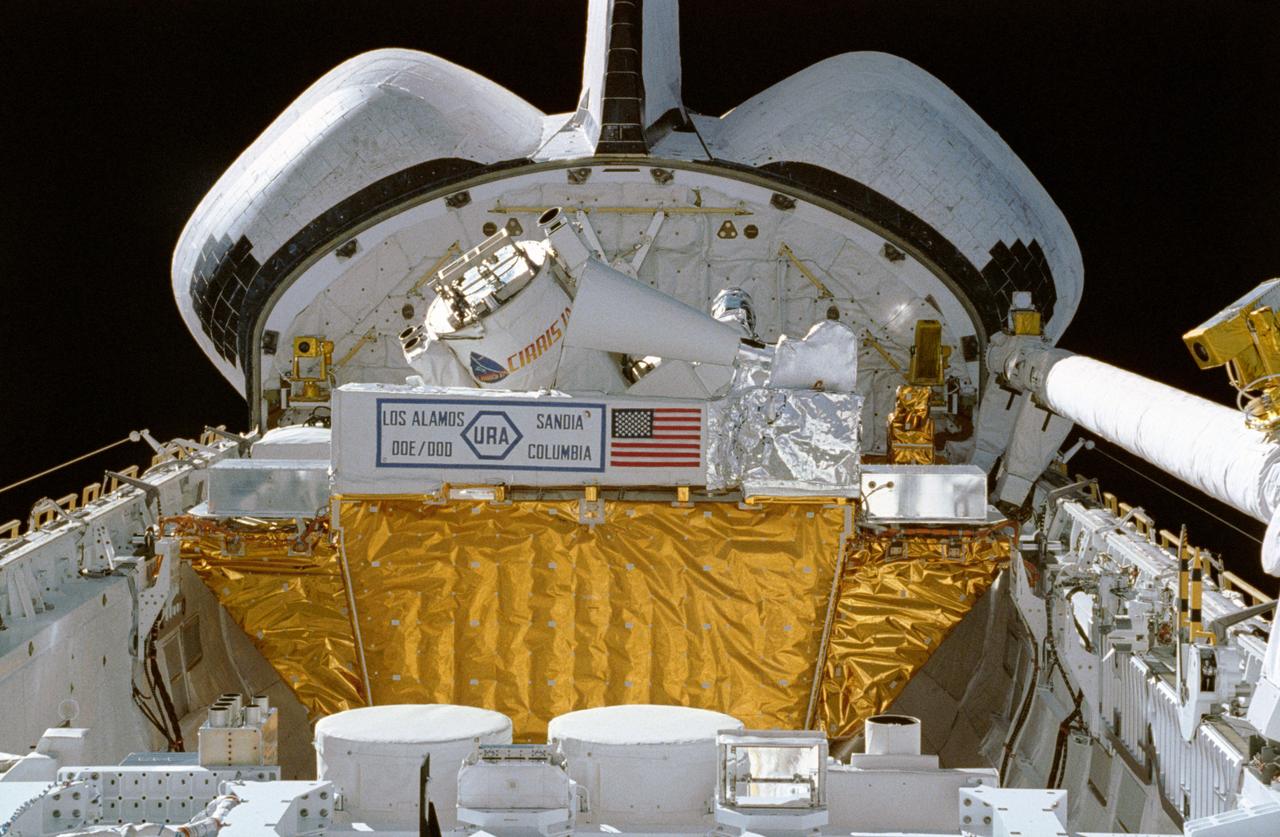
STS039-10-019 (28 April-6 May 1991) --- This 35mm frame, taken from inside the crew cabin, shows some of the cargo in Discovery's payload bay. Seen are the tops of canisters on the STP-1 payload, configured on the STS 39 Hitchhiker carrier; and the Air Force Program (AFP) 675 package. AFP-675 consists of the Cryogenic Infrared Radiance Instrumentation for Shuttle (CIRRIS)-1A; Far Ultraviolet Camera (FAR-UV) Experiment; Horizon Ultraviolet Program (HUP); Quadruple Ion Neutral Mass Spectrometer (QINMS); and the Uniformly Redundant Array (URA).
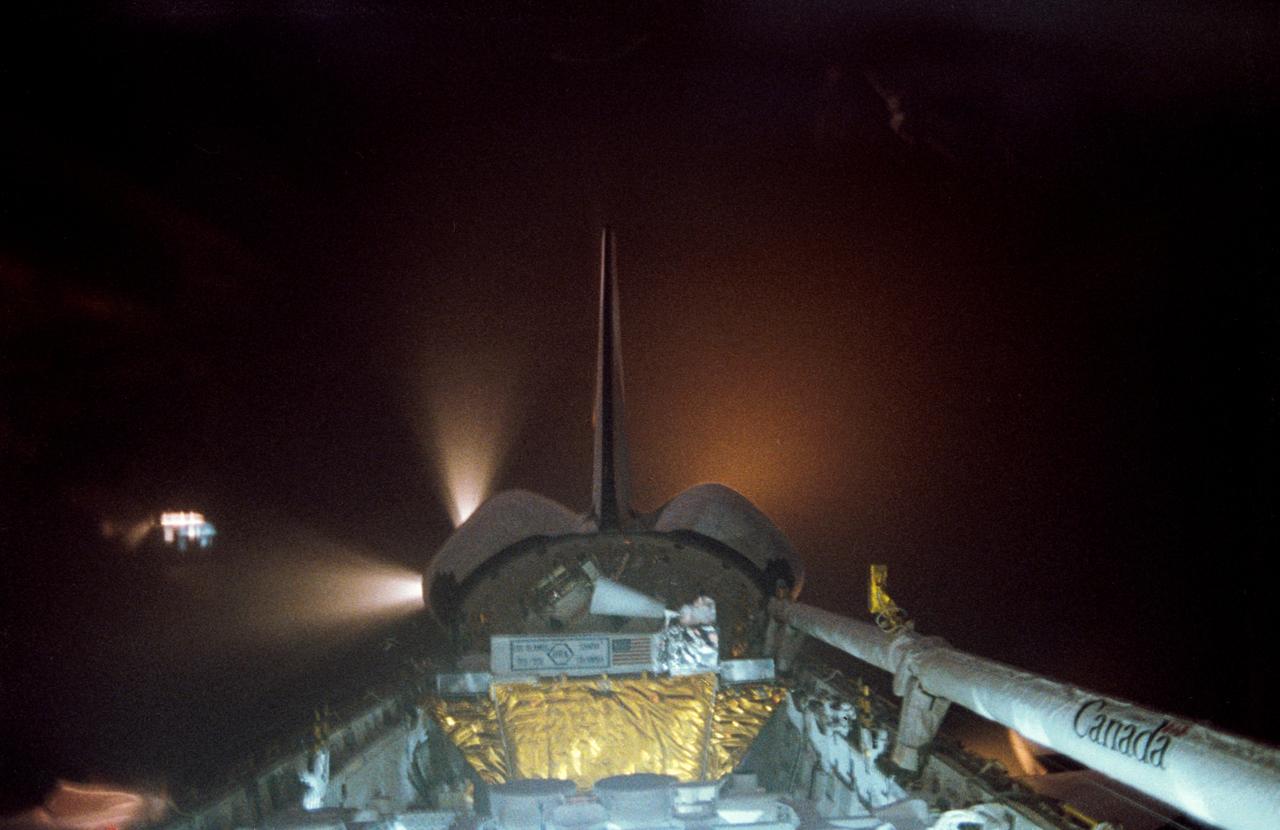
STS039-27-016 (28 April-6 May 1991) --- The Space Shuttle Discovery fires reaction control subsystem (RCS) thrusters in this 35mm frame, taken from inside the crew cabin. Seen in Discovery's payload bay are the tops of cannisters on the STP-1 payload, configured on the STS 39 Hitchhiker carrier; and the Air Force Program (AFP) 675 package. AFP-675 consists of the Cryogenic Infrared Radiance Instrumentation for Shuttle (CIRRIS)-1A; Far Ultraviolet Camera (FAR-UV) Experiment; Horizon Ultraviolet Program (HUP); Quadruple Ion Neutral Mass Spectrometer (QINMS); and the Uniformly Redundant Array (URA).
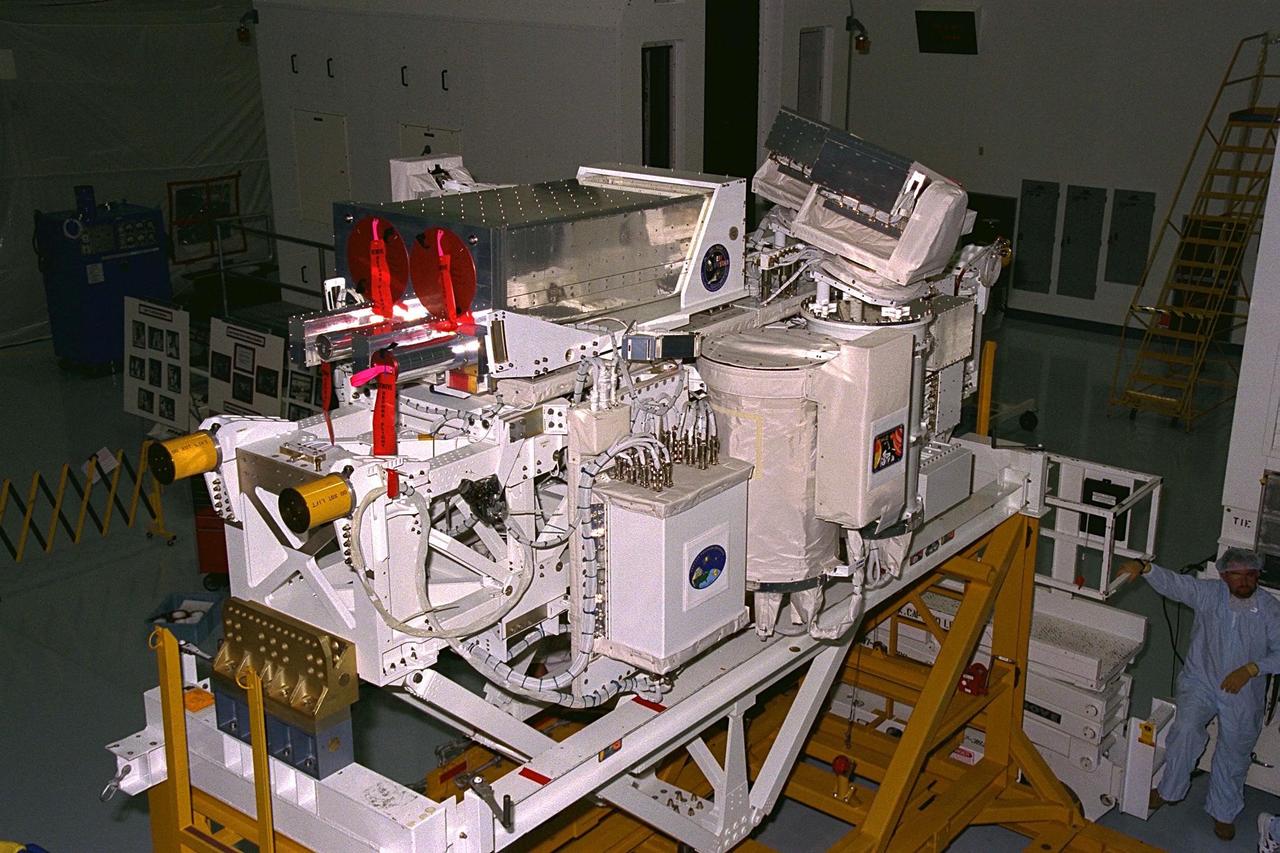
The International Extreme Ultraviolet Hitchhiker-2 (IEH-2) payload rests in a work stand in the Space Station Processing Facility prior to its trip out to Launch Pad 39A for installation into the payload bay of the Space Shuttle Orbiter Discovery for the STS-85 mission. The IEH-2 experiments will study ultraviolet radiation from stars, the sun and in the solar system. The Technology Applications and Science-1 (TAS-1) payload is another series of experiments that will be conducted during the 11-day mission in Discovery’s payload bay. The TAS-1 holds seven separate experiments that will provide data on the Earth’s topography and atmosphere, study the sun’s energy, and test new thermal control devices, as well as several student-developed experiments. Other STS-85 payloads include the Cryogenic Infrared Spectrometers and Telescopes for the Atmosphere-Shuttle Pallet Satellite-2 (CRISTA-SPAS-2). The CRISTA is a system of three telescopes and four spectrometers to measure infrared radiation emitted by the Earth’s middle atmosphere. The CRISTA-SPAS-2 free-flying satellite will be deployed from Discovery and retrieved later in the flight. Also onboard the satellite will be the Middle Atmosphere High Resolution Spectrograph Investigation (MAHRSI) to measure ultraviolet radiation emitted and scattered by the Earth’s atmosphere
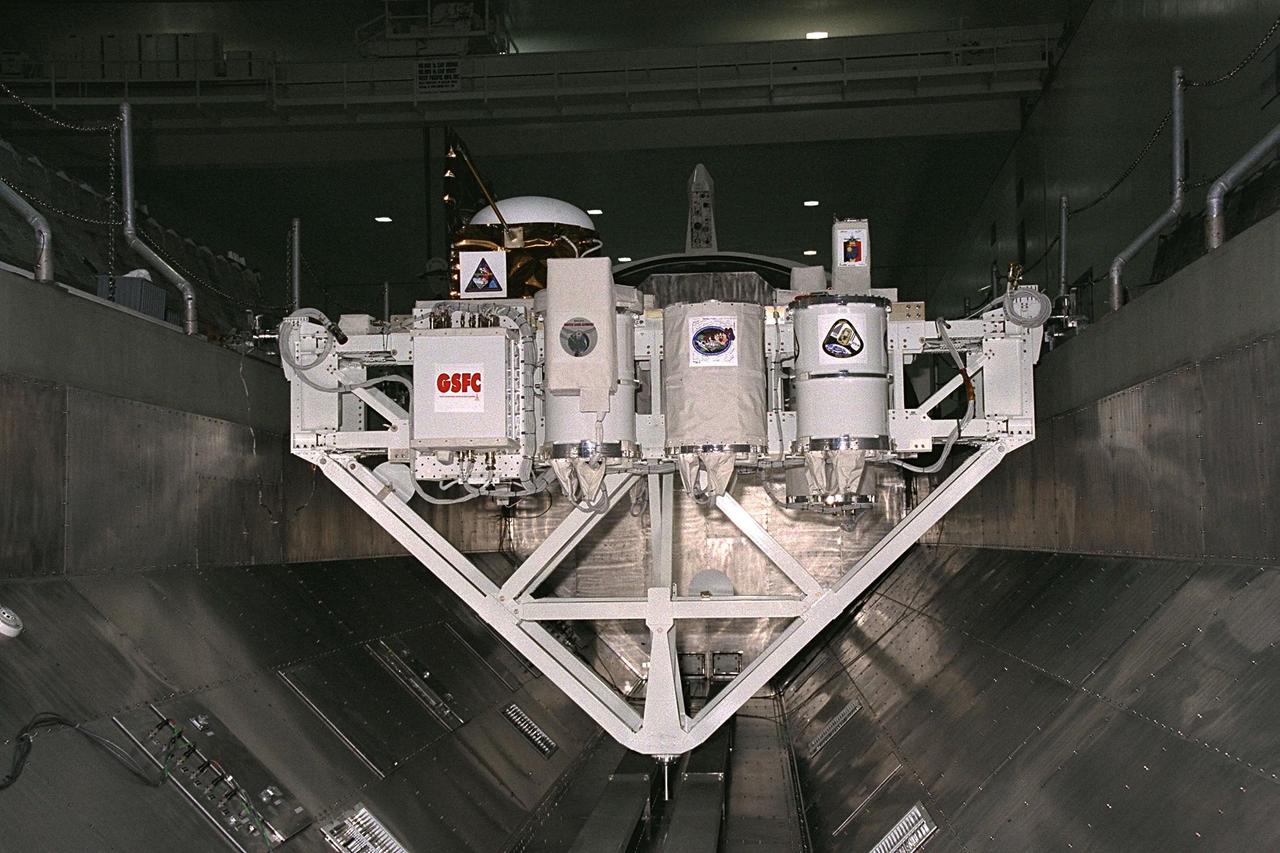
The Technology Applications and Science-1 (TAS-1) payload for the STS-85 mission rests in a payload canister in the Space Station Processing Facility prior to its trip out to Launch Pad 39A for installation into the payload bay of the Space Shuttle Orbiter Discovery. The TAS-1 holds seven separate experiments that will provide data on the Earth’s topography and atmosphere, study the sun’s energy, and test new thermal control devices, as well as several student-developed experiments. Other STS-85 payloads include the Cryogenic Infrared Spectrometers and Telescopes for the Atmosphere-Shuttle Pallet Satellite-2 (CRISTA-SPAS-2). The CRISTA is a system of three telescopes and four spectrometers to measure infrared radiation emitted by the Earth’s middle atmosphere. During the 11-day mission, the CRISTA-SPAS-2 free-flying satellite will be deployed from Discovery and retrieved later in the flight. Also onboard the satellite will be the Middle Atmosphere High Resolution Spectrograph Investigation (MAHRSI) to measure ultraviolet radiation emitted and scattered by the Earth’s atmosphere. The International Extreme Ultraviolet Hitchhiker-2 (IEH-2) will also be in the payload bay. The IEH-2 experiments will study ultraviolet radiation from stars, the sun and in the solar system
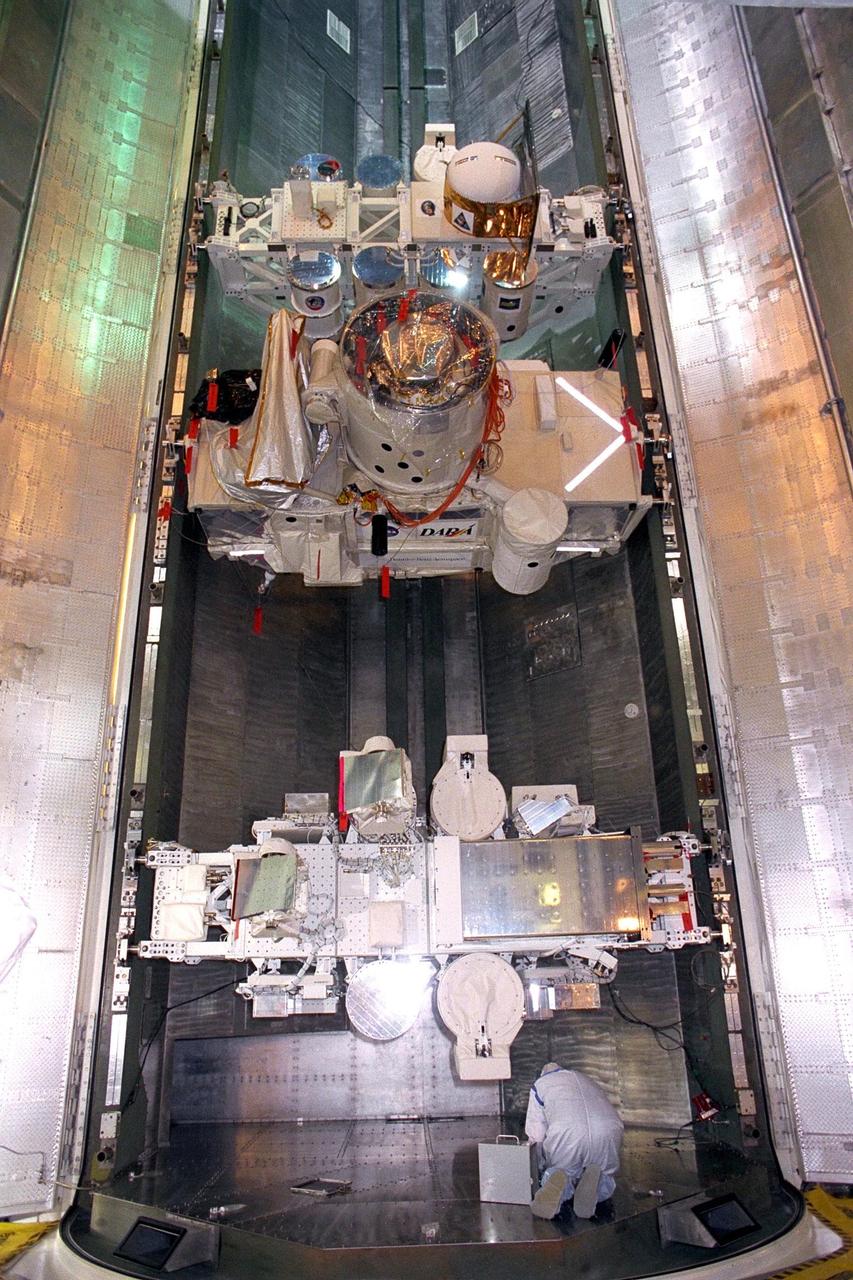
A payload canister in the Payload Changeout Room (PCR) at Launch Pad 39A holds the Cryogenic Infrared Spectrometers and Telescopes for the Atmosphere-Shuttle Pallet Satellite-2 (CRISTA-SPAS-2) payload for the STS-85 mission (center), as well as the Technology Applications and Science-1 (TAS-1) (top) and International Extreme Ultraviolet Hitchhiker-2 (IEH-2) (bottom) payloads. All three will be transferred from the PCR into the payload bay of the Space Shuttle Orbiter Discovery after the space vehicle arrives at the pad. The CRISTA is a system of three telescopes and four spectrometers to measure infrared radiation emitted by the Earth’s middle atmosphere. During the 11-day mission, the CRISTA-SPAS-2 free-flying satellite will be deployed from Discovery and retrieved later in the flight. Also onboard the satellite will be the Middle Atmosphere High Resolution Spectrograph Investigation (MAHRSI) to measure ultraviolet radiation emitted and scattered by the Earth’s atmosphere. The TAS-1 holds seven separate experiments that will provide data on the Earth’s topography and atmosphere, study the sun’s energy, and test new thermal control devices, as well as several student-developed experiments. The IEH-2 experiments will study ultraviolet radiation from stars, the sun and in the solar system
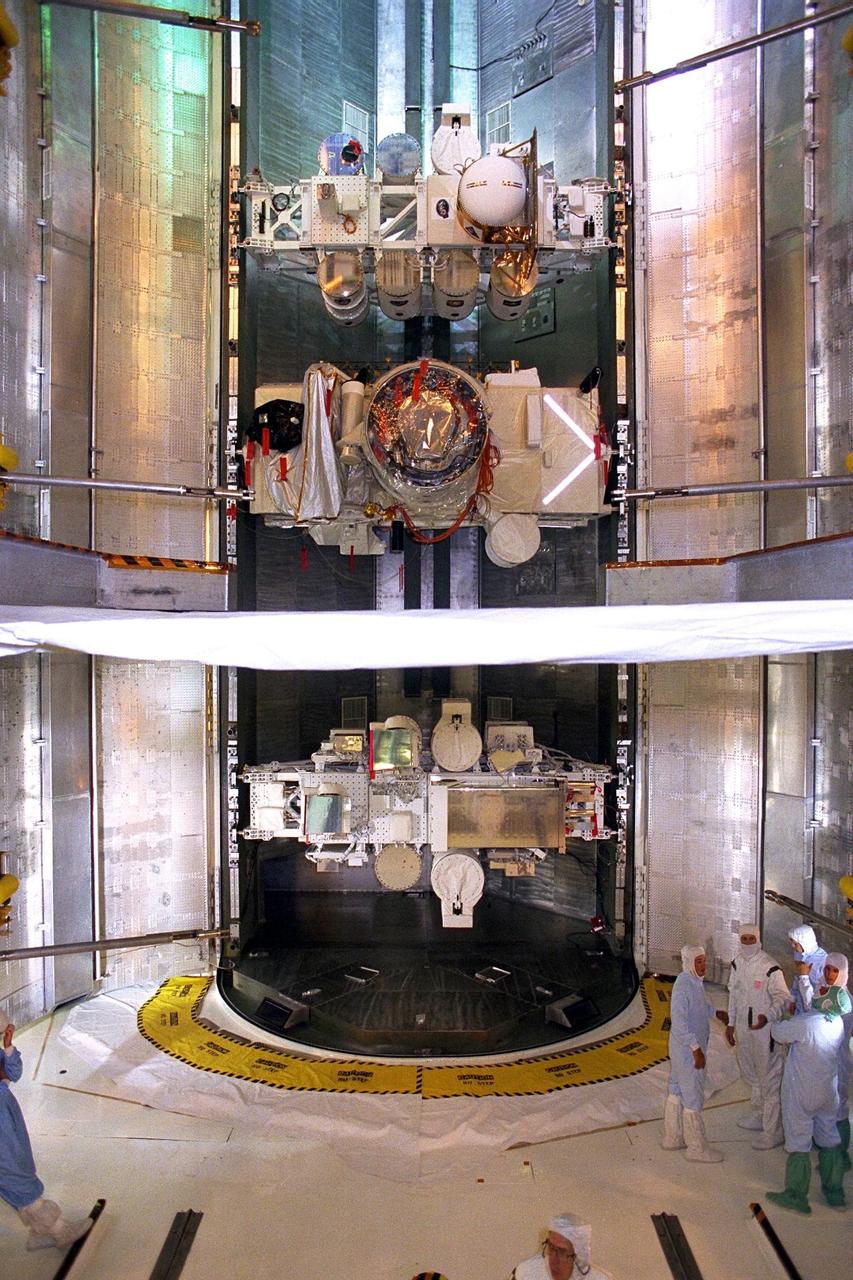
A payload canister in the Payload Changeout Room (PCR) at Launch Pad 39A holds the Cryogenic Infrared Spectrometers and Telescopes for the Atmosphere-Shuttle Pallet Satellite-2 (CRISTA-SPAS-2) payload for the STS-85 mission (center), as well as the Technology Applications and Science-1 (TAS-1) (top) and International Extreme Ultraviolet Hitchhiker-2 (IEH-2) (bottom) payloads. All three will be transferred from the PCR into the payload bay of the Space Shuttle Orbiter Discovery after the space vehicle arrives at the pad. The CRISTA is a system of three telescopes and four spectrometers to measure infrared radiation emitted by the Earth’s middle atmosphere. During the 11-day mission, the CRISTA-SPAS-2 free-flying satellite will be deployed from Discovery and retrieved later in the flight. Also onboard the satellite will be the Middle Atmosphere High Resolution Spectrograph Investigation (MAHRSI) to measure ultraviolet radiation emitted and scattered by the Earth’s atmosphere. The TAS-1 holds seven separate experiments that will provide data on the Earth’s topography and atmosphere, study the sun’s energy, and test new thermal control devices, as well as several student-developed experiments. The IEH-2 experiments will study ultraviolet radiation from stars, the sun and in the solar system
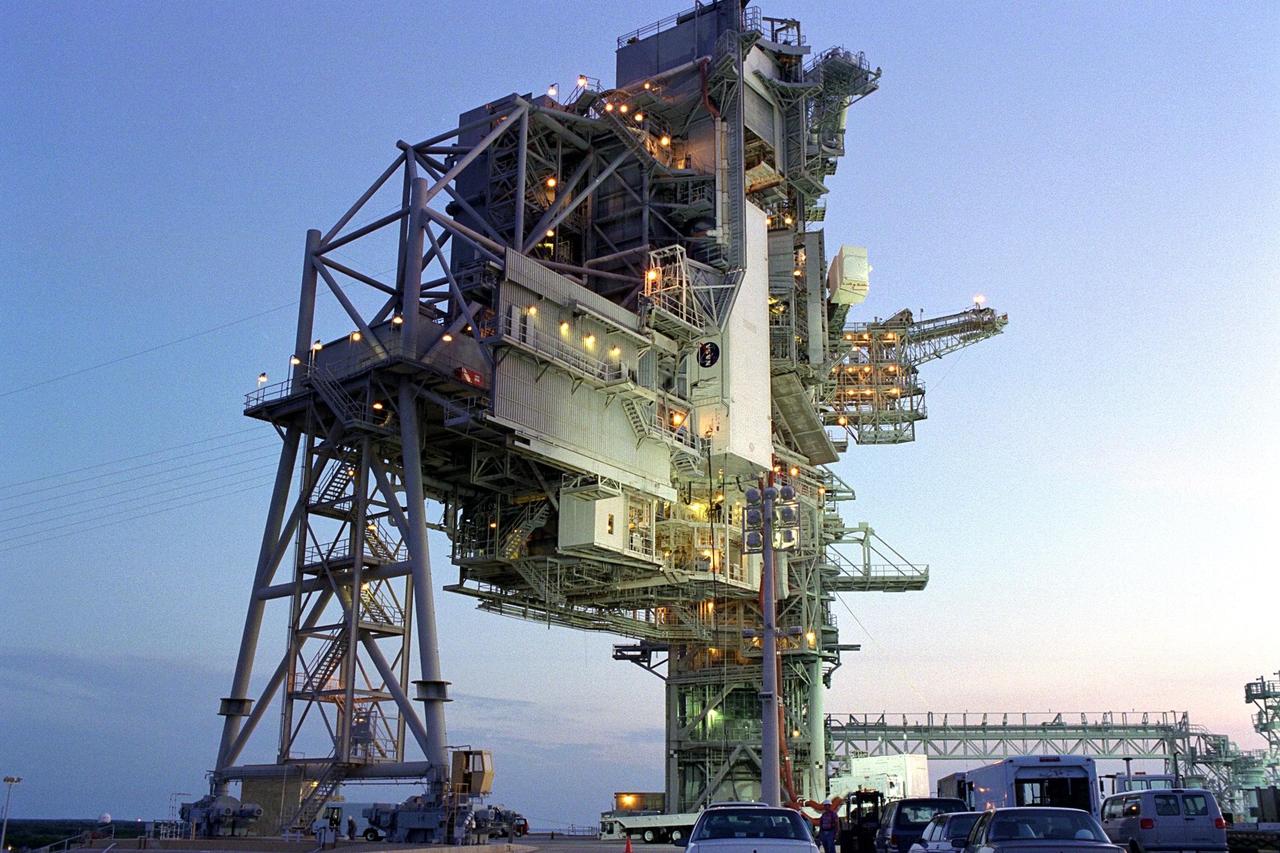
KENNEDY SPACE CENTER, Fla. -- The payload canister containing the Cryogenic Infrared Spectrometers and Telescopes for the Atmosphere-Shuttle Pallet Satellite-2 (CRISTA-SPAS-2) payload for the STS-85 mission is hoisted to the Payload Changeout Room (PCR) at Launch Pad 39A. Also in the canister are the Technology Applications and Science-1 (TAS-1) and International Extreme Ultraviolet Hitchhiker-2 (IEH-2) payloads. All three will be transferred from the PCR into the payload bay of the Space Shuttle Orbiter Discovery after the space vehicle arrives at the pad. The CRISTA is a system of three telescopes and four spectrometers to measure infrared radiation emitted by the Earth’s middle atmosphere. During the 11-day mission, the CRISTA-SPAS-2 free-flying satellite will be deployed from Discovery and retrieved later in the flight. Also onboard the satellite will be the Middle Atmosphere High Resolution Spectrograph Investigation (MAHRSI) to measure ultraviolet radiation emitted and scattered by the Earth’s atmosphere. The TAS-1 holds seven separate experiments that will provide data on the Earth’s topography and atmosphere, study the sun’s energy, and test new thermal control devices, as well as several student-developed experiments. The IEH-2 experiments will study ultraviolet radiation from stars, the sun and in the solar system
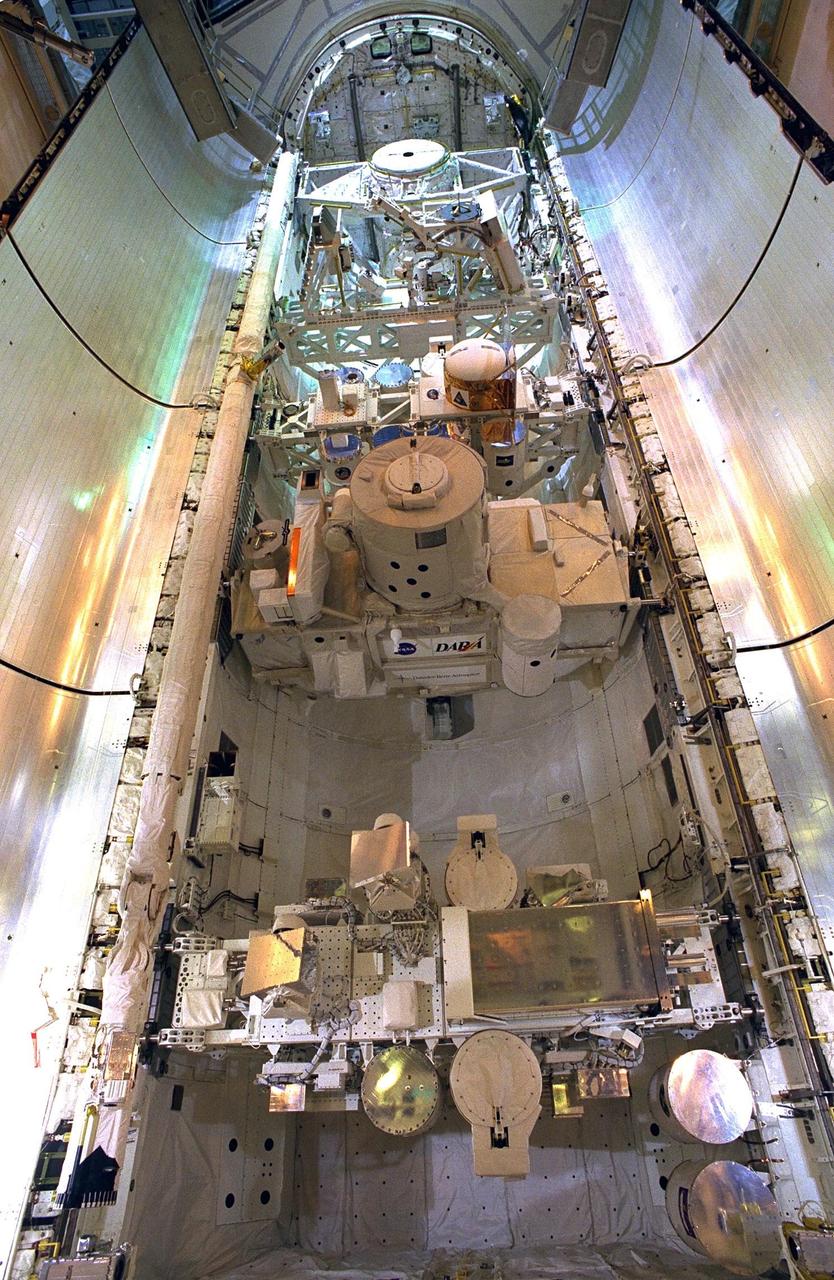
KENNEDY SPACE CENTER, FLA. -- The final tasks to prepare the Cryogenic Infrared Spectrometers and Telescopes for the Atmosphere-Shuttle Pallet Satellite-2 (CRISTA-SPAS-2) payload for the STS-85 mission are completed aboard Discovery at Launch Complex 39A. The CRISTA is a system of three telescopes and four spectrometers to measure infrared radiation emitted by the Earth’s middle atmosphere. During the 11-day mission, the CRISTA-SPAS-2 free-flying satellite will be deployed from Discovery and retrieved later in the flight. Also onboard the satellite will be the Middle Atmosphere High Resolution Spectrograph Investigation (MAHRSI) to measure ultraviolet radiation emitted and scattered by the Earth’s atmosphere.
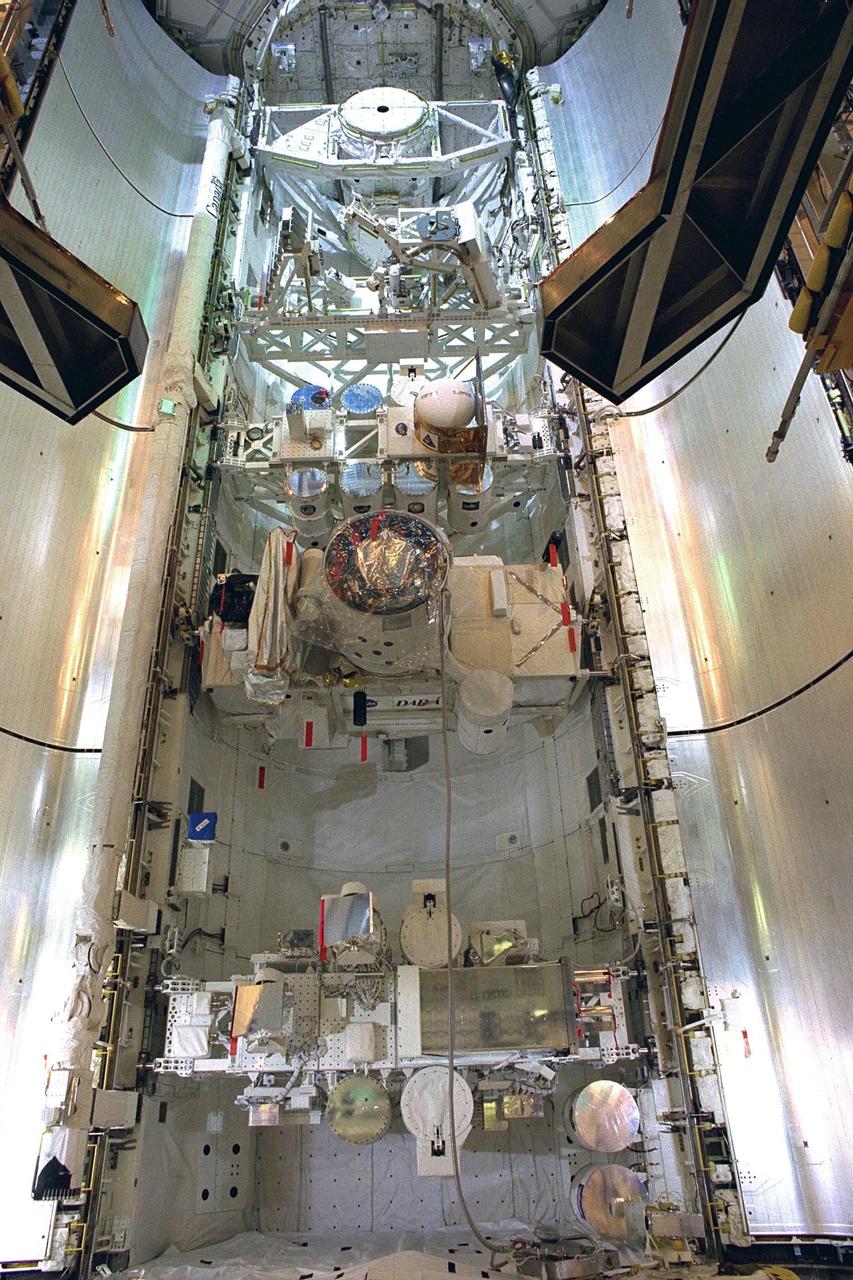
KENNEDY SPACE CENTER, FLA. -- Space Shuttle orbiter Discovery's payload bay doors are closed in preparation for the flight of mission STS-85. The payload includes the Cryogenic Infrared Spectrometers and Telescopes for the Atmosphere-Shuttle Pallet Satellite-2 (CRISTA-SPAS-2). The CRISTA is a system of three telescopes and four spectrometers to measure infrared radiation emitted by the Earth’s middle atmosphere. During the 11-day mission, the CRISTA-SPAS-2 free-flying satellite will be deployed from Discovery and retrieved later in the flight. Also onboard the satellite will be the Middle Atmosphere High Resolution Spectrograph Investigation (MAHRSI) to measure ultraviolet radiation emitted and scattered by the Earth’s atmosphere.
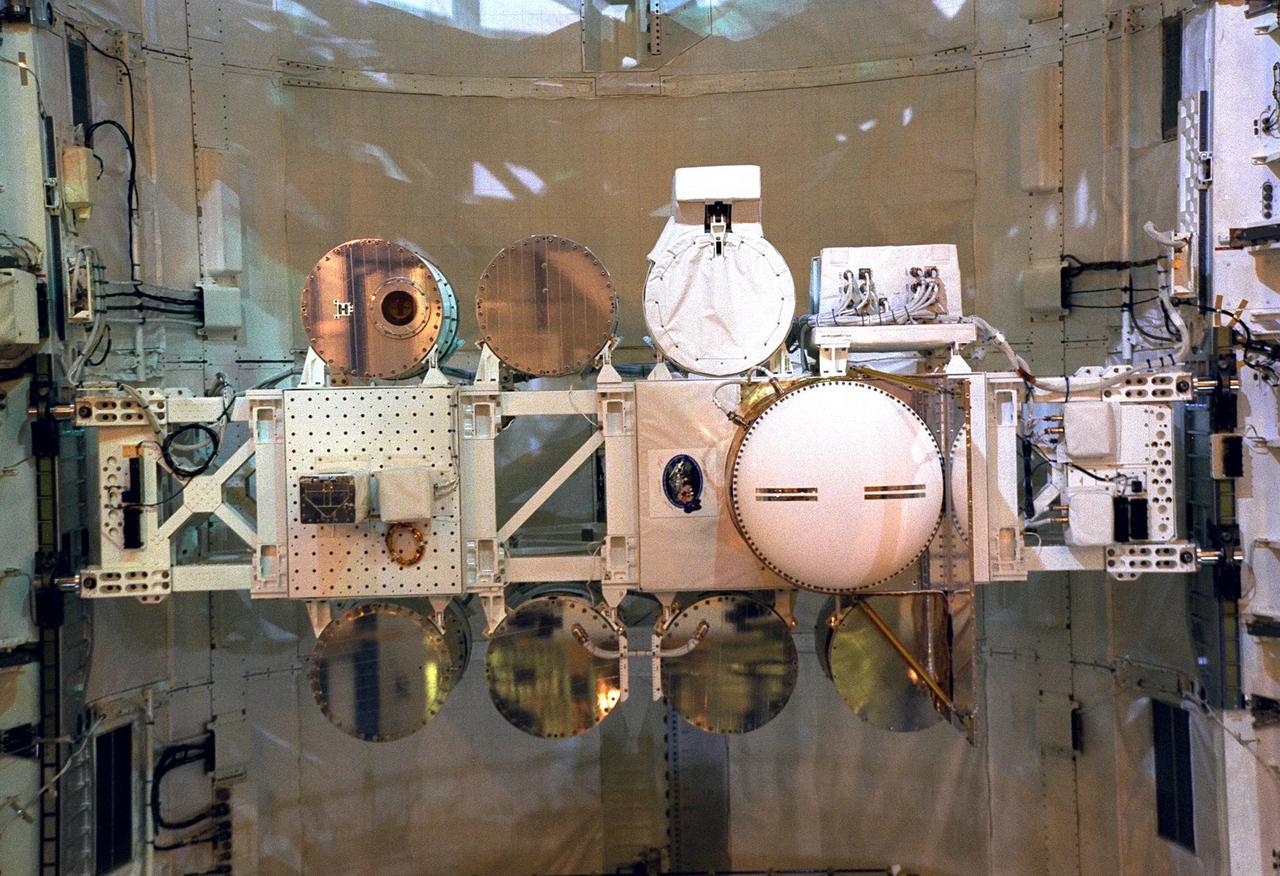
KENNEDY SPACE CENTER, FLA. -- The final tasks to prepare the Cryogenic Infrared Spectrometers and Telescopes for the Atmosphere-Shuttle Pallet Satellite-2 (CRISTA-SPAS-2) payload for the STS-85 mission are completed aboard Discovery at Launch Complex 39A. The CRISTA is a system of three telescopes and four spectrometers to measure infrared radiation emitted by the Earth’s middle atmosphere. During the 11-day mission, the CRISTA-SPAS-2 free-flying satellite will be deployed from Discovery and retrieved later in the flight. Also onboard the satellite will be the Middle Atmosphere High Resolution Spectrograph Investigation (MAHRSI) to measure ultraviolet radiation emitted and scattered by the Earth’s atmosphere.
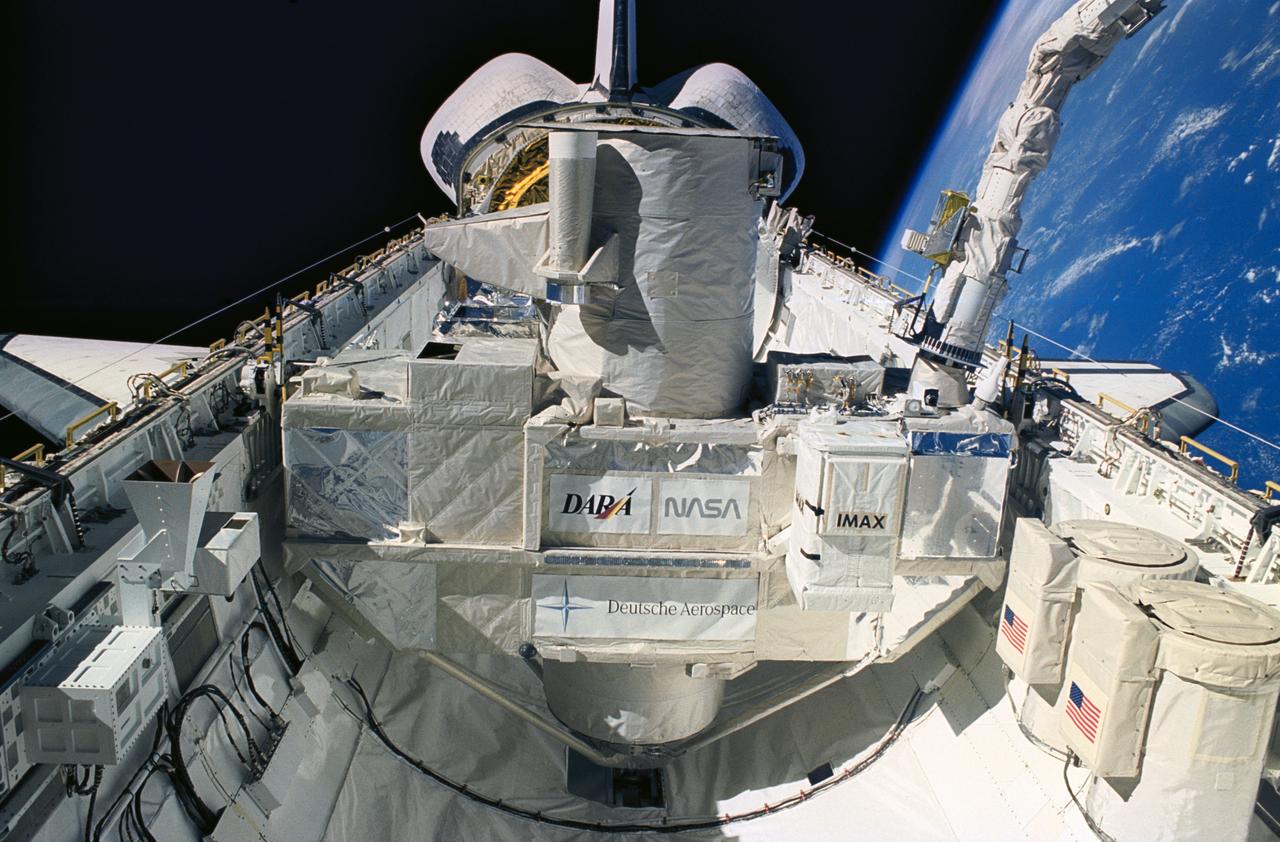
STS051-15-035 (19 Sept 1993) --- Backdropped against black space and the blue and white Earth, the Orbiting Retrievable Far and Extreme Ultraviolet Spectrometer (ORFEUS) and its Shuttle Pallet Satellite (SPAS) are pictured during berthing in Discovery's cargo bay. The free-flying craft had spent several days orbiting at a distance from Discovery with several experiments in operation. Here, the satellite is still in the grasp of the Canadian-built Remote Manipulator System (RMS), which was used also for the earlier deployment.
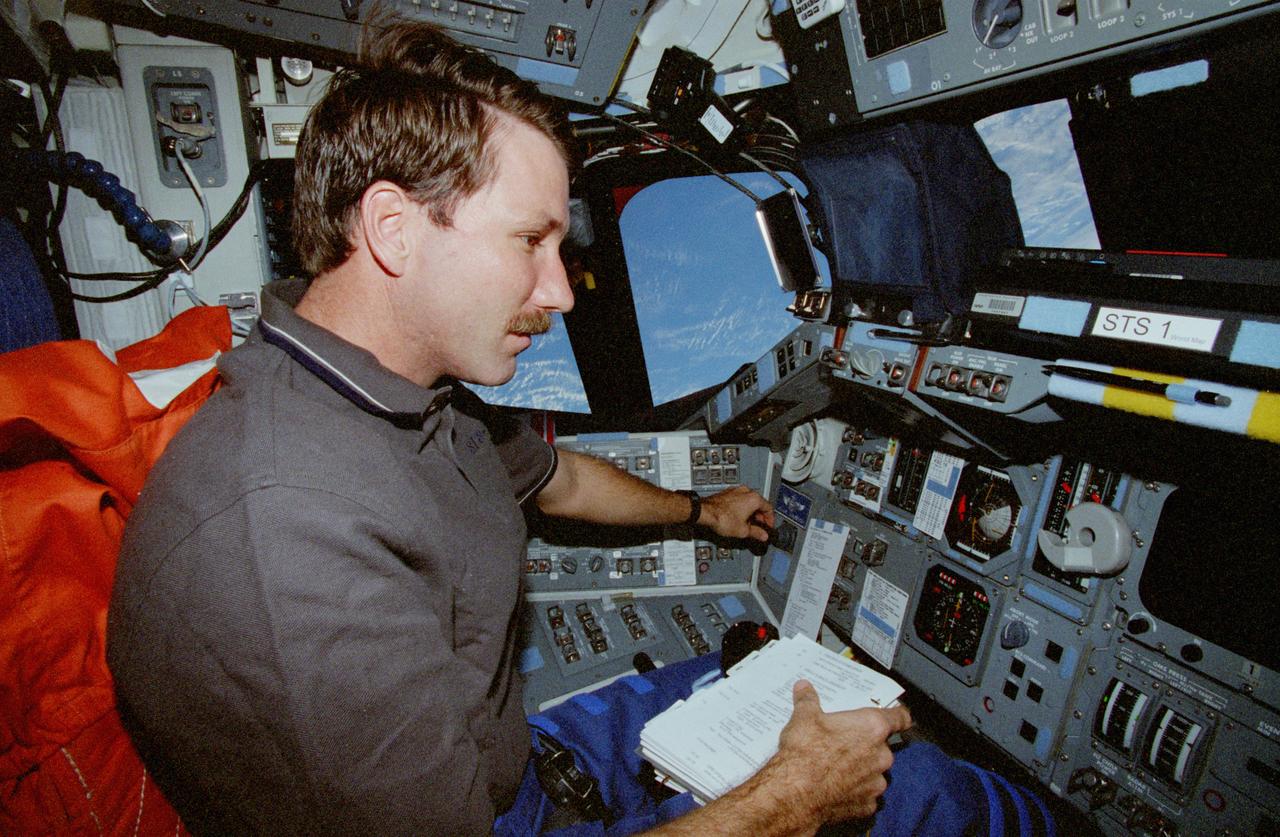
STS080-341-032 (19 Nov.-7 Dec. 1996) --- Astronaut Kent V. Rominger, STS-80 pilot, occupies the commander's station aboard the space shuttle Columbia during station keeping operations with the Orbiting Retrievable Far and Extreme Ultraviolet Spectrometer-Shuttle Pallet Satellite (ORFEUS-SPAS). Earth, actually some 190 nautical miles away, appears to be just beyond arm's length on Columbia's port side.
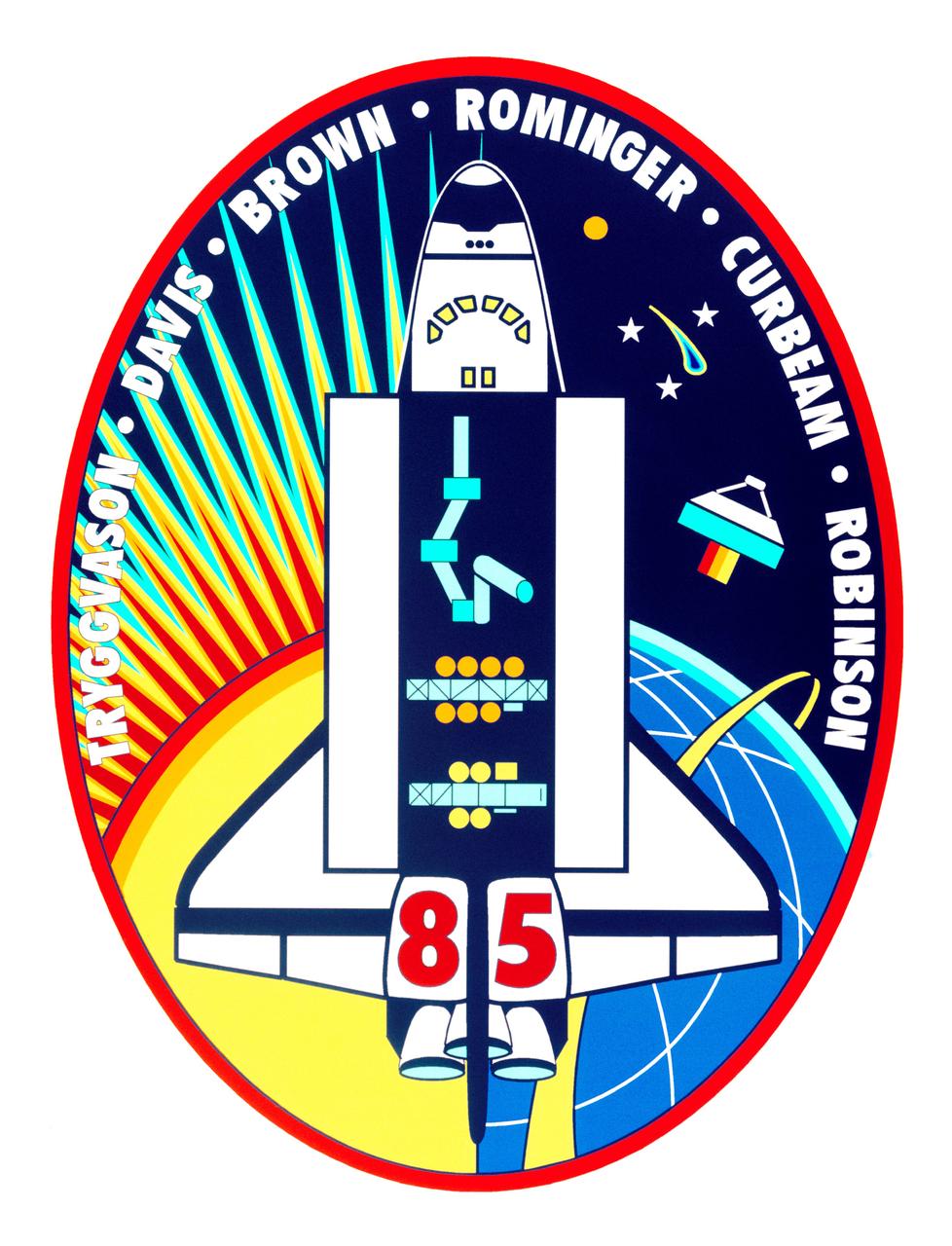
The mission patch for STS-85 is designed to reflect the broad range of science and engineering payloads on the flight. The primary objectives of the mission were to measure chemical constituents in Earth’s atmosphere with a free-flying satellite and to flight-test a new Japanese robotic arm designed for use on the International Space Station (ISS). STS-85 was the second flight of the satellite known as Cryogenic Infrared Spectrometers and Telescopes for the Atmosphere-Shuttle Pallet Satellite-2 CRISTA-SPAS-02. CRISTA, depicted on the right side of the patch pointing its trio of infrared telescopes at Earth’s atmosphere, stands for Cryogenic Infrared Spectrometers and Telescopes for the Atmosphere. The high inclination orbit is shown as a yellow band over Earth’s northern latitudes. In the Space Shuttle Discovery’s open payload bay an enlarged version of the Japanese National Space Development Agency’s (NASDA) Manipulator Flight Demonstration (MFD) robotic arm is shown. Also shown in the payload bay are two sets of multi-science experiments: the International Extreme Ultraviolet Hitchhiker (IEH-02) nearest the tail and the Technology Applications and Science (TAS-01) payload. Jupiter and three stars are shown to represent sources of ultraviolet energy in the universe. Comet Hale-Bopp, which was visible from Earth during the mission, is depicted at upper right. The left side of the patch symbolizes daytime operations over the Northern Hemisphere of Earth and the solar science objectives of several of the payloads.
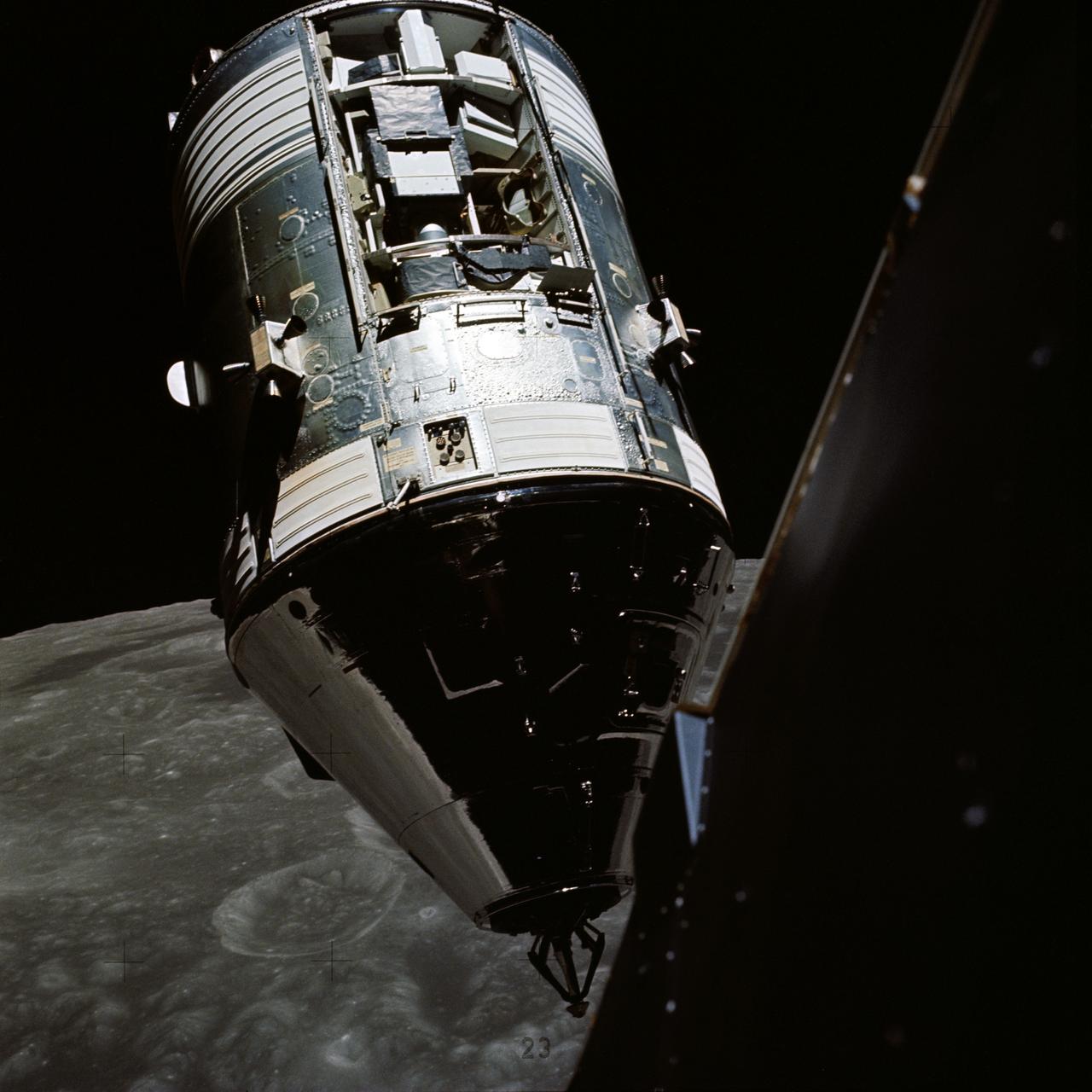
AS17-145-22254 (14 Dec. 1972) --- An excellent view of the Apollo 17 Command and Service Modules (CSM) photographed from the Lunar Module (LM) "Challenger" during rendezvous and docking maneuvers in lunar orbit. The LM ascent stage, with astronauts Eugene A. Cernan and Harrison H. Schmitt aboard, had just returned from the Taurus-Littrow landing site on the lunar surface. Astronaut Ronald E. Evans remained with the CSM in lunar orbit. Note the exposed Scientific Instrument Module (SIM) Bay in Sector 1 of the Service Module (SM). Three experiments are carried in the SIM bay: S-209 lunar sounder, S-171 infrared scanning spectrometer, and the S-169 far-ultraviolet spectrometer. Also mounted in the SIM bay are the panoramic camera, mapping camera and laser altimeter used in service module photographic tasks. A portion of the LM is on the right.

This image from NASA MESSENGER spacecraft is stitched together from thousands of observations made over the past 4 years by the MASCS/UVVS instrument, which measures sunlight scattered off of Mercury tenuous atmosphere. Scattered sunlight gives the sodium a bright orange glow. This scattering process also gives sodium atoms a push - this "radiation pressure" is strong enough, during parts of Mercury's year, to strip the atmosphere and give Mercury a long glowing tail. Someone standing on Mercury's nightside at the right time of year would see a faint orange similar to a city sky illuminated by sodium lamps! Instrument: Mercury Atmospheric and Surface Composition Spectrometer (MASCS)/Ultraviolet and Visible Spectrometer (UVVS) http://photojournal.jpl.nasa.gov/catalog/PIA19418
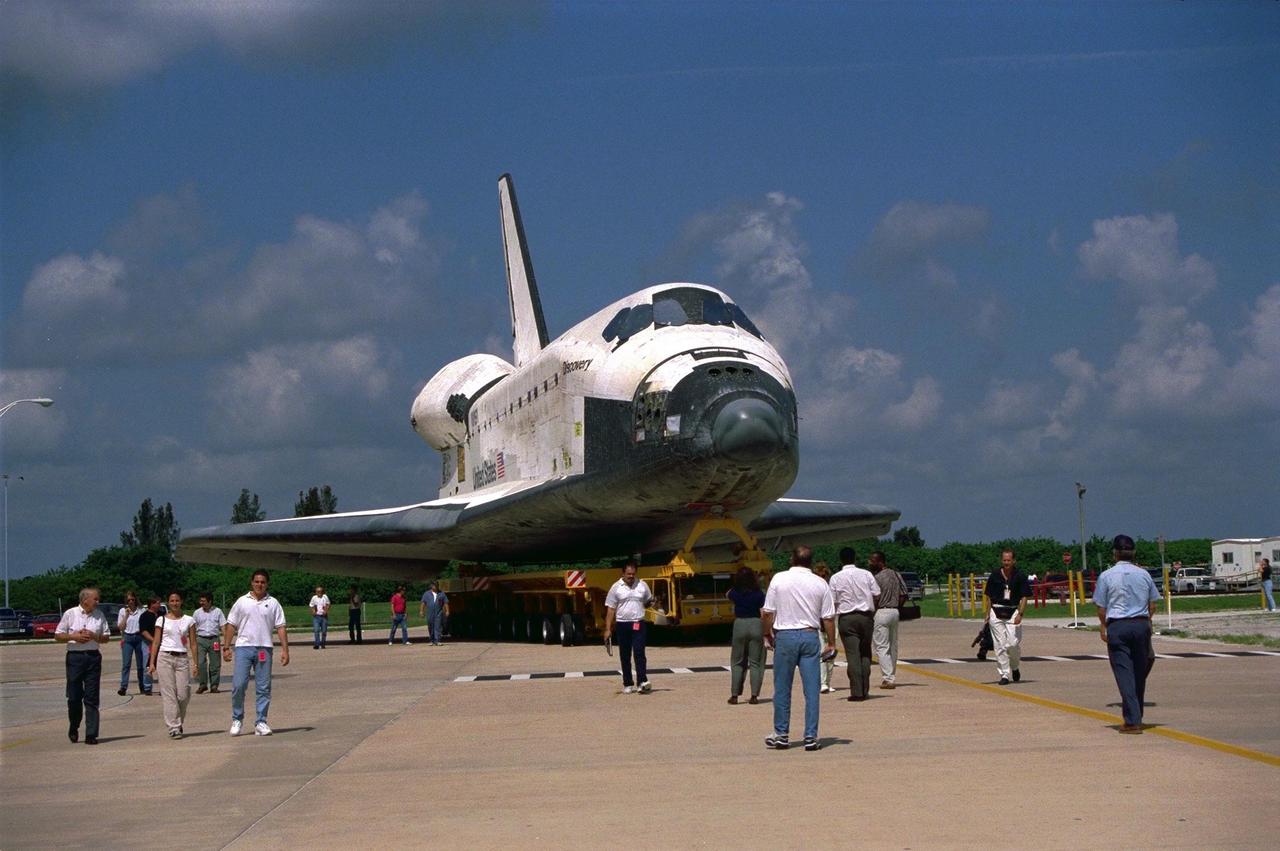
The Space Shuttle Orbiter Discovery rolls over from Orbiter Processing Facility 2 on top of the orbiter transporter to the Vehicle Assembly Building for mating with its external tank and solid rocket boosters in preparation for the STS-85 mission. Several payloads will be aboard Discovery during the 11-day mission, including the Manipulator Flight Demonstration (MFD) and the Cryogenic Infrared Spectrometers and Telescopes for the Atmosphere-Shuttle Pallet Satellite-2 (CRISTA-SPAS-2), as well as the Technology Applications and Science-1 (TAS-1) and International Extreme Ultraviolet Hitchhiker (IEH-2) experiments
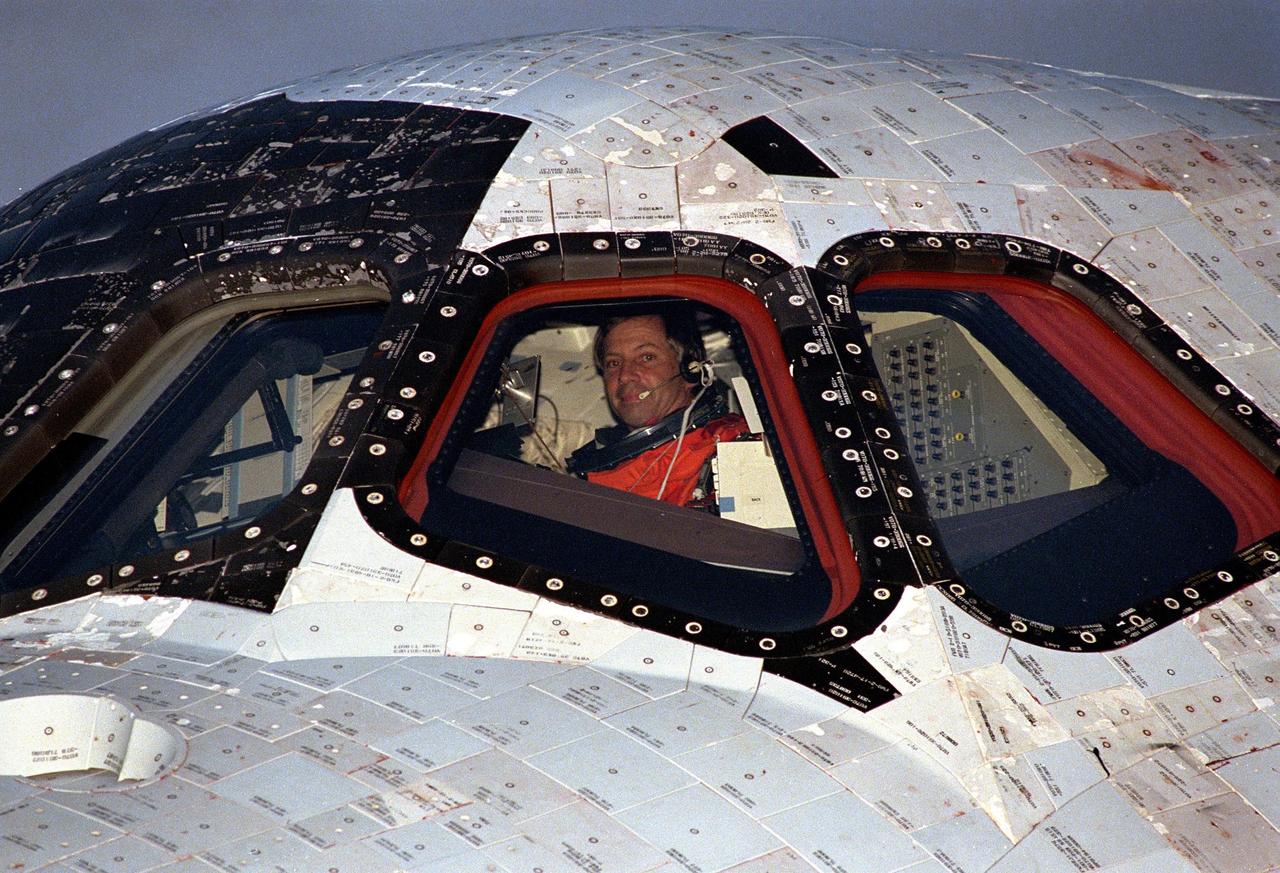
KENNEDY SPACE CENTER, FLA. -- STS-80 Commander Kenneth D. Cockrell peers out the window of the orbiter Columbia minutes after guiding the spacecraft to a successful landing on KSC’s Runway 33. Main gear touchdown occurred at 6:49:04 a.m. EST, Dec. 7. On board with Cockrell are four fellow crew members, Pilot Kent V. Rominger, and Mission Specialists Story Musgrave, Thomas D. Jones, and Tamara E. Jernigan, and the two primary payloads of the mission, the Wake Shield Facility-3 (WSF-3) and the Orbiting and Retrievable Far and Extreme Ultraviolet Spectrometer-Shuttle Pallet Satellite II (ORFEUS-SPAS II).
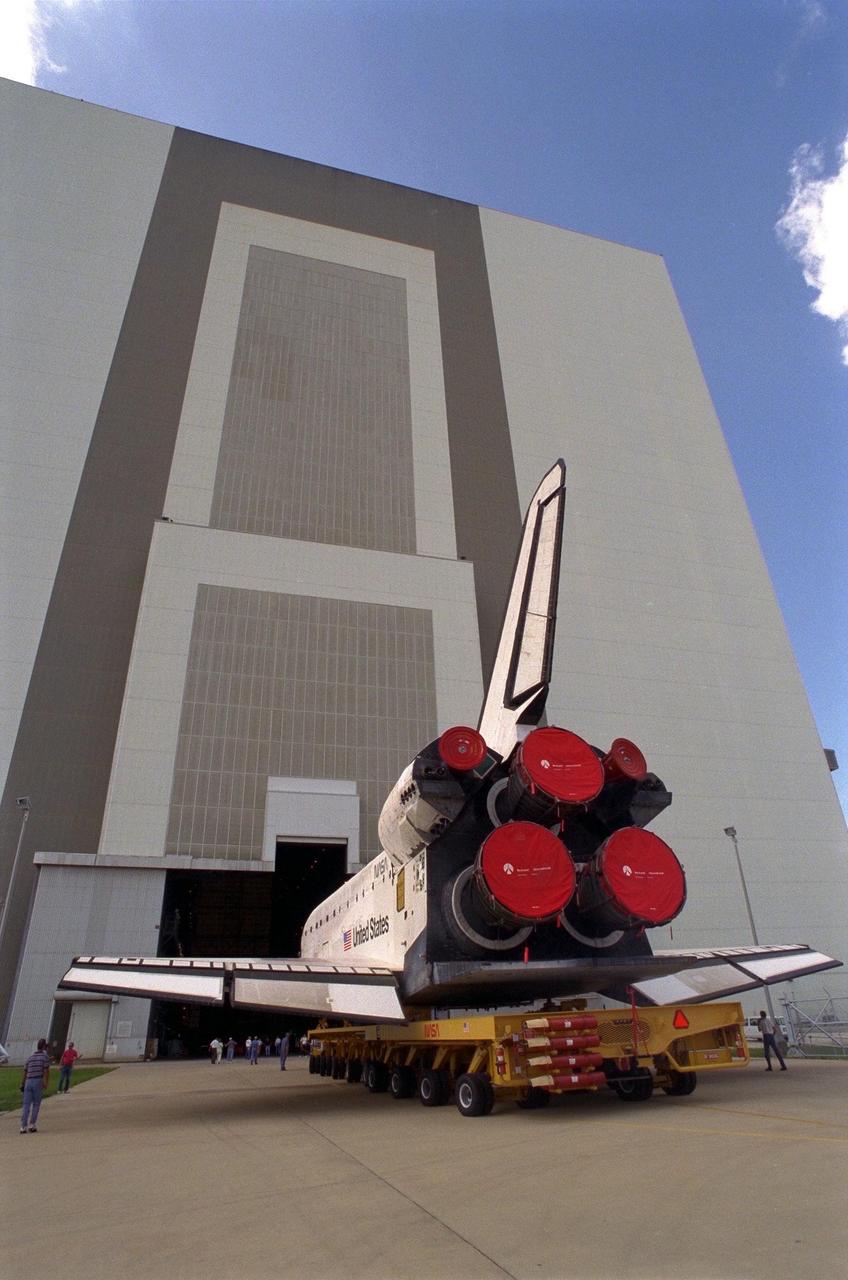
The Space Shuttle Orbiter Discovery rolls over from Orbiter Processing Facility 2 on top of the orbiter transporter to the Vehicle Assembly Building for mating with its external tank and solid rocket boosters in preparation for the STS-85 mission. Several payloads will be aboard Discovery during the 11-day mission, including the Manipulator Flight Demonstration (MFD) and the Cryogenic Infrared Spectrometers and Telescopes for the Atmosphere-Shuttle Pallet Satellite-2 (CRISTA-SPAS-2), as well as the Technology Applications and Science-1 (TAS-1) and International Extreme Ultraviolet Hitchhiker (IEH-2) experiments
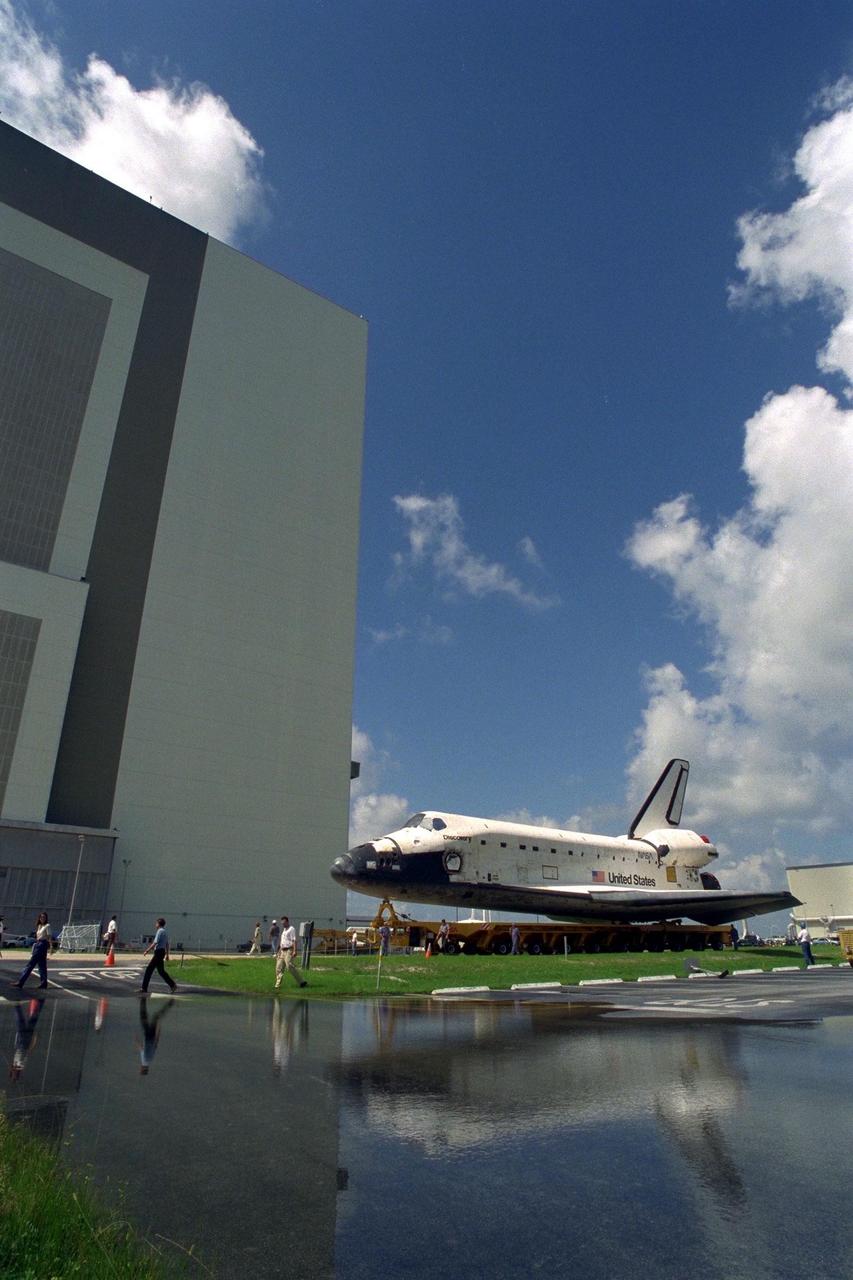
The Space Shuttle Orbiter Discovery rolls over from Orbiter Processing Facility 2 on top of the orbiter transporter to the Vehicle Assembly Building for mating with its external tank and solid rocket boosters in preparation for the STS-85 mission. Several payloads will be aboard Discovery during the 11-day mission, including the Manipulator Flight Demonstration (MFD) and the Cryogenic Infrared Spectrometers and Telescopes for the Atmosphere-Shuttle Pallet Satellite-2 (CRISTA-SPAS-2), as well as the Technology Applications and Science-1 (TAS-1) and International Extreme Ultraviolet Hitchhiker (IEH-2) experiments
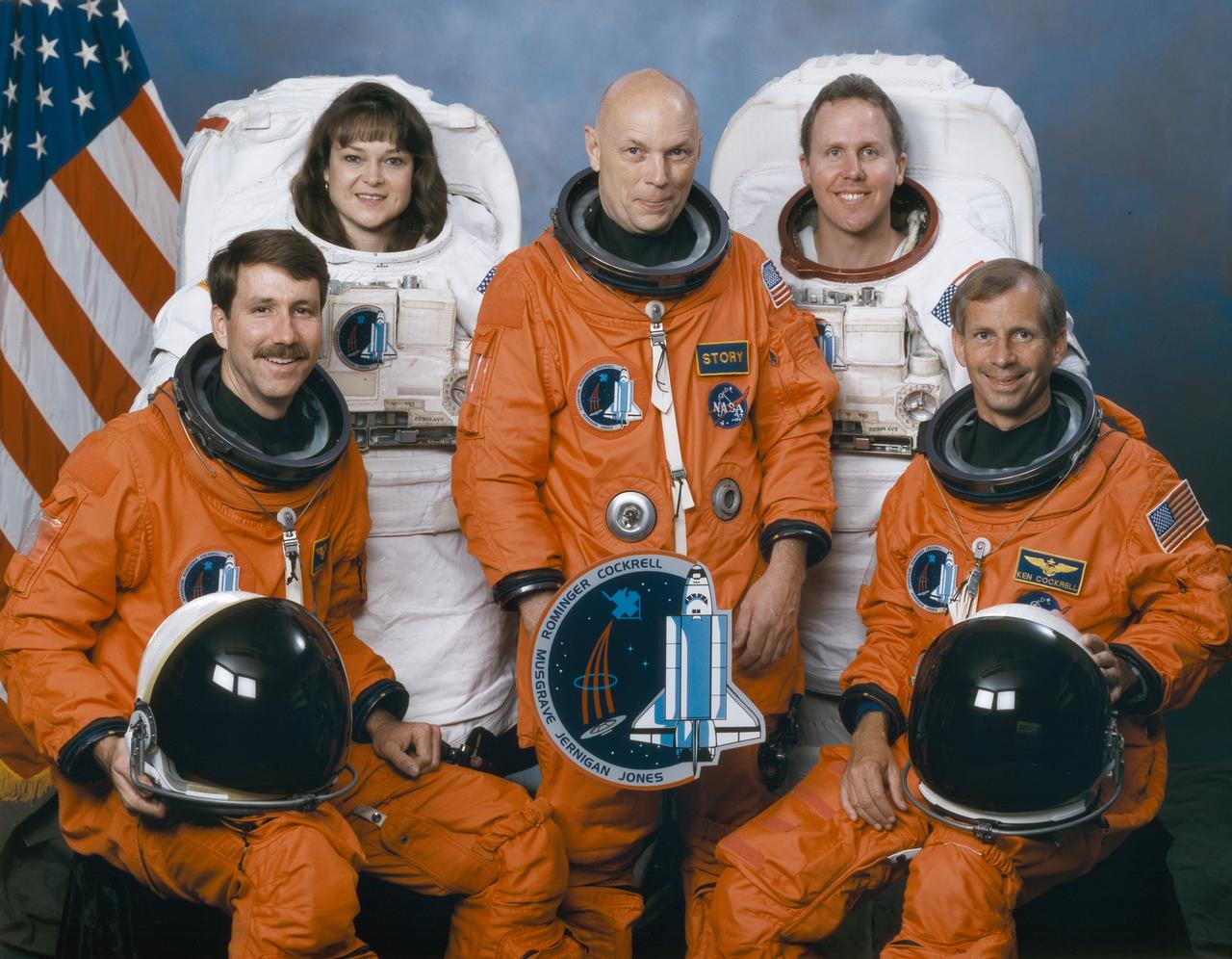
The crew assigned to the STS-79 mission included (seated left to right) Kent V. Rominger, pilot; and Kenneth D. Cockrell, commander. Standing (left to right) are mission specialists Tamara E. Jernigan, F. Story Musgrave, and Thomas D. Jones. Launched aboard the Space Shuttle Columbia on November 19, 1996 at 2:55:47 pm (EST), the STS-80 mission marked the final flight of 1996. The crew successfully deployed and operated the Orbiting and Retrievable Far and Extreme Ultraviolet Spectrometer-Shuttle Pallet Satellite II (ORFEUS-SPAS II), and deployed and retrieved the Wake Shield Facility-3 (WSF-3).
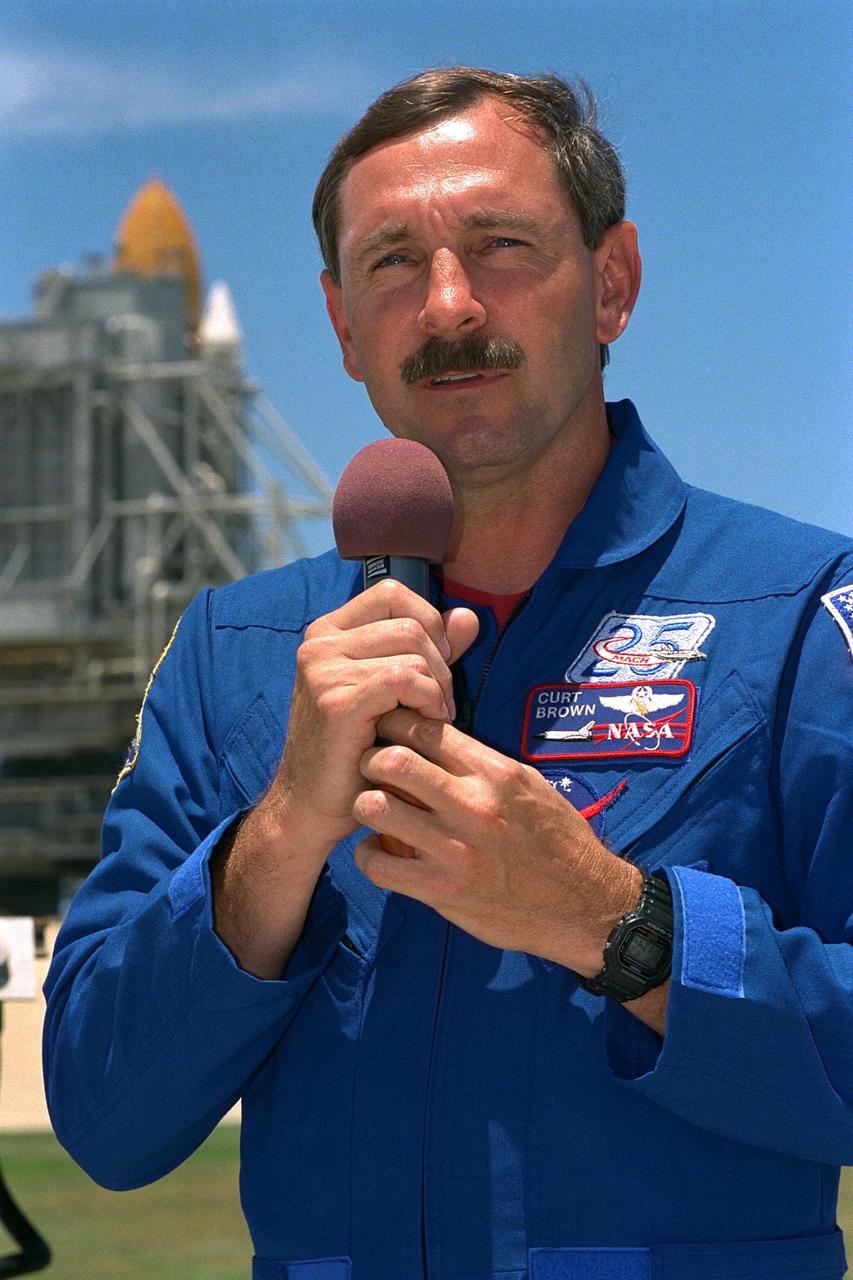
KENNEDY SPACE CENTER, Fla. -- STS-85 Commander Curtis L. Brown, Jr., addresses the news media at a briefing at Launch Pad 39A during a break in Terminal Countdown Demonstration Test (TCDT) activities for that mission. The primary payload aboard the Space Shuttle orbiter Discovery is the Cryogenic Infrared Spectrometers and Telescopes for the Atmosphere-2 (CRISTA-SPAS-2). Other payloads on the 11-day mission include the Manipulator Flight Demonstration (MFD), and Technology Applications and Science-1 (TAS-1) and International Extreme Ultraviolet Hitchhiker-2 (IEH-2) experiments
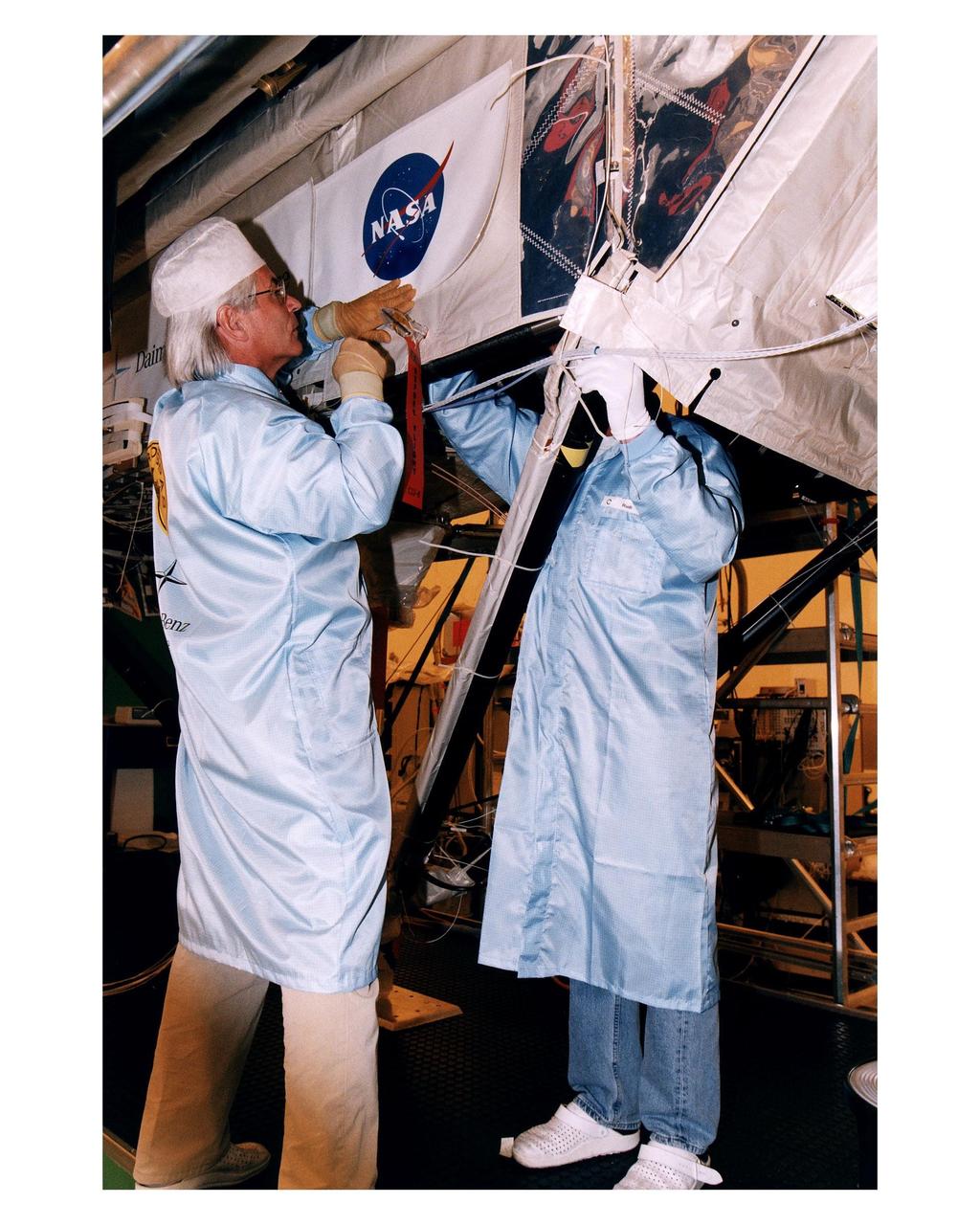
Employees of Daimler-Benz Aerospace in the Multi-Payload Processing Facility install insulation on the Cryogenic Infrared Spectro-meters and Telescopes for the Atmosphere-Shuttle Pallet Satellite-2 (CRISTA-SPAS-2) payload for the STS-85 mission. The CRISTA is a system of three telescopes and four spectrometers to measure infrared radiation emitted by the Earth’s middle atmosphere. During the 11- day mission, the CRISTA-SPAS-2 free-flying satellite will be deployed from the Space Shuttle Discovery and retrieved later in the flight. Also onboard the satellite will be the Middle Atmosphere High Resolution Spectrograph Investigation (MAHRSI) to measure ultraviolet radiation emitted and scattered by the Earth’s atmosphere

KENNEDY SPACE CENTER, FLA. -- STS-85 Payload Specialist Bjarni V. Tryggvason and Mission Specialist Stephen K. Robinson go through countdown procedures aboard the Space Shuttle orbiter Discovery during Terminal Countdown Demonstration Test (TCDT) activities for that mission. The TCDT includes a simulation of the final launch countdown. The primary payload aboard the Space Shuttle orbiter Discovery is the Cryogenic Infrared Spectrometers and Telescopes for the Atmosphere-2 (CRISTA-SPAS- 2). Other STS-85 payloads include the Manipulator Flight Demonstration (MFD), and Technology Applications and Science-1 (TAS-1) and International Extreme Ultraviolet Hitchhiker-2 (IEH-2) experiments
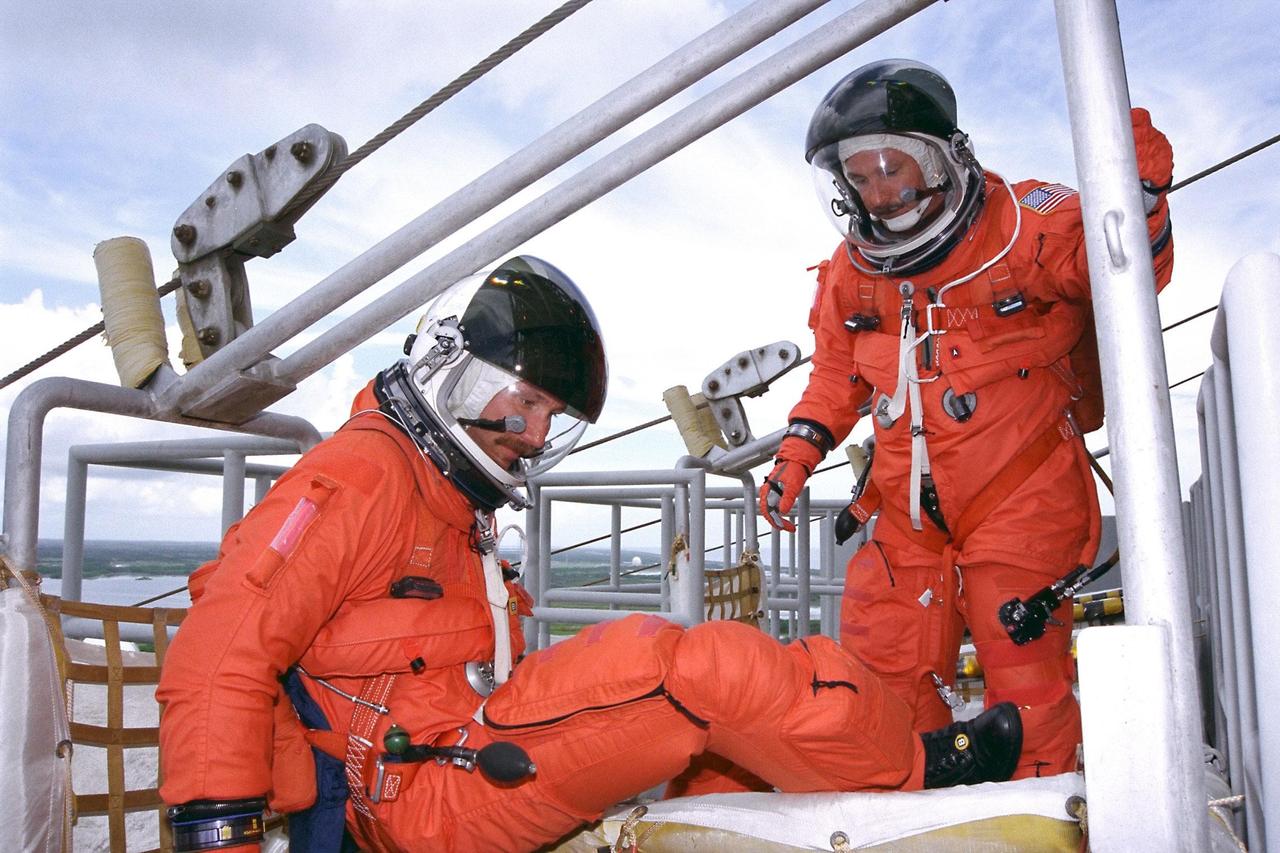
KENNEDY SPACE CENTER, Fla. -- STS-85 Pilot Kent V. Rominger (left) and Commander Curtis L. Brown, Jr. exit an emergency egress slidewire basket at the 195-foot level of Launch Pad 39A during Terminal Countdown Demonstration Test (TCDT) activities for that mission. The primary payload aboard the Space Shuttle orbiter Discovery is the Cryogenic Infrared Spectrometers and Telescopes for the Atmosphere-2 (CRISTA-SPAS-2). Other STS-85 payloads include the Manipulator Flight Demonstration (MFD), and Technology Applications and Science-1 (TAS-1) and International Extreme Ultraviolet Hitchhiker-2 (IEH-2)
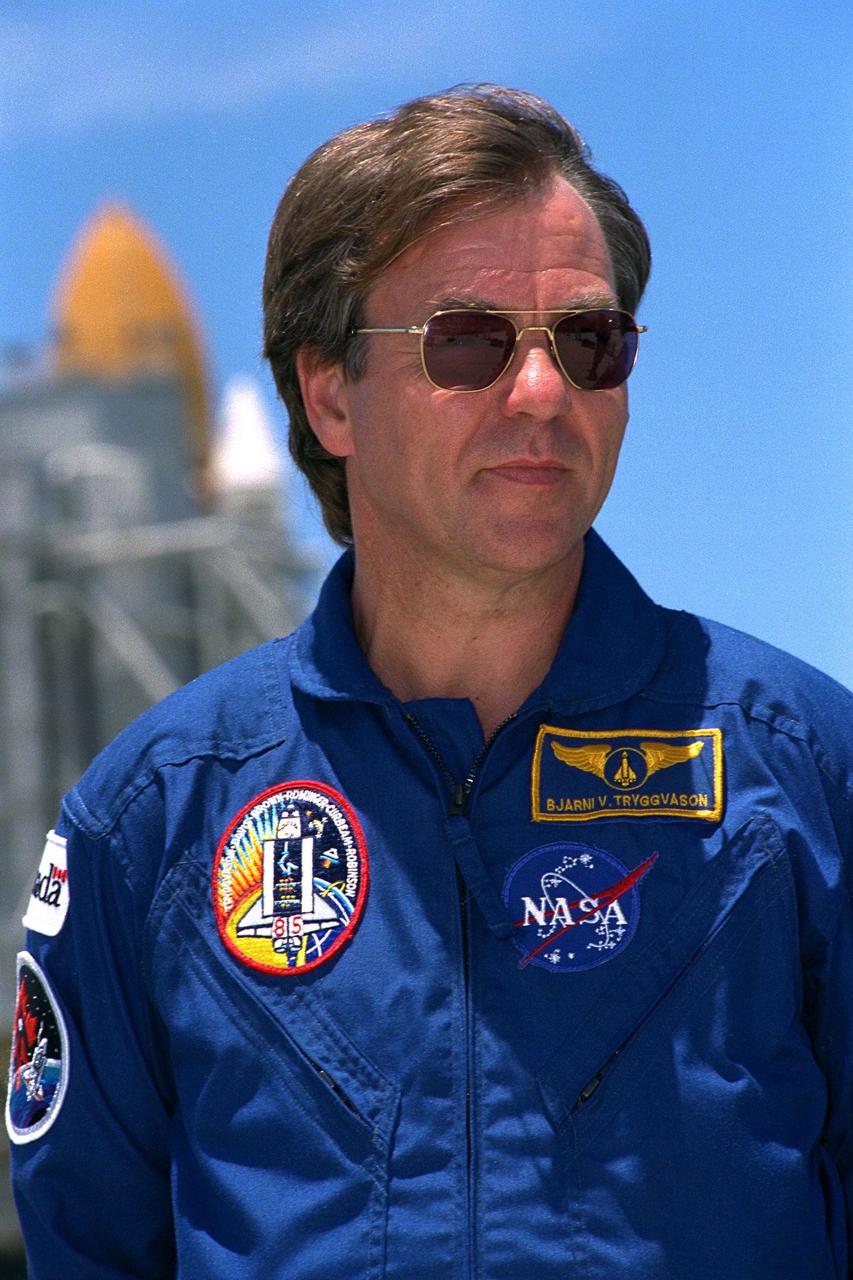
KENNEDY SPACE CENTER, Fla. -- STS-85 Payload Specialist Bjarni V. Tryggvason stands ready for questions at a news briefing at Launch Pad 39A during a break in Terminal Countdown Demonstration Test (TCDT) activities for that mission. The primary payload aboard the Space Shuttle orbiter Discovery is the Cryogenic Infrared Spectrometers and Telescopes for the Atmosphere-2 (CRISTA-SPAS-2). Other payloads on the 11-day mission include the Manipulator Flight Demonstration (MFD), and Technology Applications and Science-1 (TAS-1) and International Extreme Ultraviolet Hitchhiker-2 (IEH-2) experiments
STS080-S-006 (19 Nov. 1996) --- The space shuttle Columbia lifts off from the Kennedy Space Center's (KSC) Launch Pad 39B at 2:55:47 p.m. (EST), Nov. 19, 1996. Onboard are astronauts Kenneth D. Cockrell, mission commander; Kent V. Rominger, pilot; along with Story Musgrave, Tamara E. Jernigan and Thomas D. Jones, all mission specialists. The two primary payloads for STS-80 stowed in Columbia's cargo bay for later deployment and testing are the Wake Shield Facility (WSF-3) and the Orbiting and Retrievable Far and Extreme Ultraviolet Spectrometer (ORFEUS) with its associated Shuttle Pallet Satellite (SPAS).
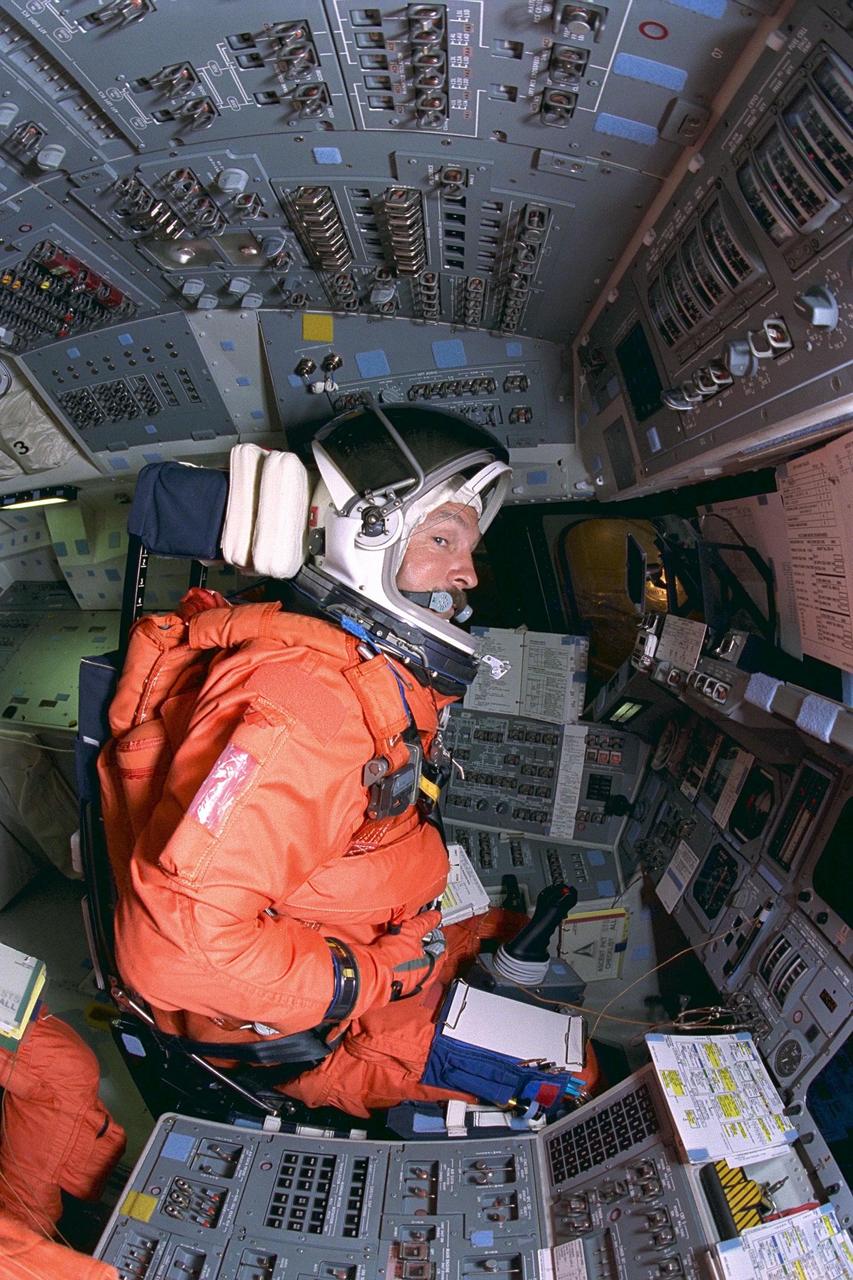
KENNEDY SPACE CENTER, FLA. -- STS-85 Commander Curtis L. Brown, Jr., goes through countdown procedures on the flight deck aboard the Space Shuttle orbiter Discovery during Terminal Countdown Demonstration Test (TCDT) activities for that mission. The TCDT includes a simulation of the final launch countdown. The primary payload aboard the Space Shuttle orbiter Discovery is the Cryogenic Infrared Spectrometers and Telescopes for the Atmosphere-2 (CRISTA-SPAS-2). Other STS-85 payloads include the Manipulator Flight Demonstration (MFD), and Technology Applications and Science-1 (TAS-1) and International Extreme Ultraviolet Hitchhiker-2 (IEH-2) experiments
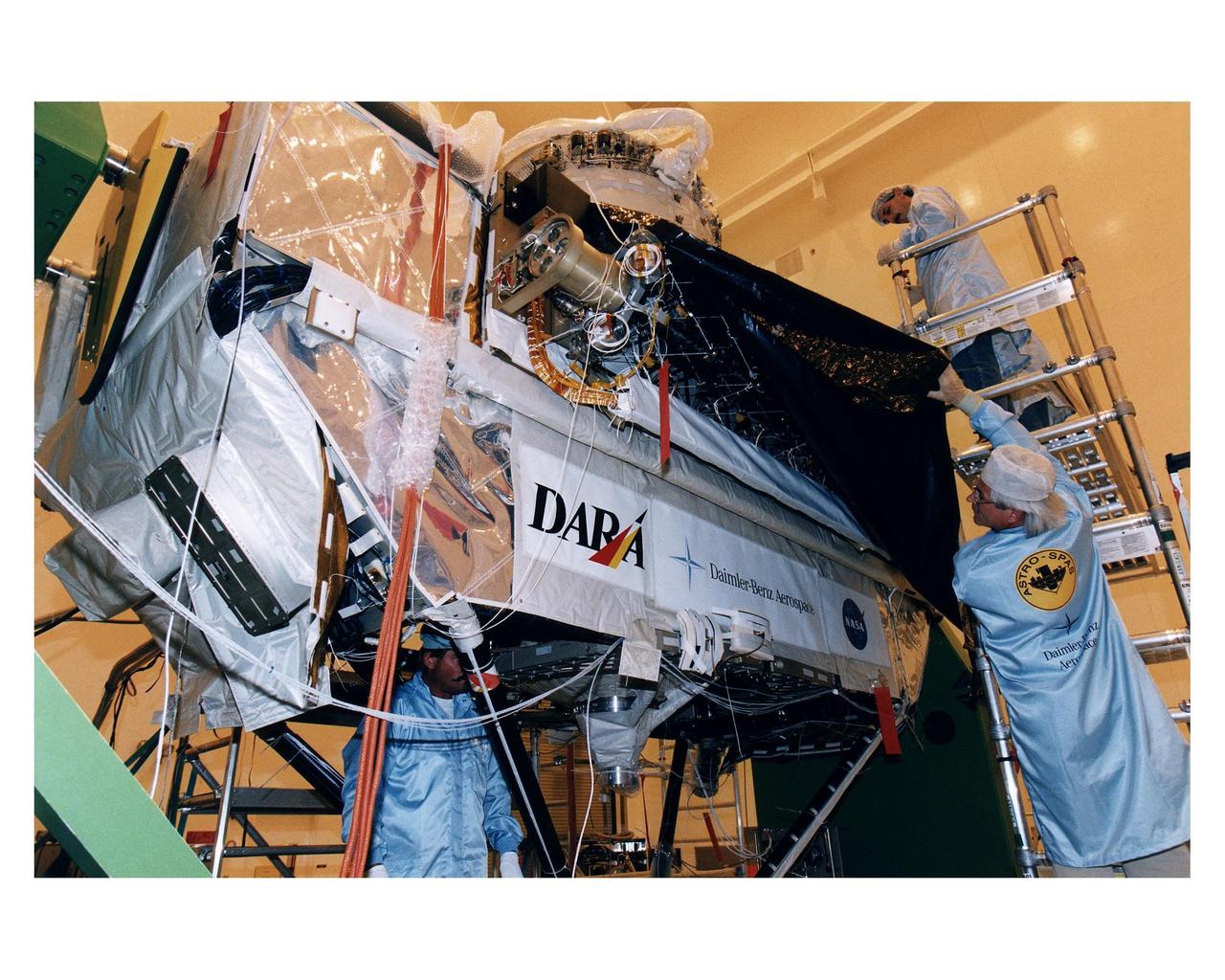
Employees of Daimler-Benz Aerospace in the Multi-Payload Processing Facility install insulation on the Cryogenic Infrared Spectro-meters and Telescopes for the Atmosphere-Shuttle Pallet Satellite-2 (CRISTA-SPAS-2) payload for the STS-85 mission. The CRISTA is a system of three telescopes and four spectrometers to measure infrared radiation emitted by the Earth’s middle atmosphere. During the 11- day mission, the CRISTA-SPAS-2 free-flying satellite will be deployed from the Space Shuttle Discovery and retrieved later in the flight. Also onboard the satellite will be the Middle Atmosphere High Resolution Spectrograph Investigation (MAHRSI) to measure ultraviolet radiation emitted and scattered by the Earth’s atmosphere
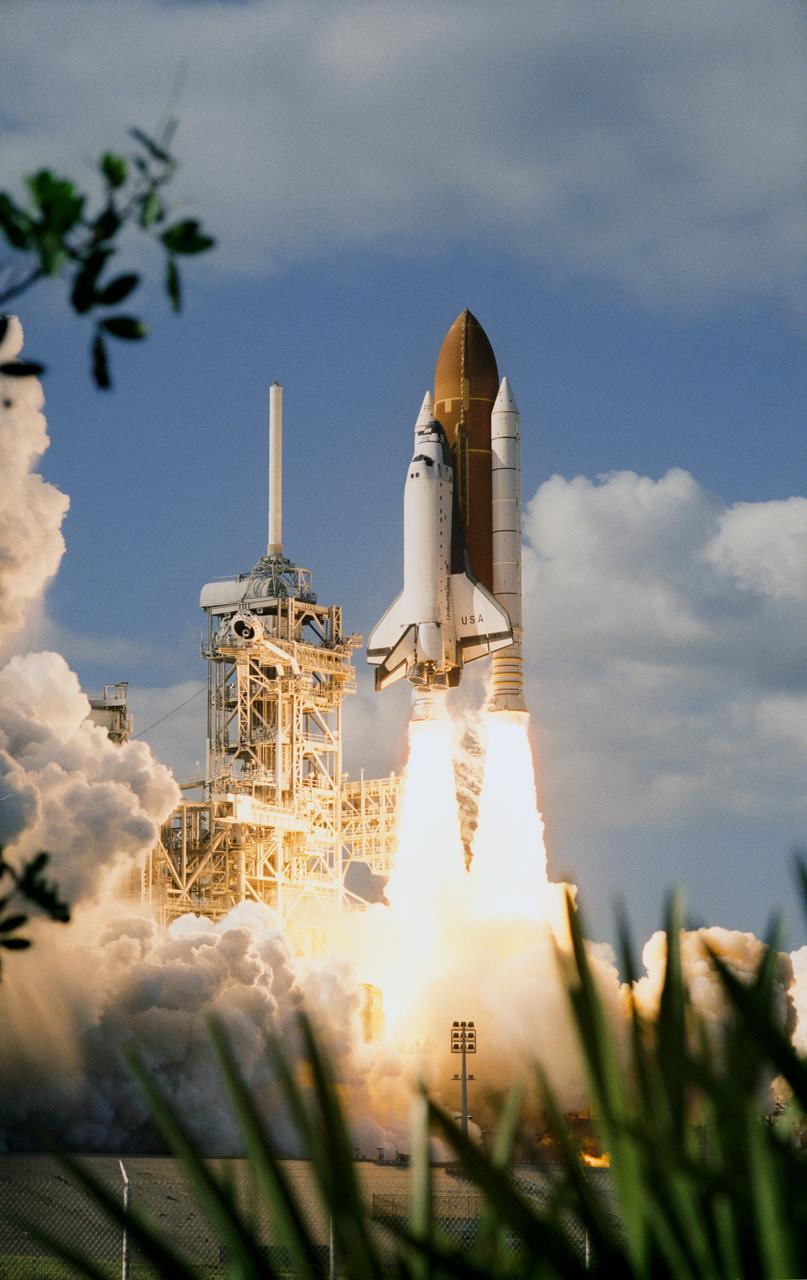
STS080-S-004 (19 Nov. 1996) --- The space shuttle Columbia lifts off from the Kennedy Space Center's (KSC) Launch Pad 39B at 2:55:47 p.m. (EST), Nov. 19, 1996. Onboard are astronauts Kenneth D. Cockrell, STS-80 mission commander; Kent V. Rominger, pilot; along with Story Musgrave, Tamara E. Jernigan and Thomas D. Jones, all mission specialists. The two primary payloads for STS-80 stowed in Columbia's cargo bay for later deployment and testing are the Wake Shield Facility (WSF-3) and the Orbiting and Retrievable Far and Extreme Ultraviolet Spectrometer (ORFEUS) with its associated Shuttle Pallet Satellite (SPAS).
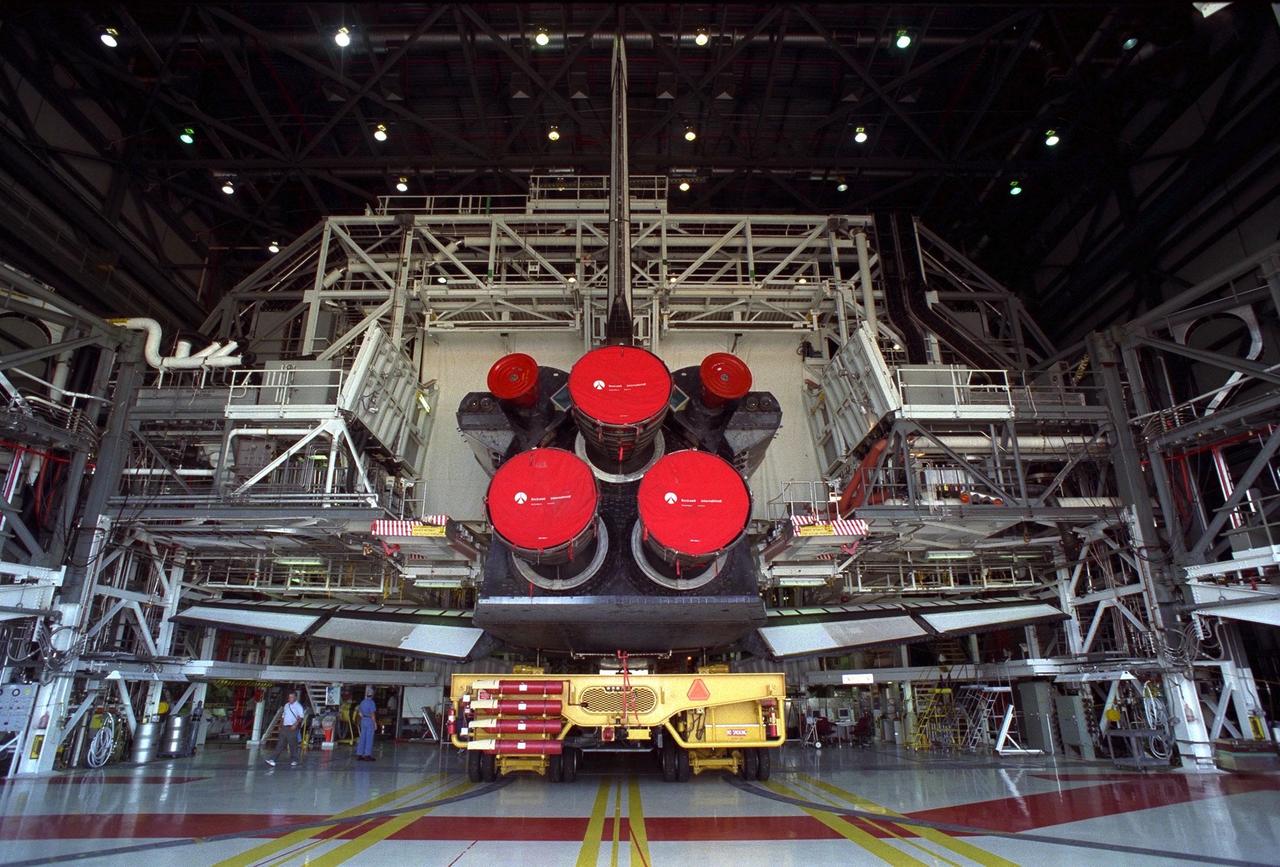
The Space Shuttle Orbiter Discovery in Orbiter Processing Facility 2 begins its rollover on top of the orbiter transporter to the Vehicle Assembly Building for mating with its external tank and solid rocket boosters in preparation for the STS-85 mission. Several payloads will be aboard Discovery during the 11-day mission, including the Manipulator Flight Demonstration (MFD) and the Cryogenic Infrared Spectrometers and Telescopes for the Atmosphere-Shuttle Pallet Satellite-2 (CRISTA-SPAS-2), as well as the Technology Applications and Science-1 (TAS-1) and International Extreme Ultraviolet Hitchhiker (IEH-2) experiments
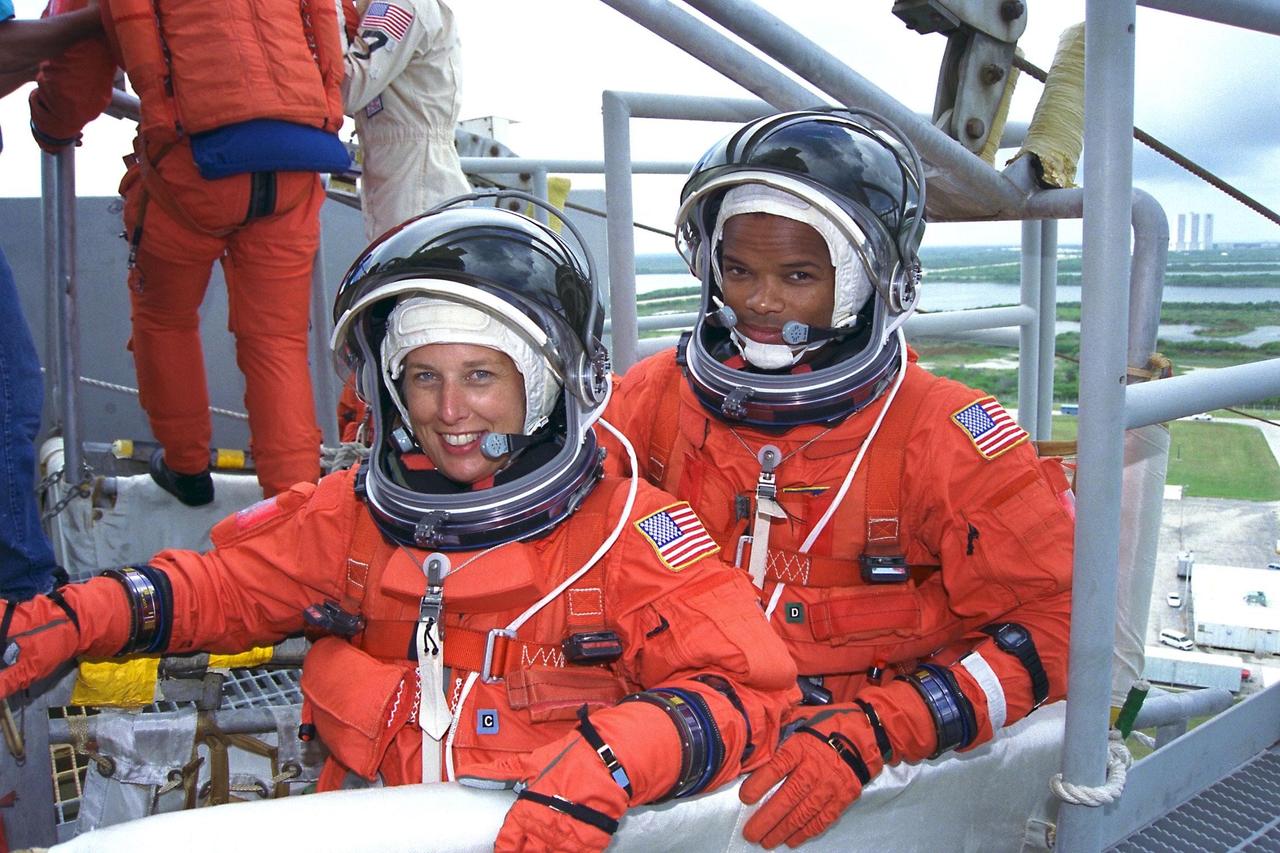
KENNEDY SPACE CENTER, Fla. -- STS-85 Payload Commander N. Jan Davis (left) and Mission Specialist Robert L. Curbeam, Jr., check out an emergency egress slidewire basket at the 195-foot level of Launch Pad 39A during Terminal Countdown Demonstration Test (TCDT) activities for that mission. The primary payload aboard the Space Shuttle orbiter Discovery is the Cryogenic Infrared Spectrometers and Telescopes for the Atmosphere-2 (CRISTA-SPAS-2). Other STS-85 payloads include the Manipulator Flight Demonstration (MFD), and Technology Applications and Science-1 (TAS-1) and International Extreme Ultraviolet Hitchhiker-2 (IEH-2)
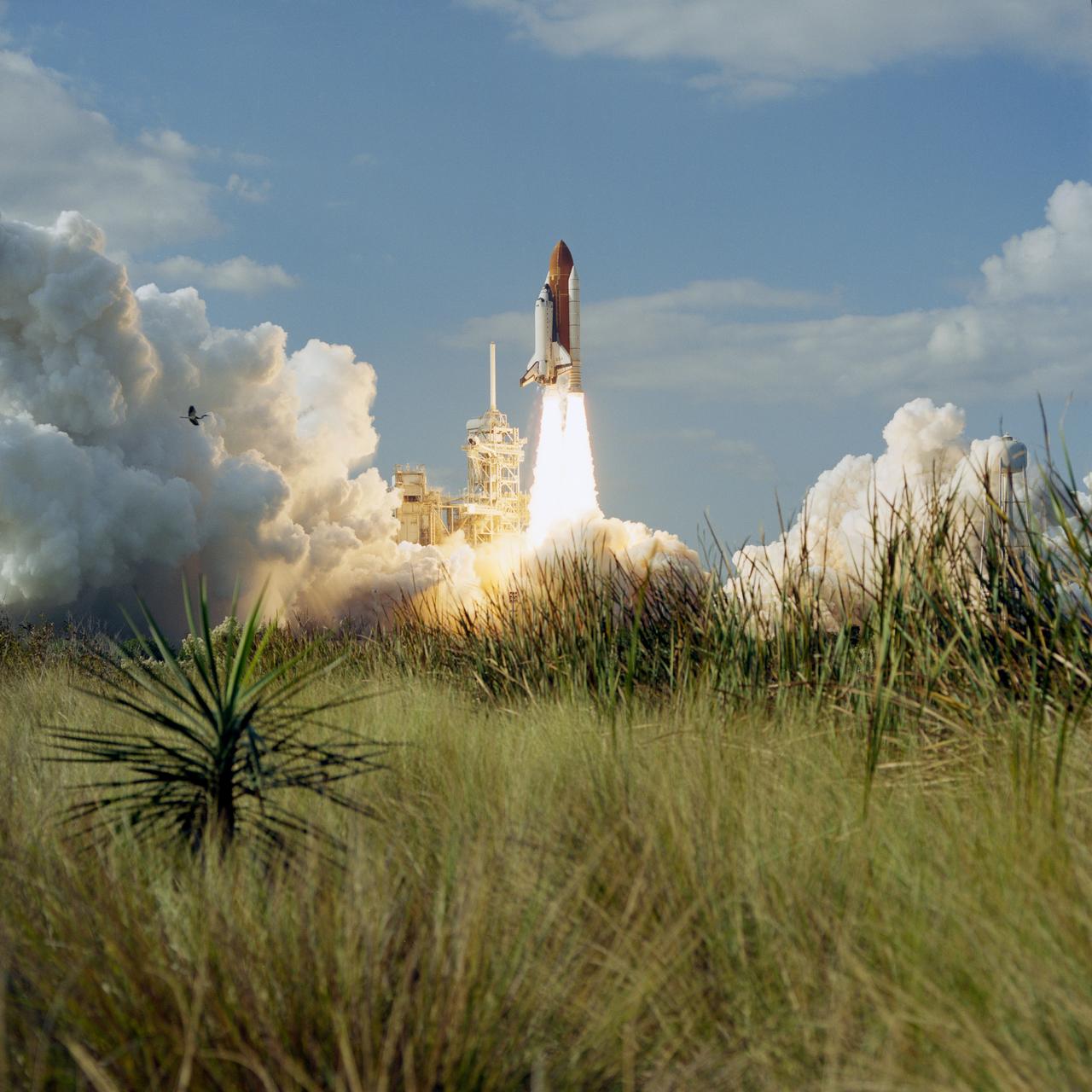
STS080-S-005 (19 Nov. 1996) --- The space shuttle Columbia lifts off from the Kennedy Space Center's (KSC) Launch Pad 39B at 2:55:47 p.m. (EST), Nov. 19, 1996. Onboard are astronauts Kenneth D. Cockrell, mission commander; Kent V. Rominger, pilot; along with Story Musgrave, Tamara E. Jernigan and Thomas D. Jones, all mission specialists. The two primary payloads for STS-80 stowed in Columbia's cargo bay for later deployment and testing are the Wake Shield Facility (WSF-3) and the Orbiting and Retrievable Far and Extreme Ultraviolet Spectrometer (ORFEUS) with its associated Shuttle Pallet Satellite (SPAS).
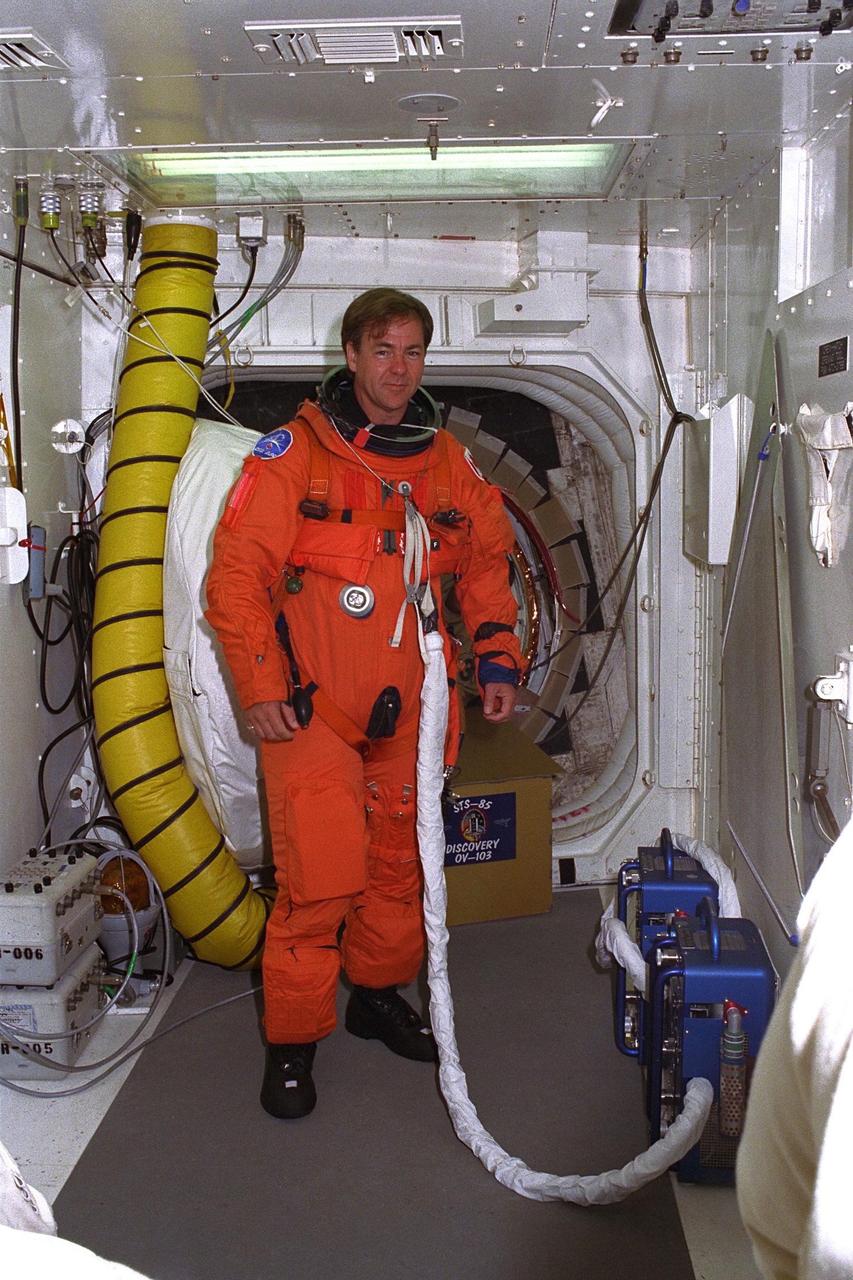
STS-85 Payload Specialist Bjarni V. Tryggvason poses in the white room at Launch Pad 39A with his ascent/reentry flight suit as he prepares to enter the Space Shuttle orbiter Discovery at Launch Pad 39A during Terminal Countdown Demonstration Test (TCDT) activities for that mission. The primary payload aboard the Space Shuttle orbiter Discovery is the Cryogenic Infrared Spectrometers and Telescopes for the Atmosphere-2 (CRISTA-SPAS-2). Other payloads on the 11-day mission include the Manipulator Flight Demonstration (MFD), and Technology Applications and Science-1 (TAS-1) and International Extreme Ultraviolet Hitchhiker-2 (IEH-2) experiments

KENNEDY SPACE CENTER, Fla. -- STS-85 Mission Specialist Stephen K. Robinson (left) and Payload Specialist Bjarni V. Tryggvason check out an emergency egress slidewire basket at the 195-foot level of Launch Pad 39A during Terminal Countdown Demonstration Test (TCDT) activities for that mission. The primary payload aboard the Space Shuttle orbiter Discovery is the Cryogenic Infrared Spectrometers and Telescopes for the Atmosphere-2 (CRISTA-SPAS-2). Other STS-85 payloads include the Manipulator Flight Demonstration (MFD), and Technology Applications and Science-1 (TAS-1) and International Extreme Ultraviolet Hitchhiker-2 (IEH-2)
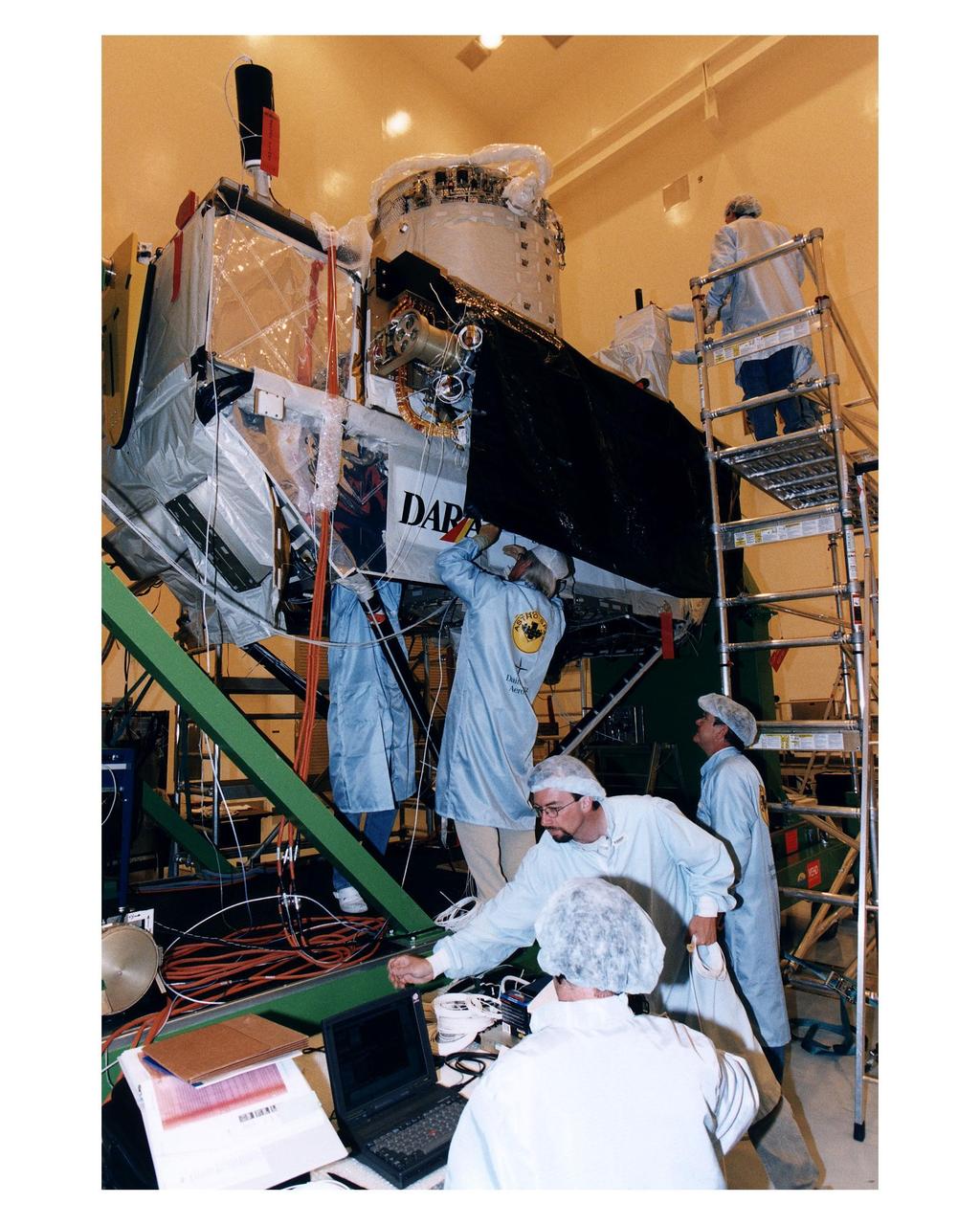
Employees of Daimler-Benz Aerospace in the Multi-Payload Processing Facility install insulation on the Cryogenic Infrared Spectro-meters and Telescopes for the Atmosphere-Shuttle Pallet Satellite-2 (CRISTA-SPAS-2) payload for the STS-85 mission. The CRISTA is a system of three telescopes and four spectrometers to measure infrared radiation emitted by the Earth’s middle atmosphere. During the 11- day mission, the CRISTA-SPAS-2 free-flying satellite will be deployed from the Space Shuttle Discovery and retrieved later in the flight. Also onboard the satellite will be the Middle Atmosphere High Resolution Spectrograph Investigation (MAHRSI) to measure ultraviolet radiation emitted and scattered by the Earth’s atmosphere
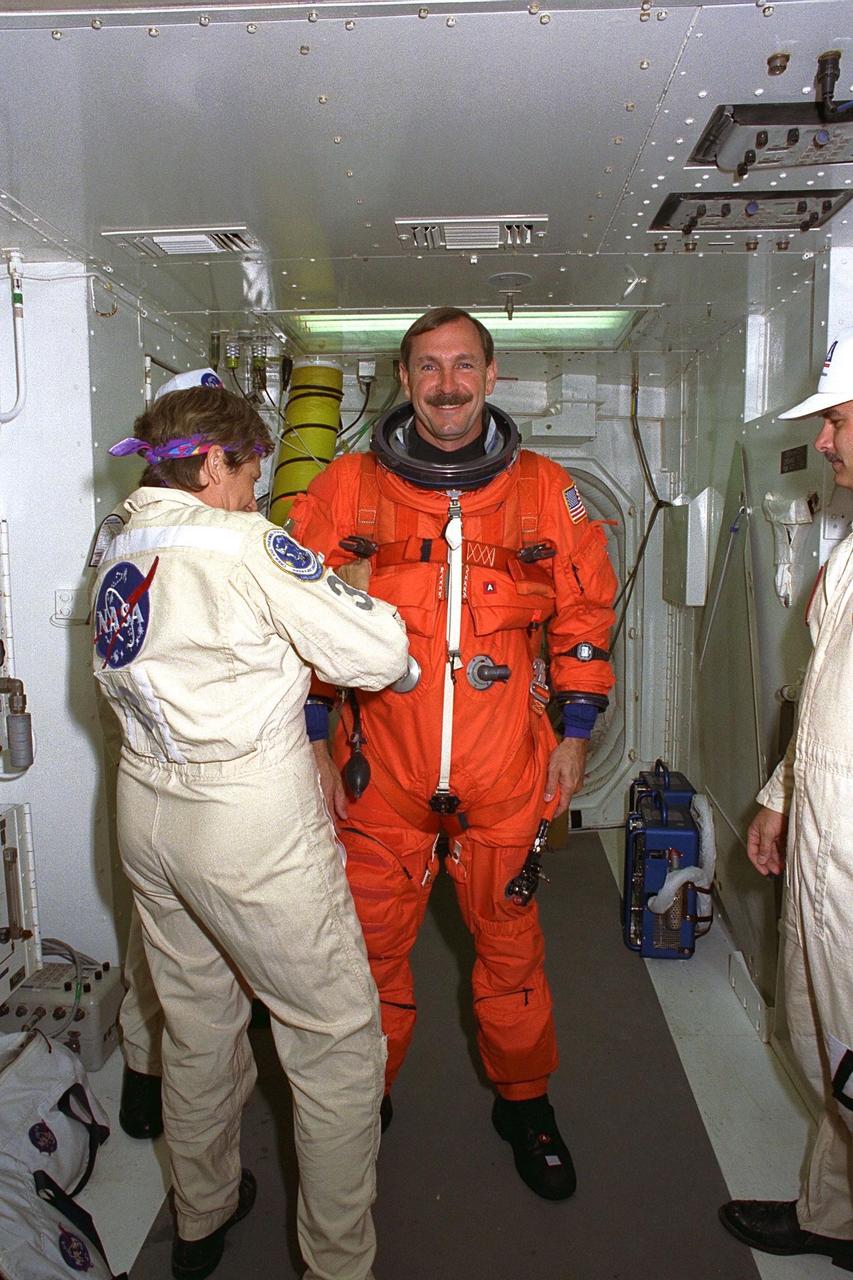
STS-85 Commander Curtis L. Brown, Jr., is assisted with his ascent/reentry flight suit by a white room crew member as he prepares to enter the Space Shuttle orbiter Discovery at Launch Pad 39A during Terminal Countdown Demonstration Test (TCDT) activities for that mission. The primary payload aboard the Space Shuttle orbiter Discovery is the Cryogenic Infrared Spectrometers and Telescopes for the Atmosphere-2 (CRISTA-SPAS-2). Other payloads on the 11-day mission include the Manipulator Flight Demonstration (MFD), and Technology Applications and Science-1 (TAS-1) and International Extreme Ultraviolet Hitchhiker-2 (IEH-2) experiments
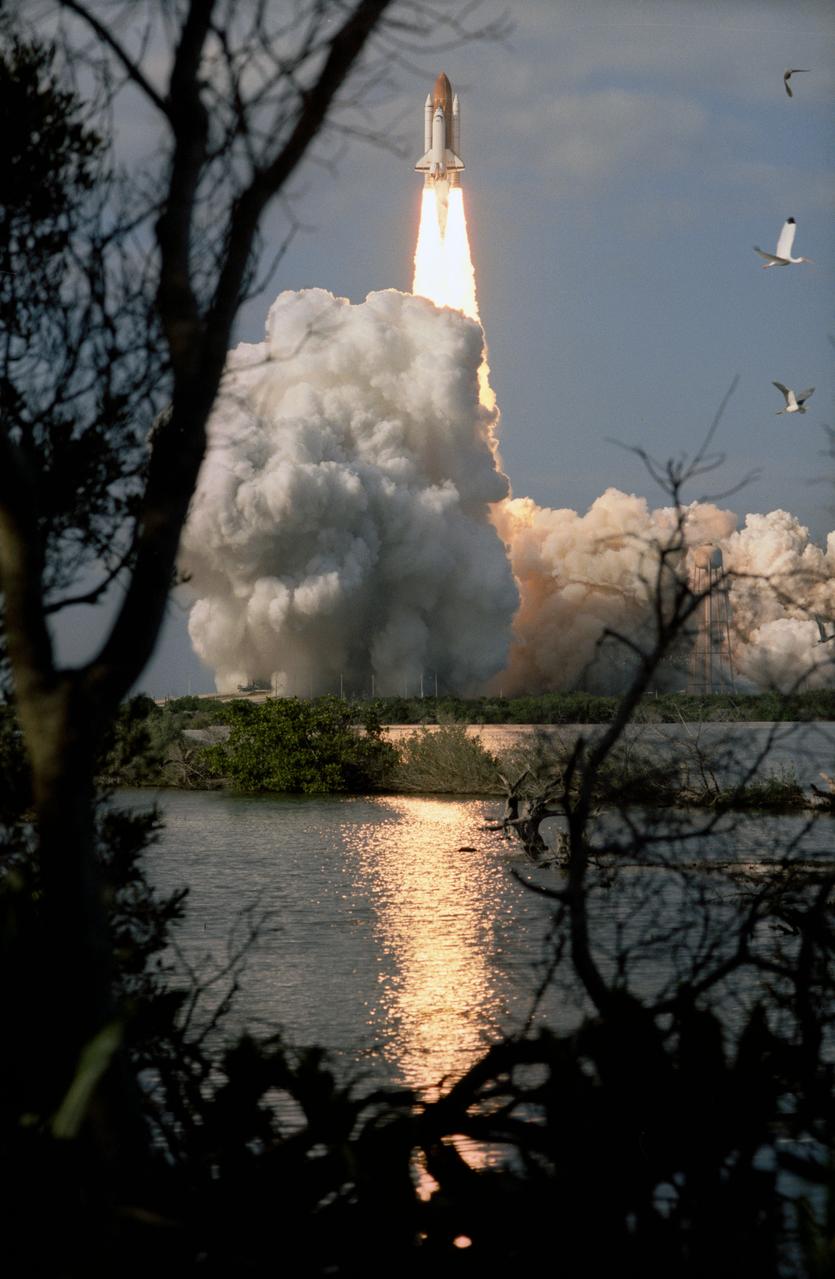
STS080-S-003 (19 Nov. 1996) --- The space shuttle Columbia lifts off from the Kennedy Space Center's (KSC) Launch Pad 39B at 2:55:47 p.m. (EST), November 19, 1996. Onboard are astronauts Kenneth D. Cockrell, mission commander; Kent V. Rominger, pilot; along with Story Musgrave, Tamara E. Jernigan and Thomas D. Jones, all mission specialists. The two primary payloads for STS-80 stowed in Columbia's cargo bay for later deployment and testing are the Wake Shield Facility (WSF-3) and the Orbiting and Retrievable Far and Extreme Ultraviolet Spectrometer (ORFEUS) with its associated Shuttle Pallet Satellite (SPAS).
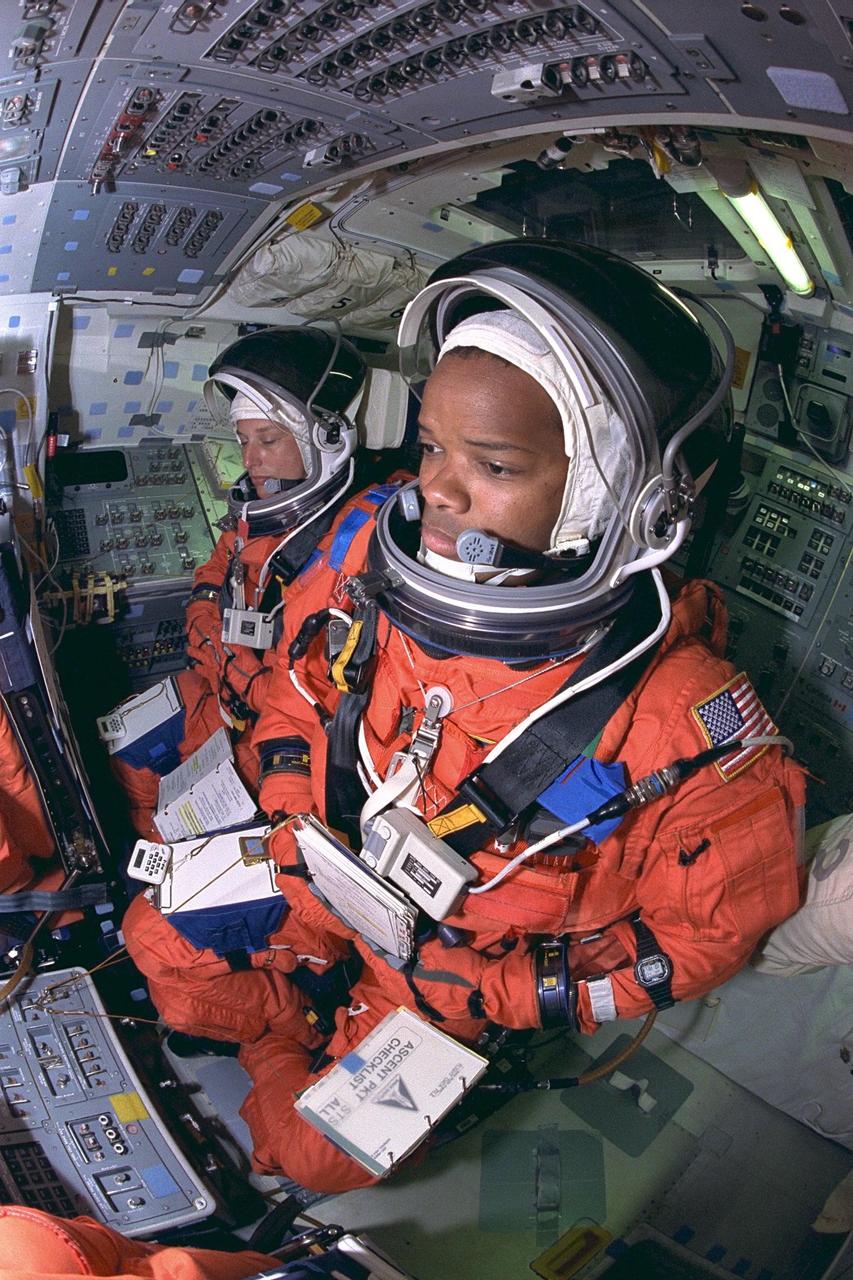
KENNEDY SPACE CENTER, FLA. -- STS-85 Payload Commander N. Jan Davis (left) and Mission Specialist Robert L. Curbeam, Jr., go through countdown procedures aboard the Space Shuttle orbiter Discovery during Terminal Countdown Demonstration Test (TCDT) activities for that mission. The TCDT includes a simulation of the final launch countdown. The primary payload aboard the Space Shuttle orbiter Discovery is the Cryogenic Infrared Spectrometers and Telescopes for the Atmosphere-2 (CRISTA-SPAS-2). Other STS-85 payloads include the Manipulator Flight Demonstration (MFD), and Technology Applications and Science-1 (TAS-1) and International Extreme Ultraviolet Hitchhiker-2 (IEH-2) experiments
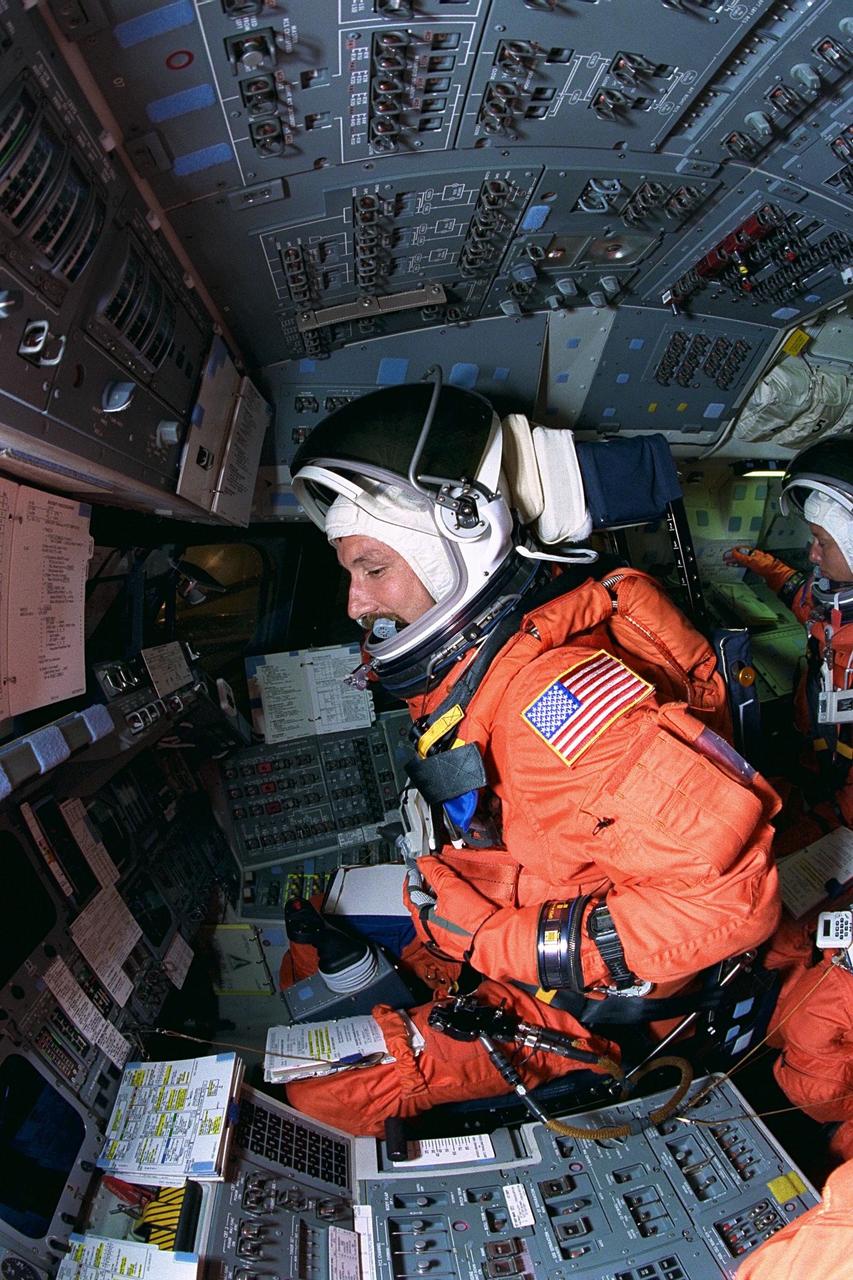
KENNEDY SPACE CENTER, FLA. -- STS-85 Pilot Kent V. Rominger goes through countdown procedures on the flight deck aboard the Space Shuttle orbiter Discovery during Terminal Countdown Demonstration Test (TCDT) activities for that mission. The TCDT includes a simulation of the final launch countdown. The primary payload aboard the Space Shuttle orbiter Discovery is the Cryogenic Infrared Spectrometers and Telescopes for the Atmosphere-2 (CRISTA-SPAS-2). Other STS-85 payloads include the Manipulator Flight Demonstration (MFD), and Technology Applications and Science-1 (TAS-1) and International Extreme Ultraviolet Hitchhiker-2 (IEH-2) experiments
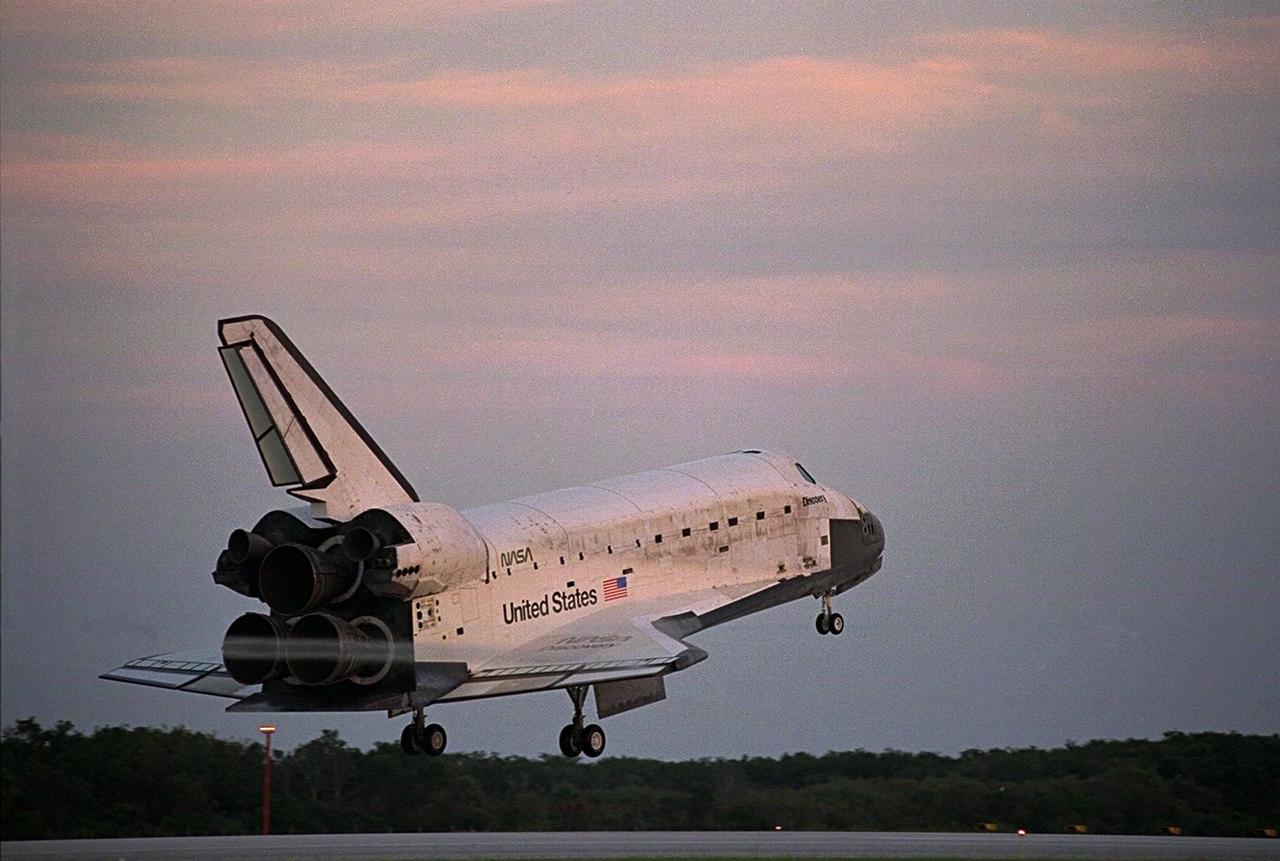
KENNEDY SPACE CENTER, FLA. -- With Commander Curtis L. Brown, Jr. and Pilot Kent V. Rominger at the controls, the Space Shuttle orbiter Discovery prepares to touch down on Runway 33 at KSC’s Shuttle Landing Facility at approximately 7:08 a.m. EDT Aug. 19 to complete the nearly 12-day-long STS-85 mission. The first landing opportunity on Aug. 18 was waved off due to the potential for ground fog. Also onboard the orbiter are Payload Commander N. Jan Davis, Mission Specialist Robert L. Curbeam, Jr., Mission Specialist Stephen K. Robinson and Payload Specialist Bjarni V. Tryggvason. During the 86th Space Shuttle mission, the crew deployed the Cryogenic Infrared Spectrometers and Telescopes for the Atmosphere-Shuttle Pallet Satellite-2 (CRISTA-SPAS-2) free-flyer to conduct research on the Earth’s middle atmosphere, retrieving it on flight day 9. They also conducted investigations with the Manipulator Flight Demonstration (MFD), Technology Applications and Science-1 (TAS-1) and International Extreme Ultraviolet Hitchhiker-2 (IEH-2) experiments. Robinson also made observations of the comet Hale-Bopp with the Southwest Ultraviolet Imaging System (SWIS) while other members of the crew conducted biological experiments in the orbiter’s crew cabin
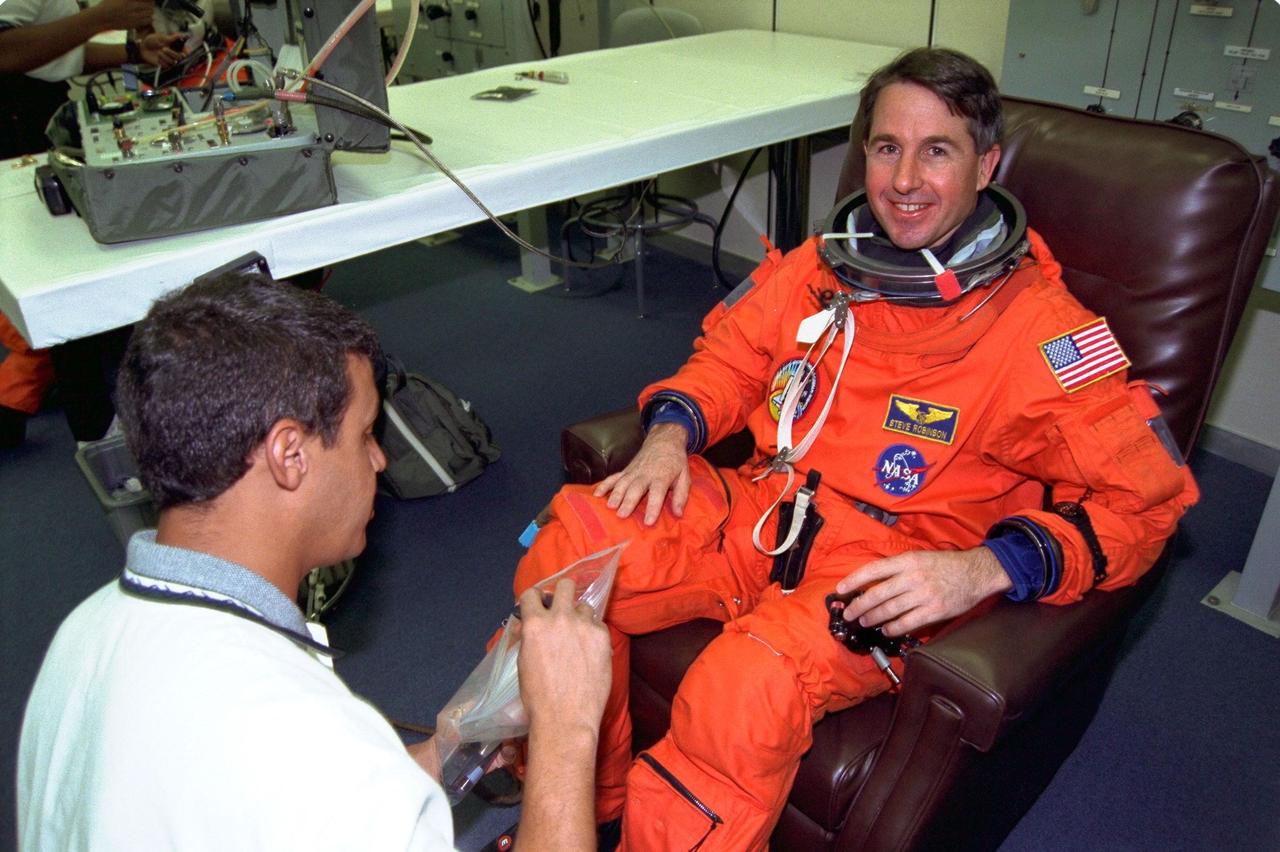
STS-85 Mission Specialist Stephen K. Robinson smiles as he is assisted with his ascent/reentry flight suit by a suit technician in the Operations and Checkout (O&C) Building. He has been a NASA employee since 1975 and has worked at Ames and Langley Research Centers. Robinson holds a doctorate in mechanical engineering and is a licensed pilot. He will assist Mission Specialist Robert L. Curbeam, Jr. with the Cryogenic Infrared Spectrometers and Telescopes for the Atmosphere-Shuttle Pallet Satellite-2 (CRISTA-SPAS-2) free-flyer and conduct Comet Hale-Bopp observations with the Southwest Ultraviolet Imaging System. Robinson will also coordinate photo and television data operations during the mission. The primary payload aboard the Space Shuttle orbiter Discovery is the CRISTA-SPAS2. Other payloads on the 11-day mission include the Manipulator Flight Demonstration (MFD), and Technology Applications and Science-1 (TAS-1) and International Extreme Ultraviolet Hitchhiker-2 (IEH-2) experiments
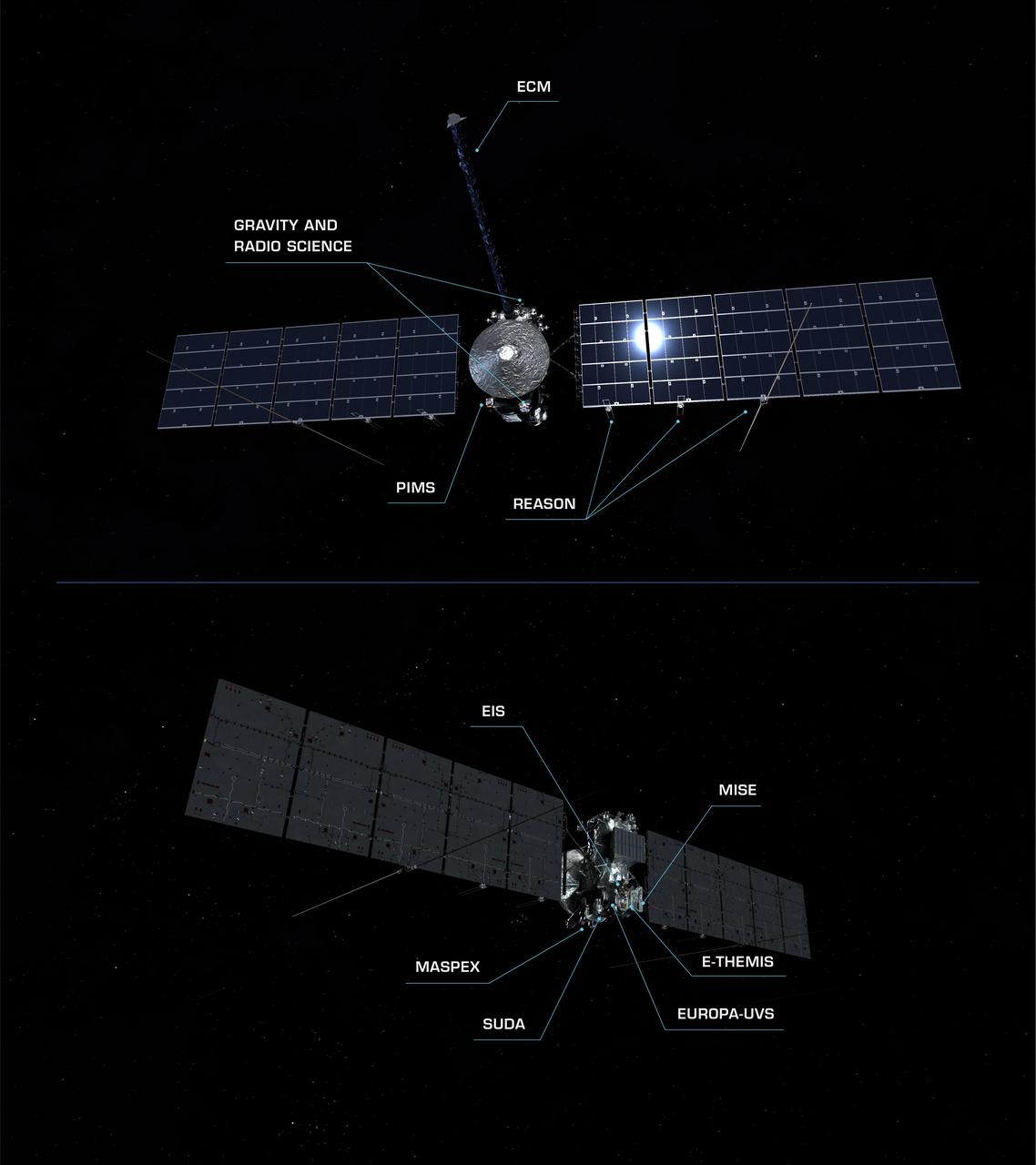
To conduct its detailed investigations of Jupiter's icy moon Europa, NASA's Europa Clipper spacecraft carries a suite of nine science instruments and a gravity experiment that uses its telecommunications system. These components are depicted in this pair of artist's concepts showing each side of the spacecraft, and include: Europa Imaging System (EIS) Europa Thermal Emission Imaging System (E-THEMIS) Europa Ultraviolet Spectrograph (Europa-UVS) Mapping Imaging Spectrometer for Europa (MISE) Europa Clipper Magnetometer (ECM) Plasma Instrument for Magnetic Sounding (PIMS) Radar for Europa Assessment and Sounding: Ocean to Near-surface (REASON) MAss Spectrometer for Planetary EXploration/Europa (MASPEX) Surface Dust Analyzer (SUDA) Gravity and Radio Science Experiment (G/RS) Europa Clipper's three main science objectives are to determine the thickness of the moon's icy shell and its interactions with the ocean below, to investigate its composition, and to characterize its geology. The mission's detailed exploration of Europa will help scientists better understand the astrobiological potential for habitable worlds beyond our planet. https://photojournal.jpl.nasa.gov/catalog/PIA26439
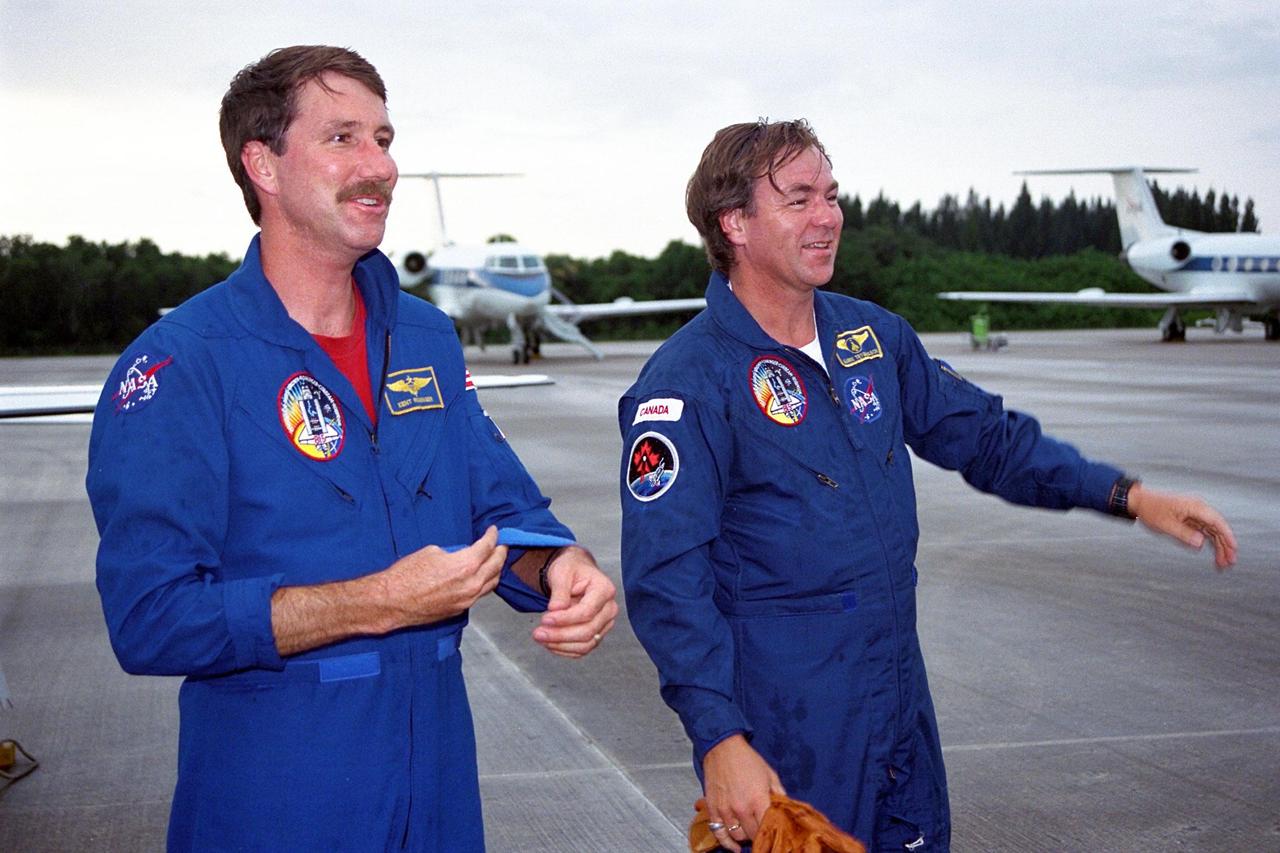
STS-85 Pilot Kent V. Rominger (left) and Payload Specialist Bjarni V. Tryggvason prepare to greet the rest of the flight crew at KSC’s Shuttle Landing Facility (SLF) after their arrival from NASA’s Johnson Space Center to begin final preparations for the STS-85 mission. The other crew members are Commander Curtis L. Brown, Jr., Payload Commander N. Jan Davis, Mission Specialist Robert L. Curbeam, Jr., and Mission Specialist Stephen K. Robinson. The primary payload aboard the Space Shuttle orbiter Discovery for the 11-day space flight is the Cryogenic Infrared Spectrometers and Telescopes for the Atmosphere-2 (CRISTA-SPAS2). Other STS-85 payloads include the Manipulator Flight Demonstration (MFD), and Technology Applications and Science-1 (TAS-1) and International Extreme Ultraviolet Hitchhiker-2 (IEH-2) experiments
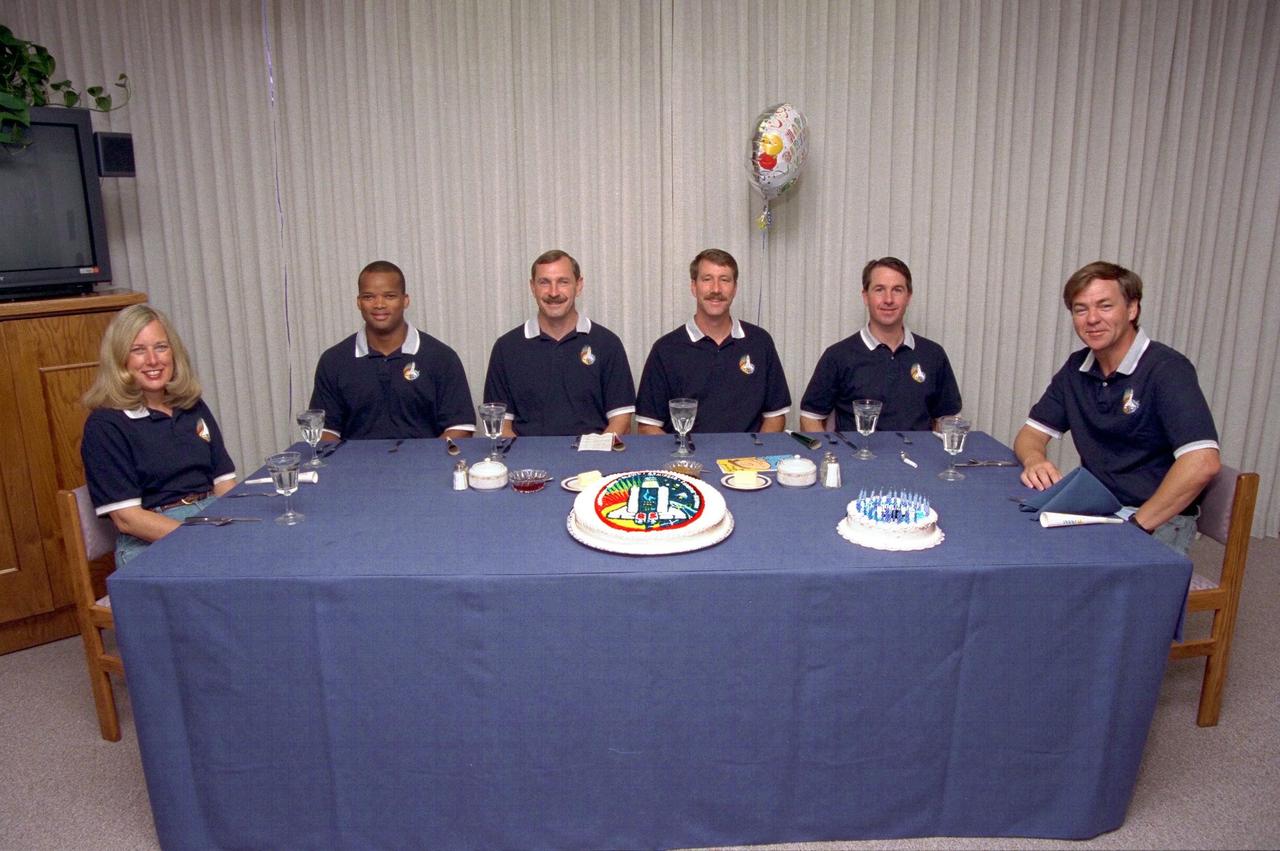
The STS-85 crew partakes in the traditional pre-liftoff breakfast in the Operations and Checkout (O&C) Building. They are (from left): Payload Commander N. Jan Davis; Mission Specialist Robert L. Curbeam, Jr.; Commander Curtis L. Brown, Jr.; Pilot Kent V. Rominger; Mission Specialist Stephen K. Robinson; Payload Specialist Bjarni V. Tryggvason; and The primary payload aboard the Space Shuttle orbiter Discovery is the Cryogenic Infrared Spectrometers and Telescopes for the Atmosphere-Shuttle Pallet Satellite-2 (CRISTA-SPAS-2). Other payloads on the 11-day mission include the Manipulator Flight Demonstration (MFD), and Technology Applications and Science-1 (TAS-1) and International Extreme Ultraviolet Hitchhiker-2 (IEH-2) experiments
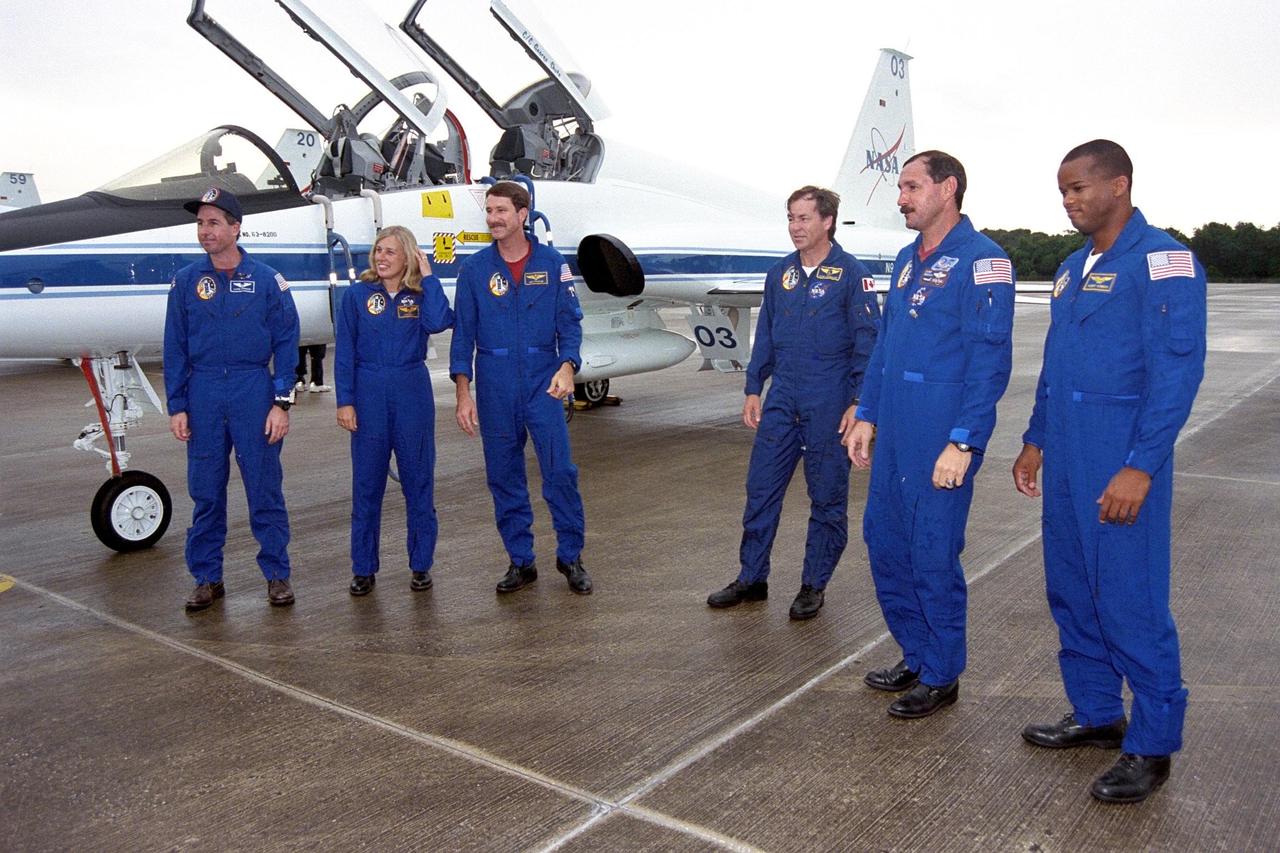
The STS-85 flight crew members pose with their T-38 jet trainer aircraft at the KSC Shuttle Landing Facility (SLF) after their arrival from NASA’s Johnson Space Center to begin final preparations for the STS-85 mission. They are (from left): Mission Specialist Stephen K. Robinson; Payload Commander N. Jan Davis; Pilot Kent V. Rominger; Payload Specialist Bjarni V. Tryggvason; Commander Curtis L. Brown, Jr.; and Mission Specialist Robert L. Curbeam, Jr. The primary payload aboard the Space Shuttle orbiter Discovery for the 11-day space flight is the Cryogenic Infrared Spectrometers and Telescopes for the Atmosphere-2 (CRISTA-SPAS-2). Other STS-85 payloads include the Manipulator Flight Demonstration (MFD), and Technology Applications and Science-1 (TAS-1) and International Extreme Ultraviolet Hitchhiker-2 (IEH-2) experiments
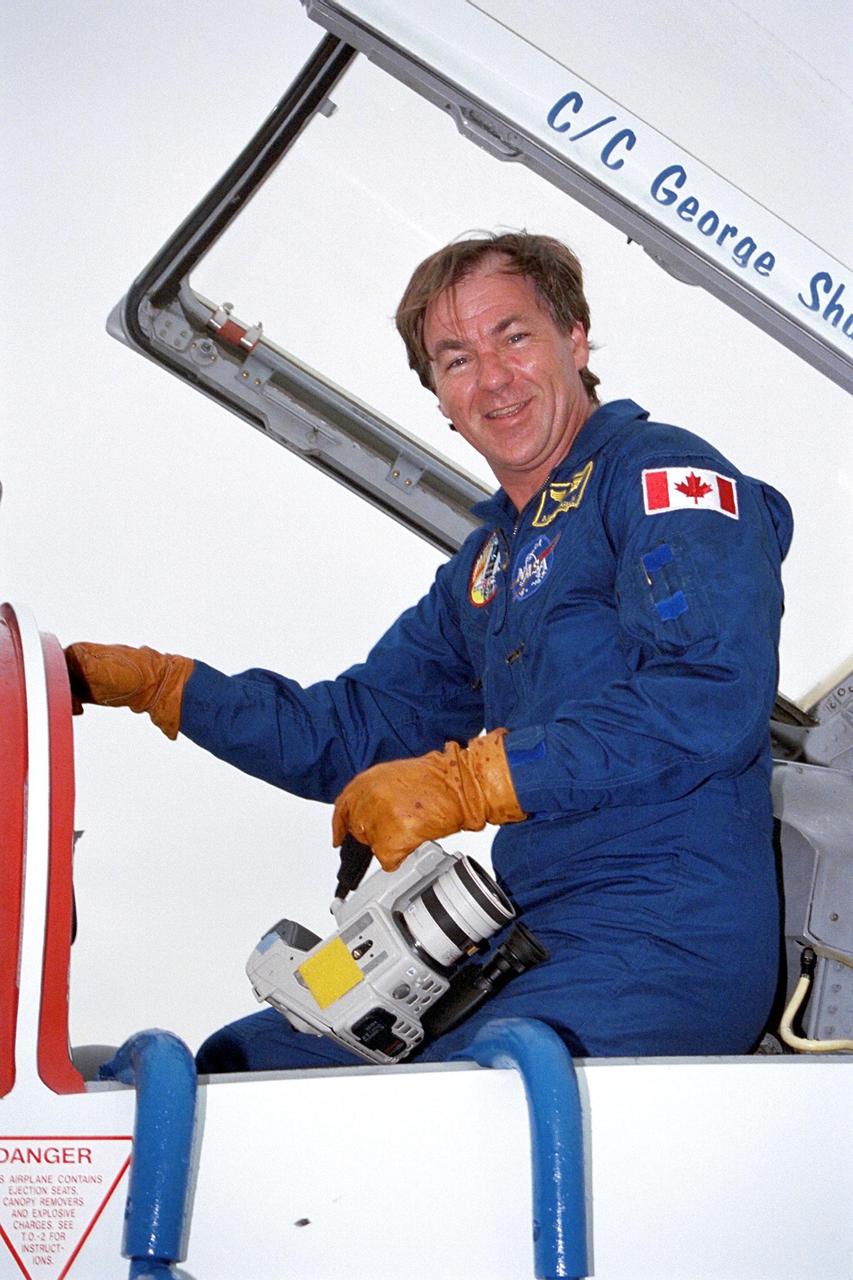
STS-85 Payload Specialist Bjarni V. Tryggvason poses in the cockpit of his T-38 jet trainer aircraft at KSC’s Shuttle Landing Facility (SLF) after his arrival with the rest of the flight crew from NASA’s Johnson Space Center to begin final preparations for the STS-85 mission. The other crew members are Commander Curtis L. Brown, Jr., Pilot Kent V. Rominger, Payload Commander N. Jan Davis, Mission Specialist Robert L. Curbeam, Jr., and Mission Specialist Stephen K. Robinson. The primary payload aboard the Space Shuttle orbiter Discovery for the 11-day space flight is the Cryogenic Infrared Spectrometers and Telescopes for the Atmosphere-2 (CRISTA-SPAS-2). Other STS-85 payloads include the Manipulator Flight Demonstration (MFD), and Technology Applications and Science-1 (TAS-1) and International Extreme Ultraviolet Hitchhiker-2 (IEH-2) experiments
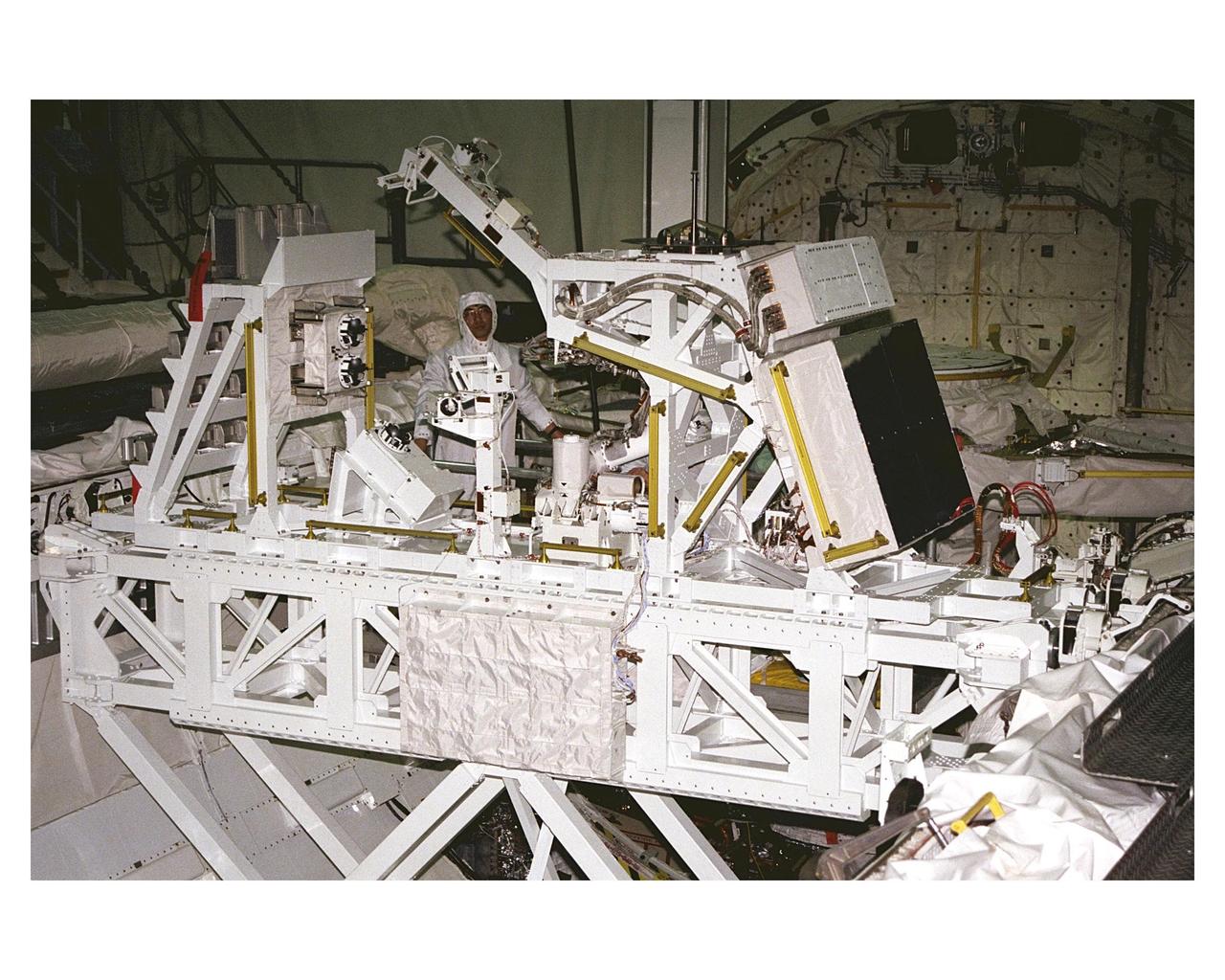
The Manipulator Flight Demonstration (MFD) payload is installed into the payload bay of the Space Shuttle Orbiter Discovery in Orbiter Processing Facility 2. The MFD is one of several payloads that will fly on the STS-85 mission. This payload is designed to test the operational capability of the Japanese Experiment Module Remote Manipulator System (JEM RMS) Small Fine Arm (SFA), which can be seen atop its Multi-Purpose Experiment Support Structure (MPESS) carrier that will serve as a platform in the payload bay for the robotic arm experiment. The arm, which will be a part of the JEM element of the International Space Station, will be operated from the orbiter’s aft flight deck during the 11-day mission. Other payloads that will be aboard Discovery on this space flight include the Cryogenic Infrared Spectrometers and Telescopes for the Atmosphere-Shuttle Pallet Satellite-2 (CRISTA- SPAS-2), Technology Applications and Science-1 (TAS-1) and International Extreme Ultraviolet Hitchhiker (IEH-2) experiments
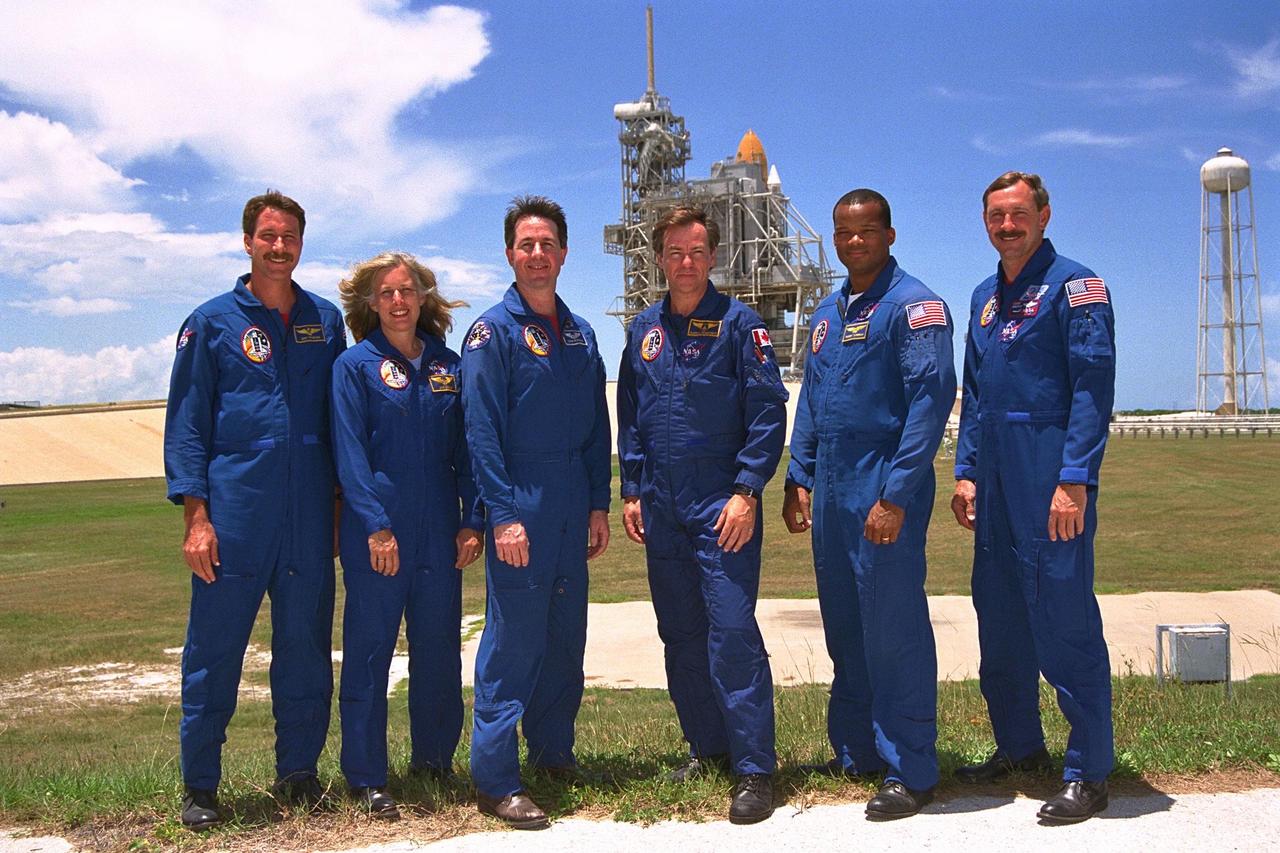
KENNEDY SPACE CENTER, Fla. -- The STS-85 flight crew poses at Launch Pad 39A during a break in Terminal Countdown Demonstration Test (TCDT) activities for that mission. They are (back row, from left): Pilot Kent V. Rominger; Payload Commander N. Jan Davis; Mission Specialist Stephen K. Robinson; Payload Specialist Bjarni V. Tryggvason; Mission Specialist Robert L. Curbeam, Jr.; and Commander Curtis L. Brown, Jr. The primary payload aboard the Space Shuttle orbiter Discovery is the Cryogenic Infrared Spectrometers and Telescopes for the Atmosphere-2 (CRISTA-SPAS-2). Other payloads on the 11-day mission include the Manipulator Flight Demonstration (MFD), and Technology Applications and Science-1 (TAS-1) and International Extreme Ultraviolet Hitchhiker-2 (IEH-2) experiments
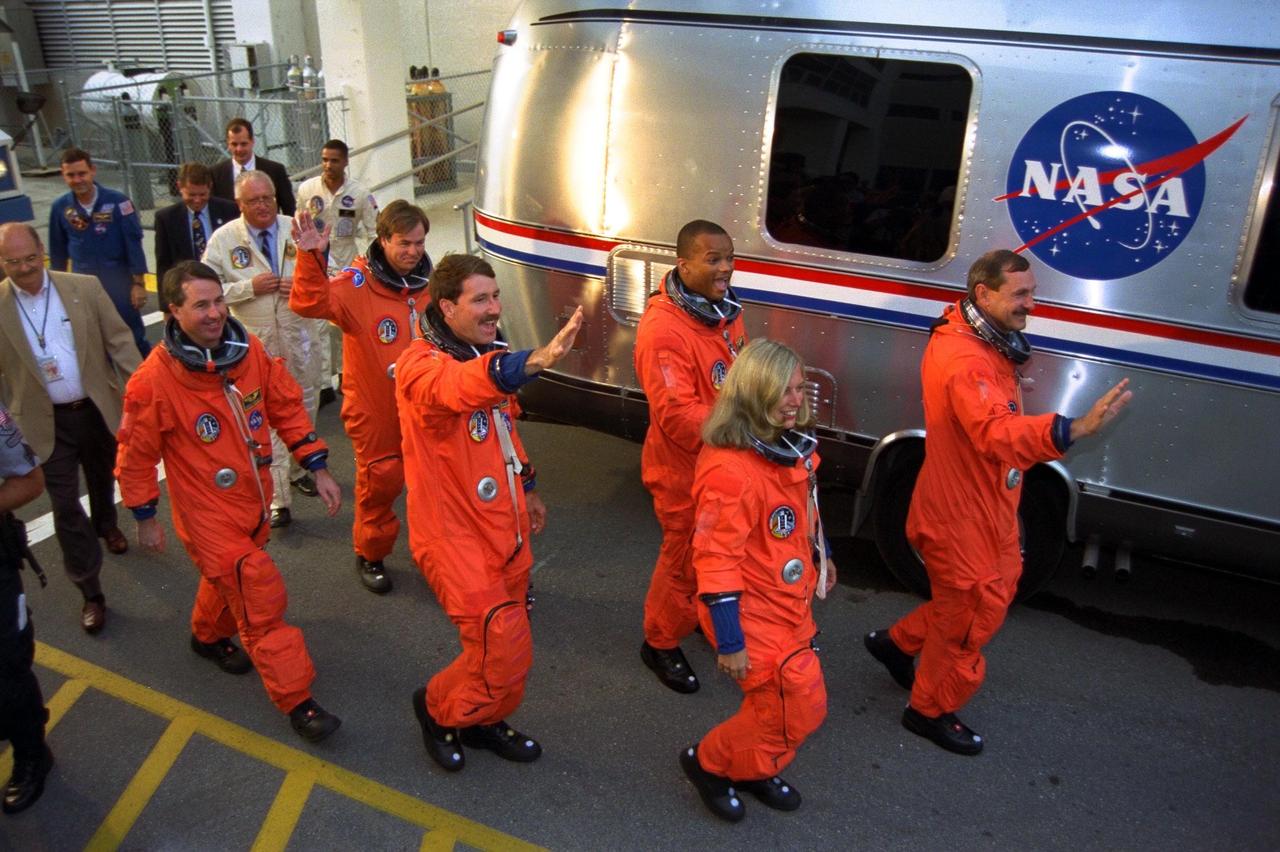
The STS-85 flight crew greets a crowd of well-wishers as they walk out of the Operations and Checkout (O&C) Building to board the Astrovan for their ride to Launch Pad 39A, where they will take their places aboard the Space Shuttle Discovery. Waving to the crowd is Commander Curtis L. Brown, Jr.(right), followed by Payload Commander N. Jan Davis, Mission Specialist Robert L. Curbeam, Jr., Pilot Kent V. Rominger, Mission Specialist Stephen K. Robinson and Payload Specialist Bjarni V. Tryggvason. The primary payload aboard the Space Shuttle orbiter Discovery is the Cryogenic Infrared Spectrometers and Telescopes for the Atmosphere-Shuttle Pallet Satellite-2 (CRISTA-SPAS-2) free-flyer. Other payloads on the 11-day mission include the Manipulator Flight Demonstration (MFD), and Technology Applications and Science-1 (TAS-1) and International Extreme Ultraviolet Hitchhiker-2 (IEH-2) experiments
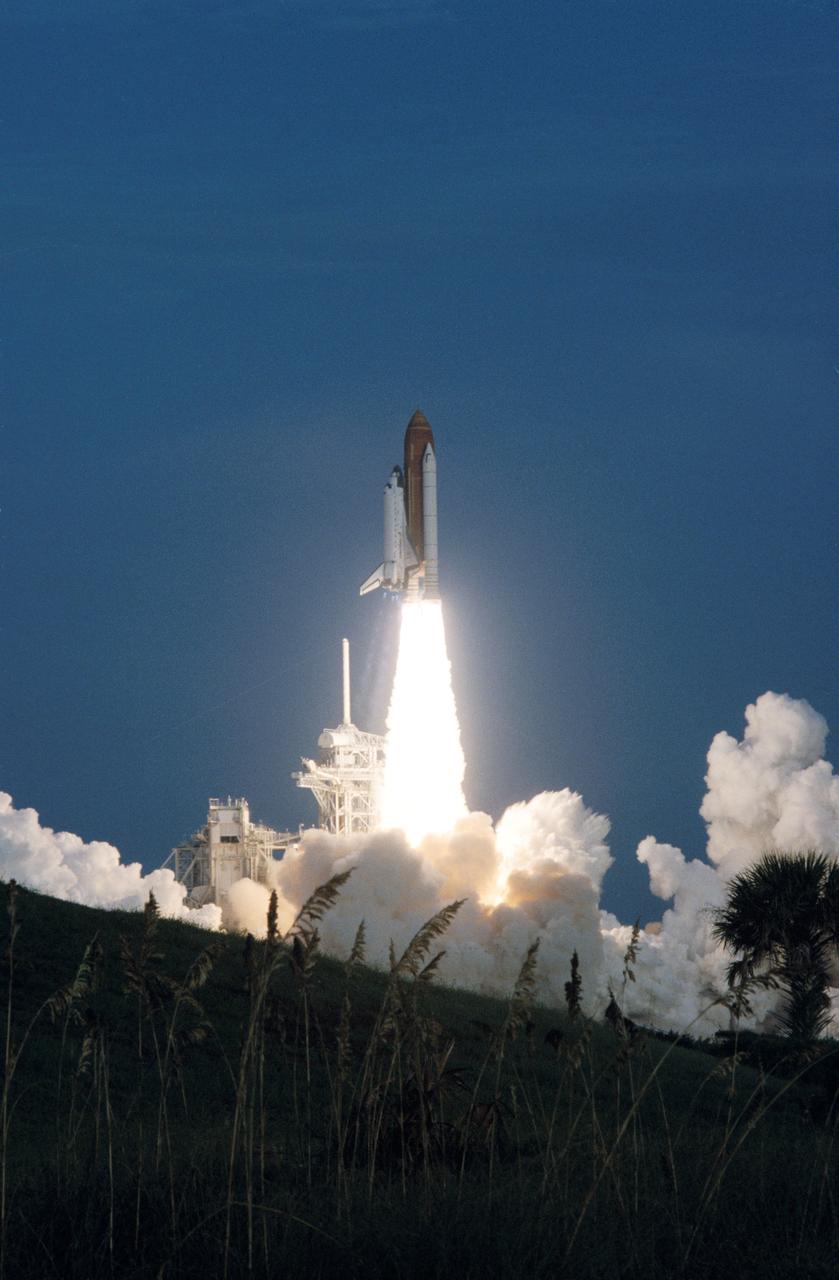
STS051-S-108 (12 Sept. 1993) --- The Space Shuttle Discovery soars toward a nine-day stay in Earth-orbit to support the mission. Launch occurred at 7:45 a.m. (EDT) September 12, 1993. Note the diamond shock effect coming from the thrust of the three main engines. Onboard the shuttle were astronauts Frank L. Culbertson, Jr., William F. Readdy, Daniel W. Bursch, James H. Newman and Carl E. Walz, along with a number of payloads. The payloads included the Advanced Communications Technology Satellite (ACTS) with its Transfer Orbit Stage (TOS), the Orbiting Retrievable Far and Extreme Ultraviolet Spectrometer (ORFEUS) and its Shuttle Pallet Satellite (SPAS) carrier. This photograph was taken with a 35mm camera.
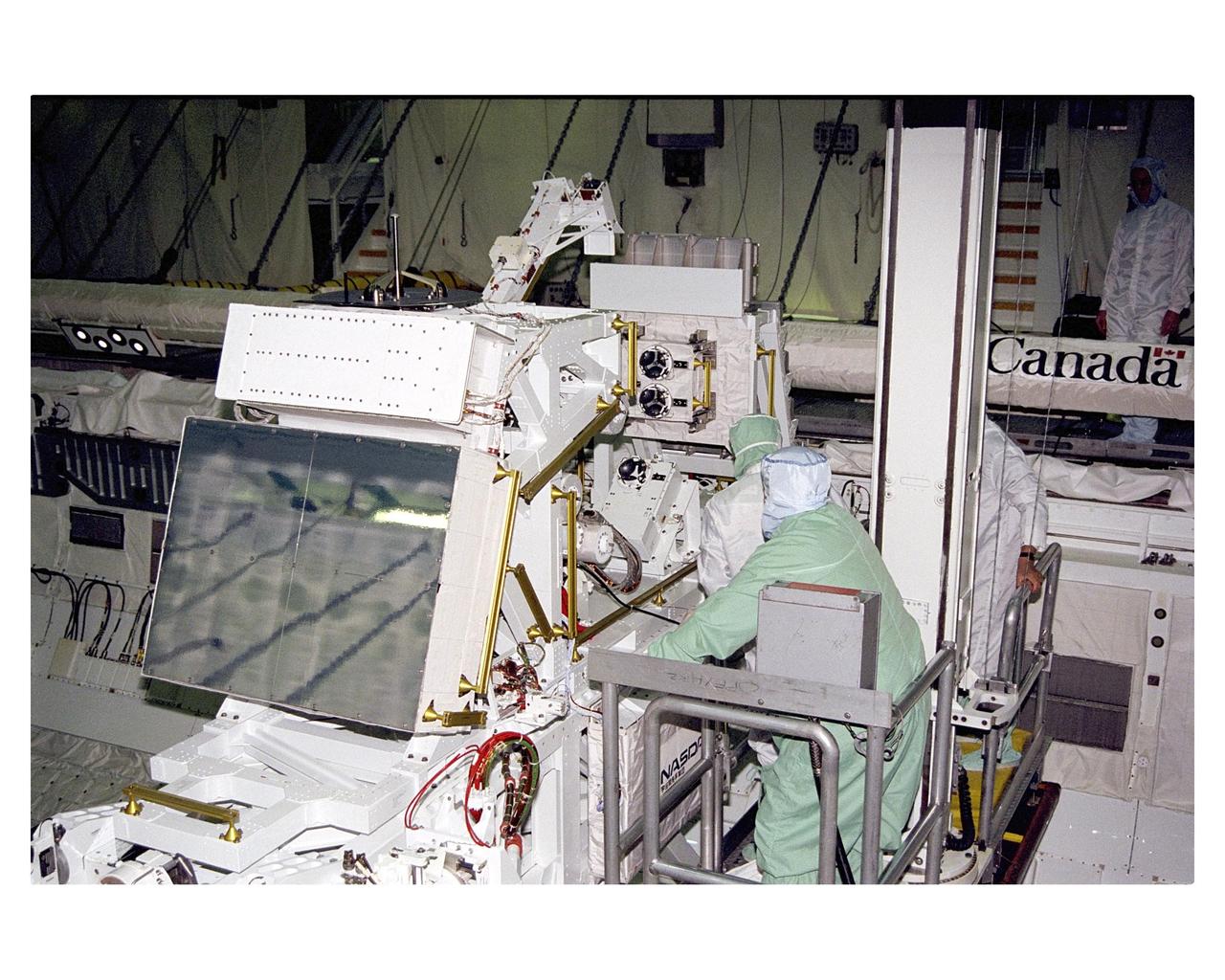
The Manipulator Flight Demonstration (MFD) payload is installed into the payload bay of the Space Shuttle Orbiter Discovery in Orbiter Processing Facility 2. The MFD is one of several payloads that will fly on the STS-85 mission. This payload is designed to test the operational capability of the Japanese Experiment Module Remote Manipulator System (JEM RMS) Small Fine Arm (SFA), which can be seen atop its Multi-Purpose Experiment Support Structure (MPESS) carrier that will serve as a platform in the payload bay for the robotic arm experiment. The arm, which will be a part of the JEM element of the International Space Station, will be operated from the orbiter’s aft flight deck during the 11-day mission. Other payloads that will be aboard Discovery on this space flight include the Cryogenic Infrared Spectrometers and Telescopes for the Atmosphere-Shuttle Pallet Satellite-2 (CRISTA- SPAS-2), Technology Applications and Science-1 (TAS-1) and International Extreme Ultraviolet Hitchhiker (IEH-2) experiments
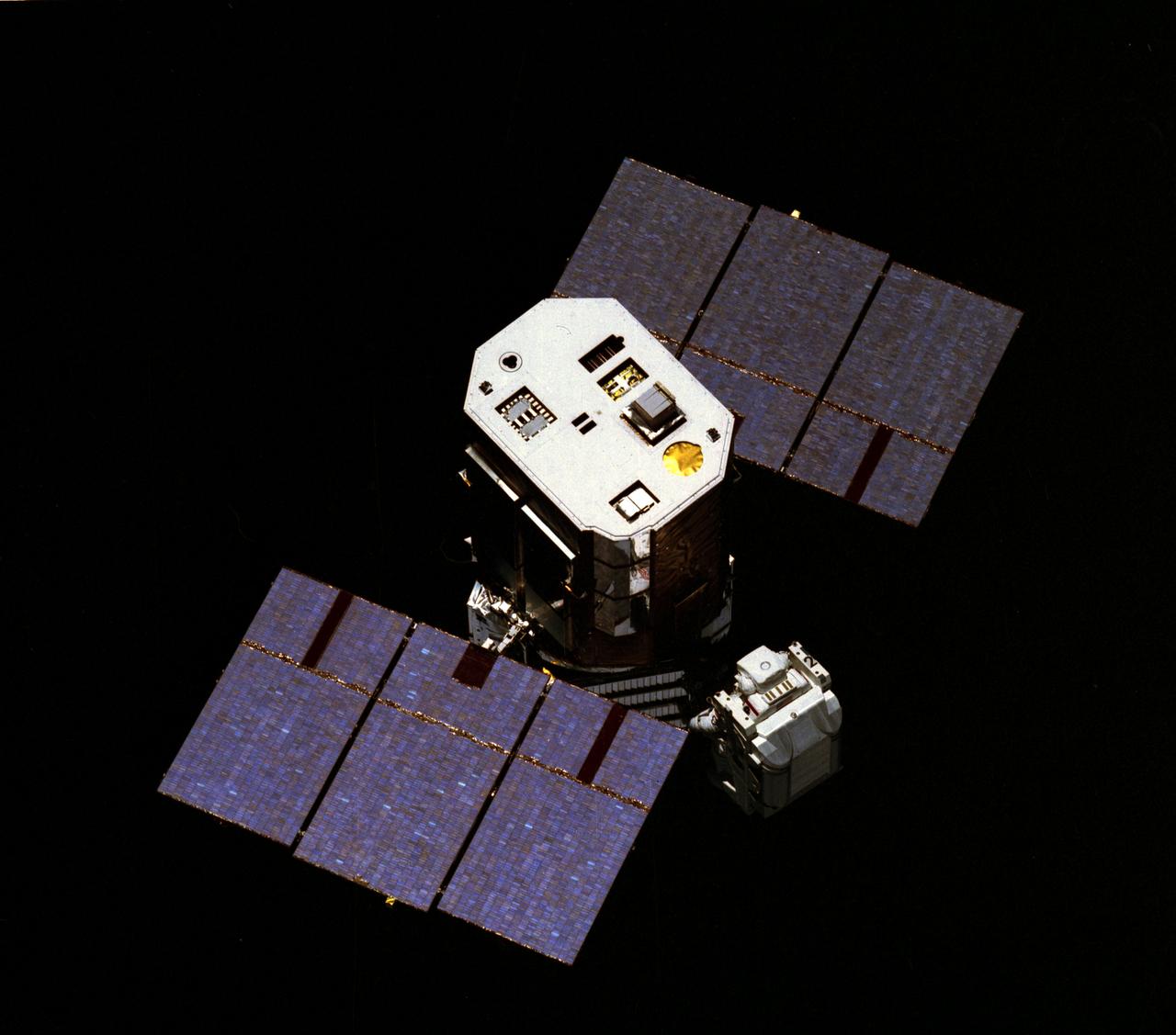
Launched April 6, 1984, one of the goals of the STS-41C mission was to repair the damaged free-flying Solar Maximum Mission Satellite (SMMS), or Solar Max. The original plan was to make an excursion out to the SMMS and capture it for necessary repairs. Pictured is Mission Specialist George Nelson approaching the damaged satellite in a capture attempt. This attempted feat was unsuccessful. It was necessary to capture the satellite via the orbiter's Remote Manipulator System (RMS) and secure it into the cargo bay in order to perform the repairs, which included replacing the altitude control system and the coronograph/polarimeter electronics box. The SMMS was originally launched into space via the Delta Rocket in February 1980, with the purpose to provide a means of studying solar flares during the most active part of the current sunspot cycle. Dr. Einar Tandberg-Hanssen of Marshall Space Flight Center's Space Sciences Lab was principal investigator for the Ultraviolet Spectrometer and Polarimeter, one of the seven experiments of the Solar Max.
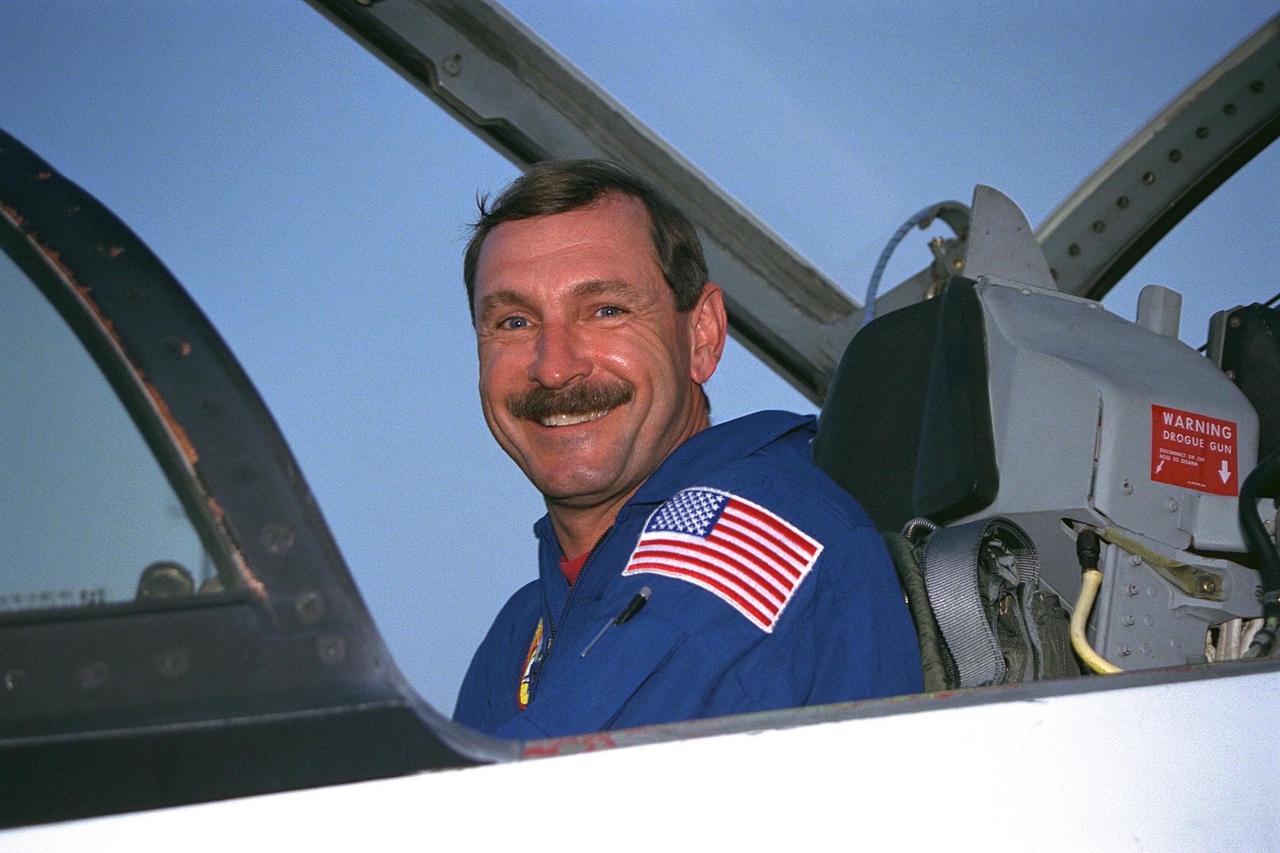
STS-85 Mission Commander Curtis L. Brown, Jr., poses in his T-38 jet trainer after landing with his crew at KSC’s Shuttle Landing Facility from NASA’s Johnson Space Center to begin Terminal Countdown Demonstration Test (TCDT) activities for that mission. The TCDT includes a dress rehearsal of the launch countdown. The STS-85 mission is now targeted for Aug. 7. The primary payload aboard the Space Shuttle orbiter Discovery is the Cryogenic Infrared Spectrometers and Telescopes for the Atmosphere-2 (CRISTA-SPAS-2). Other STS-85 payloads include the Manipulator Flight Demonstration (MFD), and Technology Applications and Science-1 (TAS-1) and International Extreme Ultraviolet Hitchhiker-2 (IEH-2) experiments
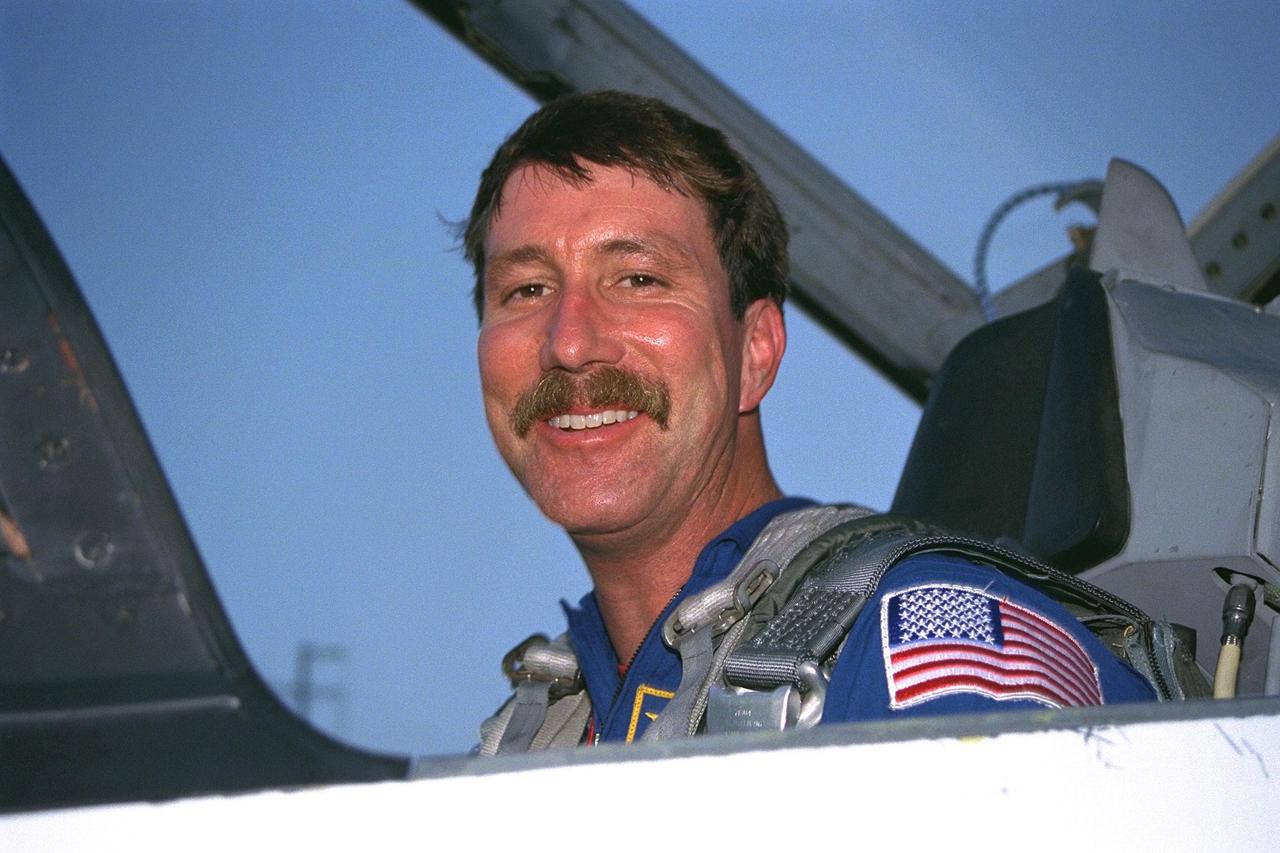
STS-85 Pilot Kent V. Rominger poses in his T-38 jet trainer after landing with other members of the flight crew at KSC’s Shuttle Landing Facility from NASA’s Johnson Space Center to begin Terminal Countdown Demonstration Test (TCDT) activities for that mission. The TCDT includes a dress rehearsal of the launch countdown. The STS-85 mission is now targeted for Aug. 7. The primary payload aboard the Space Shuttle orbiter Discovery is the Cryogenic Infrared Spectrometers and Telescopes for the Atmosphere-2 (CRISTA-SPAS-2). Other STS-85 payloads include the Manipulator Flight Demonstration (MFD), nd Technology Applications and Science-1 (TAS-1) and International Extreme Ultraviolet Hitchhiker-2 (IEH-2) experiments
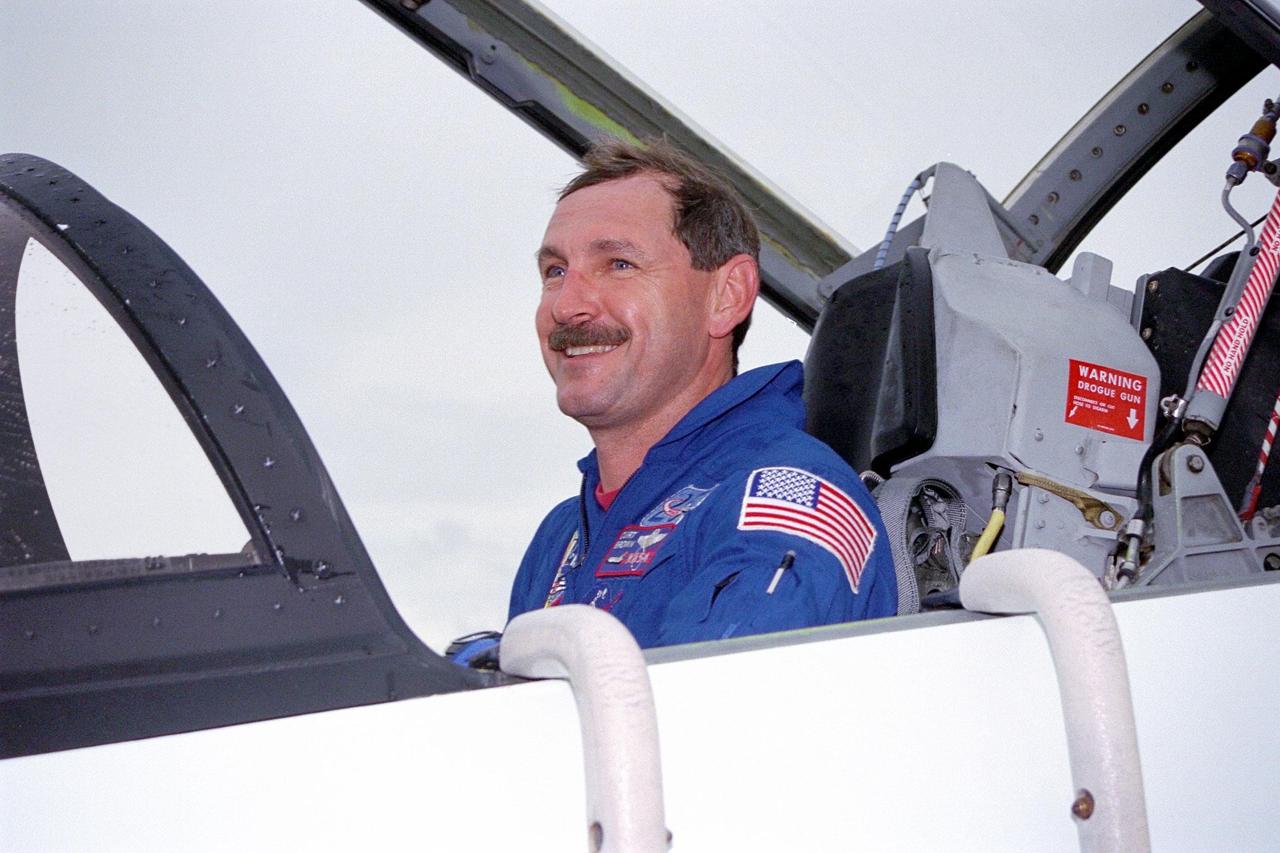
STS-85 Commander Curtis L. Brown, Jr. poses in the cockpit of his T-38 jet trainer aircraft at KSC’s Shuttle Landing Facility (SLF) after his arrival with the rest of the flight crew from NASA’s Johnson Space Center to begin final preparations for the STS-85 mission. The other crew members are Pilot Kent V. Rominger, Payload Commander N. Jan Davis, Mission Specialist Robert L. Curbeam, Jr., Mission Specialist Stephen K. Robinson and Payload Specialist Bjarni V. Tryggvason. The primary payload aboard the Space Shuttle orbiter Discovery for the 11-day space flight is the Cryogenic Infrared Spectrometers and Telescopes for the Atmosphere-2 (CRISTA-SPAS-2). Other STS-85 payloads include the Manipulator Flight Demonstration (MFD), and Technology Applications and Science-1 (TAS-1) and International Extreme Ultraviolet Hitchhiker-2 (IEH-2) experiments
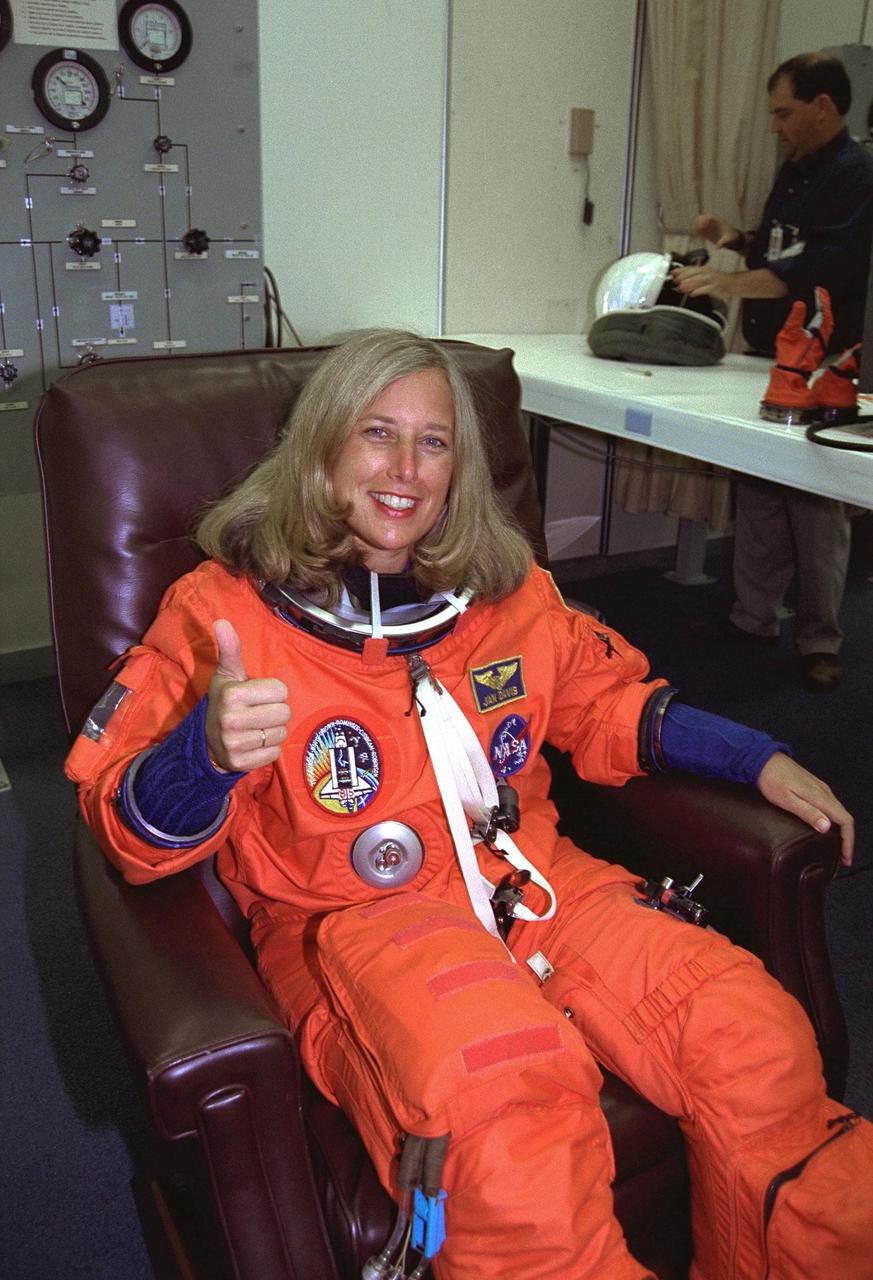
STS-85 Payload Commander N. Jan Davis gives a thumbs up as she is assisted with her ascent/reentry flight suit in the Operations and Checkout (O&C) Building. She has logged nearly 400 hours in space on the STS-47 and STS-60 missions and holds a doctorate in mechanical engineering. Davis will have overall responsibility for the experiments conducted on STS-85. She will also deploy and retrieve the Cryogenic Infrared Spectrometers and Telescopes for the AtmosphereShuttle Pallet Satellite-2 (CRISTA-SPAS-2) free-flyer and operate the prototype Japanese robotic arm. The primary payload aboard the Space Shuttle orbiter Discovery is the CRISTA-SPAS-2. Other payloads on the 11-day mission include the Manipulator Flight Demonstration (MFD), and Technology Applications and Science-1 (TAS-1) and International Extreme Ultraviolet Hitchhiker-2 (IEH-2) experiments
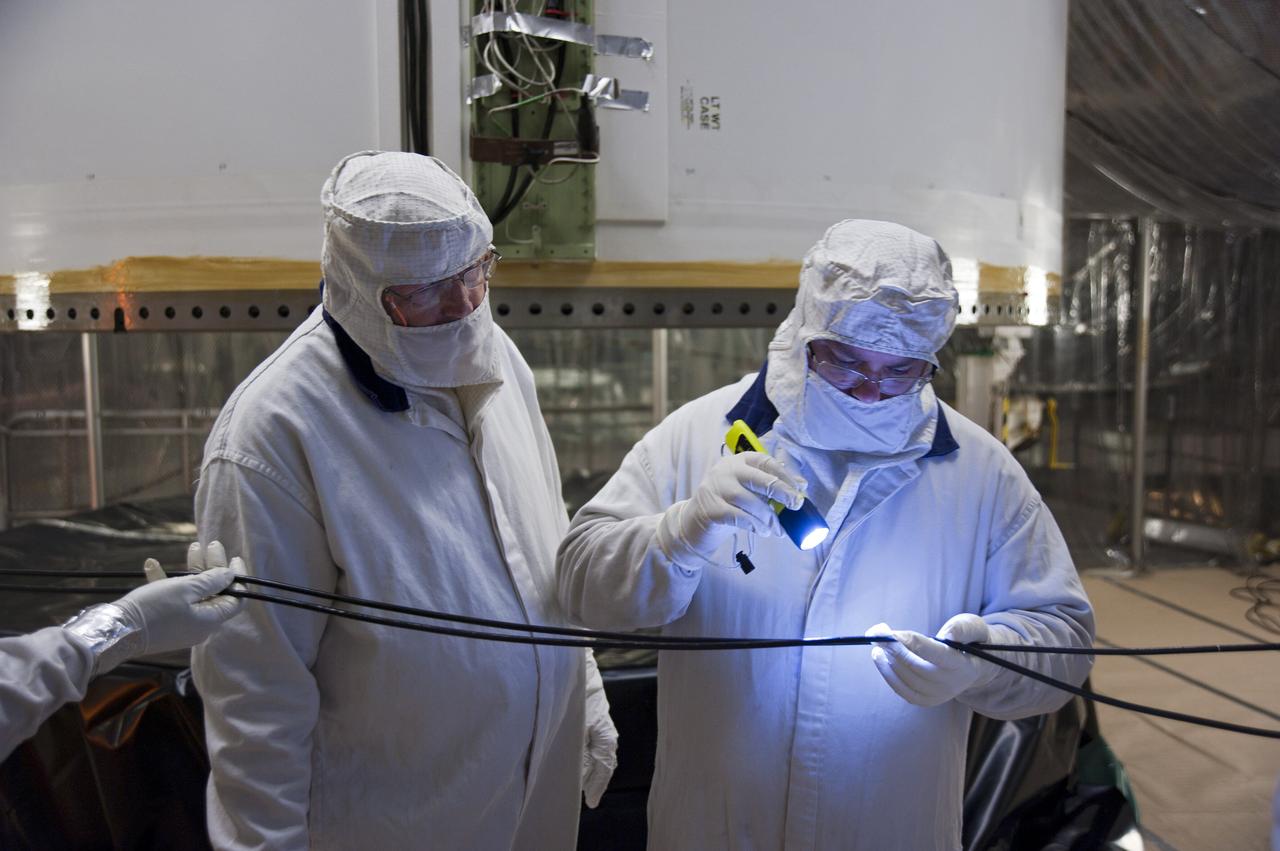
CAPE CANAVERAL, Fla. -- In the Vehicle Assembly Building at NASA's Kennedy Space Center in Florida, a worker thoroughly inspects a rubber ring section with an ultraviolet light before installation on the left forward center solid rocket booster segment. The booster along with its twin will be stacked on the mobile launcher platform along with an external fuel tank awaiting the arrival of space shuttle Endeavour for its flight to the International Space Station. As the final planned mission of the Space Shuttle Program, Endeavour and its crew will deliver the Alpha Magnetic Spectrometer, as well as critical spare components to the station on the STS-134 mission targeted for launch Feb. 26, 2011. For more information visit, http://www.nasa.gov/mission_pages/shuttle/shuttlemissions/sts134/index.html. Photo credit: NASA/Kim Shiflett
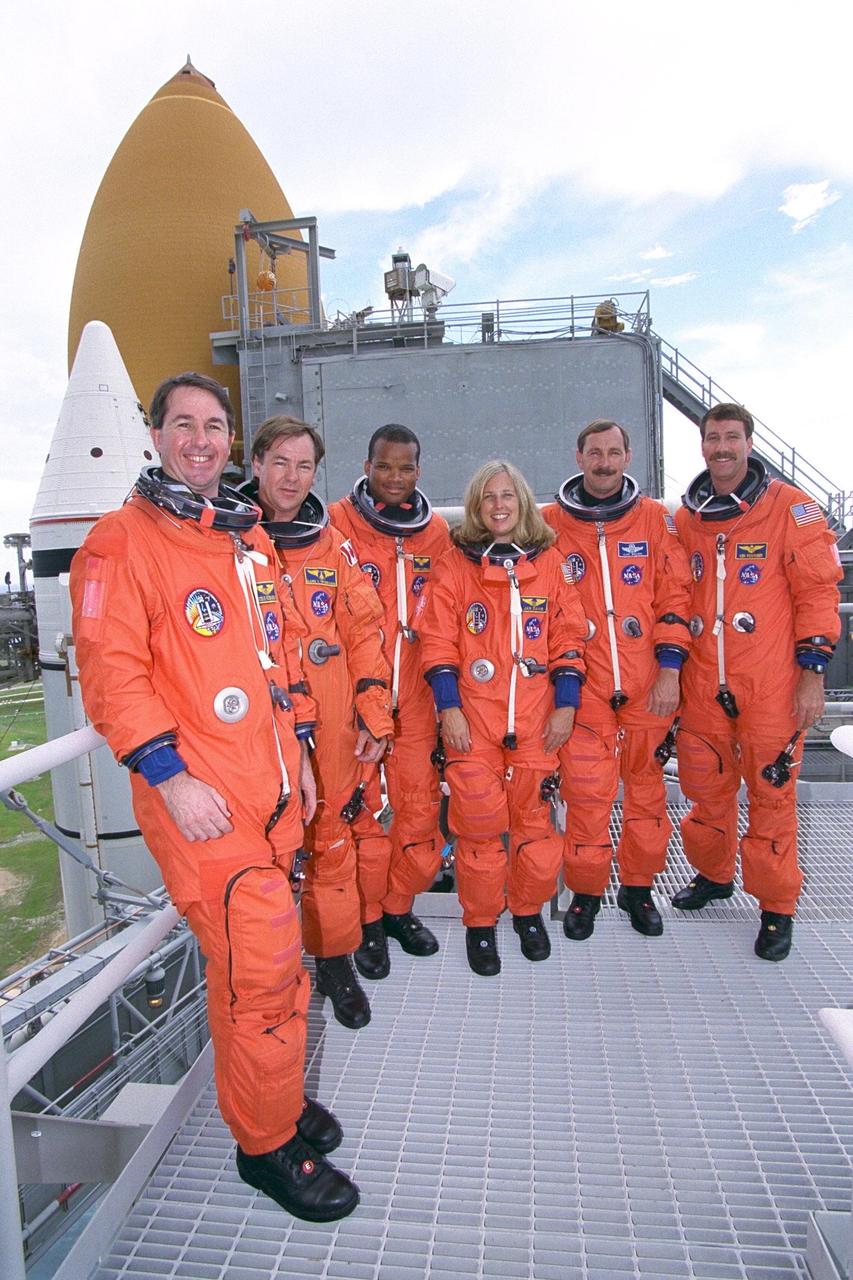
KENNEDY SPACE CENTER, Fla. -- The STS-85 flight crew members pose at the 195-foot level of Launch Pad 39A with the Space Shuttle Discovery in the background during Terminal Countdown Demonstration Test (TCDT) activities for that mission. They are (from left): Mission Specialist Stephen K. Robinson; Payload Specialist Bjarni V. Tryggvason; Mission Specialist Robert L. Curbeam, Jr.; Payload Commander N. Jan Davis; Commander Curtis L. Brown, Jr.; and Pilot Kent V. Rominger. The primary payload aboard the Space Shuttle orbiter Discovery is the Cryogenic Infrared Spectrometers and Telescopes for the Atmosphere-2 (CRISTA-SPAS-2). Other STS-85 payloads include the Manipulator Flight Demonstration (MFD), and Technology Applications and Science-1 (TAS-1) and International Extreme Ultraviolet Hitchhiker-2 (IEH-2) experiments

KENNEDY SPACE CENTER, FLA. -- The STS-85 flight crew members address the news media at the KSC Shuttle Landing Facility (SLF) after their arrival from NASA’s Johnson Space Center to begin final preparations for the STS-85 mission. They are (from left): Mission Specialist Stephen K. Robinson; Payload Commander N. Jan Davis; Commander Curtis L. Brown, Jr.; Pilot Kent V. Rominger; Mission Specialist Robert L. Curbeam, Jr.; and Payload Specialist Bjarni V. Tryggvason. The primary payload aboard the Space Shuttle orbiter Discovery for the 11-day space flight is the Cryogenic Infrared Spectrometers and Telescopes for the Atmosphere-2 (CRISTA-SPAS-2). Other STS-85 payloads include the Manipulator Flight Demonstration (MFD), and Technology Applications and Science-1 (TAS-1) and International Extreme Ultraviolet Hitchhiker-2 (IEH-2) experiments.
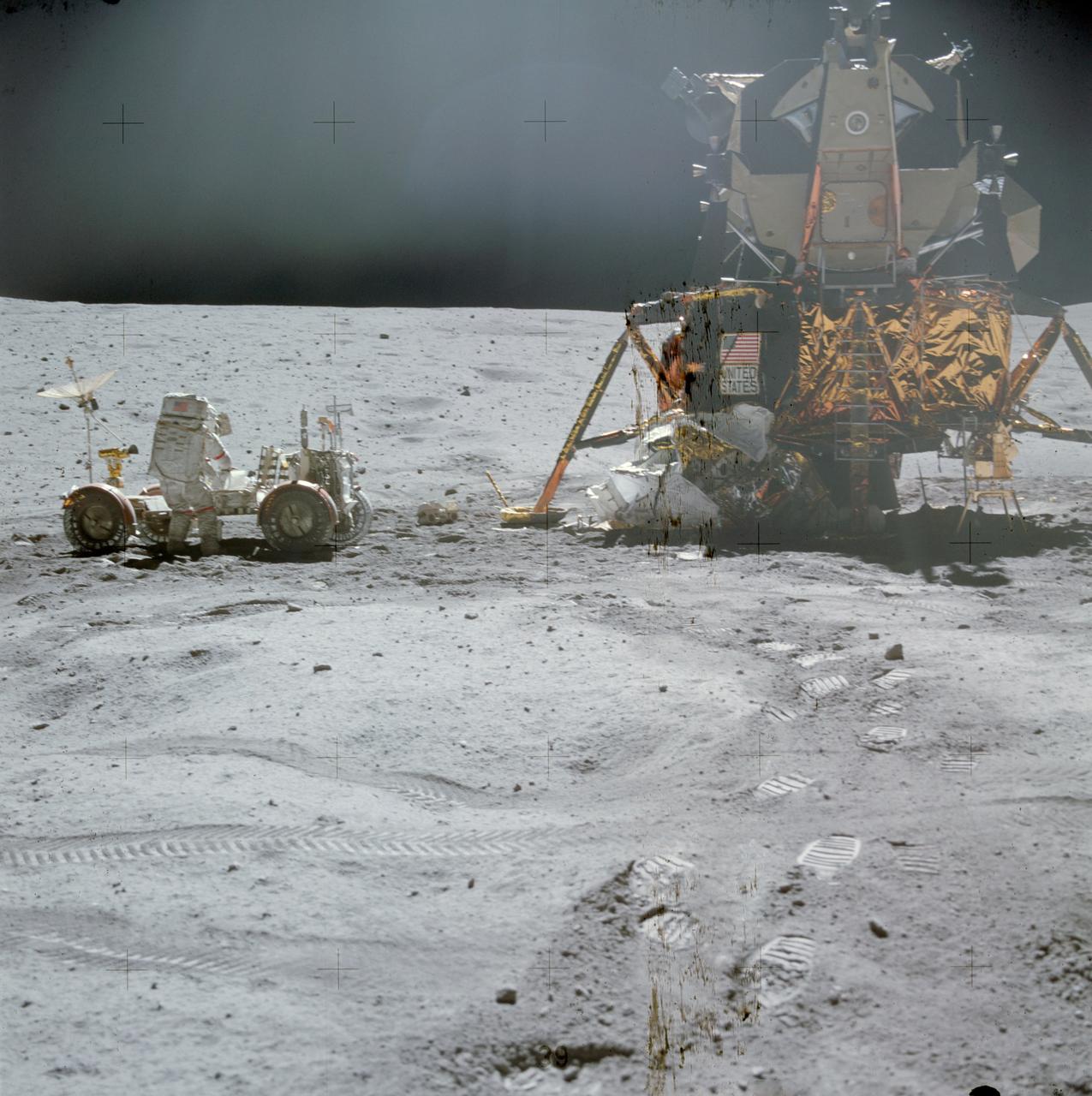
AS16-116-18578 (21 April 1972) --- Astronaut John W. Young, commander of the Apollo 16 lunar landing mission, works at the Lunar Roving Vehicle (LRV) just prior to deployment of the Apollo Lunar Surface Experiments Package (ALSEP) during the first extravehicular activity (EVA) on April 21, 1972. Note the Ultraviolet (UV) Camera/Spectrometer to the right of the Lunar Module (LM) ladder. Also, note the pile of protective/thermal foil under the U.S. flag on the LM which the astronauts pulled away to get to the Modular Equipment Storage Assembly (MESA) bay. While astronauts Young and Charles M. Duke Jr., lunar module pilot; descended in the Apollo 16 LM "Orion" to explore the Descartes highlands landing site on the moon, astronaut Thomas K. Mattingly II, command module pilot, remained with the Command and Service Modules (CSM) "Casper" in lunar orbit.

KENNEDY SPACE CENTER, Fla. -- The Rotating Service Structure is rolled back at Launch Complex 39A to reveal the Space Shuttle orbiter Discovery, scheduled to launch on mission STS-85 at 10:41 a.m. EDT on August 7. The STS-85 flight crew members are Mission Specialist Stephen K. Robinson; Payload Commander N. Jan Davis; Pilot Kent V. Rominger; Payload Specialist Bjarni V. Tryggvason; Commander Curtis L. Brown, Jr.; and Mission Specialist Robert L. Curbeam, Jr. The primary payload aboard the Space Shuttle orbiter Discovery for the 11-day space flight is the Cryogenic Infrared Spectrometers and Telescopes for the Atmosphere-2 (CRISTA-SPAS-2). Other STS-85 payloads include the Manipulator Flight Demonstration (MFD), and Technology Applications and Science-1 (TAS-1) and International Extreme Ultraviolet Hitchhiker-2 (IEH-2) experiments
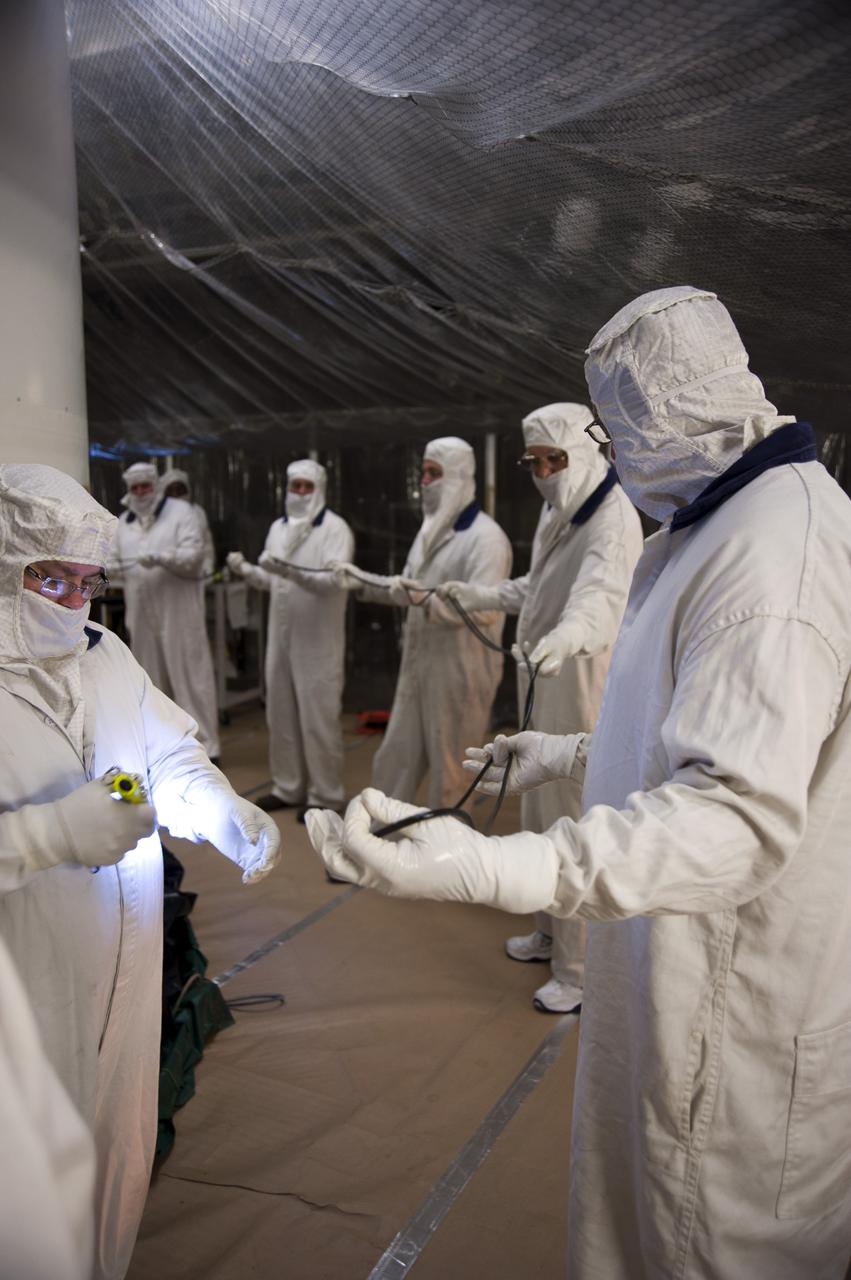
CAPE CANAVERAL, Fla. -- In the Vehicle Assembly Building at NASA's Kennedy Space Center in Florida, workers hold up the rubber rings while another thoroughly inspects each section with an ultraviolet light before the rings are installed on the left forward center solid rocket booster segment. The booster along with its twin will be stacked on the mobile launcher platform along with an external fuel tank awaiting the arrival of space shuttle Endeavour for its flight to the International Space Station. As the final planned mission of the Space Shuttle Program, Endeavour and its crew will deliver the Alpha Magnetic Spectrometer, as well as critical spare components to the station on the STS-134 mission targeted for launch Feb. 26, 2011. For more information visit, http://www.nasa.gov/mission_pages/shuttle/shuttlemissions/sts134/index.html. Photo credit: NASA/Kim Shiflett
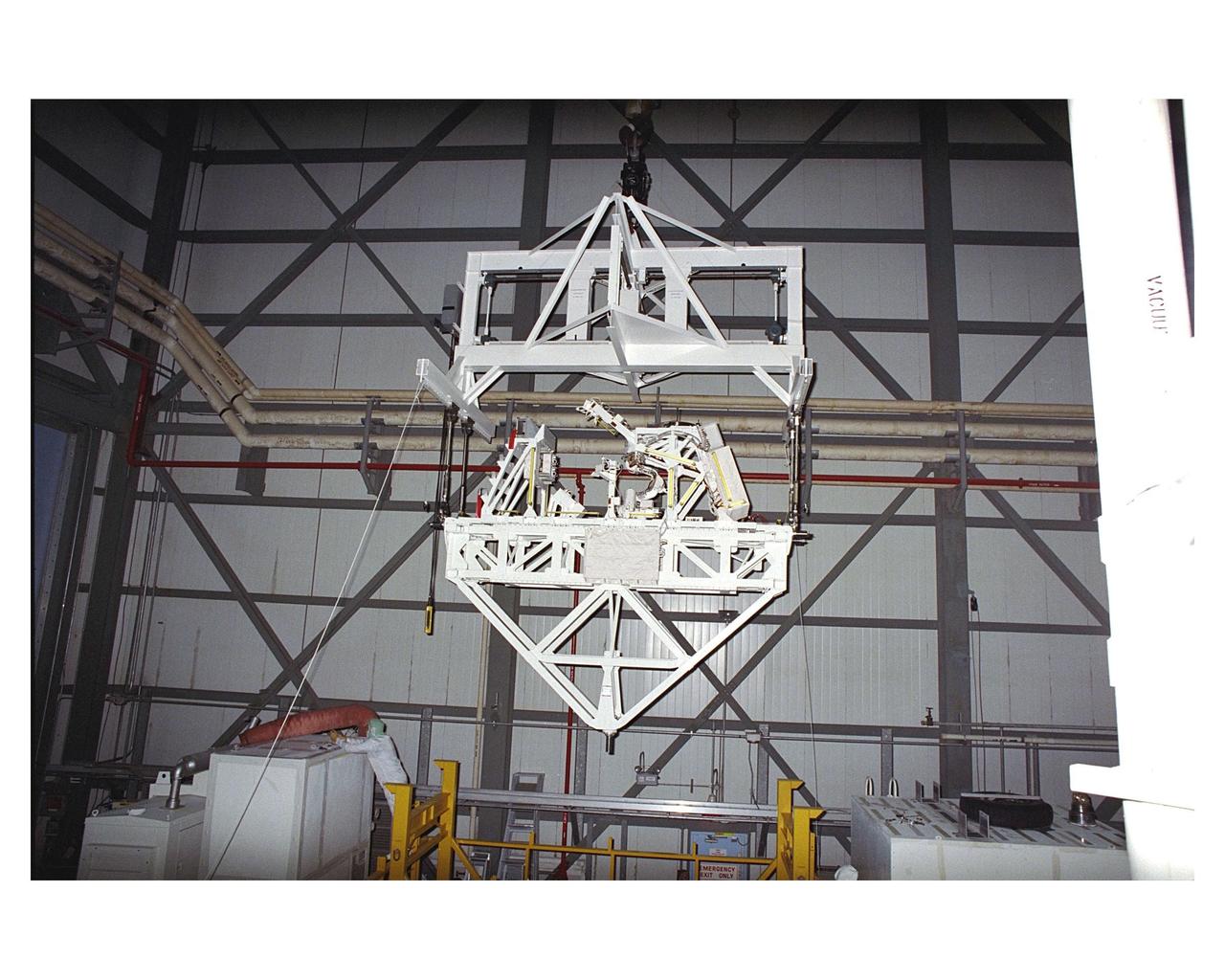
The Manipulator Flight Demonstration (MFD) payload is hoisted for installation into the payload bay of the Space Shuttle Orbiter Discovery in Orbiter Processing Facility 2. The MFD is one of several payloads that will fly on the STS-85 mission. This payload is designed to test the operational capability of the Japanese Experiment Module Remote Manipulator System (JEM RMS) Small Fine Arm (SFA), which can be seen atop its Multi-Purpose Experiment Support Structure (MPESS) carrier that will serve as a platform in the payload bay for the robotic arm experiment. The arm, which will be a part of the JEM element of the International Space Station, will be operated from the orbiter’s aft flight deck during the 11-day mission. Other payloads that will be aboard Discovery on this space flight include the Cryogenic Infrared Spectrometers and Telescopes for the Atmosphere-Shuttle Pallet Satellite-2 (CRISTA-SPAS-2), Technology Applications and Science-1 (TAS-1) and International Extreme Ultraviolet Hitchhiker (IEH-2) experiments
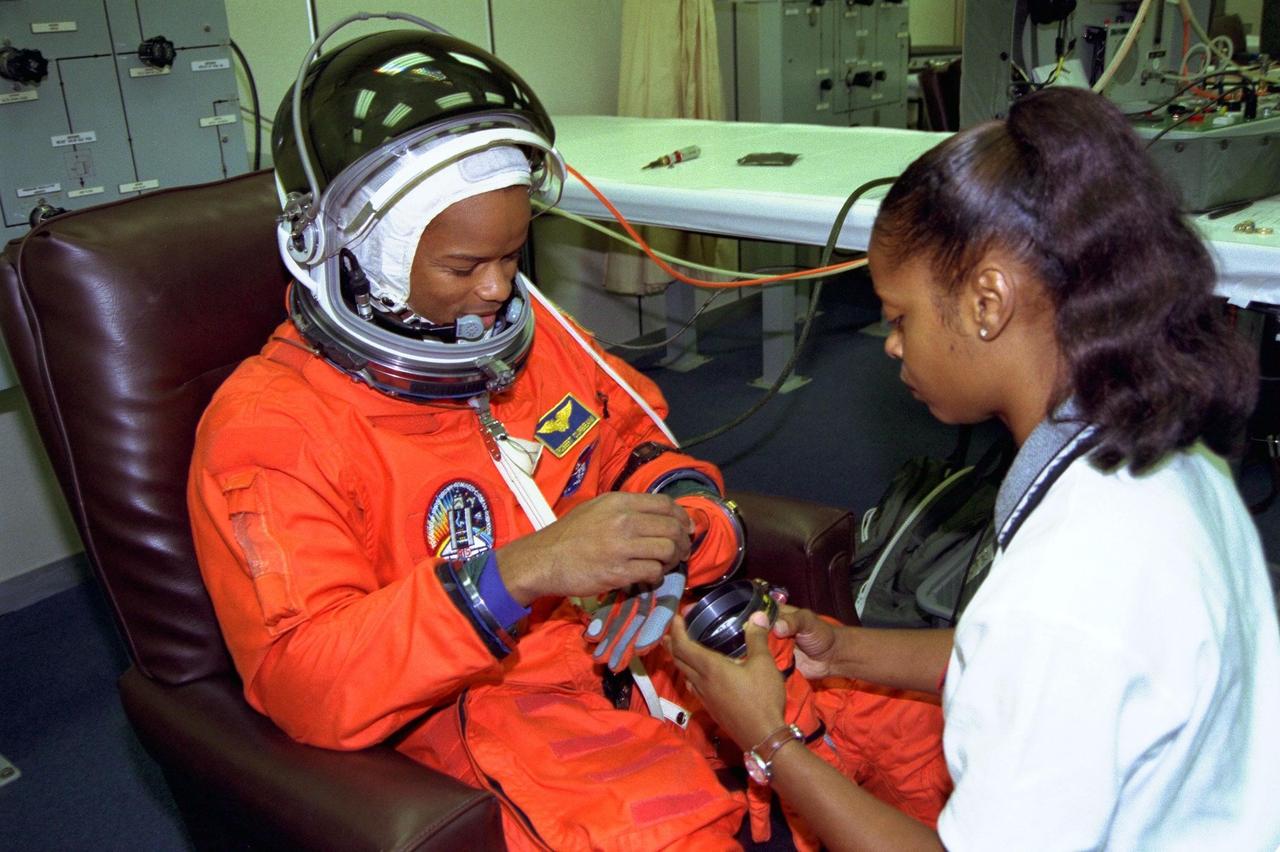
STS-85 Mission Specialist Robert L. Curbeam, Jr. looks down at his glove as a suit technician helps him with the other as he undergoes suitup in the Operations and Checkout (O&C) Building. He is a lieutenant commander in the Navy and is a former radar intercept officer. Curbeam holds a master’s degree in aeronautical engineering and was selected as an astronaut in 1994. On TS-85, Curbeam will serve as the expert for the operation of the Cryogenic Infrared Spectrometers and Telescopes for the Atmosphere-Shuttle Pallet Satellite-2 (CRISTA-SPAS-2) free-flyer, Technology Applications and Science-1 (TAS-1) and science, and International Extreme Ultraviolet Hitchhiker-2 payloads. He will also serve as the flight engineer during ascent and reentry operations
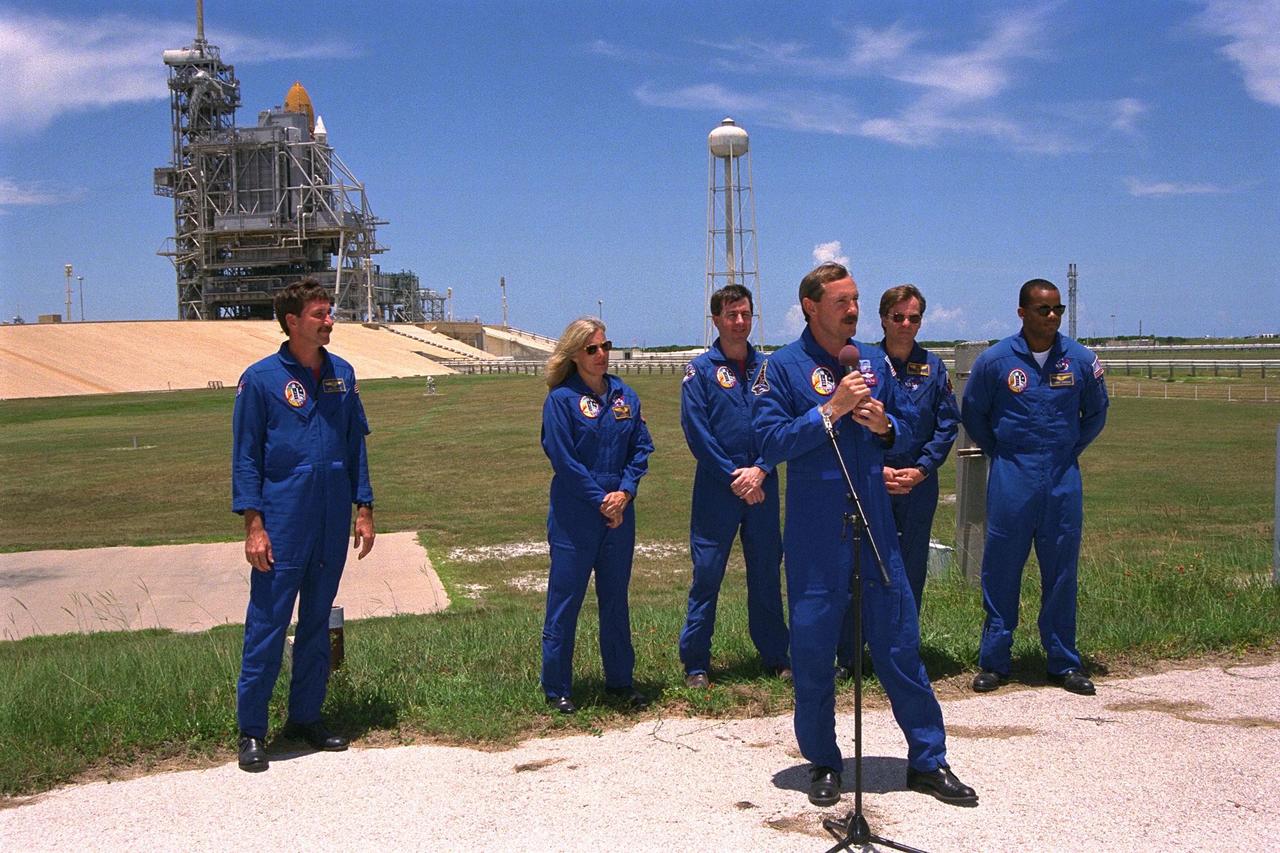
KENNEDY SPACE CENTER, Fla. -- STS-85 Commander Curtis L. Brown, Jr., addresses the news media at a briefing at Launch Pad 39A while the other members of the flight crew in the background prepare to field questions during a break in Terminal Countdown Demonstration Test (TCDT) activities for that mission. They are (back row, from left): Pilot Kent V. Rominger; Payload Commander N. Jan Davis; Mission Specialist Stephen K. Robinson; Payload Specialist Bjarni V. Tryggvason; and Mission Specialist Robert L. Curbeam, Jr. The primary payload aboard the Space Shuttle orbiter Discovery is the Cryogenic Infrared Spectrometers and Telescopes for the Atmosphere-2 (CRISTA-SPAS-2). Other payloads on the 11-day mission include the Manipulator Flight Demonstration (MFD), and Technology Applications and Science-1 (TAS-1) and International Extreme Ultraviolet Hitchhiker-2 (IEH-2) experiments
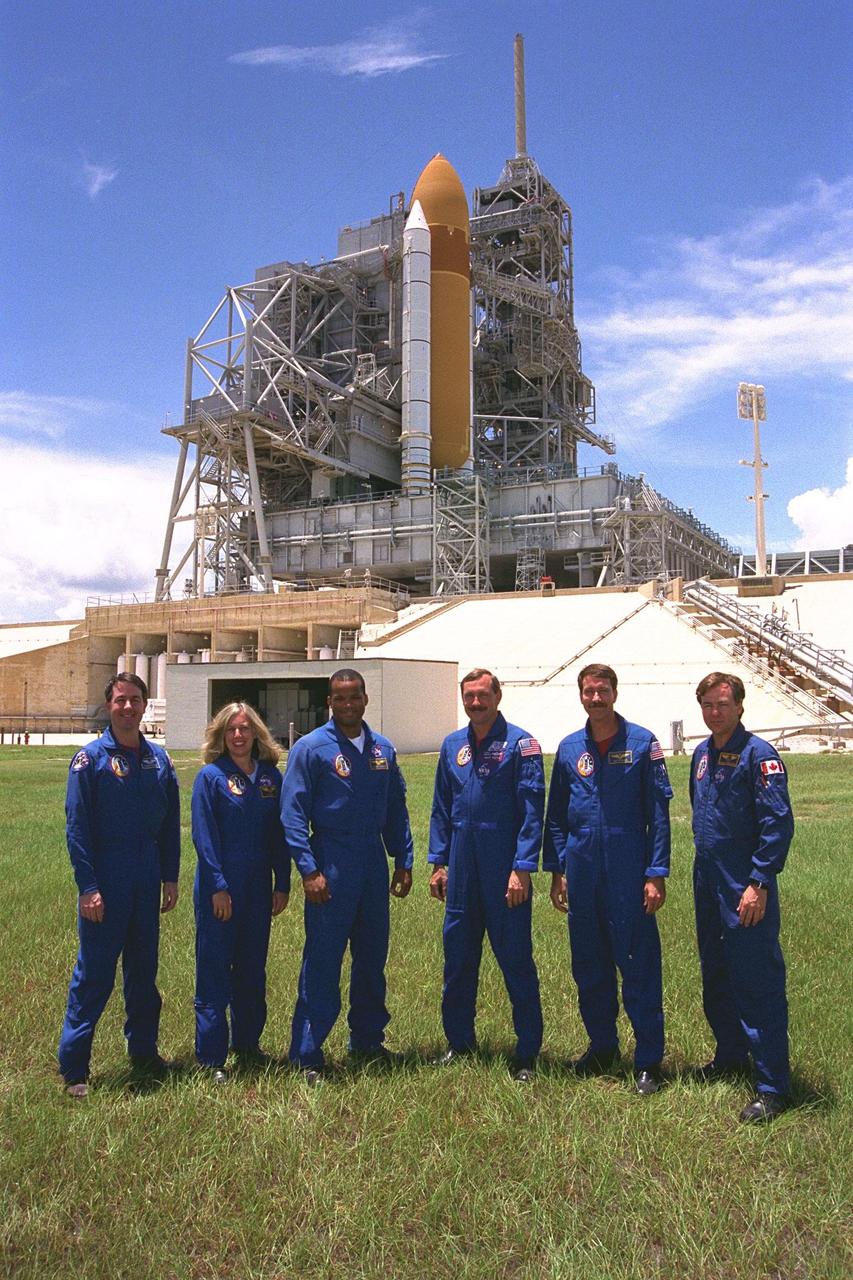
KENNEDY SPACE CENTER, Fla. -- The STS-85 flight crew poses in front of the Space Shuttle Discovery at Launch Pad 39A during a break in Terminal Countdown Demonstration Test (TCDT) activities for that mission. They are (from left): Mission Specialist Stephen K. Robinson; Payload Commander N. Jan Davis; Mission Specialist Robert L. Curbeam, Jr.; Commander Curtis L. Brown, Jr.; Pilot Kent V. Rominger; and Payload Specialist Bjarni V. Tryggvason. The primary payload aboard the Space Shuttle orbiter Discovery is the Cryogenic Infrared Spectrometers and Telescopes for the Atmosphere-2 (CRISTA-SPAS-2). Other payloads on the 11-day mission include the Manipulator Flight Demonstration (MFD), and Technology Applications and Science-1 (TAS-1) and International Extreme Ultraviolet Hitchhiker-2 (IEH-2) experiments
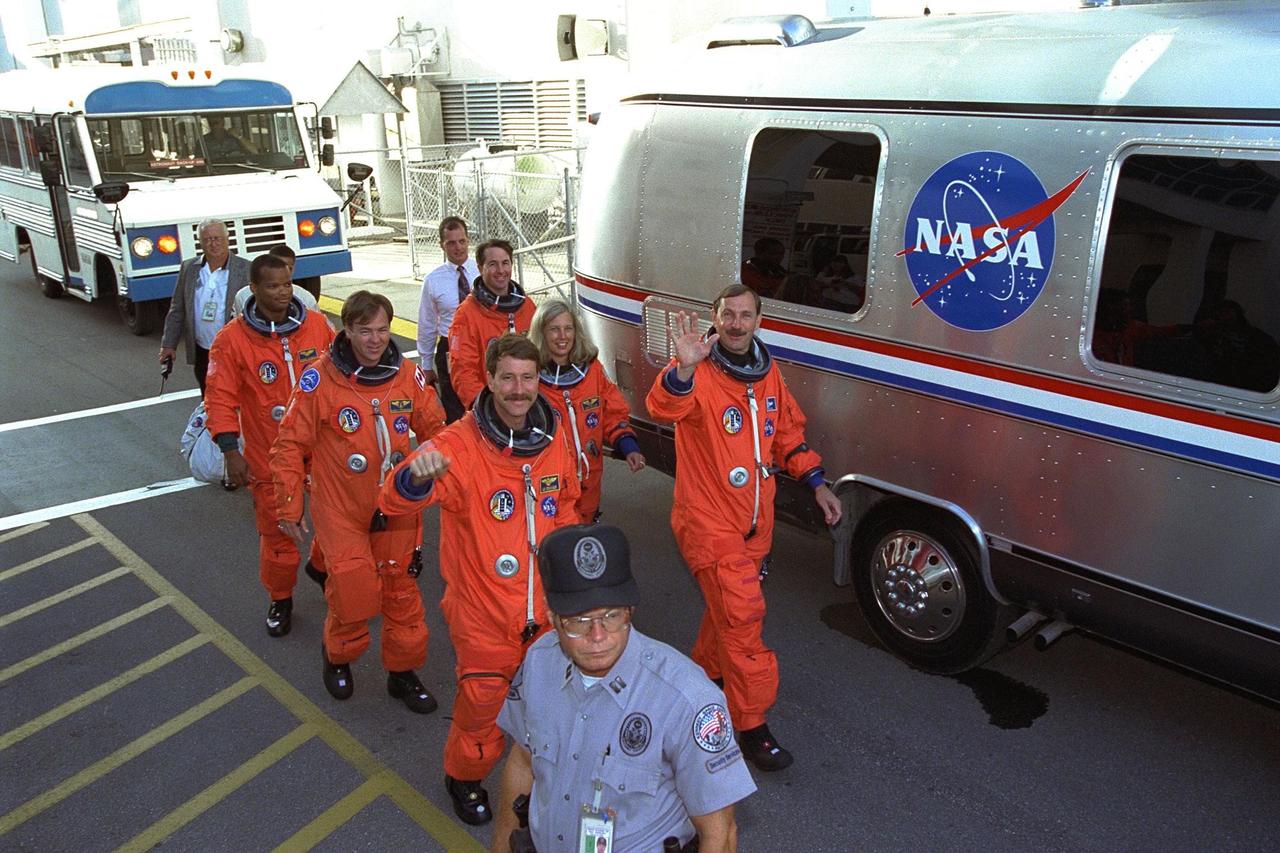
The STS-85 flight crew walks out of the Operations and Checkout (O&C) Building during Terminal Countdown Demonstration Test (TCDT) activities for that mission to board the Astrovan for the ride to the Space Shuttle Discovery on Launch Pad 39A. Waving to the crowd is Commander Curtis L. Brown, Jr. (right). Directly behind him are Payload Commander N. Jan Davis and Mission Specialist Stephen K. Robinson. Pilot Kent V. Rominger (to Brown’s right) is leading the second row, followed by Payload Specialist Bjarni V. Tryggvason and Mission Specialist Robert L. Curbeam, Jr. The primary payload aboard the Space Shuttle orbiter Discovery is the Cryogenic Infrared Spectrometers and Telescopes for the Atmosphere-2 (CRISTA-SPAS-2). Other payloads on the 11-day mission include the Manipulator Flight Demonstration (MFD), and Technology Applications and Science-1 (TAS-1) and International Extreme Ultraviolet Hitchhiker-2 (IEH-2) experiments
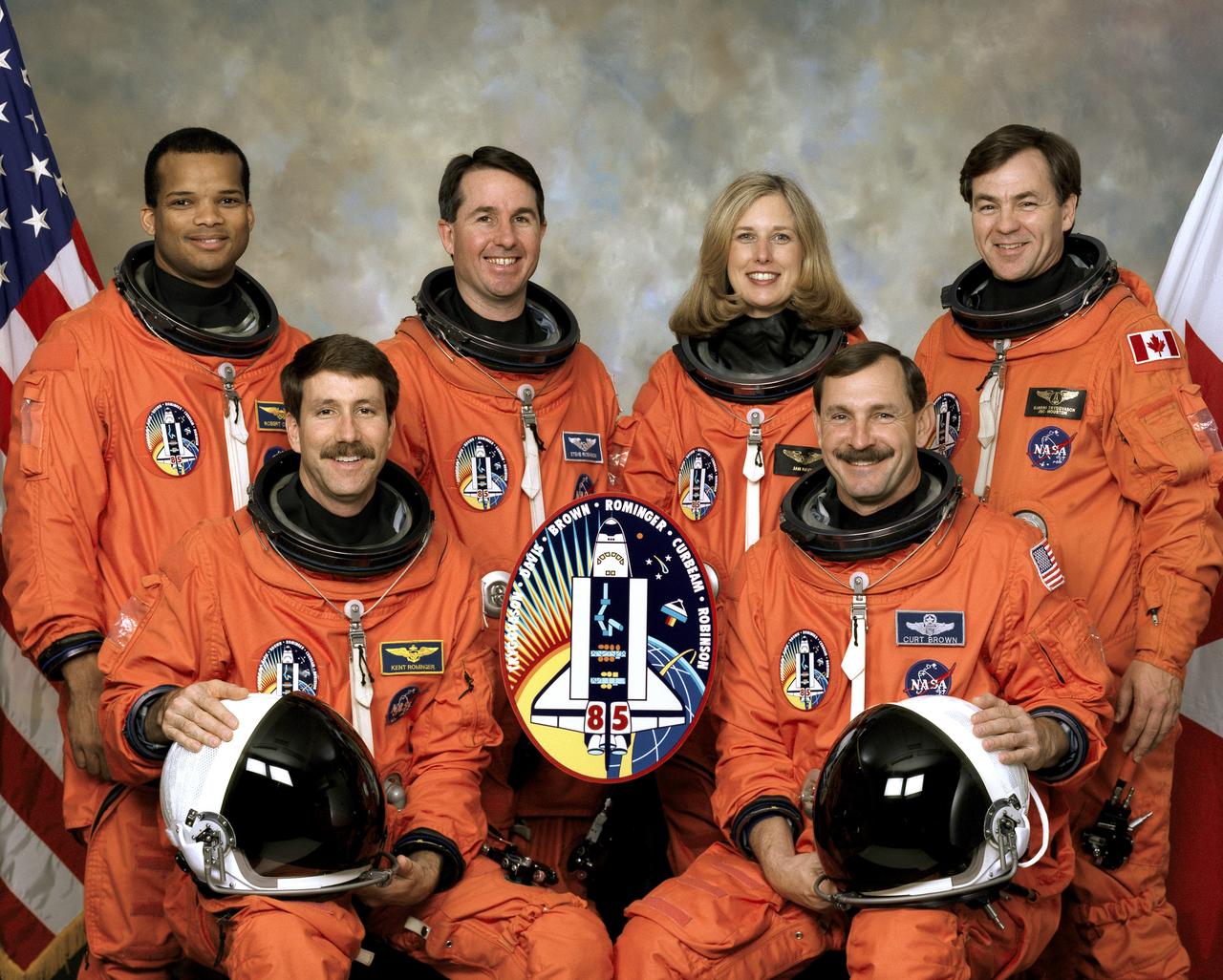
Five NASA astronauts and a Canadian payload specialist pause from their training schedule to pose for the traditional crew portrait for their mission, STS-85. In front are astronauts Curtis L. Brown, Jr. (right), mission commander, and Kent V. Rominger, pilot. On the back row, from the left, are astronauts Robert L. Curbeam, Jr., Stephen K. Robinson, and N. Jan Davis, all mission specialists, along with the Canadian Space Agency’s (CSA) payload specialist, Bjarni Tryggvason. The five launched into space aboard the Space Shuttle Discovery on August 7, 1997 at 10:41:00 a.m. (EDT). Major payloads included the satellite known as Cryogenic Infrared Spectrometers and Telescopes for the Atmosphere-Shuttle Pallet Satellite-2 CRISTA-SPAS-02. CRISTA; a Japanese Manipulator Flight Development (MFD); the Technology Applications and Science (TAS-01); and the International Extreme Ultraviolet Hitchhiker (IEH-02).
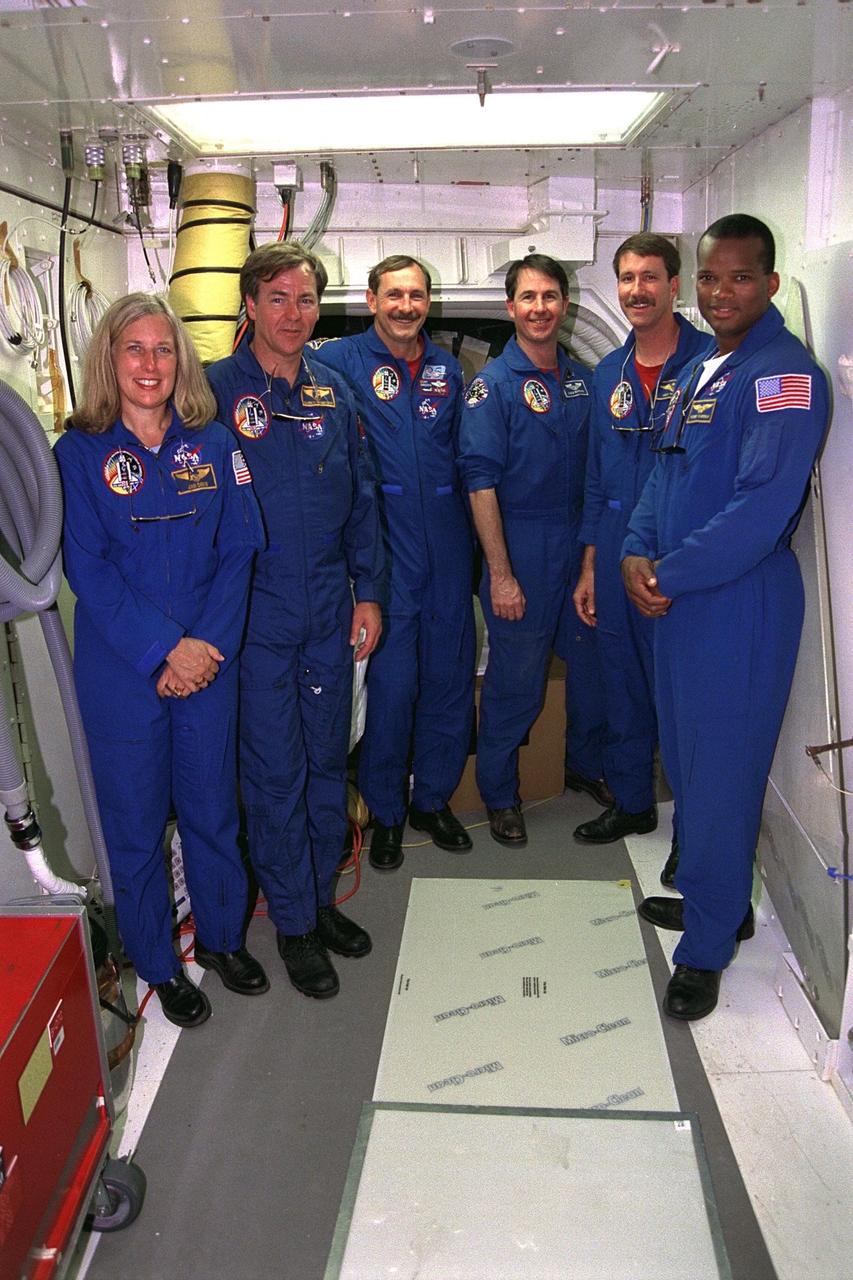
The STS-85 flight crew poses in the white room at Launch Pad 39A during a break in Terminal Countdown Demonstration Test (TCDT) activities for that mission. They are (from left): Payload Commander N. Jan Davis; Payload Specialist Bjarni V. Tryggvason; Commander Curtis L. Brown, Jr.; Mission Specialist Stephen K. Robinson; Pilot Kent V. Rominger; and Mission Specialist Robert L. Curbeam, Jr. The primary payload aboard the Space Shuttle orbiter Discovery is the Cryogenic Infrared Spectrometers and Telescopes for the Atmosphere-2 (CRISTA-SPAS-2). Other payloads on the 11-day mission include the Manipulator Flight Demonstration (MFD), and Technology Applications and Science-1 (TAS-1) and International Extreme Ultraviolet Hitchhiker-2 (IEH-2) experiments
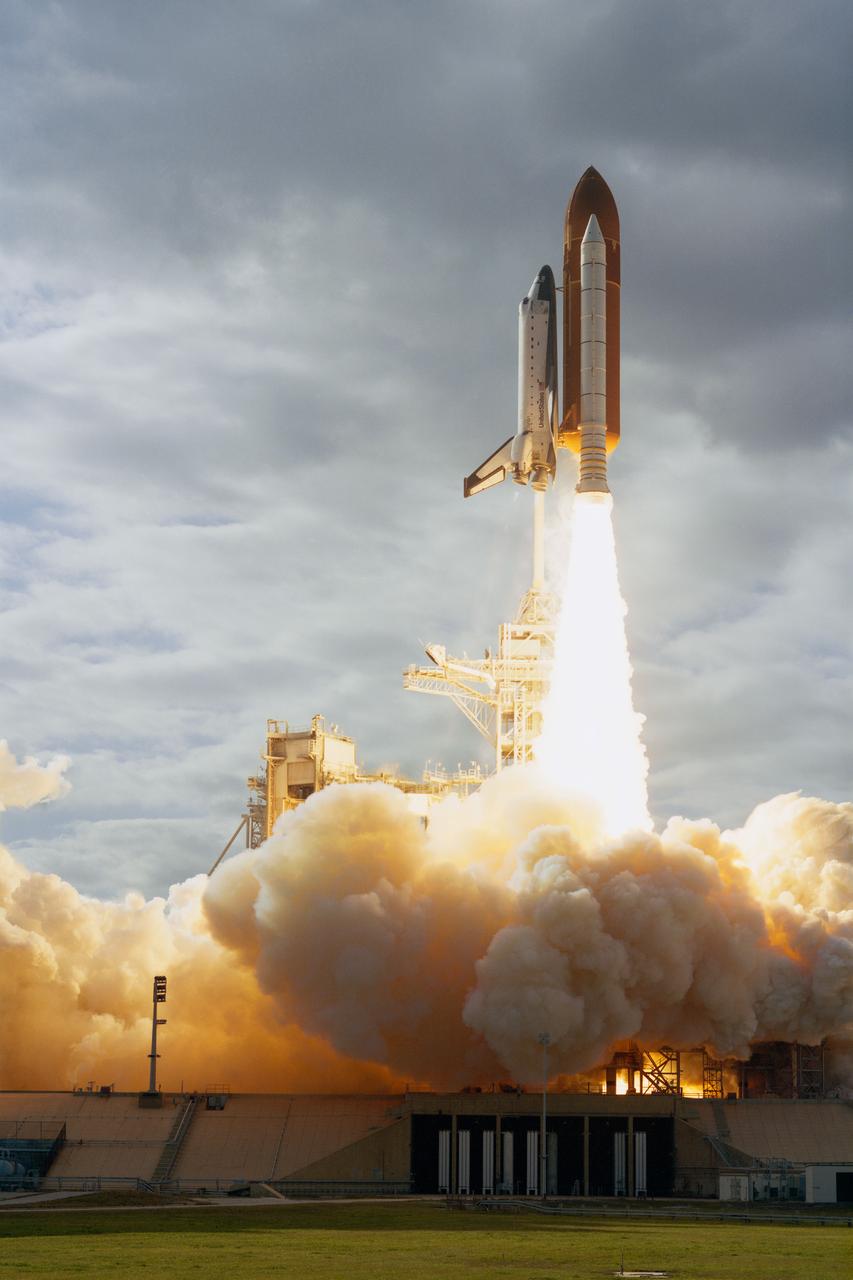
STS080-S-007 (19 Nov. 1996) --- One of the nearest remote camera stations to Launch Pad B captured this profile image of space shuttle Columbia's liftoff from the Kennedy Space Center's (KSC) Launch Complex 39 at 2:55:47 p.m. (EST), November 19, 1996. Onboard are astronauts Kenneth D. Cockrell, mission commander; Kent V. Rominger, pilot; along with Story Musgrave, Tamara E. Jernigan and Thomas D. Jones, all mission specialists. The two primary payloads for STS-80 stowed in Columbia?s cargo bay for later deployment and testing are the Wake Shield Facility (WSF-3) and the Orbiting and Retrievable Far and Extreme Ultraviolet Spectrometer (ORFEUS) with its associated Shuttle Pallet Satellite (SPAS).
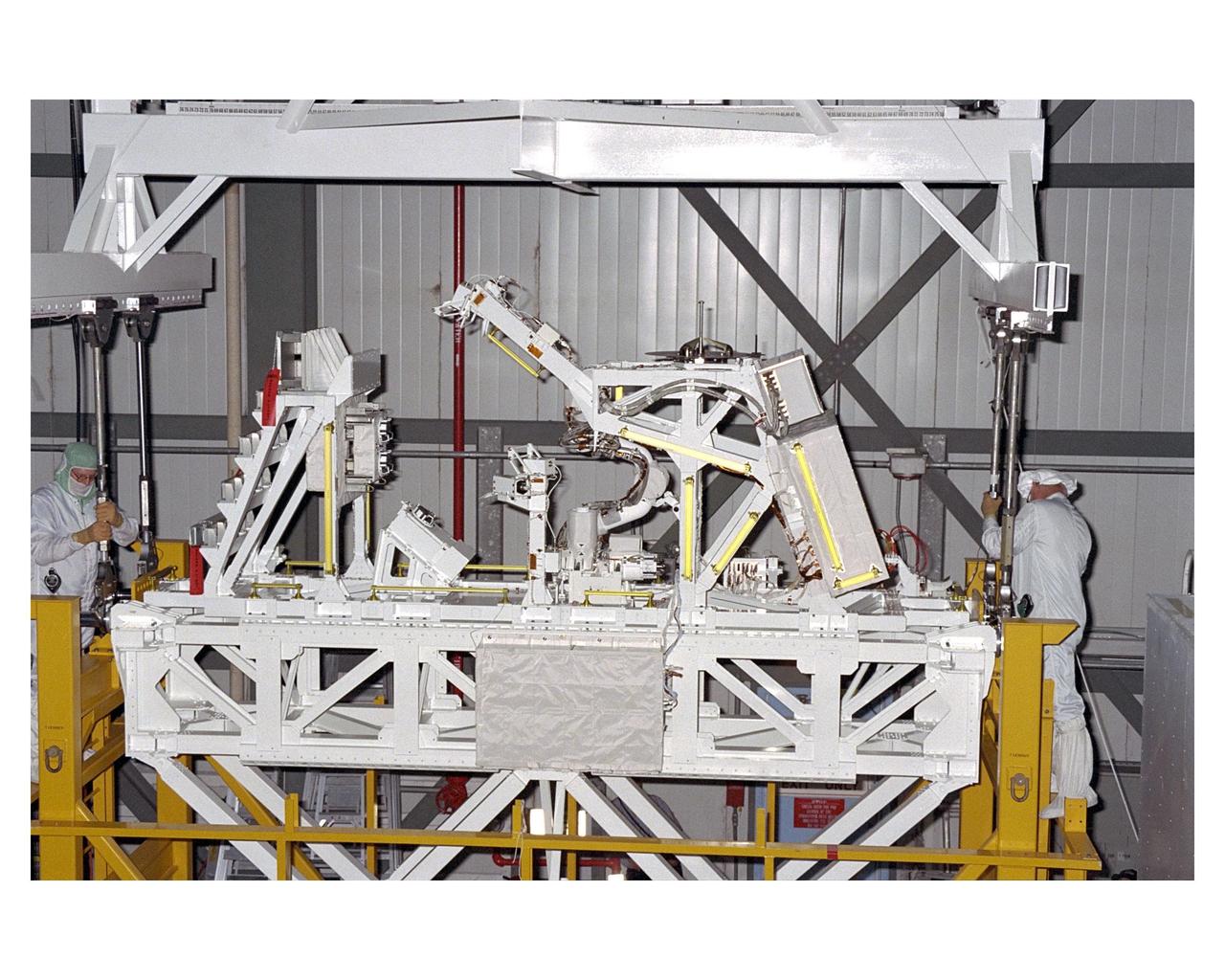
The Manipulator Flight Demonstration (MFD) payload is prepared for hoisting and installation into the payload bay of the Space Shuttle Orbiter Discovery in Orbiter Processing Facility 2. The MFD is one of several payloads that will fly on the STS-85 mission. This payload is designed to test the operational capability of the Japanese Experiment Module Remote Manipulator System (JEM RMS) Small Fine Arm (SFA), which can be seen atop its Multi-Purpose Experiment Support Structure (MPESS) carrier that will serve as a platform in the payload bay for the robotic arm experiment. The arm, which will be a part of the JEM element of the International Space Station, will be operated from the orbiter’s aft flight deck during the 11-day mission. Other payloads that will be aboard Discovery on this space flight include the Cryogenic Infrared Spectrometers and Telescopes for the Atmosphere-Shuttle Pallet Satellite-2 (CRISTA-SPAS-2), Technology Applications and Science-1 (TAS-1) and International Extreme Ultraviolet Hitchhiker (IEH-2) experiments
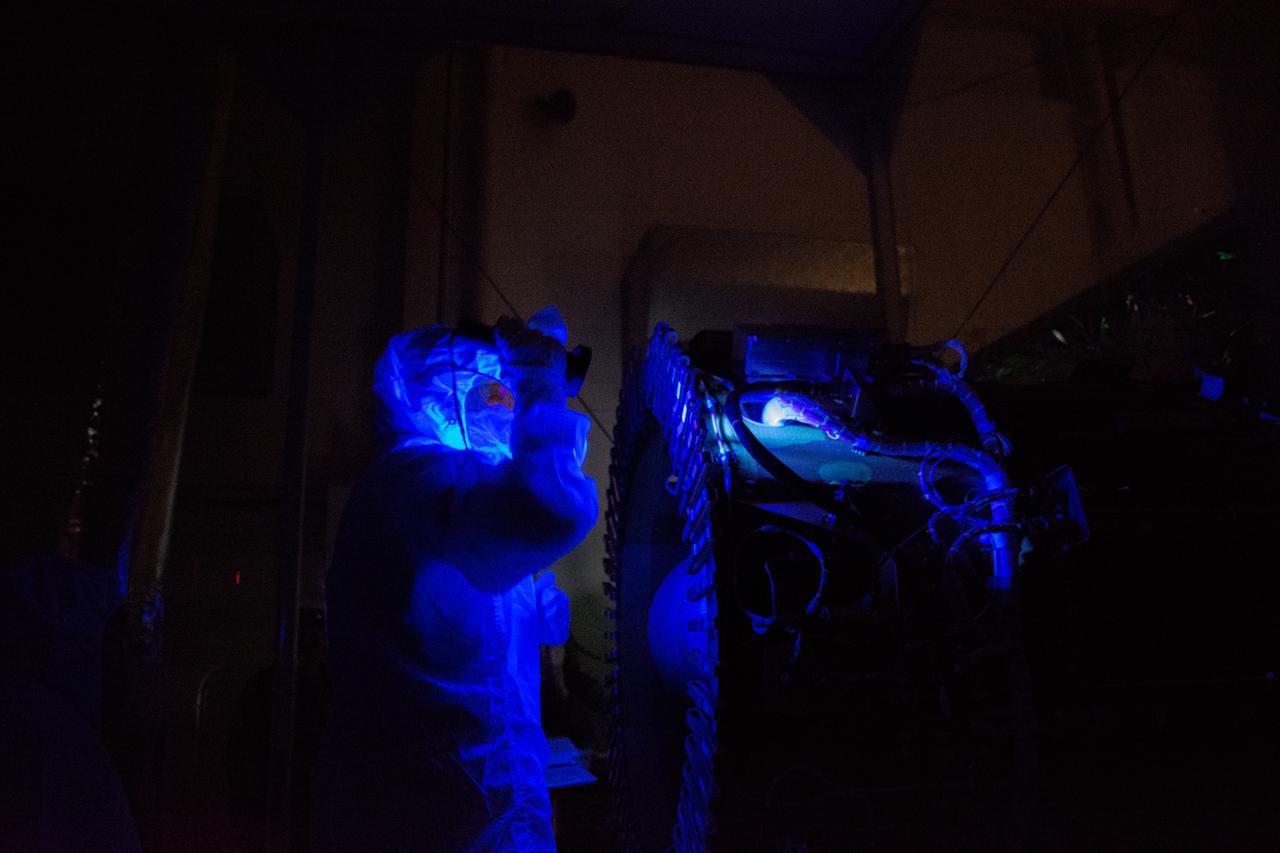
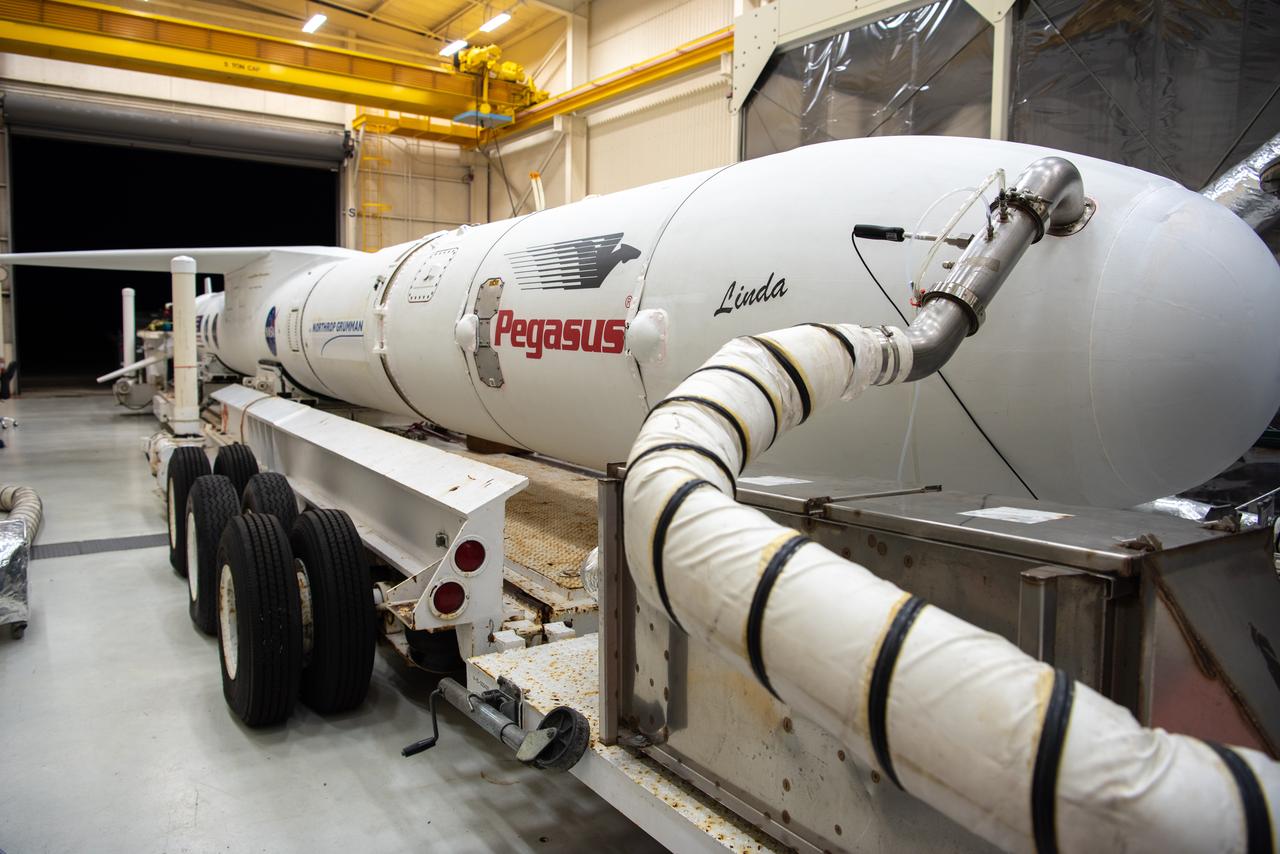
Technicians perform a black light inspection of the Northrop Grumman Pegasus XL rocket inside Building 1555 at Vandenberg Air Force Base in California, on Sept. 10, 2019, after NASA’s Ionospheric Connection Explorer (ICON) was attached to the rocket. The Pegasus port and starboard payload fairings will be installed around ICON. The Pegasus XL rocket, attached beneath the company's L-1011 Stargazer aircraft, will launch ICON from the Skid Strip at Cape Canaveral Air Force Station in Florida. Launch is scheduled for Oct. 9, 2019. ICON will study the frontier of space - the dynamic zone high in Earth's atmosphere where terrestrial weather from below meets space weather above. The explorer will help determine the physics of Earth's space environment and pave the way for mitigating its effects on our technology and communications systems.
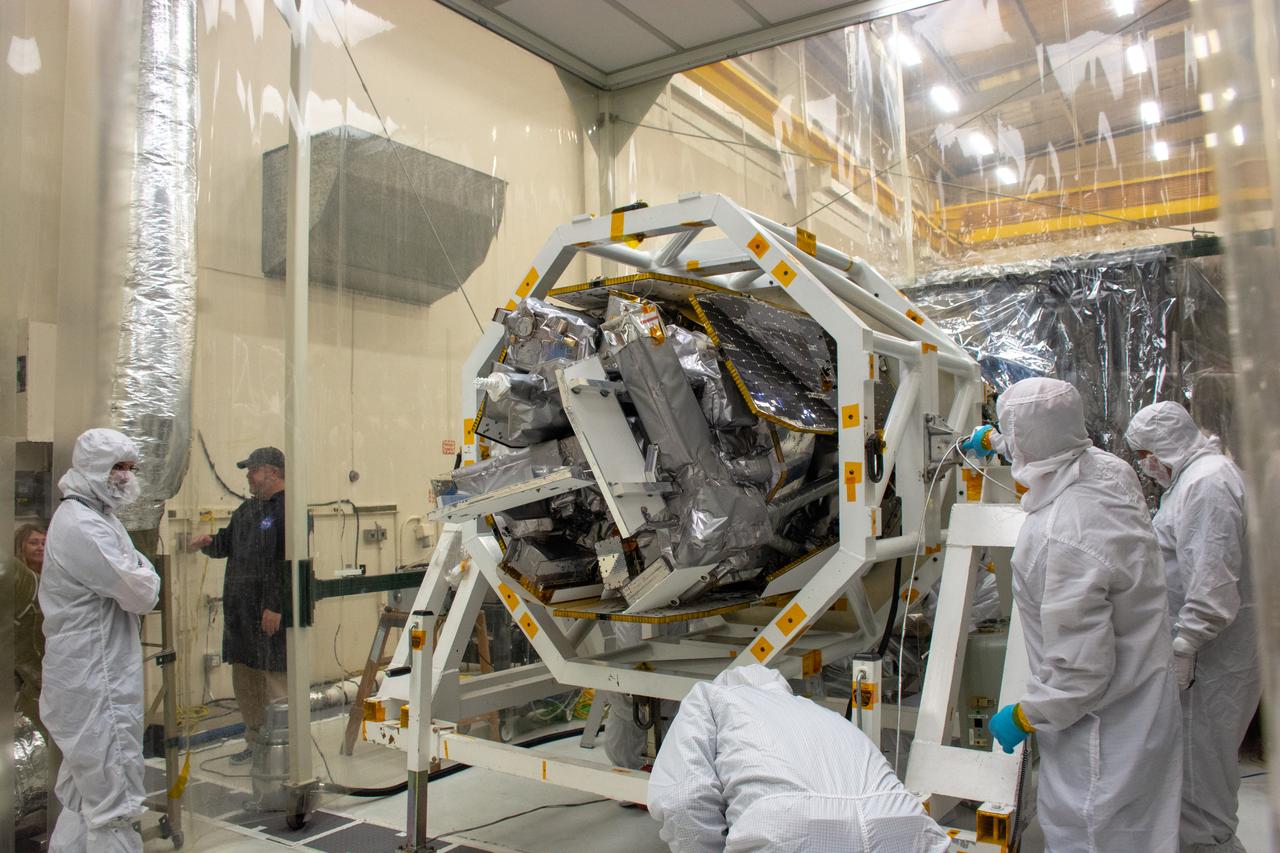
Technicians attach NASA's Ionospheric Connection Explorer (ICON) to the Northrop Grumman Pegasus XL rocket inside Building 1555 at Vandenberg Air Force Base in California on Sept. 10, 2019. Preparations are underway to perform a black light test on Pegasus before the port and starboard payload fairings are installed around ICON. The Pegasus XL rocket, attached beneath the company's L-1011 Stargazer aircraft, will launch ICON from the Skid Strip at Cape Canaveral Air Force Station in Florida. Launch is scheduled for Oct. 9, 2019. ICON will study the frontier of space - the dynamic zone high in Earth's atmosphere where terrestrial weather from below meets space weather above. The explorer will help determine the physics of Earth's space environment and pave the way for mitigating its effects on our technology and communications systems.
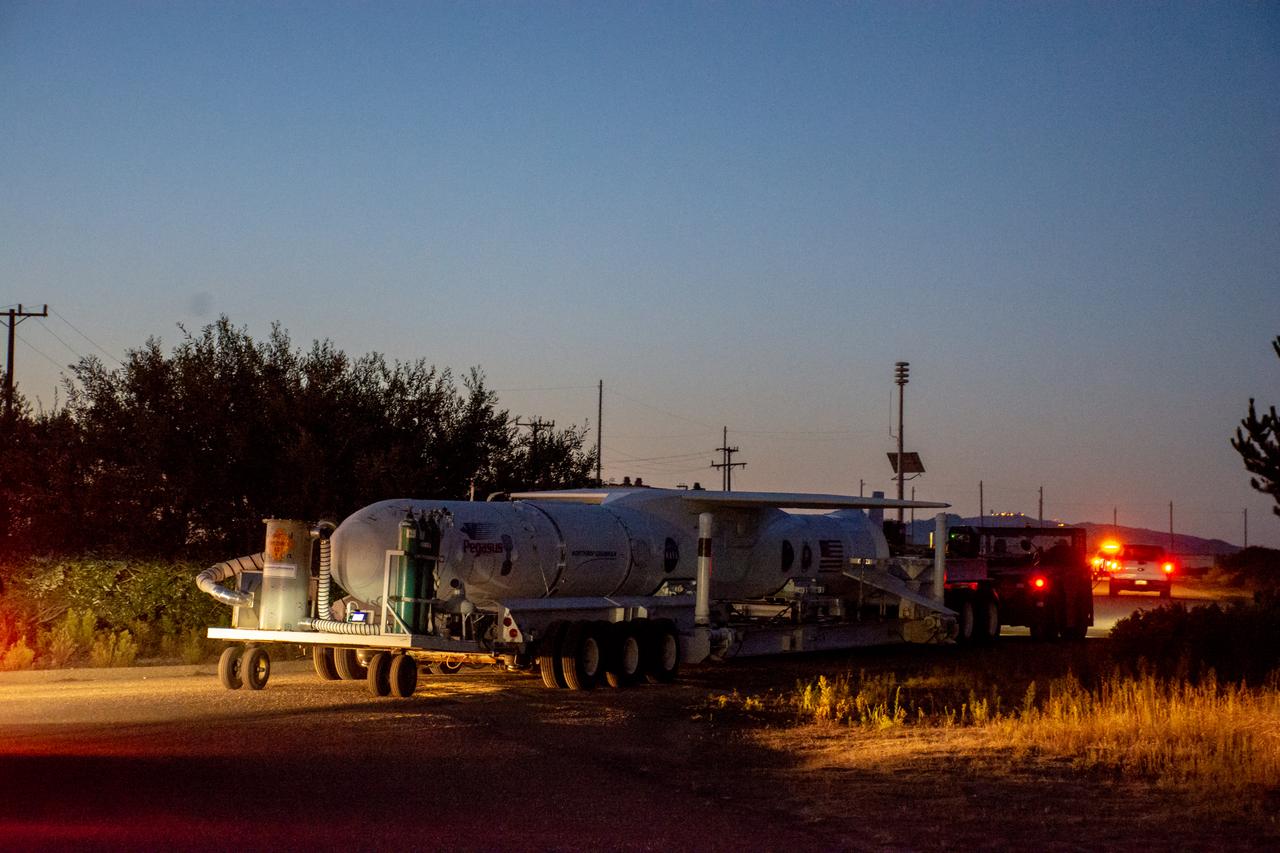
The Northrop Grumman Pegasus XL rocket, with NASA's Ionospheric Connection Explorer (ICON) secured in its payload fairing, begins rollout from Building 1555 at Vandenberg Air Force Base in California on Sept. 25, 2019. The Pegasus XL rocket will be attached beneath the company's L-1011 Stargazer aircraft for the flight to Cape Canaveral Air Force Station (CCAFS) in Florida. ICON will launch from the Skid Strip at CCAFS. Launch is scheduled for Oct. 10, 2019. ICON will study the frontier of space - the dynamic zone high in Earth's atmosphere where terrestrial weather from below meets space weather above. The explorer will help determine the physics of Earth's space environment and pave the way for mitigating its effects on our technology and communications systems.
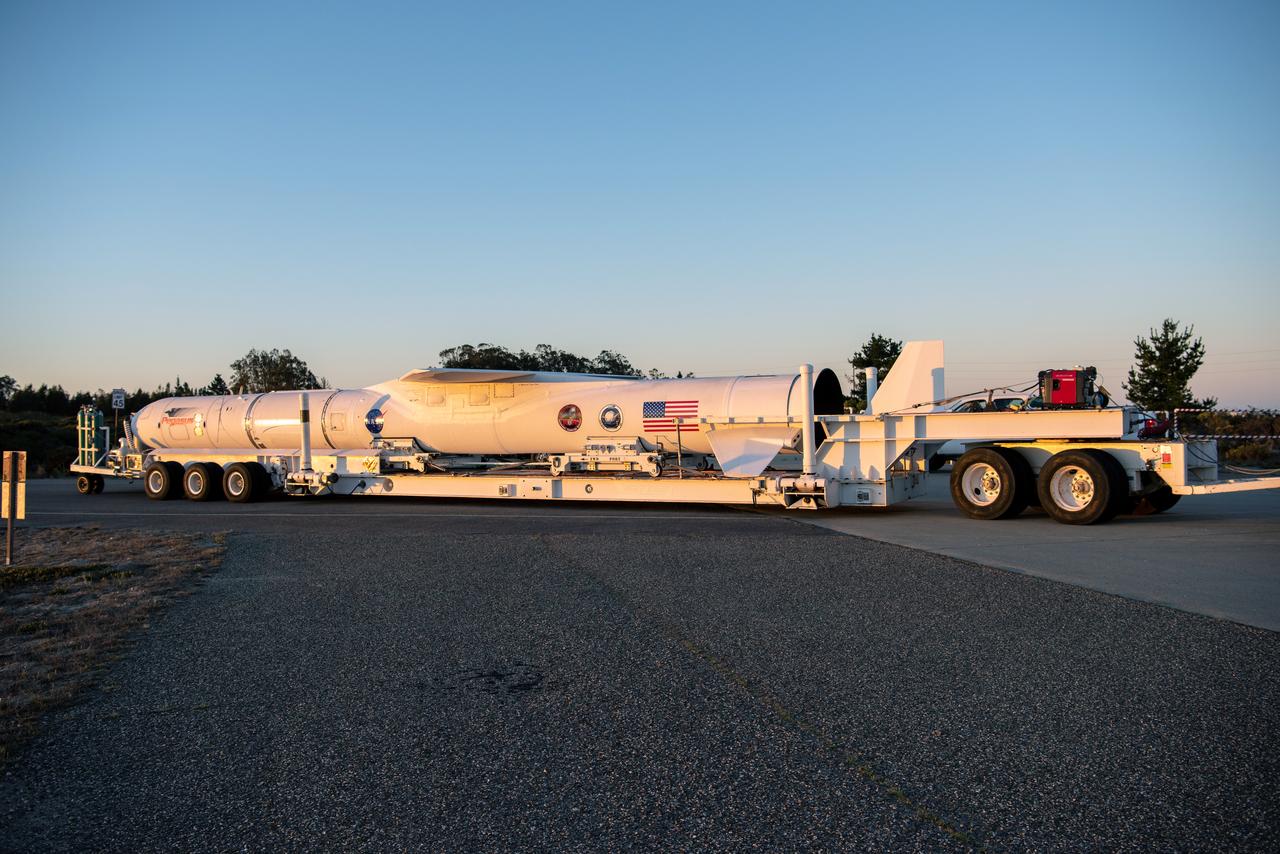
The Northrop Grumman Pegasus XL rocket, with NASA's Ionospheric Connection Explorer (ICON) secured in its payload fairing, rolls out from Building 1555 to the runway at Vandenberg Air Force Base in California on Sept. 25, 2019. The Pegasus XL rocket will be attached beneath the company's L-1011 Stargazer aircraft for the flight to Cape Canaveral Air Force Station (CCAFS) in Florida. ICON will launch from the Skid Strip at CCAFS in Florida. Launch is scheduled for Oct. 10, 2019. ICON will study the frontier of space - the dynamic zone high in Earth's atmosphere where terrestrial weather from below meets space weather above. The explorer will help determine the physics of Earth's space environment and pave the way for mitigating its effects on our technology and communications systems.
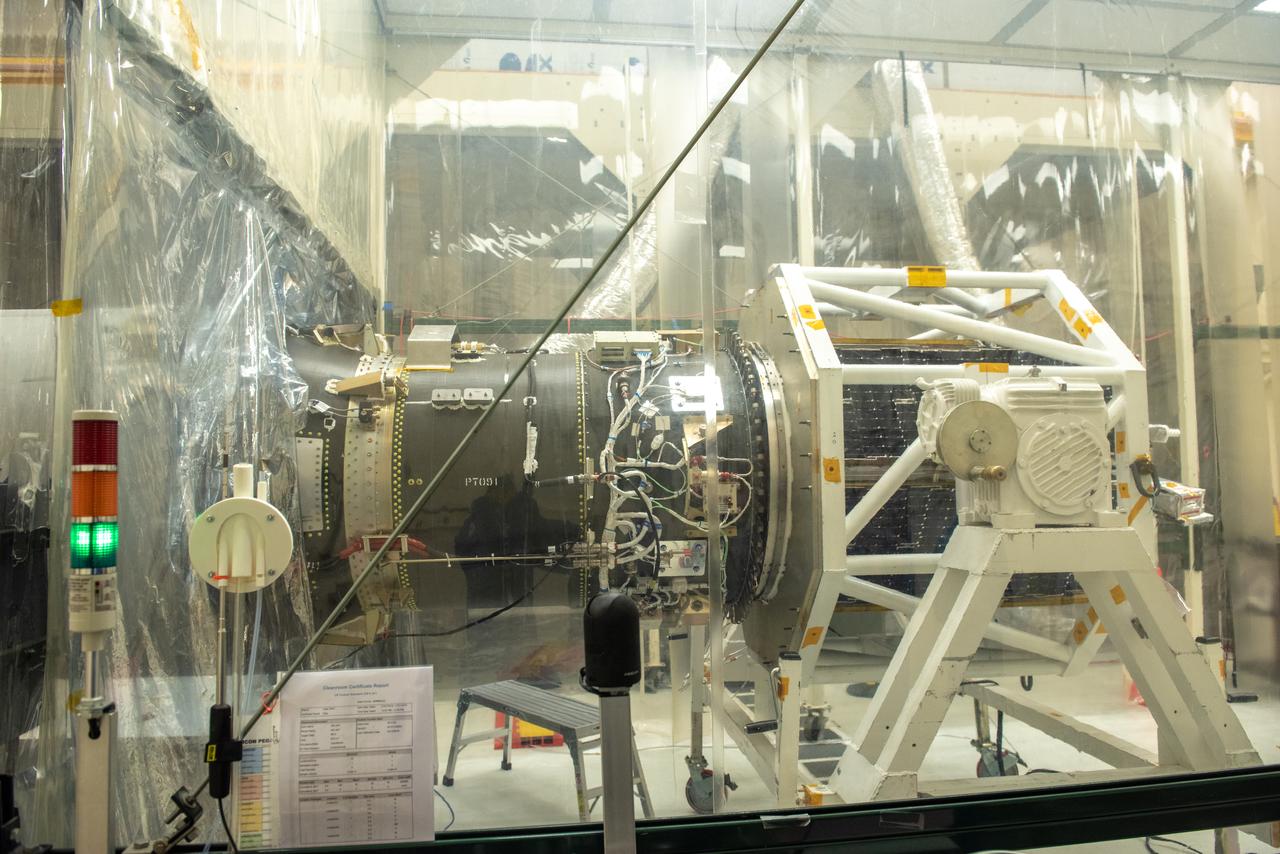
NASA's Ionospheric Connection Explorer (ICON) is attached to the Northrop Grumman Pegasus XL rocket inside Building 1555 at Vandenberg Air Force Base in California on Sept. 10, 2019. The Pegasus XL rocket, attached beneath the company's L-1011 Stargazer aircraft, will launch ICON from the Skid Strip at Cape Canaveral Air Force Station in Florida. Launch is scheduled for Oct. 9, 2019. ICON will study the frontier of space - the dynamic zone high in Earth's atmosphere where terrestrial weather from below meets space weather above. The explorer will help determine the physics of Earth's space environment and pave the way for mitigating its effects on our technology and communications systems.
The Northrop Grumman Pegasus XL rocket, with NASA's Ionospheric Connection Explorer (ICON) secured in its payload fairing, rolls out to the runway at Vandenberg Air Force Base in California on Sept. 25, 2019. The Pegasus XL rocket will be attached beneath the company's L-1011 Stargazer aircraft for the flight to Cape Canaveral Air Force Station (CCAFS) in Florida. ICON will launch from the Skid Strip at CCAFS. Launch is scheduled for Oct. 10, 2019. ICON will study the frontier of space - the dynamic zone high in Earth's atmosphere where terrestrial weather from below meets space weather above. The explorer will help determine the physics of Earth's space environment and pave the way for mitigating its effects on our technology and communications systems.
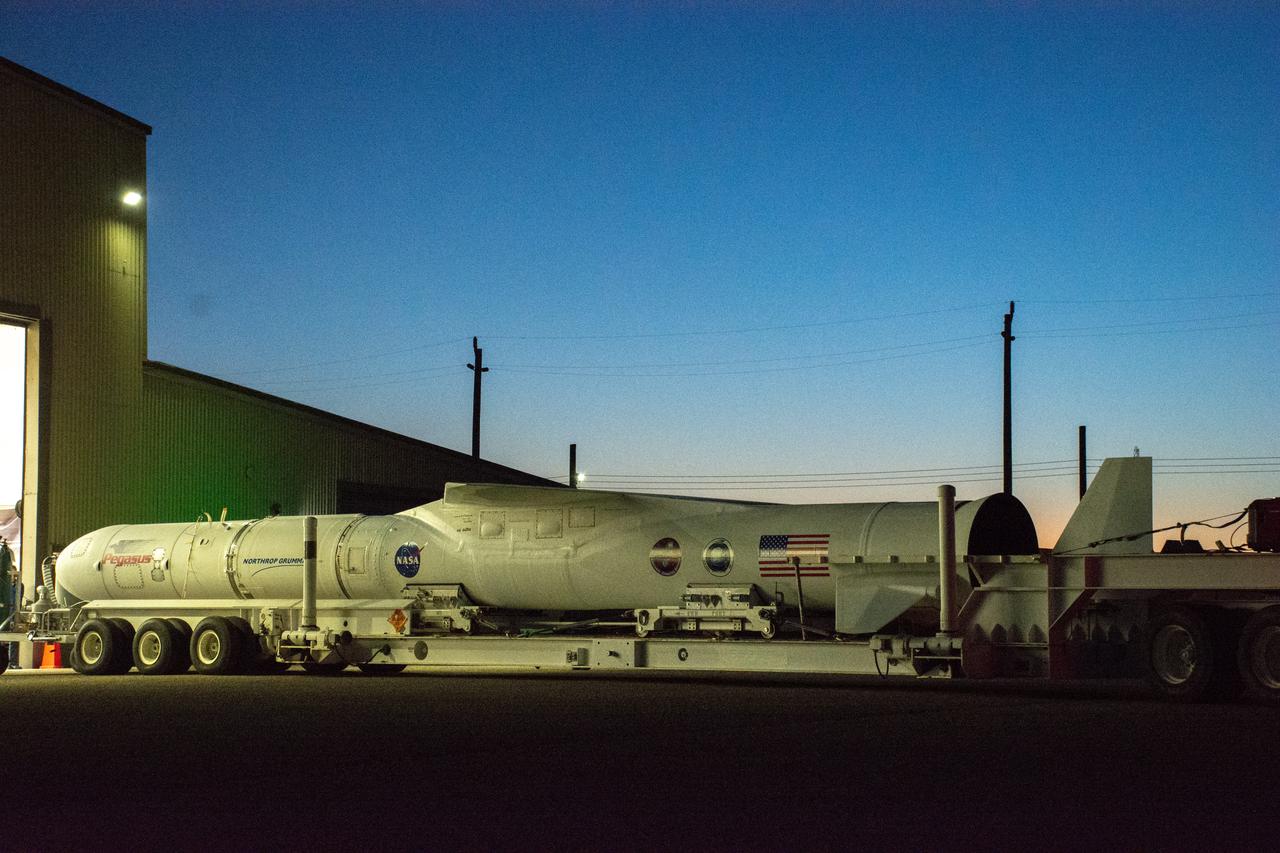
The Northrop Grumman Pegasus XL rocket, with NASA's Ionospheric Connection Explorer (ICON) secured in its payload fairing, begins rollout from Building 1555 at Vandenberg Air Force Base in California on Sept. 25, 2019. The Pegasus XL rocket will be attached beneath the company's L-1011 Stargazer aircraft for the flight to Cape Canaveral Air Force Station (CCAFS) in Florida. ICON will launch from the Skid Strip at CCAFS. Launch is scheduled for Oct. 10, 2019. ICON will study the frontier of space - the dynamic zone high in Earth's atmosphere where terrestrial weather from below meets space weather above. The explorer will help determine the physics of Earth's space environment and pave the way for mitigating its effects on our technology and communications systems.
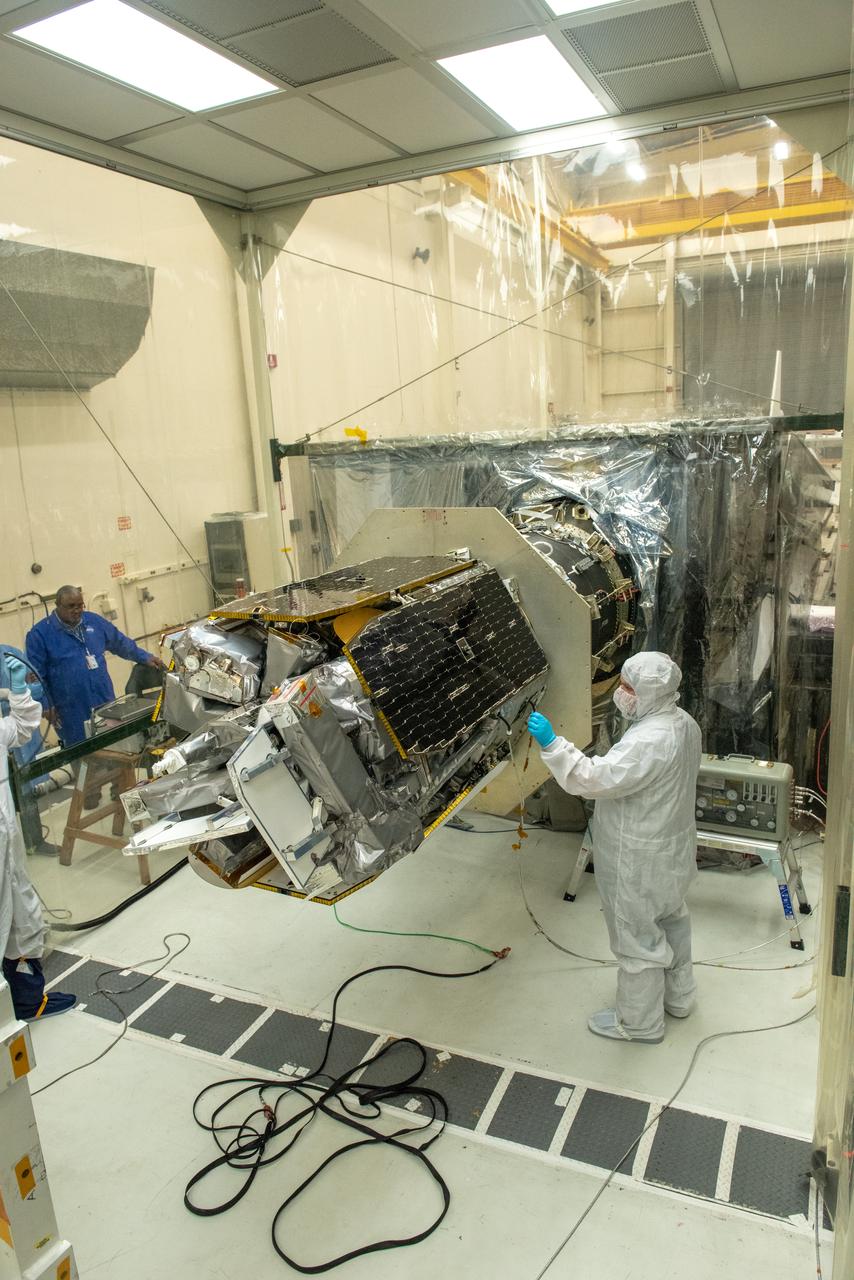
Technicians attach NASA’s Ionospheric Connection Explorer (ICON) to the Northrop Grumman Pegasus XL rocket inside Building 1555 at Vandenberg Air Force Base in California, on Sept. 10, 2019. The Pegasus XL rocket, attached beneath the company's L-1011 Stargazer aircraft, will launch ICON from the Skid Strip at Cape Canaveral Air Force Station in Florida. Launch is scheduled for Oct. 9, 2019. ICON will study the frontier of space - the dynamic zone high in Earth's atmosphere where terrestrial weather from below meets space weather above. The explorer will help determine the physics of Earth's space environment and pave the way for mitigating its effects on our technology and communications systems.
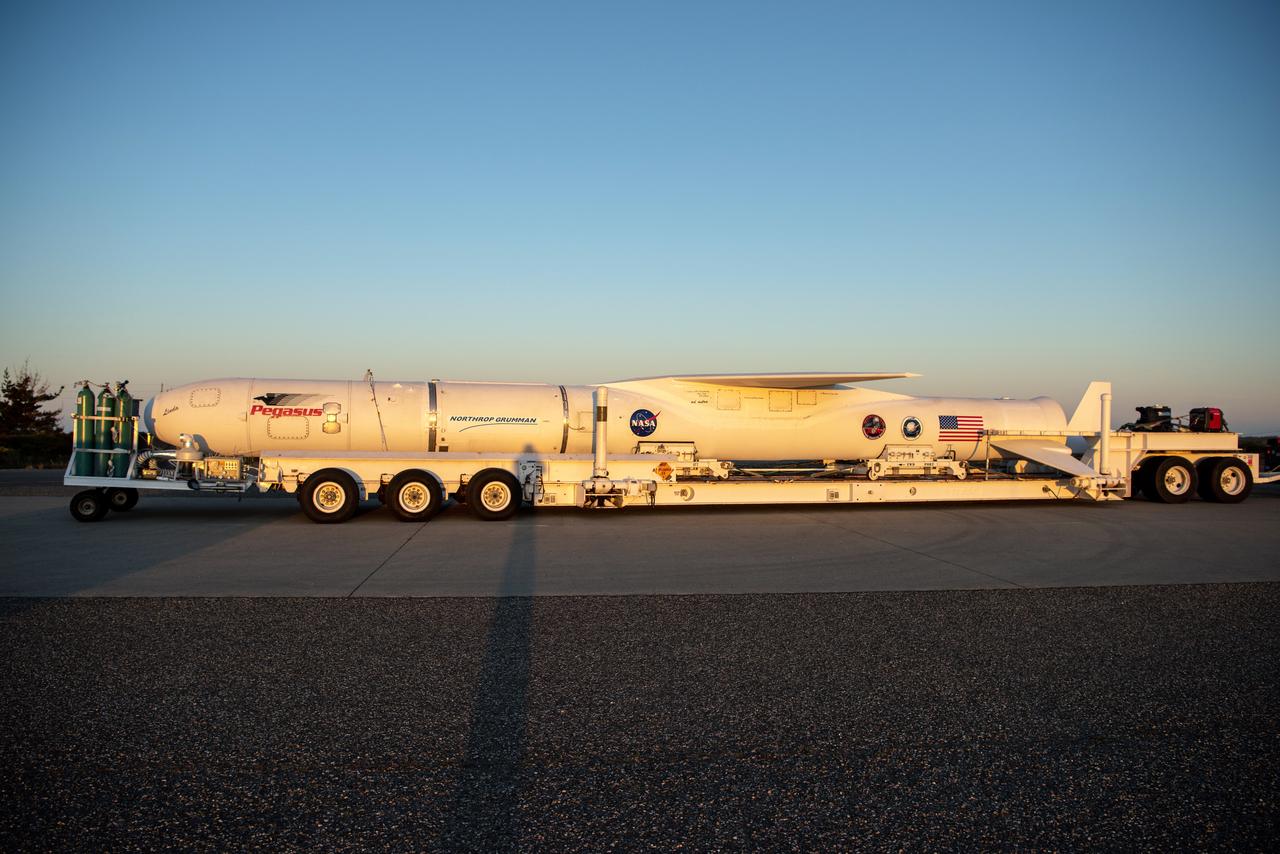
The Northrop Grumman Pegasus XL rocket, with NASA's Ionospheric Connection Explorer (ICON) secured in its payload fairing, rolls out to the runway at Vandenberg Air Force Base in California on Sept. 25, 2019. The Pegasus XL rocket will be attached beneath the company's L-1011 Stargazer aircraft for the flight to Cape Canaveral Air Force Station (CCAFS) in Florida. ICON will launch from the Skid Strip at CCAFS. Launch is scheduled for Oct. 10, 2019. ICON will study the frontier of space - the dynamic zone high in Earth's atmosphere where terrestrial weather from below meets space weather above. The explorer will help determine the physics of Earth's space environment and pave the way for mitigating its effects on our technology and communications systems.
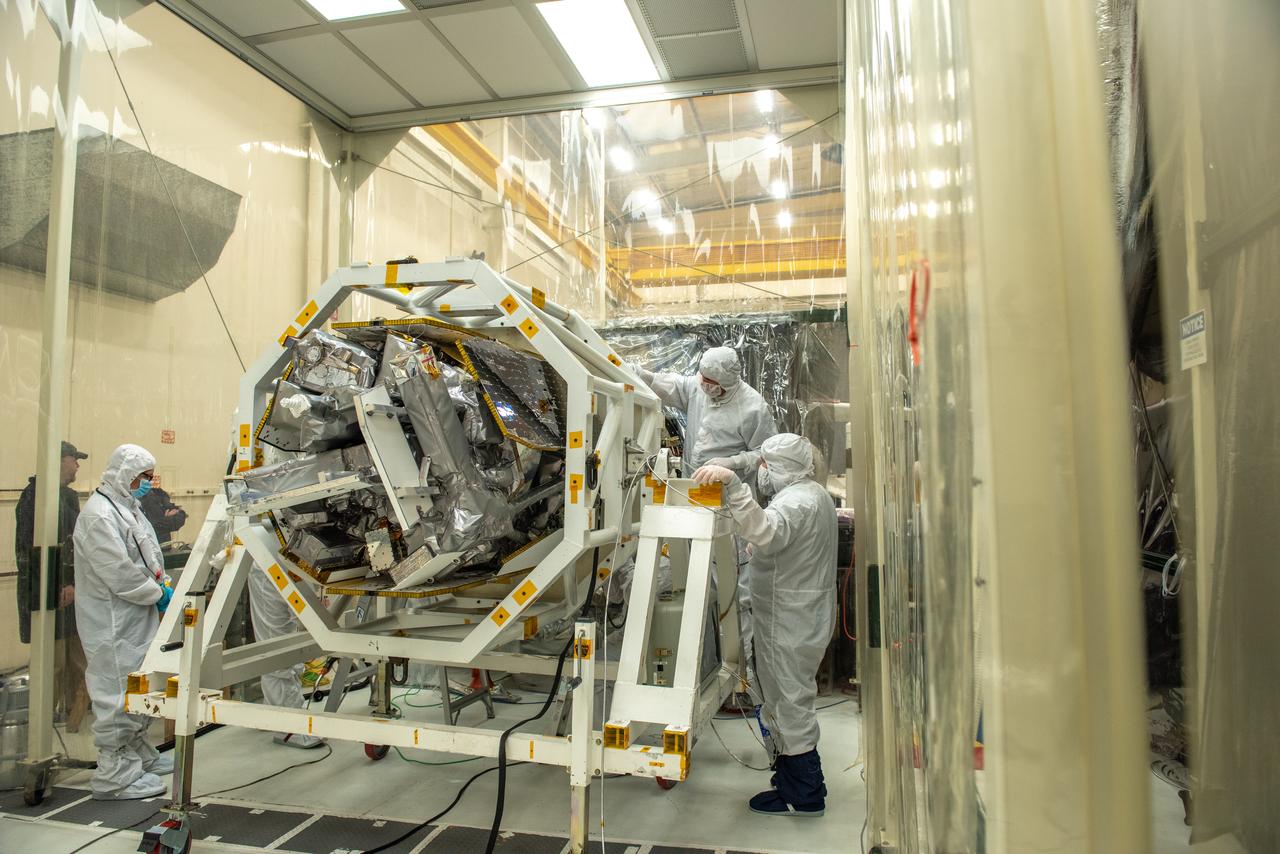
Technicians attach NASA’s Ionospheric Connection Explorer (ICON) to the Northrop Grumman Pegasus XL rocket inside Building 1555 at Vandenberg Air Force Base in California, on Sept. 10, 2019. The Pegasus XL rocket, attached beneath the company's L-1011 Stargazer aircraft, will launch ICON from the Skid Strip at Cape Canaveral Air Force Station in Florida. Launch is scheduled for Oct. 9, 2019. ICON will study the frontier of space - the dynamic zone high in Earth's atmosphere where terrestrial weather from below meets space weather above. The explorer will help determine the physics of Earth's space environment and pave the way for mitigating its effects on our technology and communications systems.
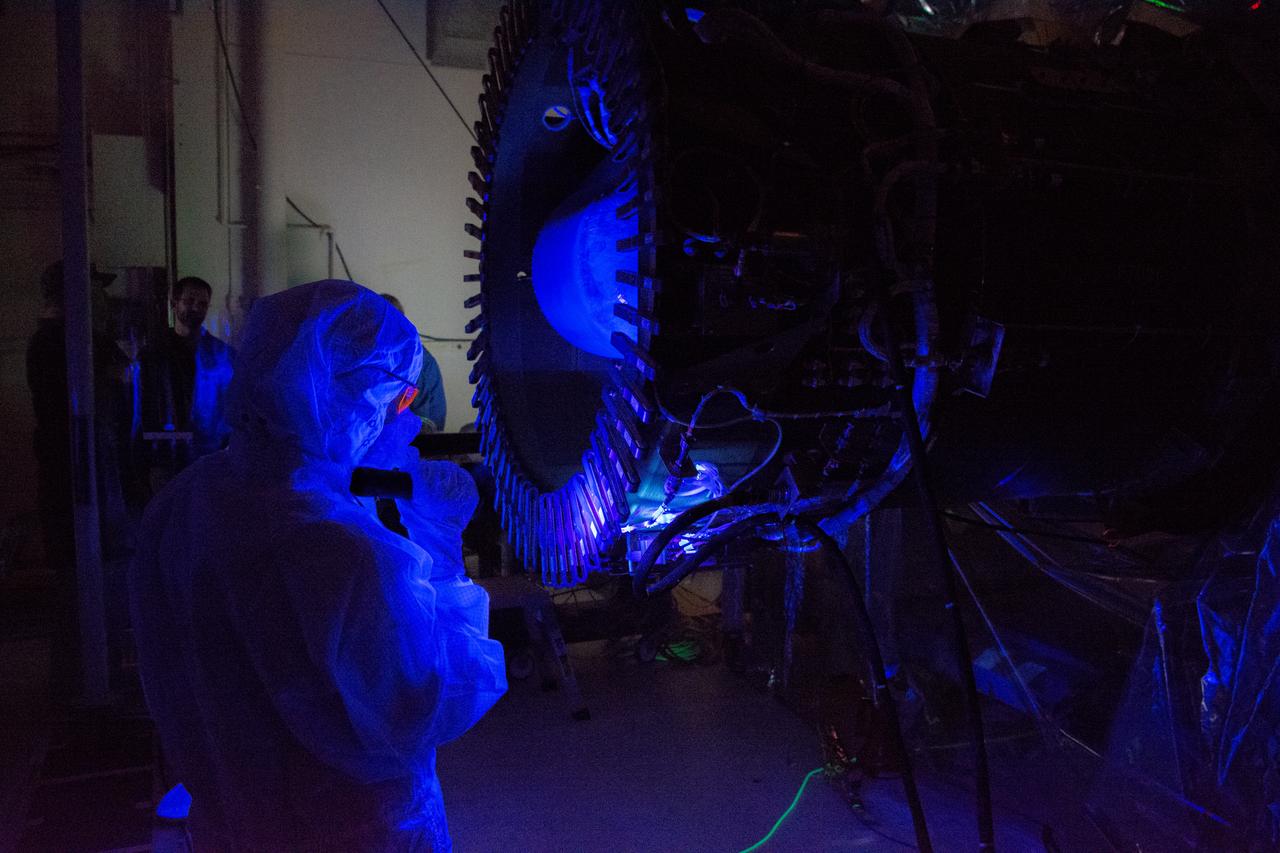
Technicians perform a black light inspection of the Northrop Grumman Pegasus XL rocket inside Building 1555 at Vandenberg Air Force Base in California, on Sept. 10, 2019, after NASA’s Ionospheric Connection Explorer (ICON) was attached to the rocket. The Pegasus port and starboard payload fairings will be installed around ICON. The Pegasus XL rocket, attached beneath the company's L-1011 Stargazer aircraft, will launch ICON from the Skid Strip at Cape Canaveral Air Force Station in Florida. Launch is scheduled for Oct. 9, 2019. ICON will study the frontier of space - the dynamic zone high in Earth's atmosphere where terrestrial weather from below meets space weather above. The explorer will help determine the physics of Earth's space environment and pave the way for mitigating its effects on our technology and communications systems.
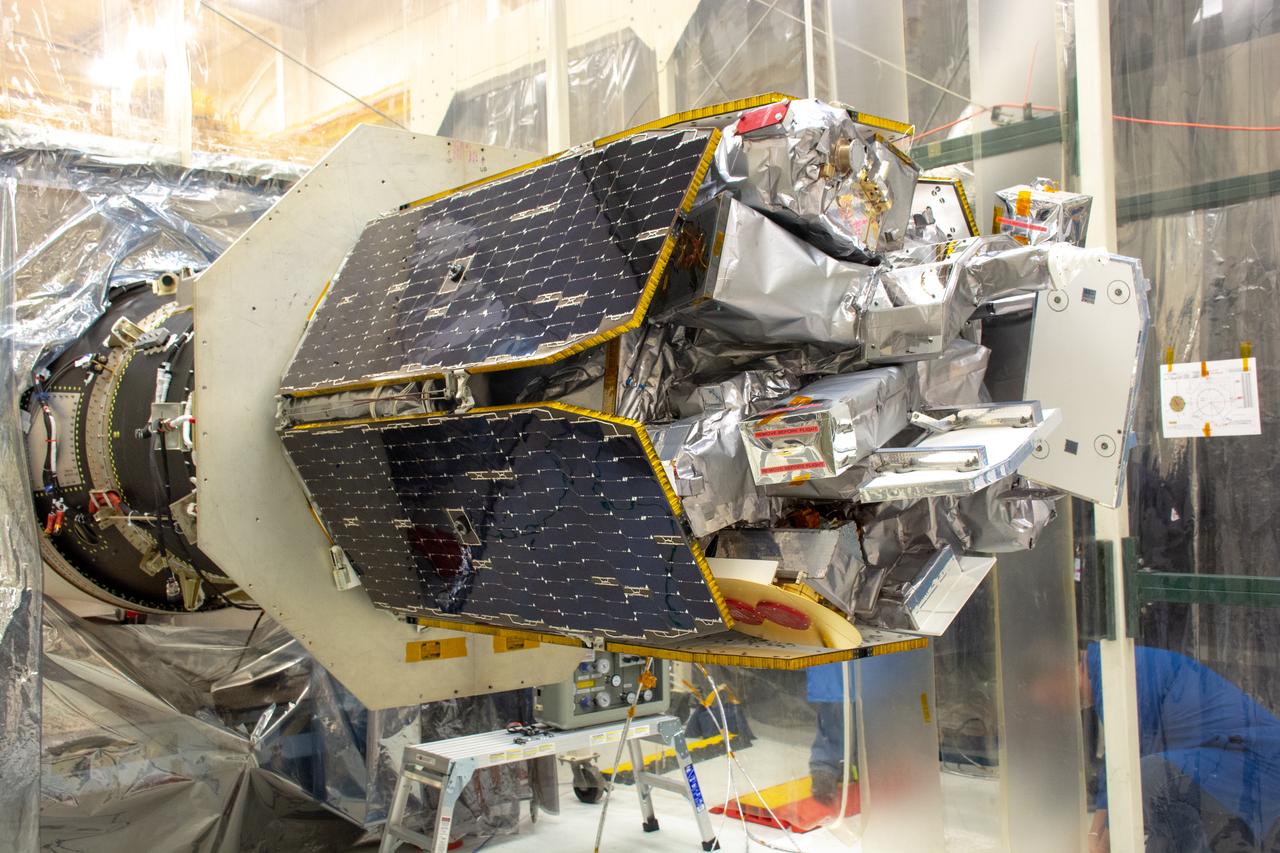
NASA's Ionospheric Connection Explorer (ICON) is attached to the Northrop Grumman Pegasus XL rocket inside Building 1555 at Vandenberg Air Force Base in California on Sept. 10, 2019. Preparations are underway to perform a black light test on Pegasus before the port and starboard payload fairings are installed around ICON. The Pegasus XL rocket, attached beneath the company's L-1011 Stargazer aircraft, will launch ICON from the Skid Strip at Cape Canaveral Air Force Station in Florida. Launch is scheduled for Oct. 9, 2019. ICON will study the frontier of space - the dynamic zone high in Earth's atmosphere where terrestrial weather from below meets space weather above. The explorer will help determine the physics of Earth's space environment and pave the way for mitigating its effects on our technology and communications systems.
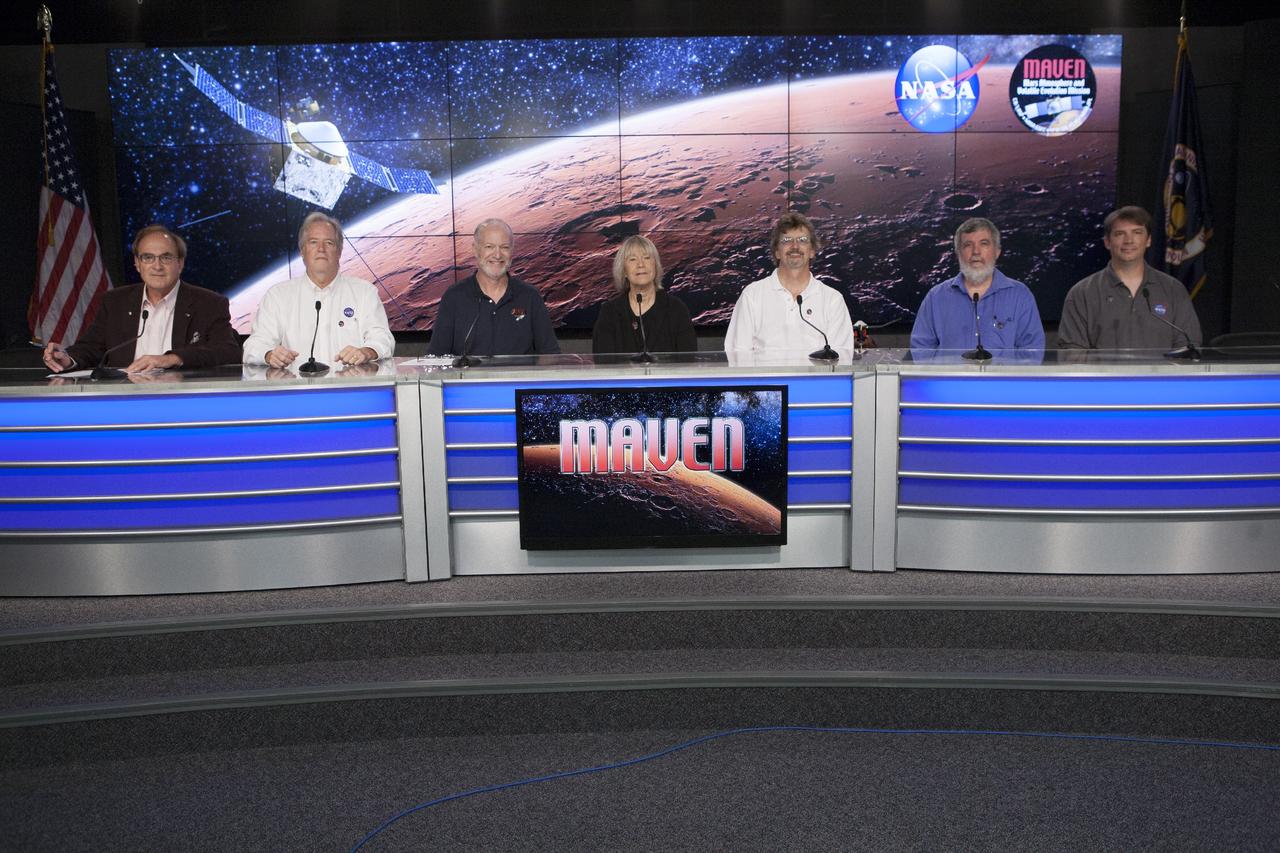
CAPE CANAVERAL, Fla. – During a news conference at NASA's Kennedy Space Center in Florida, NASA officials and university investigators outlined science plans for the Mars Atmosphere and Volatile EvolutioN, or MAVEN, mission. Participating in the briefing, from the left, are George Diller of NASA Public Affairs, Michael Meyer, lead Mars Scientist at NASA Headquarters, Bruce Jakosky, MAVEN principal investigator from the Laboratory for Atmospheric and Space Physics at the University of Colorado at Boulder, Janet Luhmann, MAVEN deputy principal investigator from the University of California at Berkeley, Nick Schneider, MAVEN Imaging Ultraviolet Spectrograph, or IUVS, instrument lead at the University of Colorado, Paul Mahaffy, MAVEN Neutral Gas and Ion Mass Spectrometer, or NGIMS, instrument lead at NASA's Goddard Space Flight Center in Greenbelt, Md., and David Mitchell, MAVEN Solar Wind Electron Analyzer, or SWEA, instrument lead at the University of California. MAVEN is being prepared for its scheduled launch on Nov 18, 2013 from Cape Canaveral Air Force Station, Fla. atop a United Launch Alliance Atlas V rocket. Positioned in an orbit above the Red Planet, MAVEN will study the upper atmosphere of Mars in unprecedented detail. For information on the MAVEN mission, visit: http://www.nasa.gov/mission_pages/maven/main/index.html. Photo credit: NASA/Kim Shiflett
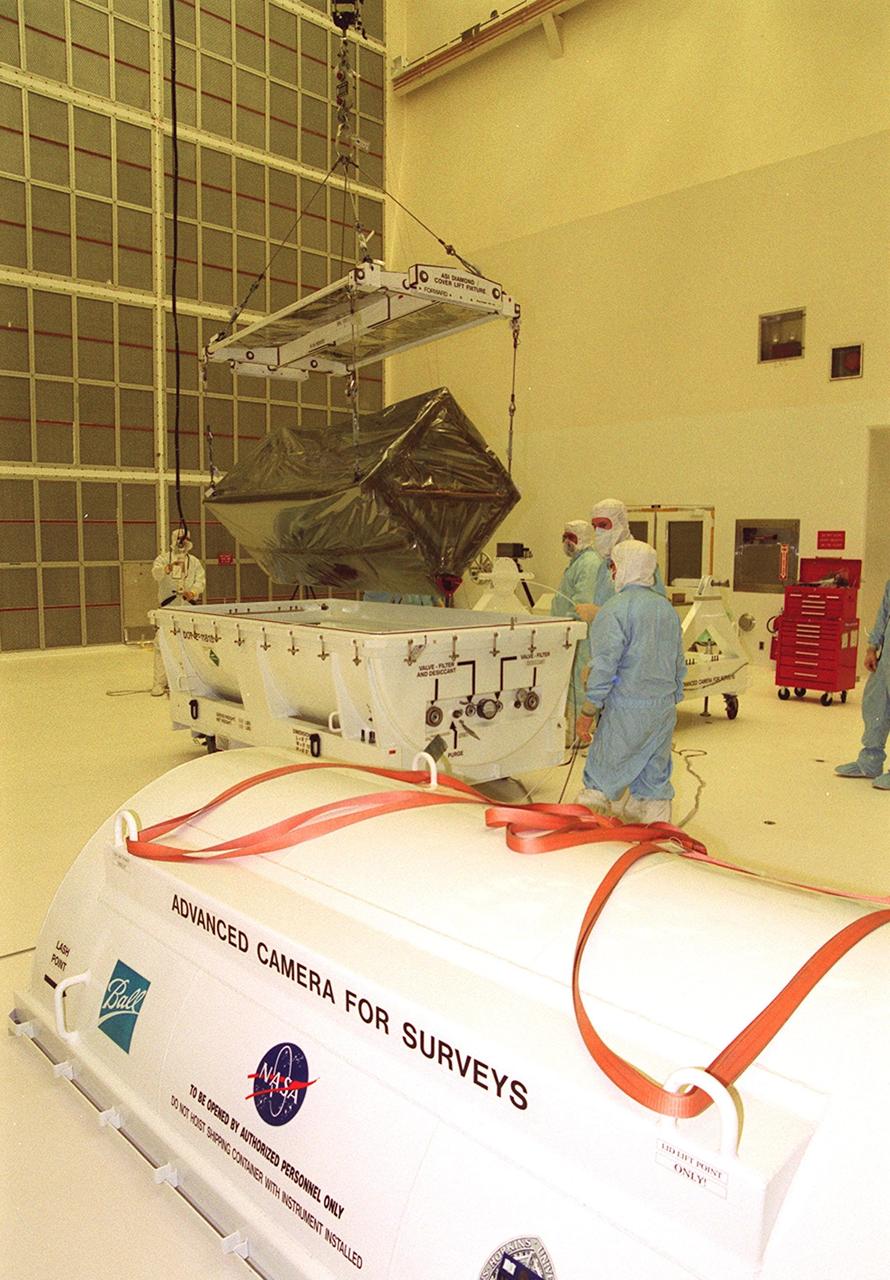
KENNEDY SPACE CENTER, Fla. -- In Hangar A&E, workers watch as an overhead crane lifts the Advanced Camera for Surveys out of its transportation container. Part of the payload on the Hubble Space Telescope Servicing Mission, STS-109, the ACS will increase the discovery efficiency of the HST by a factor of ten. It consists of three electronic cameras and a complement of filters and dispersers that detect light from the ultraviolet to the near infrared (1200 - 10,000 angstroms). The ACS was built through a collaborative effort between Johns Hopkins University, Goddard Space Flight Center, Ball Aerospace Corporation and Space Telescope Science Institute. Tasks for the mission include replacing Solar Array 2 with Solar Array 3, replacing the Power Control Unit, removing the Faint Object Camera and installing the ACS, installing the Near Infrared Camera and Multi-Object Spectrometer (NICMOS) Cooling System, and installing New Outer Blanket Layer insulation on bays 5 through 8. Mission STS-109 is scheduled for launch Feb. 14, 2002

KENNEDY SPACE CENTER, Fla. -- Fully unwrapped, the Advanced Camera for Surveys, which is suspended by an overhead crane, is checked over by workers. Part of the payload on the Hubble Space Telescope Servicing Mission, STS-109, the ACS will increase the discovery efficiency of the HST by a factor of ten. It consists of three electronic cameras and a complement of filters and dispersers that detect light from the ultraviolet to the near infrared (1200 - 10,000 angstroms). The ACS was built through a collaborative effort between Johns Hopkins University, Goddard Space Flight Center, Ball Aerospace Corporation and Space Telescope Science Institute. Tasks for the mission include replacing Solar Array 2 with Solar Array 3, replacing the Power Control Unit, removing the Faint Object Camera and installing the ACS, installing the Near Infrared Camera and Multi-Object Spectrometer (NICMOS) Cooling System, and installing New Outer Blanket Layer insulation on bays 5 through 8. Mission STS-109 is scheduled for launch Feb. 14, 2002
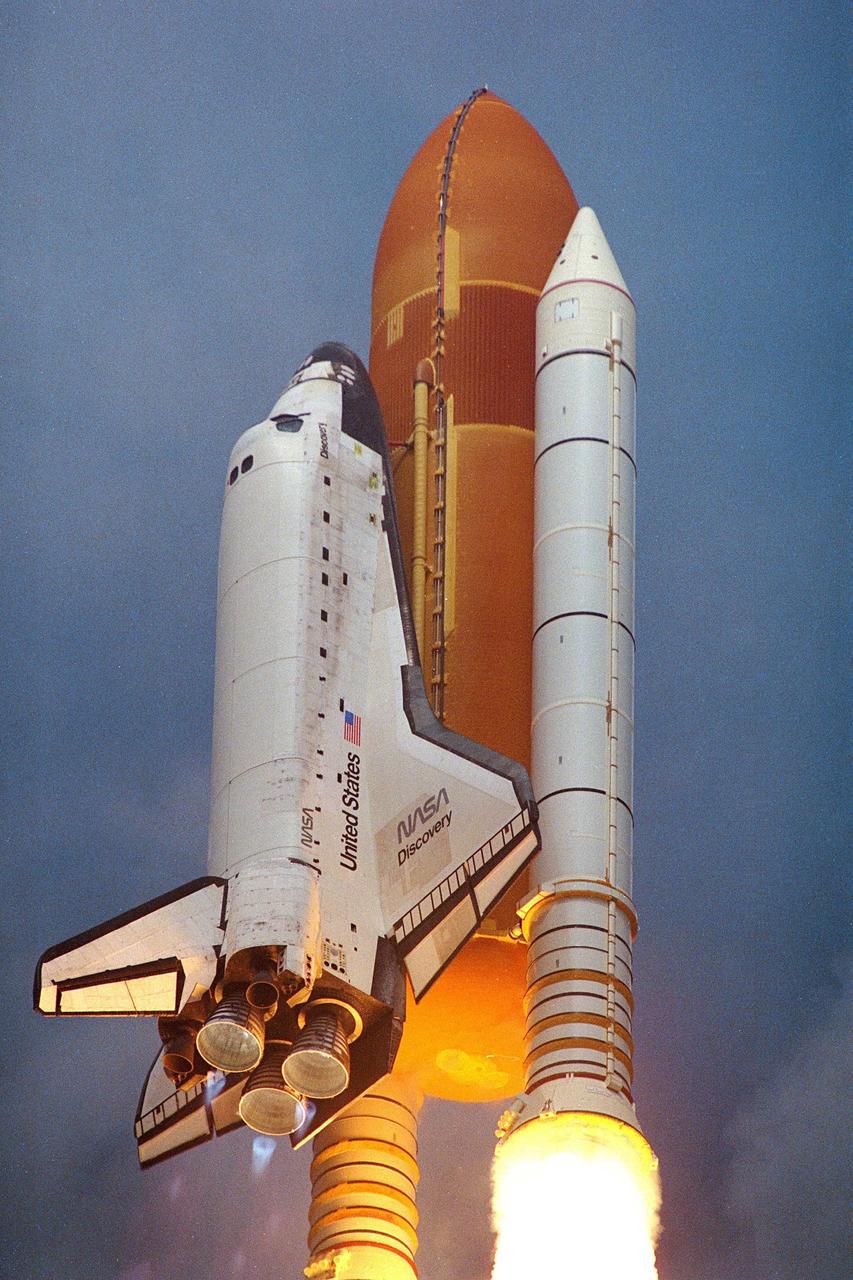
KENNEDY SPACE CENTER, Fla. -- Blasting through the hazy late morning sky, the Space Shuttle Discovery soars from Launch Pad 39A at 10:41 a.m. EDT Aug. 7 on the 11-day STS-85 mission. Aboard Discovery are Commander Curtis L. Brown, Jr.; Pilot Kent V. Rominger, Payload Commander N. Jan Davis, Mission Specialist Robert L. Curbeam, Jr., Mission Specialist Stephen K. Robinson and Payload Specialist Bjarni V. Tryggvason, a Canadian Space Agency astronaut . The primary payload aboard the Space Shuttle orbiter Discovery is the Cryogenic Infrared Spectrometers and Telescopes for the Atmosphere-Shuttle Pallet Satellite-2 (CRISTA-SPAS-2) free-flyer. The CRISTA-SPAS-2 will be deployed on flight day 1 to study trace gases in the Earth’s atmosphere as a part of NASA’s Mission to Planet Earth program. Also aboard the free-flying research platform will be the Middle Atmosphere High Resolution Spectrograph Instrument (MAHRSI). Other payloads on the 11-day mission include the Manipulator Flight Demonstration (MFD), a Japanese Space Agency-sponsored experiment. Also in Discovery’s payload bay are the Technology Applications and Science-1 (TAS-1) and International Extreme Ultraviolet Hitchhiker-2 (IEH-2) experiments
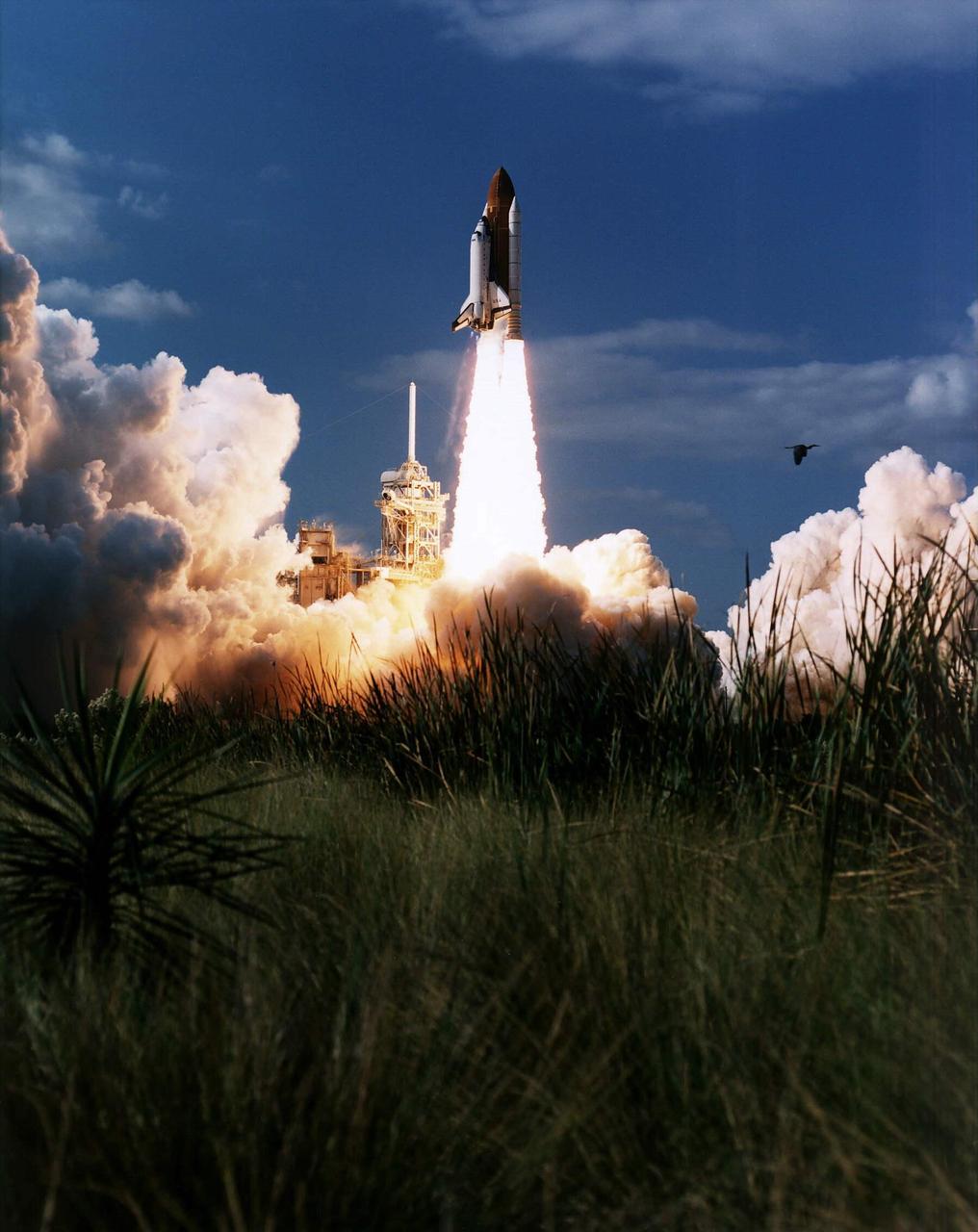
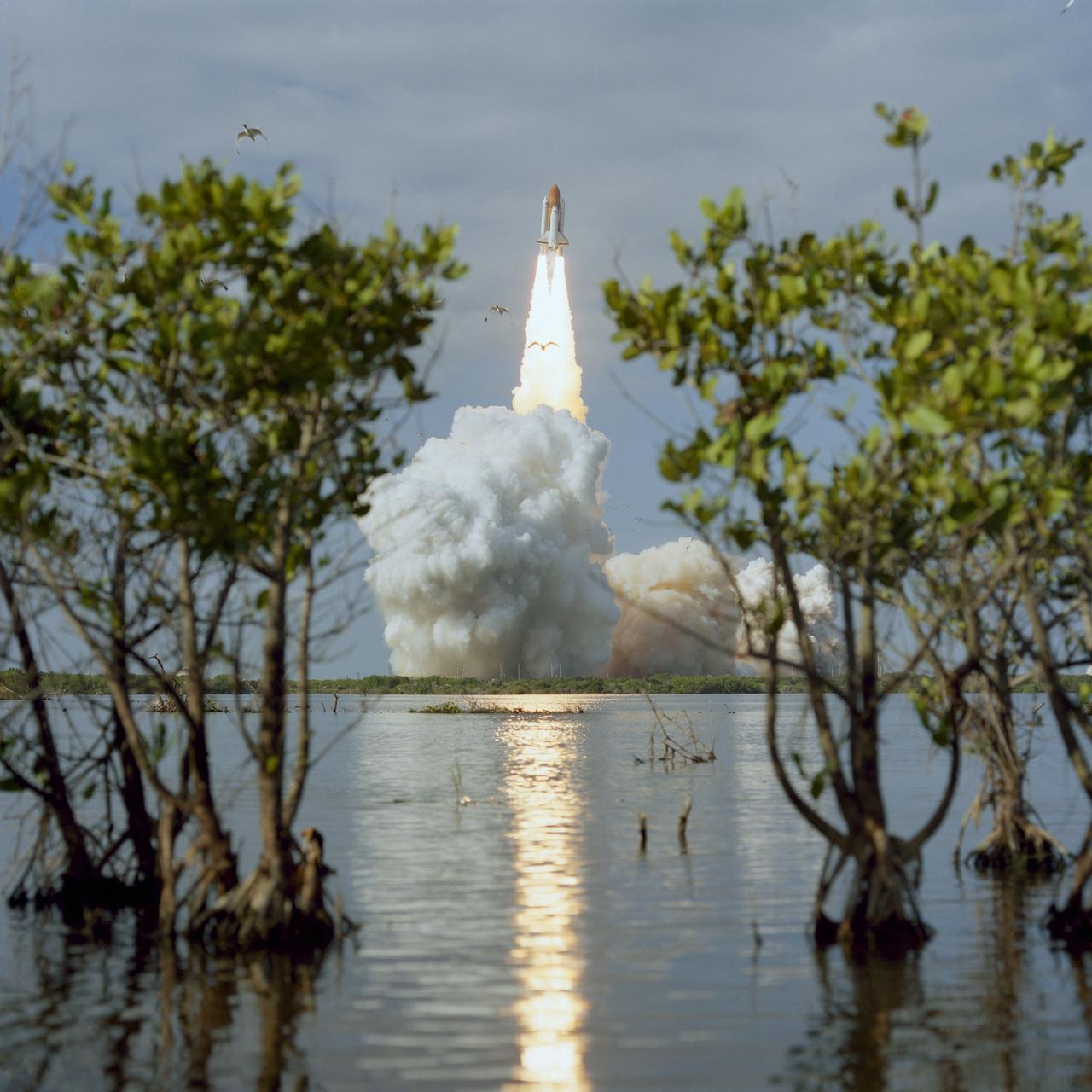
KENNEDY SPACE CENTER, FLA. -- Vividly framed by a tranquil Florida landscape, the Space Shuttle Columbia lifts off from Launch Pad 39B at 2:55:47 p.m. EST, Nov. 19, 1996. Leading the veteran crew of Mission STS-80 is Commander Kenneth D. Cockrell; Kent V. Rominger is the pilot and the three mission specialists are Tamara E. Jernigan, Story Musgrave and Thomas D. Jones. At age 61, Musgrave becomes the oldest person ever to fly in space; he also ties astronaut John Young’s record for most number of spaceflights by a human being, and in embarking on his sixth Shuttle flight Musgrave has logged the most flights ever aboard NASA’s reusable space vehicle. The two primary payloads for STS-80 are the Wake Shield Facility-3 (WSF-3) and the Orbiting and Retrievable Far and Extreme Ultraviolet Spectrometer-Shuttle Pallet Satellite II (ORFEUS-SPAS II). Two spacewalks also will be performed during the nearly 16-day mission. Mission STS-80 closes out the Shuttle flight schedule for 1996; it marks the 21st flight for Columbia and the 80th in Shuttle program history.