
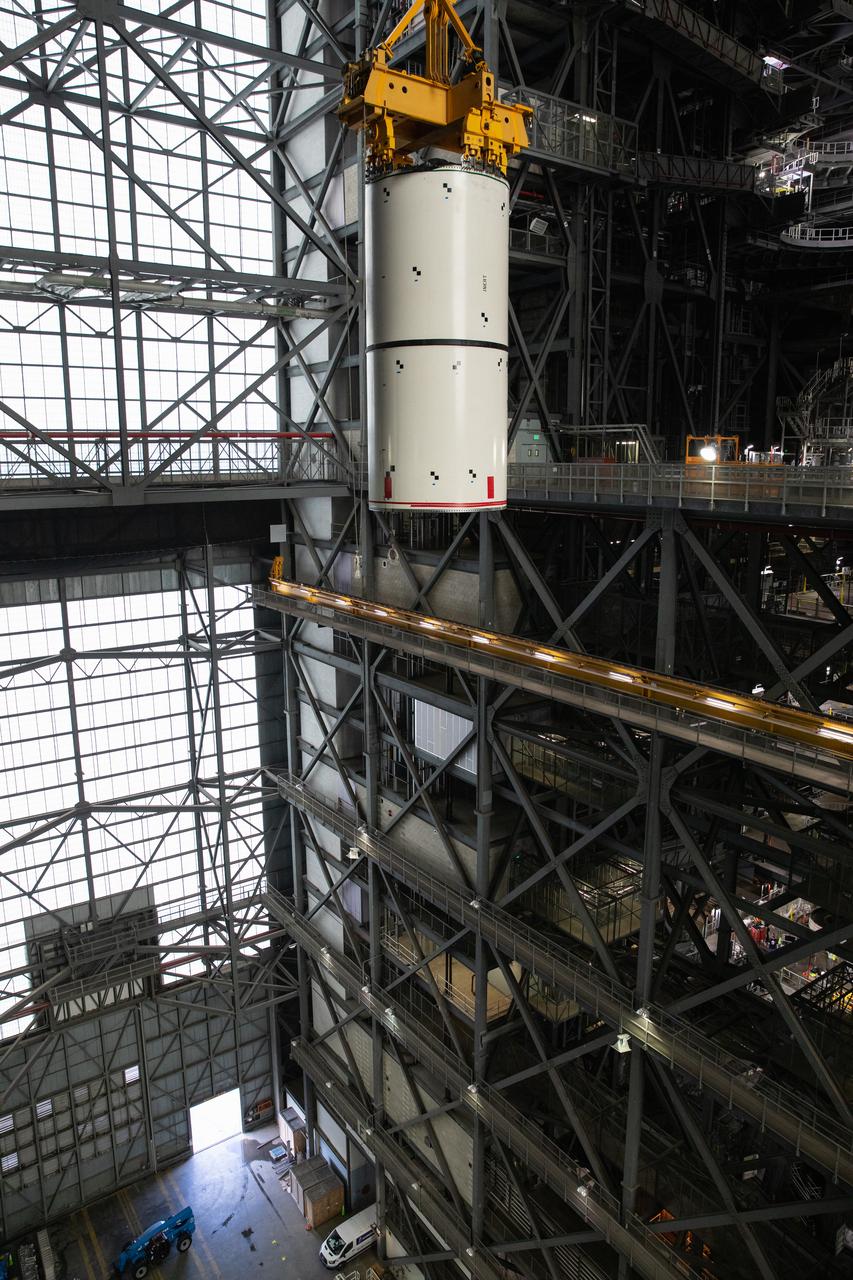
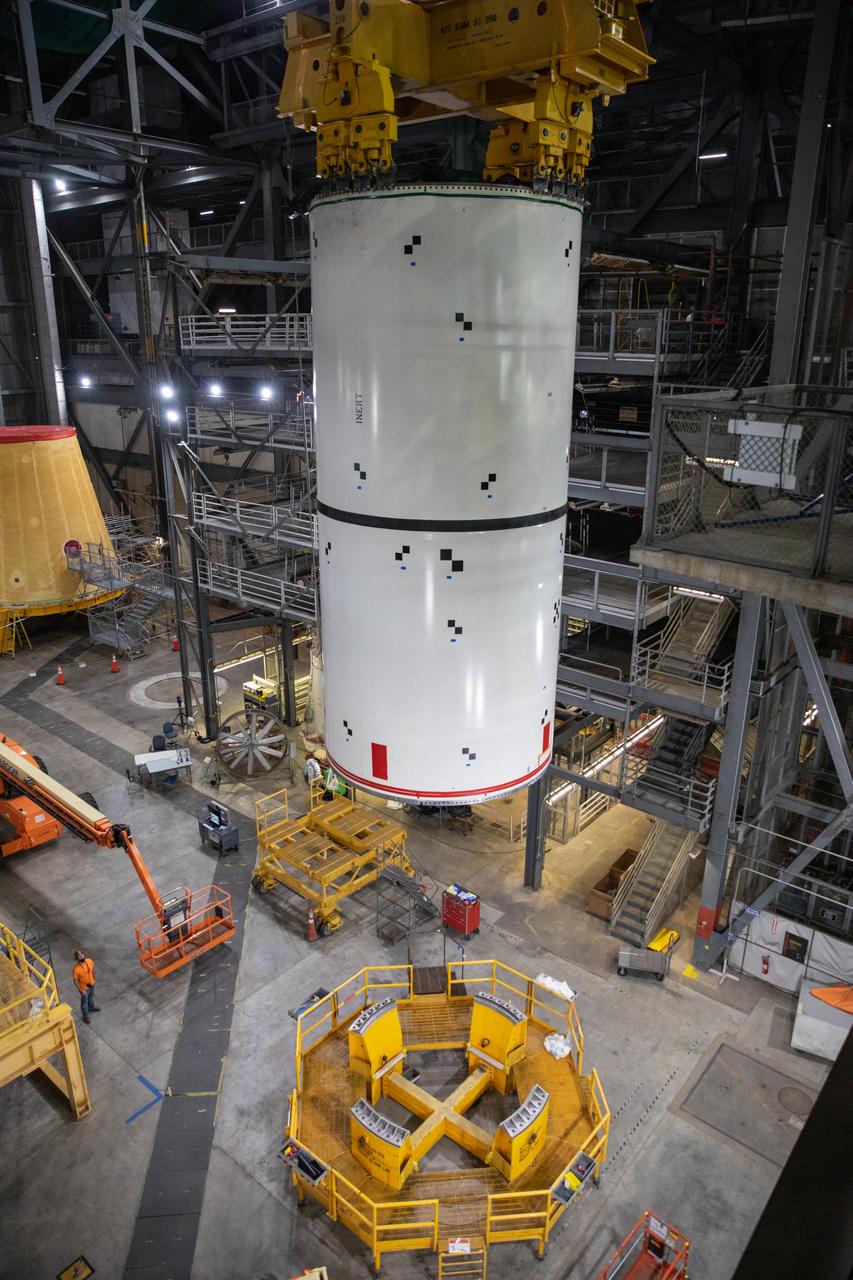
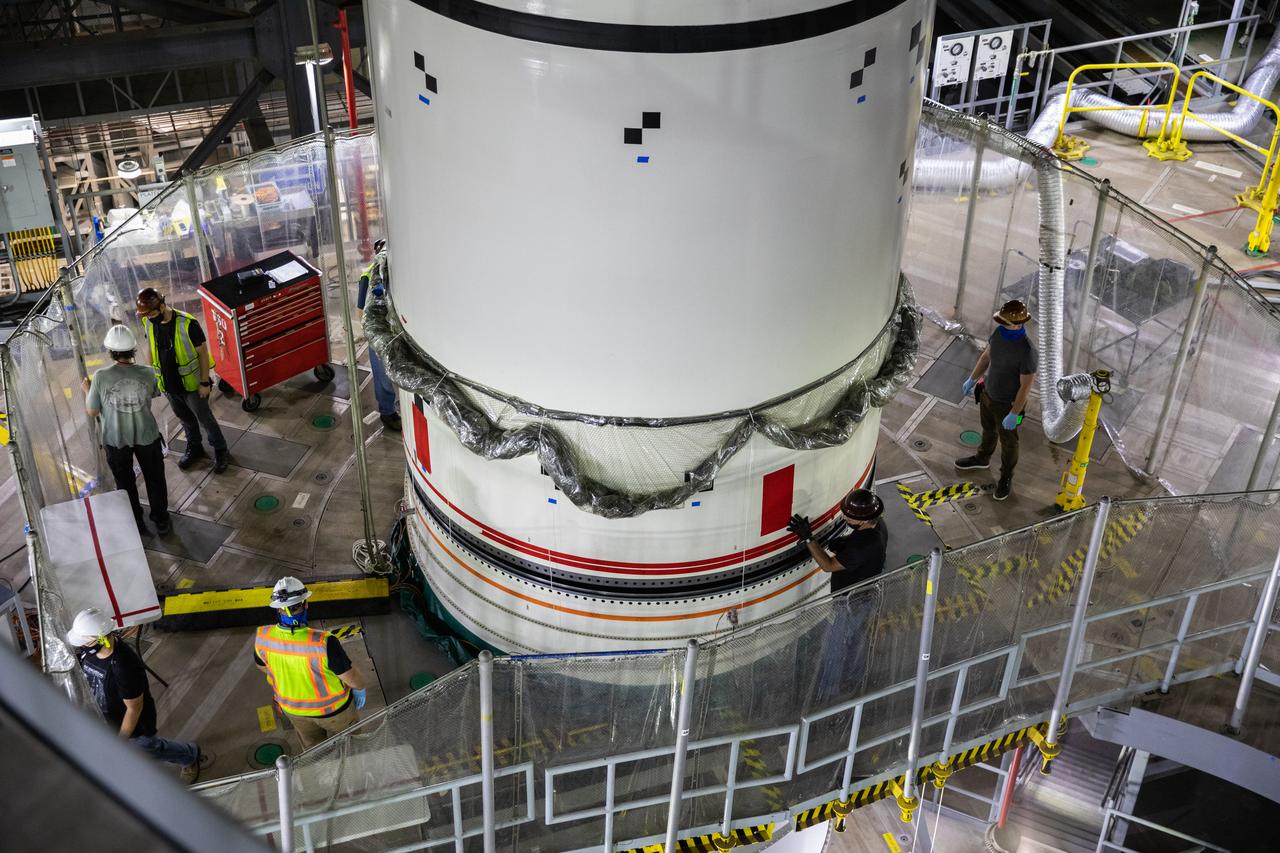
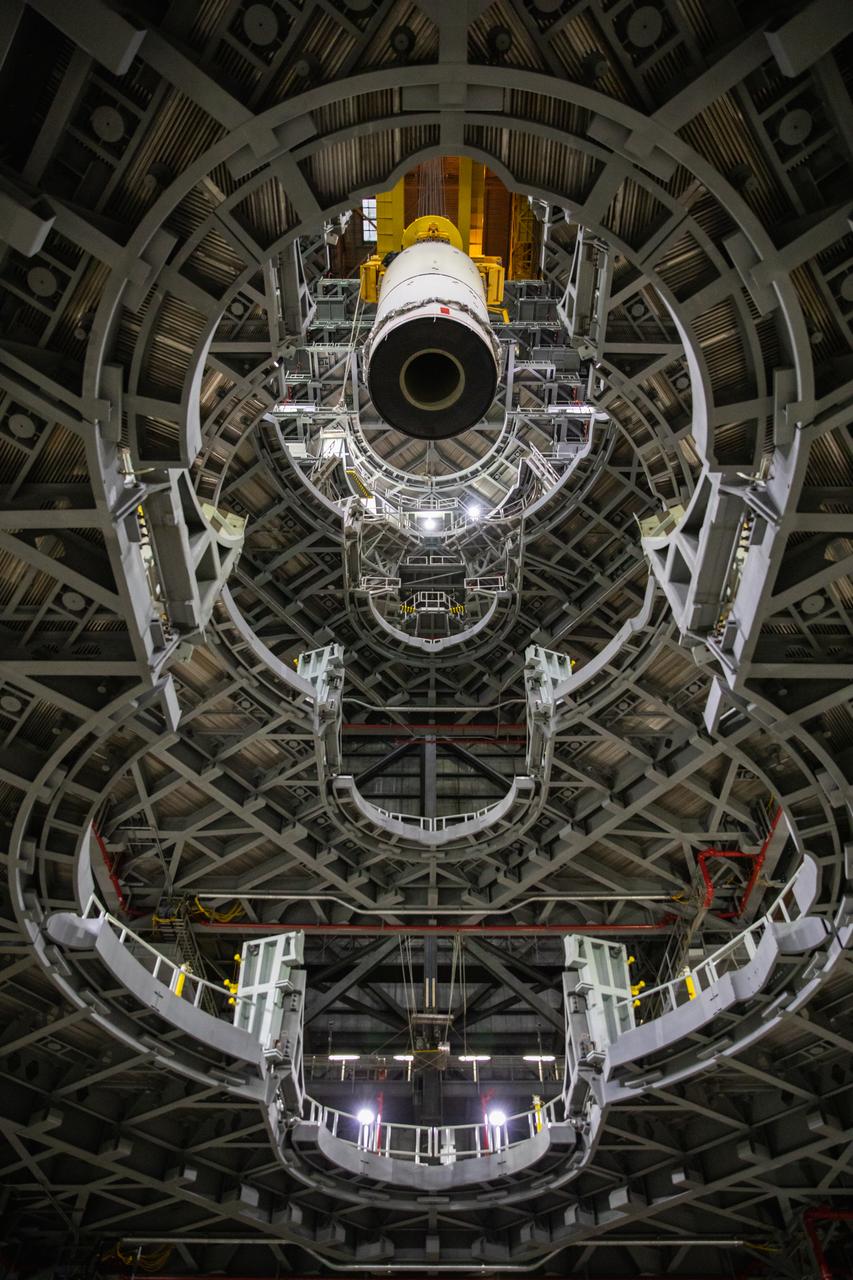
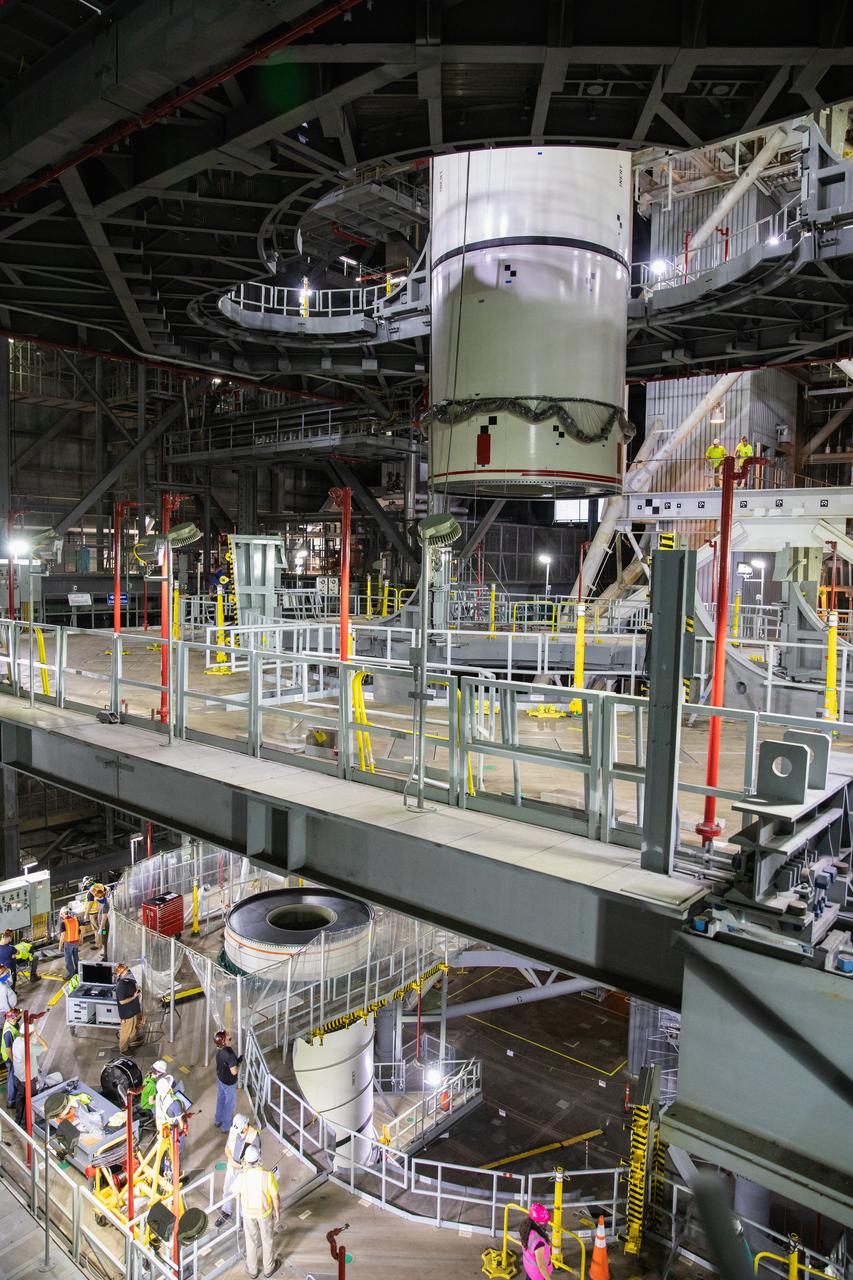
Teams with NASA’s Exploration Ground Systems lower the agency’s 212-foot-tall SLS (Space Launch System) core stage into High Bay 2 at the Vehicle Assembly Building at NASA’s Kennedy Space Center in Florida on Wednesday, Dec. 11, 2024. The one-of-a kind lifting beam is designed to lift the core stage from the transfer aisle to High Bay 2 where it will remain while teams stack the two solid rocket boosters on top of mobile launcher 1 for the SLS core stage. Boeing and their sub-contractor Futuramic refurbished High Bay 2 to increase efficiencies while processing core stages for Artemis II and beyond.

Teams with NASA’s Exploration Ground Systems lower the agency’s 212-foot-tall SLS (Space Launch System) core stage into High Bay 2 at the Vehicle Assembly Building at NASA’s Kennedy Space Center in Florida on Wednesday, Dec. 11, 2024. The one-of-a kind lifting beam is designed to lift the core stage from the transfer aisle to High Bay 2 where it will remain while teams stack the two solid rocket boosters on top of mobile launcher 1 for the SLS core stage. Boeing and their sub-contractor Futuramic refurbished High Bay 2 to increase efficiencies while processing core stages for Artemis II and beyond.

Teams with NASA’s Exploration Ground Systems lower the agency’s 212-foot-tall SLS (Space Launch System) core stage into High Bay 2 at the Vehicle Assembly Building at NASA’s Kennedy Space Center in Florida on Wednesday, Dec. 11, 2024. The one-of-a kind lifting beam is designed to lift the core stage from the transfer aisle to High Bay 2 where it will remain while teams stack the two solid rocket boosters on top of mobile launcher 1 for the SLS core stage. Boeing and their sub-contractor Futuramic refurbished High Bay 2 to increase efficiencies while processing core stages for Artemis II and beyond.

Teams with NASA’s Exploration Ground Systems lower the agency’s 212-foot-tall SLS (Space Launch System) core stage into High Bay 2 at the Vehicle Assembly Building at NASA’s Kennedy Space Center in Florida on Wednesday, Dec. 11, 2024. The one-of-a kind lifting beam is designed to lift the core stage from the transfer aisle to High Bay 2 where it will remain while teams stack the two solid rocket boosters on top of mobile launcher 1 for the SLS core stage. Boeing and their sub-contractor Futuramic refurbished High Bay 2 to increase efficiencies while processing core stages for Artemis II and beyond.

Teams with NASA’s Exploration Ground Systems lower the agency’s 212-foot-tall SLS (Space Launch System) core stage into High Bay 2 at the Vehicle Assembly Building at NASA’s Kennedy Space Center in Florida on Wednesday, Dec. 11, 2024. The one-of-a kind lifting beam is designed to lift the core stage from the transfer aisle to High Bay 2 where it will remain while teams stack the two solid rocket boosters on top of mobile launcher 1 for the SLS core stage. Boeing and their sub-contractor Futuramic refurbished High Bay 2 to increase efficiencies while processing core stages for Artemis II and beyond.

Teams with NASA’s Exploration Ground Systems lower the agency’s 212-foot-tall SLS (Space Launch System) core stage into High Bay 2 at the Vehicle Assembly Building at NASA’s Kennedy Space Center in Florida on Wednesday, Dec. 11, 2024. The one-of-a kind lifting beam is designed to lift the core stage from the transfer aisle to High Bay 2 where it will remain while teams stack the two solid rocket boosters on top of mobile launcher 1 for the SLS core stage. Boeing and their sub-contractor Futuramic refurbished High Bay 2 to increase efficiencies while processing core stages for Artemis II and beyond.

Teams with NASA’s Exploration Ground Systems lower the agency’s 212-foot-tall SLS (Space Launch System) core stage into High Bay 2 at the Vehicle Assembly Building at NASA’s Kennedy Space Center in Florida on Wednesday, Dec. 11, 2024. The one-of-a kind lifting beam is designed to lift the core stage from the transfer aisle to High Bay 2 where it will remain while teams stack the two solid rocket boosters on top of mobile launcher 1 for the SLS core stage. Boeing and their sub-contractor Futuramic refurbished High Bay 2 to increase efficiencies while processing core stages for Artemis II and beyond.
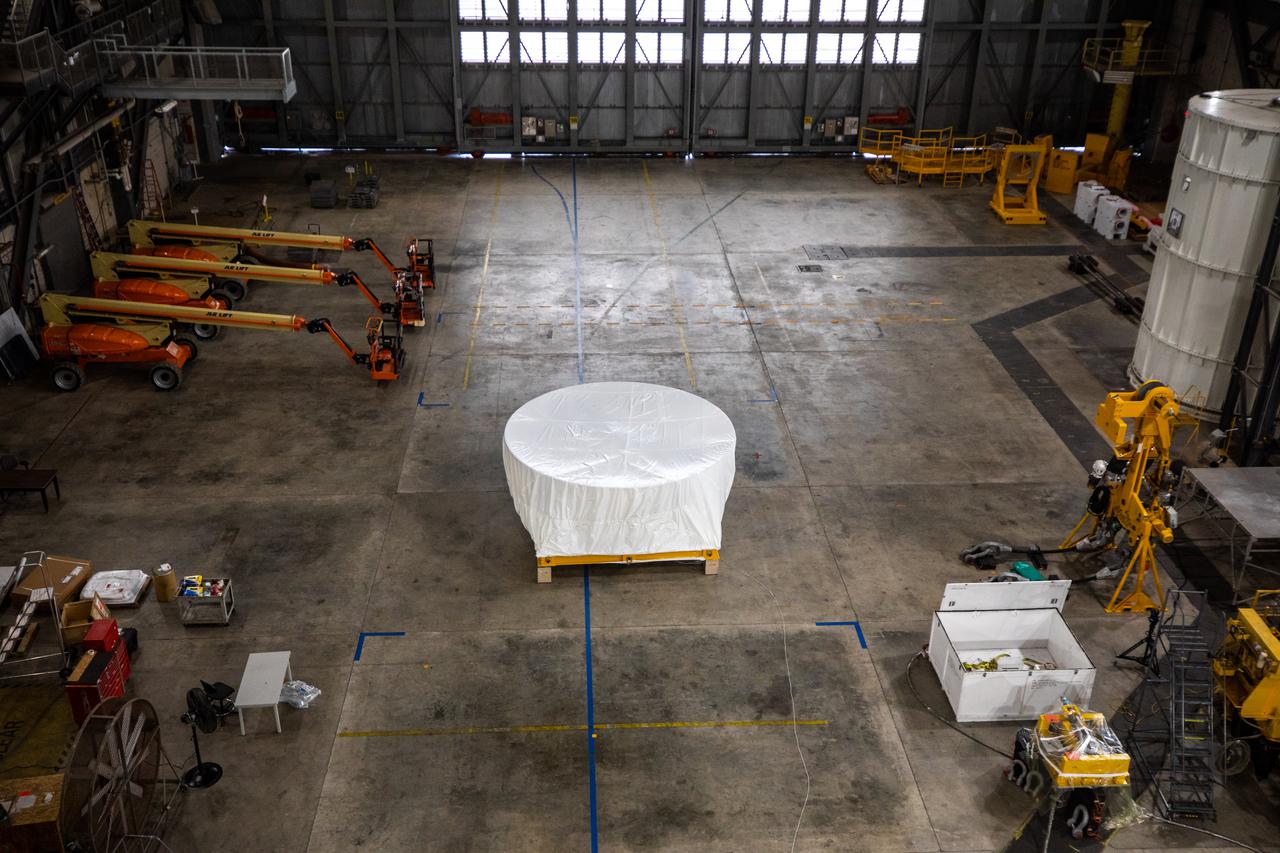
Under a protective cover, the Orion Stage Adapter (OSA) arrives in High Bay 4 of the Vehicle Assembly Building on Oct. 4, 2021, at NASA's Kennedy Space Center in Florida. Teams will lift the ring-shaped OSA, filled with shoebox-sized CubeSats, and connect it to the Interim Cryogenic Propulsion Stage (ICPS). The Orion spacecraft will be secured on top of the Space Launch System (SLS) rocket to complete the stack ahead of the Artemis I launch. This mission will be the first integrated flight test of the SLS and Orion spacecraft. In later missions, NASA will land the first woman and the first person of color on the surface of the Moon, paving the way for a long-term lunar presence and serving as a steppingstone on the way to Mars.
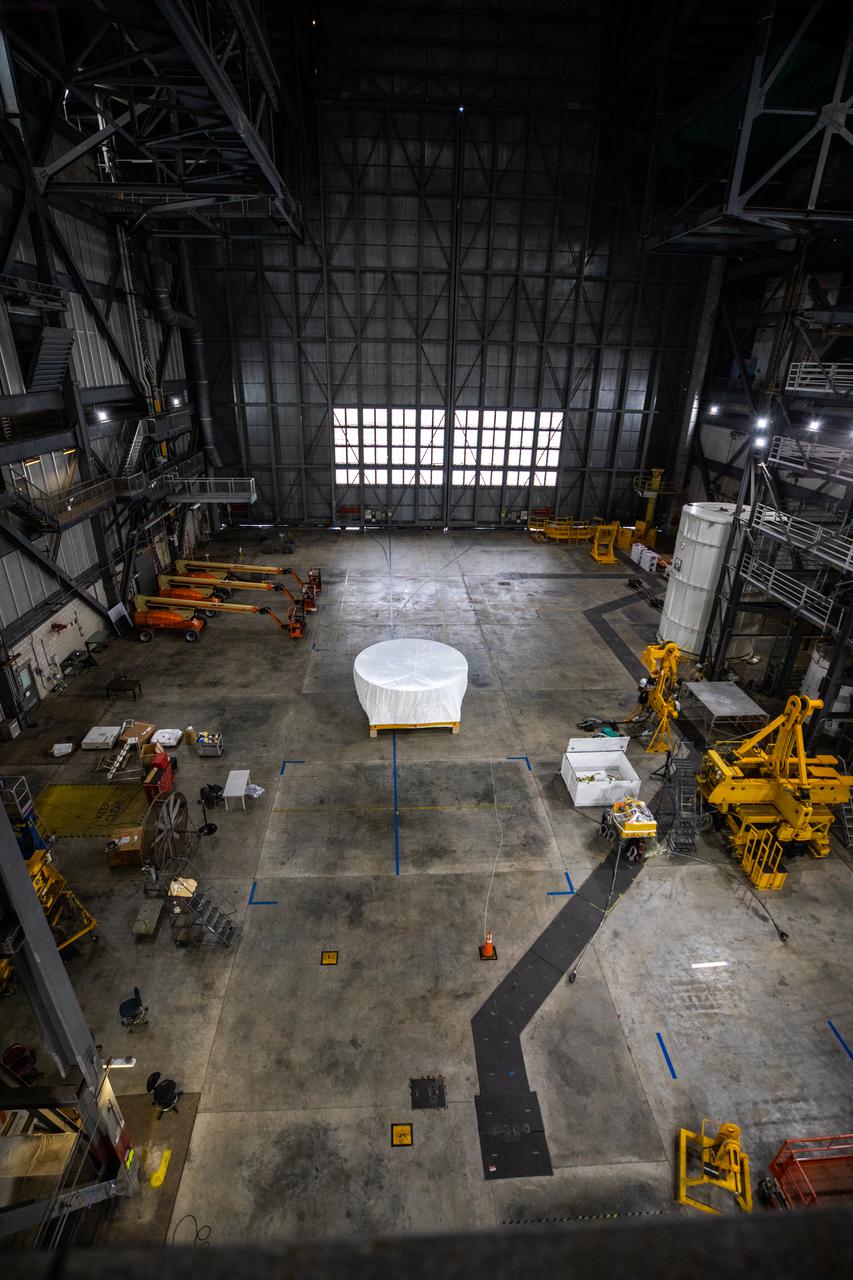
Under a protective cover, the Orion Stage Adapter (OSA) arrives in High Bay 4 of the Vehicle Assembly Building on Oct. 4, 2021, at NASA's Kennedy Space Center in Florida. Teams will lift the ring-shaped OSA, filled with shoebox-sized CubeSats, and connect it to the Interim Cryogenic Propulsion Stage (ICPS). The Orion spacecraft will be secured on top of the Space Launch System (SLS) rocket to complete the stack ahead of the Artemis I launch. This mission will be the first integrated flight test of the SLS and Orion spacecraft. In later missions, NASA will land the first woman and the first person of color on the surface of the Moon, paving the way for a long-term lunar presence and serving as a steppingstone on the way to Mars.

Teams with NASA’s Exploration Ground Systems transport the agency’s 212-foot-tall SLS (Space Launch System) core stage into High Bay 2 at the Vehicle Assembly Building at NASA’s Kennedy Space Center in Florida on Wednesday, Dec. 11, 2024. The one-of-a kind lifting beam is designed to lift the core stage from the transfer aisle to High Bay 2 where it will remain while teams stack the two solid rocket boosters on top of mobile launcher 1 for the SLS core stage.
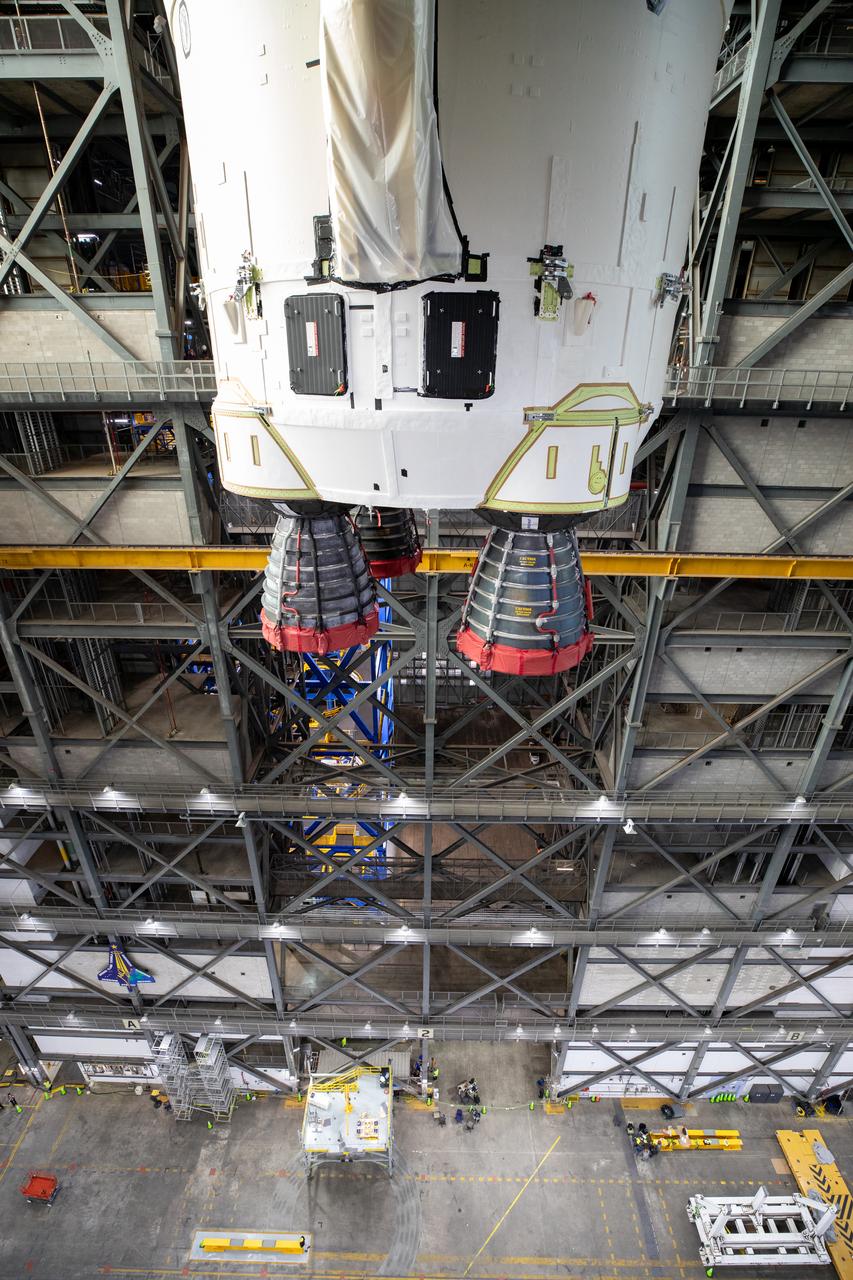
Teams with NASA’s Exploration Ground Systems transport the agency’s 212-foot-tall SLS (Space Launch System) core stage into High Bay 2 at the Vehicle Assembly Building at NASA’s Kennedy Space Center in Florida on Wednesday, Dec. 11, 2024. The one-of-a kind lifting beam is designed to lift the core stage from the transfer aisle to High Bay 2 where it will remain while teams stack the two solid rocket boosters on top of mobile launcher 1 for the SLS core stage.
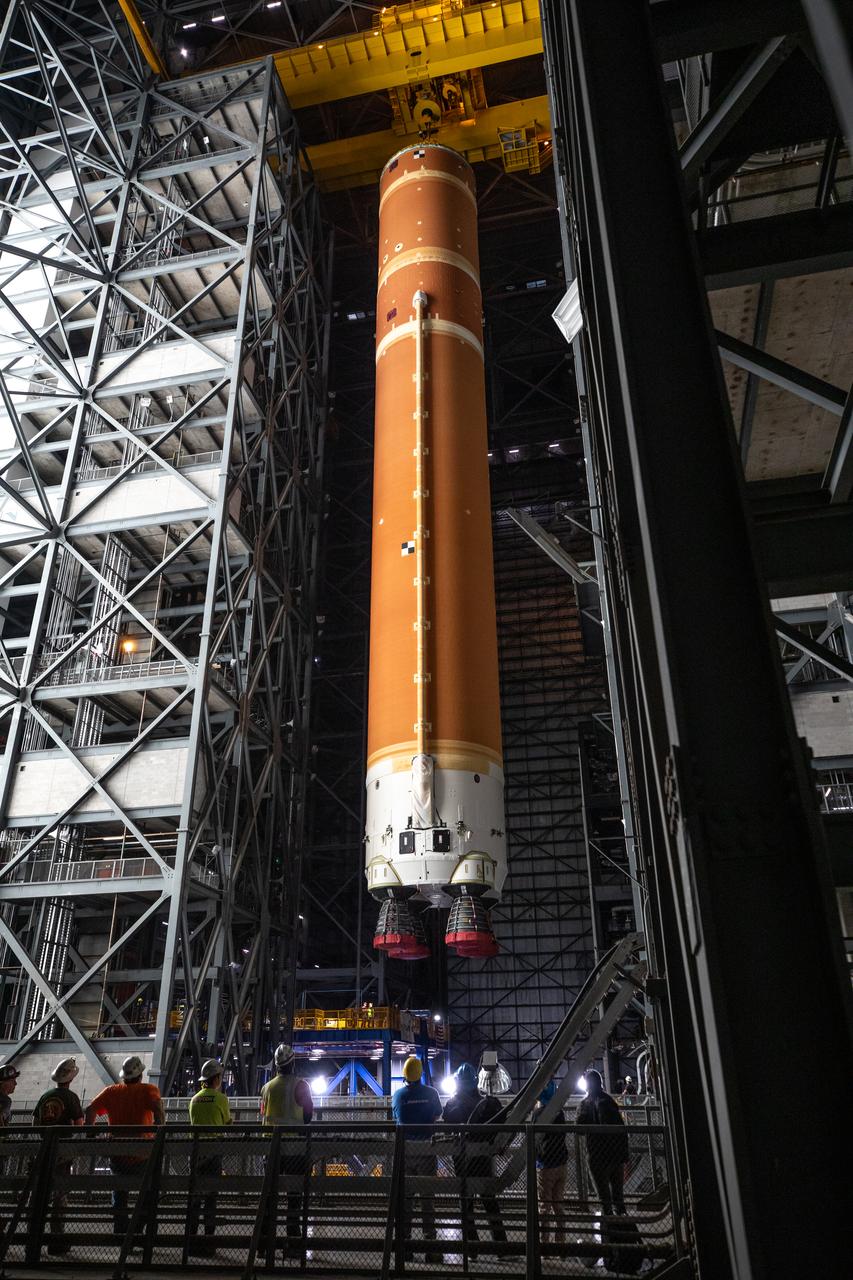
Teams with NASA’s Exploration Ground Systems transport the agency’s 212-foot-tall SLS (Space Launch System) core stage into High Bay 2 at the Vehicle Assembly Building at NASA’s Kennedy Space Center in Florida on Wednesday, Dec. 11, 2024. The one-of-a kind lifting beam is designed to lift the core stage from the transfer aisle to High Bay 2 where it will remain while teams stack the two solid rocket boosters on top of mobile launcher 1 for the SLS core stage.
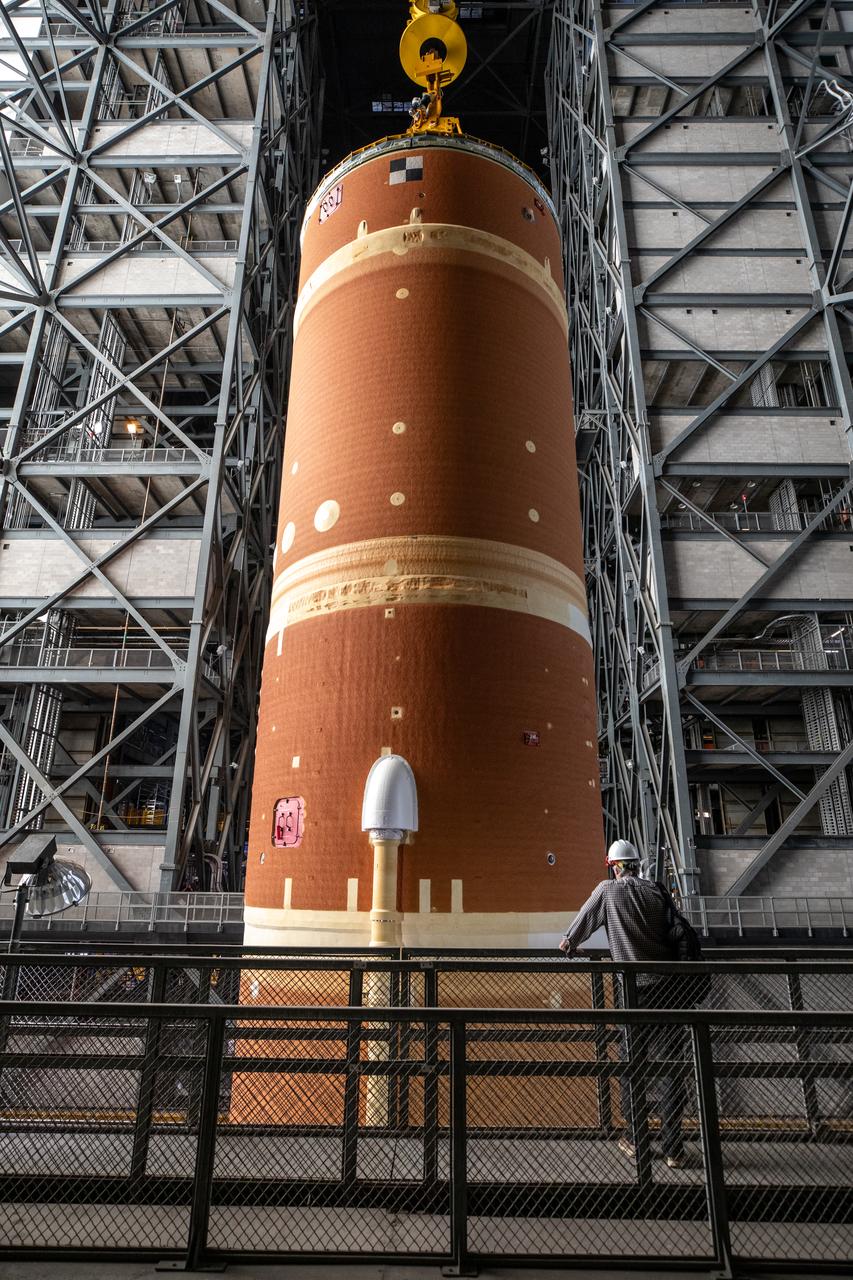
Teams with NASA’s Exploration Ground Systems transport the agency’s 212-foot-tall SLS (Space Launch System) core stage into High Bay 2 at the Vehicle Assembly Building at NASA’s Kennedy Space Center in Florida on Wednesday, Dec. 11, 2024. The one-of-a kind lifting beam is designed to lift the core stage from the transfer aisle to High Bay 2 where it will remain while teams stack the two solid rocket boosters on top of mobile launcher 1 for the SLS core stage.
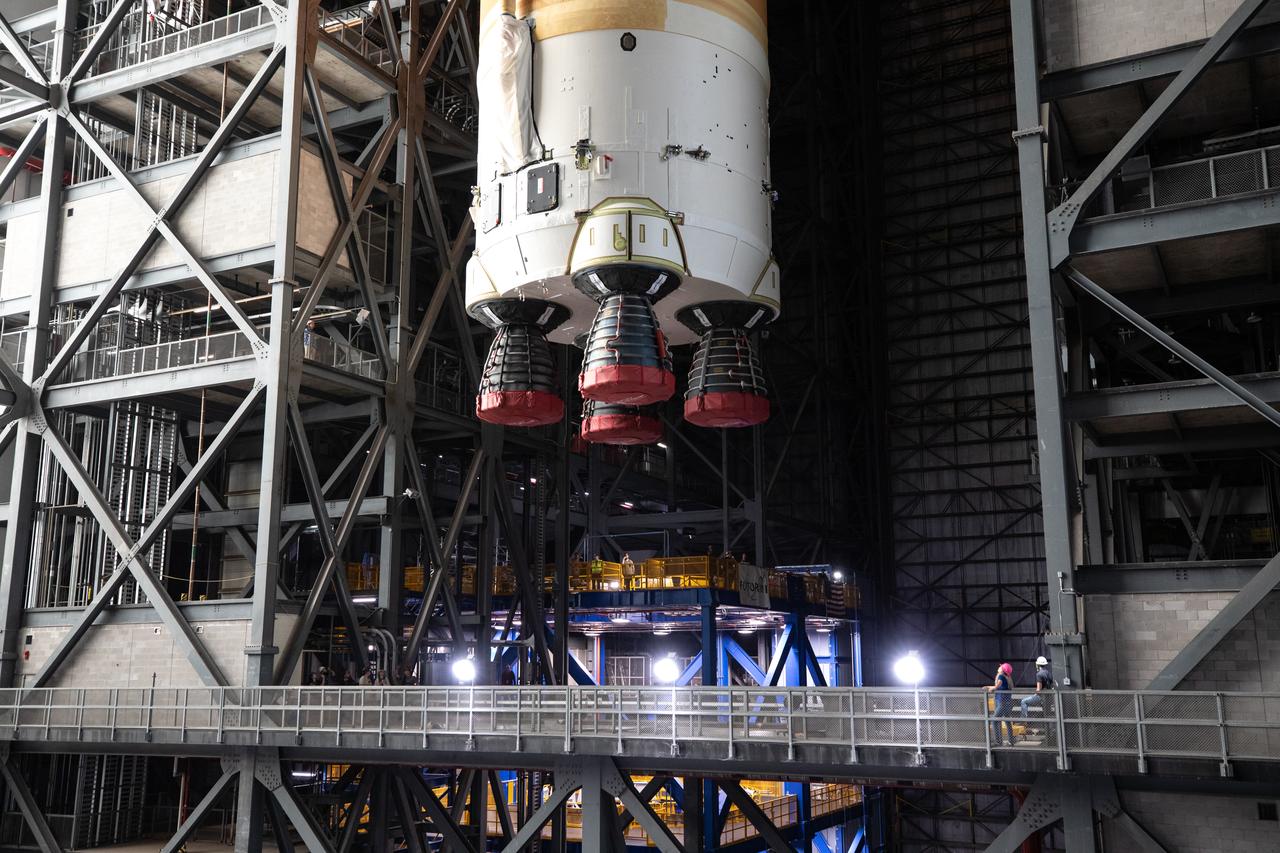
Teams with NASA’s Exploration Ground Systems transport the agency’s 212-foot-tall SLS (Space Launch System) core stage into High Bay 2 at the Vehicle Assembly Building at NASA’s Kennedy Space Center in Florida on Wednesday, Dec. 11, 2024. The one-of-a kind lifting beam is designed to lift the core stage from the transfer aisle to High Bay 2 where it will remain while teams stack the two solid rocket boosters on top of mobile launcher 1 for the SLS core stage.
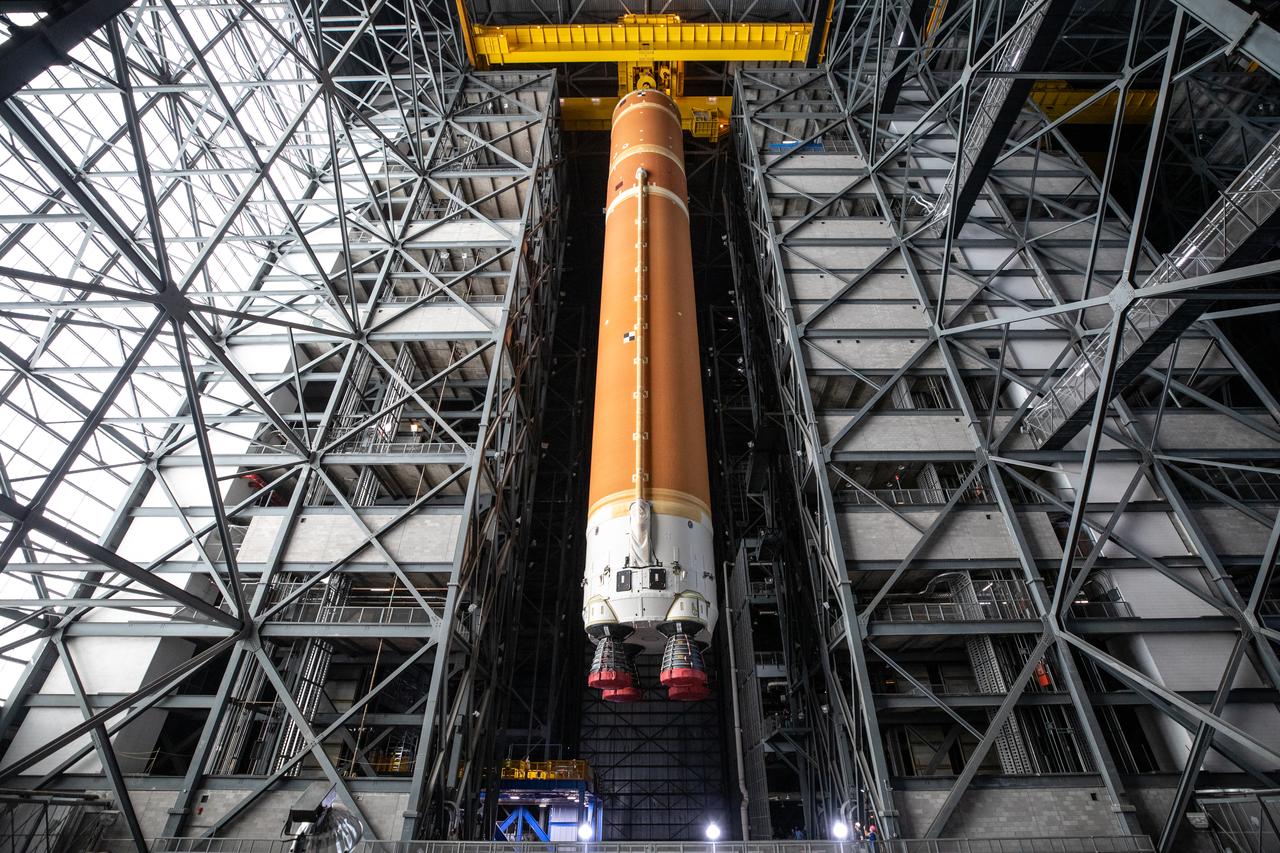
Teams with NASA’s Exploration Ground Systems transport the agency’s 212-foot-tall SLS (Space Launch System) core stage into High Bay 2 at the Vehicle Assembly Building at NASA’s Kennedy Space Center in Florida on Wednesday, Dec. 11, 2024. The one-of-a kind lifting beam is designed to lift the core stage from the transfer aisle to High Bay 2 where it will remain while teams stack the two solid rocket boosters on top of mobile launcher 1 for the SLS core stage.
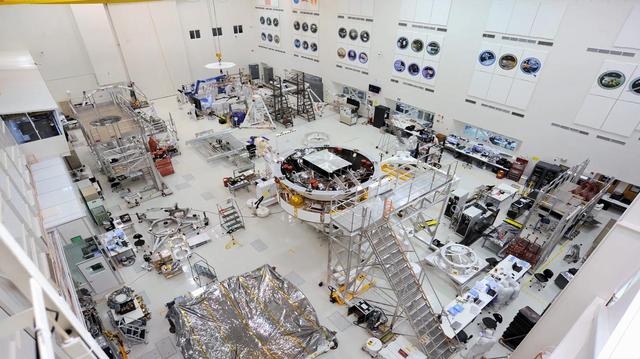
This image shows major components of NASA's Mars 2020 mission in the High Bay 1 clean room in JPL's Spacecraft Assembly Facility. Movie available at https://photojournal.jpl.nasa.gov/catalog/PIA23164
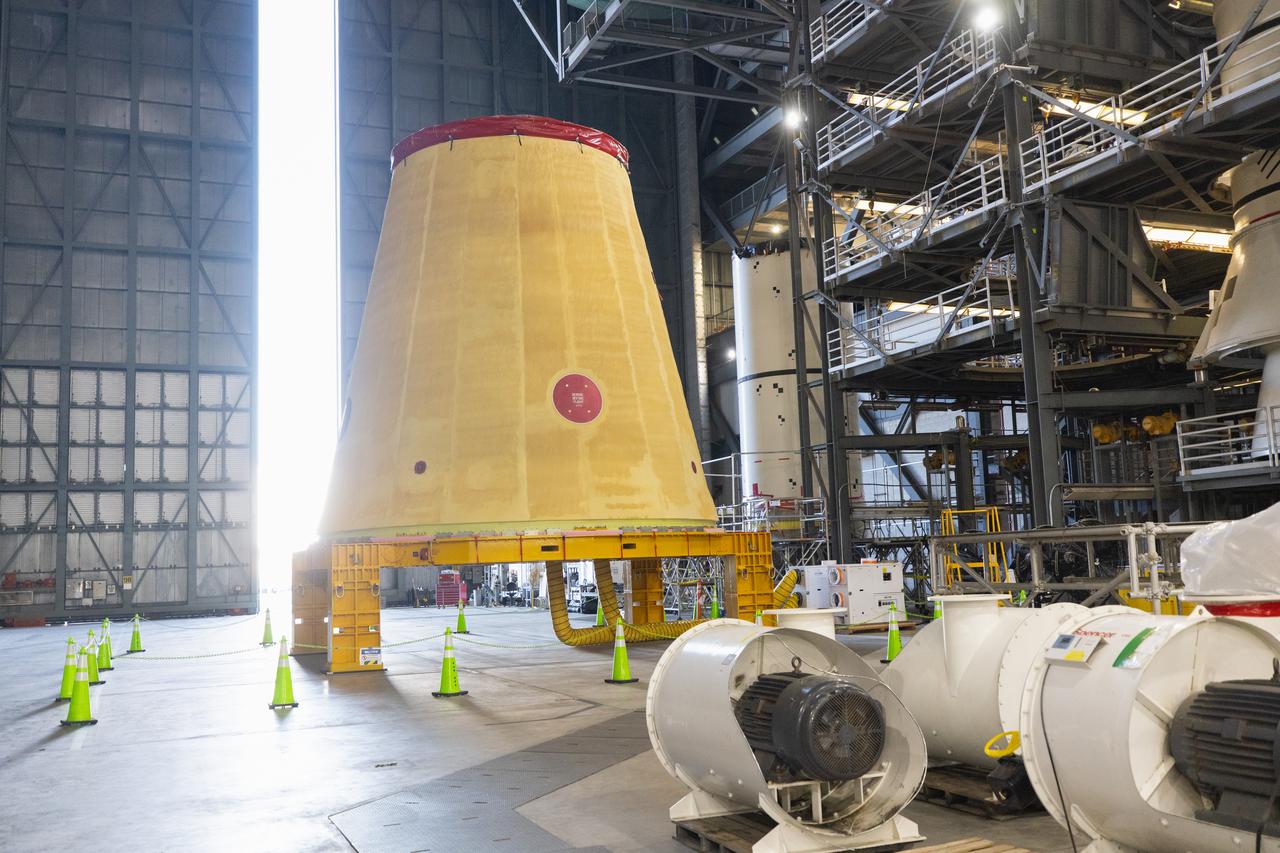
NASA’s Artemis II hardware, the launch vehicle stage adapter, is inside High Bay 4 on Thursday, March 20, 2025, at the Vehicle Assembly Building at NASA’s Kennedy Space Center in Florida ahead of rocket stacking operations. The cone shaped launch vehicle stage adapter connects the SLS (Space Launch System) Moon rocket to the upper stage, the interim cryogenic propulsion stage, and protects the rocket’s flight computers, avionics, and electrical devices during launch and ascent during the Artemis missions.
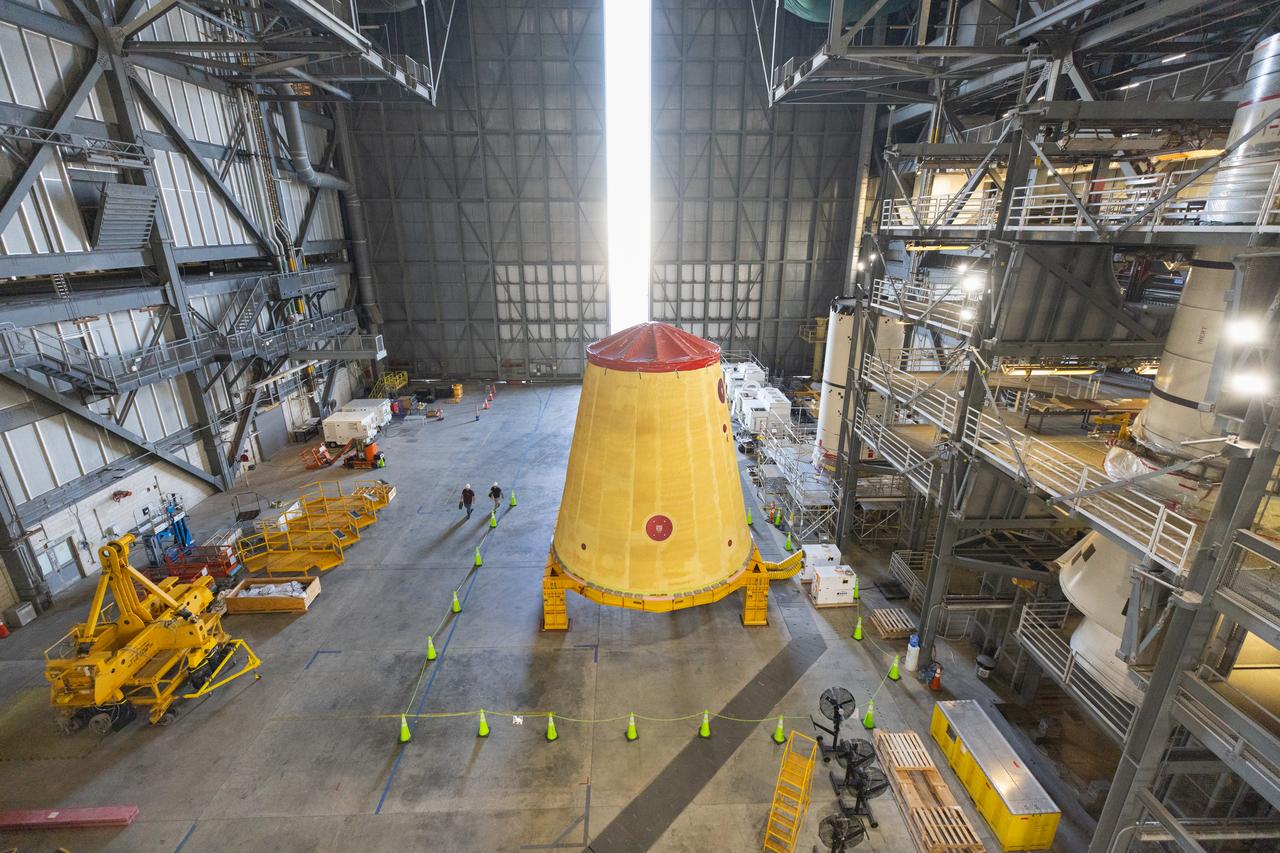
NASA’s Artemis II hardware, the launch vehicle stage adapter, is inside High Bay 4 on Thursday, March 20, 2025, at the Vehicle Assembly Building at NASA’s Kennedy Space Center in Florida ahead of rocket stacking operations. The cone shaped launch vehicle stage adapter connects the SLS (Space Launch System) Moon rocket to the upper stage, the interim cryogenic propulsion stage, and protects the rocket’s flight computers, avionics, and electrical devices during launch and ascent during the Artemis missions.
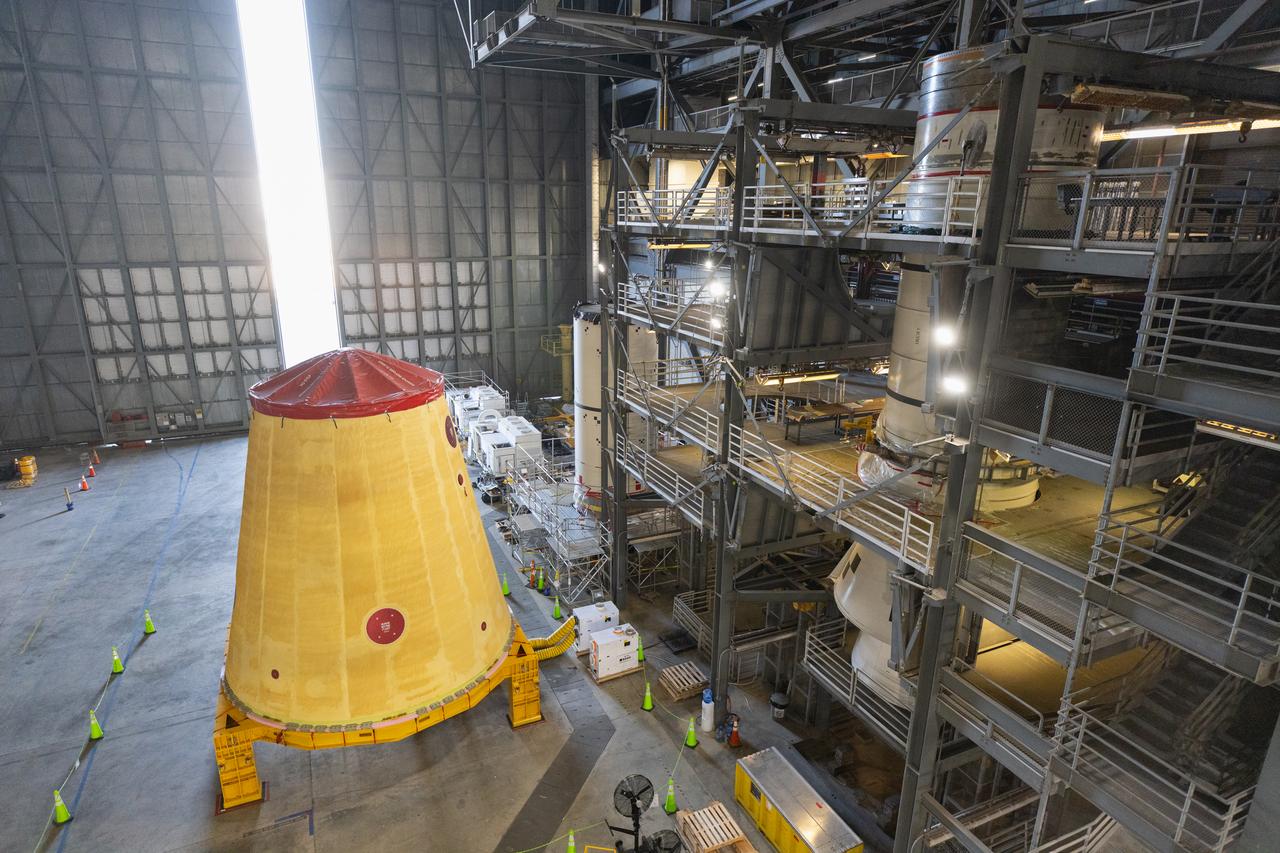
NASA’s Artemis II hardware, the launch vehicle stage adapter, is inside High Bay 4 on Thursday, March 20, 2025, at the Vehicle Assembly Building at NASA’s Kennedy Space Center in Florida ahead of rocket stacking operations. The cone shaped launch vehicle stage adapter connects the SLS (Space Launch System) Moon rocket to the upper stage, the interim cryogenic propulsion stage, and protects the rocket’s flight computers, avionics, and electrical devices during launch and ascent during the Artemis missions.
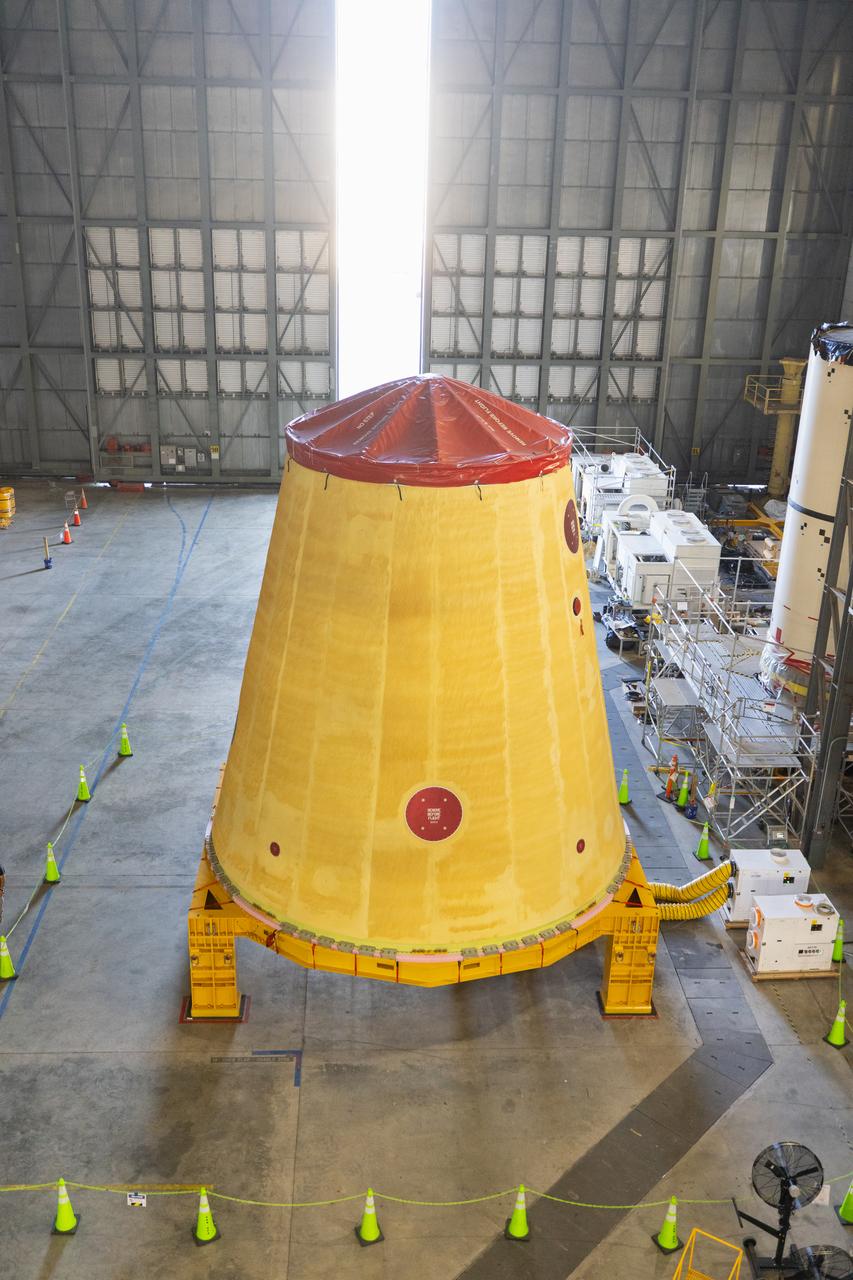
NASA’s Artemis II hardware, the launch vehicle stage adapter, is inside High Bay 4 on Thursday, March 20, 2025, at the Vehicle Assembly Building at NASA’s Kennedy Space Center in Florida ahead of rocket stacking operations. The cone shaped launch vehicle stage adapter connects the SLS (Space Launch System) Moon rocket to the upper stage, the interim cryogenic propulsion stage, and protects the rocket’s flight computers, avionics, and electrical devices during launch and ascent during the Artemis missions.
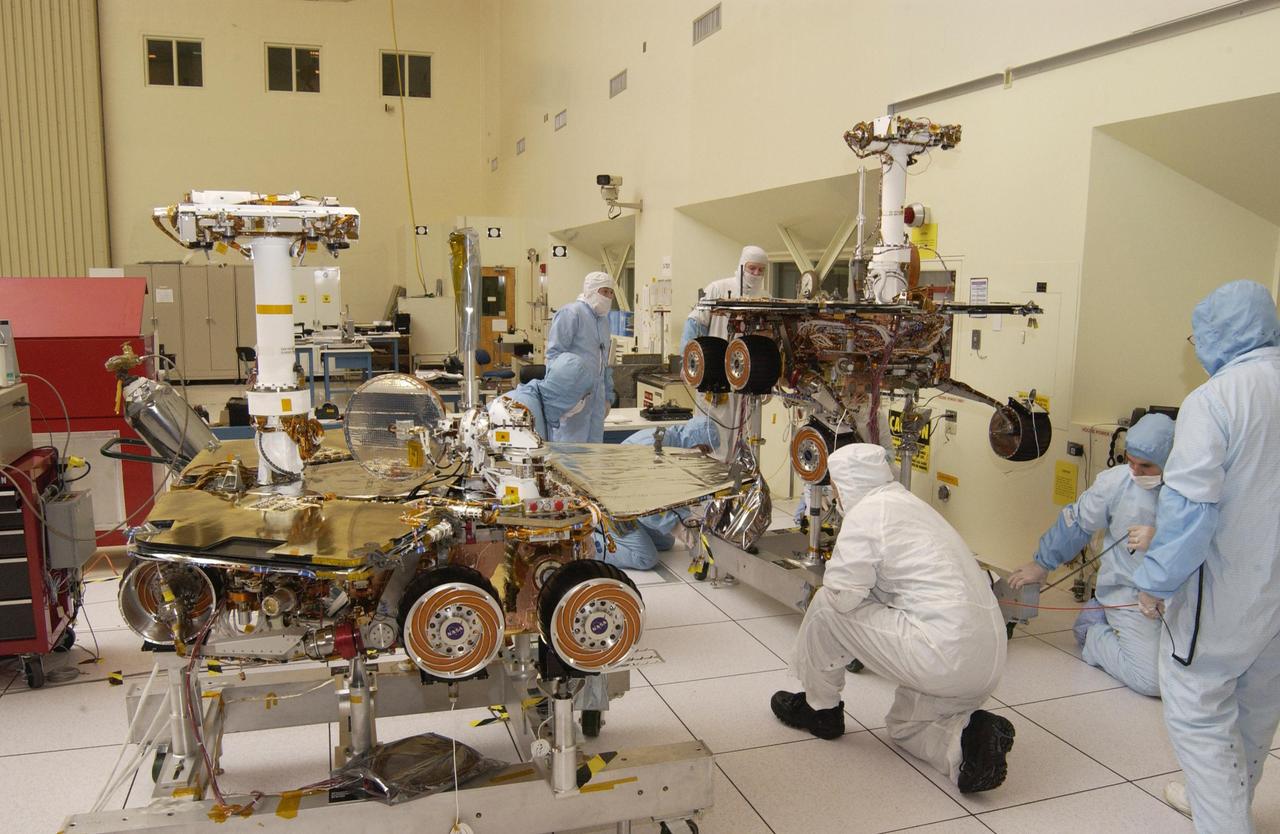
High Bay 1 looks much as it does today in this photo of NASA's Spirit and Opportunity Mars rovers being tested on Feb. 10, 2003. Some workers are wearing booties and others wear shoes that were stored in the gowning area and cleaned regularly. https://photojournal.jpl.nasa.gov/catalog/PIA23244

Technicians with NASA and Boeing complete attaching the engine section to the boat-tail for the agency’s Artemis III SLS (Space Launch System) rocket inside the high bay of the Space Systems Processing Facility at NASA’s Kennedy Space Center in Florida on Wednesday, Oct. 30, 2024. The engine section is one of five major elements that makes up the SLS rocket’s 212-foot-tall core stage, which house the rocket’s four RS-25 engines and vital systems for mounting, controlling, and delivering fuel from the stage’s two massive liquid propellant tanks to the engines. The boat-tail is designed to protect the bottom end of the core stage and the RS-25 engines.
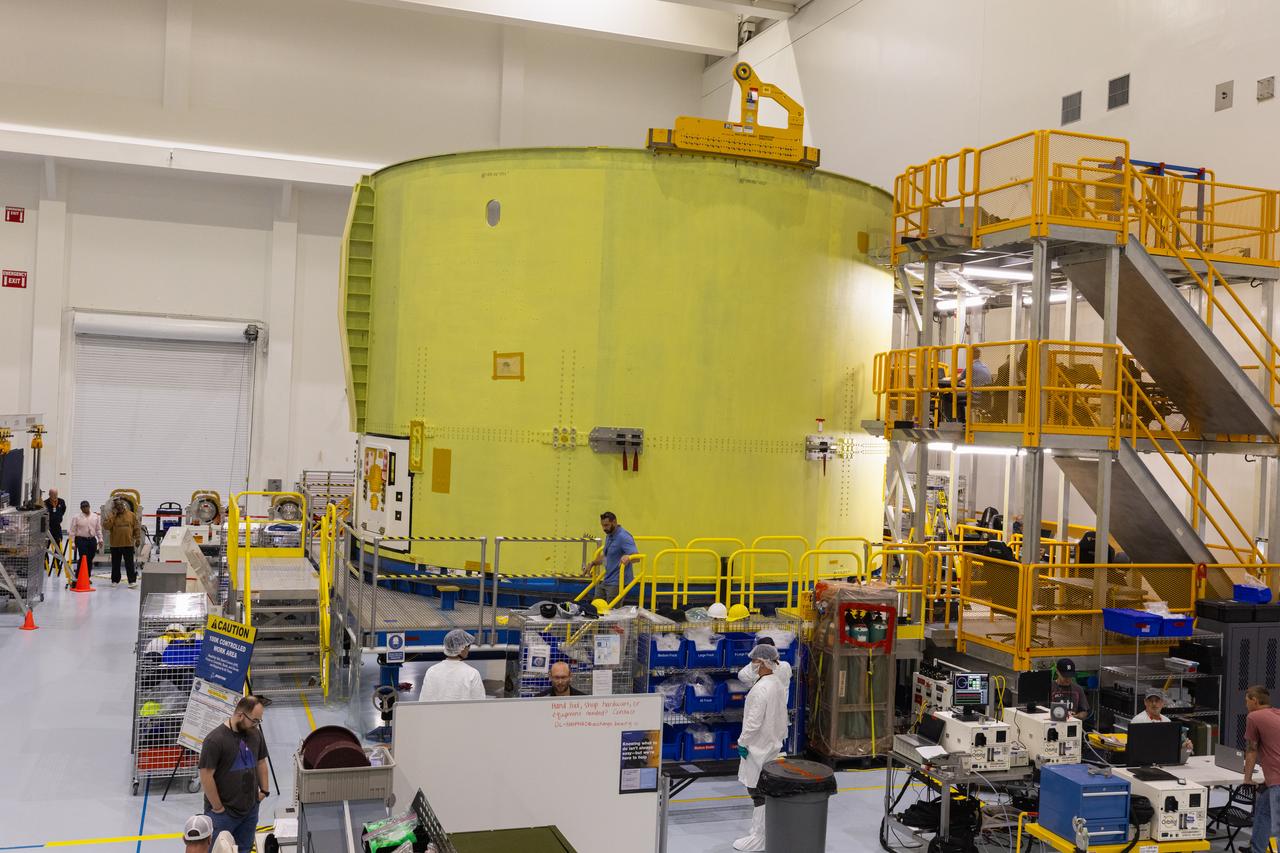
Technicians with NASA and Boeing complete attaching the engine section to the boat-tail for the agency’s Artemis III SLS (Space Launch System) rocket inside the high bay of the Space Systems Processing Facility at NASA’s Kennedy Space Center in Florida on Wednesday, Oct. 30, 2024. The engine section is one of five major elements that makes up the SLS rocket’s 212-foot-tall core stage, which house the rocket’s four RS-25 engines and vital systems for mounting, controlling, and delivering fuel from the stage’s two massive liquid propellant tanks to the engines. The boat-tail is designed to protect the bottom end of the core stage and the RS-25 engines.

Technicians with NASA and Boeing complete attaching the engine section to the boat-tail for the agency’s Artemis III SLS (Space Launch System) rocket inside the high bay of the Space Systems Processing Facility at NASA’s Kennedy Space Center in Florida on Wednesday, Oct. 30, 2024. The engine section is one of five major elements that makes up the SLS rocket’s 212-foot-tall core stage, which house the rocket’s four RS-25 engines and vital systems for mounting, controlling, and delivering fuel from the stage’s two massive liquid propellant tanks to the engines. The boat-tail is designed to protect the bottom end of the core stage and the RS-25 engines.
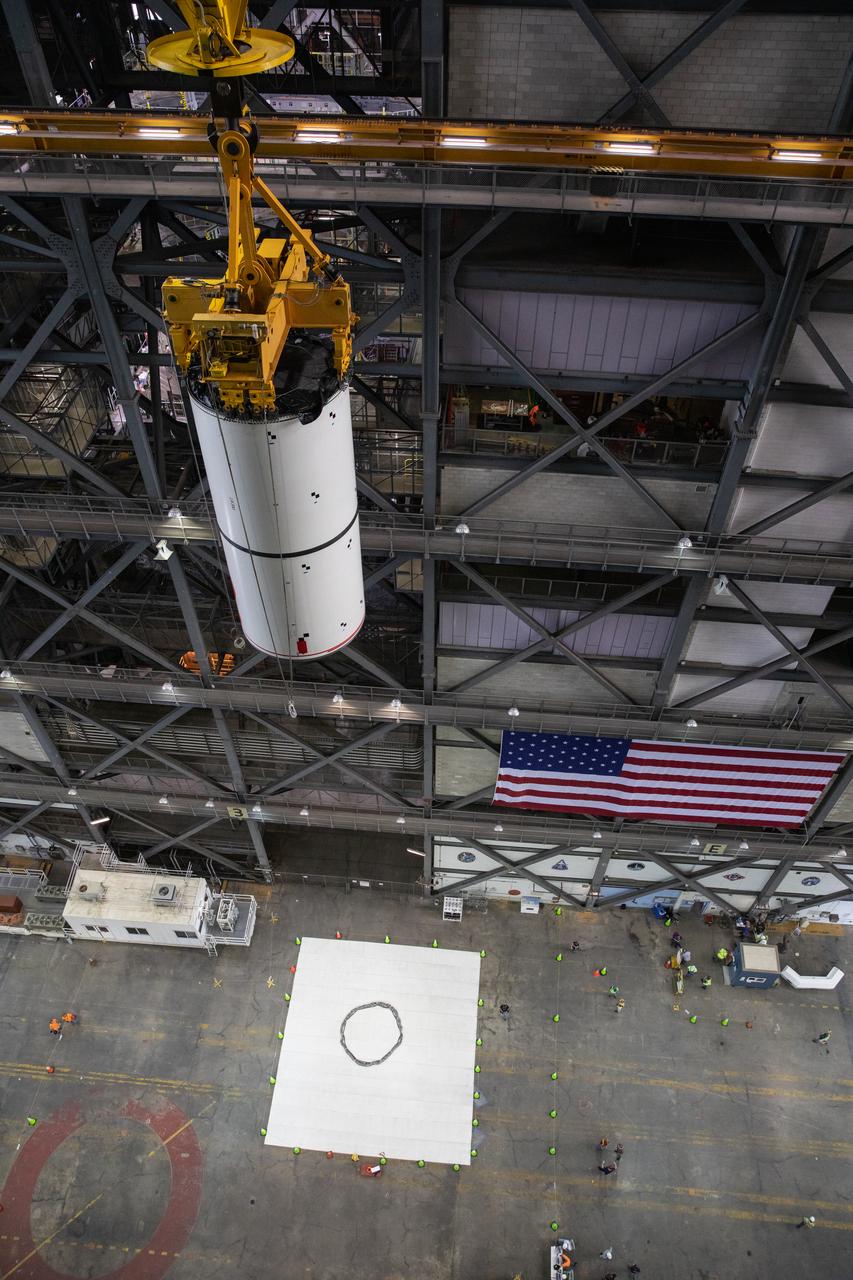
Technicians with NASA’s Exploration Ground Systems rehearse booster stacking operations inside the Vehicle Assembly Building (VAB) at the agency’s Kennedy Space Center in Florida on Sept. 14, 2020, in preparation for Artemis I. The exercise involved using booster segment mock-ups, referred to as pathfinders. During the rehearsal, an aft pathfinder segment was prepared in High Bay 4 of the VAB, after which a team of crane operators moved it over to High Bay 3, where it was placed on the mobile launcher. Careful measurements were then taken before the team added a center pathfinder to the stack. Stacking of the actual Space Launch System (SLS) booster segments will occur later this year, when the rocket’s core stage arrives at Kennedy. Artemis I is the first in a series of increasingly complex missions that will test SLS and the Orion spacecraft as an integrated system prior to crewed flights to the Moon.
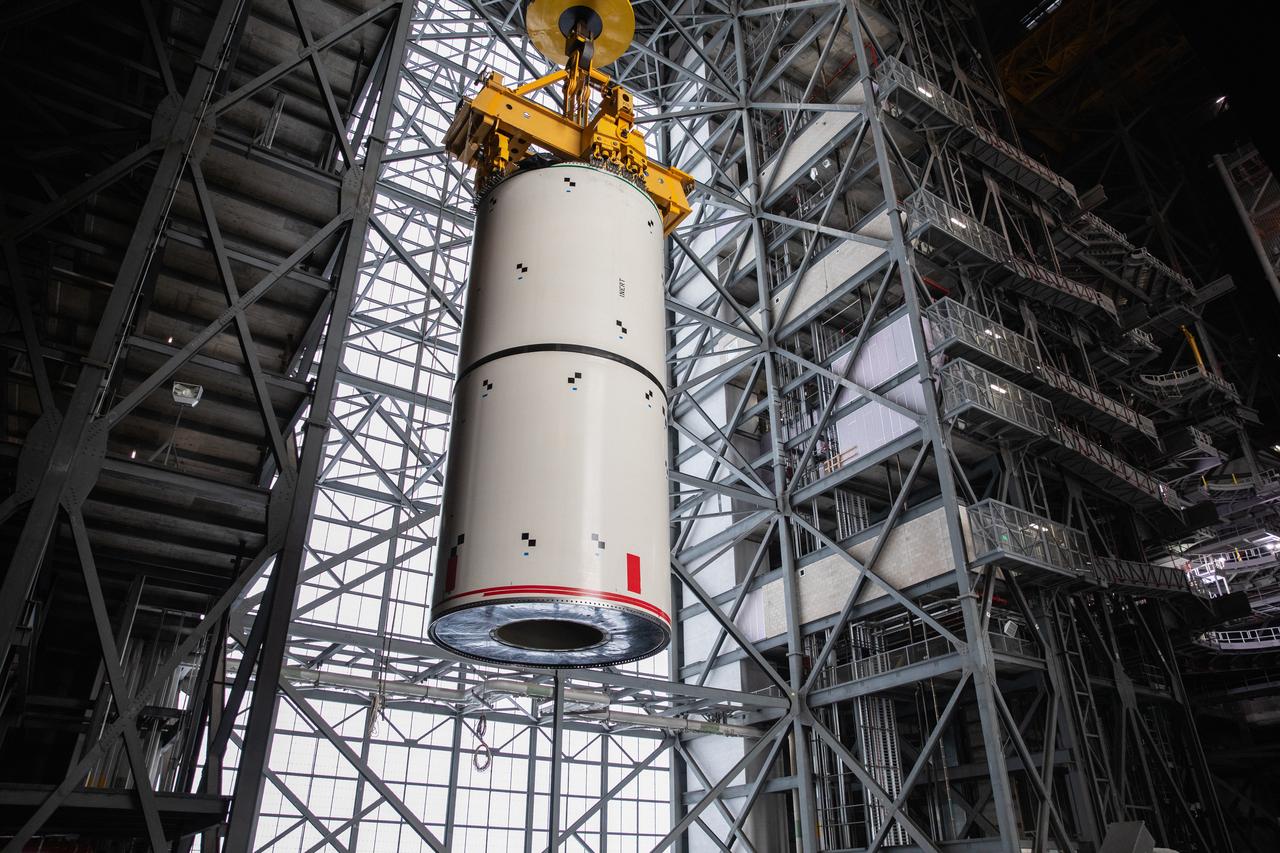
Technicians with NASA’s Exploration Ground Systems rehearse booster stacking operations inside the Vehicle Assembly Building (VAB) at the agency’s Kennedy Space Center in Florida on Sept. 14, 2020, in preparation for Artemis I. The exercise involved using booster segment mock-ups, referred to as pathfinders. During the rehearsal, an aft pathfinder segment was prepared in High Bay 4 of the VAB, after which a team of crane operators moved it over to High Bay 3, where it was placed on the mobile launcher. Careful measurements were then taken before the team added a center pathfinder to the stack. Stacking of the actual Space Launch System (SLS) booster segments will occur later this year, when the rocket’s core stage arrives at Kennedy. Artemis I is the first in a series of increasingly complex missions that will test SLS and the Orion spacecraft as an integrated system prior to crewed flights to the Moon.
Technicians with NASA’s Exploration Ground Systems rehearse booster stacking operations inside the Vehicle Assembly Building (VAB) at the agency’s Kennedy Space Center in Florida on Sept. 14, 2020, in preparation for Artemis I. The exercise involved using booster segment mock-ups, referred to as pathfinders. During the rehearsal, an aft pathfinder segment was prepared in High Bay 4 of the VAB, after which a team of crane operators moved it over to High Bay 3, where it was placed on the mobile launcher. Careful measurements were then taken before the team added a center pathfinder to the stack. Stacking of the actual Space Launch System (SLS) booster segments will occur later this year, when the rocket’s core stage arrives at Kennedy. Artemis I is the first in a series of increasingly complex missions that will test SLS and the Orion spacecraft as an integrated system prior to crewed flights to the Moon.
Technicians with NASA’s Exploration Ground Systems rehearse booster stacking operations inside the Vehicle Assembly Building (VAB) at the agency’s Kennedy Space Center in Florida on Sept. 14, 2020, in preparation for Artemis I. The exercise involved using booster segment mock-ups, referred to as pathfinders. During the rehearsal, an aft pathfinder segment was prepared in High Bay 4 of the VAB, after which a team of crane operators moved it over to High Bay 3, where it was placed on the mobile launcher. Careful measurements were then taken before the team added a center pathfinder to the stack. Stacking of the actual Space Launch System (SLS) booster segments will occur later this year, when the rocket’s core stage arrives at Kennedy. Artemis I is the first in a series of increasingly complex missions that will test SLS and the Orion spacecraft as an integrated system prior to crewed flights to the Moon.
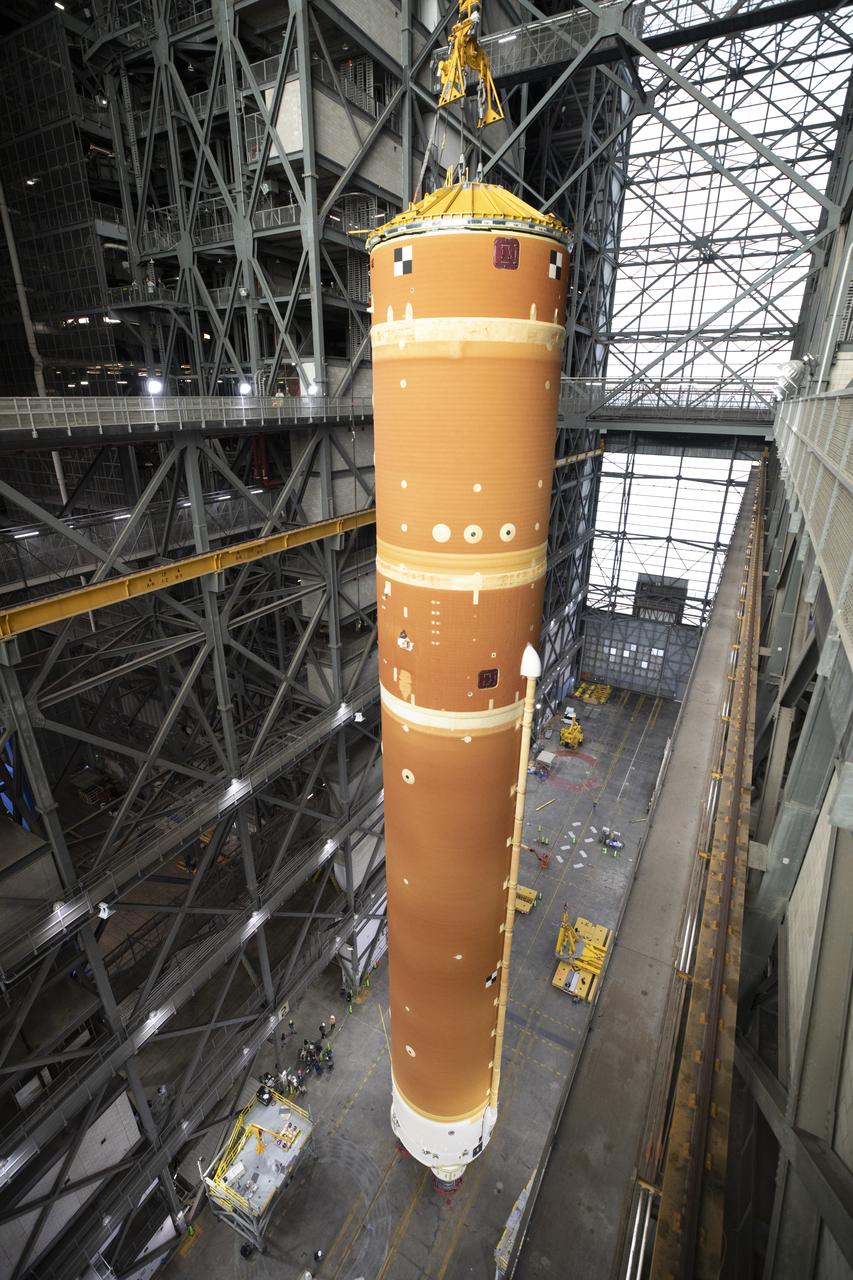
Teams with NASA’s Exploration Ground Systems Program lift the agency’s SLS (Space Launch System) core stage inside the transfer aisle at the Vehicle Assembly Building at NASA’s Kennedy Space Center in Florida on Wednesday, Dec. 11, 2024. The one-of-a kind lifting beam is designed to move the core stage from the transfer aisle to High Bay 2 where it will remain while teams stack the two solid rocket boosters for the SLS core stage.
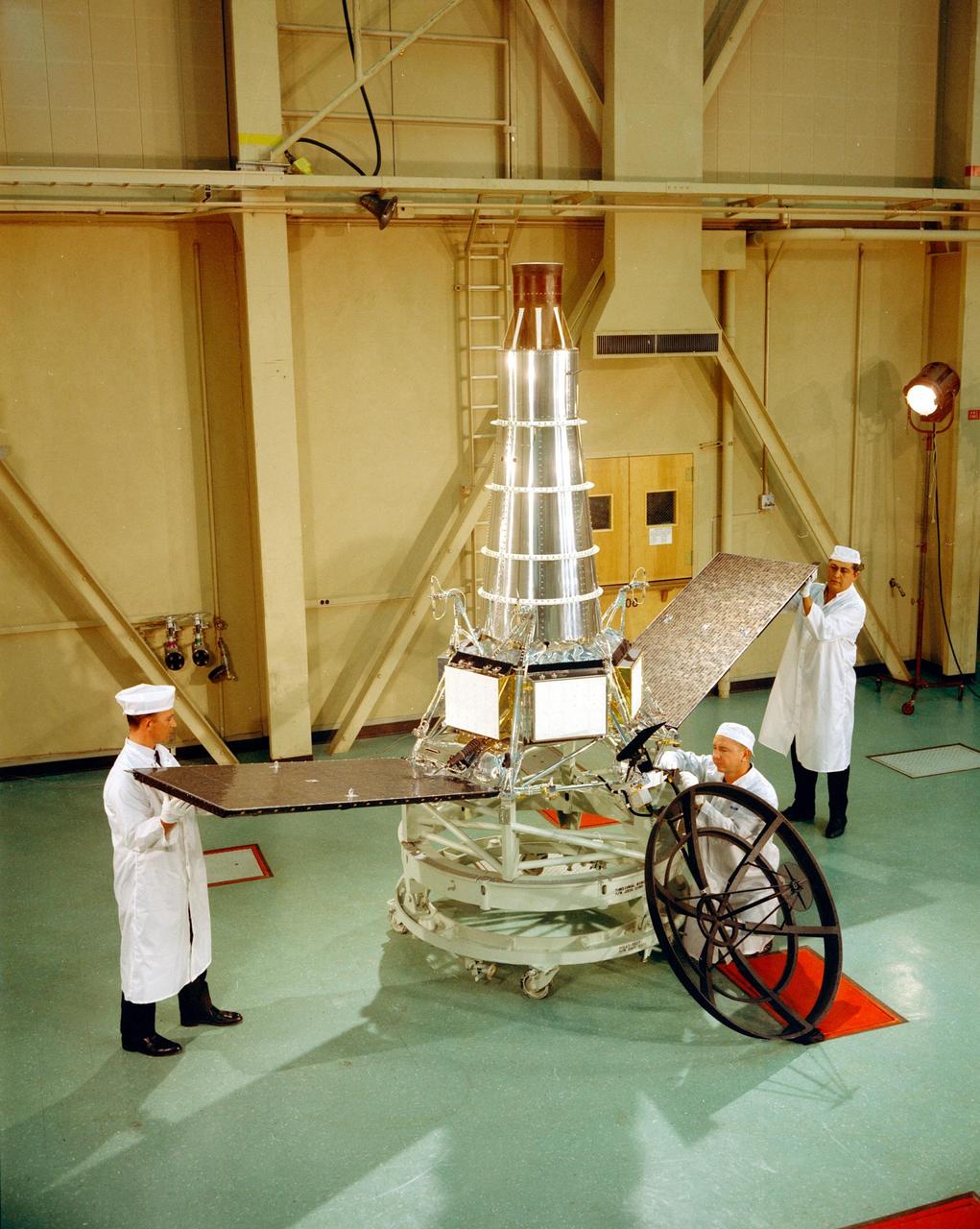
Engineers stand with Ranger 7 on Dec. 10, 1963, in High Bay 1, located at NASA's Jet Propulsion Laboratory. Ranger 7 was the first U.S. mission to transmit images from the surface of the Moon. The Ranger program included a series of robotic spacecraft launched at the Moon. JPL developed the art of spacecraft assembly and testing with each iteration of the Ranger spacecraft. https://photojournal.jpl.nasa.gov/catalog/PIA23520
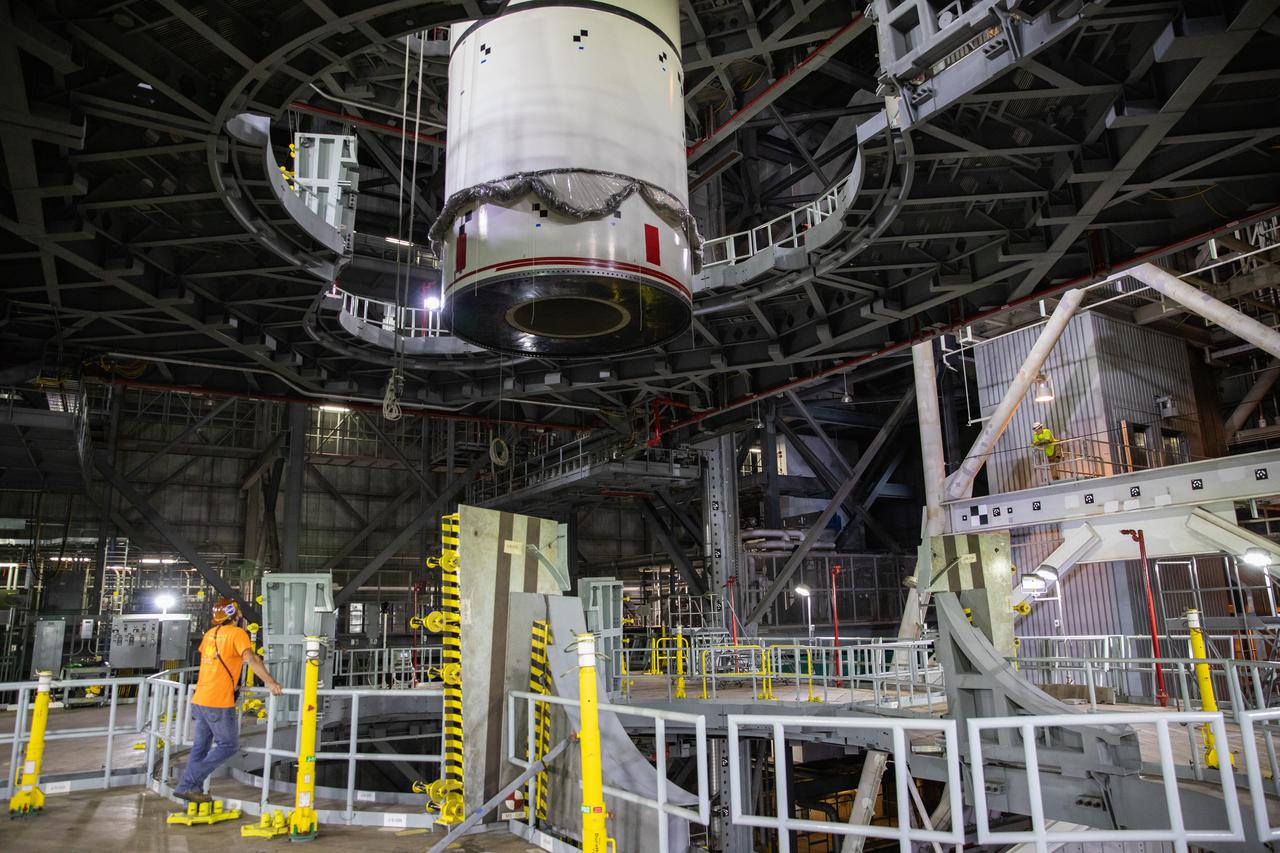
Technicians with NASA’s Exploration Ground Systems lower a mock-up, or pathfinder, of the Space Launch System’s (SLS) center booster segment onto an aft pathfinder segment inside the Vehicle Assembly Building (VAB) at the agency’s Kennedy Space Center in Florida on Sept. 14, 2020. Teams rehearsed stacking both pathfinder segments on top of the mobile launcher in High Bay 3 of the VAB in preparation for the Artemis I launch. Stacking of the actual SLS booster segments will occur later this year, when the rocket’s core stage arrives at Kennedy. Artemis I is the first in a series of increasingly complex missions that will test SLS and the Orion spacecraft as an integrated system prior to crewed flights to the Moon.
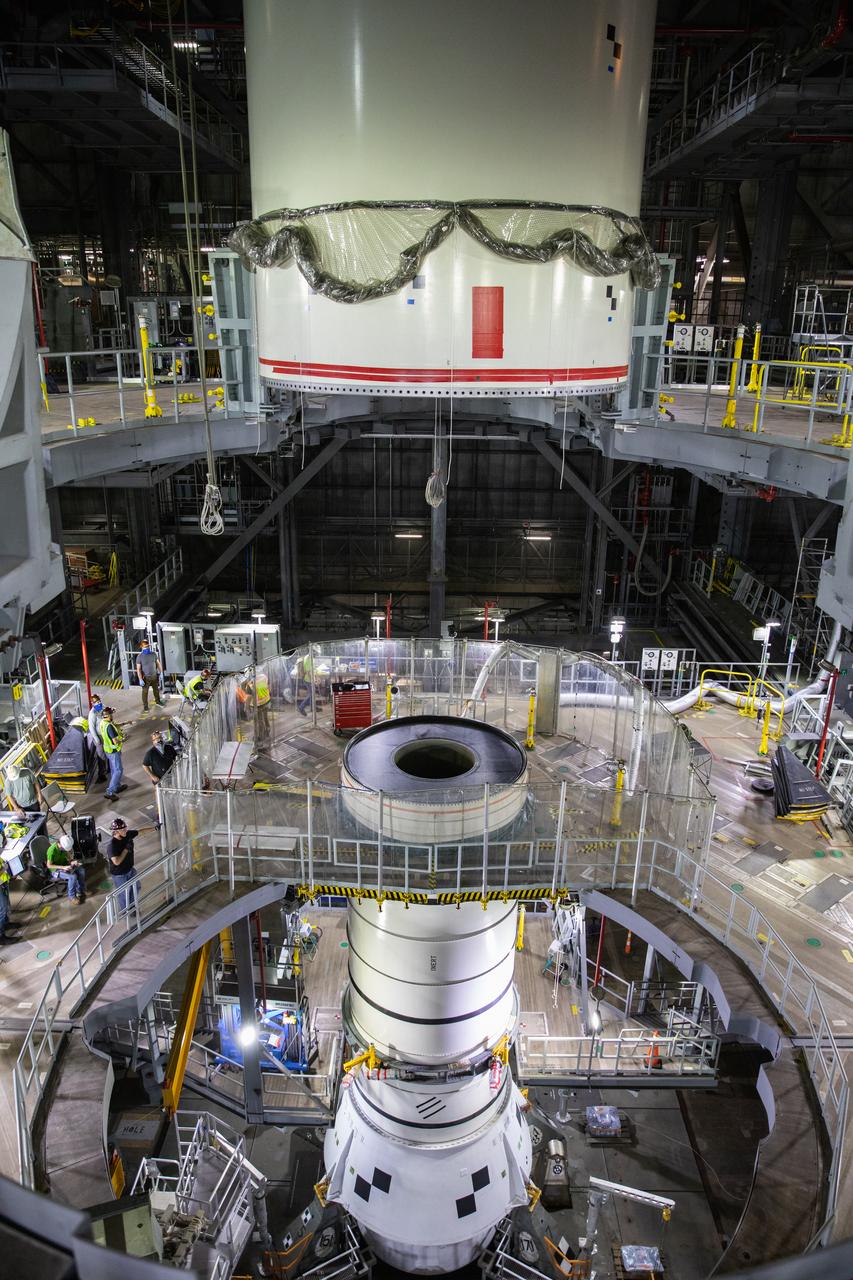
Technicians with NASA’s Exploration Ground Systems lower a mock-up, or pathfinder, of the Space Launch System’s (SLS) center booster segment onto an aft pathfinder segment inside the Vehicle Assembly Building (VAB) at the agency’s Kennedy Space Center in Florida on Sept. 14, 2020. Teams rehearsed stacking both pathfinder segments on top of the mobile launcher in High Bay 3 of the VAB in preparation for the Artemis I launch. Stacking of the actual SLS booster segments will occur later this year, when the rocket’s core stage arrives at Kennedy. Artemis I is the first in a series of increasingly complex missions that will test SLS and the Orion spacecraft as an integrated system prior to crewed flights to the Moon.

Technicians with NASA’s Exploration Ground Systems lower a mock-up, or pathfinder, of the Space Launch System’s (SLS) center booster segment onto an aft pathfinder segment inside the Vehicle Assembly Building (VAB) at the agency’s Kennedy Space Center in Florida on Sept. 14, 2020. Teams rehearsed stacking both pathfinder segments on top of the mobile launcher in High Bay 3 of the VAB in preparation for the Artemis I launch. Stacking of the actual SLS booster segments will occur later this year, when the rocket’s core stage arrives at Kennedy. Artemis I is the first in a series of increasingly complex missions that will test SLS and the Orion spacecraft as an integrated system prior to crewed flights to the Moon.
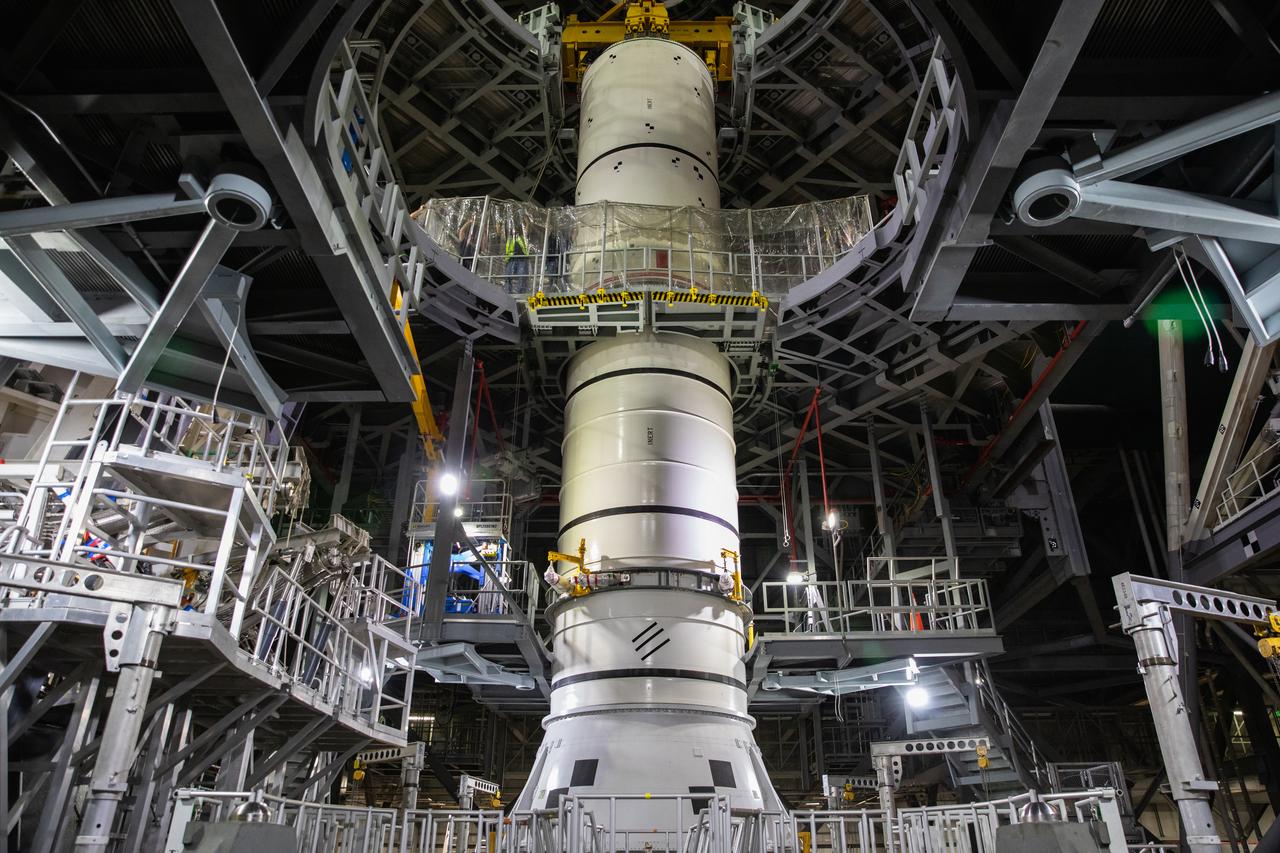
Technicians with NASA’s Exploration Ground Systems lower a mock-up, or pathfinder, of the Space Launch System’s (SLS) center booster segment onto an aft pathfinder segment inside the Vehicle Assembly Building (VAB) at the agency’s Kennedy Space Center in Florida on Sept. 14, 2020. Teams rehearsed stacking both pathfinder segments on top of the mobile launcher in High Bay 3 of the VAB in preparation for the Artemis I launch. Stacking of the actual SLS booster segments will occur later this year, when the rocket’s core stage arrives at Kennedy. Artemis I is the first in a series of increasingly complex missions that will test SLS and the Orion spacecraft as an integrated system prior to crewed flights to the Moon.
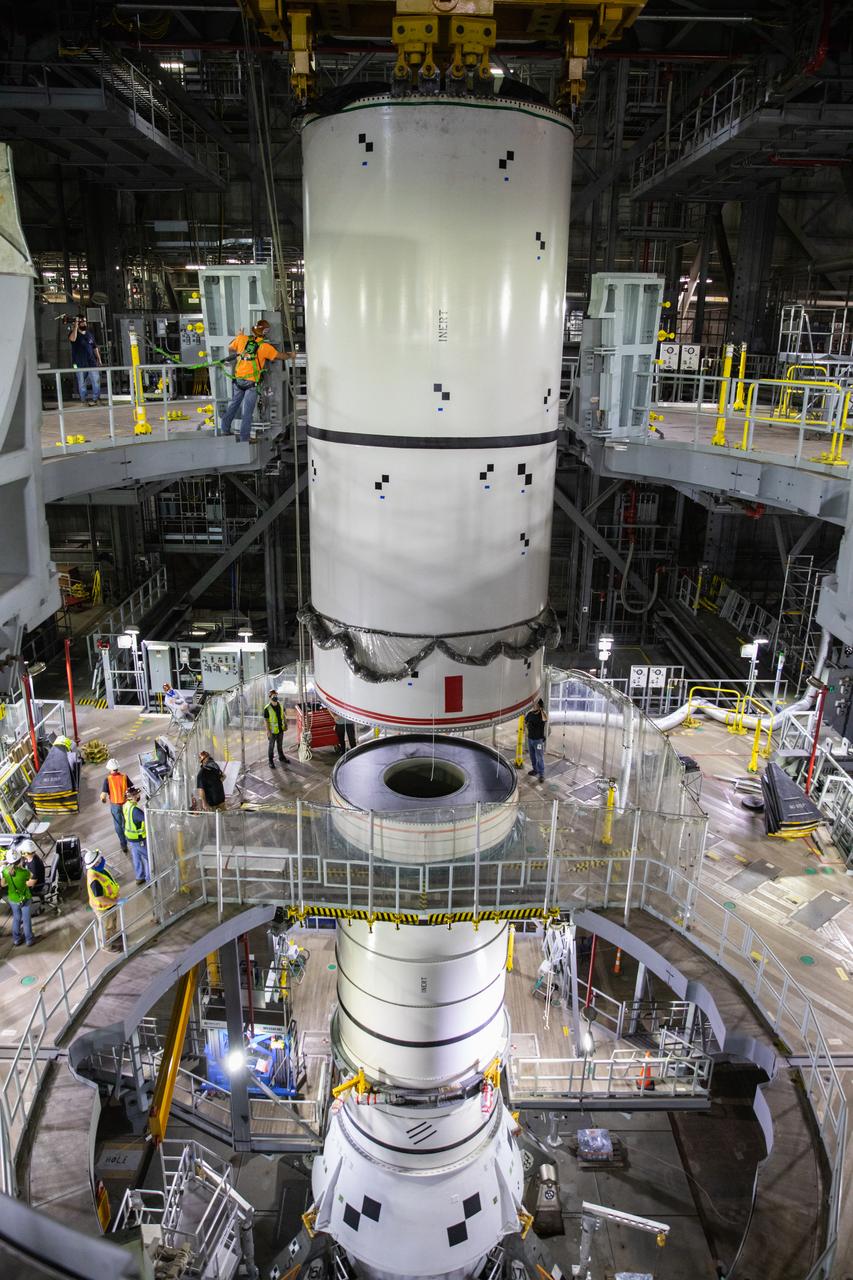
Technicians with NASA’s Exploration Ground Systems lower a mock-up, or pathfinder, of the Space Launch System’s (SLS) center booster segment onto an aft pathfinder segment inside the Vehicle Assembly Building (VAB) at the agency’s Kennedy Space Center in Florida on Sept. 14, 2020. Teams rehearsed stacking both pathfinder segments on top of the mobile launcher in High Bay 3 of the VAB in preparation for the Artemis I launch. Stacking of the actual SLS booster segments will occur later this year, when the rocket’s core stage arrives at Kennedy. Artemis I is the first in a series of increasingly complex missions that will test SLS and the Orion spacecraft as an integrated system prior to crewed flights to the Moon.
Technicians with NASA’s Exploration Ground Systems lower a mock-up, or pathfinder, of the Space Launch System’s (SLS) center booster segment onto an aft pathfinder segment inside the Vehicle Assembly Building (VAB) at the agency’s Kennedy Space Center in Florida on Sept. 14, 2020. Teams rehearsed stacking both pathfinder segments on top of the mobile launcher in High Bay 3 of the VAB in preparation for the Artemis I launch. Stacking of the actual SLS booster segments will occur later this year, when the rocket’s core stage arrives at Kennedy. Artemis I is the first in a series of increasingly complex missions that will test SLS and the Orion spacecraft as an integrated system prior to crewed flights to the Moon.
Technicians with NASA’s Exploration Ground Systems prepare to lower a mock-up, or pathfinder, of the Space Launch System’s (SLS) center booster segment onto an aft pathfinder segment inside the Vehicle Assembly Building (VAB) at the agency’s Kennedy Space Center in Florida on Sept. 14, 2020. Teams rehearsed stacking both pathfinder segments on top of the mobile launcher in High Bay 3 of the VAB in preparation for the Artemis I launch. Stacking of the actual SLS booster segments will occur later this year, when the rocket’s core stage arrives at Kennedy. Artemis I is the first in a series of increasingly complex missions that will test SLS and the Orion spacecraft as an integrated system prior to crewed flights to the Moon.
Technicians with NASA’s Exploration Ground Systems lower a mock-up, or pathfinder, of the Space Launch System’s (SLS) center booster segment onto an aft pathfinder segment inside the Vehicle Assembly Building (VAB) at the agency’s Kennedy Space Center in Florida on Sept. 14, 2020. Teams rehearsed stacking both pathfinder segments on top of the mobile launcher in High Bay 3 of the VAB in preparation for the Artemis I launch. Stacking of the actual SLS booster segments will occur later this year, when the rocket’s core stage arrives at Kennedy. Artemis I is the first in a series of increasingly complex missions that will test SLS and the Orion spacecraft as an integrated system prior to crewed flights to the Moon.
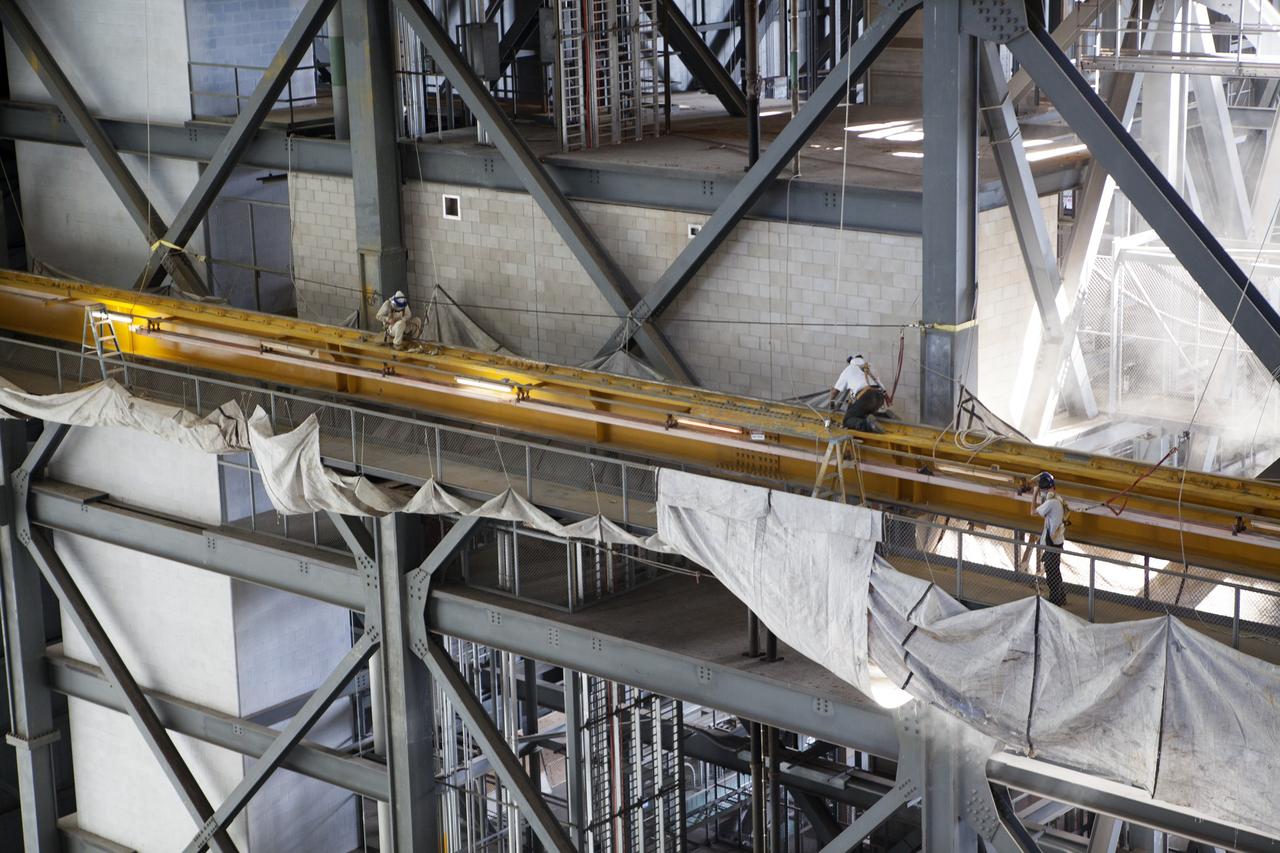
CAPE CANAVERAL, Fla. – Inside the Vehicle Assembly Building, or VAB, at NASA’s Kennedy Space Center in Florida, construction workers are hanging protective cloths around a work level near High Bay 3. Modifications are underway in the VAB to prepare High Bay 3 for a new platform system. The modifications are part of a centerwide refurbishment initiative under the Ground Systems Development and Operations Program. High bay 3 is being refurbished to accommodate NASA’s Space Launch System and a variety of other spacecraft. For more information, visit http://www.nasa.gov/exploration/systems/ground/index.html. Photo credit: NASA/Dimitri Gerondidakis
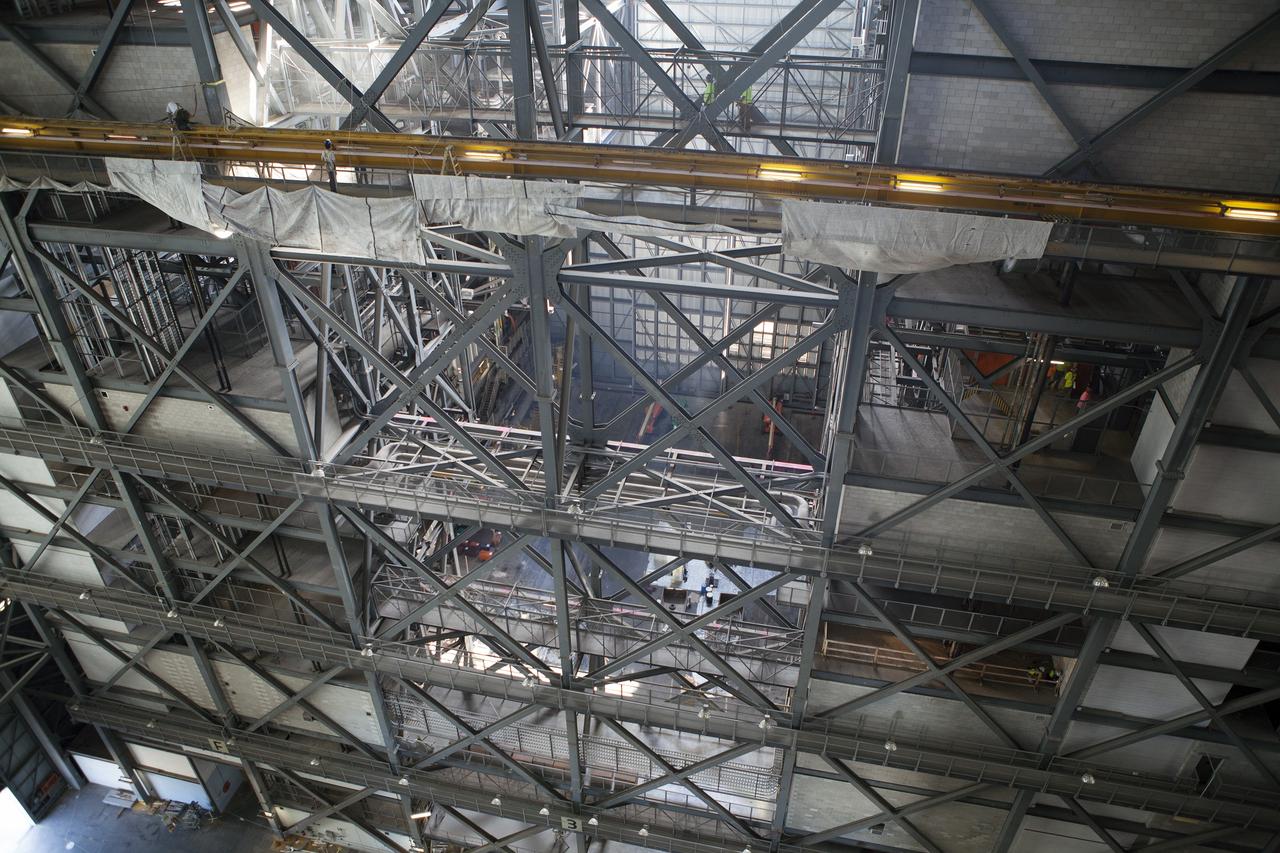
CAPE CANAVERAL, Fla. – Inside the Vehicle Assembly Building, or VAB, at NASA’s Kennedy Space Center in Florida, protective cloths are being placed around a work level near High Bay 3. Modifications are underway in the VAB to prepare High Bay 3 for a new platform system. The modifications are part of a centerwide refurbishment initiative under the Ground Systems Development and Operations Program. High bay 3 is being refurbished to accommodate NASA’s Space Launch System and a variety of other spacecraft. For more information, visit http://www.nasa.gov/exploration/systems/ground/index.html. Photo credit: NASA/Dimitri Gerondidakis
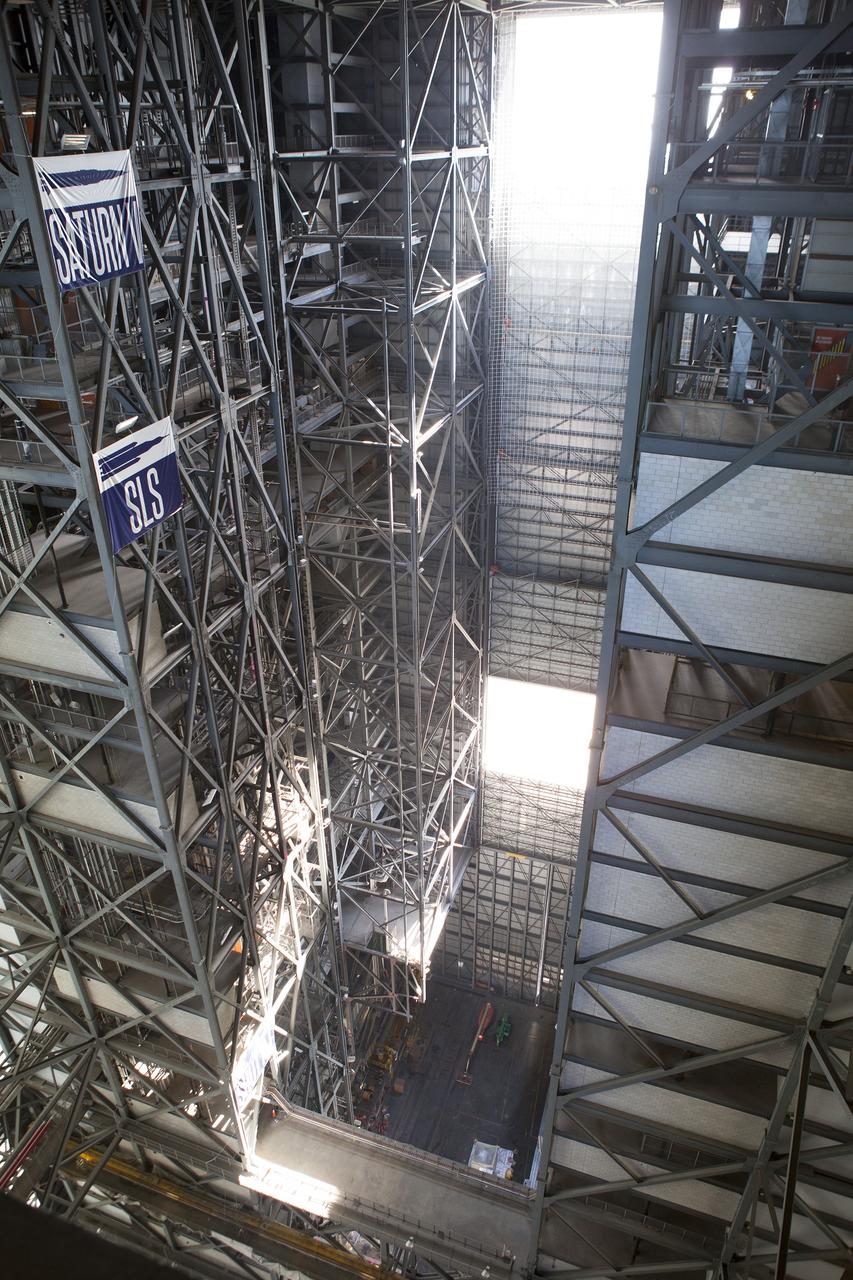
CAPE CANAVERAL, Fla. – A view looking down from one of the higher levels in the Vehicle Assembly Building, or VAB, reveals High Bay 3 at NASA’s Kennedy Space Center in Florida. Banners note the heights of the Saturn V, Space Launch System, or SLS, and shuttle on the steel structure. Modifications are underway to prepare High Bay 3 for a new platform system. The modifications are part of a centerwide refurbishment initiative under the Ground Systems Development and Operations Program. High bay 3 is being refurbished to accommodate NASA’s Space Launch System and a variety of other spacecraft. For more information, visit http://www.nasa.gov/exploration/systems/ground/index.html. Photo credit: NASA/Dimitri Gerondidakis
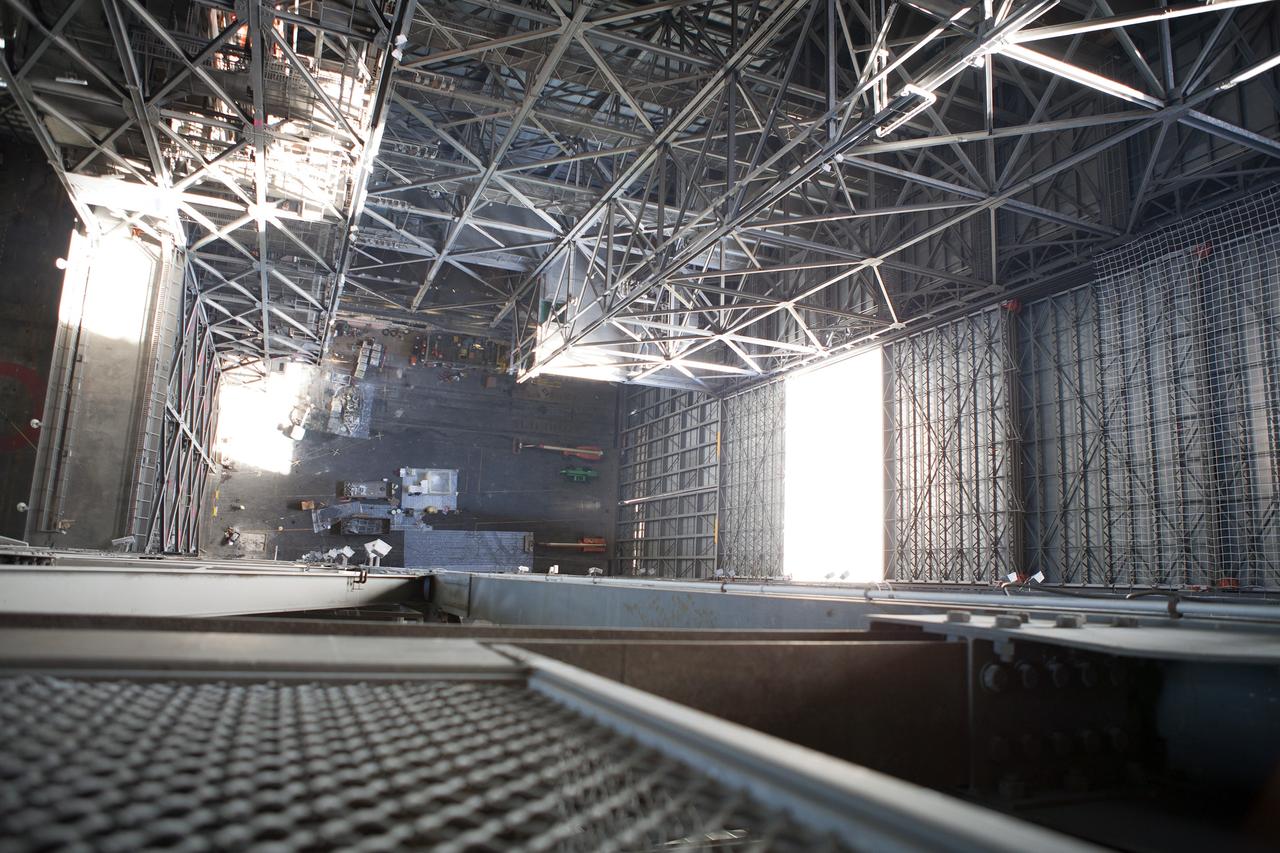
CAPE CANAVERAL, Fla. – A view looking down from one of the higher levels in the Vehicle Assembly Building, or VAB, reveals High Bay 3 at NASA’s Kennedy Space Center in Florida. Modifications are underway in the VAB to prepare High Bay 3 for a new platform system. The modifications are part of a centerwide refurbishment initiative under the Ground Systems Development and Operations Program. High bay 3 is being refurbished to accommodate NASA’s Space Launch System and a variety of other spacecraft. For more information, visit http://www.nasa.gov/exploration/systems/ground/index.html. Photo credit: NASA/Dimitri Gerondidakis

White walls and scaffolding had become a common sight in the High Bay 1 clean room in JPL's Spacecraft Assembly Facility by the time the Galileo orbiter was being built. This photo from Nov. 1, 1984 shows that gowning requirements had also become more complex. Note the fully-opened high-gain antenna; an emblem on the clean room's Wall of Fame depicts it partially opened, as it was at Jupiter. https://photojournal.jpl.nasa.gov/catalog/PIA23616
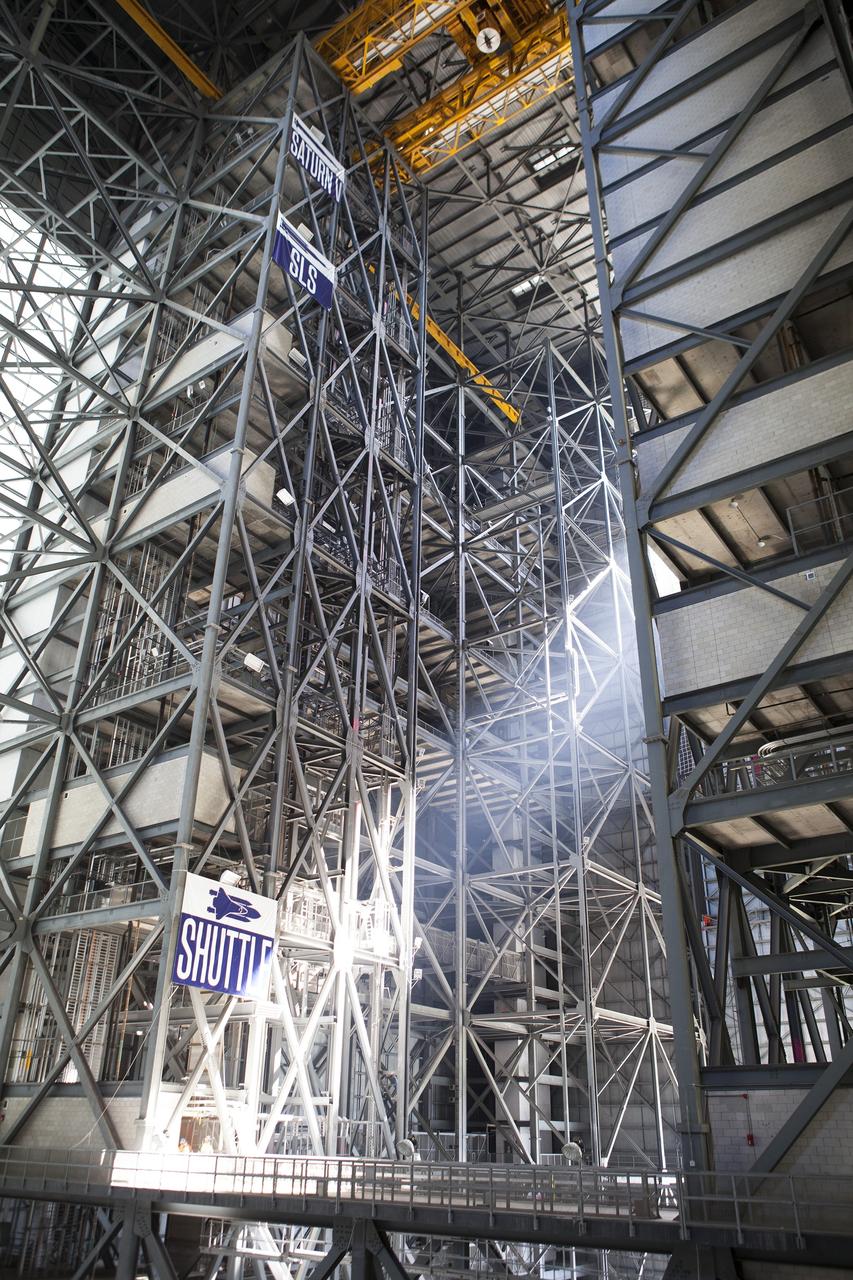
CAPE CANAVERAL, Fla. – Steel structures surround High Bay 3 inside the Vehicle Assembly Building, or VAB, at NASA’s Kennedy Space Center in Florida. In view, high above, is the 175-ton crane. Banners note the heights of the Saturn V, Space Launch System, or SLS, and shuttle on the steel structure. Modifications are underway in the VAB to prepare High Bay 3 for a new platform system. The modifications are part of a centerwide refurbishment initiative under the Ground Systems Development and Operations Program. High bay 3 is being refurbished to accommodate NASA’s Space Launch System and a variety of other spacecraft. For more information, visit http://www.nasa.gov/exploration/systems/ground/index.html. Photo credit: NASA/Dimitri Gerondidakis
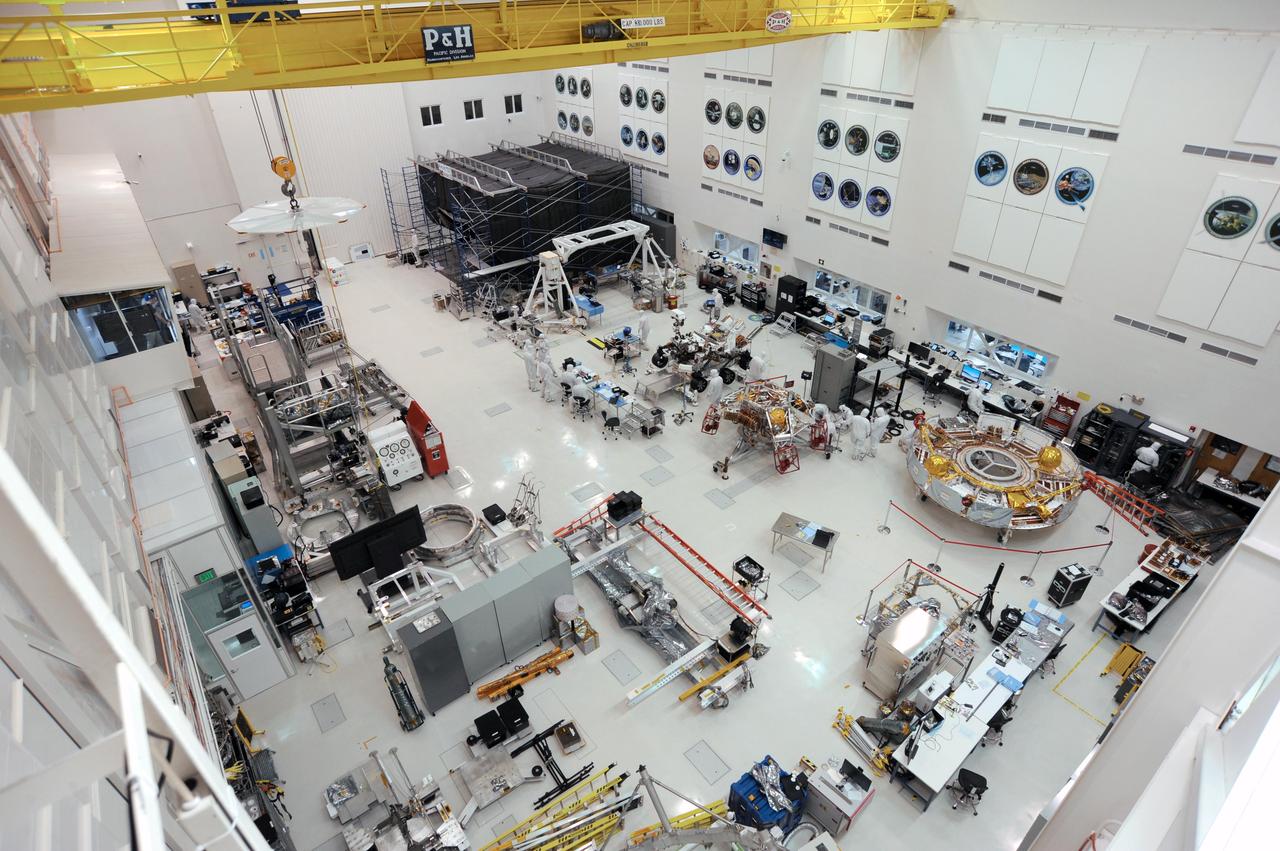
The Mars 2020 rover is visible (just above center) in this image — taken on Nov. 12, 2019 — of the High Bay 1 clean room floor in JPL's Spacecraft Assembly Facility. Many of NASA's most famous robotic spacecraft were assembled and tested in High Bay 1, including most of the Ranger and Mariner spacecraft; Voyager 1; the Galileo and Cassini orbiters; and all of NASA's Mars rovers. An annotated version of the image points to the facility's Wall of Fame, featuring emblems of those and other spacecraft that successfully launched after being built in the room. It also points to other features of the room, including the facility's gallery, which hosts about 30,000 members of the public each year. https://photojournal.jpl.nasa.gov/catalog/PIA23519
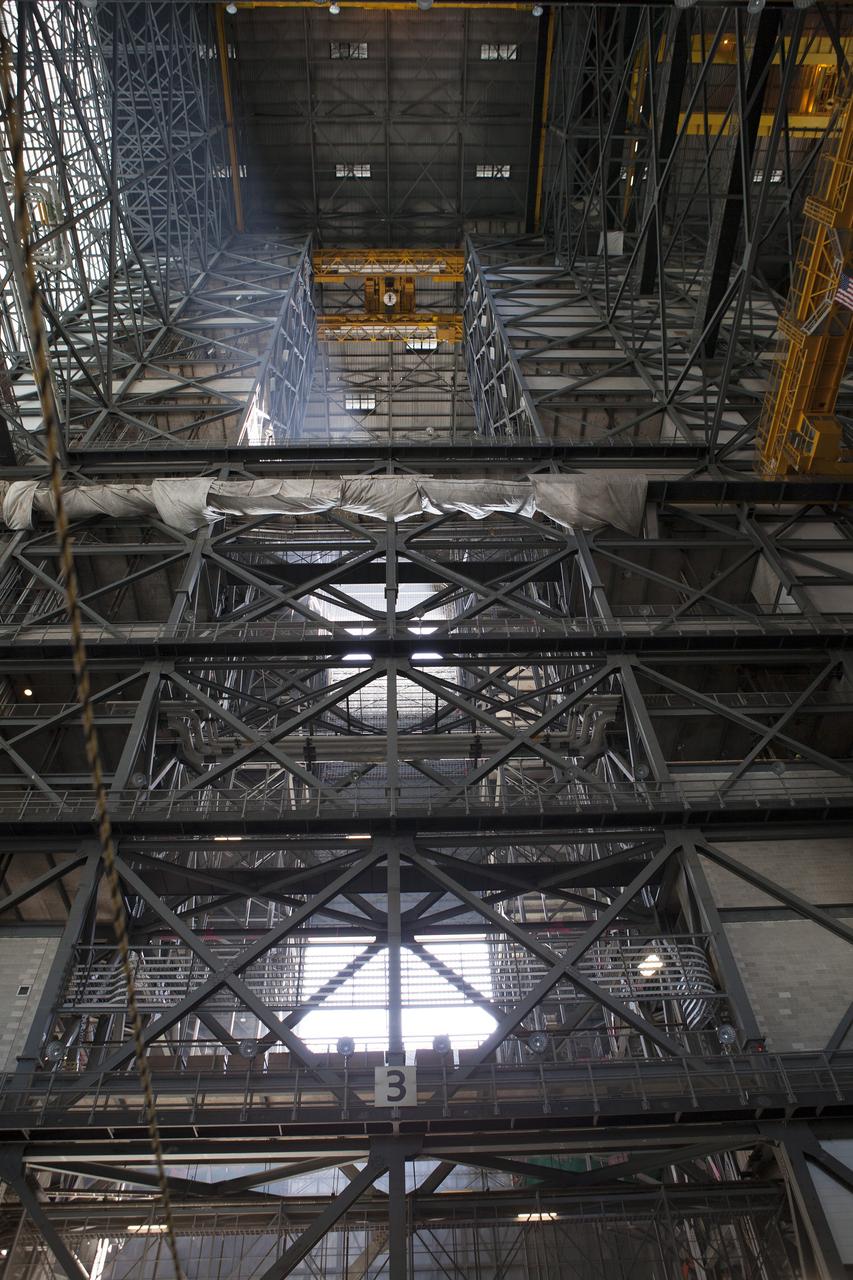
CAPE CANAVERAL, Fla. – A view looking up from the ground level inside the Vehicle Assembly Building, or VAB, at NASA’s Kennedy Space Center in Florida. High above is the 175-ton crane. Modifications are underway inside the VAB to prepare High Bay 3 for a new platform system. The modifications are part of a centerwide refurbishment initiative under the Ground Systems Development and Operations Program. High bay 3 is being refurbished to accommodate NASA’s Space Launch System and a variety of other spacecraft. For more information, visit http://www.nasa.gov/exploration/systems/ground/index.html. Photo credit: NASA/Dimitri Gerondidakis
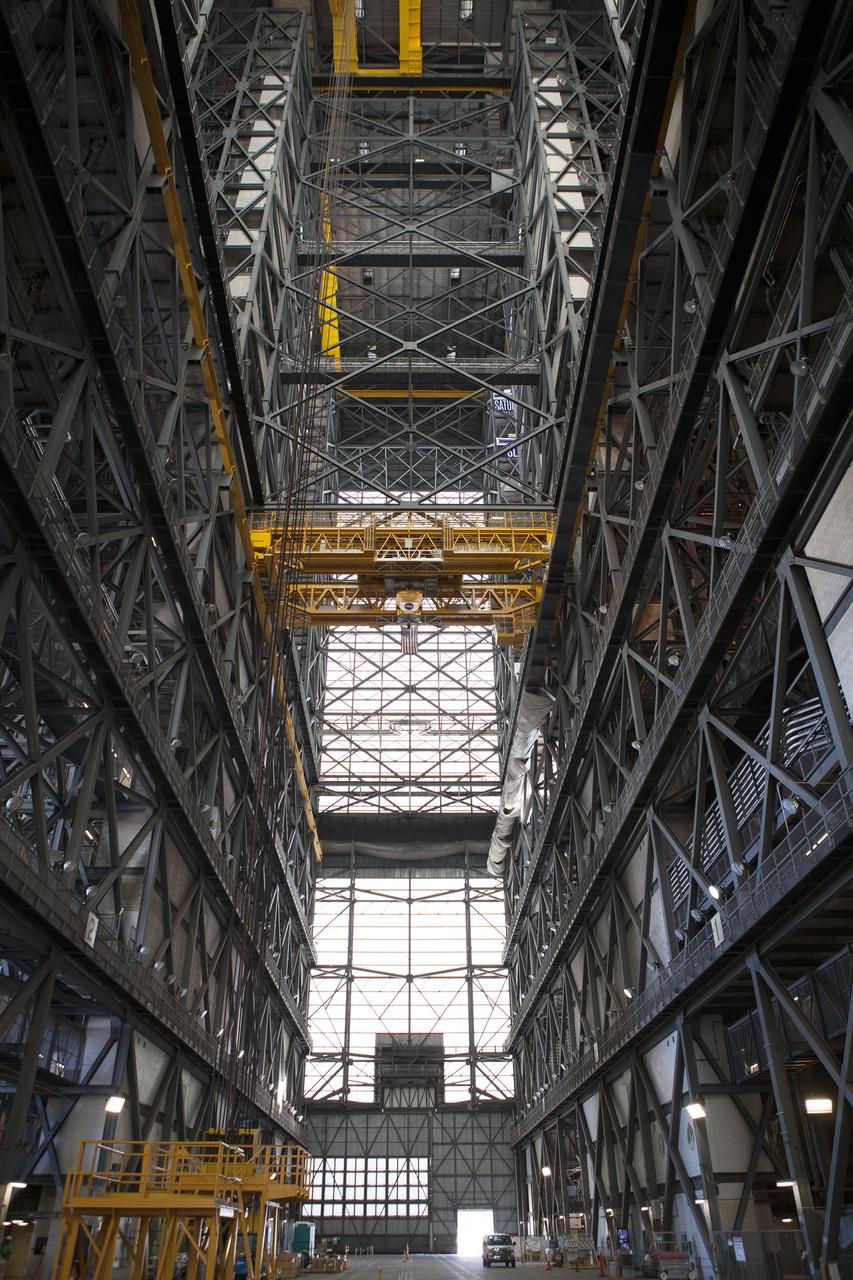
CAPE CANAVERAL, Fla. – A view looking down the transfer aisle inside the Vehicle Assembly Building at NASA’s Kennedy Space Center in Florida. In view above is the 175-ton crane. Modifications are underway in the VAB to prepare High Bay 3 for a new platform system. The modifications are part of a centerwide refurbishment initiative under the Ground Systems Development and Operations Program. High bay 3 is being refurbished to accommodate NASA’s Space Launch System and a variety of other spacecraft. For more information, visit http://www.nasa.gov/exploration/systems/ground/index.html. Photo credit: NASA/Dimitri Gerondidakis
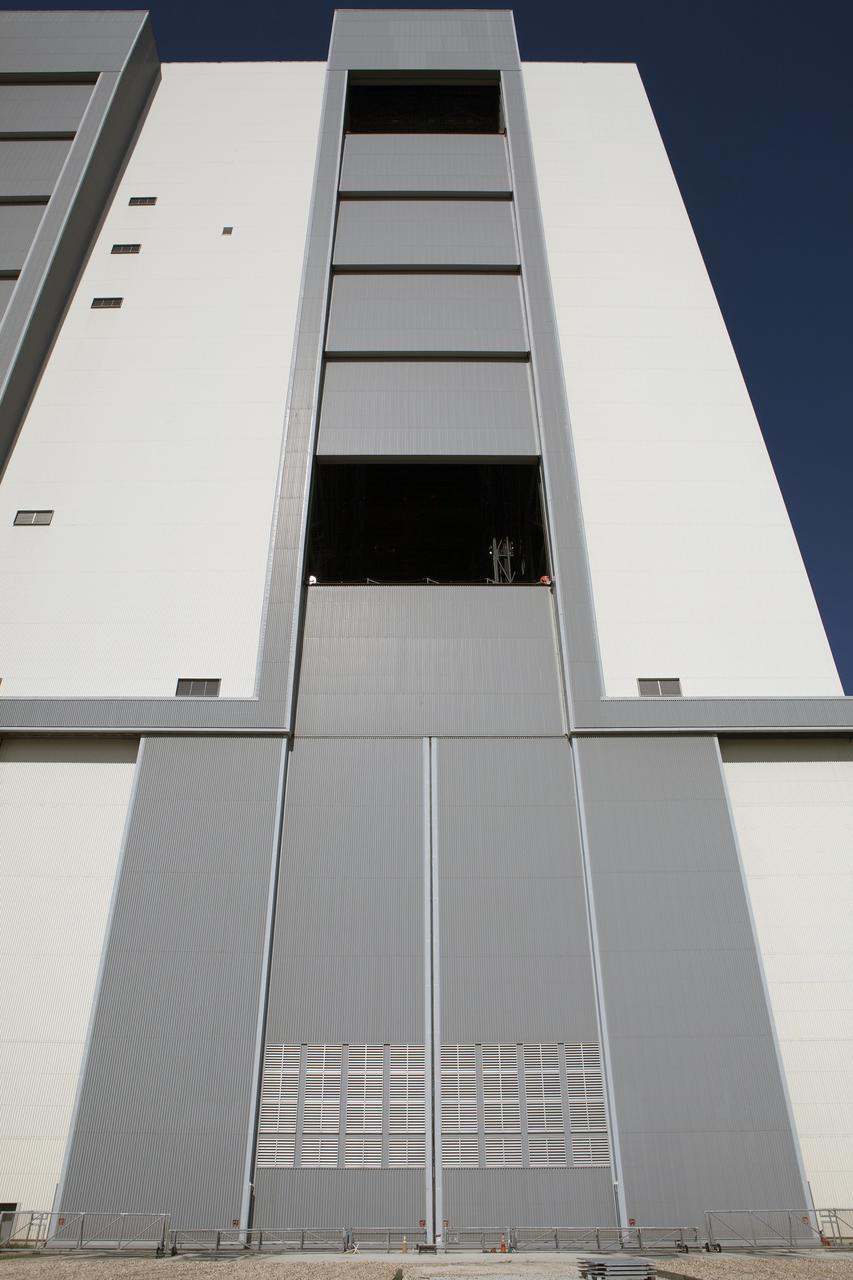
CAPE CANAVERAL, Fla. – An up close view of one of the large vertical lift doors on the east side of the Vehicle Assembly Building, or VAB, at NASA’s Kennedy Space Center in Florida. Inside the VAB, modifications are underway to prepare High Bay 3 for a new platform system. The modifications are part of a centerwide refurbishment initiative under the Ground Systems Development and Operations Program. High bay 3 is being refurbished to accommodate NASA’s Space Launch System and a variety of other spacecraft. For more information, visit http://www.nasa.gov/exploration/systems/ground/index.html. Photo credit: NASA/Dimitri Gerondidakis
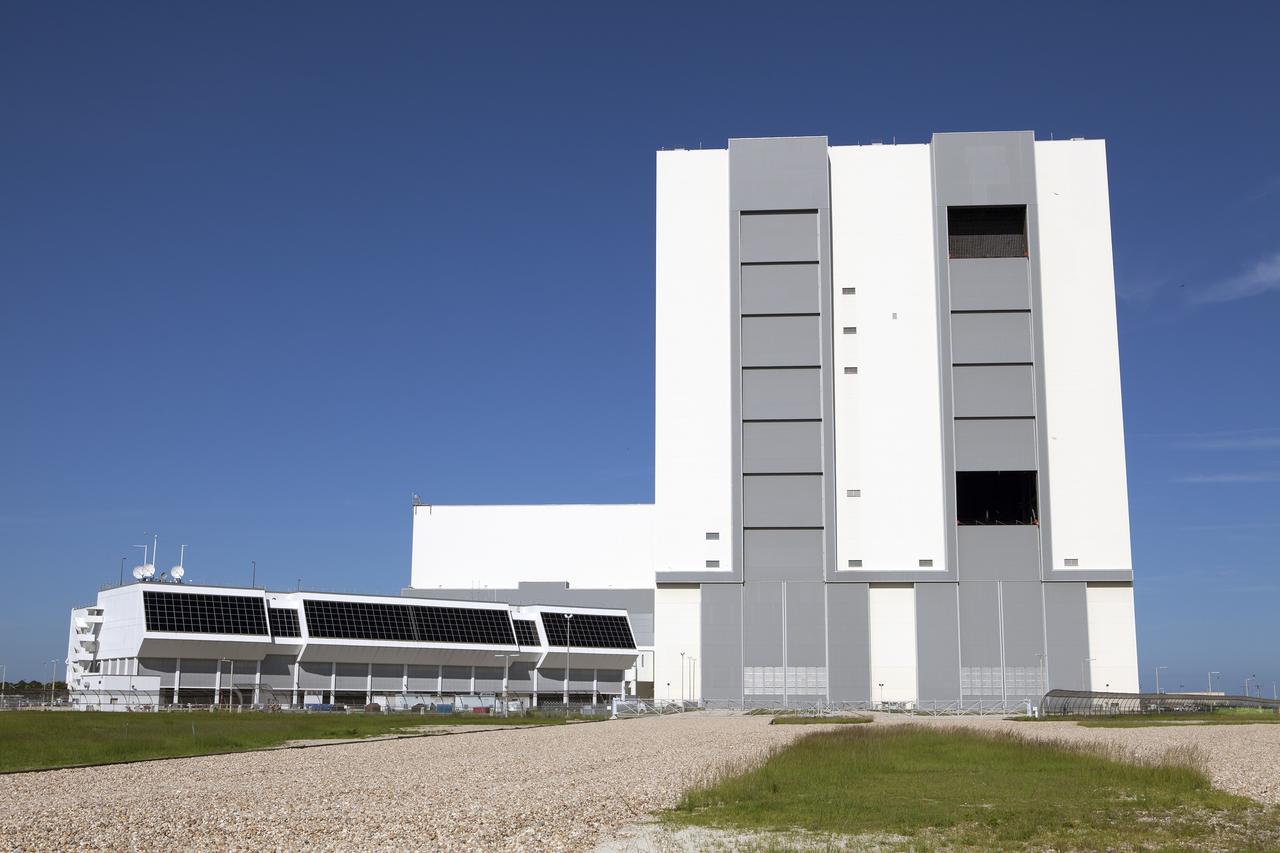
CAPE CANAVERAL, Fla. – The Vehicle Assembly Building, or VAB, and Launch Control Center stand out against a bright blue sky at NASA’s Kennedy Space Center in Florida. Modifications are underway inside the VAB to prepare High Bay 3 for a new platform system. The modifications are part of a centerwide refurbishment initiative under the Ground Systems Development and Operations Program. High bay 3 is being refurbished to accommodate NASA’s Space Launch System and a variety of other spacecraft. For more information, visit http://www.nasa.gov/exploration/systems/ground/index.html. Photo credit: NASA/Dimitri Gerondidakis
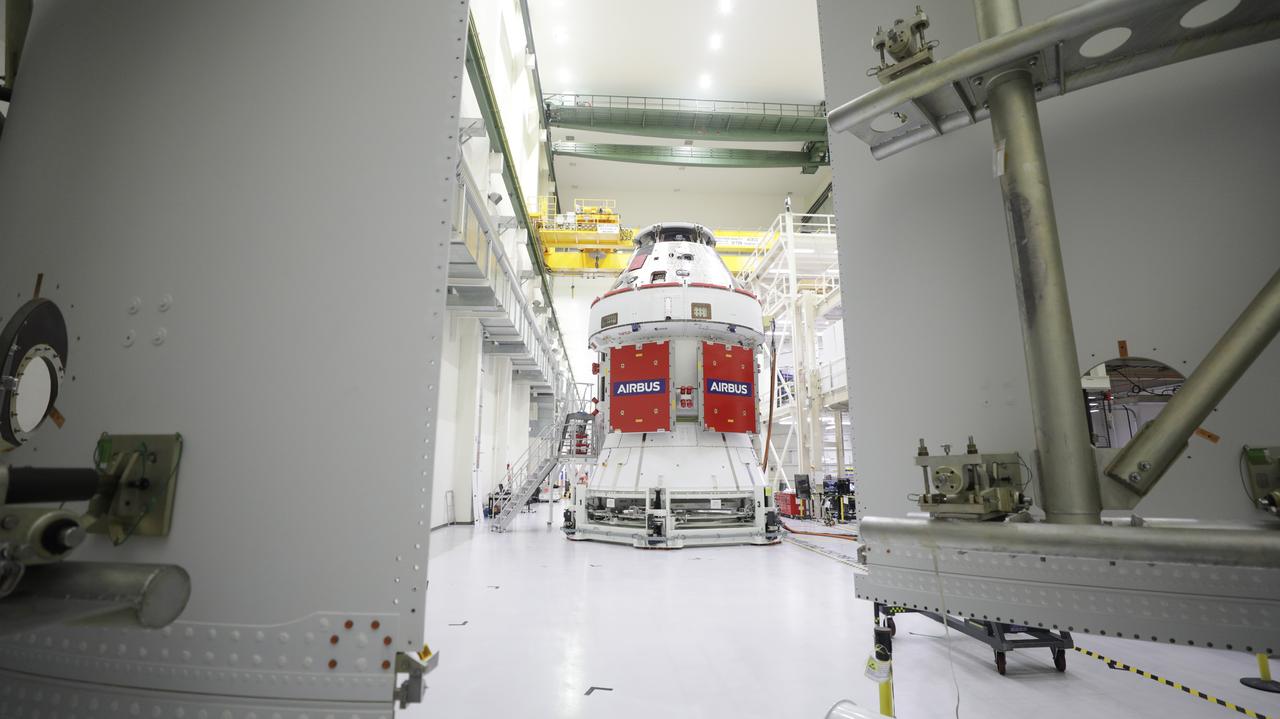
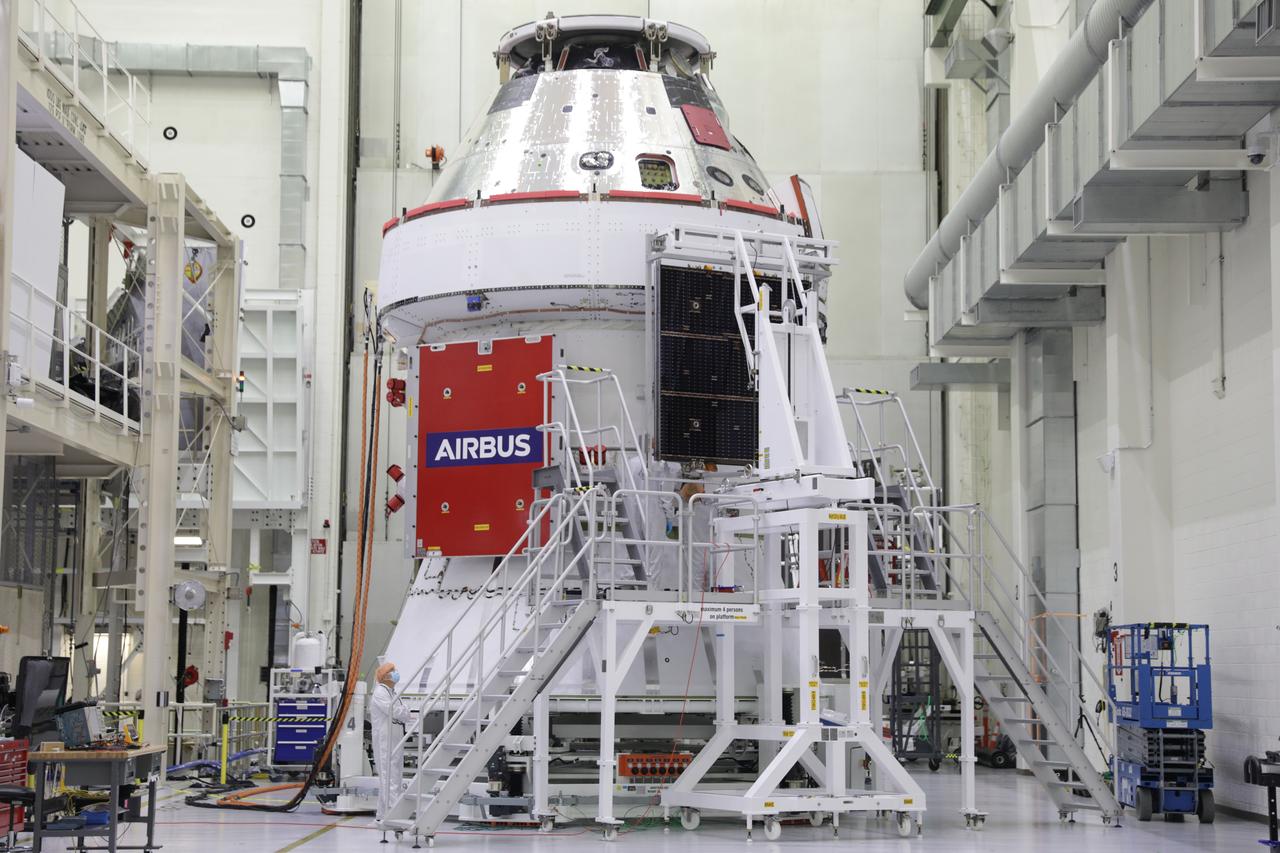
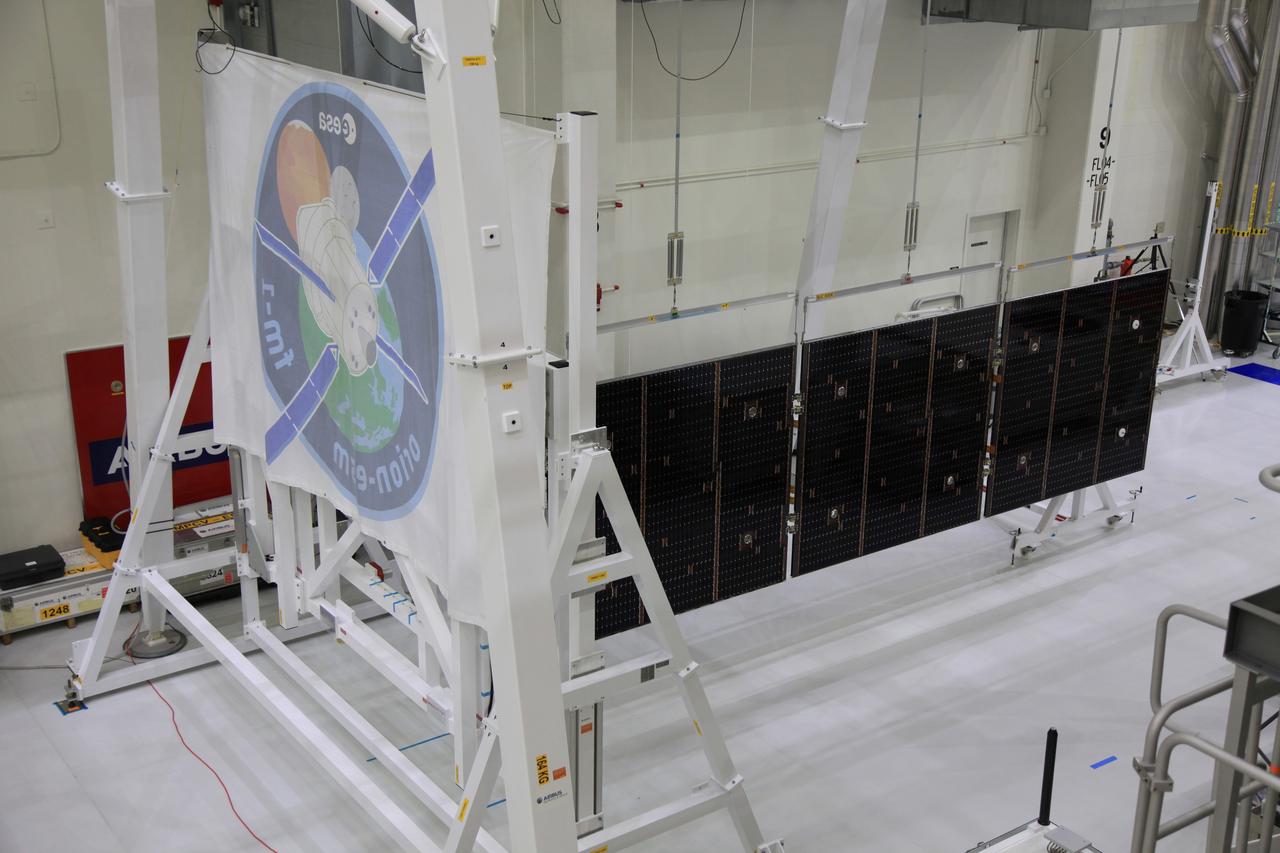
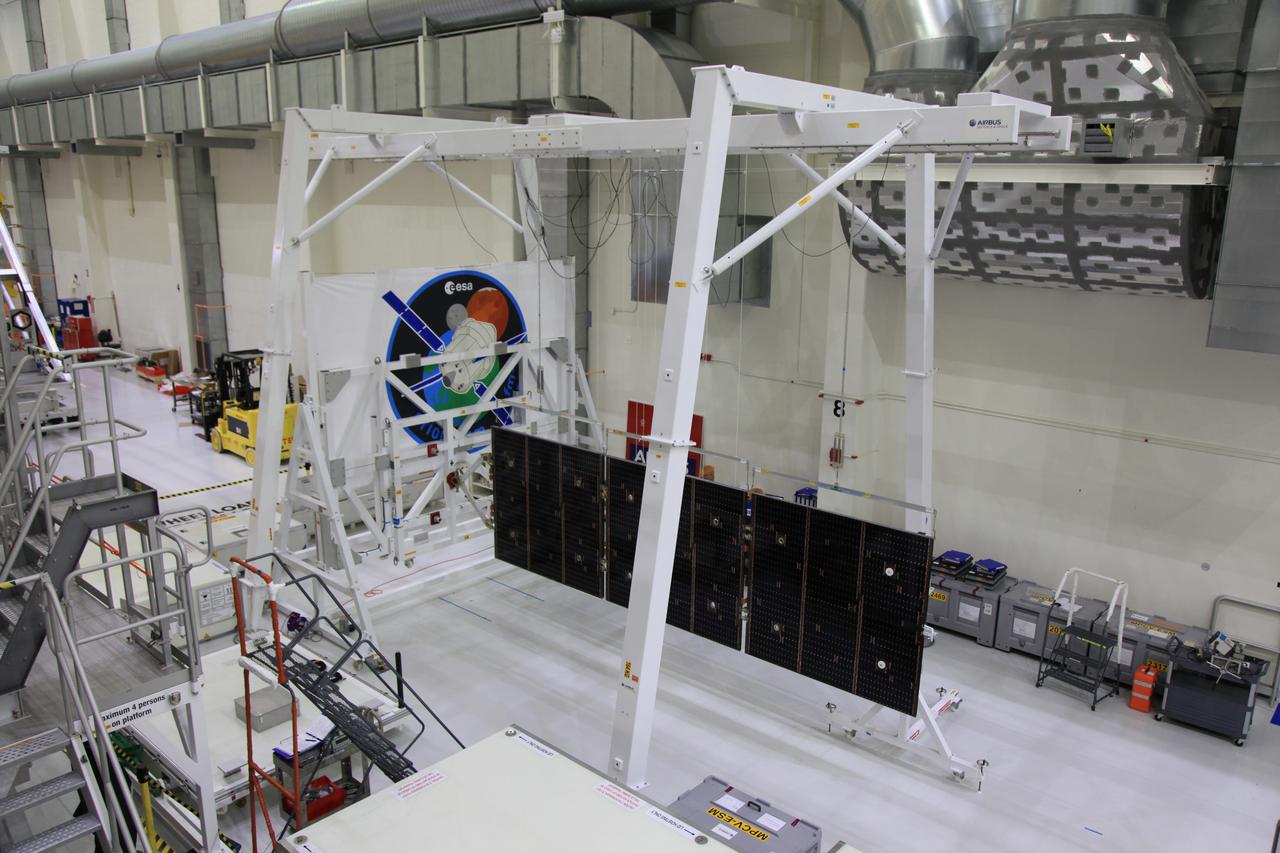
Two of the four solar array wings are shown from behind the spacecraft adapter jettison fairing panels after being installed on the Orion spacecraft for Artemis I inside the Neil Armstrong Operations and Checkout Building high bay at NASA’s Kennedy Space Center in Florida on Sept. 30, 2020. Inside the Neil Armstrong Operations and Checkout Building high bay at NASA’s Kennedy Space Center in Florida on Sept. 30, 2020, work begins to install four solar array wings on the Orion spacecraft for Artemis I. The solar arrays were extended, inspected, and then retracted, before installation on the spacecraft. Each solar array panel will generate 11 kilowatts of power and span about 63 feet. The array is a component of Orion’s service module, which is provided by the European Space Agency and built by Airbus Defence and Space to supply Orion’s power, propulsion, air and water. The first in a series of increasingly complex missions, Artemis I will test the Orion spacecraft and Space Launch System as an integrated system ahead of crewed flights to the Moon. Under the Artemis program, NASA will land the first woman and the next man on the Moon in 2024.
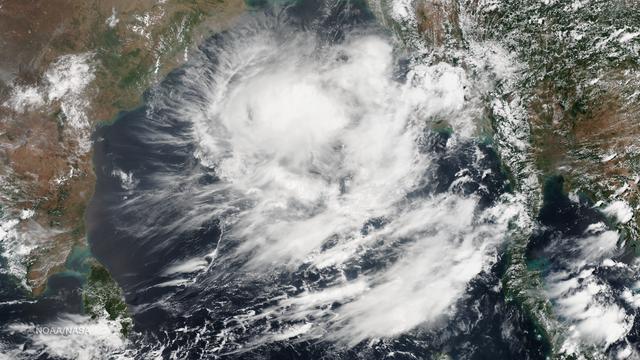
The Joint Typhoon Warning Center states that formation of a significant tropical cyclone is possible in the Bay of Bengal within the next 12 - 24 hours as of 0730Z on May 21, 2014. Along with deep convective banding associated with a consolidating low-level circulation center, warm sea surface temperatures are conducive for further development. This image was taken by the Suomi NPP satellite's VIIRS instrument in two passes, the east pass around 0615Z and the west pass around 0755Z on May 21, 2014. Credit: NASA/NOAA/NPP/VIIRS The Joint Typhoon Warning Center states that formation of a significant tropical cyclone is possible in the Bay of Bengal within the next 12 - 24 hours as of 0730Z on May 21, 2014. Along with deep convective banding associated with a consolidating low-level circulation center, warm sea surface temperatures are conducive for further development. This image was taken by the Suomi NPP satellite's VIIRS instrument in two passes, the east pass around 0615Z and the west pass around 0755Z on May 21, 2014.
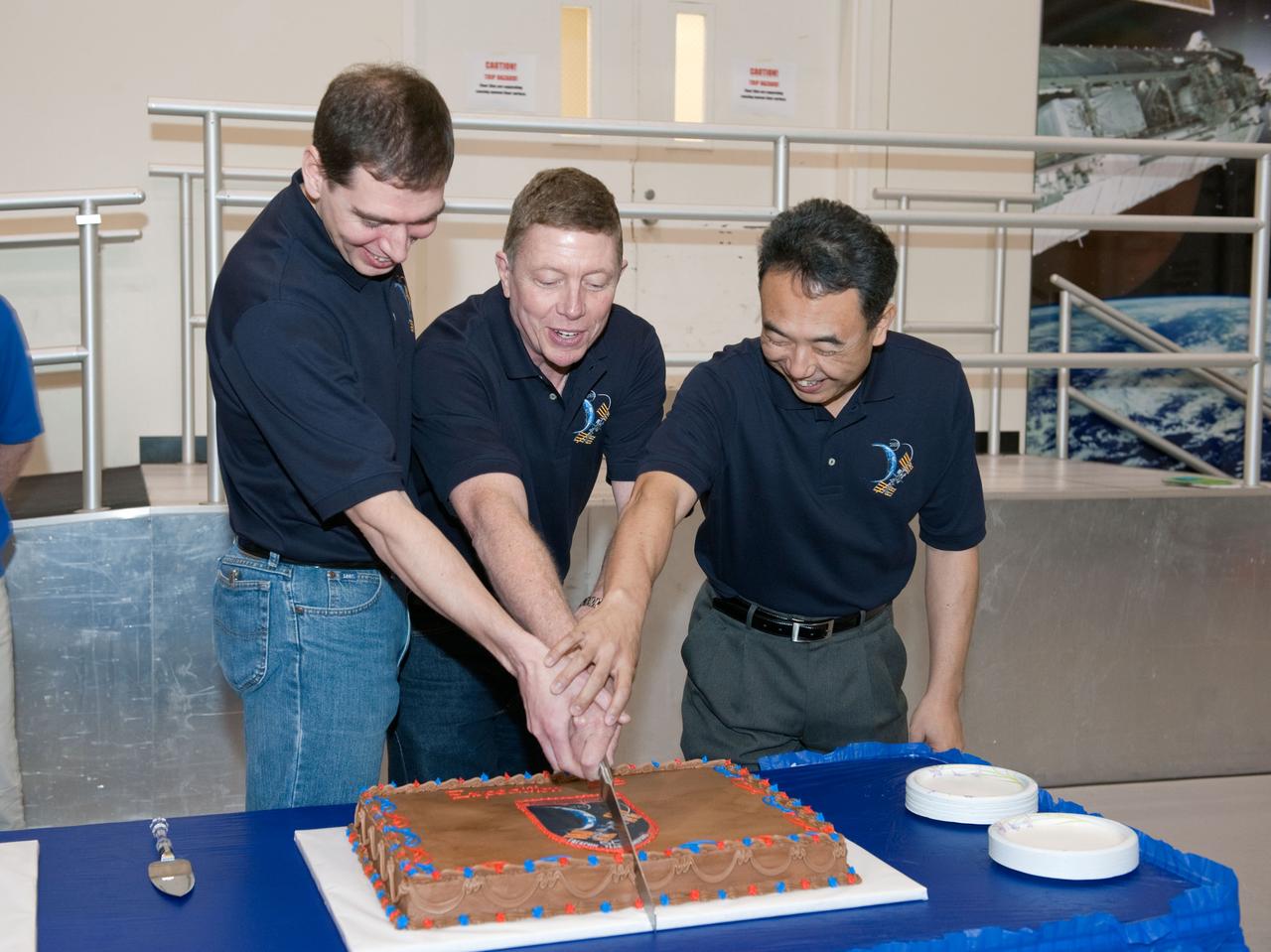
PHOTO DATE: 01-19-11 LOCATION: Bldg 5, High Bay SUBJECT: Expedition 27/28 Cake Cutting Ceremony in building 5 high bay PHOTOGRAPHER: James Blair
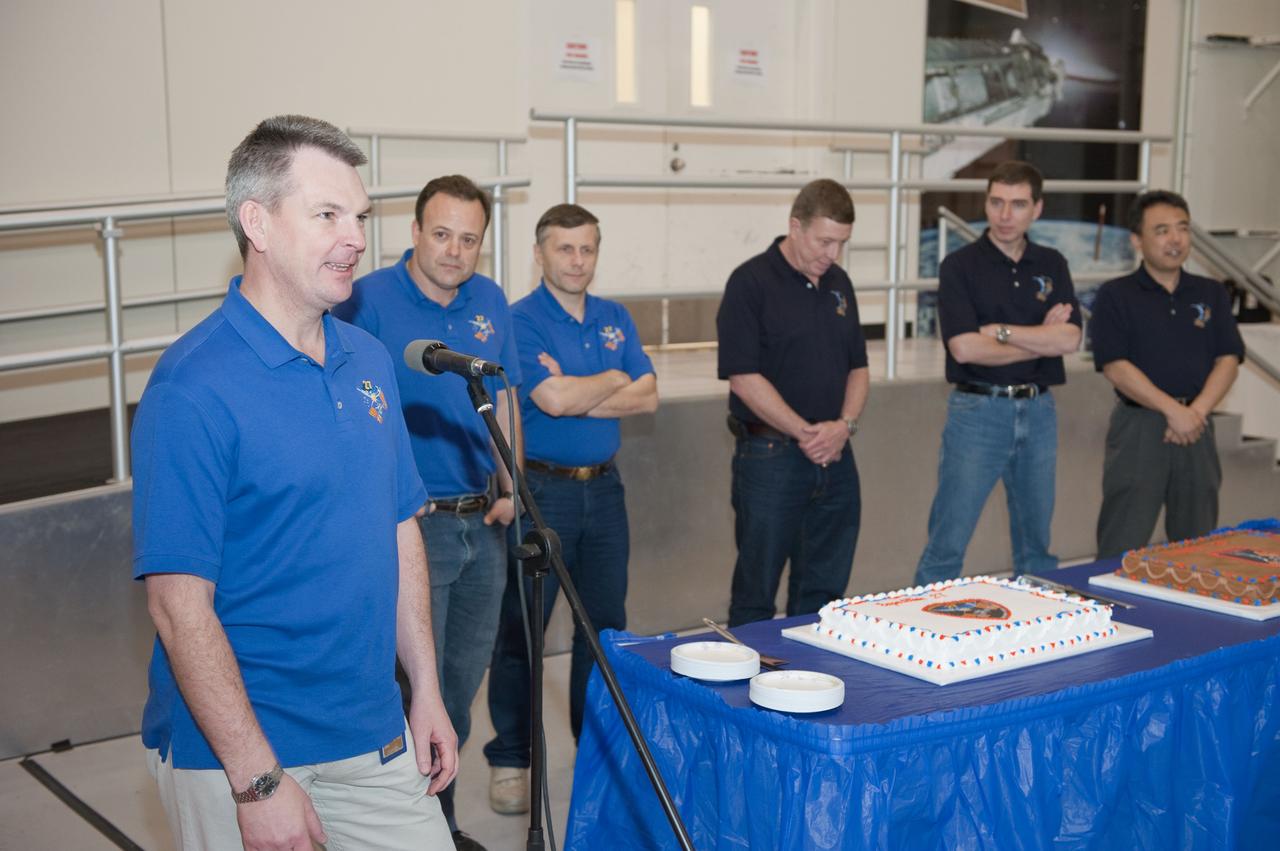
PHOTO DATE: 01-19-11 LOCATION: Bldg 5, High Bay SUBJECT: Expedition 27/28 Cake Cutting Ceremony in building 5 high bay PHOTOGRAPHER: James Blair
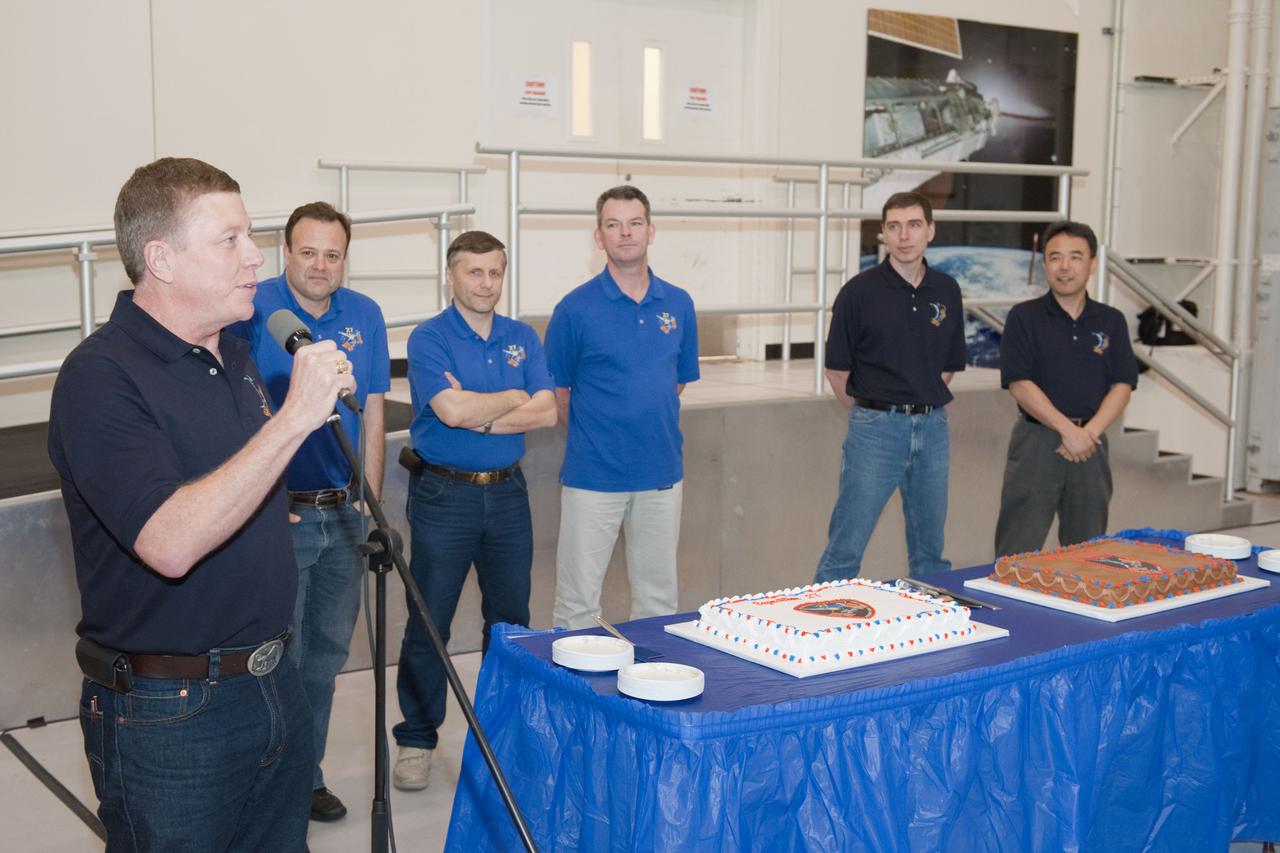
PHOTO DATE: 01-19-11 LOCATION: Bldg 5, High Bay SUBJECT: Expedition 27/28 Cake Cutting Ceremony in building 5 high bay PHOTOGRAPHER: James Blair
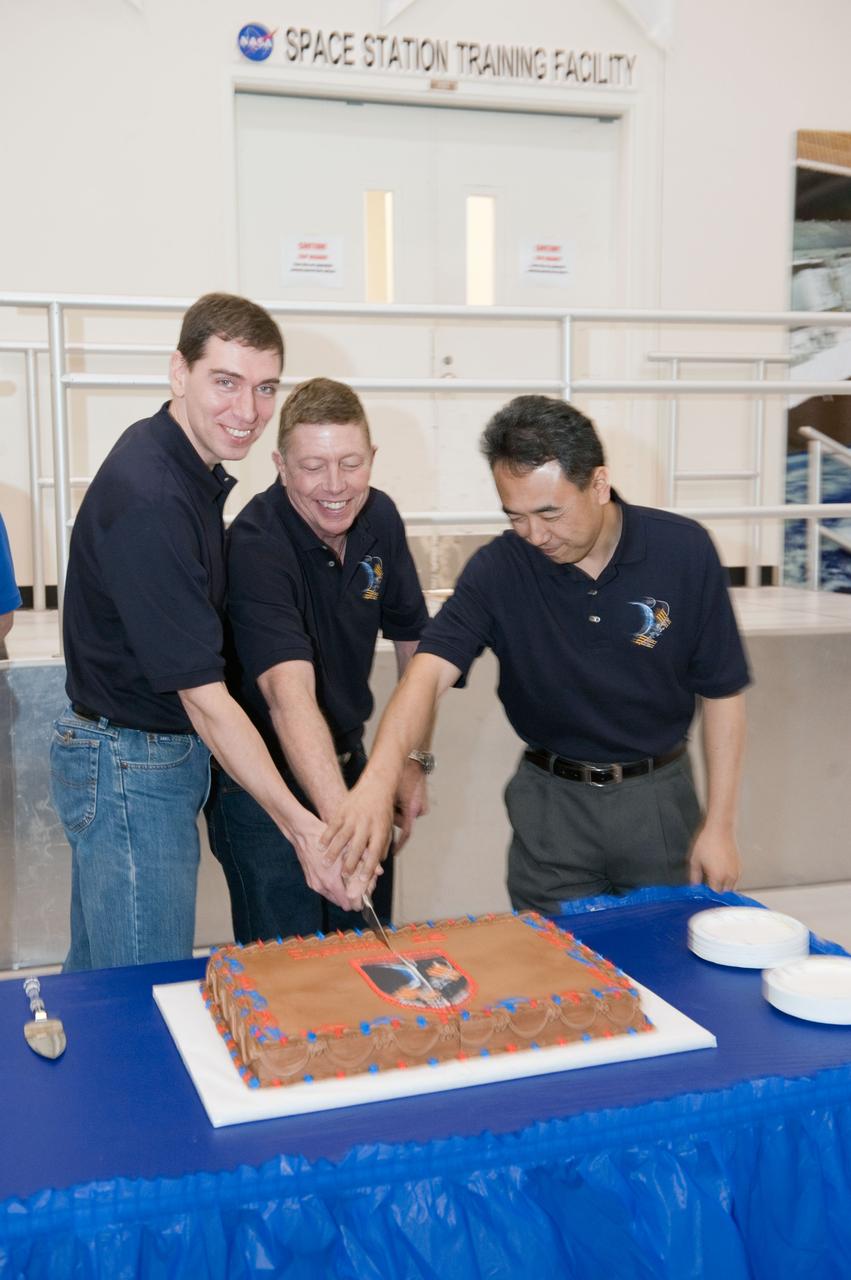
PHOTO DATE: 01-19-11 LOCATION: Bldg 5, High Bay SUBJECT: Expedition 27/28 Cake Cutting Ceremony in building 5 high bay PHOTOGRAPHER: James Blair
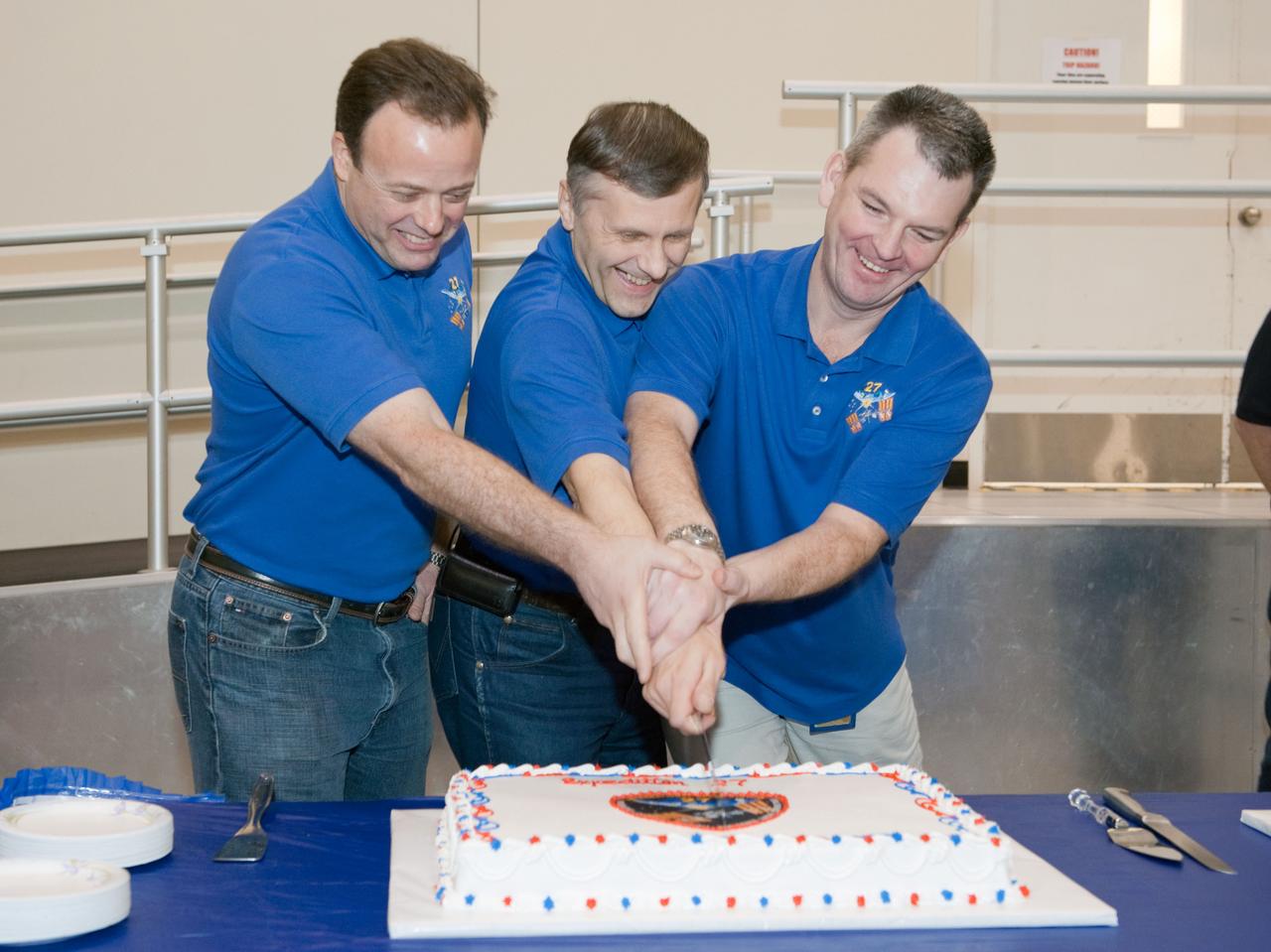
PHOTO DATE: 01-19-11 LOCATION: Bldg 5, High Bay SUBJECT: Expedition 27/28 Cake Cutting Ceremony in building 5 high bay PHOTOGRAPHER: James Blair
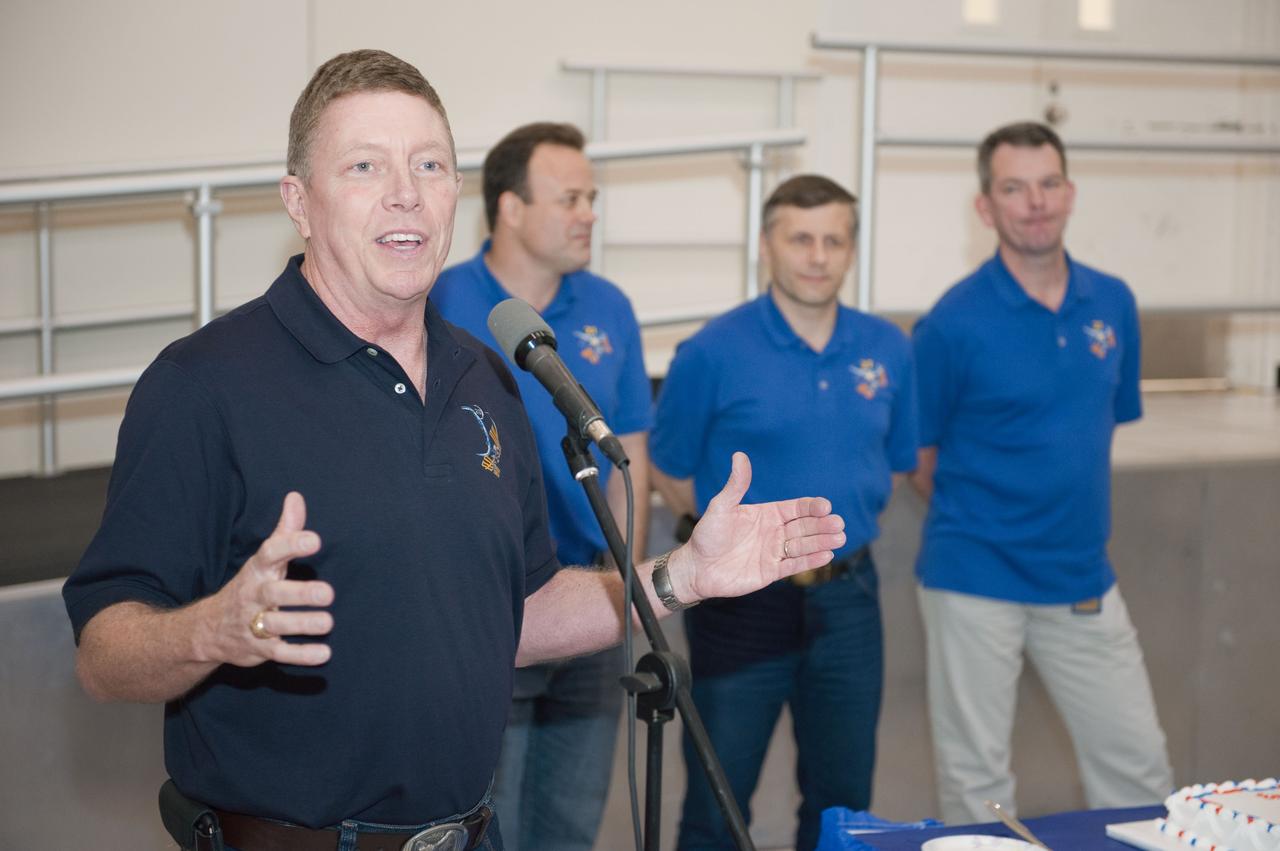
PHOTO DATE: 01-19-11 LOCATION: Bldg 5, High Bay SUBJECT: Expedition 27/28 Cake Cutting Ceremony in building 5 high bay PHOTOGRAPHER: James Blair
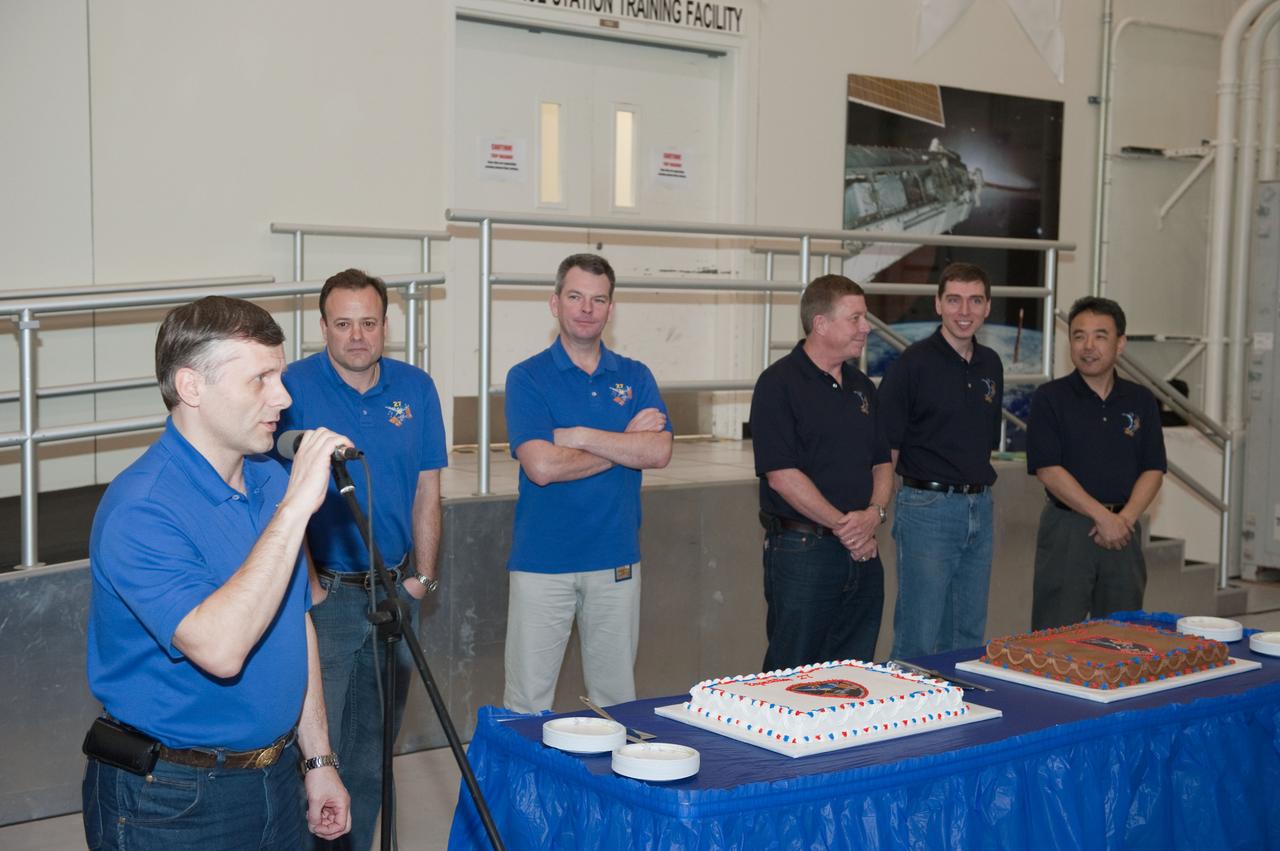
PHOTO DATE: 01-19-11 LOCATION: Bldg 5, High Bay SUBJECT: Expedition 27/28 Cake Cutting Ceremony in building 5 high bay PHOTOGRAPHER: James Blair
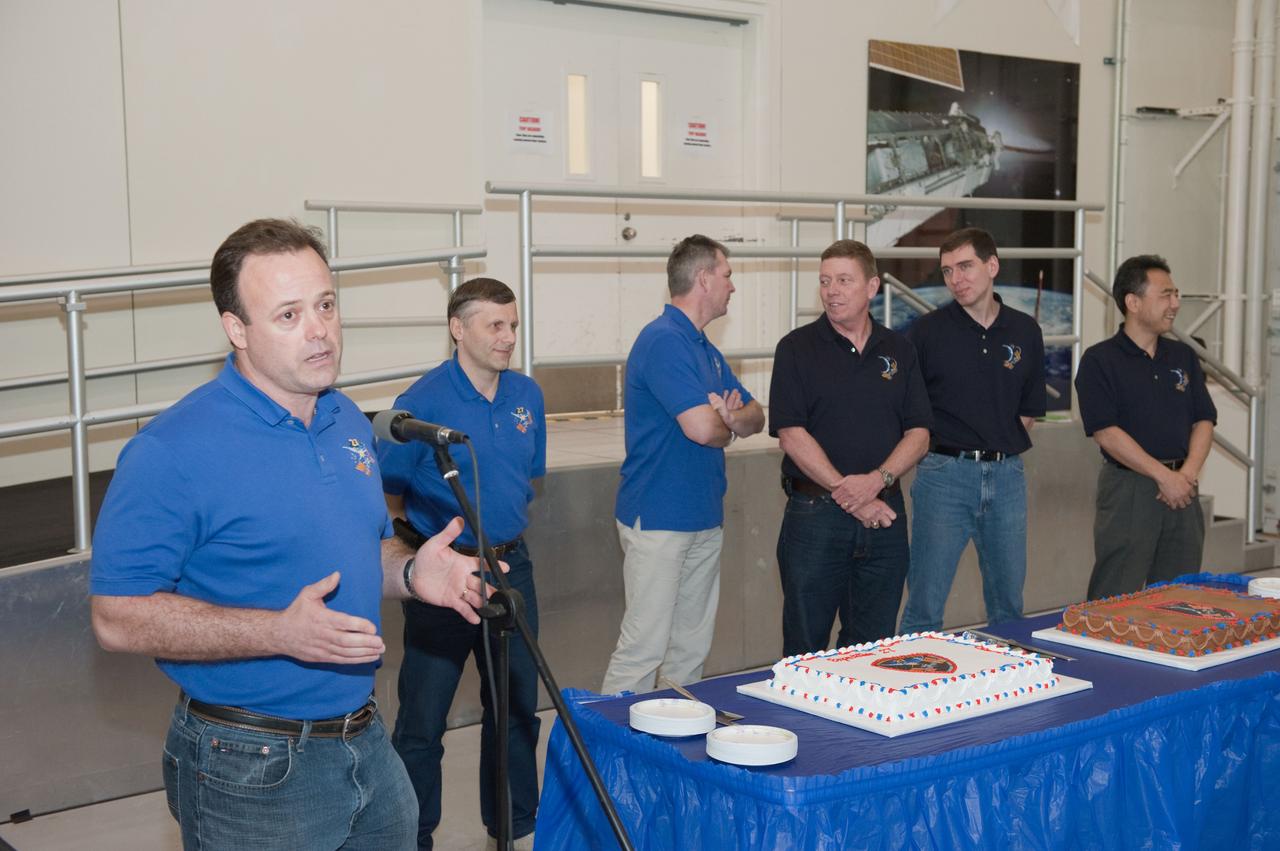
PHOTO DATE: 01-19-11 LOCATION: Bldg 5, High Bay SUBJECT: Expedition 27/28 Cake Cutting Ceremony in building 5 high bay PHOTOGRAPHER: James Blair
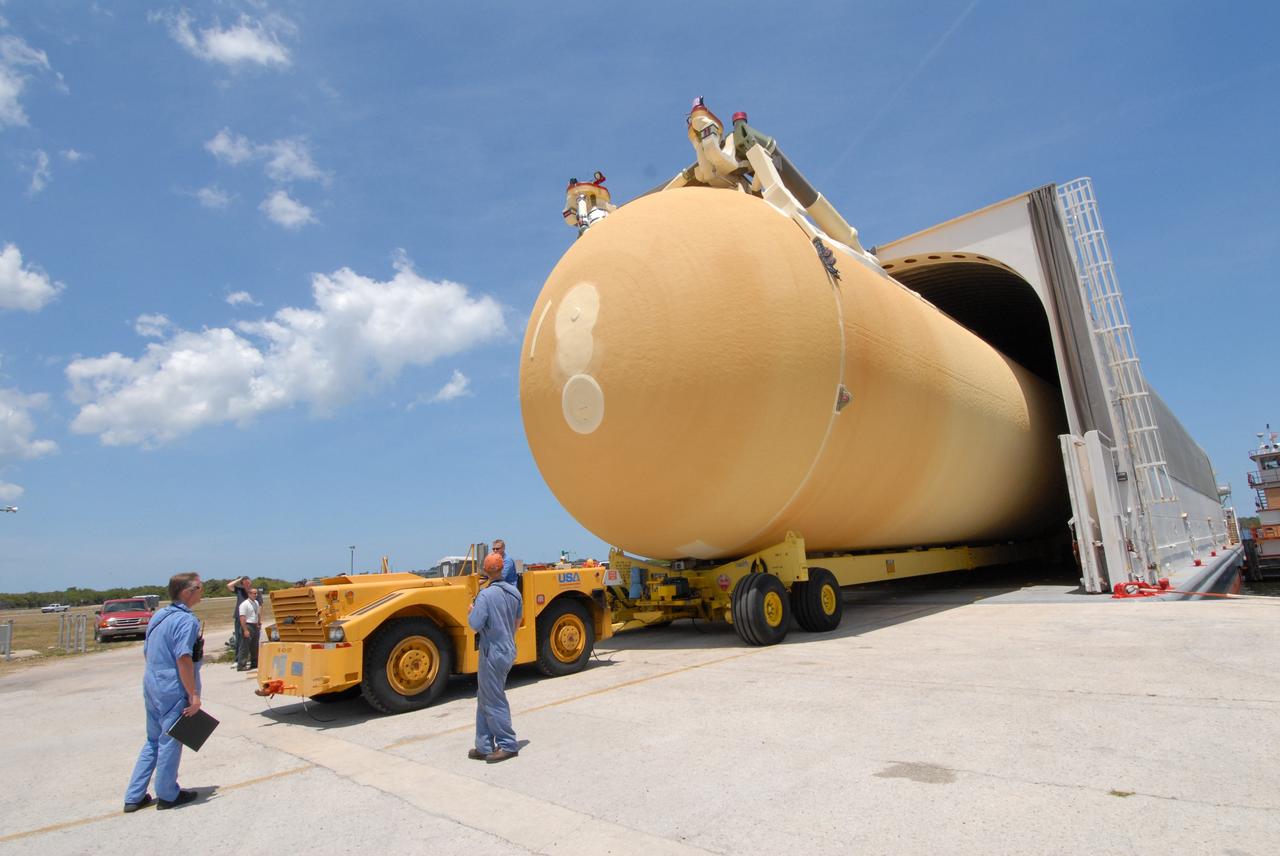
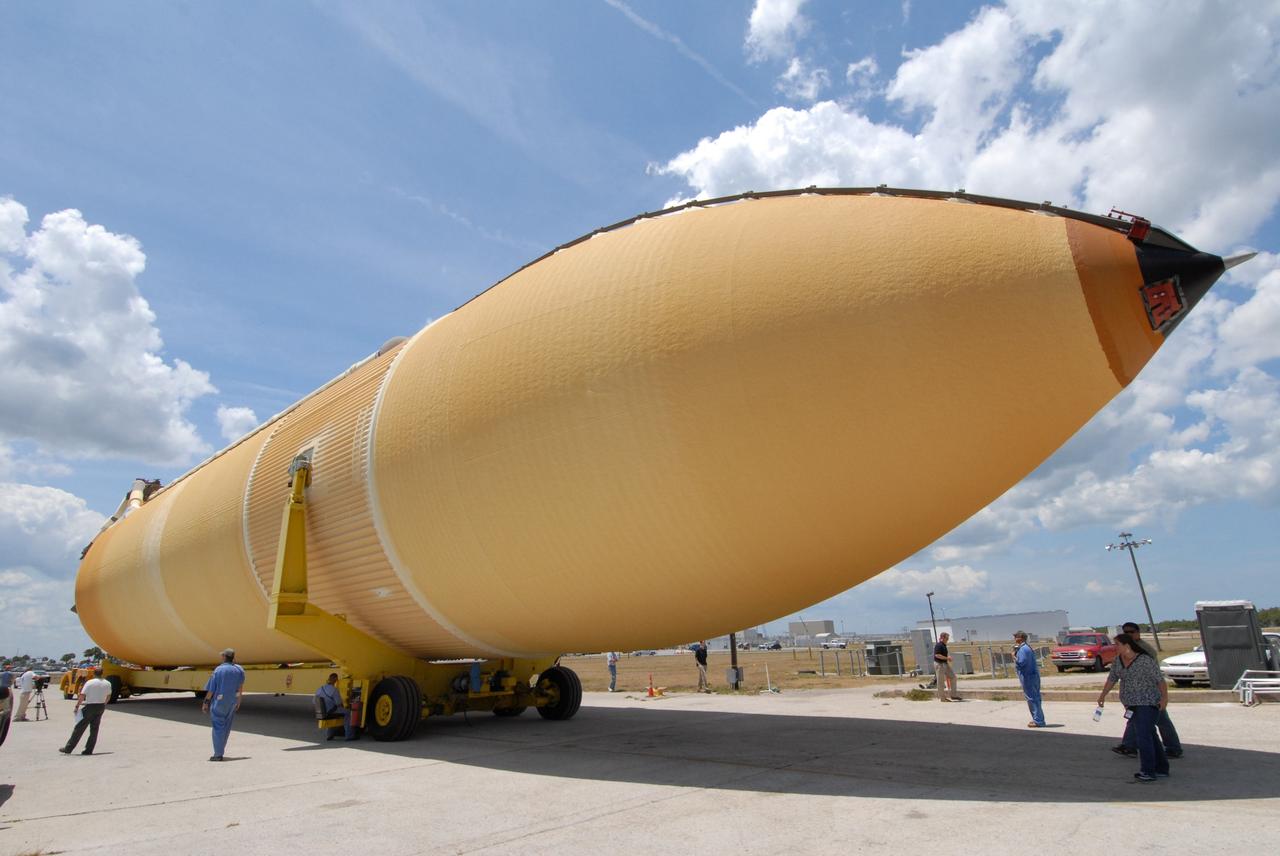
CAPE CANAVERAL, Fla. – The external fuel tank, ET- 132, designated for use with space shuttle Discovery on the STS-128 mission is moved out of the Pegasus barge in the turn basin at NASA's Kennedy Space Center in Florida. It will be transported to a high bay in the Vehicle Assembly Building for checkout. On the STS-128 mission, Discovery will carry science and storage racks to the International Space Station. Launch of Discovery is targeted for Aug. 6. Photo credit: NASA/Jack Pfaller
CAPE CANAVERAL, Fla. – The external fuel tank, ET- 132, designated for use with space shuttle Discovery on the STS-128 mission is being offloaded from the Pegasus barge at NASA's Kennedy Space Center in Florida. It will be transported to a high bay in the Vehicle Assembly Building for checkout. On the STS-128 mission, Discovery will carry science and storage racks to the International Space Station. Launch of Discovery is targeted for Aug. 6. Photo credit: NASA/Jack Pfaller
CAPE CANAVERAL, Fla. – The external fuel tank, ET- 132, designated for use with space shuttle Discovery on the STS-128 mission is moved away from the turn basin, heading for the Vehicle Assembly Building (at left) at NASA's Kennedy Space Center in Florida for checkout in a high bay. On the STS-128 mission, Discovery will carry science and storage racks to the International Space Station. Launch of Discovery is targeted for Aug. 6. Photo credit: NASA/Jack Pfaller
CAPE CANAVERAL, Fla. – The external fuel tank, ET- 132, designated for use with space shuttle Discovery on the STS-128 mission is moved out of the Pegasus barge in the turn basin at NASA's Kennedy Space Center in Florida. It will be transported to a high bay in the Vehicle Assembly Building for checkout. On the STS-128 mission, Discovery will carry science and storage racks to the International Space Station. Launch of Discovery is targeted for Aug. 6. Photo credit: NASA/Jack Pfaller
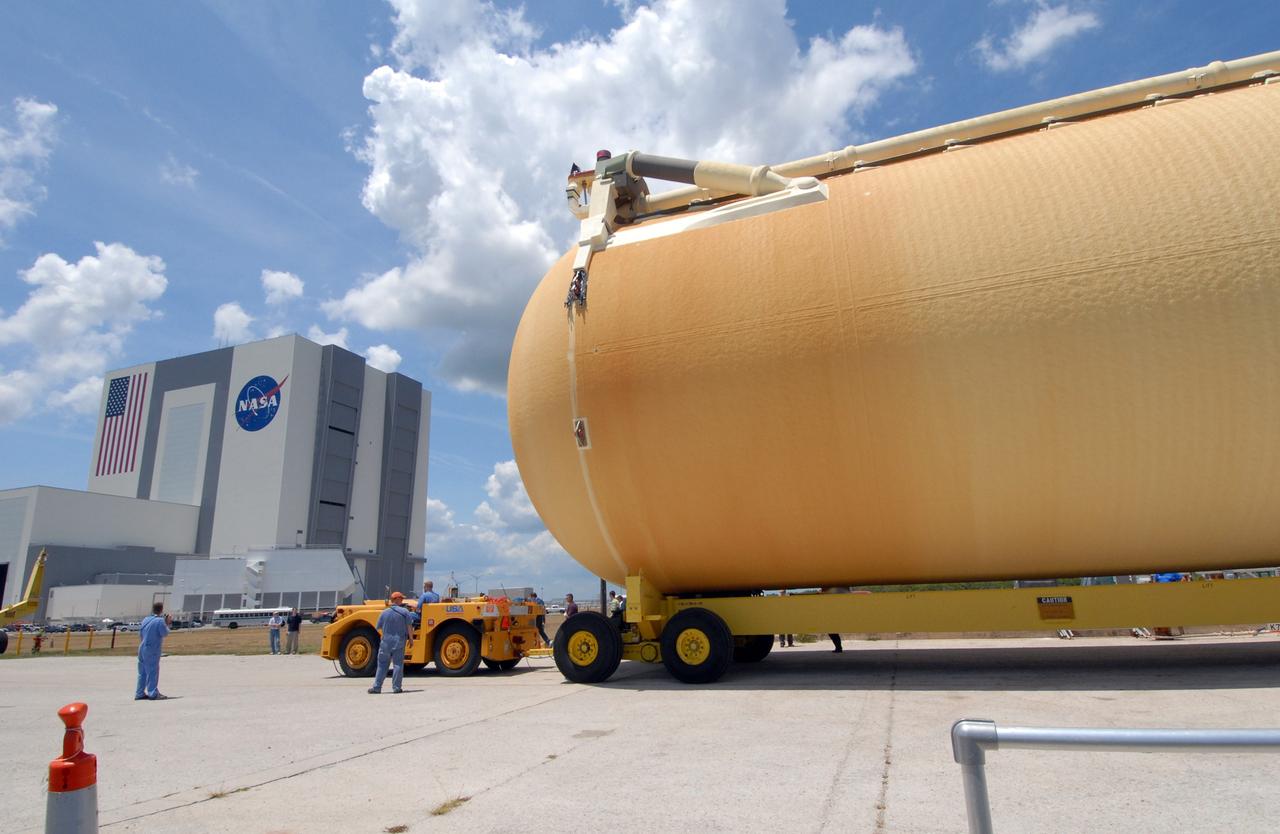
CAPE CANAVERAL, Fla. – The external fuel tank, ET- 132, designated for use with space shuttle Discovery on the STS-128 mission is moved away from the turn basin, heading for a high bay in the Vehicle Assembly Building, at left, for checkout. On the STS-128 mission, Discovery will carry science and storage racks to the International Space Station. Launch of Discovery is targeted for Aug. 6. Photo credit: NASA/Jack Pfaller
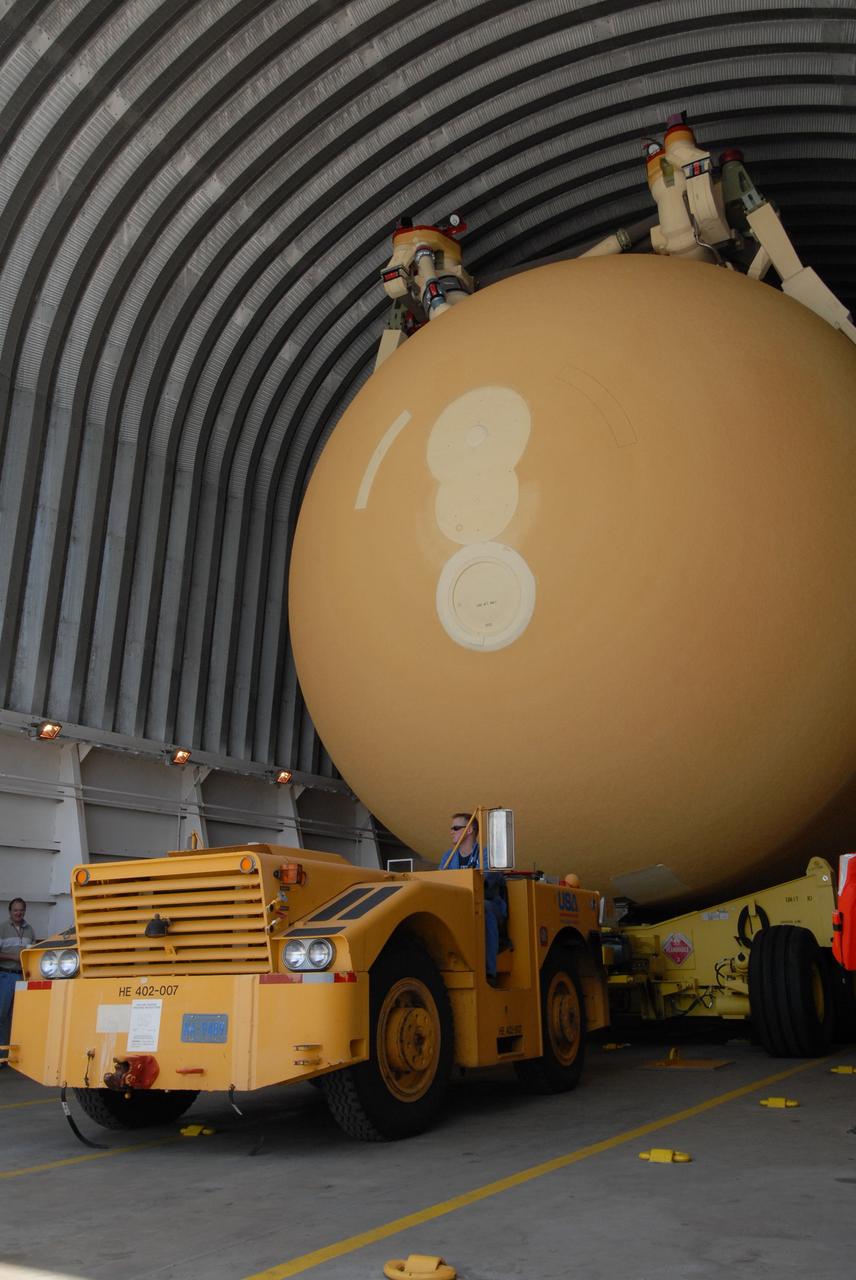
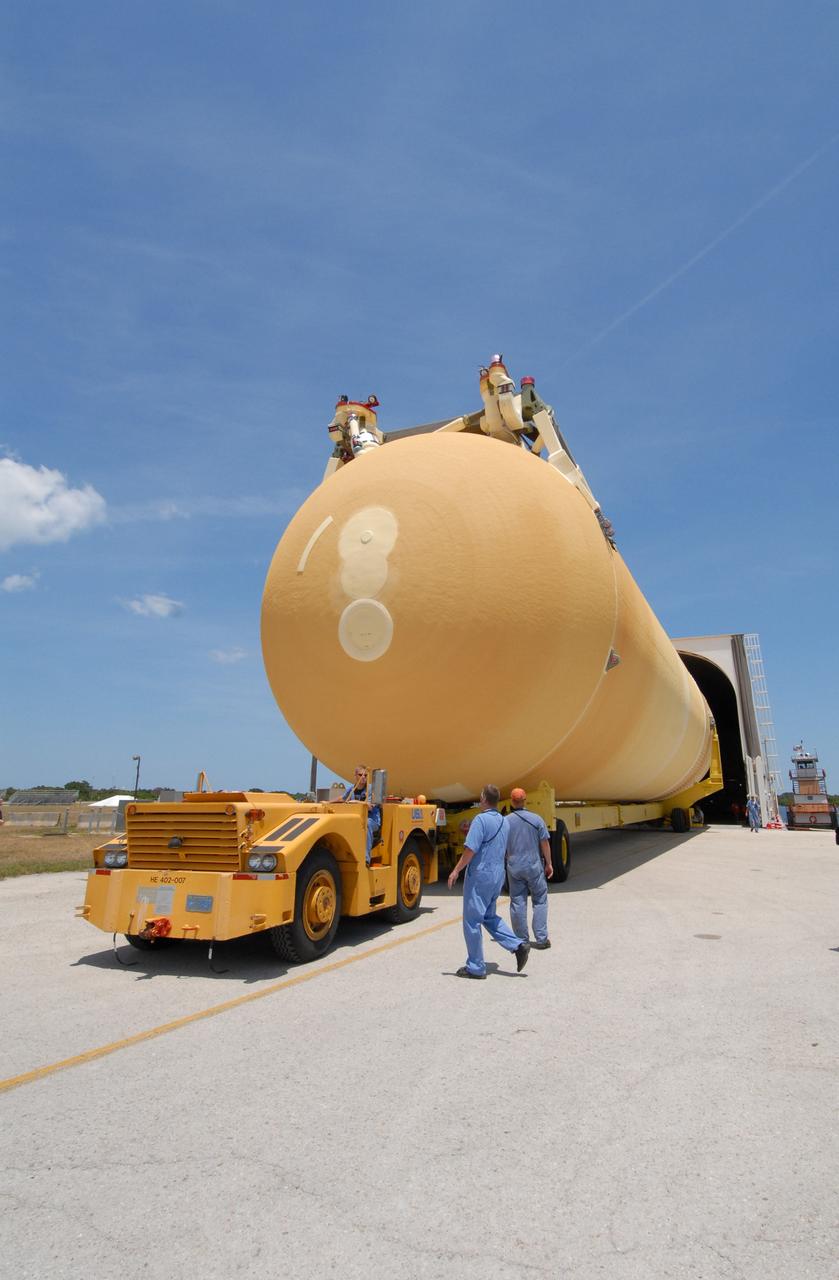
CAPE CANAVERAL, Fla. – The external fuel tank, ET- 132, designated for use with space shuttle Discovery on the STS-128 mission moves toward the open door of the Vehicle Assembly Building at NASA's Kennedy Space Center in Florida. The tank will be moved into a high bay for checkout. On the STS-128 mission, Discovery will carry science and storage racks to the International Space Station. Launch of Discovery is targeted for Aug. 6. Photo credit: NASA/Jack Pfaller
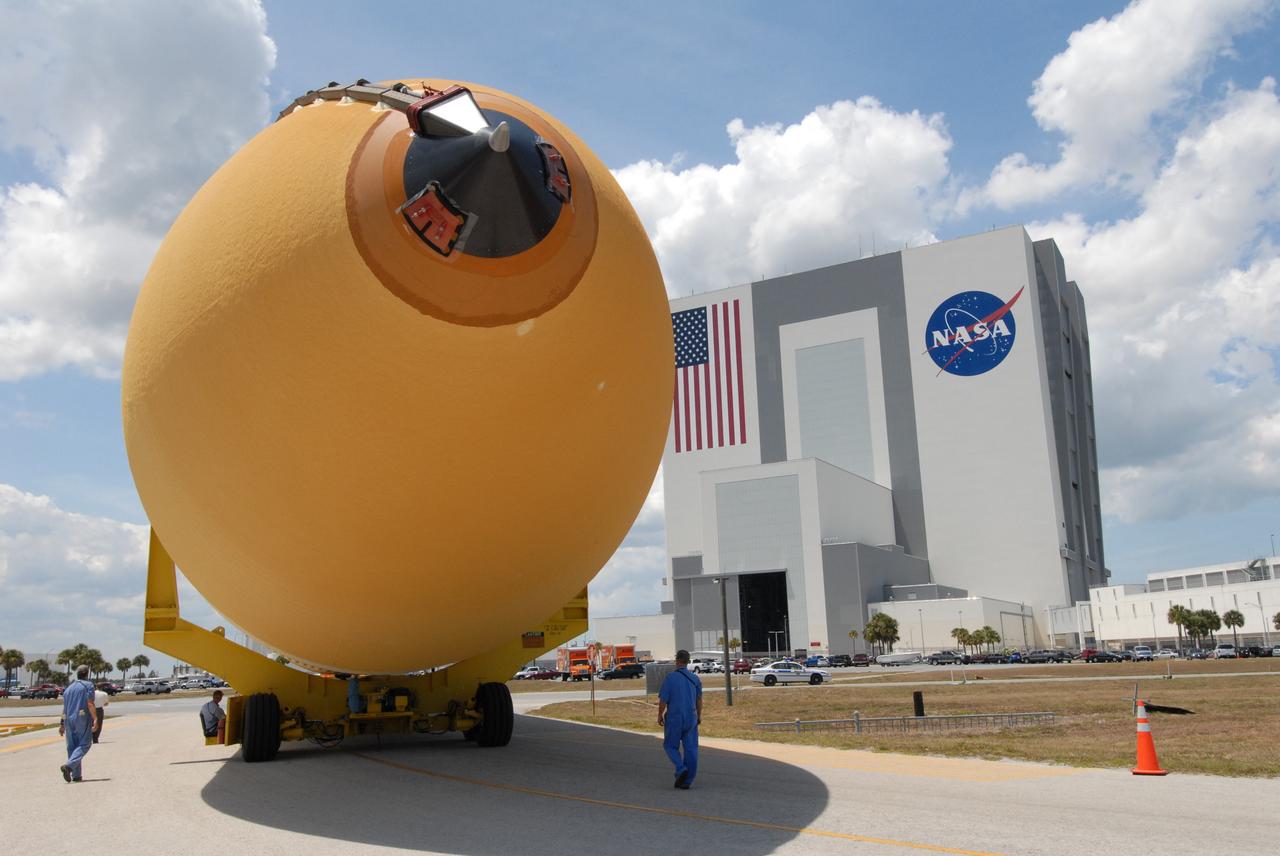
CAPE CANAVERAL, Fla. – The external fuel tank, ET- 132, designated for use with space shuttle Discovery on the STS-128 mission makes the turn toward the Vehicle Assembly Building (at right) at NASA's Kennedy Space Center in Florida. It will be moved into a high bay for checkout. On the STS-128 mission, Discovery will carry science and storage racks to the International Space Station. Launch of Discovery is targeted for Aug. 6. Photo credit: NASA/Jack Pfaller
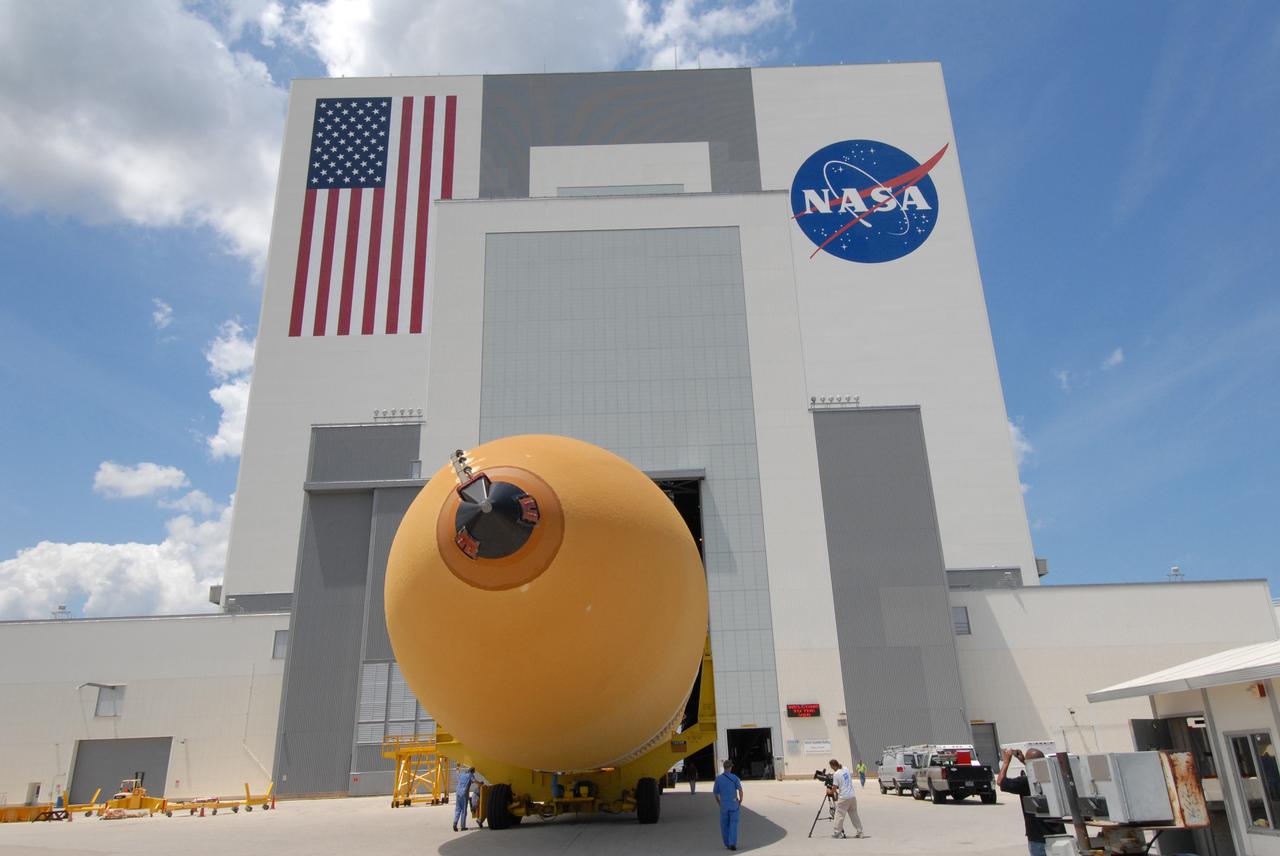
CAPE CANAVERAL, Fla. – The external fuel tank, ET- 132, designated for use with space shuttle Discovery on the STS-128 mission moves toward the open door of the Vehicle Assembly Building at NASA's Kennedy Space Center in Florida. The tank will be moved into a high bay for checkout. On the STS-128 mission, Discovery will carry science and storage racks to the International Space Station. Launch of Discovery is targeted for Aug. 6. Photo credit: NASA/Jack Pfaller
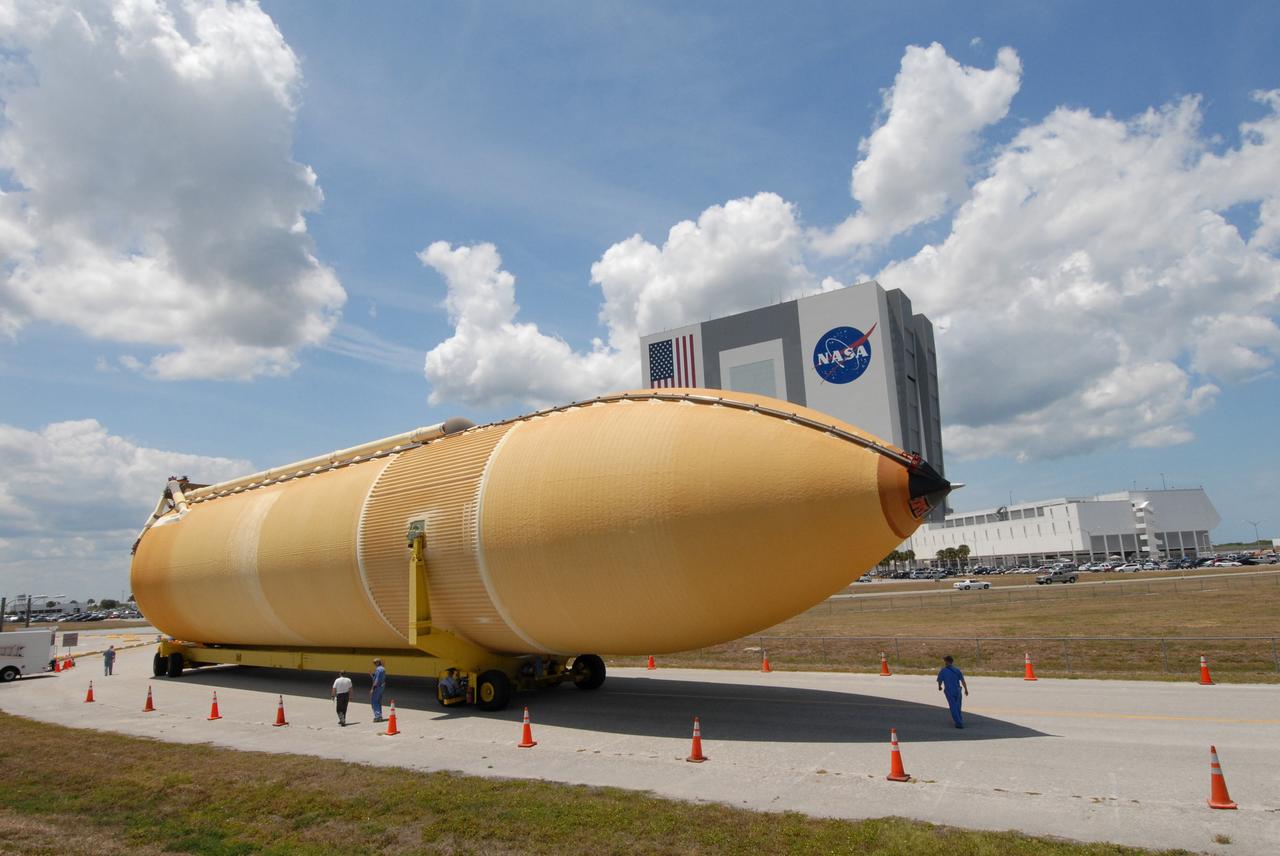
CAPE CANAVERAL, Fla. – The external fuel tank, ET- 132, designated for use with space shuttle Discovery on the STS-128 mission is transported to the Vehicle Assembly Building (at left) at NASA's Kennedy Space Center in Florida, for checkout in a high bay. It arrived at Kennedy aboard the Pegasus barge. On the STS-128 mission, Discovery will carry science and storage racks to the International Space Station. Launch of Discovery is targeted for Aug. 6. Photo credit: NASA/Jack Pfaller
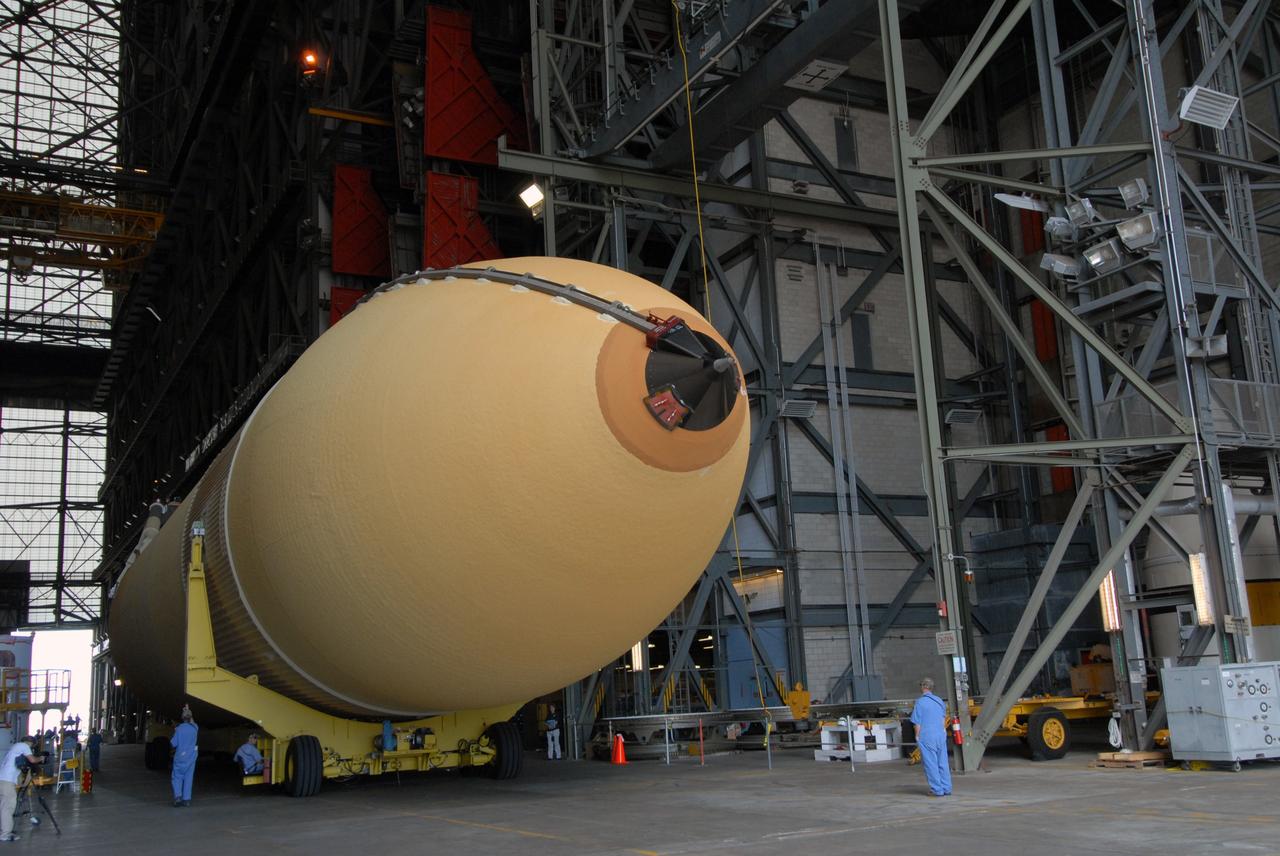
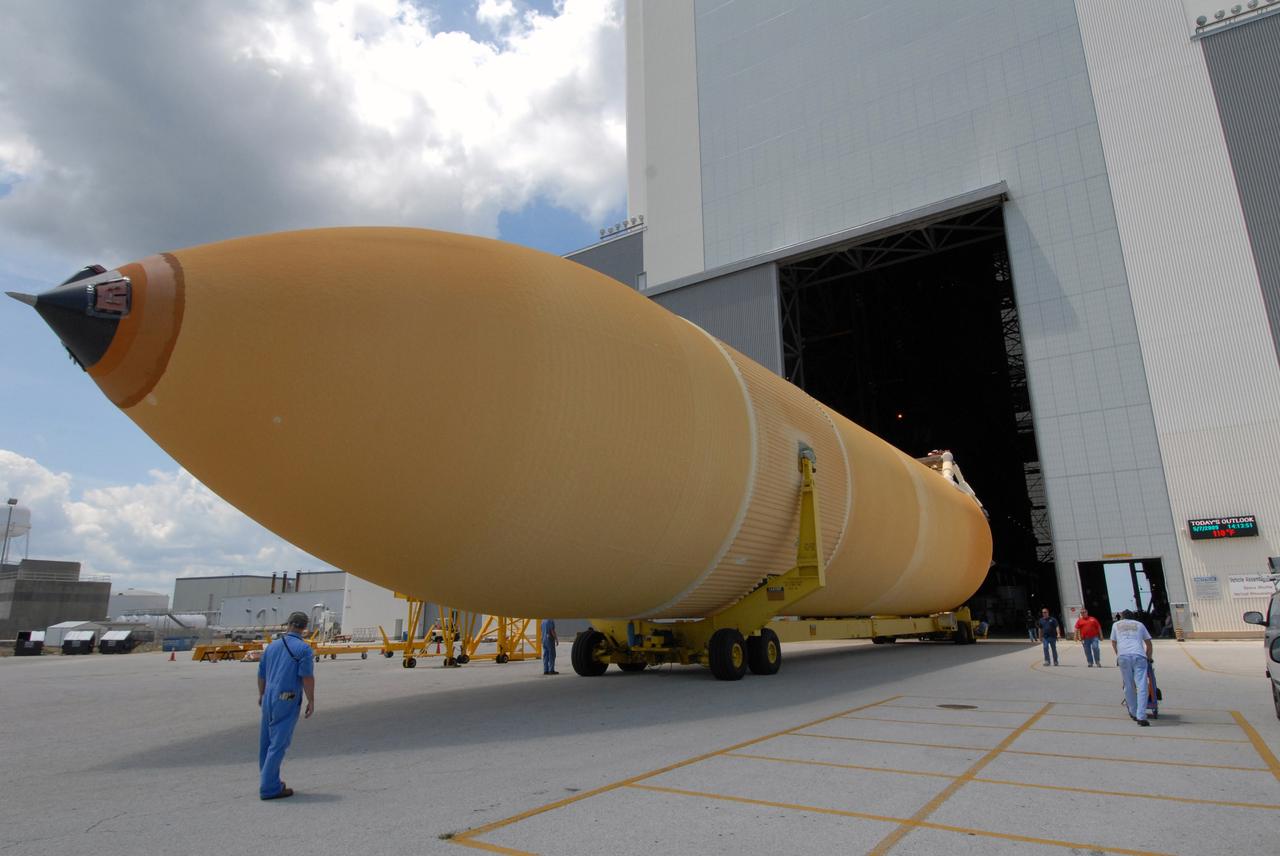
CAPE CANAVERAL, Fla. – The external fuel tank, ET- 132, designated for use with space shuttle Discovery on the STS-128 mission moves into the transfer aisle of the Vehicle Assembly Building at NASA's Kennedy Space Center in Florida. The tank will be moved into a high bay for checkout. On the STS-128 mission, Discovery will carry science and storage racks to the International Space Station. Launch of Discovery is targeted for Aug. 6. Photo credit: NASA/Jack Pfaller
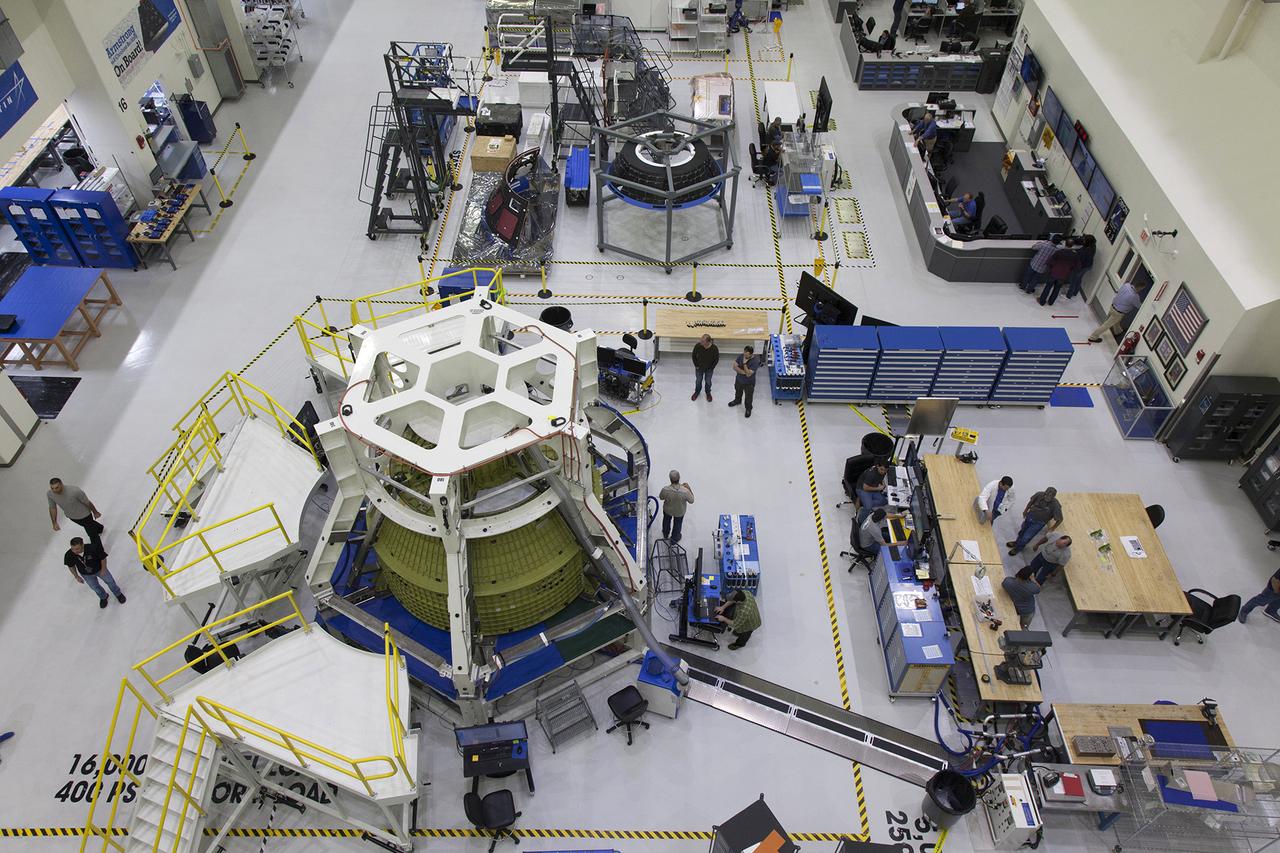
The Orion crew module pressure vessel for Exploration Mission-2 (EM-2) is secured in a work stand called the bird cage inside the Neil Armstrong Operations and Checkout Building high bay at NASA's Kennedy Space Center in Florida, on March 21, 2019. The pressure vessel is Orion's primary structure that holds the pressurized atmosphere astronauts will breathe and work in while in the vacuum of deep space. Behind the pressure vessel, secured on a work stand is the Orion bay cover for Exploration Mission-1.
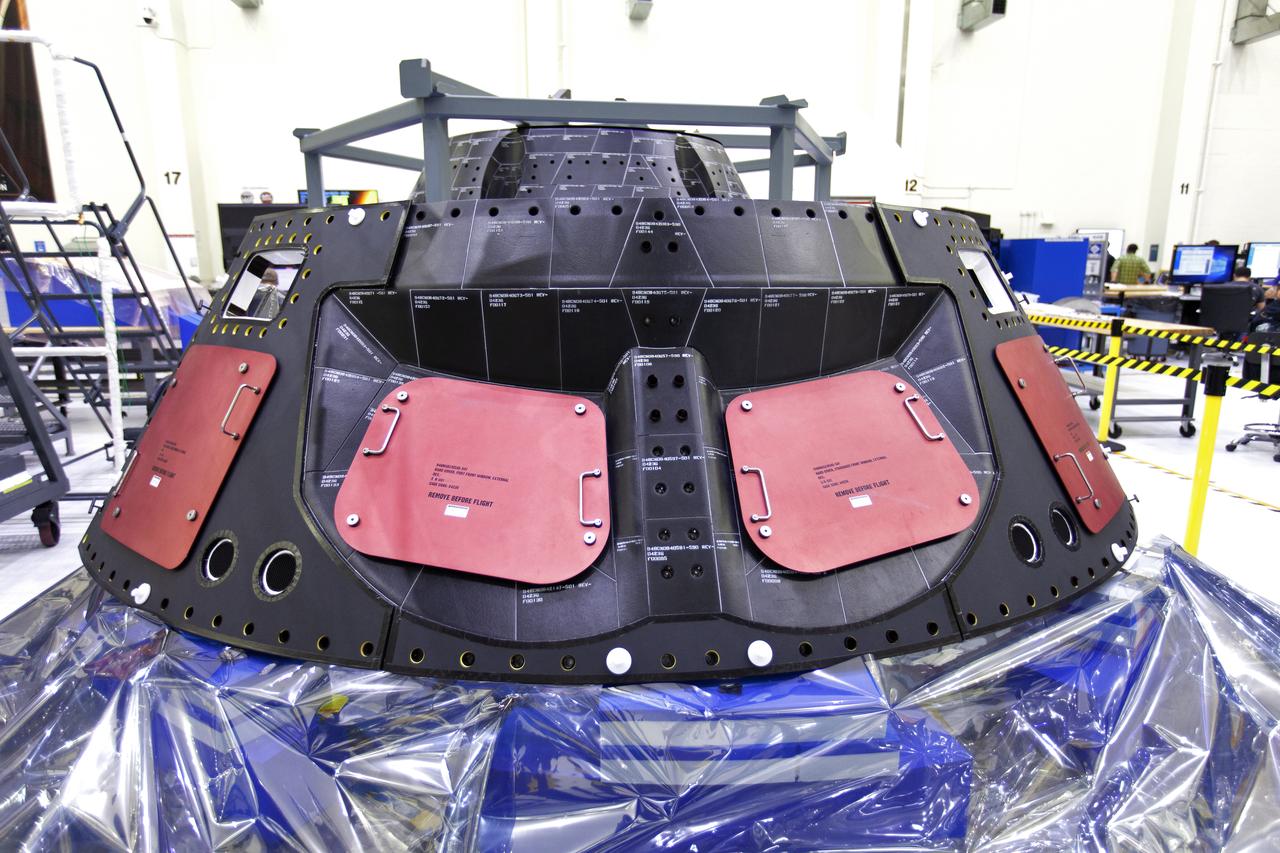
The forward bay cover for Orion for Exploration Mission-1 (EM-1) is in view inside the Neil Armstrong Operations and Checkout Building high bay on March 21, 2019, at NASA’s Kennedy Space Center in Florida. For EM-1, Orion will launch atop the Space Launch System rocket from Launch Pad 39B. The spacecraft will travel thousands of miles past the Moon on an approximately three-week test flight. Orion will return to Earth and splashdown in the Pacific Ocean off the coast of California, where it will be retrieved and returned to Kennedy.
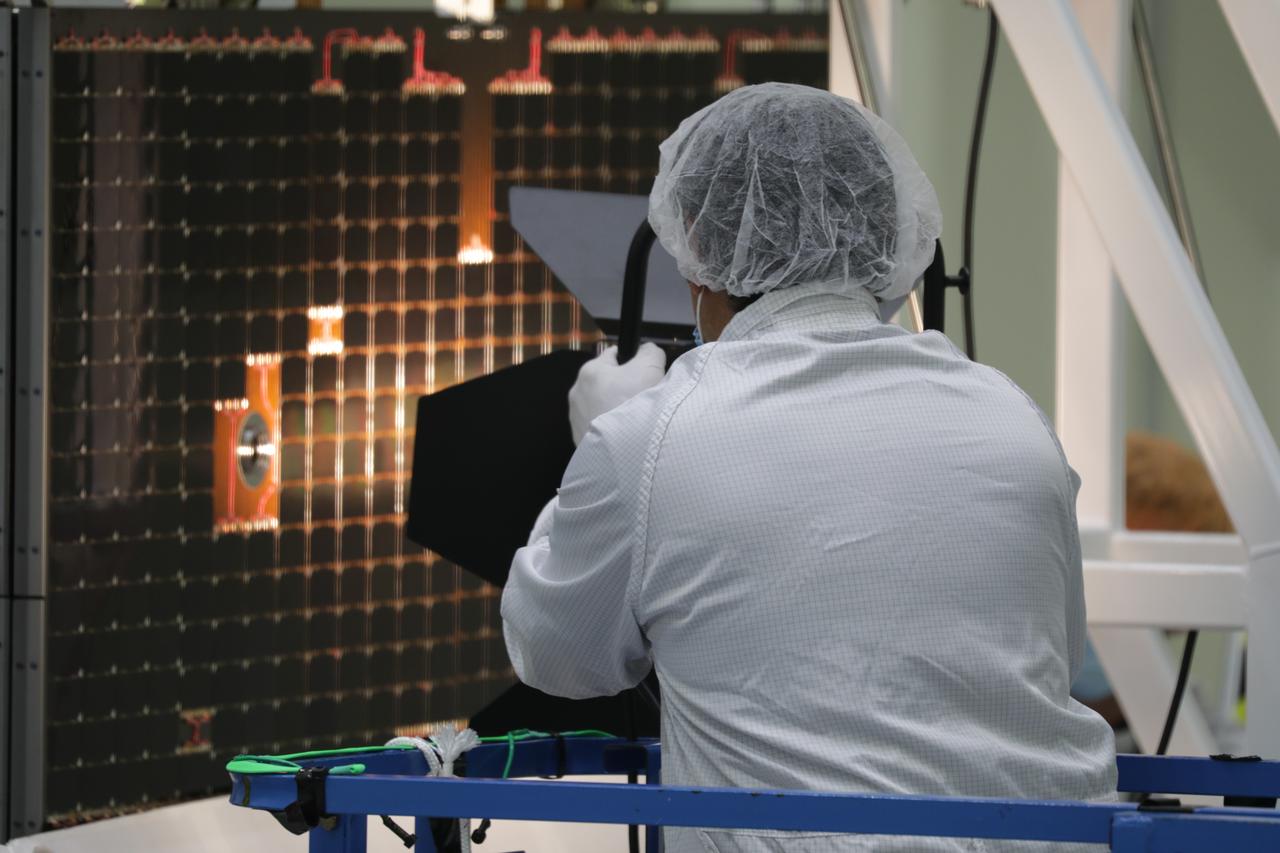
A Lockheed Martin technician is shown assisting with lighting one of the solar array wing panels as part of an illumination test during installation on the Orion spacecraft for Artemis I inside the Neil Armstrong Operations and Checkout Building high bay at NASA’s Kennedy Space Center in Florida on Sept. 30, 2020. The solar arrays were extended, inspected, and then retracted, before installation on the spacecraft. Each solar array panel will generate 11 kilowatts of power and span about 63 feet. The array is a component of Orion’s service module, which is provided by the European Space Agency and built by Airbus Defence and Space to supply Orion’s power, propulsion, air and water. The first in a series of increasingly complex missions, Artemis I will test the Orion spacecraft and Space Launch System as an integrated system ahead of crewed flights to the Moon. Under the Artemis program, NASA will land the first woman and the next man on the Moon in 2024.
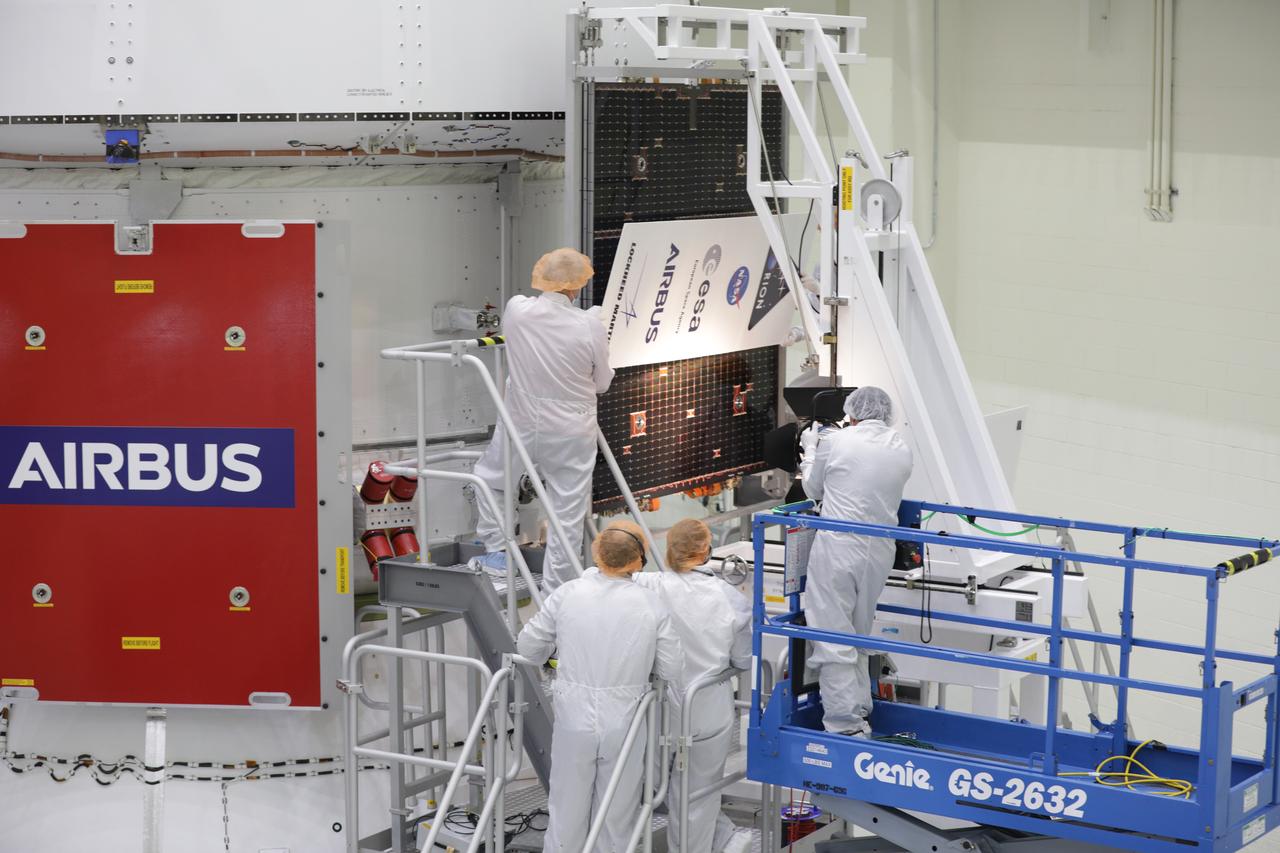
Technicians with the European Space Agency and Airbus/Airbus Netherlands are shown performing an illumination test on one of the solar array wing panels during installation on the Orion spacecraft for Artemis I inside the Neil Armstrong Operations and Checkout Building high bay at NASA’s Kennedy Space Center in Florida on Sept. 30, 2020. The solar arrays were extended, inspected, and then retracted, before installation on the spacecraft. Each solar array panel will generate 11 kilowatts of power and span about 63 feet. The array is a component of Orion’s service module, which is provided by the European Space Agency and built by Airbus Defence and Space to supply Orion’s power, propulsion, air and water. The first in a series of increasingly complex missions, Artemis I will test the Orion spacecraft and Space Launch System as an integrated system ahead of crewed flights to the Moon. Under the Artemis program, NASA will land the first woman and the next man on the Moon in 2024.
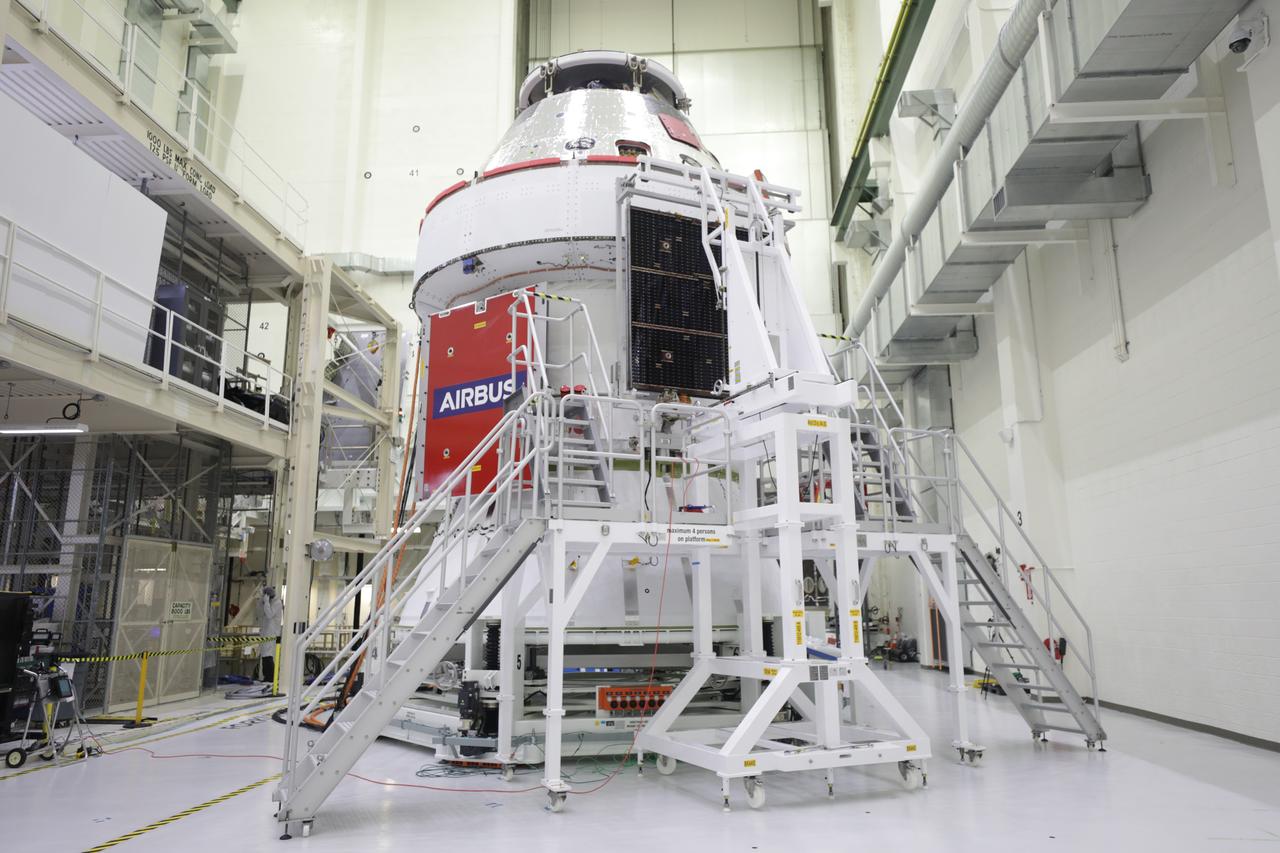
The final of four solar array wings is shown being installed prior to receiving its protective covering on the Orion spacecraft for Artemis I inside the Neil Armstrong Operations and Checkout Building high bay at NASA’s Kennedy Space Center in Florida on Sept. 30, 2020. The solar arrays were extended, inspected, and then retracted, before installation on the spacecraft. Each solar array panel will generate 11 kilowatts of power and span about 63 feet. The array is a component of Orion’s service module, which is provided by the European Space Agency and built by Airbus Defence and Space to supply Orion’s power, propulsion, air and water. The first in a series of increasingly complex missions, Artemis I will test the Orion spacecraft and Space Launch System as an integrated system ahead of crewed flights to the Moon. Under the Artemis program, NASA will land the first woman and the next man on the Moon in 2024.
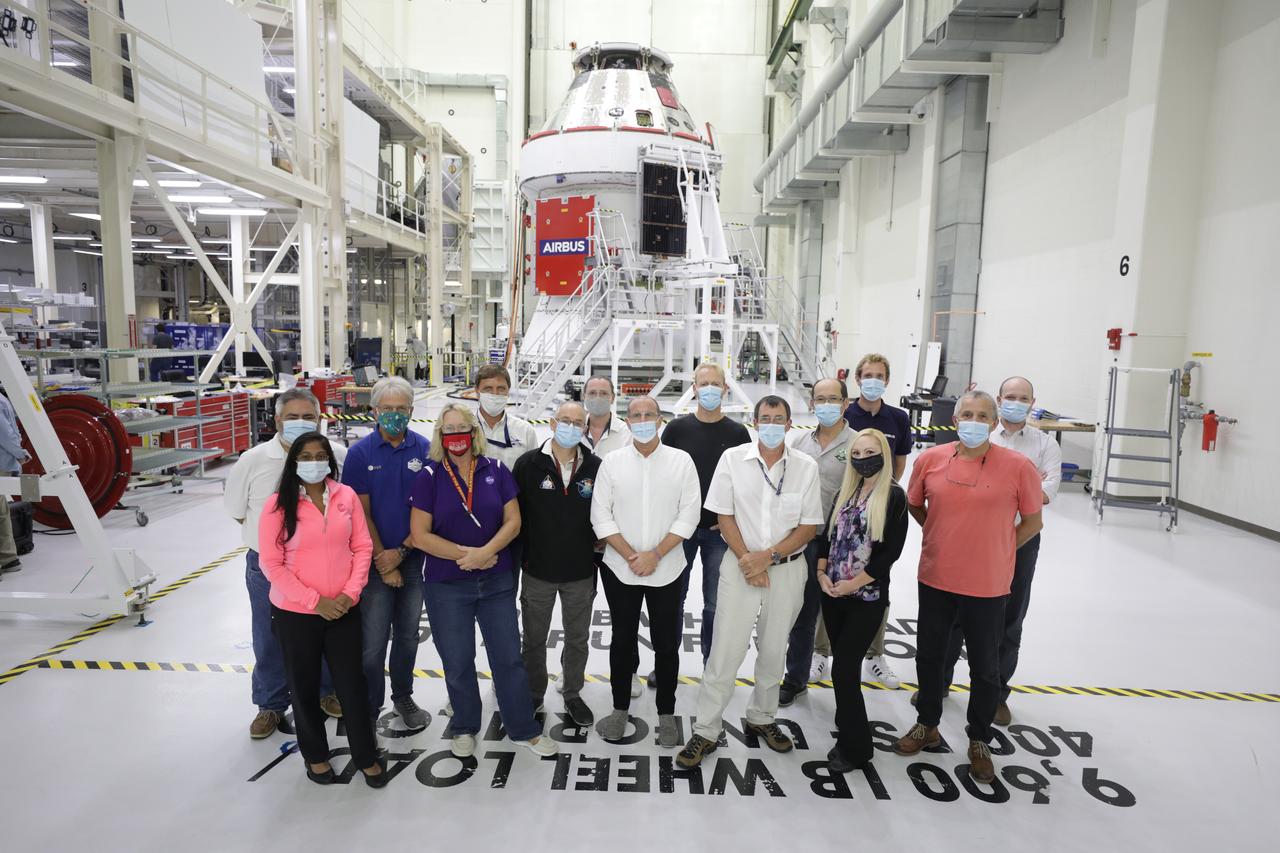
Members of the European Service Module processing team from NASA, the European Space Agency, Airbus, Airbus Netherlands, and Lockheed Martin are shown with Orion’s solar array wings installed on the spacecraft for Artemis I inside the Neil Armstrong Operations and Checkout Building high bay at NASA’s Kennedy Space Center in Florida on Sept. 30, 2020. The solar arrays were extended, inspected, and then retracted, before installation on the spacecraft. Each solar array panel will generate 11 kilowatts of power and span about 63 feet. The array is a component of Orion’s service module, which is provided by the European Space Agency and built by Airbus Defence and Space to supply Orion’s power, propulsion, air and water. The first in a series of increasingly complex missions, Artemis I will test the Orion spacecraft and Space Launch System as an integrated system ahead of crewed flights to the Moon. Under the Artemis program, NASA will land the first woman and the next man on the Moon in 2024.

The final of four solar array wings is shown being installed prior to receiving its protective covering on the Orion spacecraft for Artemis I inside the Neil Armstrong Operations and Checkout Building high bay at NASA’s Kennedy Space Center in Florida on Sept. 30, 2020. The solar arrays were extended, inspected, and then retracted, before installation on the spacecraft. Each solar array panel will generate 11 kilowatts of power and span about 63 feet. The array is a component of Orion’s service module, which is provided by the European Space Agency and built by Airbus Defence and Space to supply Orion’s power, propulsion, air and water. The first in a series of increasingly complex missions, Artemis I will test the Orion spacecraft and Space Launch System as an integrated system ahead of crewed flights to the Moon. Under the Artemis program, NASA will land the first woman and the next man on the Moon in 2024.
The final of four solar array wings is shown being installed prior to receiving its protective covering on the Orion spacecraft for Artemis I inside the Neil Armstrong Operations and Checkout Building high bay at NASA’s Kennedy Space Center in Florida on Sept. 30, 2020. The solar arrays were extended, inspected, and then retracted, before installation on the spacecraft. Each solar array panel will generate 11 kilowatts of power and span about 63 feet. The array is a component of Orion’s service module, which is provided by the European Space Agency and built by Airbus Defence and Space to supply Orion’s power, propulsion, air and water. The first in a series of increasingly complex missions, Artemis I will test the Orion spacecraft and Space Launch System as an integrated system ahead of crewed flights to the Moon. Under the Artemis program, NASA will land the first woman and the next man on the Moon in 2024.
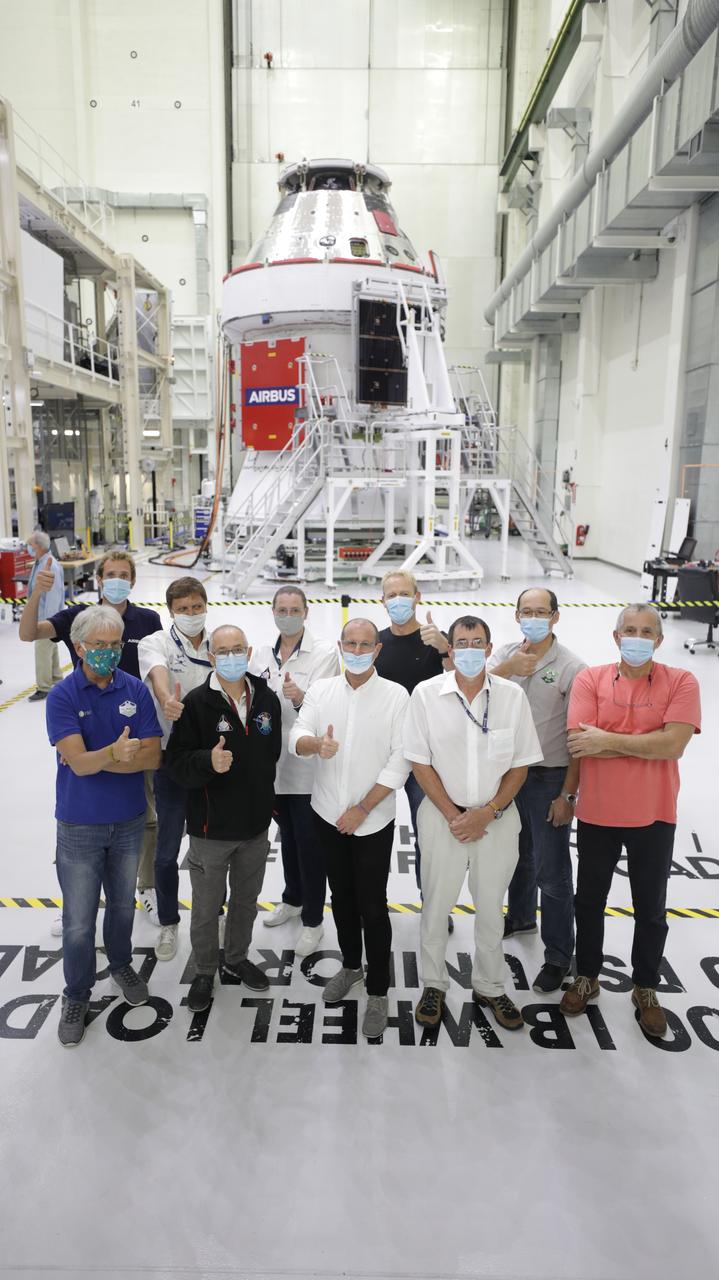
Members of the European Service Module processing team from the European Space Agency, Airbus, and Airbus Netherlands are shown with Orion’s solar array wings installed on the spacecraft for Artemis I inside the Neil Armstrong Operations and Checkout Building high bay at NASA’s Kennedy Space Center in Florida on Sept. 30, 2020. The solar arrays were extended, inspected, and then retracted, before installation on the spacecraft. Each solar array panel will generate 11 kilowatts of power and span about 63 feet. The array is a component of Orion’s service module, which is provided by the European Space Agency and built by Airbus Defence and Space to supply Orion’s power, propulsion, air and water. The first in a series of increasingly complex missions, Artemis I will test the Orion spacecraft and Space Launch System as an integrated system ahead of crewed flights to the Moon. Under the Artemis program, NASA will land the first woman and the next man on the Moon in 2024.
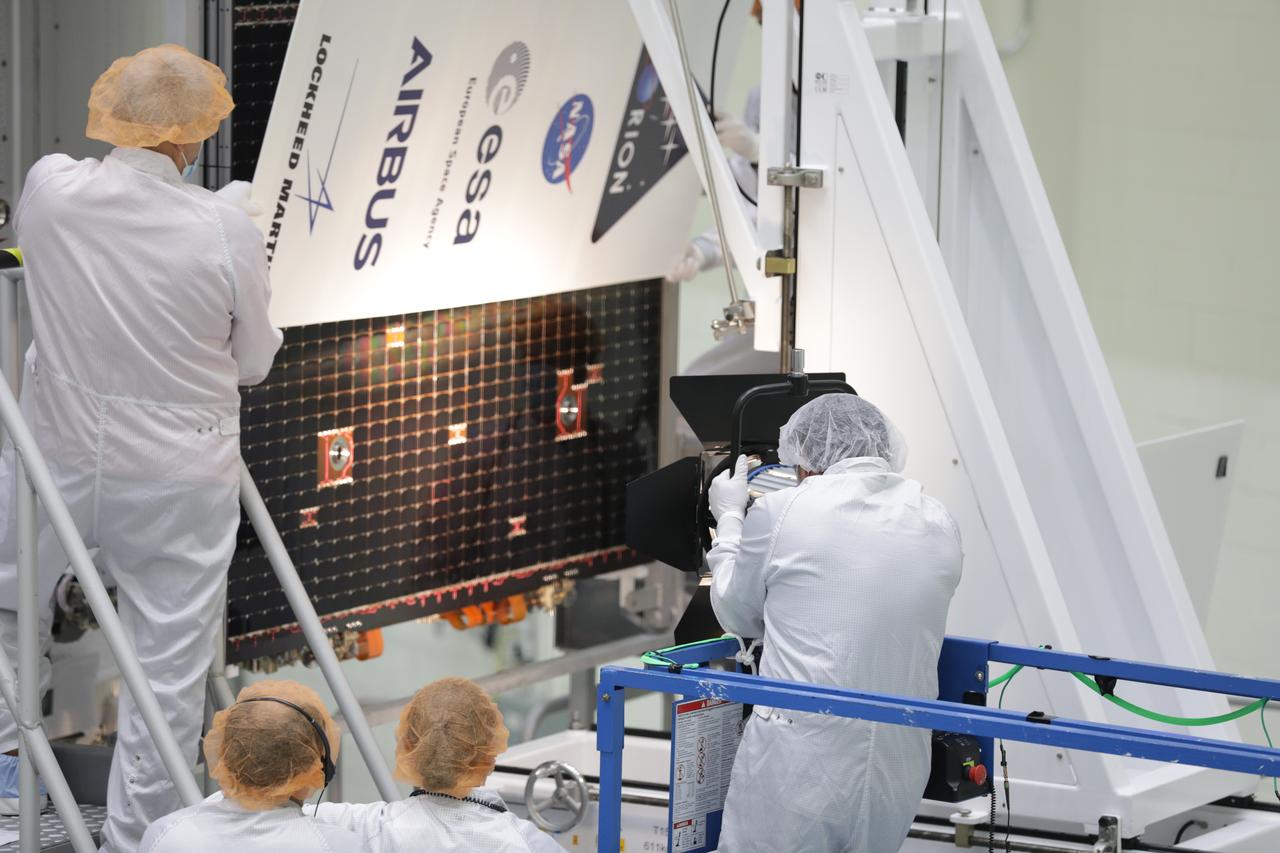
Technicians with the European Space Agency and Airbus/Airbus Netherlands are shown performing an illumination test on one of the solar array wing panels during installation on the Orion spacecraft for Artemis I inside the Neil Armstrong Operations and Checkout Building high bay at NASA’s Kennedy Space Center in Florida on Sept. 30, 2020. The solar arrays were extended, inspected, and then retracted, before installation on the spacecraft. Each solar array panel will generate 11 kilowatts of power and span about 63 feet. The array is a component of Orion’s service module, which is provided by the European Space Agency and built by Airbus Defence and Space to supply Orion’s power, propulsion, air and water. The first in a series of increasingly complex missions, Artemis I will test the Orion spacecraft and Space Launch System as an integrated system ahead of crewed flights to the Moon. Under the Artemis program, NASA will land the first woman and the next man on the Moon in 2024.
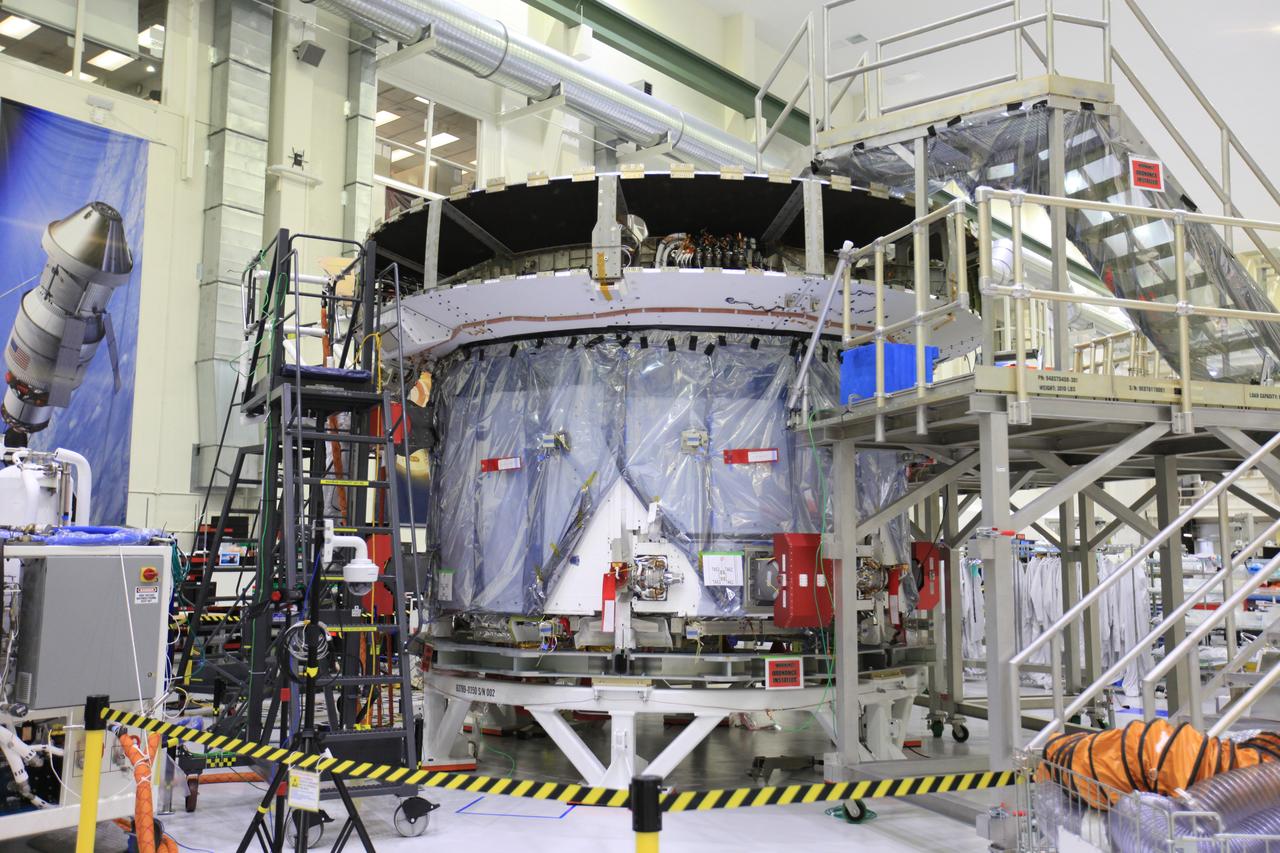
The crew and service module for Artemis I continue preparations for mating inside the Operations and Checkout (O&C) Building High Bay at Kennedy Space Center on March 21, 2019. Alongside, the pressure vessel for Artemis II is undergoing install of its secondary structure.
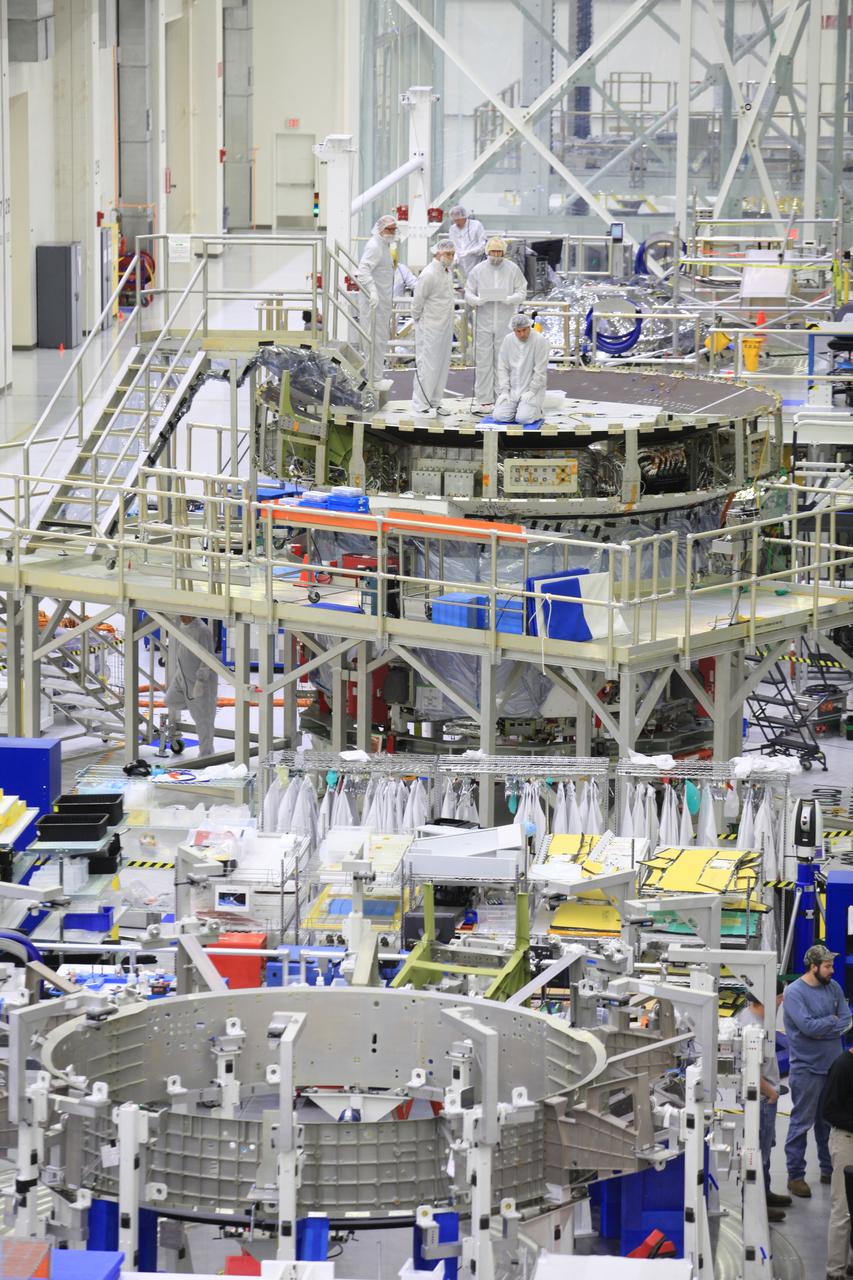
The crew and service module for Artemis I continue preparations for mating inside the Operations and Checkout (O&C) Building High Bay at Kennedy Space Center on March 21, 2019. Alongside, the pressure vessel for Artemis II is undergoing install of its secondary structure.
The crew and service module for Artemis I continue preparations for mating inside the Operations and Checkout (O&C) Building High Bay at Kennedy Space Center on March 21, 2019. Alongside, the pressure vessel for Artemis II is undergoing install of its secondary structure.
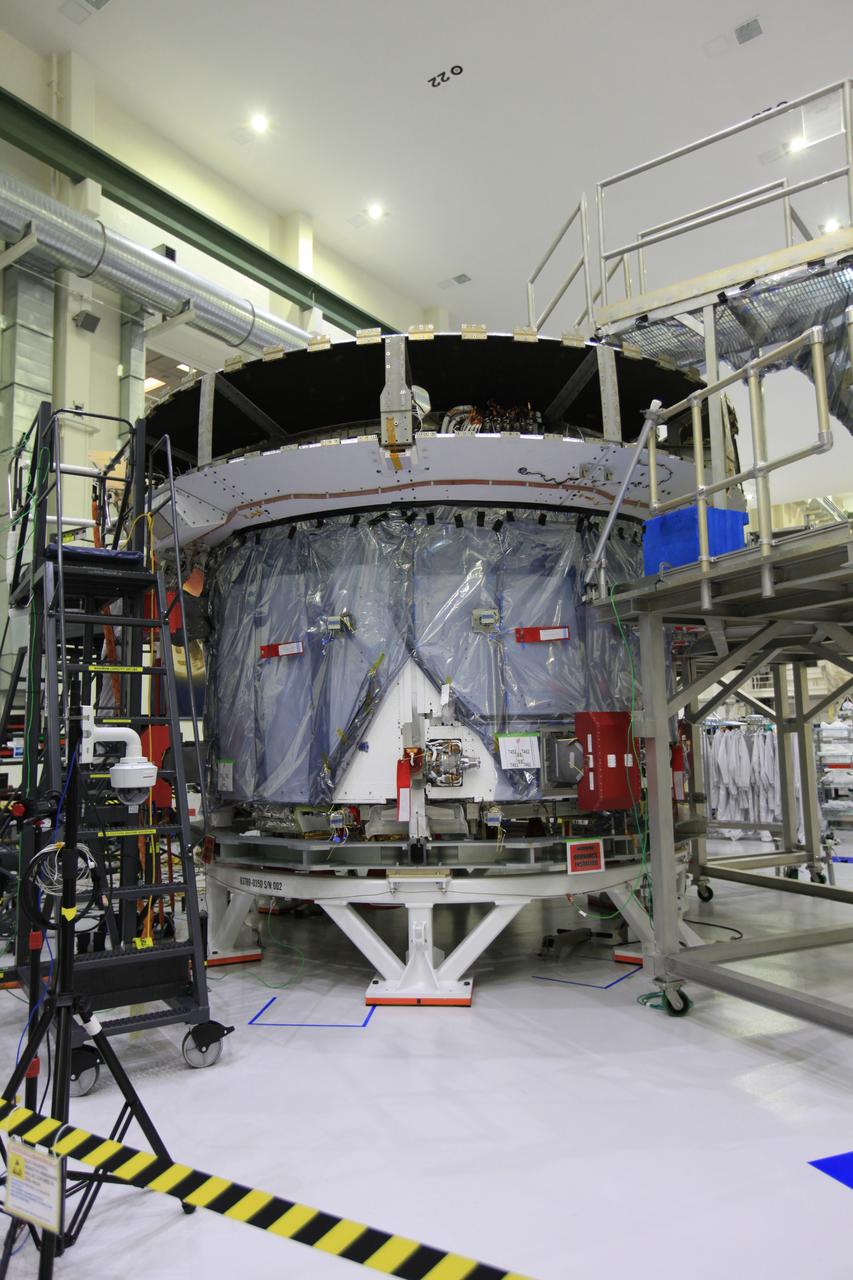
The crew and service module for Artemis I continue preparations for mating inside the Operations and Checkout (O&C) Building High Bay at Kennedy Space Center on March 21, 2019. Alongside, the pressure vessel for Artemis II is undergoing install of its secondary structure.
The crew and service module for Artemis I continue preparations for mating inside the Operations and Checkout (O&C) Building High Bay at Kennedy Space Center on March 21, 2019. Alongside, the pressure vessel for Artemis II is undergoing install of its secondary structure.
The crew and service module for Artemis I continue preparations for mating inside the Operations and Checkout (O&C) Building High Bay at Kennedy Space Center on March 21, 2019. Alongside, the pressure vessel for Artemis II is undergoing install of its secondary structure.
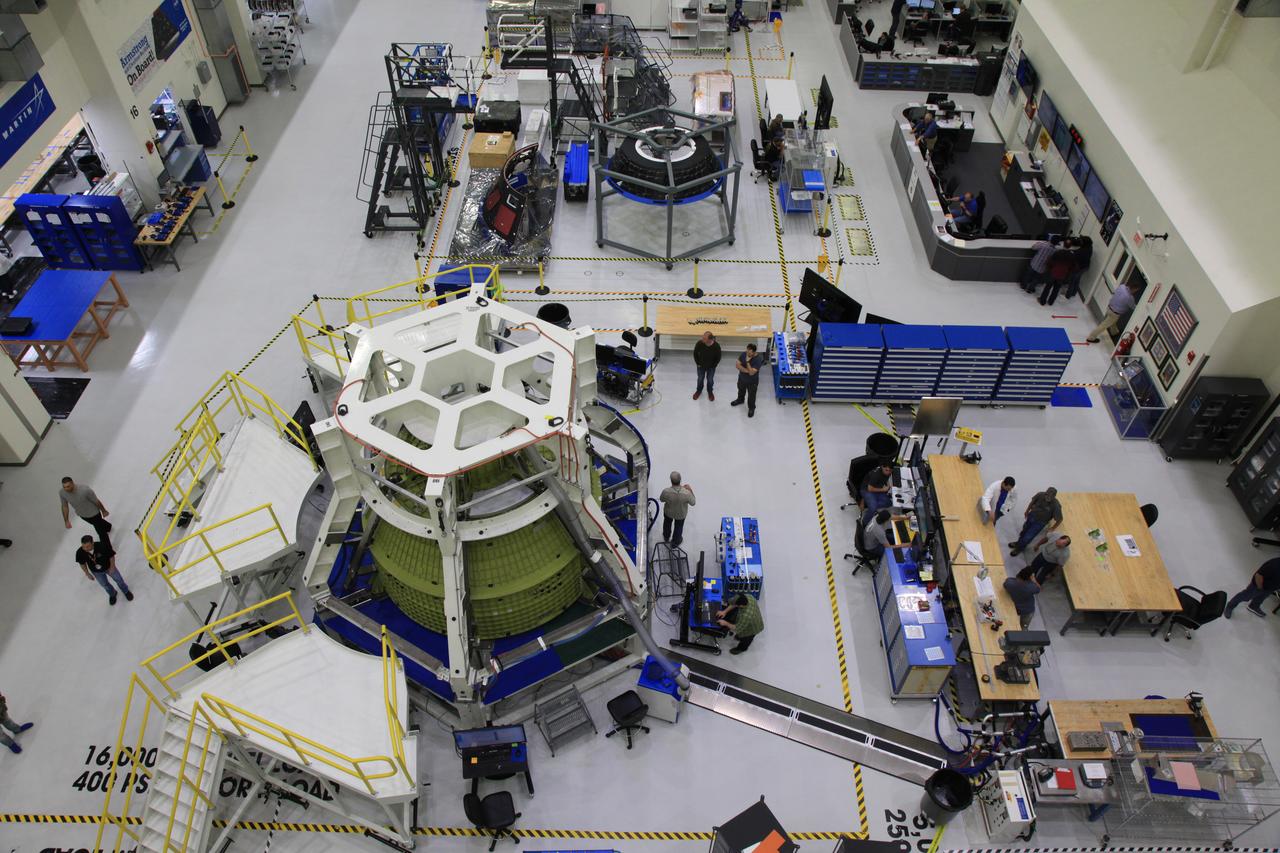
The crew and service module for Artemis I continue preparations for mating inside the Operations and Checkout (O&C) Building High Bay at Kennedy Space Center on March 21, 2019. Alongside, the pressure vessel for Artemis II is undergoing install of its secondary structure.
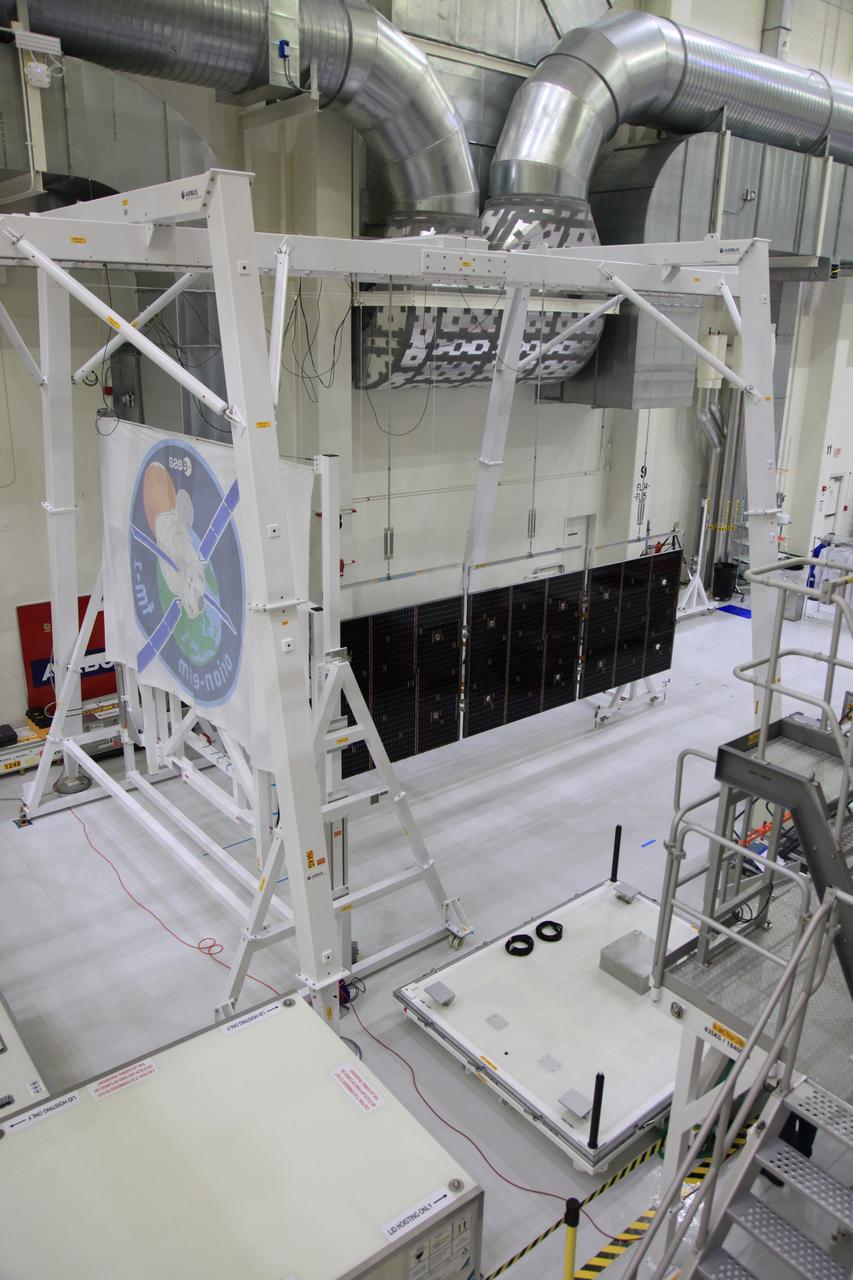
The crew and service module for Artemis I continue preparations for mating inside the Operations and Checkout (O&C) Building High Bay at Kennedy Space Center on March 21, 2019. Alongside, the pressure vessel for Artemis II is undergoing install of its secondary structure.
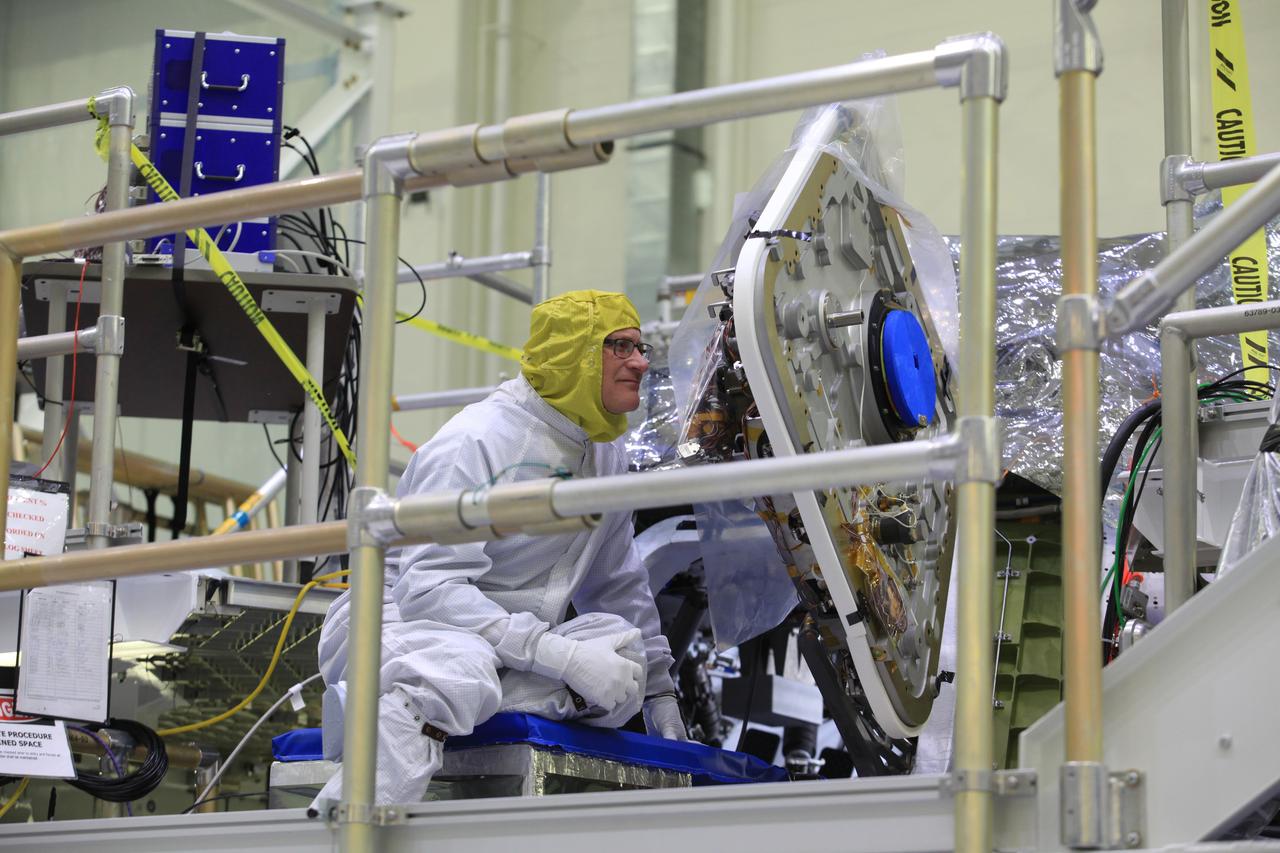
The crew and service module for Artemis I continue preparations for mating inside the Operations and Checkout (O&C) Building High Bay at Kennedy Space Center on March 21, 2019. Alongside, the pressure vessel for Artemis II is undergoing install of its secondary structure.
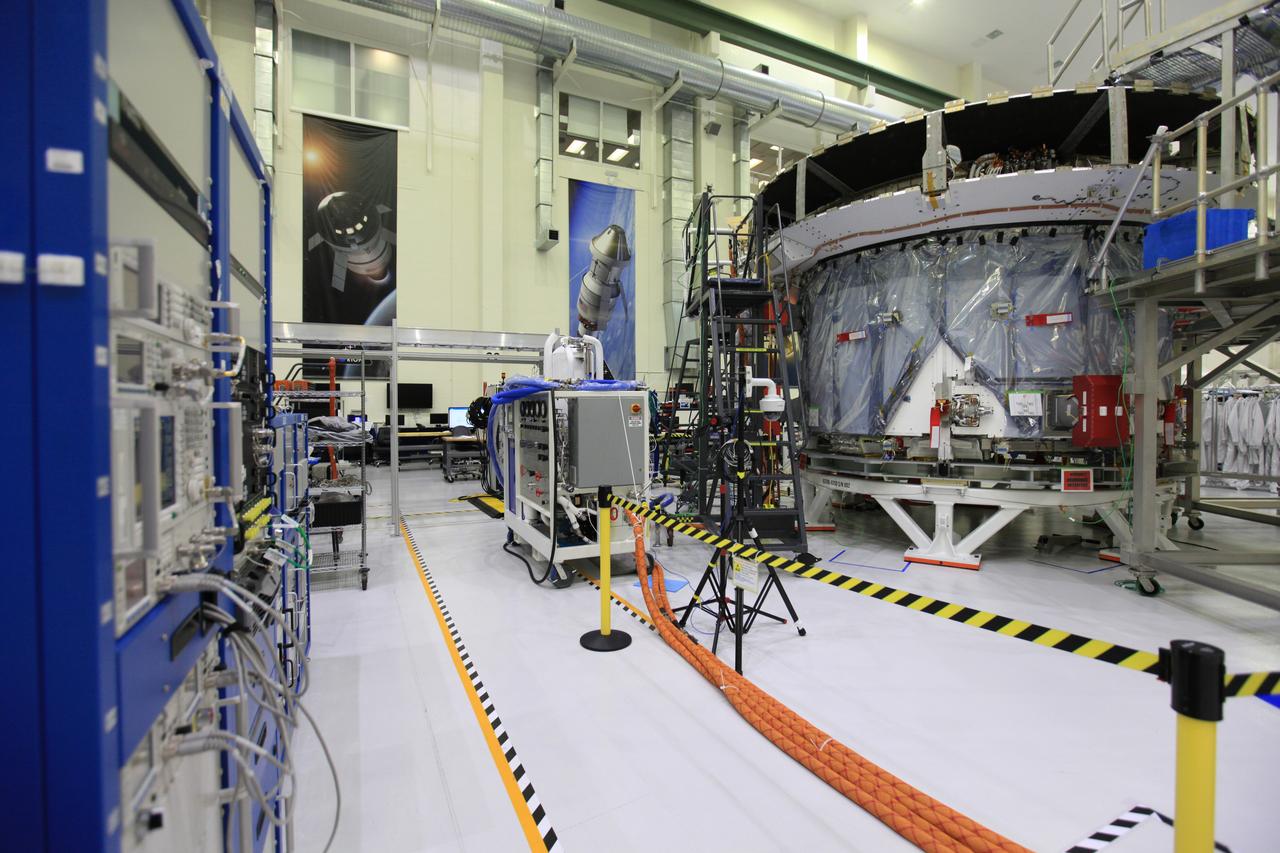
The crew and service module for Artemis I continue preparations for mating inside the Operations and Checkout (O&C) Building High Bay at Kennedy Space Center on March 21, 2019. Alongside, the pressure vessel for Artemis II is undergoing install of its secondary structure.
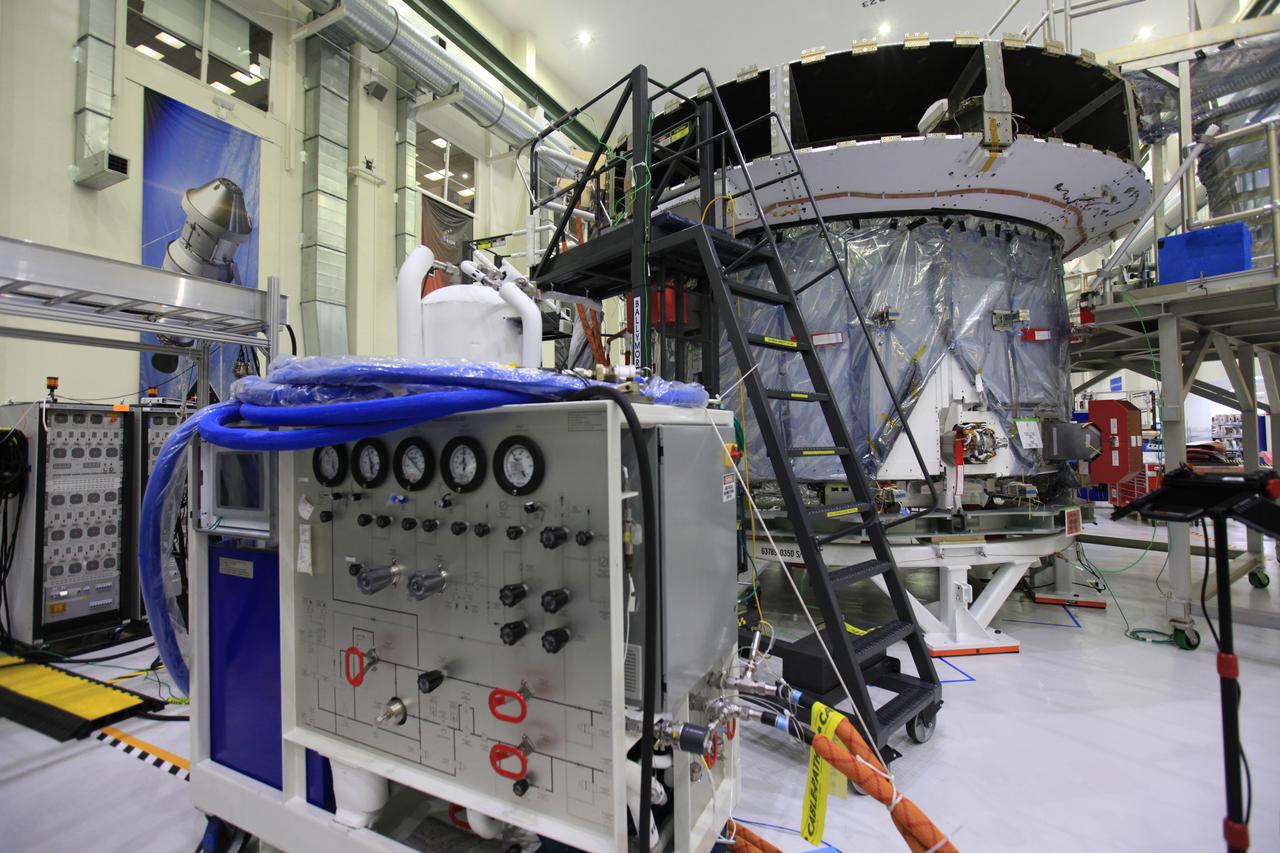
The crew and service module for Artemis I continue preparations for mating inside the Operations and Checkout (O&C) Building High Bay at Kennedy Space Center on March 21, 2019. Alongside, the pressure vessel for Artemis II is undergoing install of its secondary structure.
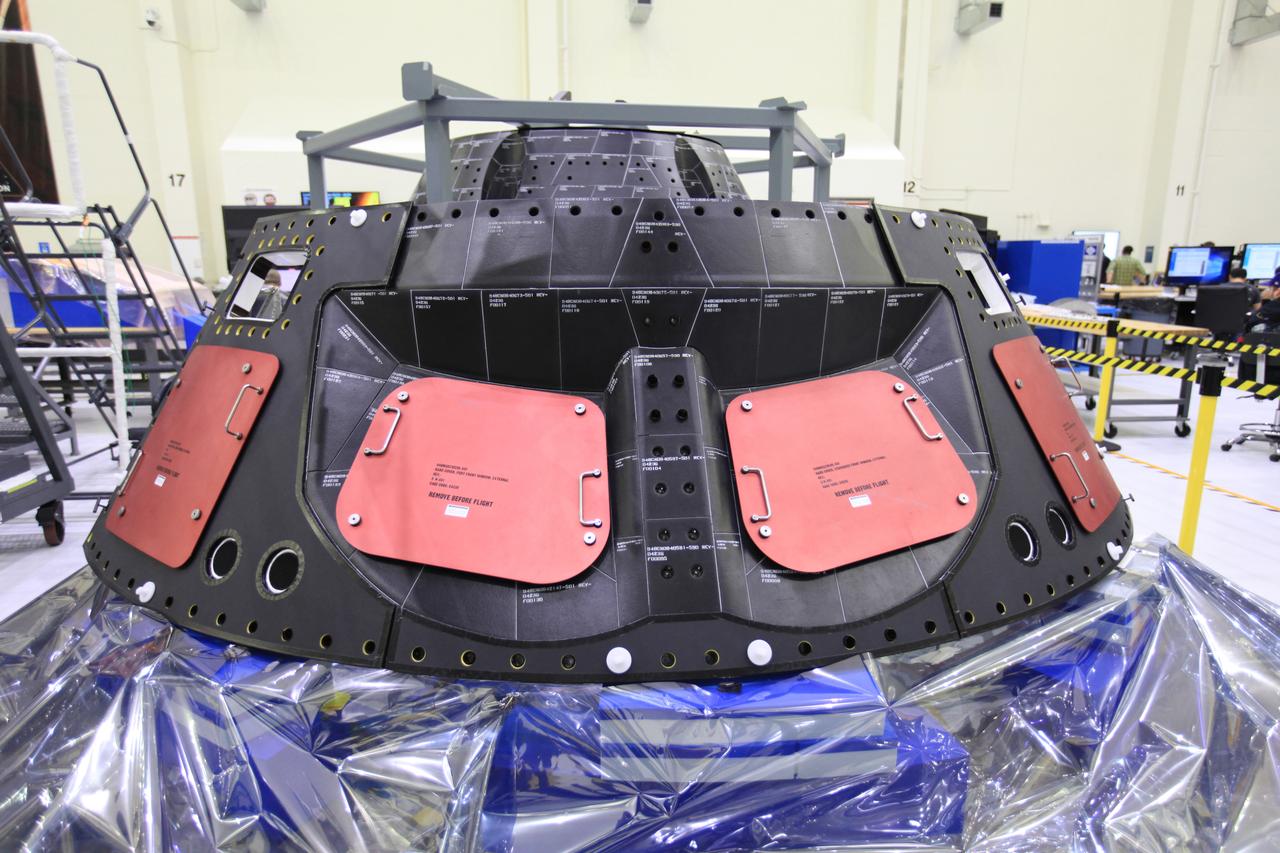
The crew and service module for Artemis I continue preparations for mating inside the Operations and Checkout (O&C) Building High Bay at Kennedy Space Center on March 21, 2019. Alongside, the pressure vessel for Artemis II is undergoing install of its secondary structure.
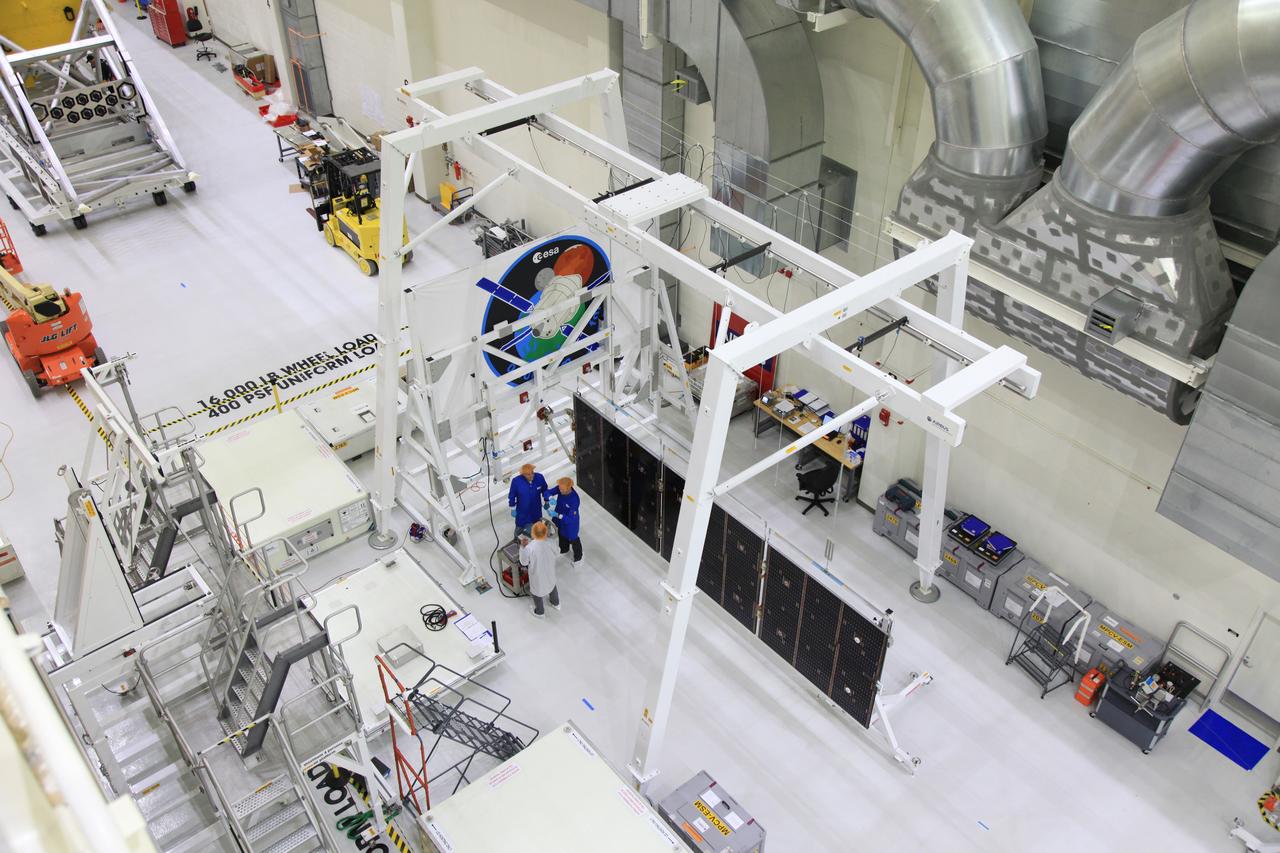
The crew and service module for Artemis I continue preparations for mating inside the Operations and Checkout (O&C) Building High Bay at Kennedy Space Center on March 21, 2019. Alongside, the pressure vessel for Artemis II is undergoing install of its secondary structure.
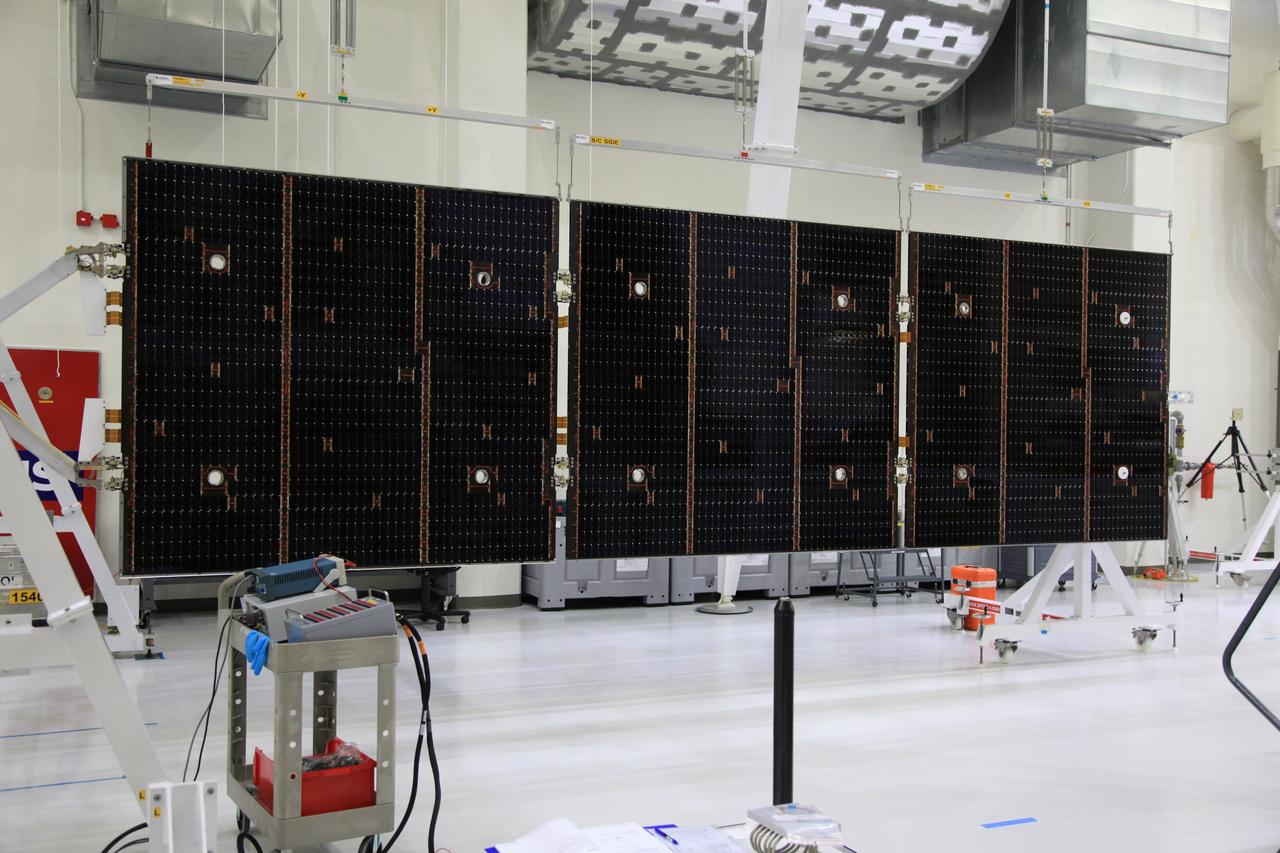
The crew and service module for Artemis I continue preparations for mating inside the Operations and Checkout (O&C) Building High Bay at Kennedy Space Center on March 21, 2019. Alongside, the pressure vessel for Artemis II is undergoing install of its secondary structure.

On June 21st, 2022, the San Francisco Bay Area experienced high temperatures as a hot mass of air remained over the region. San Francisco reached 92 degrees Fahrenheit, Oakland reached 98 degrees Fahrenheit, and San Jose reached 102 degrees Fahrenheit. The Land Surface Temperatures at 12:22 PM PDT ranged from 60 degrees Fahrenheit to 150 degrees Fahrenheit for this region with water temperatures ranging from 50 degrees Fahrenheit to 90 degrees Fahrenheit. ECOSTRESS is a thermal instrument on the International Space Station that measures the temperature of the ground, which is hotter than the air temperature during the day. It was launched to the space station in 2018. Its primary mission is to identify critical thresholds of water use and water stress in plants and to detect the timing, location, and predictive factors leading to plant water uptake decline and/or cessation. The nature of the high-resolution data provided by ECOSTRESS allows it to record heat related phenomena such as heat waves, droughts and wildfires. https://photojournal.jpl.nasa.gov/catalog/PIA25441
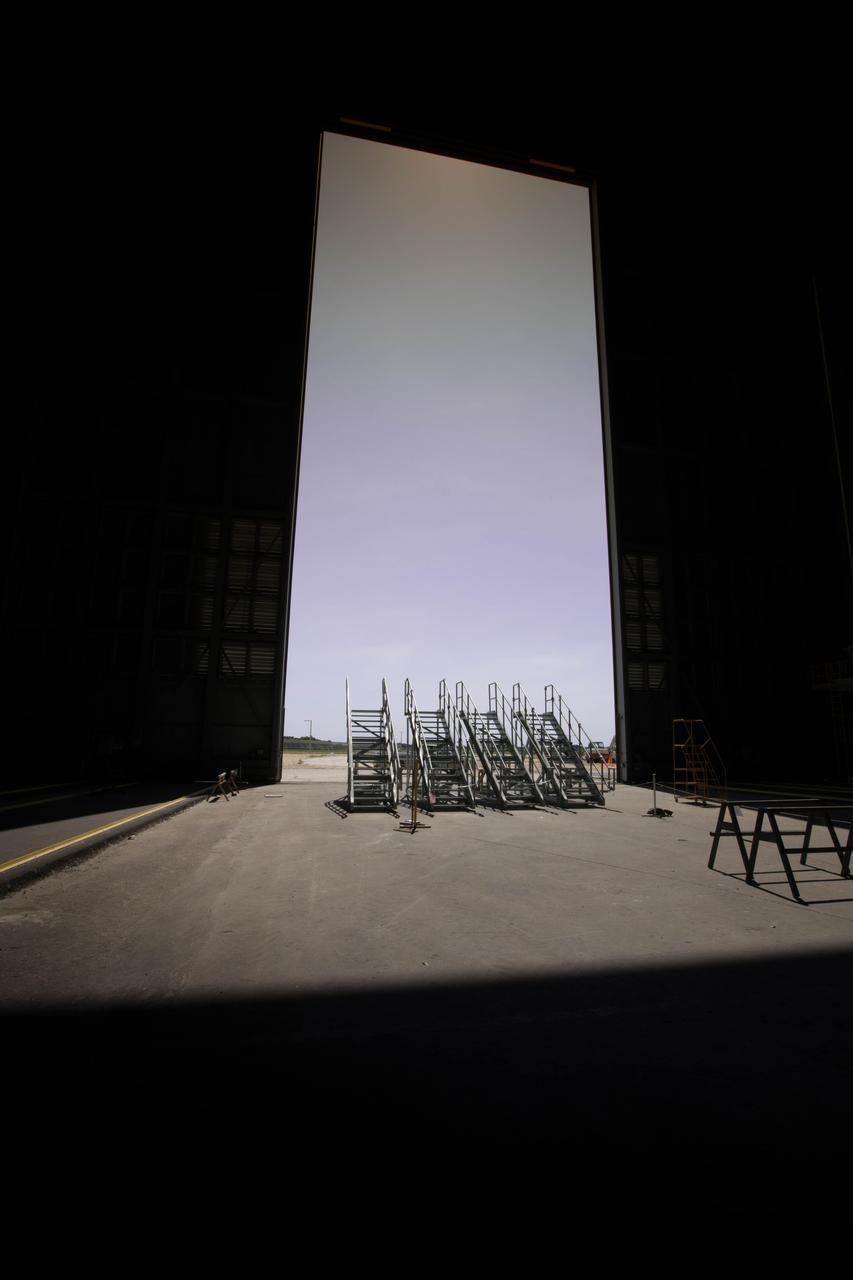
A view looking at High Bay 3 in the Vehicle Assembly Building (VAB) at NASA's Kennedy Space Center in Florida. Ten levels of new work platforms have been installed in High Bay 3. They will surround and provide access for service and processing of NASA's Space Launch System rocket and Orion spacecraft. Exploration Ground Systems oversaw the upgrades and installation of the new work platforms to support the launch of the SLS and Orion on Exploration Mission-1 and deep space missions.
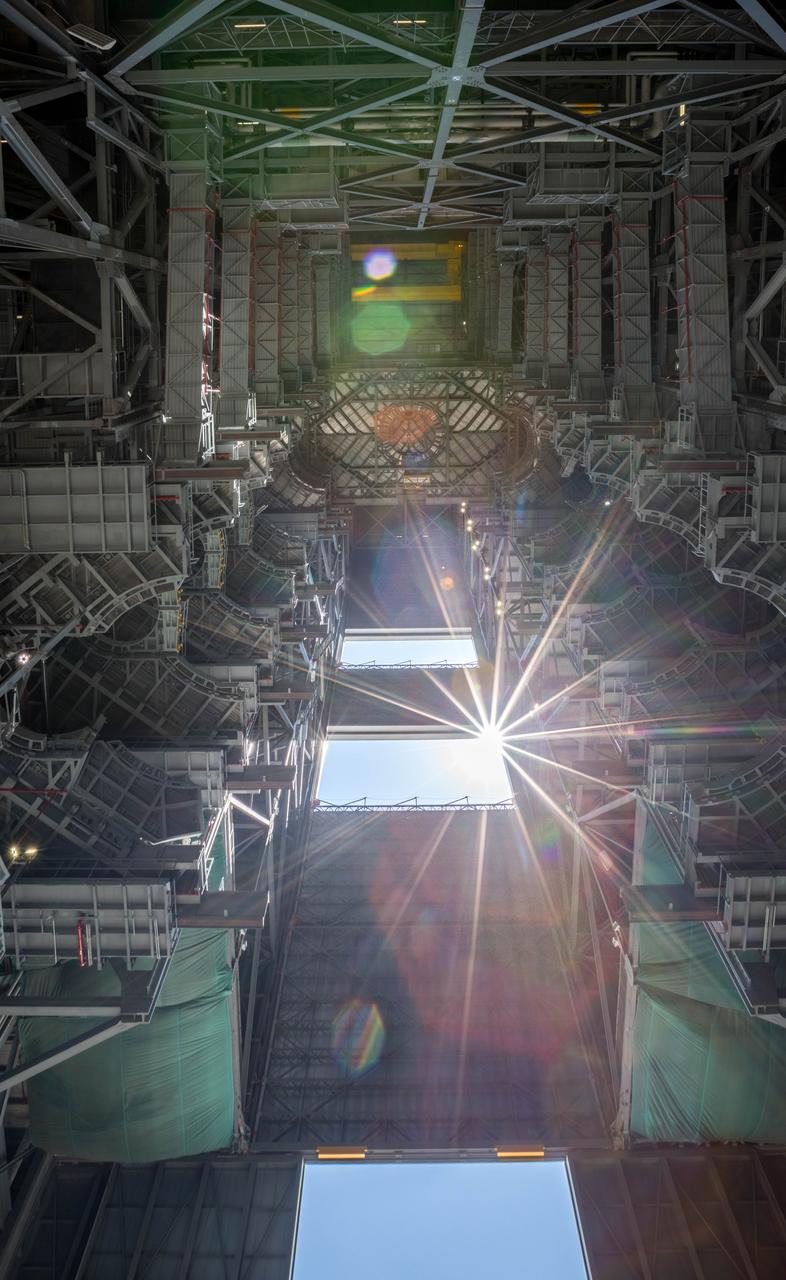
A brilliant sun shines through the doors of High Bay 3 in the Vehicle Assembly Building (VAB) at NASA's Kennedy Space Center in Florida. In view are ten levels of new work platforms that were installed in the high bay. They will surround and provide access for service and processing of NASA's Space Launch System rocket and Orion spacecraft. Exploration Ground Systems oversaw the upgrades and installation of the new work platforms to support the launch of the SLS and Orion on Exploration Mission-1 (EM-1) and deep space missions.
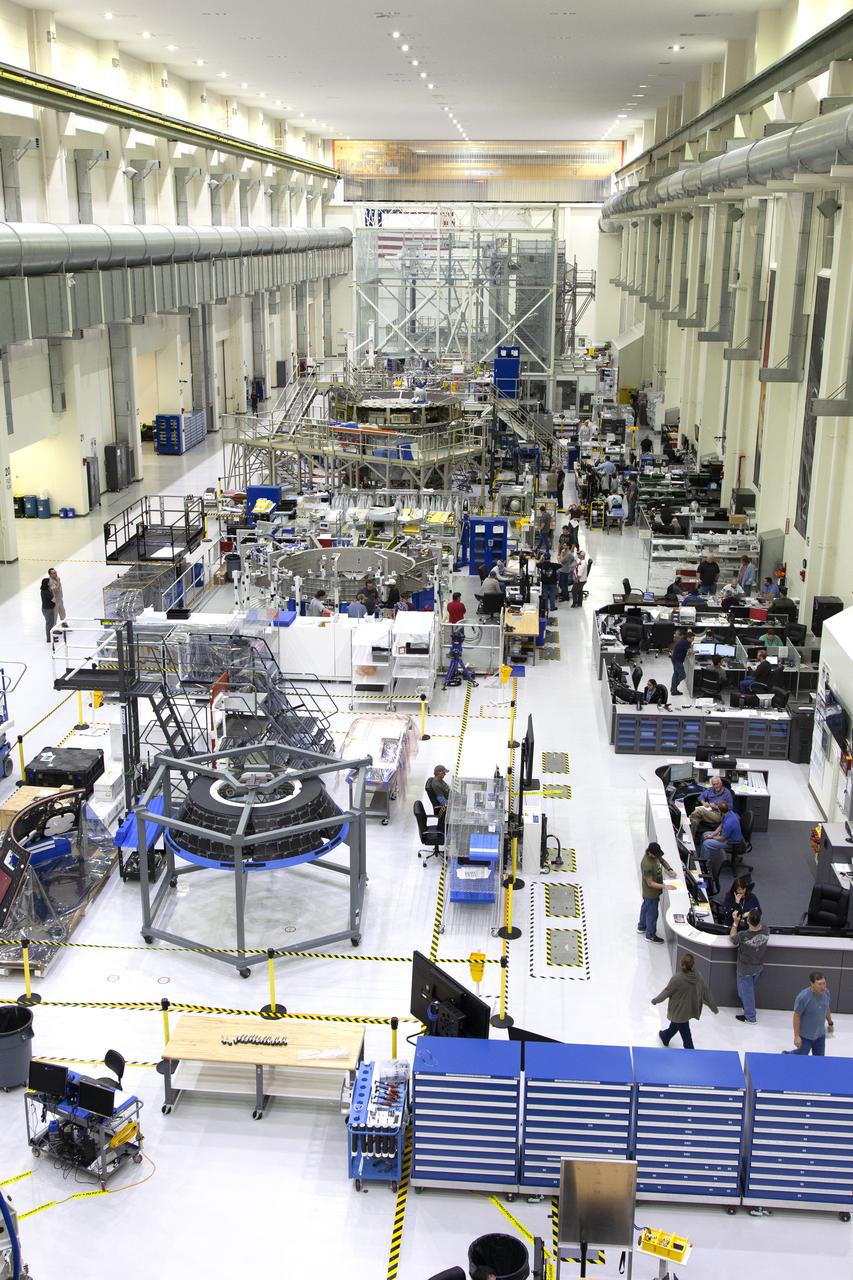
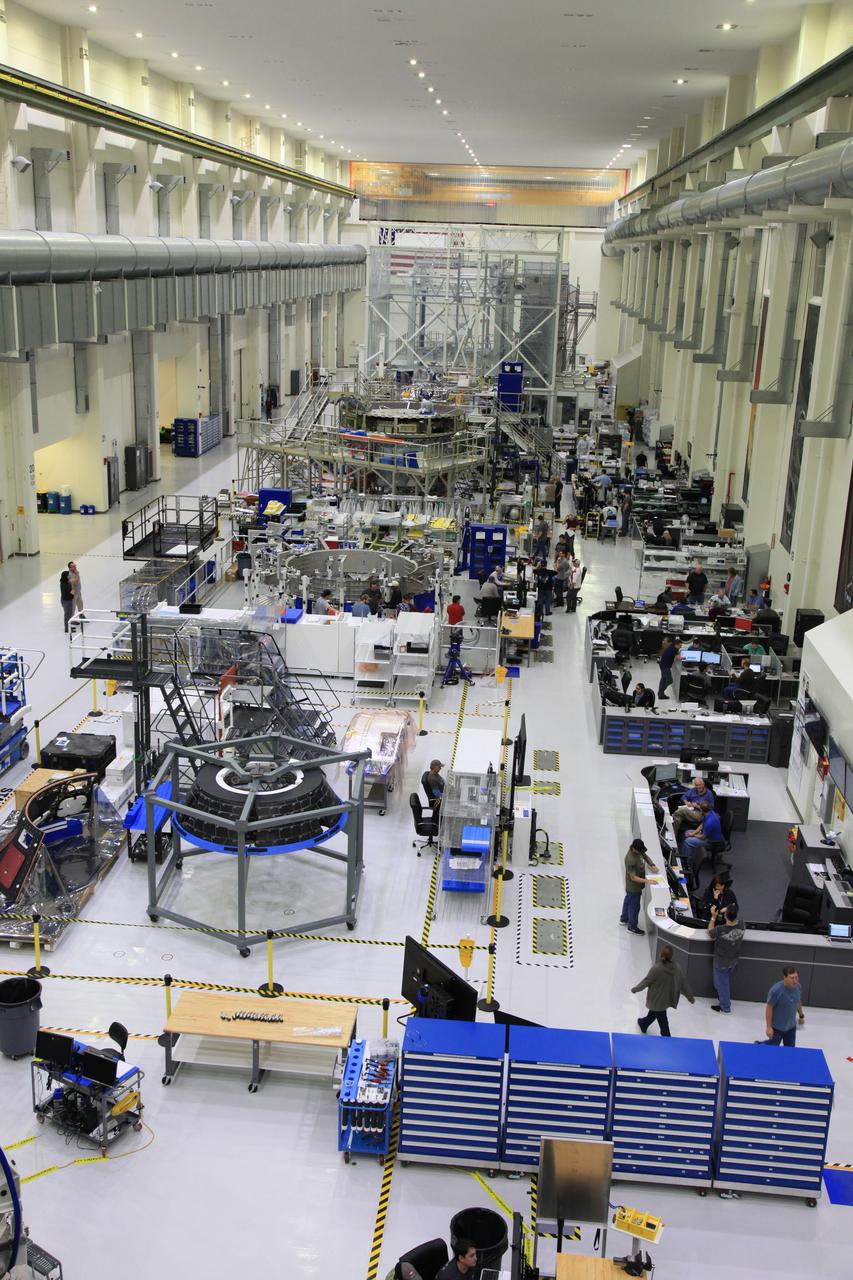
The Neil Armstrong Operations and Checkout Building high bay is filled with various pieces of flight hardware for Exploration Mission-1 (EM-1) and Exploration Mission-2 (EM-2) at NASA’s Kennedy Space Center in Florida. In this view taken on March 21, 2019, the forward bay cover for Orion (EM-1) is at far left in the foreground. Just to its right is the bay cover (EM-1). Behind these two pieces is the crew module adapter for EM-2. Further back, secured on a test stand is the European Service Module that will serve as the powerhouse for Orion. For EM-1, Orion will launch atop the Space Launch System rocket from Launch Pad 39B. The spacecraft will travel thousands of miles past the Moon on an approximately three-week test flight. Orion will return to Earth and splashdown in the Pacific Ocean off the coast of California, where it will be retrieved and returned to Kennedy.
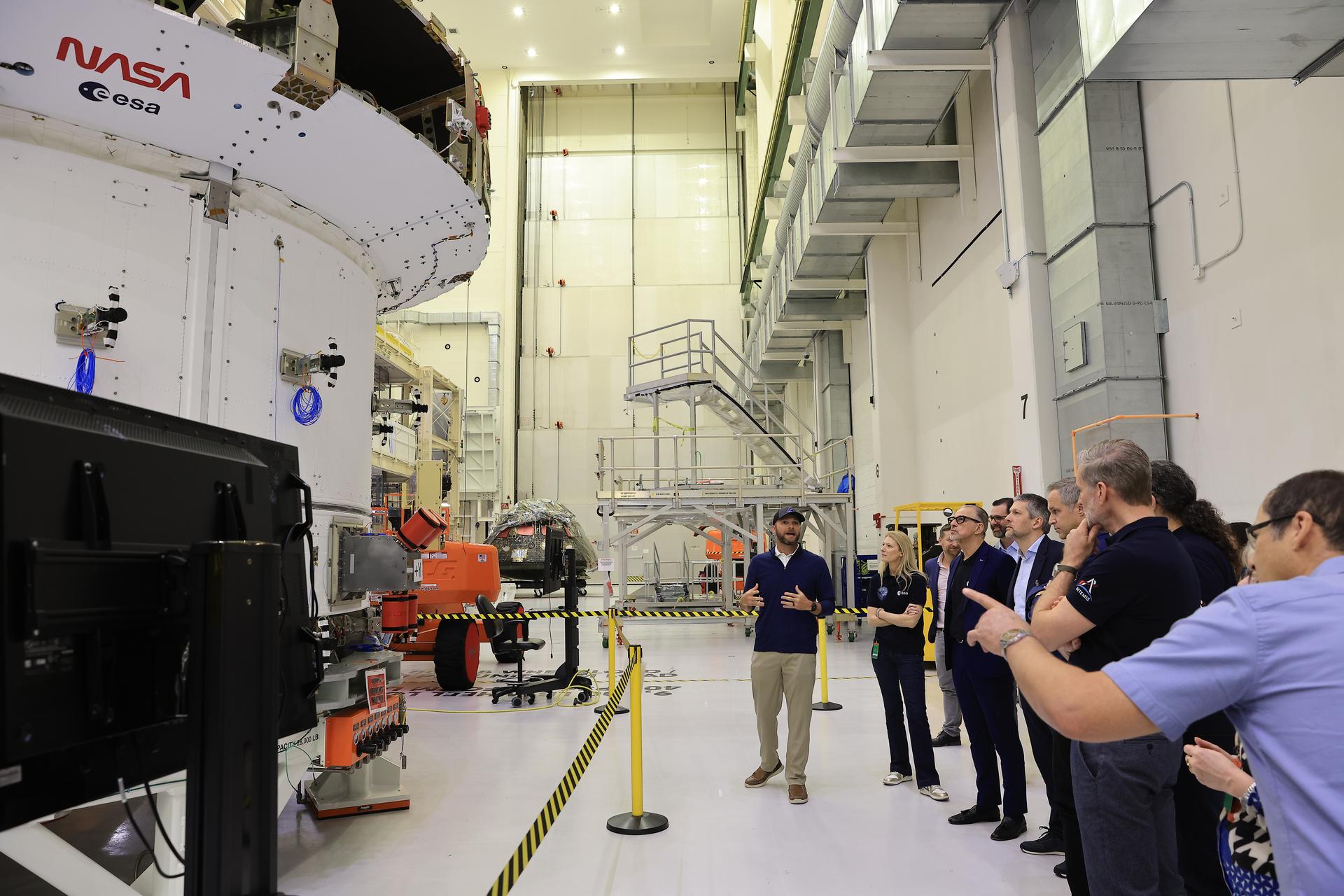
Members of the ESA (European Space Agency) leadership team and NASA Orion program team stand by European Service Module with the Orion spacecraft in the background for NASA’s Artemis III mission on Tuesday, Feb. 10, 2026, inside the high bay of the Neil A. Armstrong Operations and Checkout Building at NASA’s Kennedy Space Center in Florida. The service module provides the Orion spacecraft’s propulsion, thermal control, electrical power, and life support systems during the Artemis III mission to send humans to explore the lunar South Pole region.
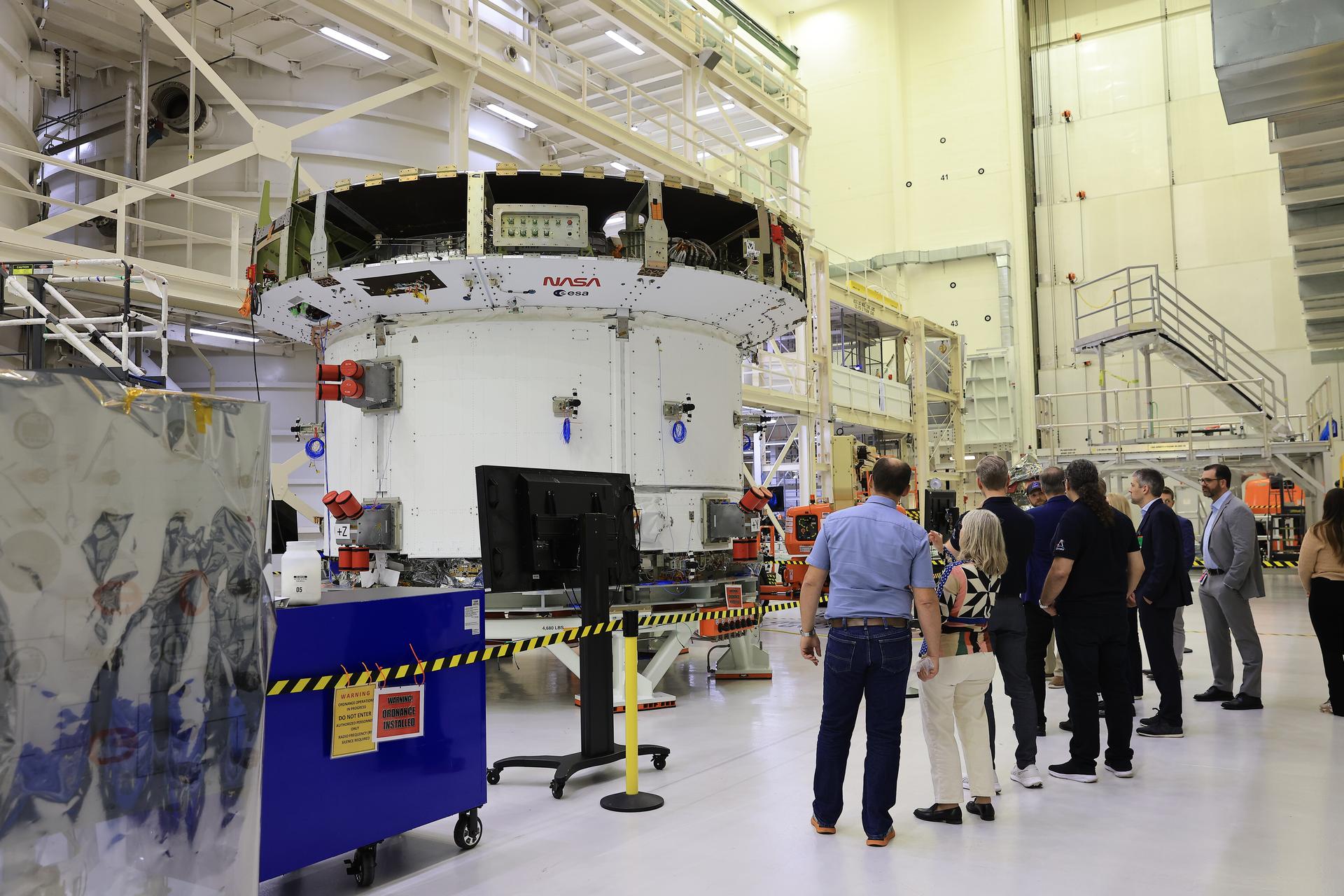
Members of the ESA (European Space Agency) leadership team and NASA Orion program team stand by European Service Module for NASA’s Artemis III mission on Tuesday, Feb. 10, 2026, inside the high bay of the Neil A. Armstrong Operations and Checkout Building at NASA’s Kennedy Space Center in Florida. The service module provides the Orion spacecraft’s propulsion, thermal control, electrical power, and life support systems during the Artemis III mission to send humans to explore the lunar South Pole region.
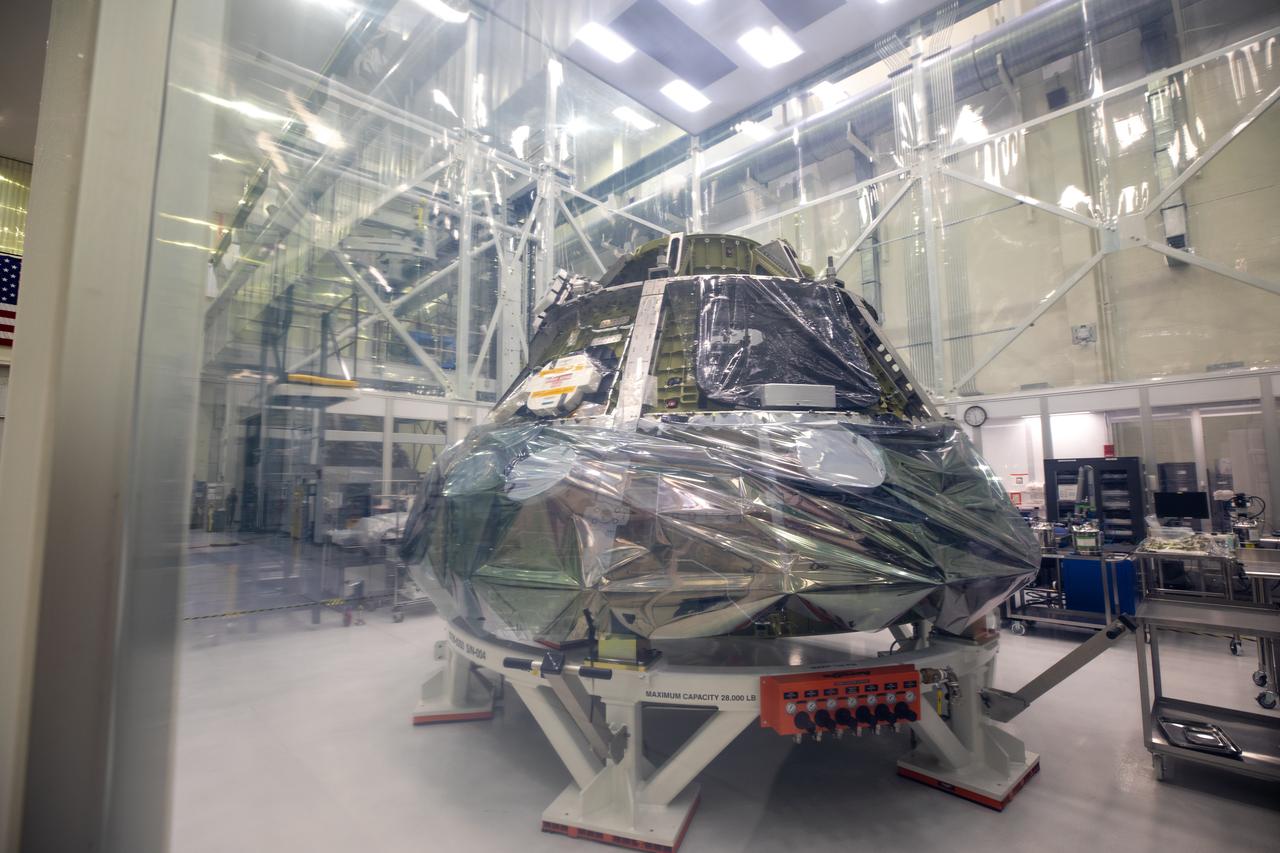
The Orion spacecraft for the Artemis III mission is in view inside a clean room in the high bay of the Neil Armstrong Operations and Checkout Building at NASA’s Kennedy Space Center in Florida on June 22, 2023. The Orion spacecraft is being prepared for its launch atop the Space Launch System rocket on Artemis III, which will send astronauts, including the first woman and first person of color, on a mission to the surface of the Moon.