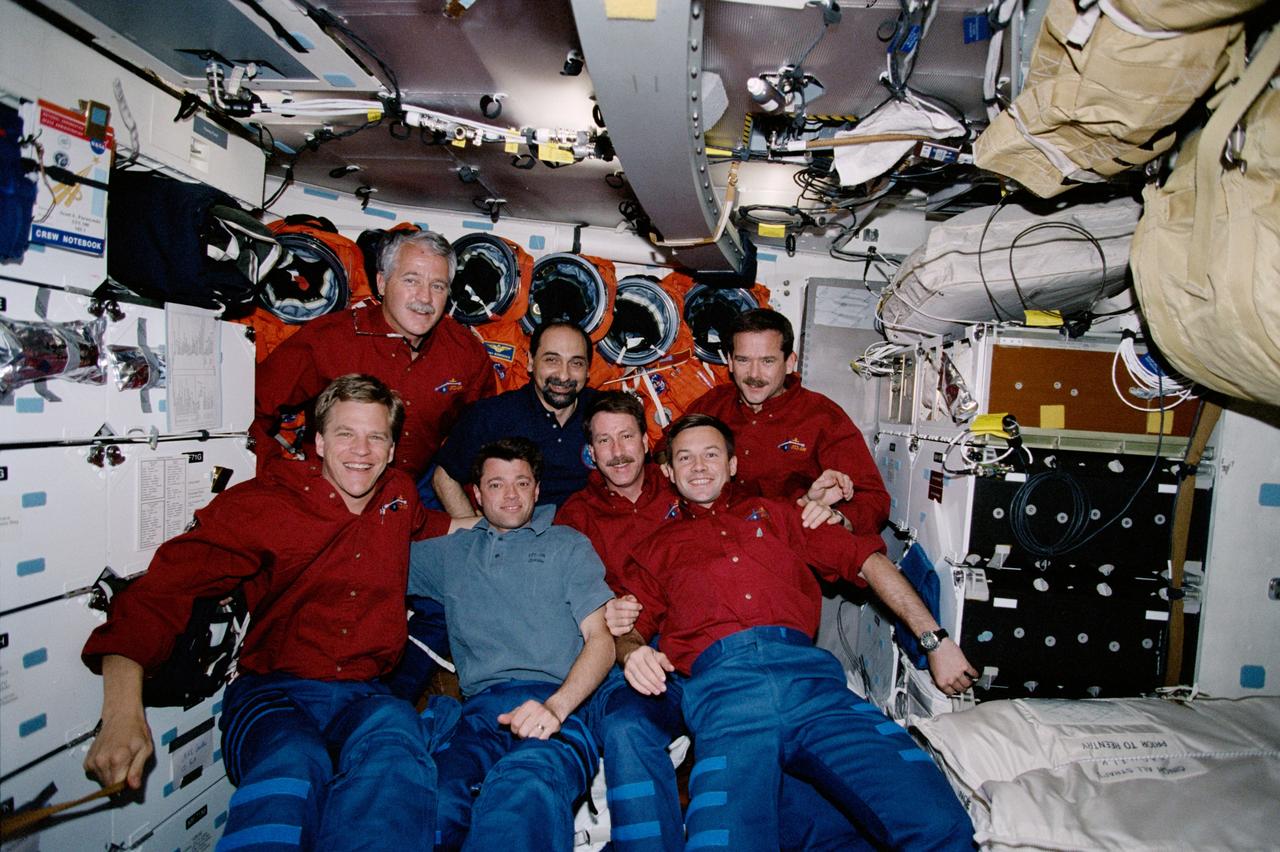
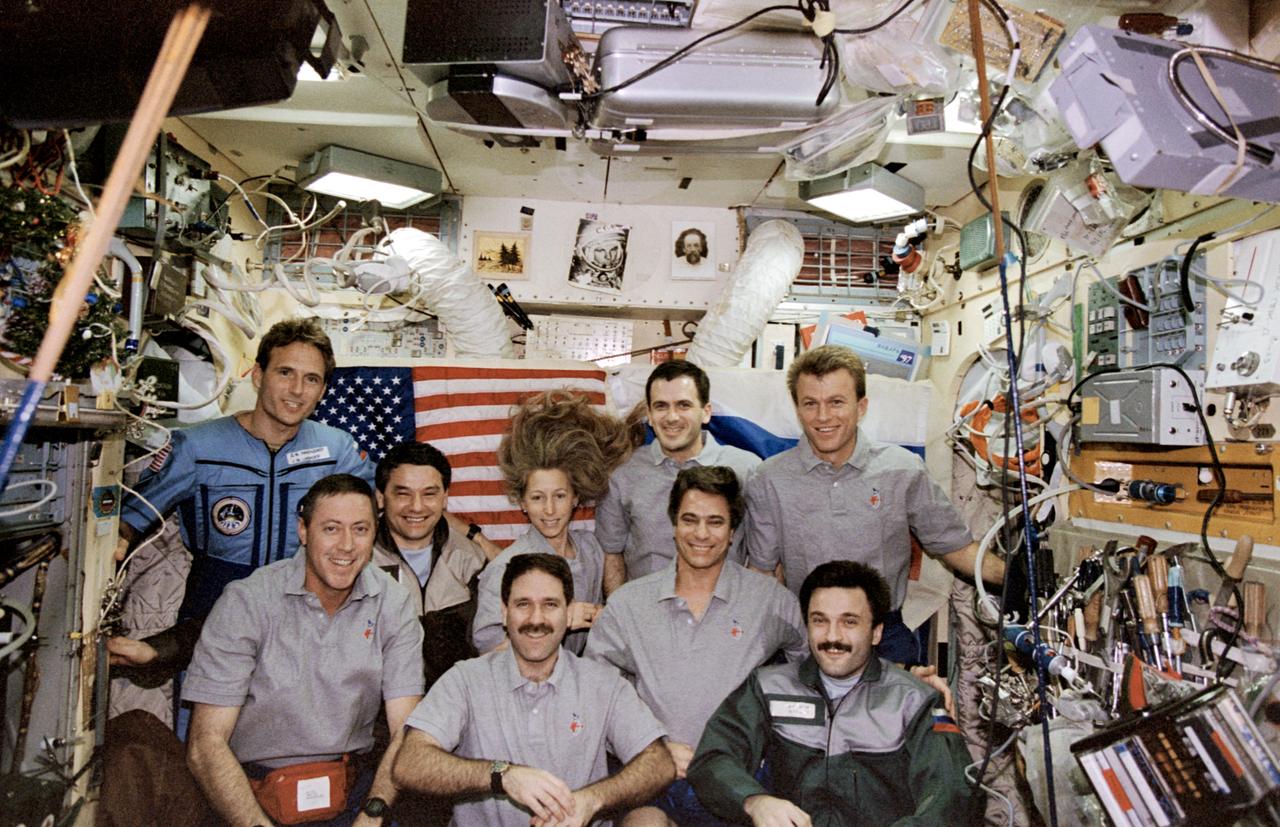
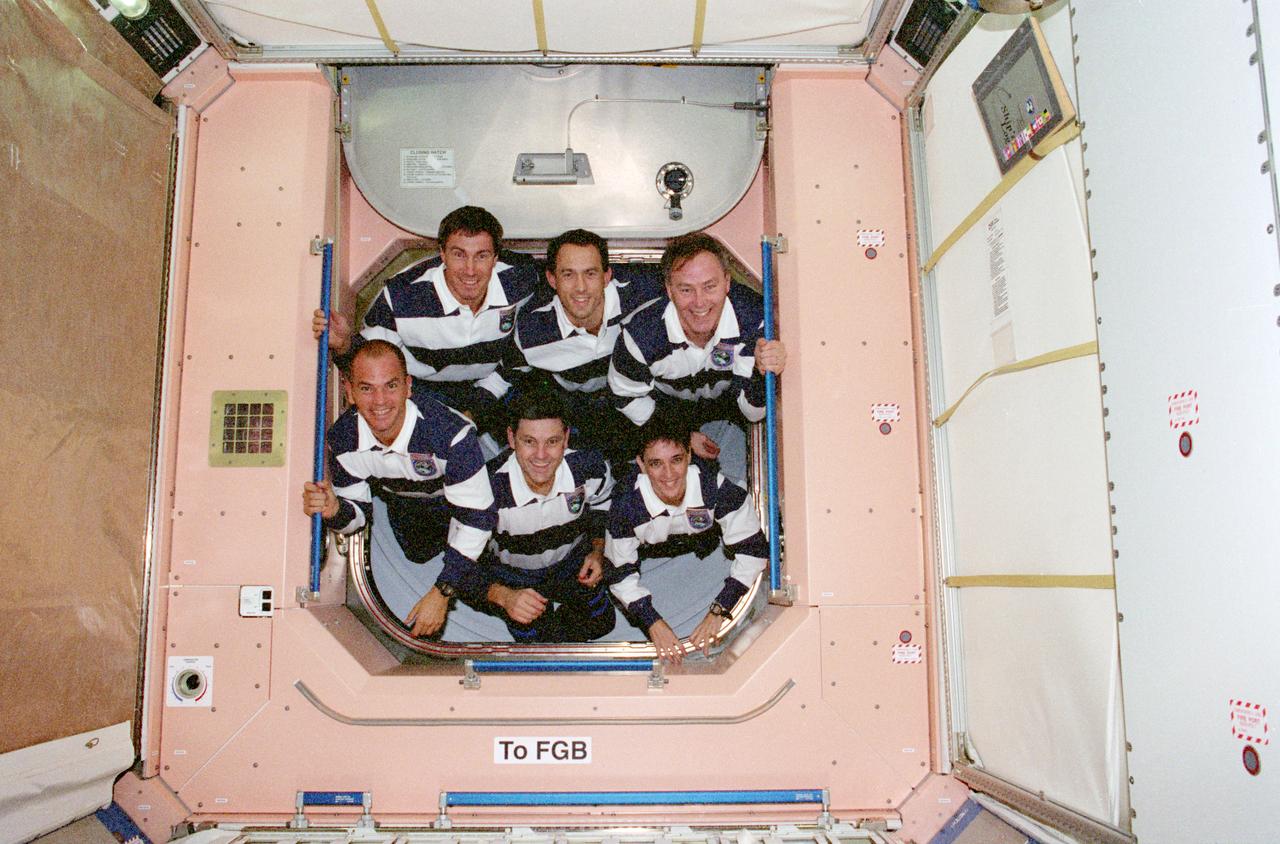
STS088-370-006  (4-15 Dec. 1998) --- The STS-88 crew members pose for the traditional inflight crew portrait in the U.S.-built Unity connecting module.  From left to right, bottom, are astronauts Frederick W. (Rick) Sturckow, pilot; Robert D. Cabana, mission commander; and Nancy  J. Currie, mission specialist.  Top row, cosmonaut Sergei K. Krikalev,  representing the Russian Space Agency, along with astronauts James H. Newman and Jerry L. Ross, all mission specialists.
STS-88 inflight crew portrait
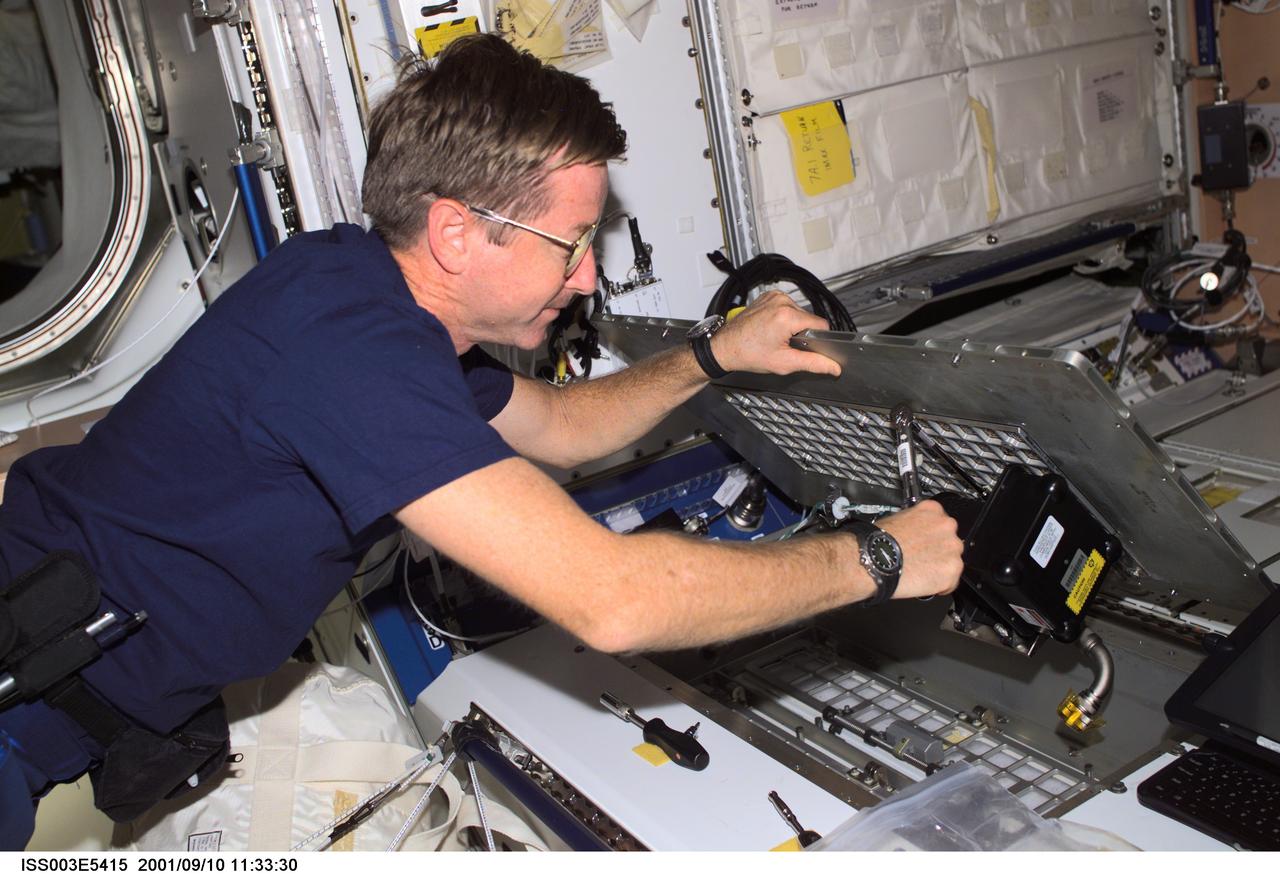
ISS003-E-5415 (10 September 2001) --- Expedition Three mission commander Frank L. Culbertson, Jr., conducts inflight maintenance with a ratchet under a panel in the Unity Node 1 on the International Space Station (ISS).  This image was taken with a digital still camera.
Culbertson performs inflight maintenance in Node 1 during Expedition Three
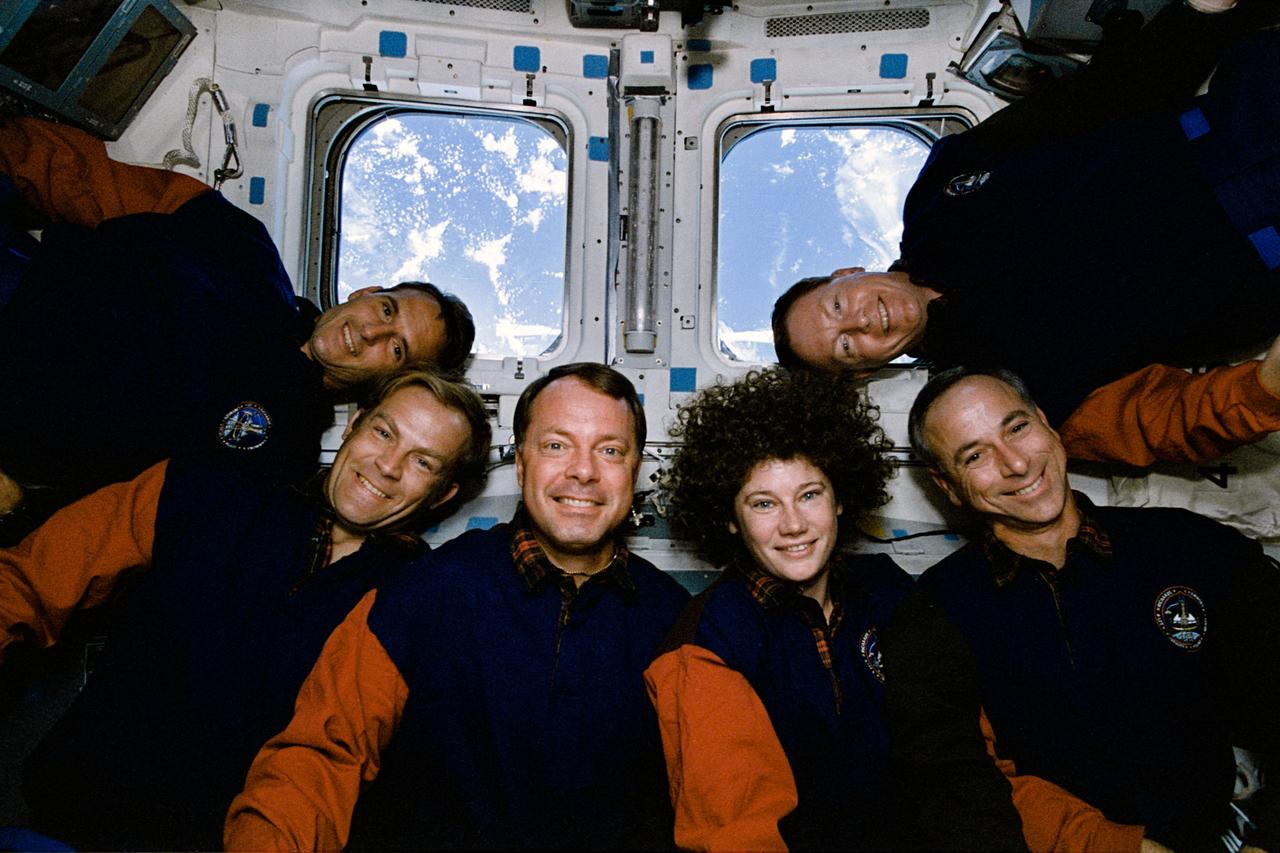
STS064-24-029 (9-20 Sept. 1994) --- In the microgravity of space, 130 nautical miles above Earth, the six STS-64 crew members found a unique setting for the traditional inflight crew portrait. Astronaut Richard N. Richards (upper right), commander, found stability with his back against the overhead in upper right corner. Others, clockwise from the commander, are astronauts Carl J. Meade and Susan J. Helms, mission specialists; L. Blaine Hammond, pilot; and Mark C. Lee and Jerry M. Linenger, both mission specialists. Photo credit: NASA or National Aeronautics and Space Administration
STS-64 inflight crew portrait
STS064-30-006 (9-20 Sept. 1994) --- In the microgravity of space, 130 nautical miles above Earth, the six STS-64 crew members found a unique setting for the traditional inflight crew portrait. Astronaut Richard N. Richards (upper right), commander, found stability with his back against the overhead in upper right corner. Others, clockwise from the commander, are astronauts Carl J. Meade and Susan J. Helms, mission specialists; L. Blaine Hammond, pilot; and Mark C. Lee and Jerry M. Linenger, both mission specialists. Photo credit: NASA or National Aeronautics and Space Administration
STS-64 inflight crew portrait
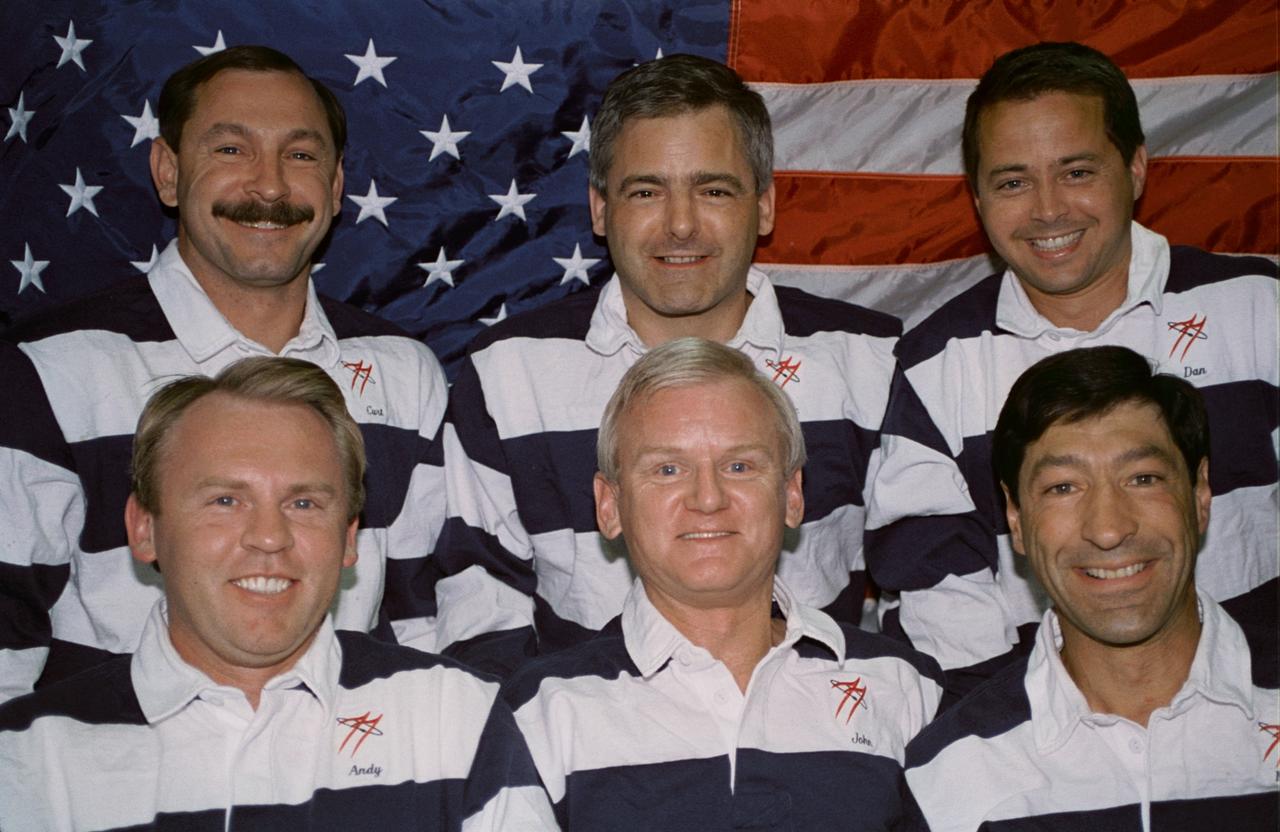
STS077-314-011 (19-29 May 1996) --- The six astronauts aboard the Space Shuttle Endeavour for NASA?s STS-77 mission pose for the traditional inflight portrait.  Left to right, front, are astronauts Andrew S. W. Thomas, John H. Casper and Mario Runco, Jr.  On the back row are astronauts Curtis L. Brown, Jr., Marc Garneau and Daniel W. Bursch.  Casper is mission commander and Brown serves as pilot, with the rest of the crew functioning as mission specialists.  Garneau represents the Canadian Space Agency (CSA).
STS-77 inflight crew portrait
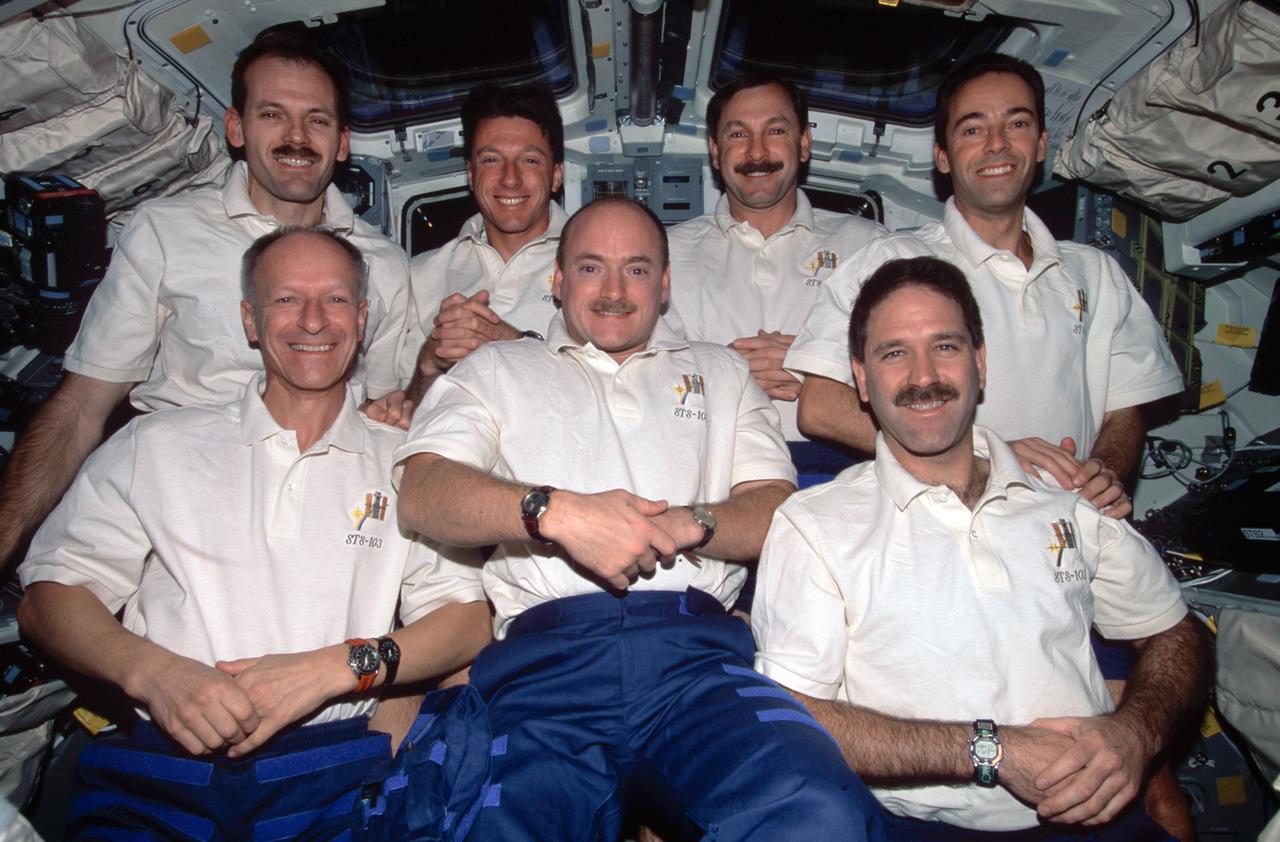
STS103-397-035 (19 - 27 December 1999) --- The seven astronauts aboard the Space Shuttle Discovery for NASA's third servicing visit to the Hubble Space Telescope (HST) pose for the traditional inflight crew portrait..In front are, from left, astronauts Claude Nicollier, Scott J. Kelly and John M. Grunsfeld.  Behind them are.astronauts Steven L. Smith, C. Michael Foale, Curtis L. Brown, Jr., and Jean-Francois Clervoy.  Nicollier and Clervoy are astronauts from the European Space Agency (ESA).
STS-103 inflight crew portrait on the flight deck
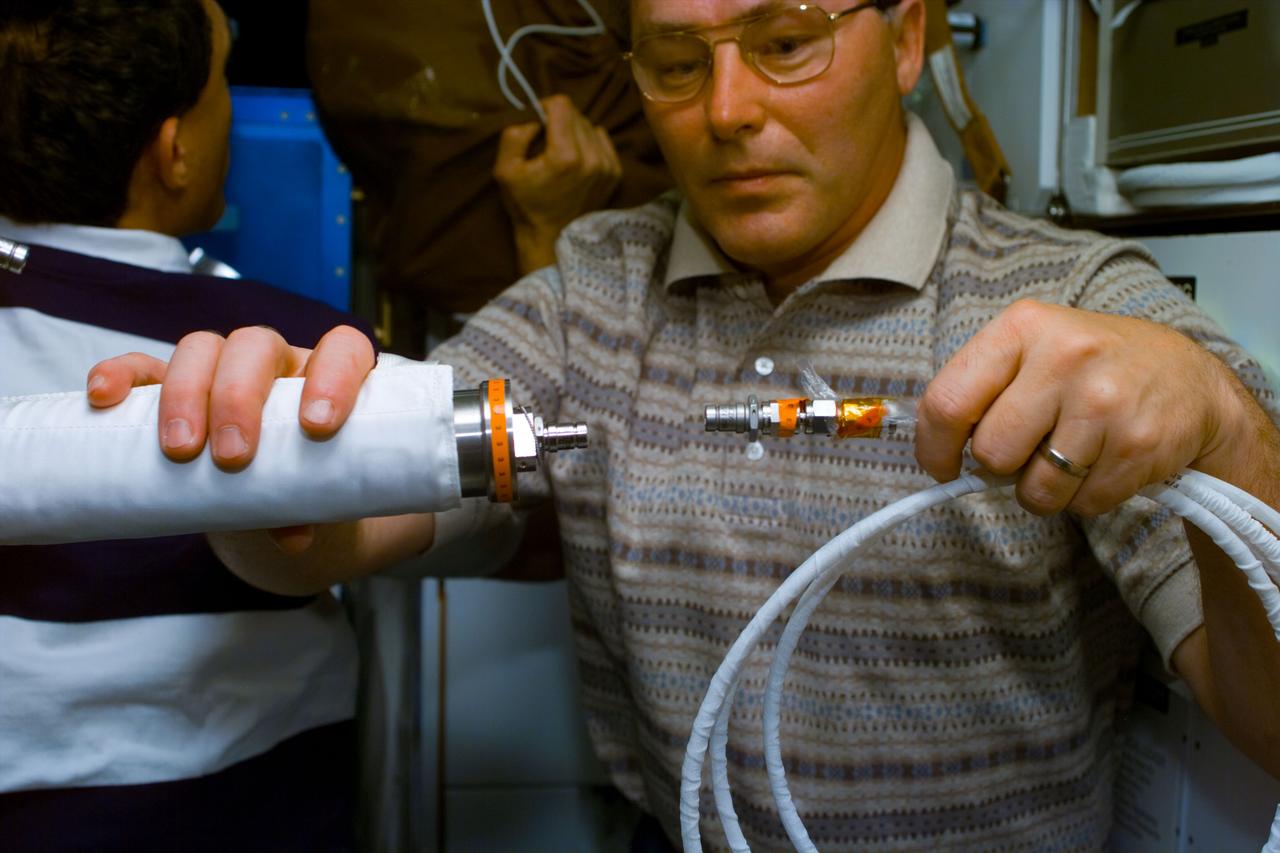
STS078-397-010 (20 June - 7 July 1996) --- Payload specialist Jean-Jacques Favier, representing the French Space Agency (CNES), and astronaut Kevin R. Kregel, pilot, perform a successful Inflight Maintenance (IFM) on the Bubble Drop Particle Unit (BDPU).  The IFM technique was performed initially on the ground at the Marshall Space Flight Center (MSFC) by alternate payload specialist Pedro Duque of the European Space Agency (ESA), with the procedure being recorded on video and uplinked to the crew of the Space Shuttle Columbia to aid in the repair.
BDPU IFM, Favier and Kregel repair a short in the experiment's wires
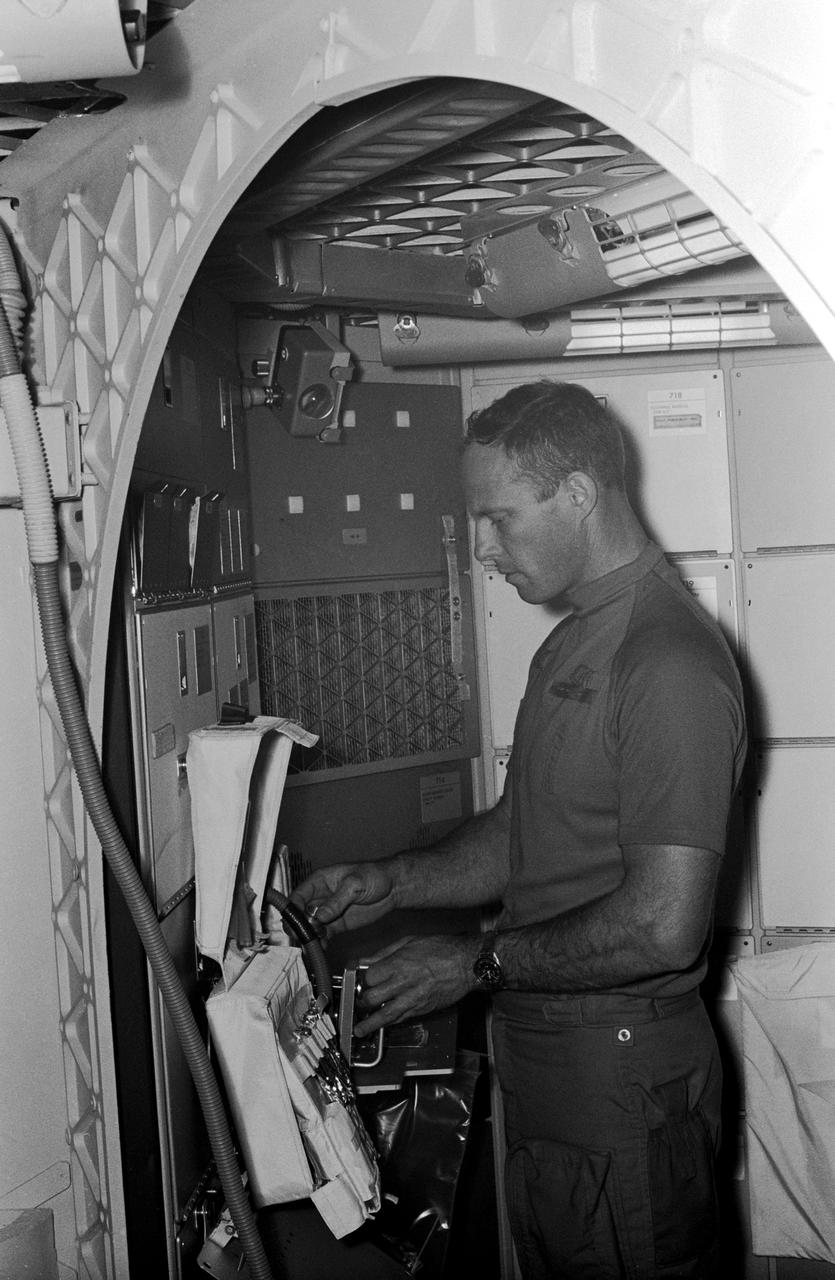
S73-28423 (16 June 1973) --- Astronaut Jack R. Lousma, Skylab 3 pilot, reaches into a medical kit, part of the Inflight Medical Support System (IMSS), during training for the second manned Skylab Earth-orbital mission. This activity took place in the OWS trainer in the Mission Simulation and Training Facility at the Johnson Space Center (JSC). Other Skylab 3 crewmen are astronaut Alan L. Bean, commander, and scientist-astronaut Owen K. Garriott, science pilot. Photo credit: NASA
Astronaut Jack Lousma - Inflight Medical Support System (IMSS) - JSC
STS062-15-013 (4-18 March 1994) --- Astronaut John H. Casper, mission commander, participates in an experiment that measures the effects of space flight on pilot proficiency.  Astronauts Casper and Andrew M. Allen, pilot, continued the testing of the Portable Inflight Landing Operations Trainer (PILOT), which first flew onboard Columbia in October of 1993.
Astronaut John Casper uses Portable Inflight Landing Operations Trainer
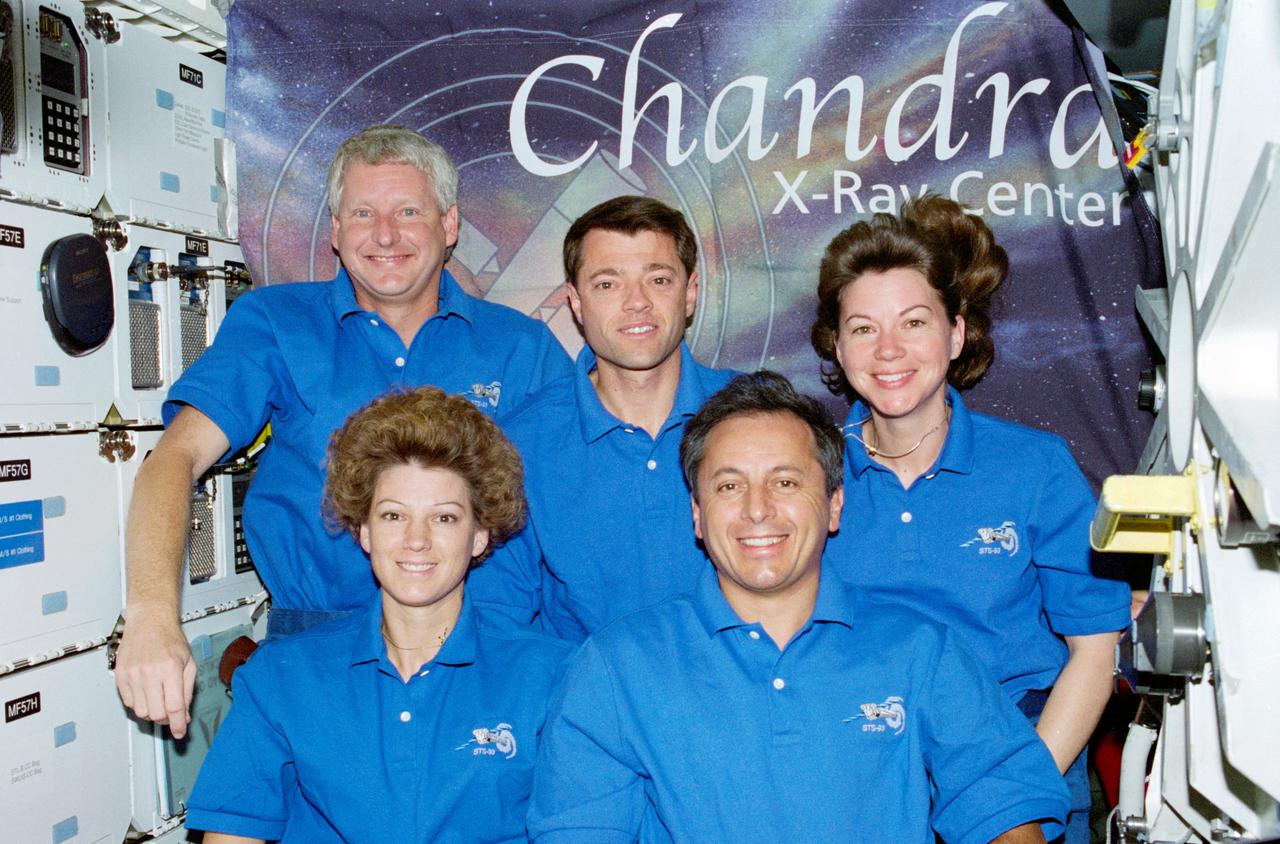
STS093-322-017 (23-27 July 1999) ---  The five STS-93 astronauts pose for the traditional inflight crew portrait on  Columbia's middeck.  In front are astronauts Eileen M. Collins, mission commander, and Michel Tognini, mission specialist, representing France's  Centre National d'Etudes Spatiales (CNES).  Behind them are (from the left)  astronauts Steven A. Hawley, mission specialist; Jeffrey S. Ashby, pilot; and Catherine G. (Cady) Coleman, mission specialist.
STS-93 crewmembers assemble for crew inflight portrait on the middeck
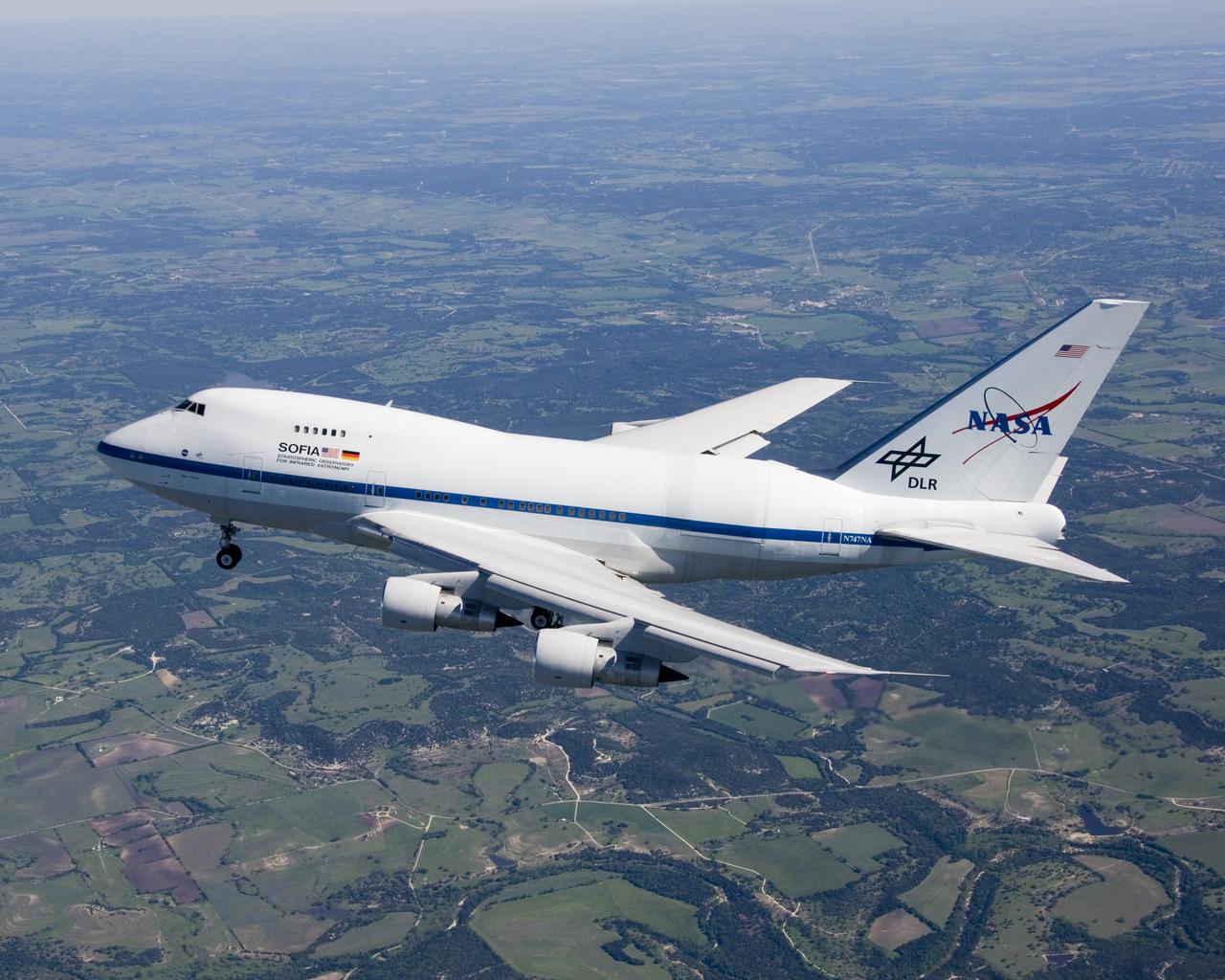
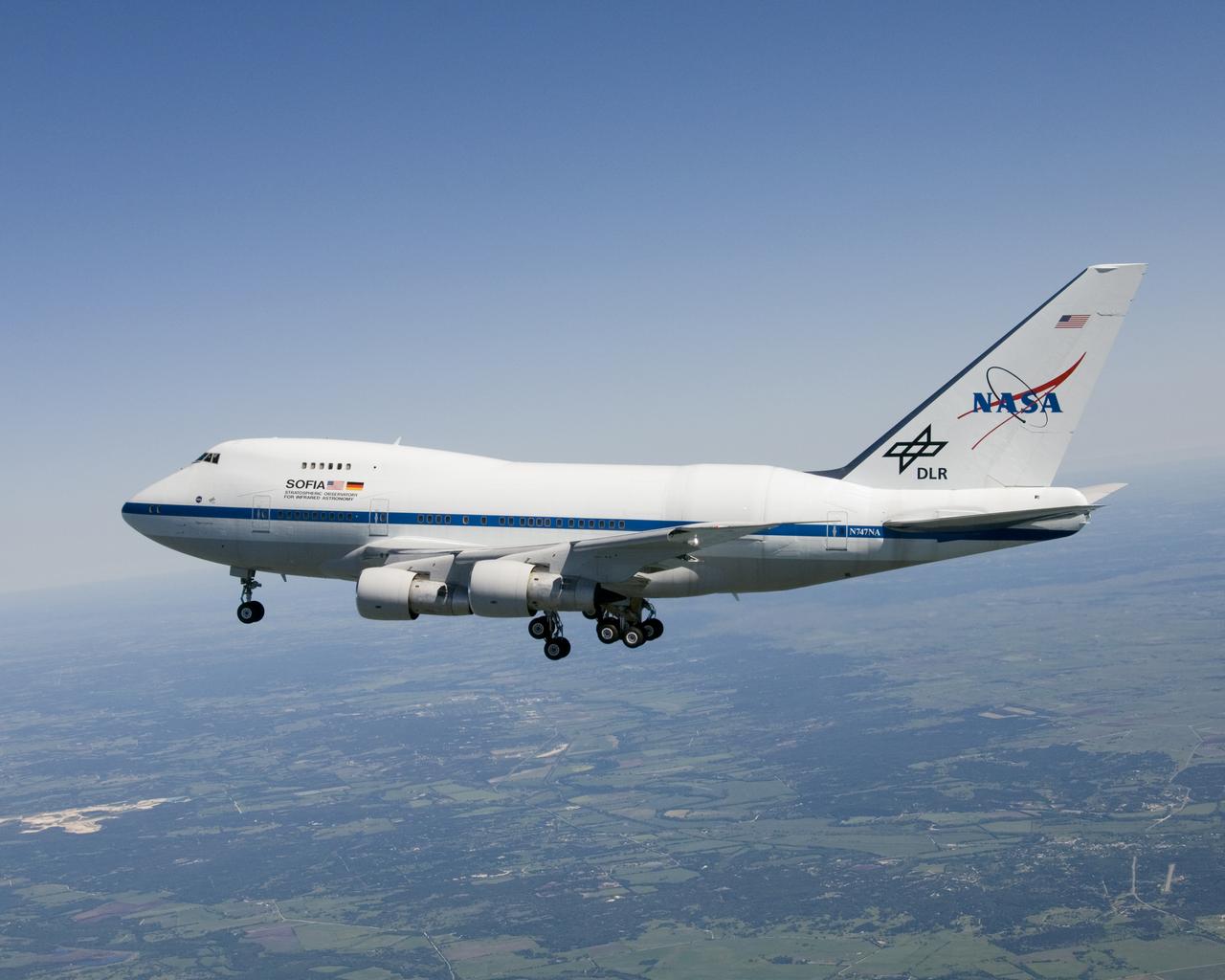
Christened "Clipper Lindbergh" when it flew for Pan American Airways in the 1970s, the SOFIA 747SP shows evidence of modification to its aft fuselage contours to accommodate a 16-foot-tall opening for a 45,000-pound infrared telescope. This inflight photo was taken on SOFIA's first flight since its modification to become an airborne observatory.
This inflight photo was taken during the first flight of the NASA and German Aerospace Center SOFIA airborne infrared observatory 747SP on April 26, 2007
Christened "Clipper Lindbergh" when it flew for Pan American Airways in the 1970s, the SOFIA 747SP shows evidence of modification to its aft fuselage contours to accommodate a 16-foot-tall opening for a 45,000-pound infrared telescope. This inflight photo was taken on SOFIA's first flight since its modification to become an airborne observatory.
This inflight photo was taken during the first flight of the NASA and German Aerospace Center SOFIA airborne infrared observatory 747SP on April 26, 2007
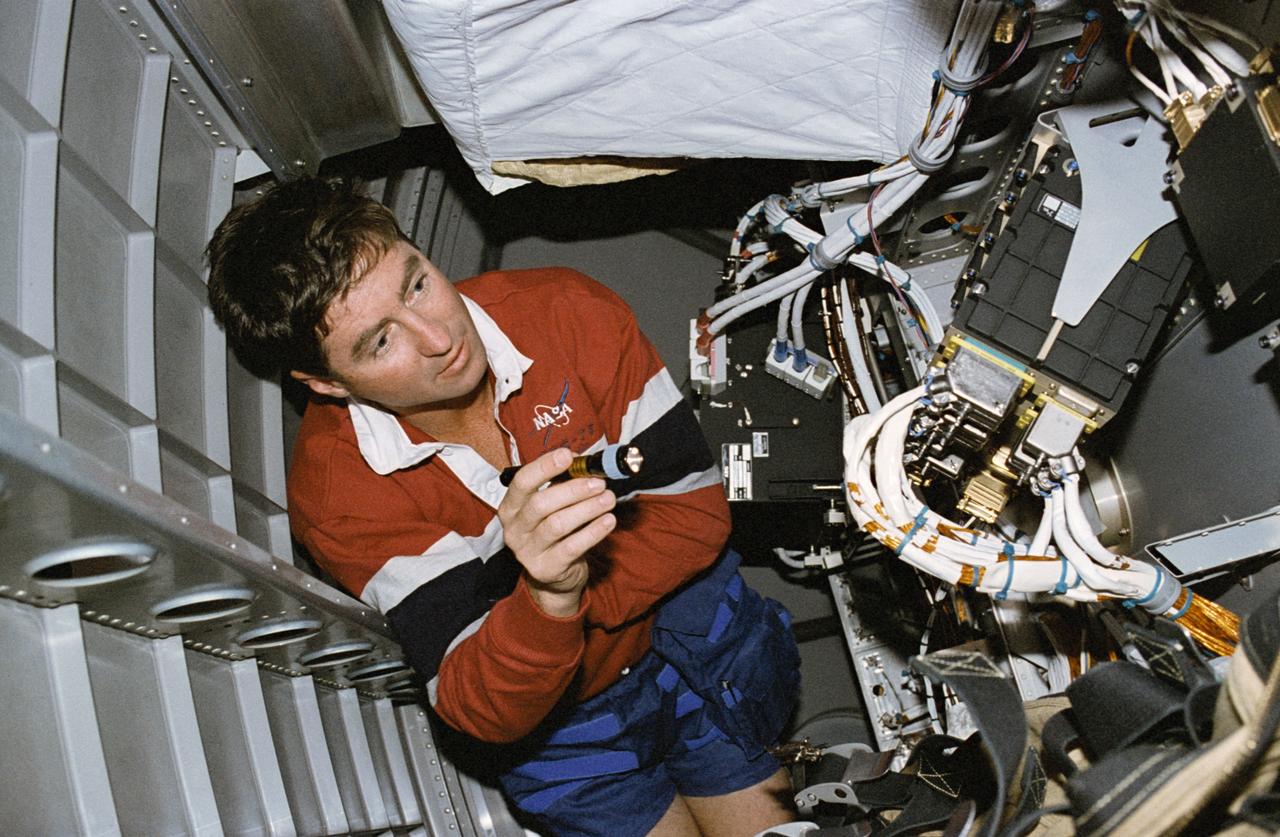
STS078-432-009 (20 June-7 July 1996) --- Among the inflight maintenance (IFM) chores that were handled by the crew members during their almost 17 days in space aboard the space shuttle Columbia was one that involved going into the bay beneath the floor of the Life and Microgravity Spacelab (LMS-1) Science Module. Astronaut Terence T. (Tom) Henricks, mission commander, shines a tiny flashlight onto some cables related to LMS-1 supported computer systems. As in the case of the other IFM chores, Henricks' efforts were successful. He was joined by four other NASA astronauts and two international payload specialists for the space shuttle duration record-setting mission.
Henricks examines the computer systems under the Spacelab floor
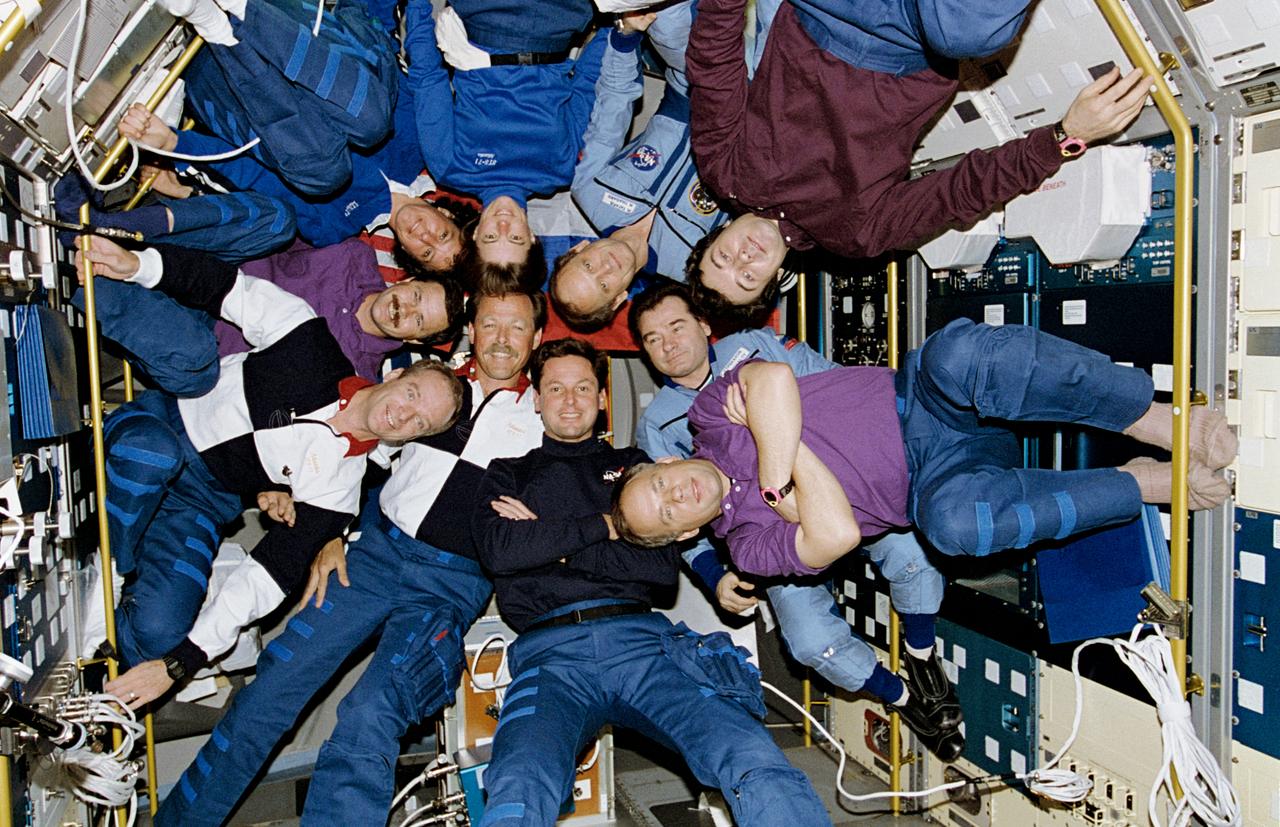
STS071-122-013 (27 June-7 July 1995) --- Inside the space shuttle Atlantis' Spacelab Science Module, the crewmembers of STS-71, Mir-18 and Mir-19 pose for the traditional inflight portrait. For individual identification, hold picture vertically with socked feet of Anatoly Y. Solovyev at bottom center. Clockwise from Solovyev are astronauts Gregory J. Harbaugh, Robert L. Gibson, Charles J. Precourt, Nikolai M. Budarin, Ellen S. Baker, Bonnie J. Dunbar, Norman E. Thagard, and cosmonauts Gennadiy M. Strekalov (at angle) and Vladimir N. Dezhurov.
STS-71, Mir 18 and Mir 19 crews pose for inflight portrait
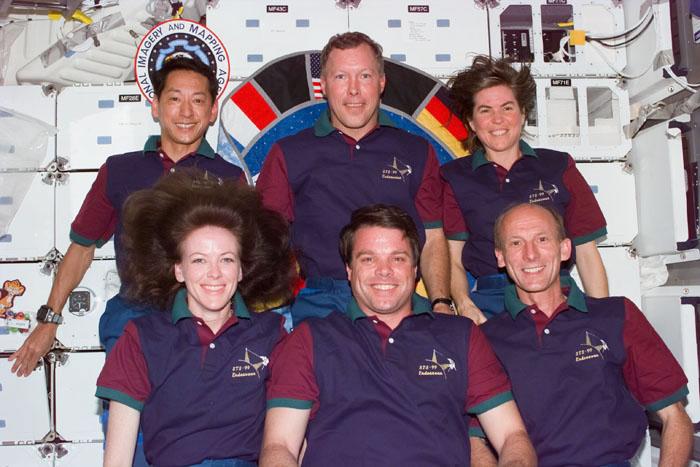
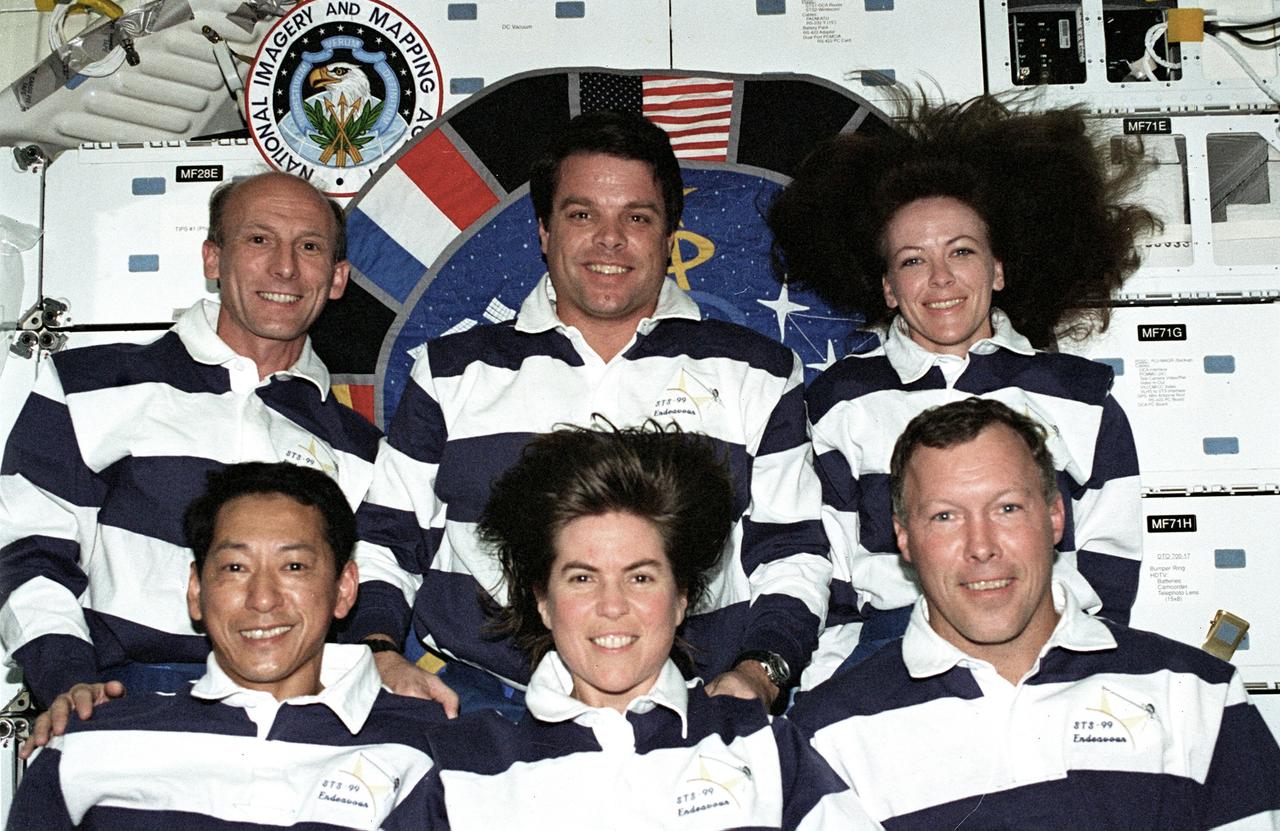
STS099-318-003 (11-22 February 2000) ---  The six flight crew members for the Shuttle Radar Topography Mission (SRTM)  pose for the traditional inflight crew portrait on Endeavour's mid deck.  Blue Team members in front are (from the left), astronauts Mamoru Mohri, Janice Voss and Dominic L. Gorie.  Red Team members are (from left, rear) astronauts Gerhard P.J. Thiele, Kevin R. Kregel and  Janet L. Kavandi. Mohri is with Japan's National Space Development Agency (NASDA) and Thiele represents the European Space Agency (ESA).
The STS-99 crew pose for their inflight portrait on OV-105's middeck
S99-E-5731 (18 February 2000) --- Not often seen together on the STS-99 flight which provides around-the-clock coverage for the Shuttle Radar Topography Mission (SRTM), the six astronauts pose for one of the traditional inflight crew portraits on Endeavour's mid deck. In the rear are the Blue Team members (from left), Mamoru Mohri, Dominic L. Gorie and Janice Voss.  In front are Red Team   members Janet L. Kavandi, Kevin R. Kregel and Gerhard P.J. Thiele.  Mohri is with Japan's National Space Development Agency (NASDA) and Thiele represents the European Space Agency (ESA).
STS-99 crewmembers pose for inflight portrait on OV-105's middeck
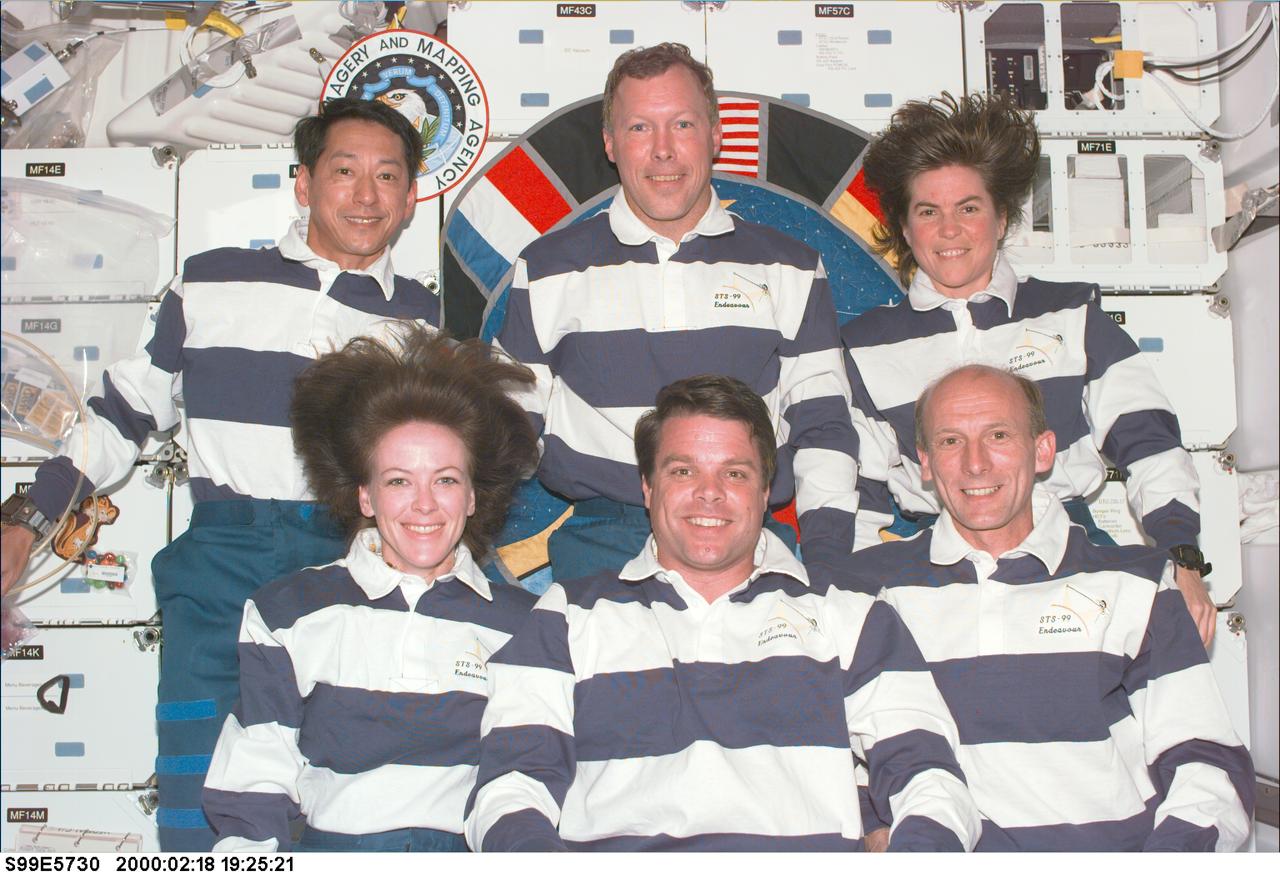
S99-E-5730 (18 February 2000) --- Not often seen together on the STS-99 flight which provides around-the-clock coverage for the Shuttle Radar Topography Mission (SRTM), the six astronauts pose for the traditional inflight crew portrait on Endeavour's mid deck. In the rear are the Blue Team members (from left), Mamoru Mohri, Dominic L. Gorie and Janice Voss.  In front are Red Team   members Janet L. Kavandi, Kevin R. Kregel and Gerhard P.J. Thiele. Mohri is with Japan's National Space Development Agency (NASDA) and Thiele represents the European Space Agency (ESA).
STS-99 crewmembers pose for inflight portrait on OV-105's middeck
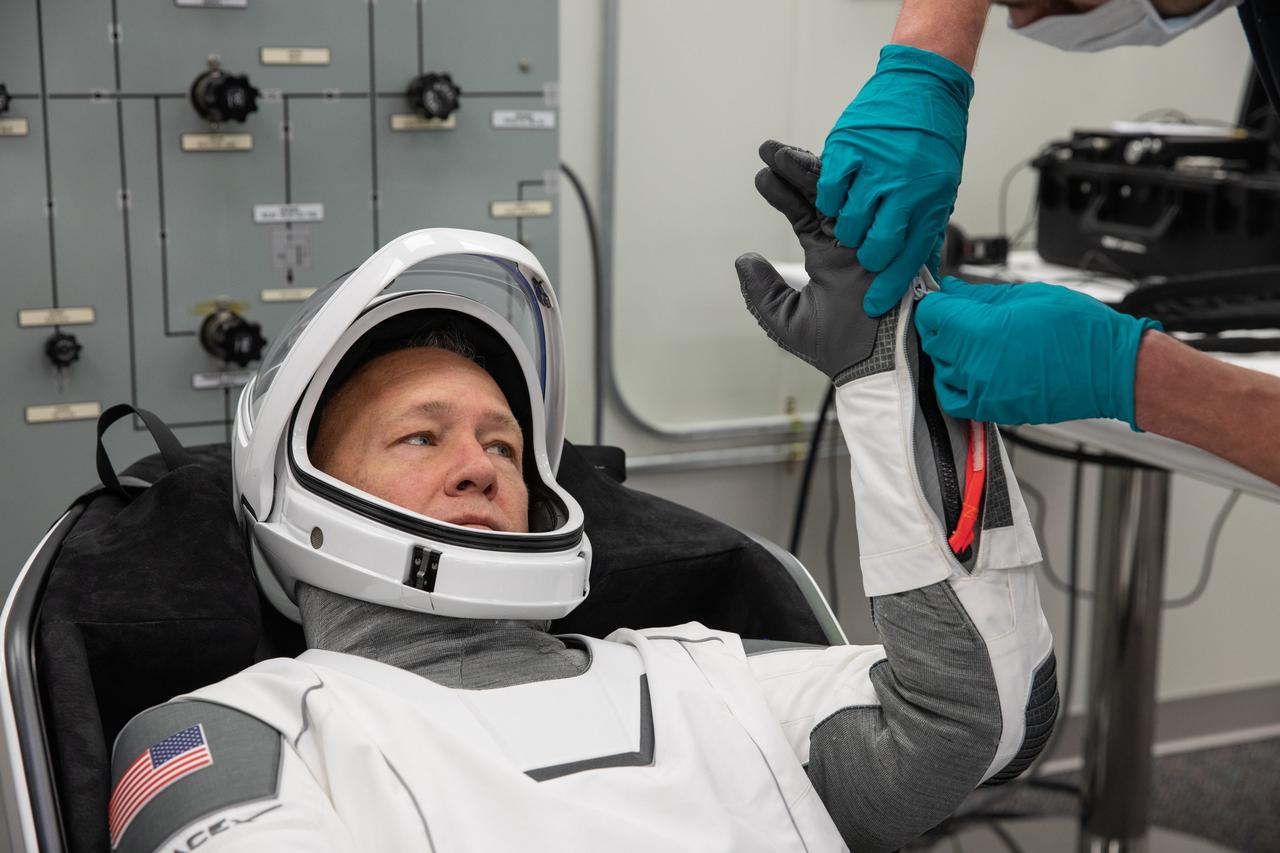
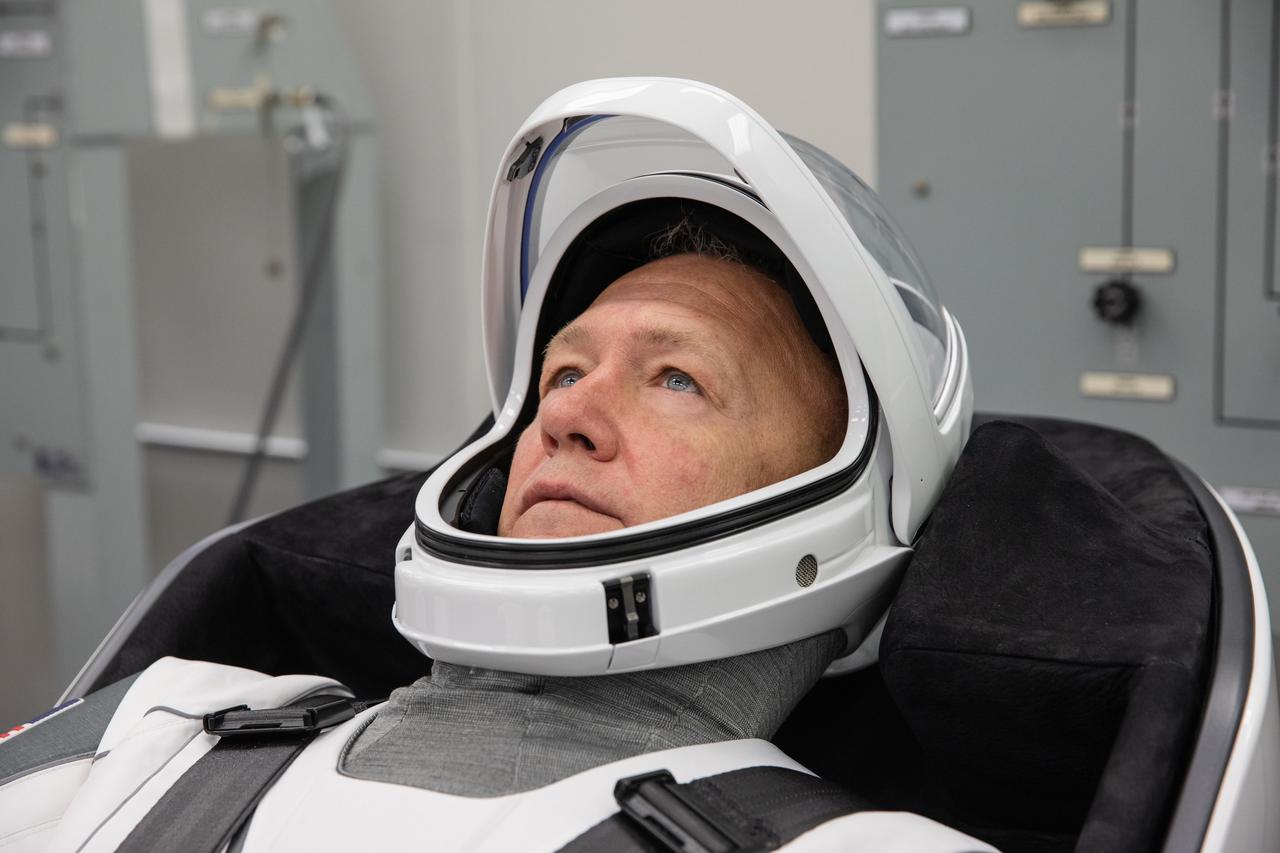
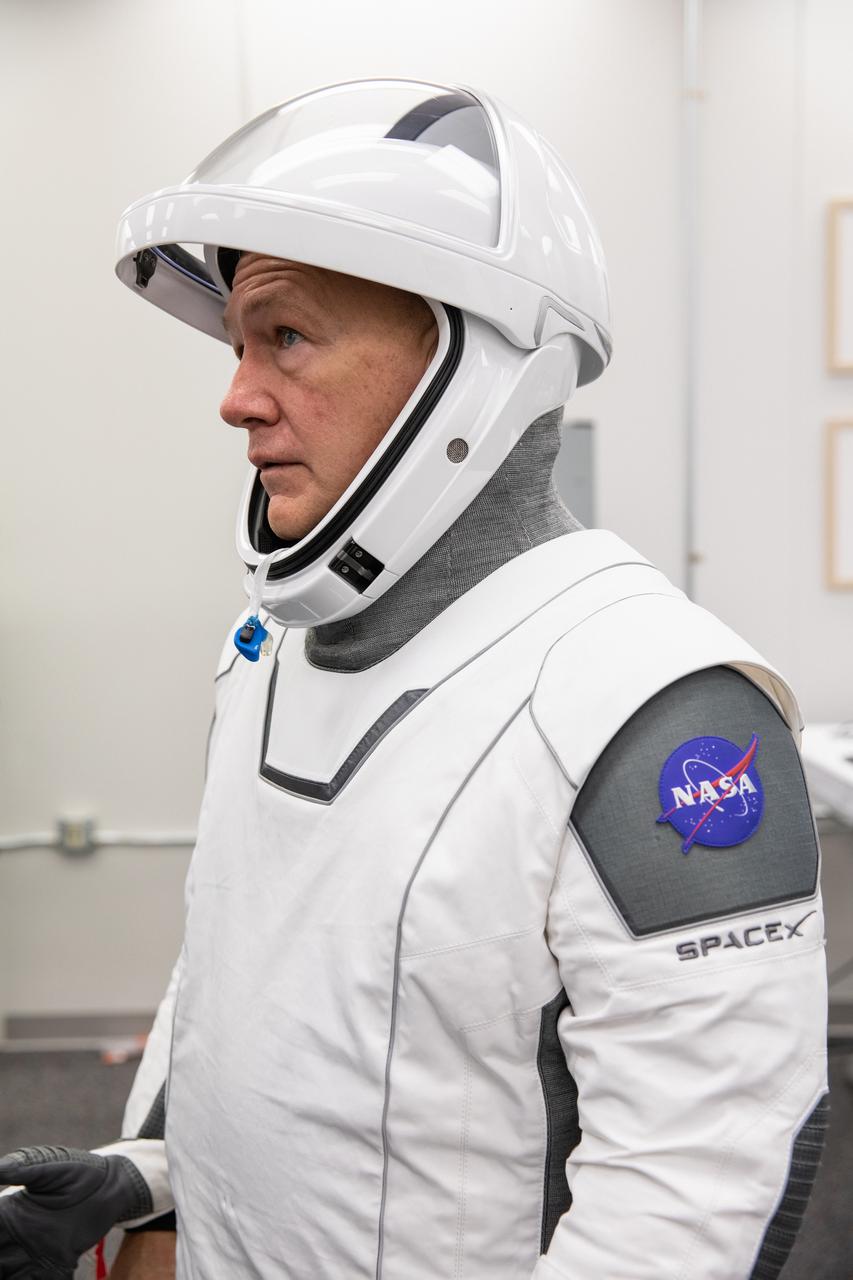
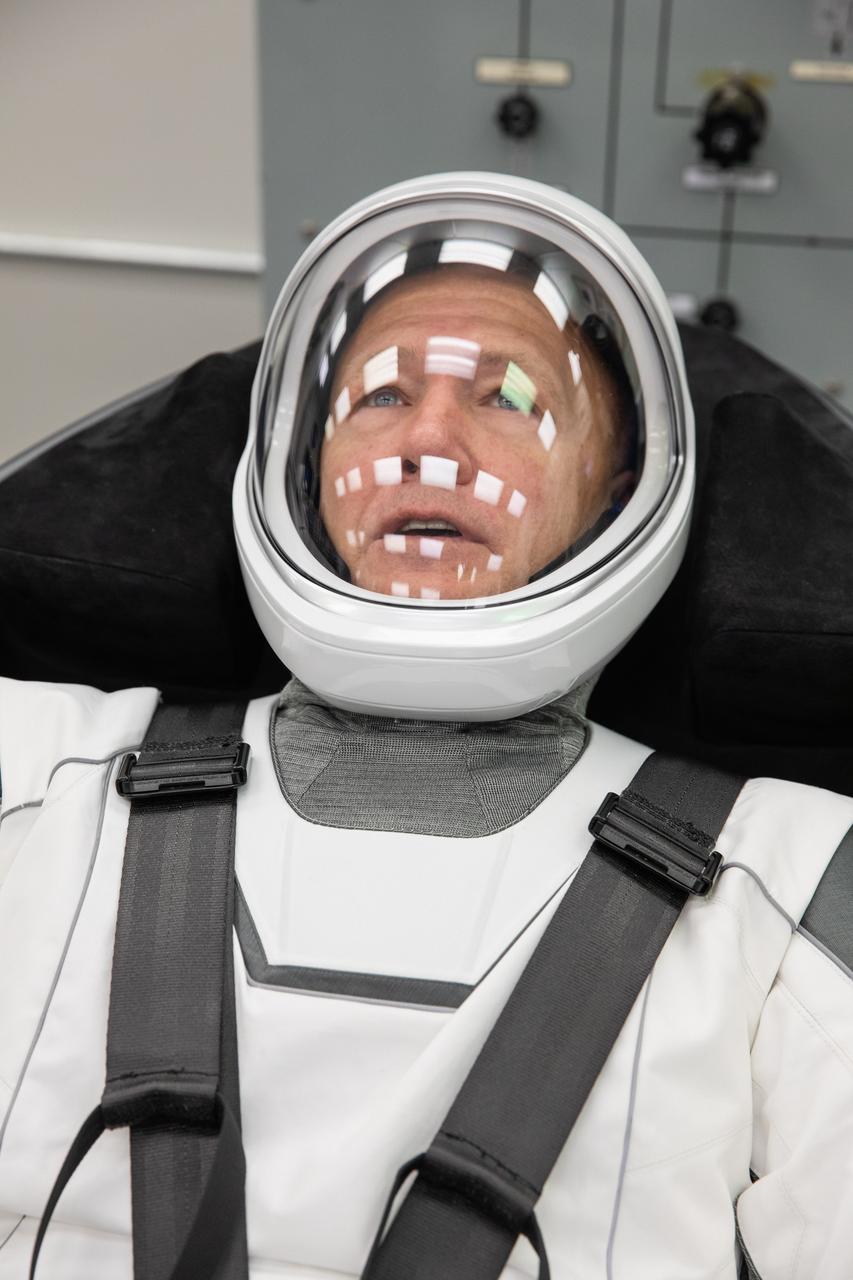
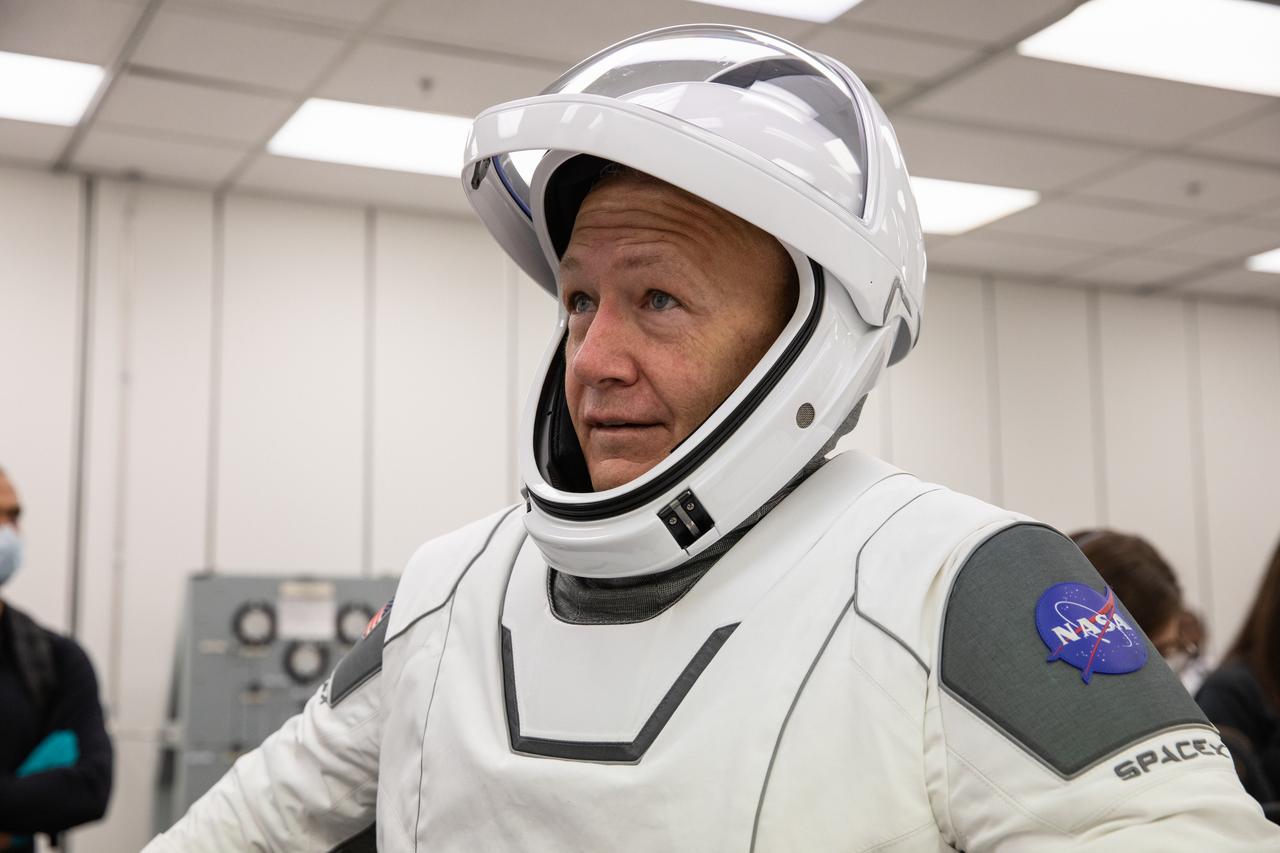
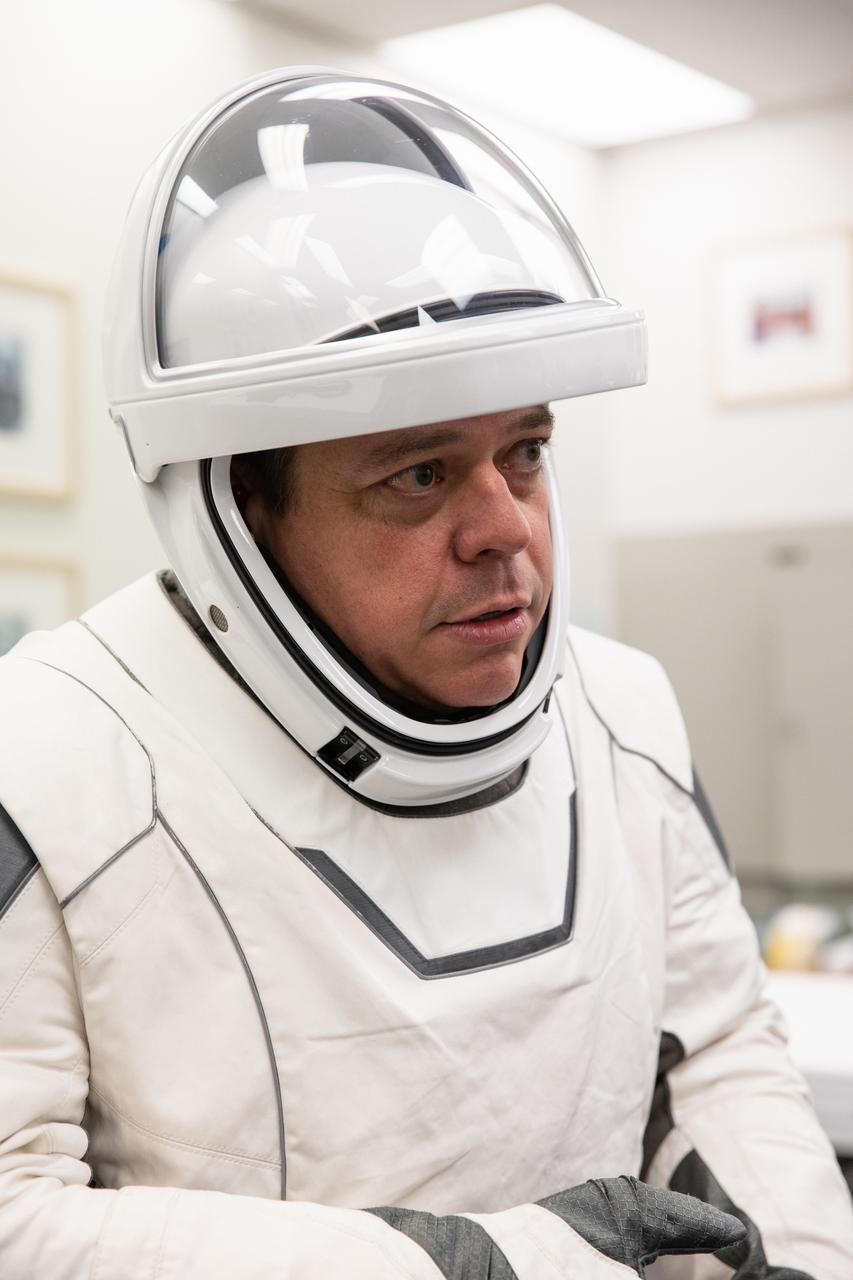
NASA astronaut Doug Hurley, wearing a SpaceX spacesuit, looks through his helmet’s closed visor in the Astronaut Crew Quarters at Kennedy Space Center in Florida on Jan. 17, 2020, during a dress rehearsal ahead of the company’s uncrewed In-Flight Abort Test. A SpaceX Falcon 9 rocket and Crew Dragon spacecraft will lift off from Launch Complex 39A on the flight test, which will demonstrate the spacecraft’s escape capabilities in preparation for crewed flights to the International Space Station as part of the agency’s Commercial Crew Program. Hurley and NASA astronaut Bob Behnken are slated to fly on the company’s first crewed mission, Demo-2.
SpaceX InFlight Abort Dry Dress Rehearsal
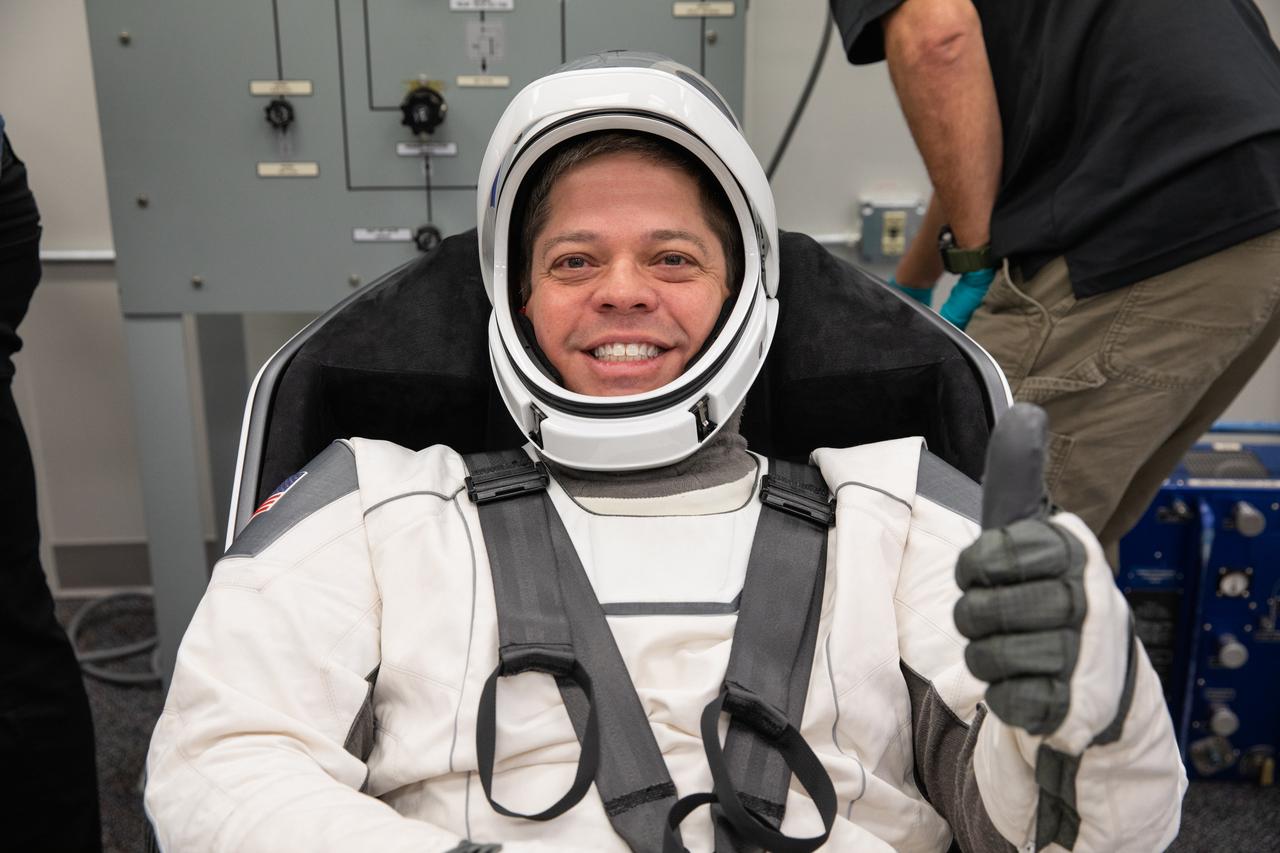
NASA astronaut Bob Behnken gives a thumbs-up as he dons a SpaceX spacesuit in the Astronaut Crew Quarters at Kennedy Space Center in Florida on Jan. 17, 2020, during a dress rehearsal ahead of the company’s uncrewed In-Flight Abort Test. A SpaceX Falcon 9 rocket and Crew Dragon spacecraft will lift off from Launch Complex 39A on the flight test, which will demonstrate the spacecraft’s escape capabilities in preparation for crewed flights to the International Space Station as part of the agency’s Commercial Crew Program. Behnken and NASA astronaut Doug Hurley are slated to fly on the company’s first crewed mission, Demo-2.
SpaceX InFlight Abort Dry Dress Rehearsal
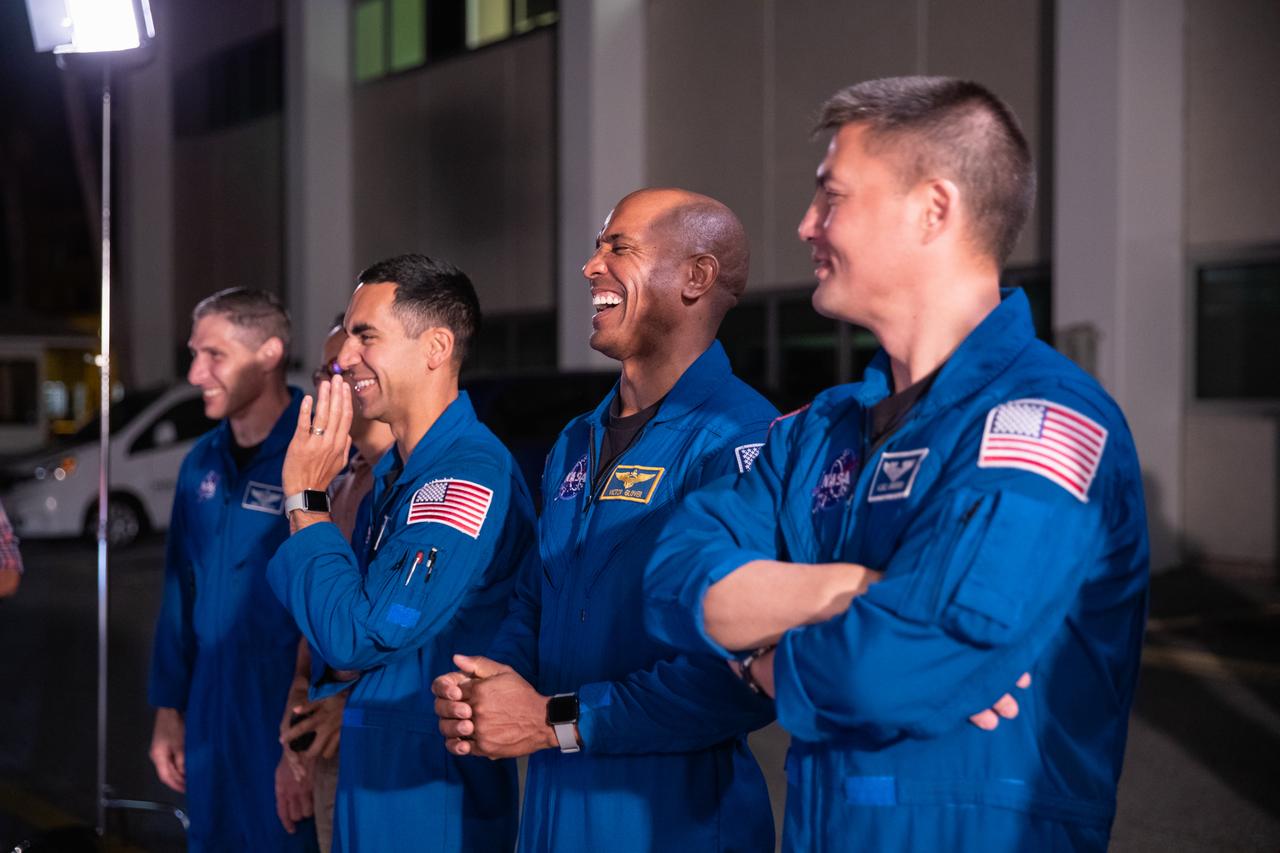
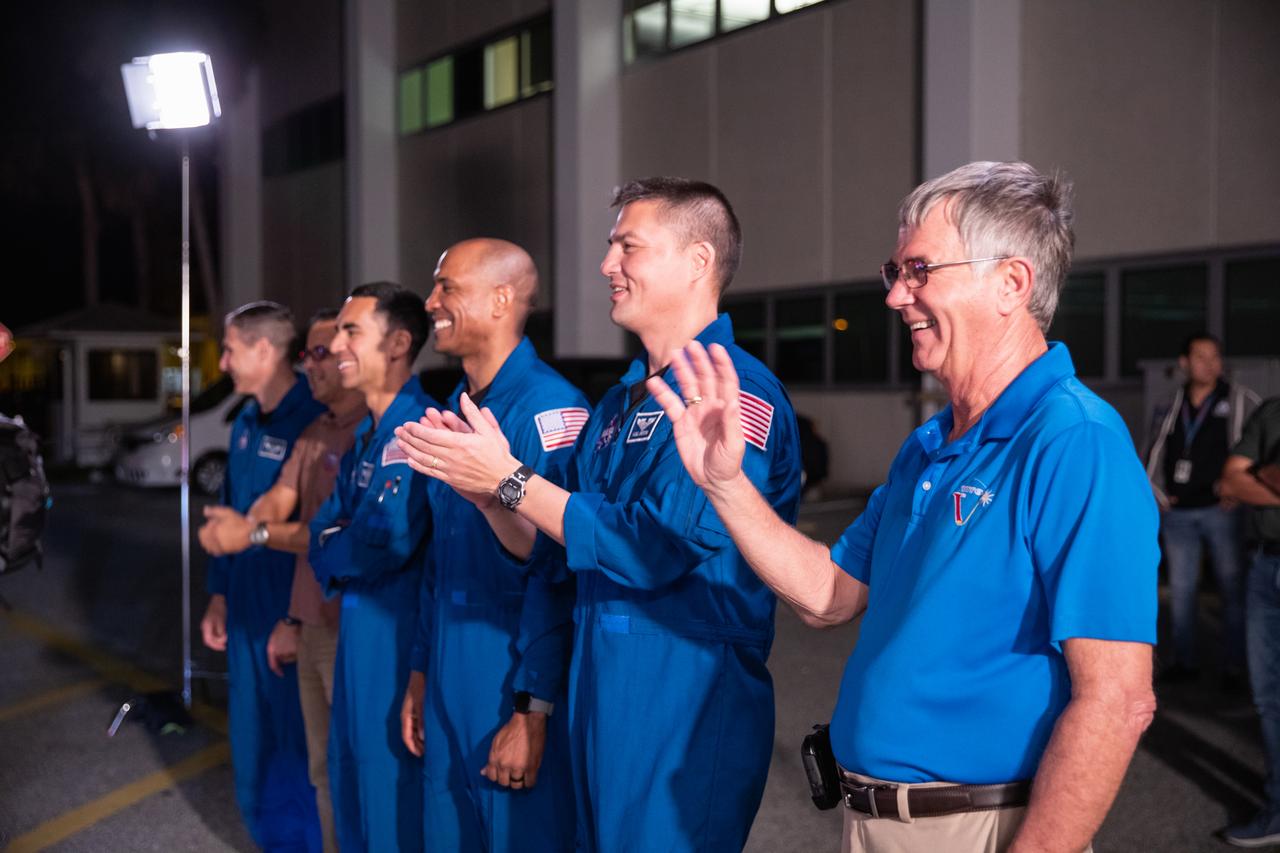
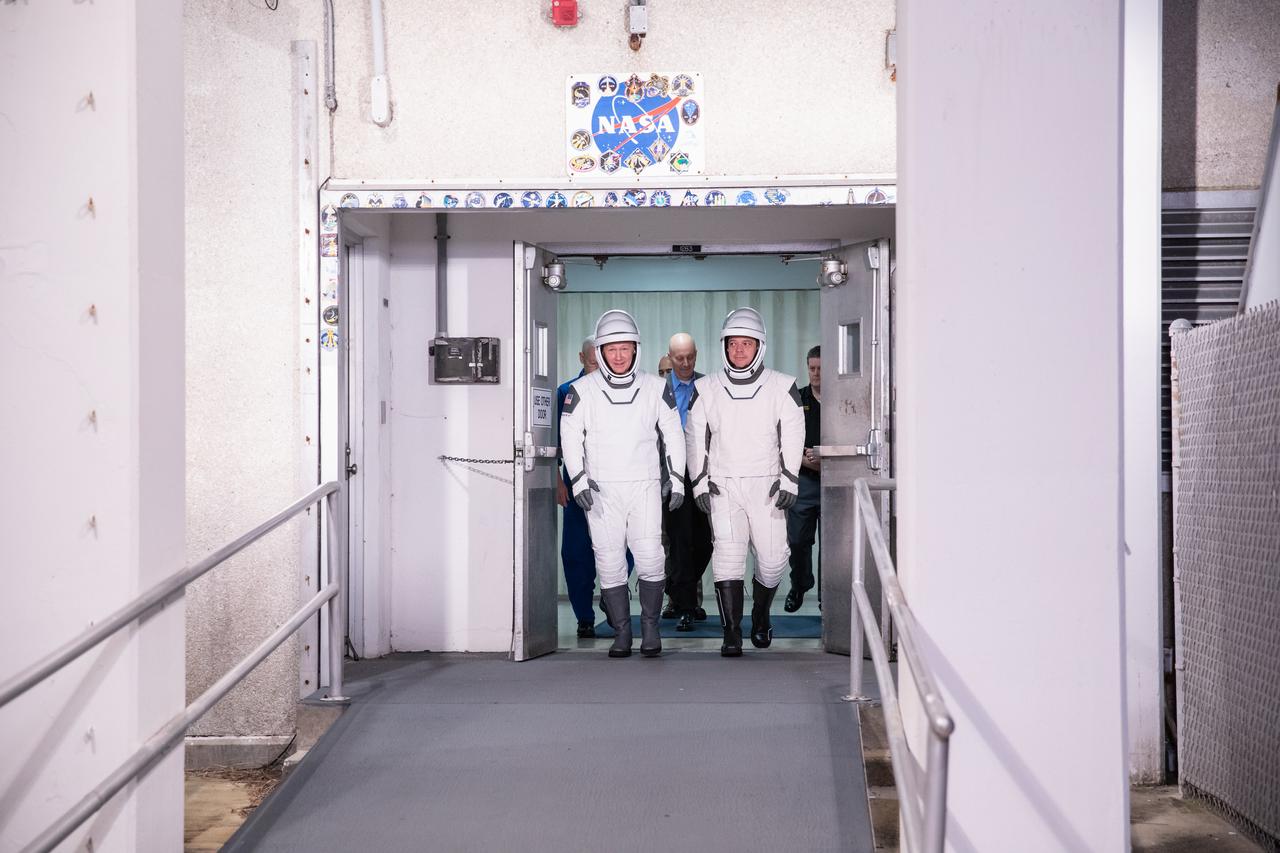
NASA astronauts cheer as fellow astronauts Bob Benhken and Doug Hurley walk out of the Neil A. Armstrong Operations and Checkout Building at Kennedy Space Center in Florida on Jan. 17, 2020, during a dress rehearsal ahead of the SpaceX uncrewed In-Flight Abort Test. From left to right are Mike Hopkins, Joe Acaba, Raja Chari, Victor Glover, Kjell Lindgren and Glen Davis with the Vehicle Integration Test Office at Kennedy. A SpaceX Falcon 9 rocket and Crew Dragon spacecraft will lift off from Launch Complex 39A on the flight test, which will demonstrate the spacecraft’s escape capabilities in preparation for crewed flights to the International Space Station as part of the agency’s Commercial Crew Program. Behnken and Hurley are slated to fly on the company’s first crewed mission, Demo-2.
SpaceX InFlight Abort Dry Dress Rehearsal
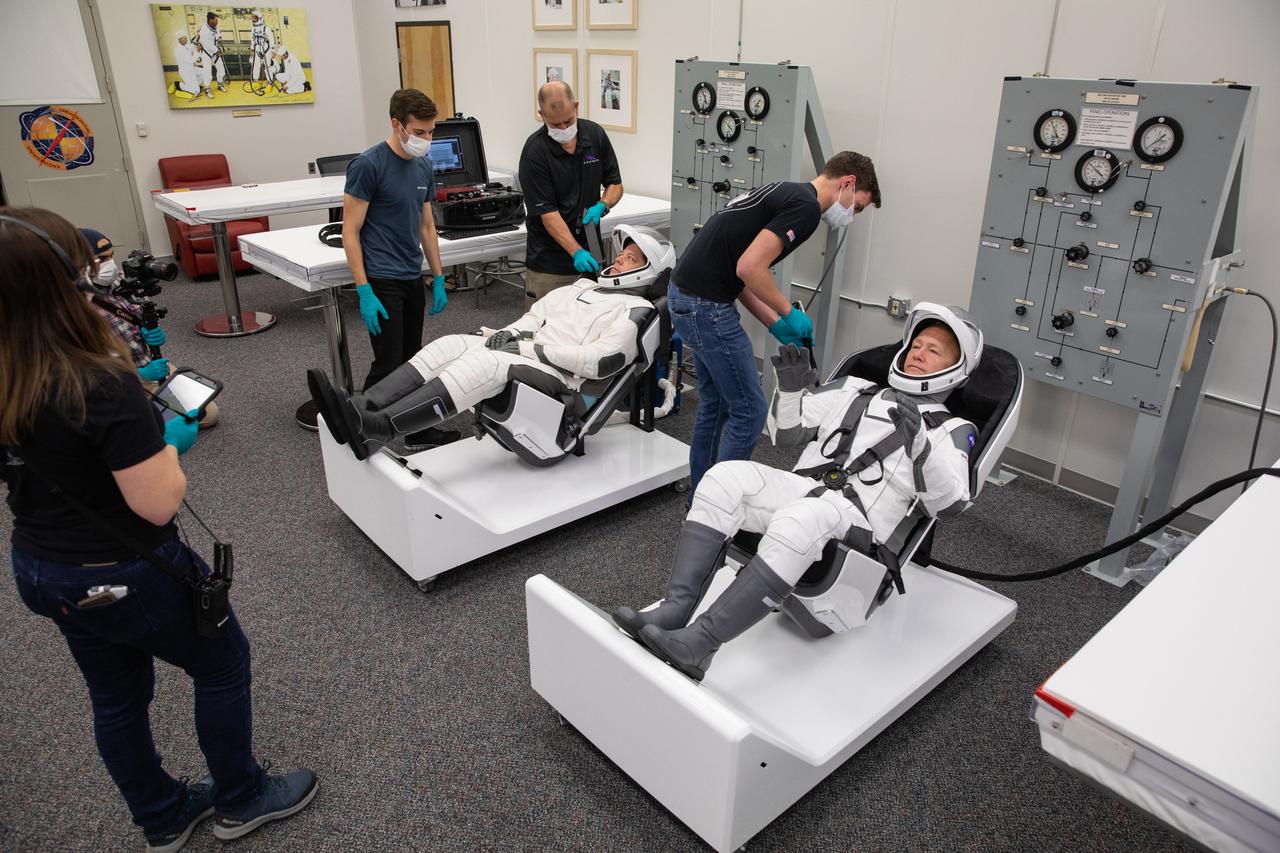
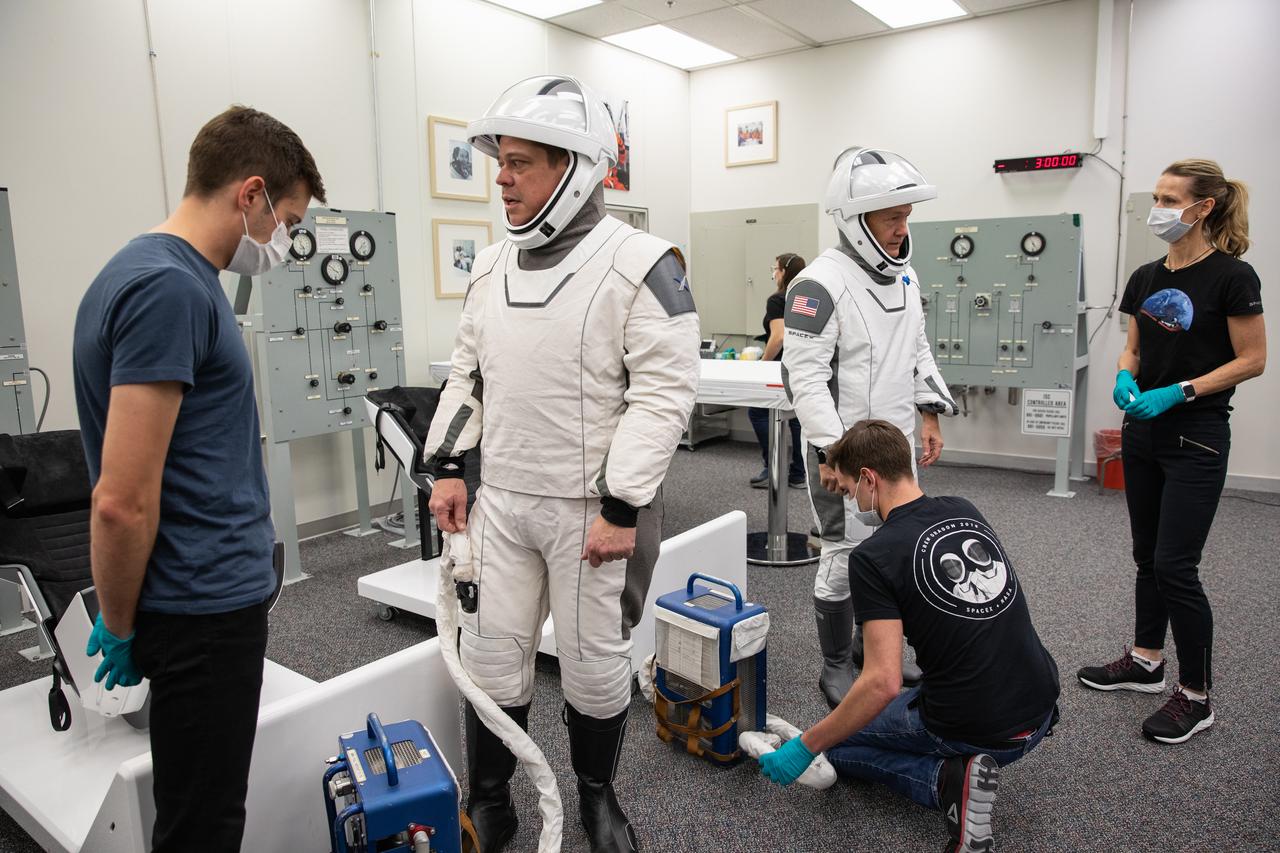
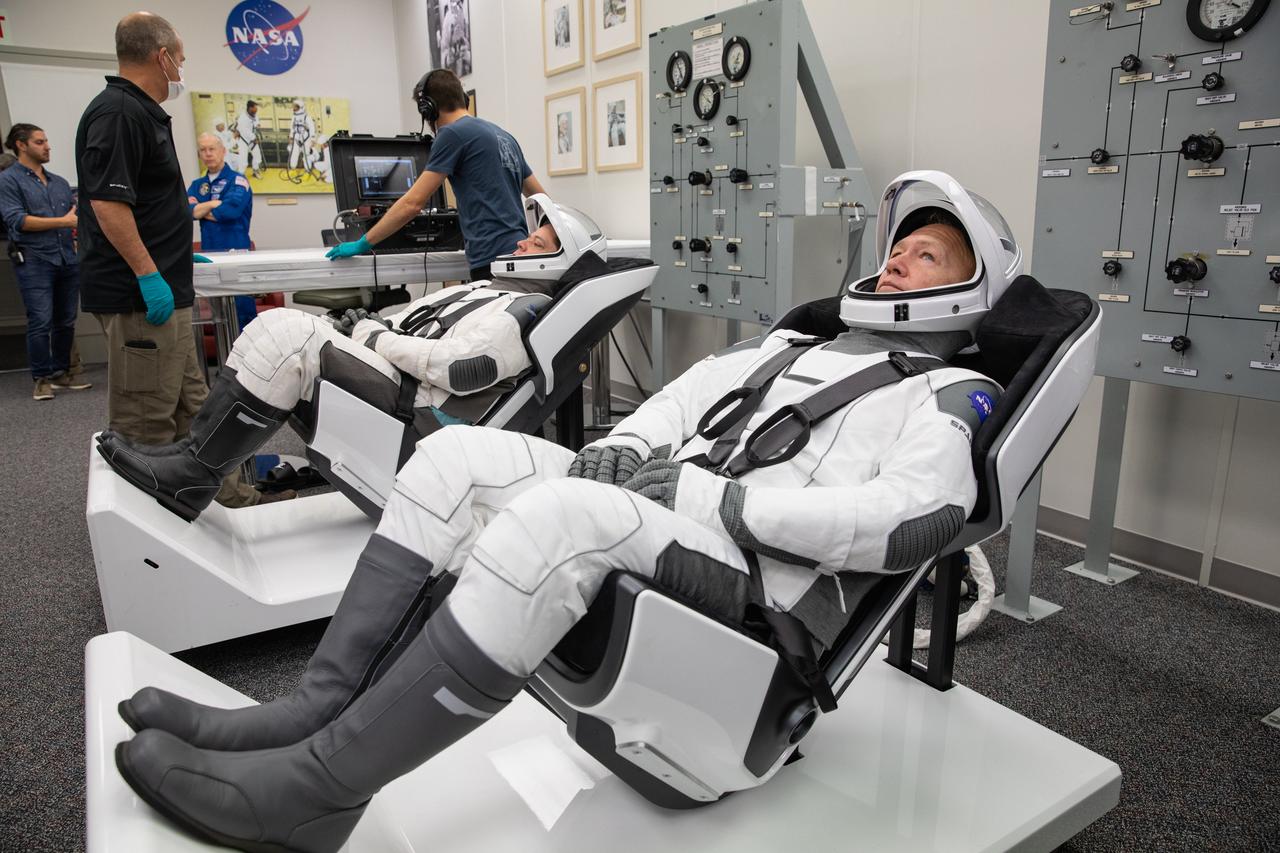
NASA astronauts Doug Hurley, foreground, and Bob Behnken don SpaceX spacesuits in the Astronaut Crew Quarters at Kennedy Space Center in Florida on Jan. 17, 2020, during a dress rehearsal ahead of the company’s uncrewed In-Flight Abort Test. A SpaceX Falcon 9 rocket and Crew Dragon spacecraft will lift off from Launch Complex 39A on the flight test, which will demonstrate the spacecraft’s escape capabilities in preparation for crewed flights to the International Space Station as part of the agency’s Commercial Crew Program. Hurley and Behnken are slated to fly on the company’s first crewed mission, Demo-2.
SpaceX InFlight Abort Dry Dress Rehearsal
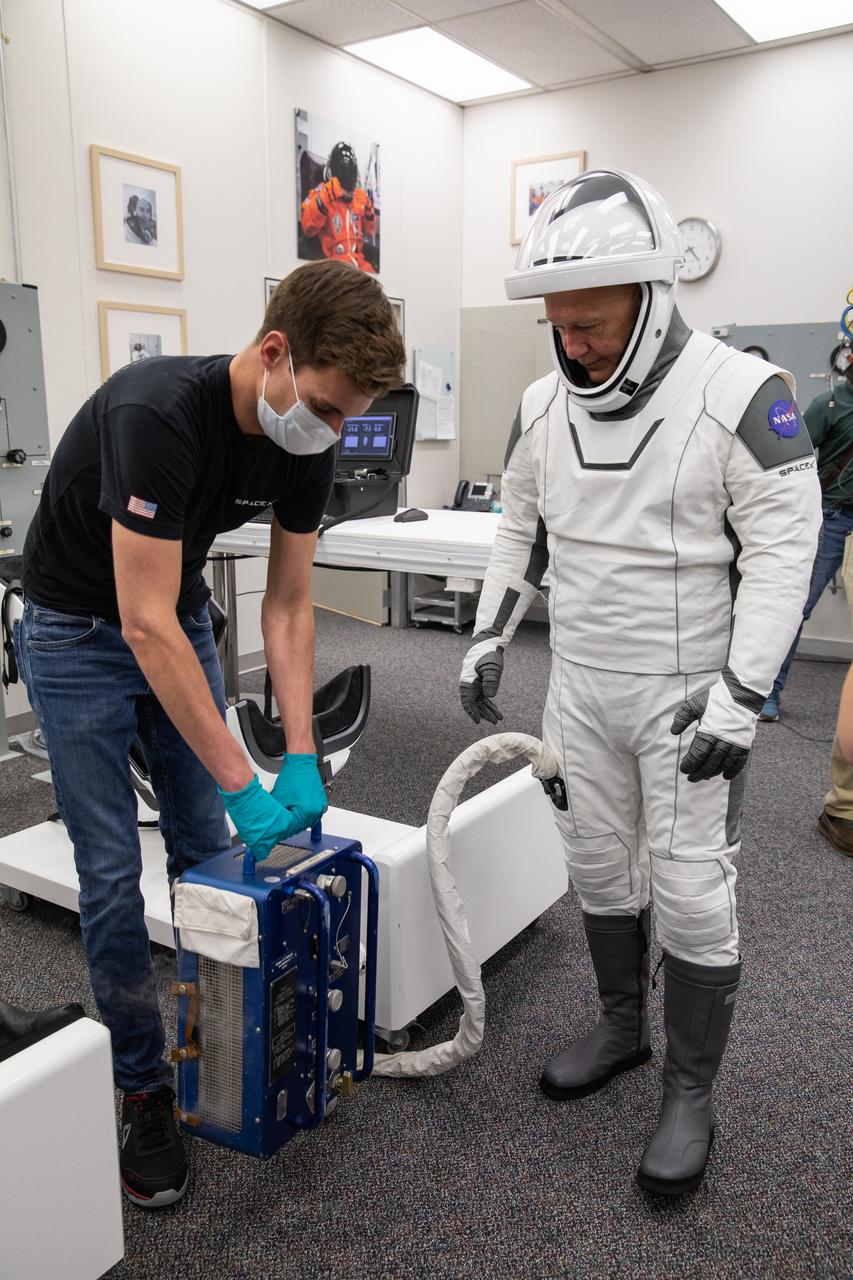
NASA astronaut Doug Hurley wears a SpaceX spacesuit in the Astronaut Crew Quarters at Kennedy Space Center in Florida on Jan. 17, 2020, during a dress rehearsal ahead of the company’s uncrewed In-Flight Abort Test. A SpaceX Falcon 9 rocket and Crew Dragon spacecraft will lift off from Launch Complex 39A on the flight test, which will demonstrate the spacecraft’s escape capabilities in preparation for crewed flights to the International Space Station as part of the agency’s Commercial Crew Program. Hurley and NASA astronaut Bob Behnken are slated to fly on the company’s first crewed mission, Demo-2.
SpaceX InFlight Abort Dry Dress Rehearsal
NASA astronaut Doug Hurley dons a SpaceX spacesuit in the Astronaut Crew Quarters at Kennedy Space Center in Florida on Jan. 17, 2020, during a dress rehearsal ahead of the company’s uncrewed In-Flight Abort Test. A SpaceX Falcon 9 rocket and Crew Dragon spacecraft will lift off from Launch Complex 39A on the flight test, which will demonstrate the spacecraft’s escape capabilities in preparation for crewed flights to the International Space Station as part of the agency’s Commercial Crew Program. Hurley and NASA astronaut Bob Behnken are slated to fly on the company’s first crewed mission, Demo-2.
SpaceX InFlight Abort Dry Dress Rehearsal
NASA astronaut Doug Hurley dons a SpaceX spacesuit in the Astronaut Crew Quarters at Kennedy Space Center in Florida on Jan. 17, 2020, during a dress rehearsal ahead of the company’s uncrewed In-Flight Abort Test. A SpaceX Falcon 9 rocket and Crew Dragon spacecraft will lift off from Launch Complex 39A on the flight test, which will demonstrate the spacecraft’s escape capabilities in preparation for crewed flights to the International Space Station as part of the agency’s Commercial Crew Program. Hurley and NASA astronaut Bob Behnken are slated to fly on the company’s first crewed mission, Demo-2.
SpaceX InFlight Abort Dry Dress Rehearsal
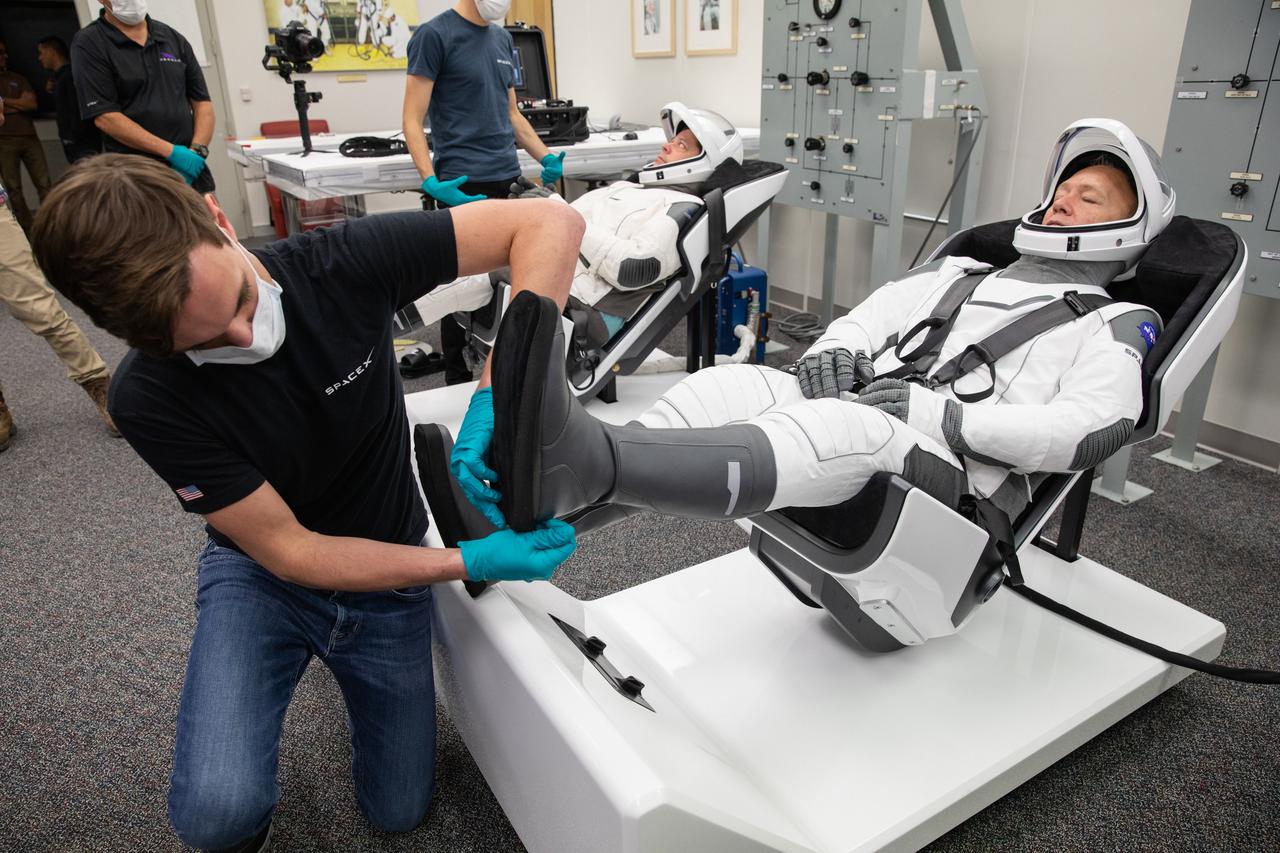
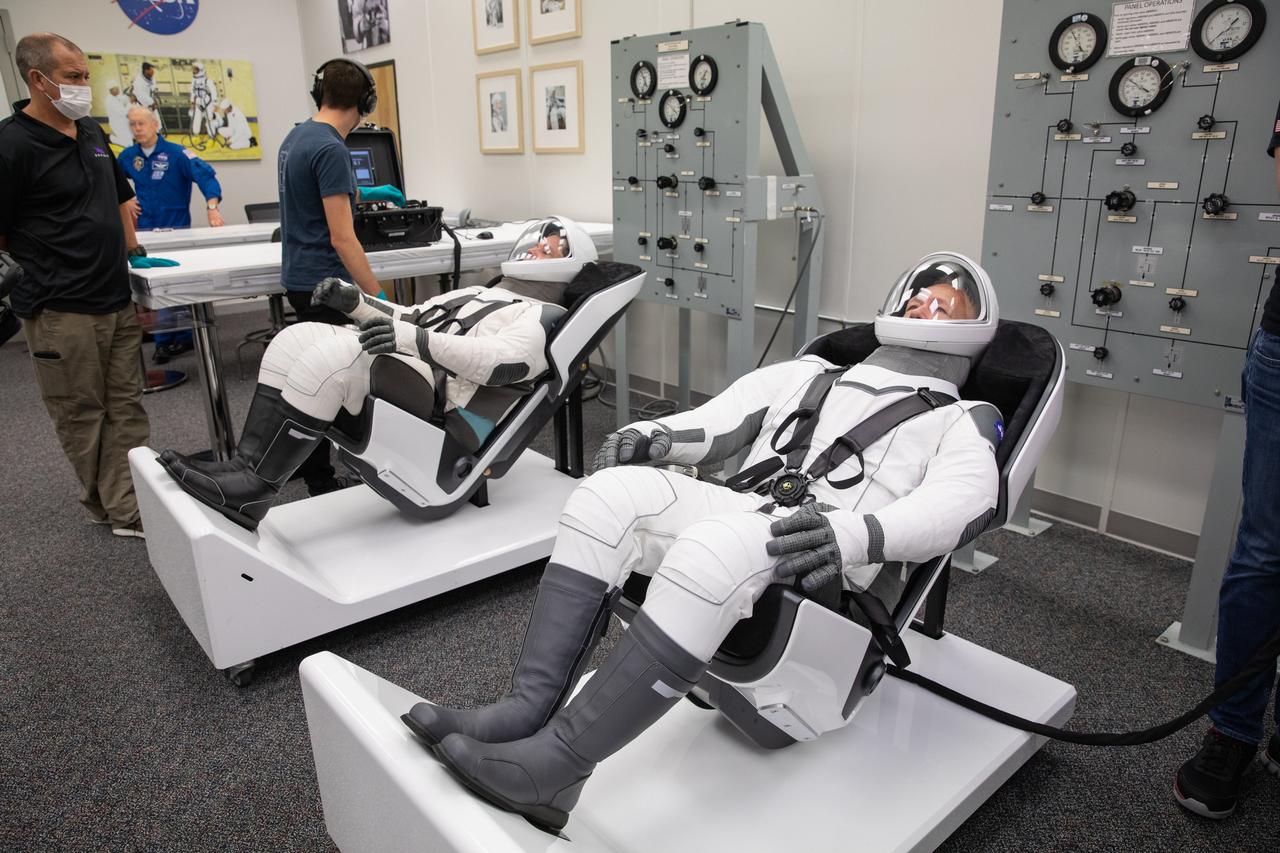
NASA astronauts Bob Behnken, foreground, and Doug Hurley don SpaceX spacesuits in the Astronaut Crew Quarters at Kennedy Space Center in Florida on Jan. 17, 2020, during a dress rehearsal ahead of the company’s uncrewed In-Flight Abort Test. A SpaceX Falcon 9 rocket and Crew Dragon spacecraft will lift off from Launch Complex 39A on the flight test, which will demonstrate the spacecraft’s escape capabilities in preparation for crewed flights to the International Space Station as part of the agency’s Commercial Crew Program. Behnken and Hurley are slated to fly on the company’s first crewed mission, Demo-2.
SpaceX InFlight Abort Dry Dress Rehearsal
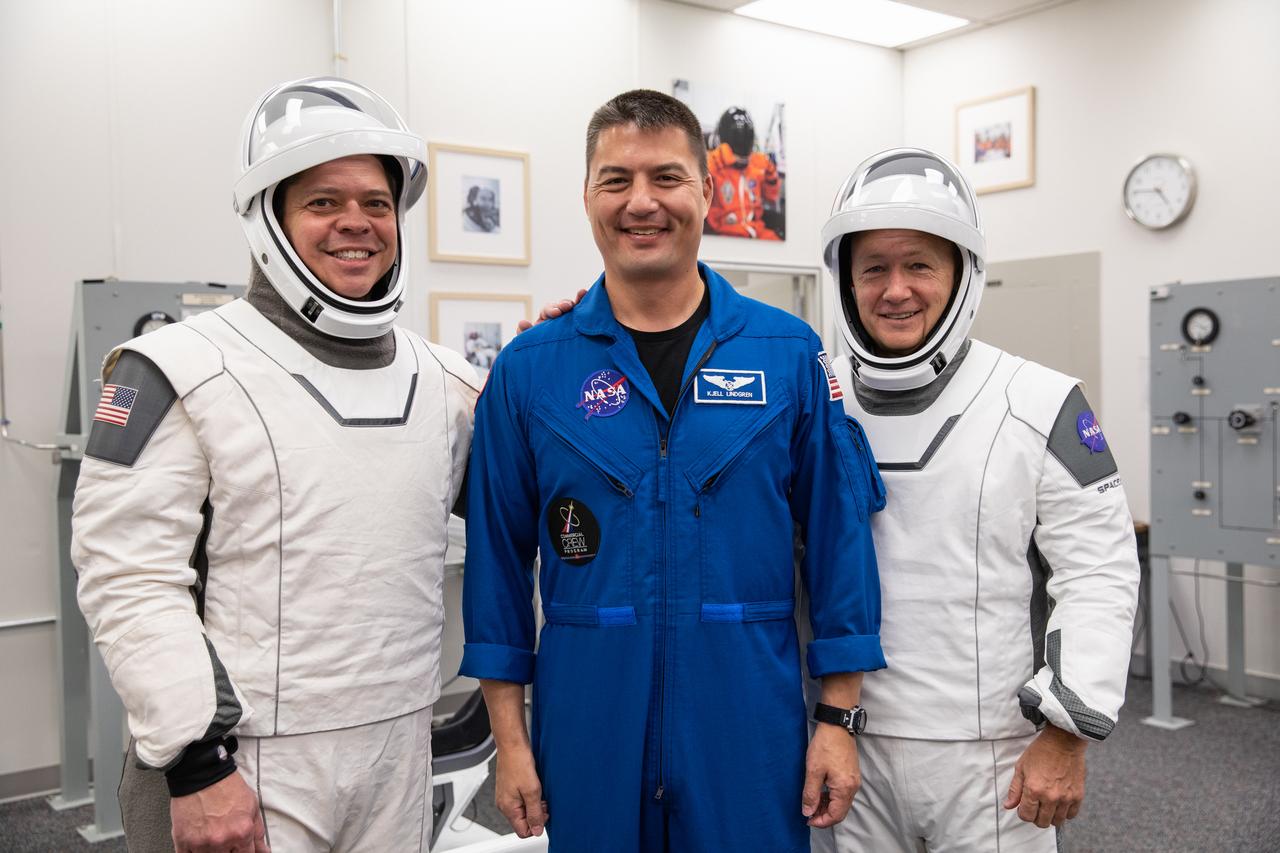
From left to right, NASA astronauts Bob Behnken, Kjell Lindgren and Doug Hurley pause for a photo in the Astronaut Crew Quarters at Kennedy Space Center in Florida on Jan. 17, 2020, during a dress rehearsal ahead of the SpaceX uncrewed In-Flight Abort Test. Behken and Hurley are wearing SpaceX spacesuits. A SpaceX Falcon 9 rocket and Crew Dragon spacecraft will lift off from Launch Complex 39A on the flight test, which will demonstrate the spacecraft’s escape capabilities in preparation for crewed flights to the International Space Station as part of the agency’s Commercial Crew Program. Behnken and Hurley are slated to fly on the company’s first crewed mission, Demo-2.
SpaceX InFlight Abort Dry Dress Rehearsal
NASA astronauts cheer as fellow astronauts Bob Benhken and Doug Hurley walk out of the Neil A. Armstrong Operations and Checkout Building at Kennedy Space Center in Florida on Jan. 17, 2020, during a dress rehearsal ahead of the SpaceX uncrewed In-Flight Abort Test. From left to right are Mike Hopkins, Raja Chari, Victor Glover and Kjell Lindgren. A SpaceX Falcon 9 rocket and Crew Dragon spacecraft will lift off from Launch Complex 39A on the flight test, which will demonstrate the spacecraft’s escape capabilities in preparation for crewed flights to the International Space Station as part of the agency’s Commercial Crew Program. Behnken and Hurley are slated to fly on the company’s first crewed mission, Demo-2.
SpaceX InFlight Abort Dry Dress Rehearsal
NASA astronaut Bob Behnken wears a SpaceX spacesuit in the Astronaut Crew Quarters at Kennedy Space Center in Florida on Jan. 17, 2020, during a dress rehearsal ahead of the company’s uncrewed In-Flight Abort Test. A SpaceX Falcon 9 rocket and Crew Dragon spacecraft will lift off from Launch Complex 39A on the flight test, which will demonstrate the spacecraft’s escape capabilities in preparation for crewed flights to the International Space Station as part of the agency’s Commercial Crew Program. Behnken and NASA astronaut Doug Hurley are slated to fly on the company’s first crewed mission, Demo-2.
SpaceX InFlight Abort Dry Dress Rehearsal
NASA astronauts Doug Hurley, foreground, and Bob Behnken don SpaceX spacesuits in the Astronaut Crew Quarters at Kennedy Space Center in Florida on Jan. 17, 2020, during a dress rehearsal ahead of the company’s uncrewed In-Flight Abort Test. A SpaceX Falcon 9 rocket and Crew Dragon spacecraft will lift off from Launch Complex 39A on the flight test, which will demonstrate the spacecraft’s escape capabilities in preparation for crewed flights to the International Space Station as part of the agency’s Commercial Crew Program. Hurley and Behnken are slated to fly on the company’s first crewed mission, Demo-2.
SpaceX InFlight Abort Dry Dress Rehearsal
NASA astronaut Bob Behnken wears a SpaceX spacesuit in the Astronaut Crew Quarters at Kennedy Space Center in Florida on Jan. 17, 2020, during a dress rehearsal ahead of the company’s uncrewed In-Flight Abort Test. A SpaceX Falcon 9 rocket and Crew Dragon spacecraft will lift off from Launch Complex 39A on the flight test, which will demonstrate the spacecraft’s escape capabilities in preparation for crewed flights to the International Space Station as part of the agency’s Commercial Crew Program. Behnken and NASA astronaut Doug Hurley are slated to fly on the company’s first crewed mission, Demo-2.
SpaceX InFlight Abort Dry Dress Rehearsal
NASA astronauts Doug Hurley, foreground, and Bob Behnken don SpaceX spacesuits in the Astronaut Crew Quarters at Kennedy Space Center in Florida on Jan. 17, 2020, during a dress rehearsal ahead of the company’s uncrewed In-Flight Abort Test. A SpaceX Falcon 9 rocket and Crew Dragon spacecraft will lift off from Launch Complex 39A on the flight test, which will demonstrate the spacecraft’s escape capabilities in preparation for crewed flights to the International Space Station as part of the agency’s Commercial Crew Program. Hurley and Behnken are slated to fly on the company’s first crewed mission, Demo-2.
SpaceX InFlight Abort Dry Dress Rehearsal
NASA astronauts Doug Hurley, foreground, and Bob Behnken don SpaceX spacesuits in the Astronaut Crew Quarters at Kennedy Space Center in Florida on Jan. 17, 2020, during a dress rehearsal ahead of the company’s uncrewed In-Flight Abort Test. A SpaceX Falcon 9 rocket and Crew Dragon spacecraft will lift off from Launch Complex 39A on the flight test, which will demonstrate the spacecraft’s escape capabilities in preparation for crewed flights to the International Space Station as part of the agency’s Commercial Crew Program. Hurley and Behnken are slated to fly on the company’s first crewed mission, Demo-2.
SpaceX InFlight Abort Dry Dress Rehearsal
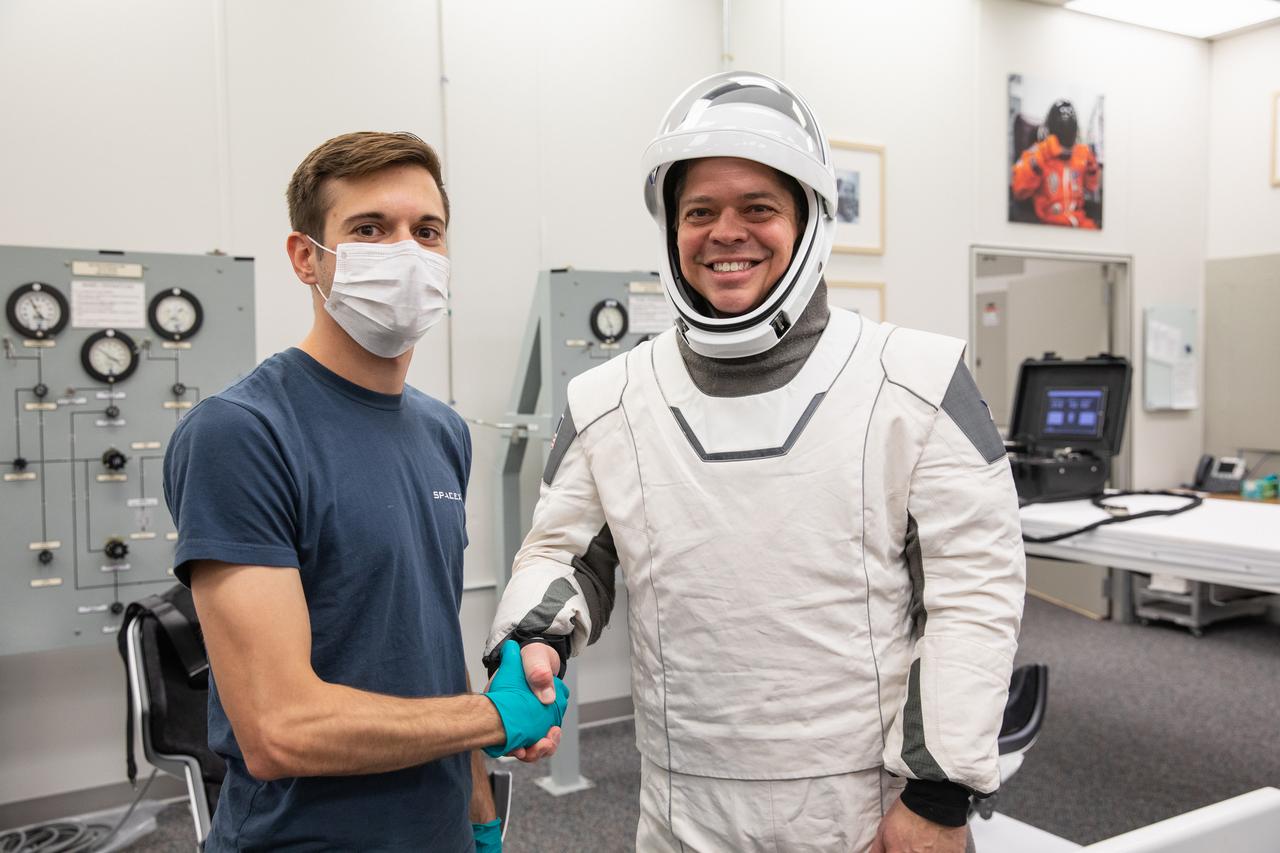
NASA astronauts Bob Behnken, right, wearing a SpaceX spacesuit, and a suit technician shake hands in the Astronaut Crew Quarters at Kennedy Space Center in Florida on Jan. 17, 2020, during a dress rehearsal ahead of the company’s uncrewed In-Flight Abort Test. A SpaceX Falcon 9 rocket and Crew Dragon spacecraft will lift off from Launch Complex 39A on the flight test, which will demonstrate the spacecraft’s escape capabilities in preparation for crewed flights to the International Space Station as part of the agency’s Commercial Crew Program. Behnken and NASA astronaut Doug Hurley are slated to fly on the company’s first crewed mission, Demo-2.
SpaceX InFlight Abort Dry Dress Rehearsal
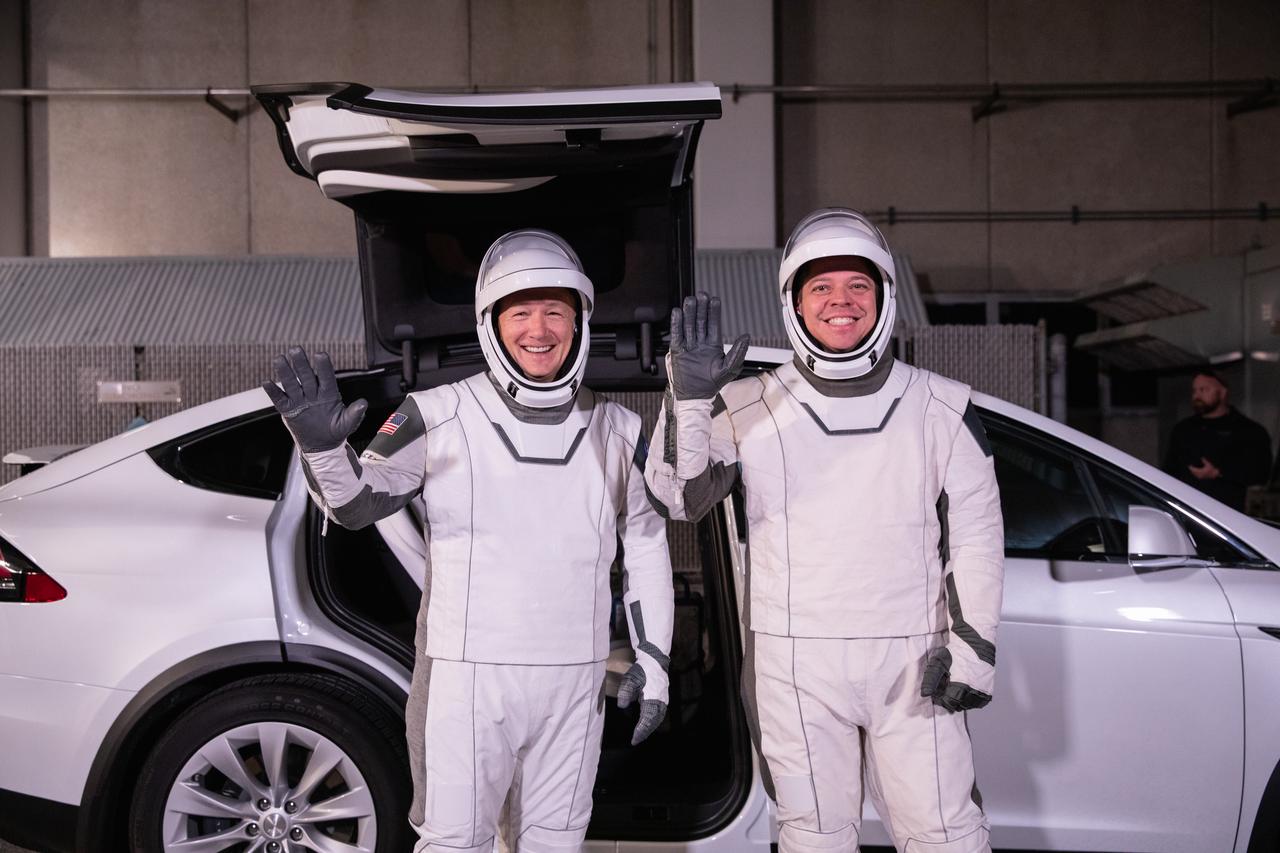
NASA astronauts Bob Behnken, left, and Doug Hurley, wearing SpaceX spacesuits, walk out of the Neil A. Armstrong Operations and Checkout Building at Kennedy Space Center in Florida on Jan. 17, 2020, during a dress rehearsal ahead of the SpaceX uncrewed In-Flight Abort Test. A SpaceX Falcon 9 rocket and Crew Dragon spacecraft will lift off from Launch Complex 39A on the flight test, which will demonstrate the spacecraft’s escape capabilities in preparation for crewed flights to the International Space Station as part of the agency’s Commercial Crew Program. Behnken and Hurley are slated to fly on the company’s first crewed mission, Demo-2.
SpaceX InFlight Abort Dry Dress Rehearsal
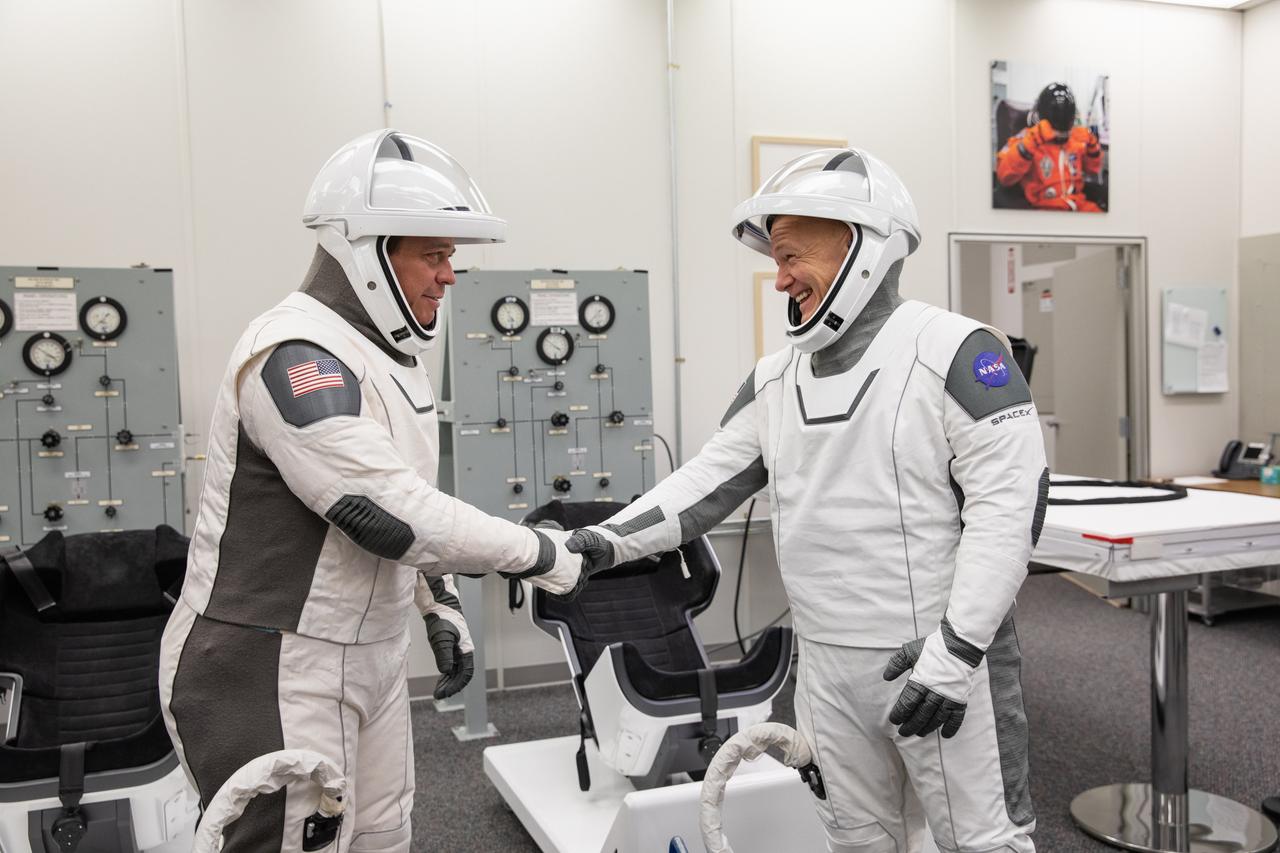
NASA astronauts Bob Behnken, left, and Doug Hurley shake hands after suiting up in SpaceX spacesuits in the Astronaut Crew Quarters at Kennedy Space Center in Florida on Jan. 17, 2020, during a dress rehearsal ahead of the company’s uncrewed In-Flight Abort Test. A SpaceX Falcon 9 rocket and Crew Dragon spacecraft will lift off from Launch Complex 39A on the flight test, which will demonstrate the spacecraft’s escape capabilities in preparation for crewed flights to the International Space Station as part of the agency’s Commercial Crew Program. Behnken and Hurley are slated to fly on the company’s first crewed mission, Demo-2.
SpaceX InFlight Abort Dry Dress Rehearsal
NASA astronauts Doug Hurley, left, and Bob Behnken, wearing SpaceX spacesuits, wave after walking out of the Neil A. Armstrong Operations and Checkout Building at Kennedy Space Center in Florida on Jan. 17, 2020, during a dress rehearsal ahead of the SpaceX uncrewed In-Flight Abort Test. A SpaceX Falcon 9 rocket and Crew Dragon spacecraft will lift off from Launch Complex 39A on the flight test, which will demonstrate the spacecraft’s escape capabilities in preparation for crewed flights to the International Space Station as part of the agency’s Commercial Crew Program. Behnken and Hurley are slated to fly on the company’s first crewed mission, Demo-2.
SpaceX InFlight Abort Dry Dress Rehearsal
NASA astronaut Doug Hurley dons a SpaceX spacesuit in the Astronaut Crew Quarters at Kennedy Space Center in Florida on Jan. 17, 2020, during a dress rehearsal ahead of the company’s uncrewed In-Flight Abort Test. A SpaceX Falcon 9 rocket and Crew Dragon spacecraft will lift off from Launch Complex 39A on the flight test, which will demonstrate the spacecraft’s escape capabilities in preparation for crewed flights to the International Space Station as part of the agency’s Commercial Crew Program. Hurley and NASA astronaut Bob Behnken are slated to fly on the company’s first crewed mission, Demo-2.
SpaceX InFlight Abort Dry Dress Rehearsal
NASA astronaut Doug Hurley wears a SpaceX spacesuit in the Astronaut Crew Quarters at Kennedy Space Center in Florida on Jan. 17, 2020, during a dress rehearsal ahead of the company’s uncrewed In-Flight Abort Test. A SpaceX Falcon 9 rocket and Crew Dragon spacecraft will lift off from Launch Complex 39A on the flight test, which will demonstrate the spacecraft’s escape capabilities in preparation for crewed flights to the International Space Station as part of the agency’s Commercial Crew Program. Hurley and NASA astronaut Bob Behnken are slated to fly on the company’s first crewed mission, Demo-2.
SpaceX InFlight Abort Dry Dress Rehearsal
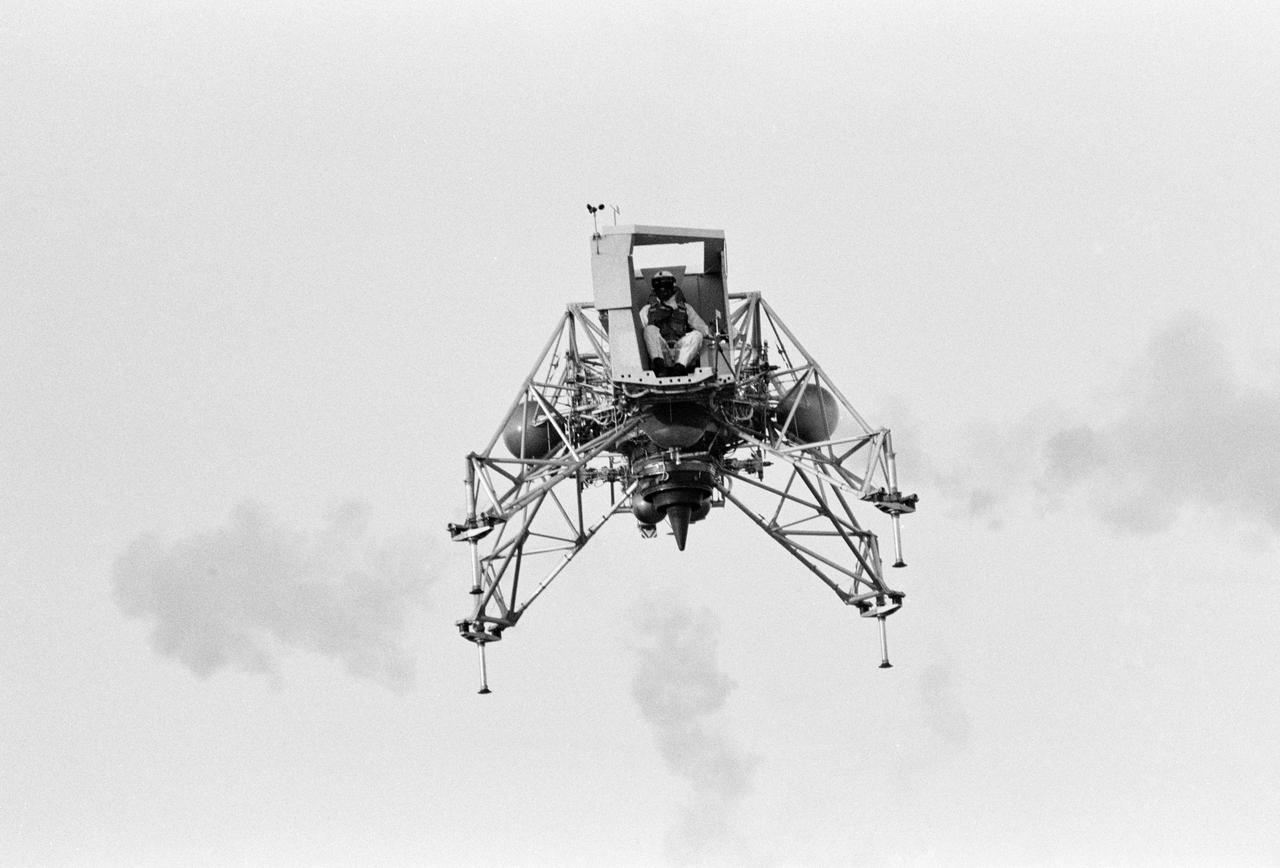
Inflight view of Astronaut Neil Armstrong flying the Lunar Landing Training Vehicle (LLTV) at EAFB.  EAFB, Houston, TX
Crew Training - Apollo 11 - Ellington AFB (EAFB), TX
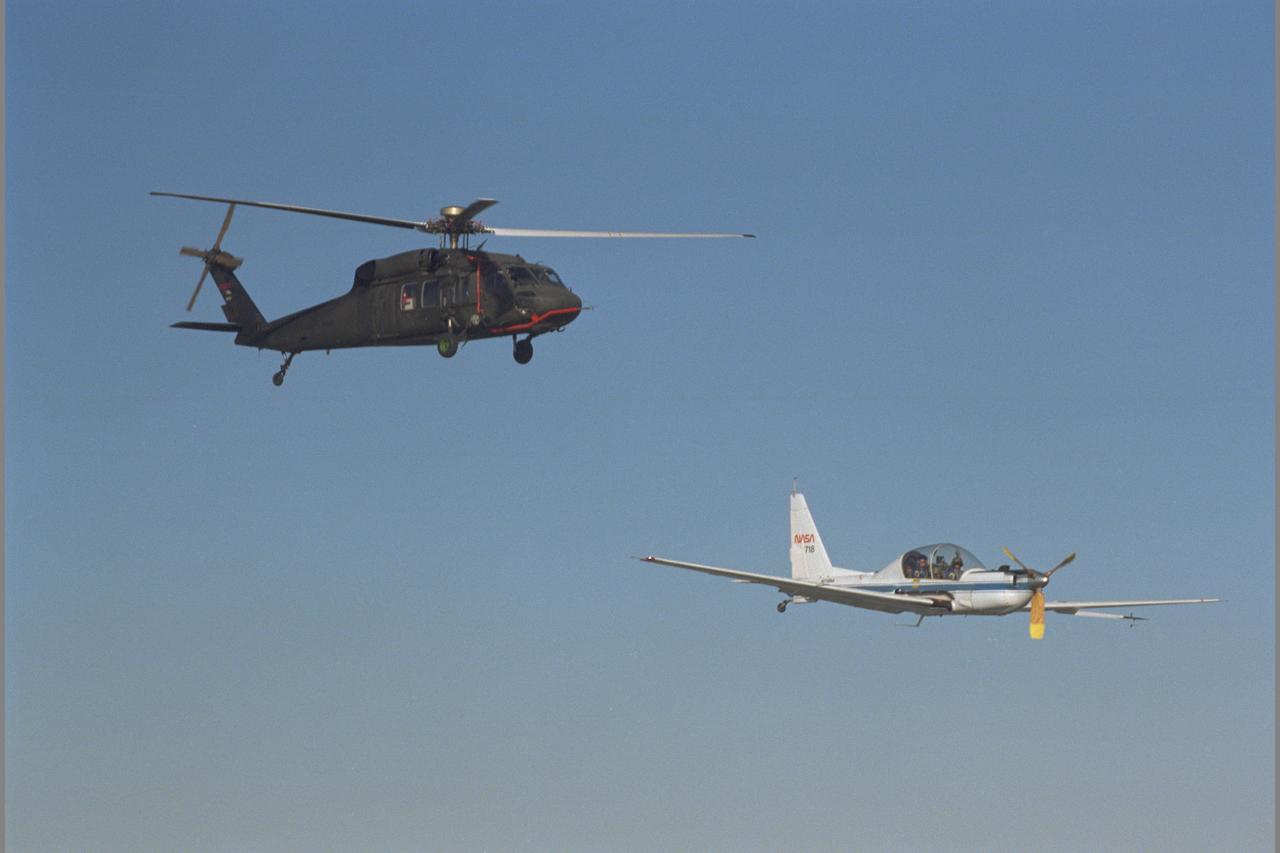
UH-60 Blackhawk (NASA 748) and YO-3A (NASA-718) inflight over Altamont Pass, CA - Blade Vortex Interaction Noise experiment
ARC-1993-AC93-0593-13
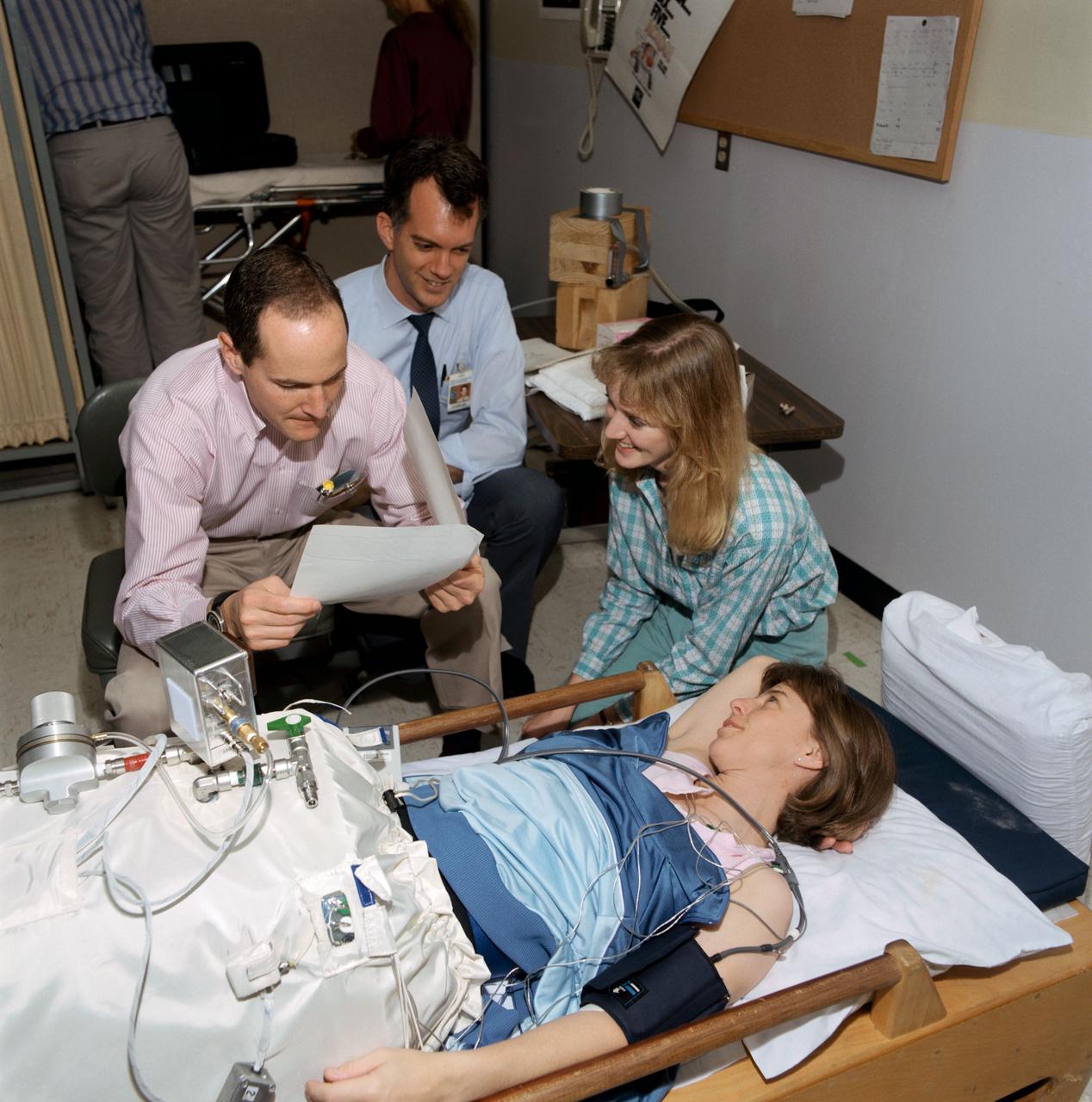
STS-32 crewmembers test the inflight lower body negative pressure (LBNP) device. Mission Specialist (MS) Bonnie J. Dunbar (lying down) inside the cylindrical LBNP device prepares for testing as principal investigator Dr. John Charles, a cardiovascular scientist in JSC's Space Biomedical Research Institute, and Michele Jones, a KRUG International biomedical engineer, review procedures with MS G. David Low. The inflight LBNP will be part of detailed supplementary objective (DSO) 0478. Photo taken by JSC photographer Jack Jacob.
STS-32 crewmembers test DSO 0478 lower body negative pressure (LBNP) device
The STS-100 crew pose for their inflight crew photograph on the middeck of Endeavour, Orbiter Vehicle (OV) 105, during the STS-100 mission. Front row from left to right are: Mission Specialist (MS) Scott E. Parazynski, Pilot Jeffrey S. Ashby, Commander Kent V. Rominger and MS / Cosmonaut Yuri V. Lonchakov.  Back row: MS John L. Phillips, MS Umberto Guidoni and MS Chris A. Hadfield.  Lonchakov represents Rosaviakosmos.  Guidoni represents European Space Agency (ESA).  Hadfield represents Canadian Space Agency (CSA).  This image was selected by the STS-100 crew for use in public presentations.
STS-100 crew poses for the inflight crew photo on the middeck of Endeavour during STS-100
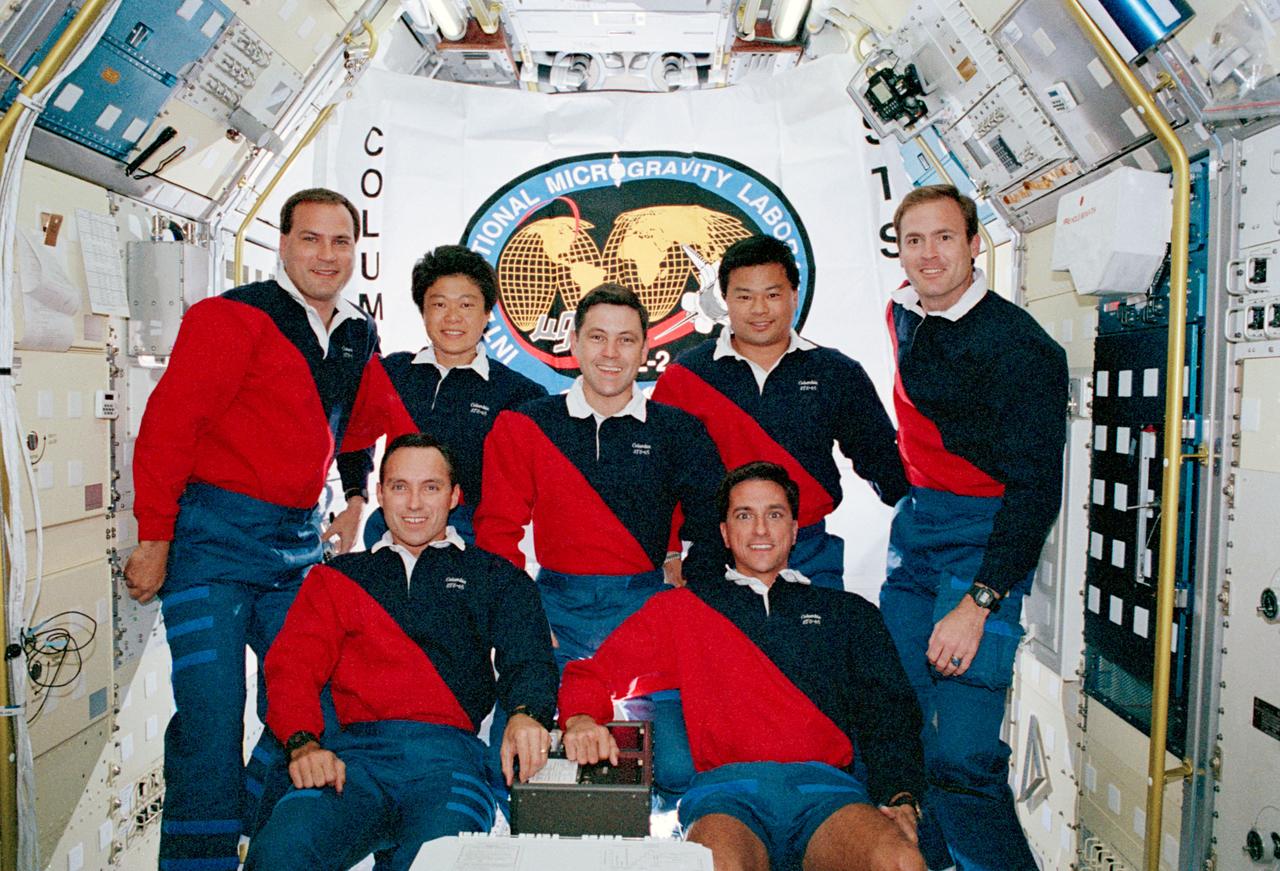
In the spacelab science module aboard the Space Shuttle Columbia, Orbiter Vehicle (OV) 102, the seven crewmembers pose for the traditional onboard (inflight) crew portrait. Displayed in the background is a flag with the International Microgravity Laboratory 2 (IML-2) insignia and Columbia inscribed along the edge. In the front row (left to right) are Mission Specialist (MS) Carl E. Walz and MS Donald A. Thomas. Behind them (left to right) are Payload Commander (PLC) Richard J. Hieb, Payload Specialist Chiaki Mukai, Commander Robert D. Cabana, MS Leroy Chiao, and Pilot James D. Halsell, Jr. Mukai represents the National Space Development Agency (NASDA) of Japan. Crewmembers are wearing their mission polo shirts for the portrait. Inside this module, the crew conducted experiments in support of the IML-2 mission.
STS-65 crew onboard portrait in IML-2 spacelab module with mission flag
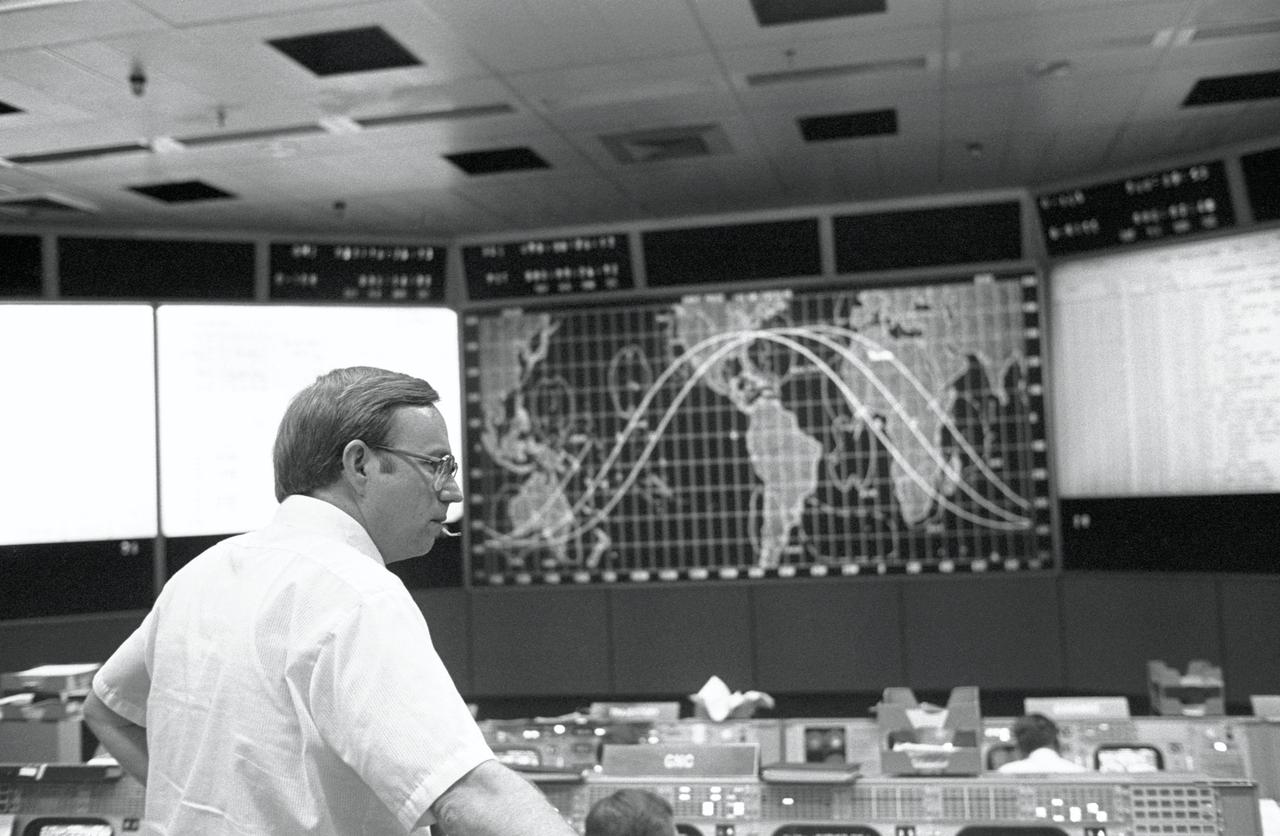
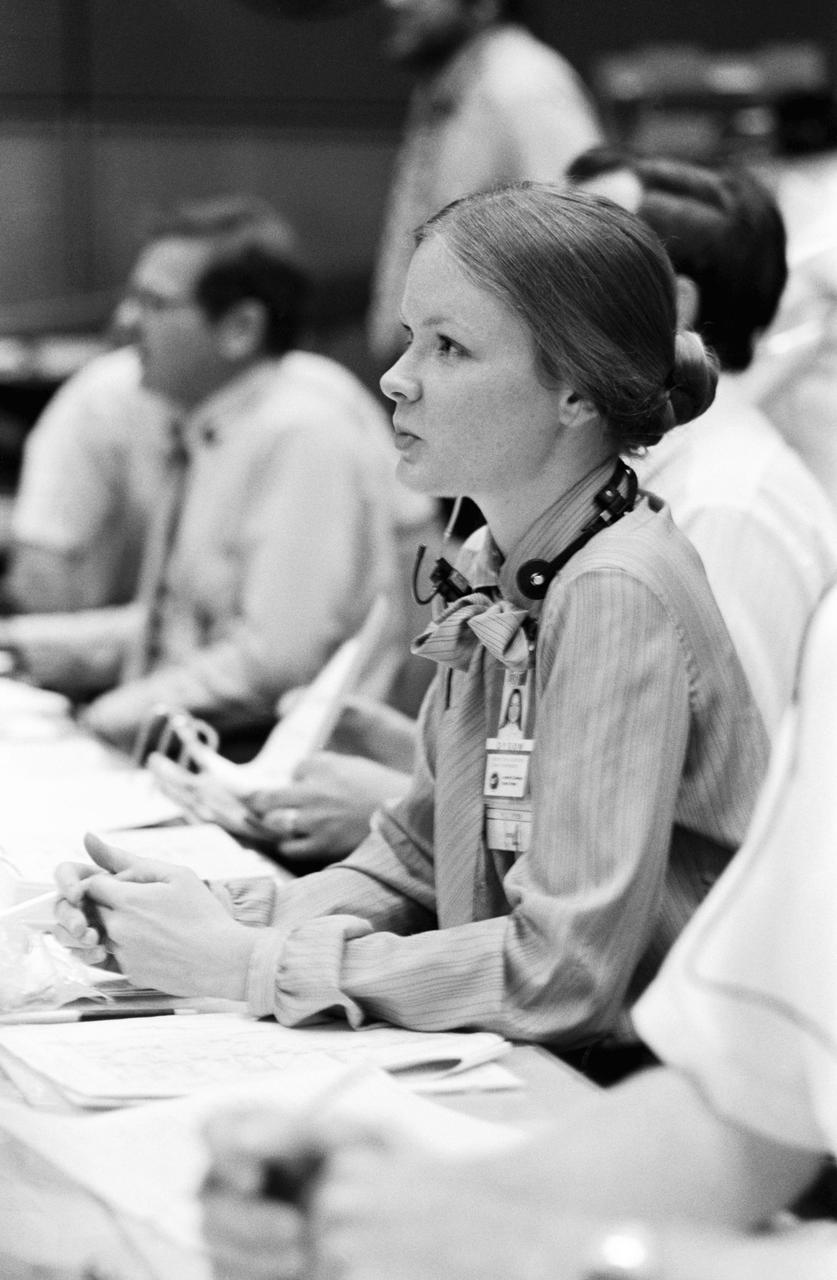
MOCR activities at the Guidance Console and Ms. Thornton E. Dyson during Day-4 of the STS-4 Mission.        1. STS-4 - INFLIGHT      JSC, HOUSTON, TX      Also see:  S82-36160
MISSION OPERATIONS CONTROL ROOM (MOCR) (STS-4) - DYSON, THORNTON E., MS. (MISSION CONTROL CENTER [MCC] - JSC
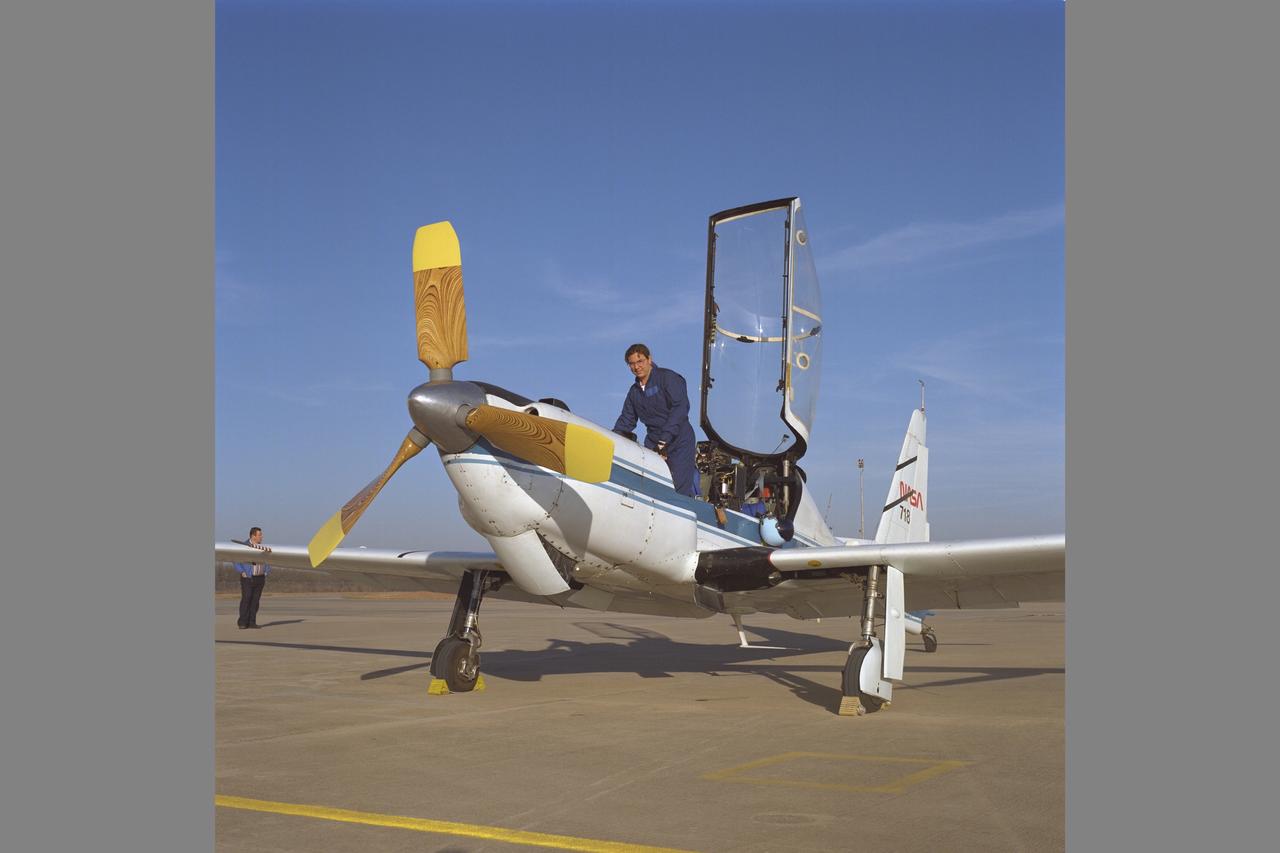
Megan McCluer in cockpit of YO-3A (NASA 718) during IRAP (inflight rotorcraft acoustics program) tests with XV-15 (NASA 703) over Bell Helicopter Textron Co.,
ARC-1995-AC95-0438-3
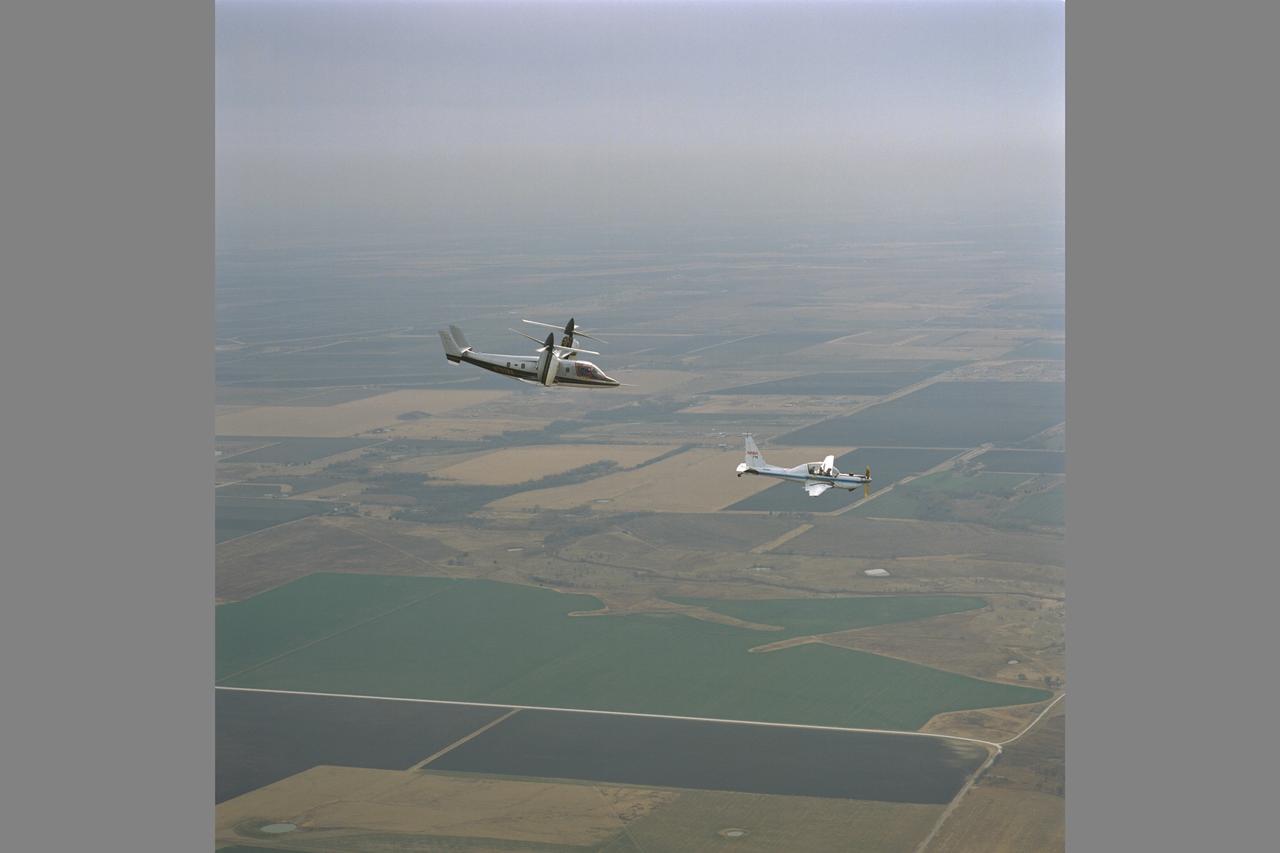
Bell XV-15 (NASA 703) and YO-3A (NASA 718) fly IRAP (inflight rotorcraft acoustics program) tests over Bell Helicopter Textron Co., Arlingtron, Texas
ARC-1995-AC95-0438-15
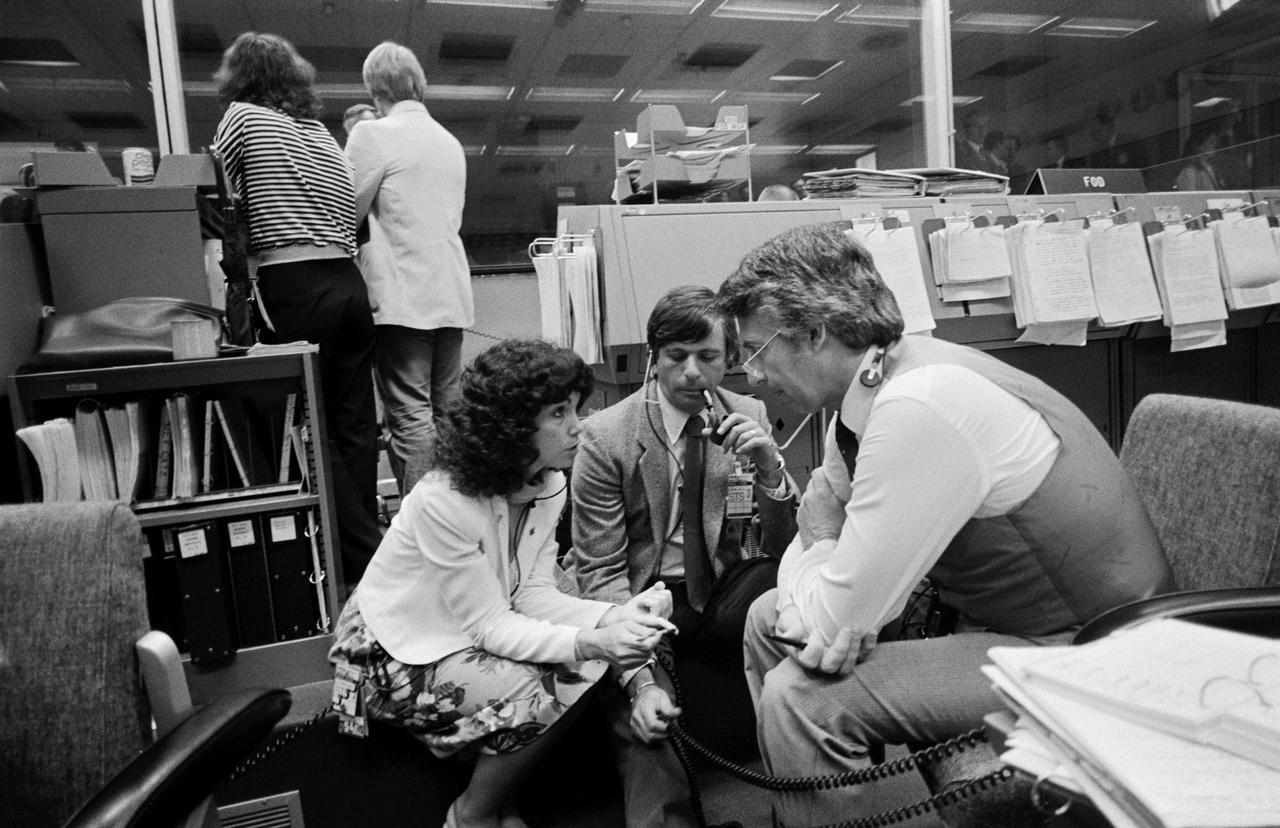
Mission Operations Control Room (MOCR) during Day-1 of the STS-3 Mission.        1.  HOLLOWAY, TOMMY W. - MCC     2.  MCC - STS-3     3.  STS-3 - INFLIGHT          JSC, HOUSTON, TX
MISSION CONTROL CENTER (MCC) (STS-3)
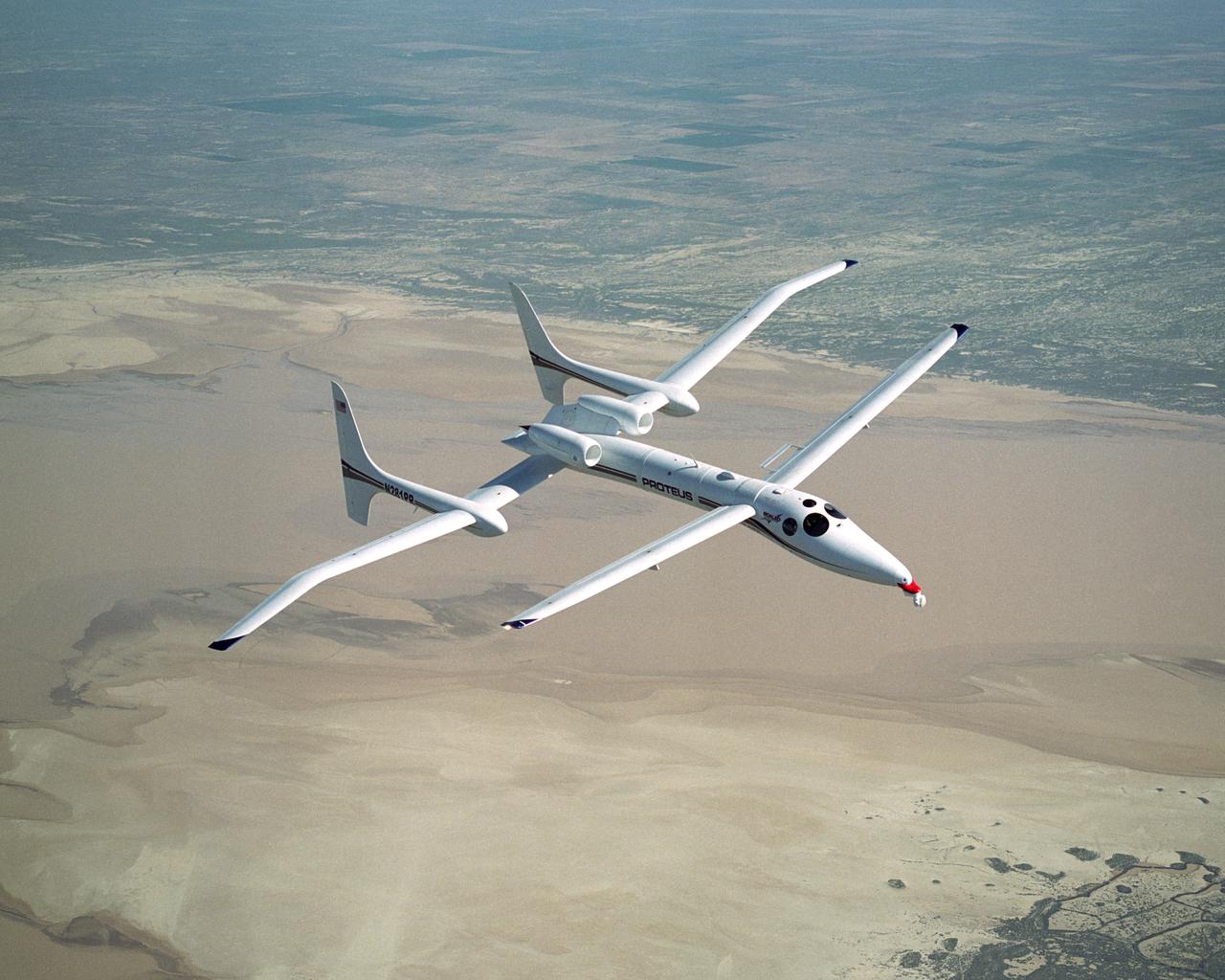
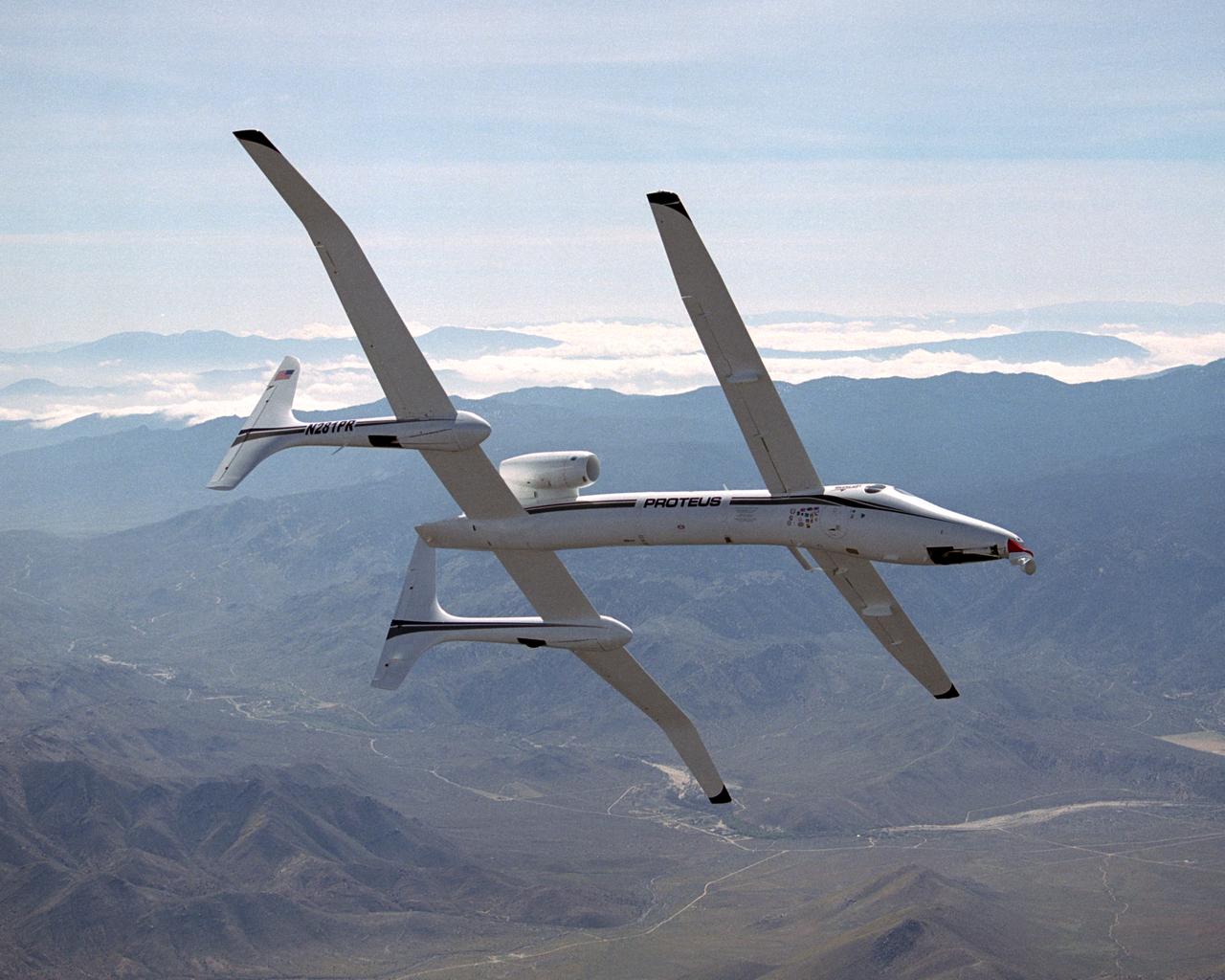
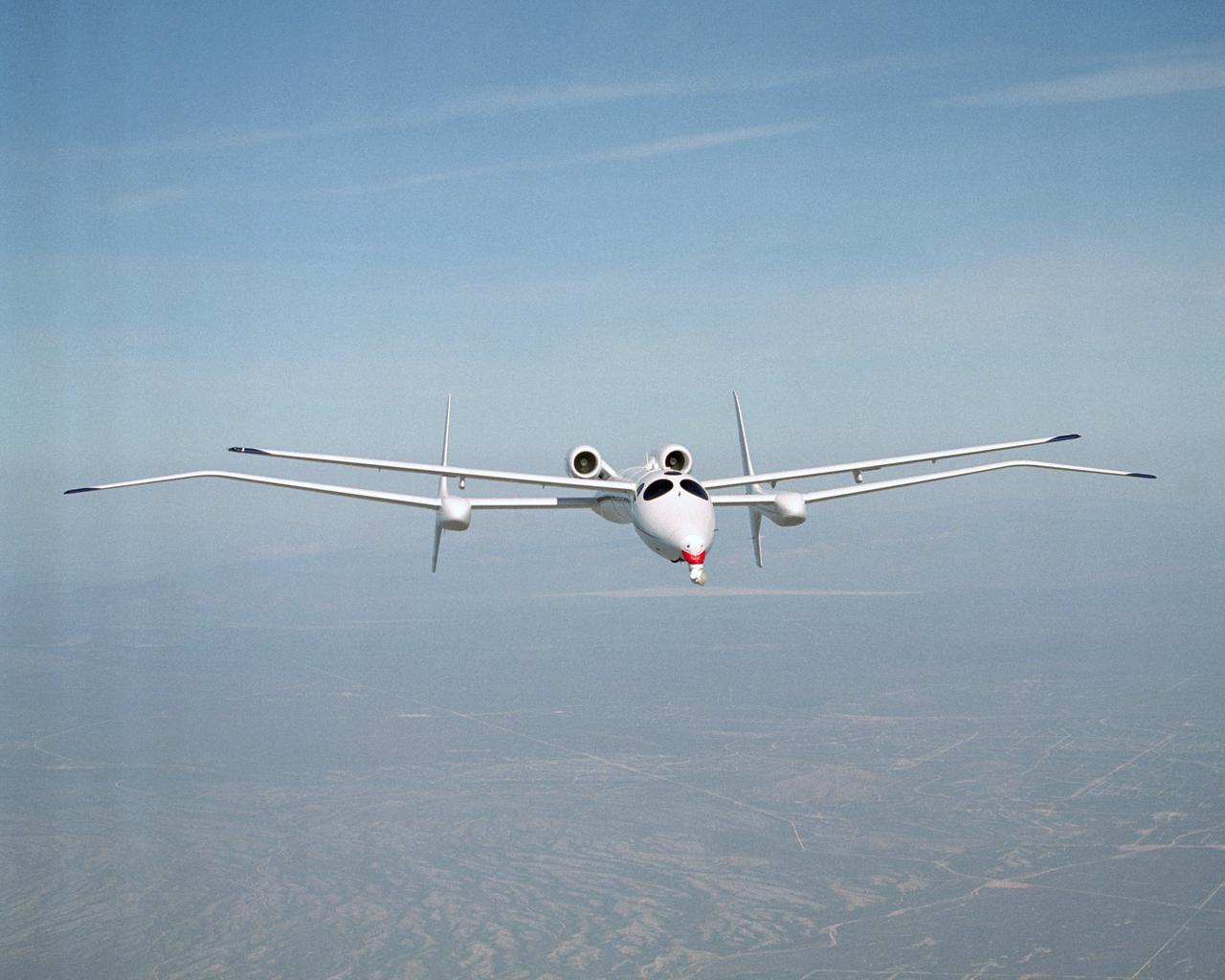
Scaled Composites' unique tandem-wing Proteus was the testbed for a series of UAV collision-avoidance flight demonstrations. An Amphitech 35GHz radar unit installed below Proteus' nose was the primary sensor for the Detect, See and Avoid tests.
Proteus in flight over Southern California
Scaled Composites' unique tandem-wing Proteus was the testbed for a series of UAV collision-avoidance flight demonstrations. An Amphitech 35GHz radar unit installed below Proteus' nose was the primary sensor for the Detect, See and Avoid tests.
Proteus front view in flight
Scaled Composites' unique tandem-wing Proteus was the testbed for a series of UAV collision-avoidance flight demonstrations. An Amphitech 35GHz radar unit installed below Proteus' nose was the primary sensor for the Detect, See and Avoid tests.
Proteus in flight over Rosamond Dry lakebed
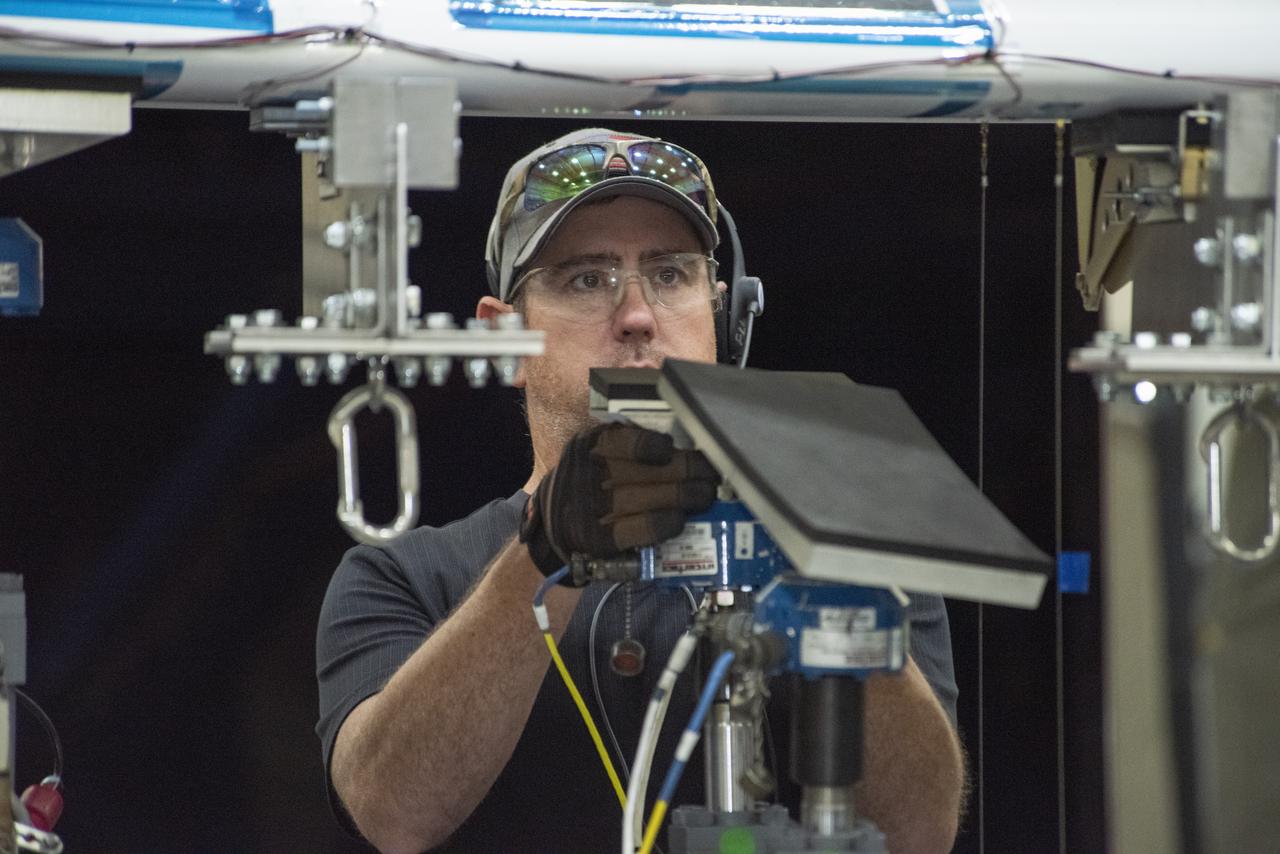
Wesley Li, Kirsten Boogaard and test conductor Eric Miller observe testing of the X-57 distributed electric aircraft wing at NASA's Armstrong Flight Research Center in California. Tests increased confidence in the wing's durability and calibrated installed strain gauges for inflight load monitoring of the wing.
NASA Armstrong Prepares for X-57 Flight Tests
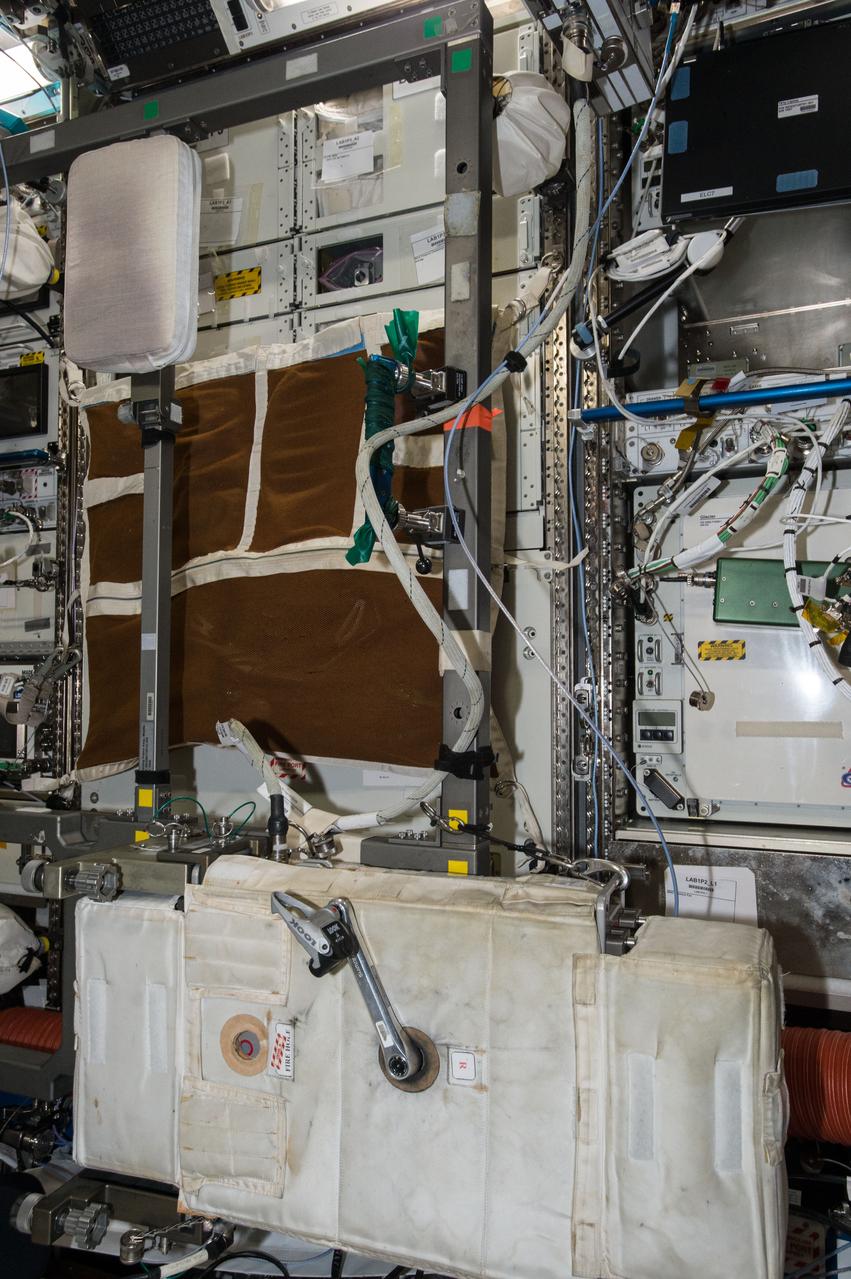
iss048e004552 (6/20/2016) --- Image taken to document re-installation of the Cycle Ergometer with Vibration Isolation and Stabilization (CEVIS) at LAB1P3 following inflight maintenance (IFM) on the Direct Current to Direct Current Converter Unit-1 (DDCU-1) Rack. Image was taken in the Destiny U.S. Laboratory.
CEVIS Installation on LAB1P3 Rack
STS-8 MCC Activities, Day 6 CapComs, Astronaut Bill Fisher and Flight Director Harold Draughon.                1.  INFLIGHT - STS-8 (MCC)       2.  FISHER, ANNA - STS-8 (MCC)       3.  FISHER, BILL - STS-8 (MCC)              JSC, HOUSTON, TX              Also available in 35 CN
STS-8 - MISSION CONTROL CENTER (MCC) - DRAUGHON, HAROLD (FLIGHT DIRECTOR) - JSC
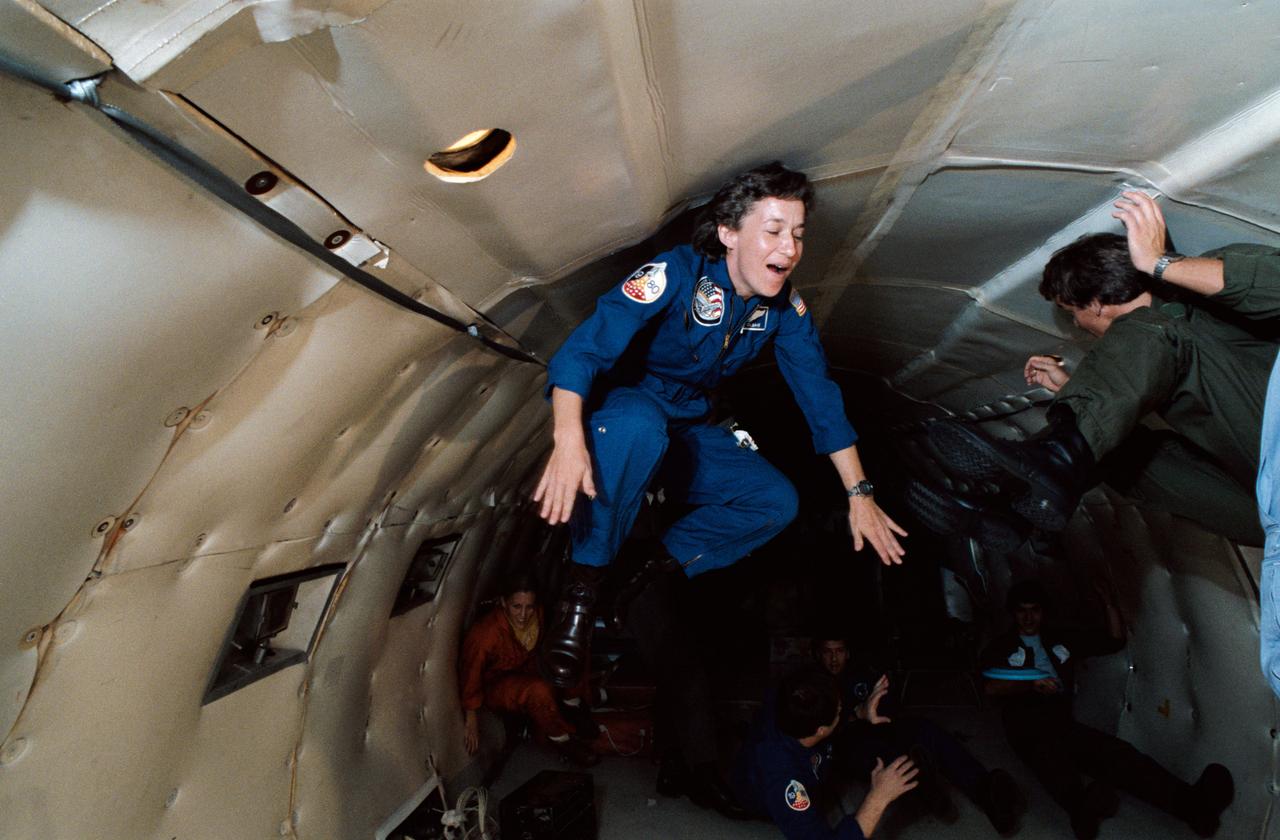
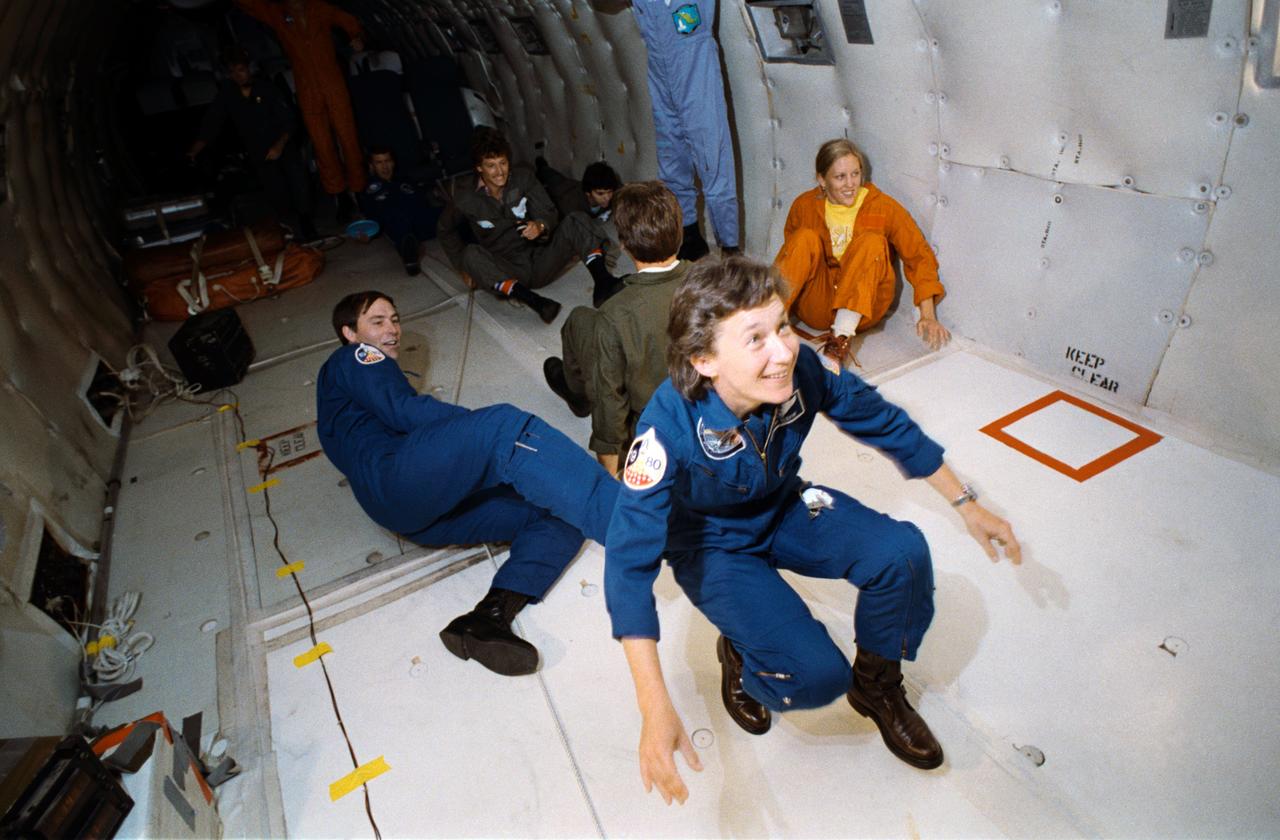
KC-135 inflight training of the STS-30/61B Crew for suit donning doffing and Zero-G orientation for Rudolfo Neri, Astronaut Mary Cleave, and Ricardo Peralta, Backup Neri.          1. Astronaut Cleave, Mary - Zero-G    2. Neri, Rodolfo - Zero-G    3. Peralta, Ricard - Zero-G
Crew Training - STS-30/61B (Zero-G)
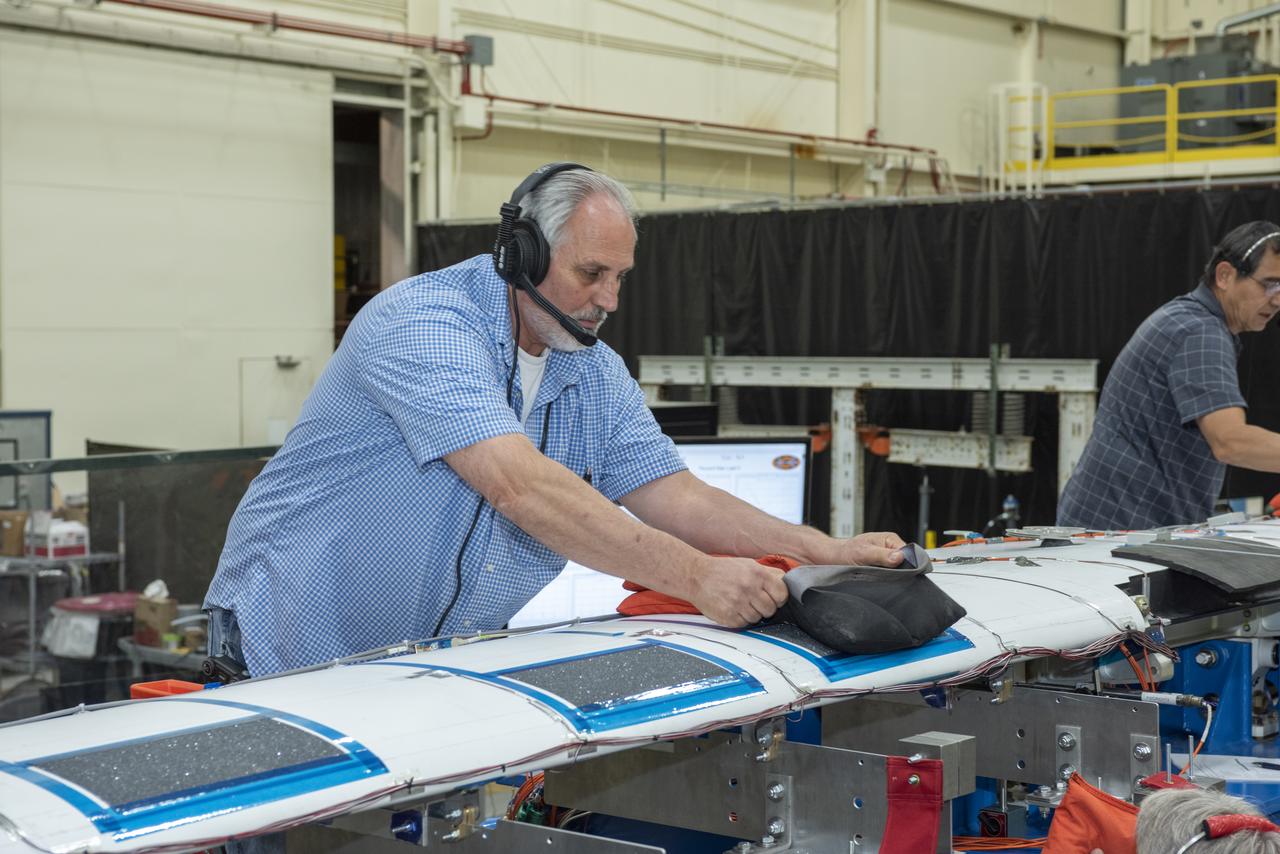
Ted Powers and Ronnie Haraguchi apply shot bags to the wing of the X-57 distributed electric aircraft wing at NASA’s Armstrong Flight Research Center in California. Tests increased confidence in the wing’s durability and calibrated installed strain gauges for inflight load monitoring of the wing.
NASA Armstrong Prepares for X-57 Flight Tests
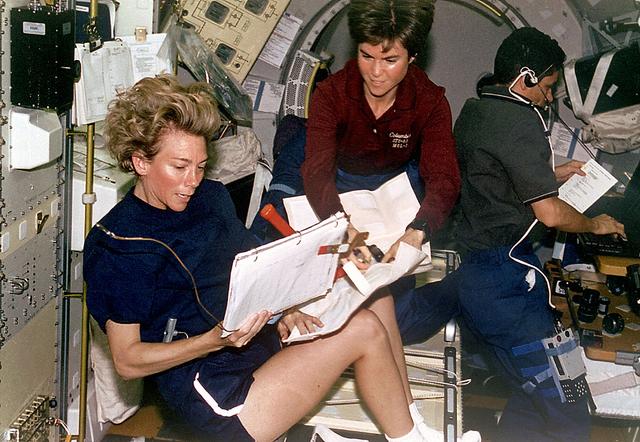
This Space Shuttle Columbia (STS-94) onboard photo is of astronauts Susan Still and Janice Voss reviewing an Inflight Maintenance (IFM) procedure in the Microgravity Science Lab (MSL-1) science module. Astronaut Gregory Linteris works at a lap top computer in the background.
Spacelab
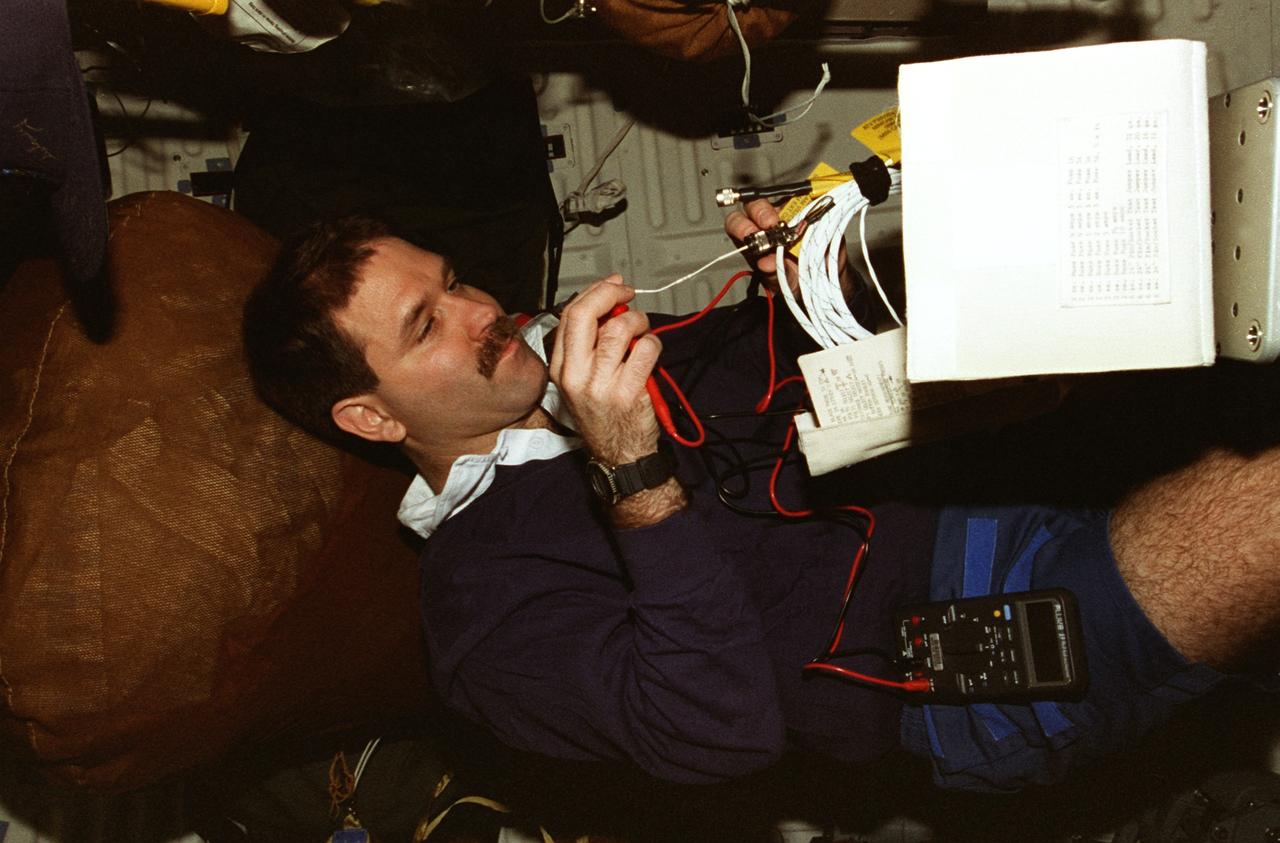
STS081-360-003 (12-22 Jan. 1997) --- Astronaut John M. Grunsfeld performs an inflight maintenance (IFM) task to re-activate power cables connected to experiments in the Spacehab Double Module (DM), onboard the Space Shuttle Atlantis.
MS Grunsfeld during cable IFM
KC-135 inflight training of the STS-30/61B Crew for suit donning doffing and Zero-G orientation for Rudolfo Neri, Astronaut Mary Cleave, and Ricardo Peralta, Backup Neri.          1. Astronaut Cleave, Mary - Zero-G    2. Neri, Rodolfo - Zero-G    3. Peralta, Ricard - Zero-G
Crew Training - STS-30/61B (Zero-G)
Ray Sadler adjusts hydraulic actuators with pads to the wing of the X-57 distributed electric aircraft wing at NASA's Armstrong Flight Research Center in California. Tests increased confidence in the wing's durability and calibrated installed strain gauges for inflight load monitoring of the wing.
NASA Armstrong Prepares for X-57 Flight Tests
STS081-369-003 (12-22 Jan. 1997) --- Traditional inflight crew portrait of the combined Mir-22 and STS-81 crews in the Base Block Module aboard Russia's Mir Space Station.  Front row: left to right, Michael A. Baker, commander; John M. Grunsfeld, mission specialist; and cosmonaut Aleksandr Y. Kaleri, Mir-22 flight engineer.  Middle row: cosmonaut Valeri G. Korzun, Mir-22 commander; Marsha S. Ivins, mission specialist; and John E. Blaha, former cosmonaut guest researcher.  Back row: Jerry M. Linenger, cosmonaut guest researcher; Peter J. K. (Jeff) Wisoff, mission specialist; and Brent W. Jett, Jr., pilot.  Linenger is seen in a Russian jump suit, and Blaha now wears a Space Shuttle inflight garment as the two exchanged cosmonaut guest researcher roles on January 14, 1997, following the docking of the Atlantis and the Mir complex.
Joint in-flight portrait of the STS-81 and Mir 22 crew on Mir
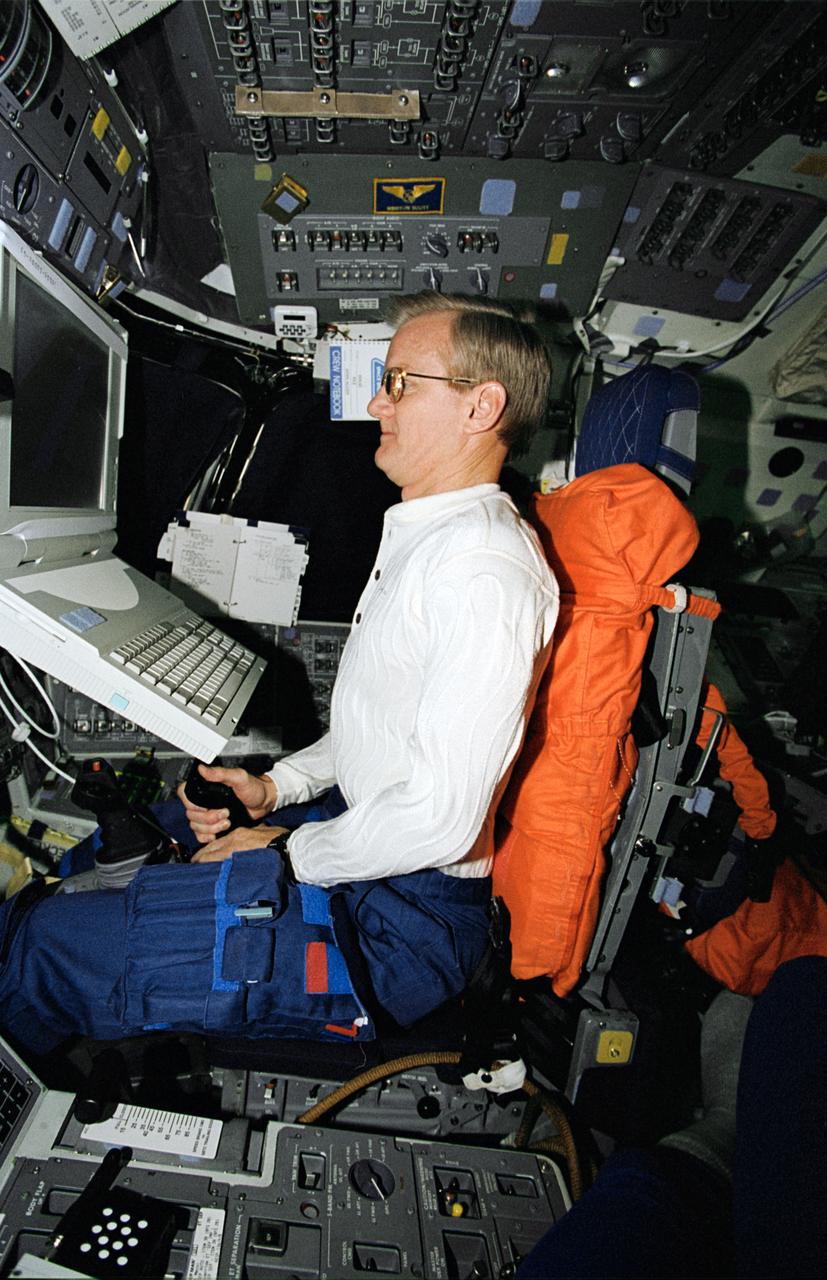
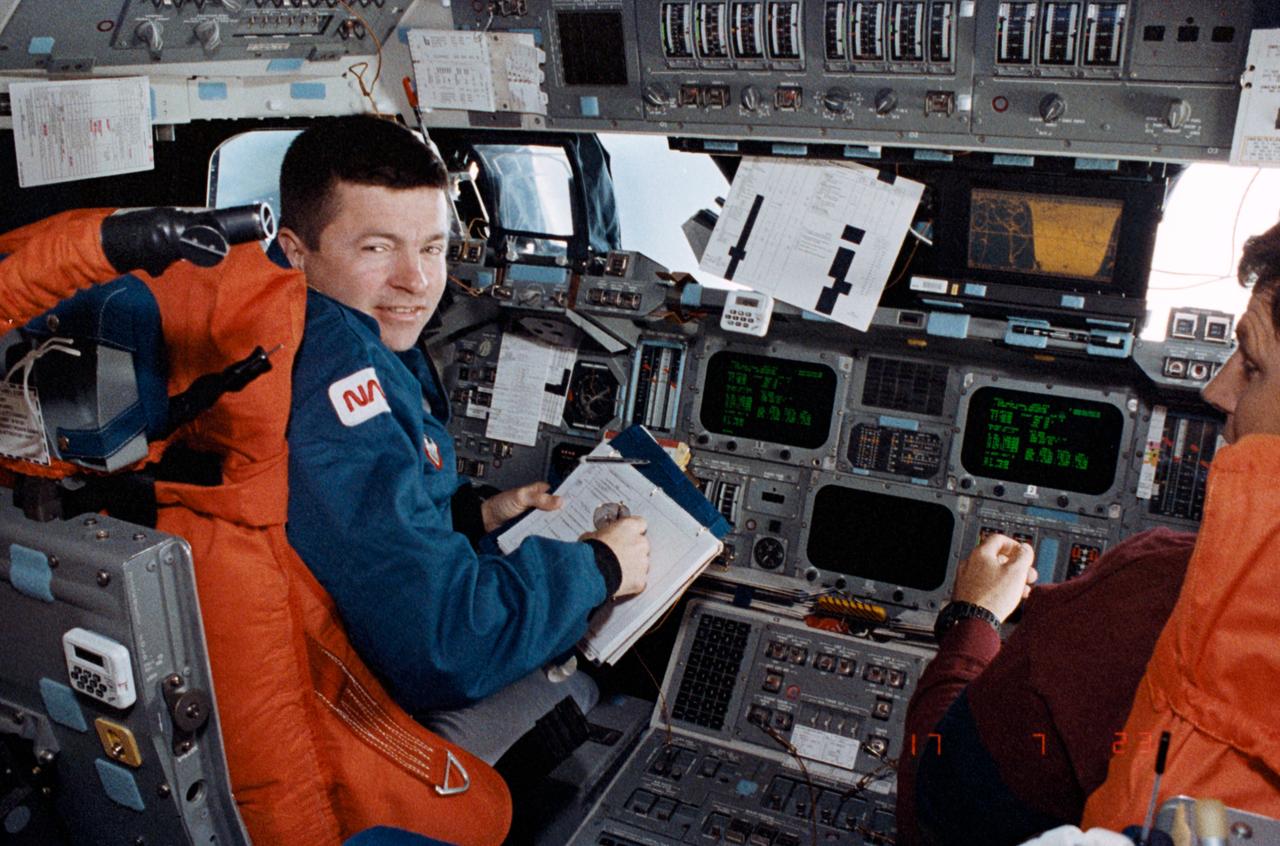
STS056-39-010 (8-17 April 1993) --- Astronaut Kenneth D. Cameron mans the mission commander's station during an orbiter maneuver aboard the Earth-orbiting Space Shuttle Discovery.  Astronaut Stephen S. Oswald, pilot, is partially visible at right edge of the frame.  The two were joined by three other NASA astronauts for nine days of science in support of the Atlas 2 mission in Earth orbit.
Crewmembers in the fwd flight deck reviewing inflight procedures manual.
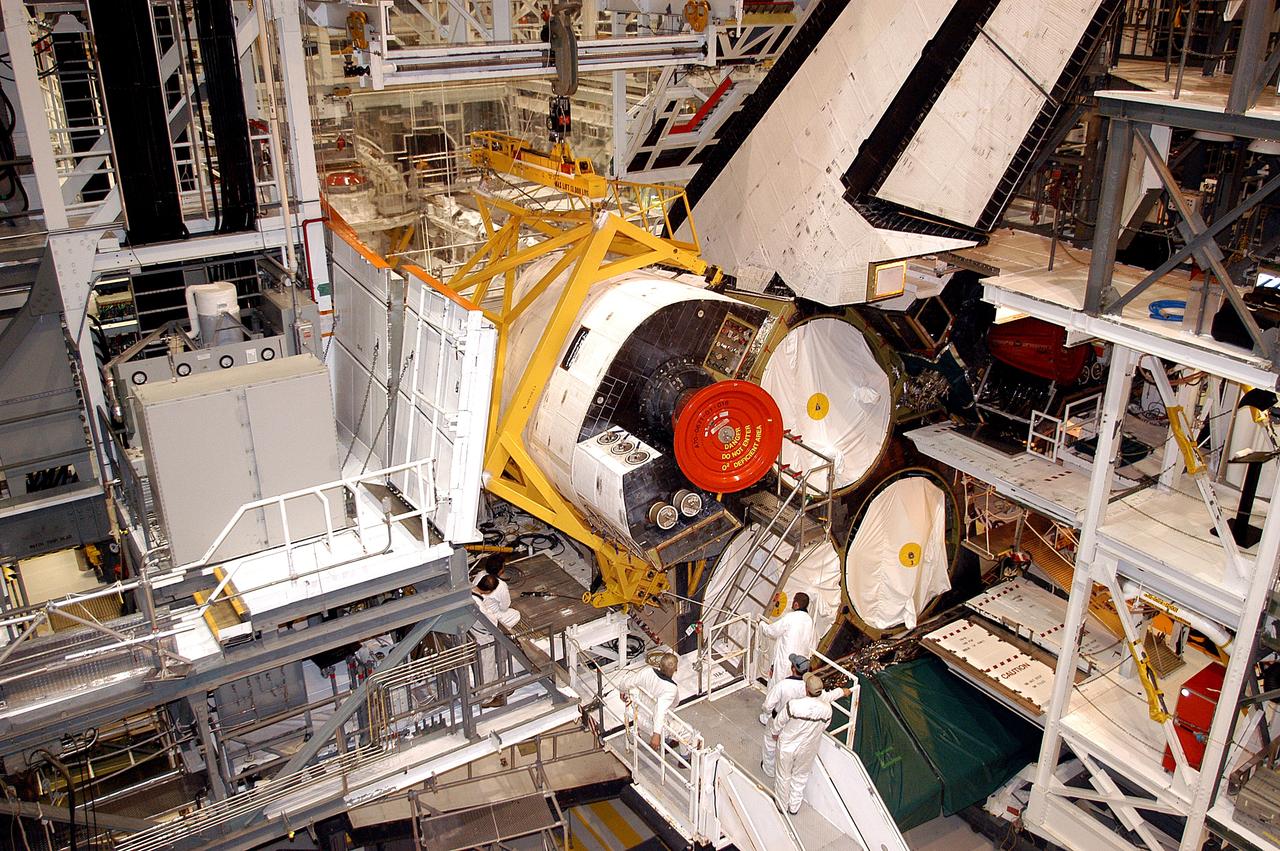
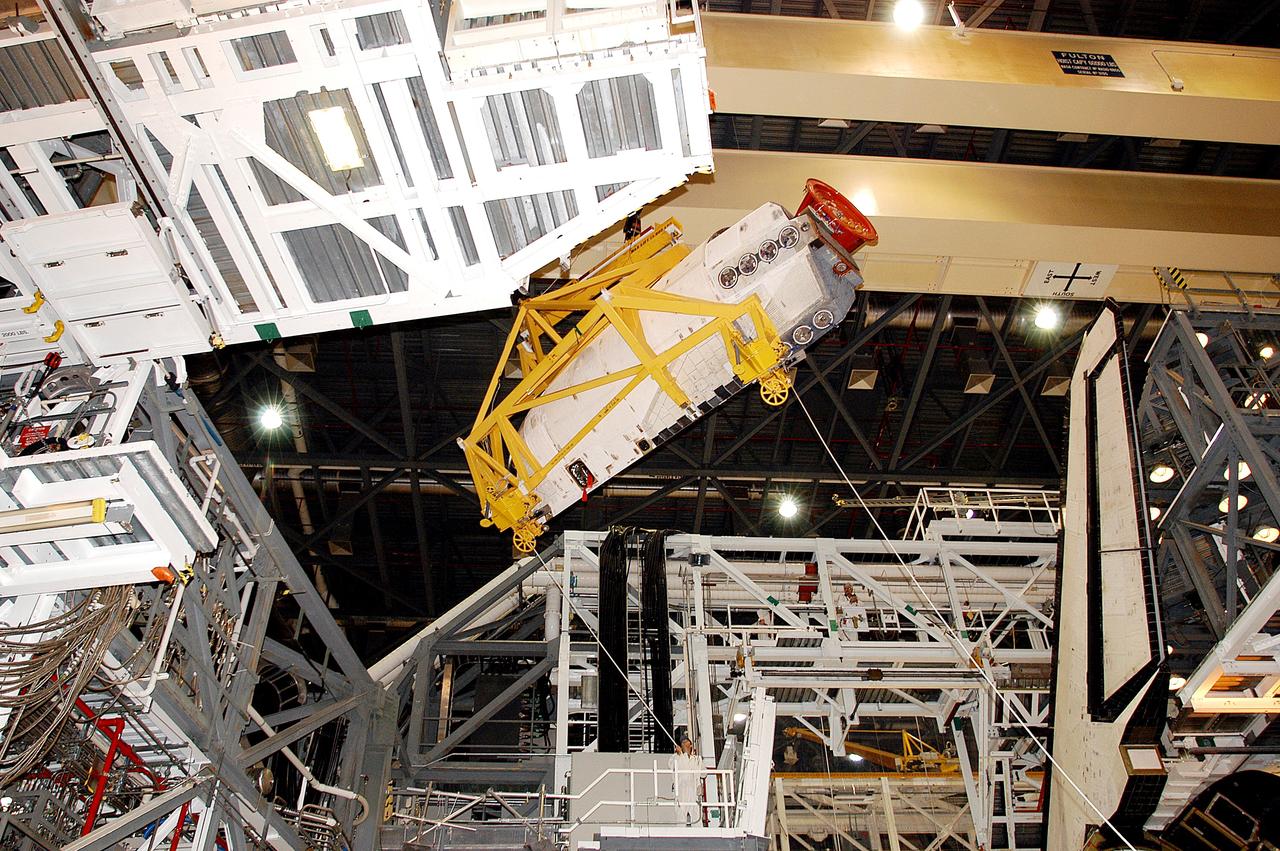
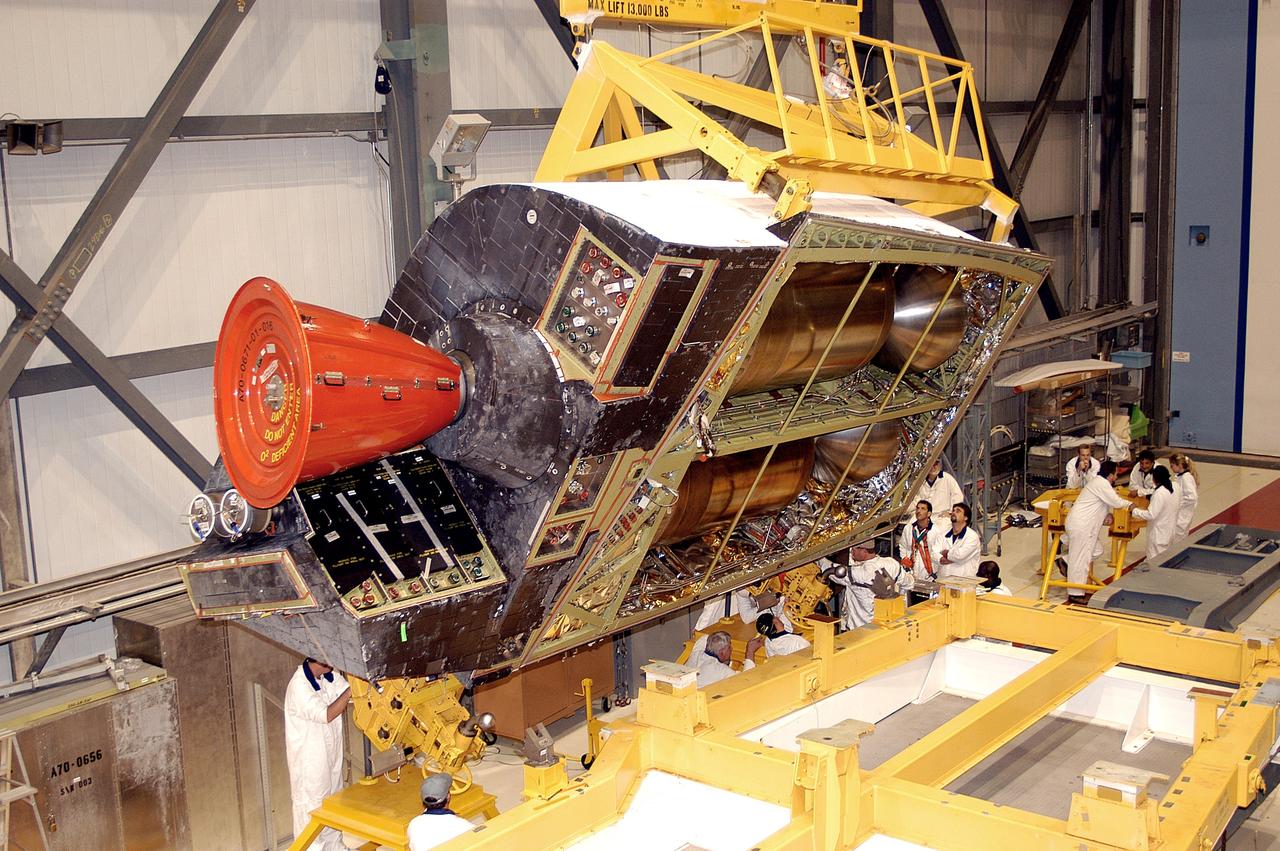
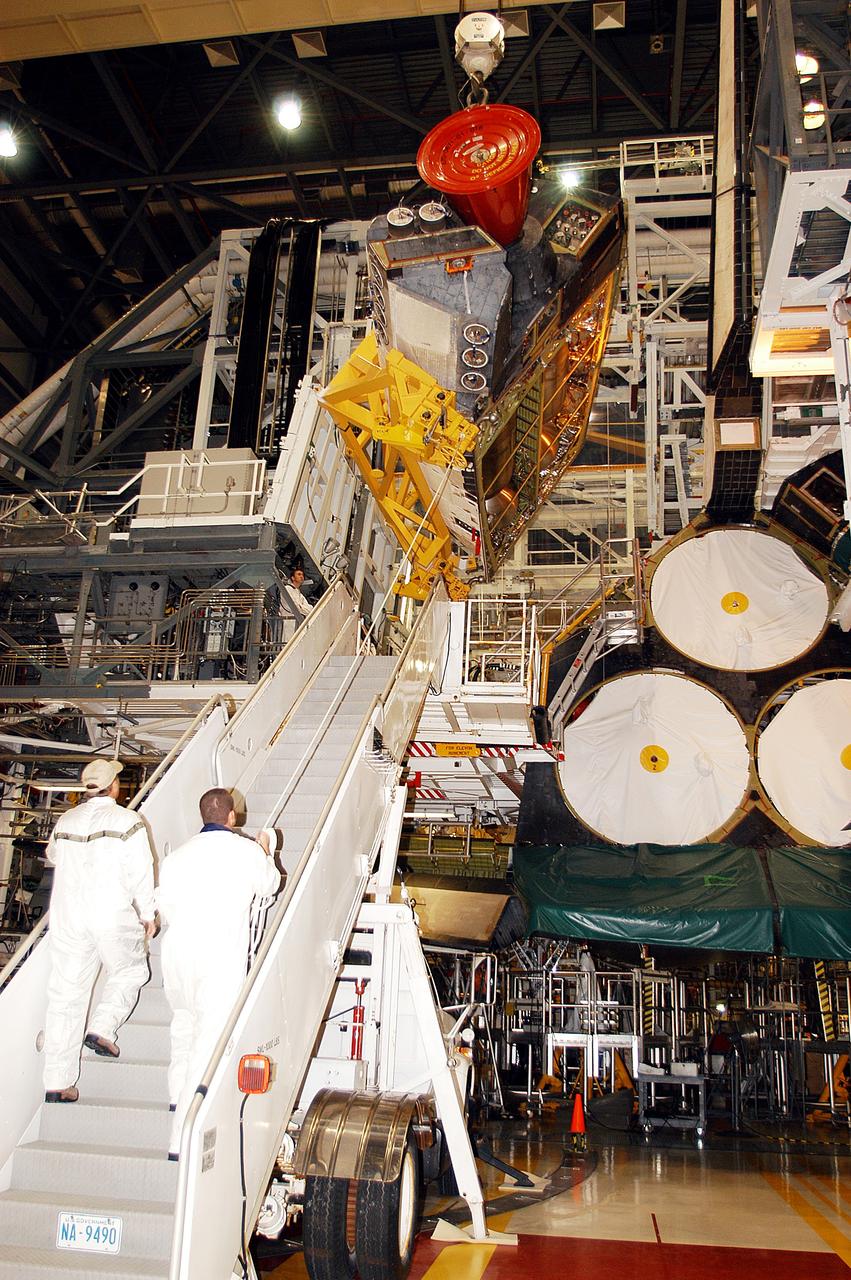
KENNEDY SPACE CENTER, FLA. - In the Orbiter Processing Facility, one of two orbital maneuvering system (OMS) pods is being moved for installation on Atlantis.  The OMS pods are attached to the upper aft fuselage left and right sides. Fabricated primarily of graphite epoxy composite and aluminum, each pod is 21.8 feet long and 11.37 feet wide at its aft end and 8.41 feet wide at its forward end, with a surface area of approximately 435 square feet. Each pod houses the Reaction Control System propulsion components used for inflight maneuvering and is attached to the aft fuselage with 11 bolts.
KENNEDY SPACE CENTER, FLA. - In the Orbiter Processing Facility, one of two orbital maneuvering system (OMS) pods is being moved for installation on Atlantis. The OMS pods are attached to the upper aft fuselage left and right sides. Fabricated primarily of graphite epoxy composite and aluminum, each pod is 21.8 feet long and 11.37 feet wide at its aft end and 8.41 feet wide at its forward end, with a surface area of approximately 435 square feet. Each pod houses the Reaction Control System propulsion components used for inflight maneuvering and is attached to the aft fuselage with 11 bolts.
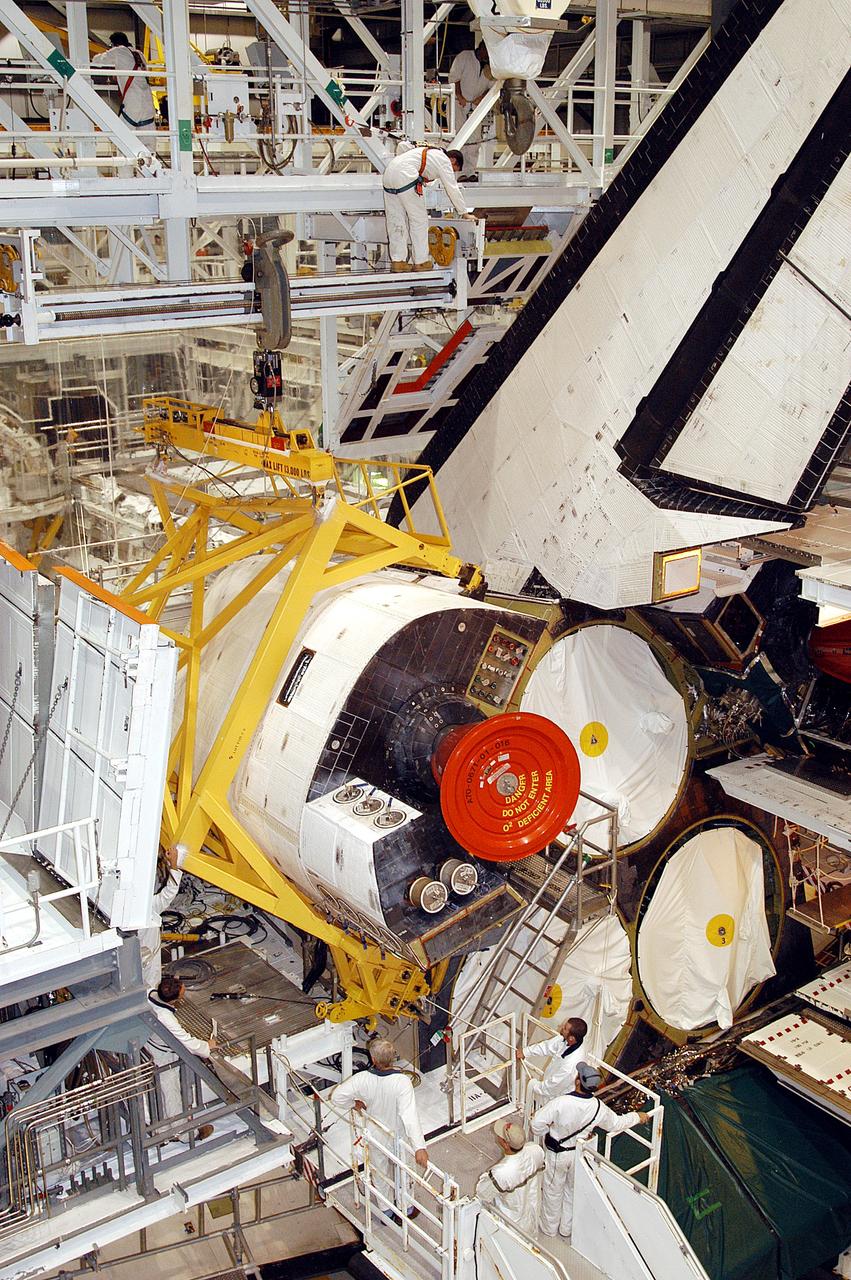
KENNEDY SPACE CENTER, FLA. - In the Orbiter Processing Facility, technicians move an orbital maneuvering system (OMS) pod into the correct position on Atlantis. The OMS pod is one of two that are attached to the upper aft fuselage left and right sides. Fabricated primarily of graphite epoxy composite and aluminum, each pod is 21.8 feet long and 11.37 feet wide at its aft end and 8.41 feet wide at its forward end, with a surface area of approximately 435 square feet. Each pod houses the Reaction Control System propulsion components used for inflight maneuvering and is attached to the aft fuselage with 11 bolts.
KENNEDY SPACE CENTER, FLA. - In the Orbiter Processing Facility, an orbital maneuvering system (OMS) pod is moved into place on Atlantis.  It is one of two OMS pods attached to the upper aft fuselage left and right sides. Fabricated primarily of graphite epoxy composite and aluminum, each pod is 21.8 feet long and 11.37 feet wide at its aft end and 8.41 feet wide at its forward end, with a surface area of approximately 435 square feet. Each pod houses the Reaction Control System propulsion components used for inflight maneuvering and is attached to the aft fuselage with 11 bolts.
KENNEDY SPACE CENTER, FLA. - In the Orbiter Processing Facility, an orbital maneuvering system (OMS) pod is moved into place on Atlantis. It is one of two OMS pods attached to the upper aft fuselage left and right sides. Fabricated primarily of graphite epoxy composite and aluminum, each pod is 21.8 feet long and 11.37 feet wide at its aft end and 8.41 feet wide at its forward end, with a surface area of approximately 435 square feet. Each pod houses the Reaction Control System propulsion components used for inflight maneuvering and is attached to the aft fuselage with 11 bolts.
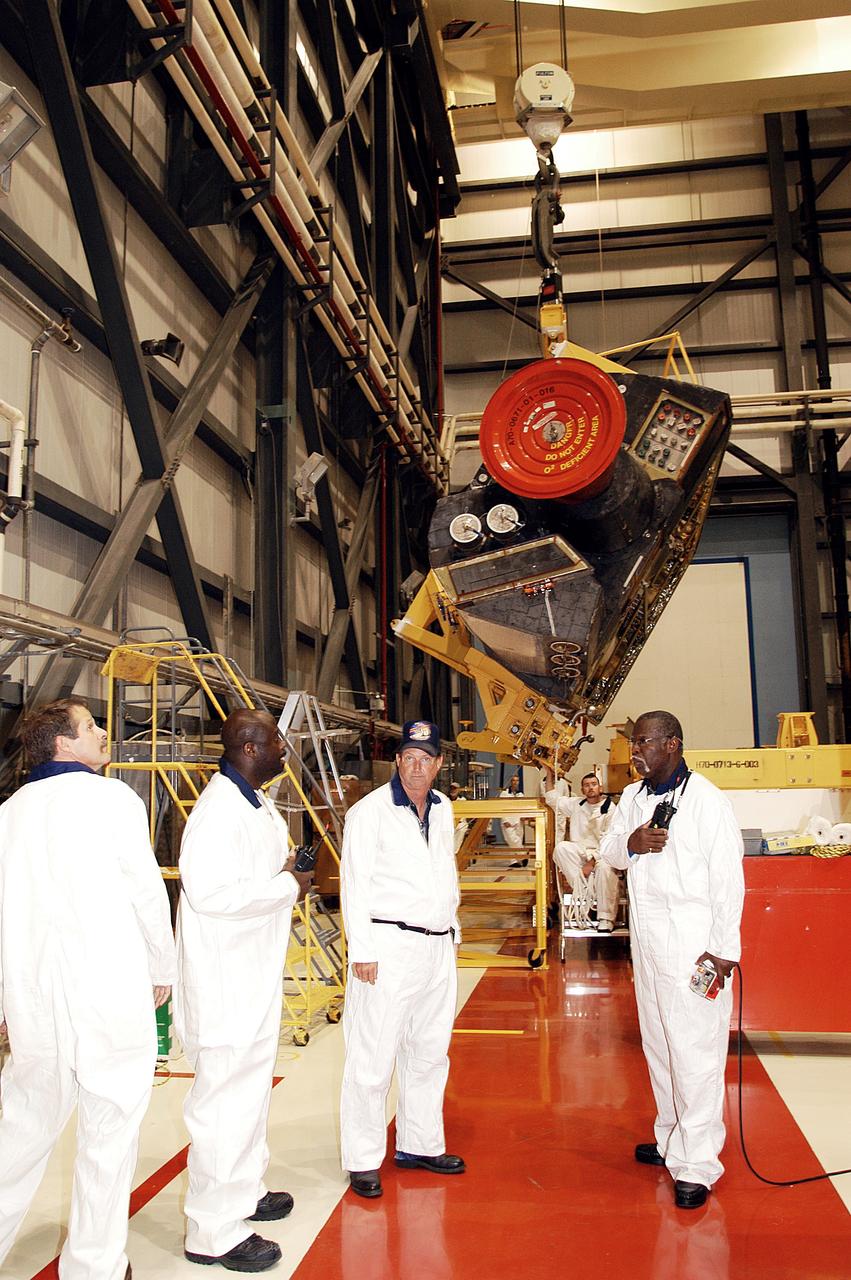
KENNEDY SPACE CENTER, FLA. - In the Orbiter Processing Facility, workers discuss the next step in moving the orbital maneuvering system (OMS) pod behind them.  The OMS pod will be installed on Atlantis.  Two OMS pods are attached to the upper aft fuselage left and right sides. Fabricated primarily of graphite epoxy composite and aluminum, each pod is 21.8 feet long and 11.37 feet wide at its aft end and 8.41 feet wide at its forward end, with a surface area of approximately 435 square feet. Each pod houses the Reaction Control System propulsion components used for inflight maneuvering and is attached to the aft fuselage with 11 bolts.
KENNEDY SPACE CENTER, FLA. - In the Orbiter Processing Facility, workers discuss the next step in moving the orbital maneuvering system (OMS) pod behind them. The OMS pod will be installed on Atlantis. Two OMS pods are attached to the upper aft fuselage left and right sides. Fabricated primarily of graphite epoxy composite and aluminum, each pod is 21.8 feet long and 11.37 feet wide at its aft end and 8.41 feet wide at its forward end, with a surface area of approximately 435 square feet. Each pod houses the Reaction Control System propulsion components used for inflight maneuvering and is attached to the aft fuselage with 11 bolts.
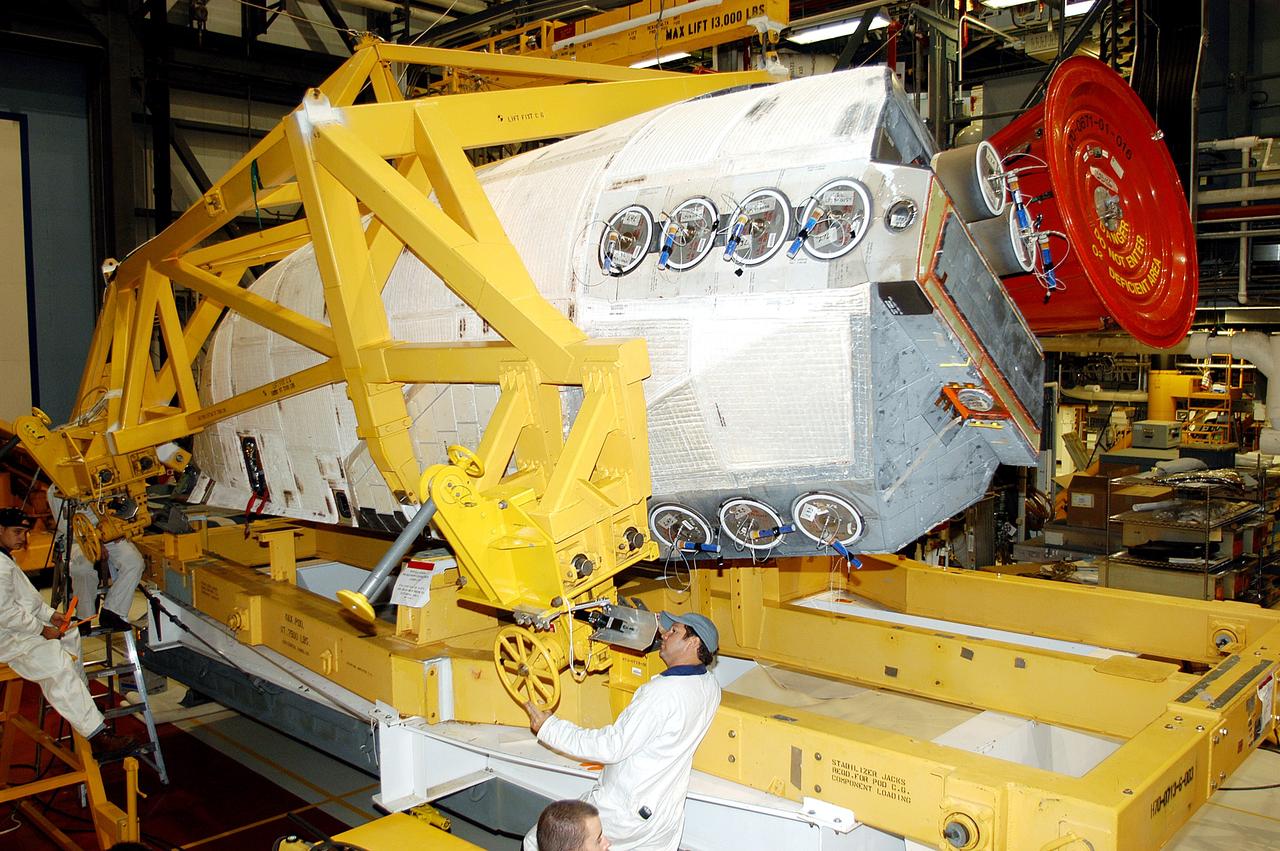
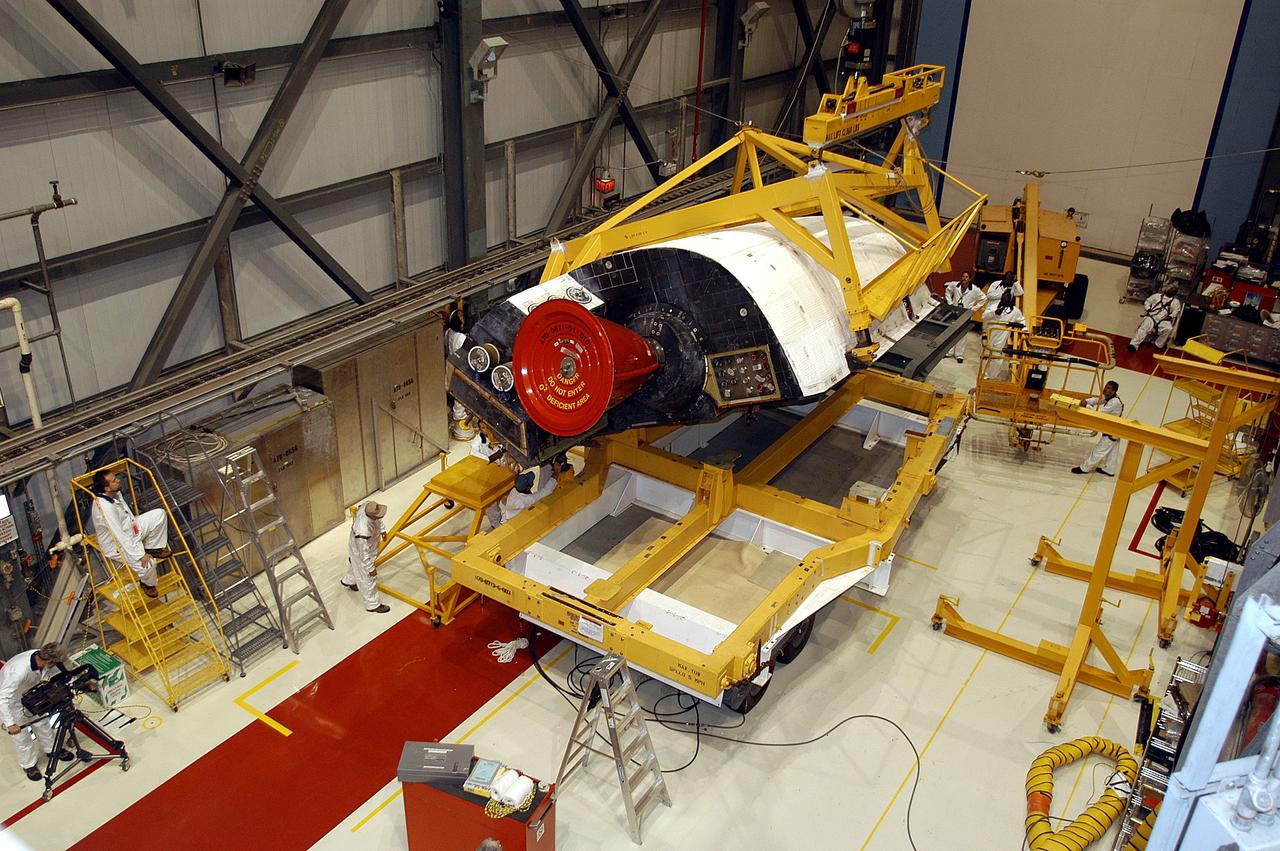
KENNEDY SPACE CENTER, FLA. -  In the Orbiter Processing Facility, one of two orbital maneuvering system (OMS) pods is lifted off its stand to move it toward Atlantis for installation. The OMS pods are attached to the upper aft fuselage left and right sides. Fabricated primarily of graphite epoxy composite and aluminum, each pod is 21.8 feet long and 11.37 feet wide at its aft end and 8.41 feet wide at its forward end, with a surface area of approximately 435 square feet. Each pod houses the Reaction Control System propulsion components used for inflight maneuvering and is attached to the aft fuselage with 11 bolts.
KENNEDY SPACE CENTER, FLA. - In the Orbiter Processing Facility, one of two orbital maneuvering system (OMS) pods is lifted off its stand to move it toward Atlantis for installation. The OMS pods are attached to the upper aft fuselage left and right sides. Fabricated primarily of graphite epoxy composite and aluminum, each pod is 21.8 feet long and 11.37 feet wide at its aft end and 8.41 feet wide at its forward end, with a surface area of approximately 435 square feet. Each pod houses the Reaction Control System propulsion components used for inflight maneuvering and is attached to the aft fuselage with 11 bolts.
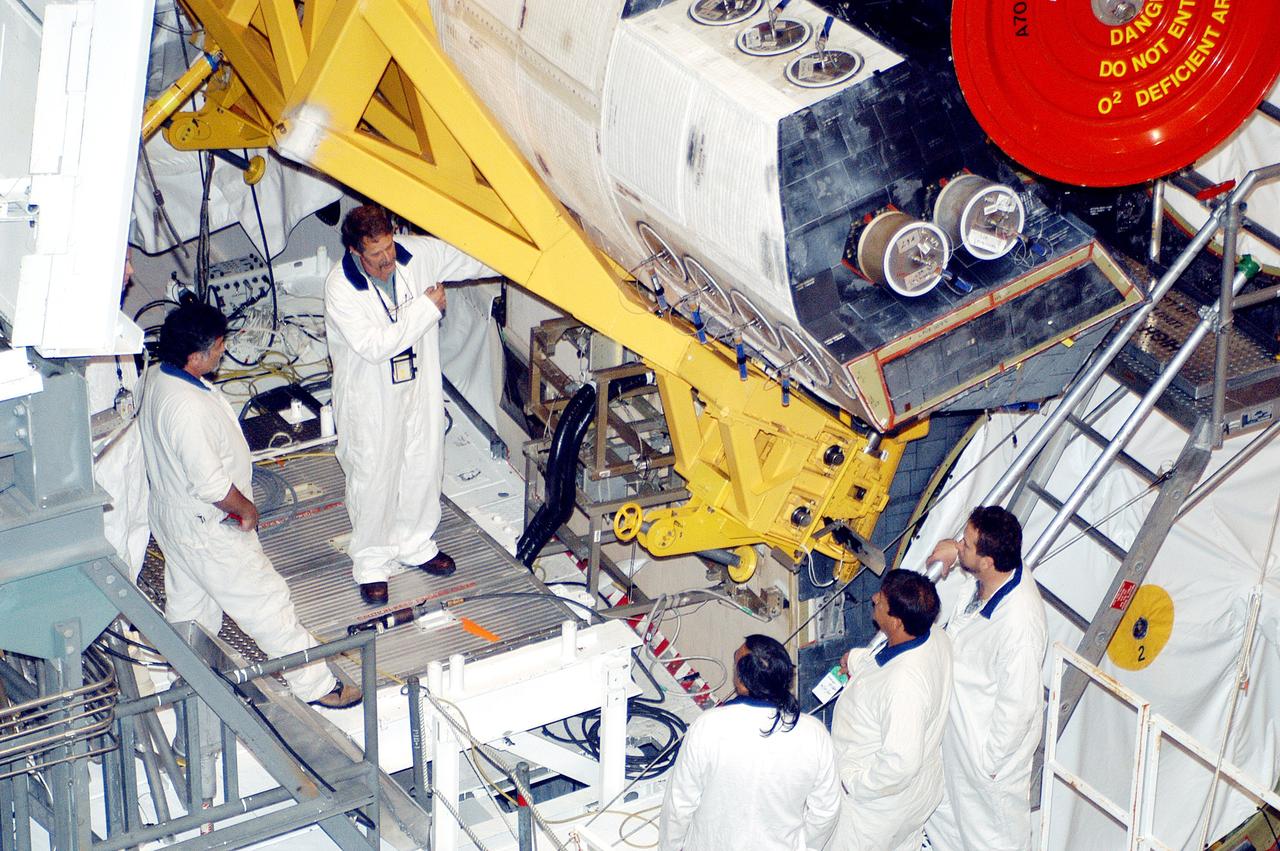
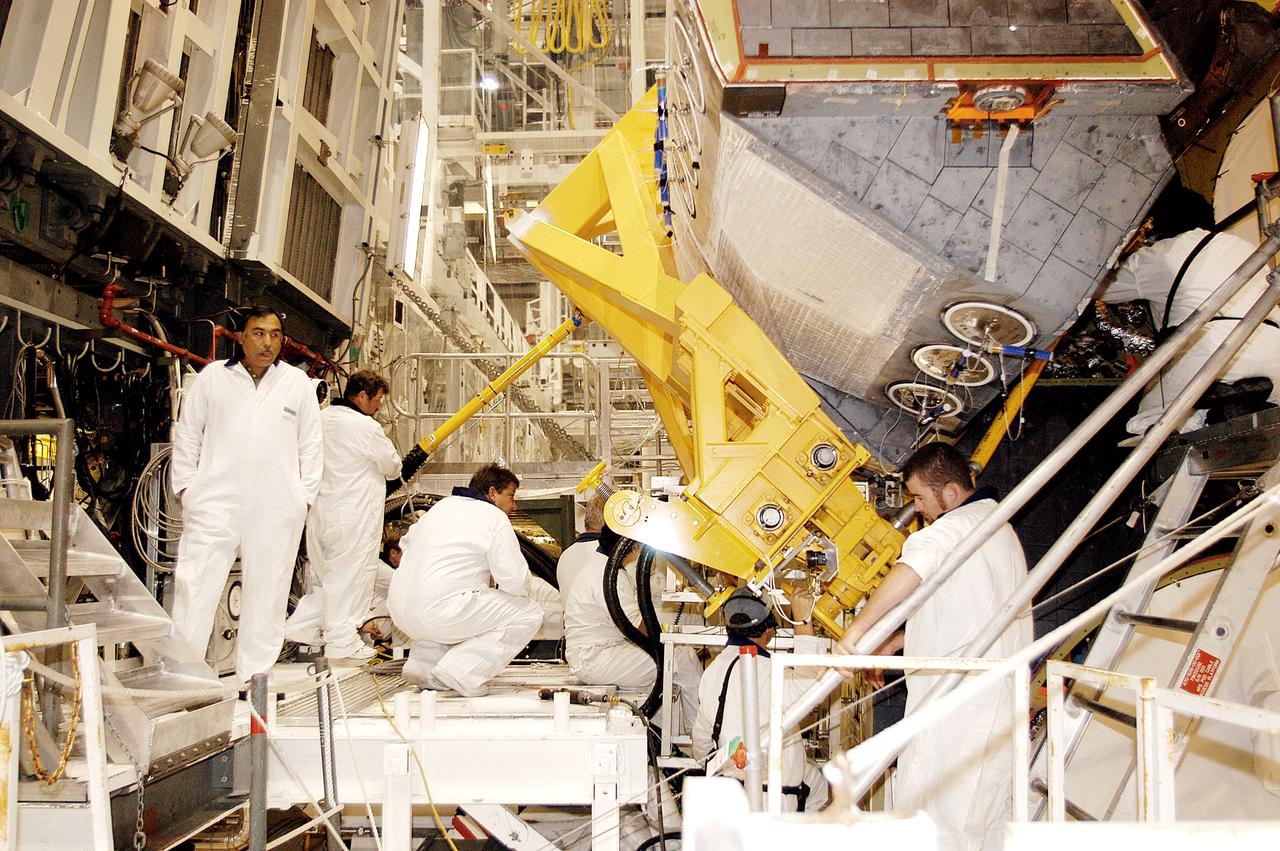
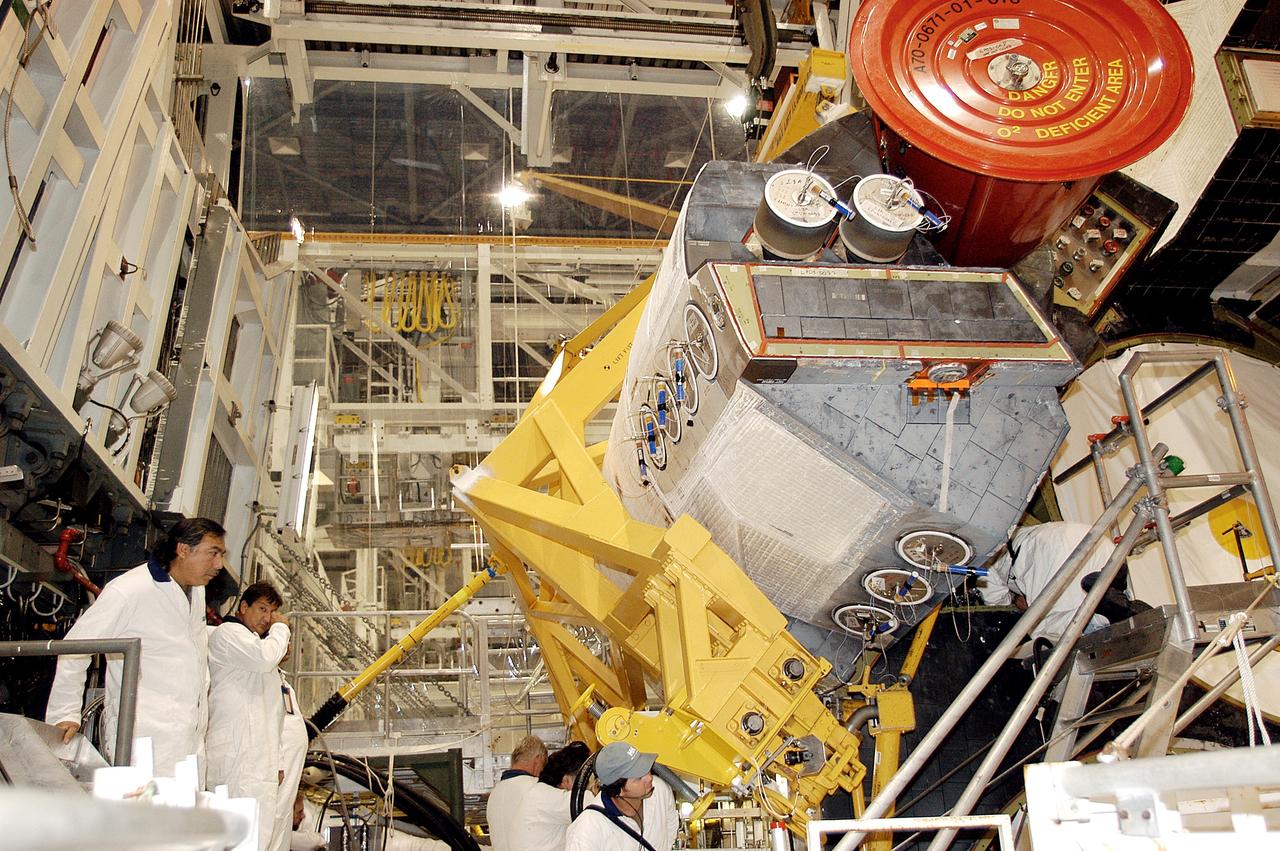
KENNEDY SPACE CENTER, FLA. - In the Orbiter Processing Facility, technicians make final adjustments to the orbital maneuvering system (OMS) pod being installed on Atlantis.   The OMS pod is one of two that are attached to the upper aft fuselage left and right sides. Fabricated primarily of graphite epoxy composite and aluminum, each pod is 21.8 feet long and 11.37 feet wide at its aft end and 8.41 feet wide at its forward end, with a surface area of approximately 435 square feet. Each pod houses the Reaction Control System propulsion components used for inflight maneuvering and is attached to the aft fuselage with 11 bolts.
KENNEDY SPACE CENTER, FLA. - In the Orbiter Processing Facility, technicians make final adjustments to the orbital maneuvering system (OMS) pod being installed on Atlantis. The OMS pod is one of two that are attached to the upper aft fuselage left and right sides. Fabricated primarily of graphite epoxy composite and aluminum, each pod is 21.8 feet long and 11.37 feet wide at its aft end and 8.41 feet wide at its forward end, with a surface area of approximately 435 square feet. Each pod houses the Reaction Control System propulsion components used for inflight maneuvering and is attached to the aft fuselage with 11 bolts.
KENNEDY SPACE CENTER, FLA. - In the Orbiter Processing Facility, technicians make final adjustments to the orbital maneuvering system (OMS) pod being installed on Atlantis.   The OMS pod is one of two that are attached to the upper aft fuselage left and right sides. Fabricated primarily of graphite epoxy composite and aluminum, each pod is 21.8 feet long and 11.37 feet wide at its aft end and 8.41 feet wide at its forward end, with a surface area of approximately 435 square feet. Each pod houses the Reaction Control System propulsion components used for inflight maneuvering and is attached to the aft fuselage with 11 bolts.
KENNEDY SPACE CENTER, FLA. - In the Orbiter Processing Facility, technicians make final adjustments to the orbital maneuvering system (OMS) pod being installed on Atlantis. The OMS pod is one of two that are attached to the upper aft fuselage left and right sides. Fabricated primarily of graphite epoxy composite and aluminum, each pod is 21.8 feet long and 11.37 feet wide at its aft end and 8.41 feet wide at its forward end, with a surface area of approximately 435 square feet. Each pod houses the Reaction Control System propulsion components used for inflight maneuvering and is attached to the aft fuselage with 11 bolts.
KENNEDY SPACE CENTER, FLA. - In the Orbiter Processing Facility, one of two orbital maneuvering system (OMS) pods is being moved for installation on Atlantis.  The OMS pods are attached to the upper aft fuselage left and right sides. Fabricated primarily of graphite epoxy composite and aluminum, each pod is 21.8 feet long and 11.37 feet wide at its aft end and 8.41 feet wide at its forward end, with a surface area of approximately 435 square feet. Each pod houses the Reaction Control System propulsion components used for inflight maneuvering and is attached to the aft fuselage with 11 bolts.
KENNEDY SPACE CENTER, FLA. - In the Orbiter Processing Facility, one of two orbital maneuvering system (OMS) pods is being moved for installation on Atlantis. The OMS pods are attached to the upper aft fuselage left and right sides. Fabricated primarily of graphite epoxy composite and aluminum, each pod is 21.8 feet long and 11.37 feet wide at its aft end and 8.41 feet wide at its forward end, with a surface area of approximately 435 square feet. Each pod houses the Reaction Control System propulsion components used for inflight maneuvering and is attached to the aft fuselage with 11 bolts.
KENNEDY SPACE CENTER, FLA. - In the Orbiter Processing Facility, technicians make adjustments to the orbital maneuvering system (OMS) pod being installed on Atlantis.   The OMS pod is one of two that are attached to the upper aft fuselage left and right sides. Fabricated primarily of graphite epoxy composite and aluminum, each pod is 21.8 feet long and 11.37 feet wide at its aft end and 8.41 feet wide at its forward end, with a surface area of approximately 435 square feet. Each pod houses the Reaction Control System propulsion components used for inflight maneuvering and is attached to the aft fuselage with 11 bolts.
KENNEDY SPACE CENTER, FLA. - In the Orbiter Processing Facility, technicians make adjustments to the orbital maneuvering system (OMS) pod being installed on Atlantis. The OMS pod is one of two that are attached to the upper aft fuselage left and right sides. Fabricated primarily of graphite epoxy composite and aluminum, each pod is 21.8 feet long and 11.37 feet wide at its aft end and 8.41 feet wide at its forward end, with a surface area of approximately 435 square feet. Each pod houses the Reaction Control System propulsion components used for inflight maneuvering and is attached to the aft fuselage with 11 bolts.
KENNEDY SPACE CENTER, FLA. -  In the Orbiter Processing Facility, an orbital maneuvering system (OMS) pod is moved closer to Atlantis for installation.  Two OMS pods are attached to the upper aft fuselage left and right sides. Fabricated primarily of graphite epoxy composite and aluminum, each pod is 21.8 feet long and 11.37 feet wide at its aft end and 8.41 feet wide at its forward end, with a surface area of approximately 435 square feet. Each pod houses the Reaction Control System propulsion components used for inflight maneuvering and is attached to the aft fuselage with 11 bolts.
KENNEDY SPACE CENTER, FLA. - In the Orbiter Processing Facility, an orbital maneuvering system (OMS) pod is moved closer to Atlantis for installation. Two OMS pods are attached to the upper aft fuselage left and right sides. Fabricated primarily of graphite epoxy composite and aluminum, each pod is 21.8 feet long and 11.37 feet wide at its aft end and 8.41 feet wide at its forward end, with a surface area of approximately 435 square feet. Each pod houses the Reaction Control System propulsion components used for inflight maneuvering and is attached to the aft fuselage with 11 bolts.
KENNEDY SPACE CENTER, FLA. -  In the Orbiter Processing Facility, an orbital maneuvering system (OMS) pod is suspended in air as it is moved toward Atlantis for installation.  Two OMS pods are attached to the upper aft fuselage left and right sides. Fabricated primarily of graphite epoxy composite and aluminum, each pod is 21.8 feet long and 11.37 feet wide at its aft end and 8.41 feet wide at its forward end, with a surface area of approximately 435 square feet. Each pod houses the Reaction Control System propulsion components used for inflight maneuvering and is attached to the aft fuselage with 11 bolts.
KENNEDY SPACE CENTER, FLA. - In the Orbiter Processing Facility, an orbital maneuvering system (OMS) pod is suspended in air as it is moved toward Atlantis for installation. Two OMS pods are attached to the upper aft fuselage left and right sides. Fabricated primarily of graphite epoxy composite and aluminum, each pod is 21.8 feet long and 11.37 feet wide at its aft end and 8.41 feet wide at its forward end, with a surface area of approximately 435 square feet. Each pod houses the Reaction Control System propulsion components used for inflight maneuvering and is attached to the aft fuselage with 11 bolts.
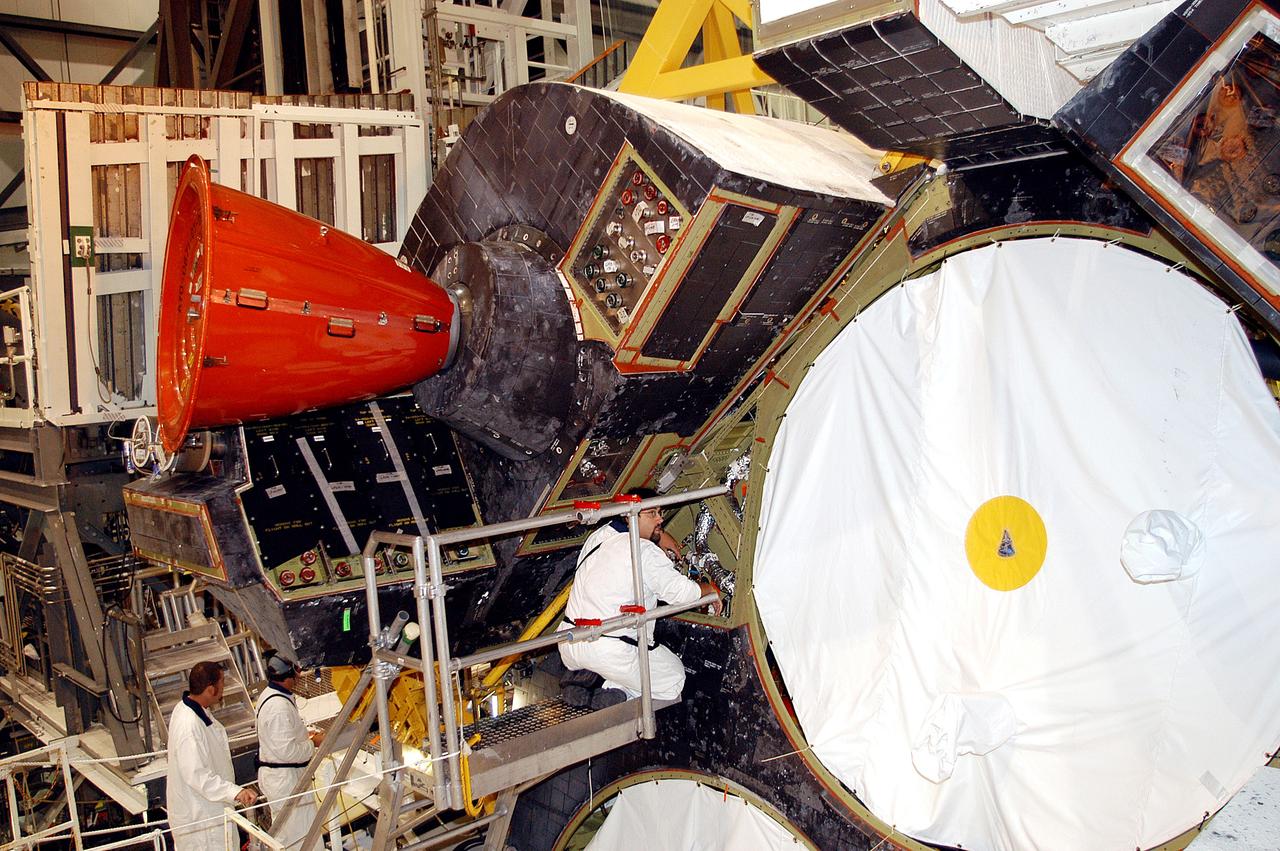
KENNEDY SPACE CENTER, FLA. -  In the Orbiter Processing Facility, technicians move an orbital maneuvering system (OMS) pod into the correct position on Atlantis. The OMS pod is one of two that are attached to the upper aft fuselage left and right sides. Fabricated primarily of graphite epoxy composite and aluminum, each pod is 21.8 feet long and 11.37 feet wide at its aft end and 8.41 feet wide at its forward end, with a surface area of approximately 435 square feet. Each pod houses the Reaction Control System propulsion components used for inflight maneuvering and is attached to the aft fuselage with 11 bolts.
KENNEDY SPACE CENTER, FLA. - In the Orbiter Processing Facility, technicians move an orbital maneuvering system (OMS) pod into the correct position on Atlantis. The OMS pod is one of two that are attached to the upper aft fuselage left and right sides. Fabricated primarily of graphite epoxy composite and aluminum, each pod is 21.8 feet long and 11.37 feet wide at its aft end and 8.41 feet wide at its forward end, with a surface area of approximately 435 square feet. Each pod houses the Reaction Control System propulsion components used for inflight maneuvering and is attached to the aft fuselage with 11 bolts.
KENNEDY SPACE CENTER, FLA. - In the Orbiter Processing Facility, an orbital maneuvering system (OMS) pod is moved into place on Atlantis.  It is one of two OMS pods attached to the upper aft fuselage left and right sides. Fabricated primarily of graphite epoxy composite and aluminum, each pod is 21.8 feet long and 11.37 feet wide at its aft end and 8.41 feet wide at its forward end, with a surface area of approximately 435 square feet. Each pod houses the Reaction Control System propulsion components used for inflight maneuvering and is attached to the aft fuselage with 11 bolts.
KENNEDY SPACE CENTER, FLA. - In the Orbiter Processing Facility, an orbital maneuvering system (OMS) pod is moved into place on Atlantis. It is one of two OMS pods attached to the upper aft fuselage left and right sides. Fabricated primarily of graphite epoxy composite and aluminum, each pod is 21.8 feet long and 11.37 feet wide at its aft end and 8.41 feet wide at its forward end, with a surface area of approximately 435 square feet. Each pod houses the Reaction Control System propulsion components used for inflight maneuvering and is attached to the aft fuselage with 11 bolts.
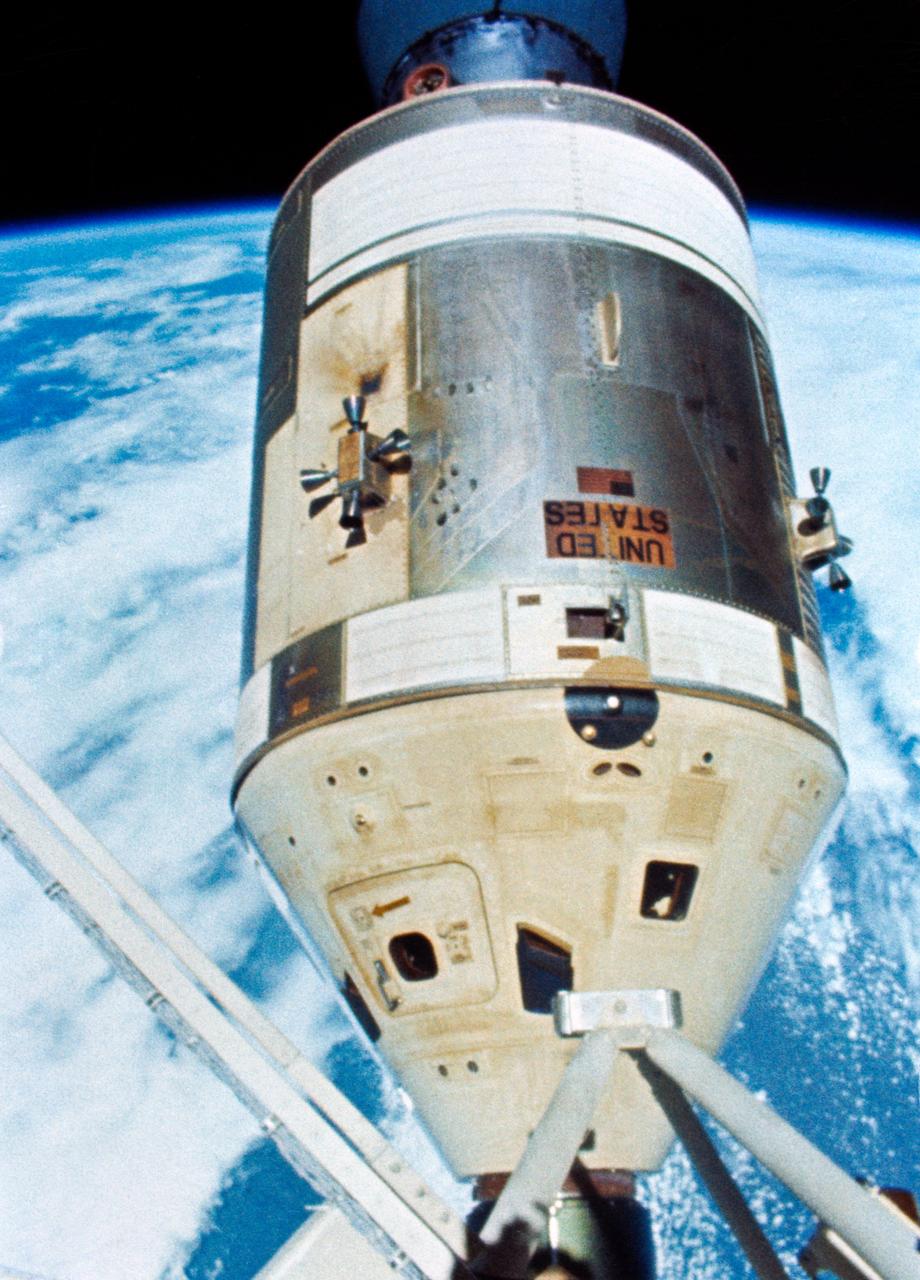
S74-17457 (3 Feb. 1974) --- This view of the Skylab 4 Command/Service Module in a docked configuration is a frame from a roll of movie film exposed by a 16mm Maurer camera. The other four components of the Skylab space station in Earth orbit are out of view to the right. This picture was taken by astronaut Gerald P. Carr, Skylab 4 commander, during the final Skylab extravehicular activity (EVA) which took place on Feb. 3, 1974. The crew members -- Gerald Carr, Edward Gibson and William Pogue -- were the first NASA astronauts to spend New Year's in space. A week earlier, they became the first crew to perform an EVA on Christmas day. Photo credit: NASA
SKYLAB IV - INFLIGHT
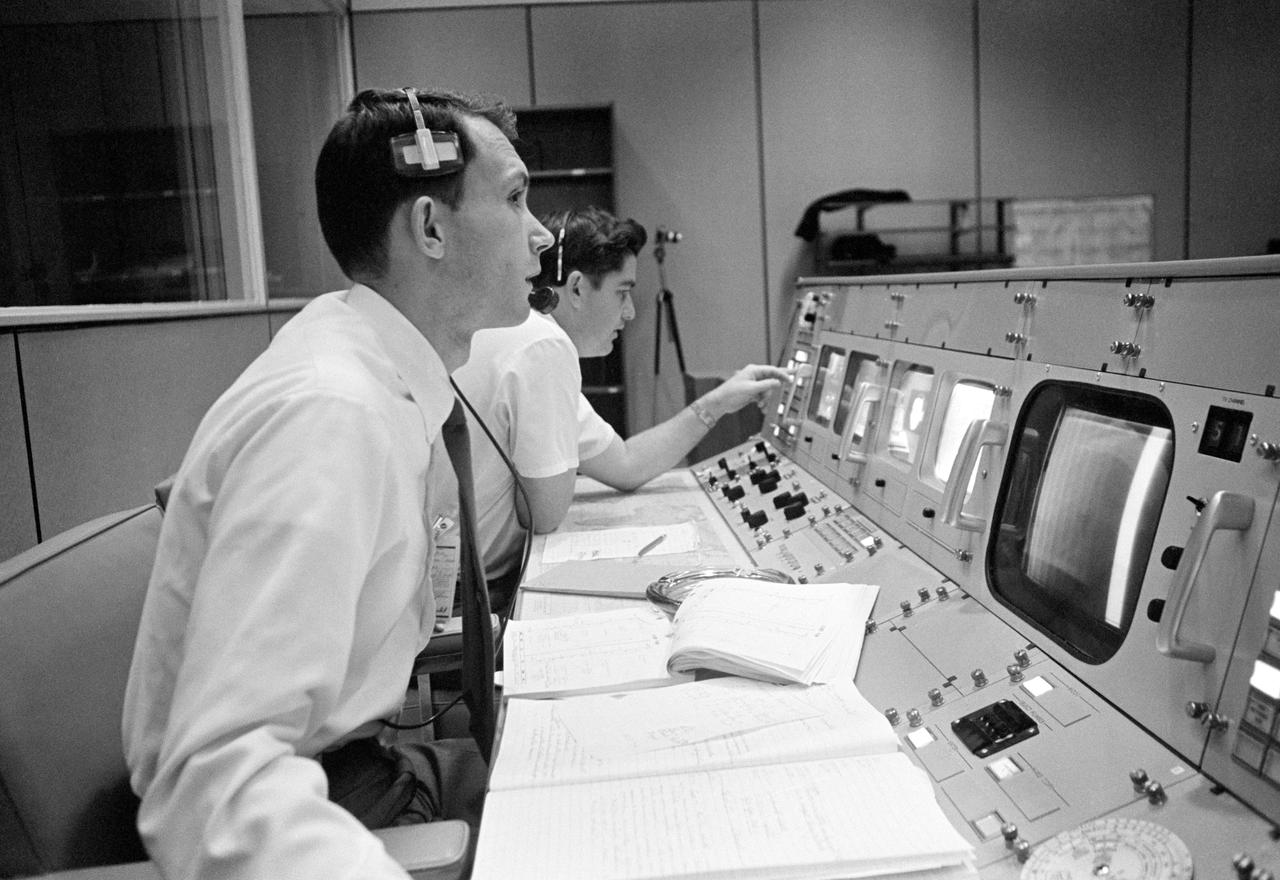
S69-34038 (18 May 1969) --- View of activity at the flight director's console in the Mission Operations Control Room in the Mission Control Center, Building 30, on the first day of the Apollo 10 lunar orbit mission. Seated are Gerald D. Griffin (foreground) and Glynn S. Lunney, Shift 1 (Black Team) flight directors. Milton L. Windler, standing behind them, is the flight director of Shift 2 (Maroon Team). In the center background, standing, is Dr. Christopher C. Kraft Jr., MSC Director of Flight Operations.
INFLIGHT - APOLLO X - MSC
S68-50696 (October 1968) --- Public Affairs Office (PAO) commentator Douglas K. Ward (foreground) is pictured at his console in the Mission Operations Control Room (MOCR) in the Mission Control Center at NASA's Johnson Space Center during the flight of Apollo 7. Photo credit: NASA
INFLIGHT - APOLLO 7 (MCC)
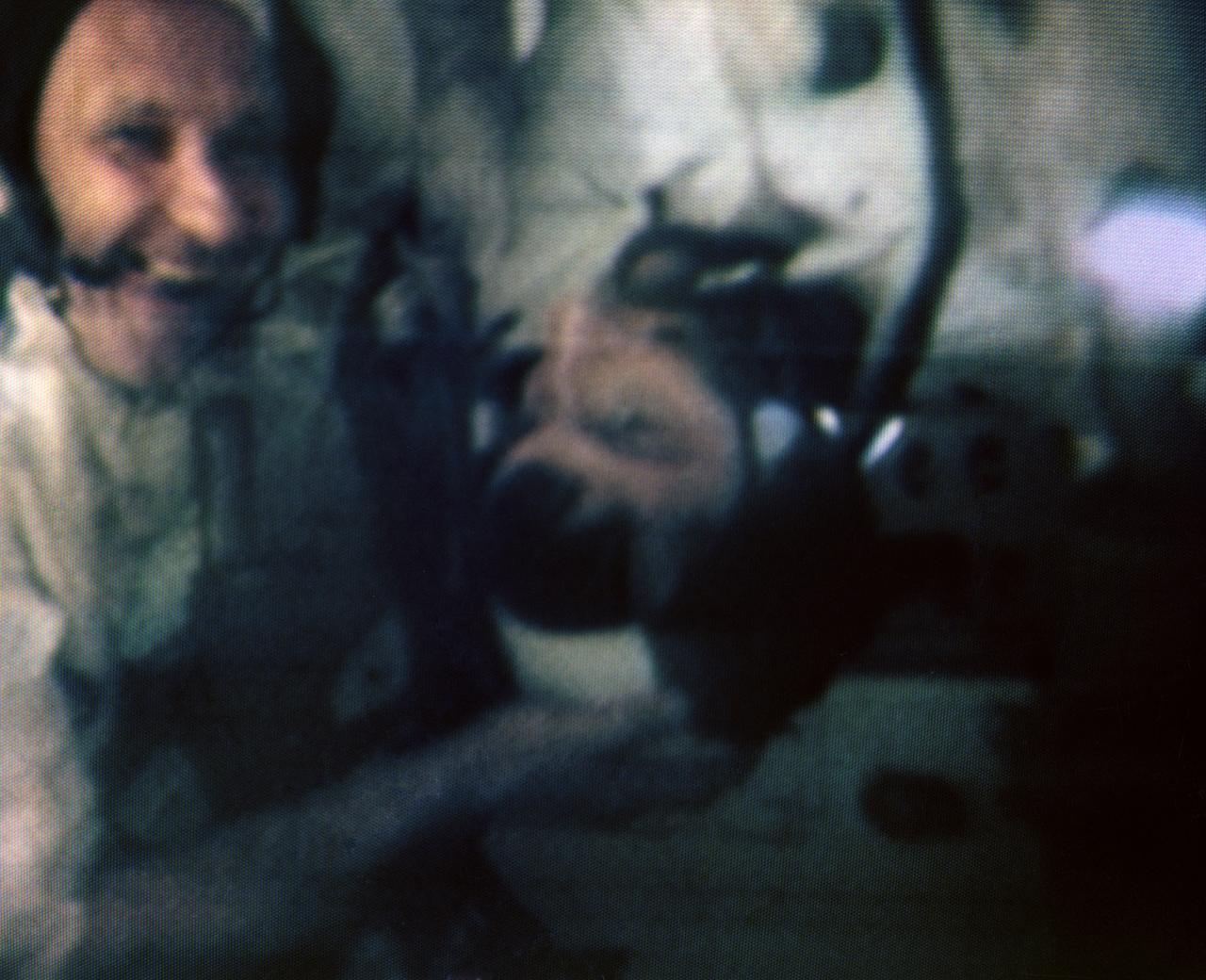
S69-34968 (24 May 1969) --- Astronaut Eugene A. Cernan, Apollo 10 lunar module pilot, is seen in this color reproduction taken from a telecast made by the color television camera aboard the Apollo 10 spacecraft during its trans-Earth journey home.
INFLIGHT - APOLLO X
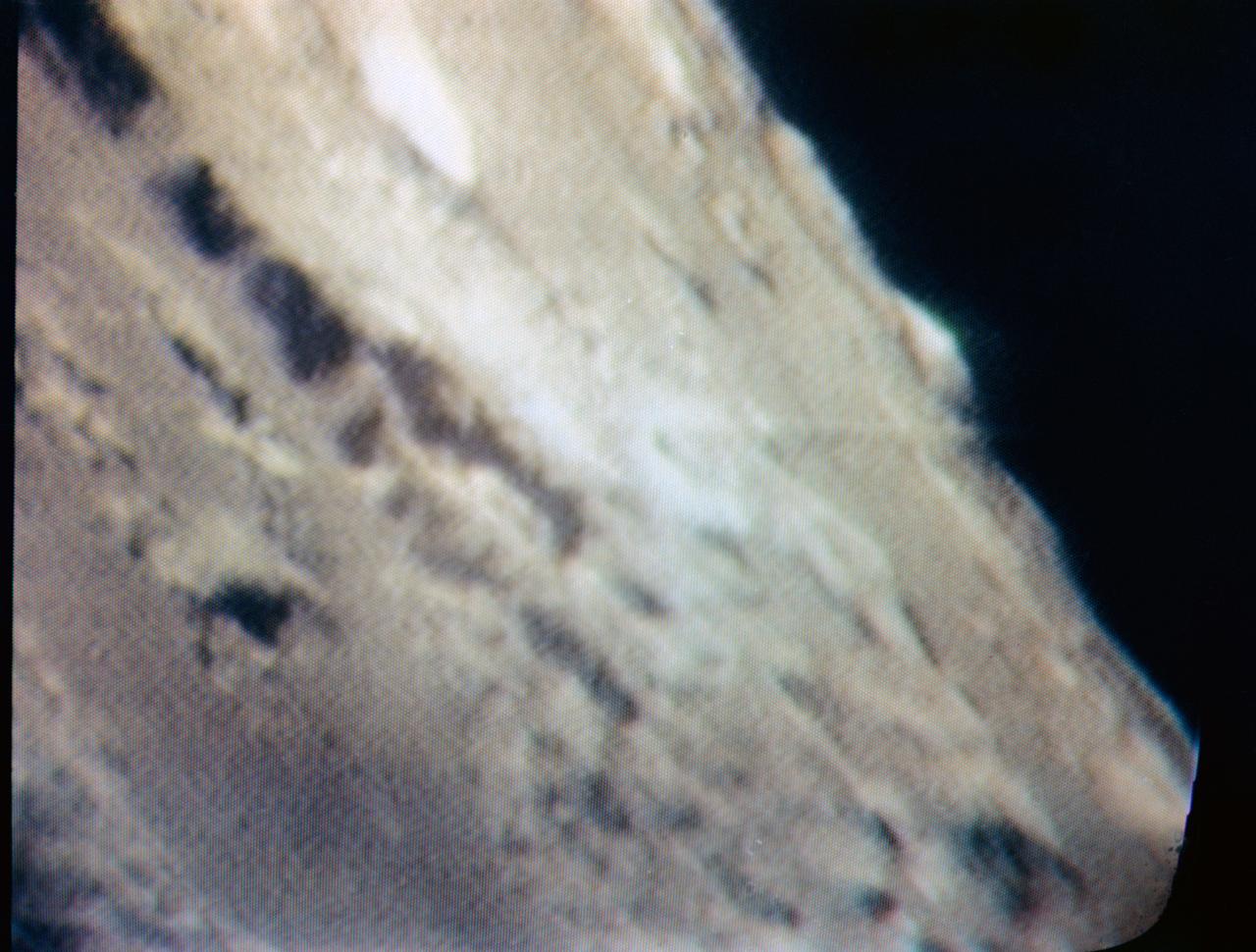
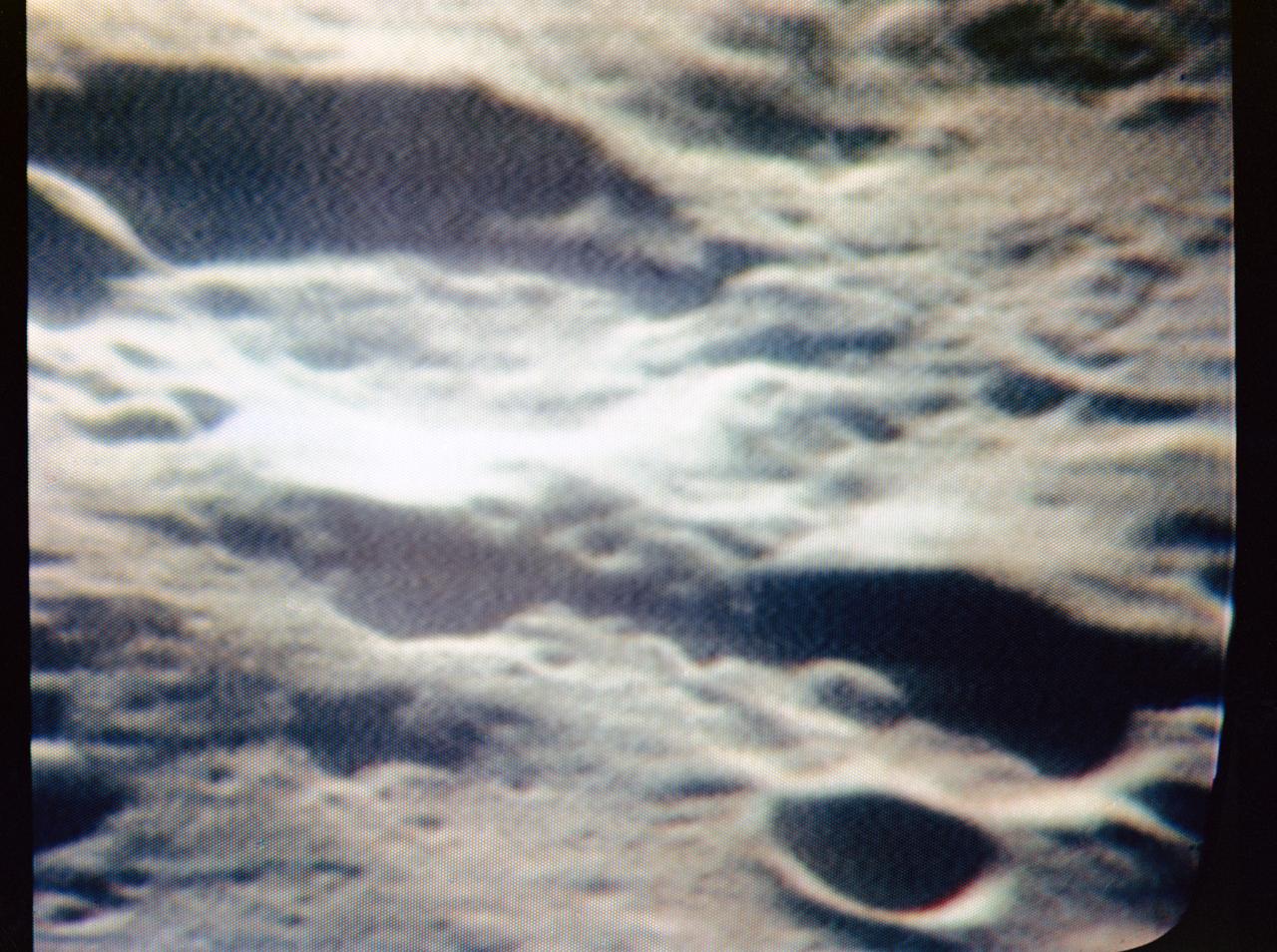
S69-34478 (21 May 1969) --- An oblique view of Barbara Mesa on the lunar nearside is seen in this color reproduction taken from a telecast made by the color television camera aboard the Apollo 10 spacecraft as it orbited the moon. This area is located generally east of Maskelyne crater on the southern edge of the Sea of Tranquility (Mare Tranquillitatis). Barbara Mesa is located at about 32 degrees 45 minutes east longitude and 1 degree 45 minutes north latitude.
Inflight - Apollo 10
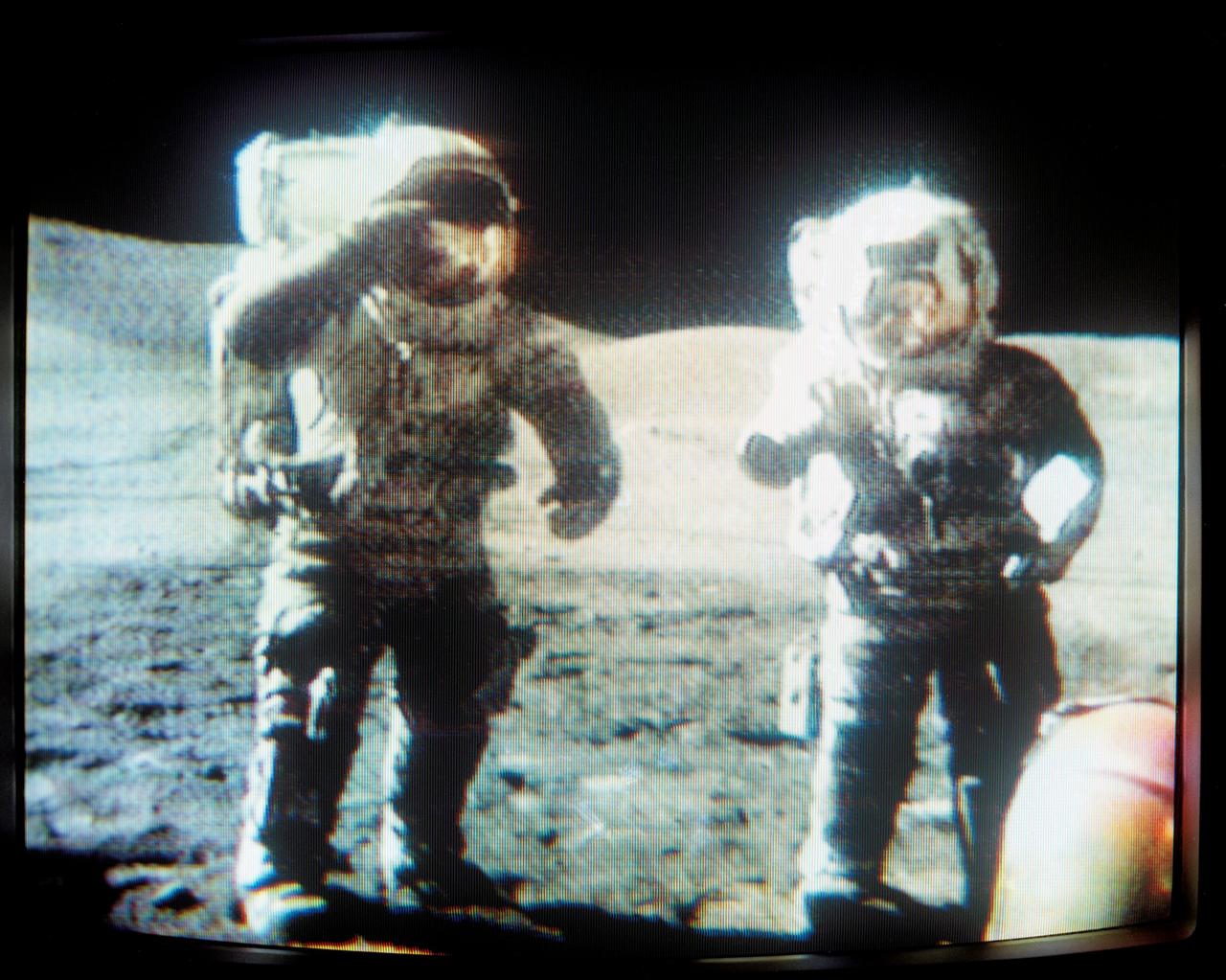
S72-55298 (13 Dec. 1972) --- The two moon-exploring Apollo 17 crewmen are seen walking beside a large boulder during the third extravehicular activity (EVA) at the Taurus-Littrow landing site. They are scientist-astronaut Harrison H. Schmitt (in front), lunar module pilot; and astronaut Eugene A. Cernan, commander. This black and white reproduction was taken from a color television transmission made by the color RCA TV camera mounted on the Lunar Roving Vehicle. Astronaut Ronald E. Evans, command module pilot, remained with the Command and Service Modules in lunar orbit.
APOLLO 17 - INFLIGHT (EVA)
S74-17456 (3 Feb. 1974) --- Scientist-astronaut Edward G. Gibson has just egressed the Skylab EVA hatchway in this frame taken from a roll of movie film exposed by a 16mm Maurer camera. Astronaut Gerald P. Carr, Skylab 4 commander, took this picture during the final Skylab extravehicular activity (EVA) which took place on Feb. 3, 1974. Carr was above on the Apollo Telescope Mount (ATM) when he shot this frame of Gibson. Note Carr's umbilical/tether line extending from inside the space station up toward the camera. Astronaut William R. Pogue, Skylab 4 pilot, remained inside the space station during the EVA by Carr and Gibson. Photo credit: NASA
SKYLAB IV - INFLIGHT
S72-37001 (25 April 1972) --- Astronaut Thomas K. Mattingly II, command module pilot, performs an extravehicular activity (EVA) during the Apollo 16 trans-Earth coast. Mattingly is assisted by astronaut Charles M. Duke Jr., lunar module pilot. Mattingly inspected the SIM Bay or Service Module (SM), and retrieved film from the Mapping and Panoramic Cameras. Mattingly is wearing the helmet of astronaut John W. Young, commander. The helmet's lunar EVA visor assembly helped protect Mattingly's eyes from the bright sun. This view is a frame from motion picture film exposed by a 16mm Maurer camera.
INFLIGHT - APOLLO 16
S68-50684 (October 1968) --- Public Affairs Office (PAO) commentator Douglas K. Ward is pictured at his console in the Mission Operations Control Room (MOCR) in the Mission Control Center at NASA's Johnson Space Center during the flight of Apollo 7. Photo credit: NASA
INFLIGHT - APOLLO 7 (MCC)
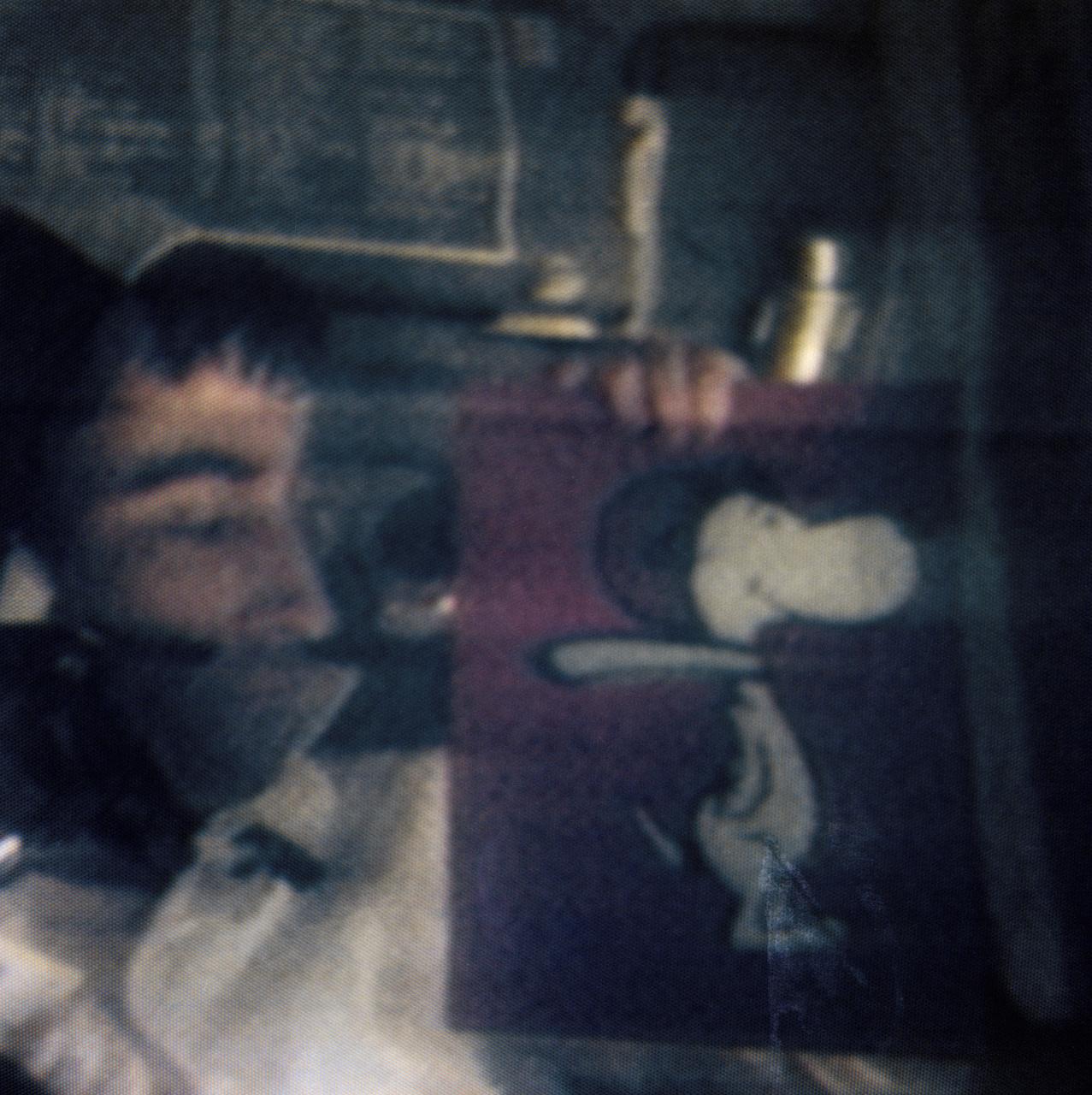
S69-34075 (19 May 1969) --- Astronaut John W. Young, Apollo 10 command module pilot, displays a drawing of Charlie Brown in this color reproduction taken from the fourth telecast made by the color television camera aboard the Apollo 10 spacecraft. When this picture was made the Apollo 10 spacecraft was about halfway to the moon, or approximately 112,000 nautical miles from Earth. ?Charlie Brown? will be the code name of the Command Module (CM) during Apollo 10 operations when the Lunar Module (LM) and CM are separated. The LM's code name will be ?Snoopy?. Also, aboard Apollo 10 were astronauts Thomas P. Stafford, commander; and Eugene A. Cernan, lunar module pilot.
Inflight - Apollo 10
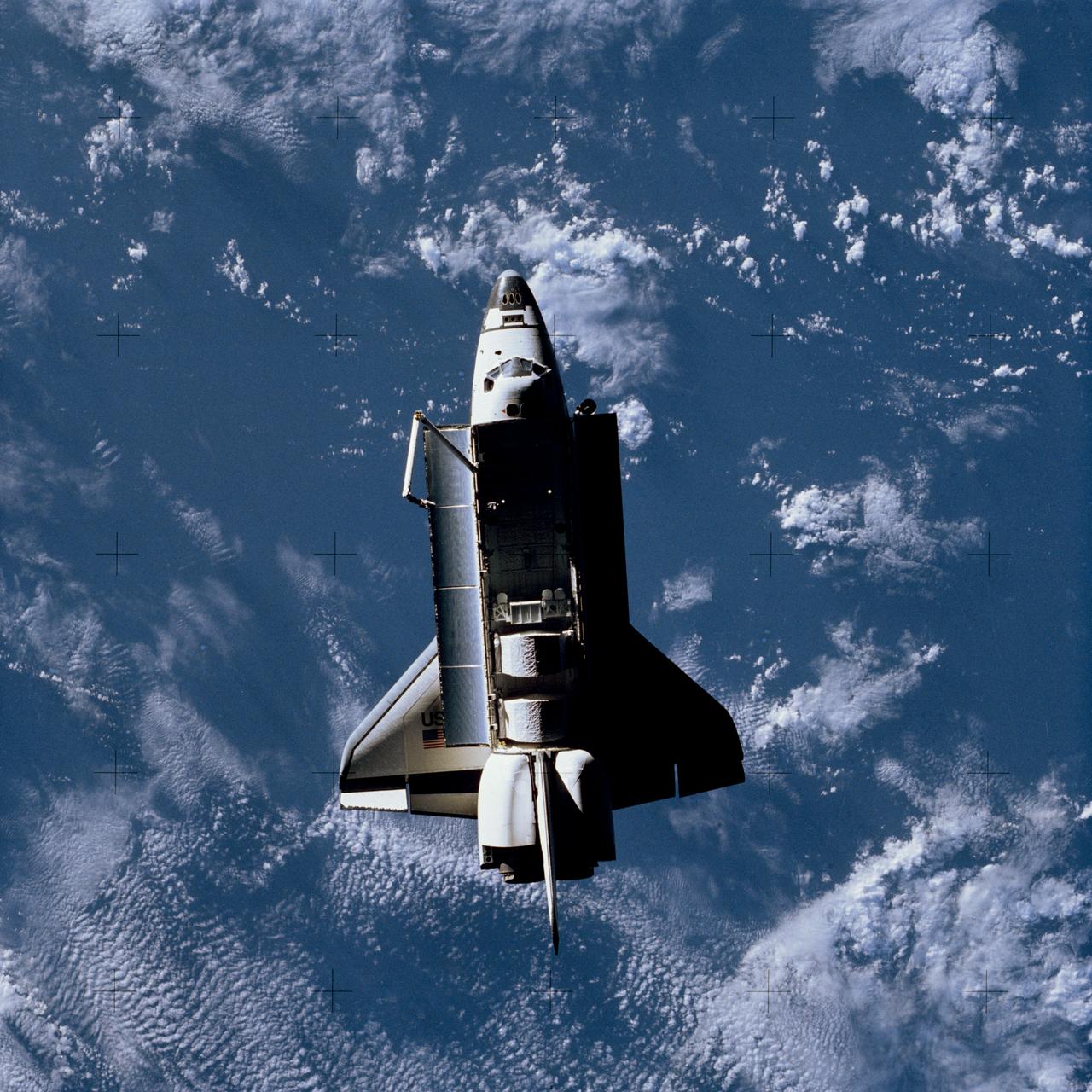
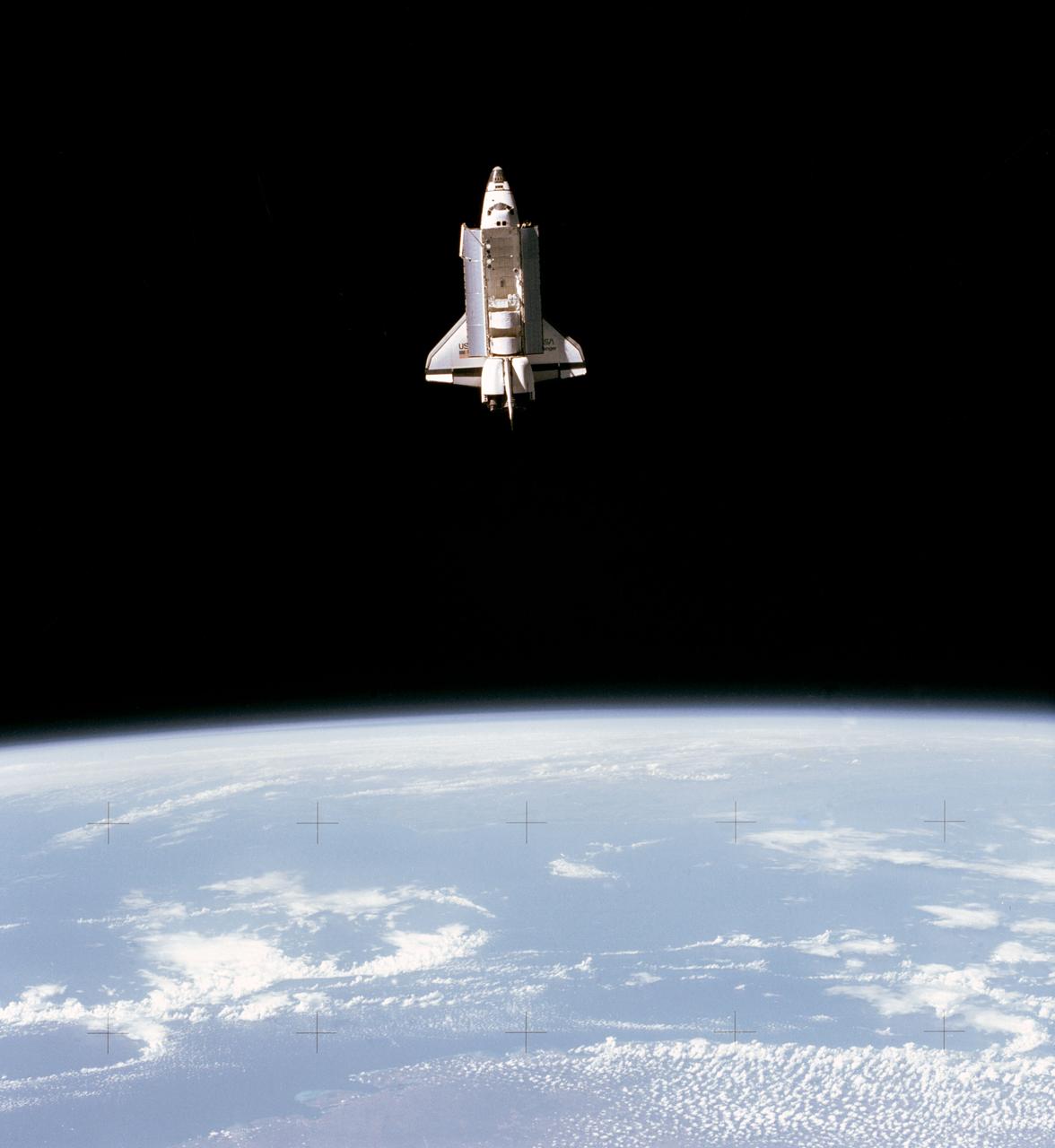
Full views of "Challenger" in Space, taken by the Shuttle Pallet Satellite (SPAS), also views of Cargo Bay and Remote Manipulator System (RMS) extended.      1.  SHUTTLE - RMS (STS-7)      Also available in 4x5 CN
INFLIGHT - STS-7
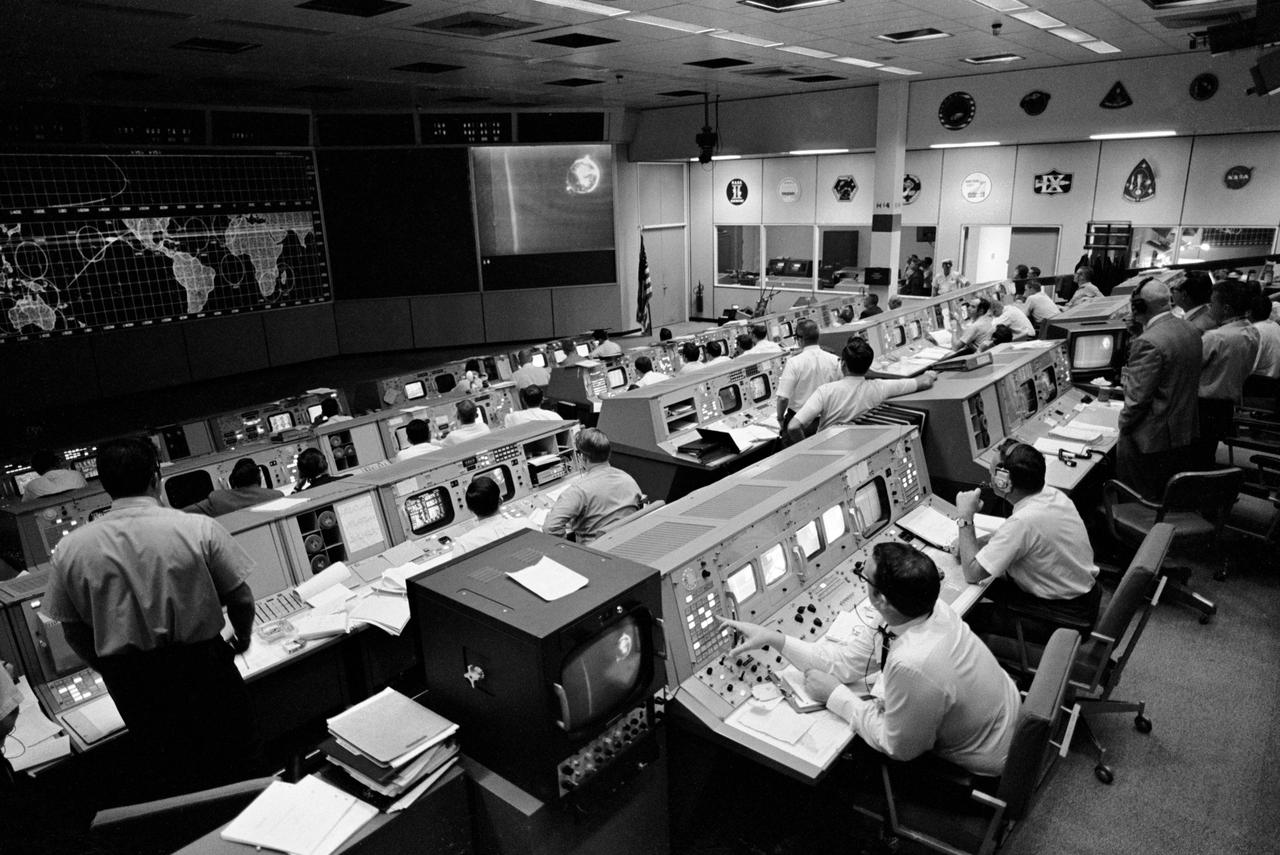
S69-34039 (18 May 1969) --- Overall view of activity in the Mission Operations Control Room in the Mission Control Center, Building 30, on the first day of the Apollo 10 lunar orbit mission. This picture was taken following CSM/LM-S-IVB separation, and prior to LM extraction from the S-IVB. The telecast from the Apollo 10's color TV camera shows the LM still attached to the S-IVB. The CSM is making the docking approach to the LM/S-IVB.
Inflight - Apollo X - MSC
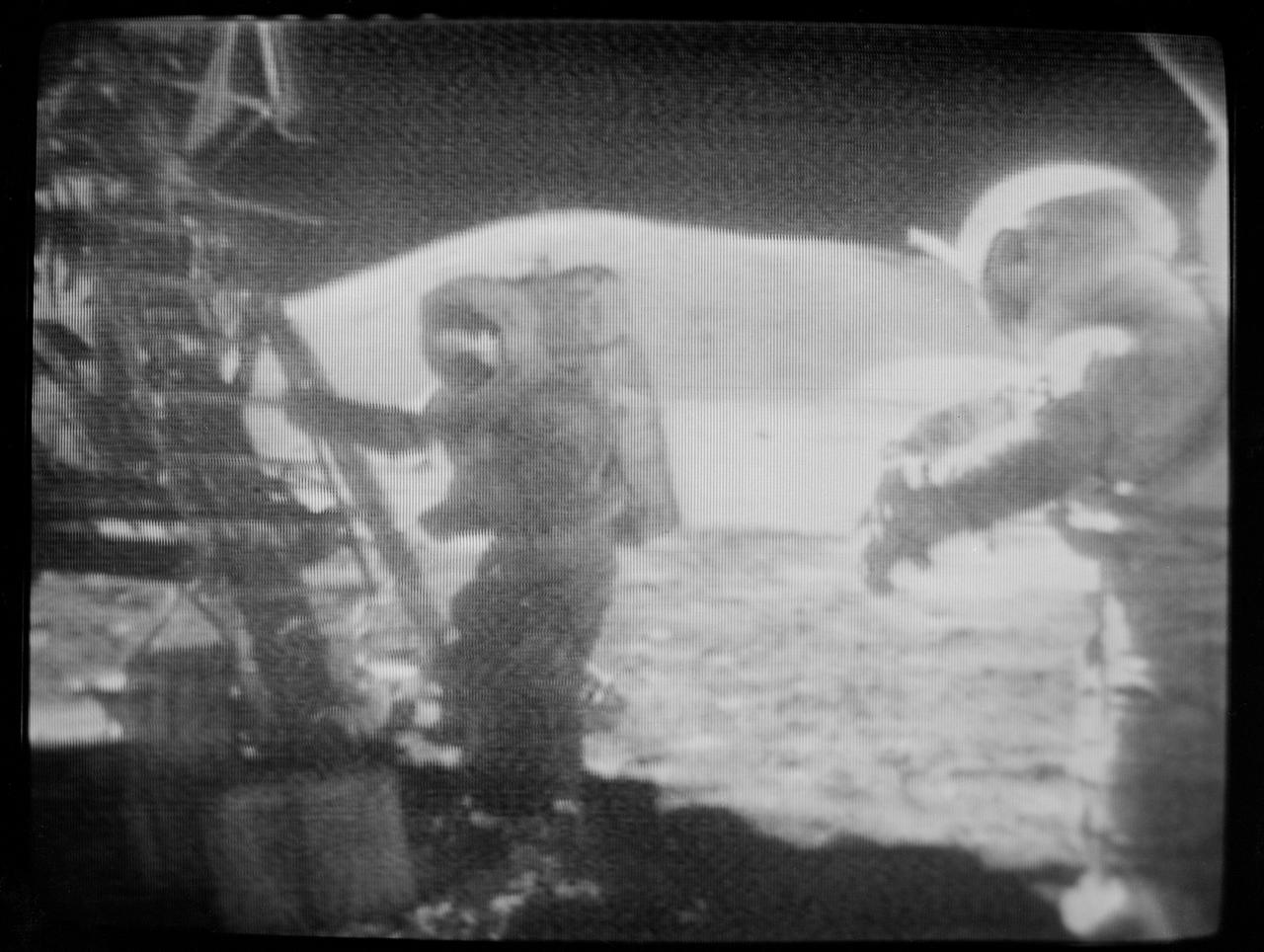
S72-55299 (13 Dec. 1972) --- Scientist-astronaut Harrison H. Schmitt, Apollo 17 lunar module pilot, starts back up the ladder of the Lunar Module "Challenger" at the close of the third extravehicular activity (EVA) at the Taurus-Littrow landing site, in this black and white reproduction taken from a color television transmission made by the color RCA TV camera mounted on the Lunar Roving Vehicle. On the right is astronaut Eugene A. Cernan, commander, who ingressed the LM a few minutes later. Astronaut Ronald E. Evans, command module pilot, remained with the Apollo 17 Command and Service Modules in lunar orbit.
APOLLO 17 - INFLIGHT (EVA)
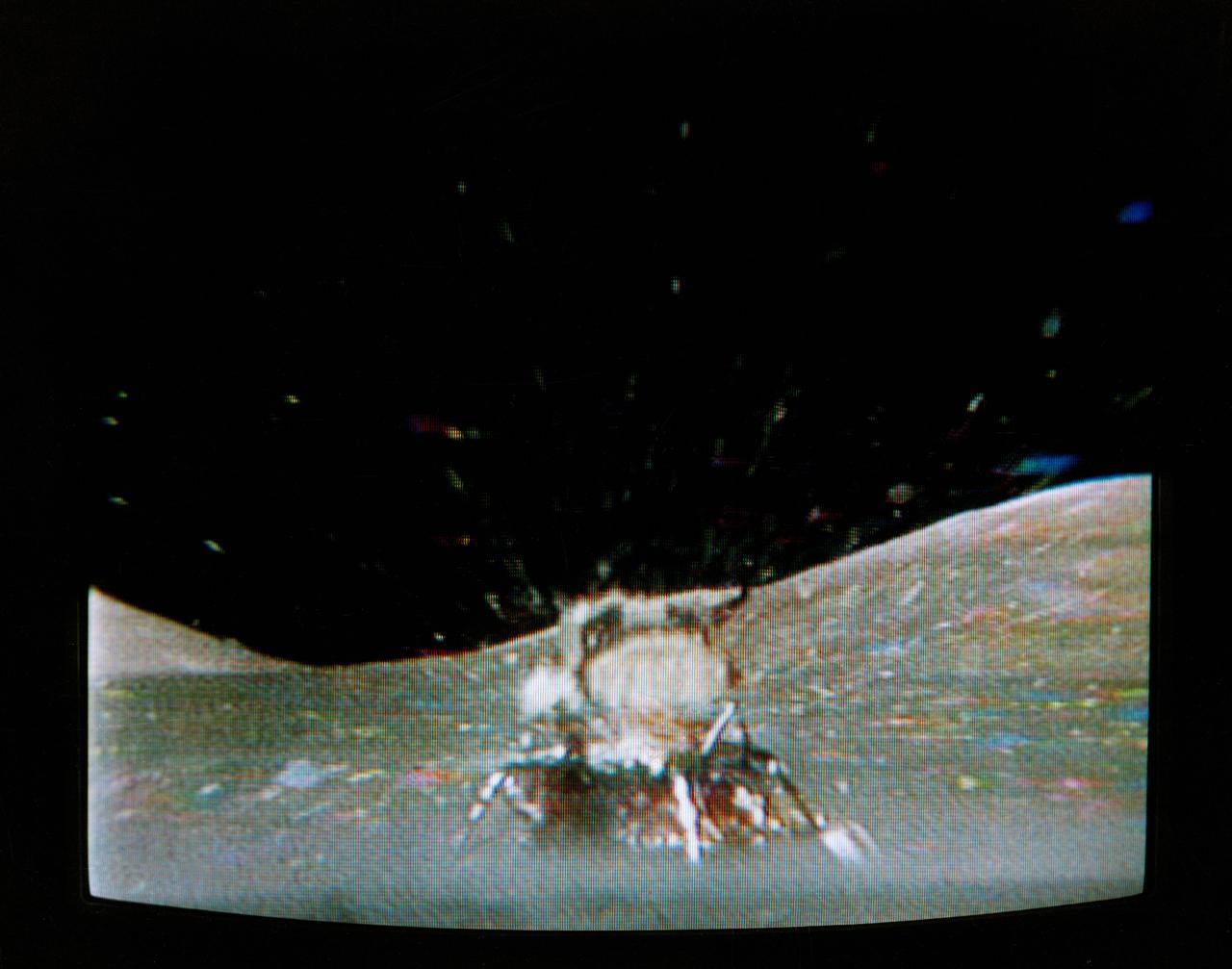
The Apollo 17 Lunar Module (LM) "Challenger" ascent stage leaves the Taurus-Littrow landing site as it makes its spectacular liftoff from the lunar surface, as seen in this reproduction taken from a color television transmission made by the color RCA TV camera mounted on the Lunar Roving Vehicle (LRV). The LRV-mounted TV camera, remotely controlled from the Mission Control Center (MCC) in Houston, made it possible for people on Earth to watch the fantastic event. The LM liftoff was at 188:01:36 ground elapsed time, 4:54:36 p.m. (CST), Thursday, December 14, 1972.
APOLLO 17 - INFLIGHT
S72-55420 (13 Dec. 1972) --- Astronauts Eugene A. Cernan (on left) and Harrison H. Schmitt pay their respects and send their best wishes to the members of the International Youth Science Tour, who were visiting the Manned Spacecraft Center, in brief ceremonies near the close of the third Apollo 17 extravehicular activity (EVA) at the Taurus-Littrow landing site. This picture is a reproduction taken from a color television transmission made by the color RCA TV camera mounted on the lunar roving vehicle. Noting that they had collected a very significant rock composed of many fragments, Schmitt said, "A portion of a rock will be sent to a representative agency or museum in each of the countries represented by the young people in Houston today..." The more than 70 foreign students were in the U.S. visiting space research and science centers. In his closing remarks to the students Cernan remarked, "We salute you, promise of the future."
APOLLO XVII - INFLIGHT
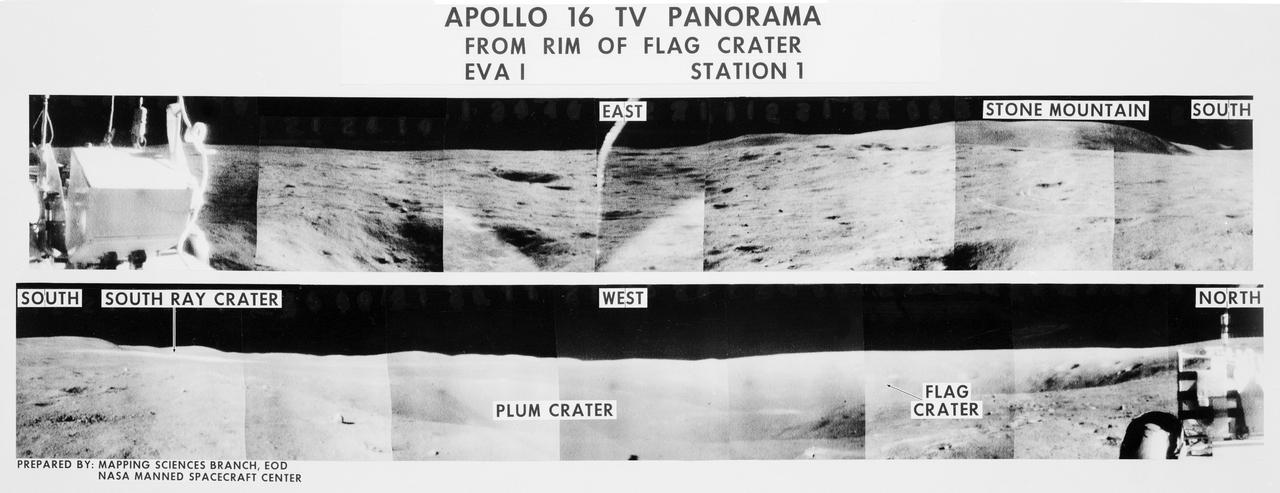
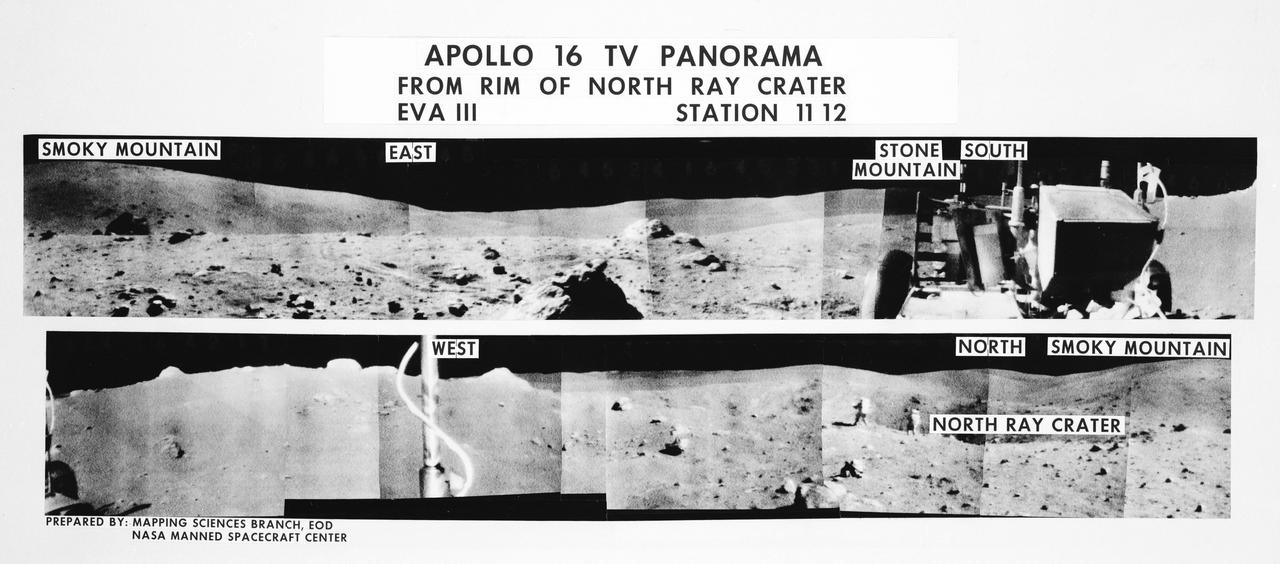
S72-35970 (21 April 1972) --- A 360-degree field of view of the Apollo 16 Descartes landing site area composed of individual scenes taken from color transmission made by the color RCA TV camera mounted on the Lunar Roving Vehicle (LRV). This panorama was made while the LRV was parked at the rim of Flag Crater (Station 1) during the first Apollo 16 lunar surface extravehicular activity (EVA) by astronauts John W. Young and Charles M. Duke Jr. The overlay identifies the directions and the key lunar terrain features. The camera panned across the rear portion of the LRV in its 360-degree sweep. Astronauts Young, commander; and Duke, lunar module pilot; descended in the Apollo 16 Lunar Module (LM) "Orion" to explore the Descartes highlands landing site on the moon. Astronaut Thomas K. Mattingly II, command module pilot, remained with the Command and Service Modules (CSM) "Casper" in lunar orbit.
INFLIGHT - APOLLO 16 (CREW)
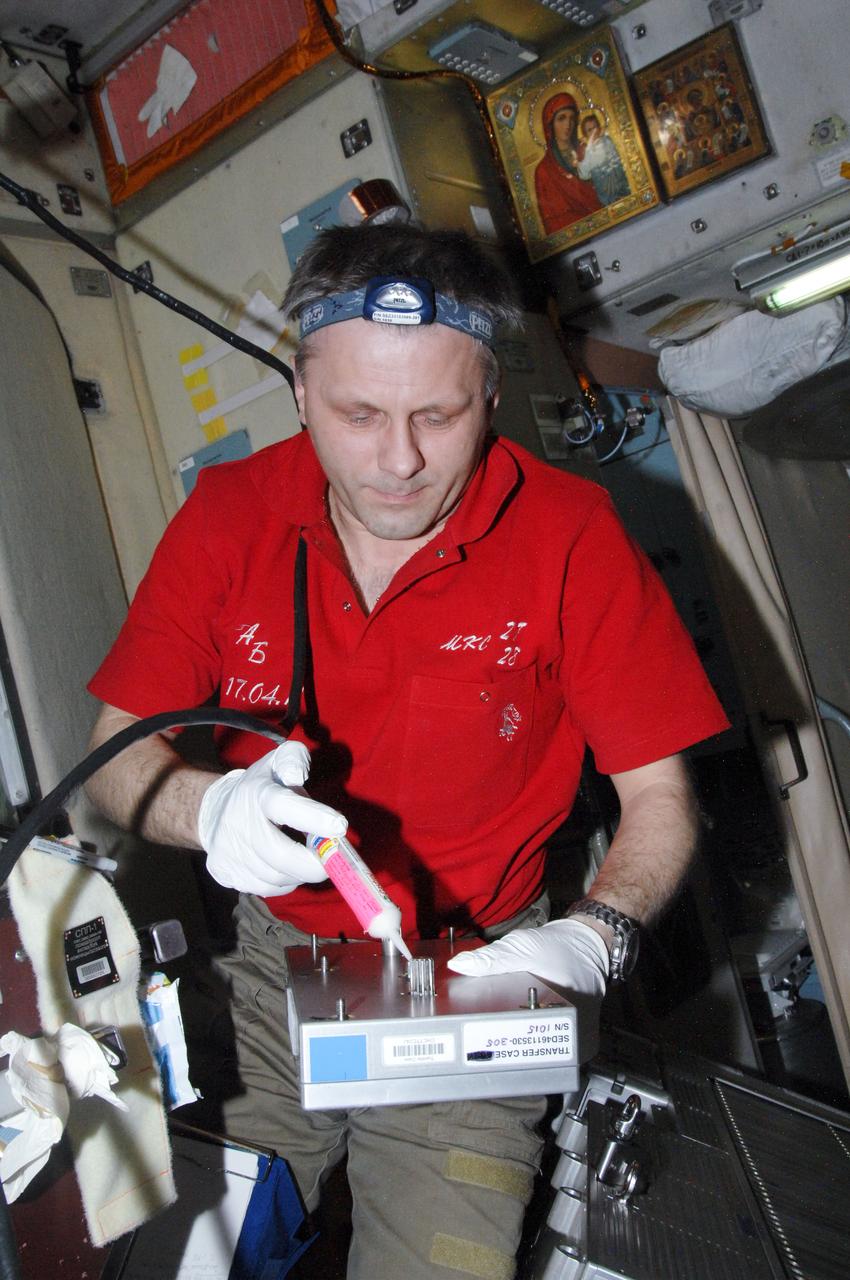
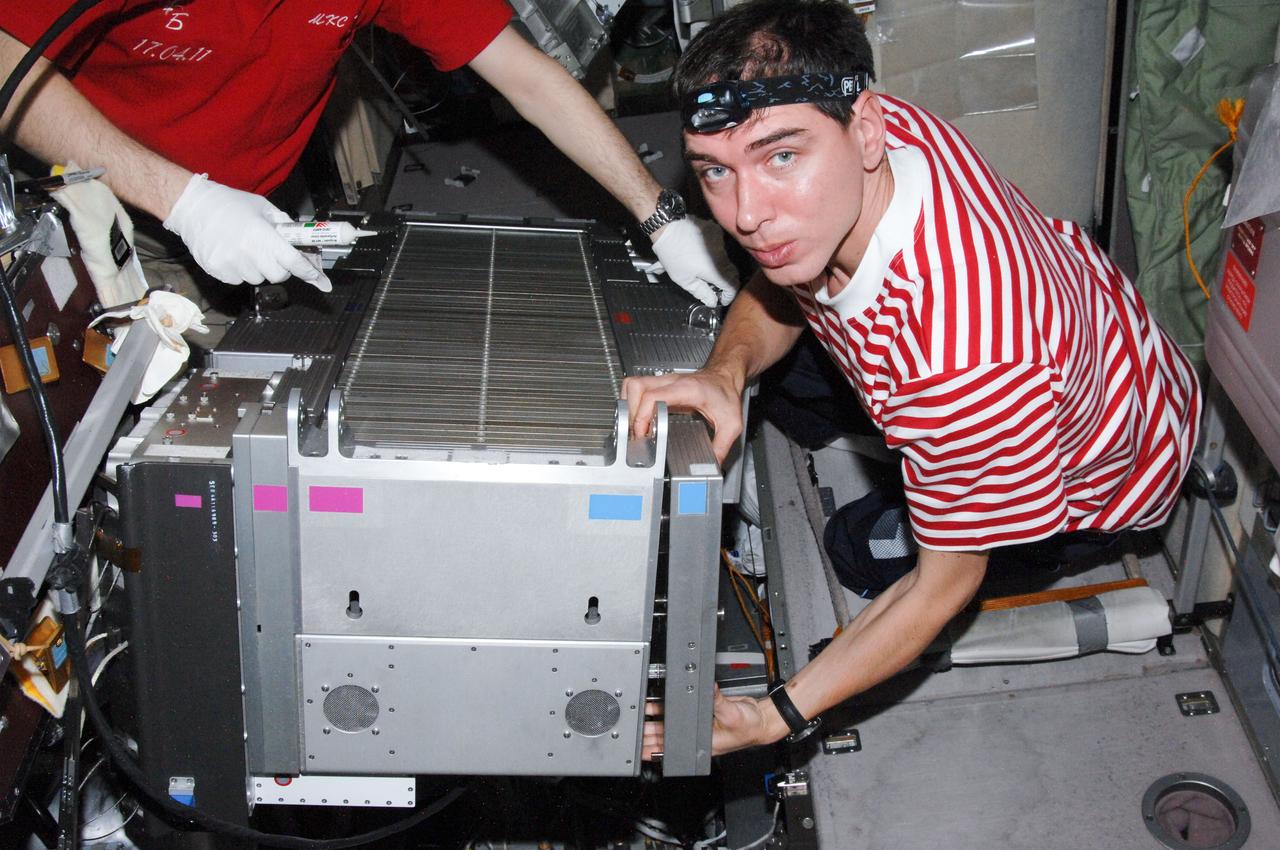
ISS028-E-013757 (1 July 2011) --- Russian cosmonaut Andrey Borisenko, Expedition 28 commander, performs in-flight maintenance on the Treadmill Vibration Isolation System (TVIS) in the Zvezda Service Module of the International Space Station.
TVIS Inflight Maintenance
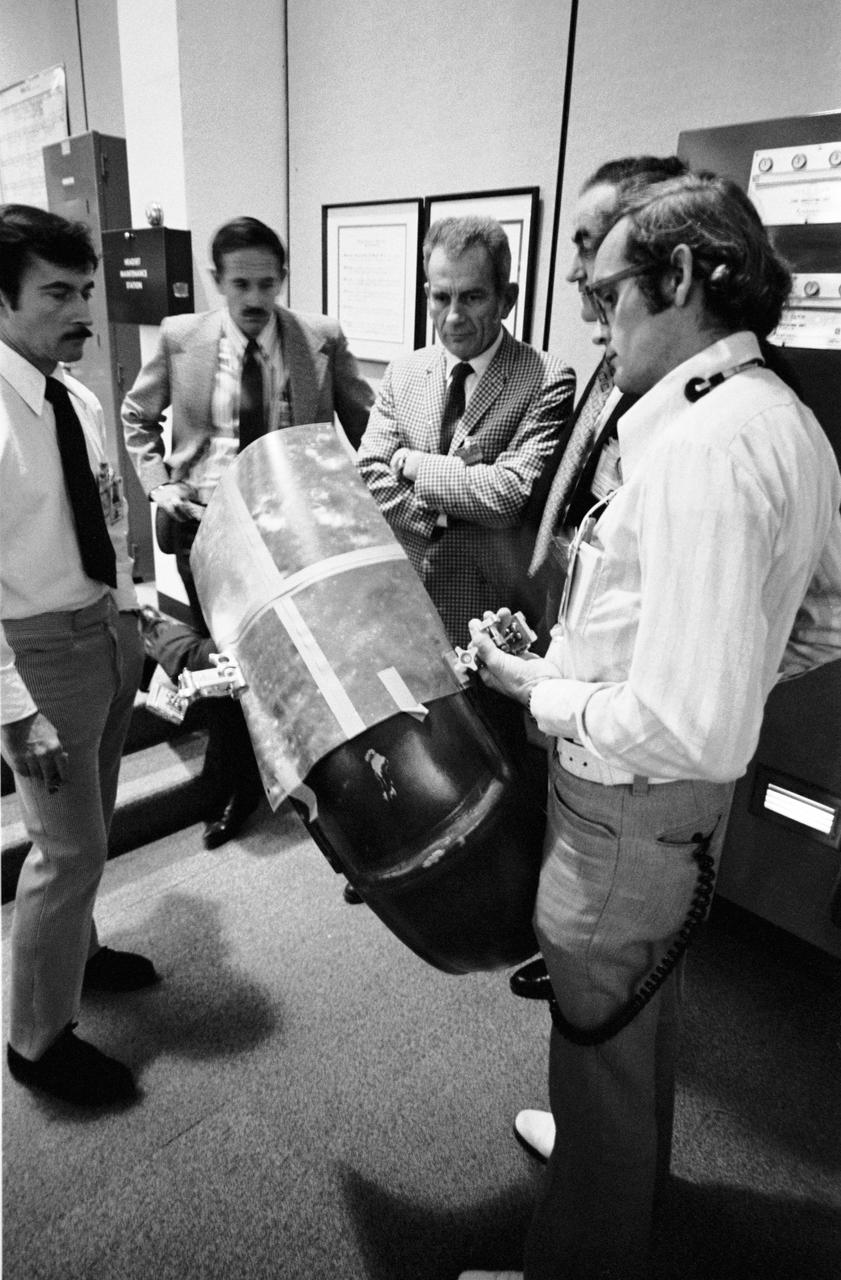
S72-55170 (11 Dec. 1972) --- These five men in the Mission Control Center ponder the solution to the problem of the damage to the right rear fender of the Apollo 17 Lunar Roving Vehicle at the Taurus-Littrow landing site. During the first lunar surface extravehicular activity a hammer got underneath the fender and a part of it was knocked off. Astronauts Eugene A. Cernan and Harrison H. Schmitt were reporting a problem with lunar dust because of the damaged fender. They sought some way to repair the broken fender. Clockwise are astronauts John W. Young and Charles M. Duke Jr., two Apollo 17 CAPCOM; Donald K. Slayton, director of flight crew operations at MSC; Dr. Roco A. Petrone, Apollo program director, Office of Manned Space Flight, NASA HQ; and Ronald V. Blevins, an EVA-1 flight controller with General Electric. They are looking over a makeshift repair arrangement which uses lunar maps and clamps from the optical alignment telescope lamp, a repair suggestion made by astronaut Young. The suggestion was relayed to Cernan and Schmitt and the repair made at the beginning of EVA-2. The problem was solved satisfactorily.
INFLIGHT - APOLLO 17 (FENDER)
ISS028-E-014395 (6 July 2011) --- NASA astronaut Ron Garan, Expedition 28 flight engineer, performs in-flight maintenance on the Mass Constituents Analyzer (MCA) in the Destiny laboratory of the International Space Station.
MCA Inflight Maintenance
S69-33993 (18 May 1969) --- The Apollo 10 Lunar Module, still attached to the Saturn IVB stage, is seen in this color reproduction taken from the first television transmission made by the color television camera aboard the Apollo 10 spacecraft. This picture was made following CSM/LM-S-IVB separation, and prior to LM extraction from the S-IVB. The Command and Service Modules were making the docking approach to the LM/S-IVB. The circular object is the docking drogue assembly on the LM. Aboard the Command Module were astronauts Thomas P. Stafford, commander; John W. Young, command module pilot; and Eugene A. Cernan, lunar module pilot.
Inflight - Apollo 10
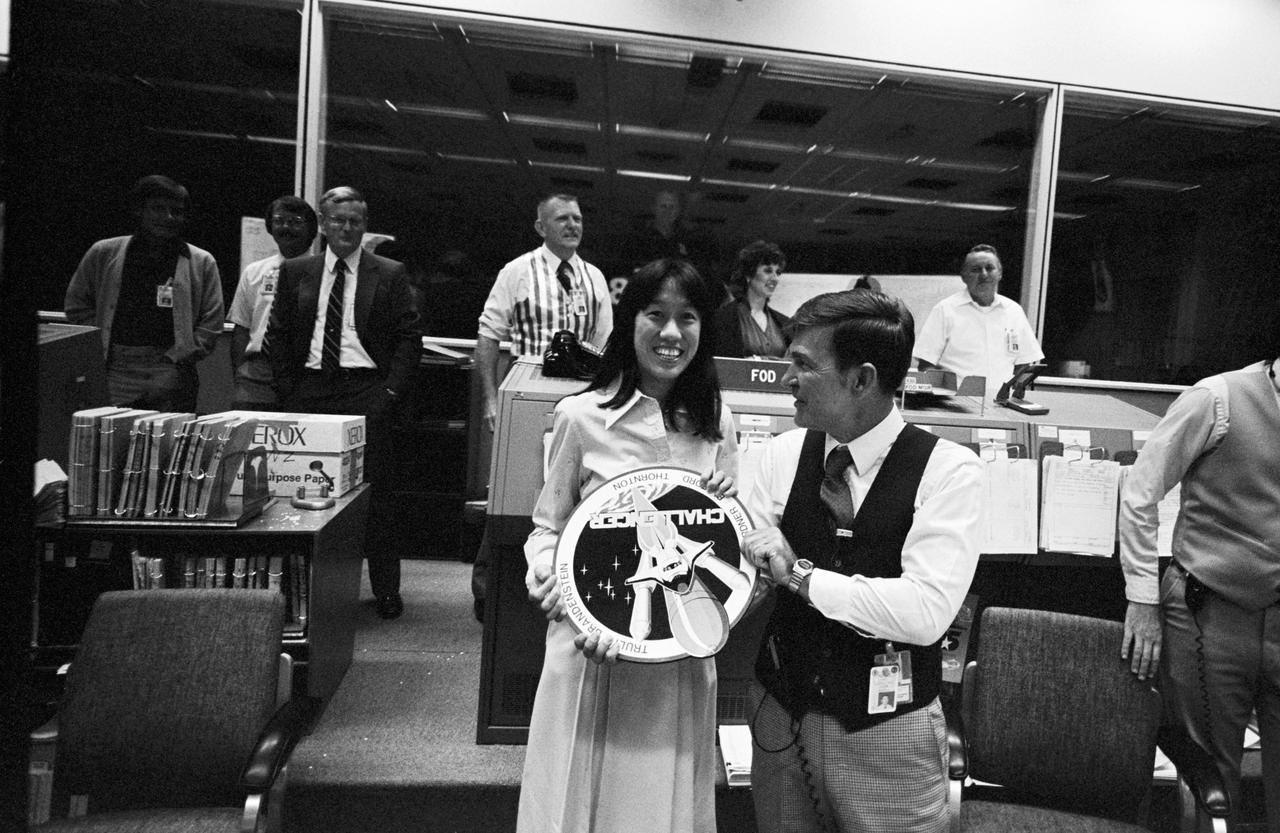
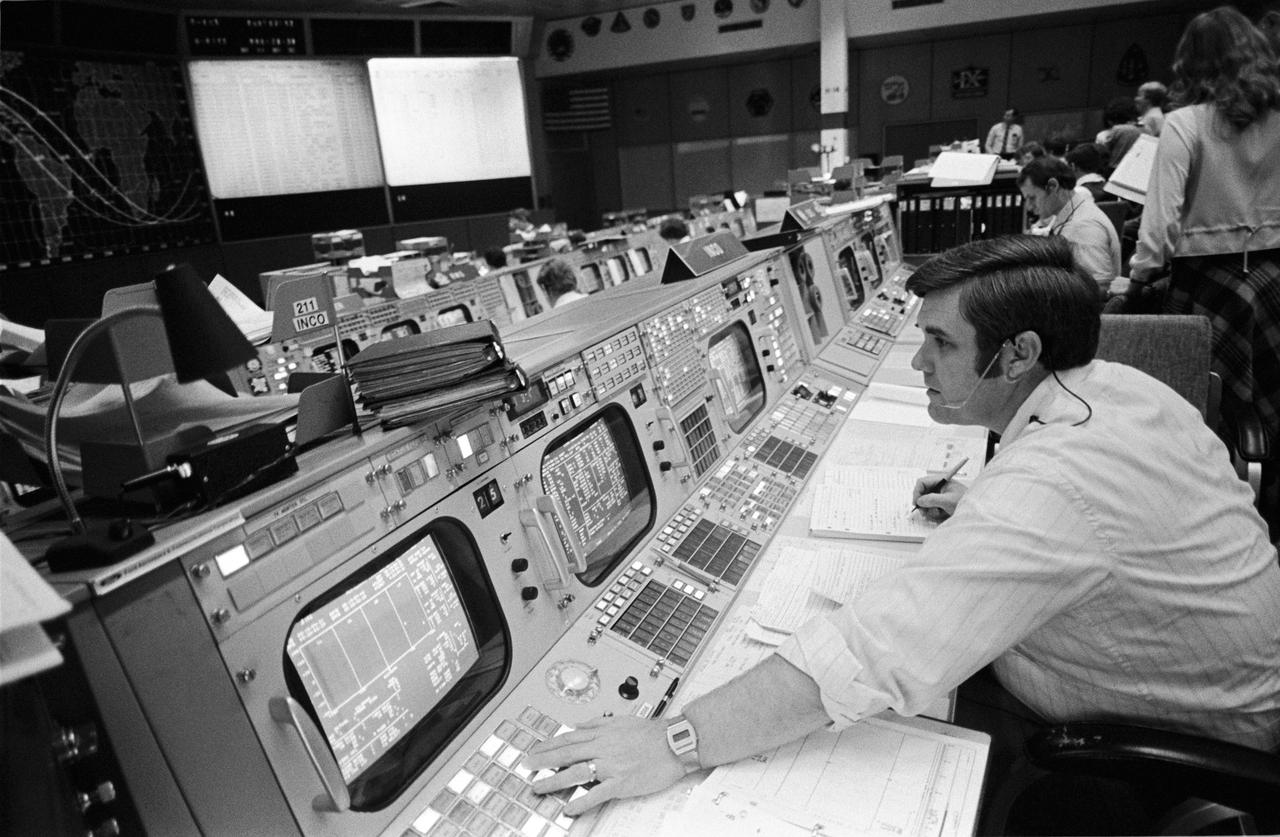
Day-5 Mission Control Room activities, STS-3 Mission of:  Alan Briscoe, at the Instrumentation and Communications Officer (INCO) Console; Astronaut Richard Truly and Briscoe; Astronaut Judy Resnik, Flight Director (FD) Jay Greene, and On-Duty FD Harold Draughon.        1. Flight Directors - STS 3  2. Astronaut Judy Resnik  3. Alan Briscoe  4. Jay Greene  5. Harold Draughon
Inflight - Mission Control Center
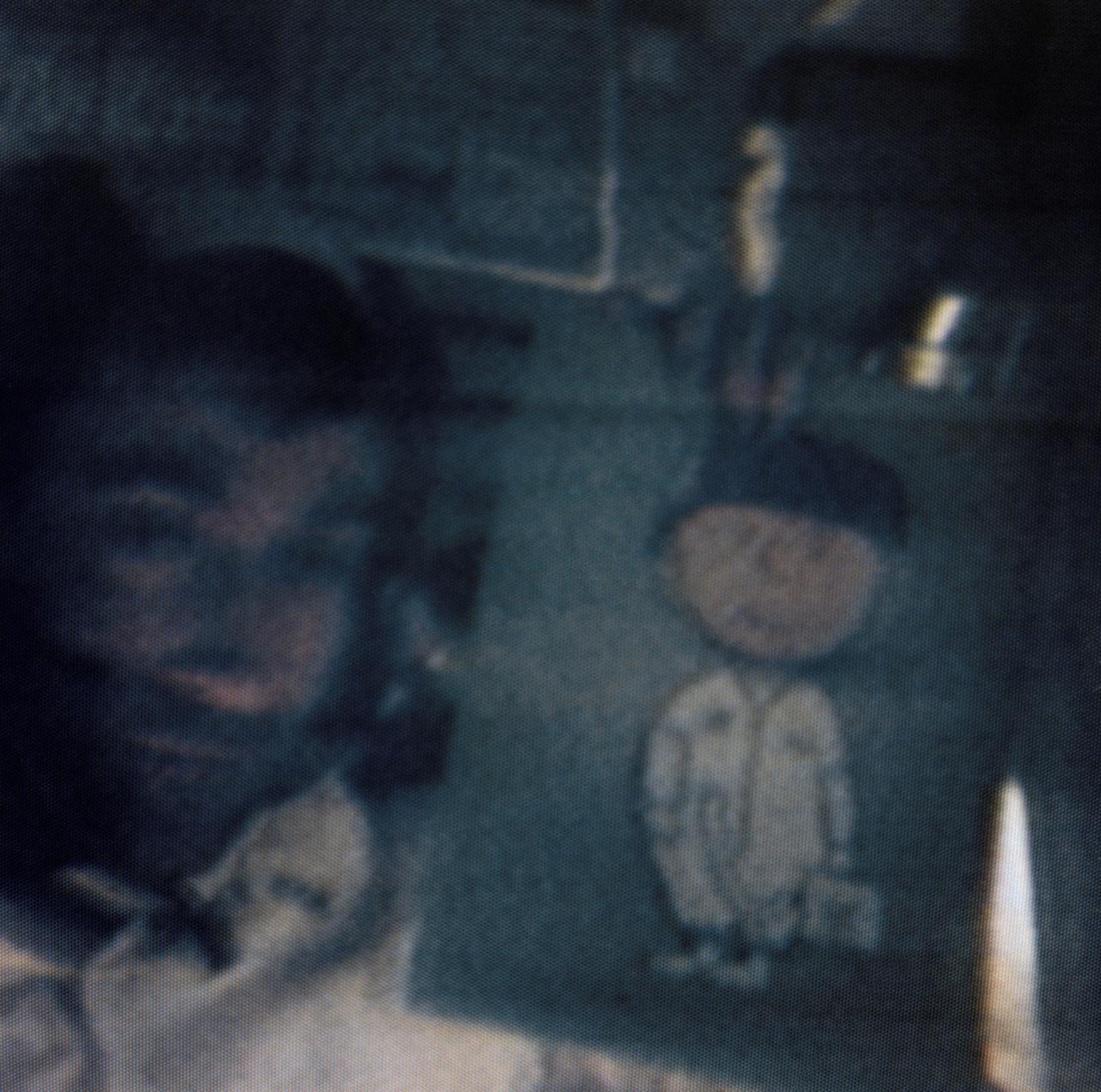
S69-34076 (19 May 1969) --- Astronaut John W. Young, Apollo 10 command module pilot, displays a drawing of Snoopy in this color reproduction taken from the fourth telecast made by the color television camera aboard the Apollo 10 spacecraft. When this picture was made the Apollo 10 spacecraft was about halfway to the moon, or approximately 112,000 nautical miles from Earth. Snoopy will be the code name of the Lunar Module (LM) during Apollo 10 operations when the Command Module (CM) and LM are separated. The CM's code name will be Charlie Brown. Also, aboard Apollo 10 were astronauts Thomas P. Stafford, commander; and Eugene A. Cernan, lunar module pilot.
Inflight - Apollo 10
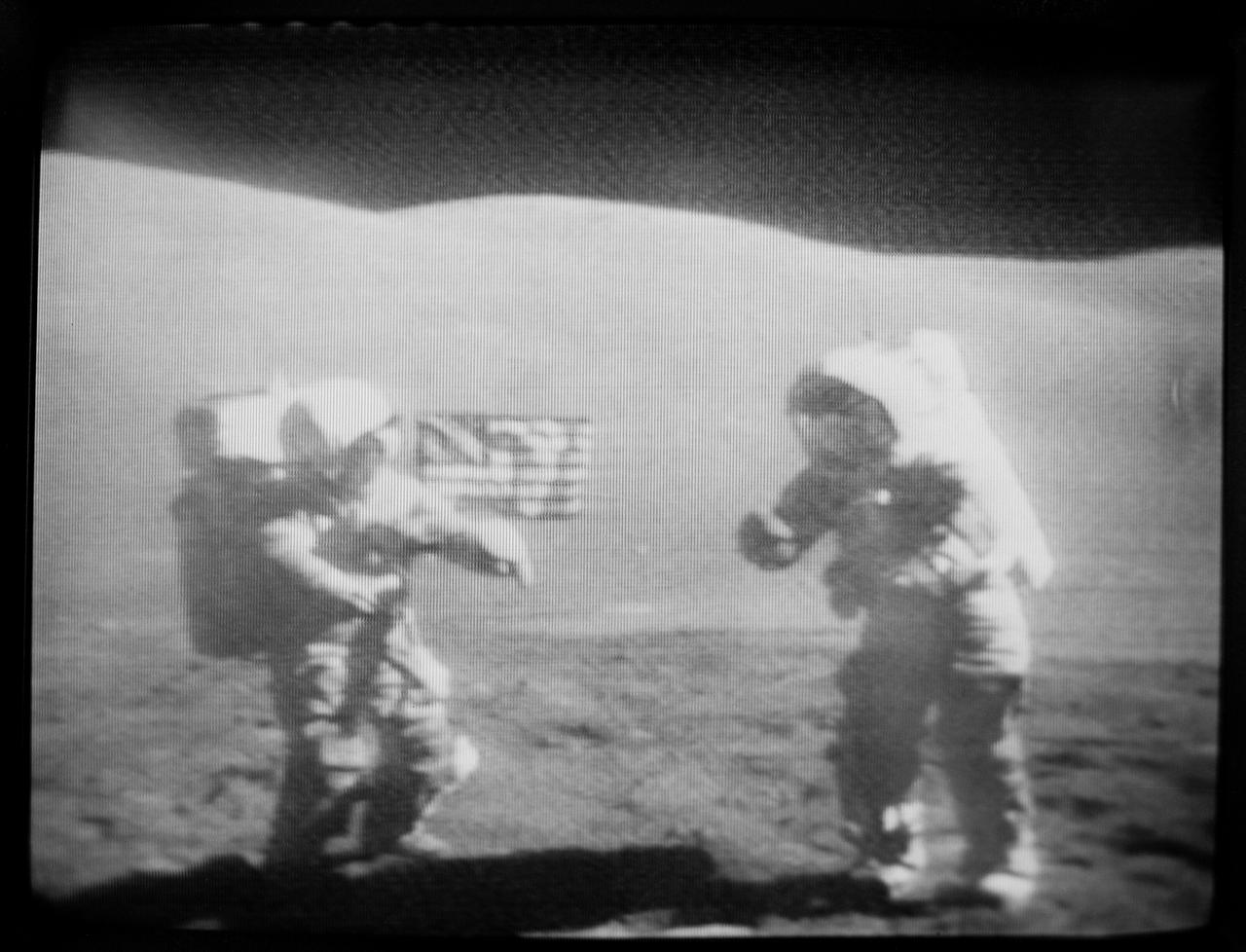
S72-55300 (13 Dec. 1972) --- The two moon-exploring Apollo 17 crewmen are seen standing near the deployed U.S. flag during the third extravehicular activity (EVA) at the Taurus-Littrow landing site, in this black and white reproduction made from a color television transmission made by the color RCA TV camera mounted on the Lunar Roving Vehicle. They are astronaut Eugene A. Cernan (on left), commander; and scientist-astronaut Harrison H. Schmitt, lunar module pilot. Astronaut Ronald E. Evans, command module pilot, remained with the Apollo 17 Command and Service Modules in lunar orbit.
APOLLO 17 - INFLIGHT (EVA)
Full views of "Challenger" in Space, taken by the Shuttle Pallet Satellite (SPAS), also views of Cargo Bay and Remote Manipulator System (RMS) extended.      1.  SHUTTLE - RMS (STS-7)      Also available in 4x5 CN
INFLIGHT - STS-7
S68-50682 (October 1968) --- Public Affairs Office (PAO) commentator Douglas K. Ward is pictured at his console in the Mission Operations Control Room (MOCR) in the Mission Control Center at NASA's Johnson Space Center during the flight of Apollo 7. Photo credit: NASA
INFLIGHT - APOLLO 7 (MCC)
S68-50695 (October 1968) --- Public Affairs Office (PAO) commentator Douglas K. Ward is pictured at his console in the Mission Operations Control Room (MOCR) in the Mission Control Center at NASA's Johnson Space Center during the flight of Apollo 7. Photo credit: NASA
INFLIGHT - APOLLO 7 (MCC)