
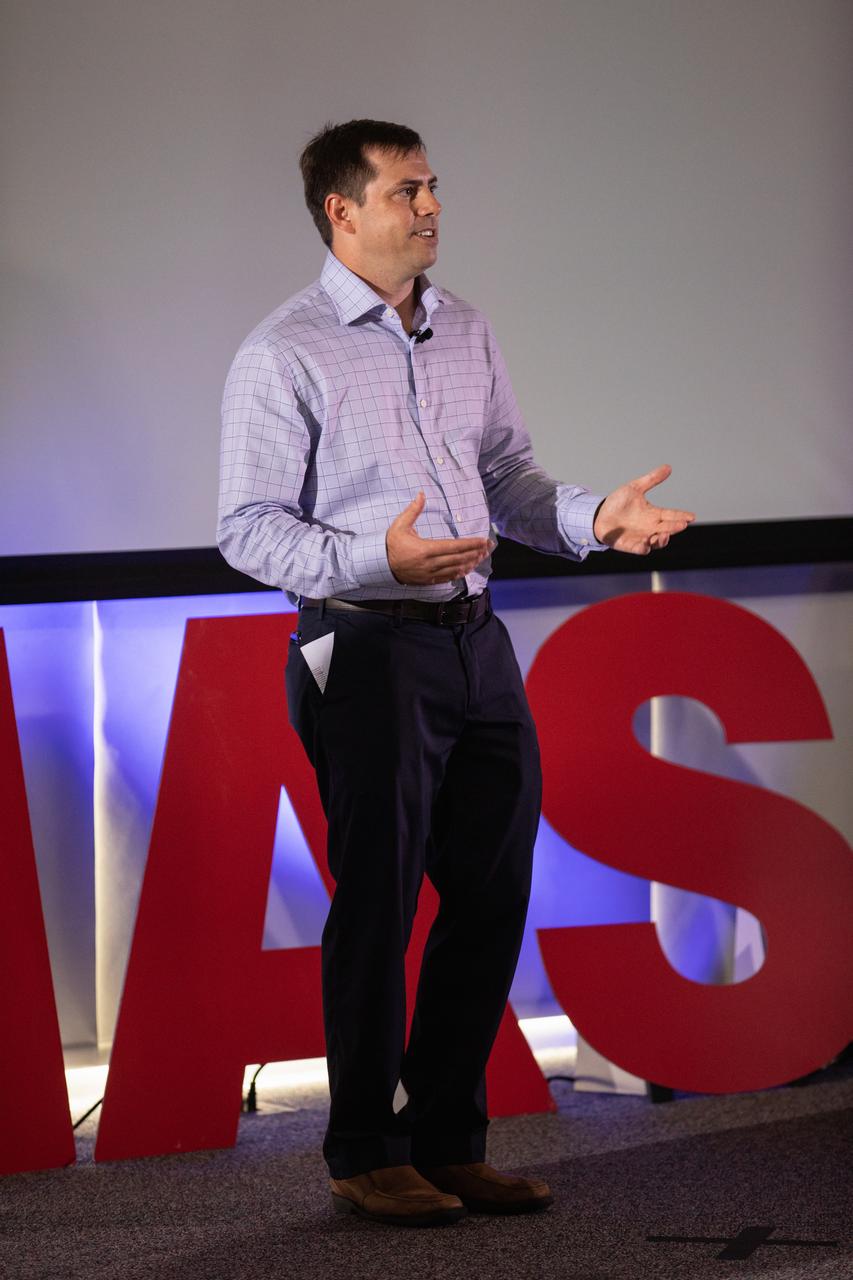
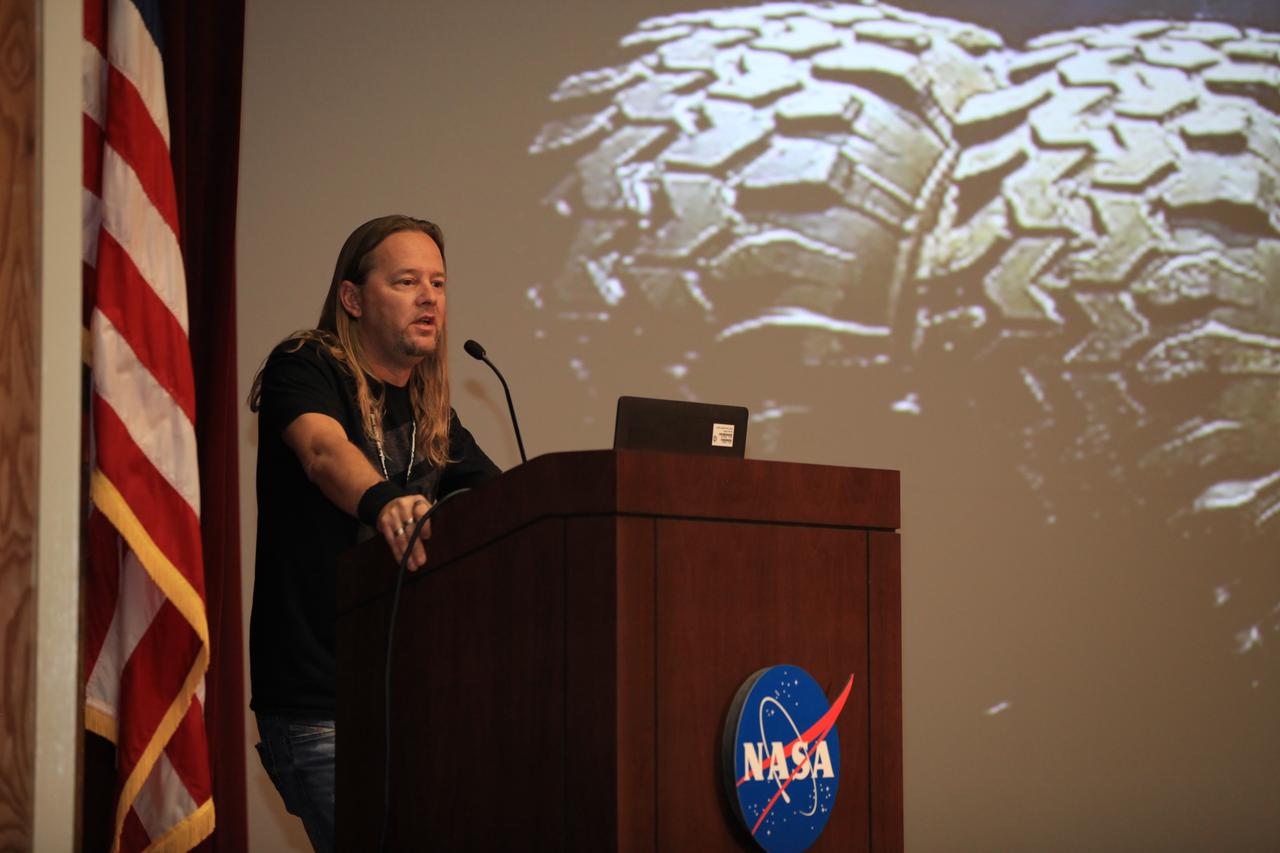
Kennedy Space Center’s Tim Bass addresses co-workers inside the Florida spaceport’s Kennedy Learning Institute on Oct. 17, 2019, during the third in a series of five TED Talk-style informational sessions. Sponsored by Kennedy’s Launching Leaders and Leadership for the Future, NASAtalks focuses on the topic of intentional careers and aims to provide employees with tools and knowledge that can be utilized for career growth. The theme of this third session was customers, and additional speakers included Kennedy employees Ryan Richards, Mike Williams and Dave Grau.
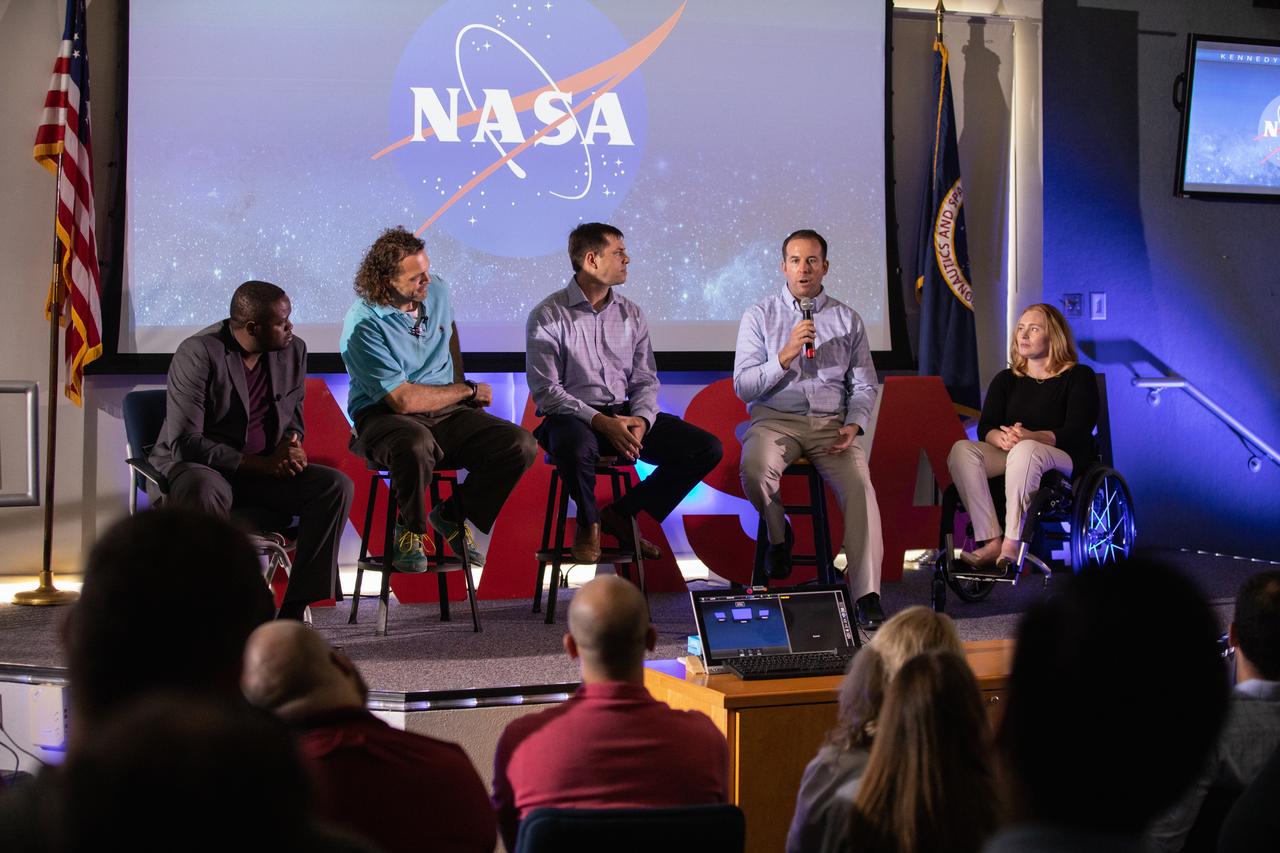
From left, Kennedy Space Center’s Ryan Richards, Tim Bass, Mike Williams, Dave Grau and Christine Shepperd participate in the third of a series of five TED Talk-style informational sessions on Oct. 17, 2019, inside the Florida spaceport’s Kennedy Learning Institute. Sponsored by Kennedy’s Launching Leaders and Leadership for the Future, NASAtalks focuses on the topic of intentional careers and aims to provide employees with tools and knowledge that can be utilized for career growth. The theme of this third session was customers.
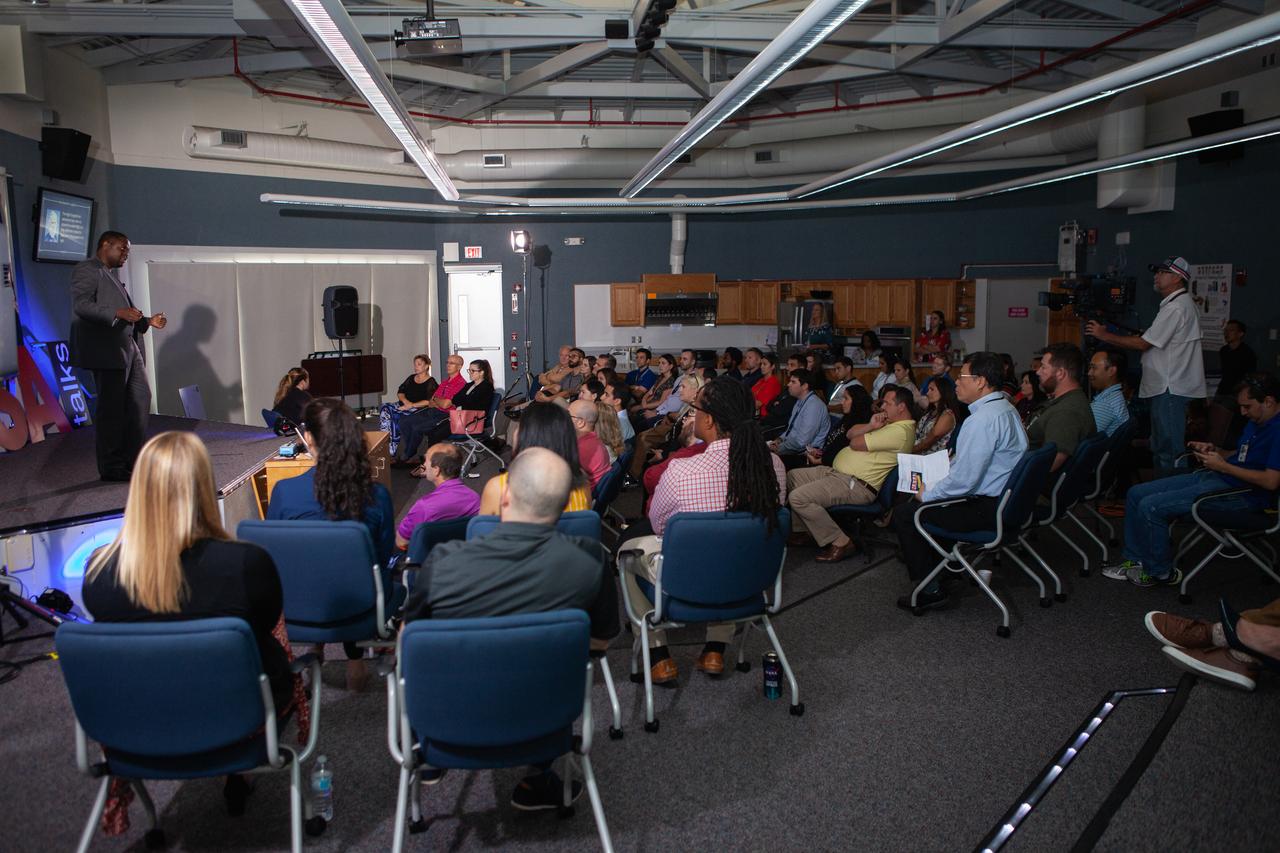
Kennedy Space Center employees attend the third in a series of five TED Talk-style informational sessions on Oct. 17, 2019, inside the Florida spaceport’s Kennedy Learning Institute. Sponsored by Kennedy’s Launching Leaders and Leadership for the Future, NASAtalks focuses on the topic of intentional careers and aims to provide employees with tools and knowledge that can be utilized for career growth. The theme of this third session was customers, and speakers included Kennedy employees Ryan Richards, Mike Williams and Dave Grau, with a skill-building section on active listening and negotiating by Tim Bass.
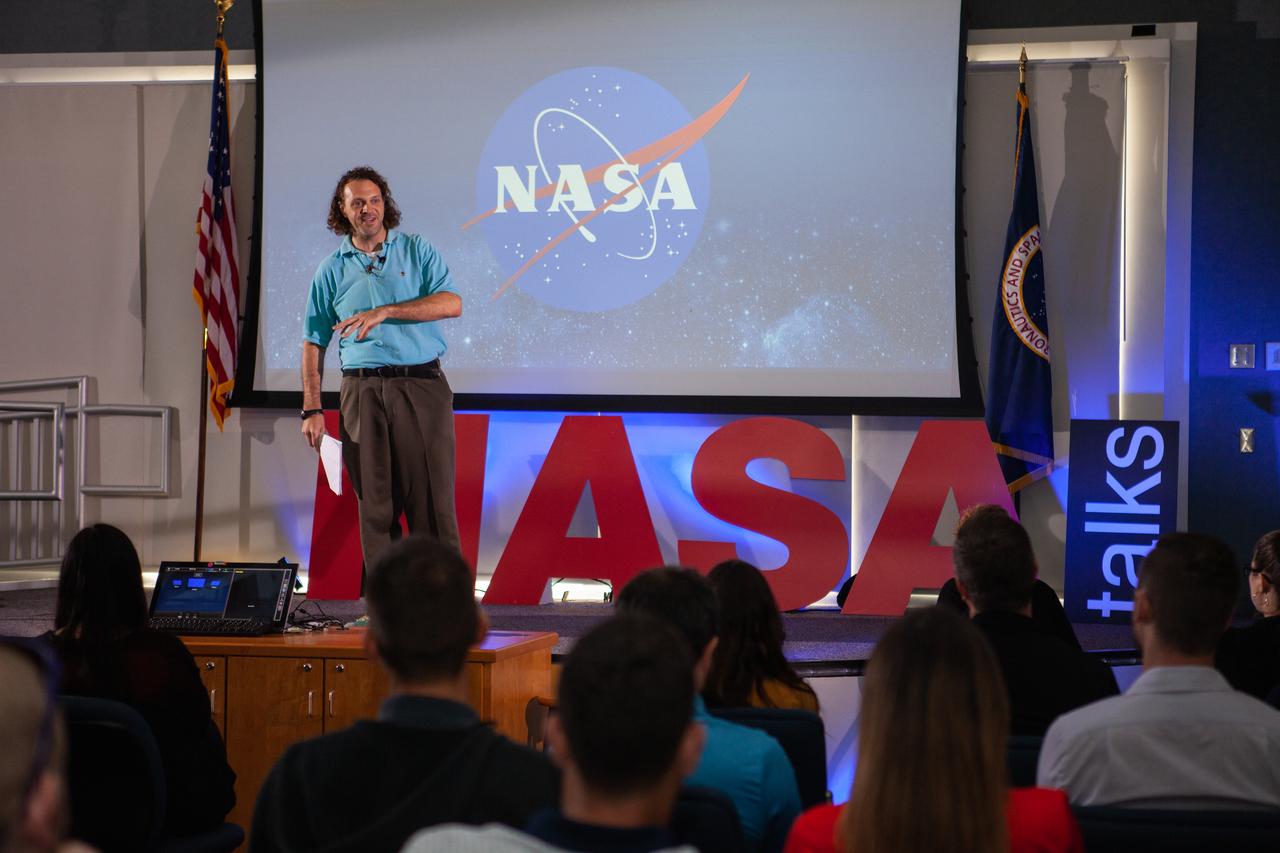
Kennedy Space Center’s Tim Bass addresses co-workers inside the Florida spaceport’s Kennedy Learning Institute on Oct. 17, 2019, during the third in a series of five TED Talk-style informational sessions. Sponsored by Kennedy’s Launching Leaders and Leadership for the Future, NASAtalks focuses on the topic of intentional careers and aims to provide employees with tools and knowledge that can be utilized for career growth. The theme of this third session was customers, and additional speakers included Kennedy employees Ryan Richards, Mike Williams and Dave Grau.
Kennedy Space Center’s Mike Williams speaks at the third in a series of five TED Talk-style informational sessions on Oct. 17, 2019, in the Florida spaceport’s Kennedy Learning Institute. Sponsored by Kennedy’s Launching Leaders and Leadership for the Future, NASAtalks focuses on the topic of intentional careers and aims to provide employees with tools and knowledge that can be utilized for career growth. The theme of this third session was customers, and additional speakers included Kennedy employees Ryan Richards and Dave Grau, with a skill-building section on active listening and negotiating by Tim Bass.
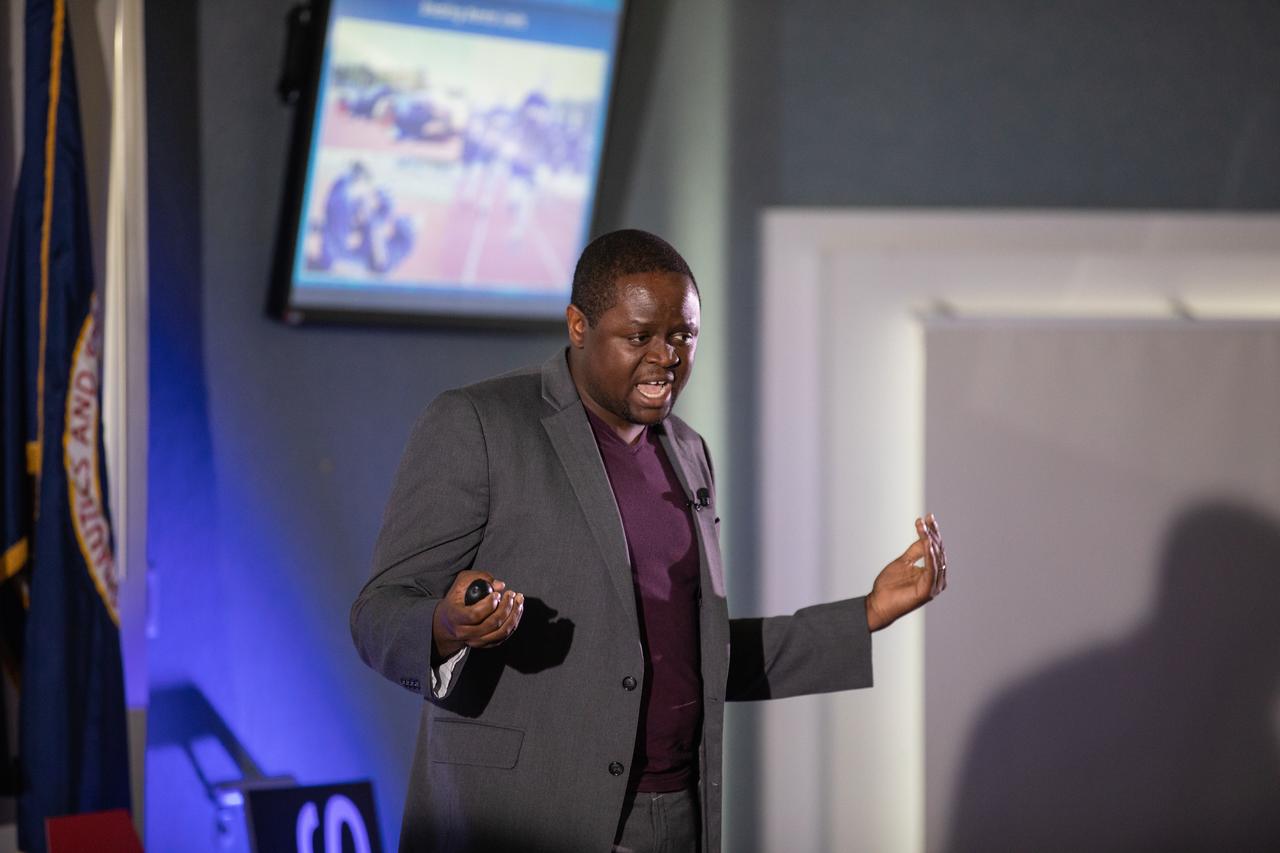
Kennedy Space Center’s Ryan Richards speaks at the third in a series of five TED Talk-style informational sessions on Oct. 17, 2019, in the Florida spaceport’s Kennedy Learning Institute. Sponsored by Kennedy’s Launching Leaders and Leadership for the Future, NASAtalks focuses on the topic of intentional careers and aims to provide employees with tools and knowledge that can be utilized for career growth. The theme of this third session was customers, and additional speakers included Kennedy employees Mike Williams and Dave Grau, with a skill-building section on active listening and negotiating by Tim Bass.
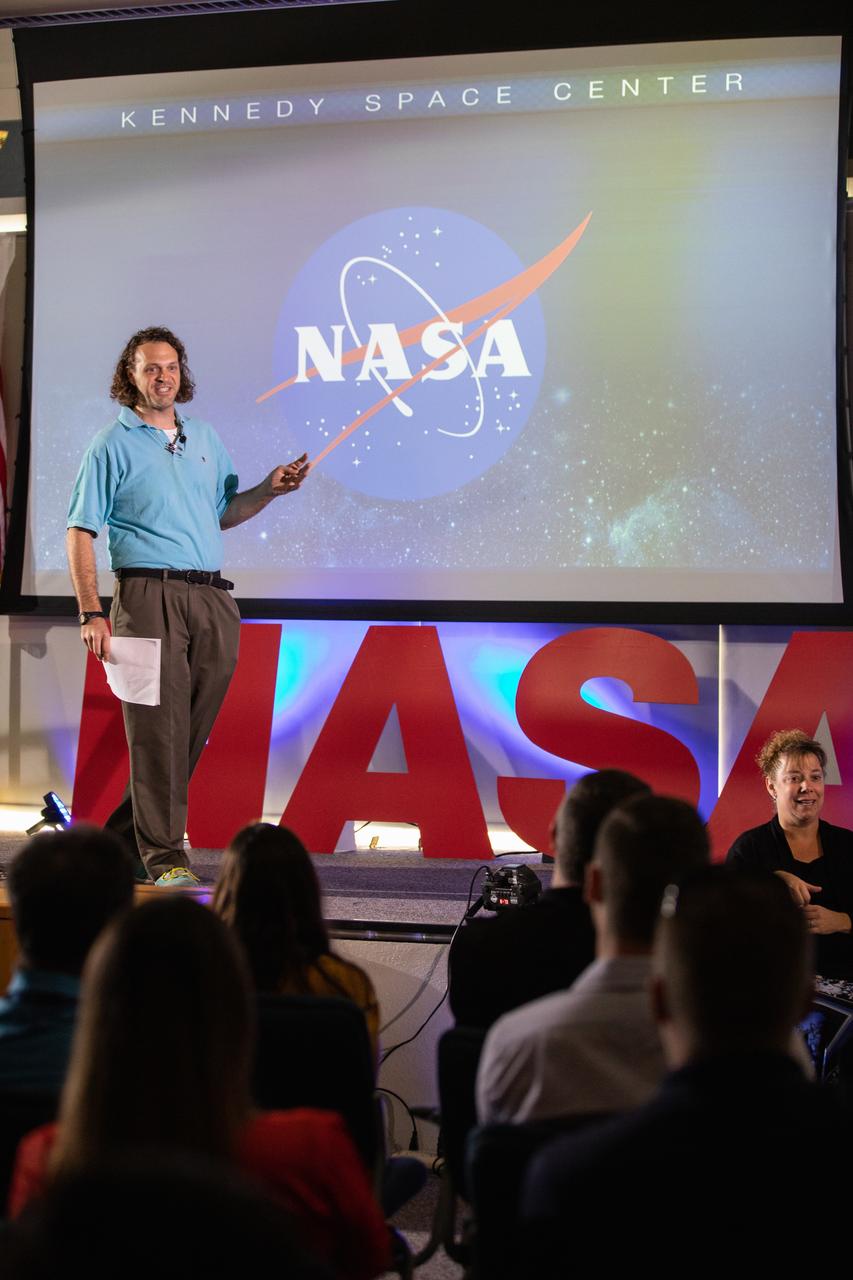
Kennedy Space Center’s Tim Bass addresses co-workers inside the Florida spaceport’s Kennedy Learning Institute on Oct. 17, 2019, during the third in a series of five TED Talk-style informational sessions. Sponsored by Kennedy’s Launching Leaders and Leadership for the Future, NASAtalks focuses on the topic of intentional careers and aims to provide employees with tools and knowledge that can be utilized for career growth. The theme of this third session was customers, and additional speakers included Kennedy employees Ryan Richards, Mike Williams and Dave Grau.
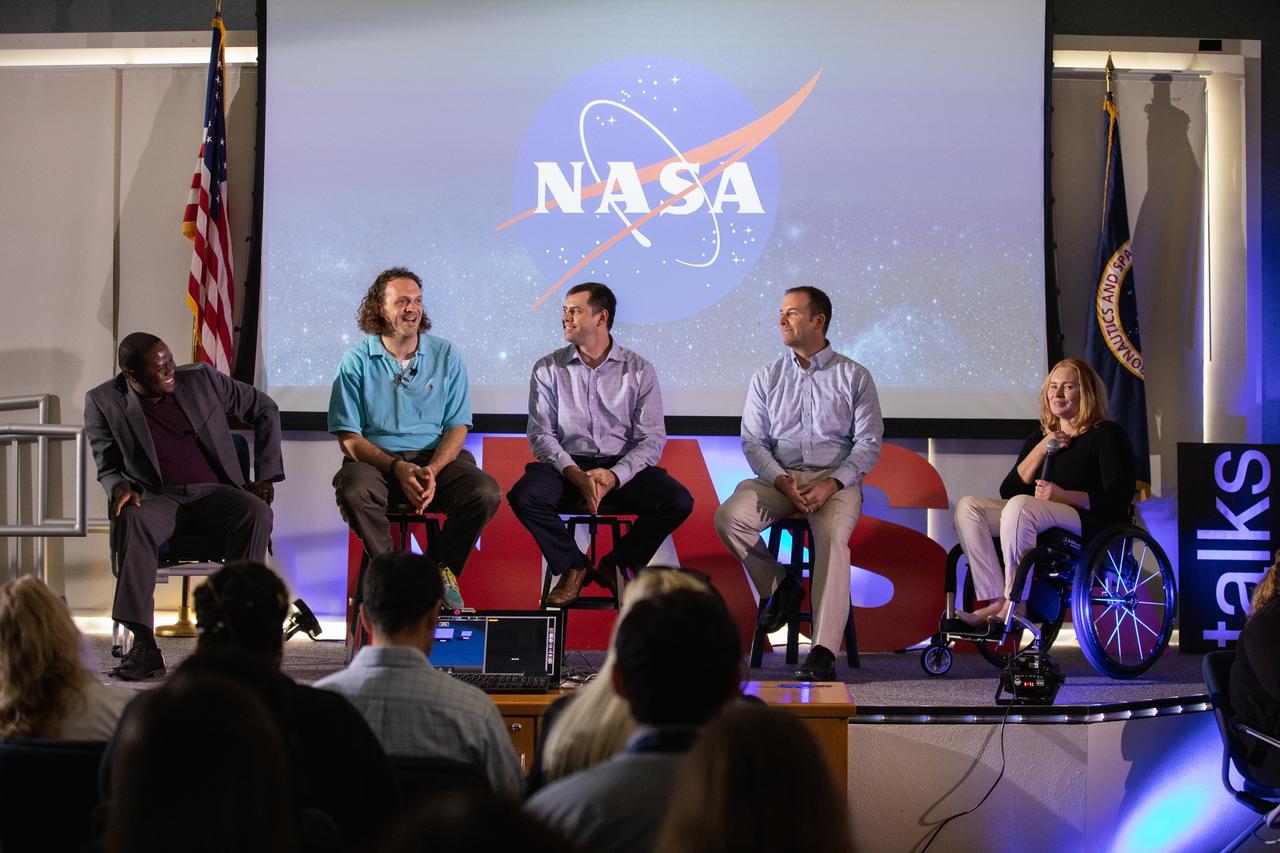
From left, Kennedy Space Center’s Ryan Richards, Tim Bass, Mike Williams, Dave Grau and Christine Shepperd participate in the third of a series of five TED Talk-style informational sessions on Oct. 17, 2019, inside the Florida spaceport’s Kennedy Learning Institute. Sponsored by Kennedy’s Launching Leaders and Leadership for the Future, NASAtalks focuses on the topic of intentional careers and aims to provide employees with tools and knowledge that can be utilized for career growth. The theme of this third session was customers.
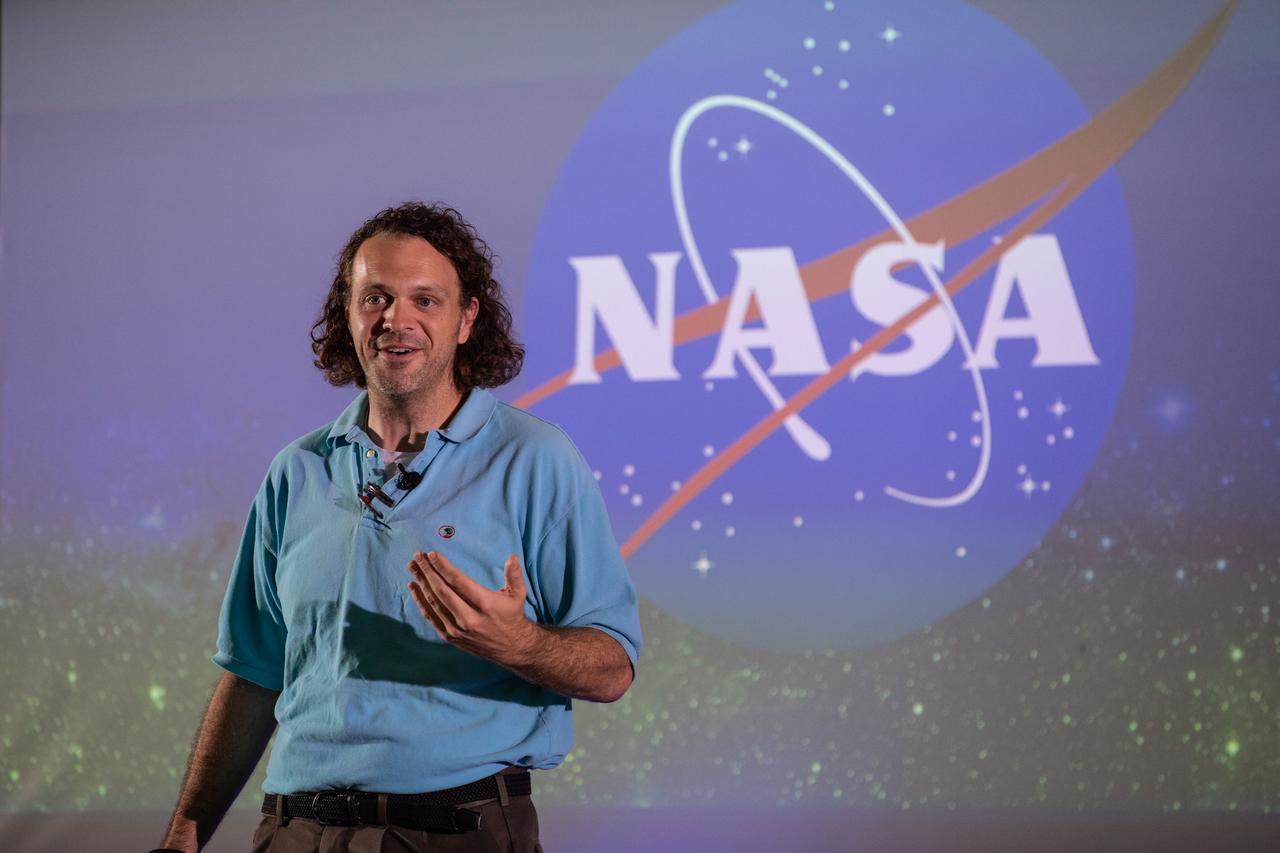
Kennedy Space Center’s Tim Bass speaks at the third in a series of five TED Talk-style informational sessions on Oct. 17, 2019, in the Florida spaceport’s Kennedy Learning Institute. Sponsored by Kennedy’s Launching Leaders and Leadership for the Future, NASAtalks focuses on the topic of intentional careers and aims to provide employees with tools and knowledge that can be utilized for career growth. The theme of this third session was customers, and additional speakers included Kennedy employees Ryan Richards, Mike Williams and Dave Grau.
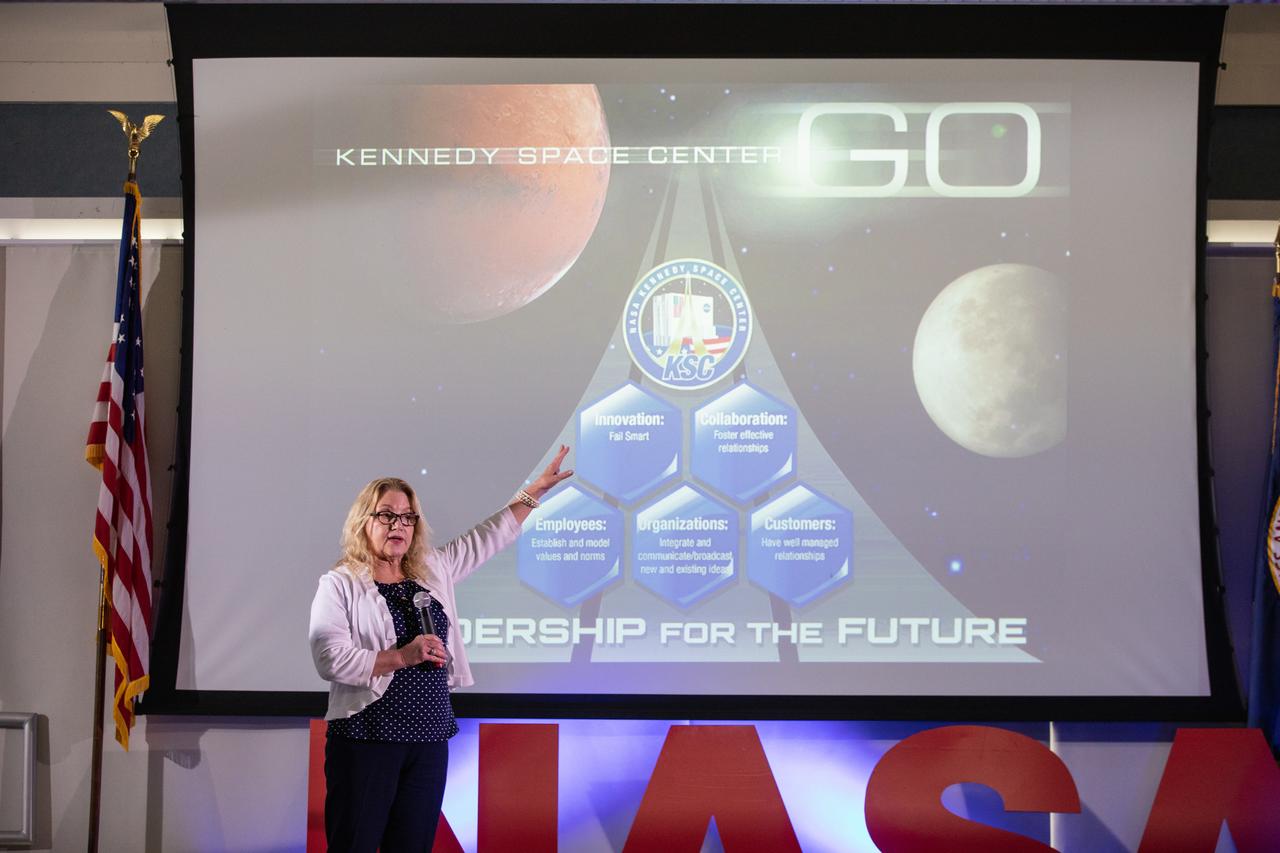
Susan Kroskey, chief financial officer at NASA’s Kennedy Space Center in Florida, speaks to Kennedy employees on Oct. 17, 2019, in the Kennedy Learning Institute during the third in a series of five TED Talk-style informational sessions. Sponsored by Kennedy’s Launching Leaders and Leadership for the Future, NASAtalks focuses on the topic of intentional careers and aims to provide employees with tools and knowledge that can be utilized for career growth. The theme of this third session was customers, and speakers included Kennedy employees Ryan Richards, Mike Williams and Dave Grau, with a skill-building section on active listening and negotiating by Tim Bass.
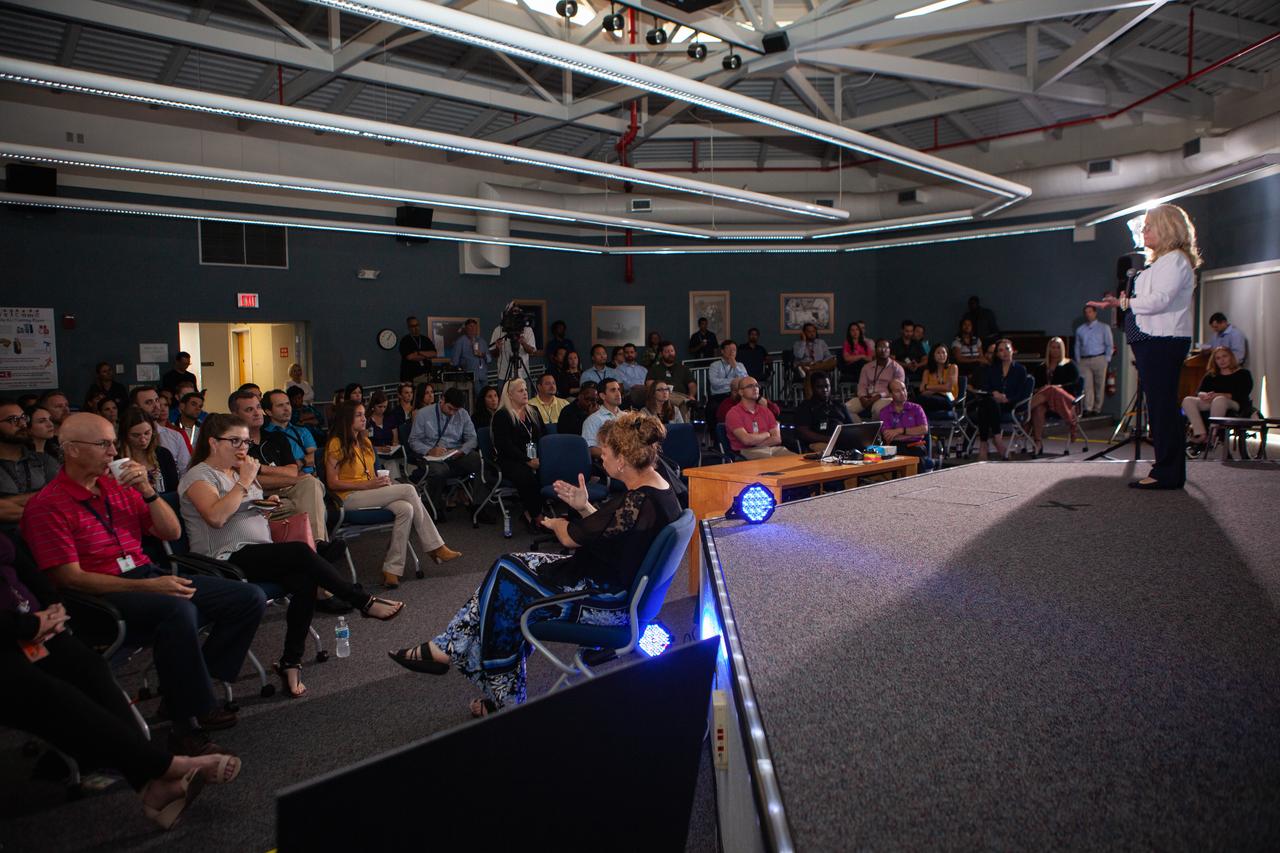
Susan Kroskey, chief financial officer at NASA’s Kennedy Space Center in Florida, speaks to Kennedy employees on Oct. 17, 2019, in the Kennedy Learning Institute during the third in a series of five TED Talk-style informational sessions. Sponsored by Kennedy’s Launching Leaders and Leadership for the Future, NASAtalks focuses on the topic of intentional careers and aims to provide employees with tools and knowledge that can be utilized for career growth. The theme of this third session was customers, and speakers included Kennedy employees Ryan Richards, Mike Williams and Dave Grau, with a skill-building section on active listening and negotiating by Tim Bass.

Kennedy Space Center’s Mike Williams addresses co-workers inside the Florida spaceport’s Kennedy Learning Institute on Oct. 17, 2019, during the third in a series of five TED Talk-style informational sessions. Sponsored by Kennedy’s Launching Leaders and Leadership for the Future, NASAtalks focuses on the topic of intentional careers and aims to provide employees with tools and knowledge that can be utilized for career growth. The theme of this third session was customers, and additional speakers included Kennedy employees Ryan Richards and Dave Grau, with a skill-building section on active listening and negotiating by Tim Bass.
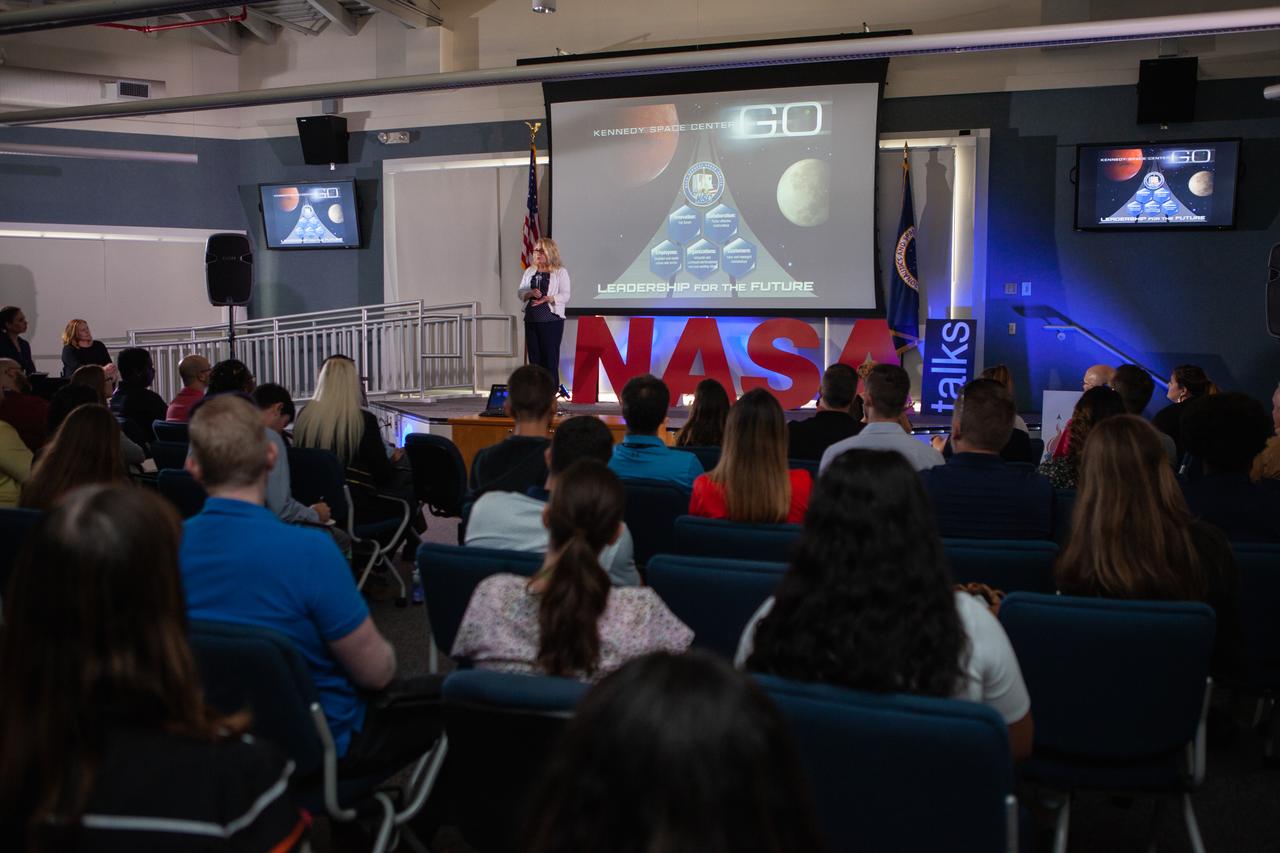
Susan Kroskey, chief financial officer at NASA’s Kennedy Space Center in Florida, speaks to Kennedy employees on Oct. 17, 2019, in the Kennedy Learning Institute during the third in a series of five TED Talk-style informational sessions. Sponsored by Kennedy’s Launching Leaders and Leadership for the Future, NASAtalks focuses on the topic of intentional careers and aims to provide employees with tools and knowledge that can be utilized for career growth. The theme of this third session was customers, and speakers included Kennedy employees Ryan Richards, Mike Williams and Dave Grau, with a skill-building section on active listening and negotiating by Tim Bass.
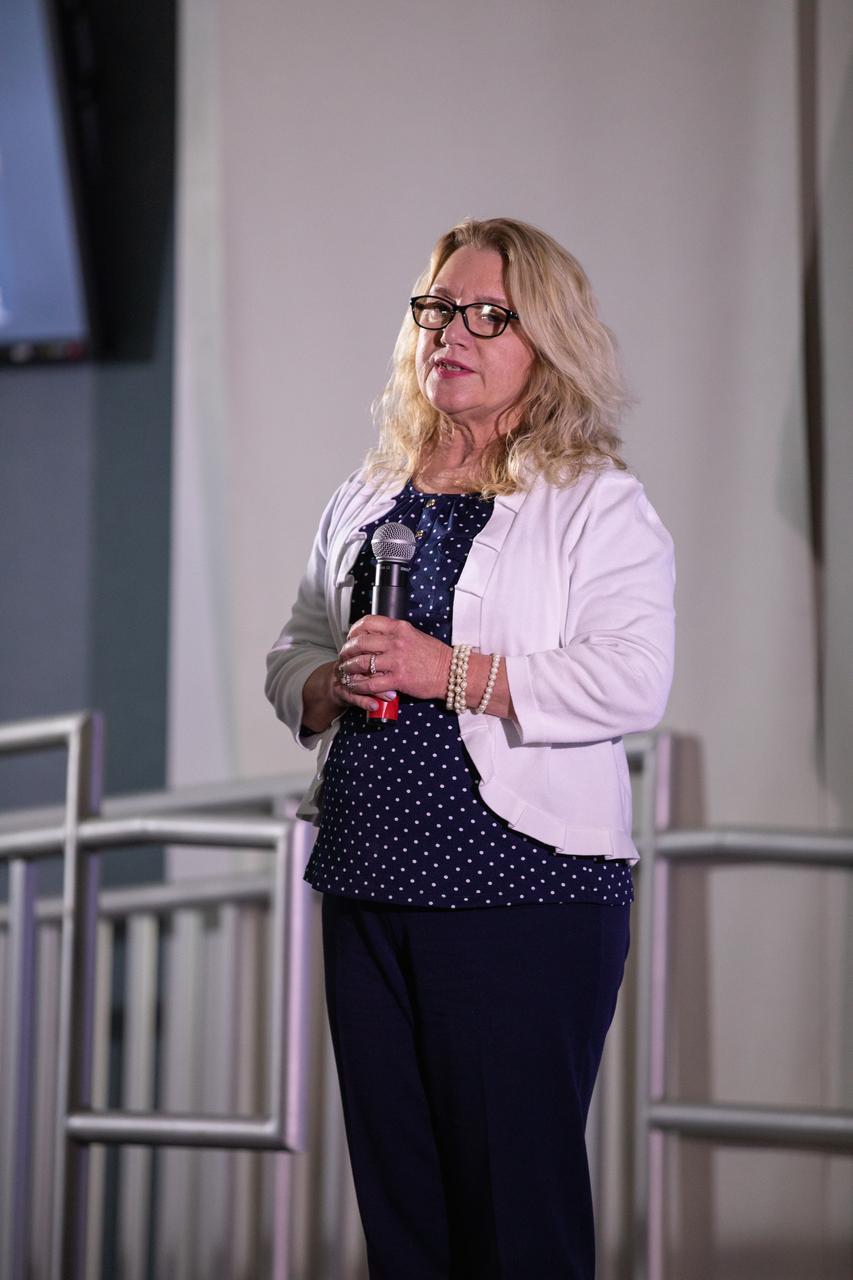
Susan Kroskey, chief financial officer at NASA’s Kennedy Space Center in Florida, speaks at the third in a series of five TED Talk-style informational sessions on Oct. 17, 2019, in the Florida spaceport’s Kennedy Learning Institute. Sponsored by Kennedy’s Launching Leaders and Leadership for the Future, NASAtalks focuses on the topic of intentional careers and aims to provide employees with tools and knowledge that can be utilized for career growth. The theme of this third session was customers, and speakers included Kennedy employees Ryan Richards, Mike Williams and Dave Grau, with a skill-building section on active listening and negotiating by Tim Bass.
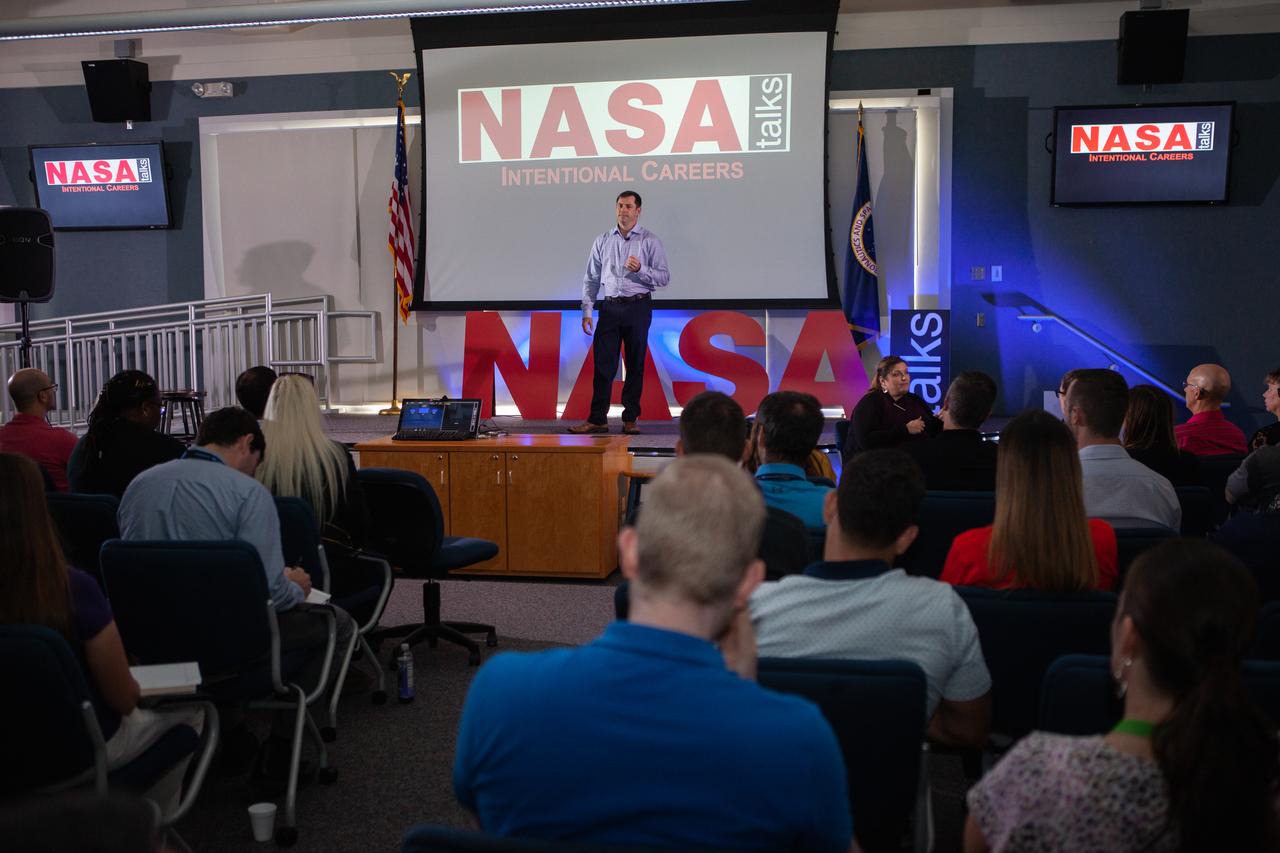
Kennedy Space Center’s Mike Williams addresses co-workers inside the Florida spaceport’s Kennedy Learning Institute on Oct. 17, 2019, during the third in a series of five TED Talk-style informational sessions. Sponsored by Kennedy’s Launching Leaders and Leadership for the Future, NASAtalks focuses on the topic of intentional careers and aims to provide employees with tools and knowledge that can be utilized for career growth. The theme of this third session was customers, and additional speakers included Kennedy employees Ryan Richards and Dave Grau, with a skill-building section on active listening and negotiating by Tim Bass.

Kennedy Space Center’s Ryan Richards addresses co-workers inside the Florida spaceport’s Kennedy Learning Institute on Oct. 17, 2019, during the third in a series of five TED Talk-style informational sessions. Sponsored by Kennedy’s Launching Leaders and Leadership for the Future, NASAtalks focuses on the topic of intentional careers and aims to provide employees with tools and knowledge that can be utilized for career growth. The theme of this third session was customers, and additional speakers included Kennedy employees Mike Williams and Dave Grau, with a skill-building section on active listening and negotiating by Tim Bass.
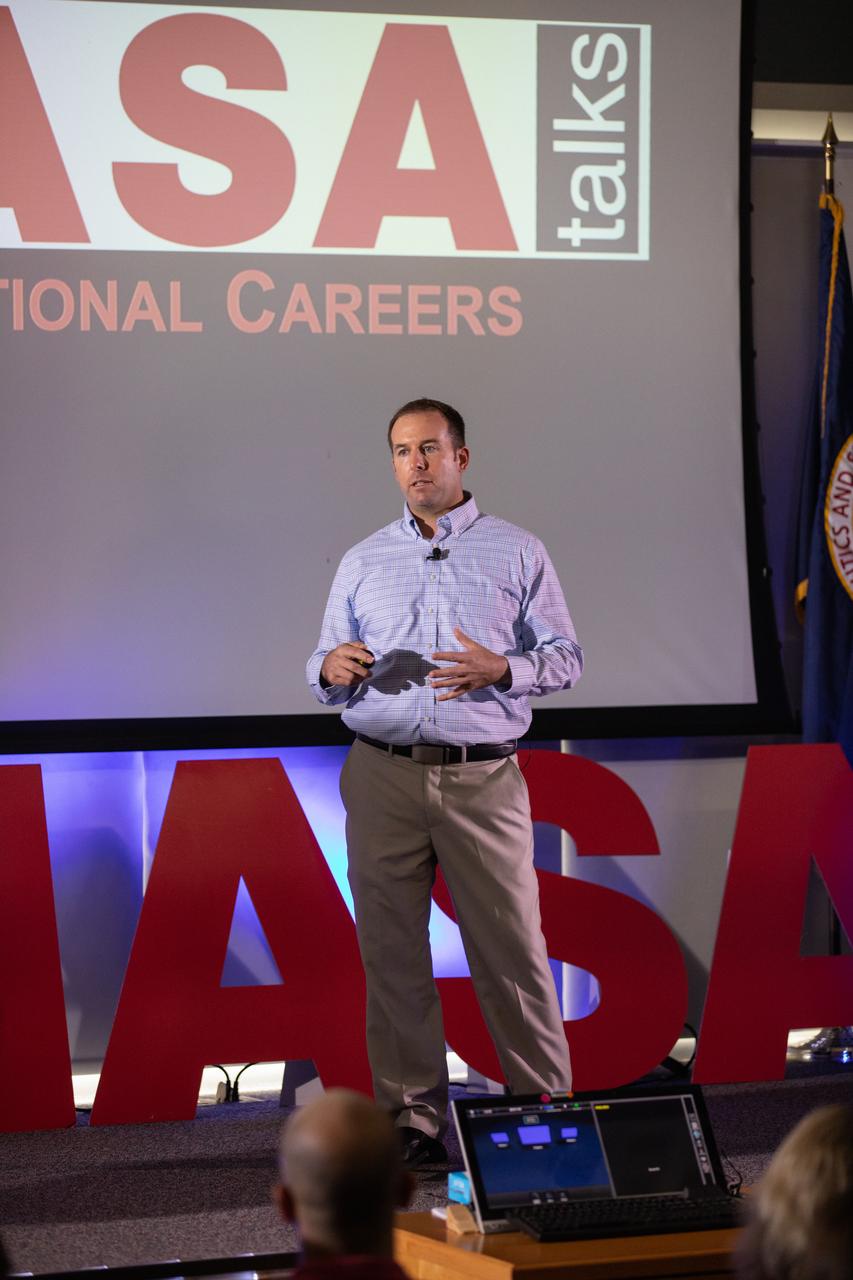
Kennedy Space Center’s Dave Grau addresses co-workers inside the Florida spaceport’s Kennedy Learning Institute on Oct. 17, 2019, during the third in a series of five TED Talk-style informational sessions. Sponsored by Kennedy’s Launching Leaders and Leadership for the Future, NASAtalks focuses on the topic of intentional careers and aims to provide employees with tools and knowledge that can be utilized for career growth. The theme of this third session was customers, and additional speakers included Kennedy employees Ryan Richards and Mike Williams, with a skill-building section on active listening and negotiating by Tim Bass.
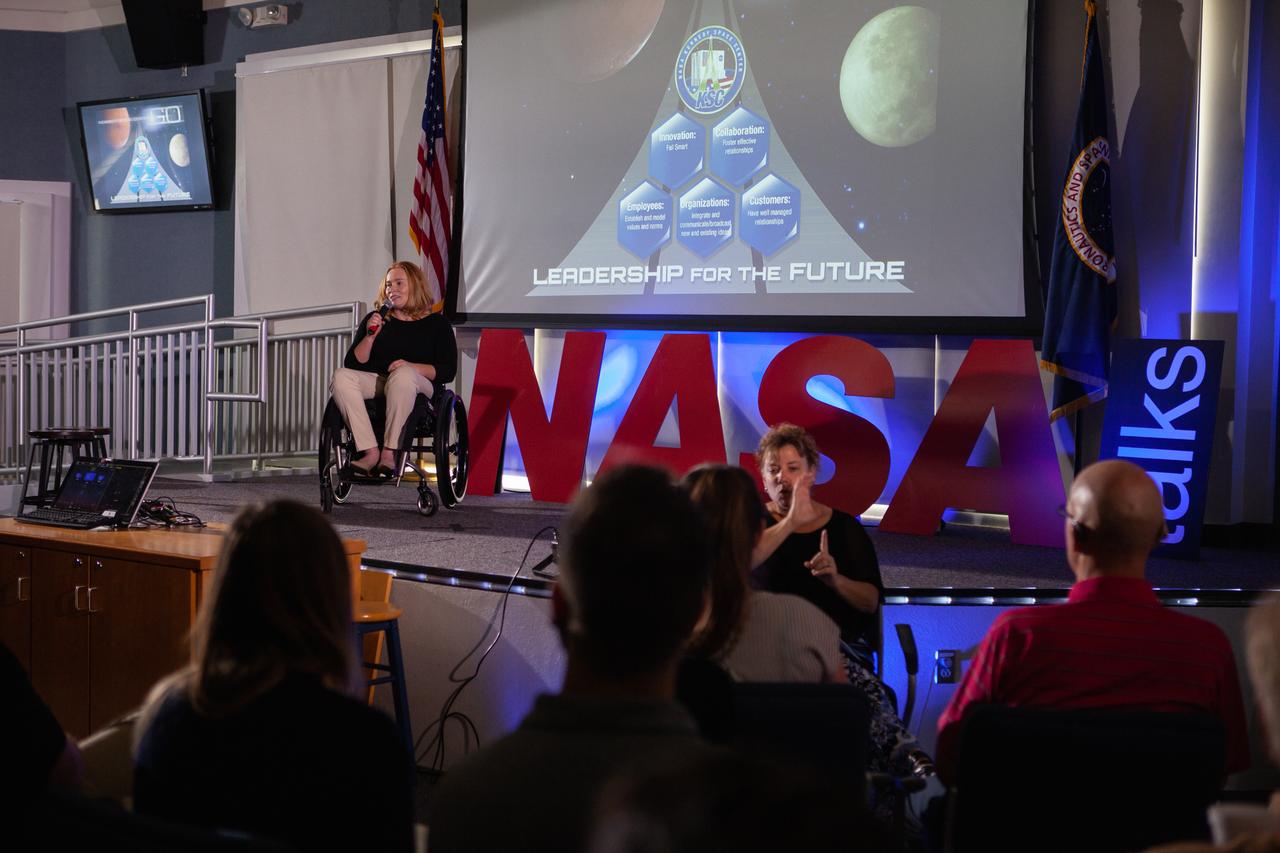
Kennedy Space Center’s Christine Shepperd addresses co-workers inside the Florida spaceport’s Kennedy Learning Institute on Oct. 17, 2019, during the third in a series of five TED Talk-style informational sessions. Sponsored by Kennedy’s Launching Leaders and Leadership for the Future, NASAtalks focuses on the topic of intentional careers and aims to provide employees with tools and knowledge that can be utilized for career growth. The theme of this third session was customers, and speakers included Kennedy employees Ryan Richards, Mike Williams and Dave Grau, with a skill-building section on active listening and negotiating by Tim Bass.
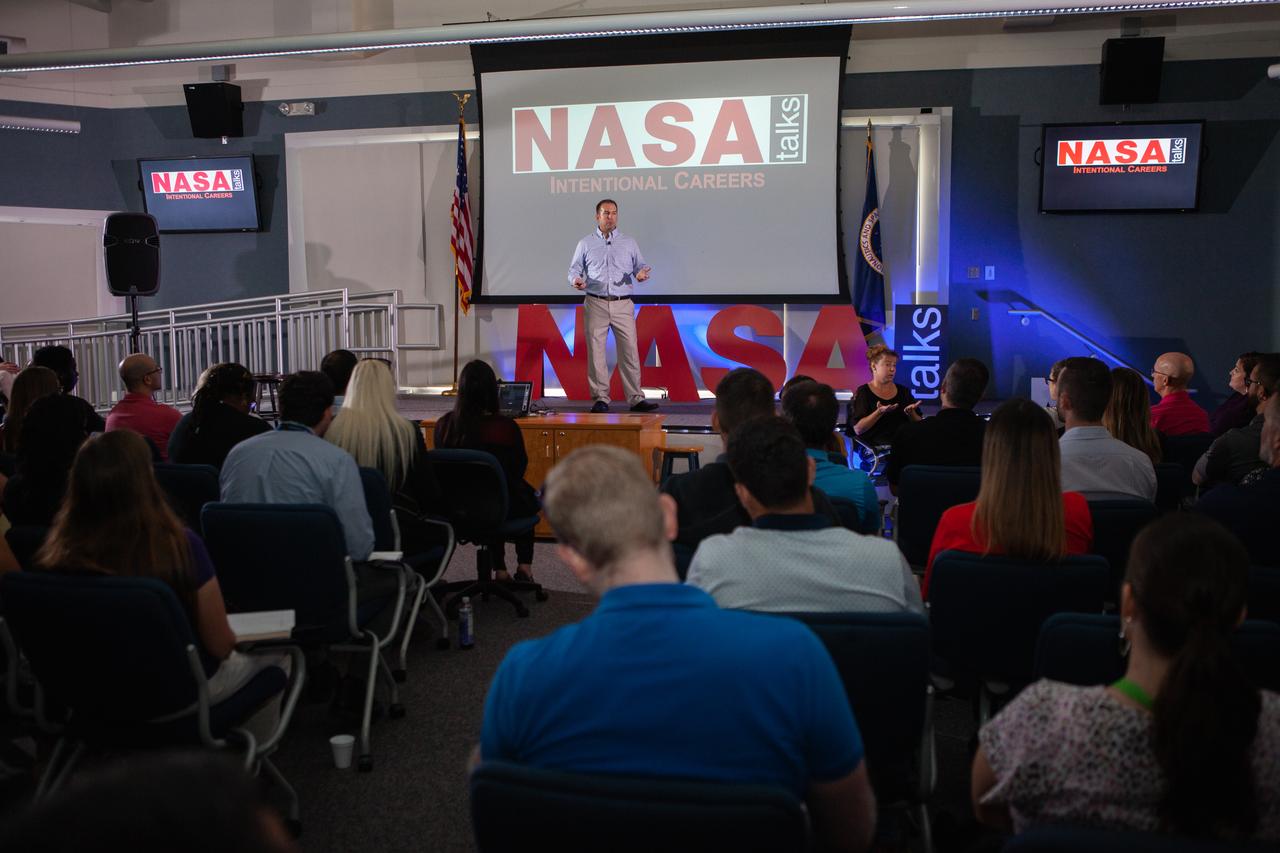
Kennedy Space Center’s Dave Grau addresses co-workers inside the Florida spaceport’s Kennedy Learning Institute on Oct. 17, 2019, during the third in a series of five TED Talk-style informational sessions. Sponsored by Kennedy’s Launching Leaders and Leadership for the Future, NASAtalks focuses on the topic of intentional careers and aims to provide employees with tools and knowledge that can be utilized for career growth. The theme of this third session was customers, and additional speakers included Kennedy employees Ryan Richards and Mike Williams, with a skill-building section on active listening and negotiating by Tim Bass.
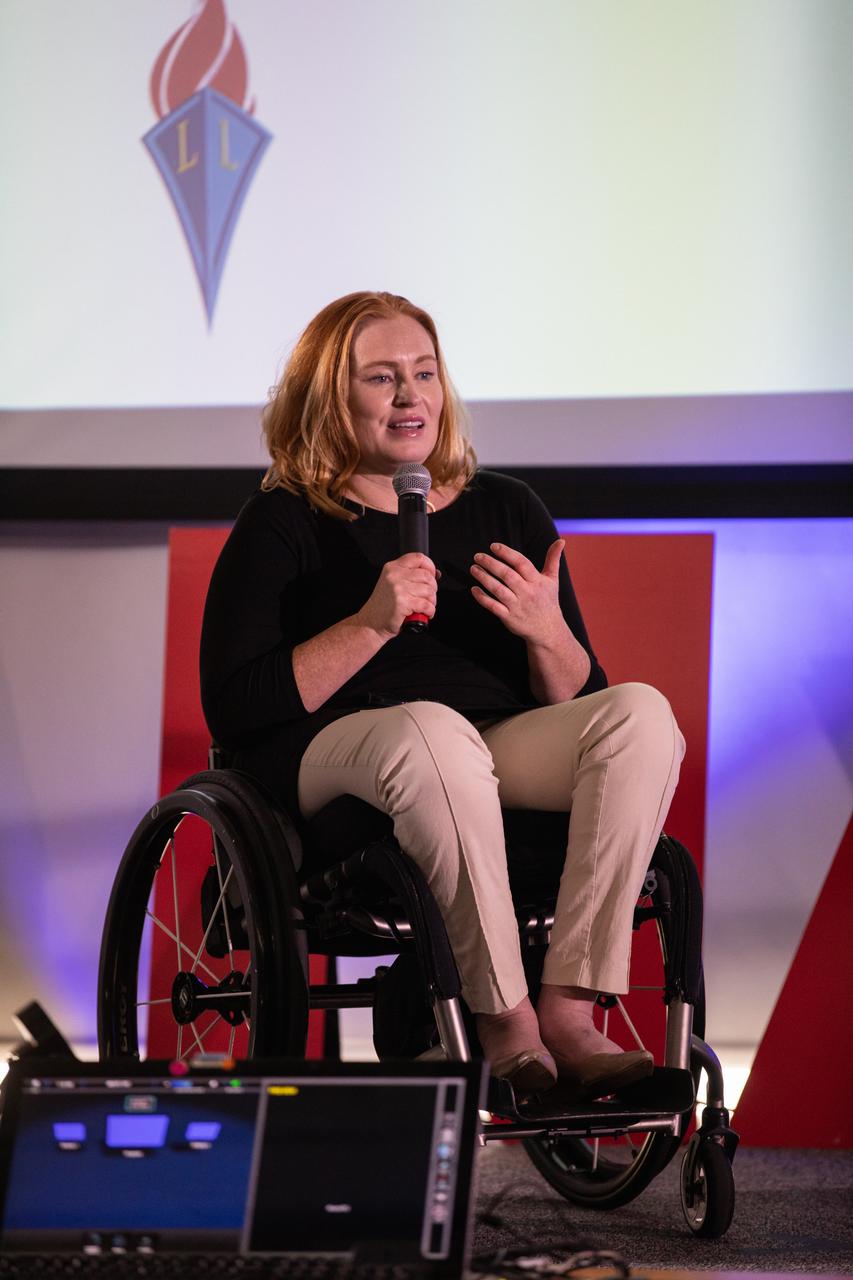
Kennedy Space Center’s Christine Shepperd addresses co-workers inside the Florida spaceport’s Kennedy Learning Institute on Oct. 17, 2019, during the third in a series of five TED Talk-style informational sessions. Sponsored by Kennedy’s Launching Leaders and Leadership for the Future, NASAtalks focuses on the topic of intentional careers and aims to provide employees with tools and knowledge that can be utilized for career growth. The theme of this third session was customers, and speakers included Kennedy employees Ryan Richards, Mike Williams and Dave Grau, with a skill-building section on active listening and negotiating by Tim Bass.
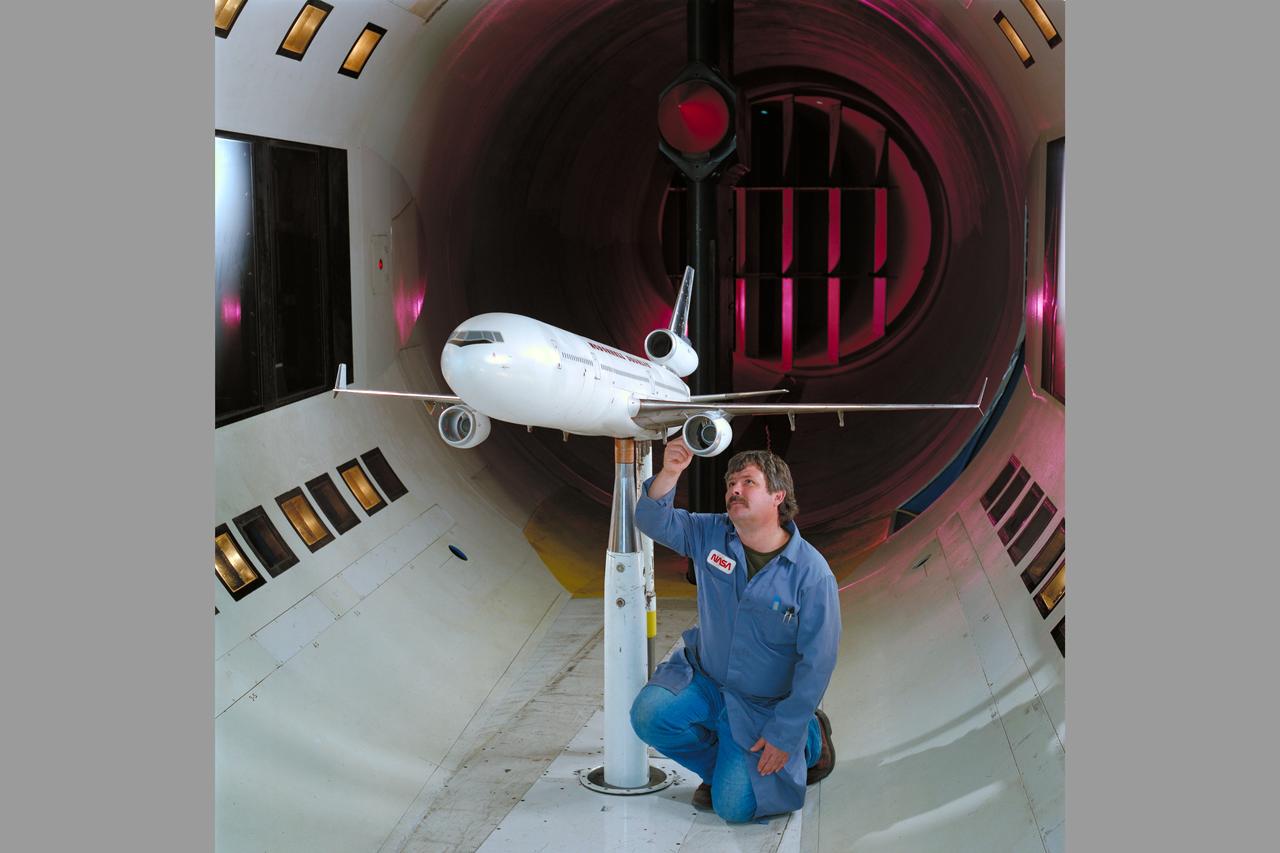
Mc Donnell Douglas MD-11 Model in Ames 12ft. W.T. (1st Non-NASA customer of the refurbished W.T.)
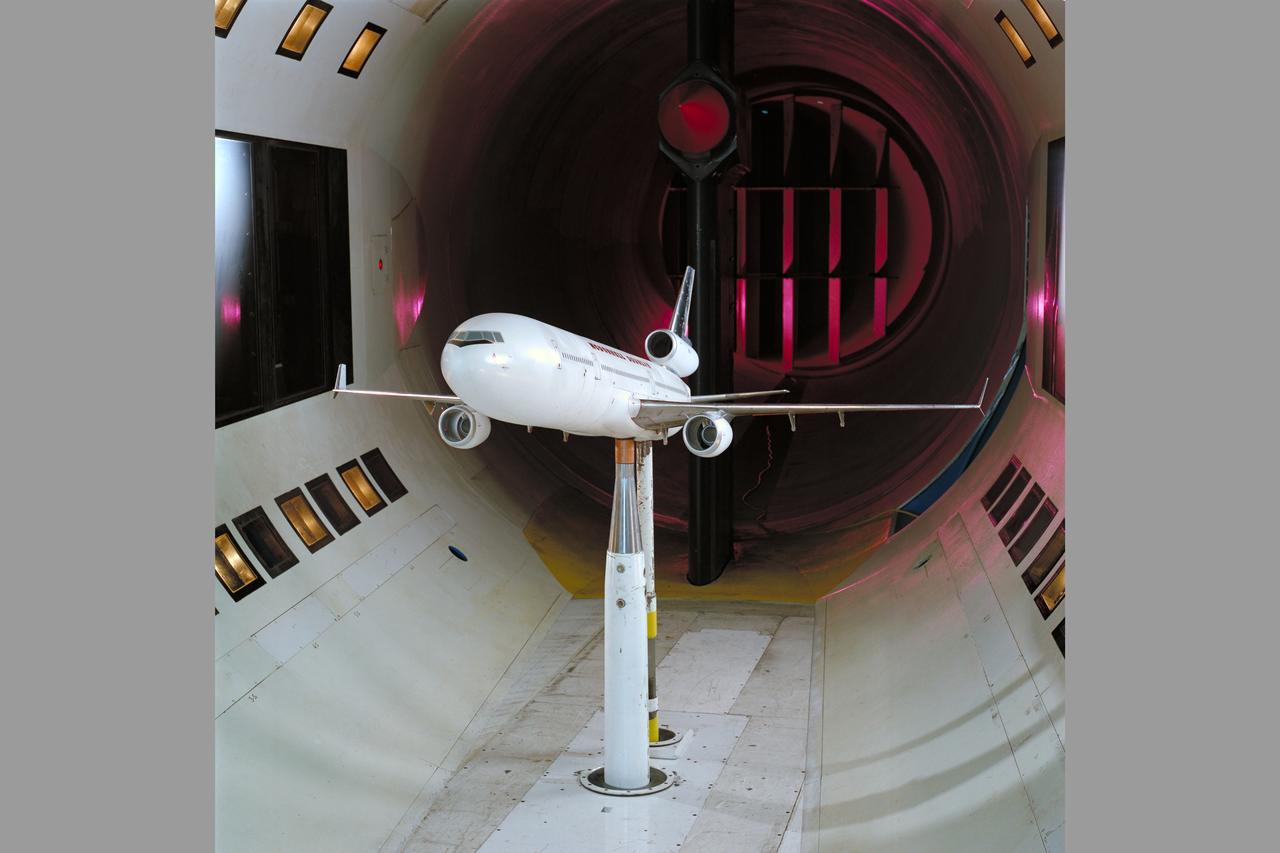
Mc Donnell Douglas MD-11 Model in Ames 12ft. W.T. (1st Non-NASA customer of the refurbished W.T.)

Mc Donnell Douglas MD-11 Model in Ames 12ft. W.T. (1st Non-NASA customer of the refurbished W.T.)
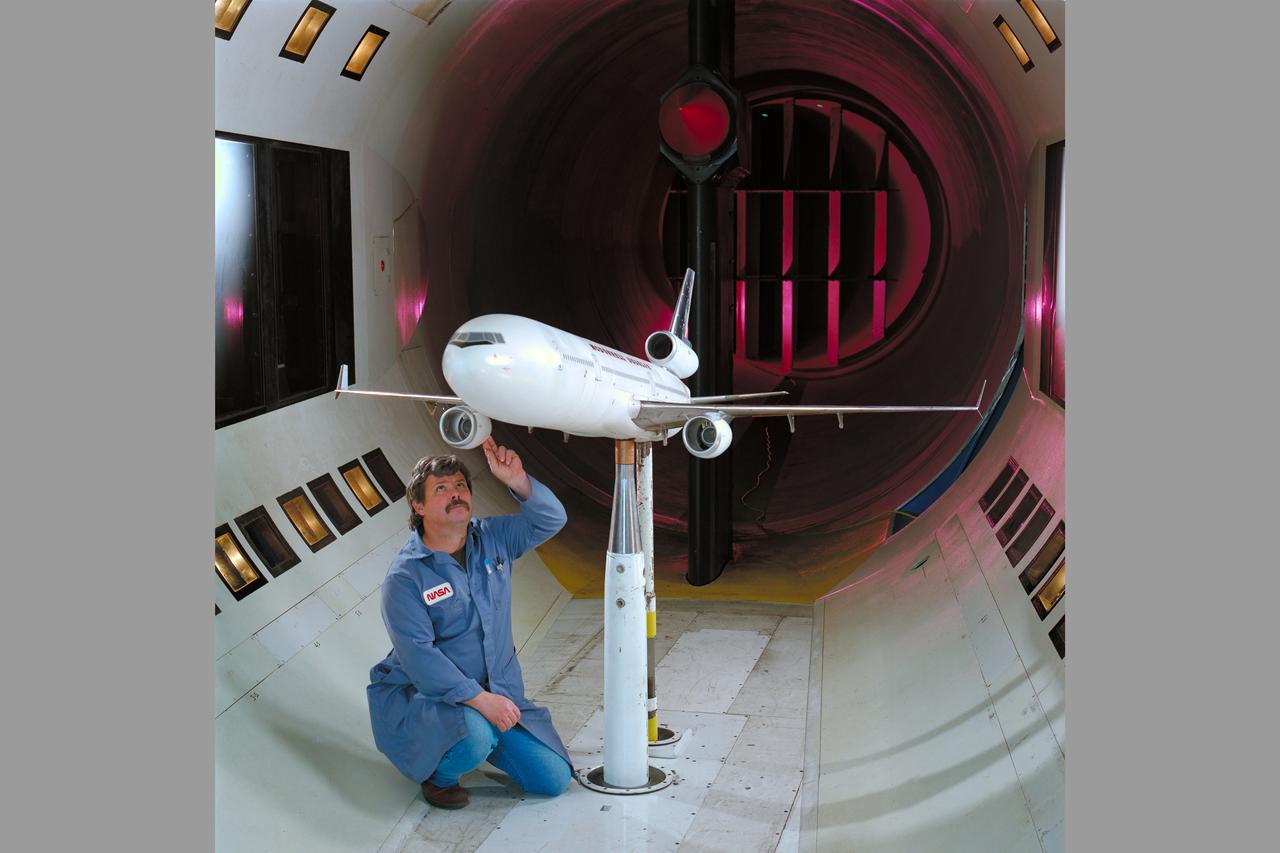
Mc Donnell Douglas MD-11 Model in Ames 12ft. W.T. (1st Non-NASA customer of the refurbished W.T.)
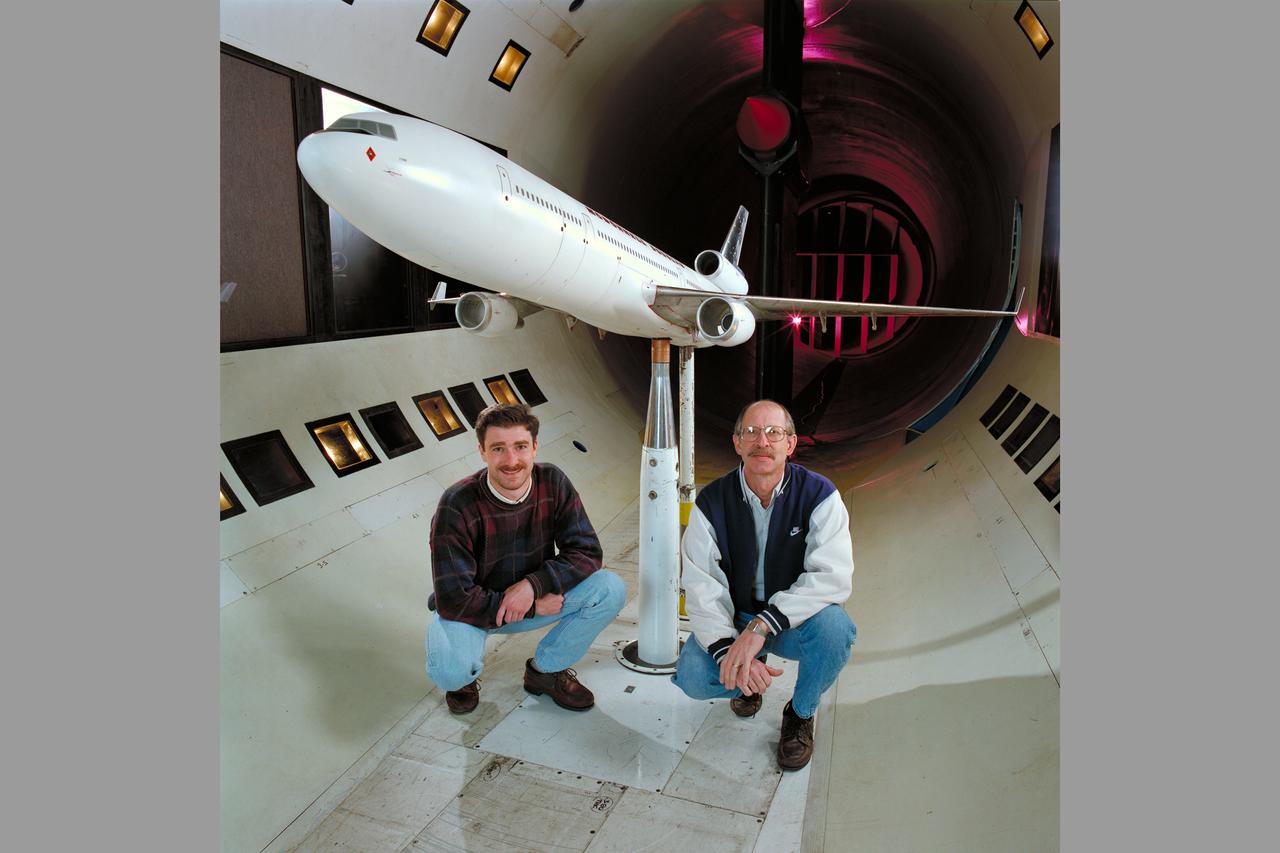
Mc Donnell Douglas MD-11 Model in Ames 12ft. W.T. with members of the MC Donnell Douglas crew (1st Non-NASA customer of the refurbished W.T.)

Mc Donnell Douglas MD-11 Model in Ames 12ft. W.T. with Ron Strong (1st Non-NASA customer of the refurbished W.T.)
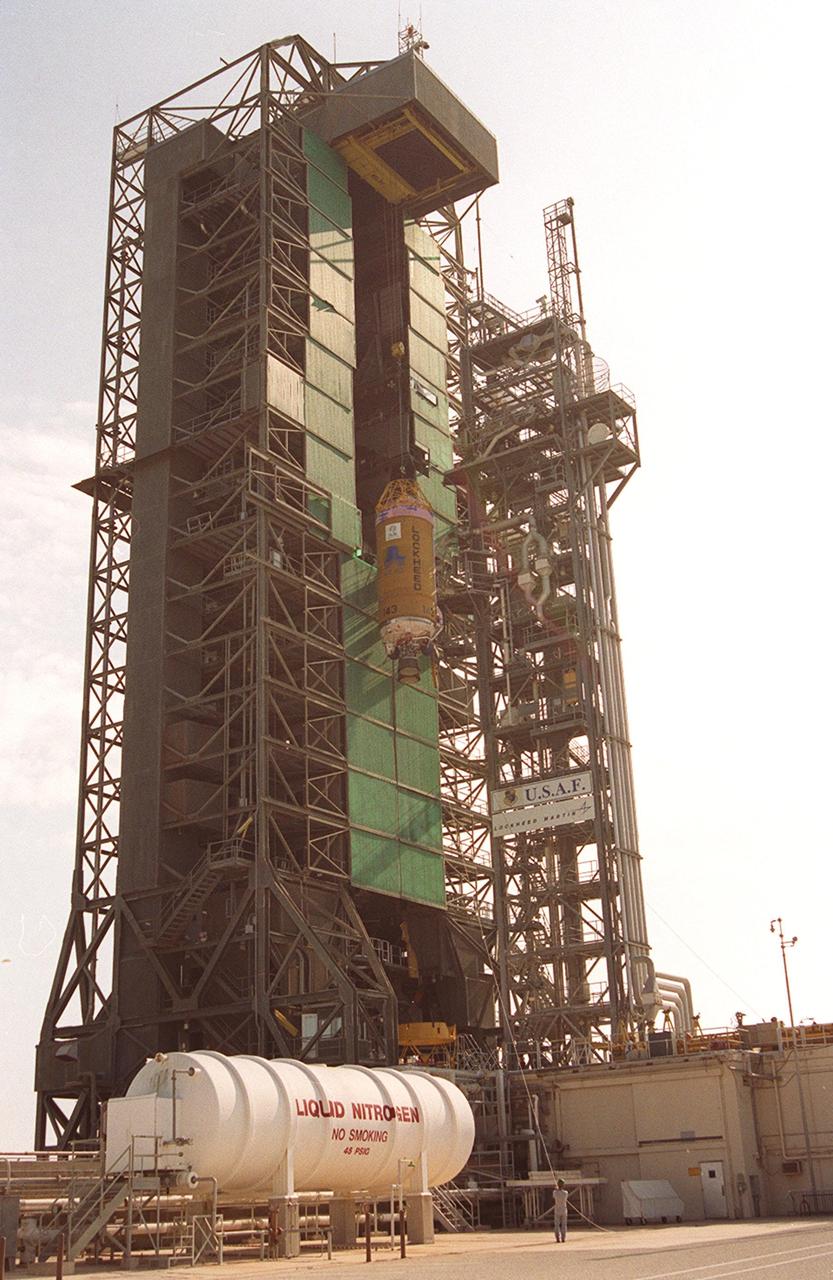
KENNEDY SPACE CENTER, Fla. -- The Lockheed Martin Atlas/Centaur segment of the Atlas II rocket is lifted up the launch tower at Launch Pad 36-A, Cape Canaveral Air Force Station. The rocket is scheduled to launch the Tracking and Data Relay Satellite, known as TDRS-I, in January 2002. The TDRS System (TDRSS) is a communication signal relay system that provides tracking and data acquisition services between low-Earth orbiting spacecraft and NASA/customer control and/or data processing facilities. The system is capable of transmitting to and receiving data from customer spacecrafts over 100 percent of their orbit (some limitations may apply depending on actual orbit). The TDRS-I provides a Ka-band service that will allow customers with extremely high data rates to be supported by the Tracking and Data Relay Satellite System (TDRSS) if they desire.
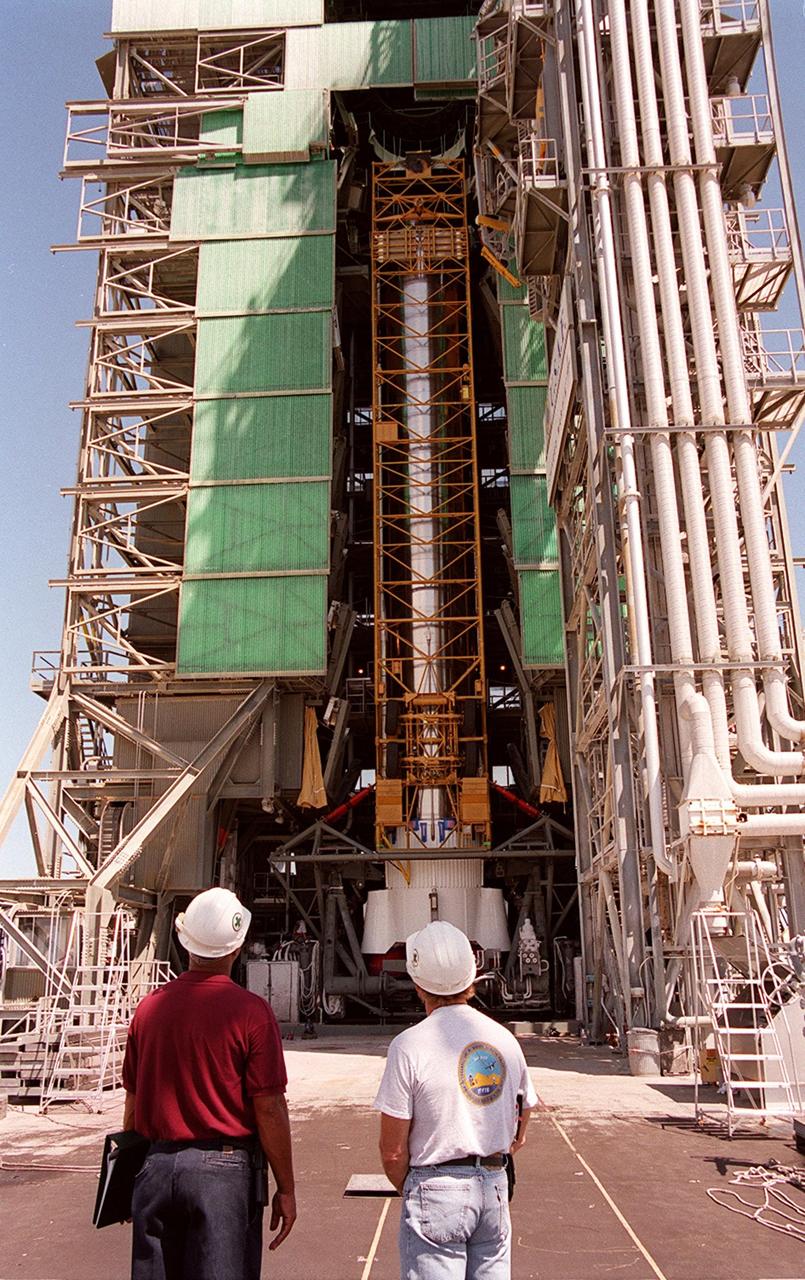
KENNEDY SPACE CENTER, Fla. -- The first (booster) stage of an Atlas II rocket is moved into the launch tower at Pad 36-A, Cape Canaveral Air Force Station. It will later be mated with the Tracking and Data Relay Satellite, known as TDRS-I, for launch in January 2002. The TDRS System (TDRSS) is a communication signal relay system that provides tracking and data acquisition services between low-Earth orbiting spacecraft and NASA/customer control and/or data processing facilities. The system is capable of transmitting to and receiving data from customer spacecrafts over 100 percent of their orbit (some limitations may apply depending on actual orbit). The TDRS-I provides a Ka-band service that will allow customers with extremely high data rates to be supported by the Tracking and Data Relay Satellite System (TDRSS) if they desire

KENNEDY SPACE CENTER, Fla. -- The first (booster) segment of a Lockheed Martin Atlas II rocket sits in the launch tower at Pad 36-A, Cape Canaveral Air Force Station, in preparation for mating with the other stages that will launch the Tracking and Data Relay Satellite, known as TDRS-I, in January 2002. The TDRS System (TDRSS) is a communication signal relay system that provides tracking and data acquisition services between low-Earth orbiting spacecraft and NASA/customer control and/or data processing facilities. The system is capable of transmitting to and receiving data from customer spacecrafts over 100 percent of their orbit (some limitations may apply depending on actual orbit). The TDRS-I provides a Ka-band service that will allow customers with extremely high data rates to be supported by the Tracking and Data Relay Satellite System (TDRSS) if they desire.
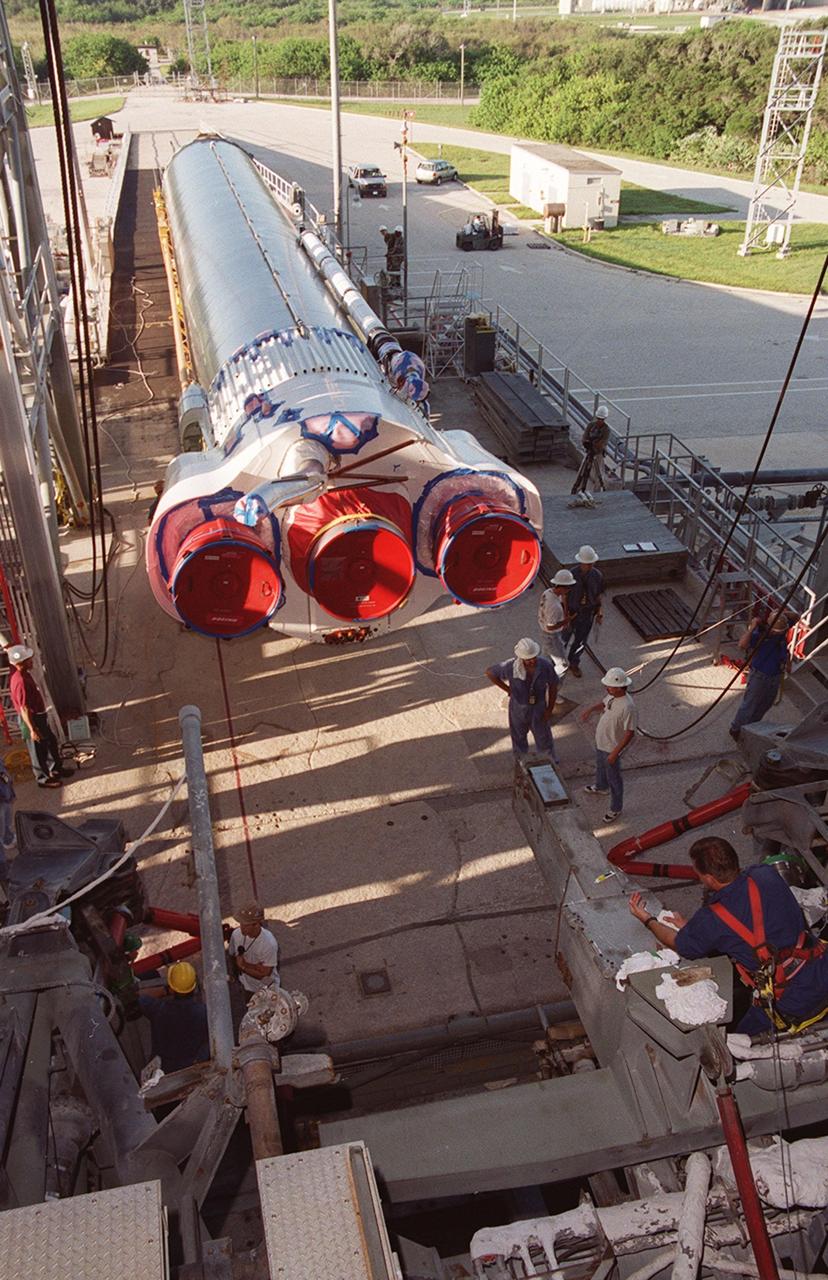
KENNEDY SPACE CENTER, Fla. -- The first (booster) stage of an Atlas II rocket arrives at Pad 36-A, Cape Canaveral Air Force Station. The segment will be lifted and raised into the launch tower where it will be mated with the Tracking and Data Relay Satellite, known as TDRS-I, for launch in January 2002. The TDRS System (TDRSS) is a communication signal relay system that provides tracking and data acquisition services between low-Earth orbiting spacecraft and NASA/customer control and/or data processing facilities. The system is capable of transmitting to and receiving data from customer spacecrafts over 100 percent of their orbit (some limitations may apply depending on actual orbit). The TDRS-I provides a Ka-band service that will allow customers with extremely high data rates to be supported by the Tracking and Data Relay Satellite System (TDRSS) if they desire
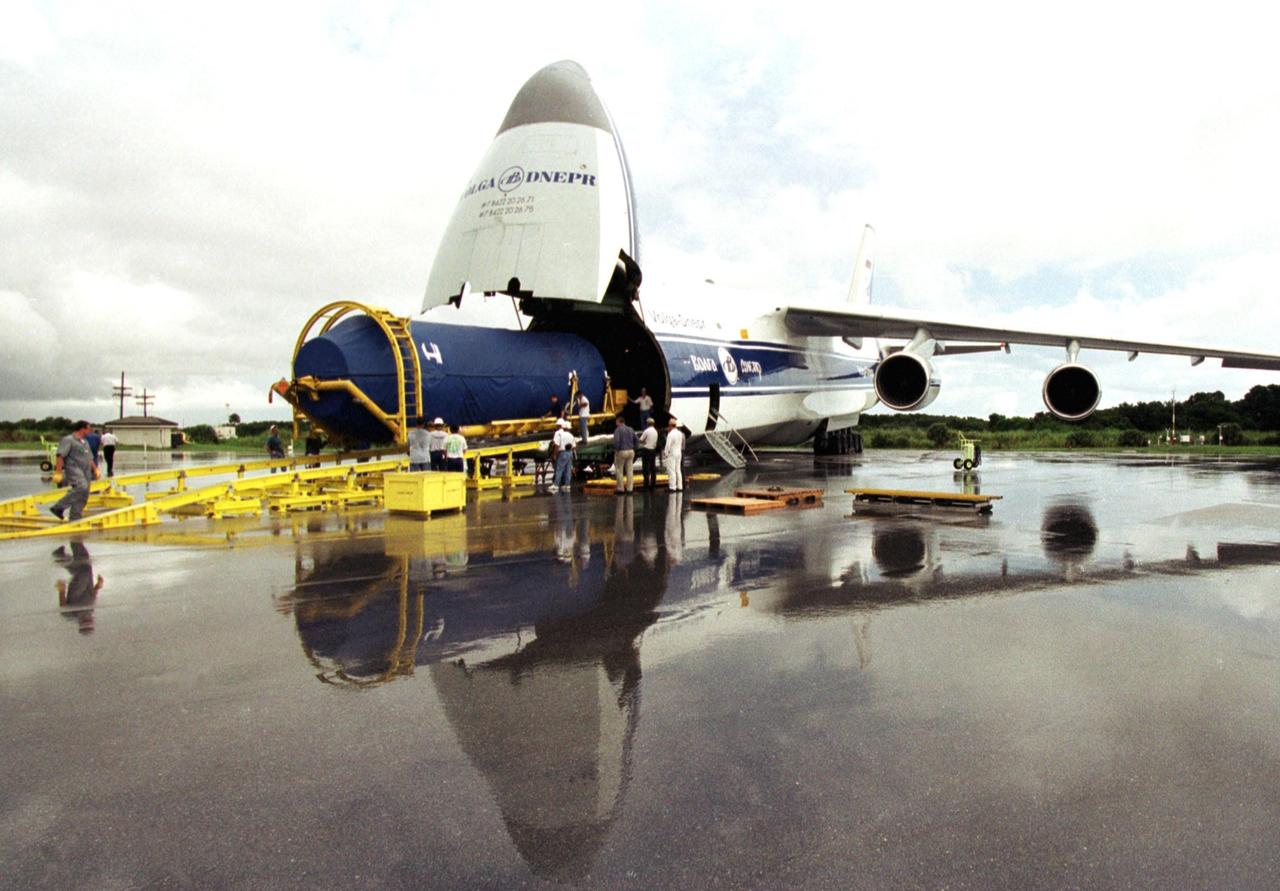
KENNEDY SPACE CENTER, FLA. - At Cape Canaveral Air Force Station, Fla., the Atlas Centaur booster segment of an Atlas II rocket is offloaded. It will be mated to the first segment on Launch Pad 36-A, CCAFS, in preparation for launch of the TDRS-I spacecraft Oct. 30. The 40-minute launch window begins at 11:19 p.m. EST. The TDRS System (TDRSS) is a communication signal relay system that provides tracking and data acquisition services between low-Earth orbiting spacecraft and NASA/customer control and/or data processing facilities. The system is capable of transmitting to and receiving data from customer spacecrafts over 100 percent of their orbit (some limitations may apply depending on actual orbit). The TDRS-I provides a Ka-band service that will allow customers with extremely high data rates to be supported by TDRSS if they desire
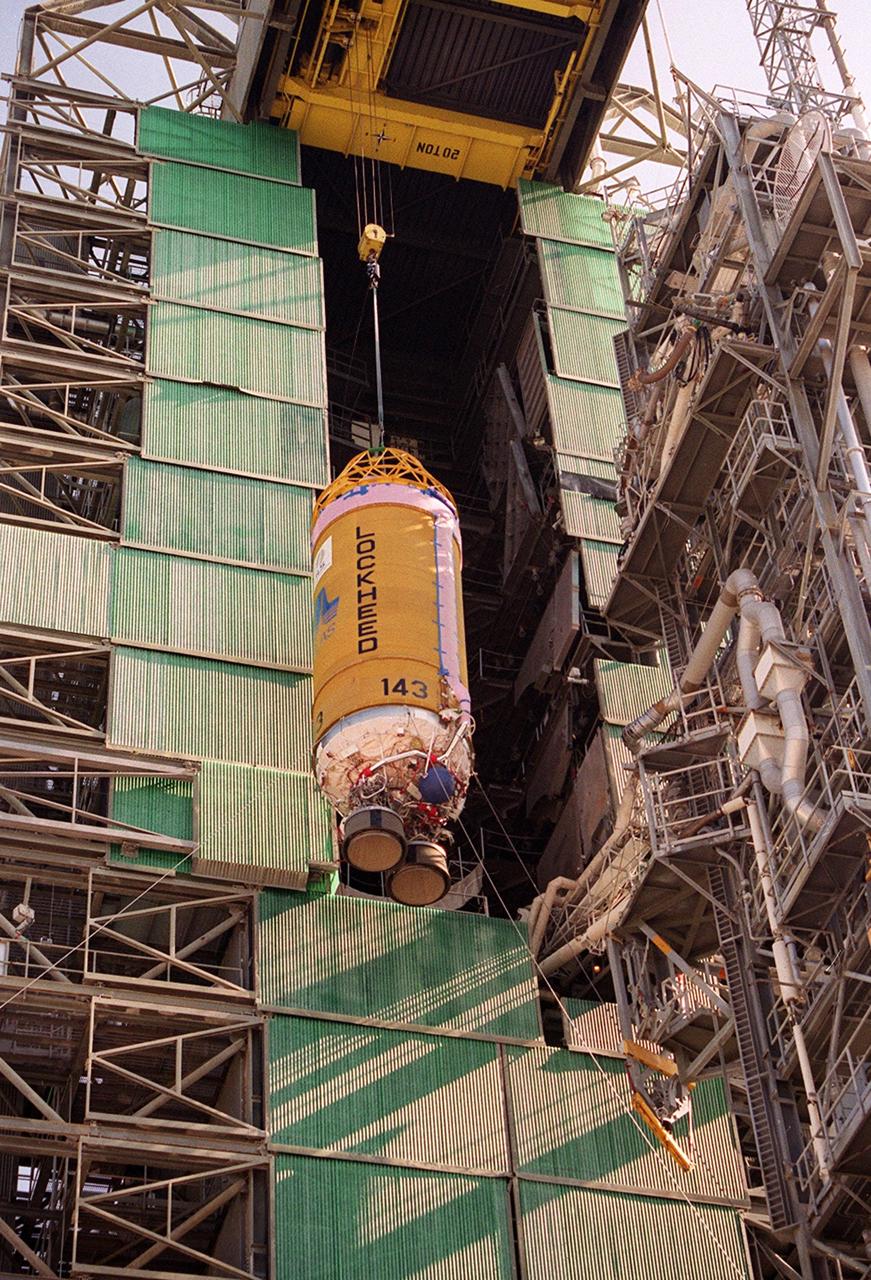
KENNEDY SPACE CENTER, Fla. -- The Lockheed Martin Atlas/Centaur segment of the Atlas II rocket is lifted up the launch tower at Launch Pad 36-A, Cape Canaveral Air Force Station. The rocket is scheduled to launch the Tracking and Data Relay Satellite, known as TDRS-I, in January 2002. The TDRS System (TDRSS) is a communication signal relay system that provides tracking and data acquisition services between low-Earth orbiting spacecraft and NASA/customer control and/or data processing facilities. The system is capable of transmitting to and receiving data from customer spacecrafts over 100 percent of their orbit (some limitations may apply depending on actual orbit). The TDRS-I provides a Ka-band service that will allow customers with extremely high data rates to be supported by the Tracking and Data Relay Satellite System (TDRSS) if they desire.
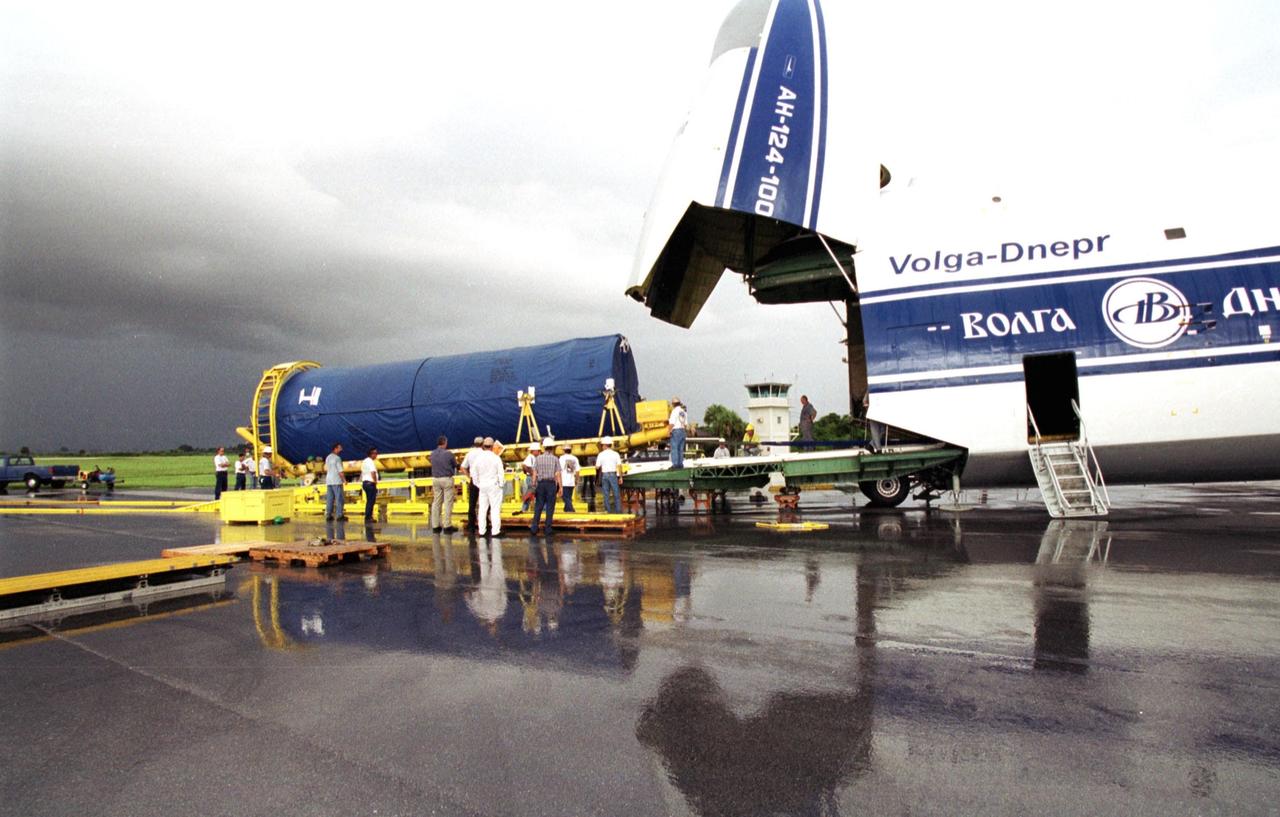
KENNEDY SPACE CENTER, FLA. - At Cape Canaveral Air Force Station, Fla., the Atlas Centaur booster segment of an Atlas II rocket is offloaded. It will be mated to the first segment on Launch Pad 36-A, CCAFS, in preparation for launch of the TDRS-I spacecraft Oct. 30. The 40-minute launch window begins at 11:19 p.m. EST. The TDRS System (TDRSS) is a communication signal relay system that provides tracking and data acquisition services between low-Earth orbiting spacecraft and NASA/customer control and/or data processing facilities. The system is capable of transmitting to and receiving data from customer spacecrafts over 100 percent of their orbit (some limitations may apply depending on actual orbit). The TDRS-I provides a Ka-band service that will allow customers with extremely high data rates to be supported by TDRSS if they desire
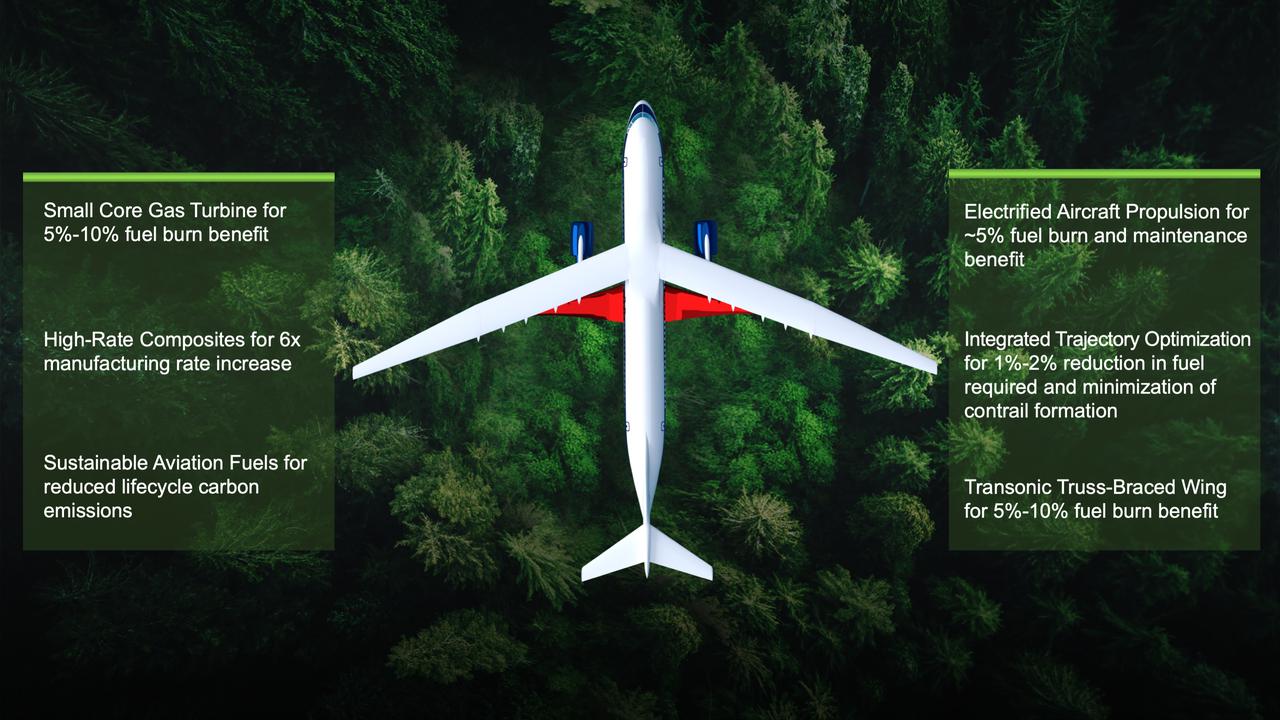
NASA will demonstrate high-risk, high-payoff technology advancements critical for U.S. aerospace manufacturers to bring to market innovative, cost-effective, and sustainable products and services demanded by airlines and customers.
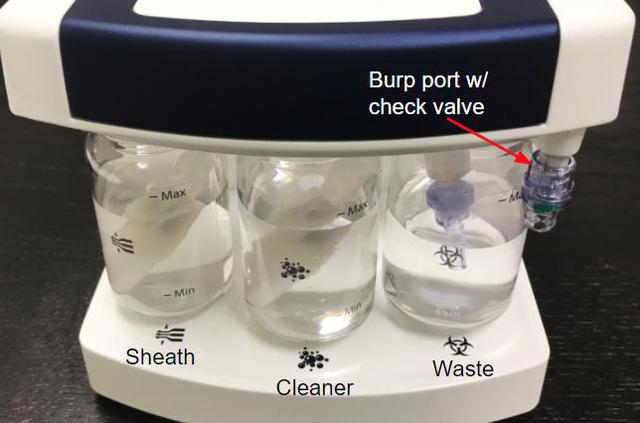
Rear view of the rHEALTH ONE shows fluid bottles used in the operation (shown without custom bags which allow bottles to function in microgravity). Image courtesy of rHEALTH.
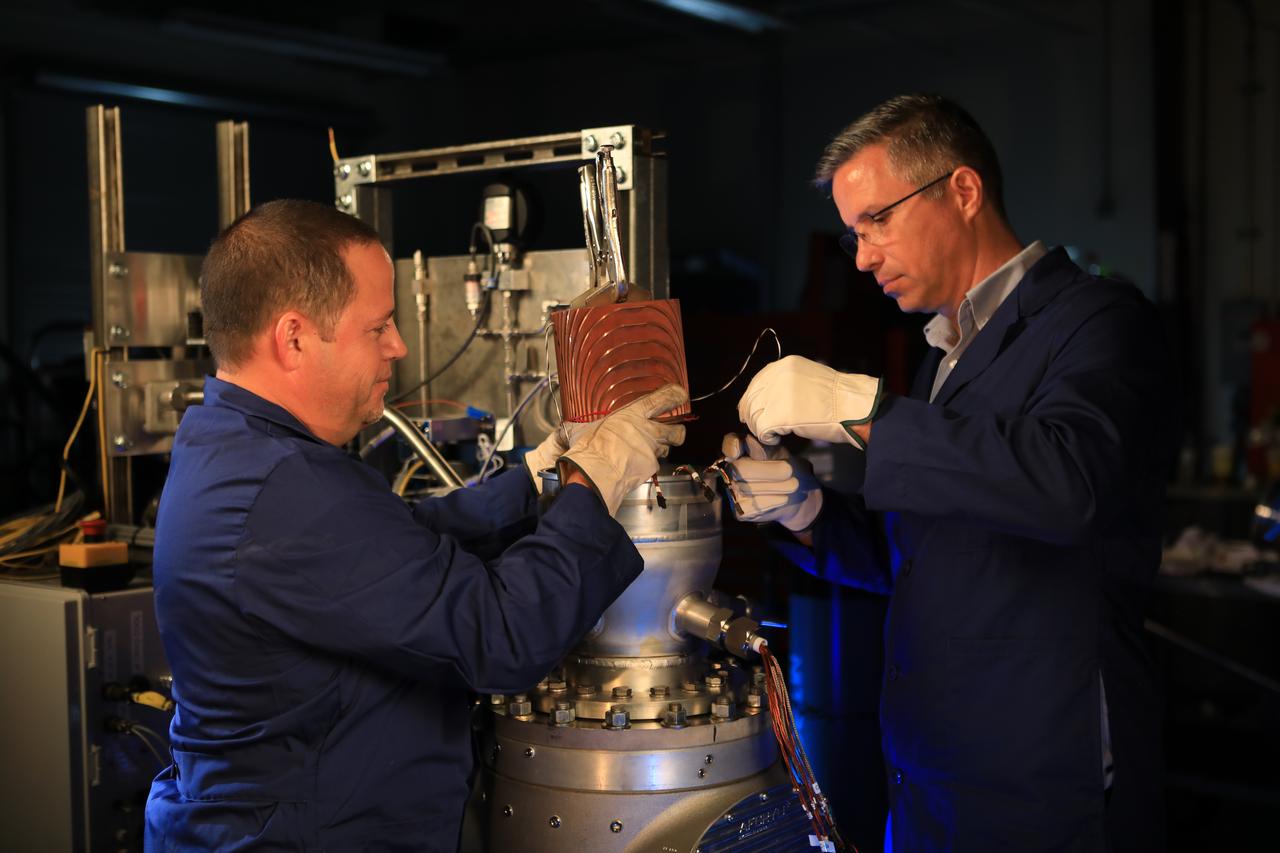
Mark Velasco (left) and Jared Sass assemble a custom cold heat exchanger for freezing carbon dioxide from a simulated Martian environment in the Cryogenics Test Laboratory at NASA's Kennedy Space Center on Mar. 20, 2019.
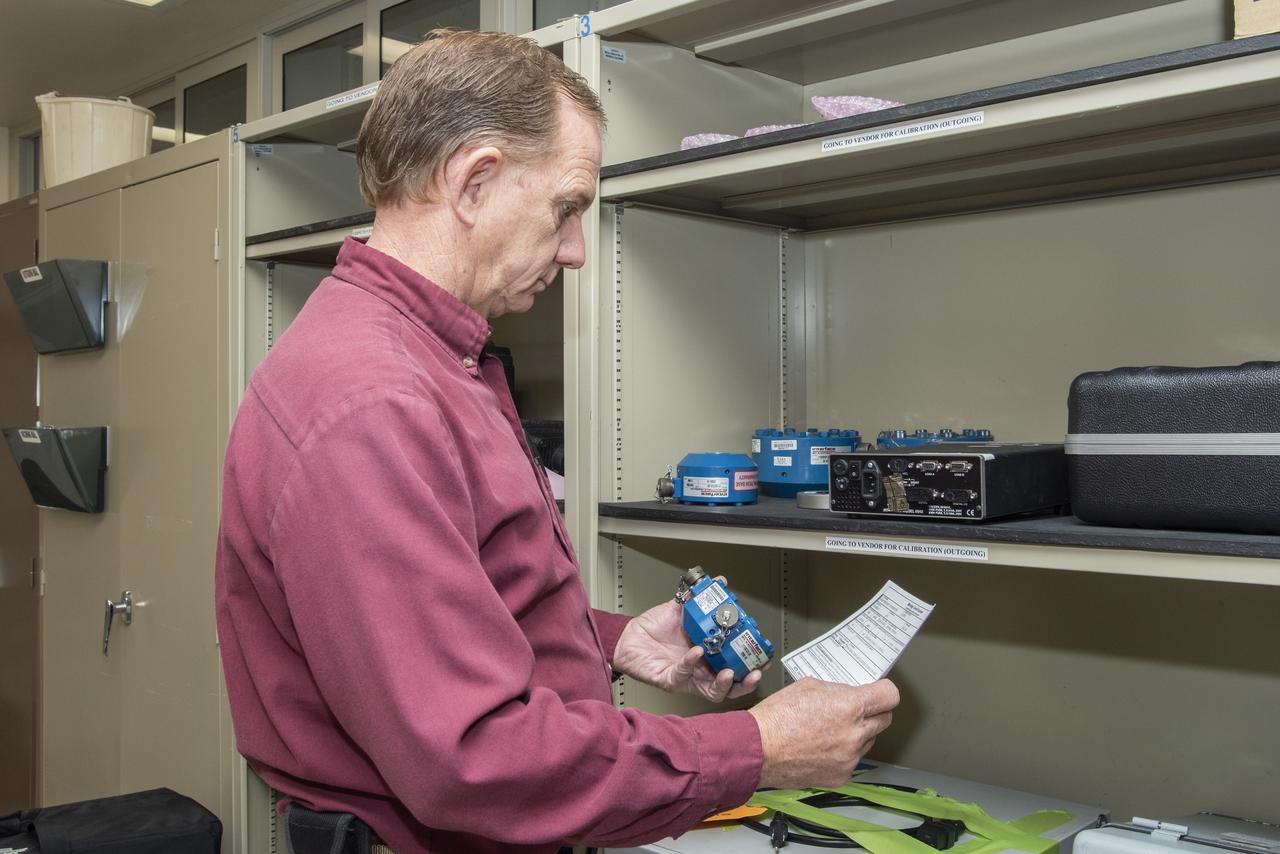
James Kelly, who is responsible for pickup and delivery of items to and from NASA Armstrong's Calibration Laboratory, checks the numbers of a part before he puts it on the delivery vehicle for transport back to a customer.
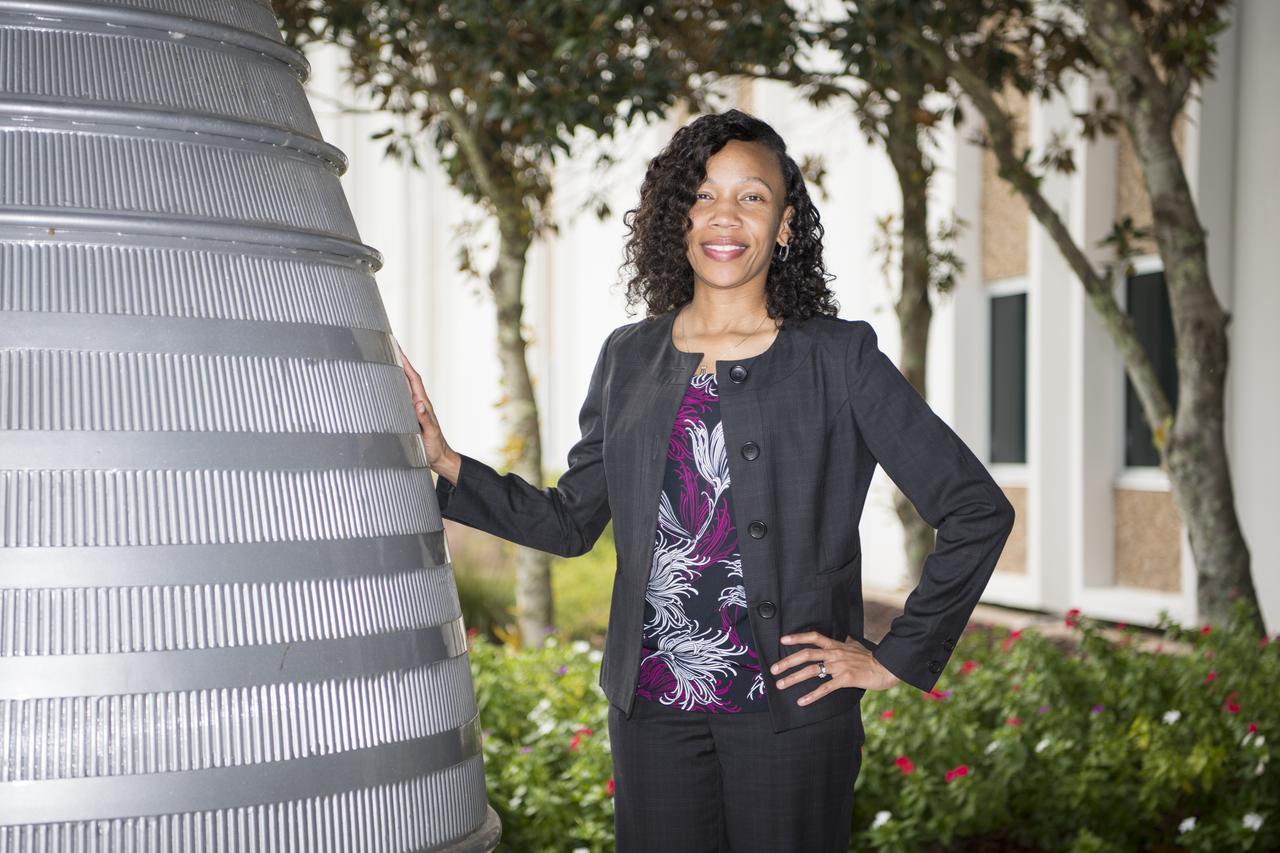
Portrait; Mary Horne, a NASA reimbursable accountant at Stennis Space Center, performs analysis and budgeting funds for SSC tenants and commercial customers. This photo was taken as part of a monthy feature called “Faces of Stennis.”
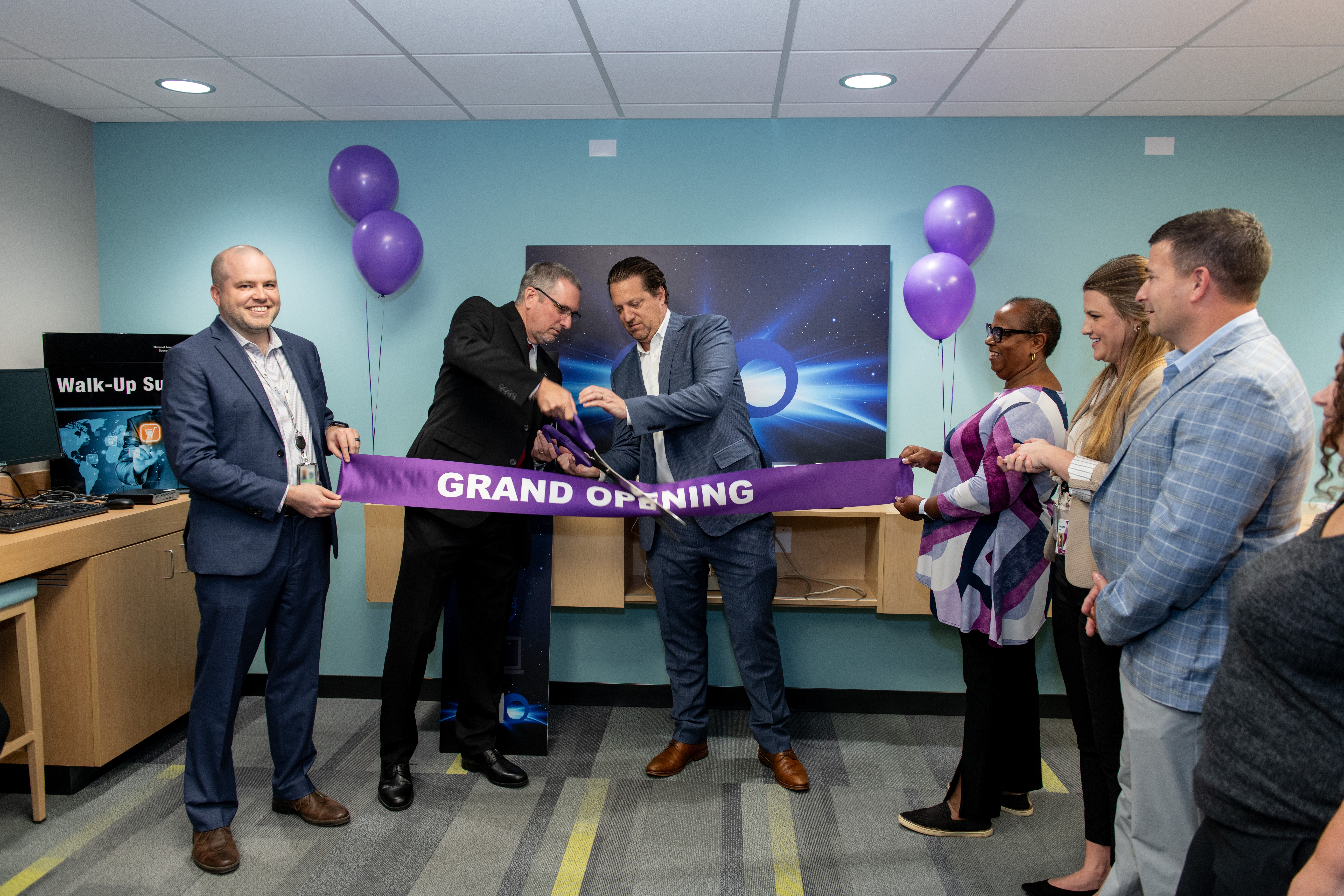
On Tuesday, Sept. 17, NASA IT hosted the Grand Opening for SpaceBar at Glenn Research Center (GRC), leading the way for enhanced IT customer service to NASA users! NEST corporate representatives and the Chief and Deputy Chief of OCIO cut the ribbon. The SpaceBar provides a place for walk-up IT service from our friendly, highly skilled service technicians coupled with a storefront atmosphere where NASA users can touch, feel, and test the latest and greatest hardware that NASA IT offers. Customers with NASA IT equipment and agency-managed services have the option to visit SpaceBar for their IT needs or continue to use remote/virtual access and deskside service.
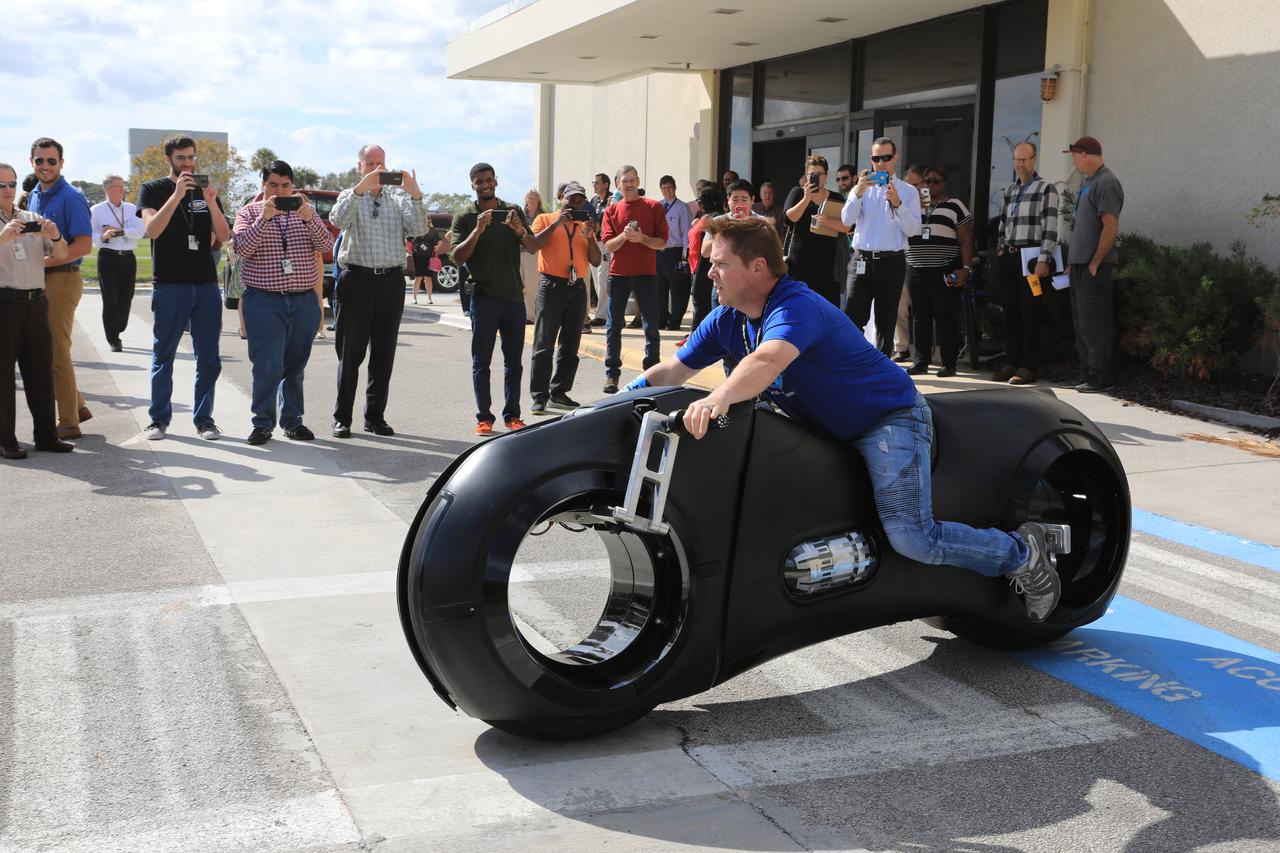
During the 2016 Innovation Expo at NASA's Kennedy Space Center in Florida, representatives from Parker Brothers, known for designing and building outrageous custom vehicles, spoke to Kennedy employees about their creative thinking processes. Employees also were given an up-close look at their Neutron bike, featured in the movie “Tron.”
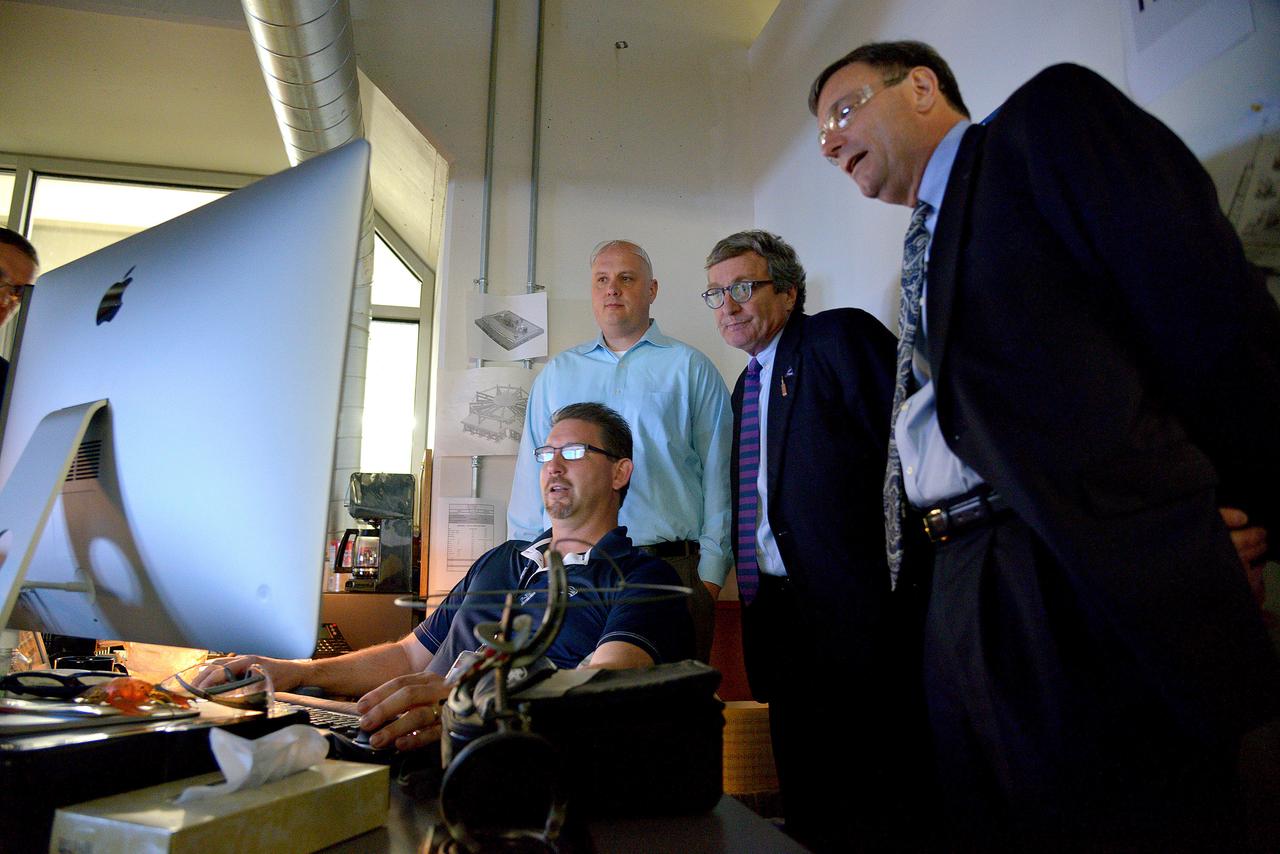
The Orion leadership team visits Janicki Industries in Sedro-Woolley, Washington on March 9, 2015 to thank them for their work in support of Exploration Flight Test-1 (EFT-1). Janicki is a small business that specializes in producing custom tooling fixtures and composite structures. Part of Batch image transfer from Flickr.
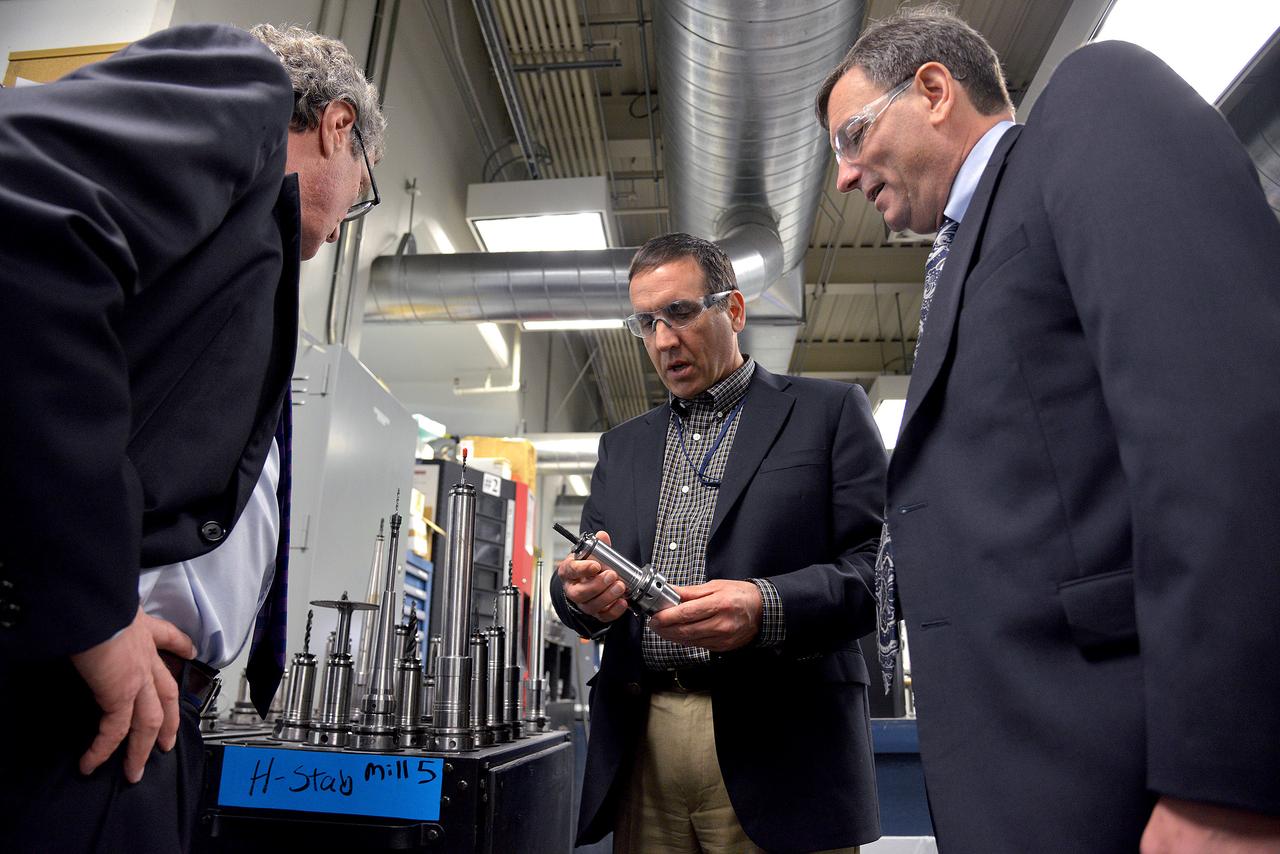
The Orion leadership team visits Janicki Industries in Sedro-Woolley, Washington on March 9, 2015 to thank them for their work in support of Exploration Flight Test-1 (EFT-1). Janicki is a small business that specializes in producing custom tooling fixtures and composite structures. Part of Batch image transfer from Flickr.
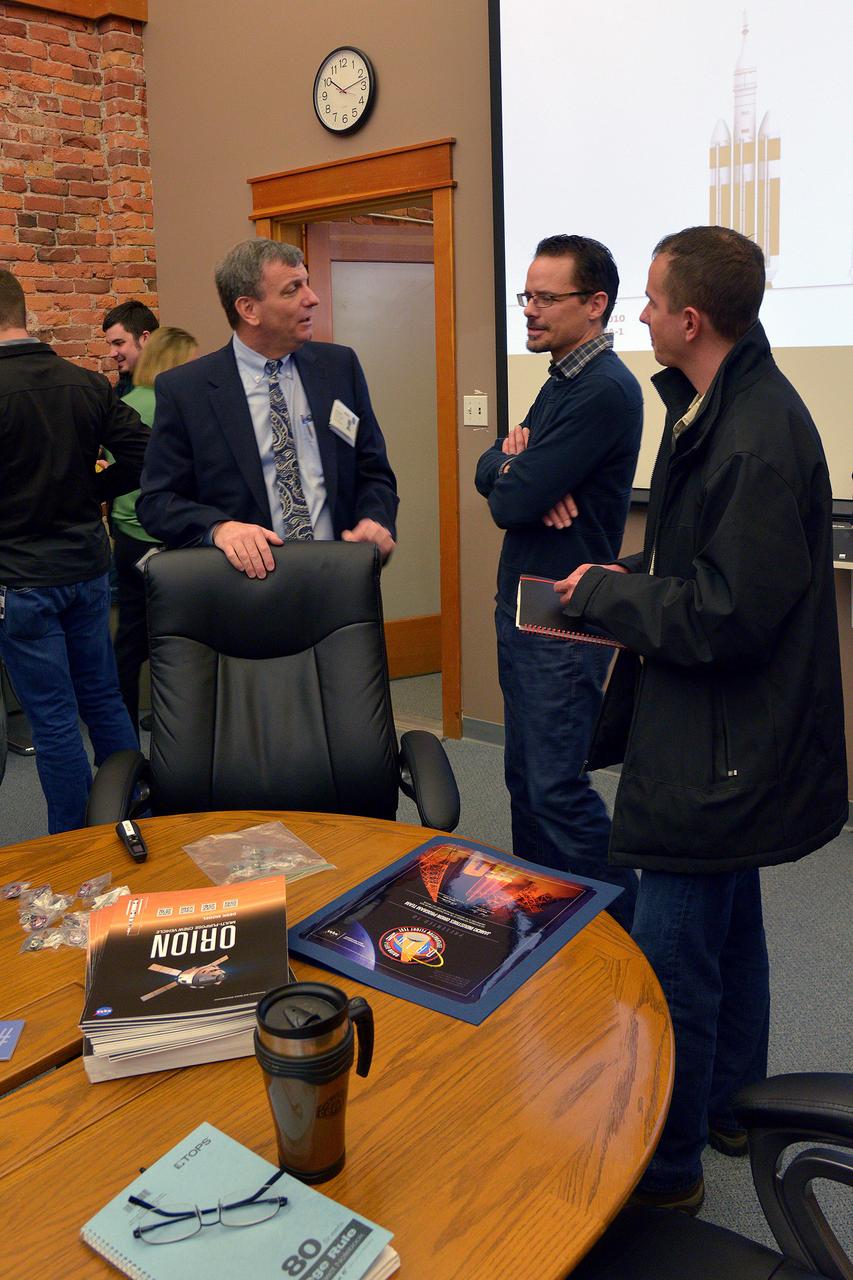
The Orion leadership team visits Janicki Industries in Sedro-Woolley, Washington on March 9, 2015 to thank them for their work in support of Exploration Flight Test-1 (EFT-1). Janicki is a small business that specializes in producing custom tooling fixtures and composite structures. Part of Batch image transfer from Flickr.
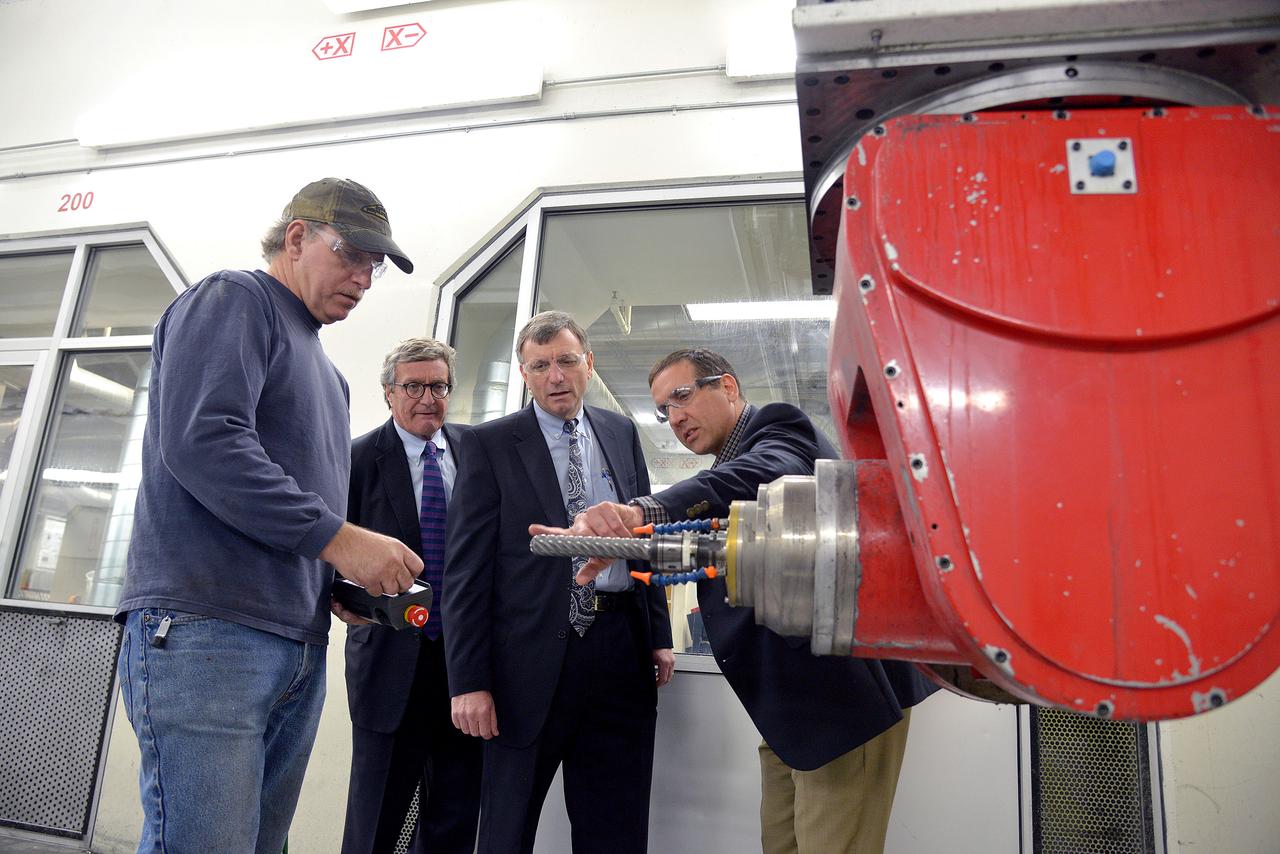
The Orion leadership team visits Janicki Industries in Sedro-Woolley, Washington on March 9, 2015 to thank them for their work in support of Exploration Flight Test-1 (EFT-1). Janicki is a small business that specializes in producing custom tooling fixtures and composite structures. Part of Batch image transfer from Flickr.
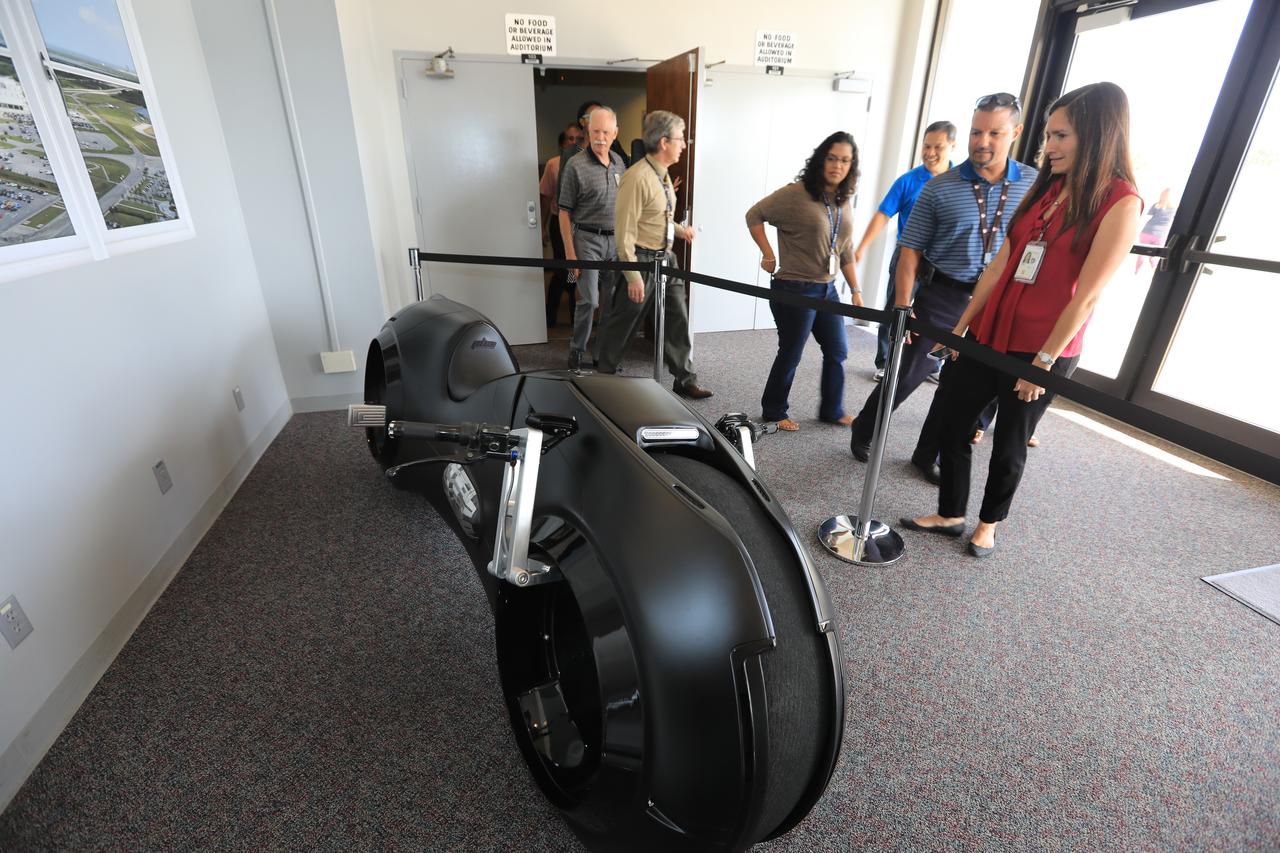
During the 2016 Innovation Expo at NASA's Kennedy Space Center in Florida, representatives from Parker Brothers, known for designing and building outrageous custom vehicles, spoke to Kennedy employees about their creative thinking processes. Employees also were given an up-close look at their Neutron bike, featured in the movie “Tron.”

The Orion leadership team visits Janicki Industries in Sedro-Woolley, Washington on March 9, 2015 to thank them for their work in support of Exploration Flight Test-1 (EFT-1). Janicki is a small business that specializes in producing custom tooling fixtures and composite structures. Part of Batch image transfer from Flickr.
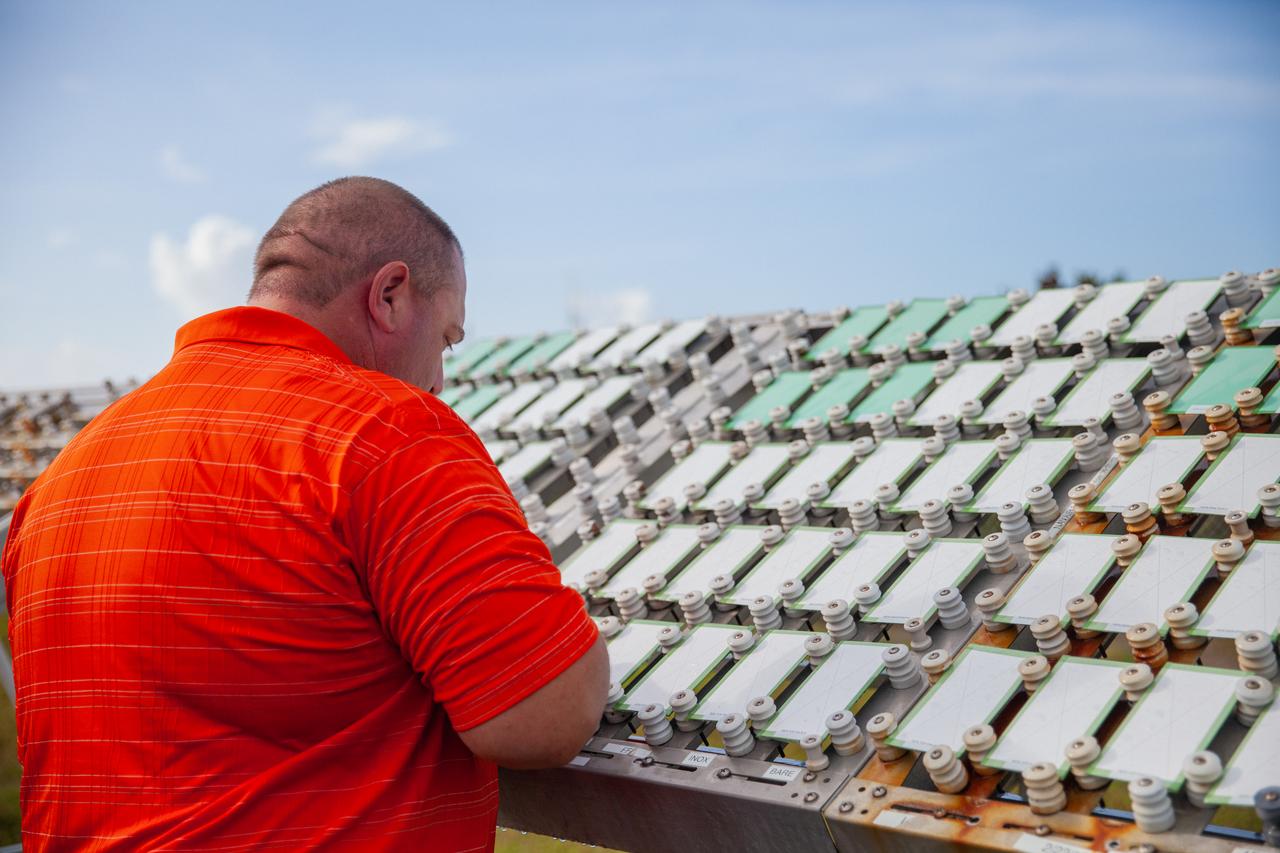
A Mechanical and Environmental Testing Lab engineer examines samples at the corrosion engineering test site at NASA’s Kennedy Space Center in Florida on Oct. 6, 2020. The corrosion lab is a network of people, equipment, and facilities that provides engineering services and technical innovations in all areas of corrosion for NASA and external customers.
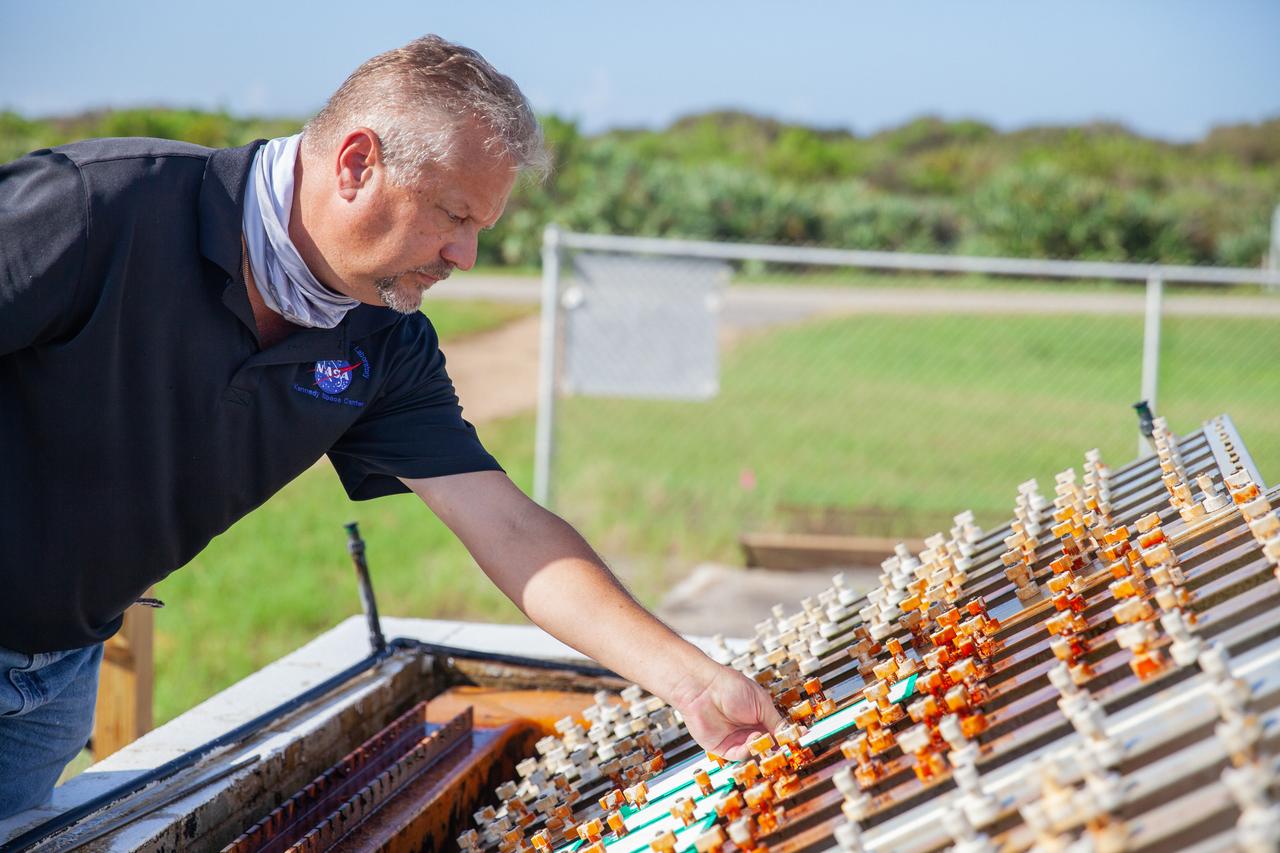
A Mechanical and Environmental Testing Lab engineer examines samples at the corrosion engineering test site on Oct. 6, 2020, at NASA’s Kennedy Space Center in Florida. The corrosion lab is a network of people, equipment, and facilities that provides engineering services and technical innovations in all areas of corrosion for NASA and external customers.
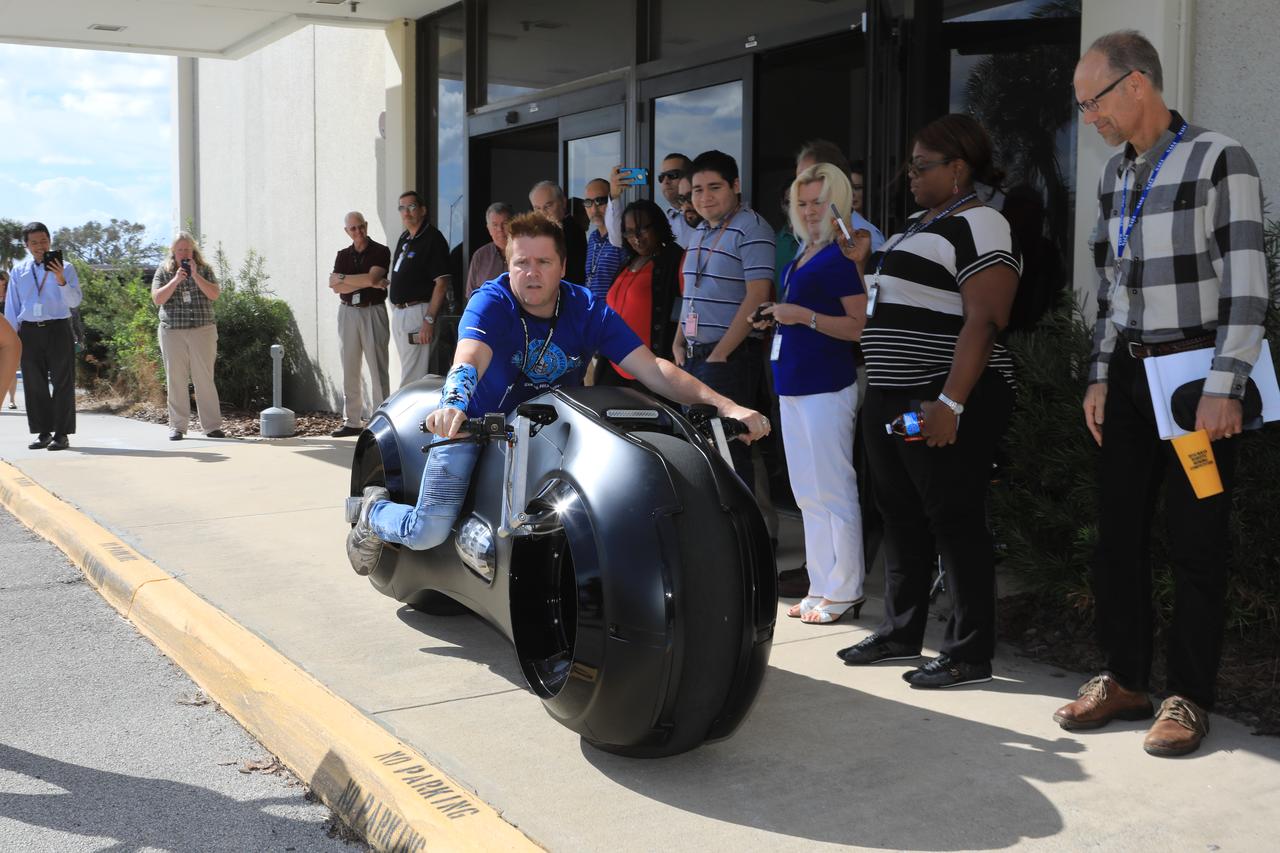
During the 2016 Innovation Expo at NASA's Kennedy Space Center in Florida, representatives from Parker Brothers, known for designing and building outrageous custom vehicles, spoke to Kennedy employees about their creative thinking processes. Employees also were given an up-close look at their Neutron bike, featured in the movie “Tron.”
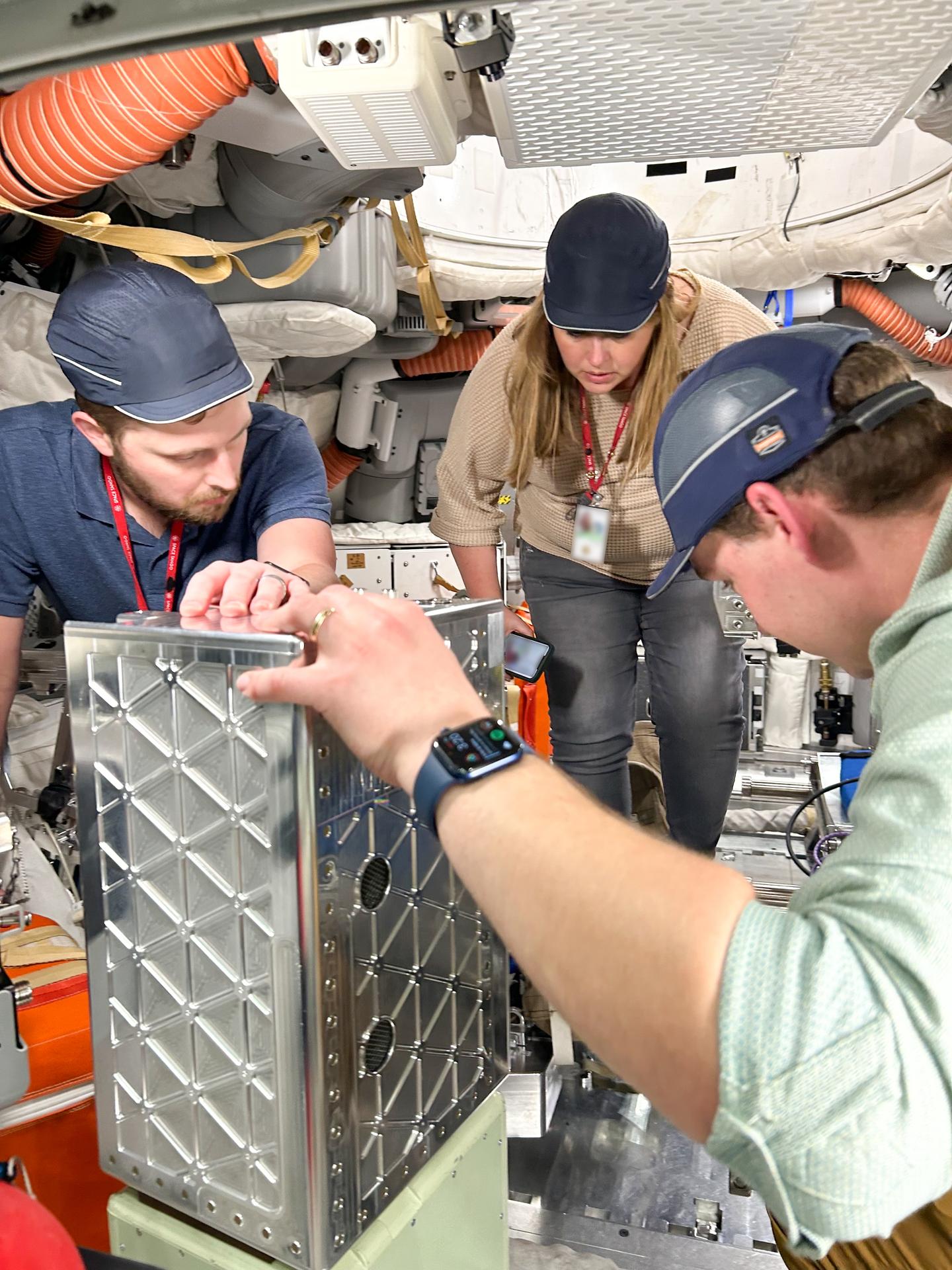
During the Artemis II mission, the organ chips will be secured in a custom payload developed by Space Tango and mounted inside the capsule during the mission. The battery-powered payload will maintain automated environmental control and media delivery to the organ chips throughout the flight.

Sharad Bhaskaran, mission director for Pittsburgh-based Astrobotic, delivers the monthly Tech Talk on Sept. 12 in Building 4221 at NASA’s Marshall Space Flight Center. Bhaskaran presented Astrobotic’s Peregrine lunar lander which will deliver payloads to the surface of the Moon for government and commercial customers, including NASA.
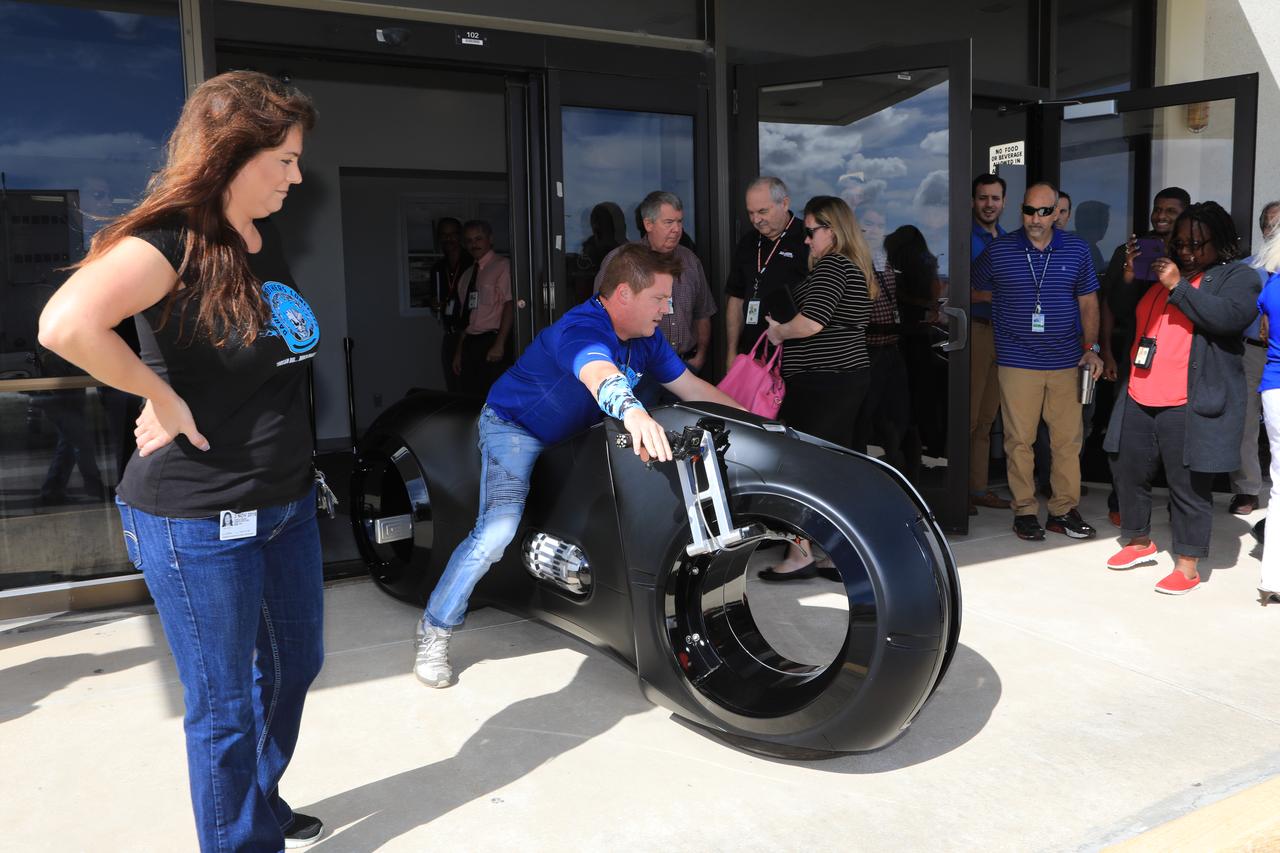
During the 2016 Innovation Expo at NASA's Kennedy Space Center in Florida, representatives from Parker Brothers, known for designing and building outrageous custom vehicles, spoke to Kennedy employees about their creative thinking processes. Employees also were given an up-close look at their Neutron bike, featured in the movie “Tron.”
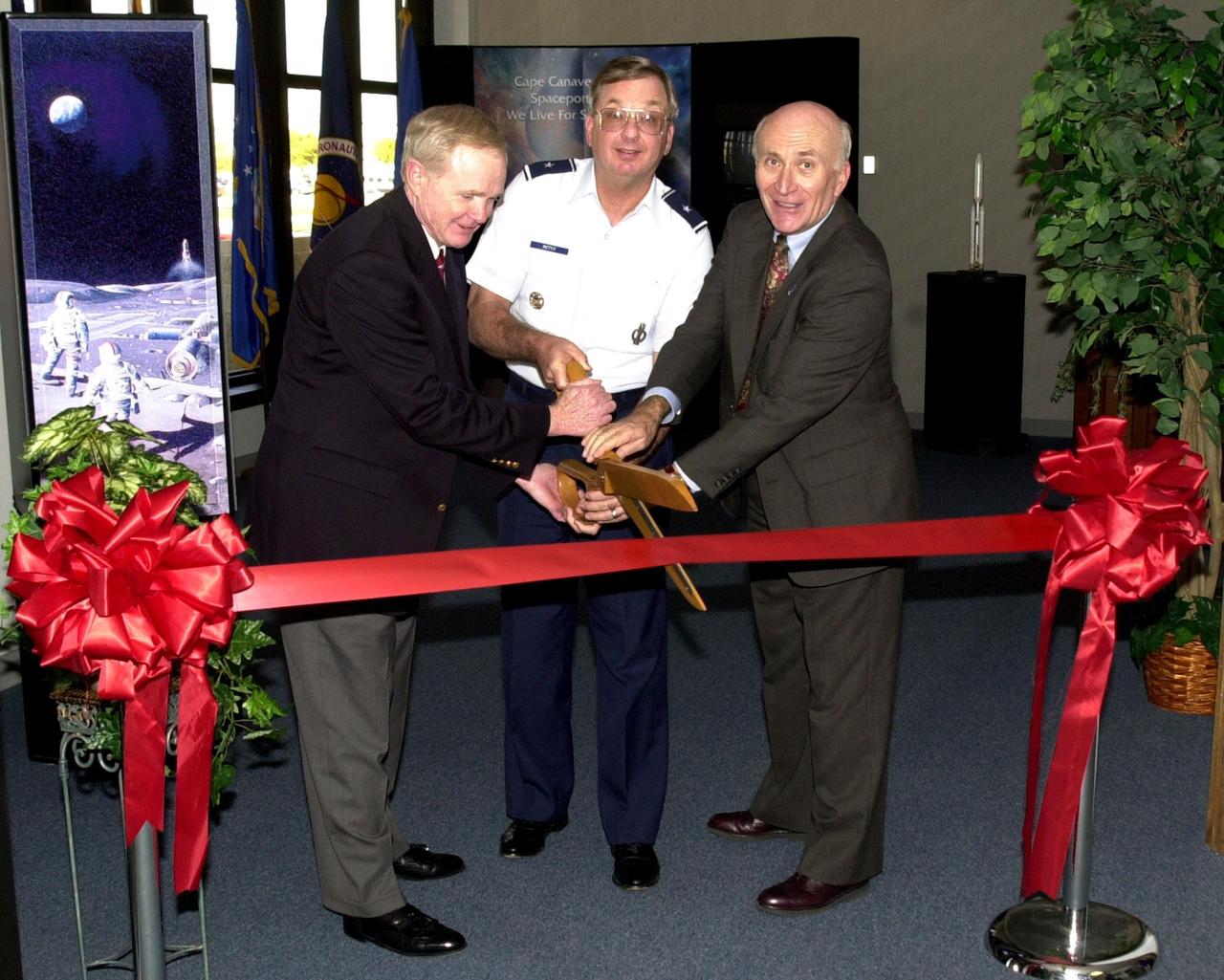
KENNEDY SPACE CENTER, FLA. -- (From left) Center Director Roy Bridges, Brig. Gen. Donald P. Pettit and Executive Director of the Cape Canaveral Spaceport Management Office Ed Gormel share the ribbon cutting at the formal opening of a Customer Service office at the Spaceport. Gen. Pettit is the commander of the 45th Space Wing
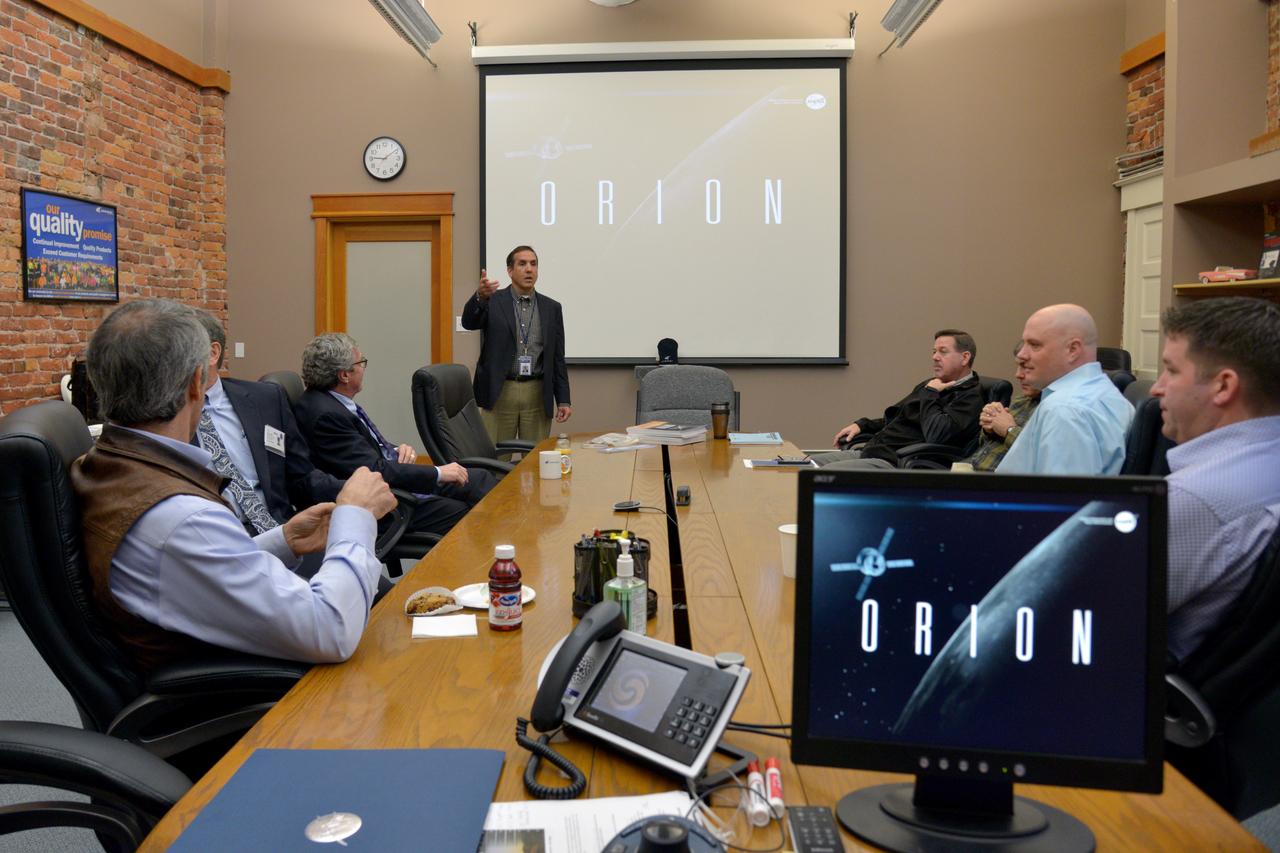
The Orion leadership team visits Janicki Industries in Sedro-Woolley, Washington on March 9, 2015 to thank them for their work in support of Exploration Flight Test-1 (EFT-1). Janicki is a small business that specializes in producing custom tooling fixtures and composite structures. Part of Batch image transfer from Flickr.
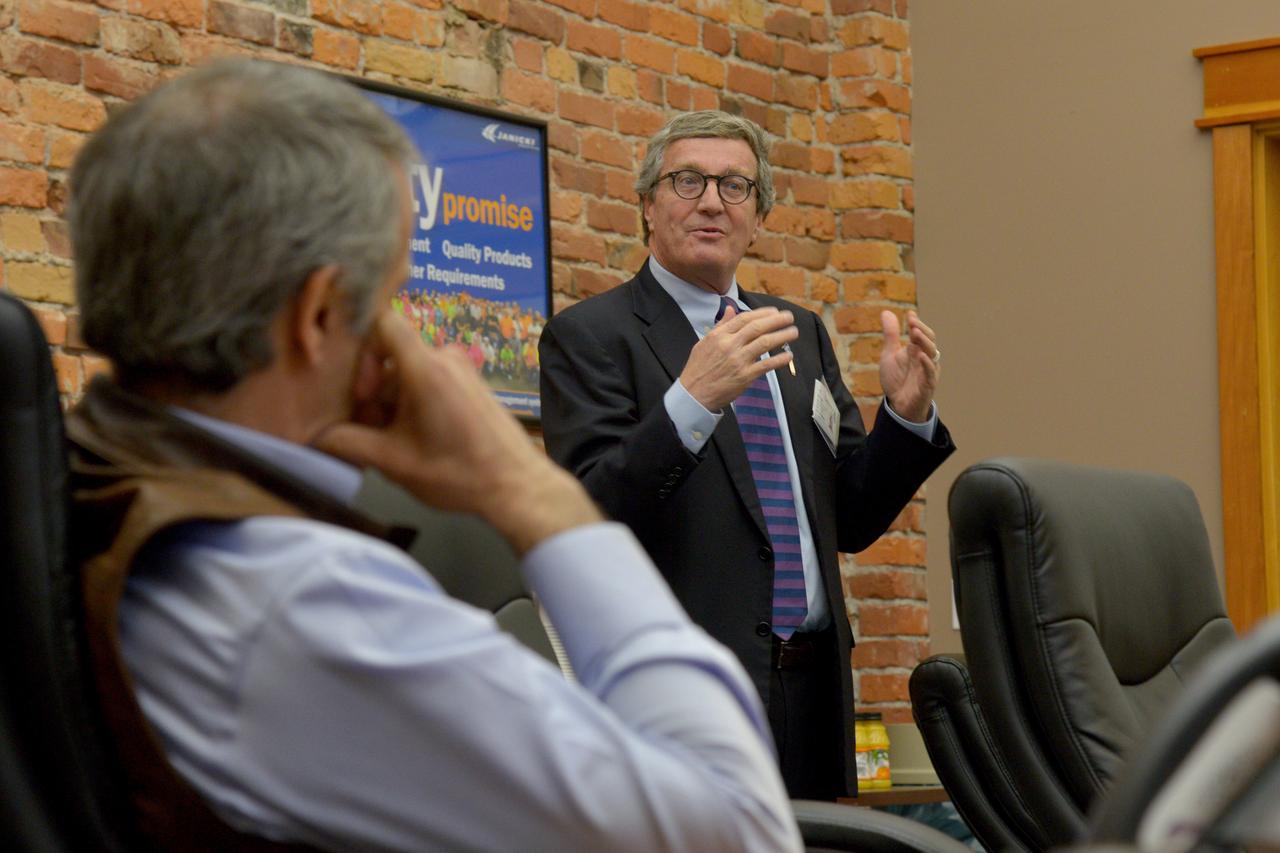
The Orion leadership team visits Janicki Industries in Sedro-Woolley, Washington on March 9, 2015 to thank them for their work in support of Exploration Flight Test-1 (EFT-1). Janicki is a small business that specializes in producing custom tooling fixtures and composite structures. Part of Batch image transfer from Flickr.
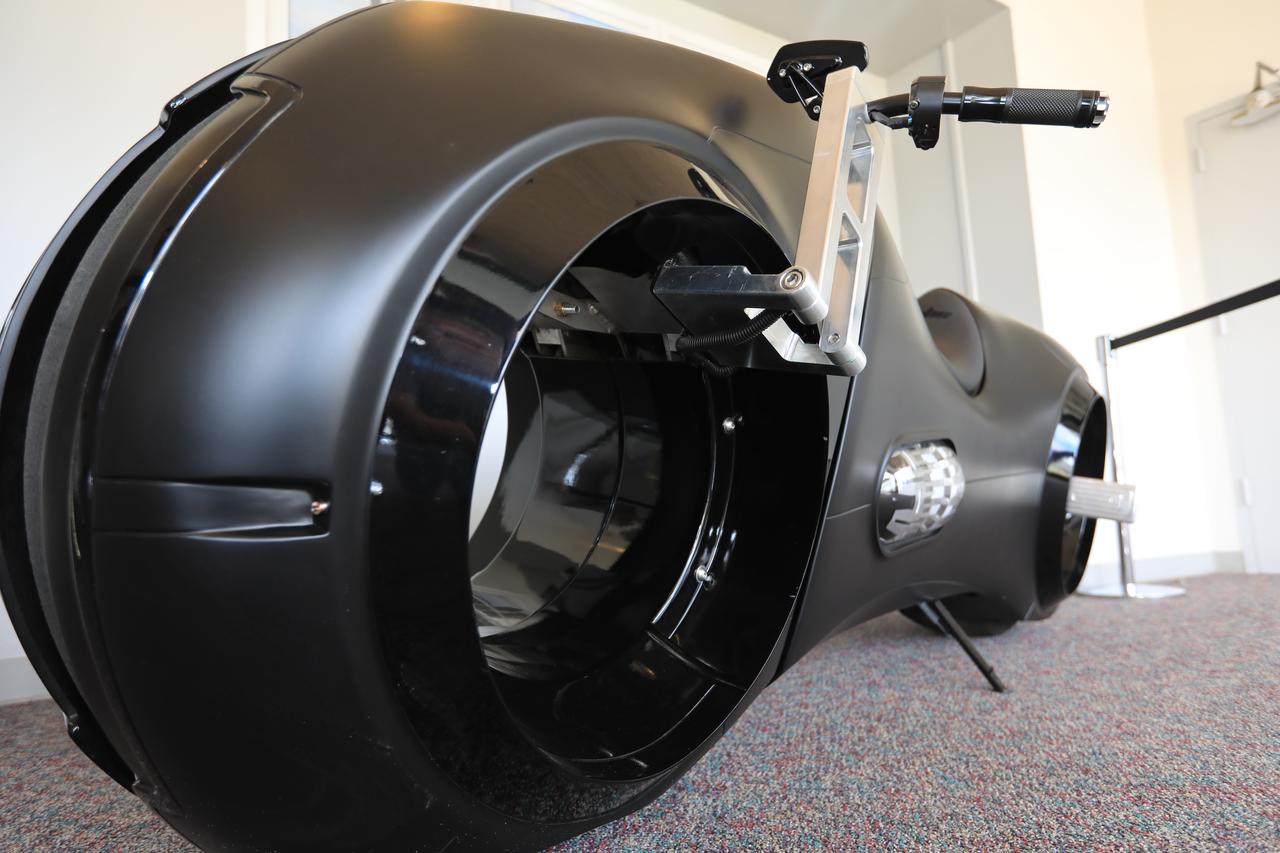
During the 2016 Innovation Expo at NASA's Kennedy Space Center in Florida, representatives from Parker Brothers, known for designing and building outrageous custom vehicles, spoke to Kennedy employees about their creative thinking processes. Employees also were given an up-close look at their Neutron bike, featured in the movie “Tron.”
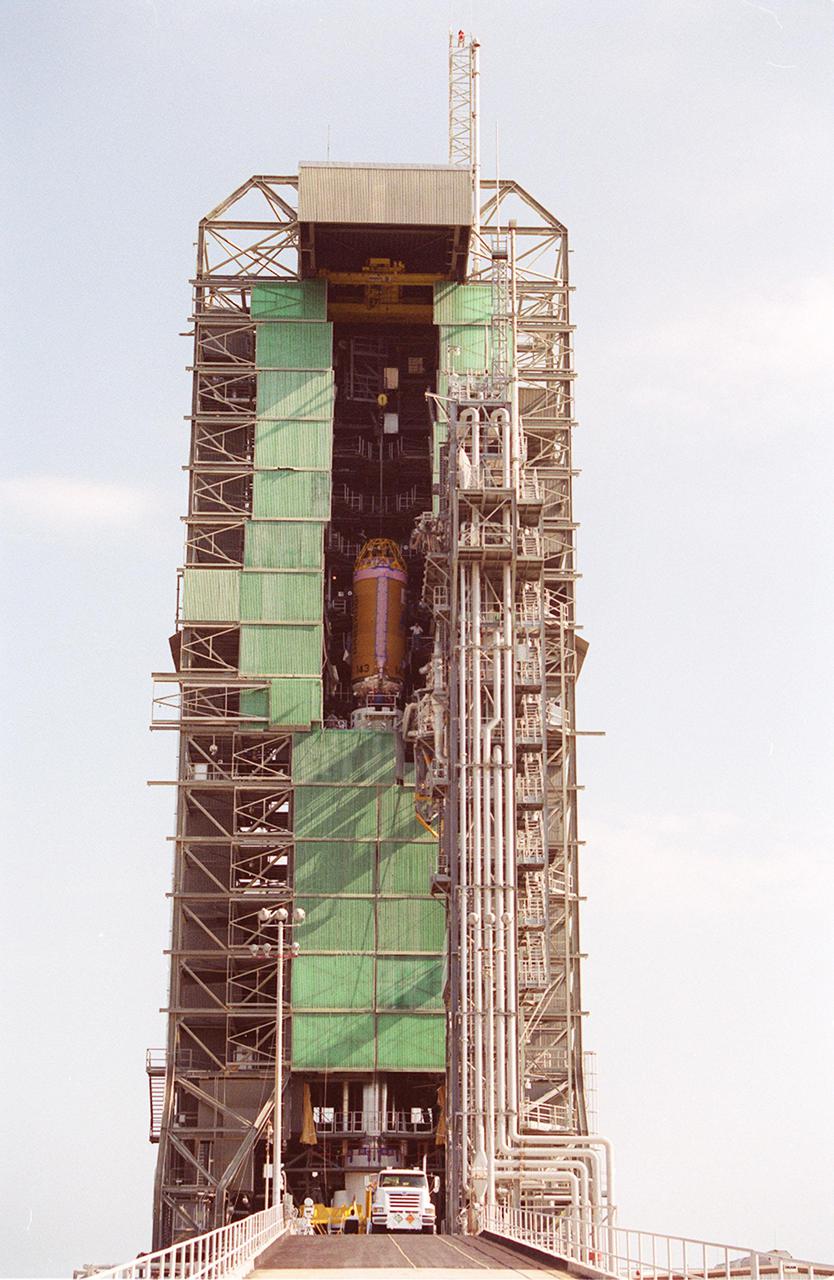
KENNEDY SPACE CENTER, Fla. -- The Lockheed Martin Atlas_Centaur segment of the Atlas II rocket is lowered onto the first (booster) stage of the Atlas II rocket at Launch Pad 36-A, Cape Canaveral Air Force Station. . The rocket is scheduled to launch the Tracking and Data Relay Satellite, known as TDRS-I, in January 2002. The TDRS System (TDRSS) is a communication signal relay system that provides tracking and data acquisition services between low-Earth orbiting spacecraft and NASA_customer control and_or data processing facilities. The system is capable of transmitting to and receiving data from customer spacecrafts over 100 percent of their orbit (some limitations may apply depending on actual orbit). The TDRS-I provides a Ka-band service that will allow customers with extremely high data rates to be supported by the Tracking and Data Relay Satellite System (TDRSS) if they desire.
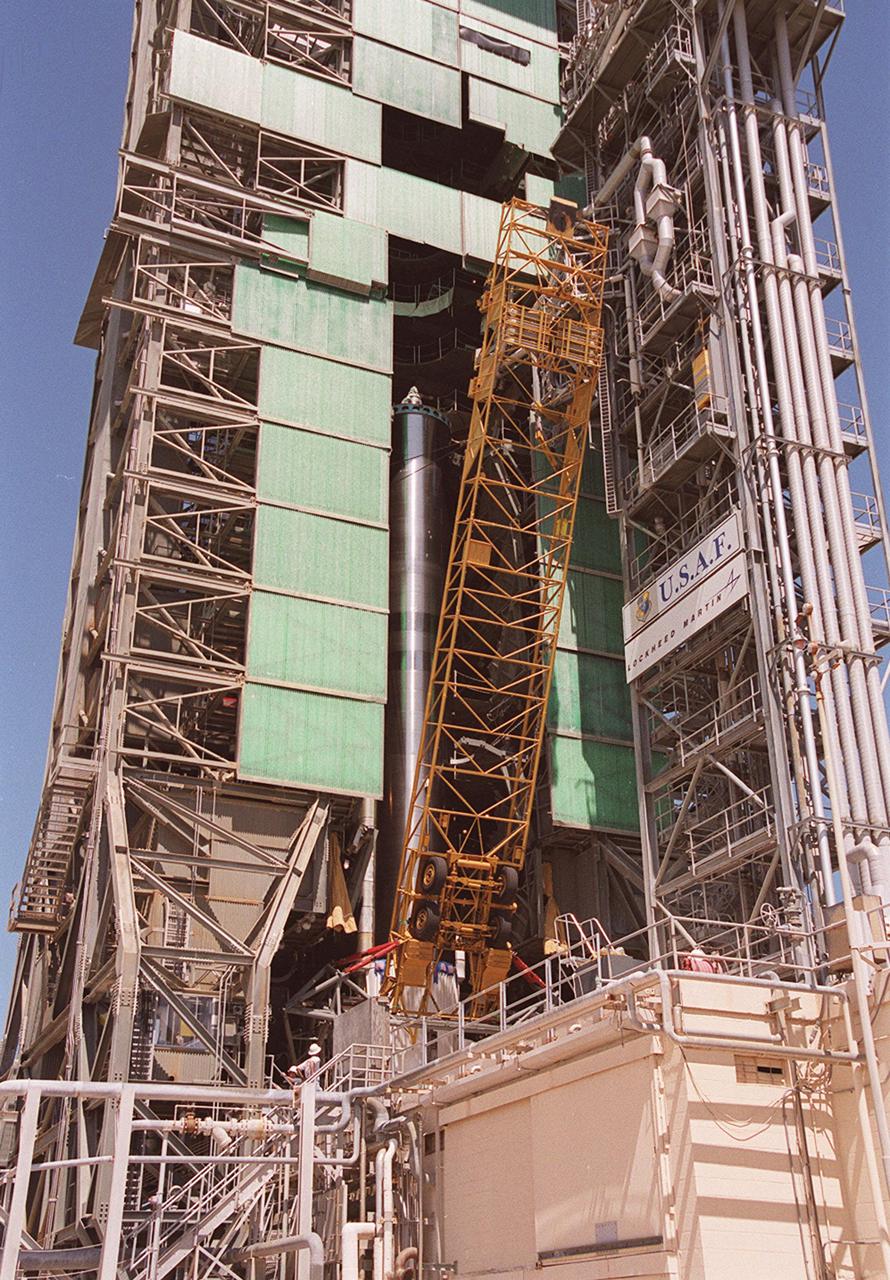
KENNEDY SPACE CENTER, Fla. - At Pad 36-A, Cape Canaveral Air Force Station, the equipment used to raise the Atlas II first (booster) stage into the launch tower is removed. The Atlas II will later be mated with the Tracking and Data Relay Satellite, known as TDRS-I, for launch in January 2002. The TDRS System (TDRSS) is a communication signal relay system that provides tracking and data acquisition services between low-Earth orbiting spacecraft and NASA_customer control and_or data processing facilities. The system is capable of transmitting to and receiving data from customer spacecrafts over 100 percent of their orbit (some limitations may apply depending on actual orbit). The TDRS-I provides a Ka-band service that will allow customers with extremely high data rates to be supported by the Tracking and Data Relay Satellite System (TDRSS) if they desire

KENNEDY SPACE CENTER, FLA. - Suzy Cunningham sings the national anthem to kick off Center Director Jim Kennedy’s first all-hands meeting conducted for employees. She is senior spaceport manager, NASA/Air Force Spaceport Planning and Customer Service Office. Making presentations were Dr. Woodrow Whitlow Jr., KSC deputy director; Tim Wilson, assistant chief engineer for Shuttle; and Bill Pickavance, vice president and deputy program manager, Florida operations, United Space Alliance. Representatives from the Shuttle program and contractor team were on hand to discuss the Columbia Accident Investigation Board report and where KSC stands in its progress toward return to flight.
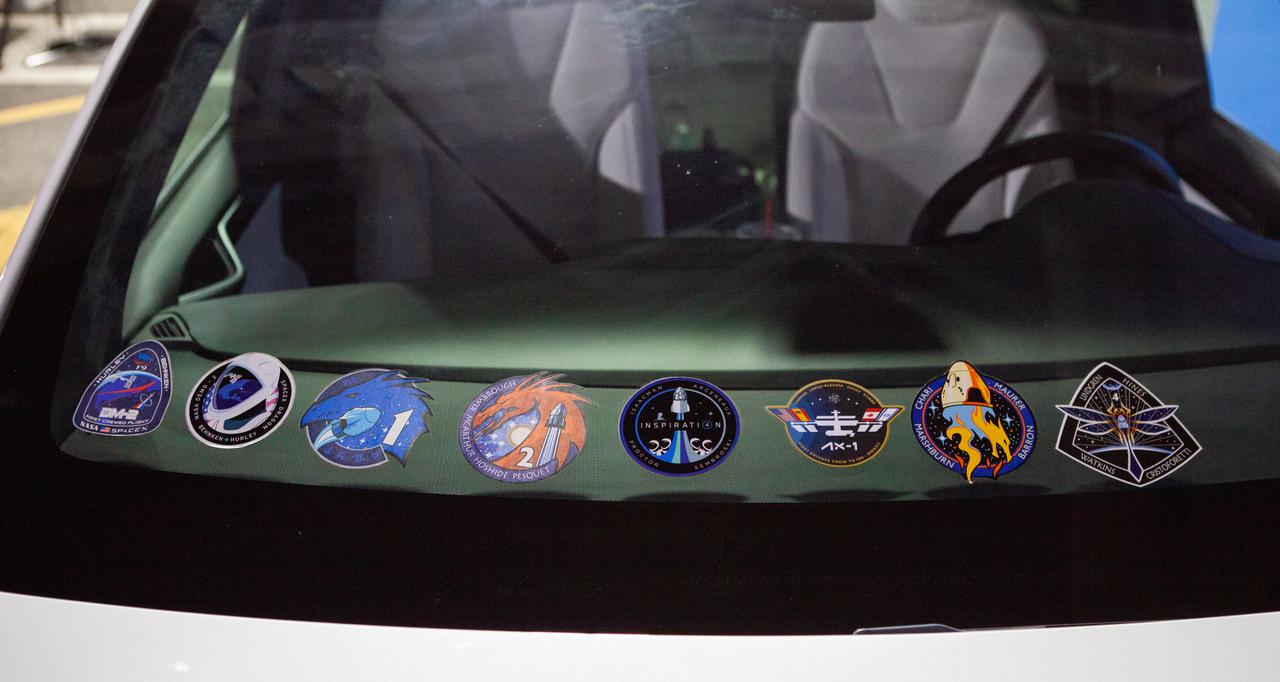
A customized Tesla Model X vehicle is parked outside the Neil A. Armstrong Operations and Checkout Building at NASA’s Kennedy Space Center in Florida on April 27, 2022. Crew-4 astronauts Kjell Lindgren, Bob Hines, Jessica Watkins, and Samantha Cristoforetti will make their way to the vehicles, which will transport them to Launch Complex 39A. Liftoff aboard SpaceX’s Crew Dragon, powered by the company’s Falcon 9 rocket, is scheduled for today at 3:52 a.m. EDT from Pad 39A at Kennedy.
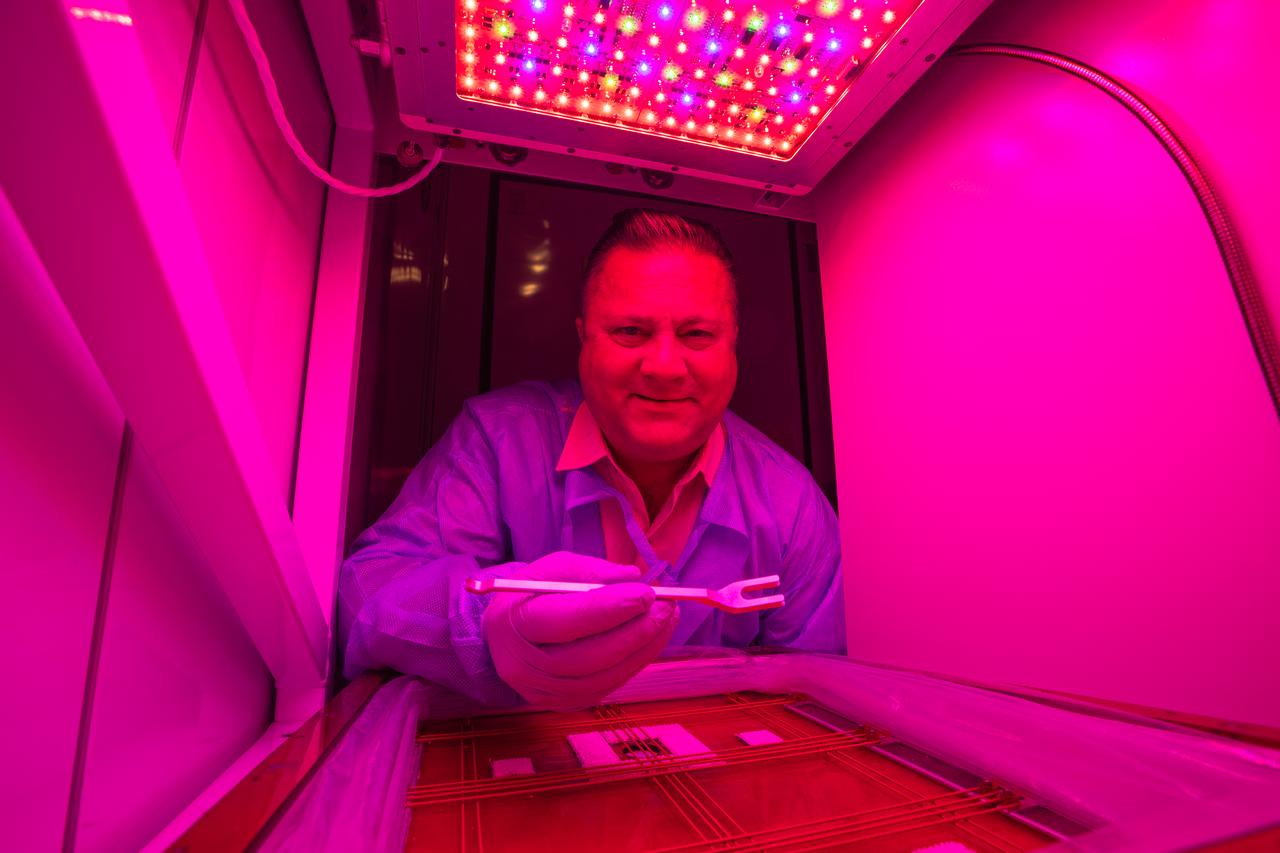
Matthew English is the Exploration Research and Technology facility manager for the Space Station Processing Facility (SSPF) at NASA’s Kennedy Space Center in Florida. English’s responsibilities include ensuring that the International Space Station teams inside the SSPF have the facilities, tools and capabilities they need to support their launch customers, thus providing the support necessary to enable further research and design discoveries within NASA.
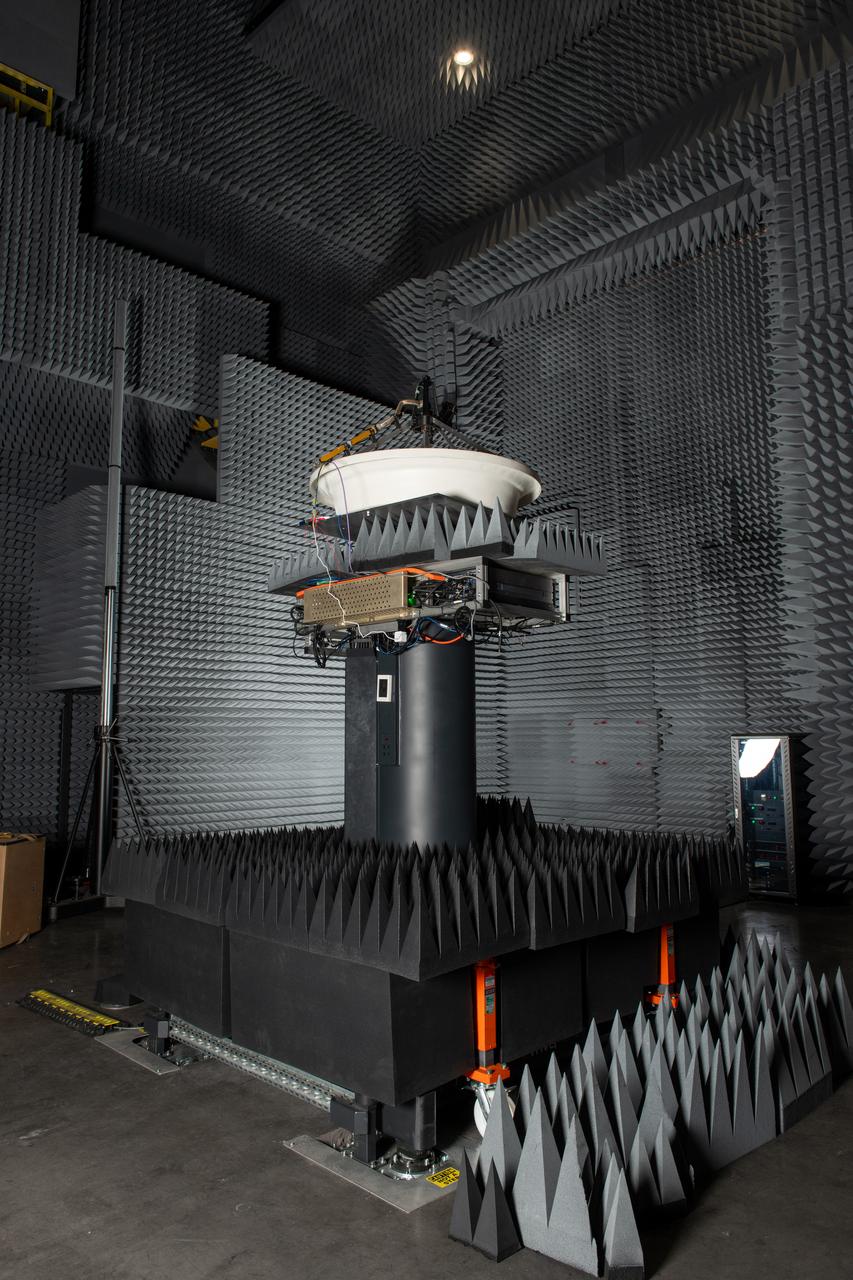
NASA’s Beaming Energy for Air Mobility team successfully completed a first-of-its-kind power beaming test at NASA Glenn on June 4, 2025. Later this year, the tested transmitter will be used in a demonstration to wirelessly transmit power using microwaves to a custom power receiver — a step toward gap-filling technology that could one day deliver power on the surface of the Moon or Mars.
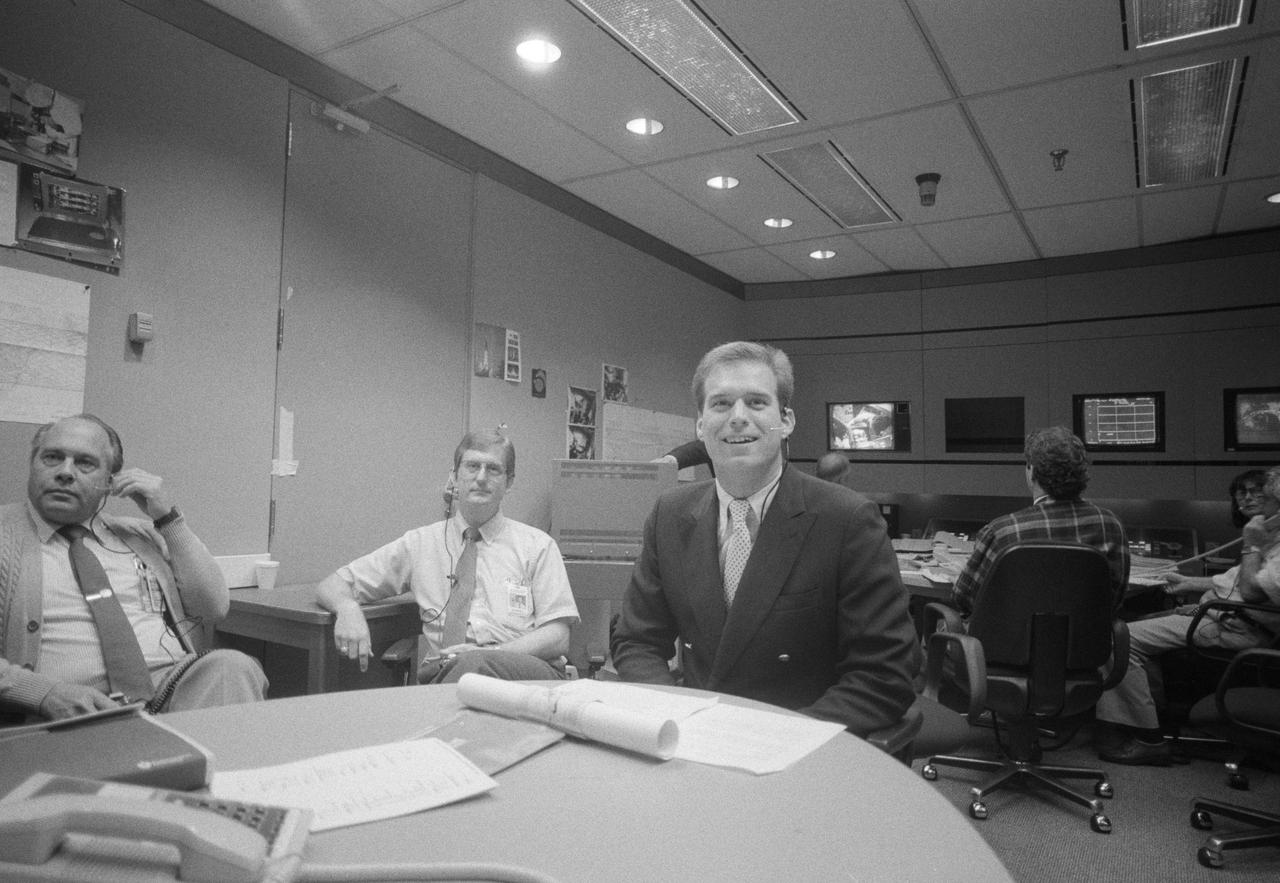
STS029-S-047 (16 Mar 1989) --- Student experimenter John C. Vellinger, right, watches a TV monitor in the customer support room of Johnson Space Center's mission control center during a downlink from the spacecraft of astronaut John E. Blaha conducting the experiment in the incubator used for the test. The experiment is titled "Chicken Embryo Development in Space." Also visible are Neil Criestie and Robert N. Stuckey of JSC. The experiment's sponsor is Kentucky Fried Chicken.
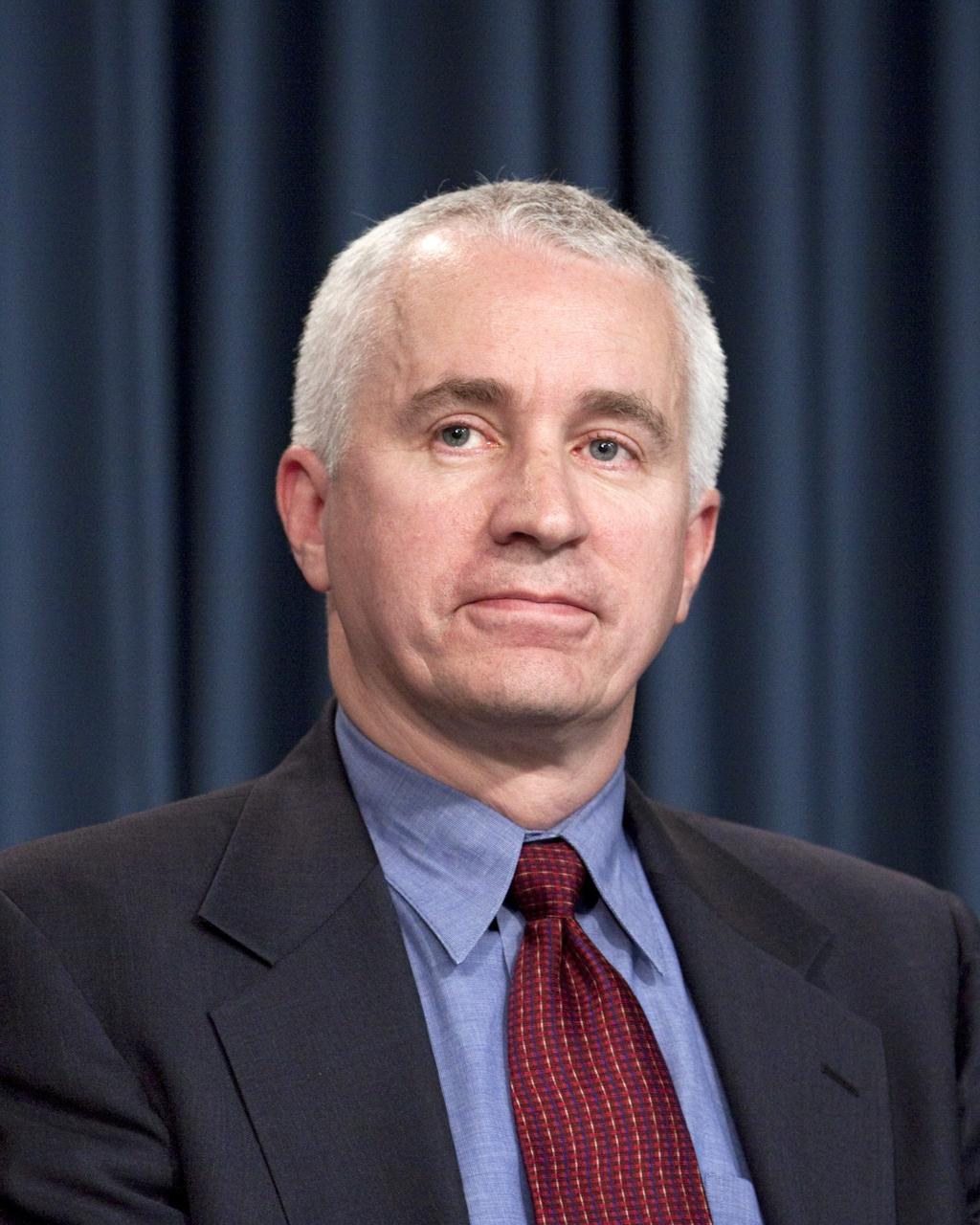
CAPE CANAVERAL, Fla. -- At a news conference NASA officials and industry partners discuss progress of the agency's Commercial Crew Program. Among those participating in the briefing is Rob Meyerson, Blue Origin president and program manager. Through CCP, NASA is facilitating the development of U.S. commercial crew space transportation capabilities to achieve safe, reliable and cost-effective access to and from low-Earth orbit for potential future government and commercial customers. For more information, visit http://www.nasa.gov/commercialcrew Photo credit: NASA/Kim Shiflett
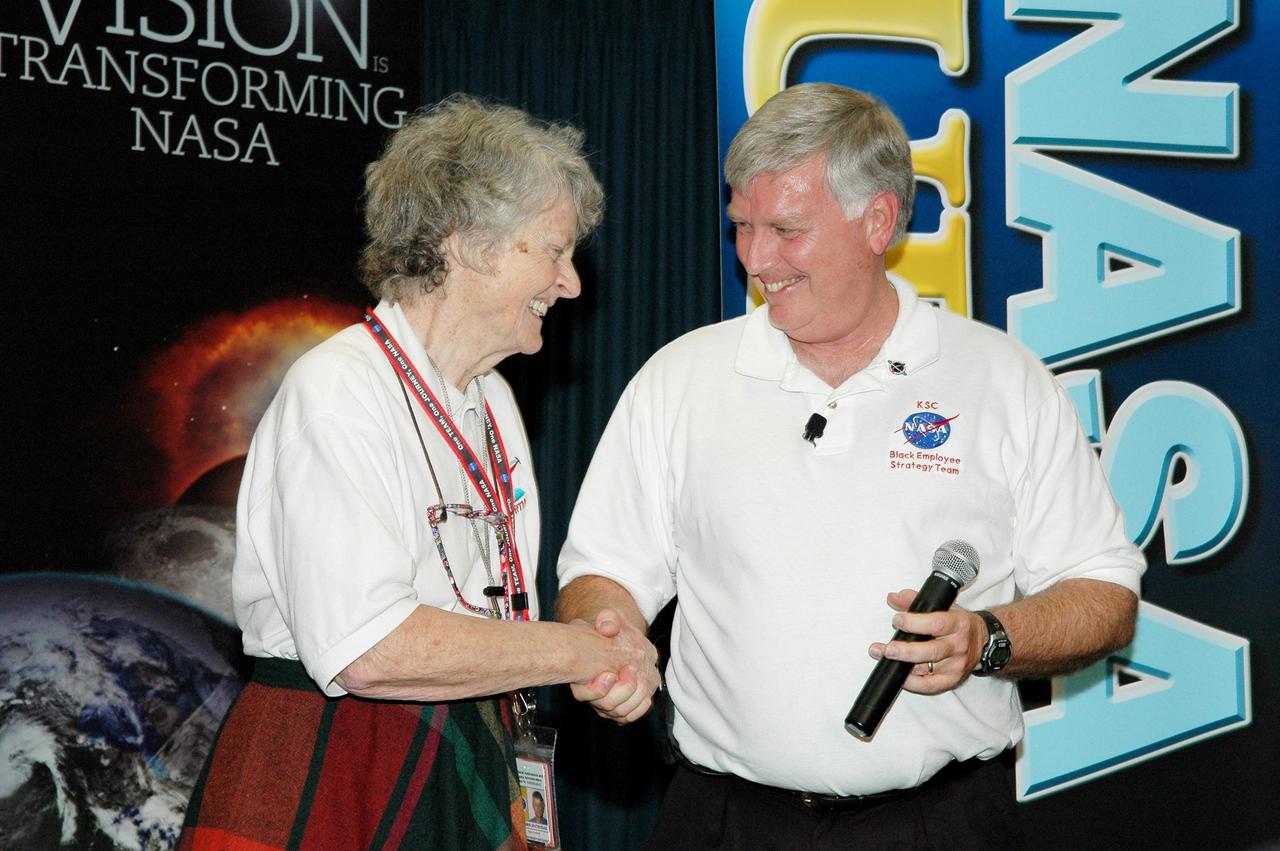
KENNEDY SPACE CENTER, FLA. - Center Director Jim Kennedy (right) congratulates Virginia Whitehead upon her receipt of a One NASA Peer Award. The award recognizes Whitehead for her outstanding customer service. Whitehead is a manager in the Center’s Payload Processing Directorate. The award was presented in the Press Site Auditorium following the NASA Update by NASA Administrator Sean O'Keefe. The award is given to recognize employees who have demonstrated behaviors consistent with the spirit of One NASA and are called Peer Awards because candidates must be nominated by their peers.
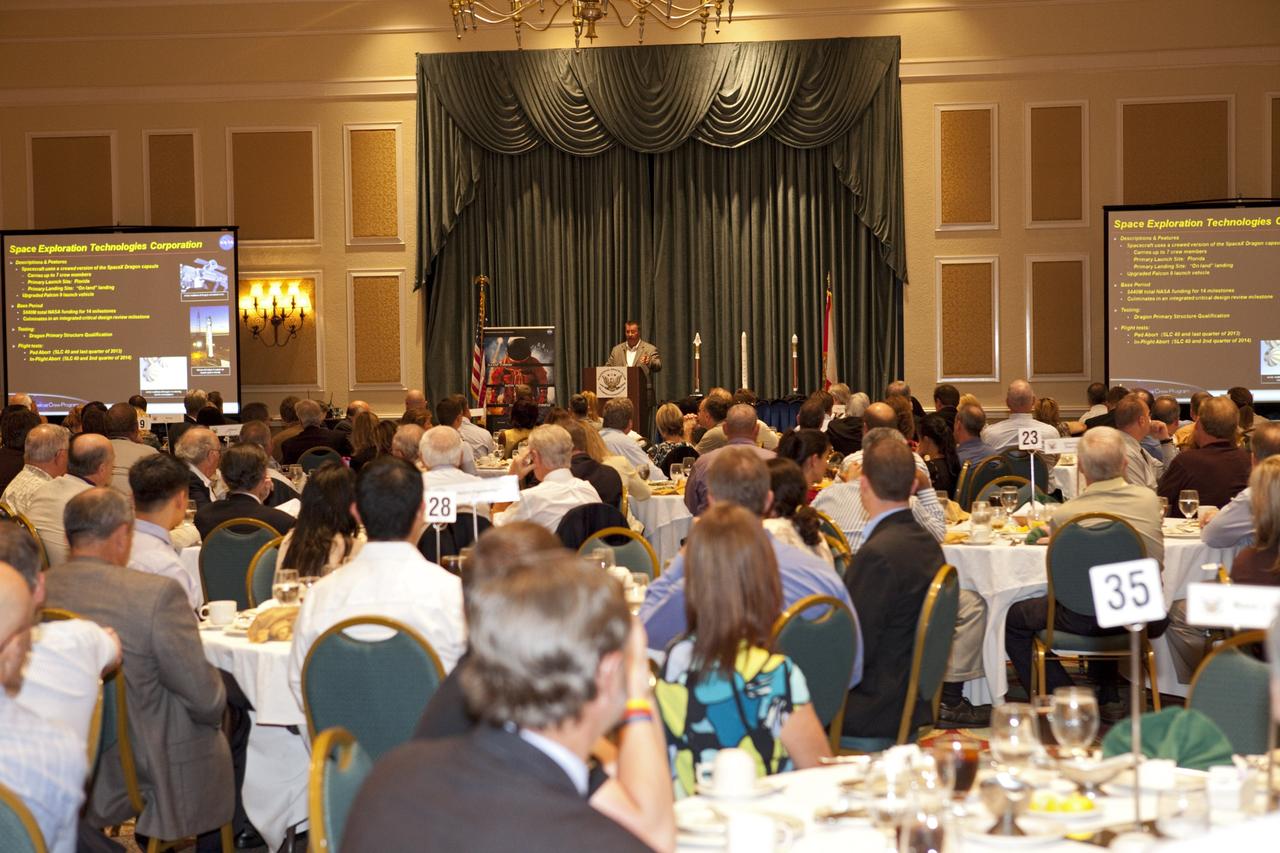
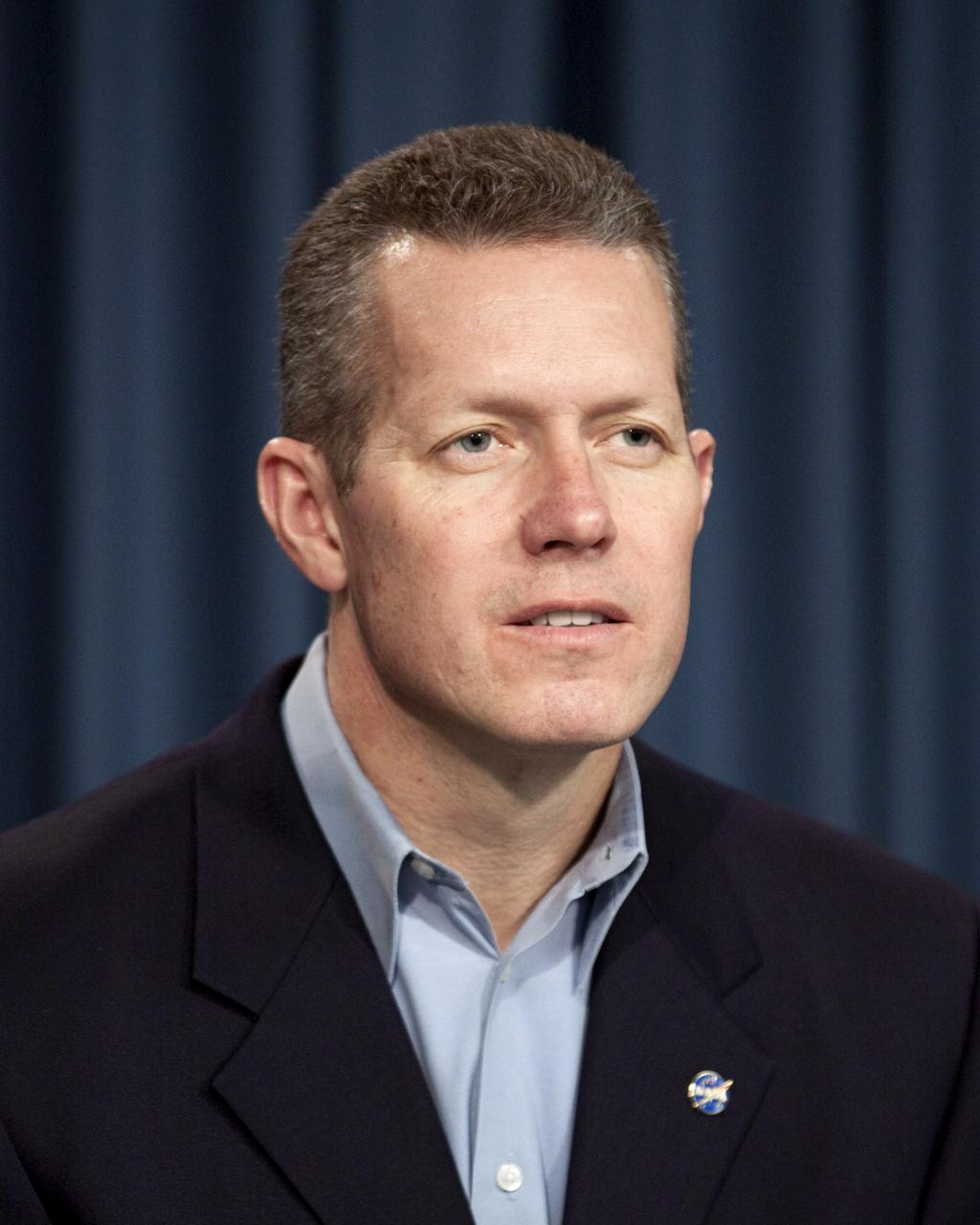
CAPE CANAVERAL, Fla. -- At the National Space Club Florida Committee's August luncheon at the Radisson Resort at the Port in Cape Canaveral, Fla., NASA Commercial Crew Program Manager Ed Mango discusses the innovative steps the agency is taking with industry partners to develop the next U.S. space transportation capability to and from low Earth orbit, which will eventually be available for use by the U.S. government and other commercial customers. To learn more about the Commercial Crew Program, visit www.nasa.gov/commercialcrew. Photo credit: Kim Shiflett
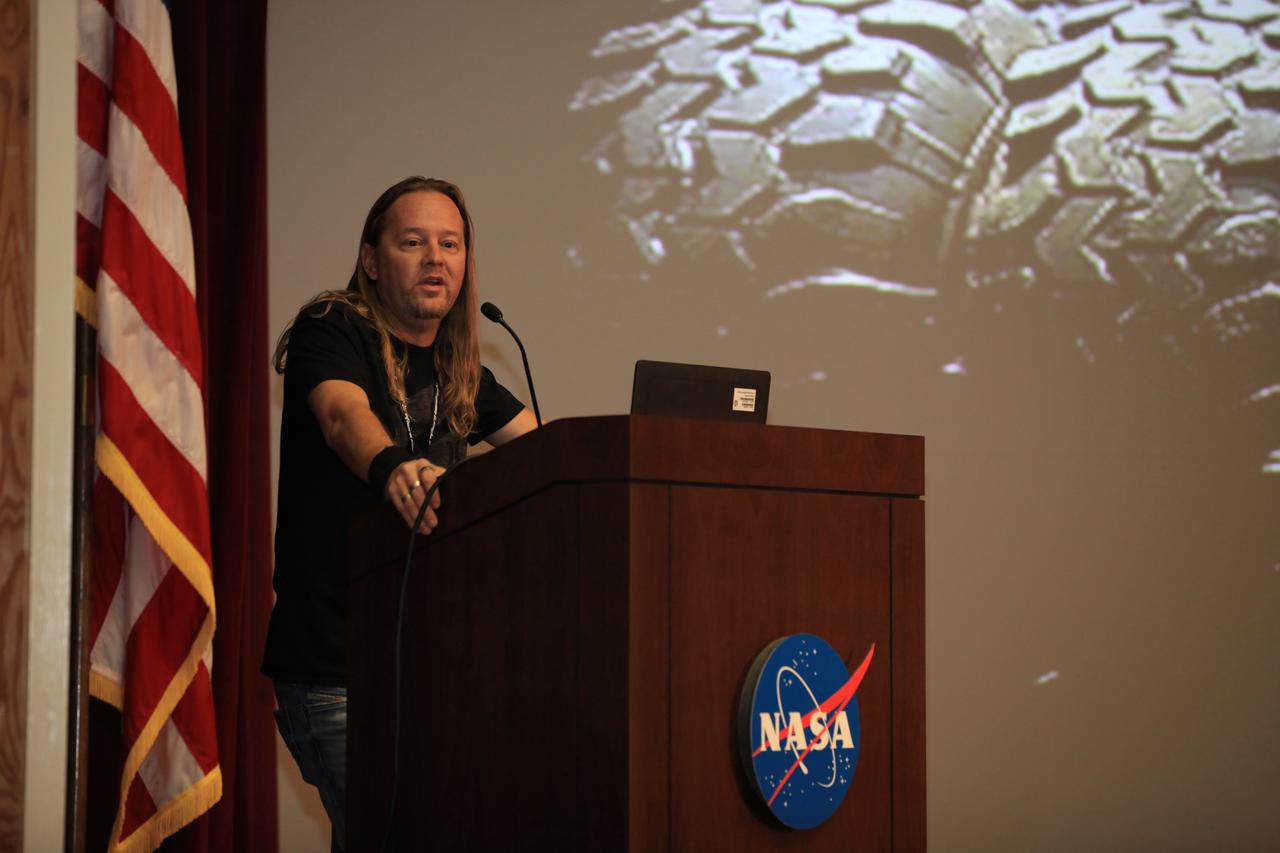
Representatives from Parker Brothers, known for designing and building outrageous custom vehicles, spoke to employees at NASA's Kennedy Space Center in Florida about their creative thinking processes. The event took place during the center's 2016 Innovation Expo. Employees also were given an up-close look at their Neutron bike, featured in the movie “Tron.”
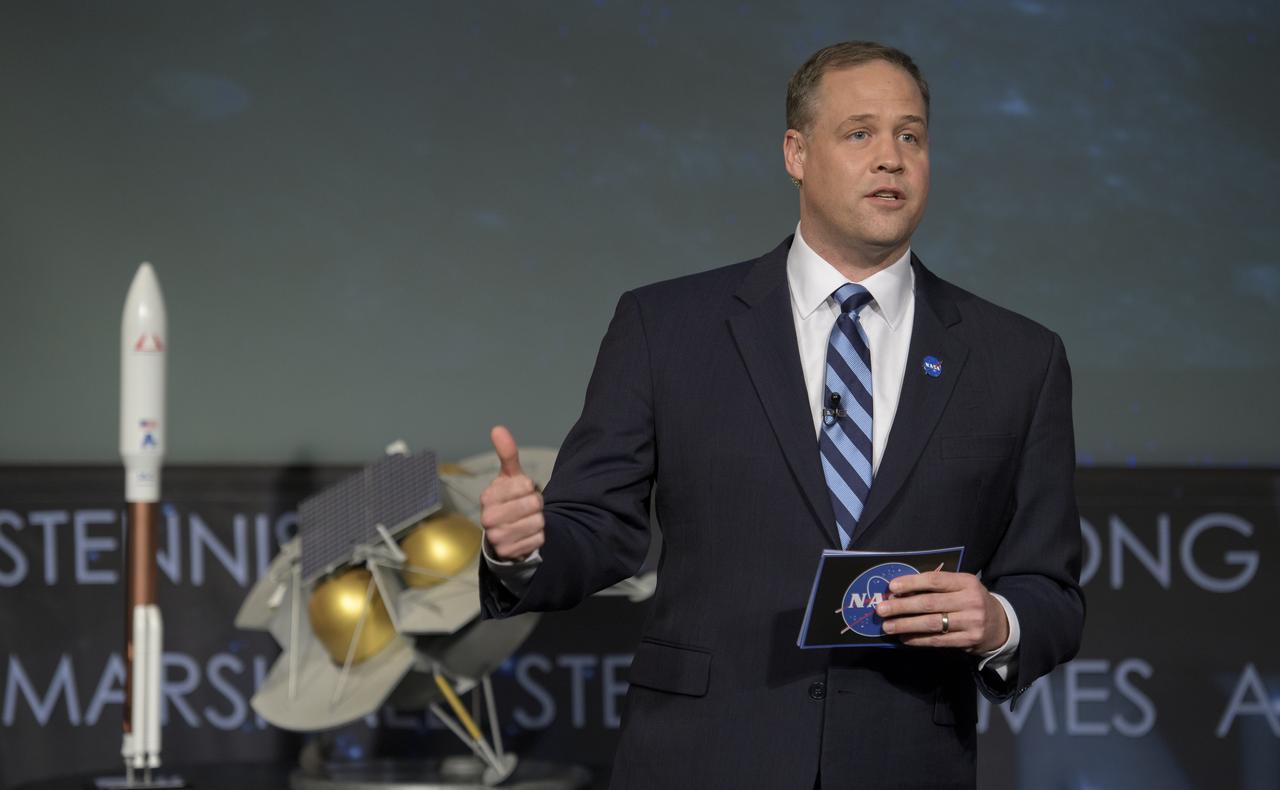
NASA Administrator Jim Bridenstine announces the nine U.S. companies that are eligible to bid on NASA delivery services to the lunar surface through Commercial Lunar Payload Services (CLPS) contracts, Thursday, Nov. 29, 2018 at NASA Headquarters in Washington. The companies will be able to bid on delivering science and technology payloads for NASA, including payload integration and operations, launching from Earth and landing on the surface of the Moon. NASA expects to be one of many customers that will use these commercial landing services. Photo Credit: (NASA/Bill Ingalls)
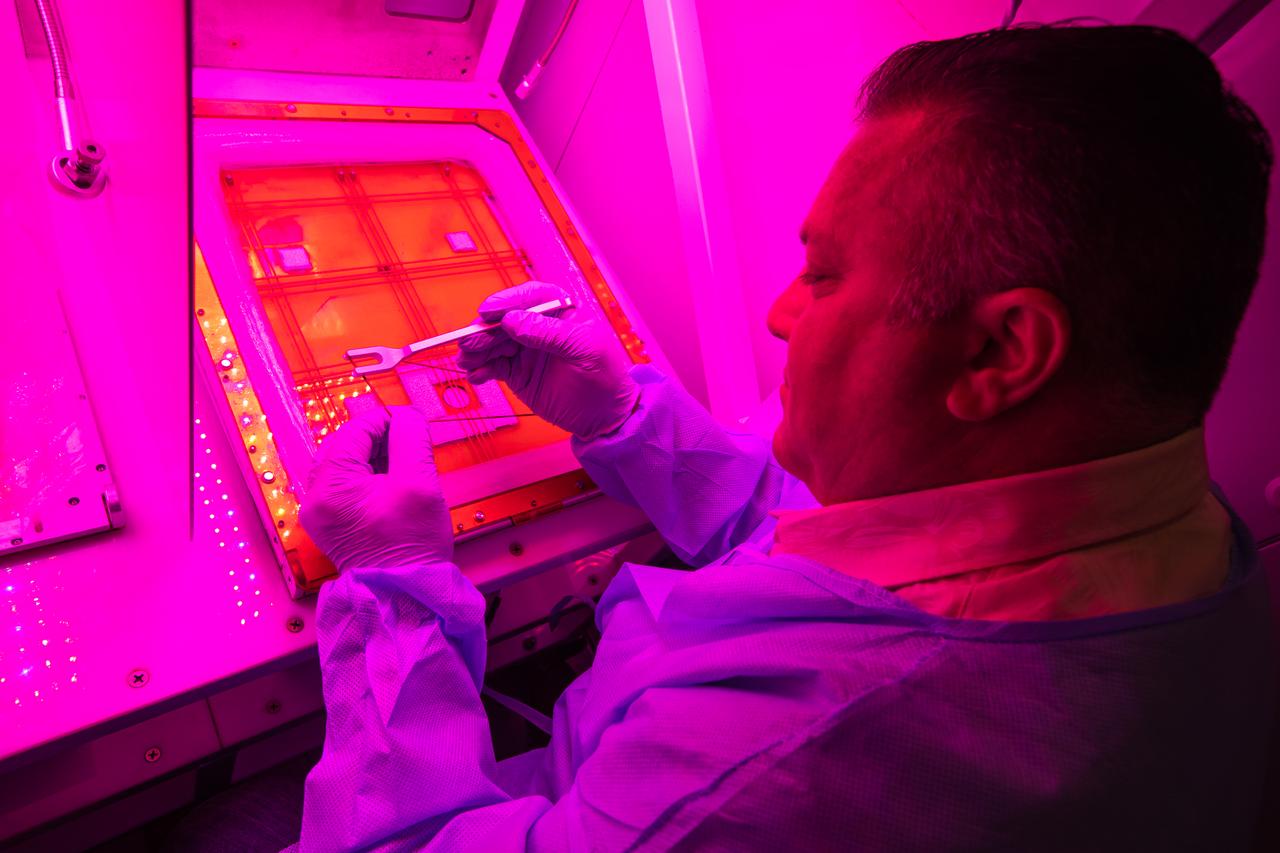
Matthew English is the Exploration Research and Technology facility manager for the Space Station Processing Facility (SSPF) at NASA’s Kennedy Space Center in Florida. English’s responsibilities include ensuring that the International Space Station teams inside the SSPF have the facilities, tools and capabilities they need to support their launch customers, thus providing the support necessary to enable further research and design discoveries within NASA.
Representatives from Parker Brothers, known for designing and building outrageous custom vehicles, spoke to employees at NASA's Kennedy Space Center in Florida about their creative thinking processes. The event took place during the center's 2016 Innovation Expo. Employees also were given an up-close look at their Neutron bike, featured in the movie “Tron.”
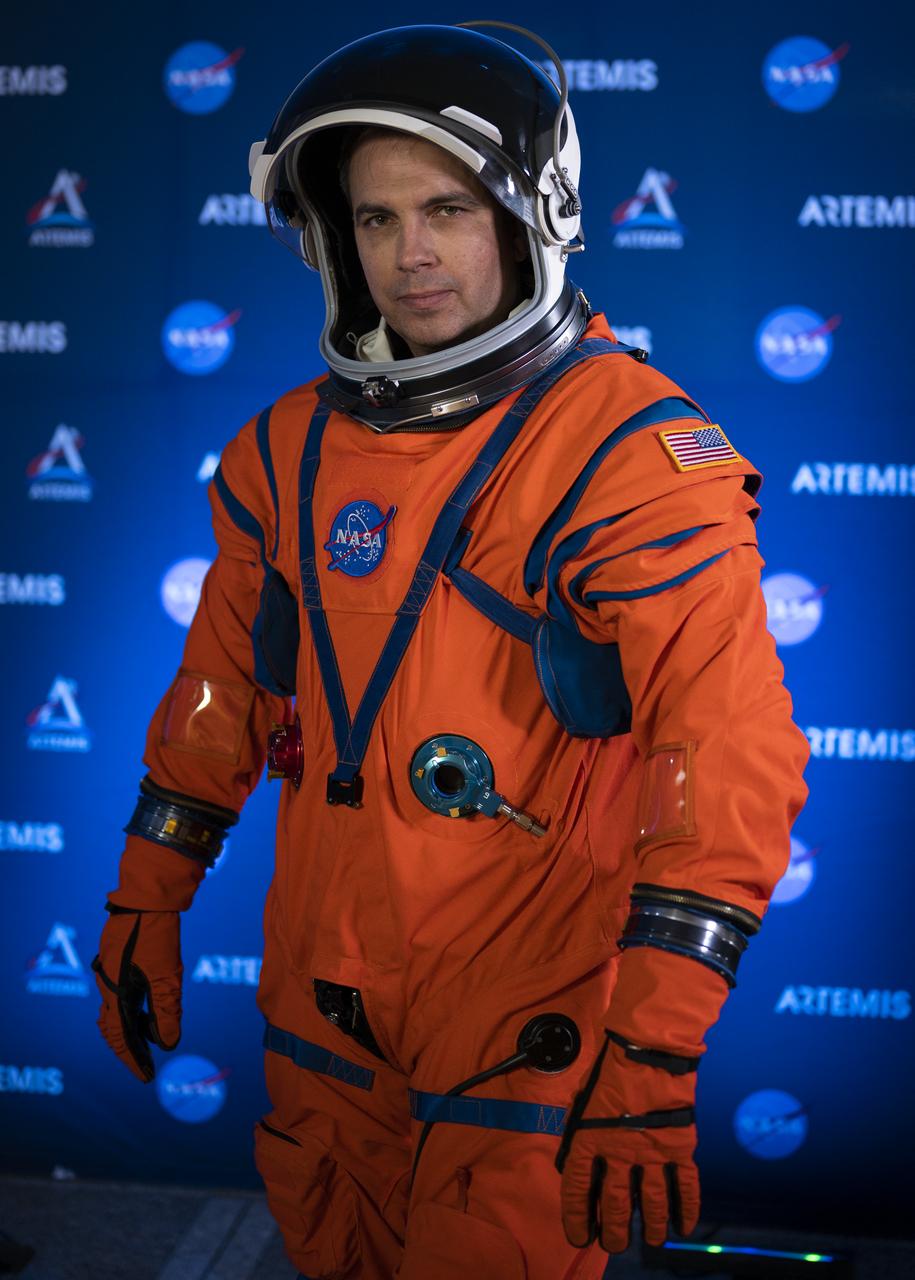
Dustin Gohmert, Orion Crew Survival Systems Project Manager at NASA’s Johnson Space Center, poses for a portrait while wearing the Orion Crew Survival System (OCSS) suit, Tuesday, Oct. 15, 2019 at NASA Headquarters in Washington, DC. The Orion suit is designed for a custom fit and incorporates safety technology and mobility features that will help protect astronauts on launch day, in emergency situations, high-risk parts of missions near the Moon, and during the high-speed return to Earth. Photo Credit: (NASA/Joel Kowsky)
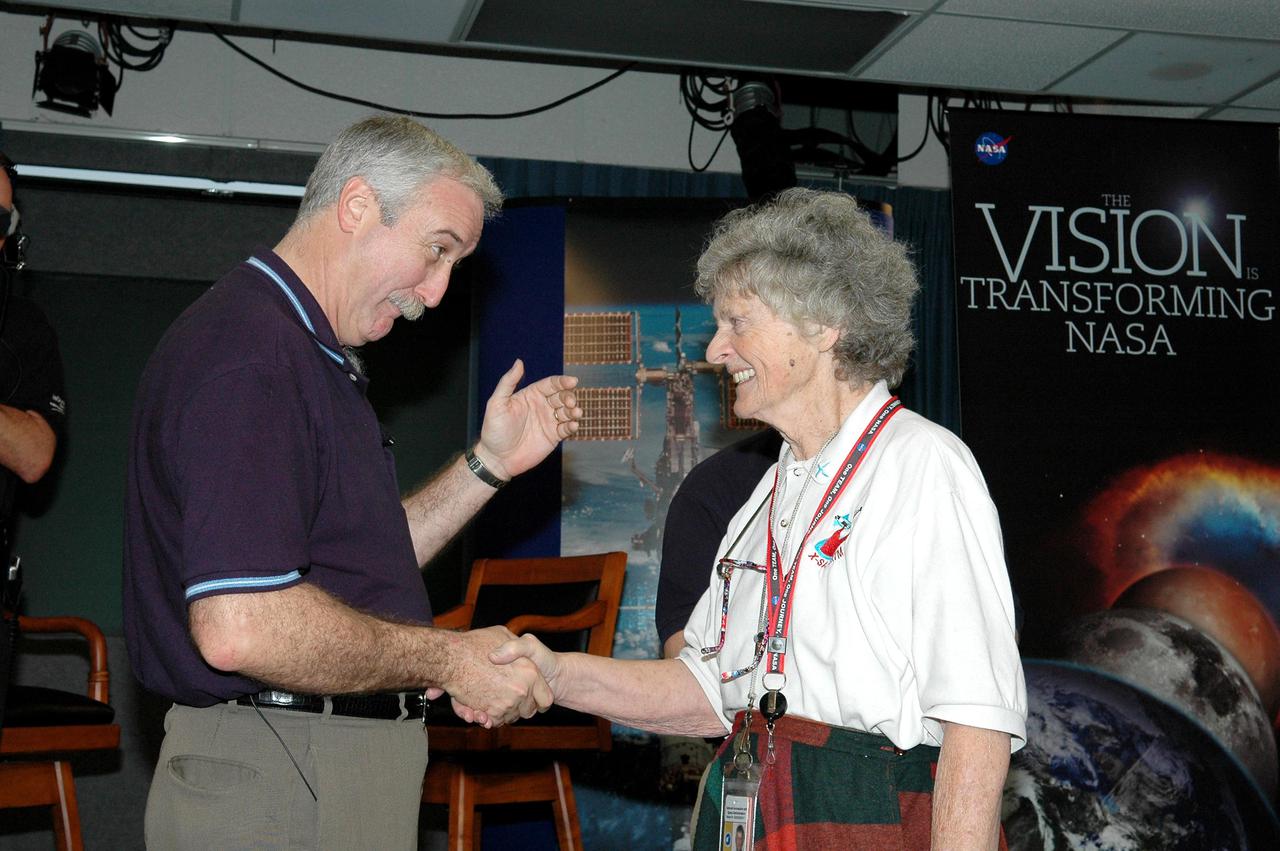
KENNEDY SPACE CENTER, FLA. - NASA Administrator Sean O'Keefe (left) congratulates Virginia Whitehead upon her receipt of a One NASA Peer Award. The award recognizes Whitehead for her outstanding customer service. Whitehead is a manager in the Center’s Payload Processing Directorate. The award was presented in the Press Site Auditorium following the administrator's NASA Update. The award is given to recognize employees who have demonstrated behaviors consistent with the spirit of One NASA and are called Peer Awards because candidates must be nominated by their peers.
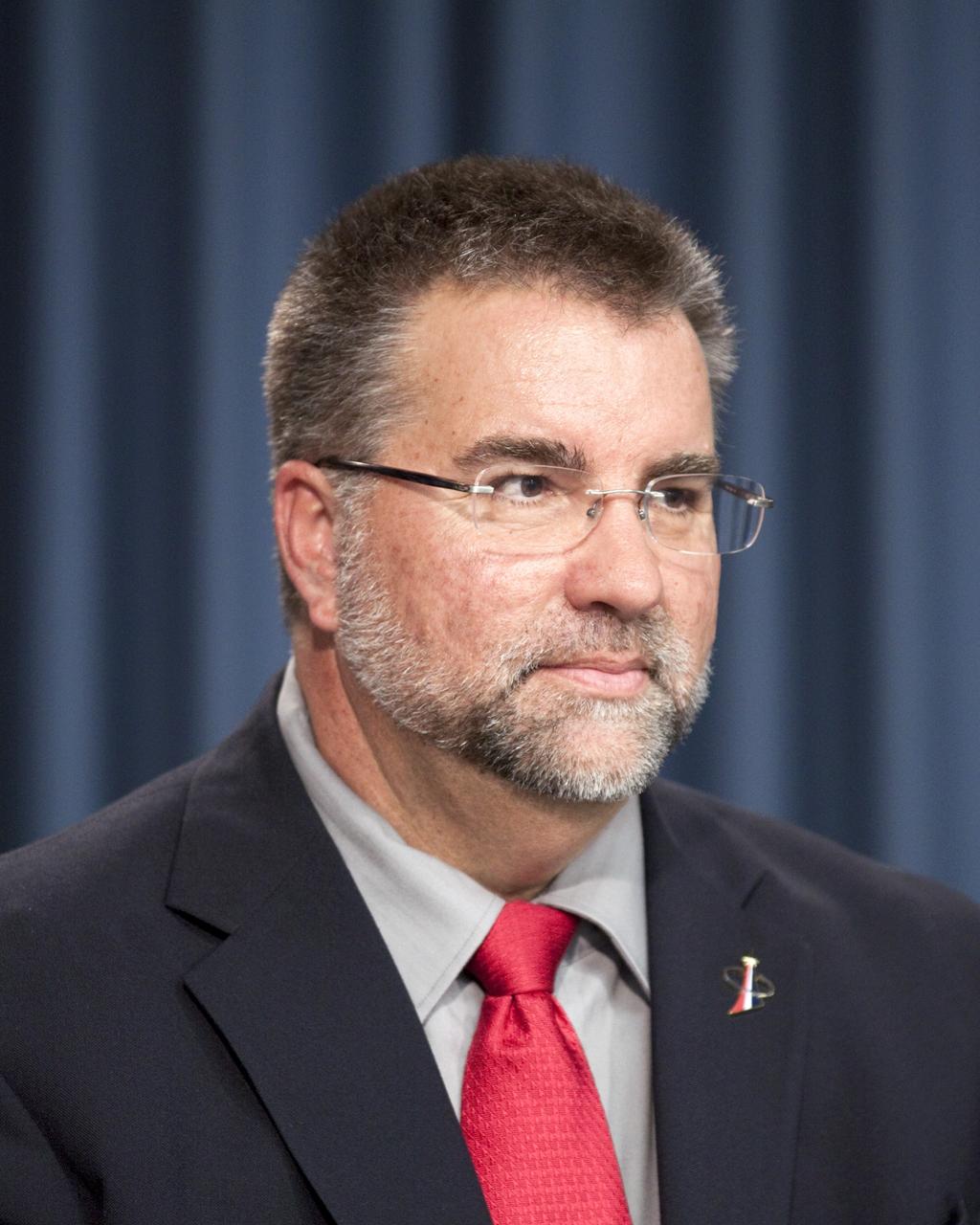
CAPE CANAVERAL, Fla. -- At a news conference NASA officials and industry partners discuss progress of the agency's Commercial Crew Program. Among those participating in the briefing is Ed Mango, NASA Commercial Crew Program manager. Through CCP, NASA is facilitating the development of U.S. commercial crew space transportation capabilities to achieve safe, reliable and cost-effective access to and from low-Earth orbit for potential future government and commercial customers. For more information, visit http://www.nasa.gov/commercialcrew Photo credit: NASA/Kim Shiflett
CAPE CANAVERAL, Fla. -- At a news conference NASA officials and industry partners discuss progress of the agency's Commercial Crew Program. Among those participating in the briefing is Phil McAlister, NASA Commercial Spaceflight Development director. Through CCP, NASA is facilitating the development of U.S. commercial crew space transportation capabilities to achieve safe, reliable and cost-effective access to and from low-Earth orbit for potential future government and commercial customers. For more information, visit http://www.nasa.gov/commercialcrew Photo credit: NASA/Kim Shiflett

NASA’s Beaming Energy for Air Mobility team successfully completed a first-of-its-kind power beaming test at NASA Glenn on June 4, 2025. Later this year, the tested transmitter will be used in a demonstration to wirelessly transmit power using microwaves to a custom power receiver — a step toward gap-filling technology that could one day deliver power on the surface of the Moon or Mars. Seth Waldstein, Seth Schisler and Bryan Schoenholz are in the control room reviewing the results.
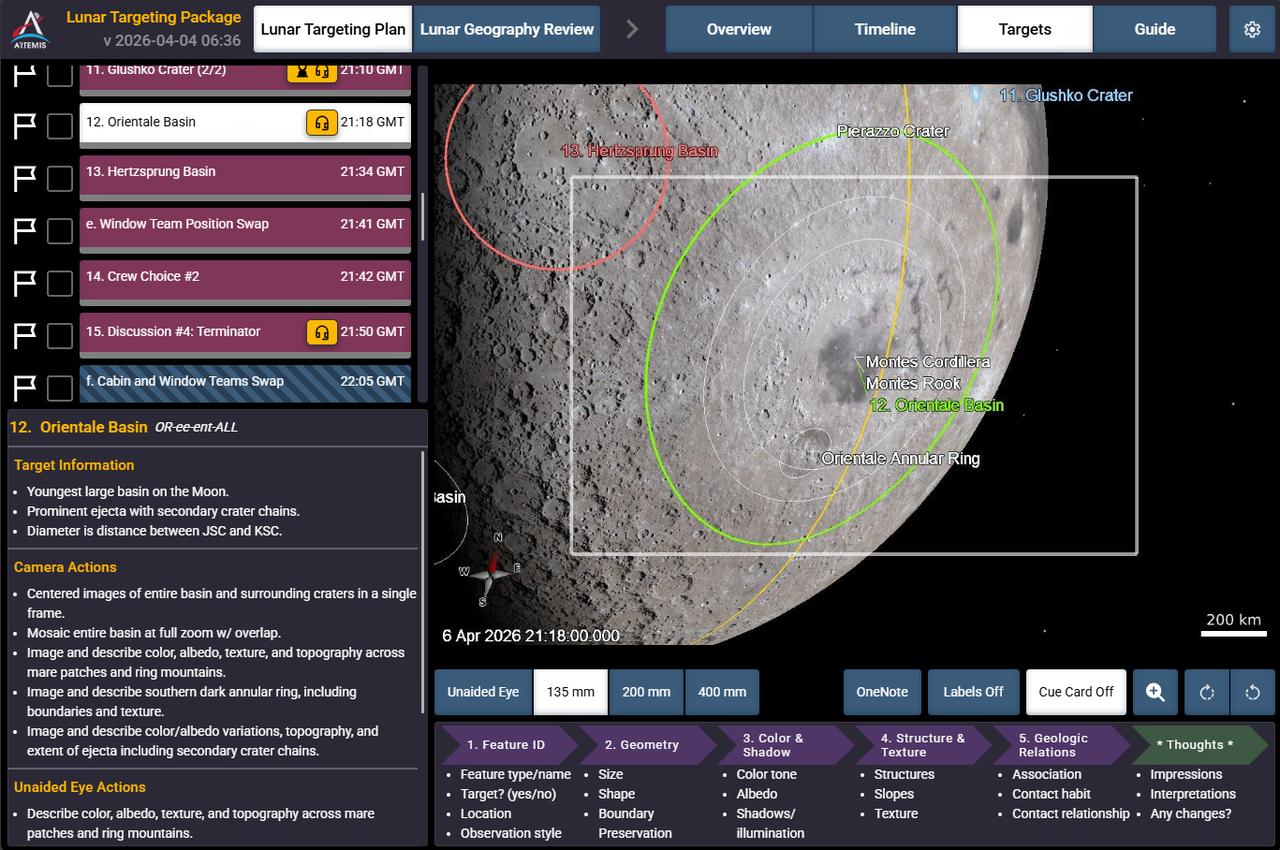
Caption: This is a screen shot of the application the crew sees on their personal computing devices that guides them in the execution of the lunar science observation plan. This custom software was built by the crew lunar observations team, a subset of the Artemis II lunar science team. In this screenshot you can see Orientale basin, target number 12 circled on the bottom right of the Moon, and to its left, target number 13, Hertzsprung basin.
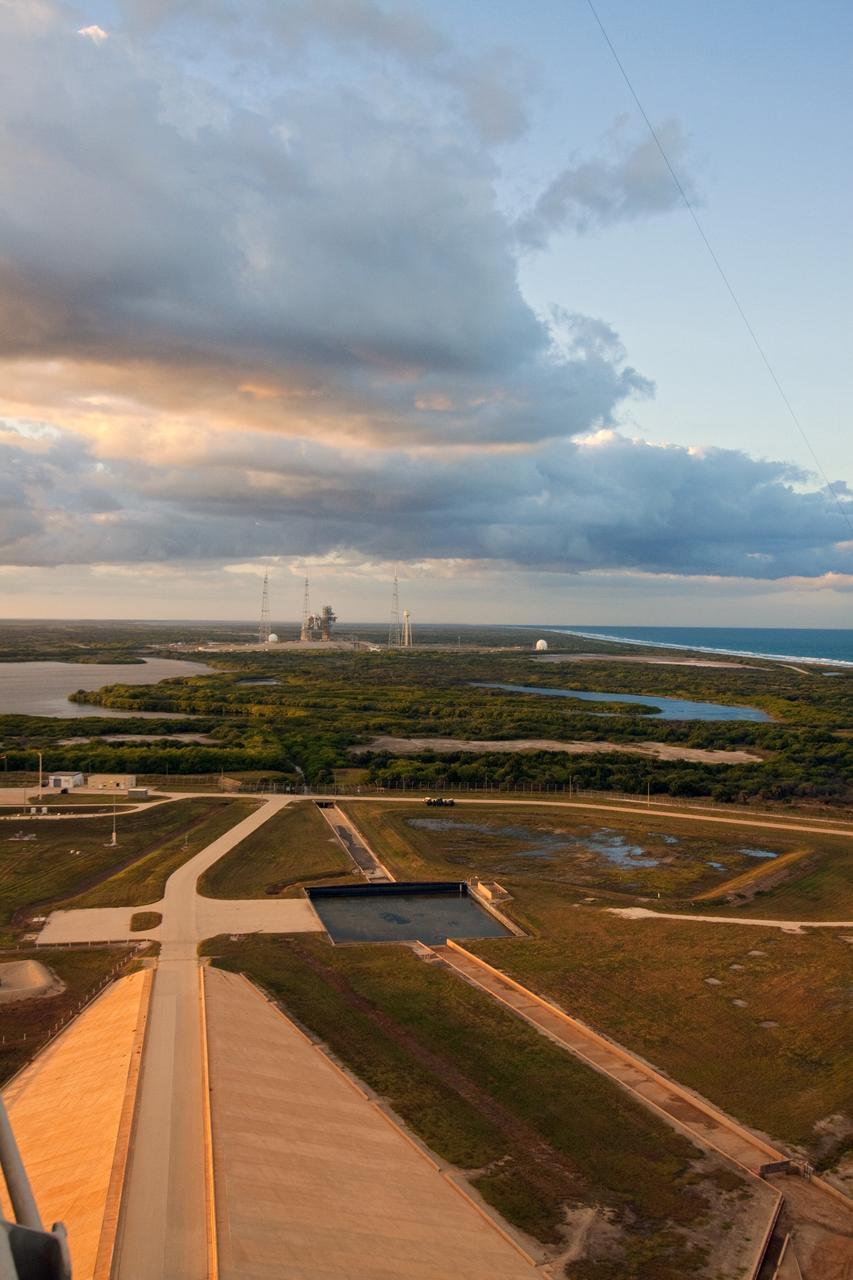
CAPE CANAVERAL, Fla. -- At NASA's Kennedy Space Center in Florida, Launch Pad 39B is seen from Launch Pad 39A. Pad B is morphing to support a commercial space program with multiple customers, multiple providers and multiple systems that will take Americans to the International Space Station and other low Earth orbit destinations. For information on NASA's future plans, visit www.nasa.gov. Photo credit: NASA/Jack Pfaller
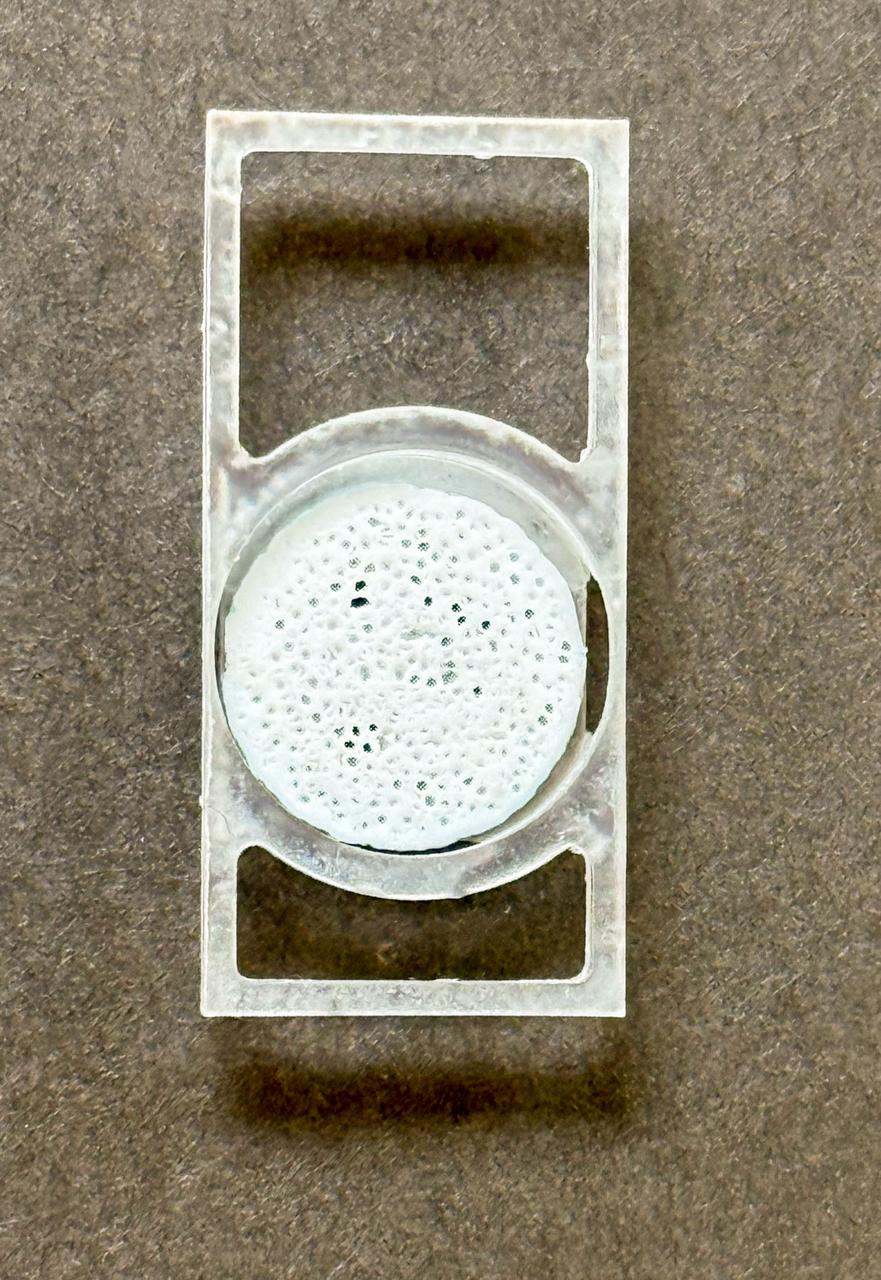
jsc2026e017240 (March 27, 2026) --- Preflight image of Aa b.Bone biomaterial scaffold is positioned within a custom 3D-printed sample holder, engineered to securely house the scaffold inside the SPHINX bioreactor as part of the Green Bone investigation. This research studies how human mesenchymal stem cells (hMSCs) grow on a biomimetic bone scaffold, b Bone, made from rattan wood in microgravity. .Credit:. GreenBone Ortho.
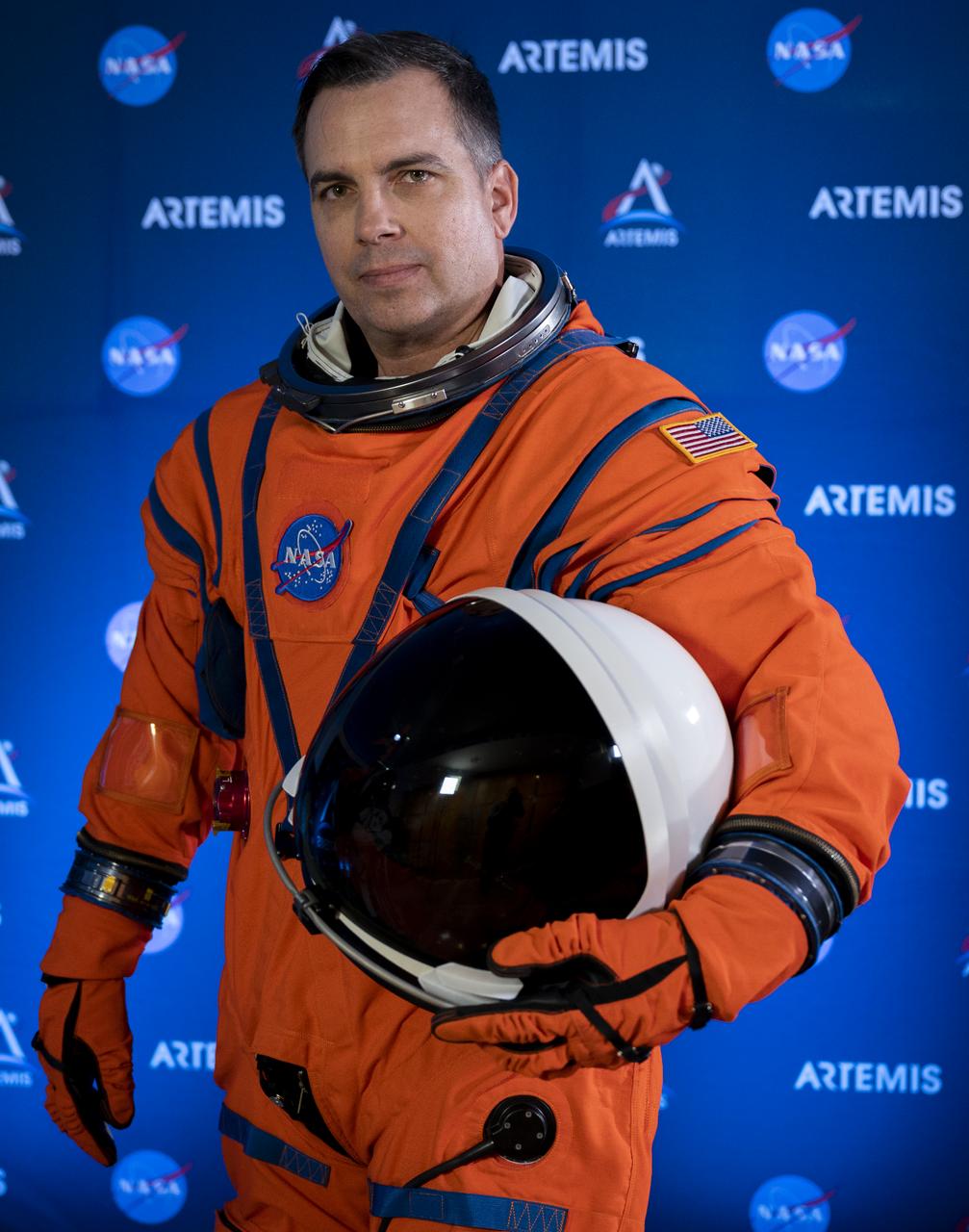
Dustin Gohmert, Orion Crew Survival Systems Project Manager at NASA’s Johnson Space Center, poses for a portrait while wearing the Orion Crew Survival System (OCSS) suit, Tuesday, Oct. 15, 2019 at NASA Headquarters in Washington, DC. The Orion suit is designed for a custom fit and incorporates safety technology and mobility features that will help protect astronauts on launch day, in emergency situations, high-risk parts of missions near the Moon, and during the high-speed return to Earth. Photo Credit: (NASA/Joel Kowsky)
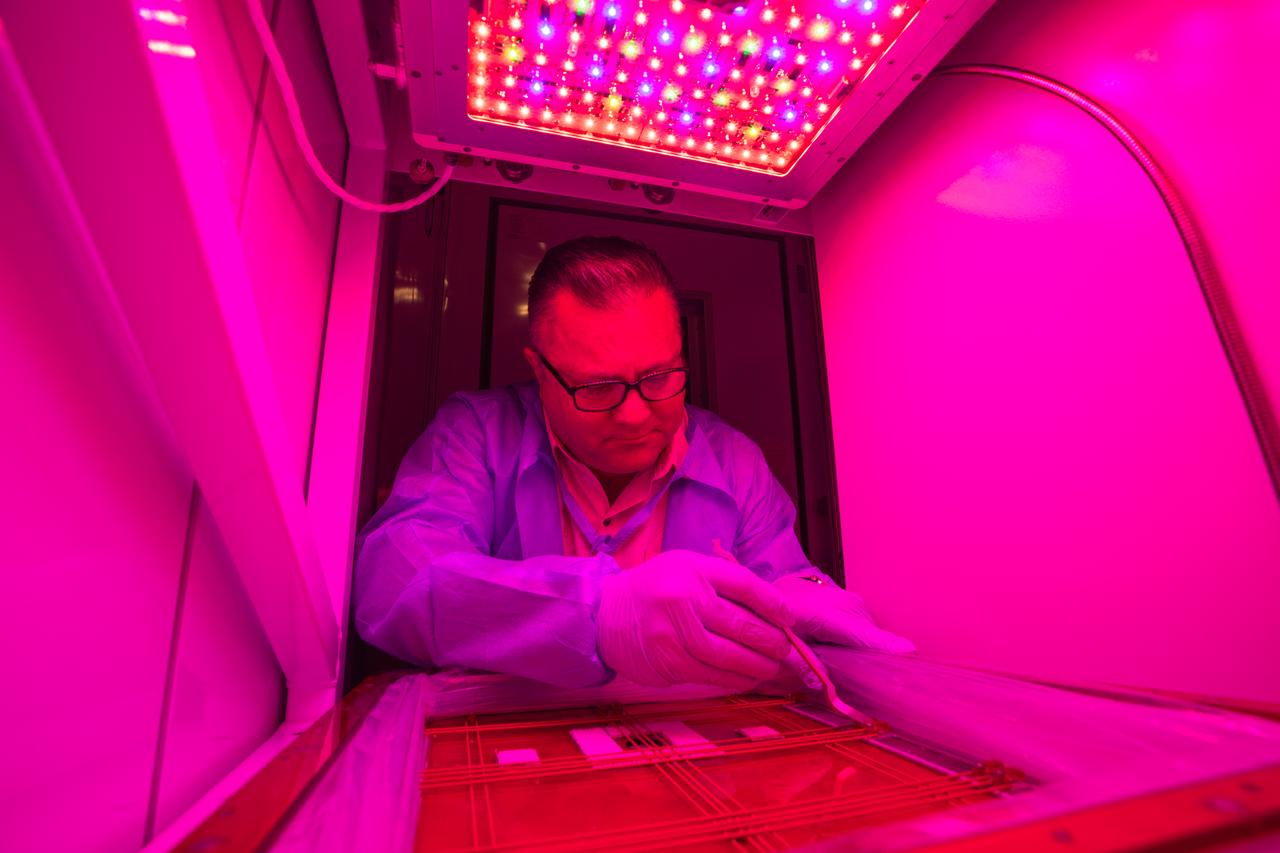
Matthew English is the Exploration Research and Technology facility manager for the Space Station Processing Facility (SSPF) at NASA’s Kennedy Space Center in Florida. English’s responsibilities include ensuring that the International Space Station teams inside the SSPF have the facilities, tools and capabilities they need to support their launch customers, thus providing the support necessary to enable further research and design discoveries within NASA.
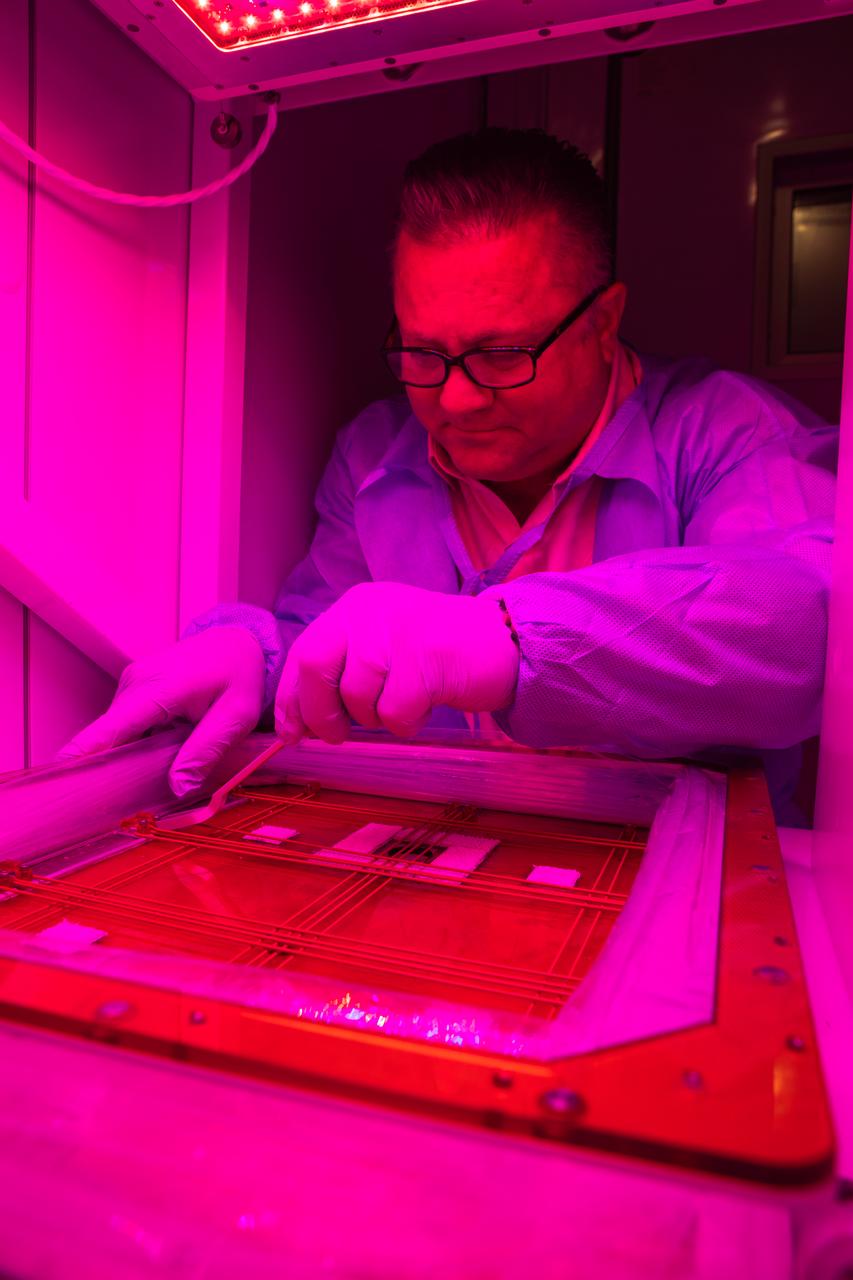
Matthew English is the Exploration Research and Technology facility manager for the Space Station Processing Facility (SSPF) at NASA’s Kennedy Space Center in Florida. English’s responsibilities include ensuring that the International Space Station teams inside the SSPF have the facilities, tools and capabilities they need to support their launch customers, thus providing the support necessary to enable further research and design discoveries within NASA.
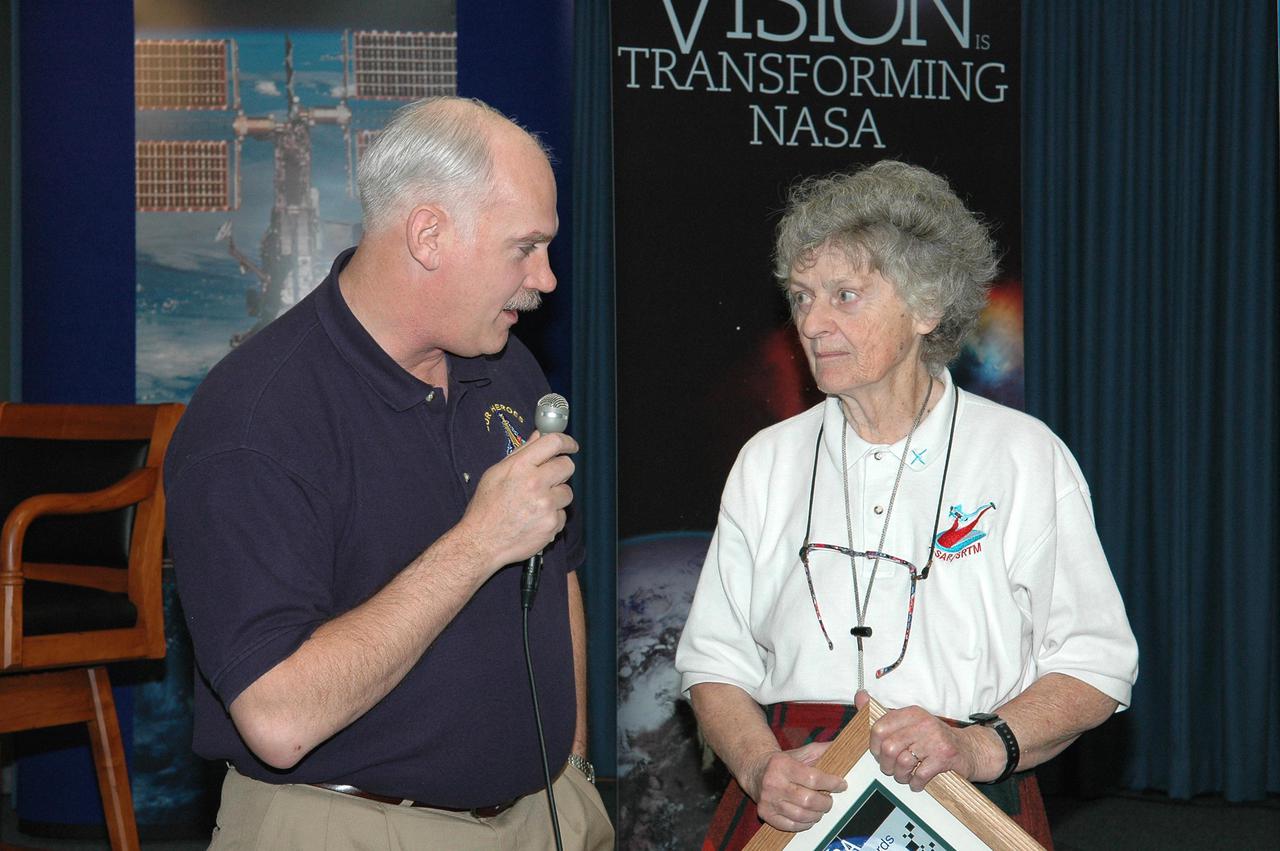
KENNEDY SPACE CENTER, FLA. - Associate Administrator of Space Operations Mission Directorate William F. Readdy (left) publicly praises the outstanding customer service provided by Virginia Whitehead upon her receipt of a One NASA Peer Award. The award was presented in the Press Site Auditorium following the NASA Update by Administrator Sean O’Keefe. The award is given to recognize employees who have demonstrated behaviors consistent with the spirit of One NASA and are called Peer Awards because candidates must be nominated by their peers.
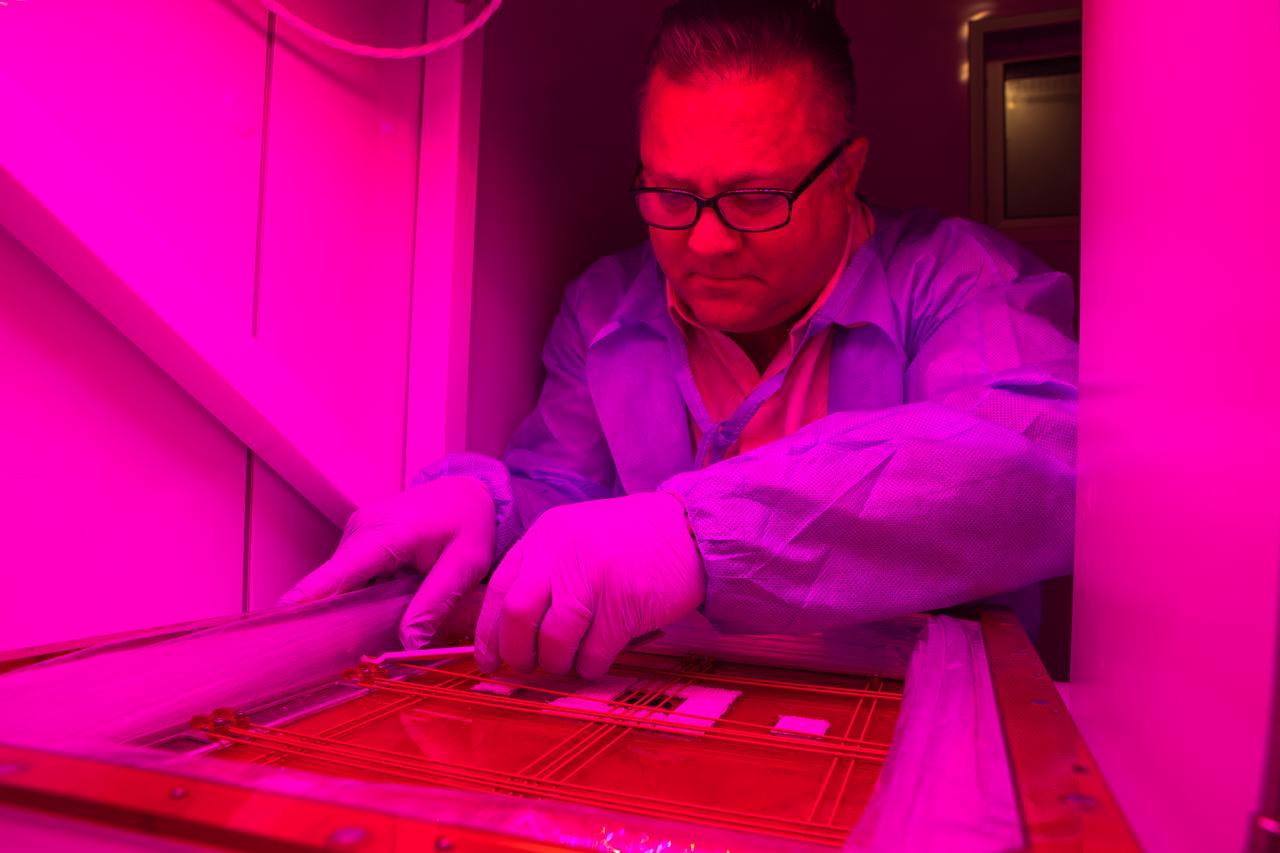
Matthew English is the Exploration Research and Technology facility manager for the Space Station Processing Facility (SSPF) at NASA’s Kennedy Space Center in Florida. English’s responsibilities include ensuring that the International Space Station teams inside the SSPF have the facilities, tools and capabilities they need to support their launch customers, thus providing the support necessary to enable further research and design discoveries within NASA.
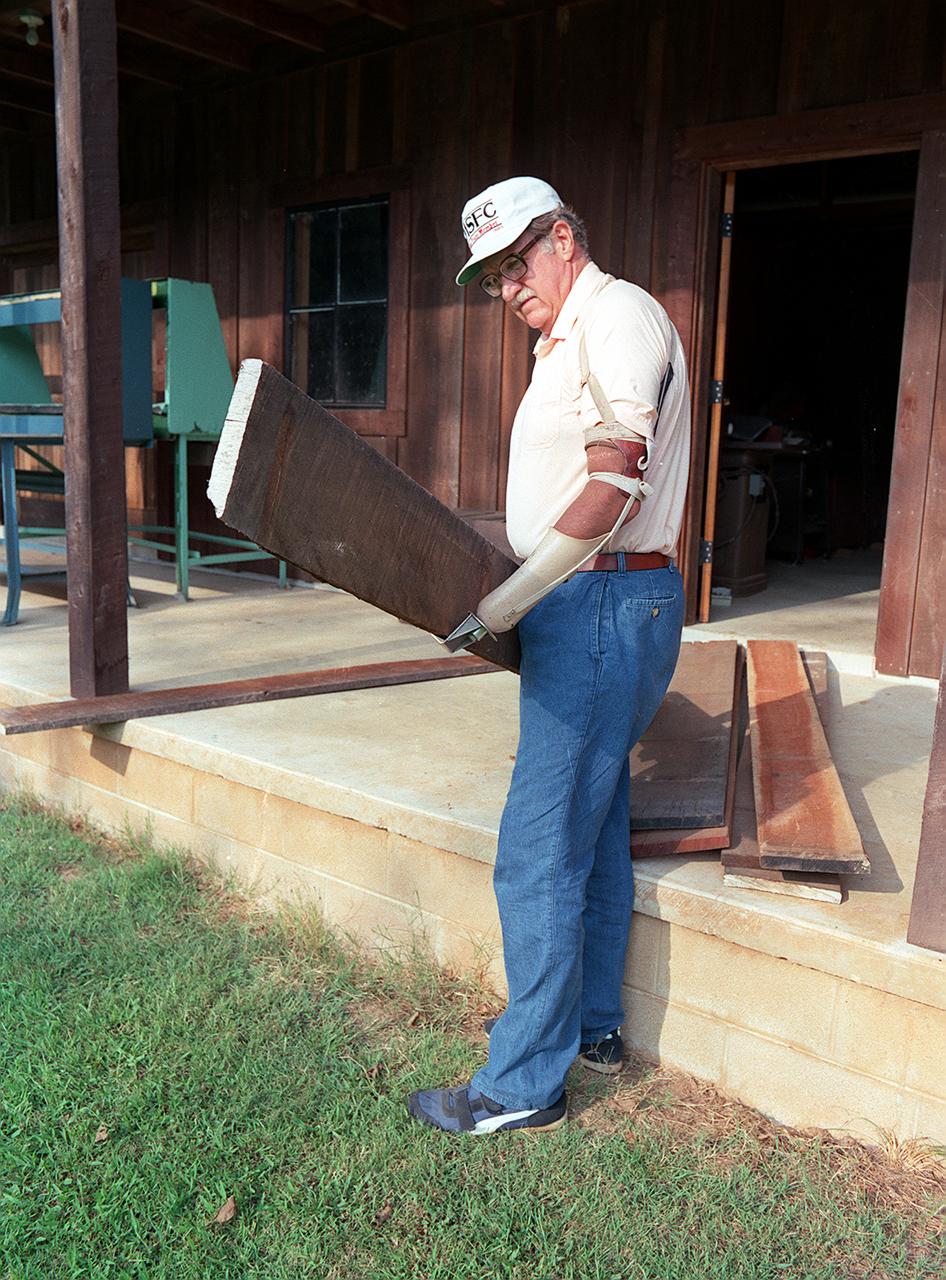
In this photograph, James Carden uses a NASA-developed prosthesis to moved planks around his home. Derived from foam insulation technology used to protect the Space Shuttle External Tank from excessive heat, FAB/CAD, a subsidiary of the Harshberger Prosthetic and Orthotic Center, utilized the technology to replace the heavy, fragile plaster they used to produce master molds for prosthetics. The new material was lighter, cheaper and easier to manufacture than plaster, resulting in lower costs to the customer.
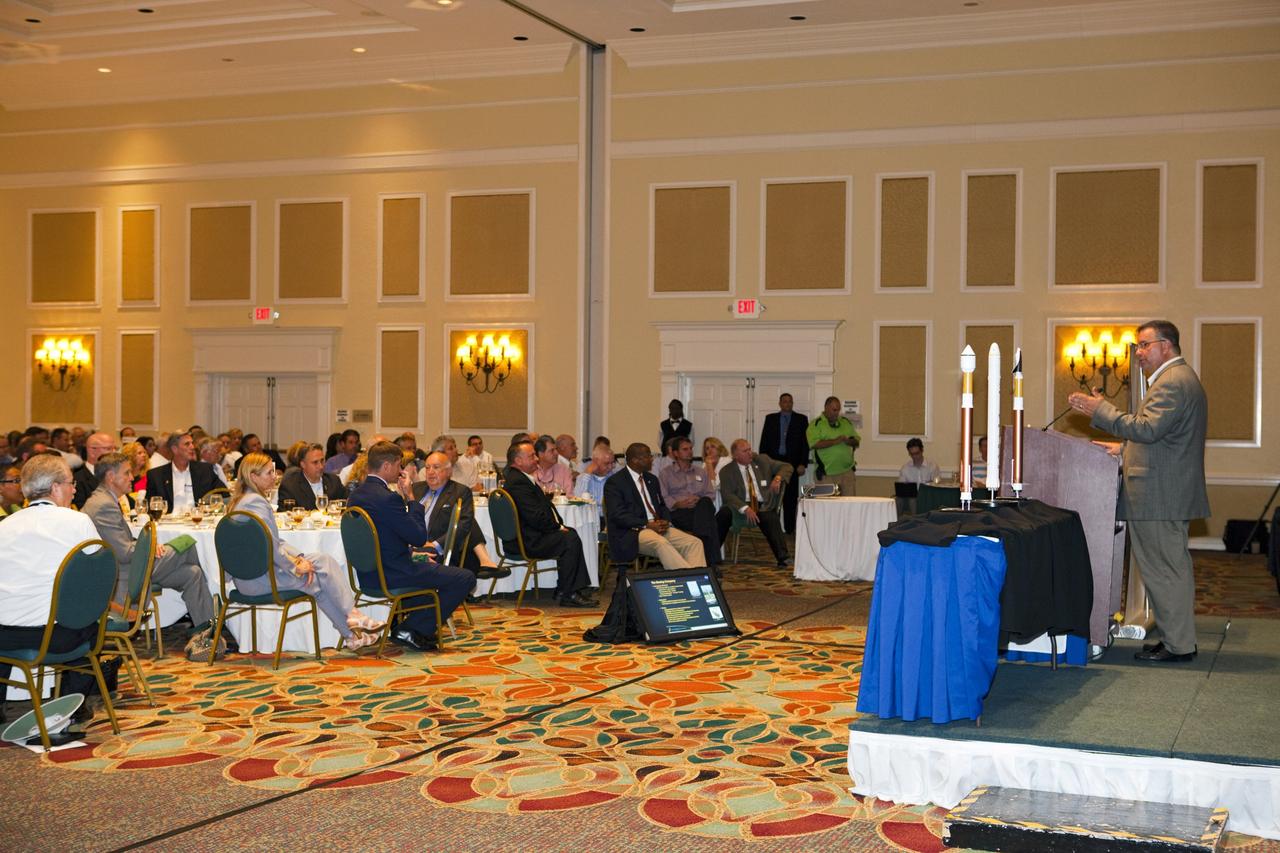
CAPE CANAVERAL, Fla. -- At the National Space Club Florida Committee's August luncheon at the Radisson Resort at the Port in Cape Canaveral, Fla., NASA Commercial Crew Program Manager Ed Mango discusses the innovative steps the agency is taking with industry partners to develop the next U.S. space transportation capability to and from low Earth orbit, which will eventually be available for use by the U.S. government and other commercial customers. To learn more about the Commercial Crew Program, visit www.nasa.gov/commercialcrew. Photo credit: Kim Shiflett
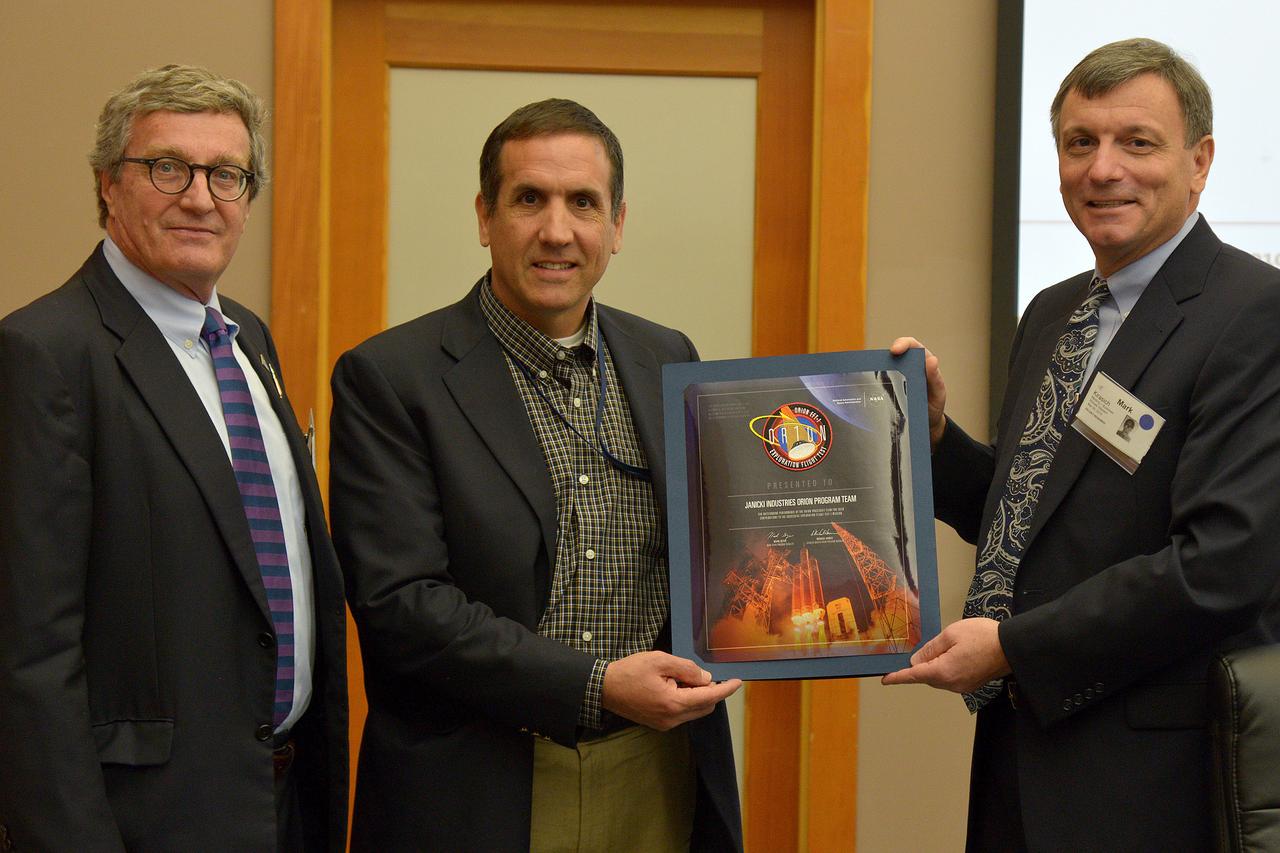
The Orion leadership team visits Janicki Industries in Sedro-Woolley, Washington on March 9, 2015 to thank them for their work in support of Exploration Flight Test-1 (EFT-1). Award presented to Janicki Industries Orion Program Team. Janicki is a small business that specializes in producing custom tooling fixtures and composite structures. Part of Batch image transfer from Flickr.
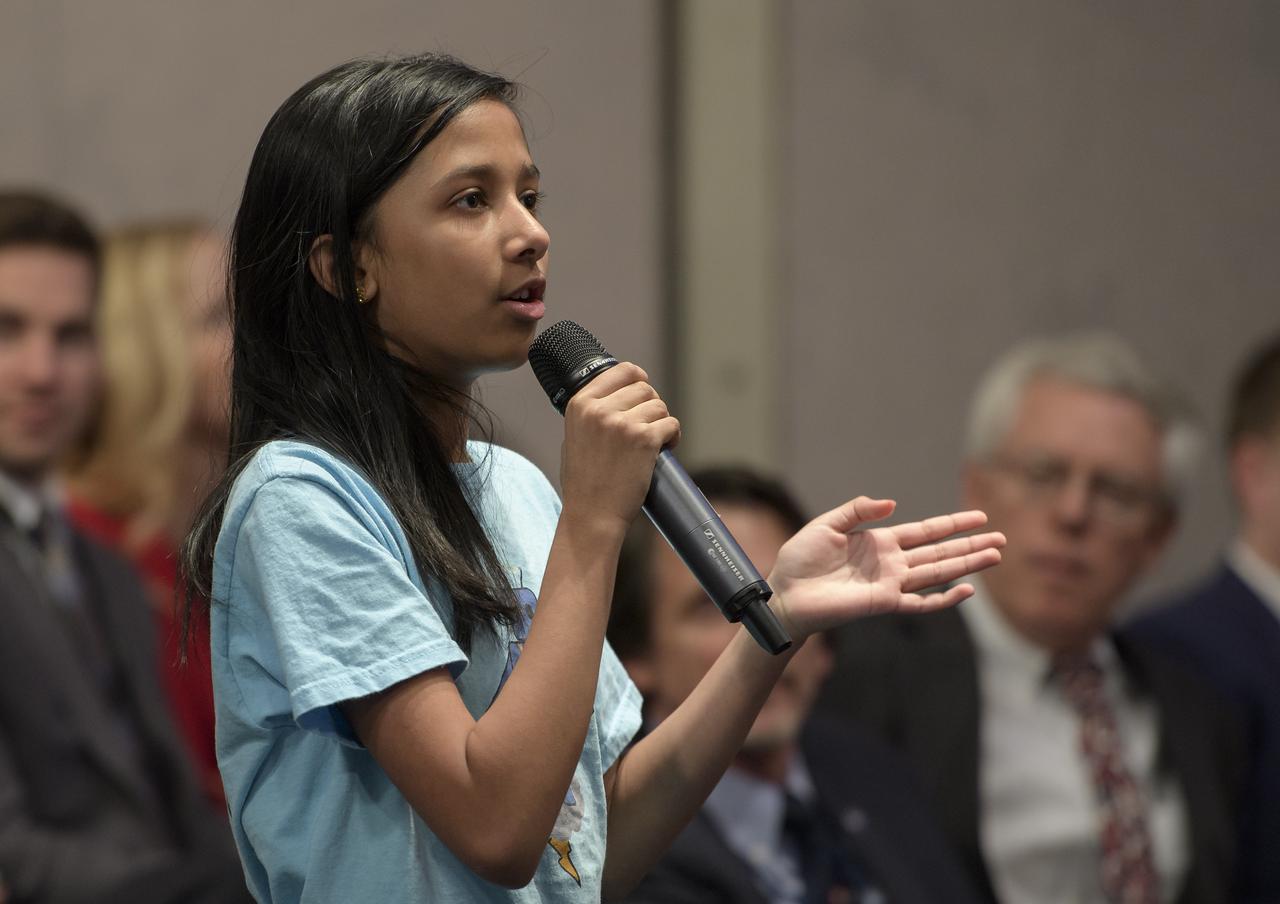
A Cascades Thunderbots "Robotics for Youth" team member from Sterling, Virginia asks a question during an Commercial Lunar Payload Services (CLPS) announcement, Thursday, Nov. 29, 2018 at NASA Headquarters in Washington. Nine companies will be able to bid on delivering science and technology payloads for NASA, including payload integration and operations, launching from Earth and landing on the surface of the Moon. NASA expects to be one of many customers that will use these commercial landing services. Photo Credit: (NASA/Bill Ingalls)
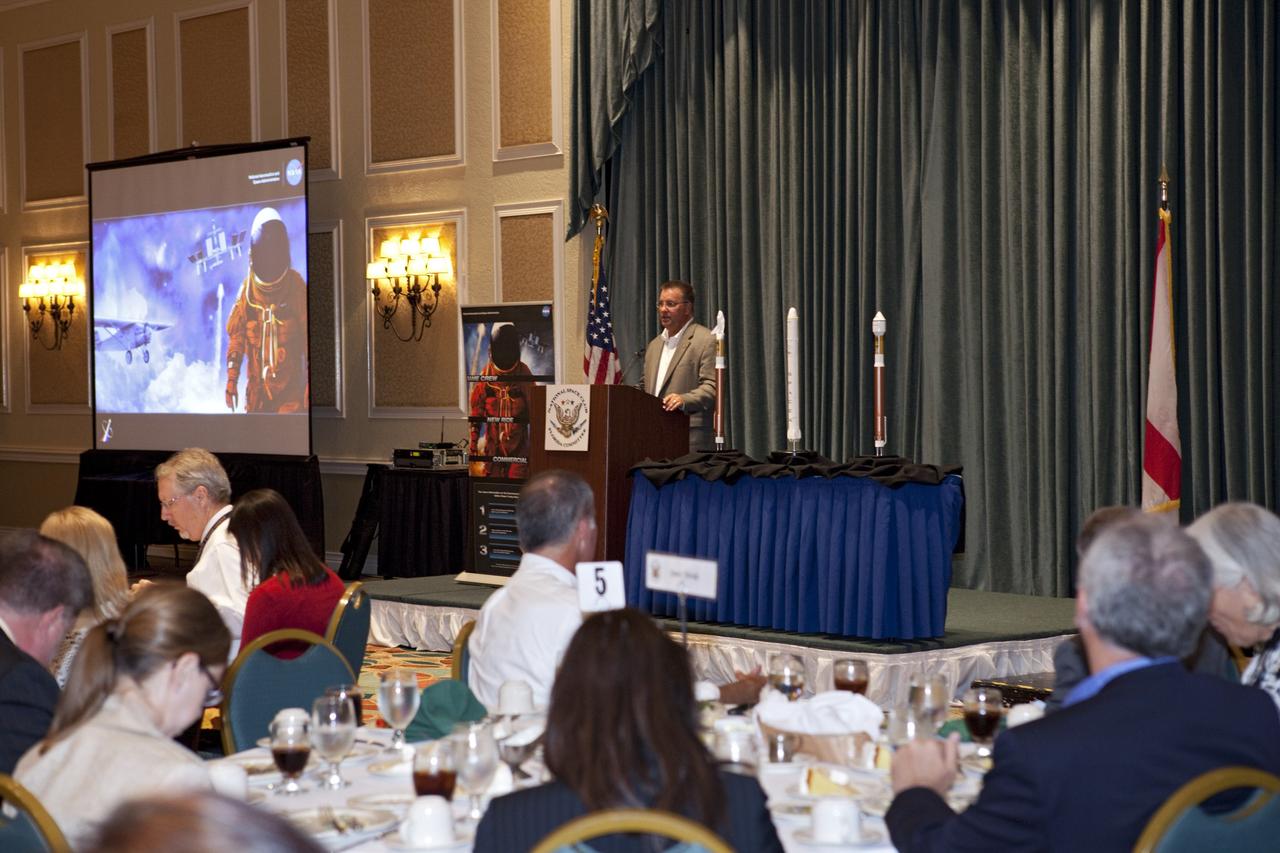
CAPE CANAVERAL, Fla. -- At the National Space Club Florida Committee's August luncheon at the Radisson Resort at the Port in Cape Canaveral, Fla., NASA Commercial Crew Program Manager Ed Mango discusses the innovative steps the agency is taking with industry partners to develop the next U.S. space transportation capability to and from low Earth orbit, which will eventually be available for use by the U.S. government and other commercial customers. To learn more about the Commercial Crew Program, visit www.nasa.gov/commercialcrew. Photo credit: Kim Shiflett
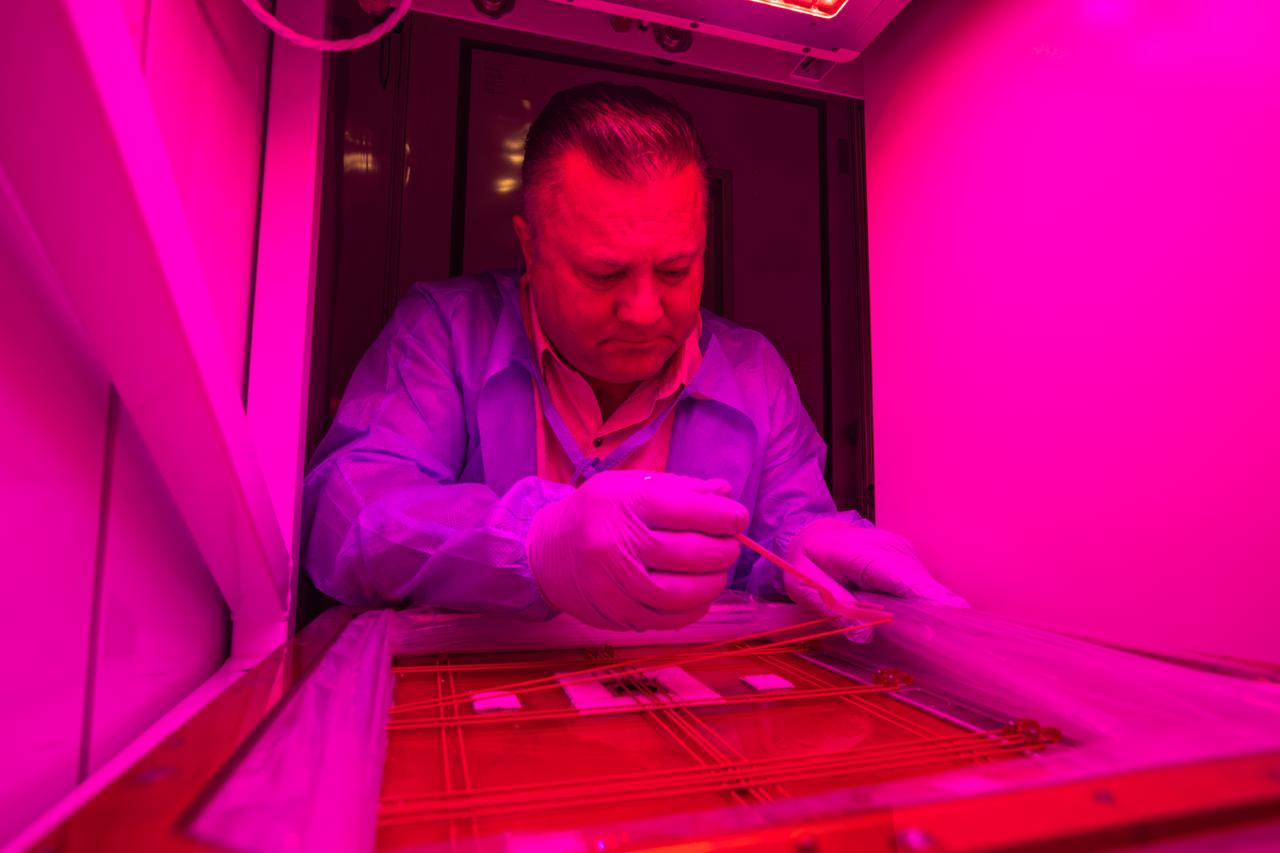
Matthew English is the Exploration Research and Technology facility manager for the Space Station Processing Facility (SSPF) at NASA’s Kennedy Space Center in Florida. English’s responsibilities include ensuring that the International Space Station teams inside the SSPF have the facilities, tools and capabilities they need to support their launch customers, thus providing the support necessary to enable further research and design discoveries within NASA.
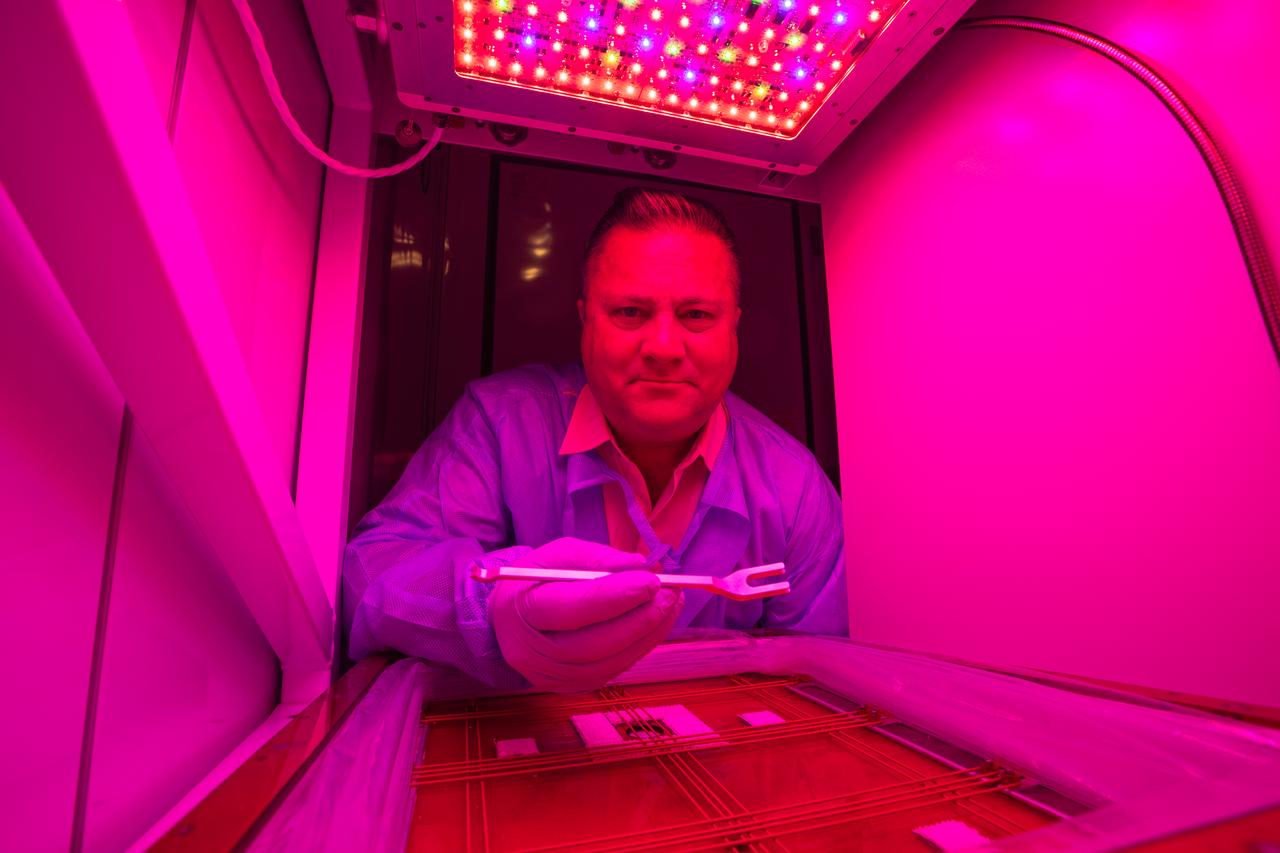
Matthew English is the Exploration Research and Technology facility manager for the Space Station Processing Facility (SSPF) at NASA’s Kennedy Space Center in Florida. English’s responsibilities include ensuring that the International Space Station teams inside the SSPF have the facilities, tools and capabilities they need to support their launch customers, thus providing the support necessary to enable further research and design discoveries within NASA.
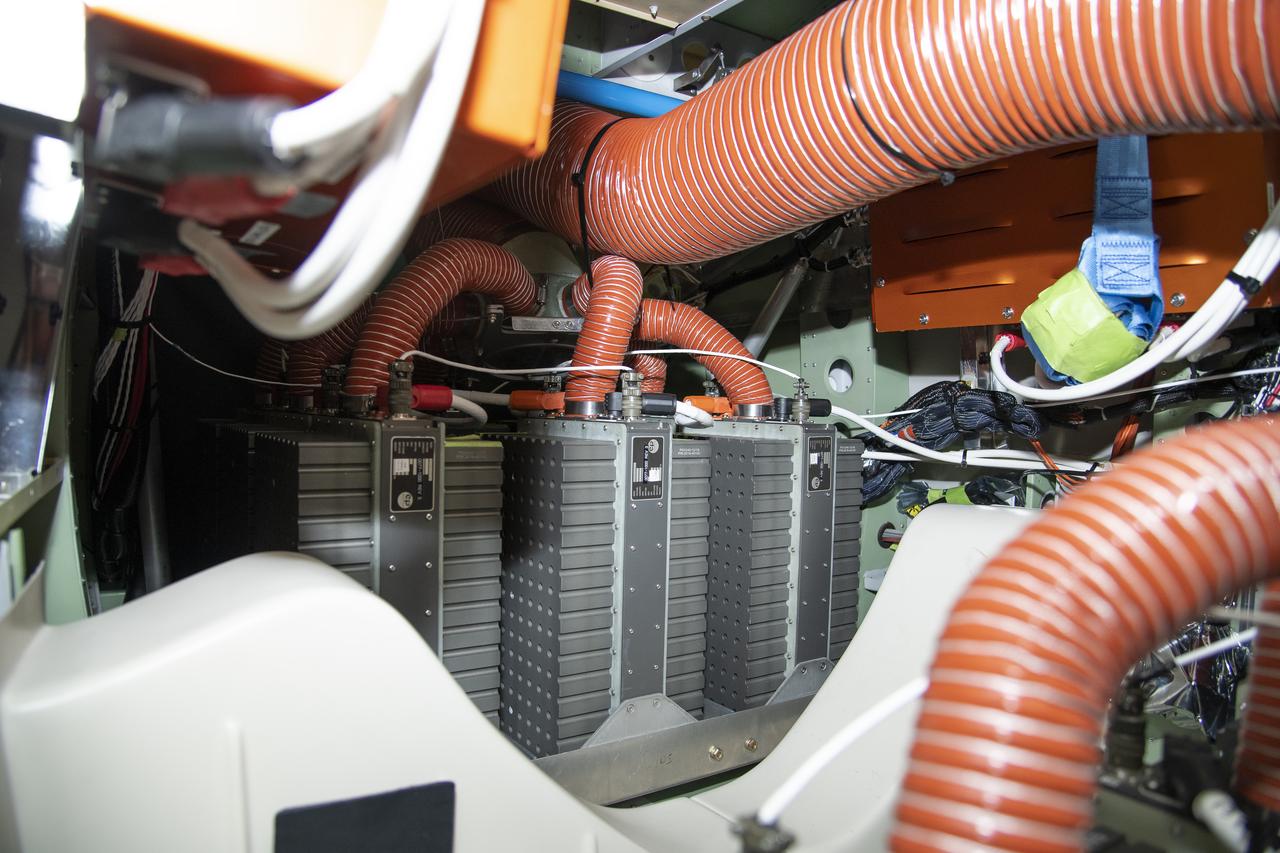
NASA's all-electric X-57 project team installed two 400-pound lithium-ion battery packs in the cabin of the plane in 2022 at NASA's Armstrong Flight Research Center in California. The X-57 project team repeatedly tested the batteries to ensure they can safely power the aircraft for an entire flight, and designed custom, lightweight cases to keep the batteries secure.
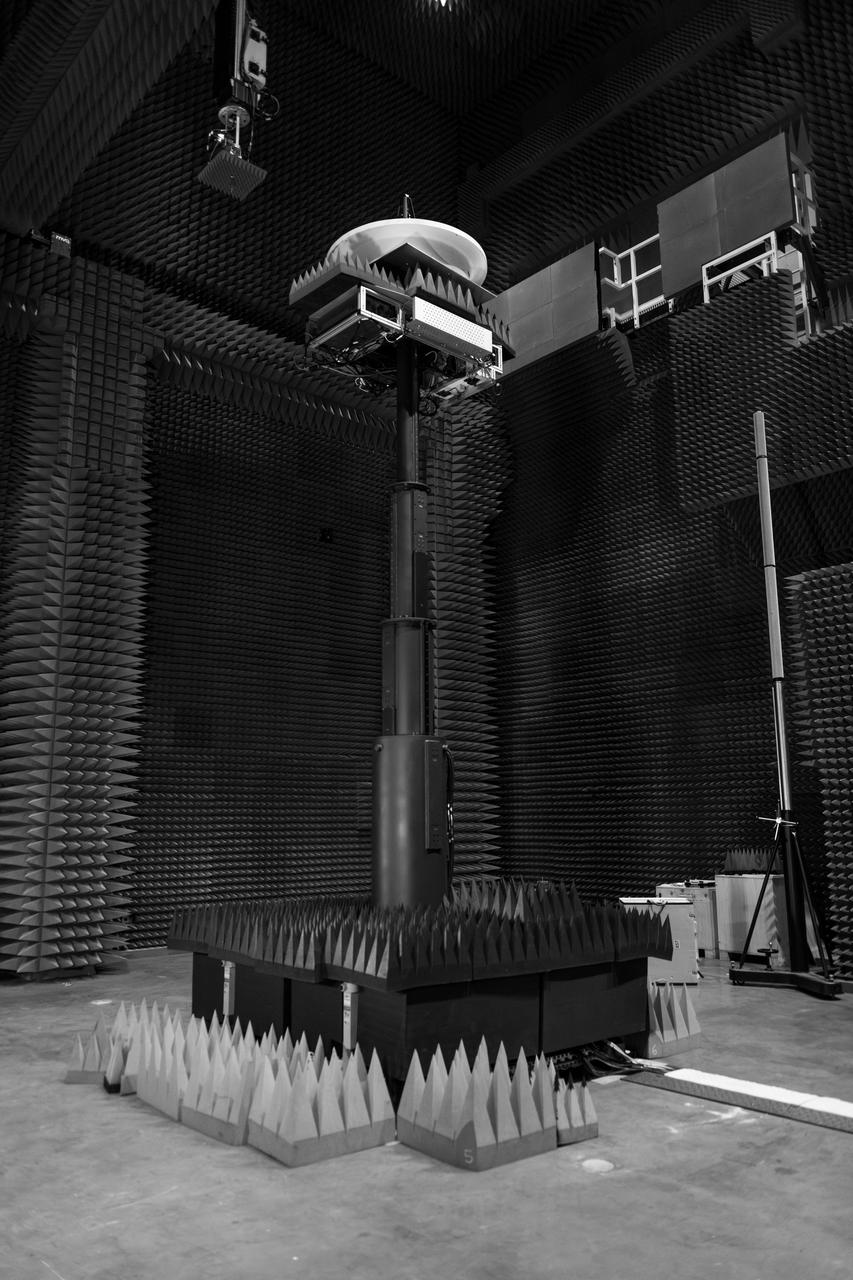
NASA’s Beaming Energy for Air Mobility team successfully completed a first-of-its-kind power beaming test at NASA Glenn on June 4, 2025. Later this year, the tested transmitter will be used in a demonstration to wirelessly transmit power using microwaves to a custom power receiver — a step toward gap-filling technology that could one day deliver power on the surface of the Moon or Mars.
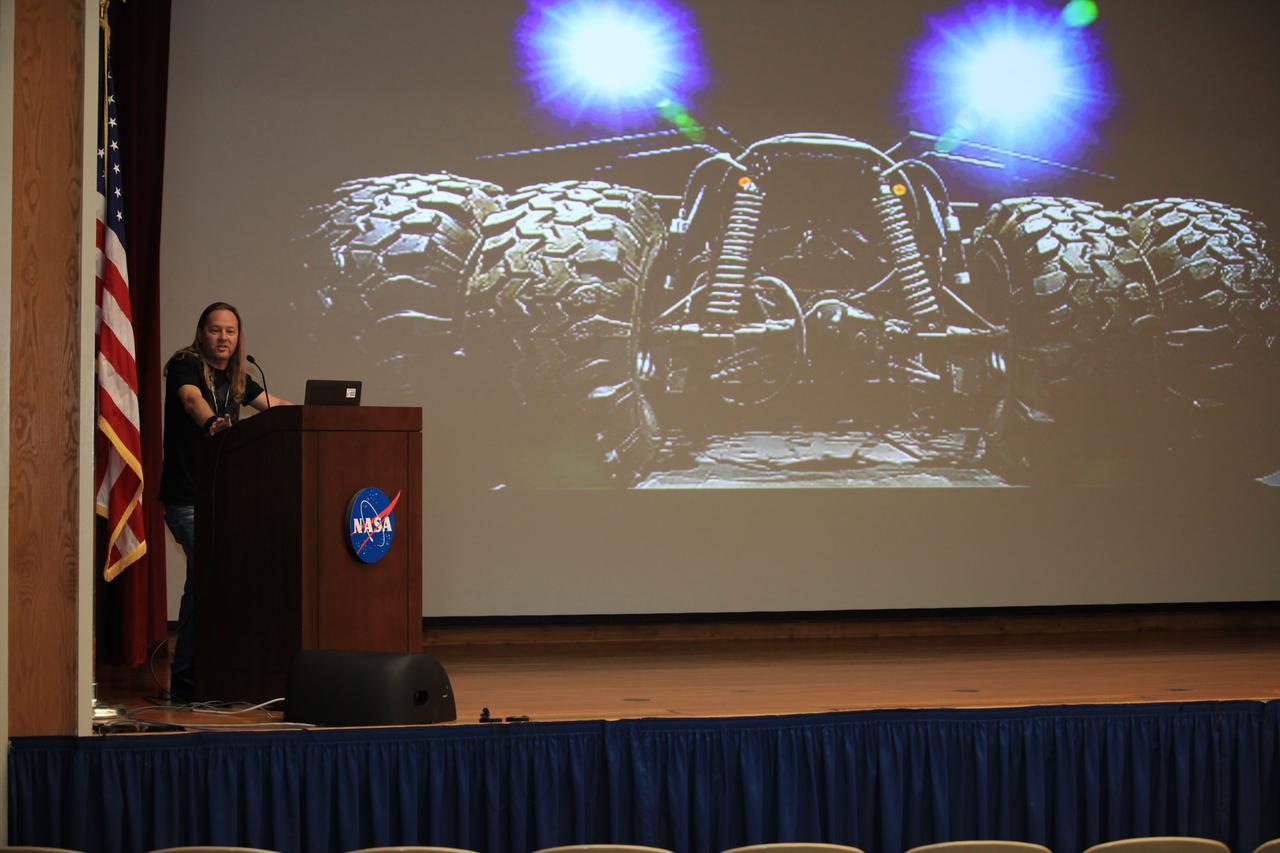
Representatives from Parker Brothers, known for designing and building outrageous custom vehicles, spoke to employees at NASA's Kennedy Space Center in Florida about their creative thinking processes. The event took place during the center's 2016 Innovation Expo. Employees also were given an up-close look at their Neutron bike, featured in the movie “Tron.”
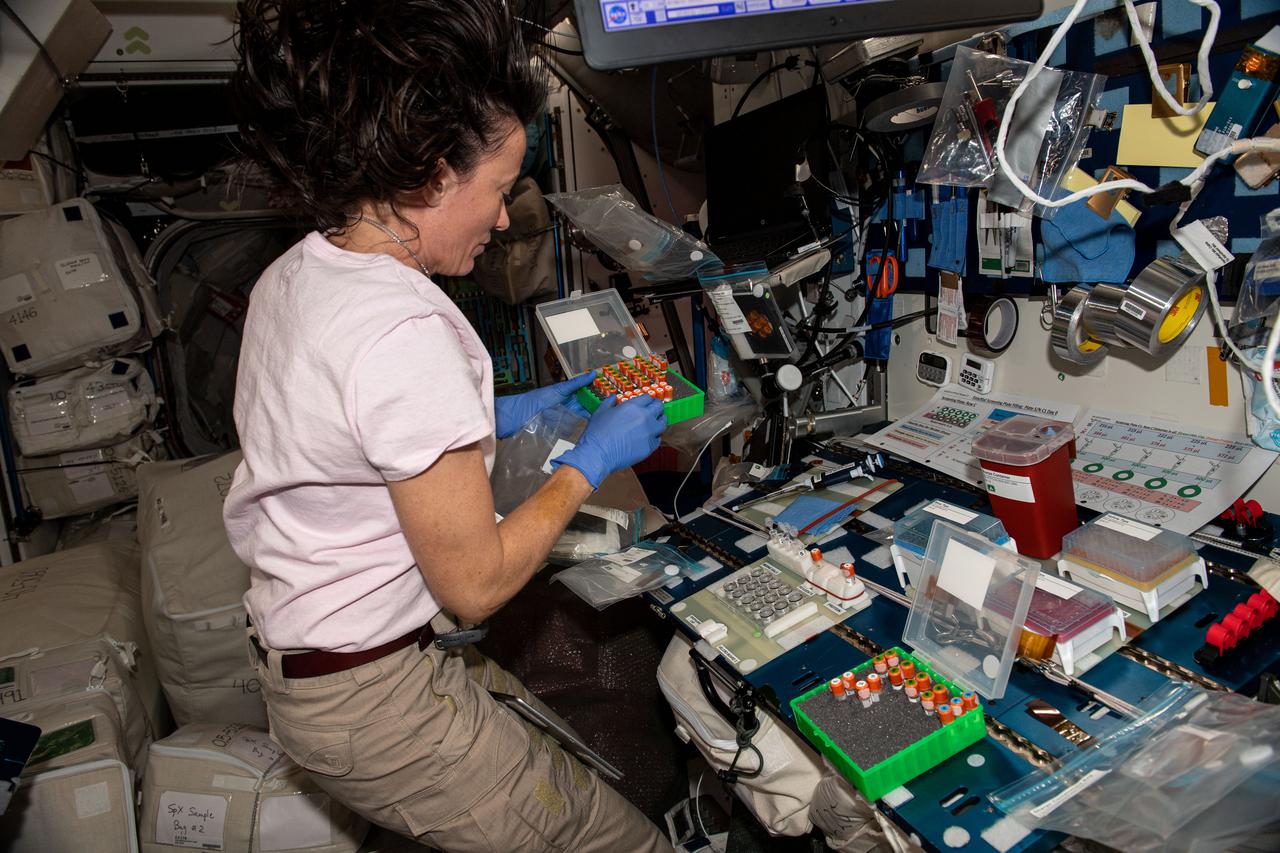
iss065e144296 (June 14, 2021) --- NASA astronaut and Expedition 65 Flight Engineer Megan McArthur loads protein crystallography plates with protein solutions, mixes them with custom salt solutions, then seals and transfers the plates for incubation for the Real-Time Protein Crystal Growth-2 experiment. The biotechnology study looks at new ways to produce high-quality protein crystals which could lead to new disease therapies on Earth.
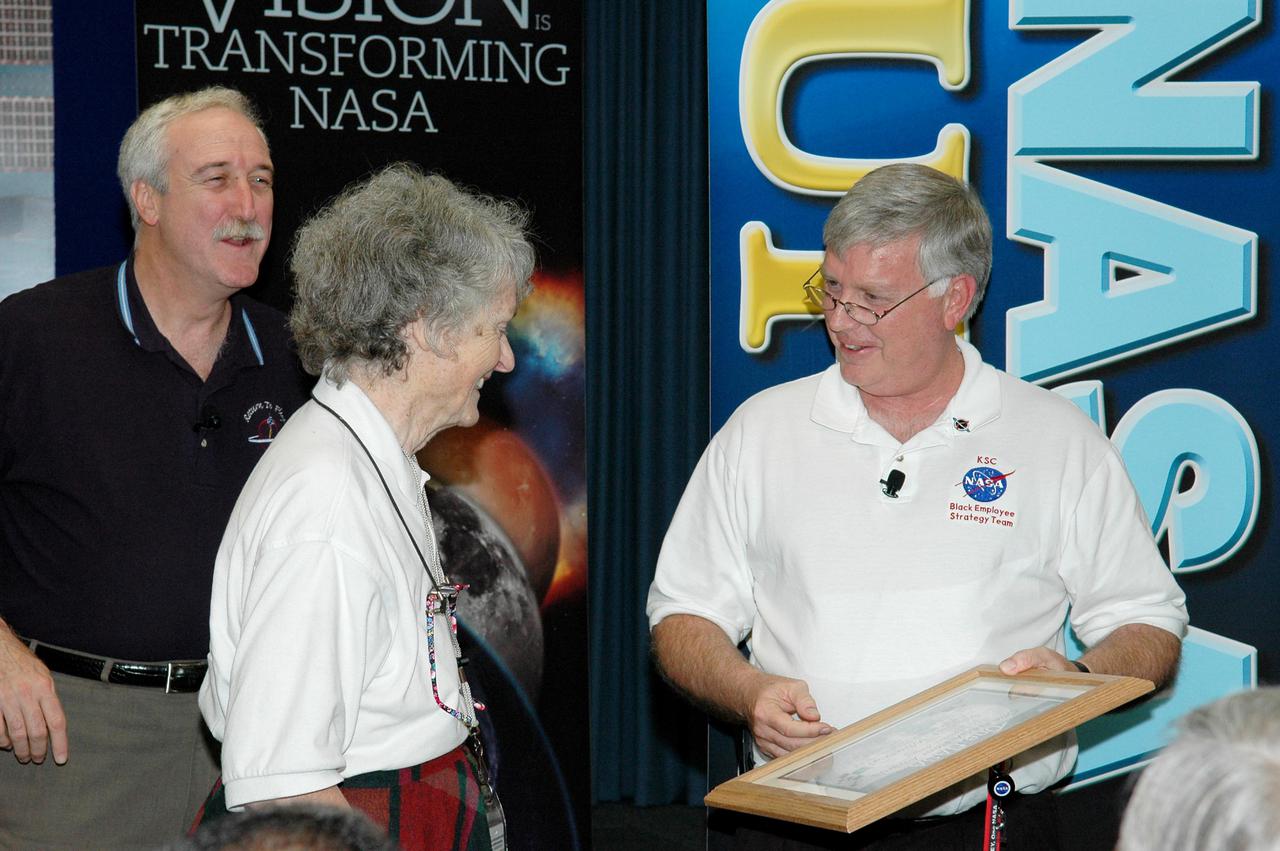
KENNEDY SPACE CENTER, FLA. - After the NASA Update by Administrator Sean O’Keefe (left), Center Director Jim Kennedy (right) presented a One NASA Peer Award to Virginia Whitehead for her outstanding customer service. Whitehead is a manager in the Center’s Payload Processing Directorate. The award is given to recognize employees who have demonstrated behaviors consistent with the spirit of One NASA and are called Peer Awards because candidates must be nominated by their peers.
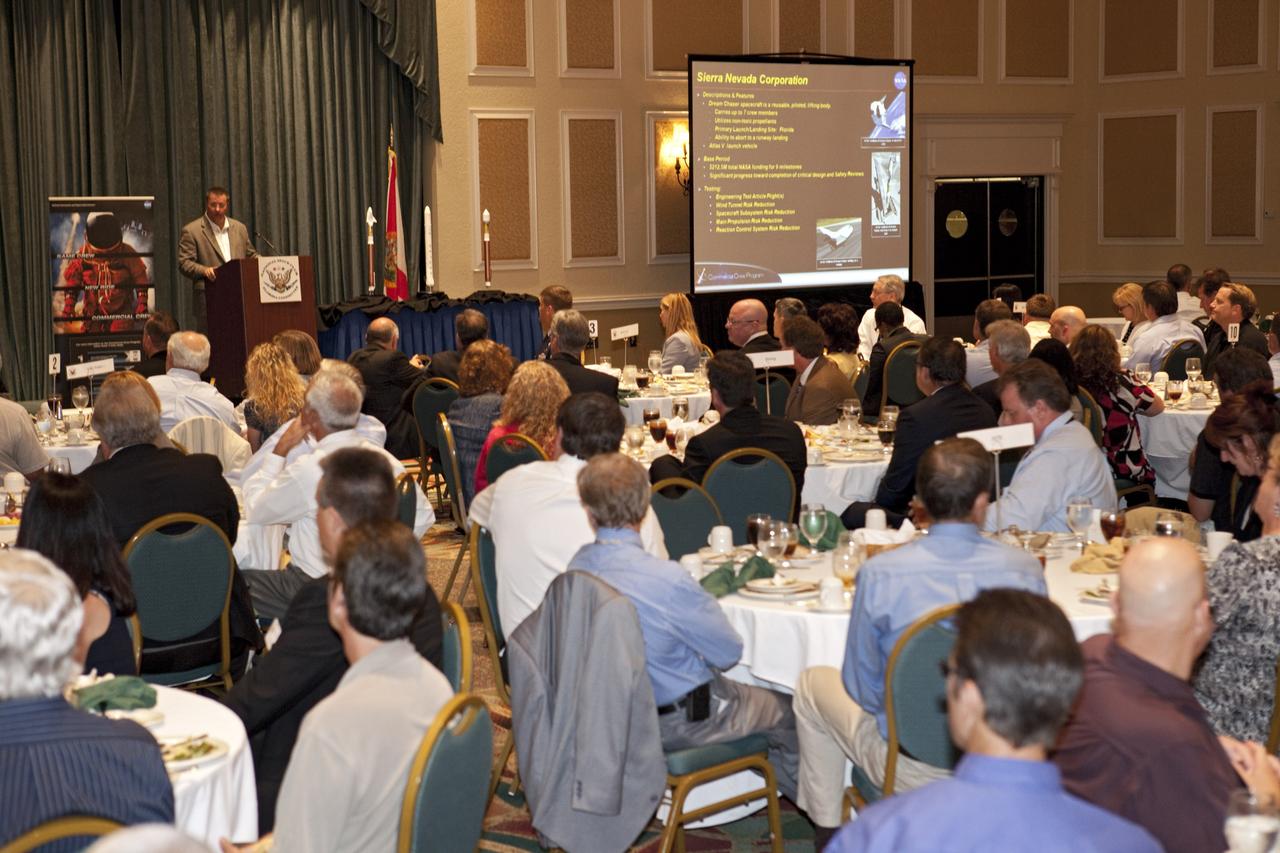
CAPE CANAVERAL, Fla. -- At the National Space Club Florida Committee's August luncheon at the Radisson Resort at the Port in Cape Canaveral, Fla., NASA Commercial Crew Program Manager Ed Mango discusses the innovative steps the agency is taking with industry partners to develop the next U.S. space transportation capability to and from low Earth orbit, which will eventually be available for use by the U.S. government and other commercial customers. To learn more about the Commercial Crew Program, visit www.nasa.gov/commercialcrew. Photo credit: Kim Shiflett
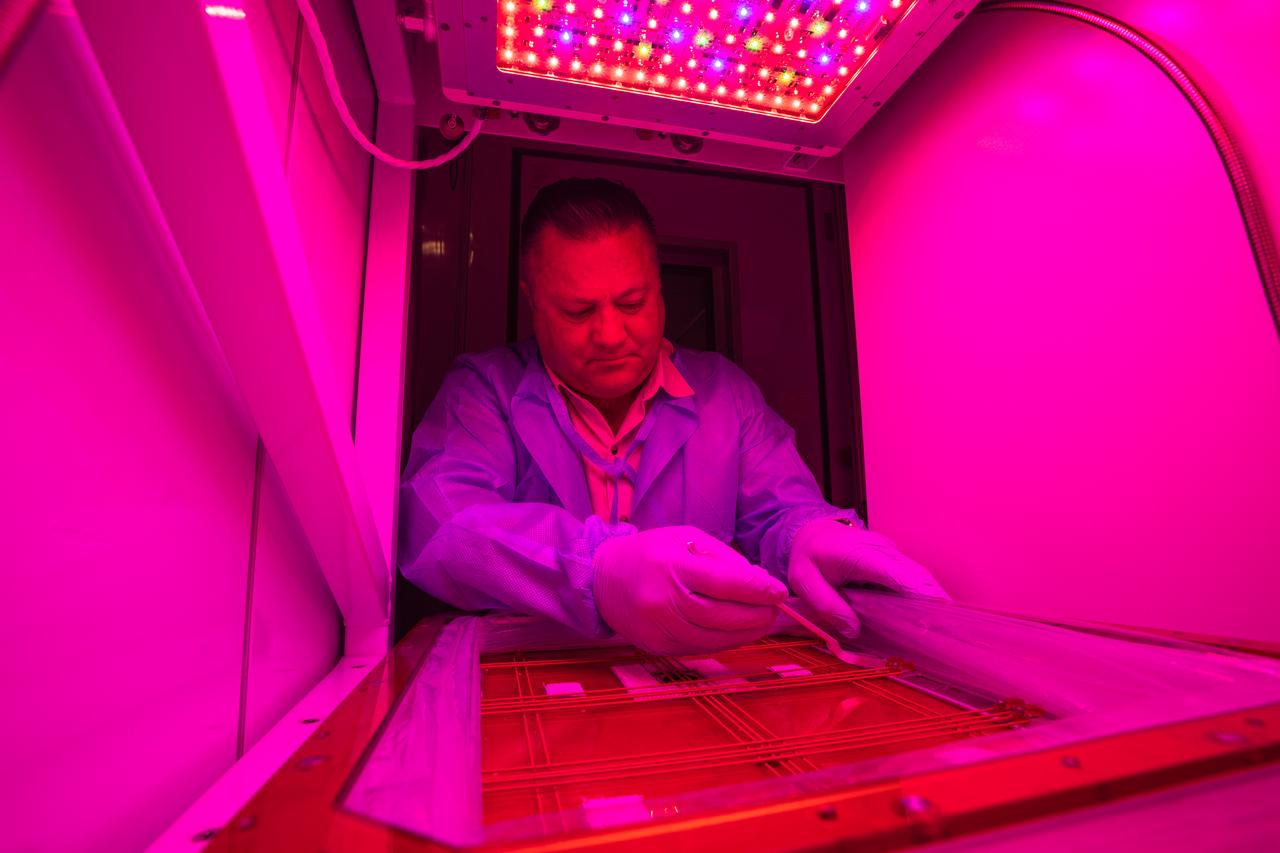
Matthew English is the Exploration Research and Technology facility manager for the Space Station Processing Facility (SSPF) at NASA’s Kennedy Space Center in Florida. English’s responsibilities include ensuring that the International Space Station teams inside the SSPF have the facilities, tools and capabilities they need to support their launch customers, thus providing the support necessary to enable further research and design discoveries within NASA.
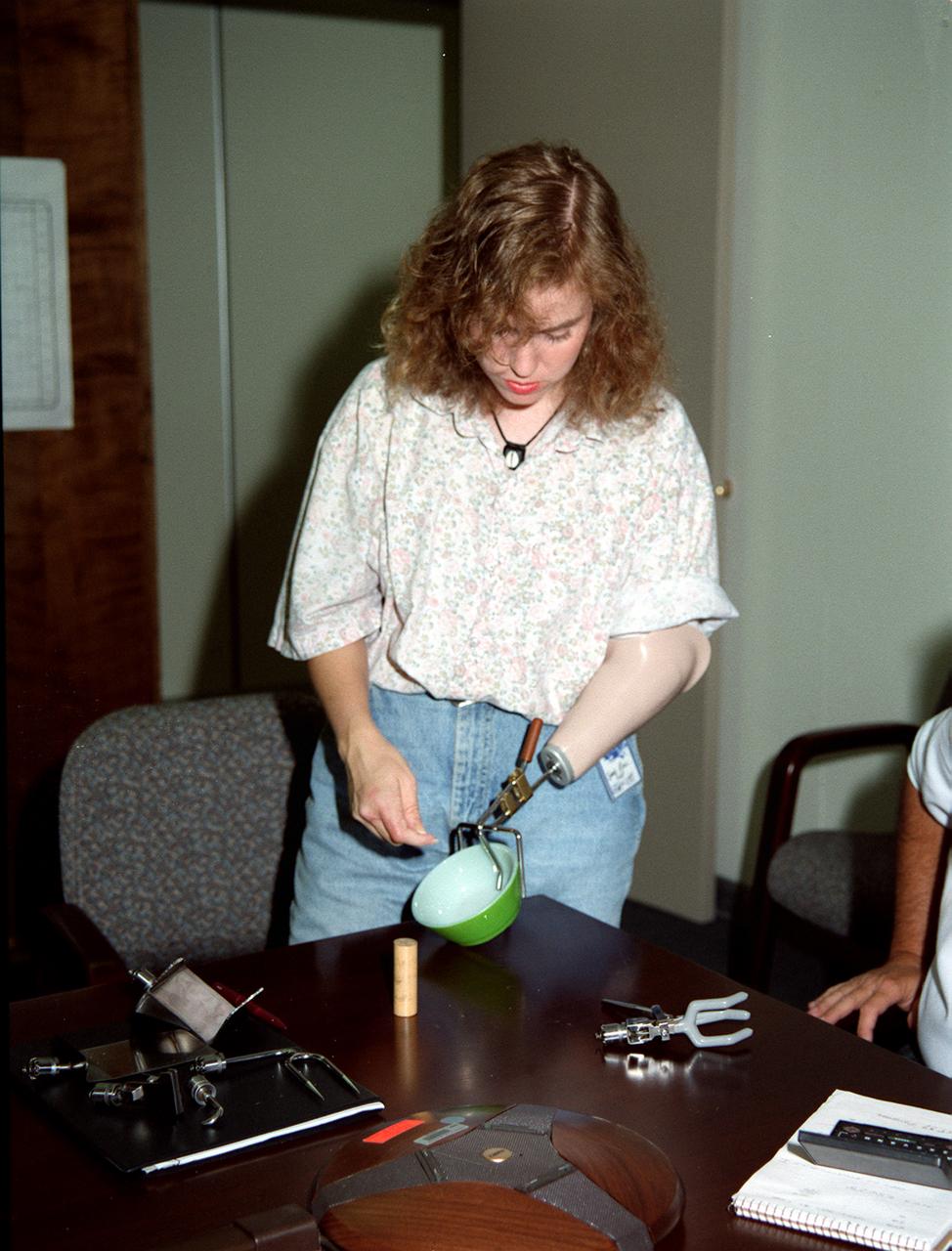
In this photograph, Sandra Rossi user her NASA-developed prosthesis for the first time. Derived from foam insulation technology used to protect the Space Shuttle External Tank from excessive heat, FAB/CAD, a subsidiary of the Harshberger Prosthetic and Orthotic Center, utilized the technology to replace the heavy, fragile plaster they used to produce master molds for prosthetics. The new material was lighter, cheaper and easier to manufacture than plaster, resulting in lower costs to the customer.
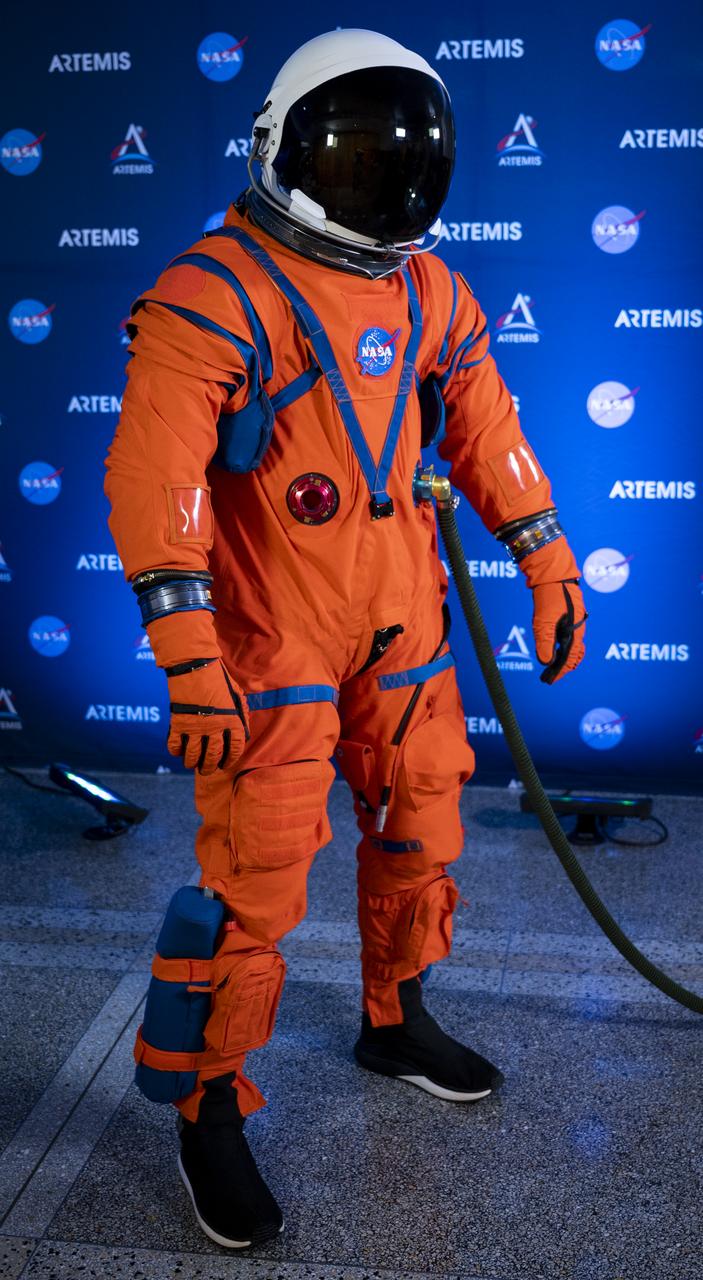
Dustin Gohmert, Orion Crew Survival Systems Project Manager at NASA’s Johnson Space Center, poses for a portrait while wearing the Orion Crew Survival System (OCSS) suit, Tuesday, Oct. 15, 2019 at NASA Headquarters in Washington, DC. The Orion suit is designed for a custom fit and incorporates safety technology and mobility features that will help protect astronauts on launch day, in emergency situations, high-risk parts of missions near the Moon, and during the high-speed return to Earth. Photo Credit: (NASA/Joel Kowsky)
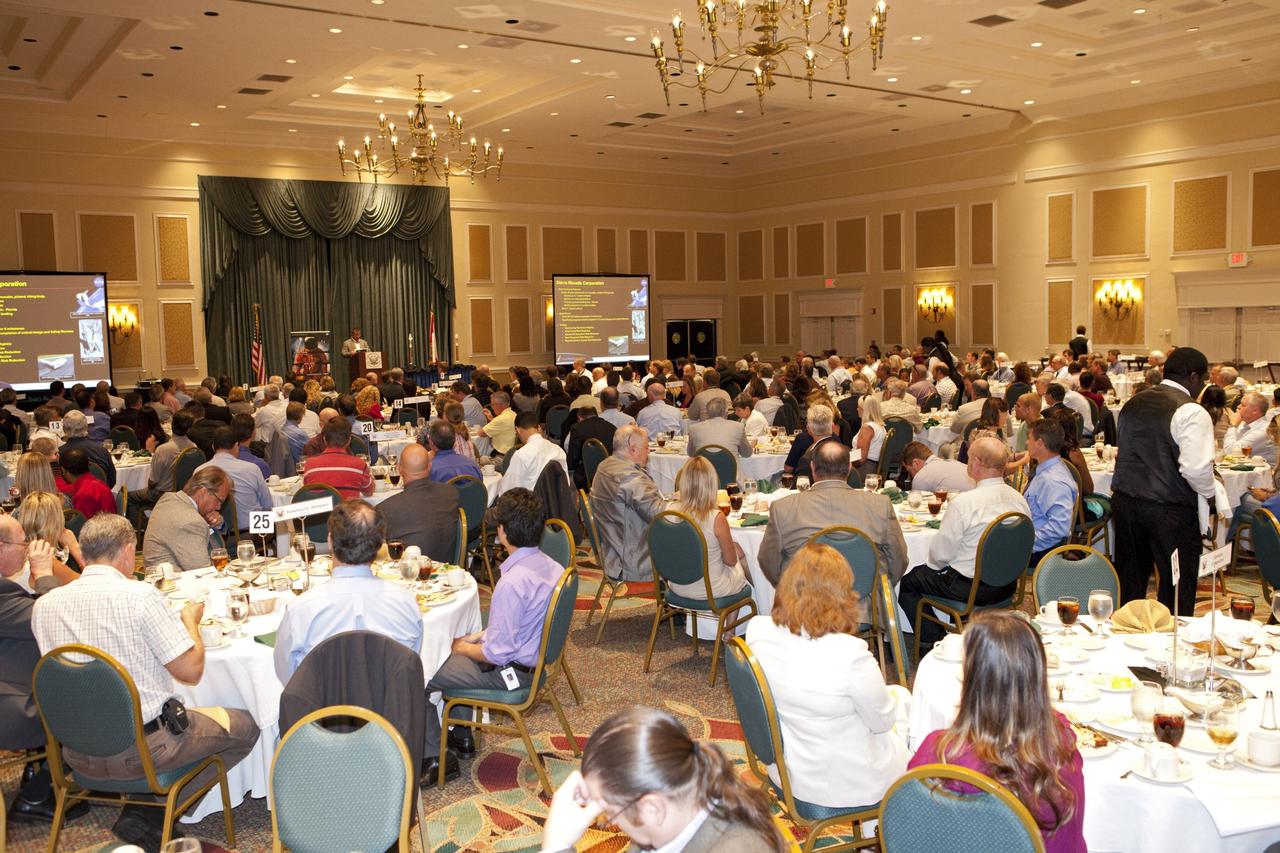
CAPE CANAVERAL, Fla. -- At the National Space Club Florida Committee's August luncheon at the Radisson Resort at the Port in Cape Canaveral, Fla., NASA Commercial Crew Program Manager Ed Mango discusses the innovative steps the agency is taking with industry partners to develop the next U.S. space transportation capability to and from low Earth orbit, which will eventually be available for use by the U.S. government and other commercial customers. To learn more about the Commercial Crew Program, visit www.nasa.gov/commercialcrew. Photo credit: Kim Shiflett