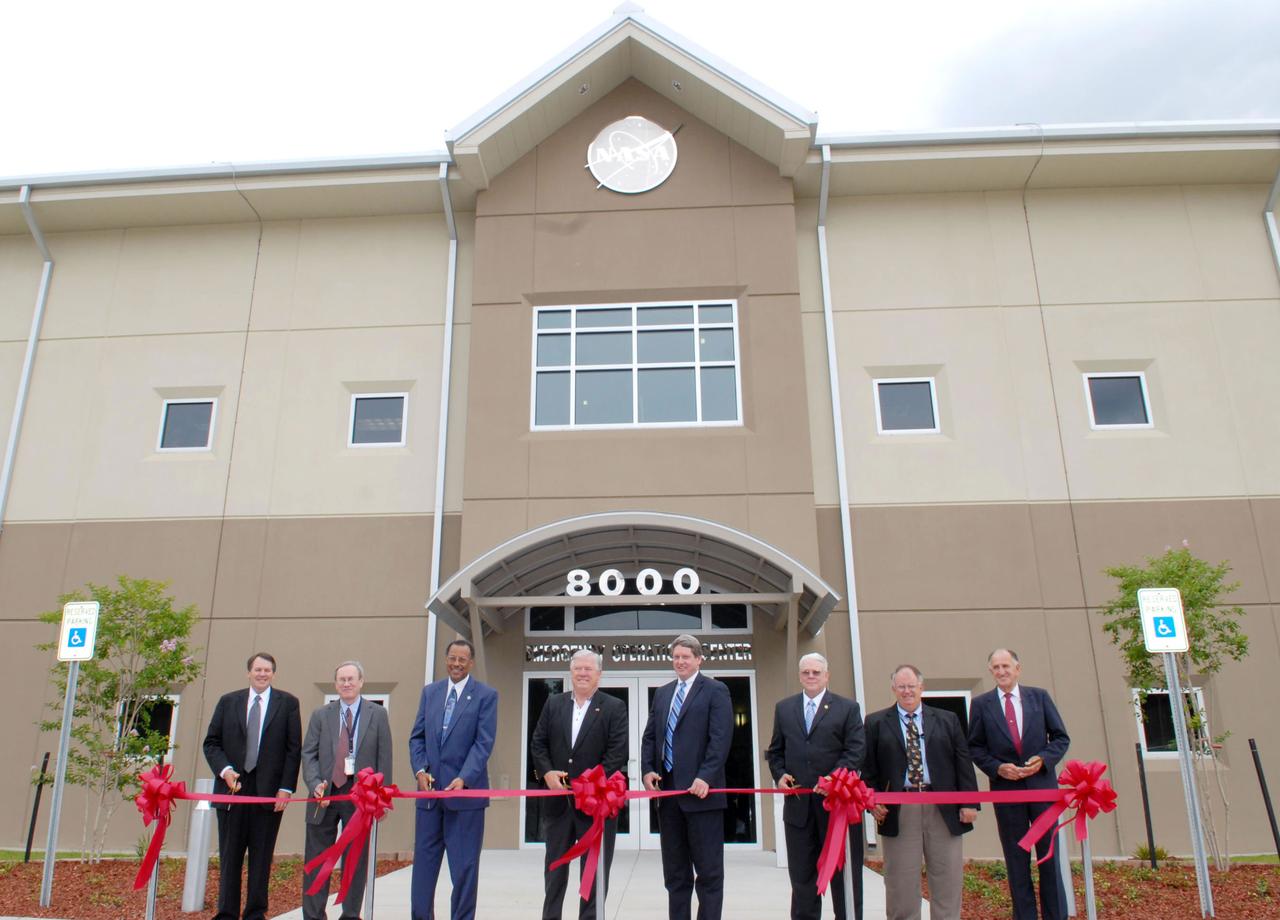
Center Director Gene Goldman and special guests celebrate the opening of the site's new Emergency Operations Center on June 2. Participants included (l t r): Steven Cooper, deputy director of the National Weather Service Southern Region; Tom Luedtke, NASA associate administrator for institutions and management; Charles Scales, NASA associate deputy administrator; Mississippi Gov. Haley Barbour; Gene Goldman, director of Stennis Space Center; Jack Forsythe, NASA assistant administrator for the Office of Security and Program Protection; Dr. Richard Williams, NASA chief health and medical officer; and Weldon Starks, president of Starks Contracting Company Inc. of Biloxi.
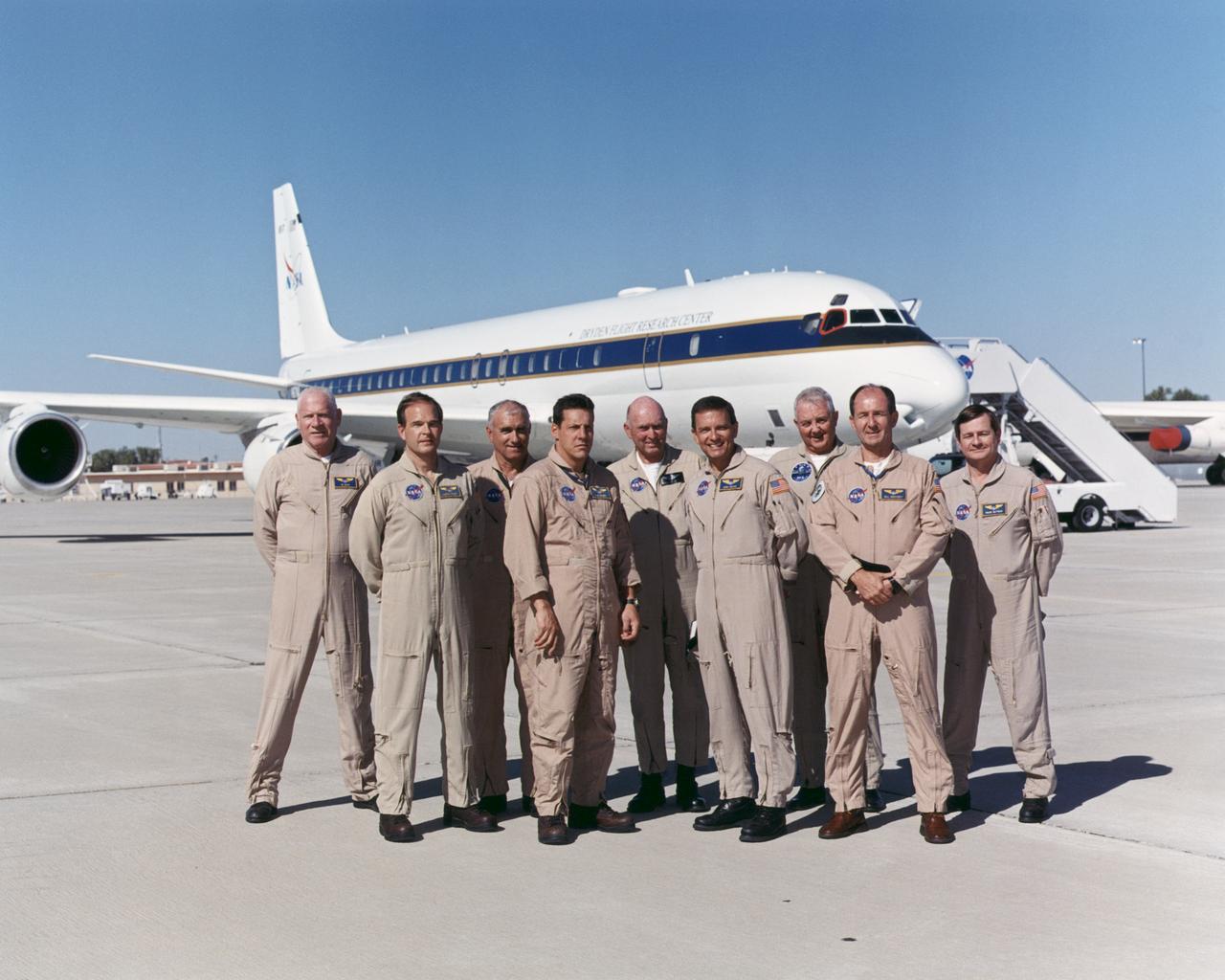
2004 NASA Dryden DC-8 flight crew. Left to Right: Edwin W. Lewis, Jr., Martin J. Trout, Richard G. Ewers, Craig R. Bomben, C. Gordon Fullerton (Chief Pilot), Mark Pestana, Douglas H. Baker, William Frederick Brockett, and Frank Batteas.
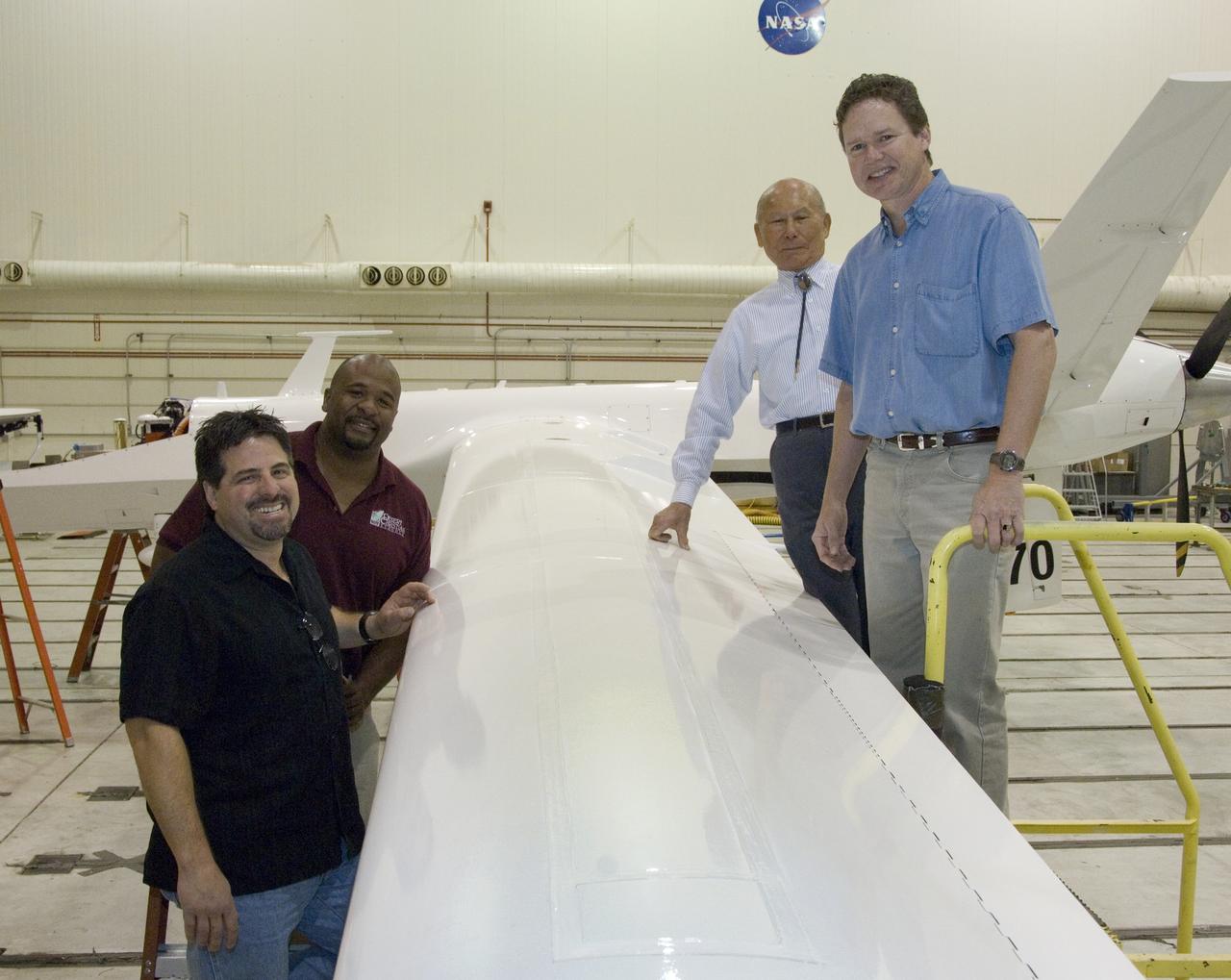
Ikhana fiber optic wing shape sensor team: clockwise from left, Anthony "Nino" Piazza, Allen Parker, William Ko and Lance Richards. The sensors, located along a fiber the thickness of a human hair, aren't visible in the center of the Ikhana aircraft's left wing. NASA Dryden Flight Research Center is evaluating an advanced fiber optic-based sensing technology installed on the wings of NASA's Ikhana aircraft. The fiber optic system measures and displays the shape of the aircraft's wings in flight. There are other potential safety applications for the technology, such as vehicle structural health monitoring. If an aircraft structure can be monitored with sensors and a computer can manipulate flight control surfaces to compensate for stresses on the wings, structural control can be established to prevent situations that might otherwise result in a loss of control.
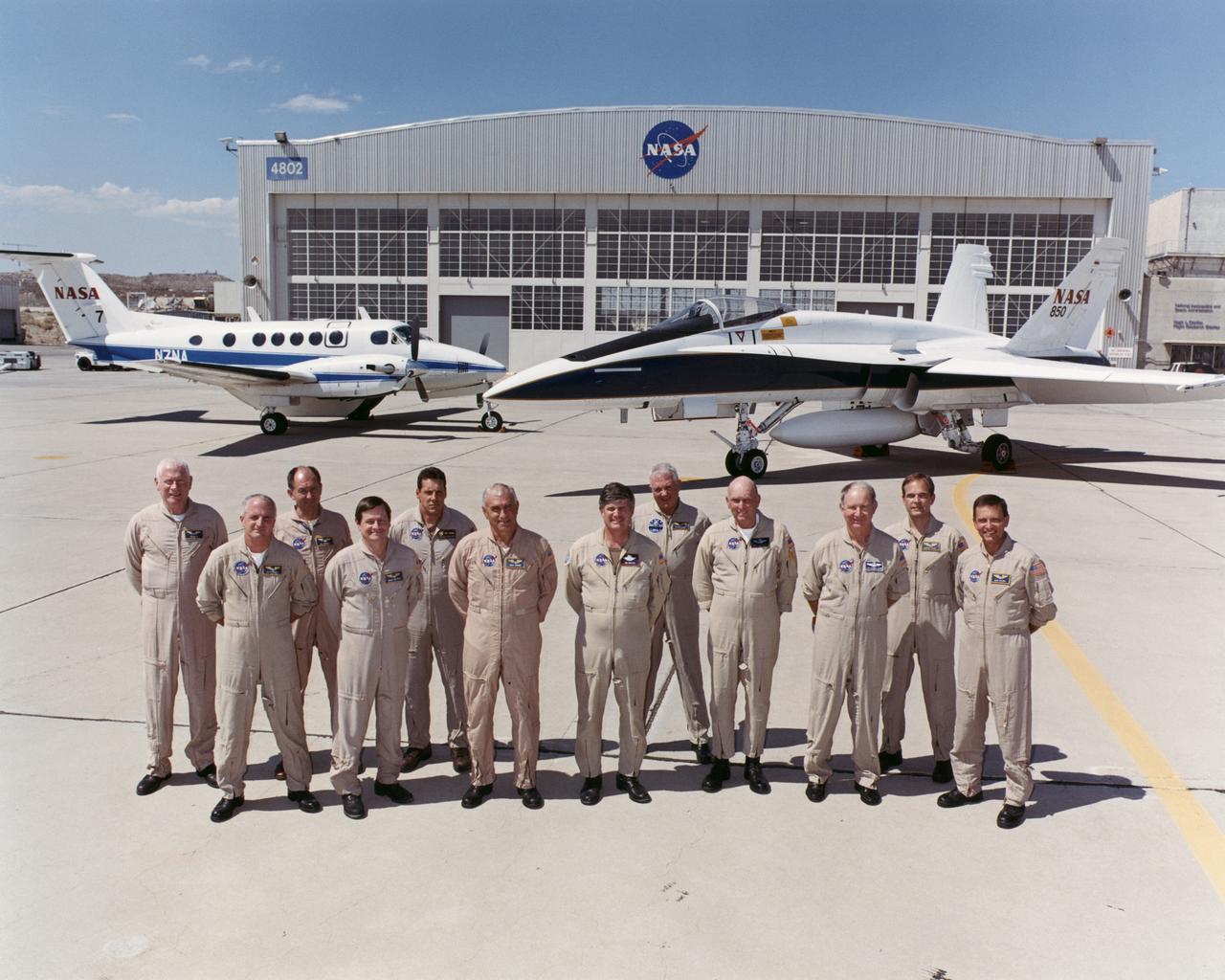
2004 NASA Dryden Research Pilots. Left to Right: Edwin W. Lewis, Jr., David A. Wright (Director of Flight Operations), William Frederick Brockett, Frank Batteas, Craig R. Bomben, Richard G. Ewers, James W. Smolka, Douglas H. Baker, C. Gordon Fullerton (Chief Pilot), James Barrilleaux, Martin J. Trout, and Mark Pestana. (not pictured: Dana Purifoy)
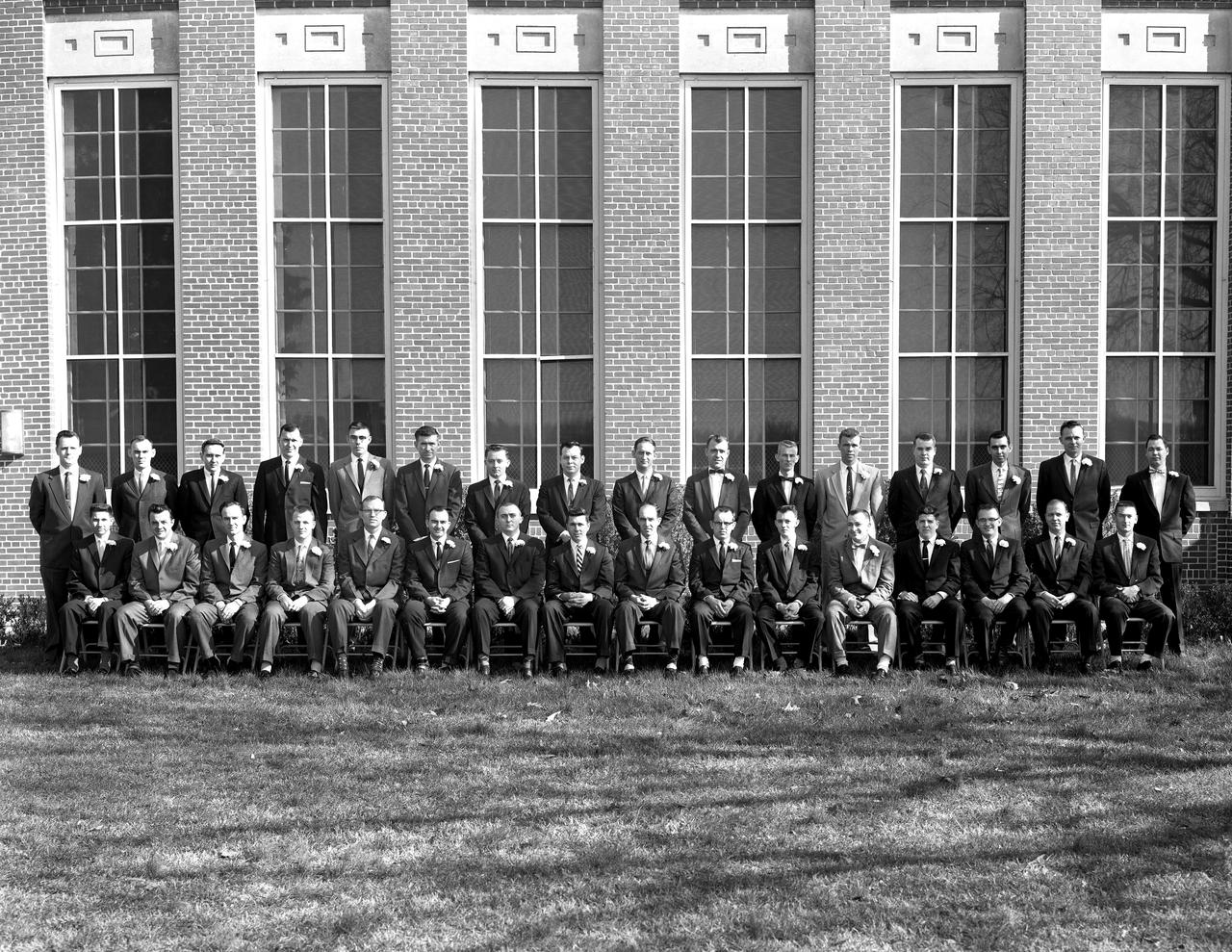
Apprentice Class Graduates: 32 Apprentice Greaduates: Ivan E. Albertson, Colossie N. Batts, Billy W. Beasley, John H. Belveal, Ernest R. Dunnigan, Durwood W. Davis, Charles E. Drummond, John R.Ellingsworth, Jr., Hugh D. Fitzgerald, Ernest A. Gurganus, Joseph R. Guy, William C. Henley,Jr., Richard N. Hill, Hiram R. Hogge, Jr., James D. Holt, James L. Hudgins, Robert F. Macklin, Roy W. Mason, Clyde J. May,Roger N. Messier, William C. Moughon, William S. Pillow, Wayne R. Posey, Mark E. Price, John W. Schwartz, Herbert F. Shackleford, John W. Simpson,John B. Slight, Cecil W. Stephens, Richard K. Stoops, John W. Sundy, Dave, E. Williams.

KENNEDY SPACE CENTER, FLA. - As the Stafford-Covey Return to Flight Task Group (SCTG) tours the Orbiter Processing Facility, Richard O. Covey (second from left), former Space Shuttle commander, points to equipment. Covey is co-chair of the SCTG along with Thomas P. Stafford, Apollo commander. Others in the photo are William Wegner, James Adamson and Joe Engle. Chartered by NASA Administrator Sean O’Keefe, the task group will perform an independent assessment of NASA’s implementation of the final recommendations by the Columbia Accident Investigation Board.
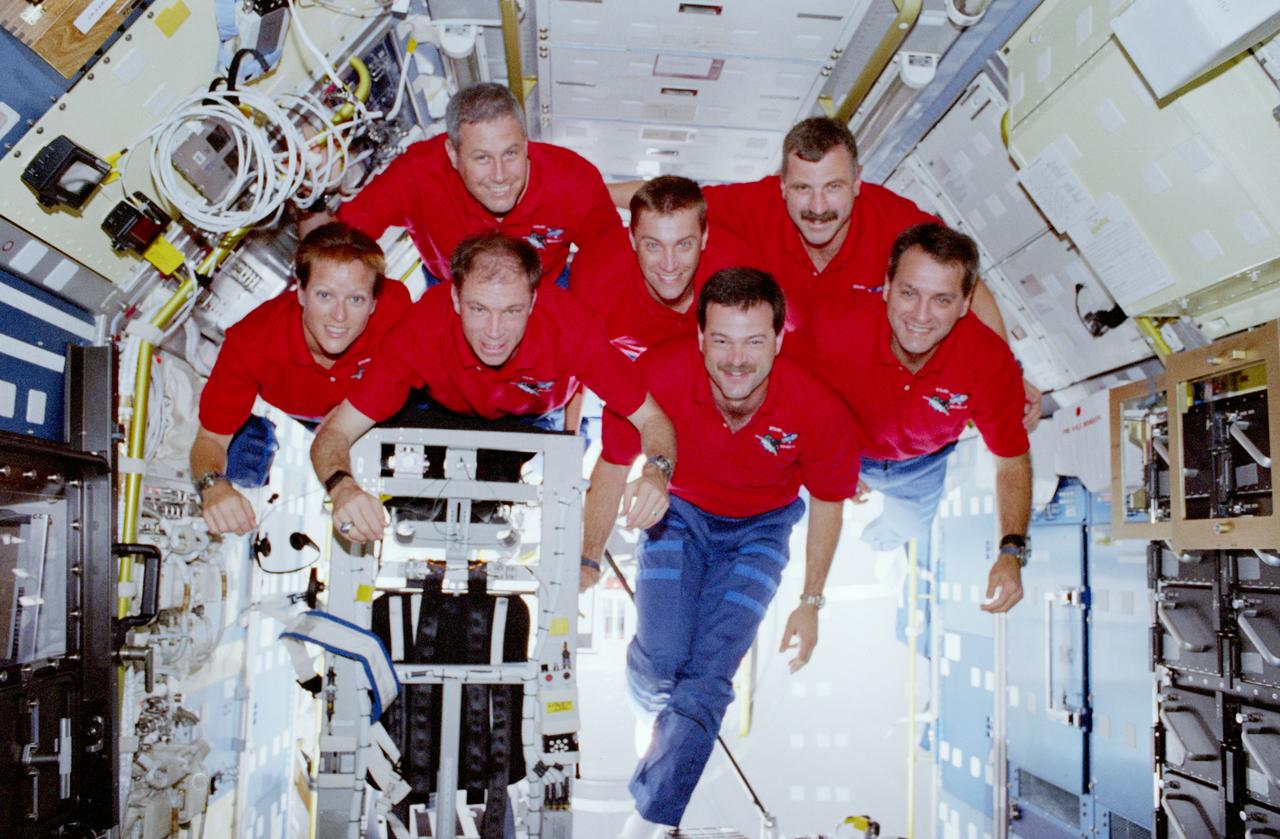
STS090-378-022 (17 April - 3 May 1998) --- During a change of shift for Neurolab duty, the crew floats as a unit onboard the Spacelab Science Module on the Space Shuttle Columbia. From the left are Kathryn P. Hire, mission specialist; Jay C. Buckey, Jr. (top), payload specialist; Richard A. Searfoss, mission commander; James A. (Jim) Pawelczyk, payload specialist; Scott D. Altman, pilot; Dafydd R. (Dave) Williams, mission specialist (top); and Richard M. Linnehan, payload commander. Williams represents the Canadian Space Agency (CSA).
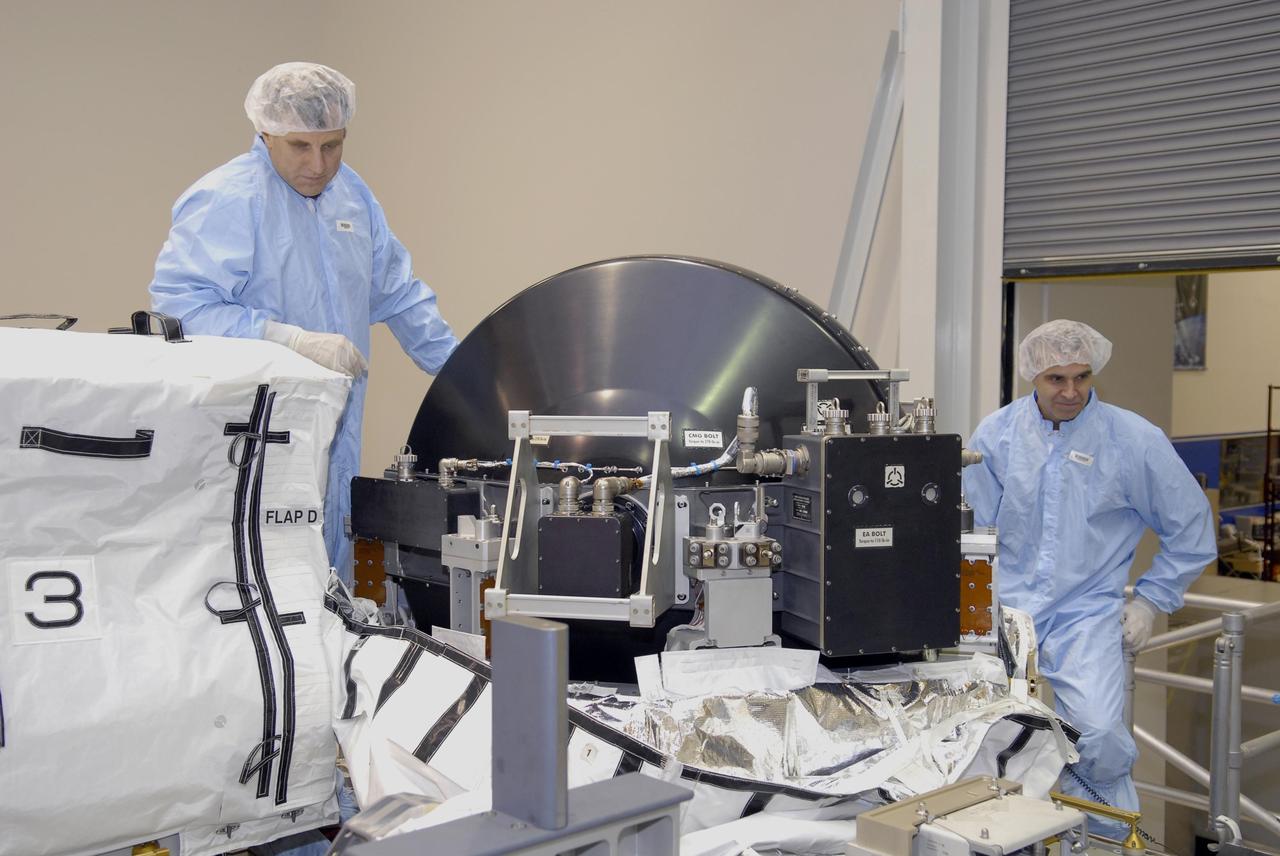
KENNEDY SPACE CENTER, FLA. -- The STS-118 crew members look over parts of the mission payload, the control moment gyroscope, at SPACEHAB during crew equipment interface test activities. Seen here are Mission Specialists Dr. Dafydd Williams (left) and Richard Mastracchio. The crew comprises Commander Scott Kelly, Pilot Charles Hobaugh, and Mission Specialists Williams, Barbara Morgan, Richard Mastracchio, Tracy Caldwell and Benjamin Drew. Williams is with the Canadian Space Agency. The STS-118 mission will be delivering the third starboard truss segment, the ITS S5, to the International Space Station, and a SPACEHAB Single Cargo module with supplies and equipment. Launch aboard Space Shuttle Endeavour is targeted for August. Photo credit: NASA/Kim Shiflett
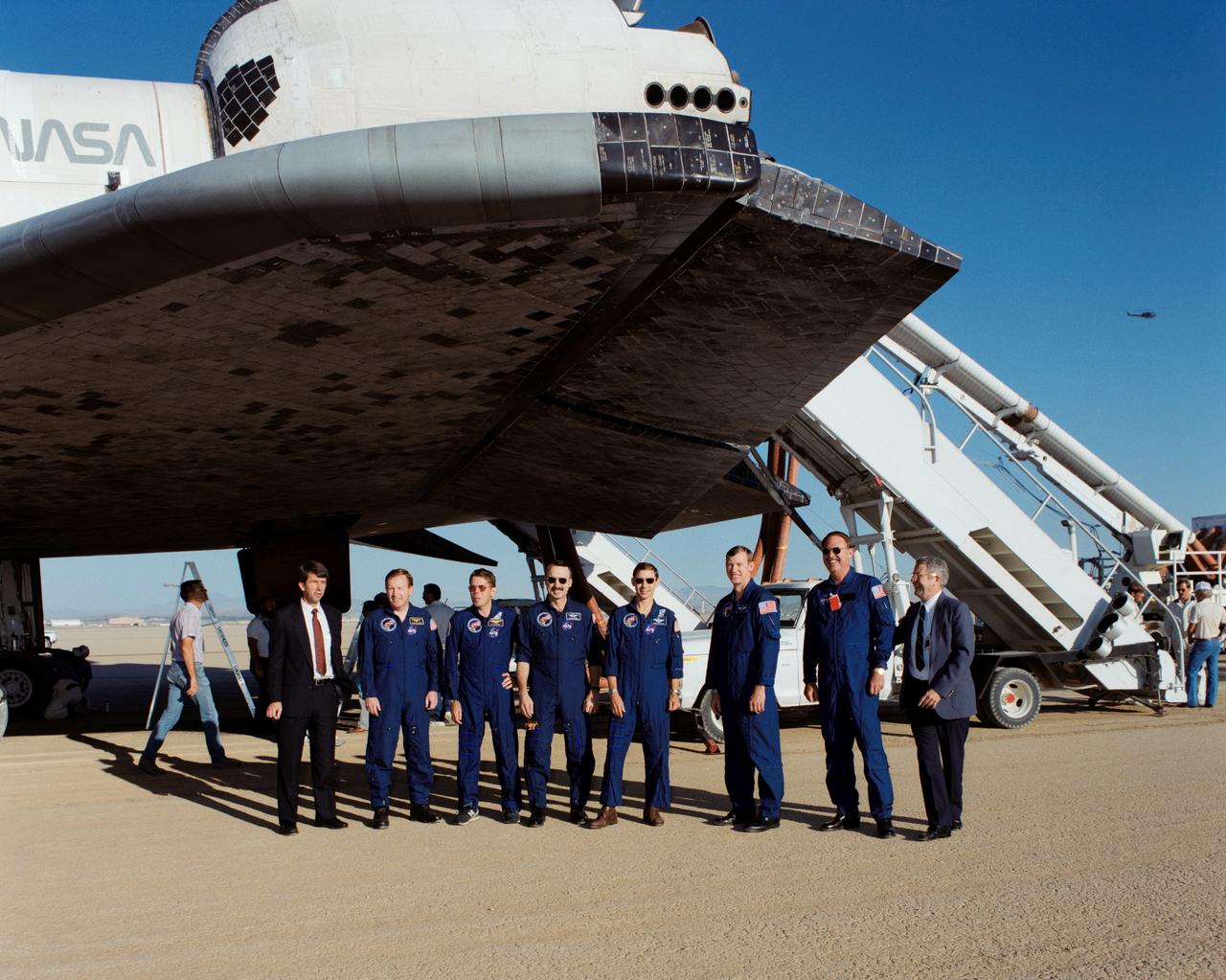
STS028-S-014 (13 Aug. 1989) --- The five astronaut crewmembers for STS-28 pose near the Space Shuttle Columbia after spending five days in Earth orbit for a DOD-devoted mission. They were greeted and are flanked here by William B. Lenoir (left), NASA Associate Administrator for Spaceflight; Donald R. Puddy (second right), director of flight crew operations; and Rear Adm. Richard H. Truly (right), NASA Administrator. The astronauts are, from left to right, Richard N. Richards, David C. Leestma, James C. Adamson, Brewster H. Shaw Jr. and Mark N. Brown.
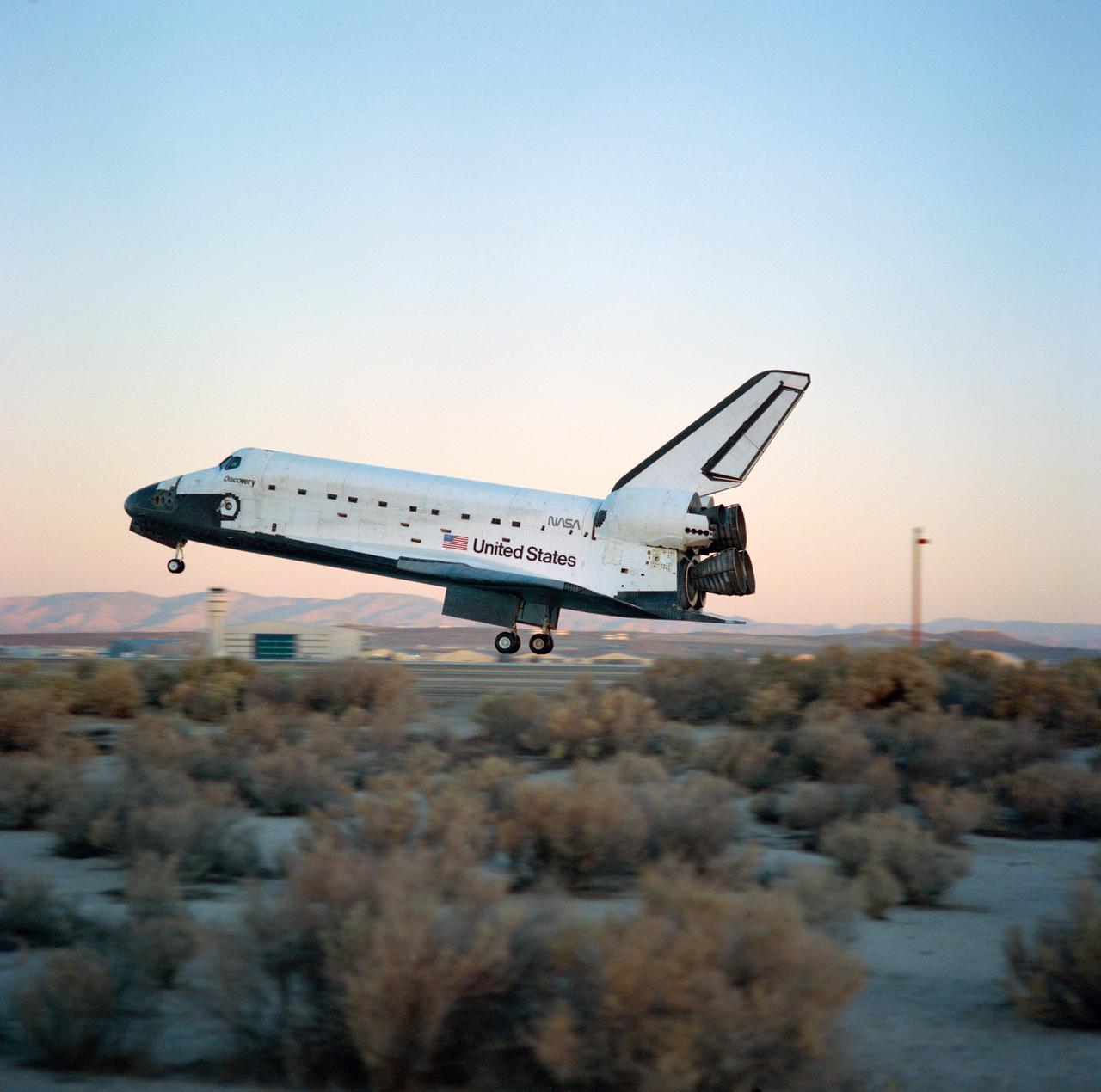
STS041-S-093 (10 Oct 1990) --- Discovery is only moments away from touchdown at Edwards Air Force Base to end a four-day mission in space for its five-man crew. The vehicle landed at 6:57 a.m. PDT, Oct. 10, 1990. Onboard the spacecraft were Astronauts Richard N. Richards, Robert D. Cabana, William M. Shepherd, Bruce E. Melnick and Thomas D. Akers.
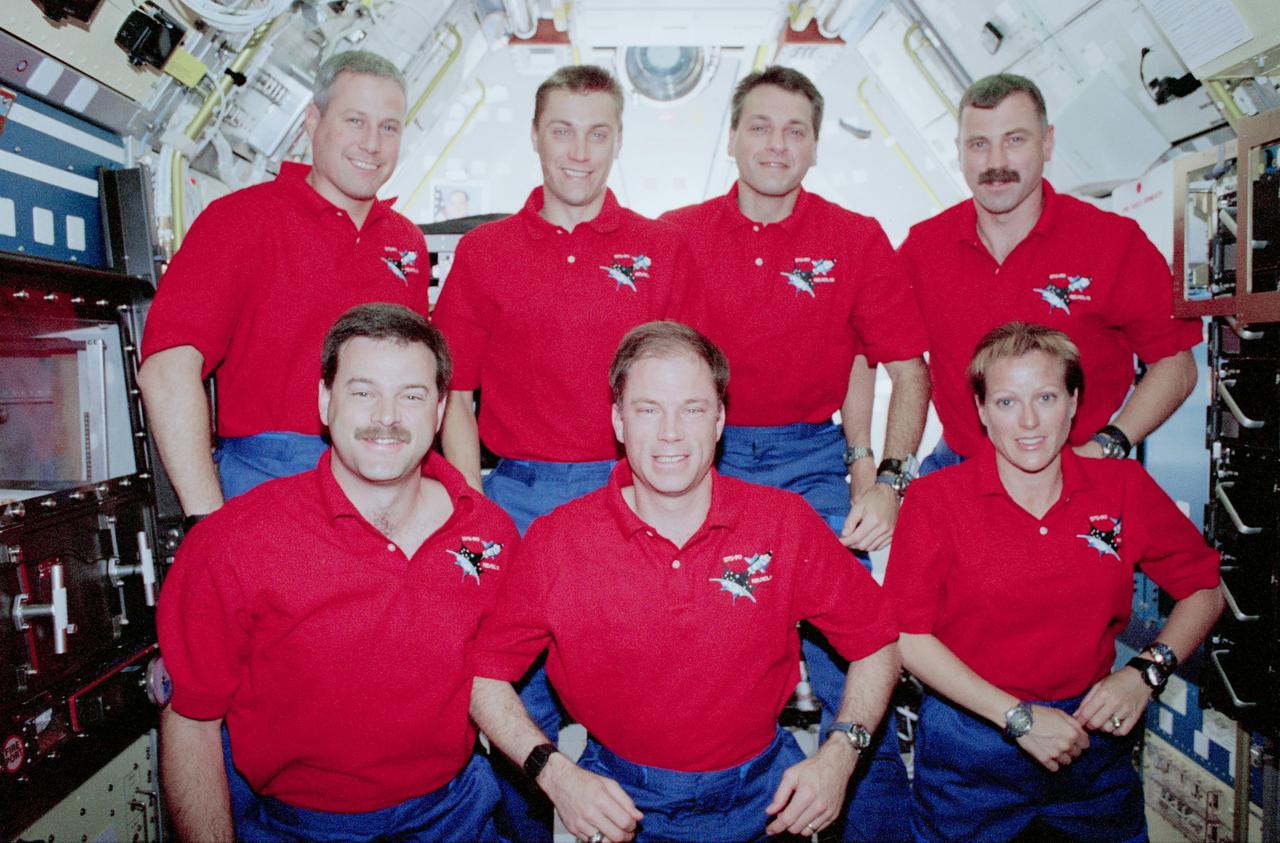
STS-90 crew crew portrait.. The various crew portraits were taken in the Spacelab module and include: back row (l.-r.) Payload specialists Jay Buckey and James Pawelczyk, Payload commander Richard Linnehan and Mission specialist Dafydd Rhys Williams. Bottom row (l.-r.) Pilot Scott Altman, Mission commander Richard Searfoss and Mission specialist Kathryn Hire. View 023 was selected by the crew for use in their postflight presentation.
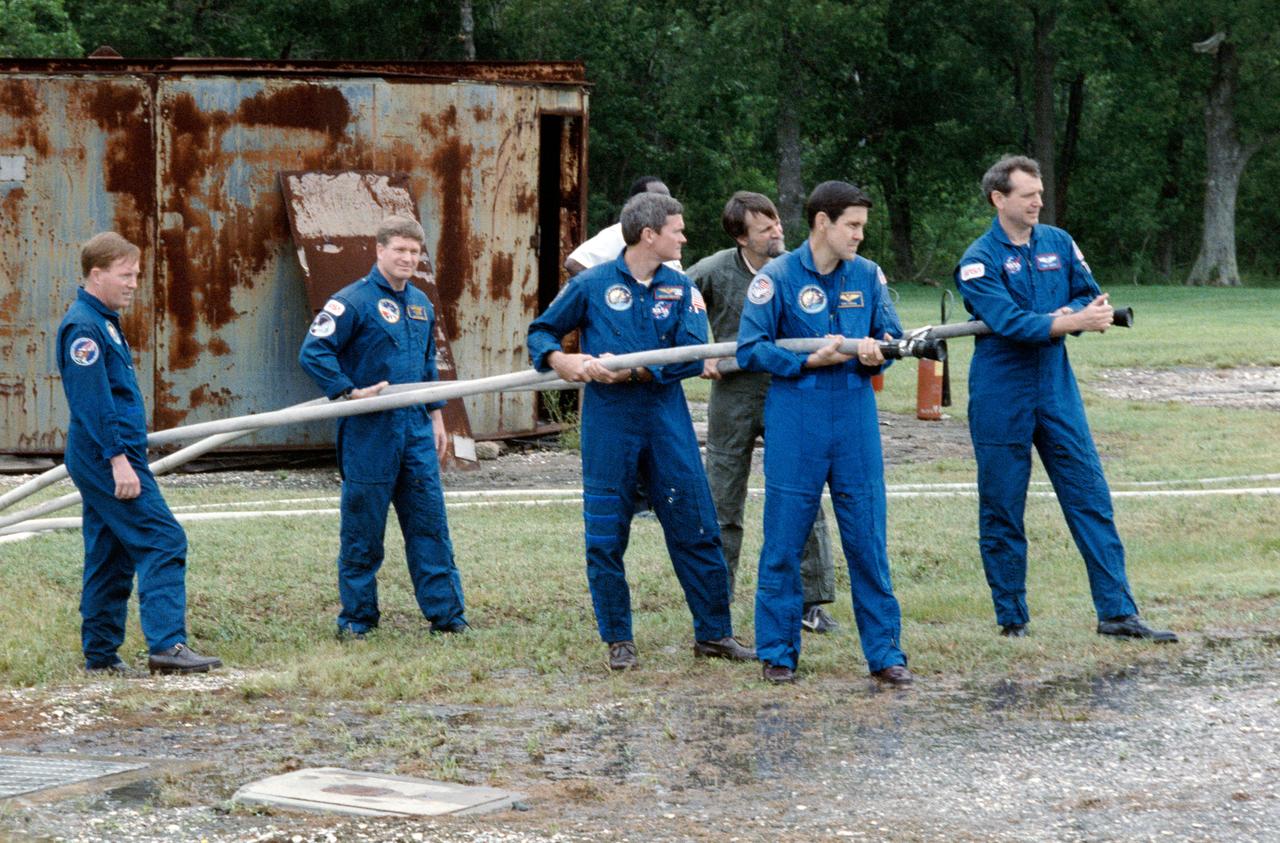
S90-38926 (4 May 1990) --- The STS-41 astronaut crew and a STS-35 backup payload specialist participate in fire control training exercises at the Johnson Space Center (JSC). Left to right are Richard N. Richards, William M. Shepherd, Bruce E. Melnick, Kenneth Nordsieck, Robert D. Cabana and Thomas D. Akers. Nordsieck is Astro-1 backup payload specialist in training for STS-35. This type training is provided all crewmembers assigned to seats aboard Space Shuttle.
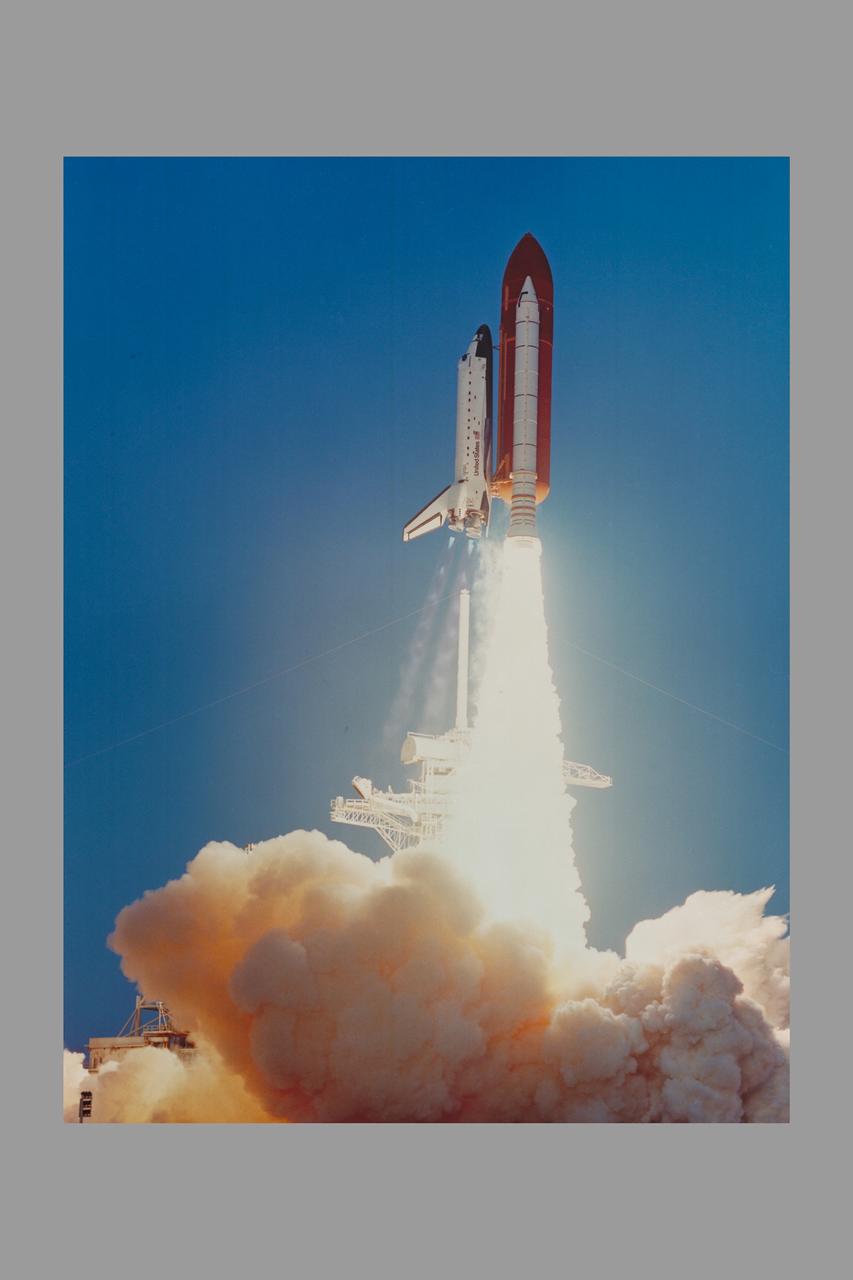
STS-41 Discovery lifts off from Launch Complex 39 at the Kennedy Space Center to begin a four-day mission in space for its five-man crew. Onboard the spacecraft were Astronauts Richard N. Richards, Robert D Cabana, William M Sheperd, Bruce E. Melnick and Thomas D. Akers. Lift off was at 7:47 a.m. EDT on oct 6, 1990. A feww hours after this photo was made, the crewmembers released the Ulysses spacecraft onits way to a long-awaited mission.
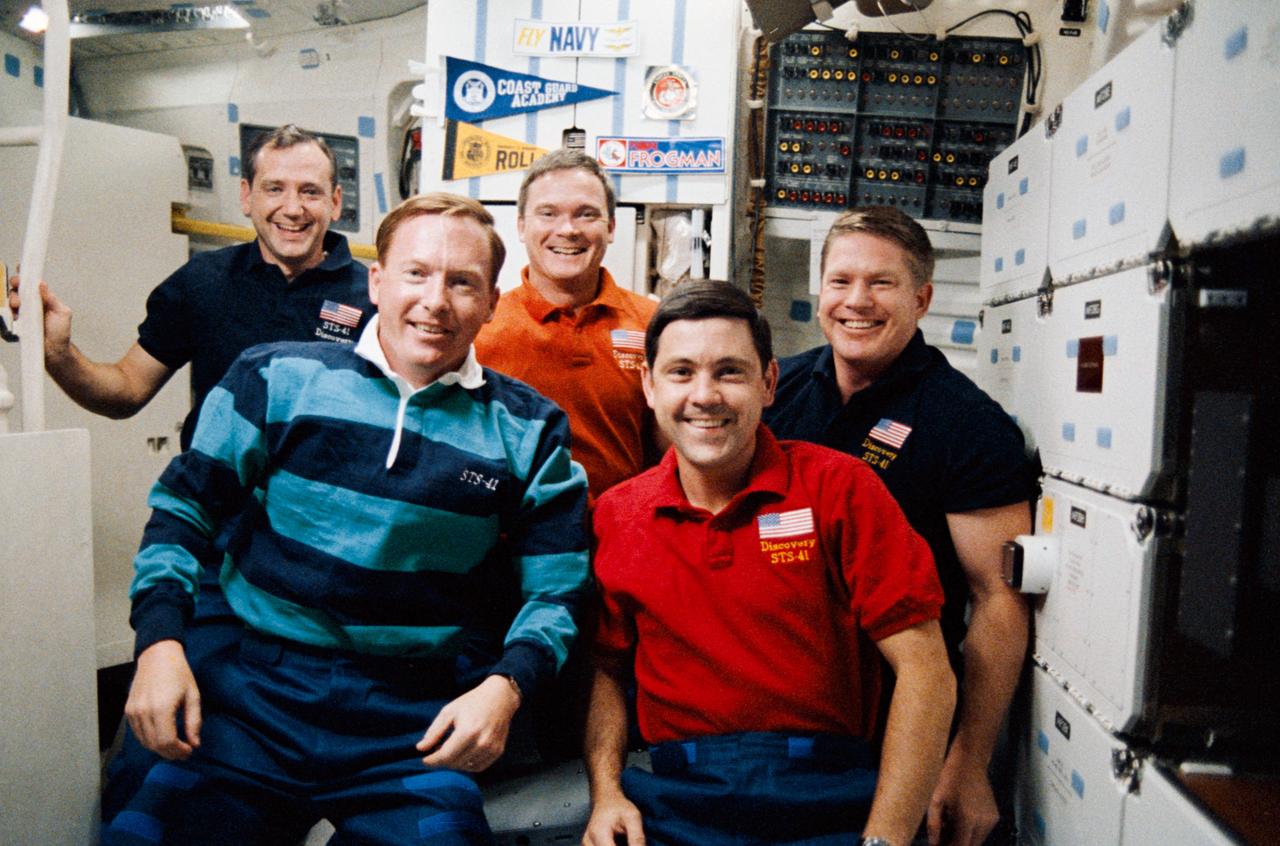
STS041-26-007 (6-10 Oct 1990) --- A 35mm preset camera on Discovery's middeck captures the traditional in-space portrait of the STS-41 crewmembers. In front are (l.-r.) Astronauts Richard N. Richards, mission commander; and Robert D. Cabana, pilot. In the rear are (l.-r.) Astronauts Thomas D. Akers, Bruce E. Melnick and William M. Shepherd.
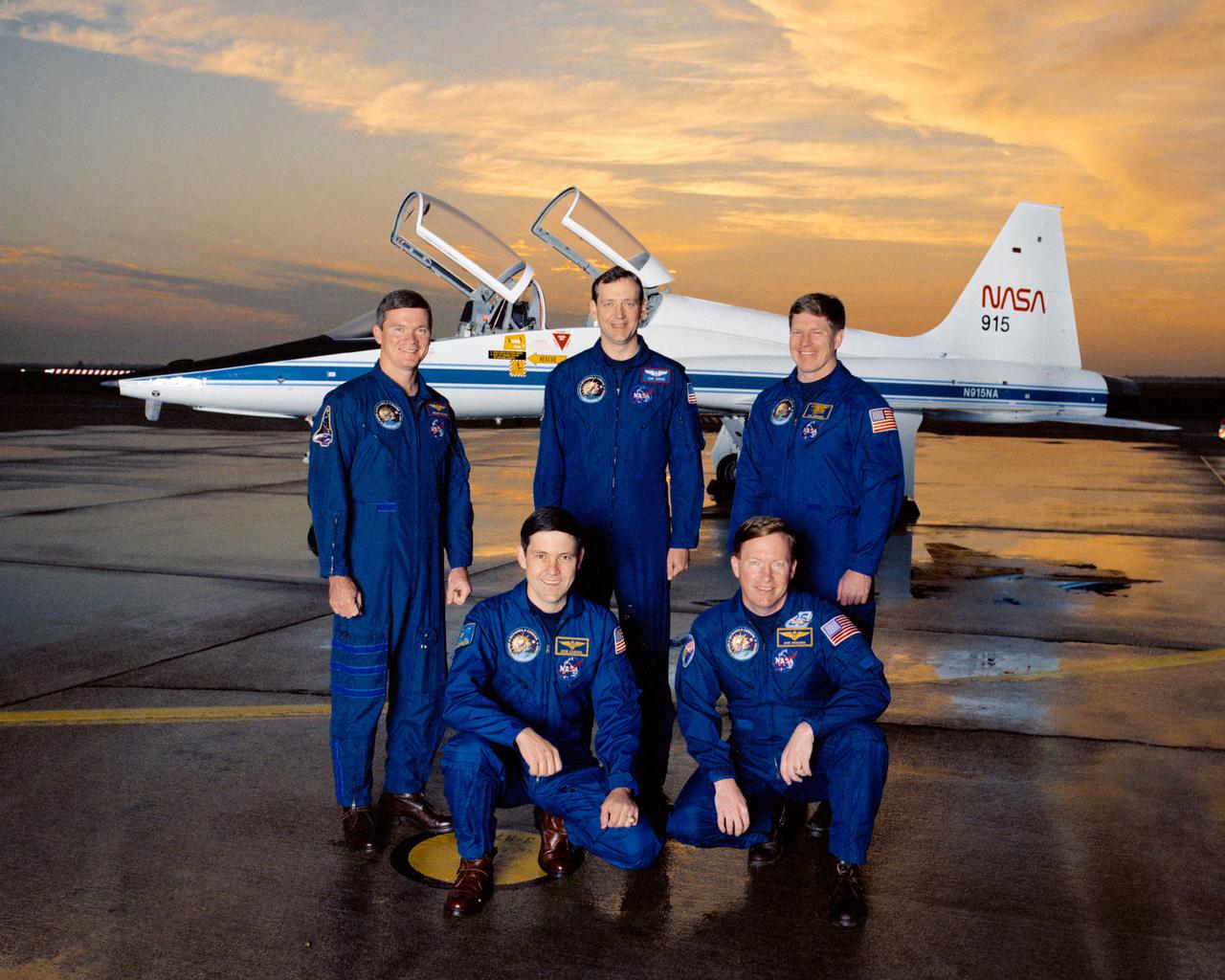
KENNEDY SPACE CENTER, Fla. – STS-41 crewmembers -- These five astronauts have been assigned to fly the STS-41 mission for NASA. Pictured are (kneeling, from the left) Robert D. Cabana, pilot, and Richard N. Richards, mission commander; and (standing from left) Bruce E. Melnick, Thomas D. Akers and William M. Shepard. All three are mission specialists.
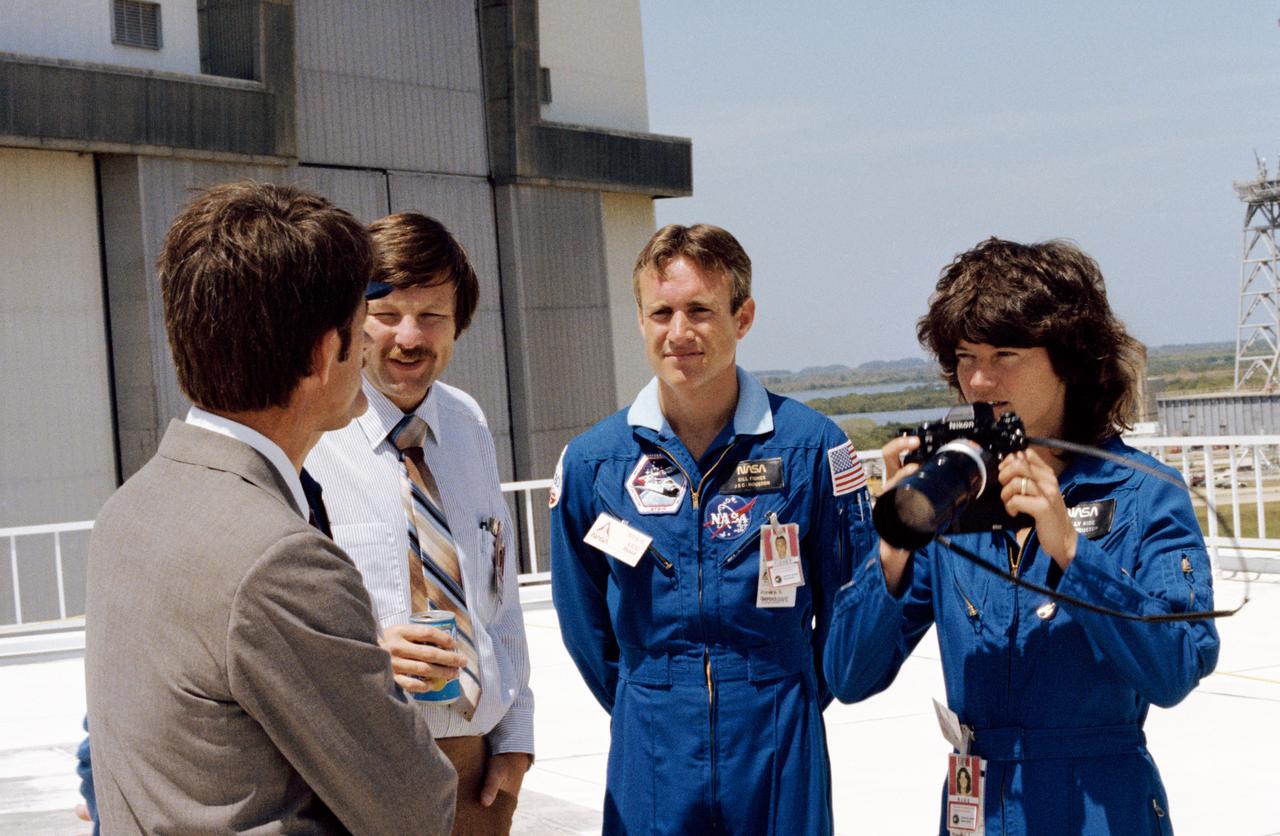
S83-31046 (4 April 1983) --- Astronaut Sally K. Ride, mission specialist for STS-7, scheduled for June 1983, records some of the prelaunch activity for STS-6 on 35mm film at the Kennedy Space Center (KSC). Astronaut William B. Lenoir, STS-5 mission specialist, is at left. Others pictured include Richard W. Nygren (center), chief of the vehicle integration section of the operations division at JSC; and astronaut William F. Fisher, second right. Photo credit: NASA
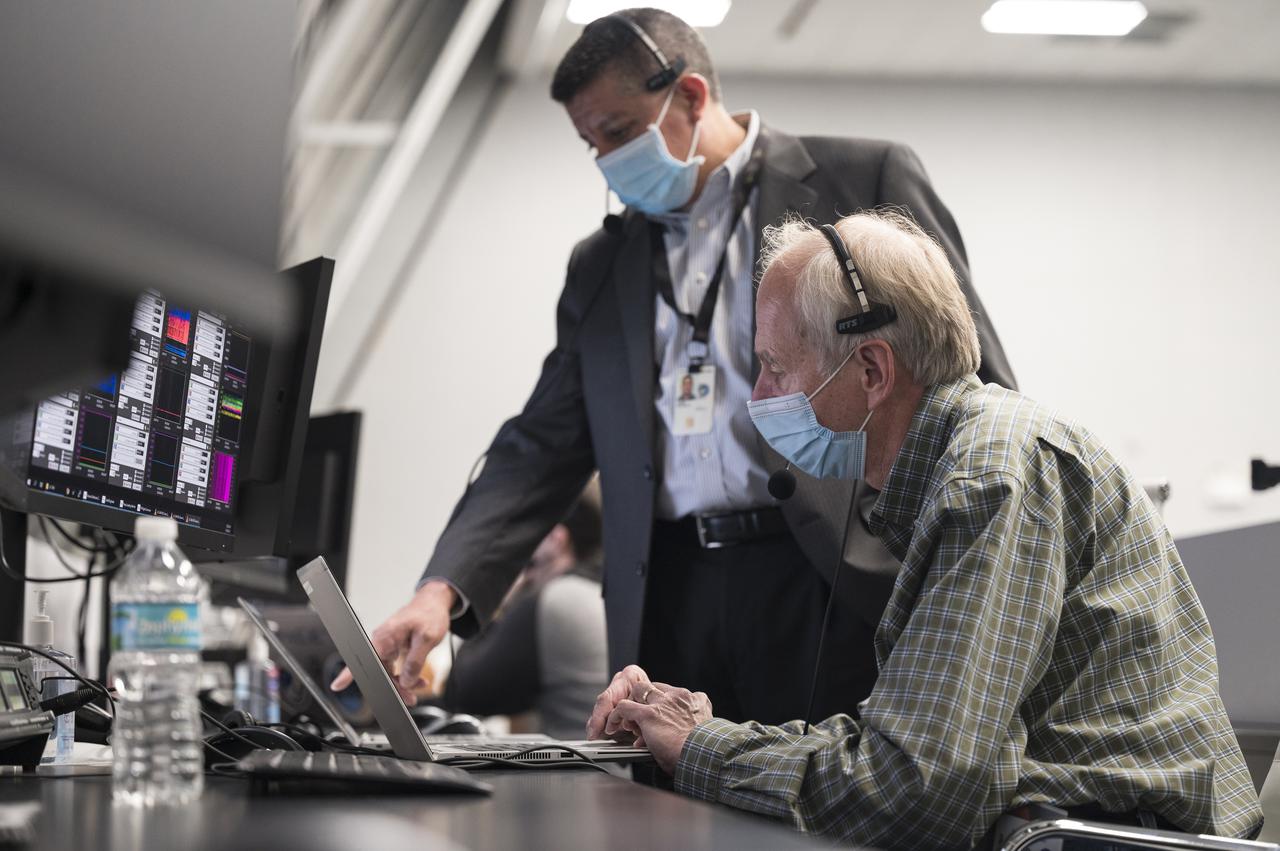
William Gerstenmaier, vice president for Build and Flight Reliability at SpaceX, left, and Richard Jones, manager of the Mission Management and Integration Office for NASA's Commercial Crew Program, monitor the countdown during a dress rehearsal in preparation for the launch of a SpaceX Falcon 9 rocket carrying the company's Crew Dragon spacecraft on NASA’s SpaceX Crew-3 mission with NASA astronauts Raja Chari, Tom Marshburn, Kayla Barron, and ESA (European Space Agency) astronaut Matthias Maurer onboard, Thursday, Oct. 28, 2021, in firing room four of the Launch Control Center at NASA’s Kennedy Space Center in Florida. NASA’s SpaceX Crew-3 mission is the third crew rotation mission of the SpaceX Crew Dragon spacecraft and Falcon 9 rocket to the International Space Station as part of the agency’s Commercial Crew Program. Chari, Marshburn, Barron, Maurer are scheduled to launch on Oct. 31 at 2:21 a.m. ET, from Launch Complex 39A at the Kennedy Space Center. Photo Credit: (NASA/Aubrey Gemignani)
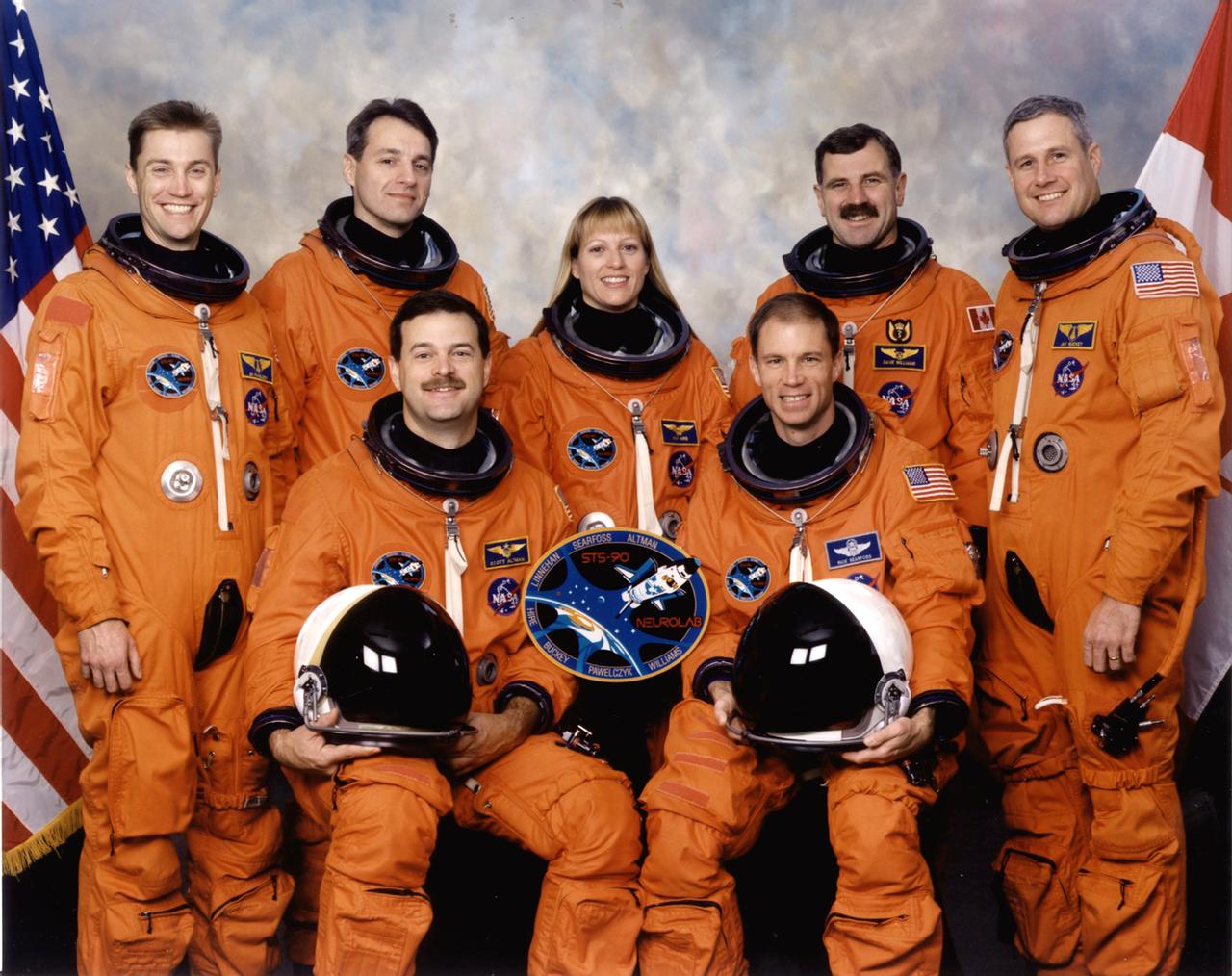
Five astronauts and two payload specialists take a break in training for the Neurolab mission to pause for a crew portrait. The Spacelab mission was conducted aboard the Space Shuttle Columbia on STS-90 which launched on April 17, 1998. Astronauts Richard A. Searfoss, commander (right front); and Scott D. Altman, pilot (left front). Other crew members (back row, left to right) are James A. (Jim) Pawelczyk, Ph.D., payload specialist; and astronauts Richard M. Linnehan, Kathryn P. Hire, and Dafydd R. (Dave) Williams, all mission specialists; along with payload specialist Jay C. Buckey, Jr., MD. Linnehan and Williams, alumnus of the 1995 class of astronaut candidates (ASCAN), represents the Canadian Space Agency (CSA).
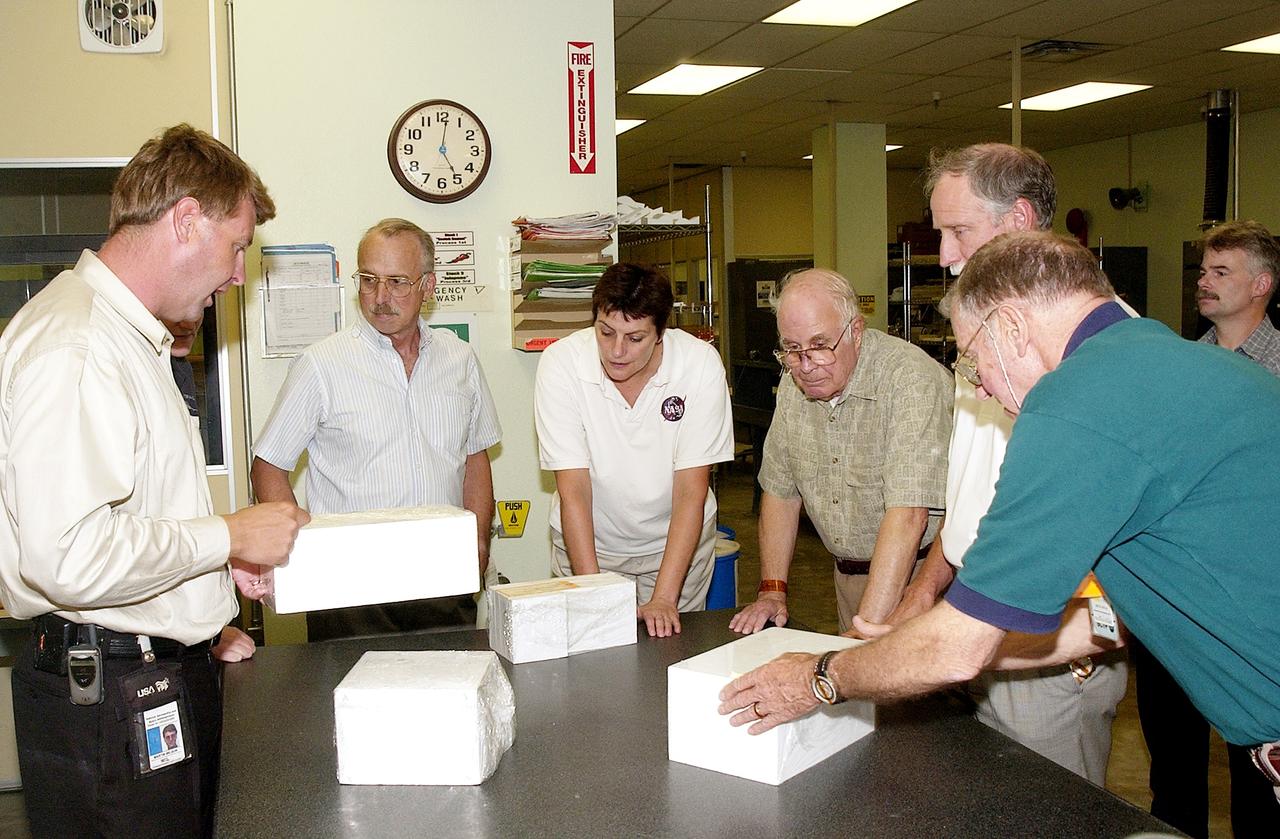
KENNEDY SPACE CENTER, FLA. - On a tour of the Tile Shop, members of the Stafford-Covey Return to Flight Task Group (SCTG) learn about PU-tiles, part of an orbiter’s Thermal Protection System. At left is Martin Wilson, with United Space Alliance. Others (left to right) around the table are James Adamson, Dr. Kathryn Clark, William Wegner, Richard Covey and Joe Engle. Covey, former Space Shuttle commander, is co-chair of the SCTG, along with Thomas P. Stafford, Apollo commander. Chartered by NASA Administrator Sean O’Keefe, the task group will perform an independent assessment of NASA’s implementation of the final recommendations by the Columbia Accident Investigation Board.
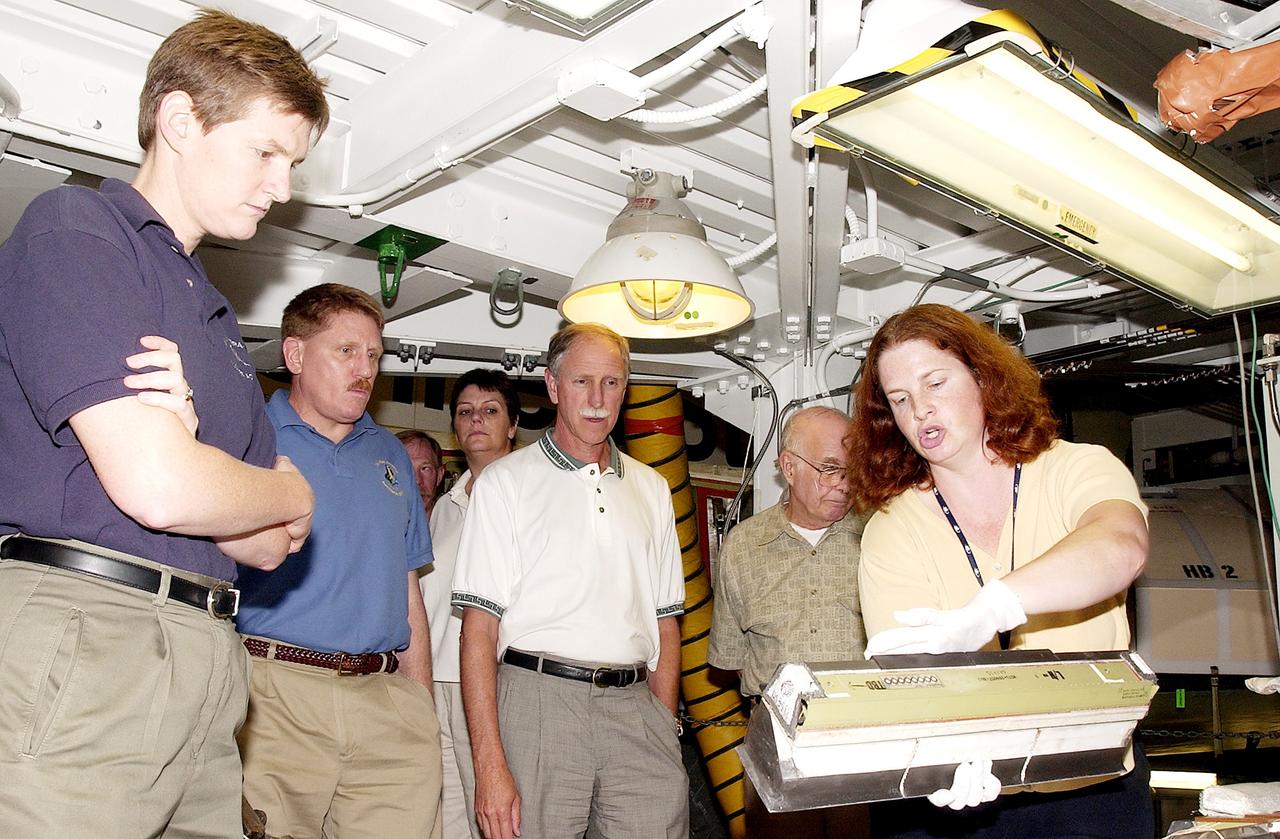
KENNEDY SPACE CENTER, FLA. - NASA worker Joy Huff (right) shows a leading edge subsystems (LESS) with tile bonded to it to members of the Stafford-Covey Return to Flight Task Group (SCTG). From left are Dr. Amy Donahue, David Lengyel, Dr. Kathryn Clark, Richard Covey, former Space Shuttle commander, and William Wegner. Covey is co-chair of the SCTG along with Thomas P. Stafford, Apollo commander. Chartered by NASA Administrator Sean O’Keefe, the task group will perform an independent assessment of NASA’s implementation of the final recommendations by the Columbia Accident Investigation Board.
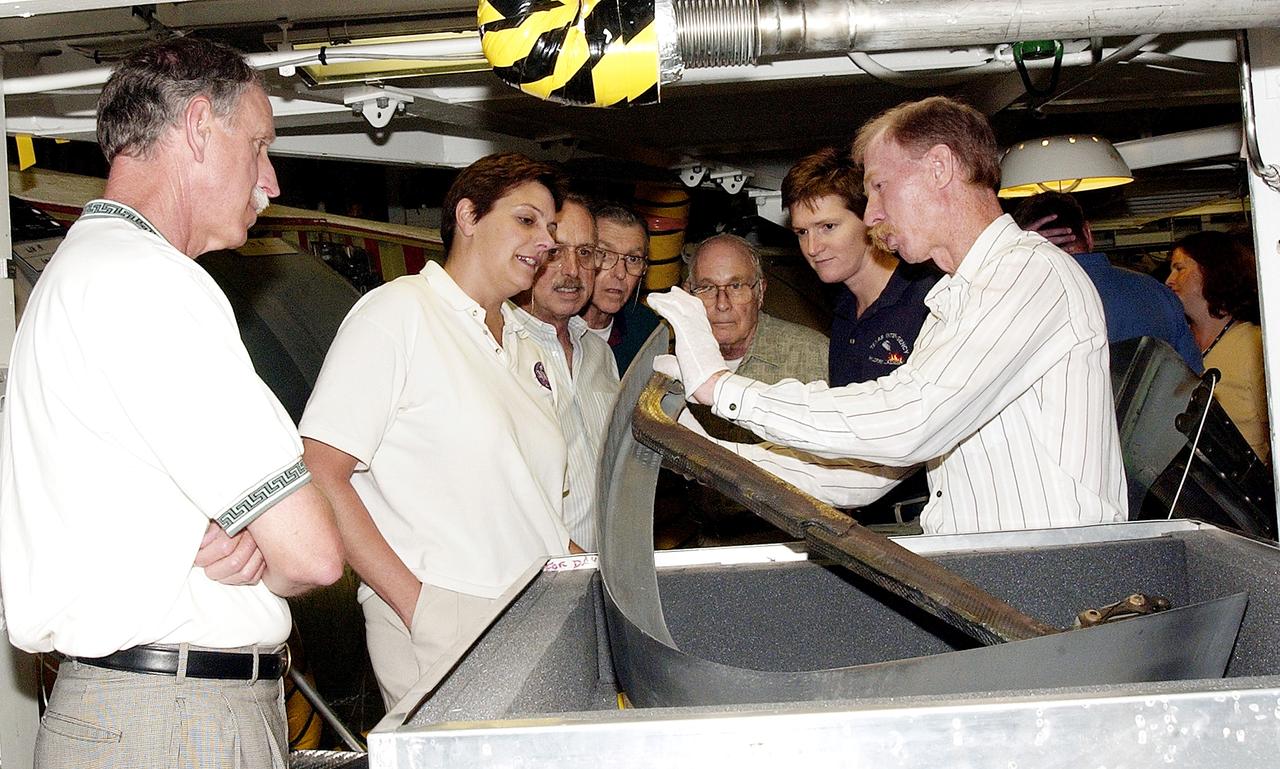
KENNEDY SPACE CENTER, FLA. - On a tour of the Orbiter Processing Facility, members of the Stafford-Covey Return to Flight Task Group (RTFTG) look at a Reinforced Carbon-Carbon panels with a T-seal held by Tom Roberts, with United Space Alliance. From left are Richard O. Covey, former Space Shuttle commander, Dr. Kathryn Clark, James Adamson, Joe Engle, William Wegner and Dr. Amy Donahue. Chairing the task group are Covey and Thomas P. Stafford, Apollo commander. Chartered by NASA Administrator Sean O’Keefe, the task group will perform an independent assessment of NASA’s implementation of the final recommendations by the Columbia Accident Investigation Board.
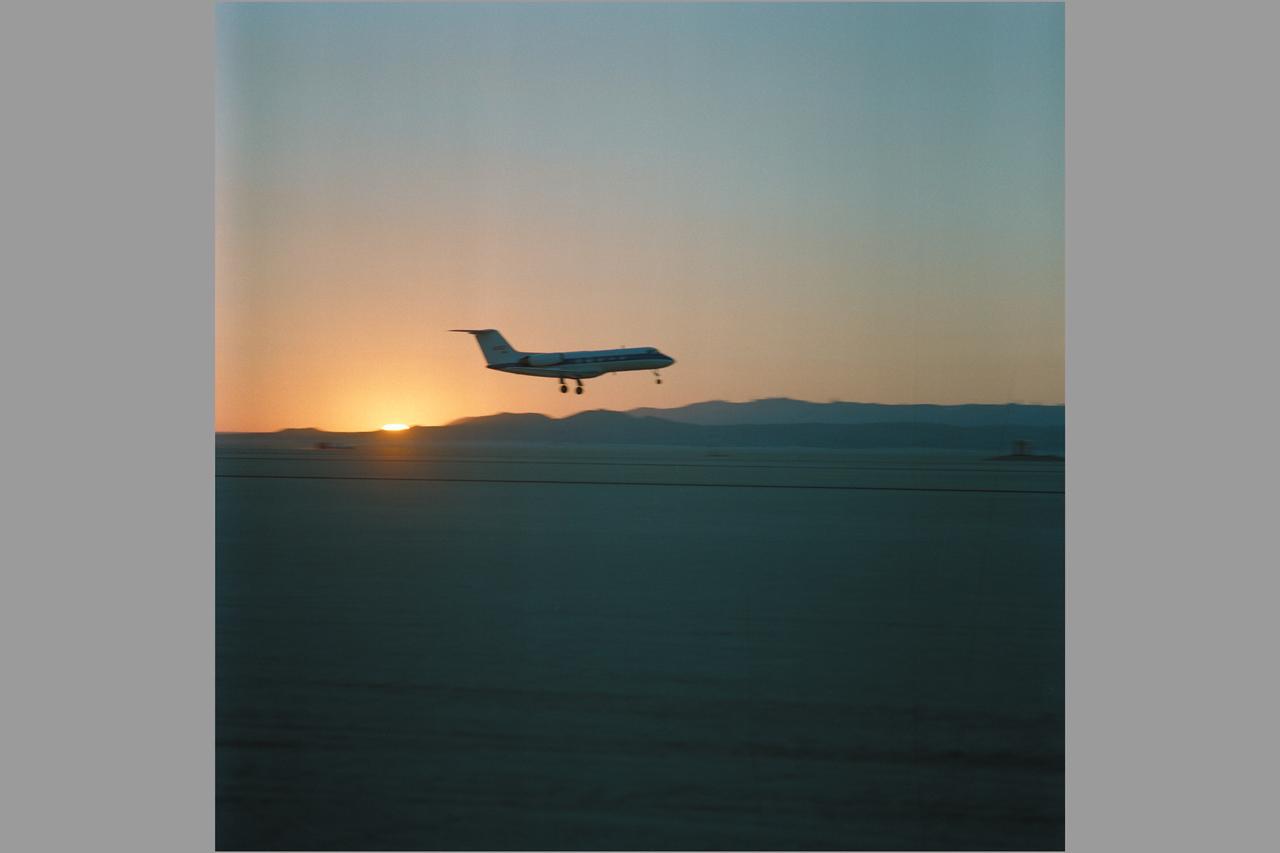
Dryden Fllight Reseach Facility, Edwards, California STA (Shuttle Training Aircraft, Gulf Stream II) flys chase as STS-41returns from it's mission to Deploy Ulysses Spacecraft... Discovery's main gear is about to touch down at Edwards Air Foce Base to end a four-day mission in space for it's five-man crew. The vehicle landed at 6:57 a.m. Onboard the spacecraft were Astronauts Richard N. Richards, Robert D Cabana, William M Sheperd, Bruce E. Melnick and Thomas D. Akers.
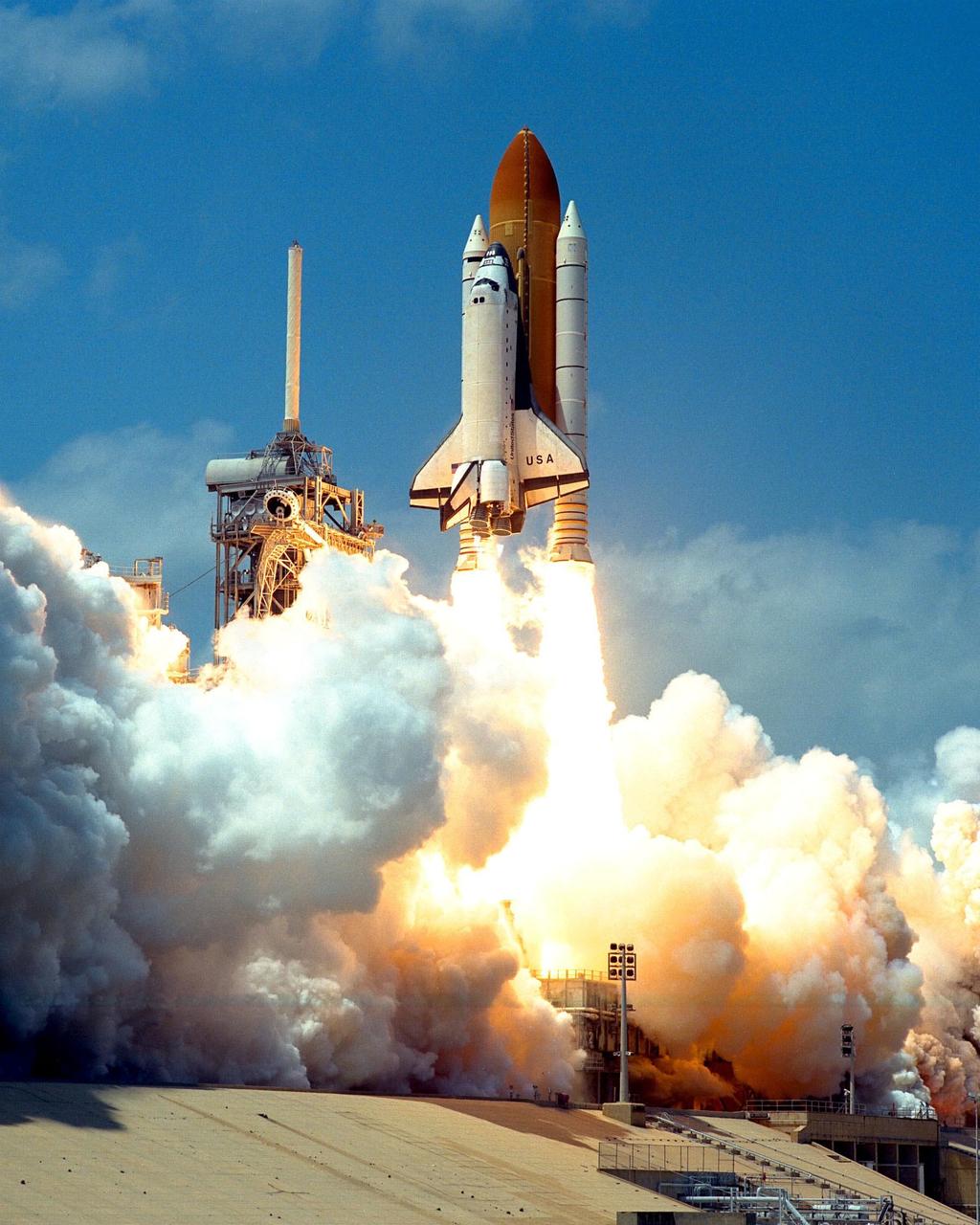
KENNEDY SPACE CENTER, FLA. -- The Space Shuttle Columbia soars from Launch Pad 39B at 2:19 p.m. EDT Apr. 17 to begin the nearly 17-day STS-90 Neurolab mission. The launch was delayed 24 hours due to difficulty with a network signal processor, which was replaced Apr. 16, on the orbiter. The crew members are Commander Richard Searfoss, Pilot Scott Altman, Mission Specialists Richard Linnehan, D.V.M., Dafydd (Dave) Williams, M.D., with the Canadian Space Agency, and Kathryn (Kay) Hire; and Payload Specialists Jay Buckey, M.D., and James Pawelczyk, Ph.D. Investigations during the Neurolab mission will focus on the effects of microgravity on the nervous system
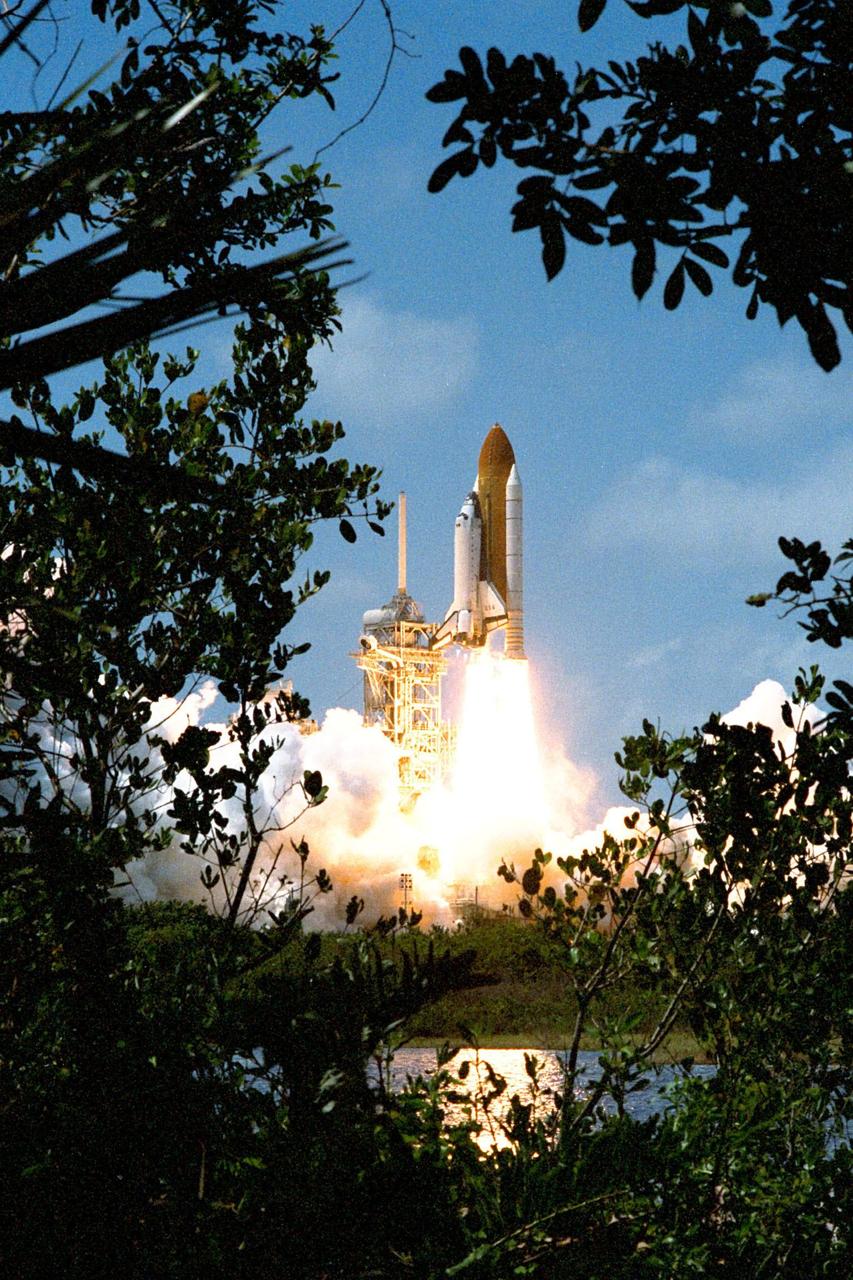
Framed by native Floridian foliage, the Space Shuttle Columbia soars from Launch Pad 39B at 2:19 p.m. EDT Apr. 17 to begin the nearly 17-day STS-90 Neurolab mission. The launch was delayed 24 hours due to difficulty with a network signal processor, which was replaced Apr. 16, on the orbiter. The crew members are Commander Richard Searfoss, Pilot Scott Altman, Mission Specialists Richard Linnehan, D.V.M., Dafydd (Dave) Williams, M.D., with the Canadian Space Agency, and Kathryn (Kay) Hire; and Payload Specialists Jay Buckey, M.D., and James Pawelczyk, Ph.D. Investigations during the Neurolab mission will focus on the effects of microgravity on the nervous system
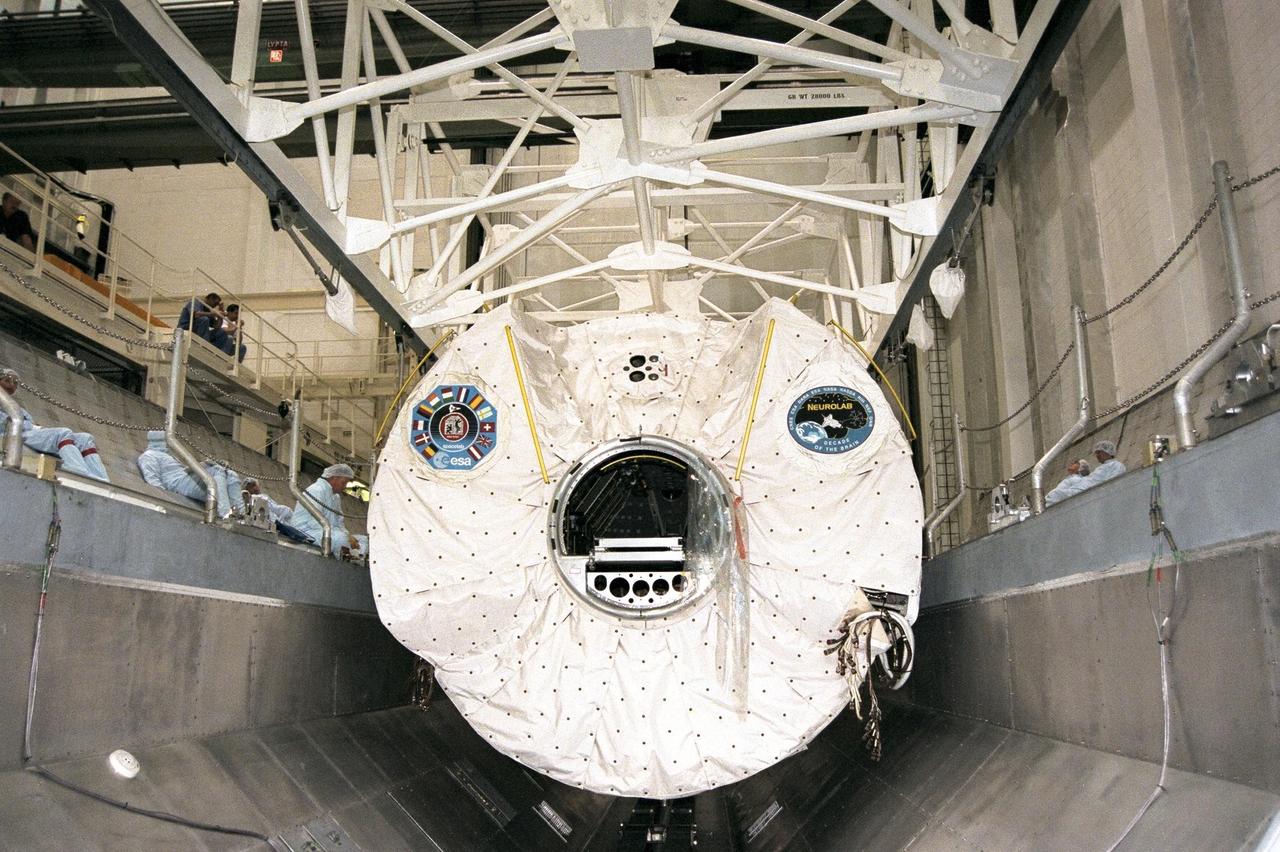
KENNEDY SPACE CENTER, FLA. -- The STS-90 Neurolab payload is lowered into its payload canister in KSC's Operations and Checkout Building. Investigations during the Neurolab mission will focus on the effects of microgravity on the nervous system. Specifically, experiments will study the adaptation of the vestibular system, the central nervous system, and the pathways that control the ability to sense location in the absence of gravity, as well as the effect of microgravity on a developing nervous system. The crew of STS-90, slated for launch in April, will include Commander Richard Searfoss, Pilot Scott Altman, Mission Specialists Richard Linnehan, Dafydd (Dave) Williams, M.D., and Kathryn (Kay) Hire, and Payload Specialists Jay Buckey, M.D., and James Pawelczyk, Ph.D
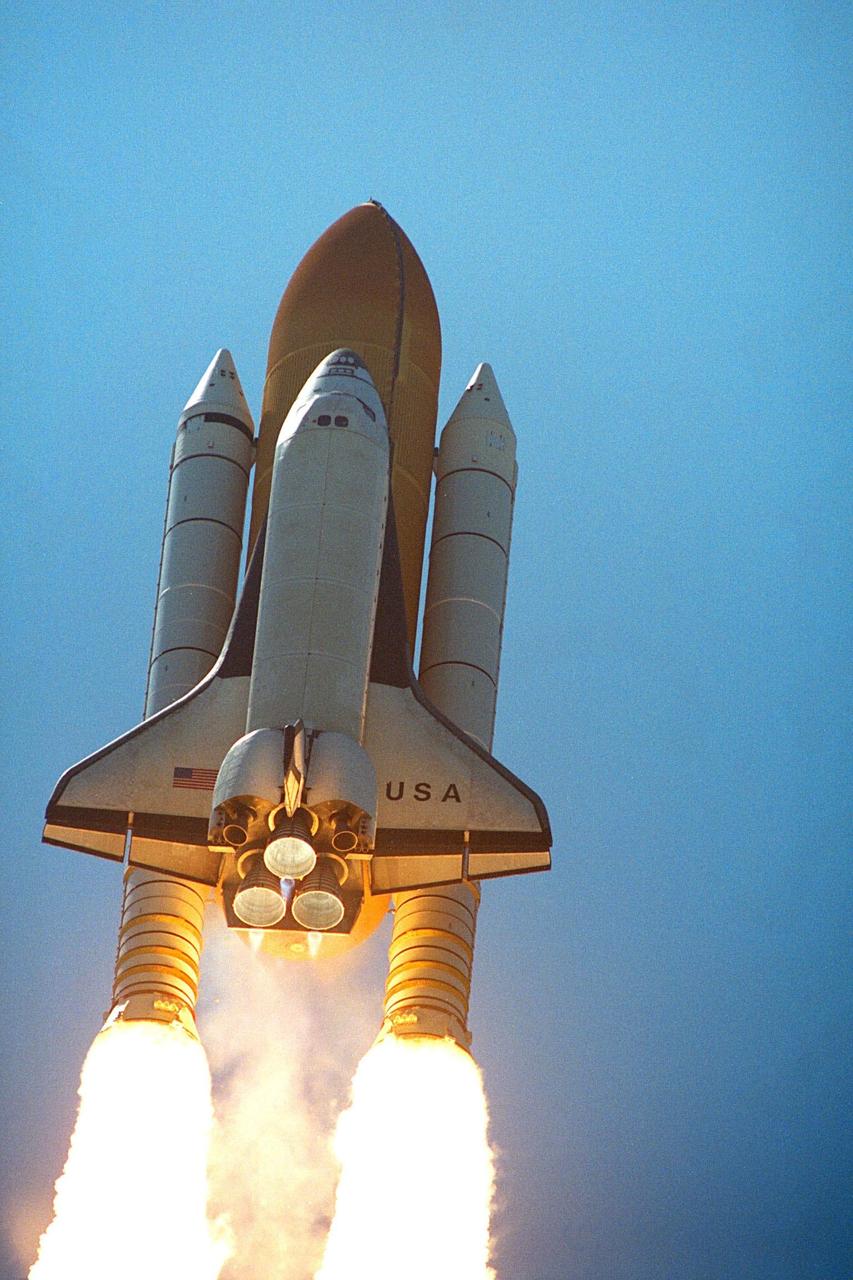
KENNEDY SPACE CENTER, FLA. -- The Space Shuttle Columbia surges skyward from Launch Pad 39B at 2:19 p.m. EDT Apr. 17 to begin the nearly 17-day STS-90 Neurolab mission. The launch was delayed 24 hours due to difficulty with a network signal processor, which was replaced Apr. 16, on the orbiter. The crew members on-board include Commander Richard Searfoss, Pilot Scott Altman, Mission Specialists Richard Linnehan, D.V.M., Dafydd (Dave) Williams, M.D., with the Canadian Space Agency, and Kathryn (Kay) Hire; and Payload Specialists Jay Buckey, M.D., and James Pawelczyk, Ph.D. Investigations during the Neurolab mission will focus on the effects of microgravity on the nervous system
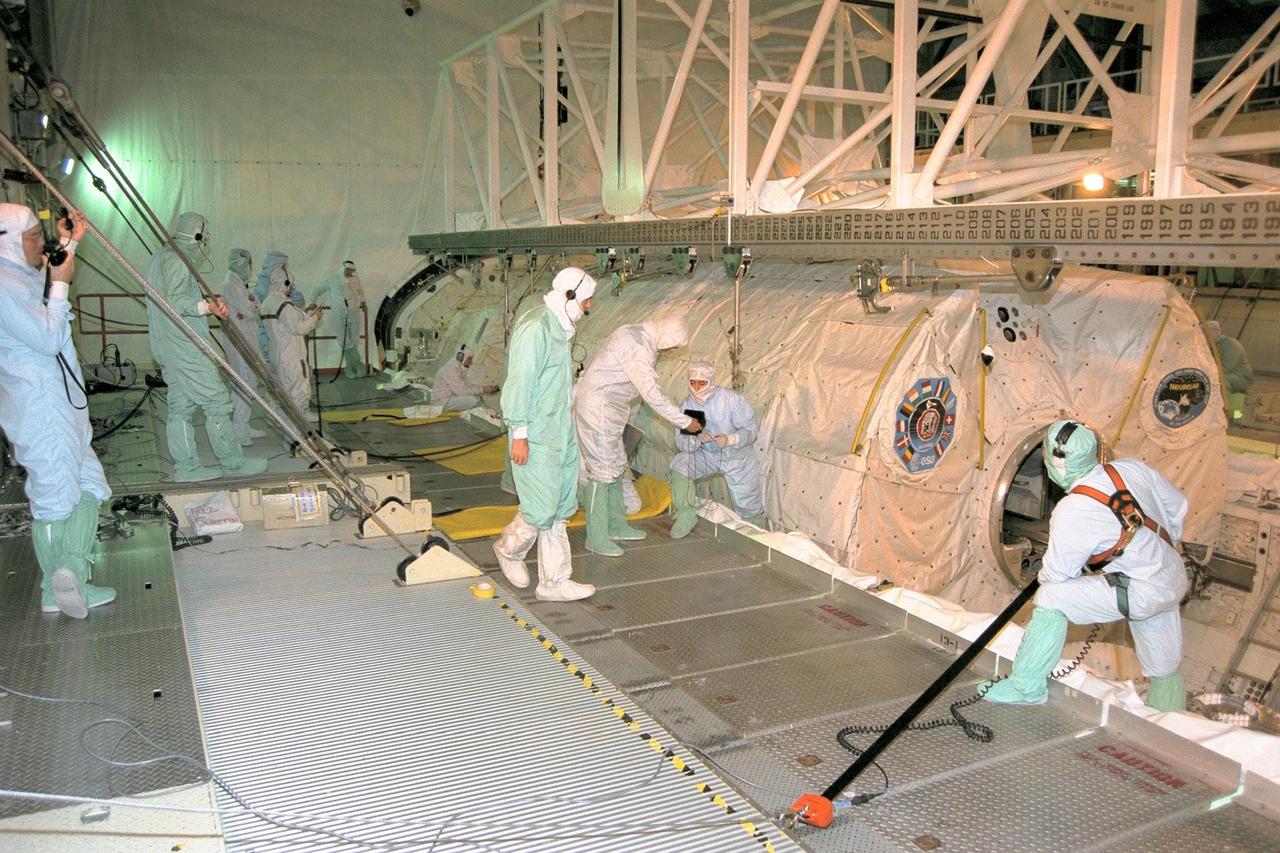
The STS-90 Neurolab payload is positioned into the cargo bay of Space Shuttle Columbia today in Orbiter Processing Facility bay 3. Investigations during the Neurolab mission will focus on the effects of microgravity on the nervous system. Specifically, experiments will study the adaptation of the vestibular system, the central nervous system, and the pathways that control the ability to sense location in the absence of gravity, as well as the effect of microgravity on a developing nervous system. The crew of STS-90, slated for launch in April, will include Commander Richard Searfoss, Pilot Scott Altman, Mission Specialists Richard Linnehan, Dafydd (Dave) Williams, M.D., and Kathryn (Kay) Hire, and Payload Specialists Jay Buckey, M.D., and James Pawelczyk, Ph.D
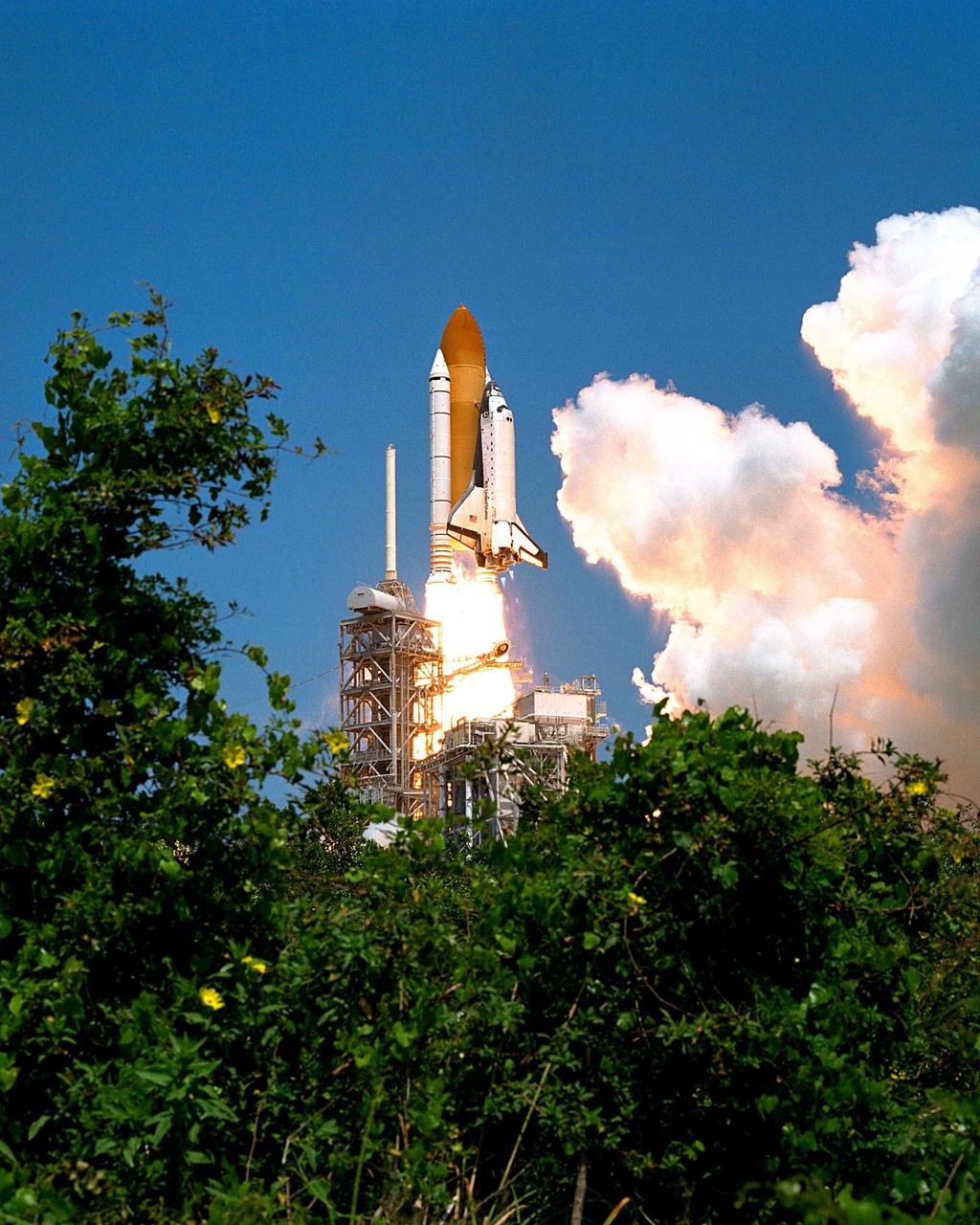
KENNEDY SPACE CENTER, FLA. -- The Space Shuttle Columbia soars from Launch Pad 39B at 2:19 p.m. EDT Apr. 17 to begin the STS-90 Neurolab mission. The launch was delayed 24 hours due to difficulty with a network signal processor, which was replaced Apr. 16, on the orbiter. The crew members are Commander Richard Searfoss, Pilot Scott Altman, Mission Specialists Richard Linnehan, D.V.M., Dafydd (Dave) Williams, M.D., with the Canadian Space Agency, and Kathryn (Kay) Hire; and Payload Specialists Jay Buckey, M.D., and James Pawelczyk, Ph.D. Investigations during the Neurolab mission will focus on the effects of microgravity on the nervous system
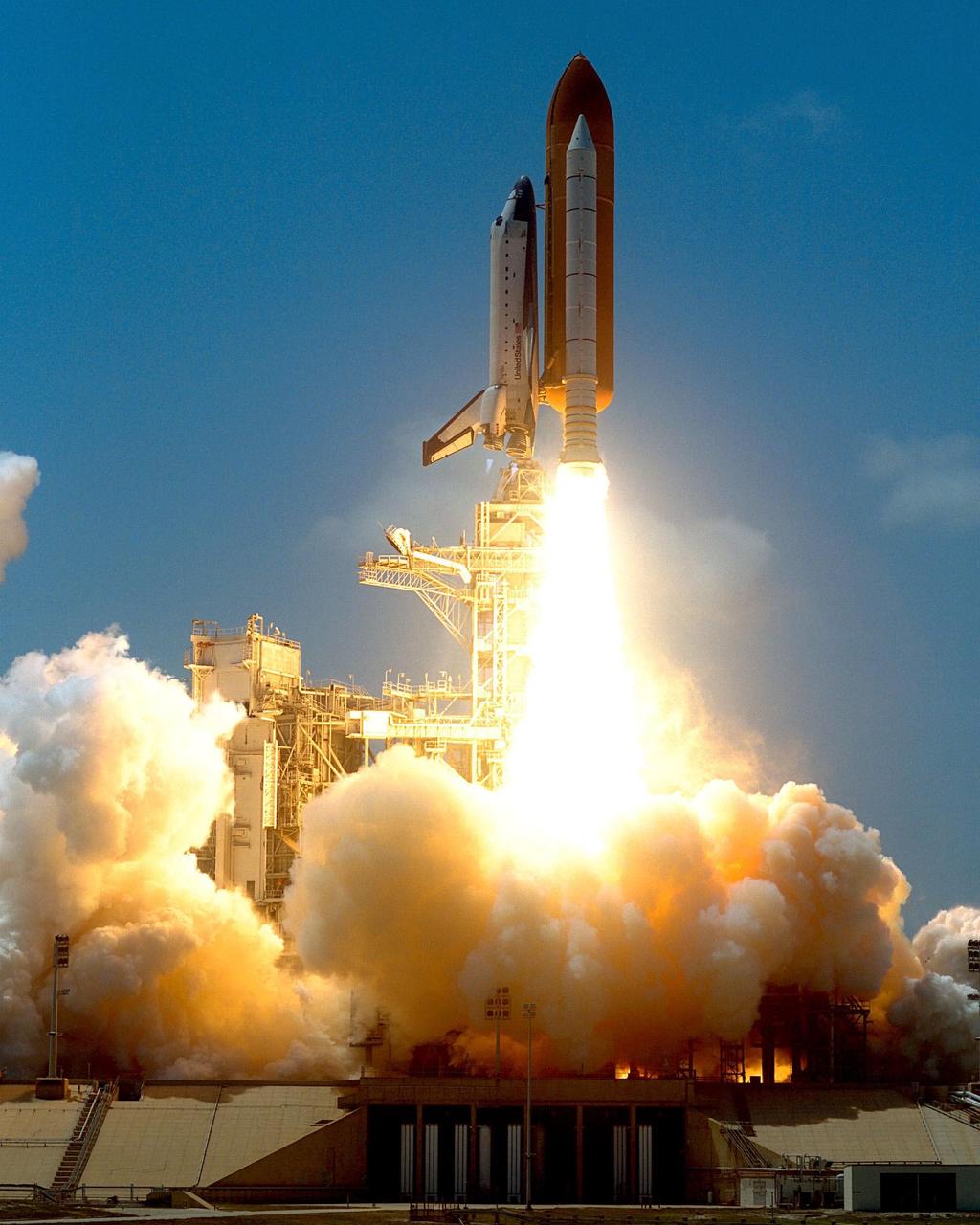
KENNEDY SPACE CENTER, FLA. -- The Space Shuttle Columbia lifts off from Launch Pad 39B at 2:19 p.m. EDT Apr. 17 to begin the nearly 17-day STS-90 Neurolab mission. The launch was delayed 24 hours due to difficulty with a network signal processor, which was replaced Apr. 16, on the orbiter. The crew members are Commander Richard Searfoss, Pilot Scott Altman, Mission Specialists Richard Linnehan, D.V.M., Dafydd (Dave) Williams, M.D., with the Canadian Space Agency, and Kathryn (Kay) Hire; and Payload Specialists Jay Buckey, M.D., and James Pawelczyk, Ph.D. Investigations during the Neurolab mission will focus on the effects of microgravity on the nervous system
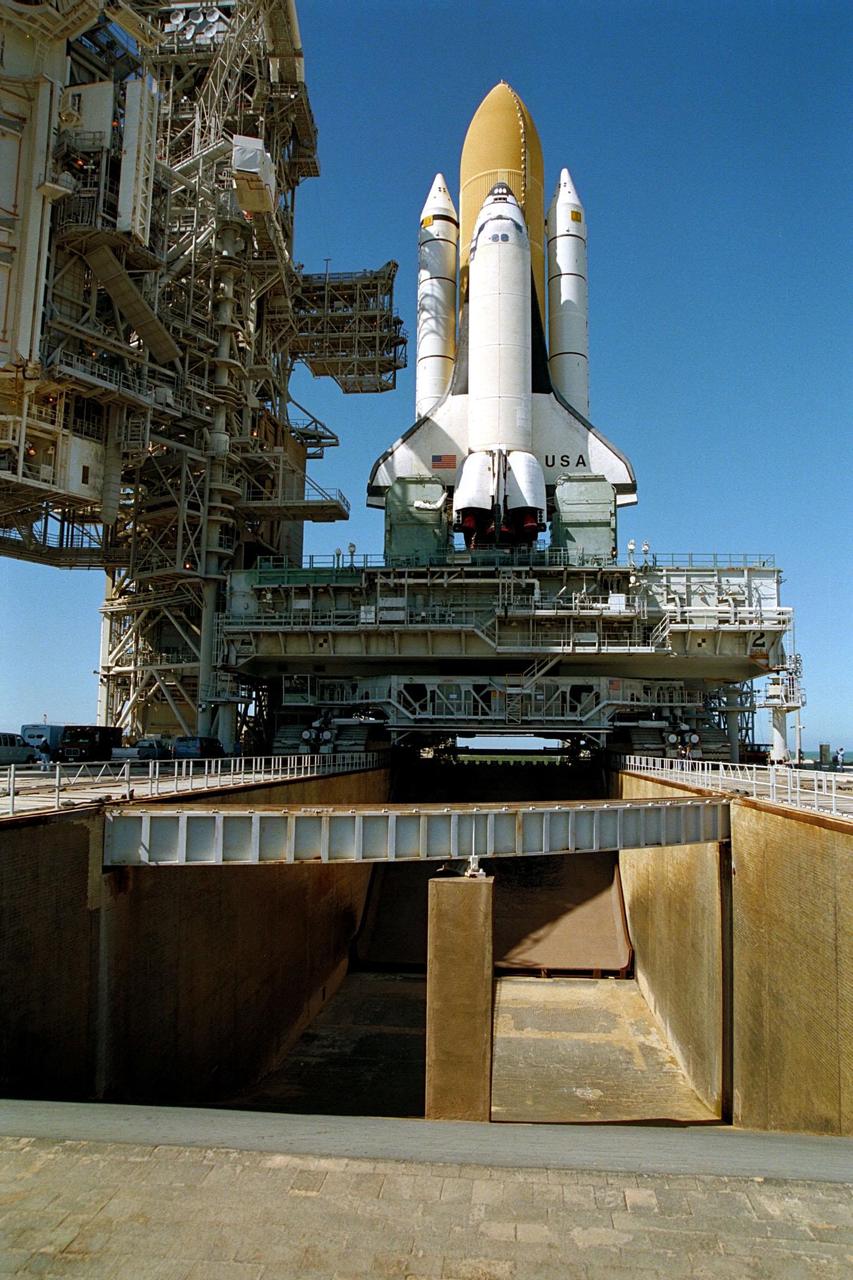
KENNEDY SPACE CENTER, FLA. -- The Space Shuttle Columbia arrives at the top of Launch Pad 39B after its morning rollout prior to STS-90. The Neurolab experiments are the primary payload on this nearly 17-day space flight. Investigations during the Neurolab mission will focus on the effects of microgravity on the nervous system. The crew of STS-90, slated for launch April 16 at 2:19 p.m. EDT, includes Commander Richard Searfoss, Pilot Scott Altman, Mission Specialists Richard Linnehan, Dafydd (Dave) Williams, M.D., and Kathryn (Kay) Hire, and Payload Specialists Jay Buckey, M.D., and James Pawelczyk, Ph.D

KENNEDY SPACE CENTER, FLA. -- Technicians gather around the STS-90 Neurolab payload during weight and center-of-gravity measurements in KSC's Operations and Checkout Building. Investigations during the Neurolab mission will focus on the effects of microgravity on the nervous system. Specifically, experiments will study the adaptation of the vestibular system, the central nervous system, and the pathways that control the ability to sense location in the absence of gravity, as well as the effect of microgravity on a developing nervous system. The crew of STS-90, slated for launch in April, will include Commander Richard Searfoss, Pilot Scott Altman, Mission Specialists Richard Linnehan, Dafydd (Dave) Williams, M.D., and Kathryn (Kay) Hire, and Payload Specialists Jay Buckey, M.D., and James Pawelczyk, Ph.D
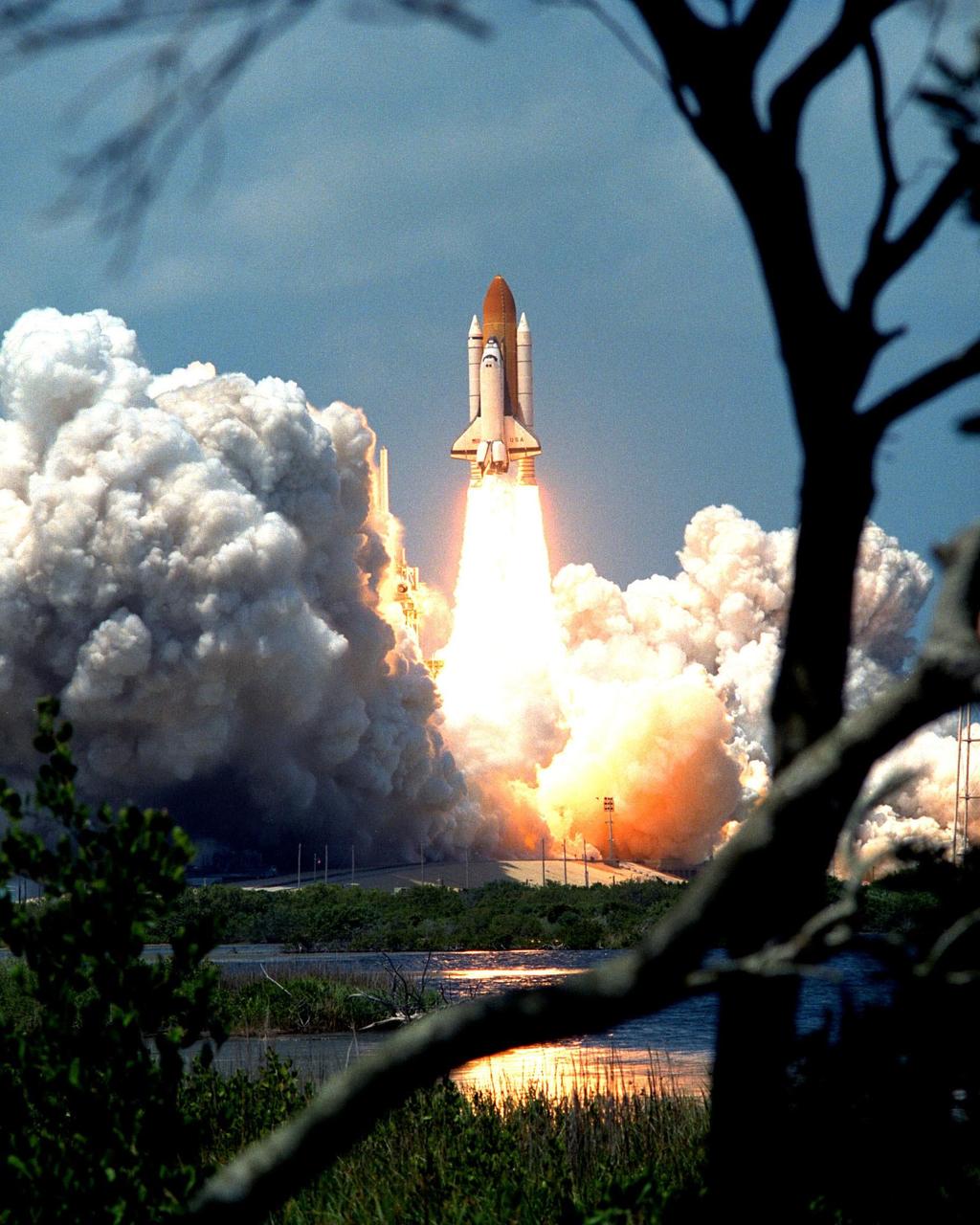
KENNEDY SPACE CENTER, FLA. -- The Space Shuttle Columbia soars from Launch Pad 39B at 2:19 p.m. EDT Apr. 17 to begin the nearly 17-day STS-90 Neurolab mission. The launch was delayed 24 hours due to difficulty with a network signal processor, which was replaced Apr. 16, on the orbiter. The crew members are Commander Richard Searfoss, Pilot Scott Altman, Mission Specialists Richard Linnehan, D.V.M., Dafydd (Dave) Williams, M.D., with the Canadian Space Agency, and Kathryn (Kay) Hire; and Payload Specialists Jay Buckey, M.D., and James Pawelczyk, Ph.D. Investigations during the Neurolab mission will focus on the effects of microgravity on the nervous system.
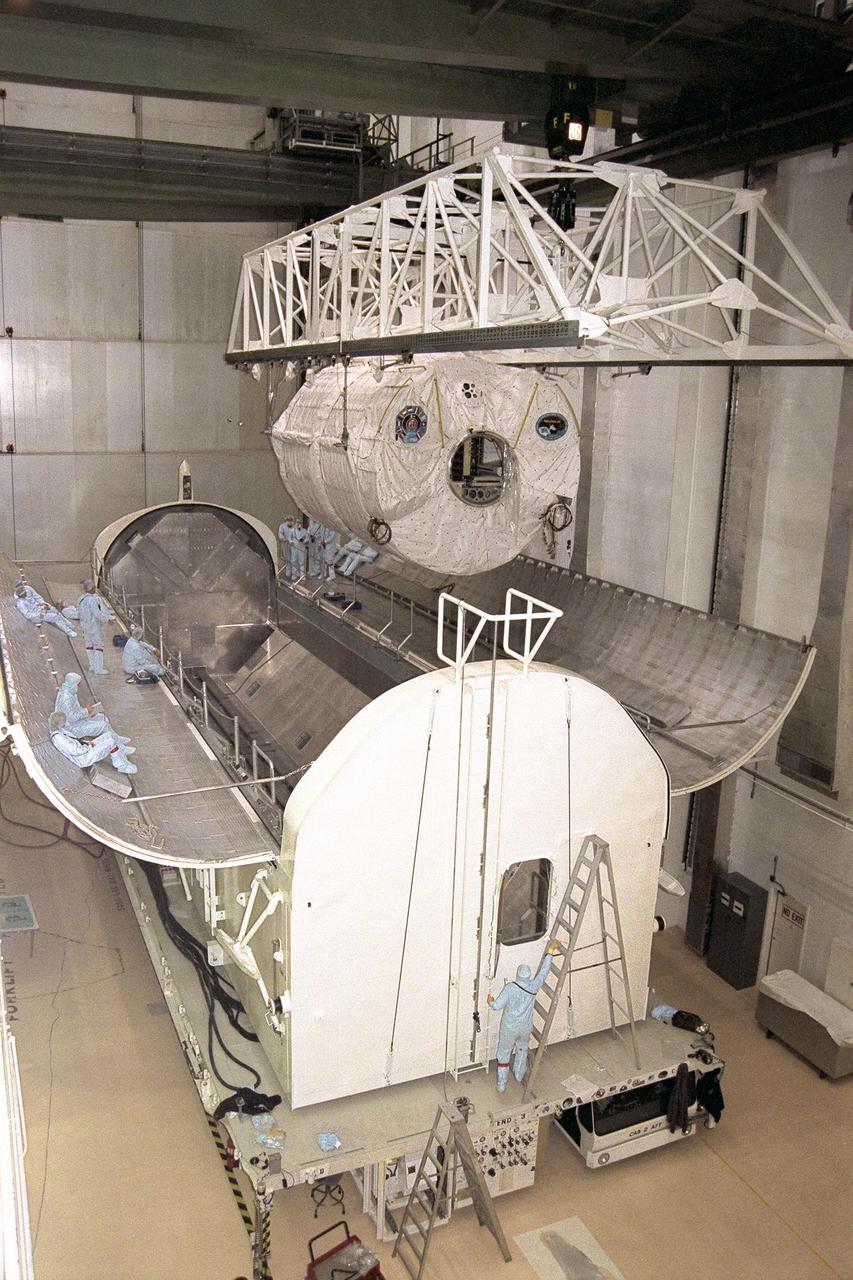
KENNEDY SPACE CENTER, FLA. -- The STS-90 Neurolab payload is lowered into its payload canister in KSC's Operations and Checkout Building. Investigations during the Neurolab mission will focus on the effects of microgravity on the nervous system. Specifically, experiments will study the adaptation of the vestibular system, the central nervous system, and the pathways that control the ability to sense location in the absence of gravity, as well as the effect of microgravity on a developing nervous system. The crew of STS-90, slated for launch in April, will include Commander Richard Searfoss, Pilot Scott Altman, Mission Specialists Richard Linnehan, Dafydd (Dave) Williams, M.D., and Kathryn (Kay) Hire, and Payload Specialists Jay Buckey, M.D., and James Pawelczyk, Ph.D

KENNEDY SPACE CENTER, FLA. -- The Space Shuttle Columbia soars from Launch Pad 39B at 2:19 p.m. EDT Apr. 17 to begin the STS-90 Neurolab mission. The launch was delayed 24 hours due to difficulty with a network signal processor, which was replaced Apr. 16, on the orbiter. The crew members are Commander Richard Searfoss, Pilot Scott Altman, Mission Specialists Richard Linnehan, D.V.M., Dafydd (Dave) Williams, M.D., with the Canadian Space Agency, and Kathryn (Kay) Hire; and Payload Specialists Jay Buckey, M.D., and James Pawelczyk, Ph.D. Investigations during the Neurolab mission will focus on the effects of microgravity on the nervous system
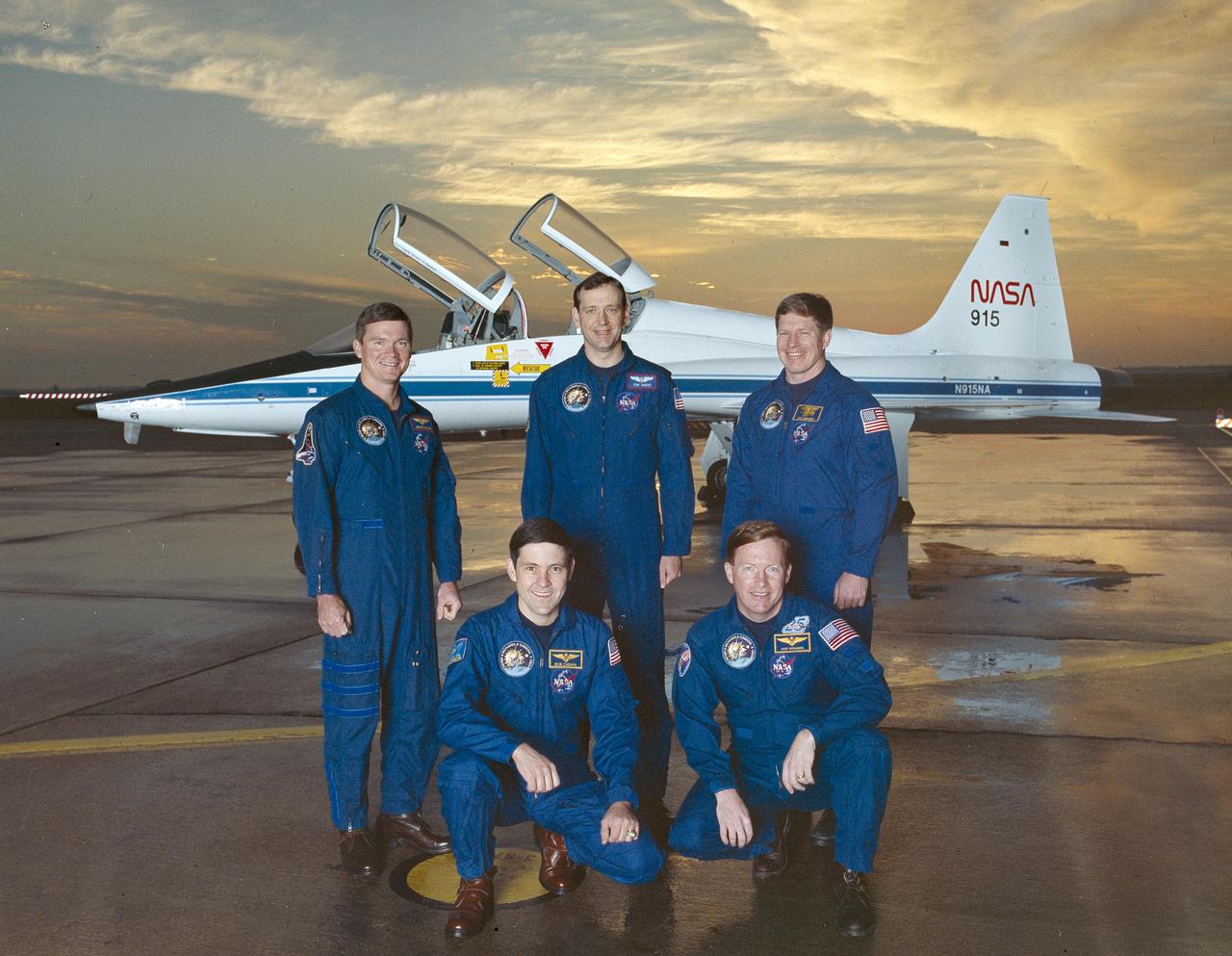
The 5 member crew of the STS-41 mission included (left to right): Bruce E. Melnick, mission specialist 2; Robert D. Cabana, pilot; Thomas D. Akers, mission specialist 3; Richard N. Richards, commander; and William M. Shepherd, mission specialist 1. Launched aboard the Space Shuttle Discovery on October 6, 1990 at 7:47:15 am (EDT), the primary payload for the mission was the ESA built Ulysses Space Craft made to explore the polar regions of the Sun. Other main payloads and experiments included the Shuttle Solar Backscatter Ultraviolet (SSBUV) experiment and the INTELSAT Solar Array Coupon (ISAC).

The STS-90 Neurolab payload is lowered into position into the cargo bay of Space Shuttle Columbia today in Orbiter Processing Facility bay 3. Investigations during the Neurolab mission will focus on the effects of microgravity on the nervous system. Specifically, experiments will study the adaptation of the vestibular system, the central nervous system, and the pathways that control the ability to sense location in the absence of gravity, as well as the effect of microgravity on a developing nervous system. The crew of STS-90, slated for launch in April, will include Commander Richard Searfoss, Pilot Scott Altman, Mission Specialists Richard Linnehan, Dafydd (Dave) Williams, M.D., and Kathryn (Kay) Hire, and Payload Specialists Jay Buckey, M.D., and James Pawelczyk, Ph.D
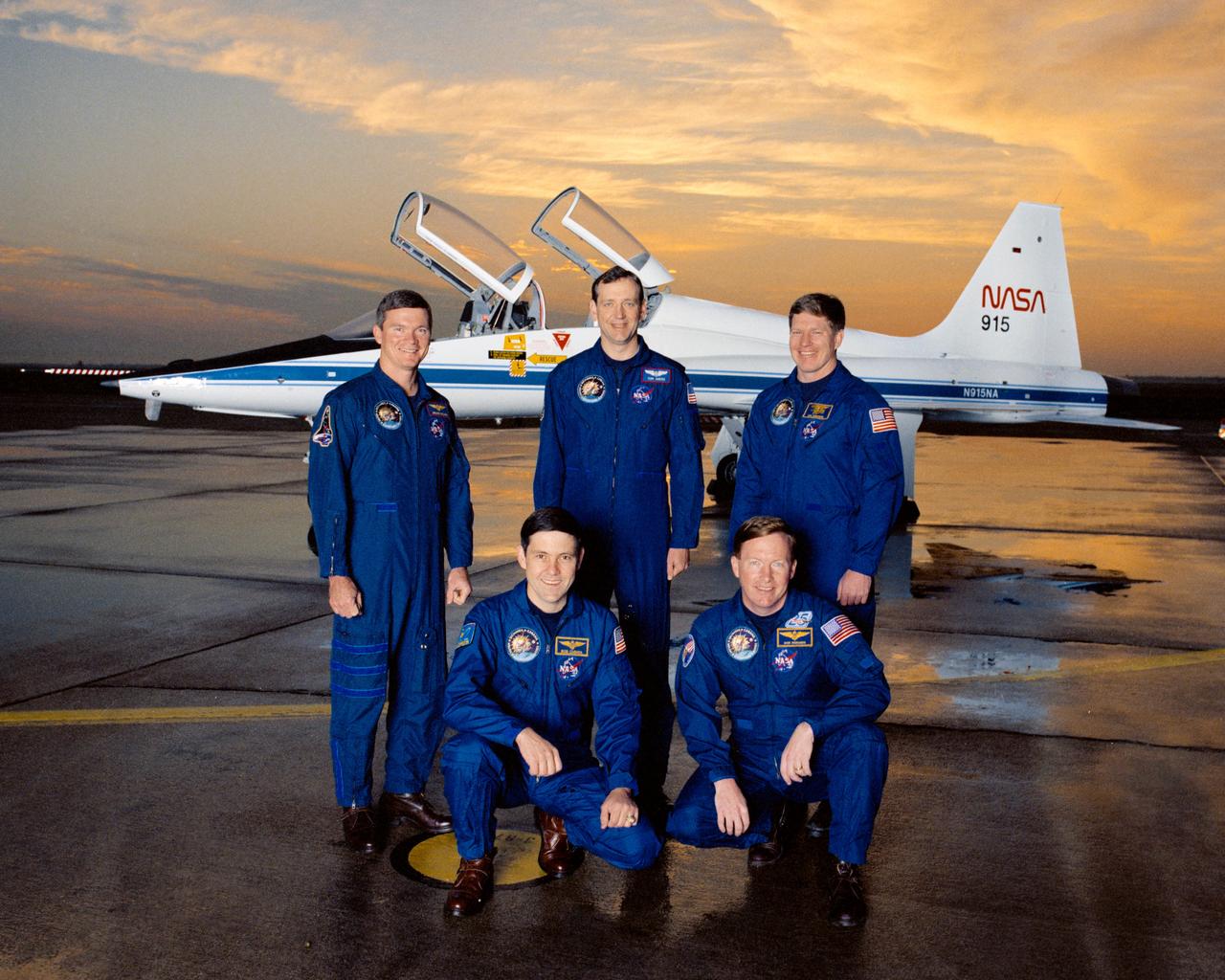
STS041-S-002 (7 May 1990) --- These five astronauts have been assigned to fly the STS-41 mission for the National Aeronautics and Space Administration (NASA). Pictured near the flight line at Ellington Field prior to an early morning flight in NASA T-38s are (kneeling, from the left) Robert D. Cabana, pilot; and Richard N. Richards, mission commander; and (standing, from left) Bruce E. Melnick, Thomas D. Akers and William M. Shepherd, all mission specialists. Primary payload for the Space Shuttle Discovery on the STS 41 mission is Ulysses.
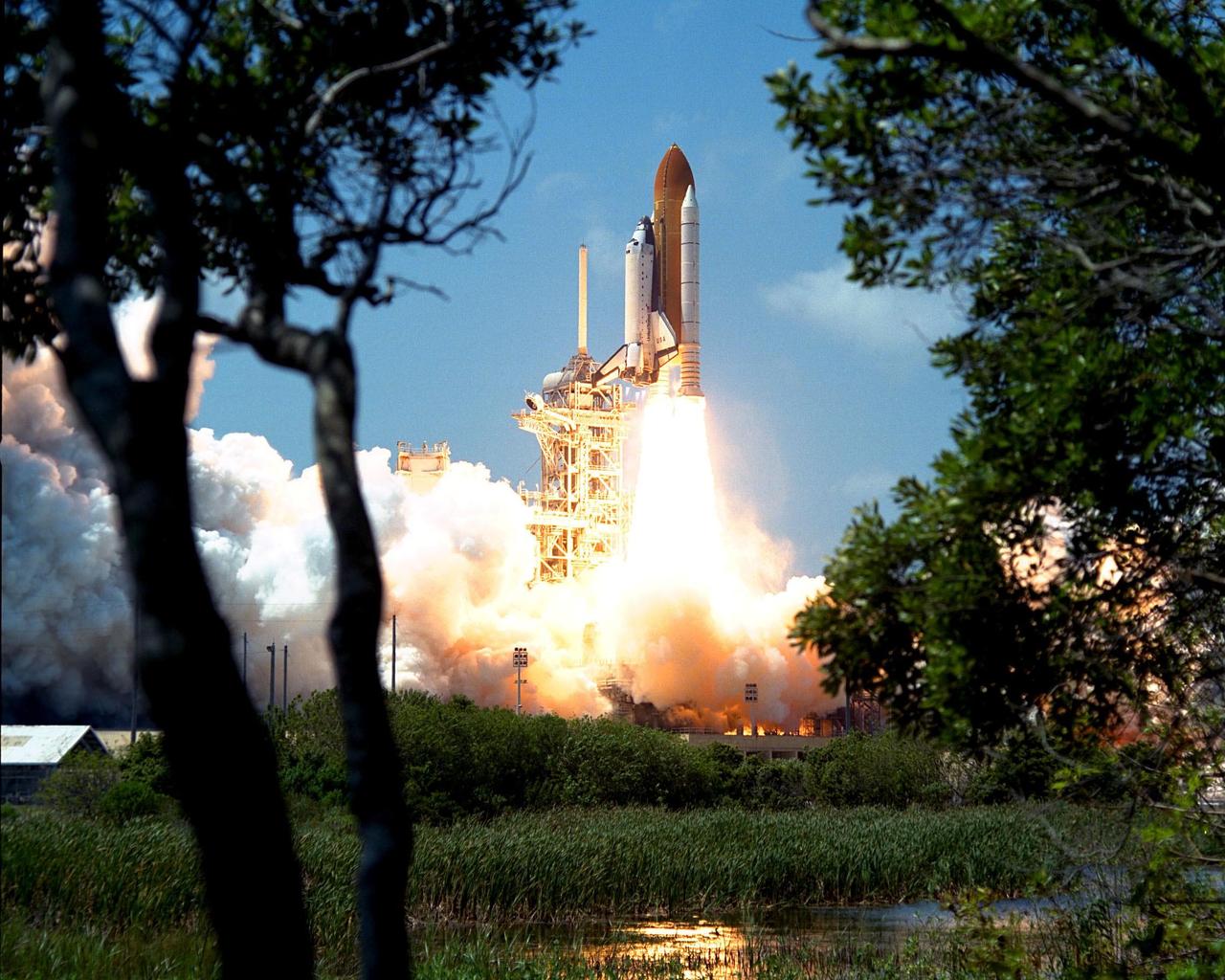
Framed by native Floridian foliage, the Space Shuttle Columbia soars from Launch Pad 39B at 2:19 p.m. EDT Apr. 17 to begin the nearly 17-day STS-90 Neurolab mission. The launch was delayed 24 hours due to difficulty with a network signal processor, which was replaced Apr. 16, on the orbiter. The crew members are Commander Richard Searfoss, Pilot Scott Altman, Mission Specialists Richard Linnehan, D.V.M., Dafydd (Dave) Williams, M.D., with the Canadian Space Agency, and Kathryn (Kay) Hire; and Payload Specialists Jay Buckey, M.D., and James Pawelczyk, Ph.D. Investigations during the Neurolab mission will focus on the effects of microgravity on the nervous system
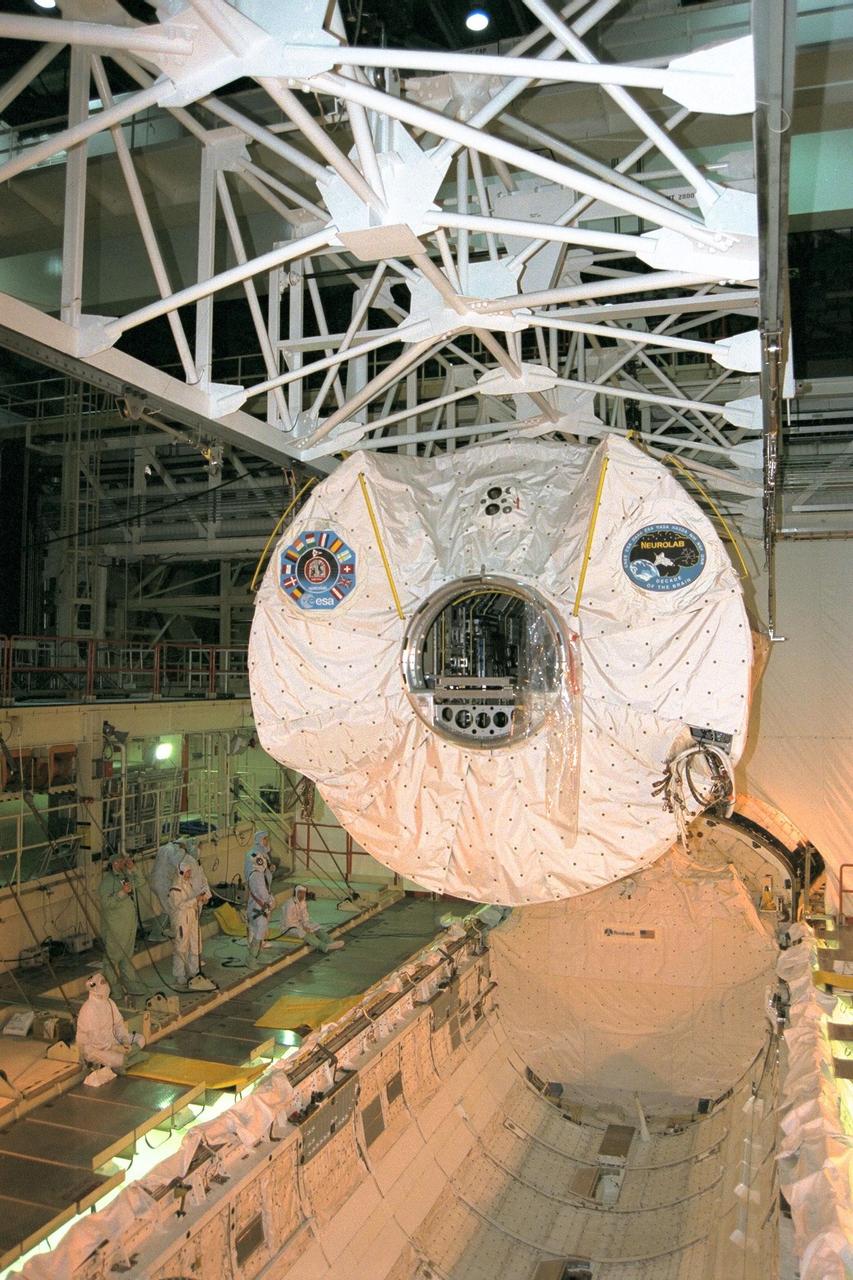
The STS-90 Neurolab payload is lowered into position into the cargo bay of Space Shuttle Columbia today in Orbiter Processing Facility bay 3. Investigations during the Neurolab mission will focus on the effects of microgravity on the nervous system. Specifically, experiments will study the adaptation of the vestibular system, the central nervous system, and the pathways that control the ability to sense location in the absence of gravity, as well as the effect of microgravity on a developing nervous system. The crew of STS-90, slated for launch in April, will include Commander Richard Searfoss, Pilot Scott Altman, Mission Specialists Richard Linnehan, Dafydd (Dave) Williams, M.D., and Kathryn (Kay) Hire, and Payload Specialists Jay Buckey, M.D., and James Pawelczyk, Ph.D
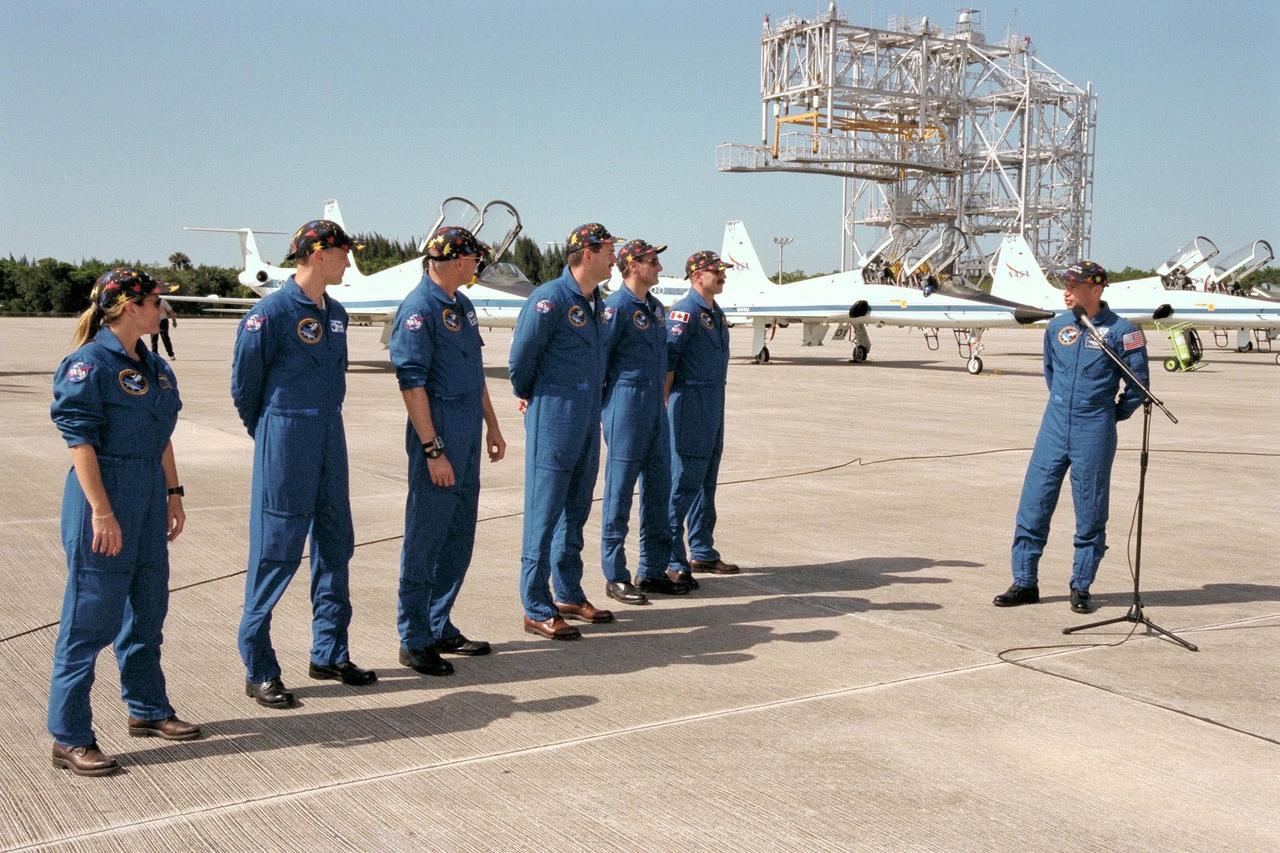
KENNEDY SPACE CENTER, FLA. -- The STS-90 crew arrive at Kennedy Space Center's Shuttle Landing Facility in preparation for the launch of Columbia on April 16 at 2:19 p.m. EDT from KSC's Launch Pad 39B. The crew of STS-90 are, left to right, Mission Specialist Kathryn (Kay) Hire; Payload Specialist James Pawelczyk, Ph.D.; Payload Specialist Jay Buckey, M.D.; Pilot Scott Altman; Mission Specialist Richard Linnehan, D.V.M.; Mission Specialist Dafydd (Dave) Williams with the Canadian Space Agency; and Commander Richard Searfoss. STS-90, which will be the second mission of 1998, is scheduled to last nearly 17 days

The Space Shuttle Columbia soars from Launch Pad 39B at 2:19 p.m. EDT Apr. 17 to begin the nearly 17-day STS-90 Neurolab mission. The launch was delayed 24 hours due to difficulty with a network signal processor, which was replaced Apr. 16, on the orbiter. The crew members are Commander Richard Searfoss, Pilot Scott Altman, Mission Specialists Richard Linnehan, D.V.M., Dafydd (Dave) Williams, M.D., with the Canadian Space Agency, and Kathryn (Kay) Hire; and Payload Specialists Jay Buckey, M.D., and James Pawelczyk, Ph.D. Investigations during the Neurolab mission will focus on the effects of microgravity on the nervous system
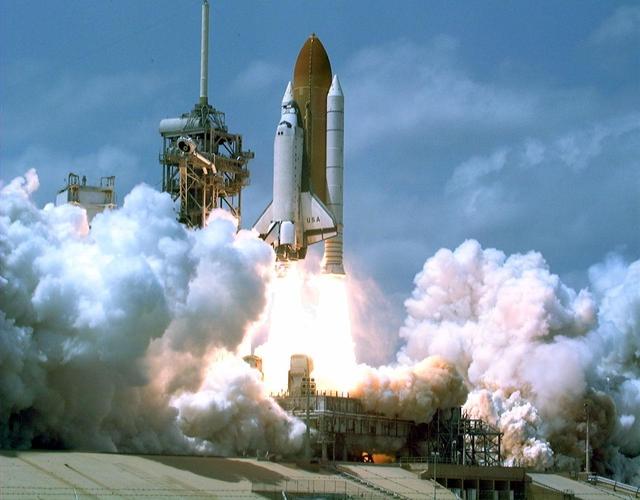
The Space Shuttle Columbia soars from Launch Pad 39B at 2:19 p.m. EDT Apr. 17 to begin the nearly 17-day STS-90 Neurolab mission. The launch was delayed 24 hours due to difficulty with a network signal processor, which was replaced Apr. 16, on the orbiter. The crew members are Commander Richard Searfoss, Pilot Scott Altman, Mission Specialists Richard Linnehan, D.V.M., Dafydd (Dave) Williams, M.D., with the Canadian Space Agency, and Kathryn (Kay) Hire; and Payload Specialists Jay Buckey, M.D., and James Pawelczyk, Ph.D. Investigations during the Neurolab mission will focus on the effects of microgravity on the nervous system
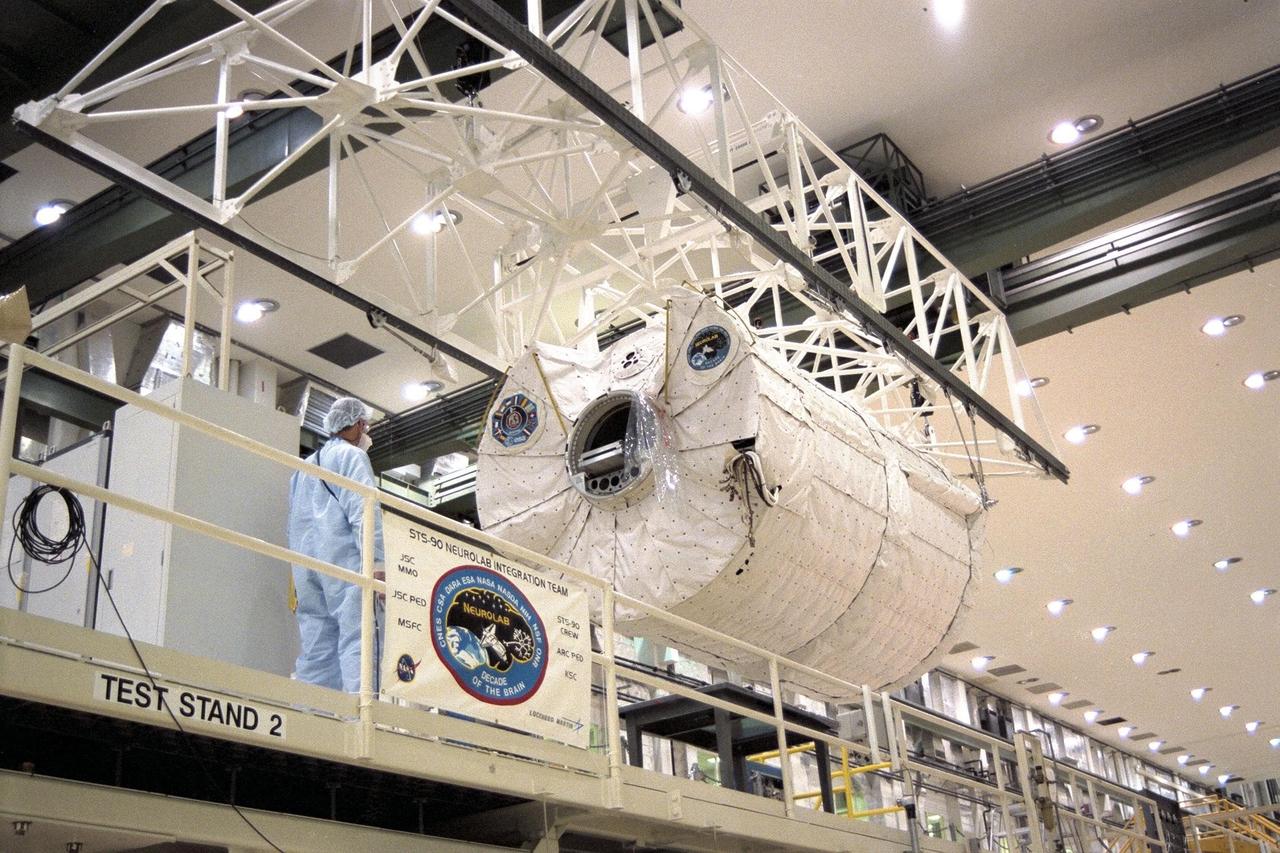
KENNEDY SPACE CENTER, FLA. -- A technician looks at the STS-90 Neurolab payload as it is moved from its test stand in KSC's Operations and Checkout Building. Investigations during the Neurolab mission will focus on the effects of microgravity on the nervous system. Specifically, experiments will study the adaptation of the vestibular system, the central nervous system, and the pathways that control the ability to sense location in the absence of gravity, as well as the effect of microgravity on a developing nervous system. The crew of STS-90, slated for launch in April, will include Commander Richard Searfoss, Pilot Scott Altman, Mission Specialists Richard Linnehan, Dafydd (Dave) Williams, M.D., and Kathryn (Kay) Hire, and Payload Specialists Jay Buckey, M.D., and James Pawelczyk, Ph.D
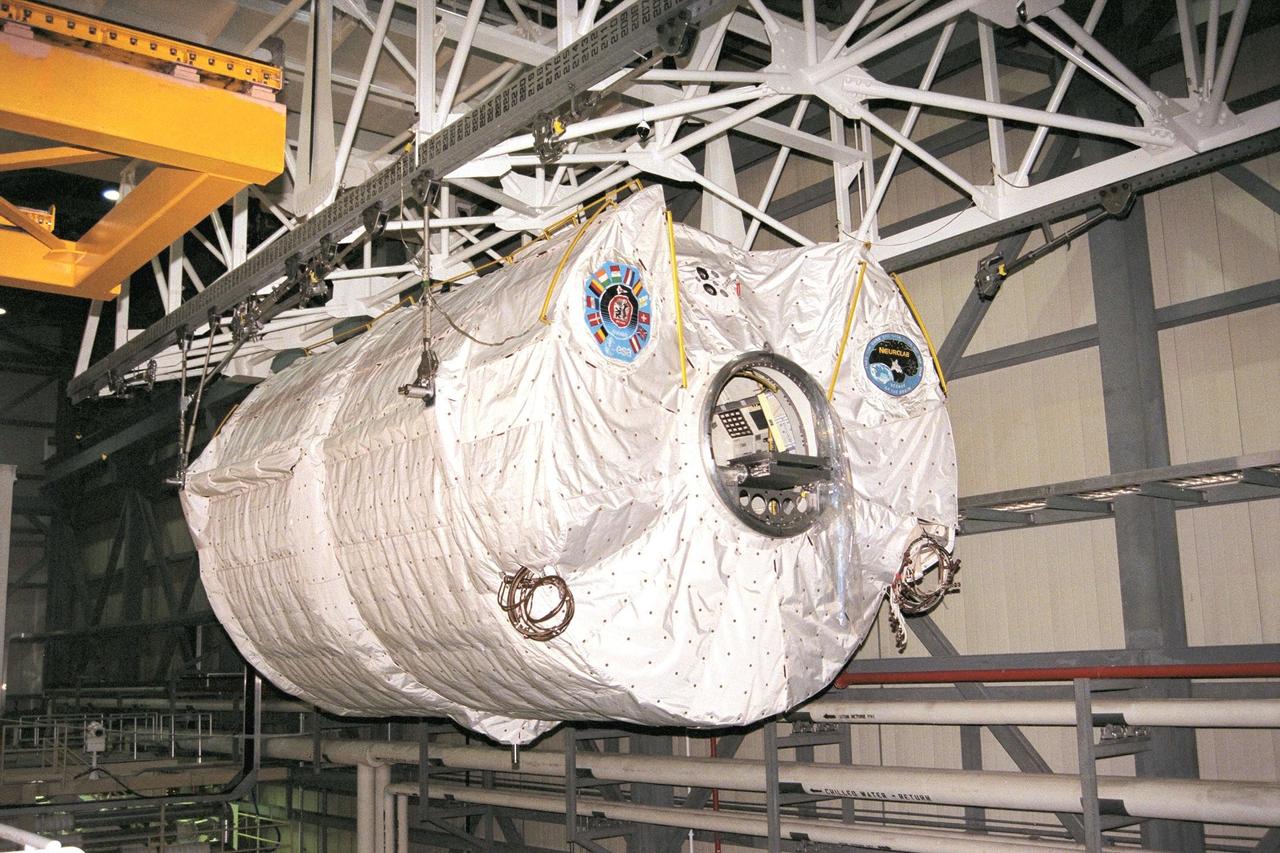
The STS-90 Neurolab payload is prepared to be positioned into the cargo bay of Space Shuttle Columbia today in Orbiter Processing Facility bay 3. Investigations during the Neurolab mission will focus on the effects of microgravity on the nervous system. Specifically, experiments will study the adaptation of the vestibular system, the central nervous system, and the pathways that control the ability to sense location in the absence of gravity, as well as the effect of microgravity on a developing nervous system. The crew of STS-90, slated for launch in April, will include Commander Richard Searfoss, Pilot Scott Altman, Mission Specialists Richard Linnehan, Dafydd (Dave) Williams, M.D., and Kathryn (Kay) Hire, and Payload Specialists Jay Buckey, M.D., and James Pawelczyk, Ph.D
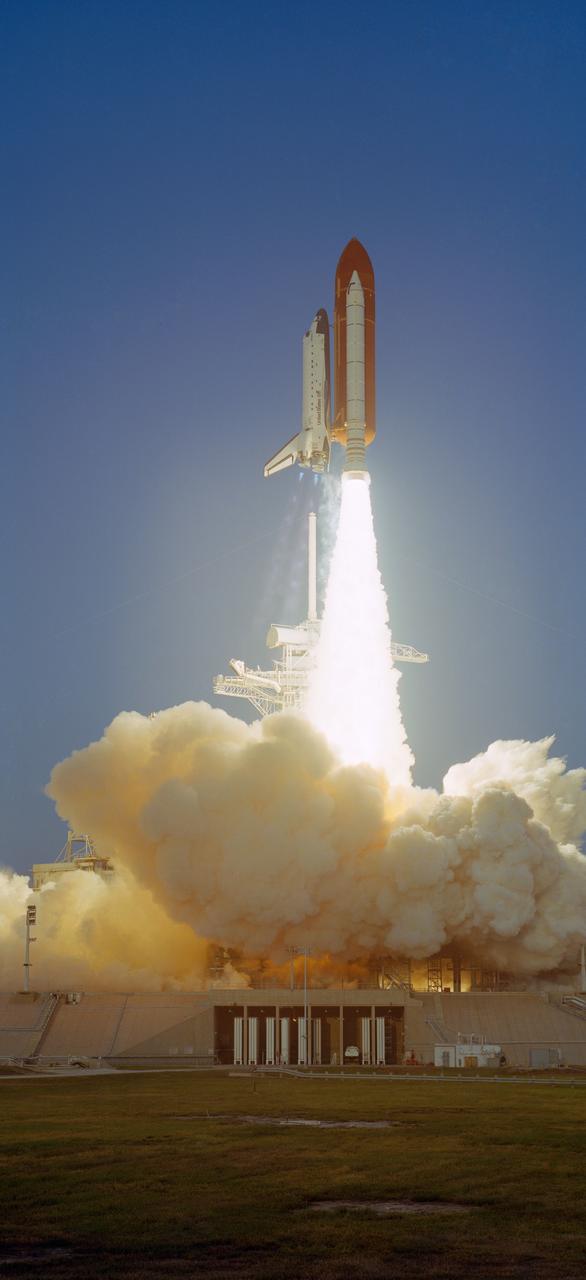
STS041-S-101 (6 Oct 1990) --- Discovery lifts off from Launch Complex 39 at the Kennedy Space Center to begin a four-day mission in space for its five-man crew. Onboard the spacecraft are Astronauts Richard N. Richards, Robert D. Cabana, William M. Shepherd, Bruce E. Melnick and Thomas D. Akers. Discovery lifted off at 7:47 a.m. EDT on Oct. 6, 1990. A few hours after this photo was made, the crewmembers released the Ulysses spacecraft on its way to a long-awaited mission.
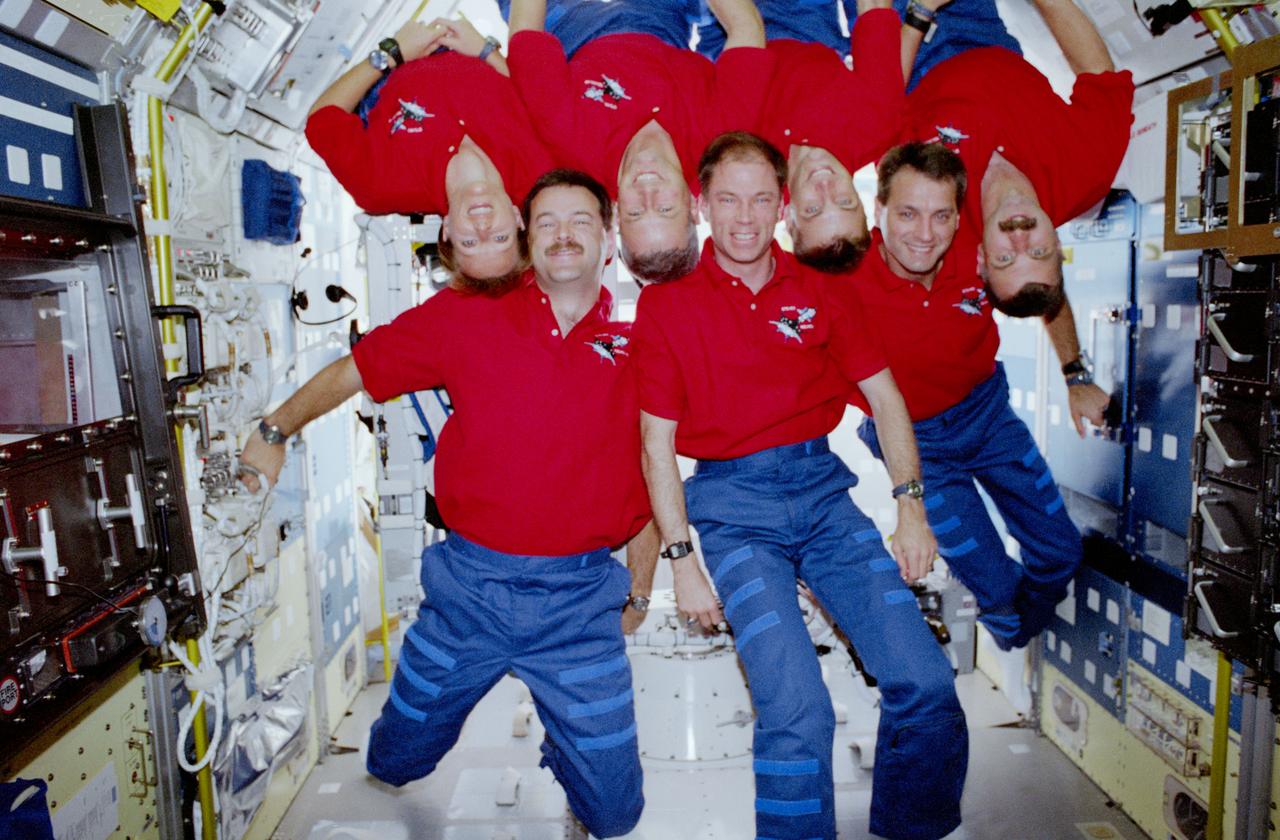
STS090-378-019 (17 April - 3 May 1998) --- The Neurolab crew takes advantage of the weightlessness in the Spacelab Science Module to add a unique twist to one of their traditional in-flight space portraits. From the left (with feet toward the floor) are Scott D. Altman, pilot; Richard A. Searfoss, mission commander; and Richard M. Linnehan, payload commander. Others, from the left, are Kathryn P. Hire, mission specialist; Jay C. Buckey, Jr. and James A. (Jim) Pawelczyk, both payload specialists; and Dafydd R. (Dave) Williams, mission specialist representing the Canadian Space Agency (CSA).
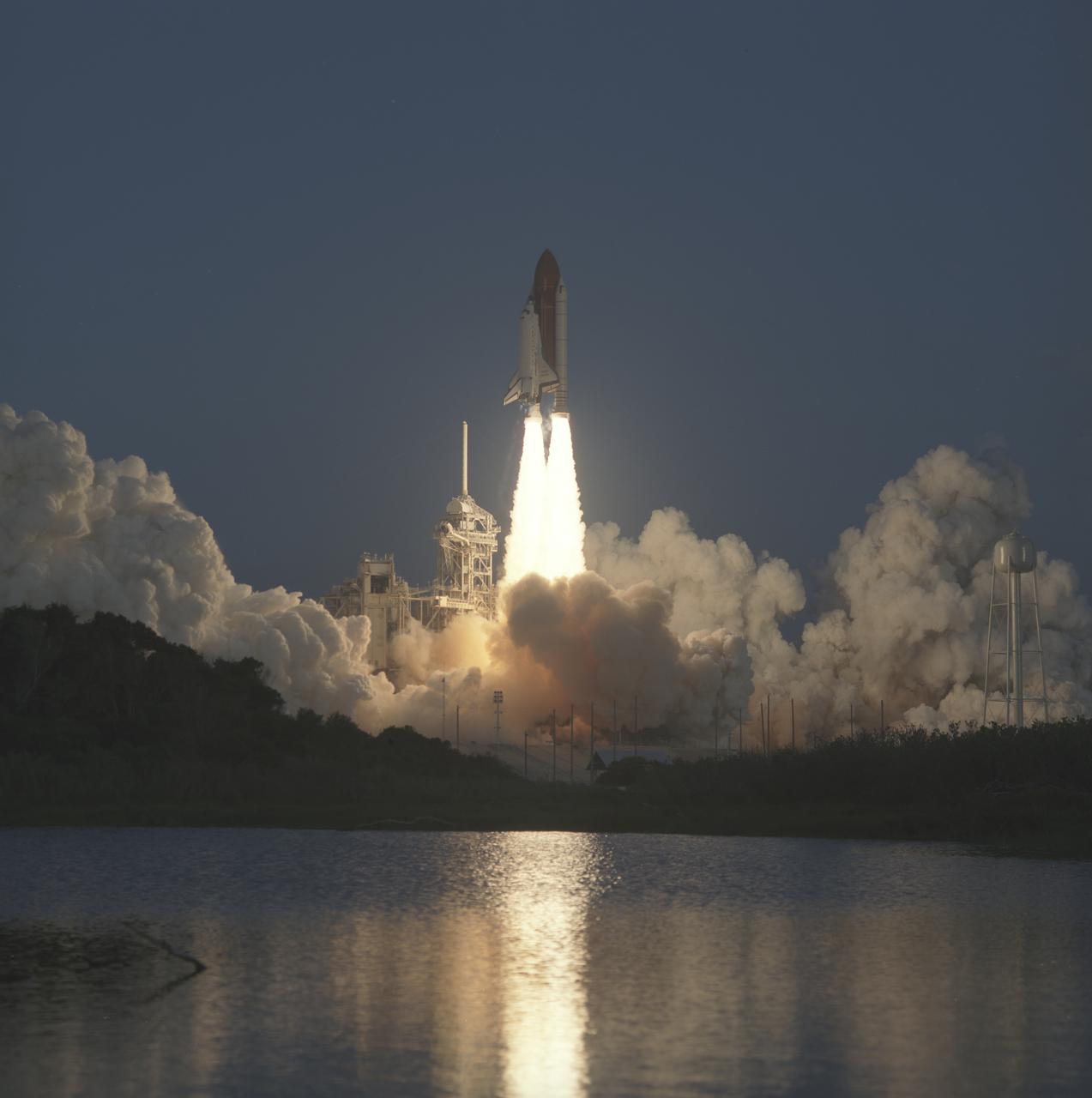
Launched aboard the Space Shuttle Discovery on October 6, 1990 at 7:47:15 am (EDT), the STS-41 mission consisted of 5 crew members. Included were Richard N. Richards, commander; Robert D. Cabana, pilot; and Bruce E. Melnick, Thomas D. Akers, and William M. Shepherd, all mission specialists. The primary payload for the mission was the European Space Agency (ESA) built Ulysses Space Craft made to explore the polar regions of the Sun. Other main payloads and experiments included the Shuttle Solar Backscatter Ultraviolet (SSBUV) experiment and the INTELSAT Solar Array Coupon (ISAC).
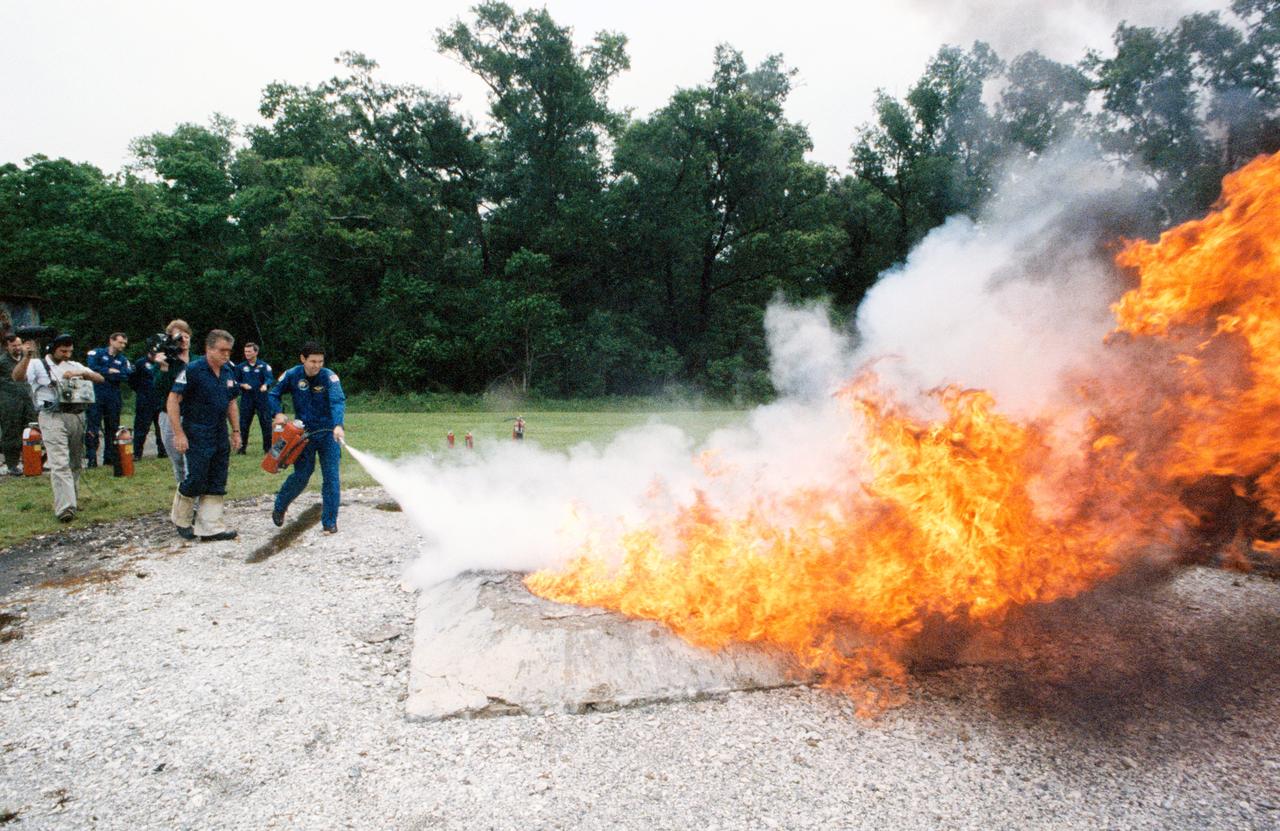
S90-38933 (4 May 1990) --- The STS-41 astronaut crew participates in fire control training exercises at the Johnson Space Center (JSC). Controlling the fire extinguisher at left frame is astronaut Robert D. Cabana, STS-41 pilot. Watching in the background are other STS-41 astronauts who participated in the session. They were Richard N. Richards, William M. Shepherd, Bruce E. Melnick and Thomas D. Akers. This type training is provided all crewmembers assigned to seats aboard Space Shuttle. Members of the both the Houston and Pasadena fire departments instruct the sessions.
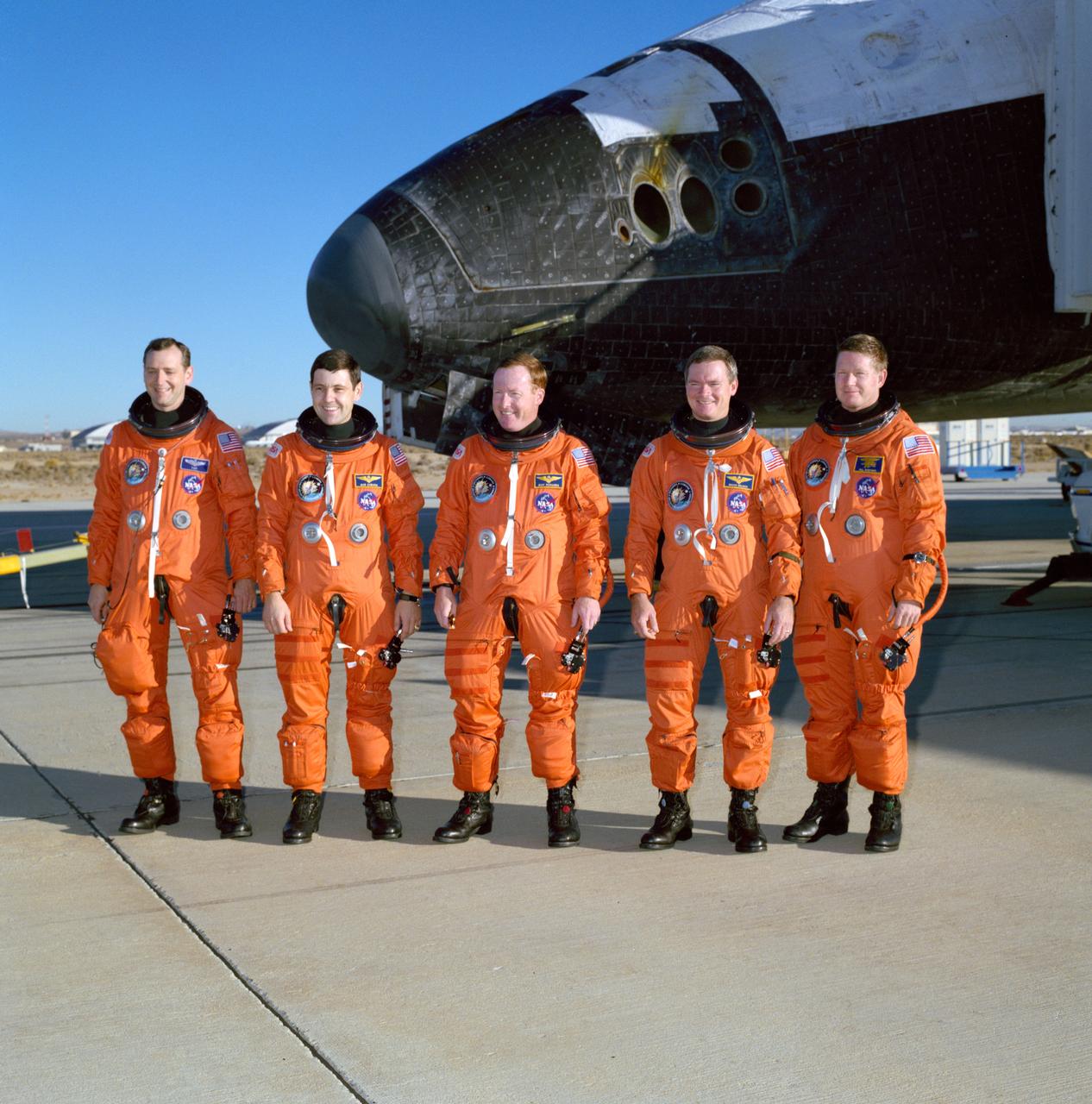
STS041-S-096 (10 Oct 1990) --- The five astronaut crewmembers of Discovery's most recent flight pose for their first photo back on terra firma following their successful four day mission in earth orbit. Discovery, partially visible in this frame, touched down at Edwards Air Force Base at 6:57 a.m. PDT, Oct. 10, 1990. Astronaut Richard N. Richards (center) was mission commander. He is flanked here by (left to right) Astronauts Thomas D. Akers, Robert D. Cabana, Bruce E. Melnick and William M. Shepherd.
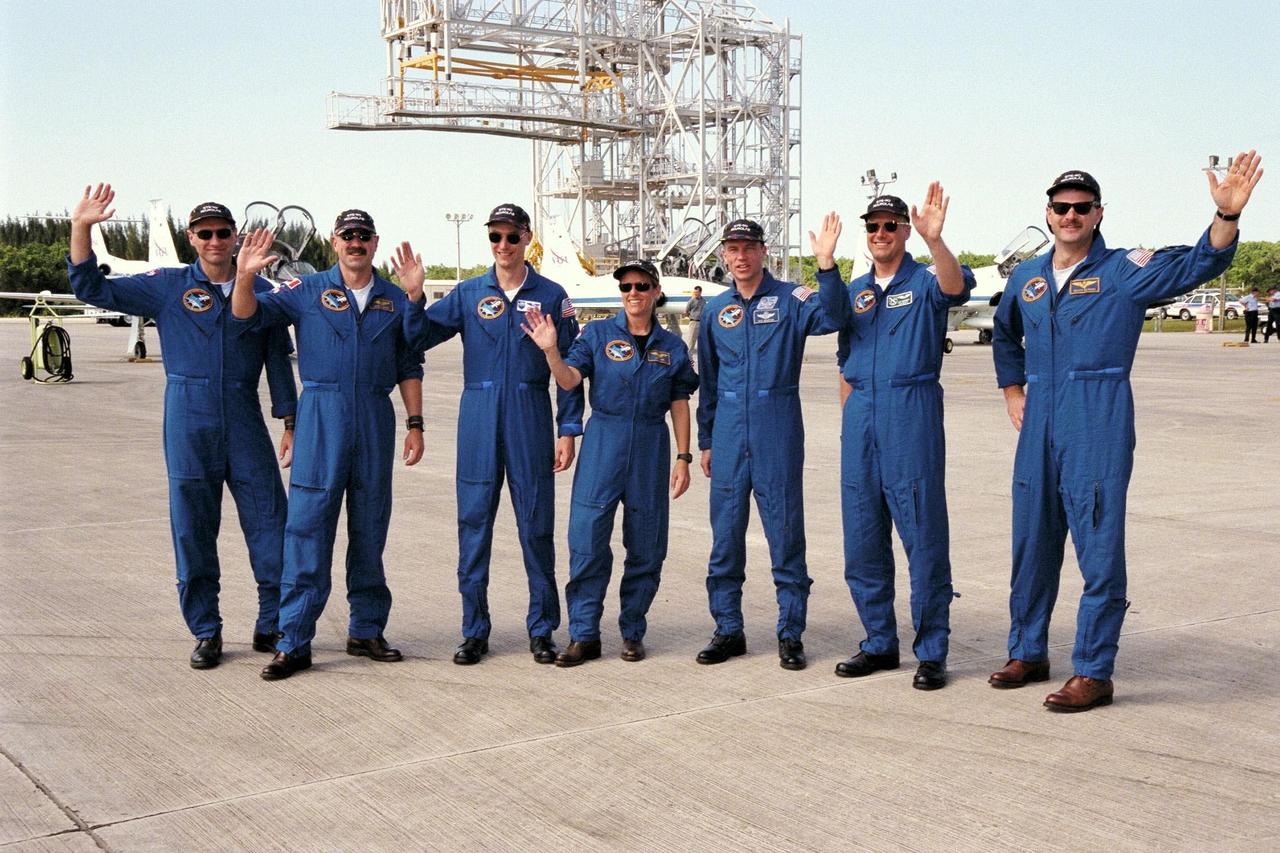
KENNEDY SPACE CENTER, FLA. -- The STS-90 crew arrive at Kennedy Space Center's Shuttle Landing Facility in preparation for the launch of Columbia on April 16 at 2:19 p.m. EDT from KSC's Launch Pad 39B. The crew of STS-90 are, left to right, Mission Specialist Richard Linnehan, D.V.M.; Mission Specialist Dafydd (Dave) Williams with the Canadian Space Agency; Payload Specialist James Pawelczyk, Ph.D.; Mission Specialist Kathryn (Kay) Hire; Commander Richard Searfoss; Payload Specialist Jay Buckey, M.D.; and Pilot Scott Altman. STS-90, which will be the second mission of 1998, is scheduled to last nearly 17 days
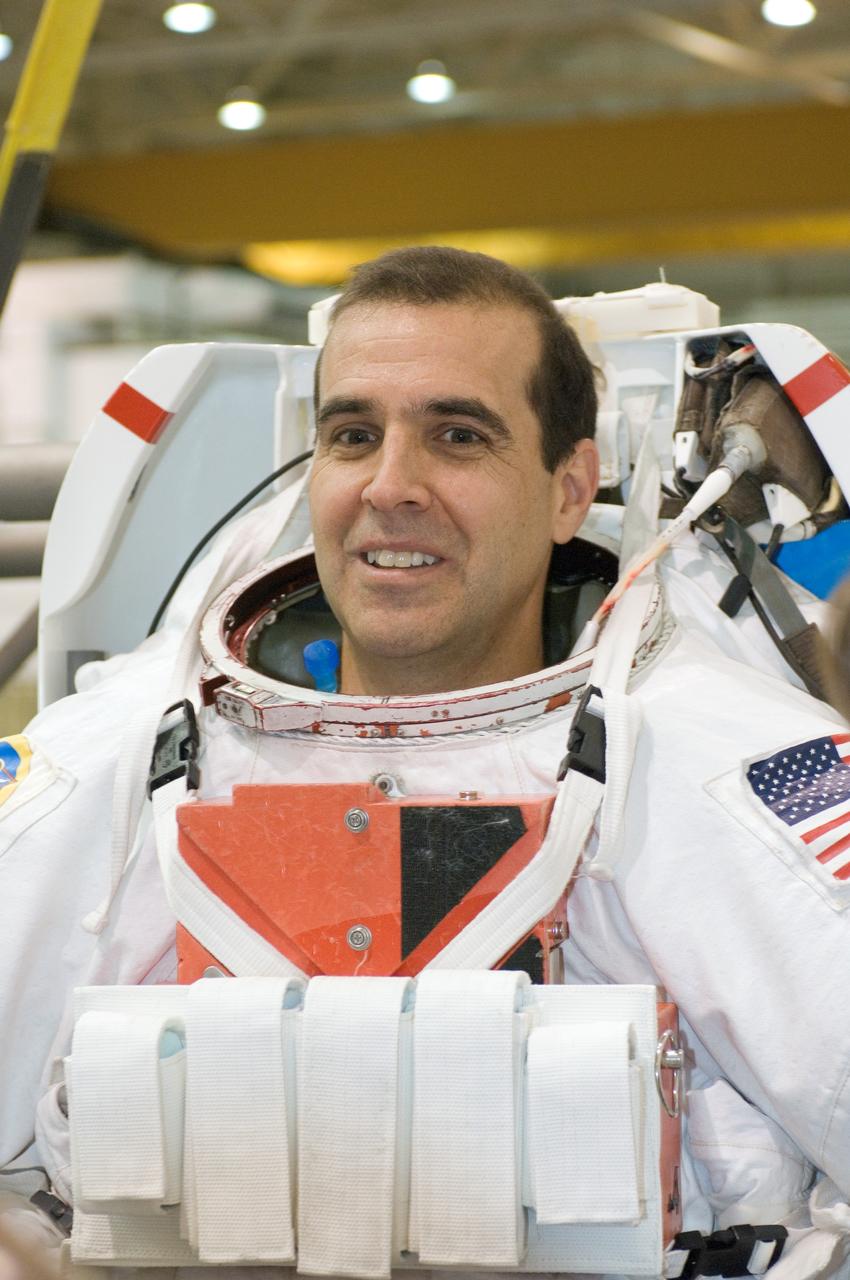
JSC2007-E-00790 (4 Jan. 2007) --- Astronaut Richard A. (Rick) Mastracchio, STS-118 mission specialist, attired in a training version of the Extravehicular Mobility Unit (EMU) spacesuit, awaits a training session in the waters of the Neutral Buoyancy Laboratory (NBL) near Johnson Space Center.
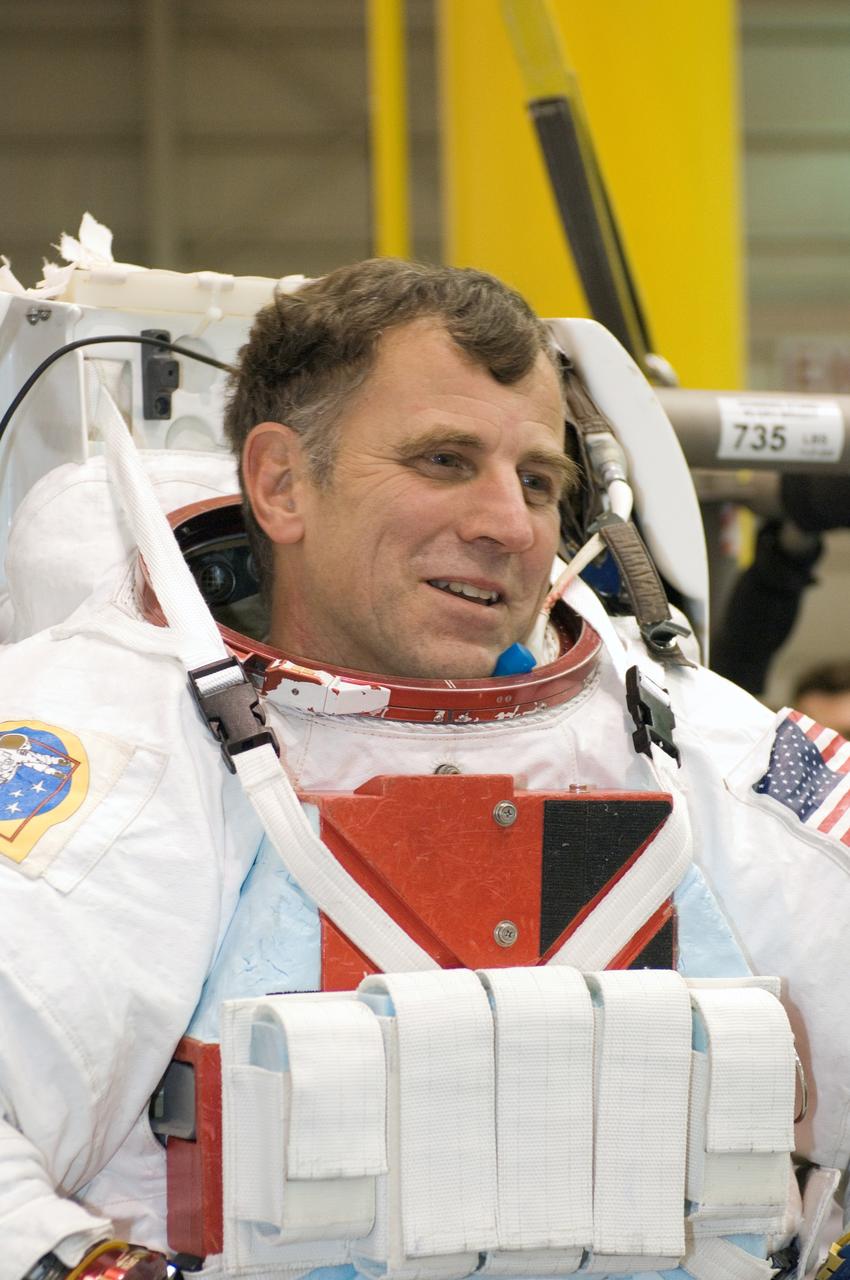
JSC2007-E-00789 (4 Jan. 2007) --- Canadian Space Agency astronaut Dafydd R. (Dave) Williams, STS-118 mission specialist, attired in a training version of the Extravehicular Mobility Unit (EMU) spacesuit, awaits a training session in the waters of the Neutral Buoyancy Laboratory (NBL) near Johnson Space Center.
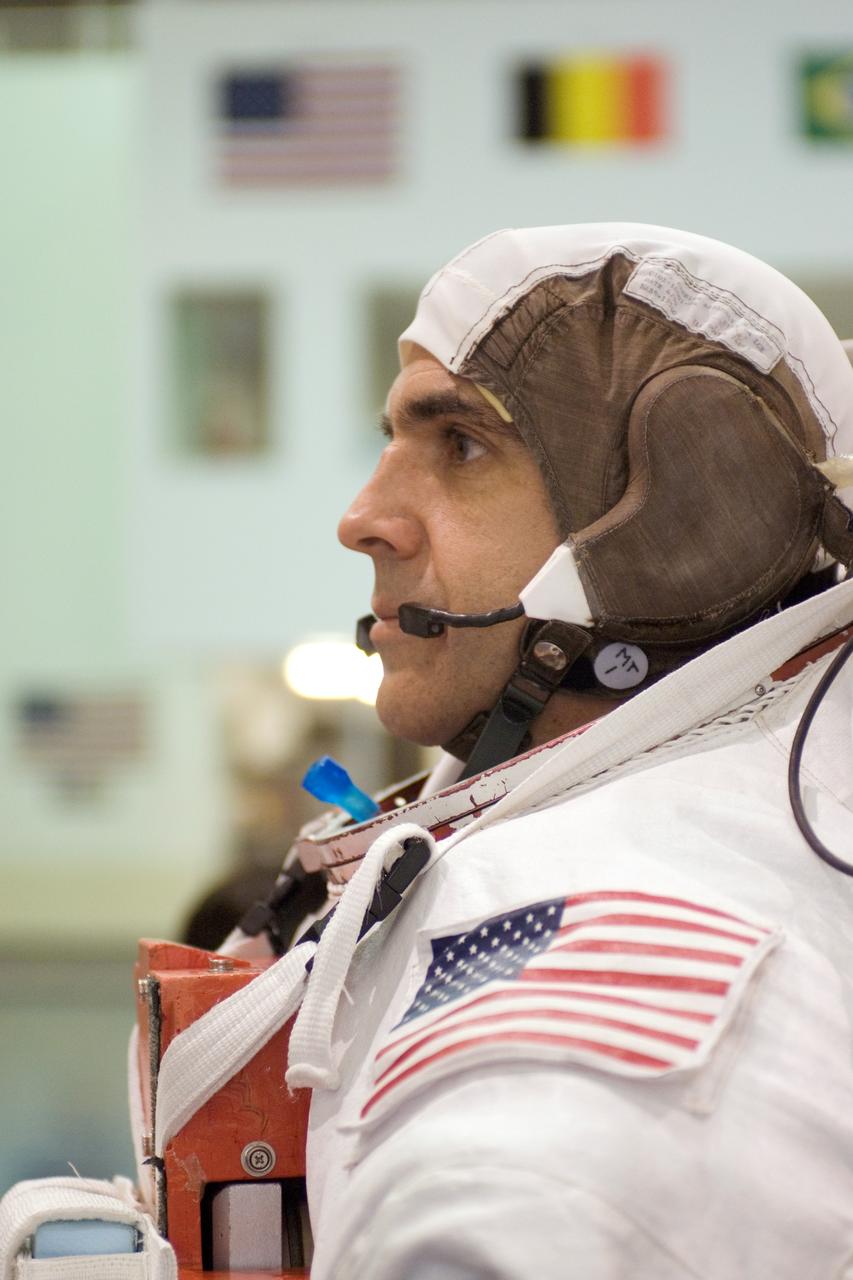
JSC2007-E-00793 (4 Jan. 2007) --- Astronaut Richard A. (Rick) Mastracchio, STS-118 mission specialist, attired in a training version of the Extravehicular Mobility Unit (EMU) spacesuit, awaits a training session in the waters of the Neutral Buoyancy Laboratory (NBL) near Johnson Space Center.
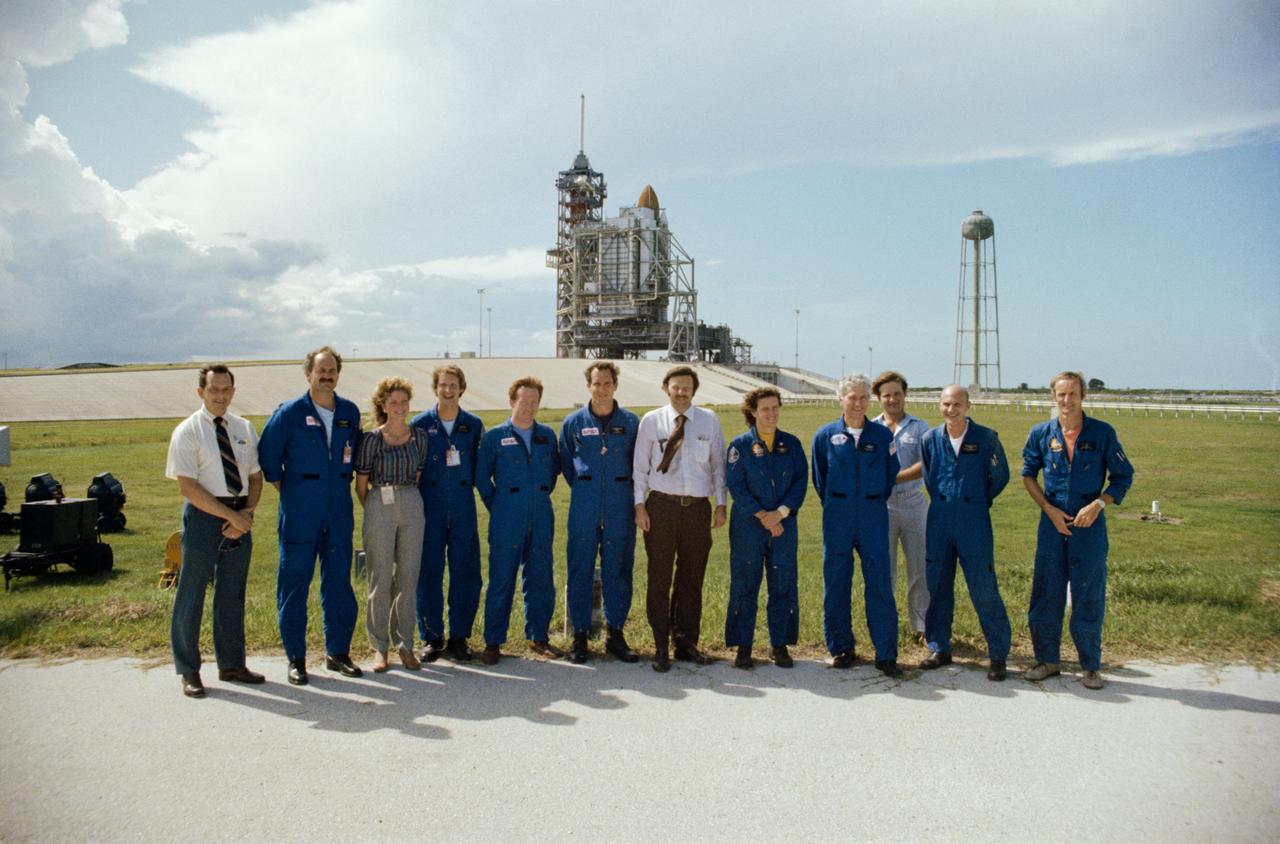
S82-32201 (29 May 1982) --- Members of the JSC astronaut corps, vehicle integration test team (VITT) and other personnel pose for a photograph at the completion of a countdown demonstration test (CDDT) at Launch Pad 39A, Kennedy Space Center (KSC). The participants are, from the left, Wilbur J. Etbauer, engineer with the VITT; mission specialist-astronaut James D. Van Hoften; Terri Stanford, engineer from JSC's flight operations directorate; mission specialist-astronaut Steven A. Hawley; astronaut Richard N. Richards; astronaut Michael J. Smith; Richard W. Nygren, head of the VITT; mission specialist-astronaut Kathryn D. Sullivan; astronaut Henry W. Hartsfield Jr., STS-4 pilot; Mark Haynes, a co-op student participating with the VITT; astronaut Thomas K. Mattingly II, STS-4 commander; and astronaut Donald E. Williams. Photo credit: NASA
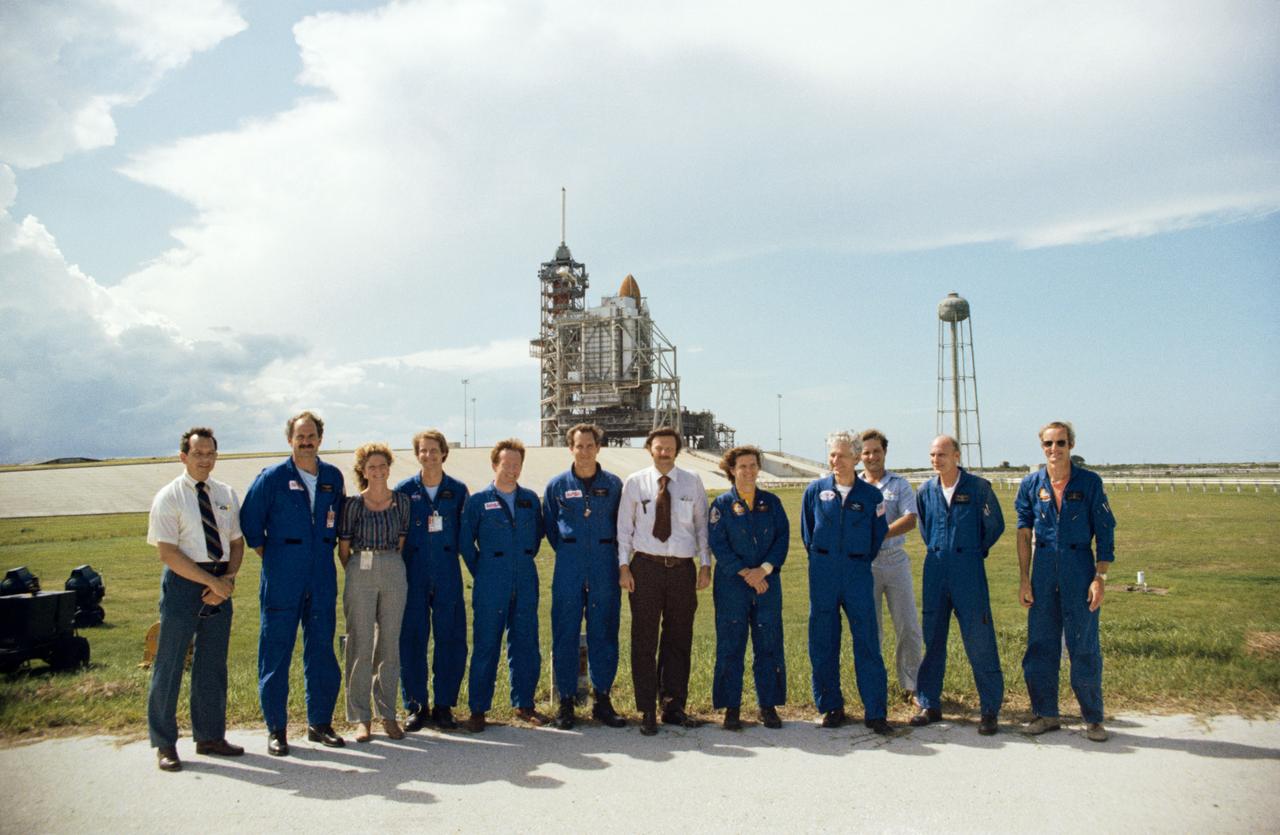
S82-32200 (29 May 1982) --- Members of the JSC astronaut corps, STS-4 vehicle integration test team (VITT) and other personnel pose for a photograph at the completion of a countdown demonstration test (CDDT) at Launch Pad 39A, Kennedy Space Center (KSC). The participants are, from the left, Wilbur J. Etbauer, engineer with the VITT; mission specialist-astronaut James D. van Hoften; Terry Stanford, engineer from JSC's flight operations directorate; mission specialist-astronaut Steven A. Hawley; astronaut Richard N. Richards; astronaut Michael J. Smith; Richard W. Nygren, head of the VITT; mission specialist-astronaut Kathryn D. Sullivan; astronaut Henry W. Hartsfield Jr.,STS-4 pilot; Mary Haynes, a co-op student participating with the VITT; astronaut Thomas K. Mattingly II, STS-4 commander; and astronaut Donald E. Williams. Photo credit: NASA
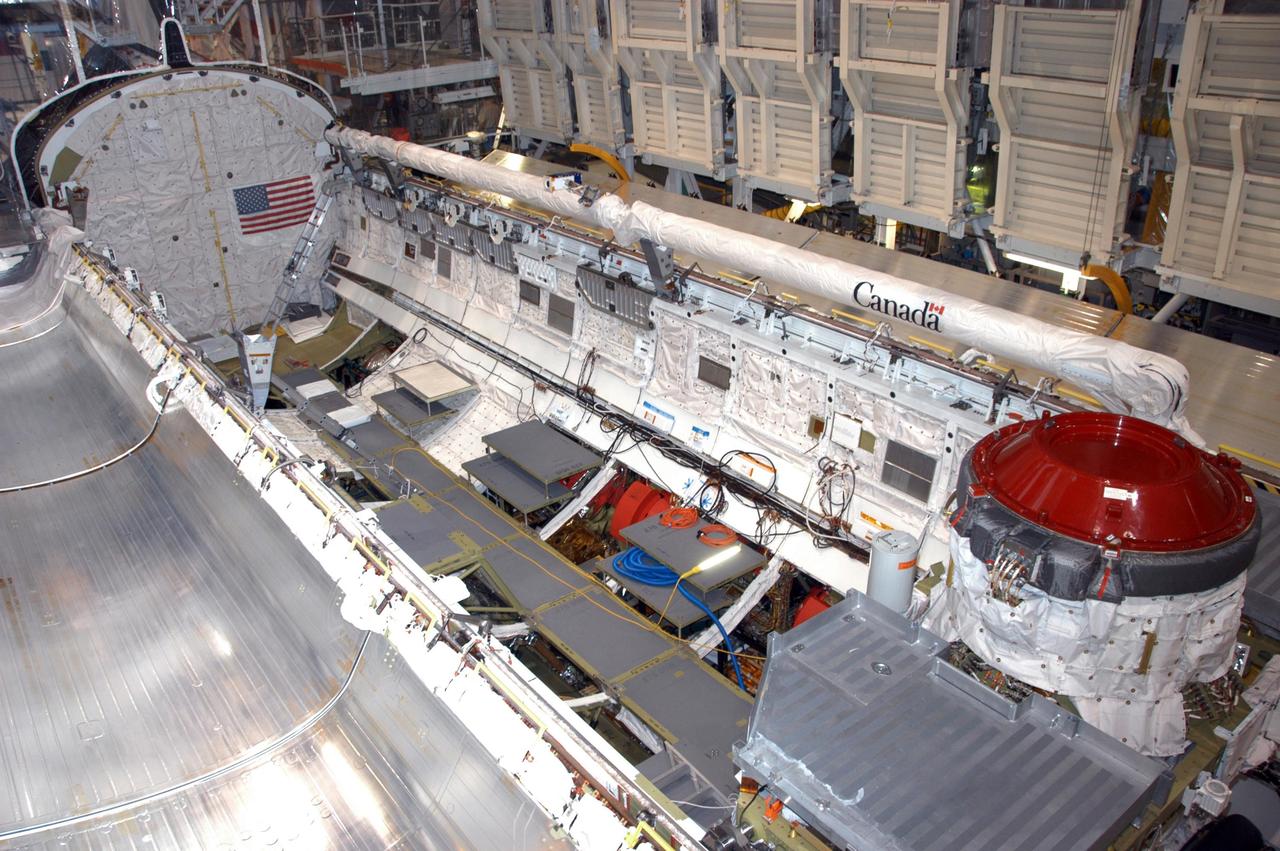
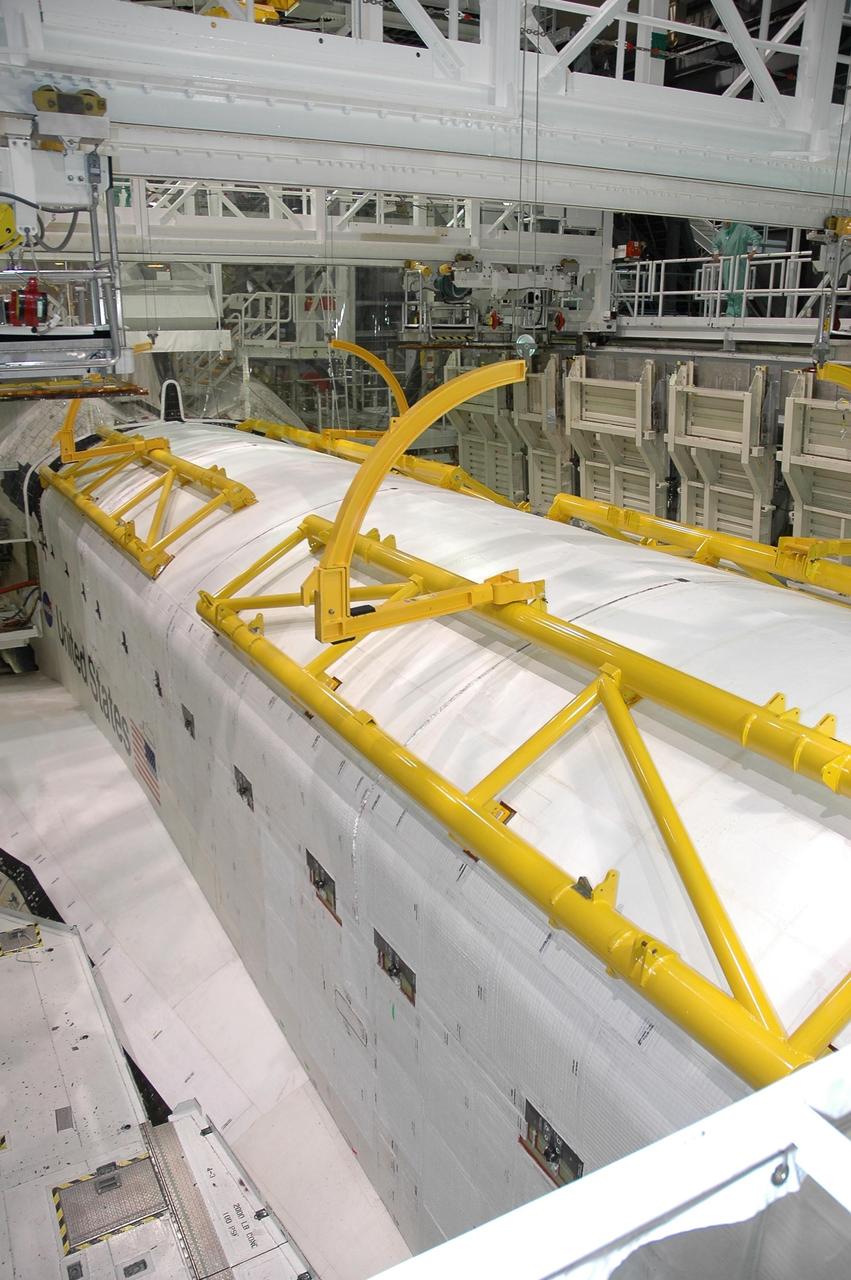
KENNEDY SPACE CENTER, FLA. -- Endeavour's payload bay is open for payload configuration work in Orbiter Processing Facility bay 2. The orbiter is the vehicle designated for mission STS-118, scheduled to launch in late June. The mission will continue space station construction by delivering a third starboard truss segment, S5, as well as carrying the External Stowage Platform 3. The crew comprises six astronauts: Commander Scott Kelly, Pilot Charles Hobaugh and Mission Specialists Dr. Dafydd (Dave) Williams, Barbara Morgan, Richard Mastracchio and Tracy Caldwell. Williams represents the Canadian Space Agency. Photo credit: NASA/George Shelton
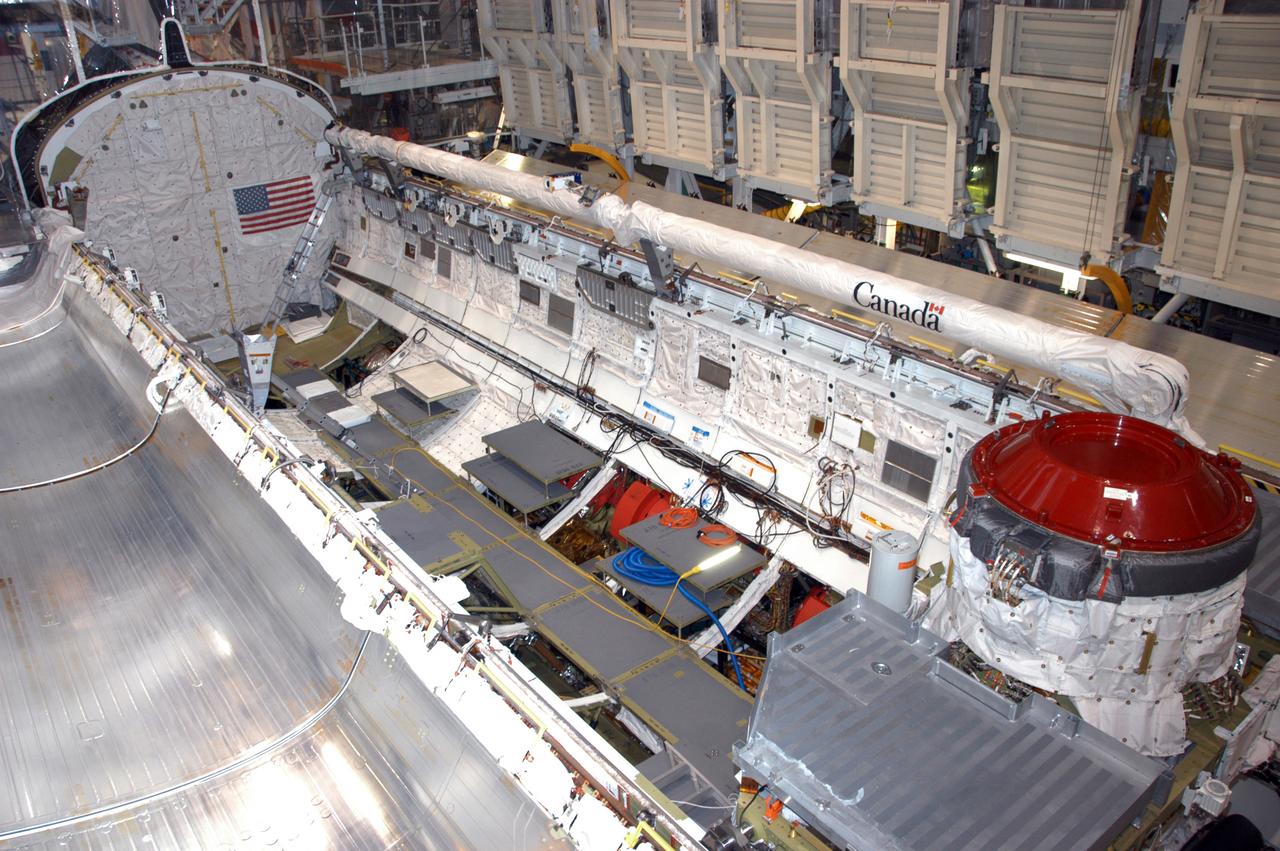
Endeavour's payload bay is open for payload configuration work in Orbiter Processing Facility bay 2. The orbiter is the vehicle designated for mission STS-118, scheduled to launch in late June. The mission will continue space station construction by delivering a third starboard truss segment, S5, as well as carrying the External Stowage Platform 3. The crew comprises six astronauts: Commander Scott Kelly, Pilot Charles Hobaugh and Mission Specialists Dr. Dafydd (Dave) Williams, Barbara Morgan, Richard Mastracchio and Tracy Caldwell. Williams represents the Canadian Space Agency.
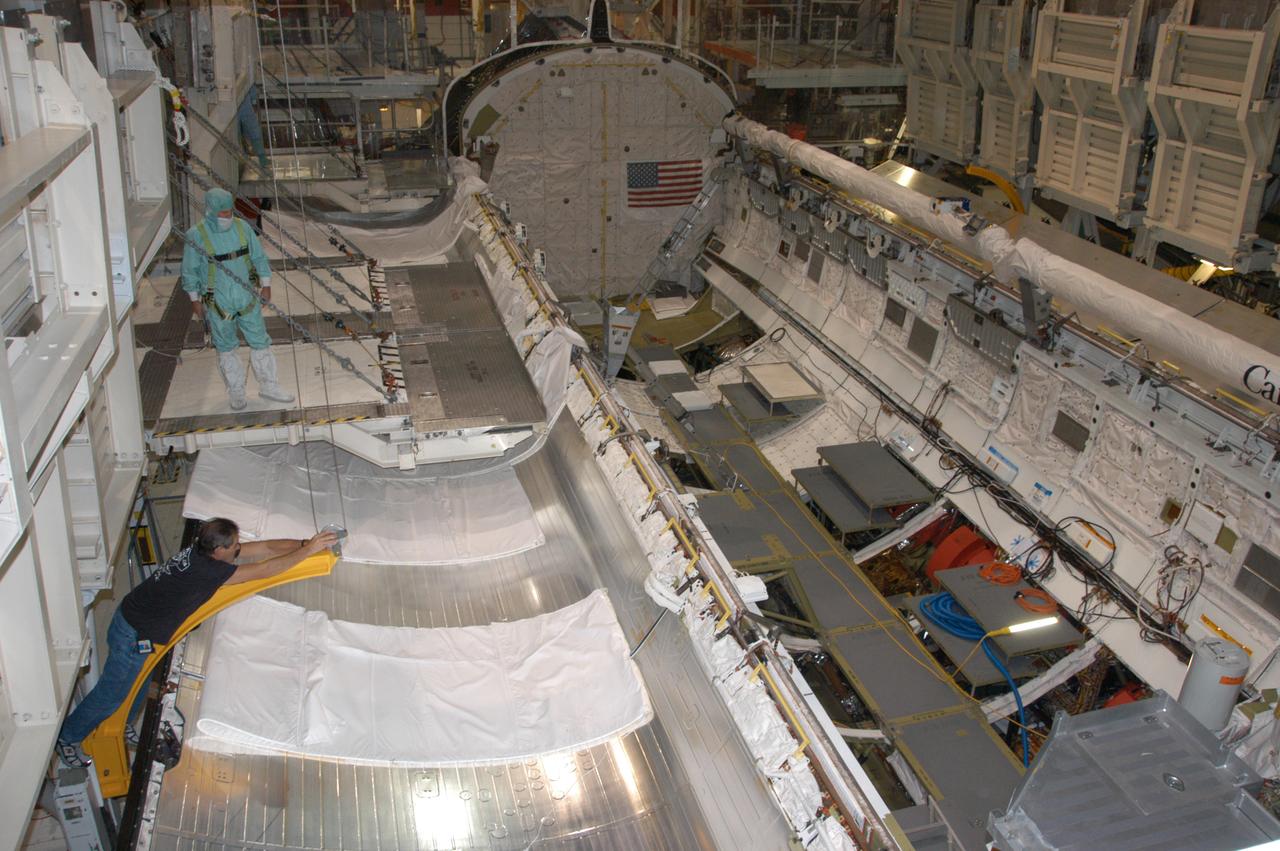
Endeavour's payload bay is open for payload configuration work in Orbiter Processing Facility bay 2. The orbiter is the vehicle designated for mission STS-118, scheduled to launch in late June. The mission will continue space station construction by delivering a third starboard truss segment, S5, as well as carrying the External Stowage Platform 3. The crew comprises six astronauts: Commander Scott Kelly, Pilot Charles Hobaugh and Mission Specialists Dr. Dafydd (Dave) Williams, Barbara Morgan, Richard Mastracchio and Tracy Caldwell. Williams represents the Canadian Space Agency.

KENNEDY SPACE CENTER, FLA. -- In the Orbiter Processing Facility bay 2, Endeavour's payload bay doors are ready to be closed. The payload will be installed on the launch pad after rollout. The orbiter is designated for mission STS-118, targeted for launch on Aug. 9. The mission will continue space station construction by delivering a third starboard truss segment, S5, as well as carrying the External Stowage Platform 3. The crew comprises seven astronauts: Commander Scott Kelly, Pilot Charles Hobaugh and Mission Specialists Dr. Dafydd (Dave) Williams, Barbara Morgan, Richard Mastracchio, Tracy Caldwell and Benjamin Drew. Williams represents the Canadian Space Agency. Photo credit: NASA/Cory Huston
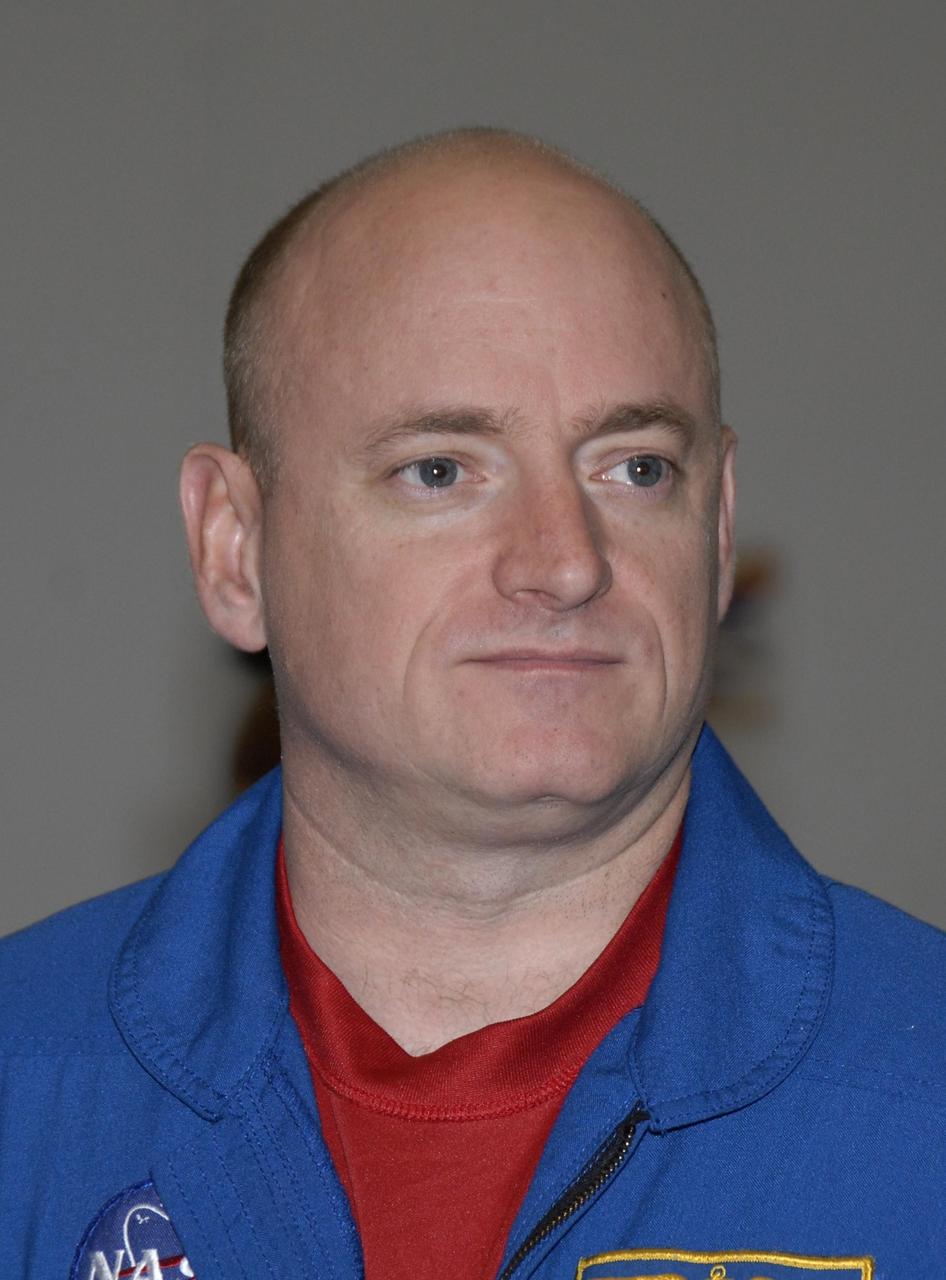
KENNEDY SPACE CENTER, FLA. -- STS-118 Commander Scott Kelly, seen here in the Space Station Processing Facility, is at KSC to take part in crew equipment interface test activities. The crew comprises Kelly, Pilot Charles Hobaugh, and Mission Specialists Dr. Dafydd Williams, Barbara Morgan, Richard Mastracchio, Tracy Caldwell and Benjamin Drew. Williams is with the Canadian Space Agency. The STS-118 mission will be delivering the third starboard truss segment, the ITS S5, to the International Space Station, and a SPACEHAB Single Cargo module with supplies and equipment. Launch aboard Space Shuttle Endeavour is targeted for August. Photo credit: NASA/Kim Shiflett
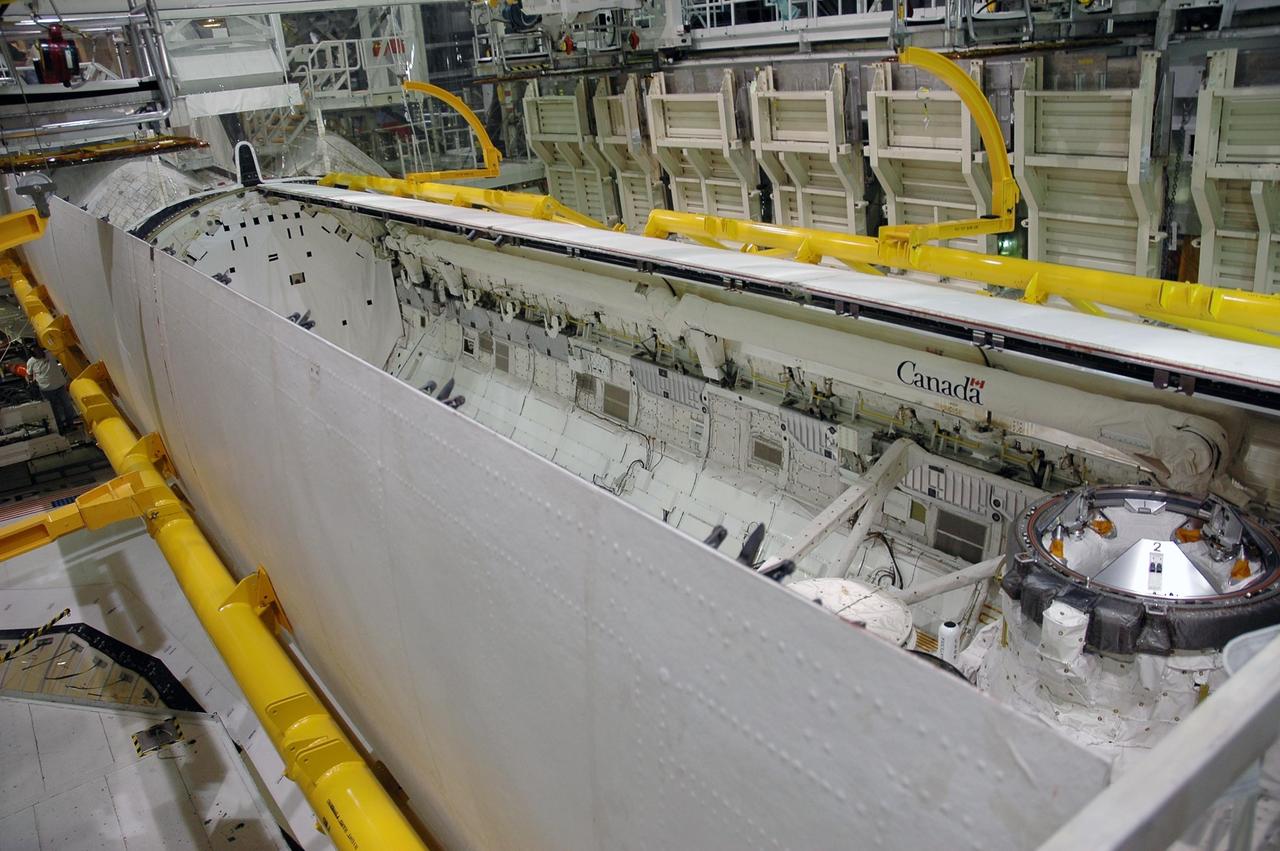
KENNEDY SPACE CENTER, FLA. -- In the Orbiter Processing Facility bay 2, Endeavour's payload bay doors are being closed. The payload will be installed on the launch pad after rollout. The orbiter is designated for mission STS-118, targeted for launch on Aug. 9. The mission will continue space station construction by delivering a third starboard truss segment, S5, as well as carrying the External Stowage Platform 3. The crew comprises seven astronauts: Commander Scott Kelly, Pilot Charles Hobaugh and Mission Specialists Dr. Dafydd (Dave) Williams, Barbara Morgan, Richard Mastracchio, Tracy Caldwell and Benjamin Drew. Williams represents the Canadian Space Agency. Photo credit: NASA/Cory Huston
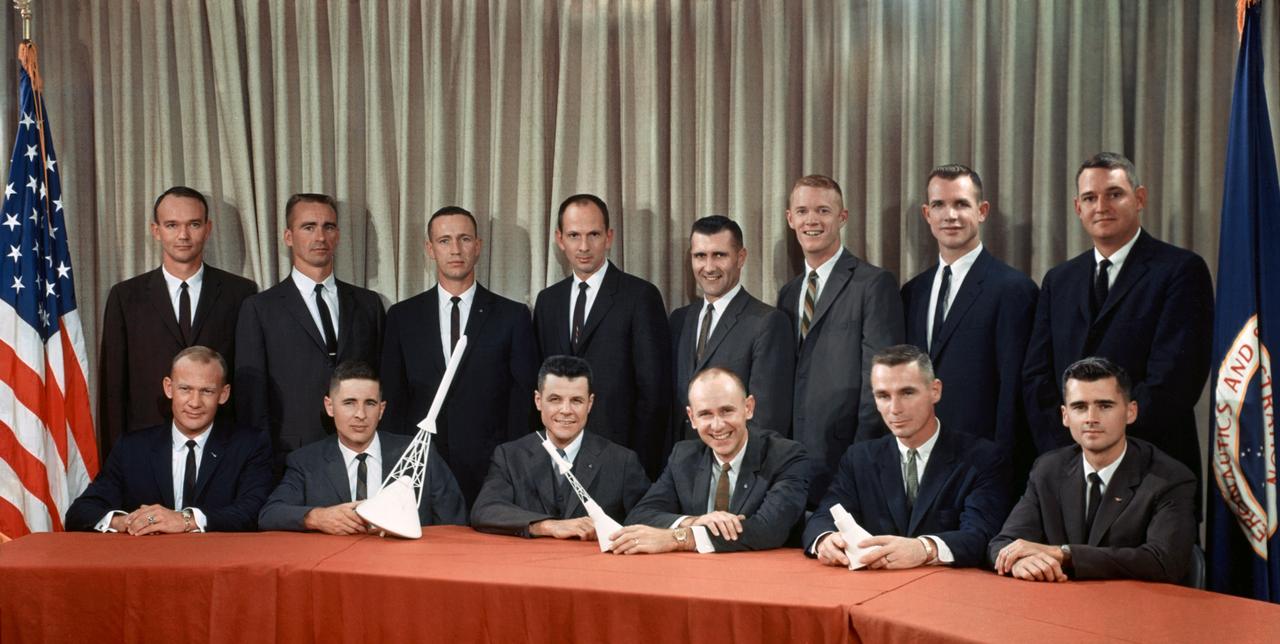
S63-18765 (October 1963) --- These fourteen pilots have been assigned to begin training for astronaut positions with the National Aeronautics and Space Administration (NASA). Front row, from the left, Edwin E. Aldrin Jr., William A. Anders, Charles A. Bassett II, Alan L. Bean, Eugene A. Cernan and Roger B. Chaffee. Back row, from the left, Michael Collins, Walter Cunningham, Donn F. Eisele, Theodore C. Freeman, Richard F. Gordon Jr., Russell L. Scweickart, David R. Scott and Clifton C. Williams Jr. Photo credit: NASA or National Aeronautics and Space Administration
KENNEDY SPACE CENTER, FLA. -- In the Orbiter Processing Facility bay 2, Endeavour's payload bay doors are closed. The payload will be installed on the launch pad after rollout. The orbiter is designated for mission STS-118, targeted for launch on Aug. 9. The mission will continue space station construction by delivering a third starboard truss segment, S5, as well as carrying the External Stowage Platform 3. The crew comprises seven astronauts: Commander Scott Kelly, Pilot Charles Hobaugh and Mission Specialists Dr. Dafydd (Dave) Williams, Barbara Morgan, Richard Mastracchio, Tracy Caldwell and Benjamin Drew. Williams represents the Canadian Space Agency. Photo credit: NASA/Cory Huston
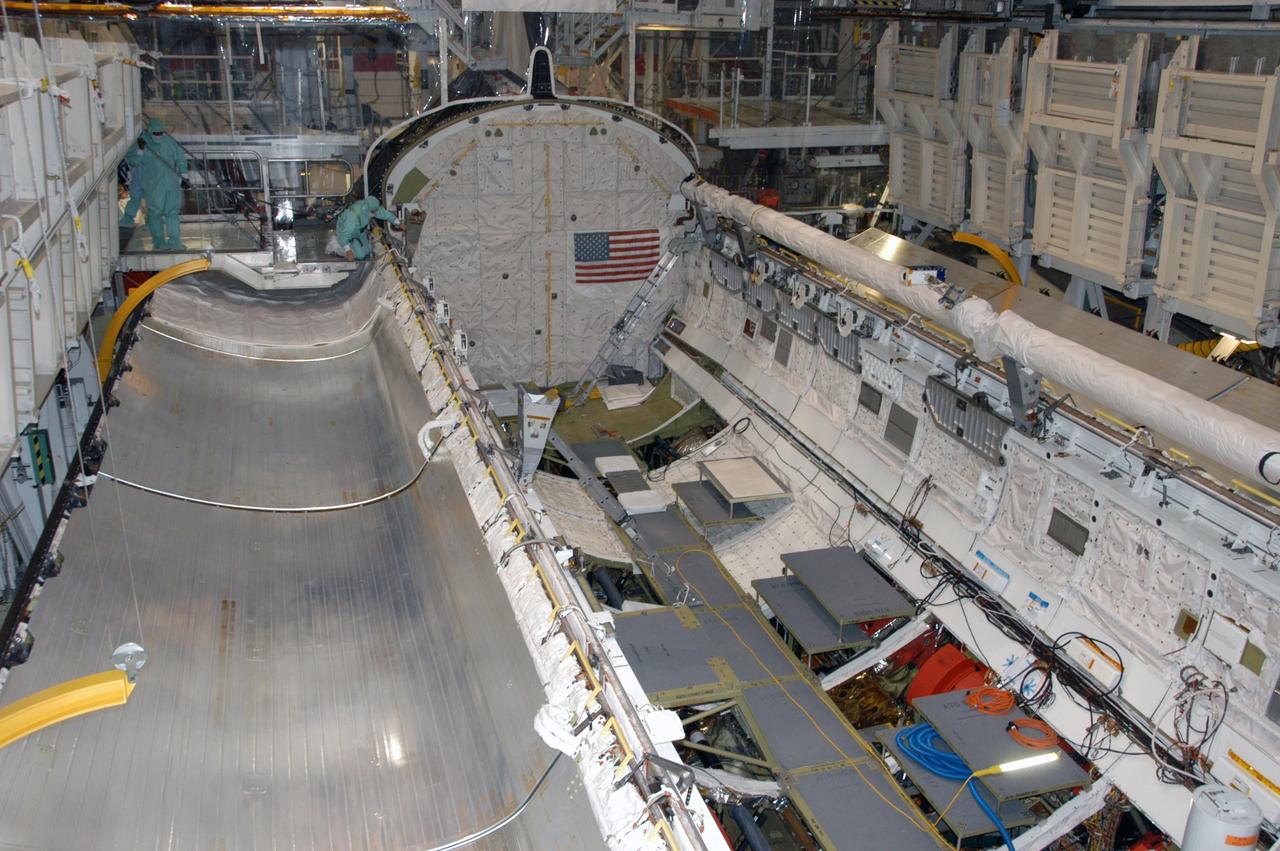
KENNEDY SPACE CENTER, FLA. -- Endeavour's payload bay is open for payload configuration work in Orbiter Processing Facility bay 2. The orbiter is the vehicle designated for mission STS-118, scheduled to launch in late June. The mission will continue space station construction by delivering a third starboard truss segment, S5, as well as carrying the External Stowage Platform 3. The crew comprises six astronauts: Commander Scott Kelly, Pilot Charles Hobaugh and Mission Specialists Dr. Dafydd (Dave) Williams, Barbara Morgan, Richard Mastracchio and Tracy Caldwell. Williams represents the Canadian Space Agency. Photo credit: NASA/George Shelton
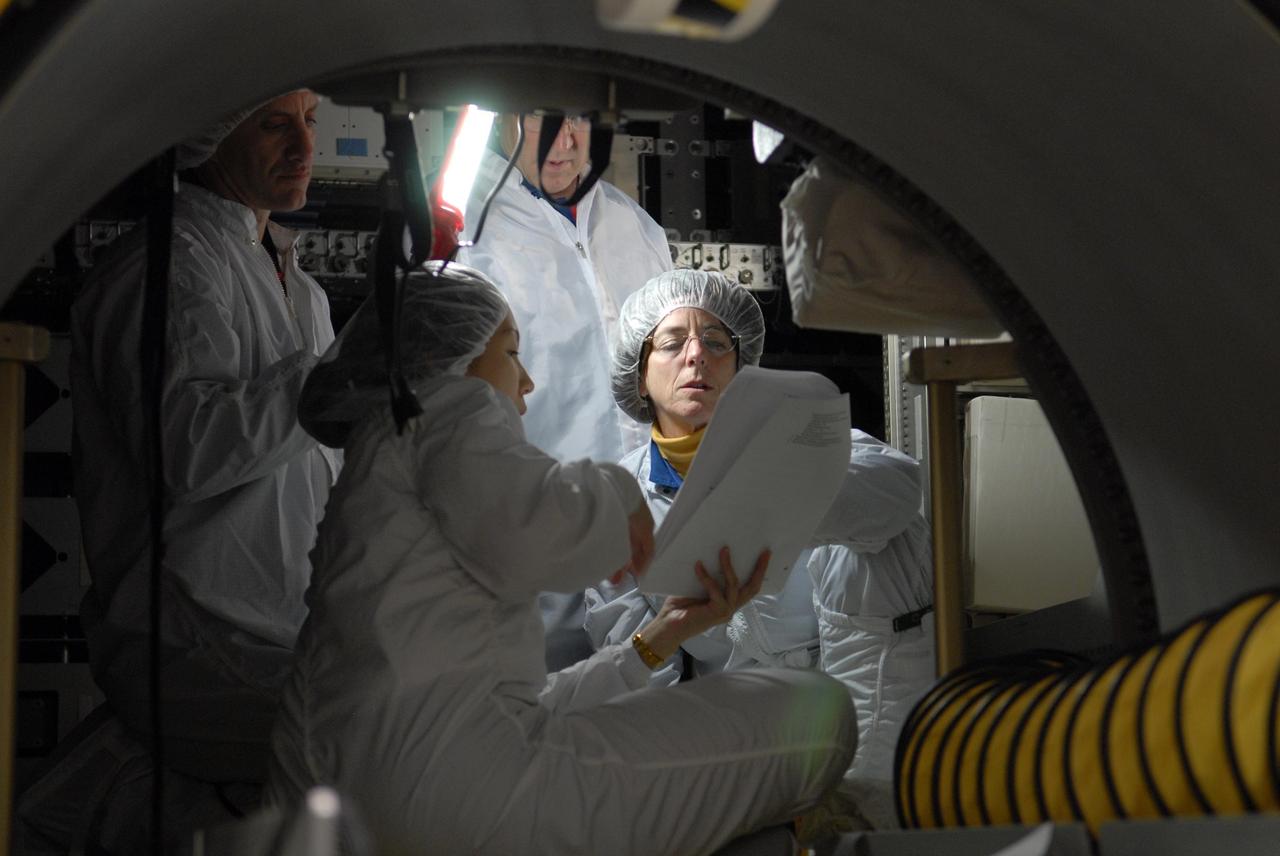
KENNEDY SPACE CENTER, FLA. -- Members of the STS-118 crew take part in a hardware review of the SPACEHAB module, part of the payload on their mission. Seen here inside the module are Mission Specialists Richard Mastracchio (left), Dafydd Williams (center, standing) and Barbara Morgan (lower right). Williams represents the Canadian Space Agency. The mission payload also includes the third starboard truss segment (ITS S5), a control moment gyro and the external stowage platform 3 (ESP3). STS-118 is targeted to launch June 28 from Launch Pad 39A. Photo credit: NASA/Kim Shiflett
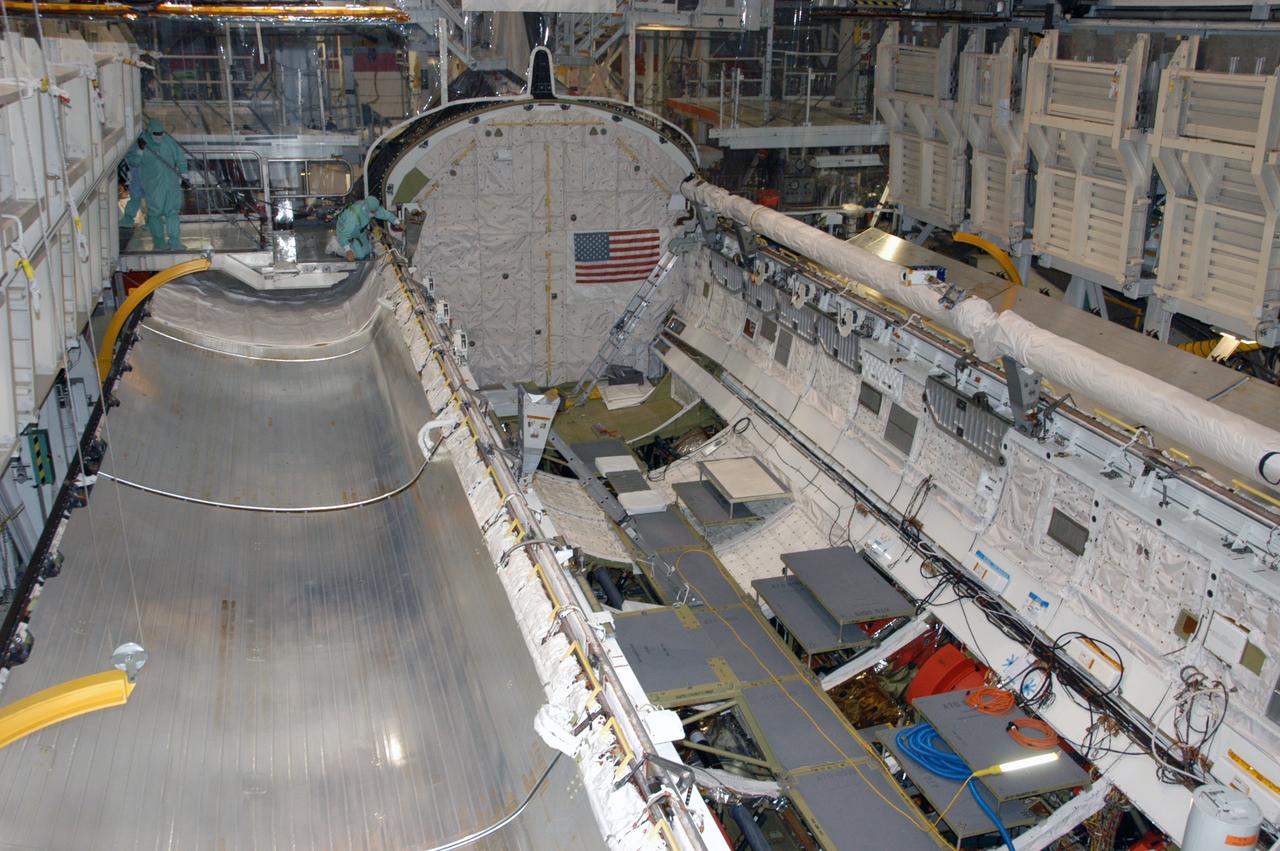
Endeavour's payload bay is open for payload configuration work in Orbiter Processing Facility bay 2. The orbiter is the vehicle designated for mission STS-118, scheduled to launch in late June. The mission will continue space station construction by delivering a third starboard truss segment, S5, as well as carrying the External Stowage Platform 3. The crew comprises six astronauts: Commander Scott Kelly, Pilot Charles Hobaugh and Mission Specialists Dr. Dafydd (Dave) Williams, Barbara Morgan, Richard Mastracchio and Tracy Caldwell. Williams represents the Canadian Space Agency.
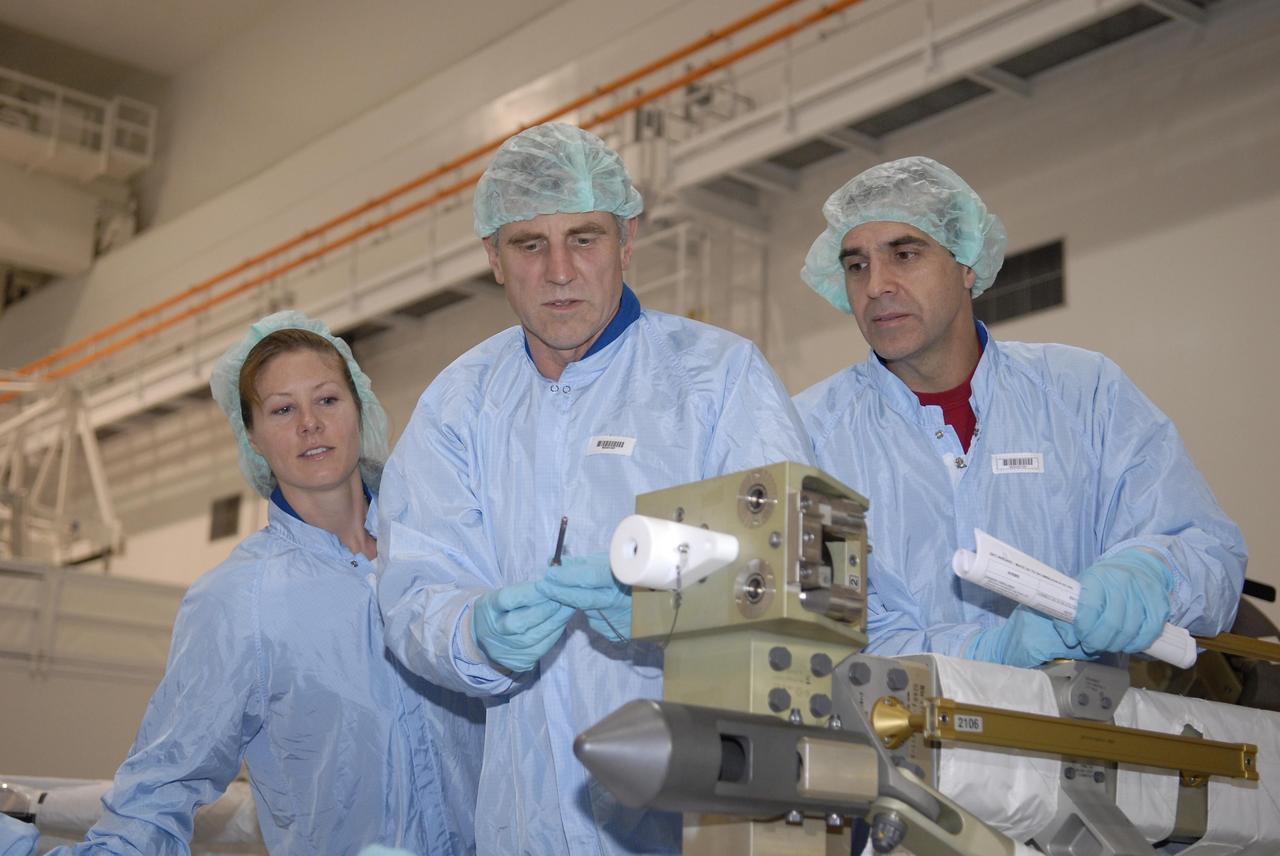
KENNEDY SPACE CENTER, FLA. -- The STS-118 crew members look over parts of the mission payload, the S5 integrated truss, in the Space Station Processing Facility during crew equipment interface test activities. Seen here are Mission Specialists Tracy Caldwell, Dr. Dafydd Williams and Richard Mastracchio. The crew comprises Commander Scott Kelly, Pilot Charles Hobaugh, and Mission Specialists Williams, Barbara Morgan, Mastracchio, Caldwell and Benjamin Drew. Williams is with the Canadian Space Agency. The STS-118 mission will be delivering the third starboard truss segment, the ITS S5, to the International Space Station, and a SPACEHAB Single Cargo module with supplies and equipment. Launch aboard Space Shuttle Endeavour is targeted for August. Photo credit: NASA/Kim Shiflett
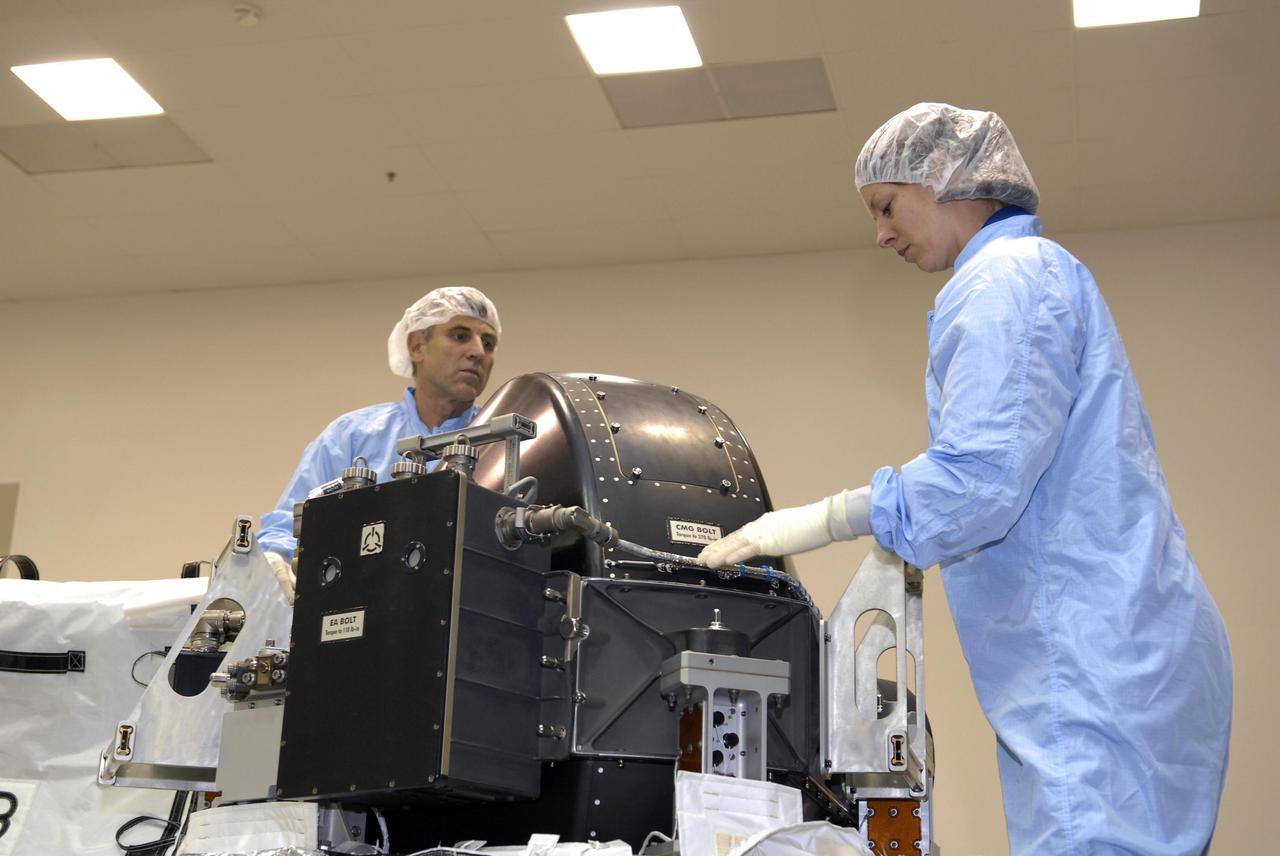
KENNEDY SPACE CENTER, FLA. -- The STS-118 crew members look over parts of the mission payload, the control moment gyroscope, at SPACEHAB during crew equipment interface test activities. Seen here are Mission Specialists Dr. Dafydd Williams and Tracy Caldwell. The crew comprises Commander Scott Kelly, Pilot Charles Hobaugh, and Mission Specialists Williams, Barbara Morgan, Richard Mastracchio, Caldwell and Benjamin Drew. Williams is with the Canadian Space Agency. The STS-118 mission will be delivering the third starboard truss segment, the ITS S5, to the International Space Station, and a SPACEHAB Single Cargo module with supplies and equipment. Launch aboard Space Shuttle Endeavour is targeted for August. Photo credit: NASA/Kim Shiflett
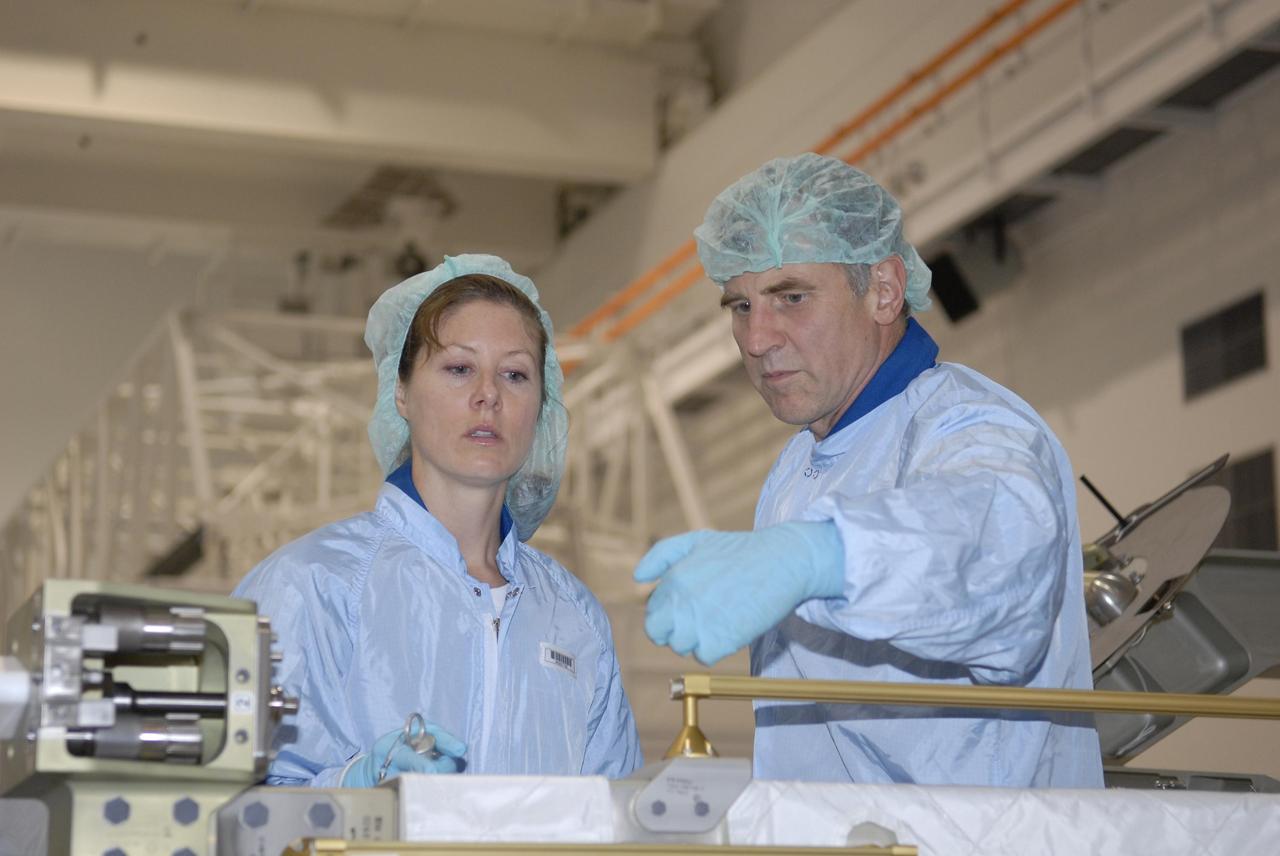
KENNEDY SPACE CENTER, FLA. -- The STS-118 crew members look over parts of the mission payload, the S5 integrated truss, in the Space Station Processing Facility during crew equipment interface test activities. Seen here are Mission Specialists Tracy Caldwell and Dr. Dafydd Williams. The crew comprises Commander Scott Kelly, Pilot Charles Hobaugh, and Mission Specialists Williams, Barbara Morgan, Richard Mastracchio, Caldwell and Benjamin Drew. Williams is with the Canadian Space Agency. The STS-118 mission will be delivering the third starboard truss segment, the ITS S5, to the International Space Station, and a SPACEHAB Single Cargo module with supplies and equipment. Launch aboard Space Shuttle Endeavour is targeted for August. Photo credit: NASA/Kim Shiflett
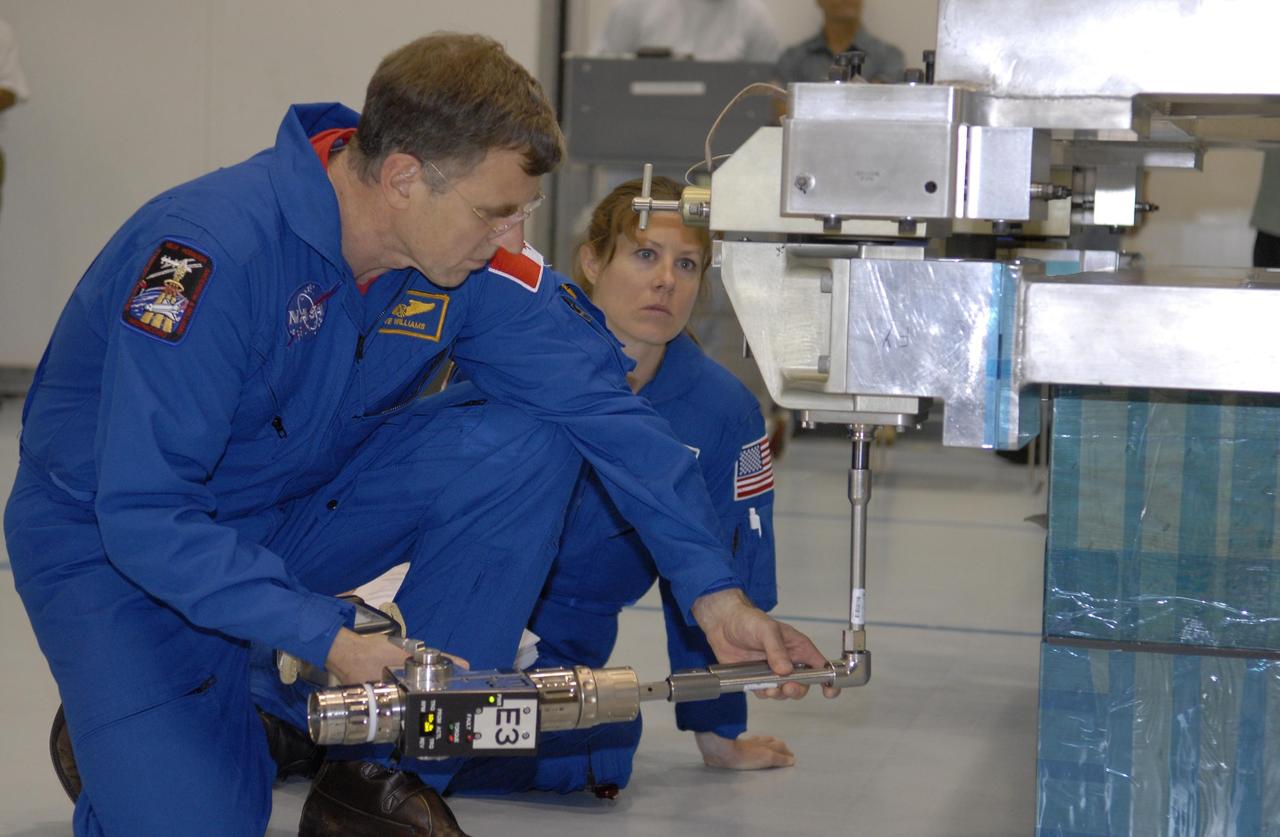
KENNEDY SPACE CENTER, FLA. --The STS-118 crew members look over parts of the mission payload, the S5 integrated truss, in the Space Station Processing Facility during crew equipment interface test activities. Seen here are Mission Specialists Dr. Dafydd Williams and Tracy Caldwell. The crew comprises Commander Scott Kelly, Pilot Charles Hobaugh, and Mission Specialists Williams, Barbara Morgan, Richard Mastracchio, Caldwell and Benjamin Drew. Williams is with the Canadian Space Agency. The STS-118 mission will be delivering the third starboard truss segment, the ITS S5, to the International Space Station, and a SPACEHAB Single Cargo module with supplies and equipment. Launch aboard Space Shuttle Endeavour is targeted for August. Photo credit: NASA/Kim Shiflett
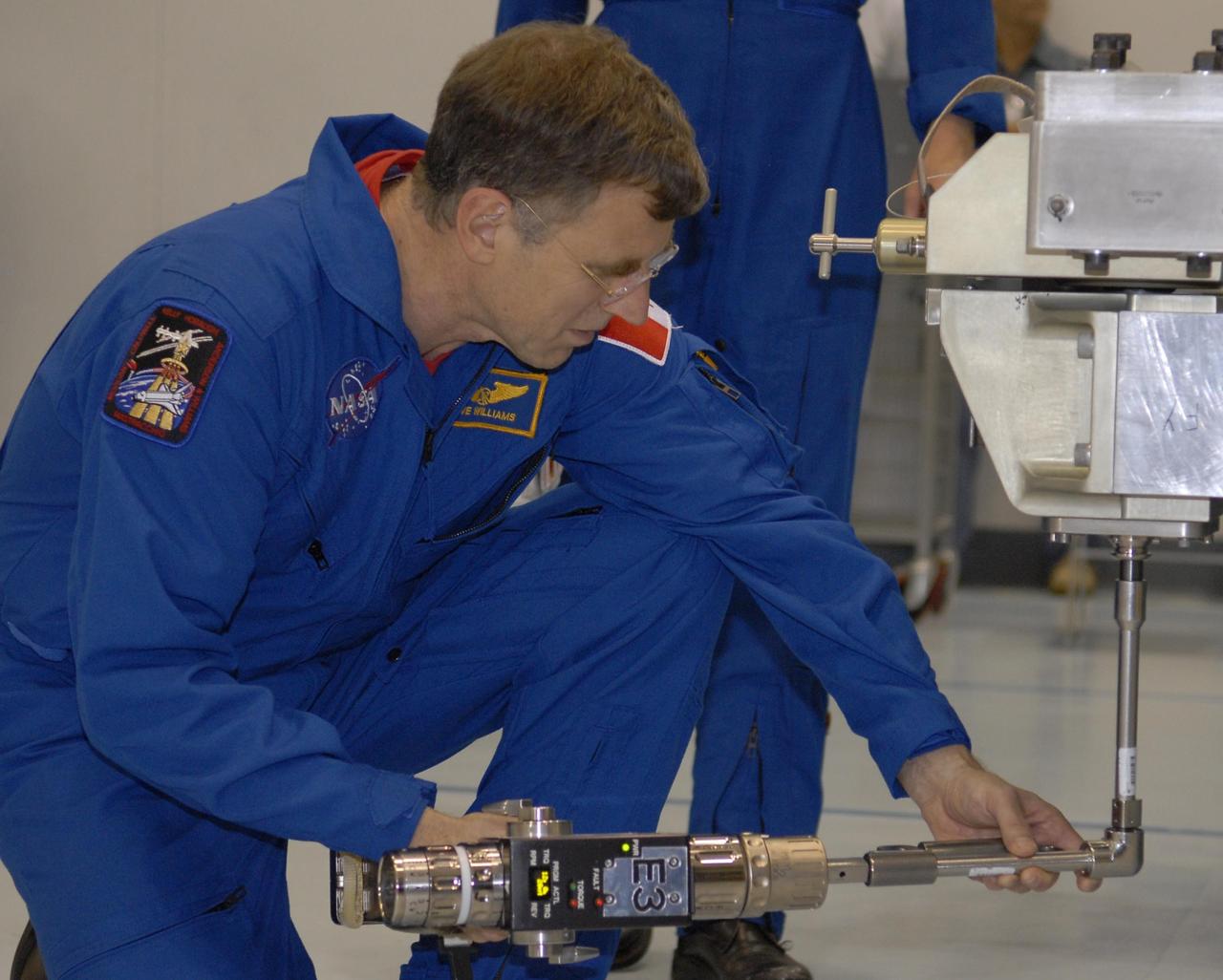
KENNEDY SPACE CENTER, FLA. --The STS-118 crew members look over parts of the mission payload, the S5 integrated truss, in the Space Station Processing Facility during crew equipment interface test activities. Seen here is Mission Specialist Dr. Dafydd Williams, getting hands-on experience. The crew comprises Commander Scott Kelly, Pilot Charles Hobaugh, and Mission Specialists Williams, Barbara Morgan, Richard Mastracchio, Tracy Caldwell and Benjamin Drew. Williams is with the Canadian Space Agency. The STS-118 mission will be delivering the third starboard truss segment, the ITS S5, to the International Space Station, and a SPACEHAB Single Cargo module with supplies and equipment. Launch aboard Space Shuttle Endeavour is targeted for August. Photo credit: NASA/Kim Shiflett
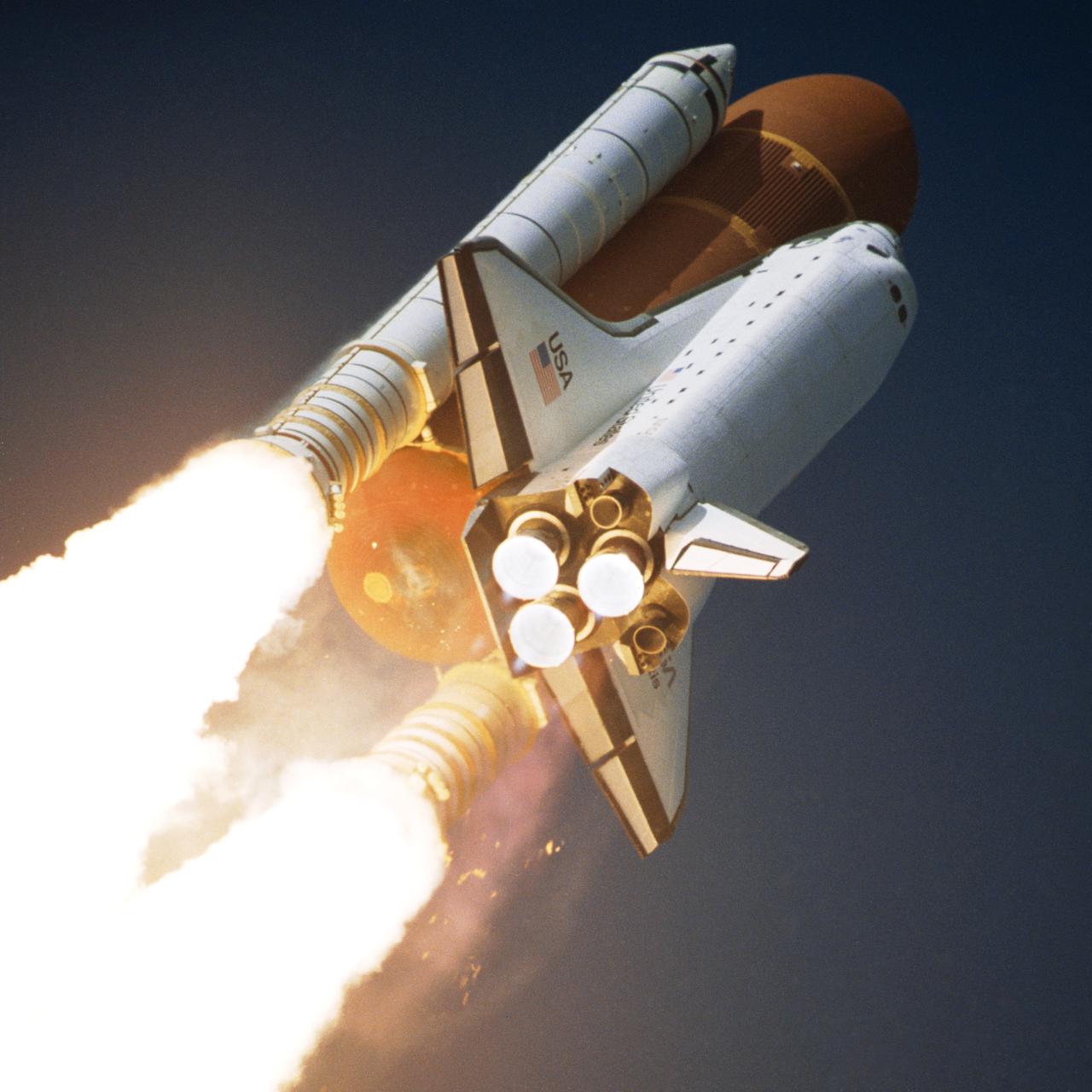
STS027-S-003 (2 Dec. 1988) --- The Space Shuttle Atlantis and its five-man crew of astronauts are launched from Kennedy Space Center?s Pad 39B at 9:30 a.m. (EST), Dec. 2, 1988. Onboard the Department of Defense ? dedicated mission are astronauts Robert L. Gibson, Guy S. Gardner, Jerry L. Ross, Richard M. (Mike) Mullane and Williams M. Shepherd.
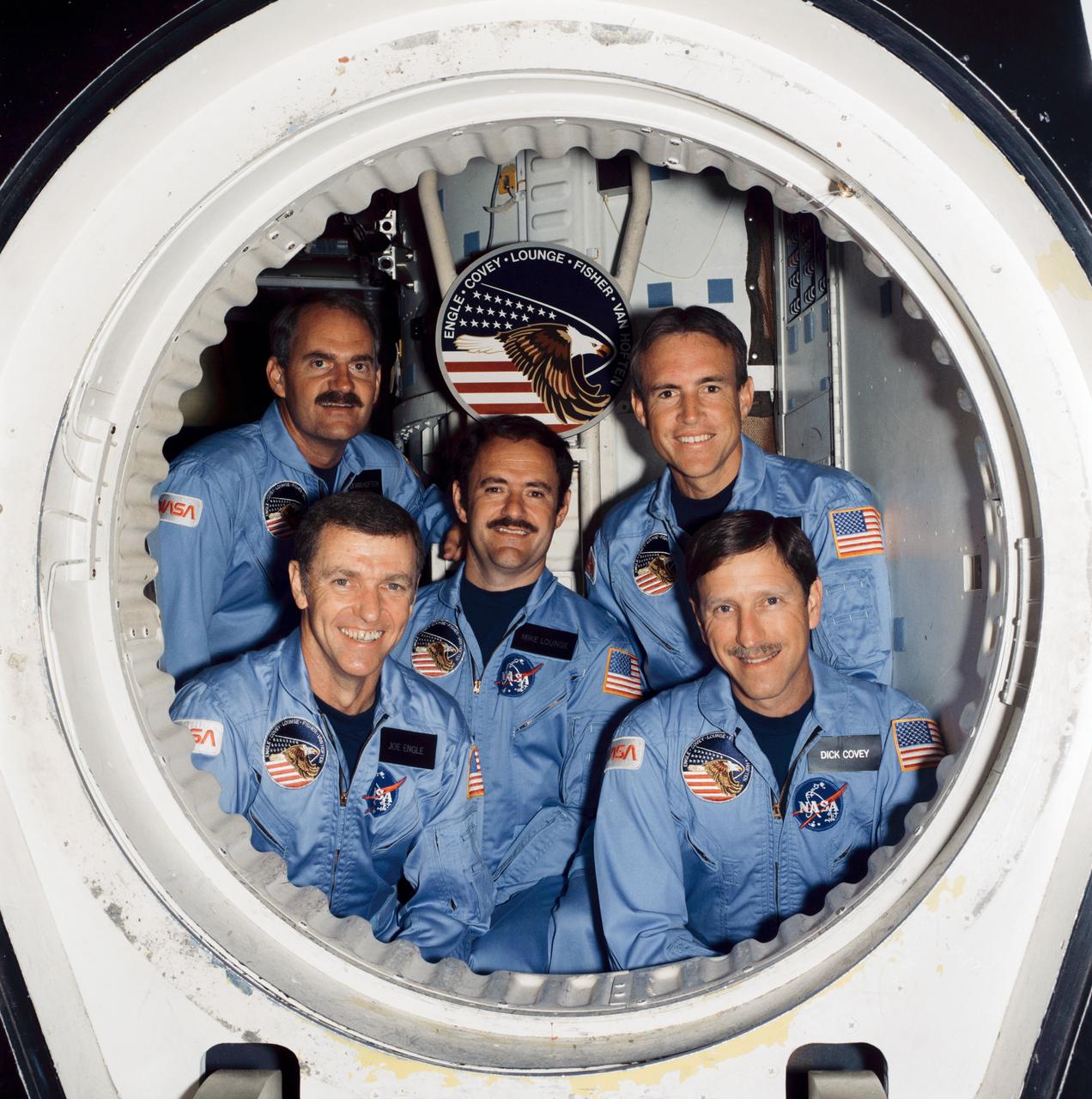
S85-36062 (1 July 1985) --- These five NASA astronauts make up the crew for the mission STS-51I, scheduled for launch in August of this year. Taking a break from rehearsals in the crew compartment trainer in the Shuttle Mockup and Integration Laboratory at JSC are astronauts Joe H. Engle (front left), crew commander; Richard O. Covey (front right), pilot; and (back row, left-to-right) astronauts James D. van Hoften, John M. (Mike) Lounge and William F. Fisher -- all mission specialists.
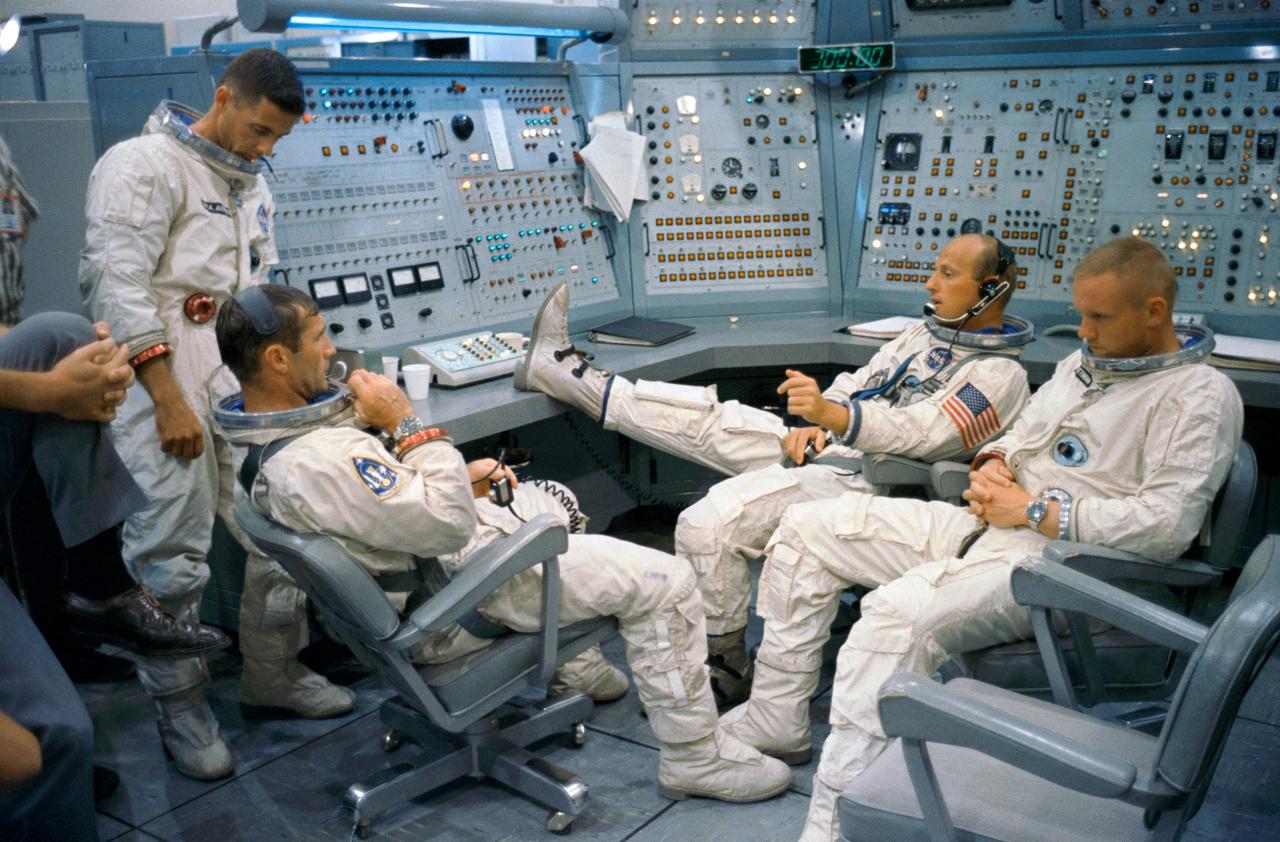
S66-50769 (8 Sept. 1966) --- Gemini-11 prime and backup crews are pictured at the Gemini Mission Simulator at Cape Kennedy, Florida. Left to right are astronauts William A. Anders, backup crew pilot; Richard F. Gordon Jr., prime crew pilot; Charles Conrad Jr. (foot on desk), prime crew command pilot; and Neil A. Armstrong, backup crew command pilot. Photo credit: NASA
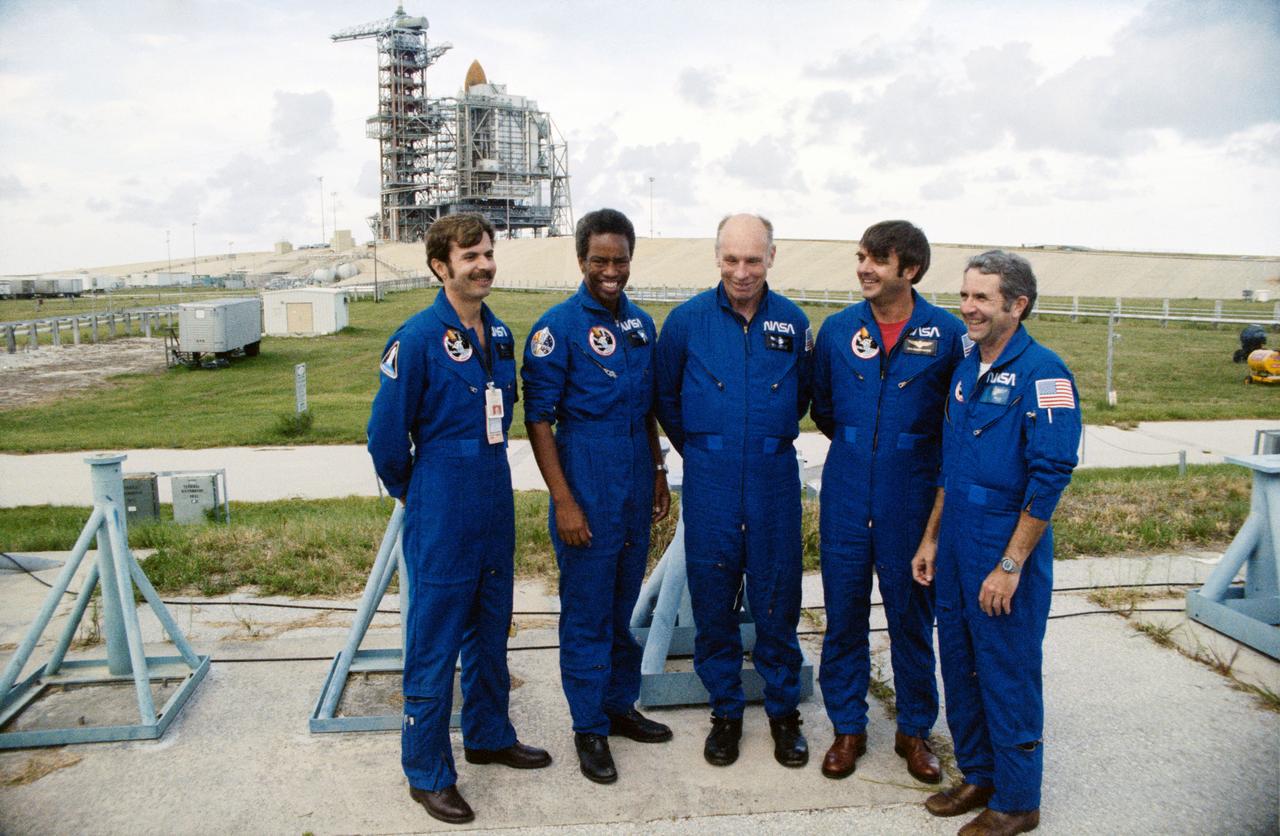
S83-38479 (16 Aug 1983) --- STS-8 crew poses at pad 39A at Kennedy Space Center (KSC) during a session with the news media. From left to right are Astronauts Dale A. Gardner, Guion S. Bluford, and Dr. William E. Thornton, all mission specialists; Daniel C. Brandenstein, pilot; and Richard F. Truly, crew commander.
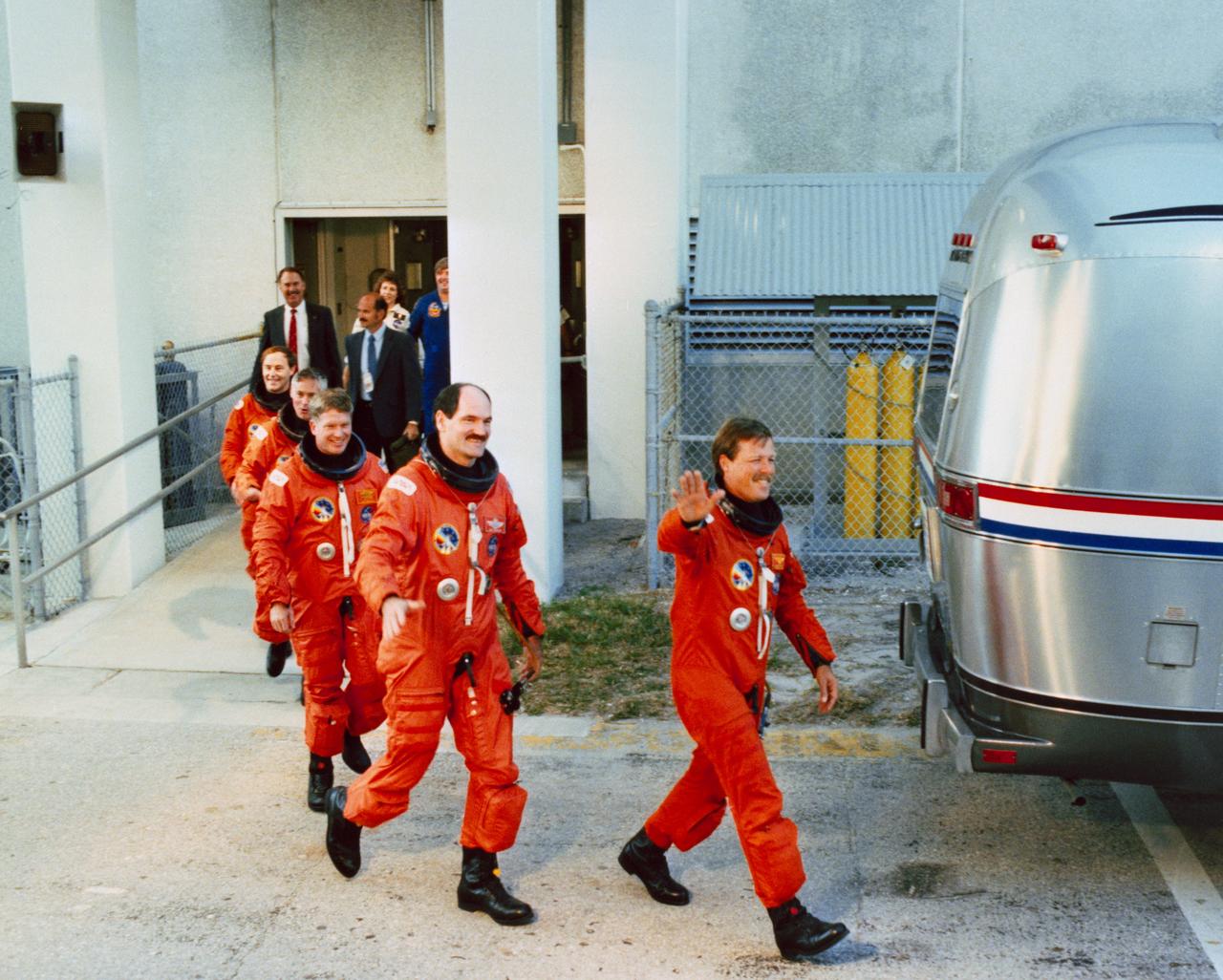
S88-53244 (14 Nov 1988) --- The crewmembers for STS-27 leave the operations and checkout (O&C) building en route to a transfer van that will take them to Launch Pad 39B for their terminal countdown demonstration test. From the front to the rear are astronauts Robert L. Gibson, Guy S. Gardner, William M. Shepherd, Richard M. (Mike) Mullane and Jerry L. Ross.
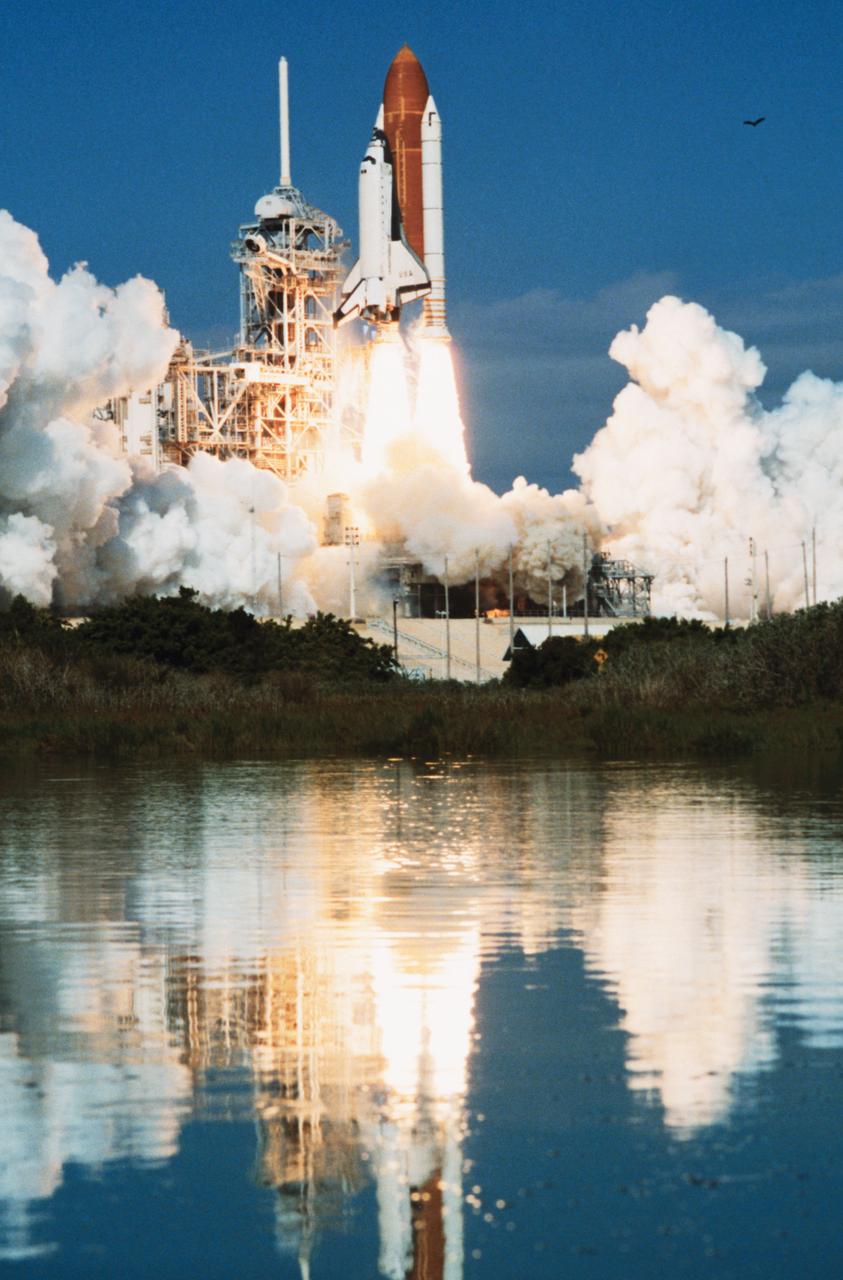
STS058-S-092 (18 Oct 1993) --- The Space Shuttle Columbia, with a crew of seven and a science module aboard, lifts off from Launch Complex 39 at Kennedy Space Center (KSC), leaving its reflection in nearby marsh. Launch occurred at 10:53 a.m. (EDT), October 18, 1993. Onboard were astronauts John E. Blaha, Richard A. Searfoss, Rhea Seddon, Shannon W. Lucid, David A. Wolf and William S. McArthur along with payload specialist Martin J. Fettman.
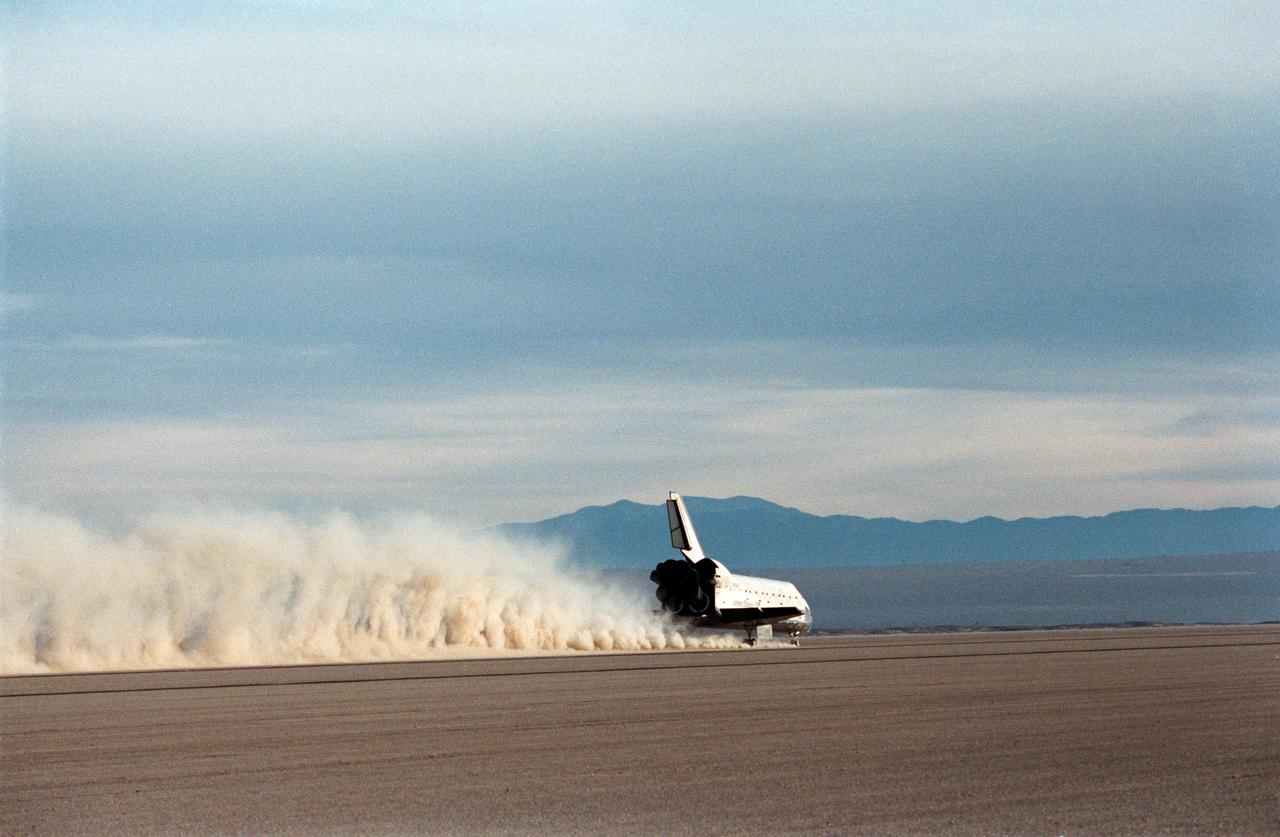
STS027-S-012 (6 Dec. 1988) --- A 70mm camera records the landing of the Space Shuttle Atlantis on Rogers Dry Lake Bed near the Dryden Flight Research Facility in California. The wheels of the vehicle came to a stop at 3:36:53 p.m. (PST), marking the completion of a successful mission which involved five veteran NASA astronauts. Onboard for the four-day flight were astronauts Robert L. Gibson, Guy S. Gardner, Jerry L. Ross, Richard M. (Mike) Mullane and William M. Shepherd.
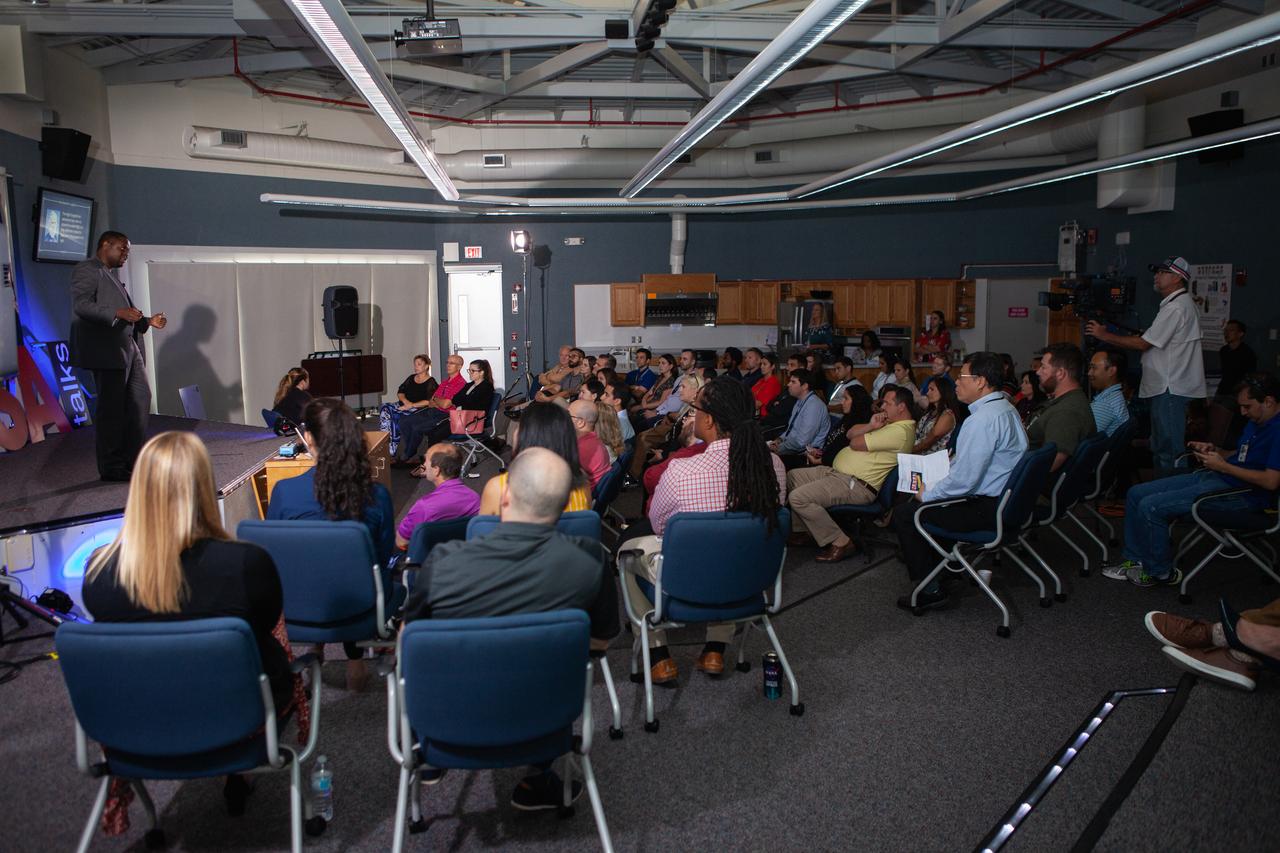
Kennedy Space Center employees attend the third in a series of five TED Talk-style informational sessions on Oct. 17, 2019, inside the Florida spaceport’s Kennedy Learning Institute. Sponsored by Kennedy’s Launching Leaders and Leadership for the Future, NASAtalks focuses on the topic of intentional careers and aims to provide employees with tools and knowledge that can be utilized for career growth. The theme of this third session was customers, and speakers included Kennedy employees Ryan Richards, Mike Williams and Dave Grau, with a skill-building section on active listening and negotiating by Tim Bass.

Kennedy Space Center’s Tim Bass addresses co-workers inside the Florida spaceport’s Kennedy Learning Institute on Oct. 17, 2019, during the third in a series of five TED Talk-style informational sessions. Sponsored by Kennedy’s Launching Leaders and Leadership for the Future, NASAtalks focuses on the topic of intentional careers and aims to provide employees with tools and knowledge that can be utilized for career growth. The theme of this third session was customers, and additional speakers included Kennedy employees Ryan Richards, Mike Williams and Dave Grau.
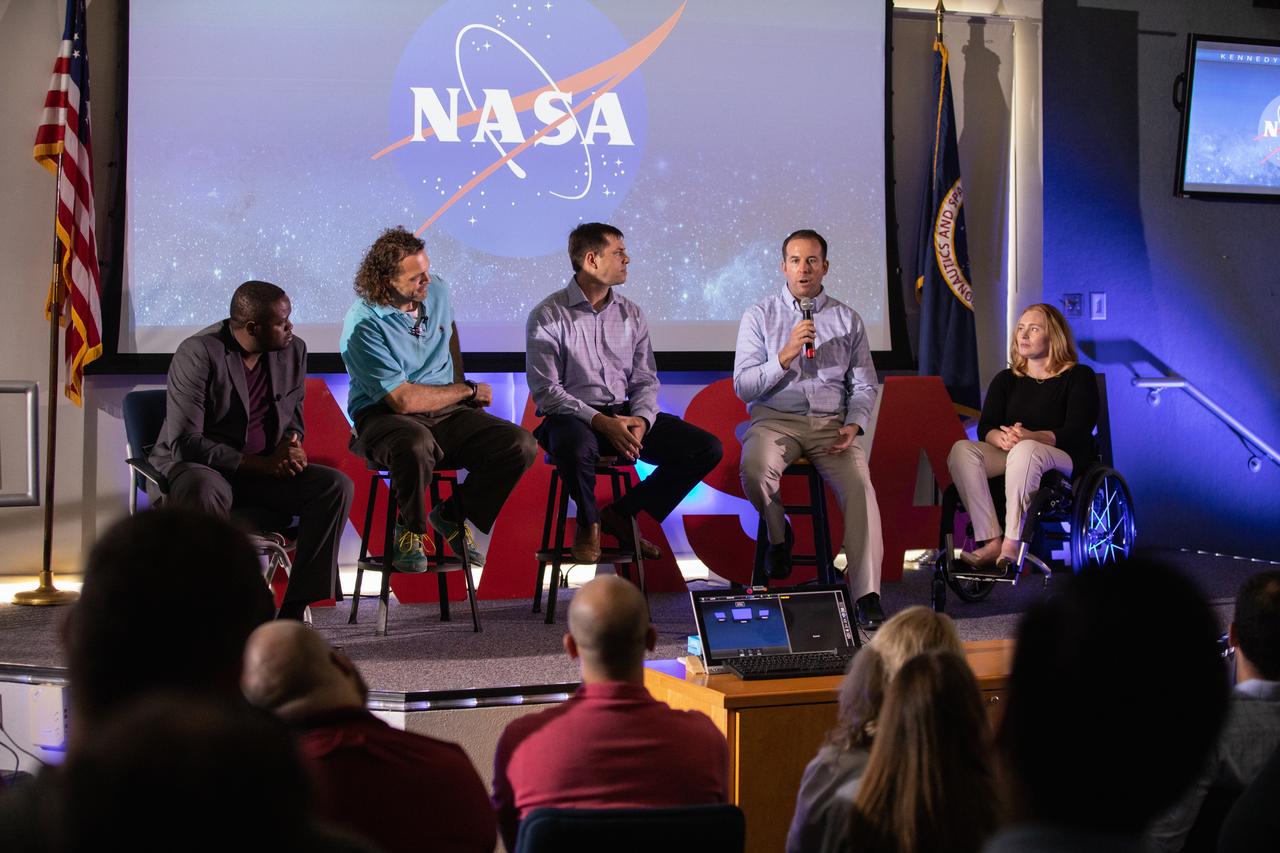
From left, Kennedy Space Center’s Ryan Richards, Tim Bass, Mike Williams, Dave Grau and Christine Shepperd participate in the third of a series of five TED Talk-style informational sessions on Oct. 17, 2019, inside the Florida spaceport’s Kennedy Learning Institute. Sponsored by Kennedy’s Launching Leaders and Leadership for the Future, NASAtalks focuses on the topic of intentional careers and aims to provide employees with tools and knowledge that can be utilized for career growth. The theme of this third session was customers.
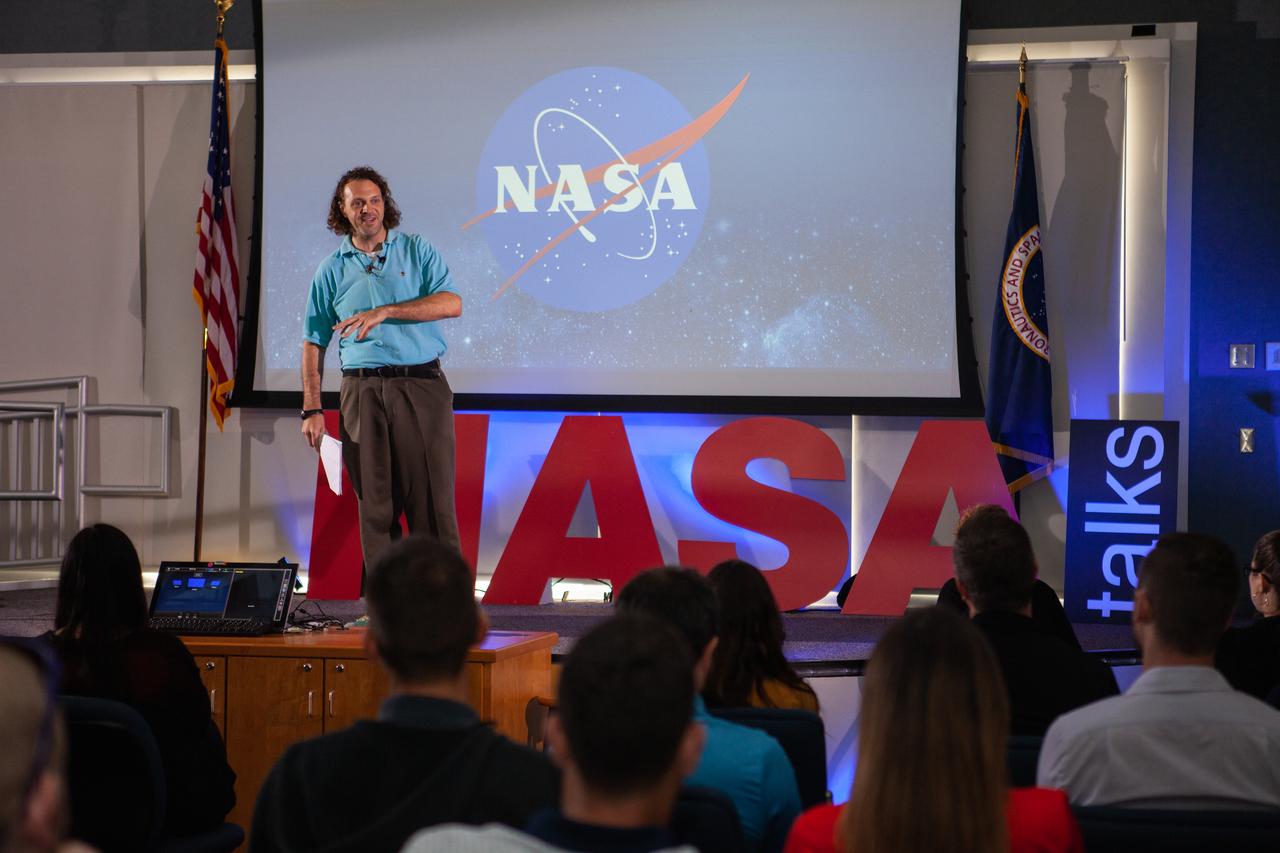
Kennedy Space Center’s Tim Bass addresses co-workers inside the Florida spaceport’s Kennedy Learning Institute on Oct. 17, 2019, during the third in a series of five TED Talk-style informational sessions. Sponsored by Kennedy’s Launching Leaders and Leadership for the Future, NASAtalks focuses on the topic of intentional careers and aims to provide employees with tools and knowledge that can be utilized for career growth. The theme of this third session was customers, and additional speakers included Kennedy employees Ryan Richards, Mike Williams and Dave Grau.

STS036-S-008 (3 March 1990) --- The crewmembers for STS-36 egress the Shuttle Atlantis following touchdown at Edwards Air Force Base in California. NASA officials stand nearby awaiting to greet (from bottom to top of the steps) Astronauts John O. Creighton, John H. Casper, Pierre J. Thuot, David C. Hilmers and Richard M. (Mike) Mullane. At right are Dr. William B. Lenoir (left) acting associate administrator for space flight; and Donald R. Puddy, director of flight crew operations.
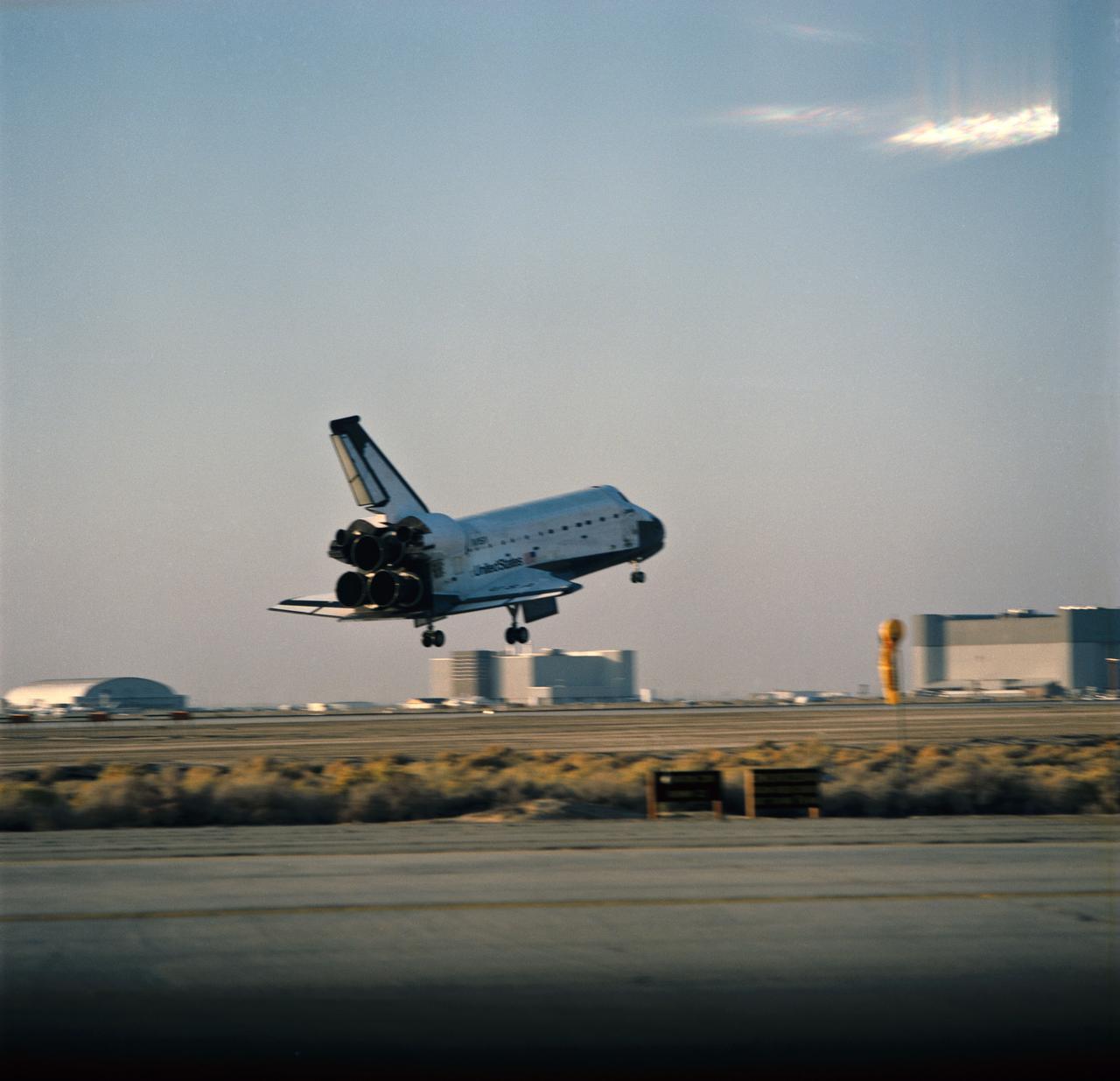
STS58-S-126 (1 Nov 1993) --- The Space Shuttle Columbia is about to touch down on the runway at Edwards Air Force Base (EAFB) in California. The landing, which occurred at 7:06 a.m. (PST), November 1, 1993, completed a two week mission in space devoted to medical research. Onboard the spacecraft were astronauts John E. Blaha, Richard A. Searfoss, Rhea Seddon, Shannon W. Lucid, David A. Wolf and William S. McArthur along with payload specialist Martin J. Fettman, DVM.
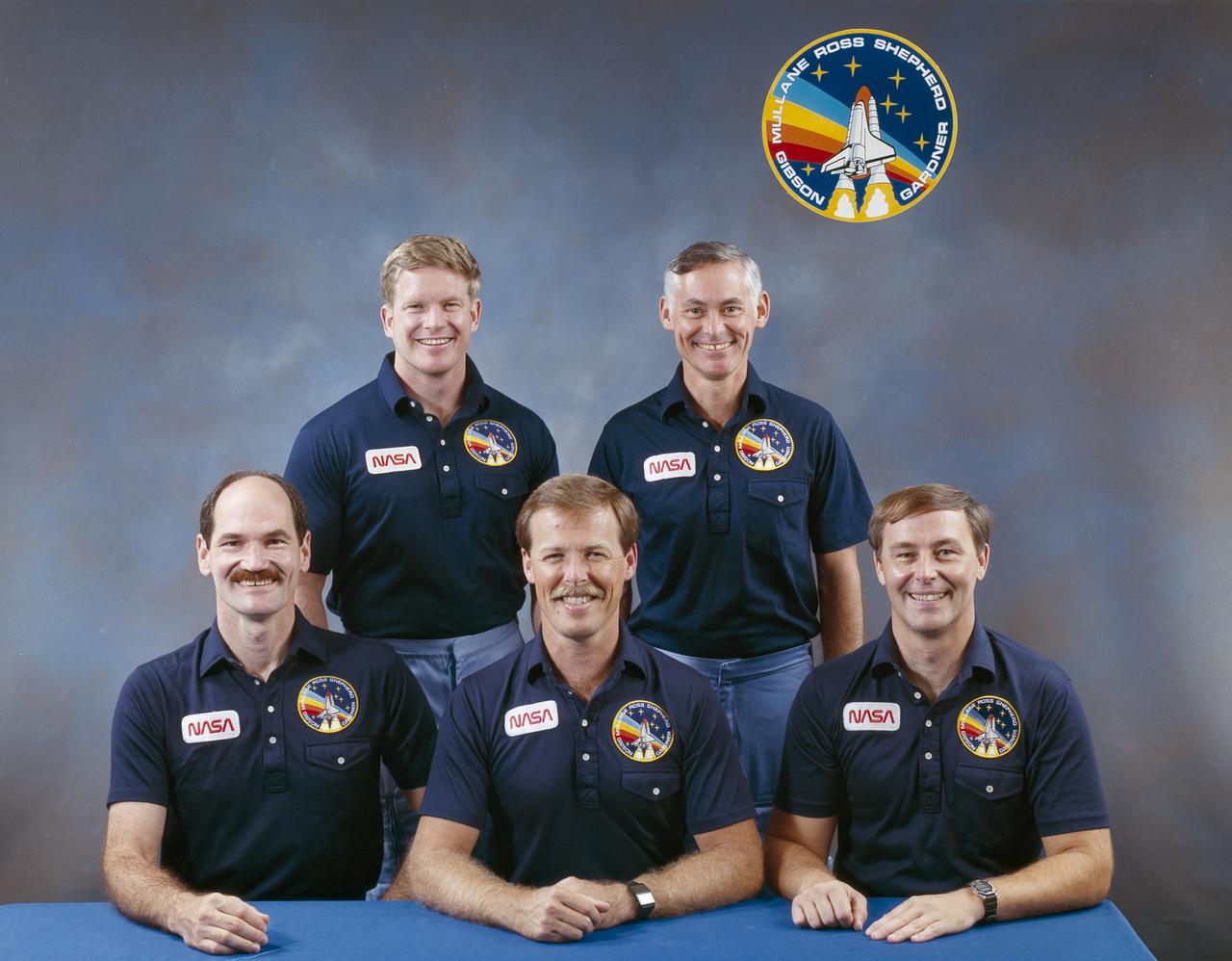
The STS-27 crew portrait features 5 astronauts. Seated, left to right, are Jerry L. Ross, mission specialist; Guy S. Gardner, pilot; and Robert L. Gibson, commander. On the back row, left to right, are mission specialists Richard M. Mullane, and William M. Shepherd. Launched aboard the Space Shuttle Atlantis on December 2, 1988 at 9:30:34 am (EST), the STS-27 mission was the third mission dedicated to the Department of Defense (DOD).
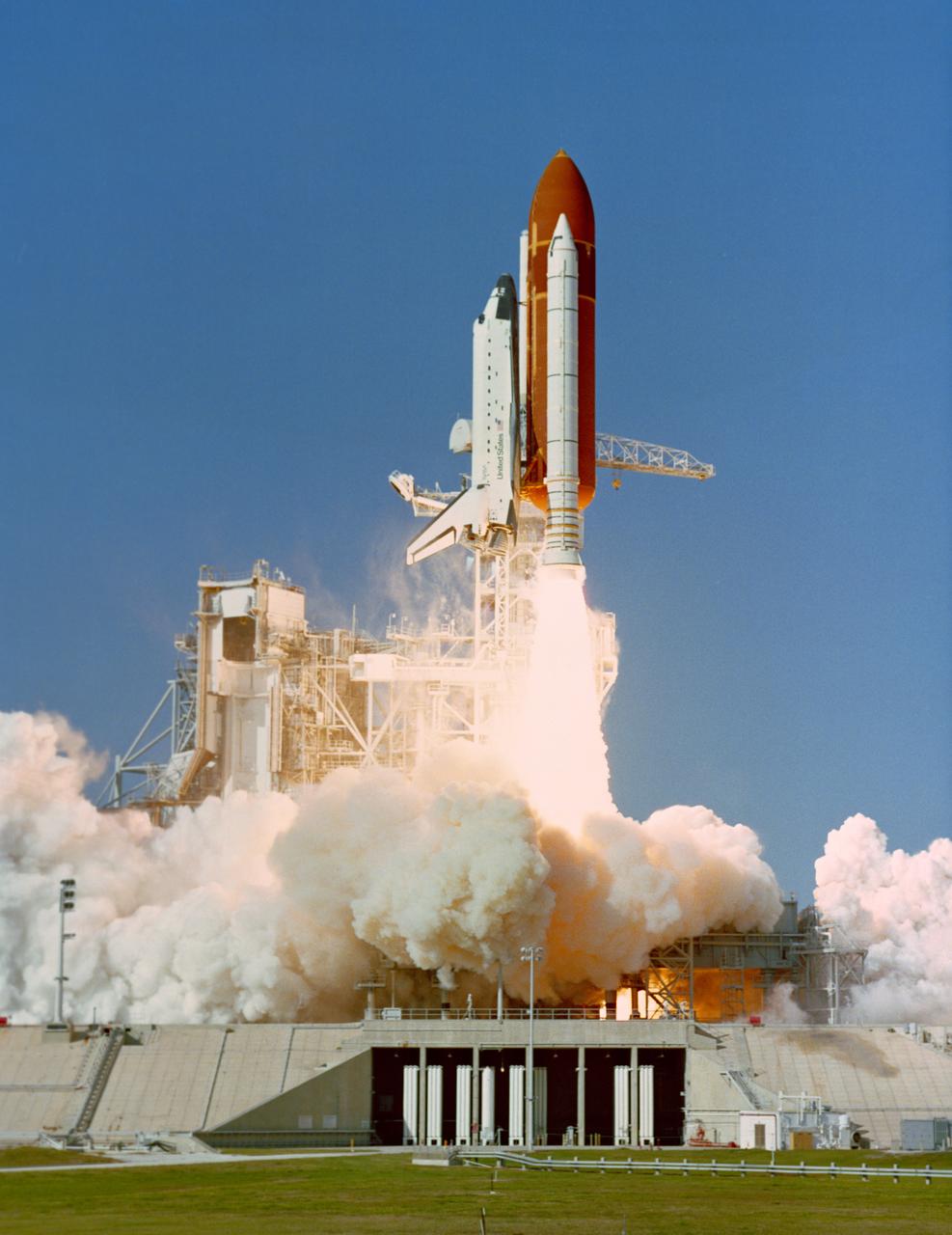
STS027-S-071 (2 Dec. 1988) --- The Space Shuttle Atlantis and its five-man crew of astronauts are launched from Kennedy Space Center?s Pad 39B at 9:30 a.m. (EST), Dec. 2, 1988. Onboard the Department of Defense?dedicated mission are astronauts Robert L. Gibson, Guy S. Gardner, Jerry L. Ross, Richard M. (Mike) Mullane and Williams M. Shepherd.
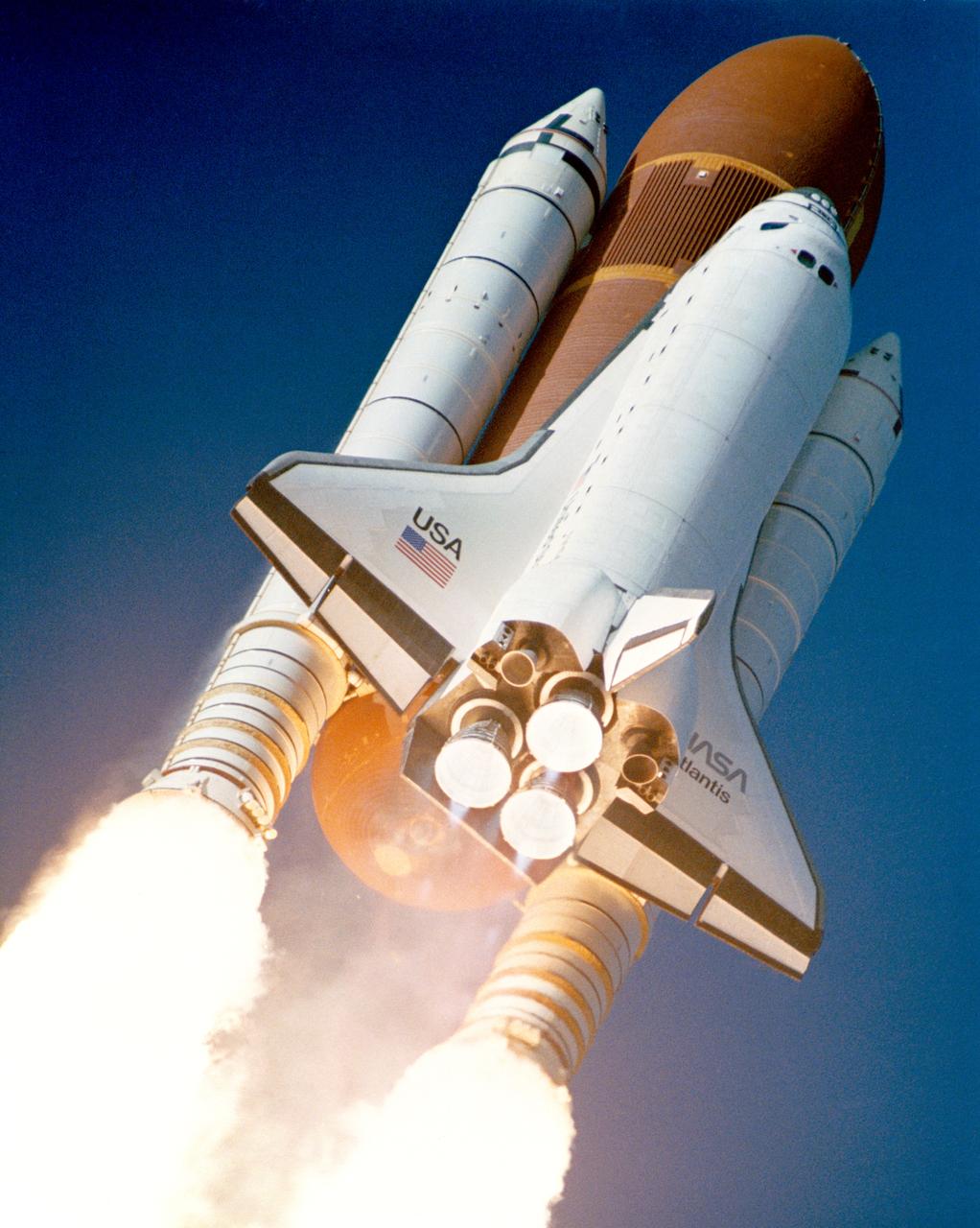
STS027-S-005 (Dec 2, 1988) --- Space Shuttle Atlantis is launched from Kennedy Space Center's (KSC) Pad 39-B at 9:30 a.m. EST, on a Department of Defense (DOD) dedicated mission. This is the third mission for the orbiter Atlantis. Crew members are: Commander Robert L. "Hoot" Gibson; Pilot Guy S. Gardner; and Mission Specialists Jerry L. Ross, William M. Shepherd and Richard M. (Mike) Mullane.
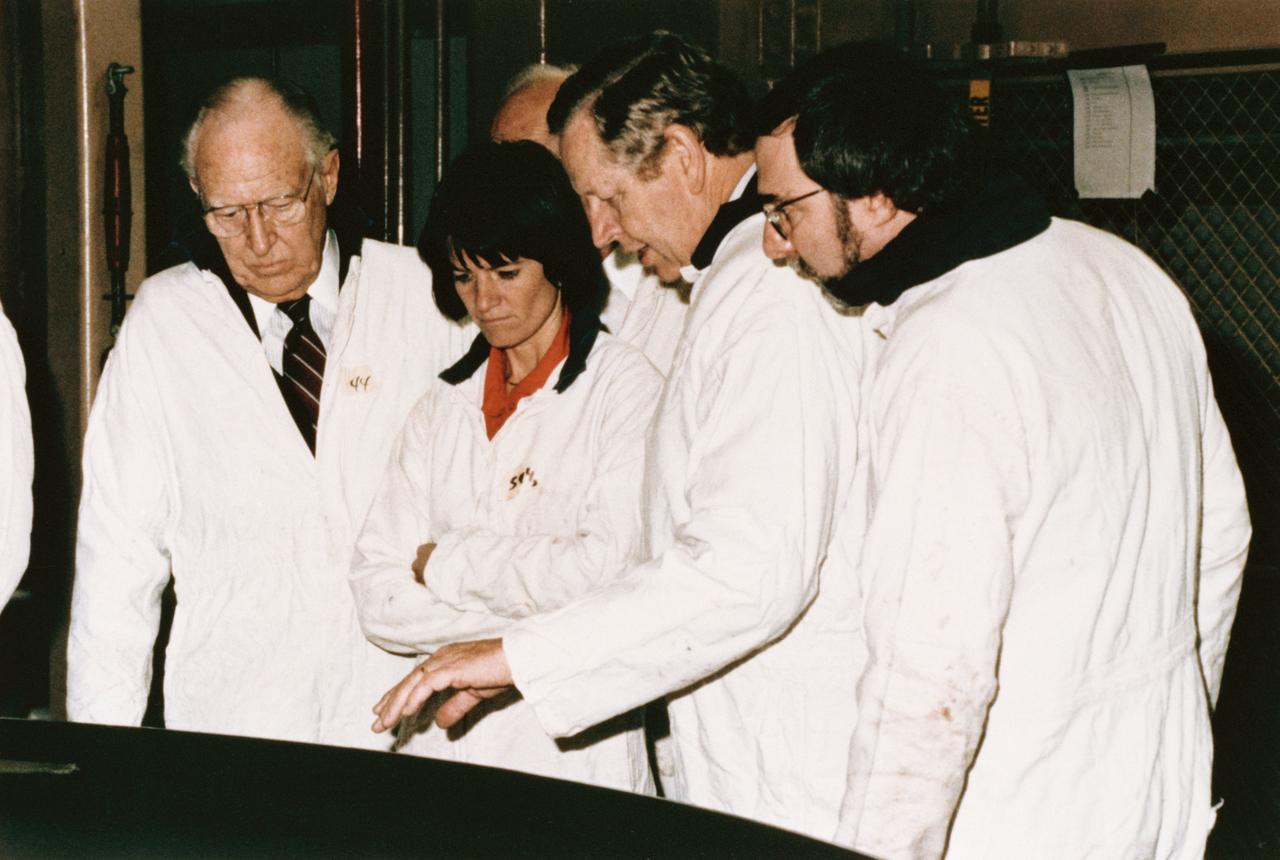
S86-28889 (14 Feb. 1986) --- Kennedy Space Center Director Richard Smith points out a portion of a solid rocket booster segment to astronaut Sally Ride and to the chairman of the Presidential Commission on the Space Shuttle Challenger Accident, William P. Rogers. The commission was taken to various booster storage and handling facilities at KSC on Feb. 14, 1986 as part of the failure investigation. Photo credit: NASA
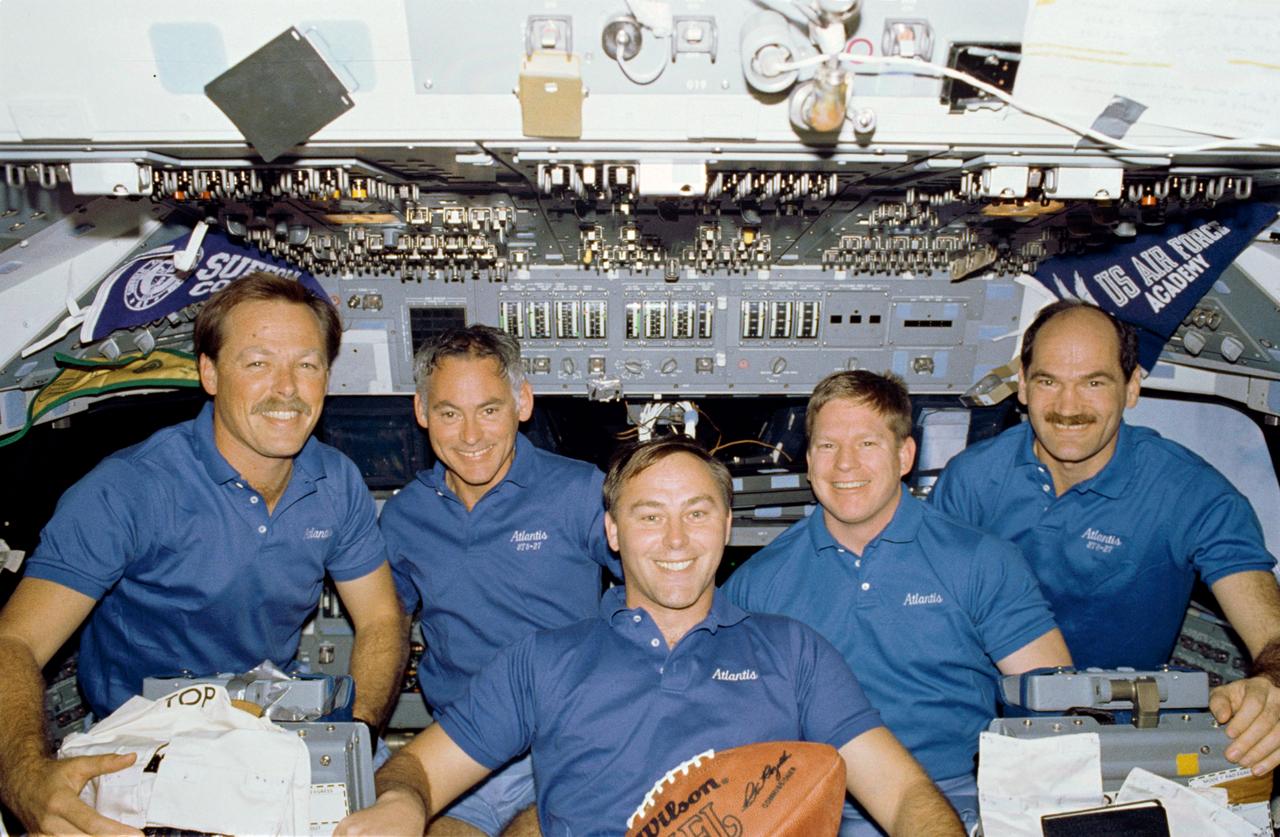
STS027-11-012 (2-6 Dec. 1988) --- The crew members for the STS-27 space flight pose on the flight deck of the Earth-orbiting space shuttle Atlantis with a football free-floating in the foreground. Left to right are astronauts Robert L. Gibson, commander; Richard M. (Mike) Mullane, Jerry L. Ross and William M. Shepherd, mission specialists; and Guy S. Gardner, pilot. The football was later presented to the National Football League (NFL) at halftime of the Super Bowl in Miami. Photo credit: NASA
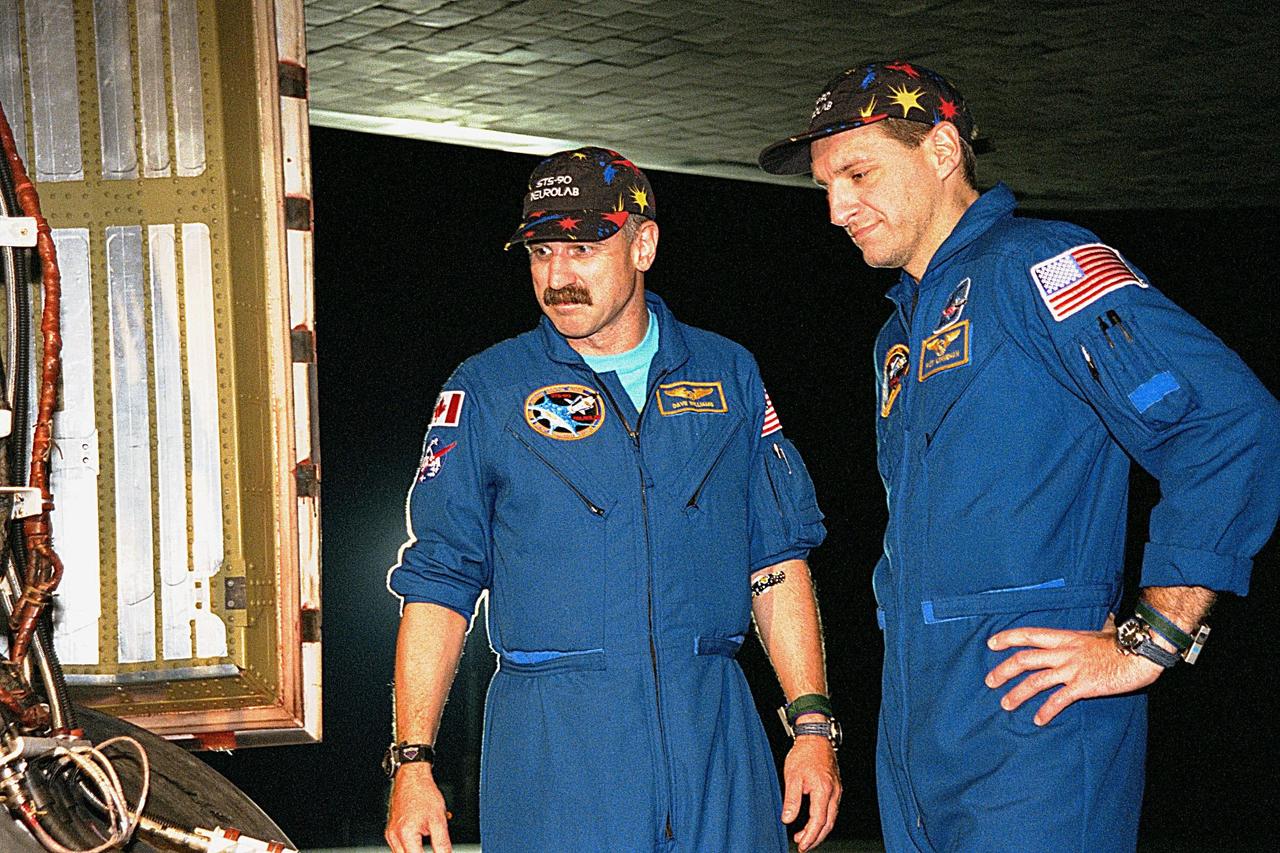
STS-90 Mission Specialists Dafydd (Dave) Williams, M.D., with the Canadian Space Agency (left) and Richard Linnehan, D.V.M., inspect the orbiter Columbia's tires in the evening after their midday arrival on May 3, ending their nearly 16-day Neurolab mission. The 90th Shuttle mission was Columbia's 13th landing at the space center and the 43rd KSC landing in the history of the Space Shuttle program. During the mission, the crew conducted research to contribute to a better understanding of the human nervous system
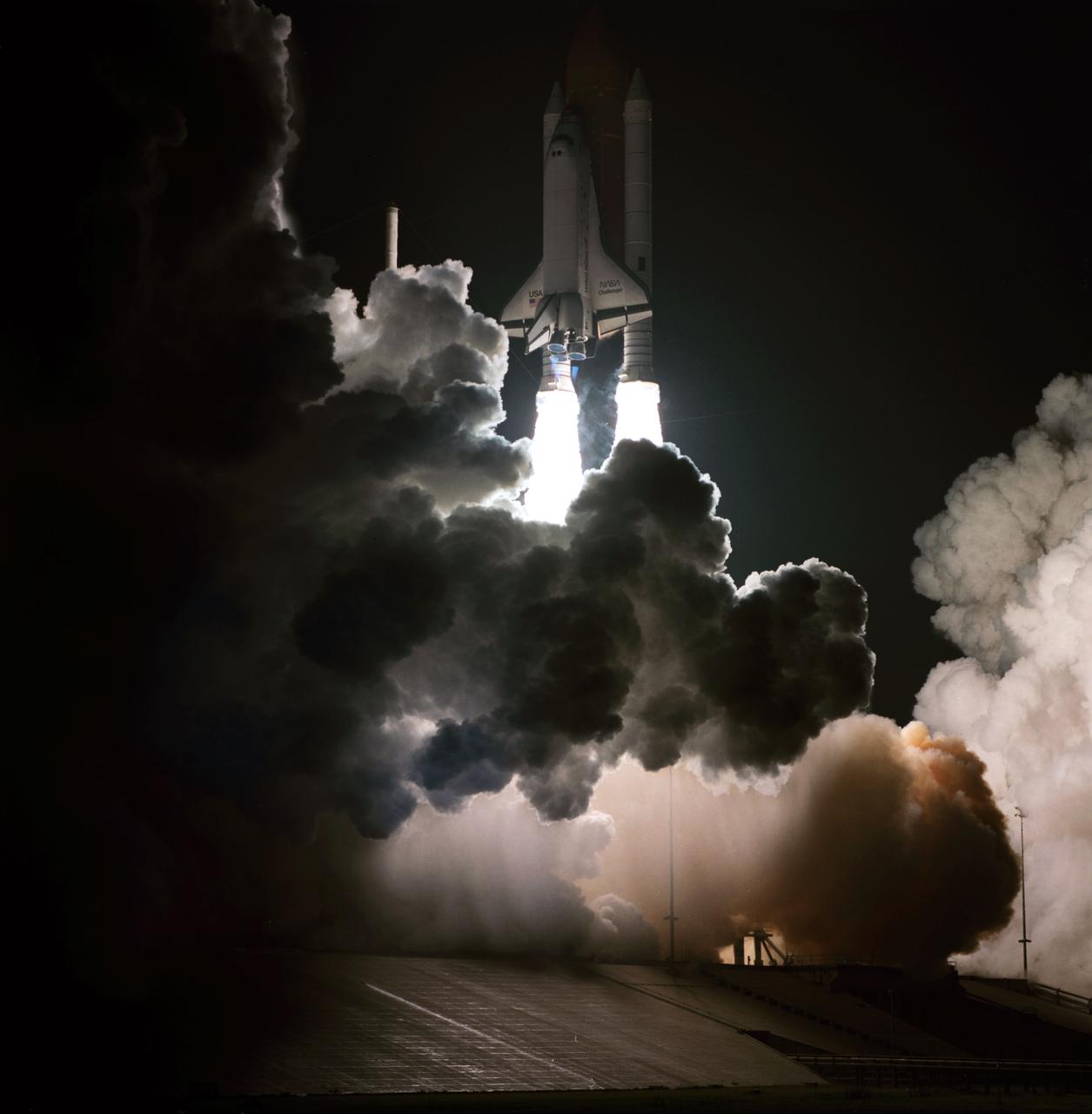
S83-39513 (30 Aug. 1983) --- NASA's eighth space shuttle launch lights up the Florida sky at 2:32 a.m. (EDT), Aug. 30, 1983. The Challenger's third flight is the first to have its beginnings in darkness. Five astronauts and an assortment of experiments are aboard the reusable vehicle. Crew members are astronauts Richard H. Truly, STS-8 commander; Daniel C. Brandenstein, pilot; and Dale A. Gardner, Guion S. Bluford and William E. Thornton, all mission specialists. Photo credit: NASA
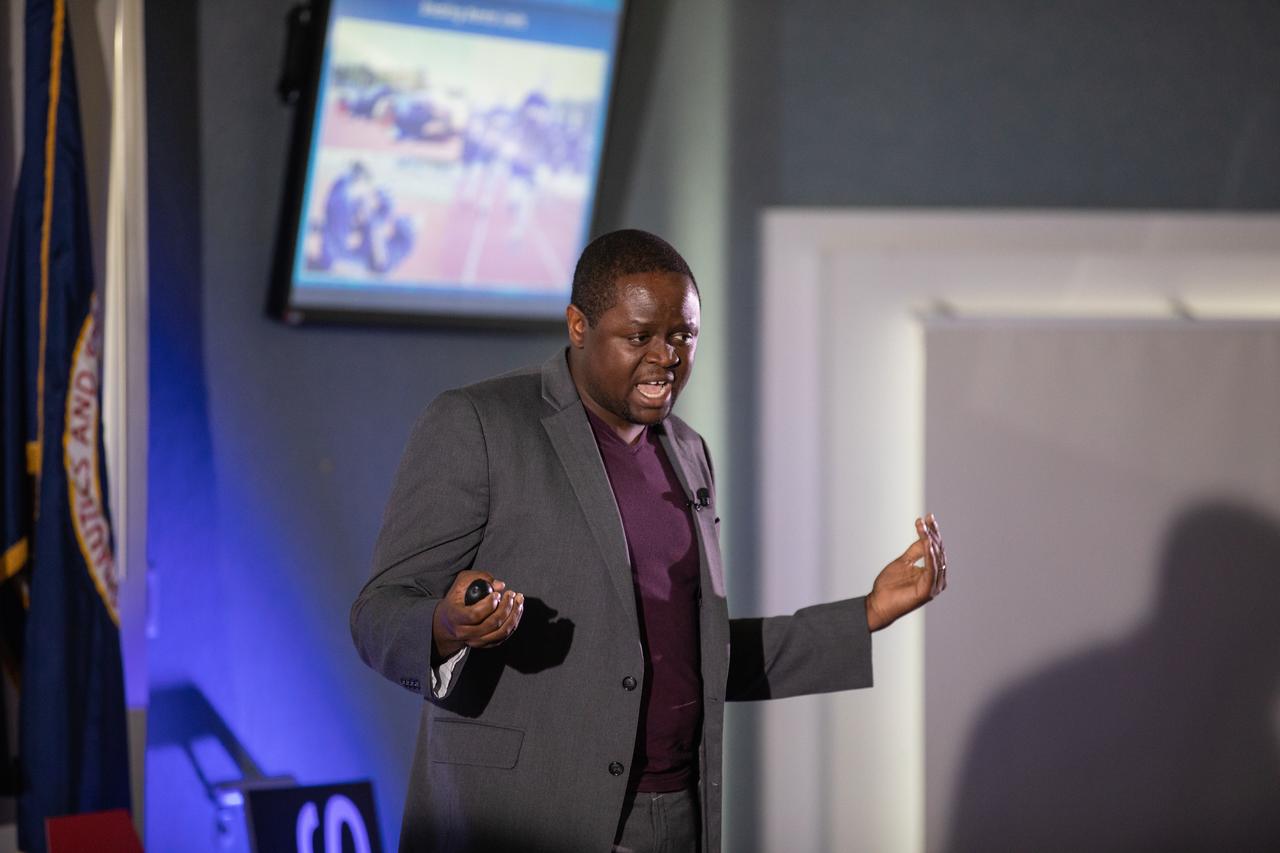
Kennedy Space Center’s Ryan Richards speaks at the third in a series of five TED Talk-style informational sessions on Oct. 17, 2019, in the Florida spaceport’s Kennedy Learning Institute. Sponsored by Kennedy’s Launching Leaders and Leadership for the Future, NASAtalks focuses on the topic of intentional careers and aims to provide employees with tools and knowledge that can be utilized for career growth. The theme of this third session was customers, and additional speakers included Kennedy employees Mike Williams and Dave Grau, with a skill-building section on active listening and negotiating by Tim Bass.
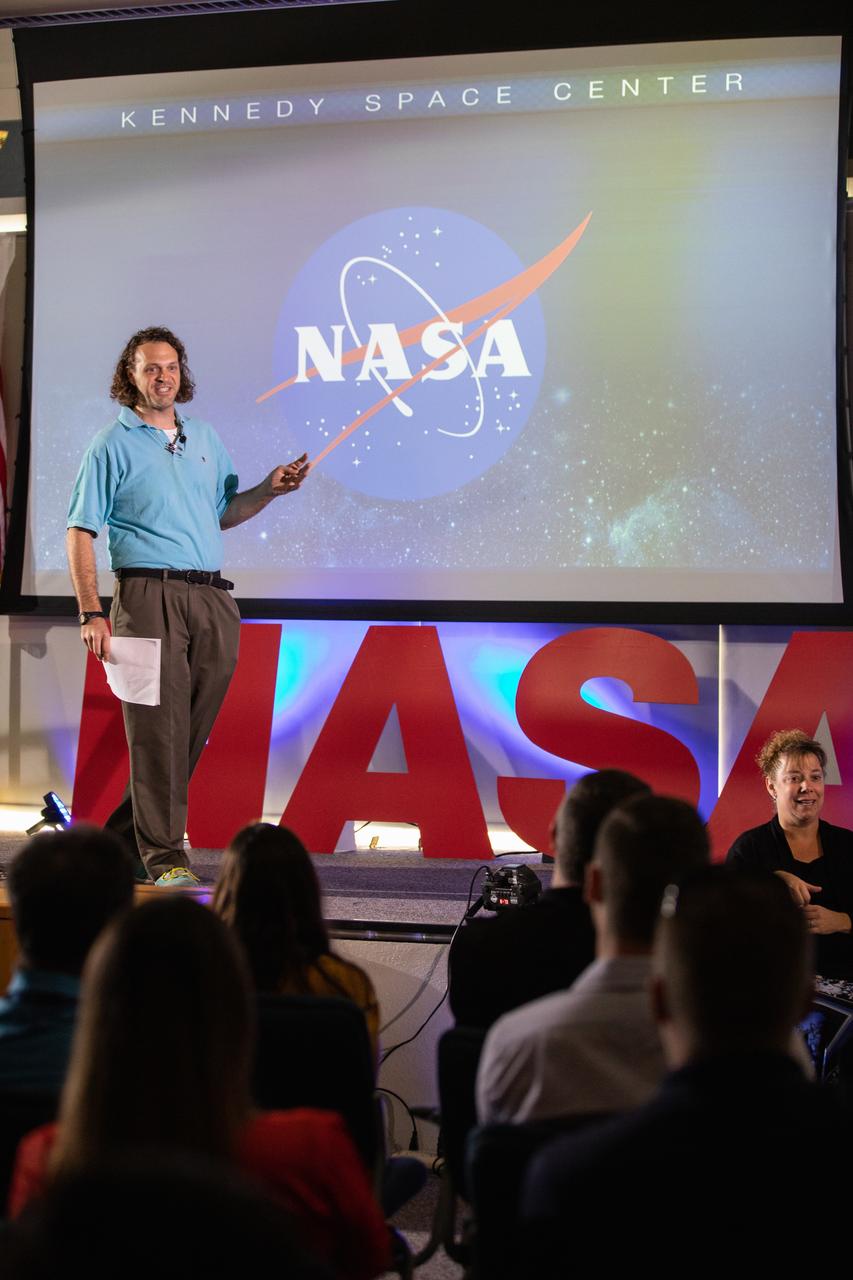
Kennedy Space Center’s Tim Bass addresses co-workers inside the Florida spaceport’s Kennedy Learning Institute on Oct. 17, 2019, during the third in a series of five TED Talk-style informational sessions. Sponsored by Kennedy’s Launching Leaders and Leadership for the Future, NASAtalks focuses on the topic of intentional careers and aims to provide employees with tools and knowledge that can be utilized for career growth. The theme of this third session was customers, and additional speakers included Kennedy employees Ryan Richards, Mike Williams and Dave Grau.
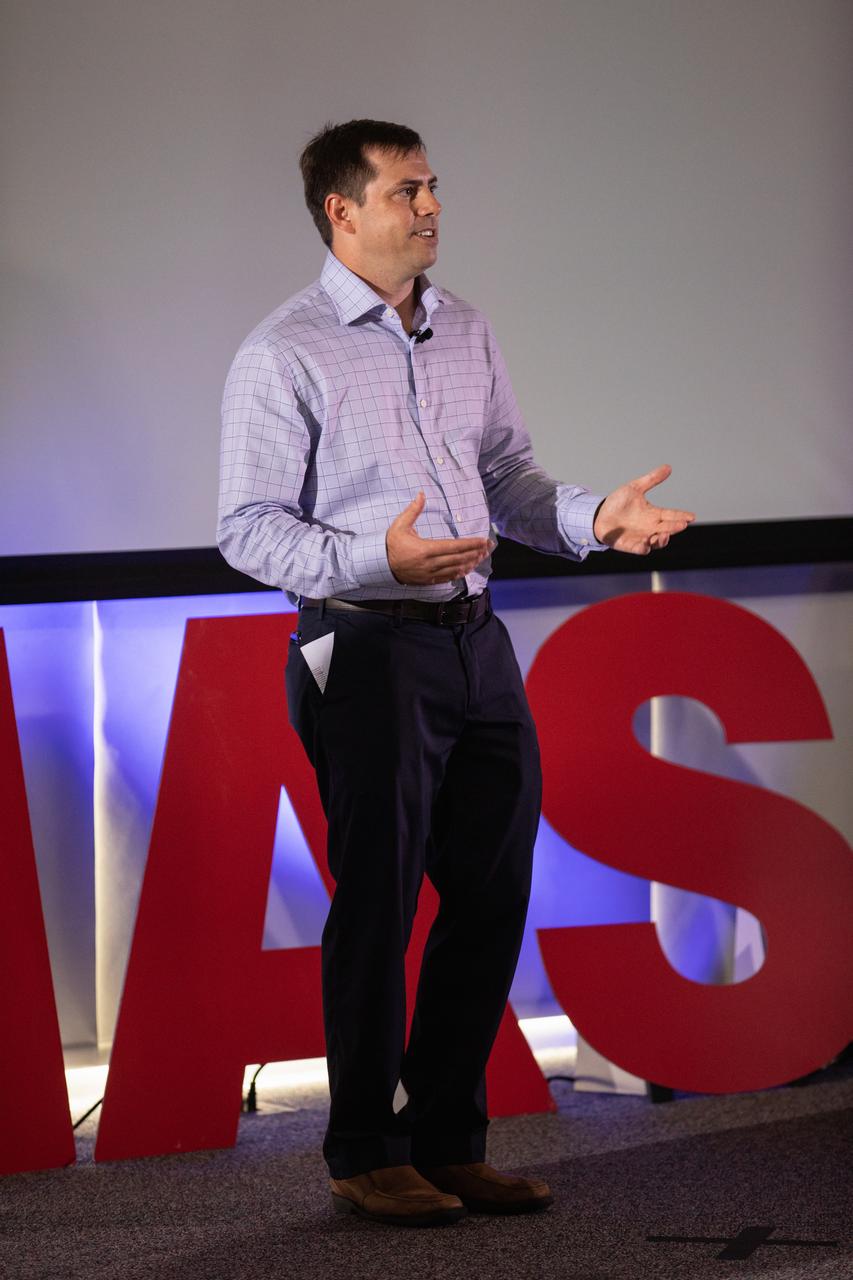
Kennedy Space Center’s Mike Williams speaks at the third in a series of five TED Talk-style informational sessions on Oct. 17, 2019, in the Florida spaceport’s Kennedy Learning Institute. Sponsored by Kennedy’s Launching Leaders and Leadership for the Future, NASAtalks focuses on the topic of intentional careers and aims to provide employees with tools and knowledge that can be utilized for career growth. The theme of this third session was customers, and additional speakers included Kennedy employees Ryan Richards and Dave Grau, with a skill-building section on active listening and negotiating by Tim Bass.
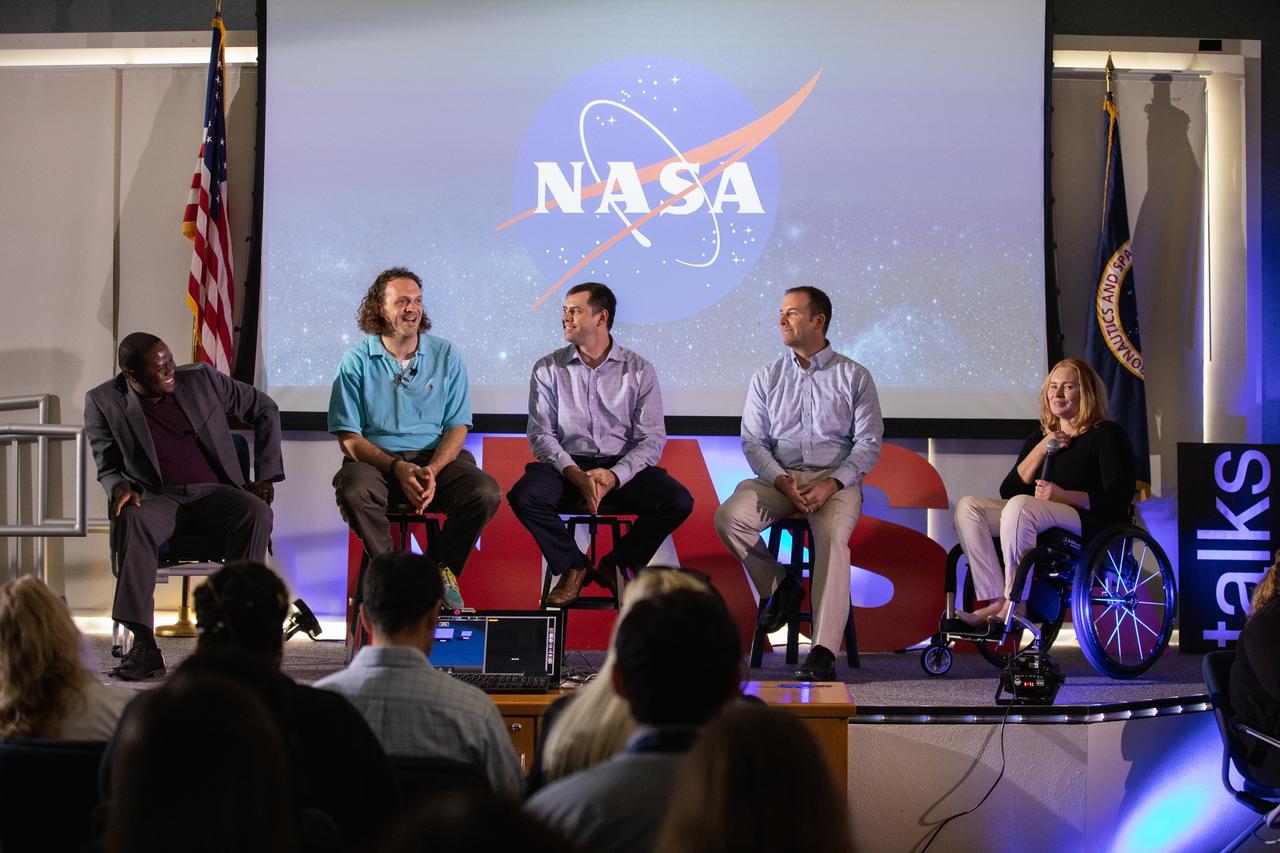
From left, Kennedy Space Center’s Ryan Richards, Tim Bass, Mike Williams, Dave Grau and Christine Shepperd participate in the third of a series of five TED Talk-style informational sessions on Oct. 17, 2019, inside the Florida spaceport’s Kennedy Learning Institute. Sponsored by Kennedy’s Launching Leaders and Leadership for the Future, NASAtalks focuses on the topic of intentional careers and aims to provide employees with tools and knowledge that can be utilized for career growth. The theme of this third session was customers.
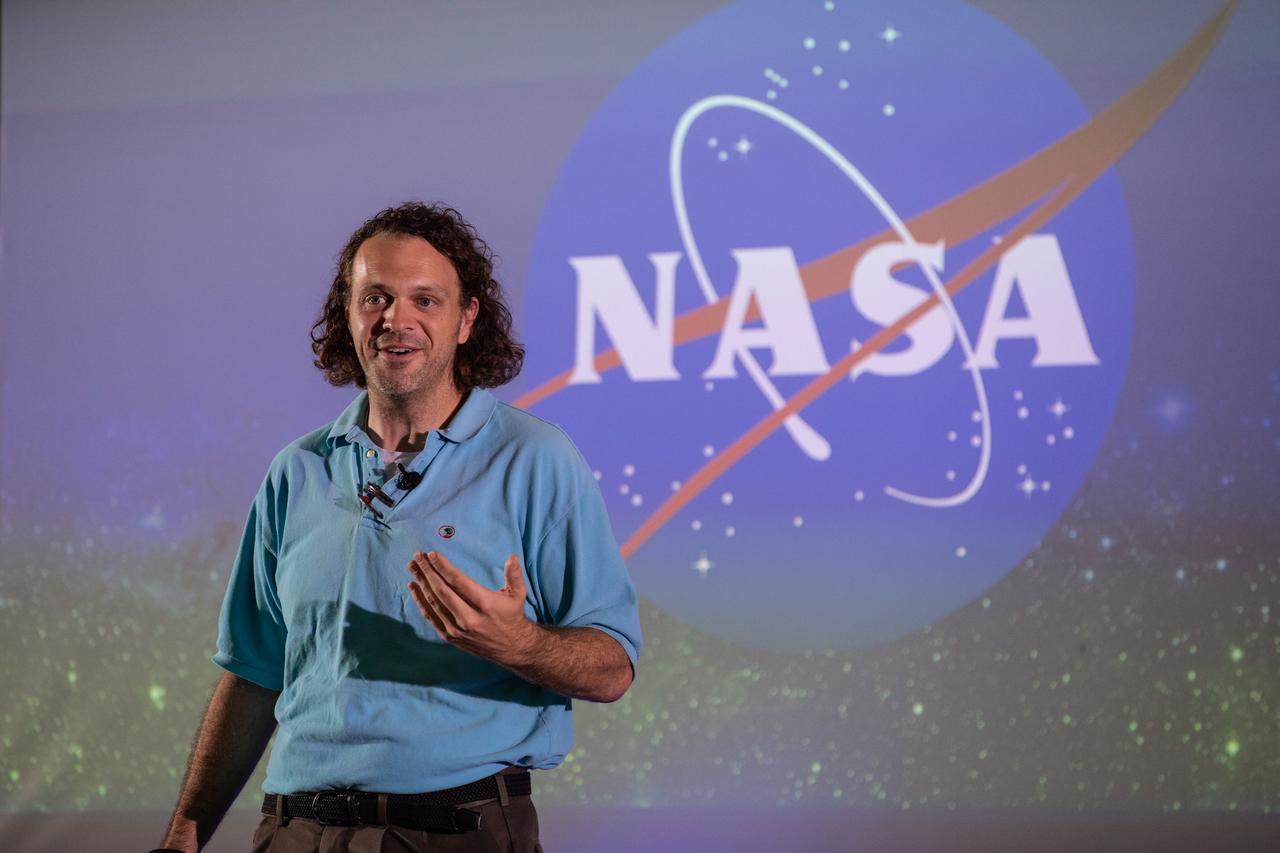
Kennedy Space Center’s Tim Bass speaks at the third in a series of five TED Talk-style informational sessions on Oct. 17, 2019, in the Florida spaceport’s Kennedy Learning Institute. Sponsored by Kennedy’s Launching Leaders and Leadership for the Future, NASAtalks focuses on the topic of intentional careers and aims to provide employees with tools and knowledge that can be utilized for career growth. The theme of this third session was customers, and additional speakers included Kennedy employees Ryan Richards, Mike Williams and Dave Grau.
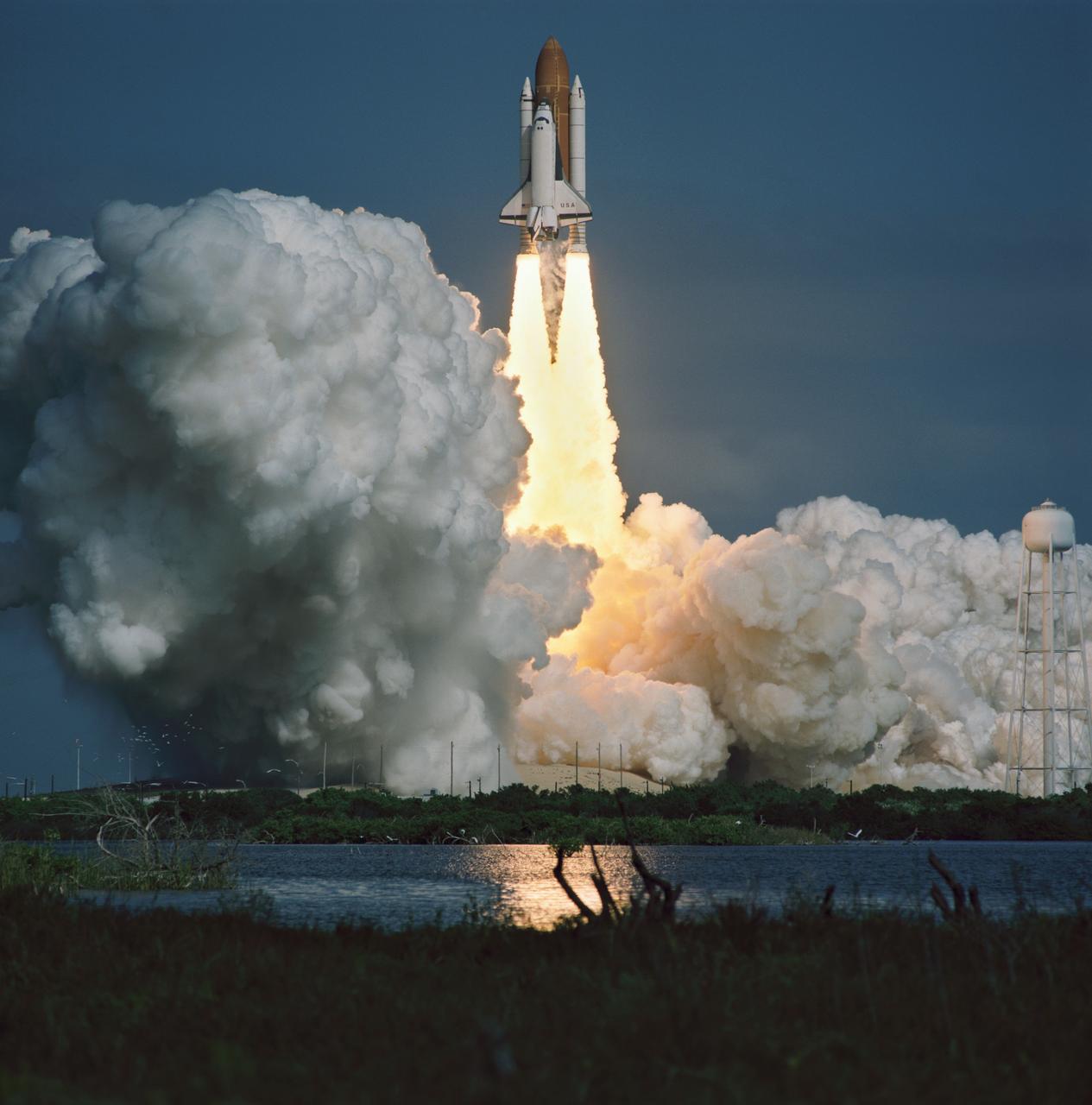
STS058-S-090 (18 Oct 1993) --- Creating large clouds of smoke the Space Shuttle Columbia lifts off from Launch Complex 39 at Kennedy Space Center (KSC). Liftoff occurred at 10:53 a.m. (EDT), October 18, 1993. Along with its Spacelab Life Sciences-2 payload, Columbia carries astronauts John E. Blaha, Richard A. Searfoss, Rhea Seddon, Shannon W. Lucid, David A. Wolf and William S. McArthur along with payload specialist Martin J. Fettman.
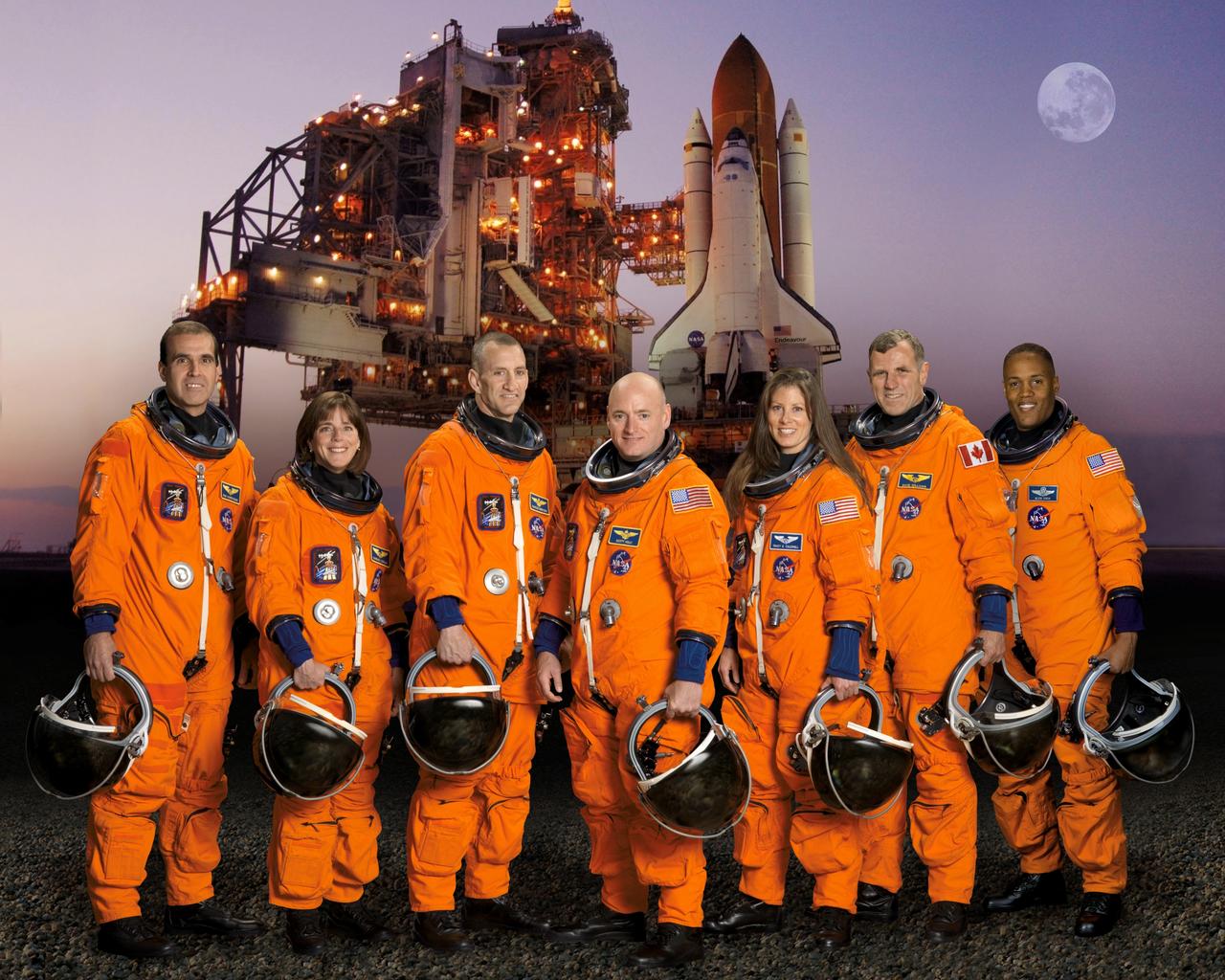
STS118-S-002 (May 2007) --- These seven astronauts take a break from training to pose for the STS-118 crew portrait. Pictured from the left are astronauts Richard A. (Rick) Mastracchio, mission specialist; Barbara R. Morgan, mission specialist; Charles O. Hobaugh, pilot; Scott J. Kelly, commander; Tracy E. Caldwell, Canadian Space Agency's Dafydd R. (Dave) Williams, and Alvin Drew Jr., all mission specialists. The crewmembers are attired in training versions of their shuttle launch and entry suits.
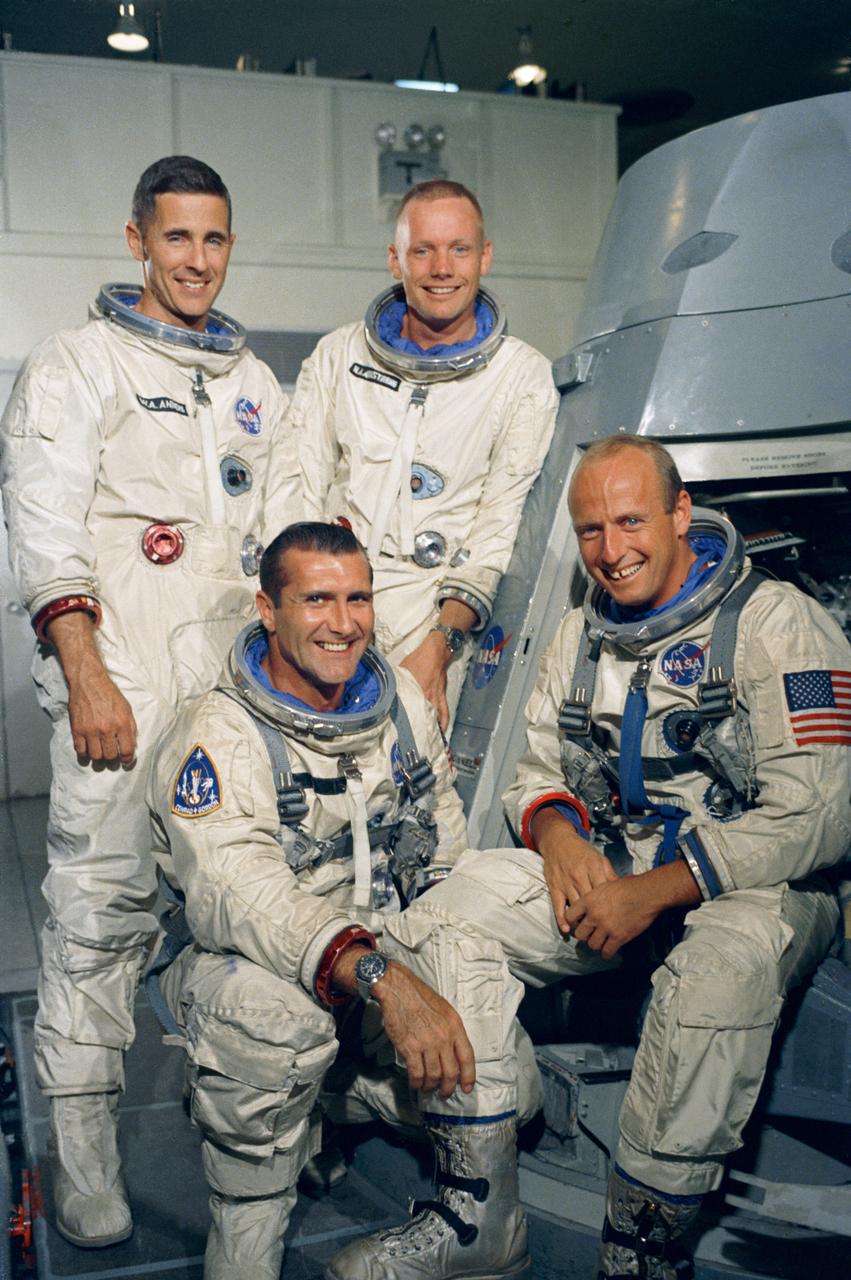
S66-50772 (7 Sept. 1966) --- The Gemini-Titan XI (GT-11) prime and backup crews pose for a group portrait. Seated is the prime crew, astronauts Charles Conrad Jr. (right), command pilot, and Richard F. Gordon Jr. (left), pilot. The backup crew (standing) is astronauts Neil A. Armstrong (right), command pilot, and William A. Anders (left), pilot. The two crews were suited up for a simulation test at the Kennedy Space Center. Photo credit: NASA
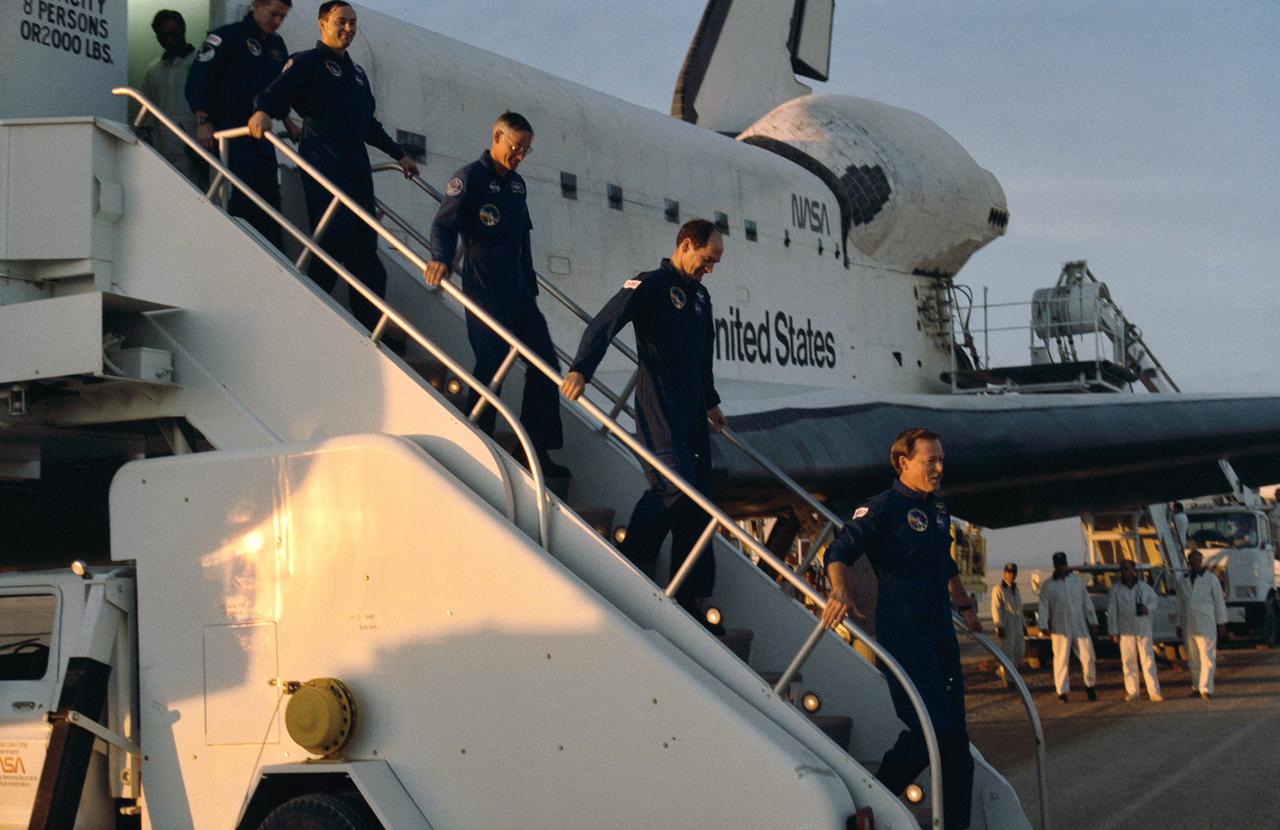
STS027-S-020 (6 Dec 1988) --- The five astronauts who were aboard Atlantis for its return to flight leave their spacecraft after almost 4 1/2 days in space. From bottom to top are Astronauts Robert L. Gibson, mission commander; Guy S. Gardner, pilot; and Richard M. (Mike) Mullane, Jerry L. Ross and William M. Shepherd, mission specialists. Atlantis touched down on Rogers Dry Lake Bed at 3:36 p.m. (PST), Dec. 6, 1988.