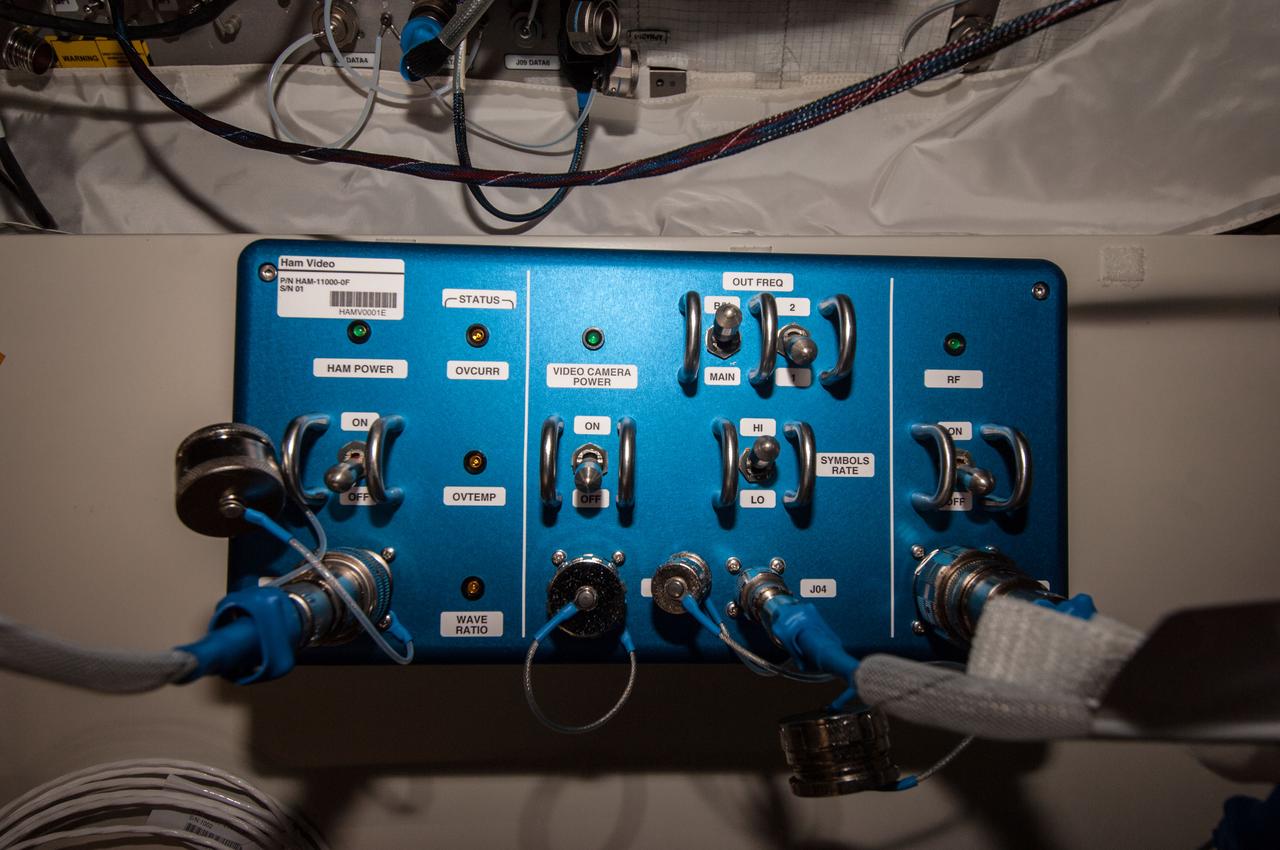
Documentation of the Ham Video unit installed in the Columbus European Laboratory. Part number (P/N) is HAM-11000-0F, serial number (S/N) is 01, barcode is HAMV0001E. Image was taken during Expedition 39 Ham Video commissioning activities and released by astronaut on Twitter.

This video highlights the many ways NASA Goddard Space Flight Center explores the universe. So crank up your speakers and let the music be your guide. "My Songs Know What You Did In The Dark (Light Em Up)" Performed by Fall Out Boy Courtesy of Island Def Jam Music Group under license from Universal Music Enterprises Download the video here: <a href="http://svs.gsfc.nasa.gov/goto?11378" rel="nofollow">svs.gsfc.nasa.gov/goto?11378</a> <b><a href="http://www.nasa.gov/audience/formedia/features/MP_Photo_Guidelines.html" rel="nofollow">NASA image use policy.</a></b> <b><a href="http://www.nasa.gov/centers/goddard/home/index.html" rel="nofollow">NASA Goddard Space Flight Center</a></b> enables NASA’s mission through four scientific endeavors: Earth Science, Heliophysics, Solar System Exploration, and Astrophysics. Goddard plays a leading role in NASA’s accomplishments by contributing compelling scientific knowledge to advance the Agency’s mission. <b>Follow us on <a href="http://twitter.com/NASAGoddardPix" rel="nofollow">Twitter</a></b> <b>Like us on <a href="http://www.facebook.com/pages/Greenbelt-MD/NASA-Goddard/395013845897?ref=tsd" rel="nofollow">Facebook</a></b> <b>Find us on <a href="http://instagram.com/nasagoddard?vm=grid" rel="nofollow">Instagram</a></b>
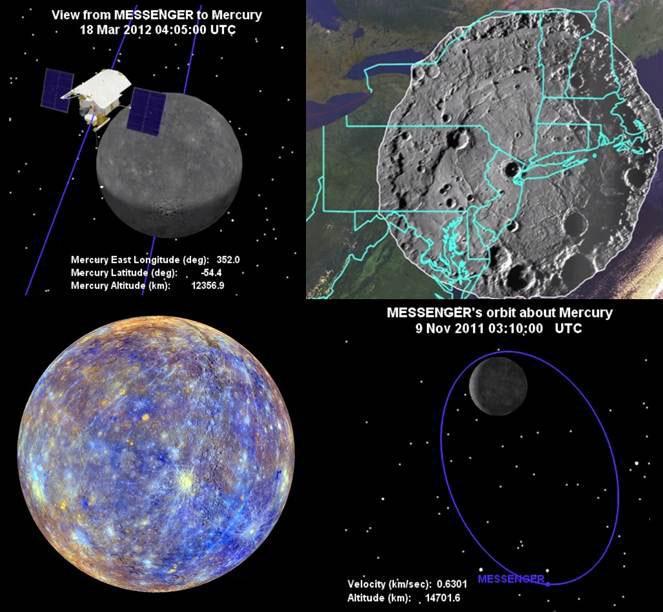
A Tribute to MESSENGER: Video
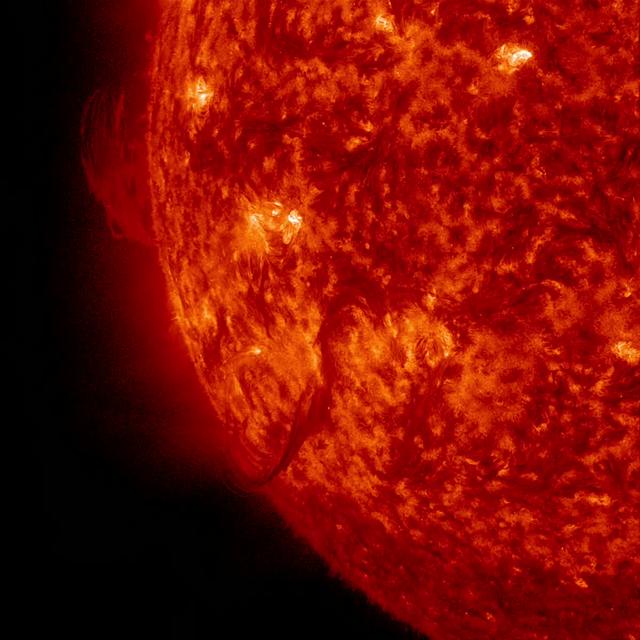
A filament (which at one point had an eerie similarity to a snake) broke away from the sun and out into space (Nov. 1, 2014). The video covers just over three hours of activity. This kind of eruptive event is called a Hyder flare. These are filaments (elongated clouds of gases above the sun's surface) that erupt and cause a brightening at the sun's surface, although no active regions are in that area. It did thrust out a cloud of particles but not towards Earth. The images were taken in the 304 Angstrom wavelength of extreme UV light. Credit: NASA/Solar Dynamics Observatory <b><a href="http://www.nasa.gov/audience/formedia/features/MP_Photo_Guidelines.html" rel="nofollow">NASA image use policy.</a></b> <b><a href="http://www.nasa.gov/centers/goddard/home/index.html" rel="nofollow">NASA Goddard Space Flight Center</a></b> enables NASA’s mission through four scientific endeavors: Earth Science, Heliophysics, Solar System Exploration, and Astrophysics. Goddard plays a leading role in NASA’s accomplishments by contributing compelling scientific knowledge to advance the Agency’s mission. <b>Follow us on <a href="http://twitter.com/NASAGoddardPix" rel="nofollow">Twitter</a></b> <b>Like us on <a href="http://www.facebook.com/pages/Greenbelt-MD/NASA-Goddard/395013845897?ref=tsd" rel="nofollow">Facebook</a></b> <b>Find us on <a href="http://instagram.com/nasagoddard?vm=grid" rel="nofollow">Instagram</a></b>
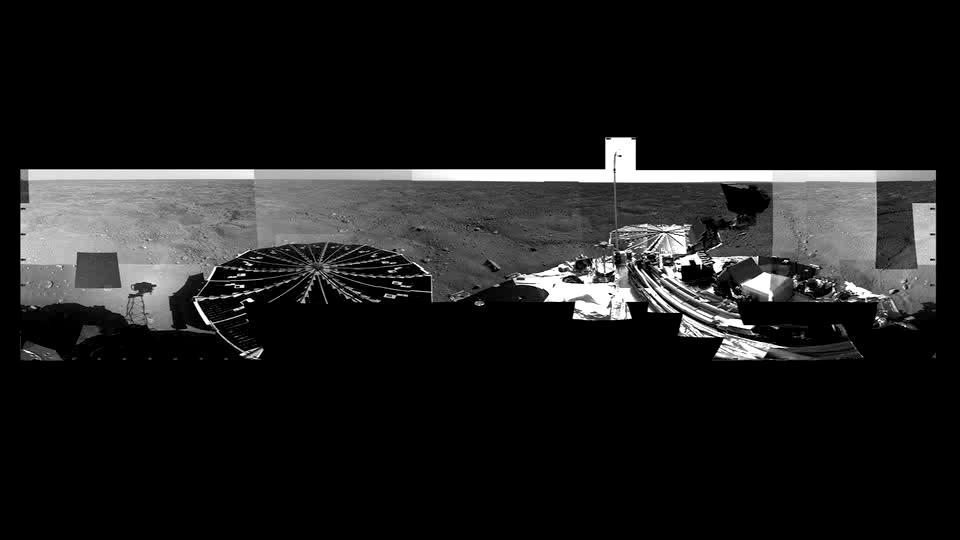
Martian Arctic Landscape Panorama Video
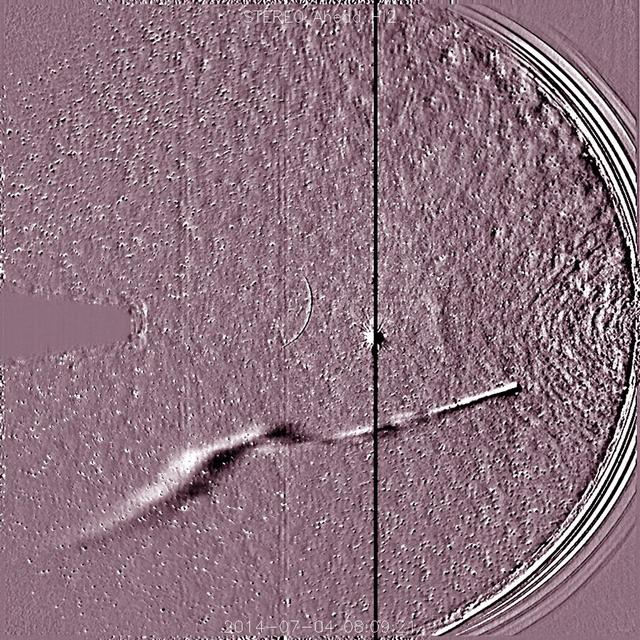
NASA's Solar TErrestrial RElations Observatory, STEREO has observed the recently discovered Comet Jacques as it passed by its nearest approach to the Sun (July 1-6, 2014). The wide field instrument on board STEREO (Ahead) showed the comet with its elongated tail being stretched and pummeled by the gusty solar wind streaming from the Sun. Also visible near the center of the image is the bright planet Venus. The Sun is just out of the field of view to the right. Comet Jacques is traveling through space at about 180,000 km per hour (110,000 mph). It may brighten enough to be seen with the naked eye. Video of this event here: <a href="https://www.flickr.com/photos/gsfc/14730658164/">www.flickr.com/photos/gsfc/14730658164/</a> Download original file: <a href="http://sohowww.nascom.nasa.gov/pickoftheweek/old/11jul2014/" rel="nofollow">sohowww.nascom.nasa.gov/pickoftheweek/old/11jul2014/</a> Credit: NASA/Goddard/STEREO <b><a href="http://www.nasa.gov/audience/formedia/features/MP_Photo_Guidelines.html" rel="nofollow">NASA image use policy.</a></b> <b><a href="http://www.nasa.gov/centers/goddard/home/index.html" rel="nofollow">NASA Goddard Space Flight Center</a></b> enables NASA’s mission through four scientific endeavors: Earth Science, Heliophysics, Solar System Exploration, and Astrophysics. Goddard plays a leading role in NASA’s accomplishments by contributing compelling scientific knowledge to advance the Agency’s mission. <b>Follow us on <a href="http://twitter.com/NASAGoddardPix" rel="nofollow">Twitter</a></b> <b>Like us on <a href="http://www.facebook.com/pages/Greenbelt-MD/NASA-Goddard/395013845897?ref=tsd" rel="nofollow">Facebook</a></b> <b>Find us on <a href="http://instagram.com/nasagoddard?vm=grid" rel="nofollow">Instagram</a></b>
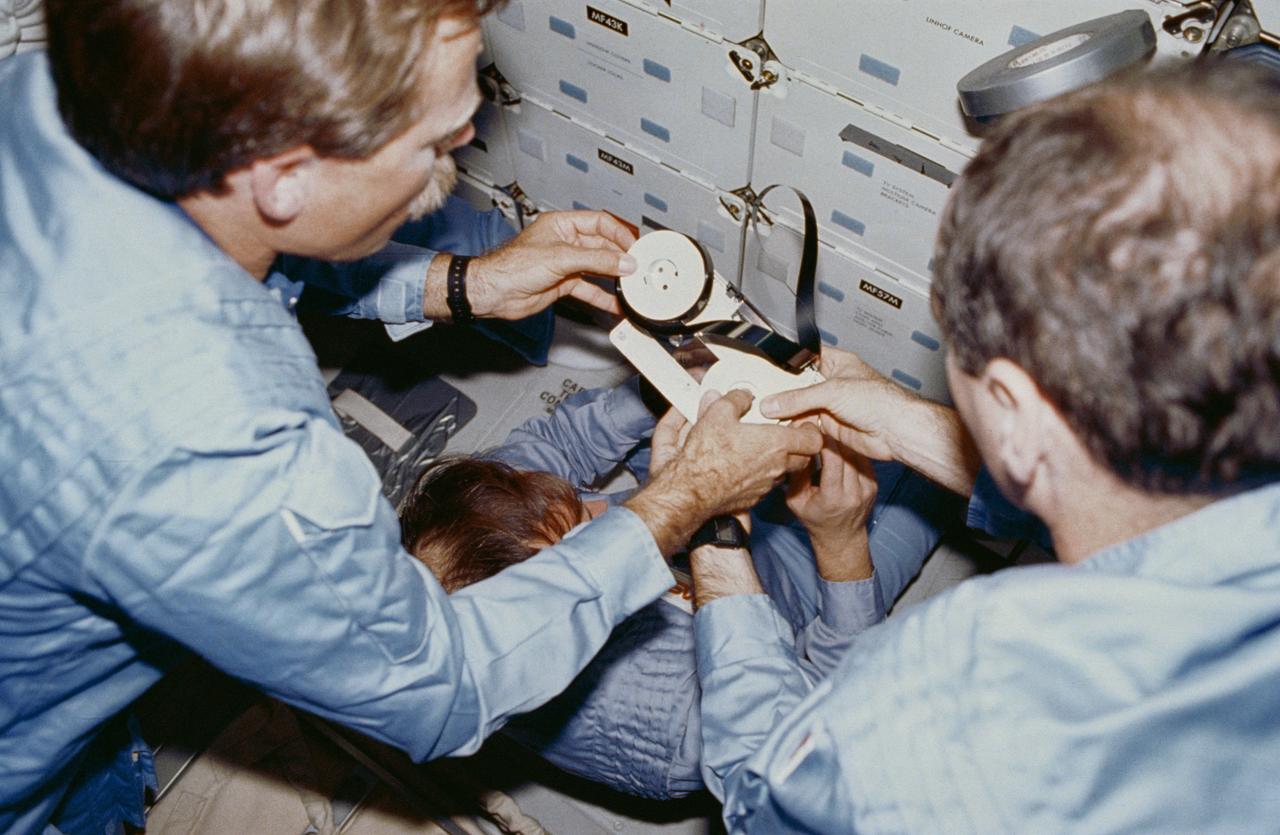
STS027-05-020 (2-6 Dec. 1988) --- In the foreground, astronauts Robert L. Gibson (left) and Guy S. Gardner, commander and pilot, respectively, for the STS-27 mission, repair a 3/4-inch video reel on the middeck of the Earth-orbiting space shuttle Atlantis. Photo credit: NASA
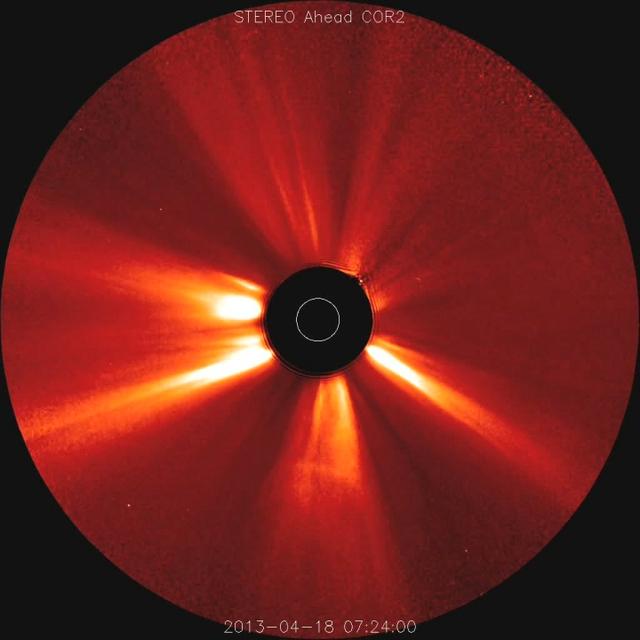
Coronal mass ejections were popping out from the Sun at a pace of two per day on average (Apr. 18-23, 2013). We counted ten CMEs for the five days, but some of the eruptions were complex and difficult to differentiate from one another. Almost all of them blew particles out to the left, most of them probably originating from the same active region. These were taken by the STEREO (Ahead) spacecraft?s coronagraph, in which the black disk blocks the Sun (represented by the white circle) so that we can observe the fainter features beyond it. Credit: NASA/Goddard/STEREO <b><a href="http://www.nasa.gov/audience/formedia/features/MP_Photo_Guidelines.html" rel="nofollow">NASA image use policy.</a></b> <b><a href="http://www.nasa.gov/centers/goddard/home/index.html" rel="nofollow">NASA Goddard Space Flight Center</a></b> enables NASA’s mission through four scientific endeavors: Earth Science, Heliophysics, Solar System Exploration, and Astrophysics. Goddard plays a leading role in NASA’s accomplishments by contributing compelling scientific knowledge to advance the Agency’s mission. <b>Follow us on <a href="http://twitter.com/NASA_GoddardPix" rel="nofollow">Twitter</a></b> <b>Like us on <a href="http://www.facebook.com/pages/Greenbelt-MD/NASA-Goddard/395013845897?ref=tsd" rel="nofollow">Facebook</a></b> <b>Find us on <a href="http://instagram.com/nasagoddard?vm=grid" rel="nofollow">Instagram</a></b>
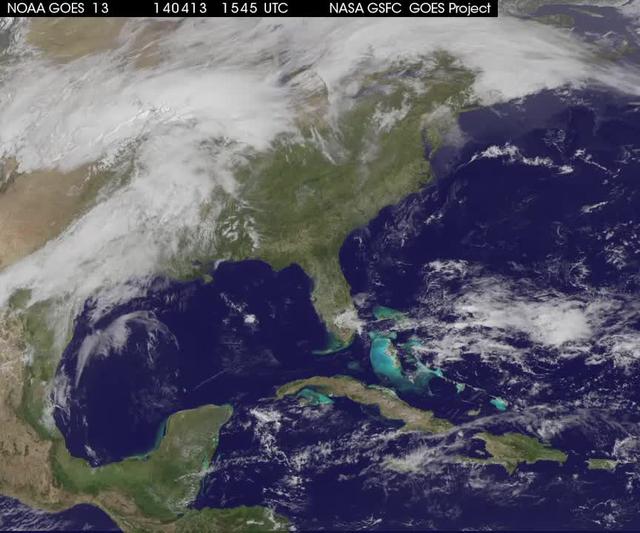
NOAA's GOES-13 satellite saw a large pesky front, one that stretched from Maine to Louisiana on April 13 at 16:15 UTC/12:15 p.m. EDT to April 16 at 12:15 p.m. EDT. This weather pattern did not bode well for people who wanted to see the lunar eclipse on April 15. The GOES-13 satellite images and animations are created at NASA/NOAA's GOES Project at the NASA Goddard Space Flight Center, Greenbelt, Md. <b><a href="http://goes.gsfc.nasa.gov/" rel="nofollow">Credit: NOAA/NASA GOES Project</a></b> <b><a href="http://www.nasa.gov/audience/formedia/features/MP_Photo_Guidelines.html" rel="nofollow">NASA image use policy.</a></b> <b><a href="http://www.nasa.gov/centers/goddard/home/index.html" rel="nofollow">NASA Goddard Space Flight Center</a></b> enables NASA’s mission through four scientific endeavors: Earth Science, Heliophysics, Solar System Exploration, and Astrophysics. Goddard plays a leading role in NASA’s accomplishments by contributing compelling scientific knowledge to advance the Agency’s mission. <b>Follow us on <a href="http://twitter.com/NASAGoddardPix" rel="nofollow">Twitter</a></b> <b>Like us on <a href="http://www.facebook.com/pages/Greenbelt-MD/NASA-Goddard/395013845897?ref=tsd" rel="nofollow">Facebook</a></b> <b>Find us on <a href="http://instagram.com/nasagoddard?vm=grid" rel="nofollow">Instagram</a></b>
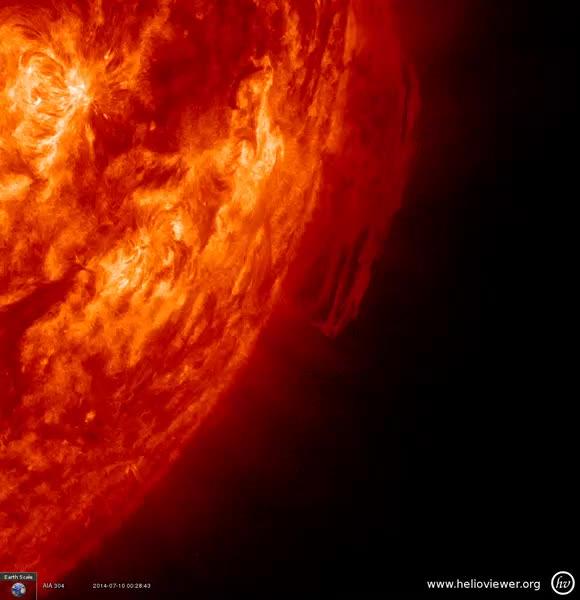
A long arch of plasma (called a prominence) was pulled this way and that by magnetic forces for a week before it finally dissipated (July 10-16, 2014). This close up was captured in extreme ultraviolet light. Credit: NASA/SDO <b><a href="http://www.nasa.gov/audience/formedia/features/MP_Photo_Guidelines.html" rel="nofollow">NASA image use policy.</a></b> <b><a href="http://www.nasa.gov/centers/goddard/home/index.html" rel="nofollow">NASA Goddard Space Flight Center</a></b> enables NASA’s mission through four scientific endeavors: Earth Science, Heliophysics, Solar System Exploration, and Astrophysics. Goddard plays a leading role in NASA’s accomplishments by contributing compelling scientific knowledge to advance the Agency’s mission. <b>Follow us on <a href="http://twitter.com/NASAGoddardPix" rel="nofollow">Twitter</a></b> <b>Like us on <a href="http://www.facebook.com/pages/Greenbelt-MD/NASA-Goddard/395013845897?ref=tsd" rel="nofollow">Facebook</a></b> <b>Find us on <a href="http://instagram.com/nasagoddard?vm=grid" rel="nofollow">Instagram</a></b>

NASA Voyager 2 spacecraft flew by Triton, a moon of Neptune, on August 25, 1989. This frame from a video using Voyager data recreates that exciting encounter.

Two scientists at NASA Marshall Space Flight Center, atmospheric scientist Paul Meyer (left) and solar physicist Dr. David Hathaway, have developed promising new software, called Video Image Stabilization and Registration (VISAR), that may help law enforcement agencies to catch criminals by improving the quality of video recorded at crime scenes, VISAR stabilizes camera motion in the horizontal and vertical as well as rotation and zoom effects; produces clearer images of moving objects; smoothes jagged edges; enhances still images; and reduces video noise of snow. VISAR could also have applications in medical and meteorological imaging. It could steady images of Ultrasounds which are infamous for their grainy, blurred quality. It would be especially useful for tornadoes, tracking whirling objects and helping to determine the tornado's wind speed. This image shows two scientists reviewing an enhanced video image of a license plate taken from a moving automobile.
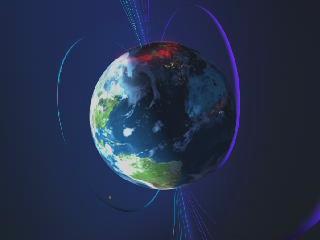
Animation of solar wind impacting the magnetosphere and creating aurora. Credit: NASA/GSFC/SOHO/ESA Sound: Juan Carlos Garcia To learn more go to the SOHO website: <a href="http://sohowww.nascom.nasa.gov/home.html" rel="nofollow">sohowww.nascom.nasa.gov/home.html</a> To learn more about NASA's Sun Earth Day go here: <a href="http://sunearthday.nasa.gov/2010/index.php" rel="nofollow">sunearthday.nasa.gov/2010/index.php</a>
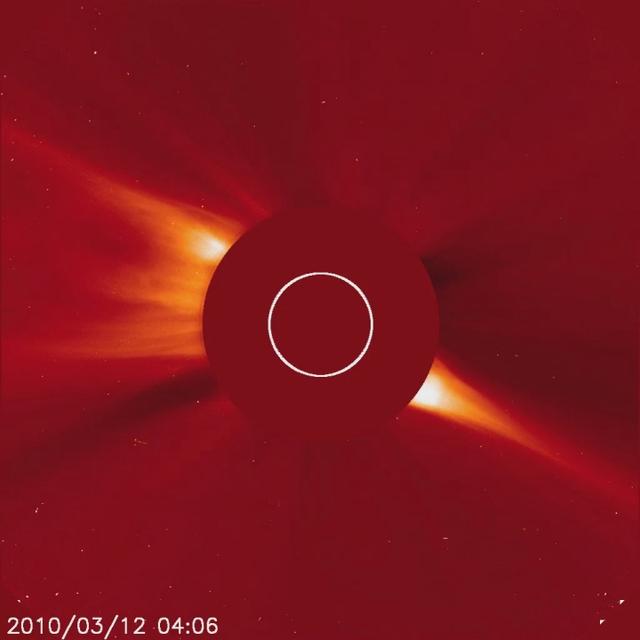
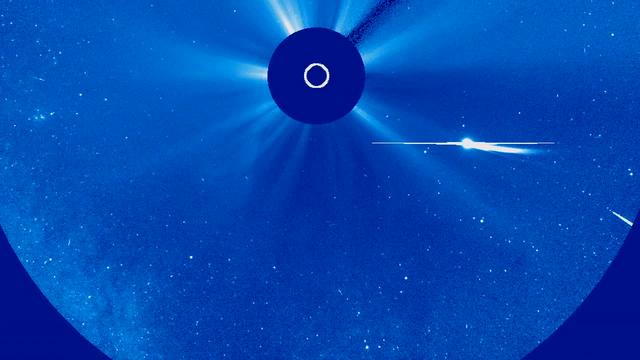
Captured March 12, 2010 The SOHO spacecraft captured a very bright, sungrazing comet as it rocketed towards the Sun (Mar. 12, 2010) and was vaporized. This comet is arguably the brightest comet that SOHO has observed since Comet McNaught in early 2007. The comet is believed to belong to the Kreutz family of comets that broke up from a much larger comet many hundreds of years ago. They are known to orbit close to the Sun. A coronal mass ejection (CME) burst away from the Sun during the bright comet’s approach. Interestingly, a much smaller comet that preceded this one can be seen about half a day earlier on just about the identical route. And another pair of small comets followed the same track into the Sun after the bright one. Such a string of comets has never been witnessed before by SOHO. SOHO's C3 coronagraph instrument blocks out the Sun with an occulting disk; the white circle represents the size of the Sun. The planet Mercury can also be seen moving from left to right just beneath the Sun. To learn more and to download the video and still images go here: <a href="http://sohowww.nascom.nasa.gov/pickoftheweek/old/15mar2010/" rel="nofollow">sohowww.nascom.nasa.gov/pickoftheweek/old/15mar2010/</a> Credit: NASA/GSFC/SOHO
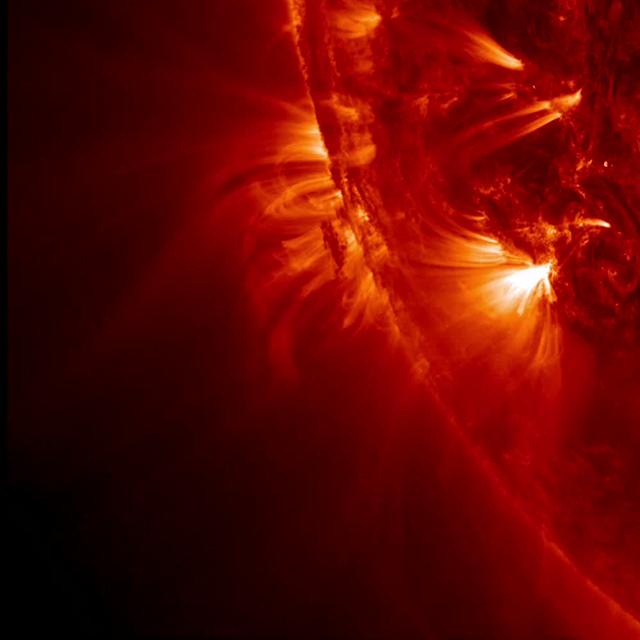
NASA's Solar Dynamics Observatory (SDO) zoomed in almost to its maximum level to watch tight, bright loops and much longer, softer loops shift and sway above an active region on the sun, while a darker blob of plasma in their midst was pulled about every which way (May 13-14, 2014). The video clip covers just over a day beginning at 14:19 UT on May 13. The frames were taken in the 171-angstroms wavelength of extreme ultraviolet light, but colorized red, instead of its usual bronze tone. This type of dynamic activity continues almost non-stop on the sun as opposing magnetic forces tangle with each other. Credit: NASA/Solar Dynamics Observatory <b><a href="http://www.nasa.gov/audience/formedia/features/MP_Photo_Guidelines.html" rel="nofollow">NASA image use policy.</a></b> <b><a href="http://www.nasa.gov/centers/goddard/home/index.html" rel="nofollow">NASA Goddard Space Flight Center</a></b> enables NASA’s mission through four scientific endeavors: Earth Science, Heliophysics, Solar System Exploration, and Astrophysics. Goddard plays a leading role in NASA’s accomplishments by contributing compelling scientific knowledge to advance the Agency’s mission. <b>Follow us on <a href="http://twitter.com/NASAGoddardPix" rel="nofollow">Twitter</a></b> <b>Like us on <a href="http://www.facebook.com/pages/Greenbelt-MD/NASA-Goddard/395013845897?ref=tsd" rel="nofollow">Facebook</a></b> <b>Find us on <a href="http://instagram.com/nasagoddard?vm=grid" rel="nofollow">Instagram</a></b>
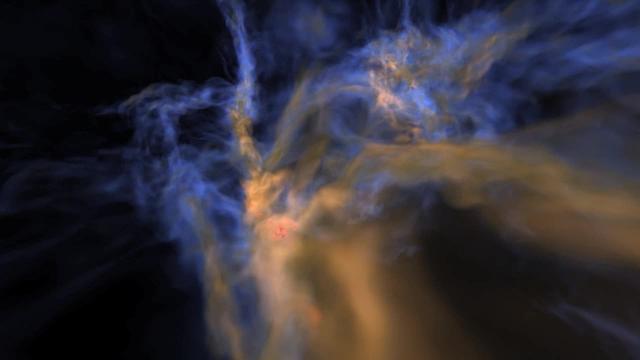
NASA's Goddard Space Flight Center in Greenbelt, Md., was nominated for a 2013 Shorty award. This video offers just a small slice of what goes on at Goddard. <a href="http://shortyawards.com/nasagoddard" rel="nofollow">shortyawards.com/nasagoddard</a> Music: Title- Agent of Justice Damon Criswell, composer Published by Ocean Life Music Credit: NASA/Goddard <b><a href="http://www.nasa.gov/audience/formedia/features/MP_Photo_Guidelines.html" rel="nofollow">NASA image use policy.</a></b> <b><a href="http://www.nasa.gov/centers/goddard/home/index.html" rel="nofollow">NASA Goddard Space Flight Center</a></b> enables NASA’s mission through four scientific endeavors: Earth Science, Heliophysics, Solar System Exploration, and Astrophysics. Goddard plays a leading role in NASA’s accomplishments by contributing compelling scientific knowledge to advance the Agency’s mission. <b>Follow us on <a href="http://twitter.com/NASAGoddardPix" rel="nofollow">Twitter</a></b> <b>Like us on <a href="http://www.facebook.com/pages/Greenbelt-MD/NASA-Goddard/395013845897?ref=tsd" rel="nofollow">Facebook</a></b> <b>Find us on <a href="http://instagram.com/nasagoddard?vm=grid" rel="nofollow">Instagram</a></b>
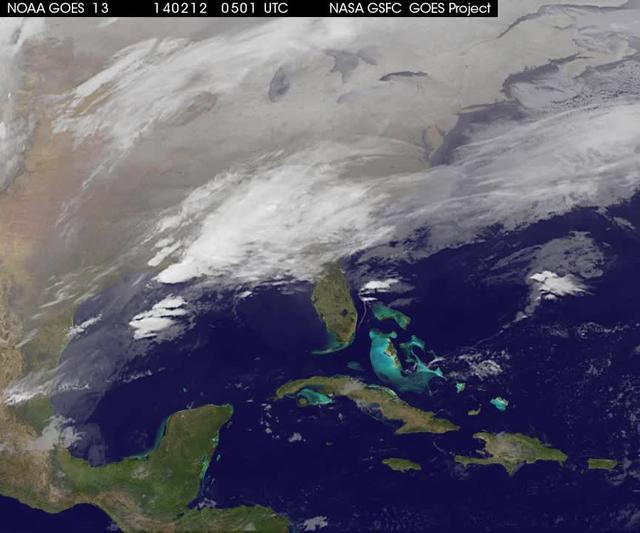
A new NASA video of NOAA's GOES satellite imagery shows three days of movement of the massive winter storm that stretches from the southern U.S. to the northeast. Visible and infrared imagery from NOAA's GOES-East or GOES-13 satellite from Feb. 10 at 1815 UTC/1:15 p.m. EST to Feb. 12 to 1845 UTC/1:45 p.m. EST were compiled into a video made by NASA/NOAA's GOES Project at NASA's Goddard Space Flight Center in Greenbelt, Md. In the video, viewers can see the development and movement of the clouds associated with the progression of the frontal system and related low pressure areas that make up the massive storm. The video also shows the snow covered ground over the Great Lakes region and Ohio Valley that stretches to northern New England. The clouds and fallen snow data from NOAA's GOES-East satellite were overlaid on a true-color image of land and ocean created by data from the Moderate Resolution Imaging Spectroradiometer or MODIS instrument that flies aboard NASA's Aqua and Terra satellites. On February 12 at 10 a.m. EST, NOAA's National Weather Service or NWS continued to issue watches and warnings from Texas to New England. Specifically, NWS cited Winter Storm Warnings and Winter Weather Advisories were in effect from eastern Texas eastward across the interior section of southeastern U.S. states and across much of the eastern seaboard including the Appalachians. Winter storm watches are in effect for portions of northern New England as well as along the western slopes of northern and central Appalachians. For updates on local forecasts, watches and warnings, visit NOAA's <a href="http://www.weather.gov" rel="nofollow">www.weather.gov</a> webpage. NOAA's Weather Prediction Center or WPC noted the storm is expected to bring "freezing rain spreading into the Carolinas, significant snow accumulations are expected in the interior Mid-Atlantic states tonight into Thursday and ice storm warnings and freezing rain advisories are in effect across much of central Georgia. GOES satellites provide the kind of continuous monitoring necessary for intensive data analysis. Geostationary describes an orbit in which a satellite is always in the same position with respect to the rotating Earth. This allows GOES to hover continuously over one position on Earth's surface, appearing stationary. As a result, GOES provide a constant vigil for the atmospheric "triggers" for severe weather conditions such as tornadoes, flash floods, hail storms and hurricanes. For updated information about the storm system, visit NOAA's WPC website; <a href="http://www.hpc.ncep.noaa.gov/" rel="nofollow">www.hpc.ncep.noaa.gov/</a> For more information about GOES satellites, visit: <a href="http://www.goes.noaa.gov/" rel="nofollow">www.goes.noaa.gov/</a> or <a href="http://goes.gsfc.nasa.gov/" rel="nofollow">goes.gsfc.nasa.gov/</a> Rob Gutro NASA's Goddard Space Flight Center <b><a href="http://goes.gsfc.nasa.gov/" rel="nofollow">Credit: NOAA/NASA GOES Project</a></b> <b><a href="http://www.nasa.gov/audience/formedia/features/MP_Photo_Guidelines.html" rel="nofollow">NASA image use policy.</a></b> <b><a href="http://www.nasa.gov/centers/goddard/home/index.html" rel="nofollow">NASA Goddard Space Flight Center</a></b> enables NASA’s mission through four scientific endeavors: Earth Science, Heliophysics, Solar System Exploration, and Astrophysics. Goddard plays a leading role in NASA’s accomplishments by contributing compelling scientific knowledge to advance the Agency’s mission. <b>Follow us on <a href="http://twitter.com/NASAGoddardPix" rel="nofollow">Twitter</a></b> <b>Like us on <a href="http://www.facebook.com/pages/Greenbelt-MD/NASA-Goddard/395013845897?ref=tsd" rel="nofollow">Facebook</a></b> <b>Find us on <a href="http://instagrid.me/nasagoddard/?vm=grid" rel="nofollow">Instagram</a></b>
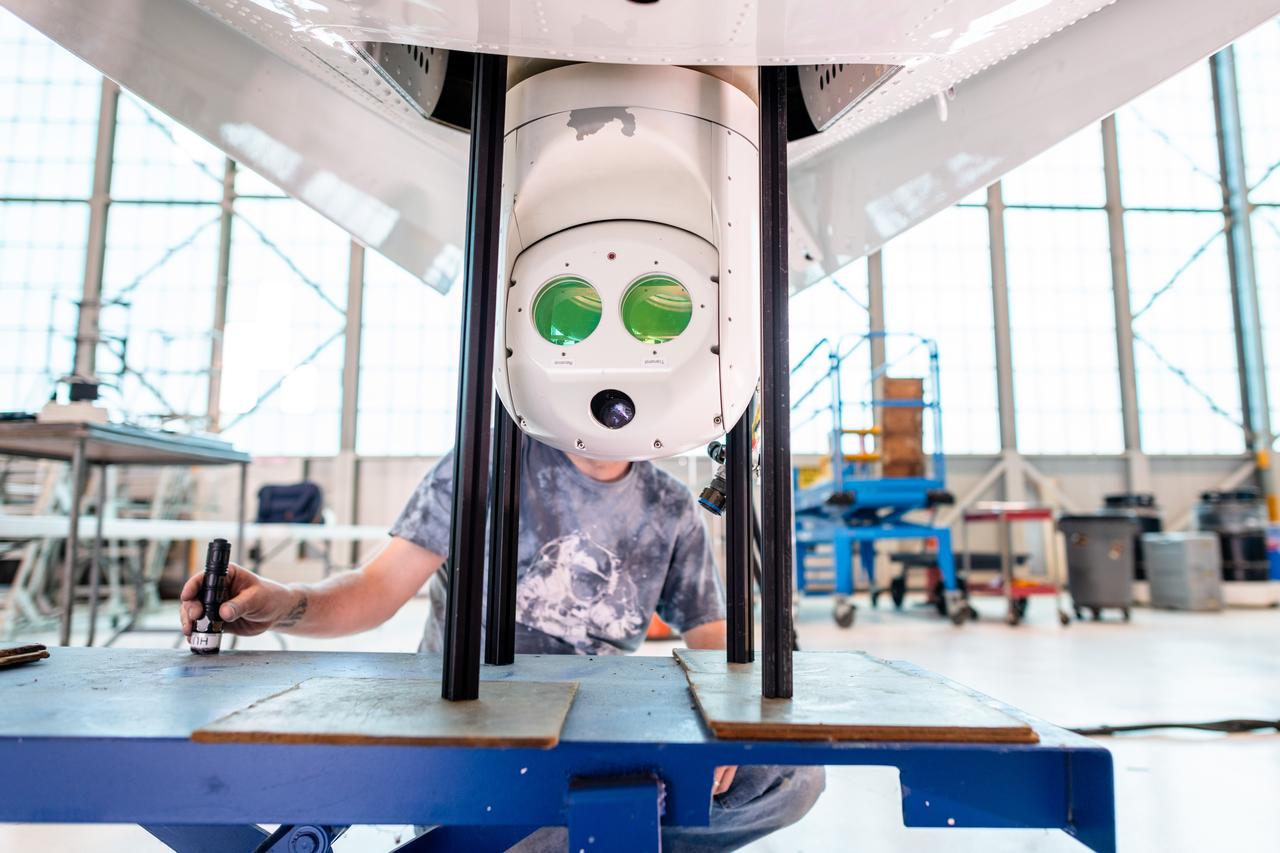
Dave Brennen, an electronics technician, installing the optical system under the belly of the PC-12 aircraft that streamed the first 4K video from aircraft to the International Space Station and back on May 20, 2024. Photo Credit: (NASA/Sara Lowthian-Hanna)
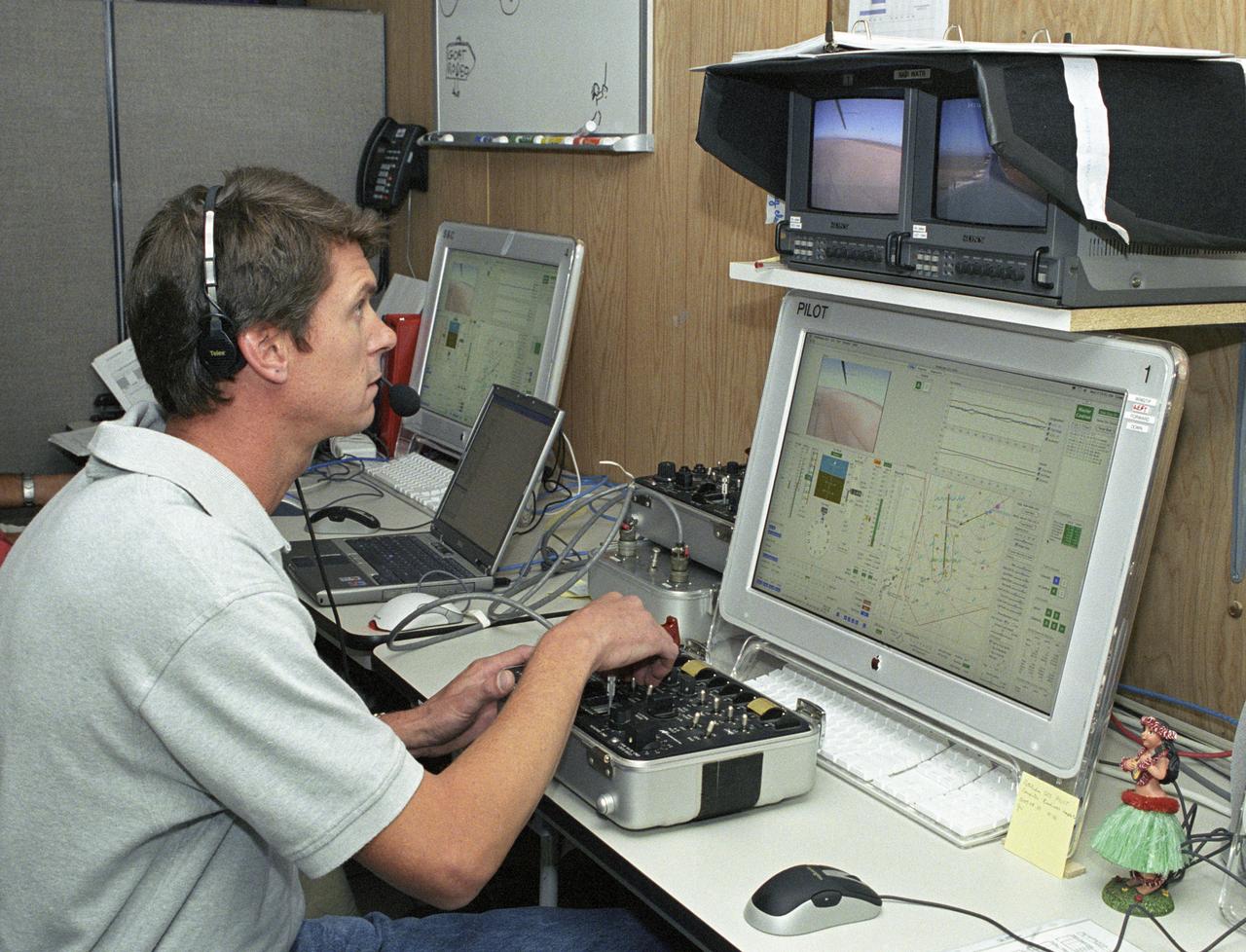
AeroVironment pilot Wyatt Sadler controls the Pathfinder-Plus flying wing from a small console, video and computer monitors in the ground station.
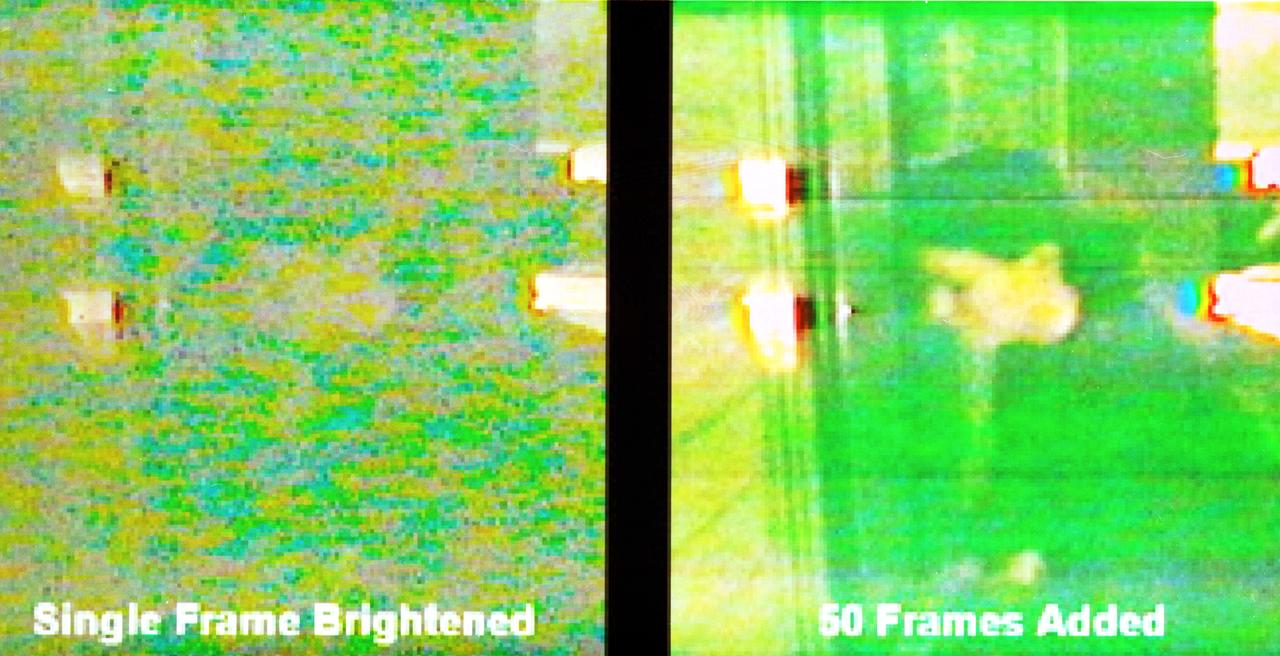
Two scientists at NASA's Marshall Space Flight Center,atmospheric scientist Paul Meyer and solar physicist Dr. David Hathaway, developed promising new software, called Video Image Stabilization and Registration (VISAR). VISAR may help law enforcement agencies catch criminals by improving the quality of video recorded at crime scenes. In this photograph, the single frame at left, taken at night, was brightened in order to enhance details and reduce noise or snow. To further overcome the video defects in one frame, Law enforcement officials can use VISAR software to add information from multiple frames to reveal a person. Images from less than a second of videotape were added together to create the clarified image at right. VISAR stabilizes camera motion in the horizontal and vertical as well as rotation and zoom effects producing clearer images of moving objects, smoothes jagged edges, enhances still images, and reduces video noise or snow. VISAR could also have applications in medical and meteorological imaging. It could steady images of ultrasounds, which are infamous for their grainy, blurred quality. The software can be used for defense application by improving recornaissance video imagery made by military vehicles, aircraft, and ships traveling in harsh, rugged environments.
Sungrazing comets are a special class of comets that come very close to the sun at their nearest approach, a point called perihelion. To be considered a sungrazer, a comet needs to get within about 850,000 miles from the sun at perihelion. Many come even closer, even to within a few thousand miles. Being so close to the sun is very hard on comets for many reasons. They are subjected to a lot of solar radiation which boils off their water or other volatiles. The physical push of the radiation and the solar wind also helps form the tails. And as they get closer to the sun, the comets experience extremely strong tidal forces, or gravitational stress. In this hostile environment, many sungrazers do not survive their trip around the sun. Although they don't actually crash into the solar surface, the sun is able to destroy them anyway. Many sungrazing comets follow a similar orbit, called the Kreutz Path, and collectively belong to a population called the Kreutz Group. In fact, close to 85% of the sungrazers seen by the SOHO satellite are on this orbital highway. Scientists think one extremely large sungrazing comet broke up hundreds, or even thousands, of years ago, and the current comets on the Kreutz Path are the leftover fragments of it. As clumps of remnants make their way back around the sun, we experience a sharp increase in sungrazing comets, which appears to be going on now. Comet Lovejoy, which reached perihelion on December 15, 2011 is the best known recent Kreutz-group sungrazer. And so far, it is the only one that NASA's solar-observing fleet has seen survive its trip around the sun. Comet ISON, an upcoming sungrazer with a perihelion of 730,000 miles on November 28, 2013, is not on the Kreutz Path. In fact, ISON's orbit suggests that it may gain enough momentum to escape the solar system entirely, and never return. Before it does so, it will pass within about 40 million miles from Earth on December 26th. More information on this topic available at: <a href="http://www.nasa.gov/content/goddard/timeline-of-comet-ison-s-dangerous-journey/" rel="nofollow">www.nasa.gov/content/goddard/timeline-of-comet-ison-s-dan...</a> Credit: NASA's Goddard Space Flight Center <b><a href="http://www.nasa.gov/audience/formedia/features/MP_Photo_Guidelines.html" rel="nofollow">NASA image use policy.</a></b> <b><a href="http://www.nasa.gov/centers/goddard/home/index.html" rel="nofollow">NASA Goddard Space Flight Center</a></b> enables NASA’s mission through four scientific endeavors: Earth Science, Heliophysics, Solar System Exploration, and Astrophysics. Goddard plays a leading role in NASA’s accomplishments by contributing compelling scientific knowledge to advance the Agency’s mission. <b>Follow us on <a href="http://twitter.com/NASA_GoddardPix" rel="nofollow">Twitter</a></b> <b>Like us on <a href="http://www.facebook.com/pages/Greenbelt-MD/NASA-Goddard/395013845897?ref=tsd" rel="nofollow">Facebook</a></b> <b>Find us on <a href="http://instagram.com/nasagoddard?vm=grid" rel="nofollow">Instagram</a></b>

ISS030-E-060104 (1 Feb. 2012) --- NASA astronaut Dan Burbank, Expedition 30 commander, uses a video camera in the Destiny laboratory of the International Space Station during installation and routing of video cable for the High Rate Communication System (HRCS). HRCS will allow for two additional space-to-ground audio channels and two additional downlink video channels.
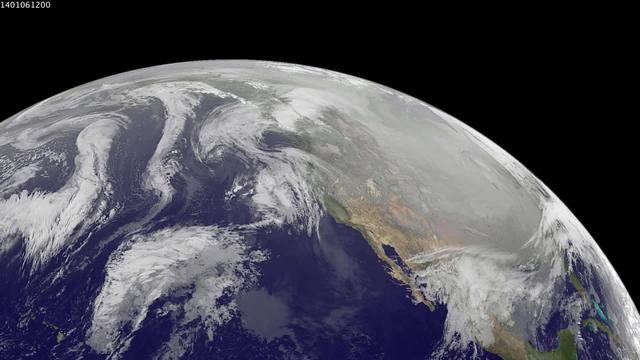
1-9 January 2014. The full-disk images every 3 hours from GOES-WEST capture the sweep of a polar vortex that emerged from the arctic at the beginning of the new year, pushing a blizzard into the northeastern USA on January 3, followed by extensive bitter cold (-20 F, windchill -50 F) around the Great Lakes, and single digit temperatures as far south as Atlanta, Georgia. This western viewpoint displays the persistent flow of arctic air from northern Alaska and Yukon into North America. <b><a href="http://goes.gsfc.nasa.gov/" rel="nofollow">Credit: NOAA/NASA GOES Project</a></b> <b><a href="http://www.nasa.gov/audience/formedia/features/MP_Photo_Guidelines.html" rel="nofollow">NASA image use policy.</a></b> <b><a href="http://www.nasa.gov/centers/goddard/home/index.html" rel="nofollow">NASA Goddard Space Flight Center</a></b> enables NASA’s mission through four scientific endeavors: Earth Science, Heliophysics, Solar System Exploration, and Astrophysics. Goddard plays a leading role in NASA’s accomplishments by contributing compelling scientific knowledge to advance the Agency’s mission. <b>Follow us on <a href="http://twitter.com/NASA_GoddardPix" rel="nofollow">Twitter</a></b> <b>Like us on <a href="http://www.facebook.com/pages/Greenbelt-MD/NASA-Goddard/395013845897?ref=tsd" rel="nofollow">Facebook</a></b> <b>Find us on <a href="http://instagram.com/nasagoddard?vm=grid" rel="nofollow">Instagram</a></b>
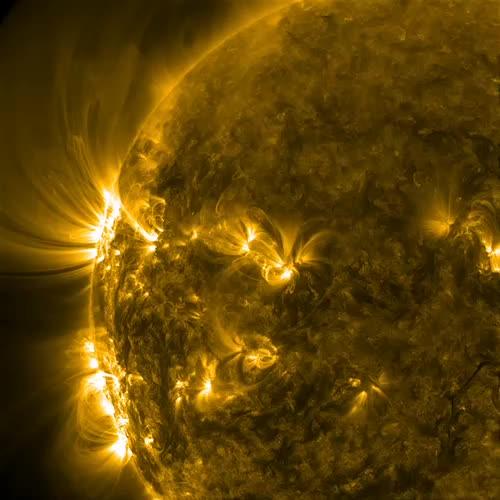
Two active regions with their intense magnetic fields produced towering arches and spiraling coils of solar loops above them (June 29 - July 1, 2014) as they rotated into view. When viewed in extreme ultraviolet light, magnetic field lines are revealed by charged particles that travel along them. These active regions appear as dark sunspots when viewed in filtered light. Note the small blast in the upper of the two major active regions, followed by more coils of loops as the region reorganizes itself. The still was taken on June 30 at 10:33 UT. Credit: NASA/Solar Dynamics Observatory Two active regions with their intense magnetic fields produced towering arches and spiraling coils of solar loops above them (June 29 - July 1, 2014) as they rotated into view. When viewed in extreme ultraviolet light, magnetic field lines are revealed by charged particles that travel along them. These active regions appear as dark sunspots when viewed in filtered light. Note the small blast in the upper of the two major active regions, followed by more coils of loops as the region reorganizes itself. The still was taken on June 30 at 10:33 UT. Credit: Solar Dynamics Observatory/NASA.

A bright solar prominence rose up from the Sun and twisted around in about a six-hour period (Apr. 21, 2015). While some of the material broke away into space, much of it fell back into the Sun. The images were taken in a wavelength of extreme ultraviolet light. At its greatest height, the plume extended out many times the size of Earth, allowing numerous amateur astronomers to observe this event with their solar telescopes. Credit: Solar Dynamics Observatory, NASA.
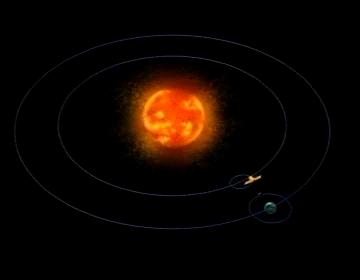
SOHO's orbit around the Lagrangian L1 point and the Sun Credit: NASA/GSFC/SOHO/ESA Sound: Juan Carlos Garcia To learn more go to the SOHO website: <a href="http://sohowww.nascom.nasa.gov/home.html" rel="nofollow">sohowww.nascom.nasa.gov/home.html</a> To learn more about NASA's Sun Earth Day go here: <a href="http://sunearthday.nasa.gov/2010/index.php" rel="nofollow">sunearthday.nasa.gov/2010/index.php</a>
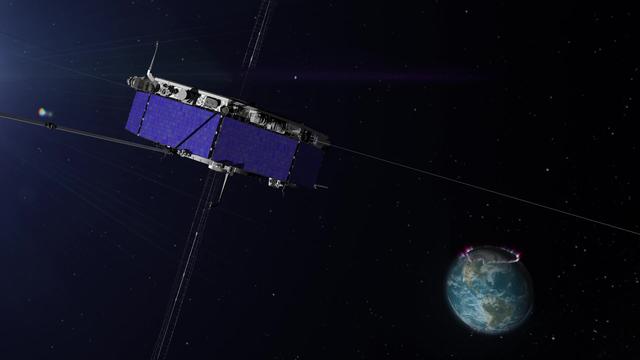
MMS Spacecraft Animation The Magnetospheric Multiscale (MMS) mission is a Solar Terrestrial Probes mission comprising four identically instrumented spacecraft that will use Earth's magnetosphere as a laboratory to study the microphysics of three fundamental plasma processes: magnetic reconnection, energetic particle acceleration, and turbulence. These processes occur in all astrophysical plasma systems but can be studied in situ only in our solar system and most efficiently only in Earth's magnetosphere, where they control the dynamics of the geospace environment and play an important role in the processes known as "space weather." Learn more about MMS at <a href="http://www.nasa.gov/mms" rel="nofollow">www.nasa.gov/mms</a> Learn more about MMS at <a href="http://www.nasa.gov/mms" rel="nofollow">www.nasa.gov/mms</a> Credit NASA/Goddard The Magnetospheric Multiscale, or MMS, will study how the sun and the Earth's magnetic fields connect and disconnect, an explosive process that can accelerate particles through space to nearly the speed of light. This process is called magnetic reconnection and can occur throughout all space. <b><a href="http://www.nasa.gov/audience/formedia/features/MP_Photo_Guidelines.html" rel="nofollow">NASA image use policy.</a></b> <b><a href="http://www.nasa.gov/centers/goddard/home/index.html" rel="nofollow">NASA Goddard Space Flight Center</a></b> enables NASA’s mission through four scientific endeavors: Earth Science, Heliophysics, Solar System Exploration, and Astrophysics. Goddard plays a leading role in NASA’s accomplishments by contributing compelling scientific knowledge to advance the Agency’s mission. <b>Follow us on <a href="http://twitter.com/NASAGoddardPix" rel="nofollow">Twitter</a></b> <b>Like us on <a href="http://www.facebook.com/pages/Greenbelt-MD/NASA-Goddard/395013845897?ref=tsd" rel="nofollow">Facebook</a></b> <b>Find us on <a href="http://instagram.com/nasagoddard?vm=grid" rel="nofollow">Instagram</a></b>
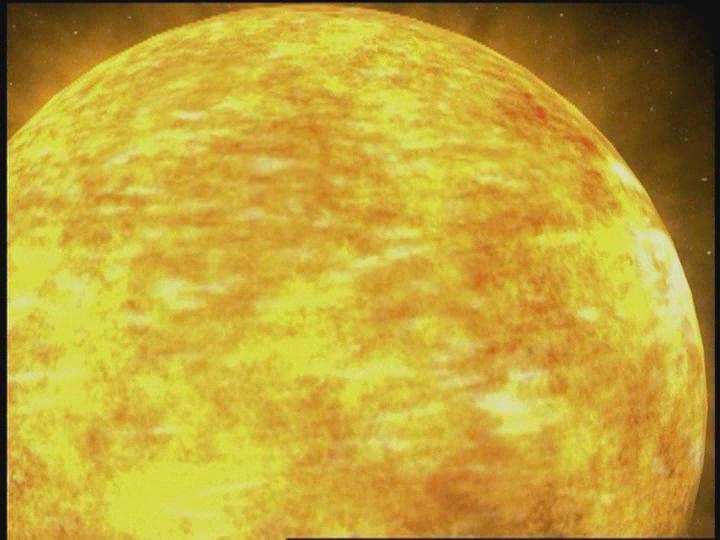
Animation of a CME leaving the Sun, slamming into our magnetosphere. Credit: NASA/GSFC/SOHO/ESA Sound: Juan Carlos Garcia To learn more go to the SOHO website: <a href="http://sohowww.nascom.nasa.gov/home.html" rel="nofollow">sohowww.nascom.nasa.gov/home.html</a> To learn more about NASA's Sun Earth Day go here: <a href="http://sunearthday.nasa.gov/2010/index.php" rel="nofollow">sunearthday.nasa.gov/2010/index.php</a>
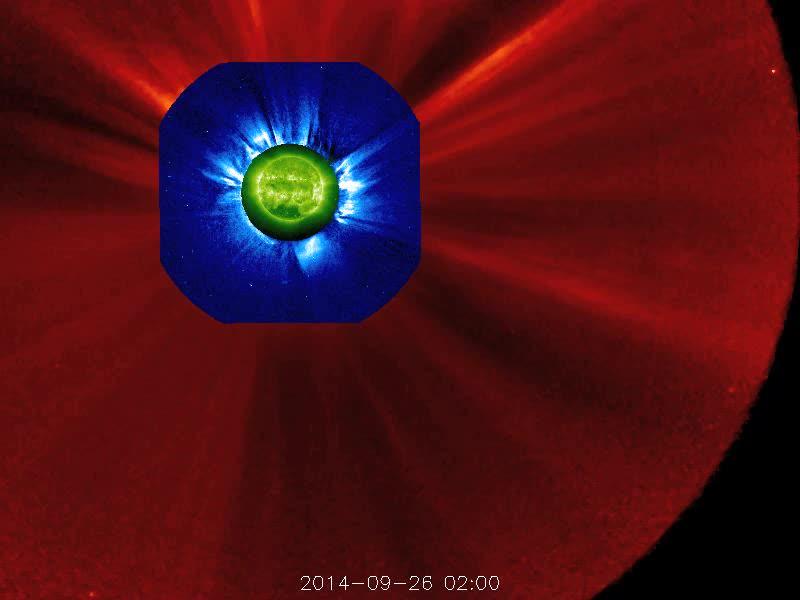
The STEREO (Behind) spacecraft captured this large prominence and corona mass ejection as they erupted into space (Sept. 26, 2014). By combining images from three instruments, scientists can see the eruption itself (in extreme UV light) as well as follow its progression over the period of about 13 hours with its two coronagraphs. Credit: NASA/Goddard/STEREO The STEREO (Behind) spacecraft captured this large prominence and corona mass ejection as they erupted into space (Sept. 26, 2014). By combining images from three instruments, scientists can see the eruption itself (in extreme UV light) as well as follow its progression over the period of about 13 hours with its two coronagraphs.
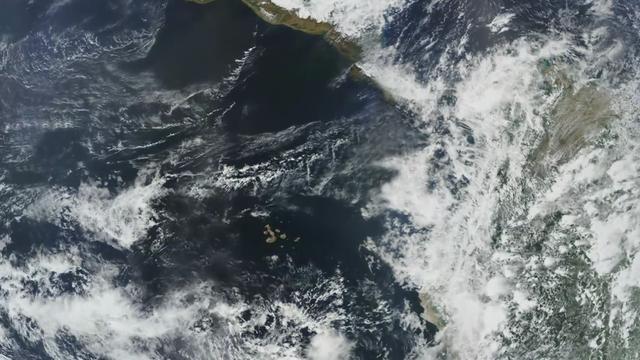
Completed: 07-16-2009 Straddling the equator approximately 1000 kilometers to the west of the South American mainland, the Galapagos Islands lie within the heart of the equatorial current system. Rising from the sea floor, the volcanic islands of the Galapagos are set on top of a large submarine platform. The main portion of the Galapagos platform is relatively flat and less than 1000 meters in depth. The steepest slopes are found along the western and southern flanks of the platform with a gradual slope towards the east. The interactions of the Galapagos and the oceanic currents create vastly different environmental regimes which not only isolates one part of the Archipelago from the other but allows penguins to live along the equator on the western part of the Archipelago and tropical corals around the islands to the north. The islands are relatively new in geologic terms with the youngest islands in the west still exhibiting periodic eruptions from their massive volcanic craters. Please give credit for this item to: NASA/Goddard Space Flight Center, The SeaWiFS Project and GeoEye, Scientific Visualization Studio. NOTE: All SeaWiFS images and data presented on this web site are for research and educational use only. All commercial use of SeaWiFS data must be coordinated with GeoEye (http://www.geoeye.com). To download this video go to: <a href="http://svs.gsfc.nasa.gov/goto?3628" rel="nofollow">svs.gsfc.nasa.gov/goto?3628</a> <b><a href="http://www.nasa.gov/centers/goddard/home/index.html" rel="nofollow">NASA Goddard Space Flight Center</a></b> is home to the nation's largest organization of combined scientists, engineers and technologists that build spacecraft, instruments and new technology to study the Earth, the sun, our solar system, and the universe.
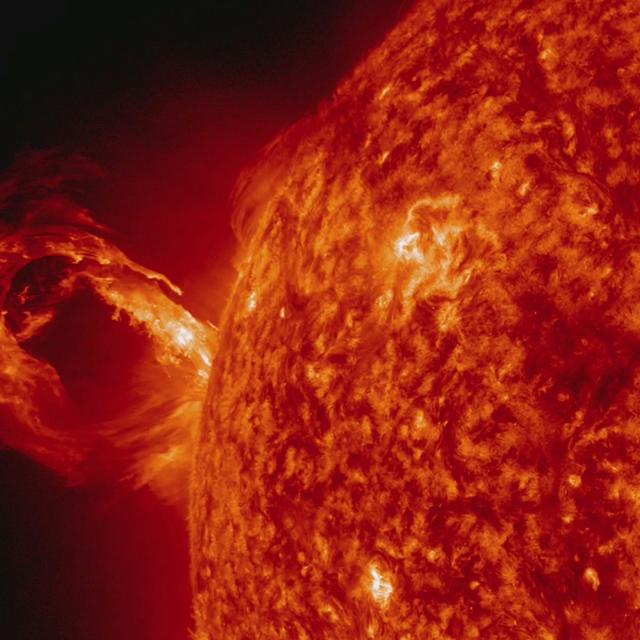
A corona mass ejection (CME) erupted from just around the edge of the sun on May 1, 2013, in a gigantic rolling wave. CMEs can shoot over a billion tons of particles into space at over a million miles per hour. This CME occurred on the sun’s limb and is not headed toward Earth. The video, taken in extreme ultraviolet light by NASA’s Solar Dynamics Observatory (SDO), covers about two and a half hours. Credit: NASA/Goddard/SDO <b><a href="http://www.nasa.gov/audience/formedia/features/MP_Photo_Guidelines.html" rel="nofollow">NASA image use policy.</a></b> <b><a href="http://www.nasa.gov/centers/goddard/home/index.html" rel="nofollow">NASA Goddard Space Flight Center</a></b> enables NASA’s mission through four scientific endeavors: Earth Science, Heliophysics, Solar System Exploration, and Astrophysics. Goddard plays a leading role in NASA’s accomplishments by contributing compelling scientific knowledge to advance the Agency’s mission. <b>Follow us on <a href="http://twitter.com/NASA_GoddardPix" rel="nofollow">Twitter</a></b> <b>Like us on <a href="http://www.facebook.com/pages/Greenbelt-MD/NASA-Goddard/395013845897?ref=tsd" rel="nofollow">Facebook</a></b> <b>Find us on <a href="http://instagram.com/nasagoddard?vm=grid" rel="nofollow">Instagram</a></b>
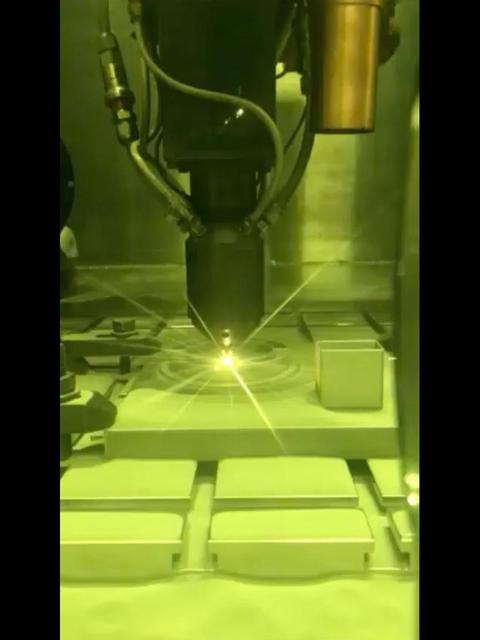
This video clip shows a 3D printing technique where a printer head scans over each layer of a part, blowing metal powder that is melted by a laser. It's one of several ways parts are 3D printed at NASA's Jet Propulsion Laboratory, but was not used to create the parts aboard the Perseverance rover. Movie available at https://photojournal.jpl.nasa.gov/catalog/PIA23972
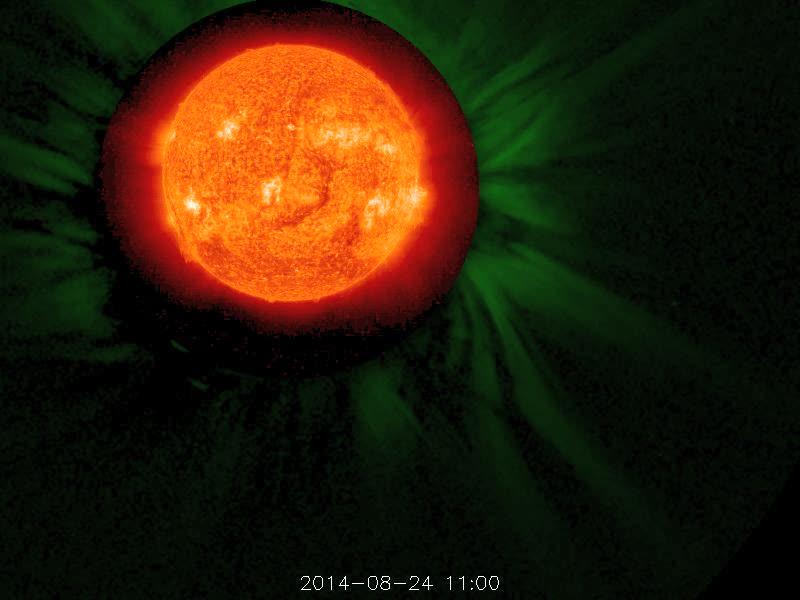
STEREO (Behind) captured this magnificent coronal mass ejection (associated with an M-class flare) that flung a long stream of plasma into space (Aug. 24, 2014). We have combined a view of the Sun in extreme UV light with a broader visible light view of the Sun's corona. It is interesting to note that a lot of the plasma, lacking sufficient kinetic energy to break free from the Sun's gravity, was pulled back into the Sun. Credit: NASA/STEREO <b><a href="http://www.nasa.gov/audience/formedia/features/MP_Photo_Guidelines.html" rel="nofollow">NASA image use policy.</a></b> <b><a href="http://www.nasa.gov/centers/goddard/home/index.html" rel="nofollow">NASA Goddard Space Flight Center</a></b> enables NASA’s mission through four scientific endeavors: Earth Science, Heliophysics, Solar System Exploration, and Astrophysics. Goddard plays a leading role in NASA’s accomplishments by contributing compelling scientific knowledge to advance the Agency’s mission. <b>Follow us on <a href="http://twitter.com/NASAGoddardPix" rel="nofollow">Twitter</a></b> <b>Like us on <a href="http://www.facebook.com/pages/Greenbelt-MD/NASA-Goddard/395013845897?ref=tsd" rel="nofollow">Facebook</a></b> <b>Find us on <a href="http://instagram.com/nasagoddard?vm=grid" rel="nofollow">Instagram</a></b>
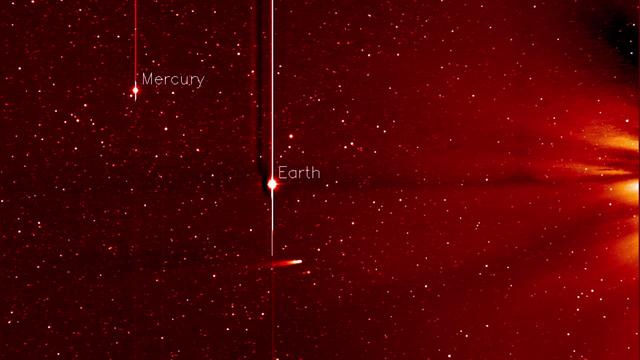
This movie from NASA’s STEREO spacecraft's Heliospheric Imager shows Comet ISON, Mercury, Comet Encke and Earth over a five-day period from Nov. 20 to Nov. 25, 2013. The sun sits right of the field of view of this camera. Comet ISON, which will round the sun on Nov. 28, is what's known as a sungrazing comet, due to its close approach. Foreshortening or the angle at which these images were obtained make Earth appear as if it is closer to the sun than Mercury. If you look closely you will also see a dimmer and smaller comet Encke near comet ISON. A comet’s journey through the solar system is perilous and violent. A giant ejection of solar material from the sun could rip its tail off. Before it reaches Mars -- at some 230 million miles away from the sun -- the radiation of the sun begins to boil its water, the first step toward breaking apart. And, if it survives all this, the intense radiation and pressure as it flies near the surface of the sun could destroy it altogether. Even if the comet does not survive, tracking its journey will help scientists understand what the comet is made of, how it reacts to its environment, and what this explains about the origins of the solar system. Closer to the sun, watching how the comet and its tail interact with the vast solar atmosphere can teach scientists more about the sun itself. Image Credit: NASA/STEREO <b><a href="http://www.nasa.gov/audience/formedia/features/MP_Photo_Guidelines.html" rel="nofollow">NASA image use policy.</a></b> <b><a href="http://www.nasa.gov/centers/goddard/home/index.html" rel="nofollow">NASA Goddard Space Flight Center</a></b> enables NASA’s mission through four scientific endeavors: Earth Science, Heliophysics, Solar System Exploration, and Astrophysics. Goddard plays a leading role in NASA’s accomplishments by contributing compelling scientific knowledge to advance the Agency’s mission. <b>Follow us on <a href="http://twitter.com/NASA_GoddardPix" rel="nofollow">Twitter</a></b> <b>Like us on <a href="http://www.facebook.com/pages/Greenbelt-MD/NASA-Goddard/395013845897?ref=tsd" rel="nofollow">Facebook</a></b> <b>Find us on <a href="http://instagram.com/nasagoddard?vm=grid" rel="nofollow">Instagram</a></b>
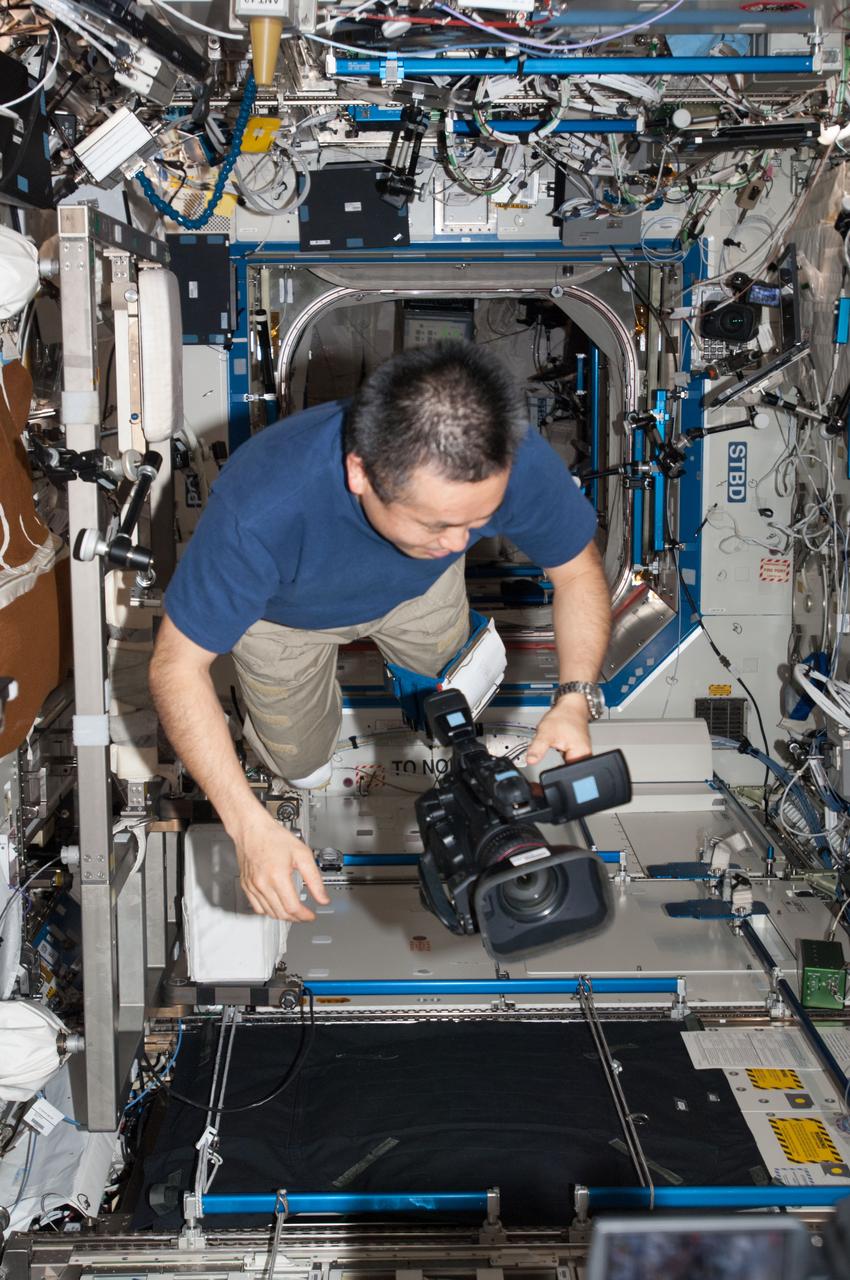
ISS038-E-015225 (11 Dec. 2013) --- Japan Aerospace Exploration Agency astronaut Koichi Wakata, Expedition 38 flight engineer, floats freely while holding a video camera in the Destiny laboratory of the International Space Station.
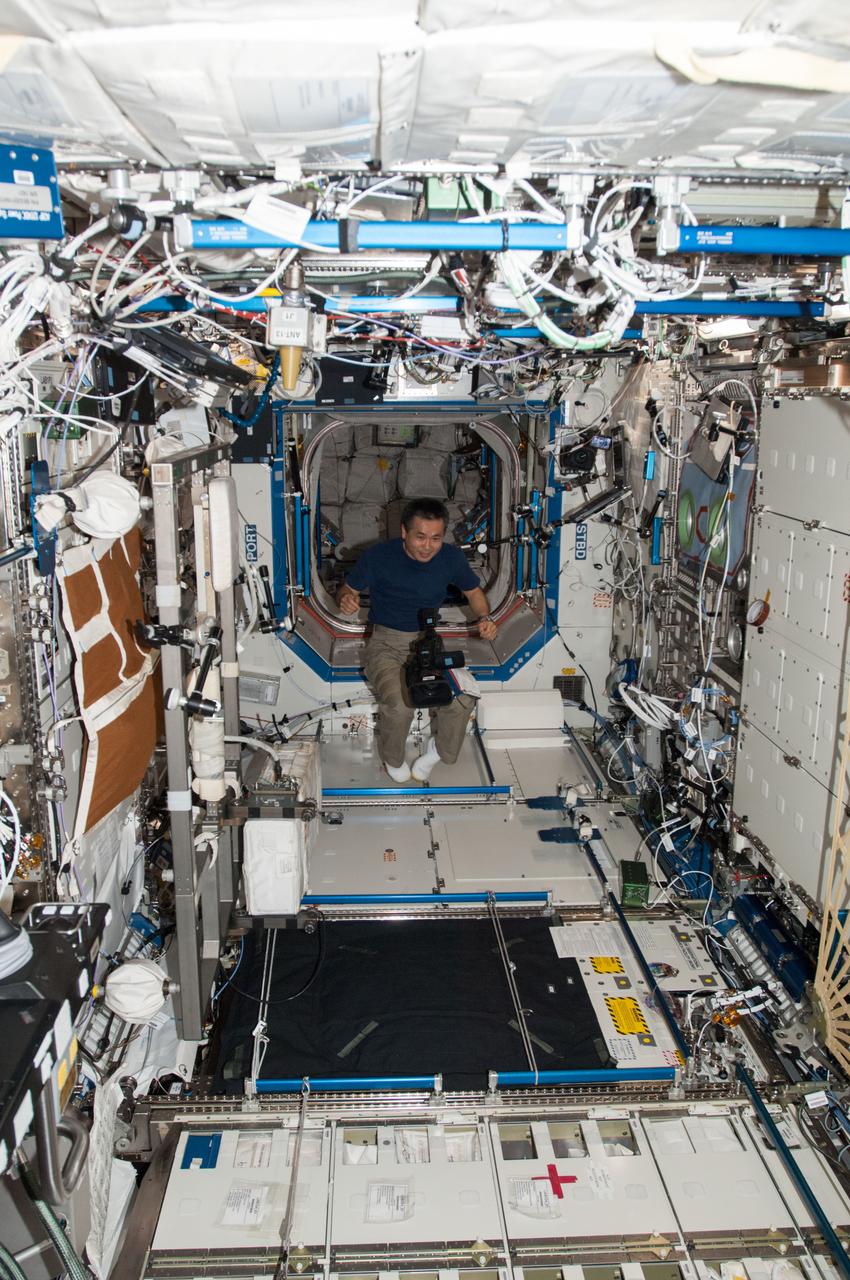
ISS038-E-015223 (11 Dec. 2013) --- Japan Aerospace Exploration Agency astronaut Koichi Wakata, Expedition 38 flight engineer, works with a video camera in the Destiny laboratory of the International Space Station.
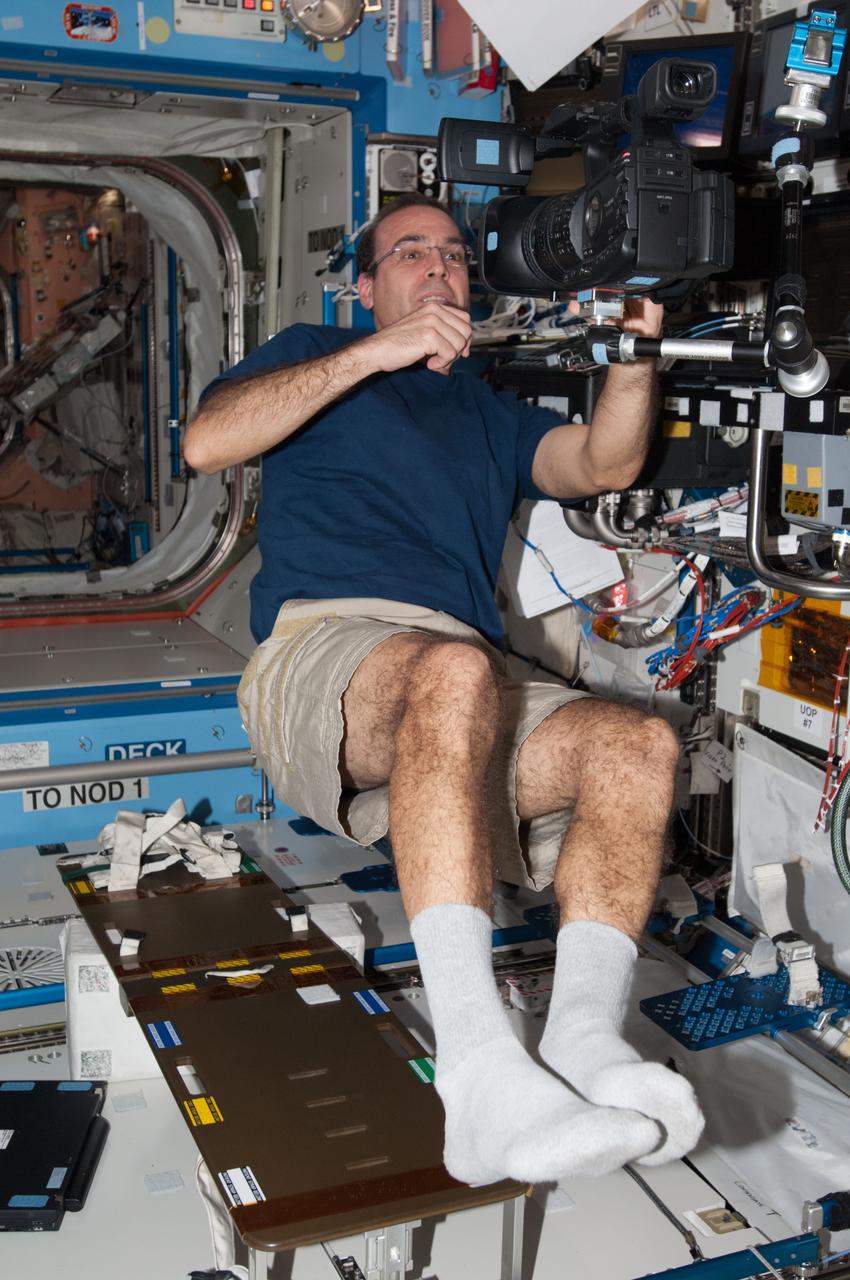
ISS038-E-015235 (11 Dec. 2013) --- NASA astronaut Rick Mastracchio, Expedition 38 flight engineer, works with a video camera in the Destiny laboratory of the International Space Station.
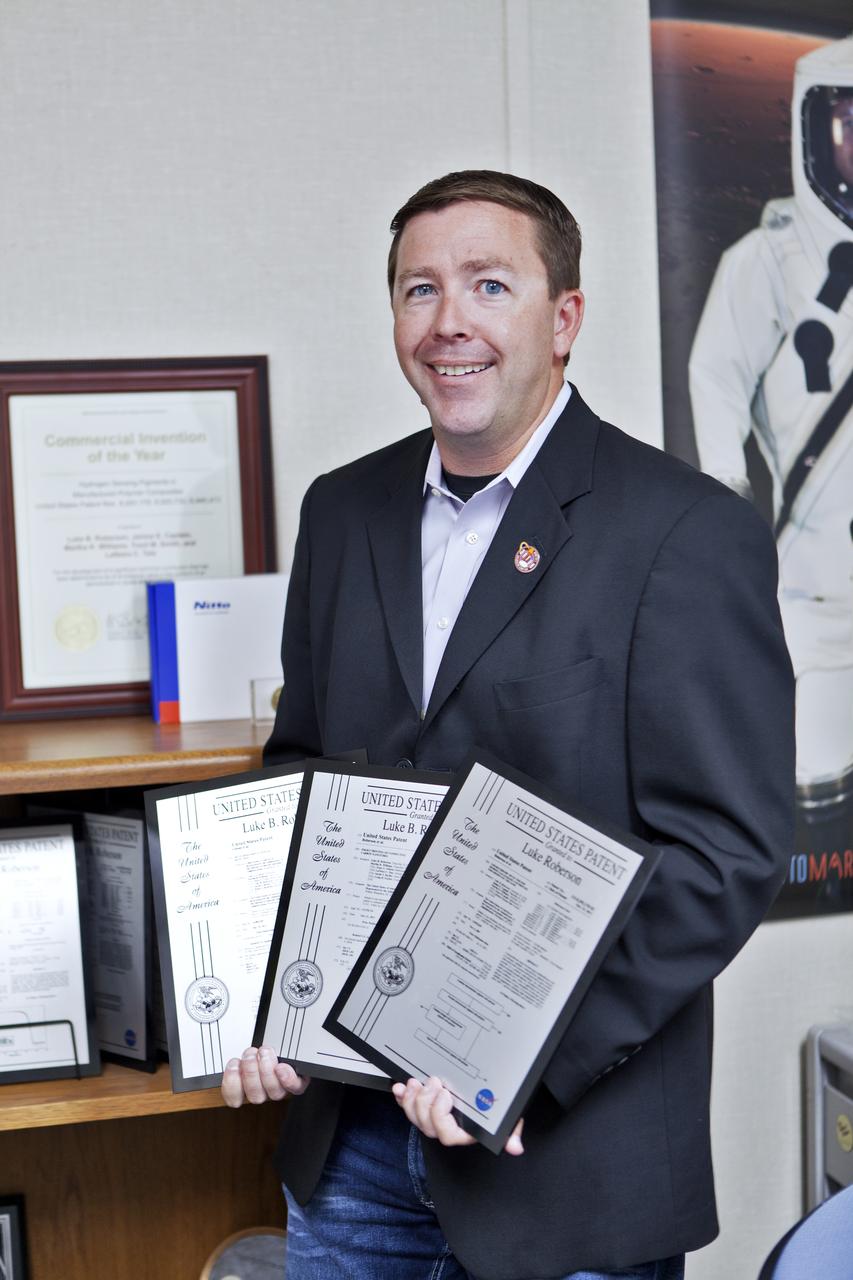
Luke Roberson, a principal investigator with the flight technology branch at NASA’s Kennedy Space Center in Florida, discusses patents and new technology reports for a video that targets internal audiences at NASA. Roberson’s contributions are reflected in multiple U.S. patents.
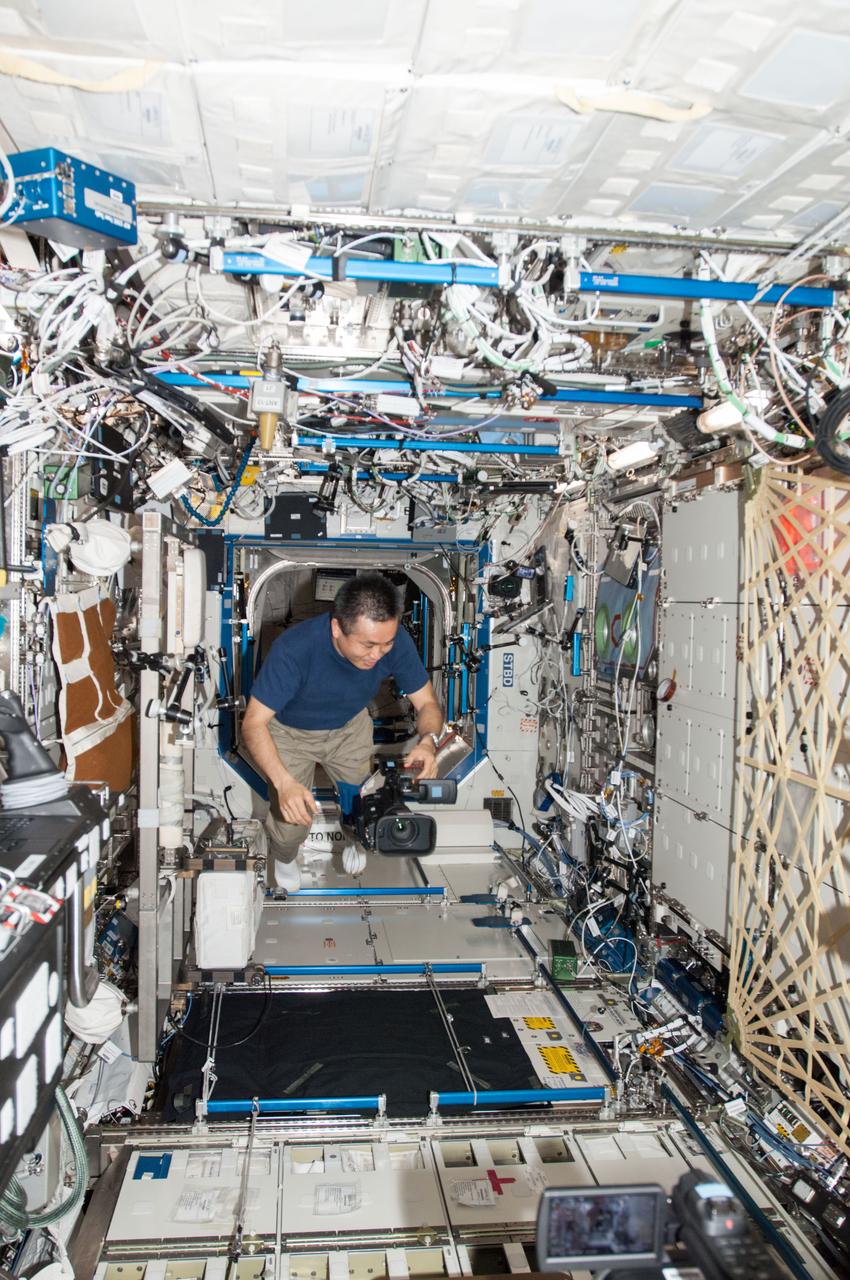
ISS038-E-015224 (11 Dec. 2013) --- Japan Aerospace Exploration Agency astronaut Koichi Wakata, Expedition 38 flight engineer, floats freely while holding a video camera in the Destiny laboratory of the International Space Station.
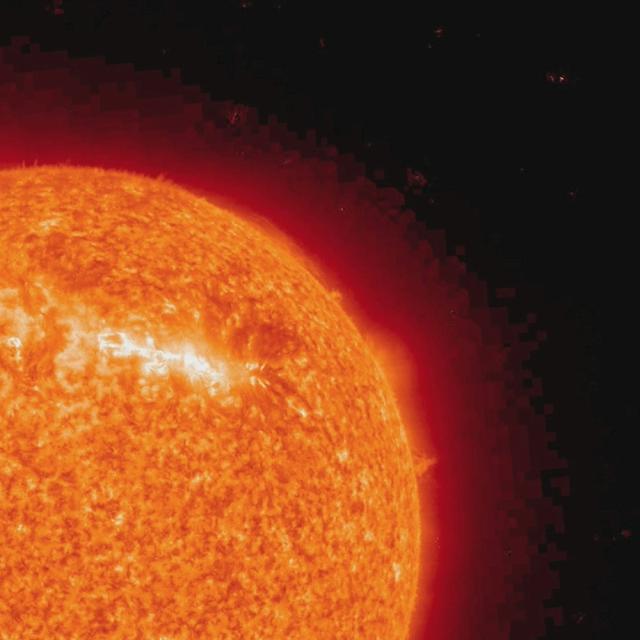
STEREO (Ahead) caught the action as one edge of a single active region spurted out more than a dozen surges of plasma in less than two days (Feb. 15-16, 2010). As seen in extreme UV light, the surges were narrow and directional outbursts driven by intense magnetic activity in the active region. While these kinds of outbursts have been observed numerous times, it was the frequency of so many surges in a short span of time that caught our attention. In this wavelength of UV light we are seeing singly ionized Helium at about 60,000 degrees C. For more information: <a href="http://stereo.gsfc.nasa.gov/" rel="nofollow">stereo.gsfc.nasa.gov/</a> Credit: NASA/GSFC/STEREO To learn more about NASA's Sun Earth Day go here: <a href="http://sunearthday.nasa.gov/2010/index.php" rel="nofollow">sunearthday.nasa.gov/2010/index.php</a>
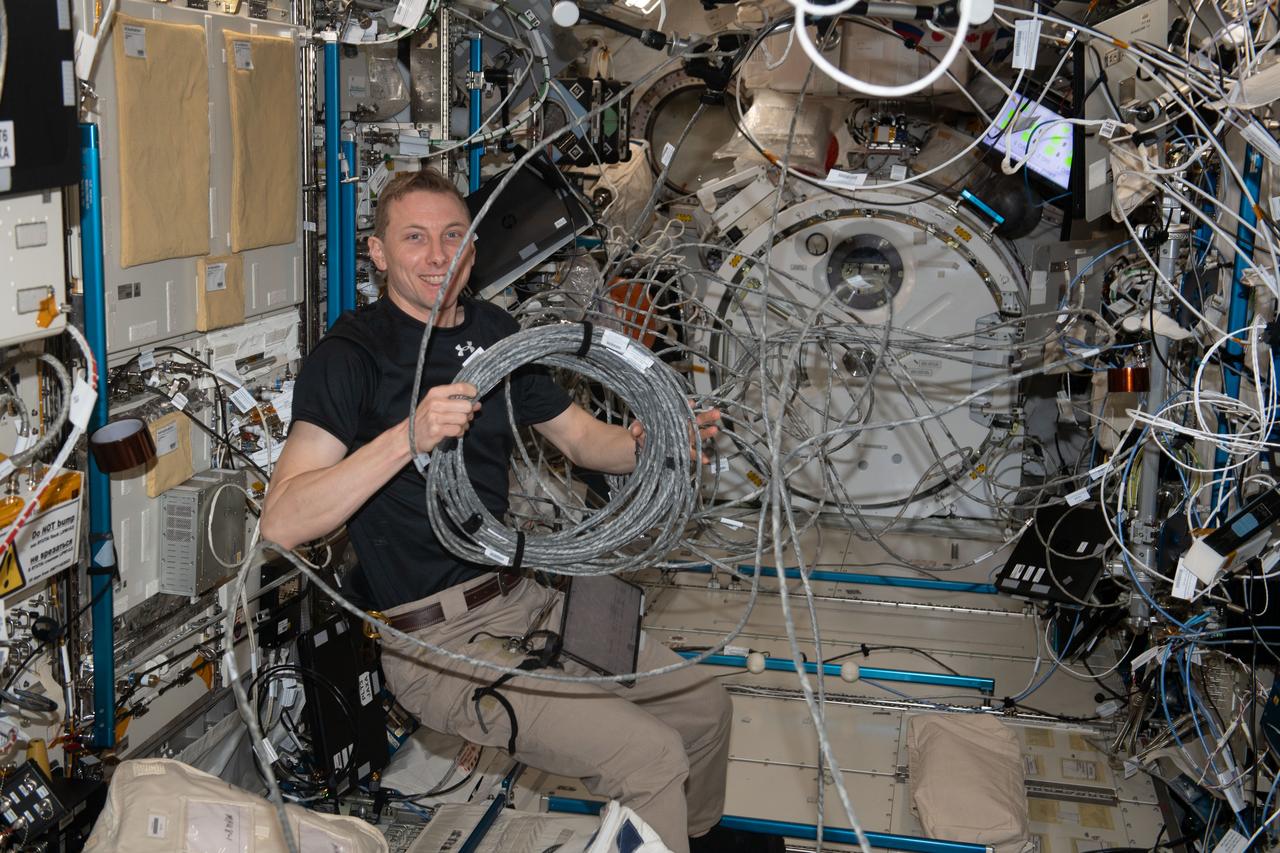
iss069e005419 (April 26, 2023) --- NASA astronaut and Expedition 69 Flight Engineer Woody Hoburg reconfigures video cables belonging to the Kibo laboratory module's Cell Biology Experiment Facility, a research incubator that generates artificial gravity.
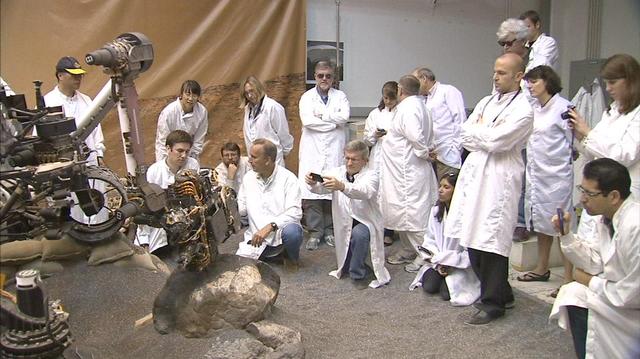
This frame from a video clip shows moments during a demonstration of drilling into a rock at NASA JPL, Pasadena, Calif., with a test double of the Mars rover Curiosity. The drill combines hammering and rotation motions of the bit.
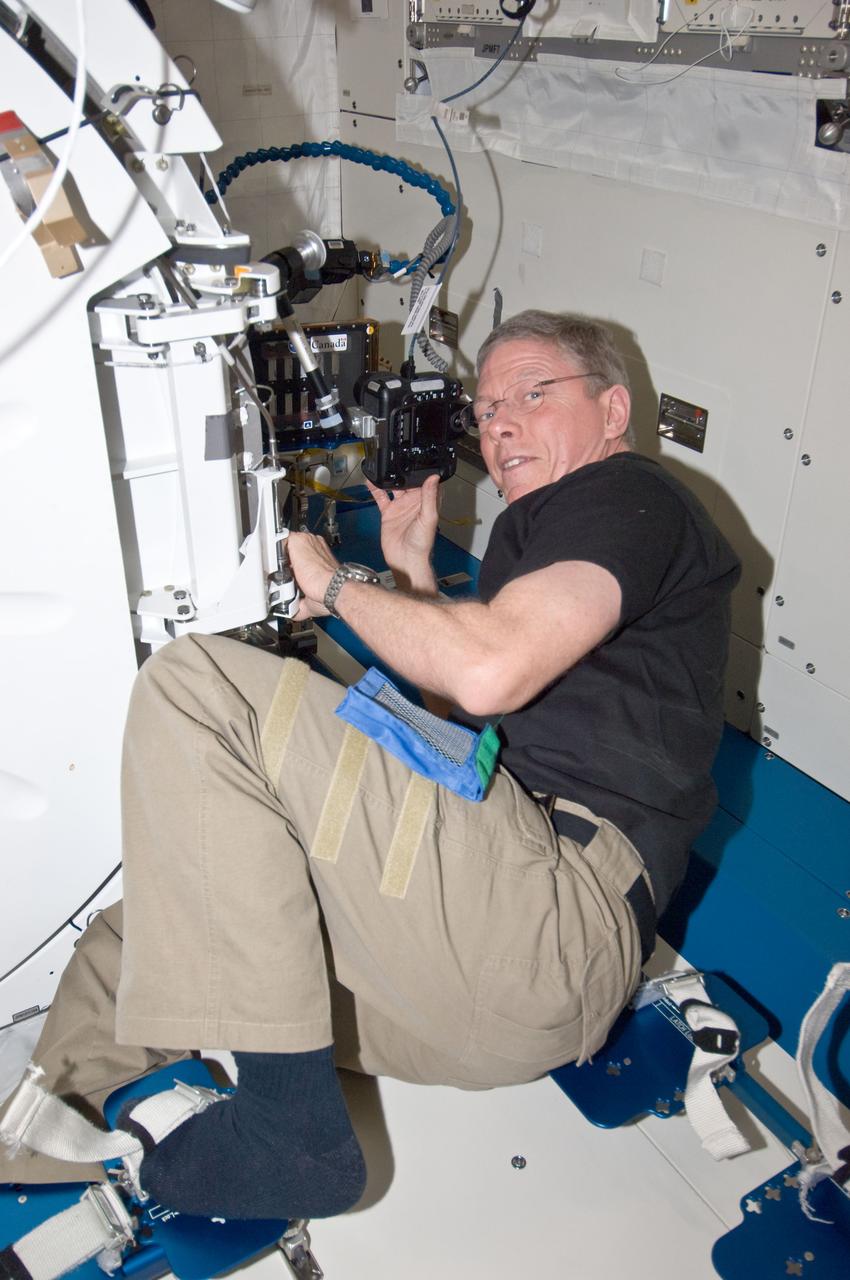
ISS029-E-010999 (21 Sept. 2011) --- NASA astronaut Mike Fossum, Expedition 29 commander, prepares a camcorder for recording documentary video of the Binary Colloidal Alloy Test-5 (BCAT-5) payload operations in the Kibo laboratory of the International Space Station.
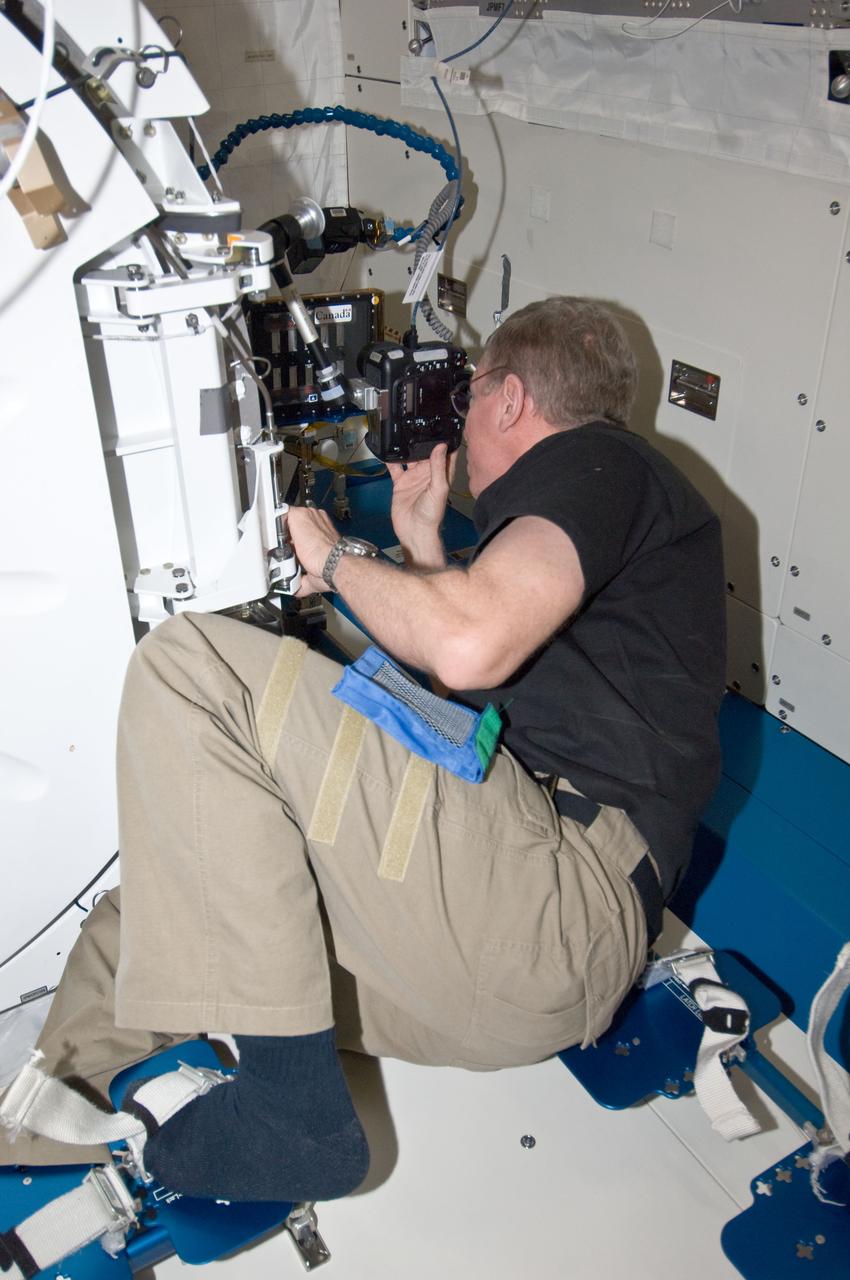
ISS029-E-010998 (21 Sept. 2011) --- NASA astronaut Mike Fossum, Expedition 29 commander, prepares a camcorder for recording documentary video of the Binary Colloidal Alloy Test-5 (BCAT-5) payload operations in the Kibo laboratory of the International Space Station.
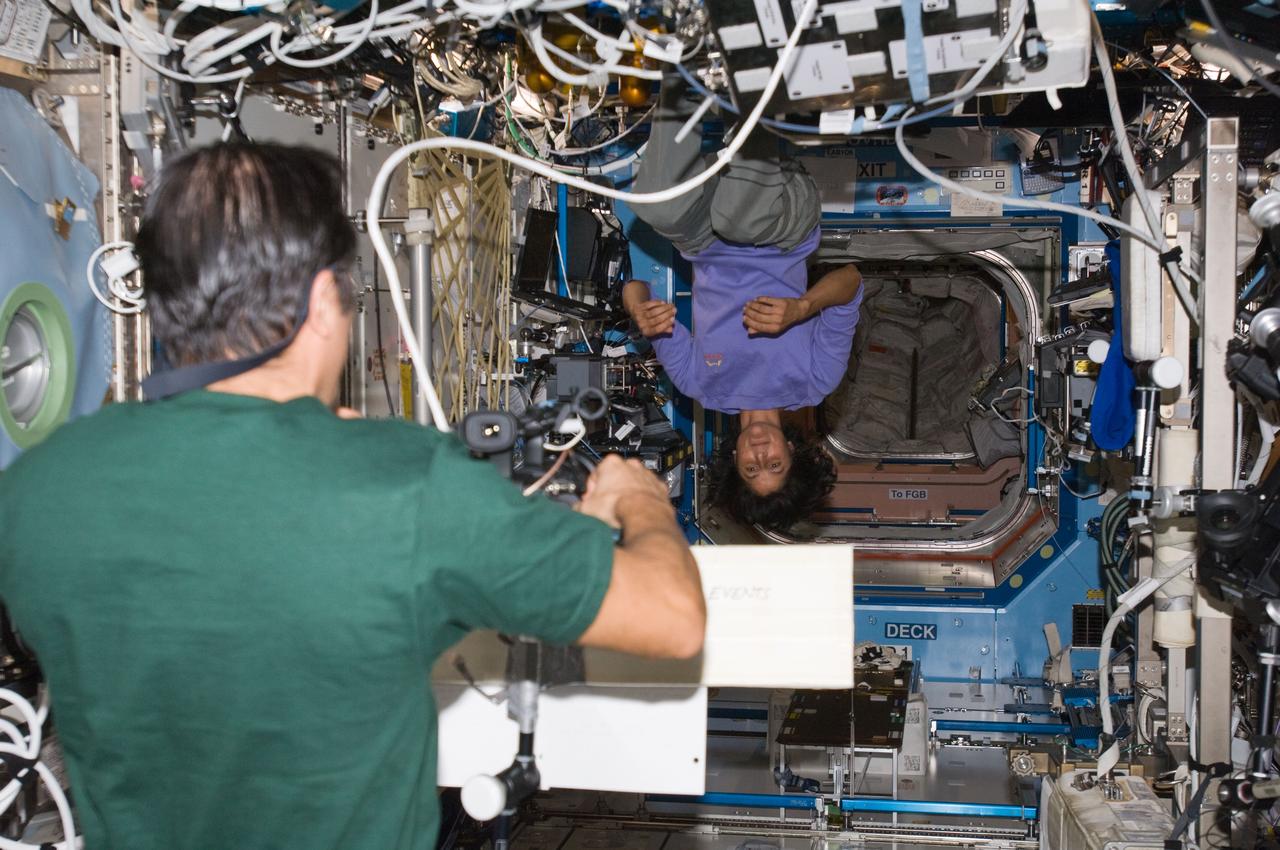
ISS032-E-009061 (25 July 2012) --- NASA astronauts Joe Acaba and Sunita Williams, both Expedition 32 flight engineers, perform video message recording in the Destiny laboratory of the International Space Station.
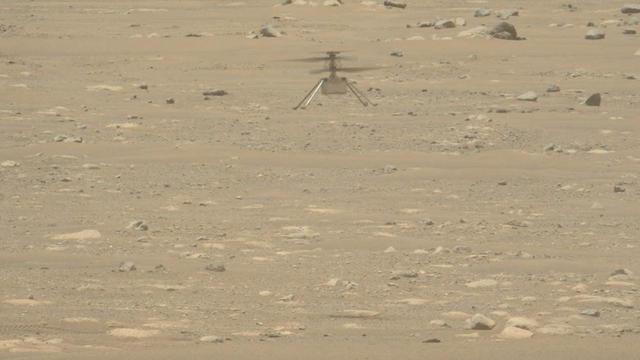
NASA's Ingenuity Mars Helicopter takes off and lands in this video captured on April 19, 2021, by Mastcam-Z, an imager aboard NASA's Perseverance Mars rover. This video features only the moments of takeoff and the landing and not footage of the helicopter hovering for about 30 seconds. The Ingenuity Mars Helicopter was built by JPL, which also manages this technology demonstration project for NASA Headquarters. It is supported by NASA's Science Mission Directorate, Aeronautics Research Mission Directorate, and Space Technology Mission Directorate. NASA's Ames Research Center and Langley Research Center provided significant flight performance analysis and technical assistance during Ingenuity's development. A key objective for Perseverance's mission on Mars is astrobiology, including the search for signs of ancient microbial life. The rover will characterize the planet's geology and past climate, pave the way for human exploration of the Red Planet, and be the first mission to collect and cache Martian rock and regolith (broken rock and dust). Subsequent NASA missions, in cooperation with ESA (European Space Agency), would send spacecraft to Mars to collect these sealed samples from the surface and return them to Earth for in-depth analysis. The Mars 2020 Perseverance mission is part of NASA's Moon to Mars exploration approach, which includes Artemis missions to the Moon that will help prepare for human exploration of the Red Planet. Movie available at https://photojournal.jpl.nasa.gov/catalog/PIA24583
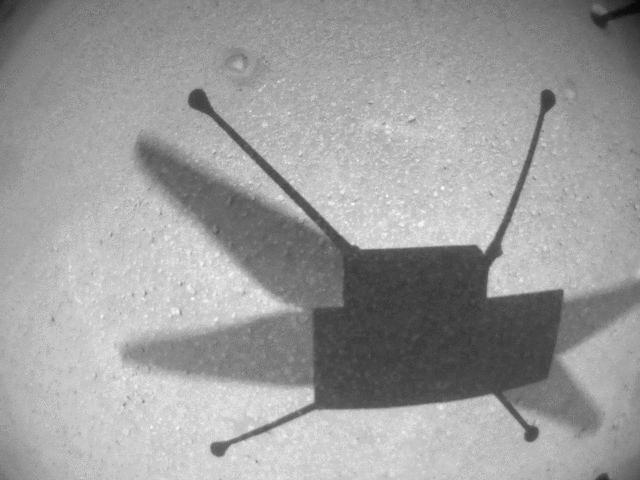
This video clip was obtained by the Ingenuity Mars Helicopter's black-and-white navigation camera during its 14th flight, on Oct. 24, 2021. During the flight, the rotorcraft reached a peak altitude of 16 feet (5 meters) with a small sideways translation of 7 feet (2 meters) to avoid a nearby sand ripple, before setting down again. Flight 14 was only 23 seconds in length. As a result, enough onboard memory was available to obtain black-and-white navigation camera imagery at the high-rate of 7.4 frames a second. Movie available at https://photojournal.jpl.nasa.gov/catalog/PIA24976
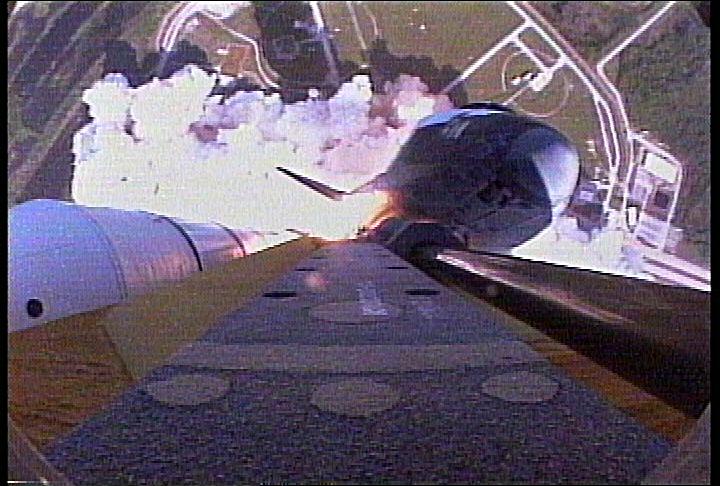
A color video camera mounted to the top of the External Tank (ET) provided this spectacular never-before-seen view of the STS-112 mission as the Space Shuttle Orbiter Atlantis lifted off in the afternoon of October 7, 2002, The camera provided views as the the orbiter began its ascent until it reached near-orbital speed, about 56 miles above the Earth, including a view of the front and belly of the orbiter, a portion of the Solid Rocket Booster, and ET. The video was downlinked during flight to several NASA data-receiving sites, offering the STS-112 team an opportunity to monitor the shuttle's performance from a new angle. Atlantis carried the S1 Integrated Truss Structure and the Crew and Equipment Translation Aid (CETA) Cart. The CETA is the first of two human-powered carts that will ride along the International Space Station's railway providing a mobile work platform for future extravehicular activities by astronauts. Landing on October 18, 2002, the Orbiter Atlantis ended its 11-day mission.
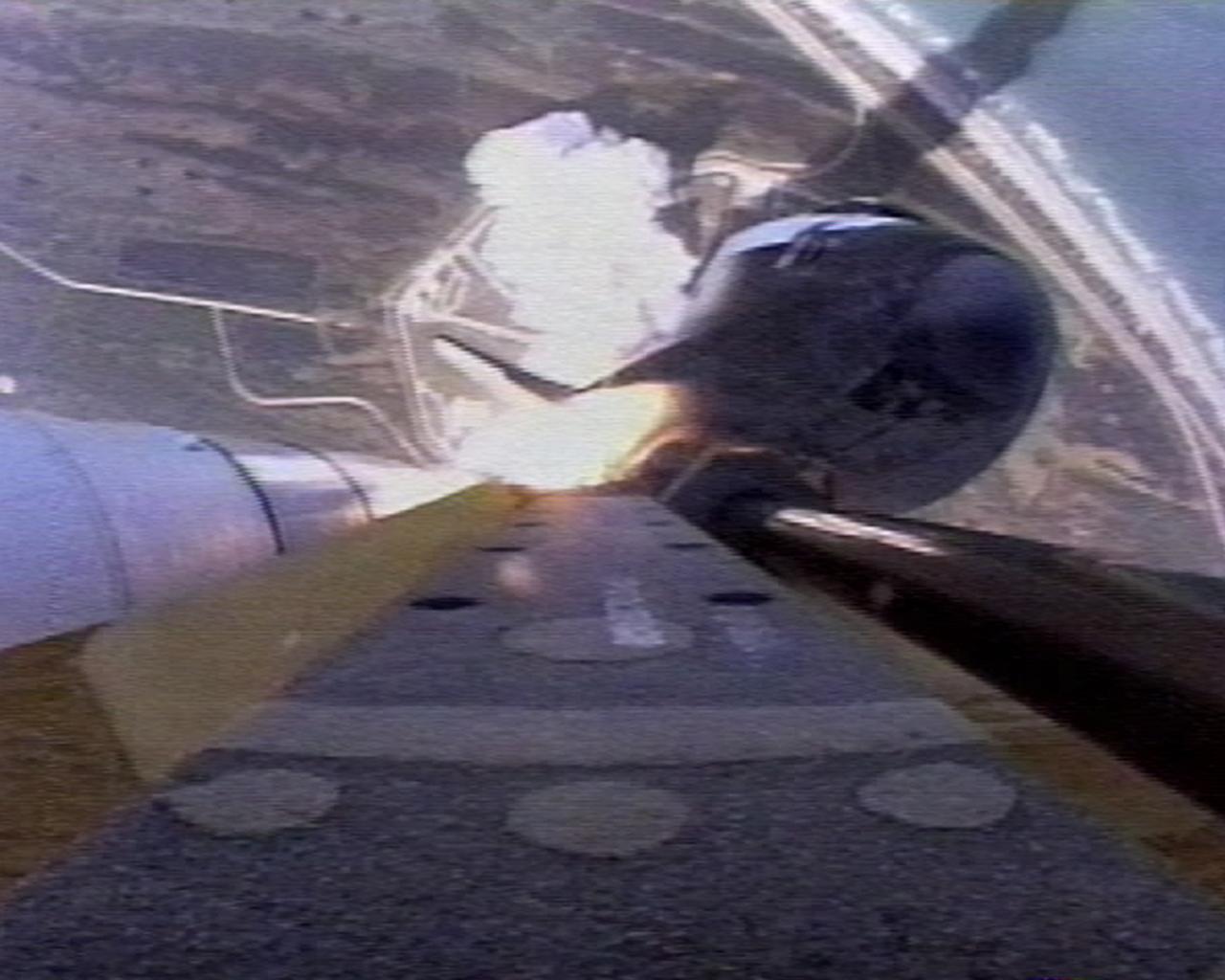
A color video camera mounted to the top of the External Tank (ET) provided this spectacular never-before-seen view of the STS-112 mission as the Space Shuttle Orbiter Atlantis lifted off in the afternoon of October 7, 2002. The camera provided views as the orbiter began its ascent until it reached near-orbital speed, about 56 miles above the Earth, including a view of the front and belly of the orbiter, a portion of the Solid Rocket Booster, and ET. The video was downlinked during flight to several NASA data-receiving sites, offering the STS-112 team an opportunity to monitor the shuttle's performance from a new angle. Atlantis carried the S1 Integrated Truss Structure and the Crew and Equipment Translation Aid (CETA) Cart. The CETA is the first of two human-powered carts that will ride along the International Space Station's railway providing a mobile work platform for future extravehicular activities by astronauts. Landing on October 18, 2002, the Orbiter Atlantis ended its 11-day mission.
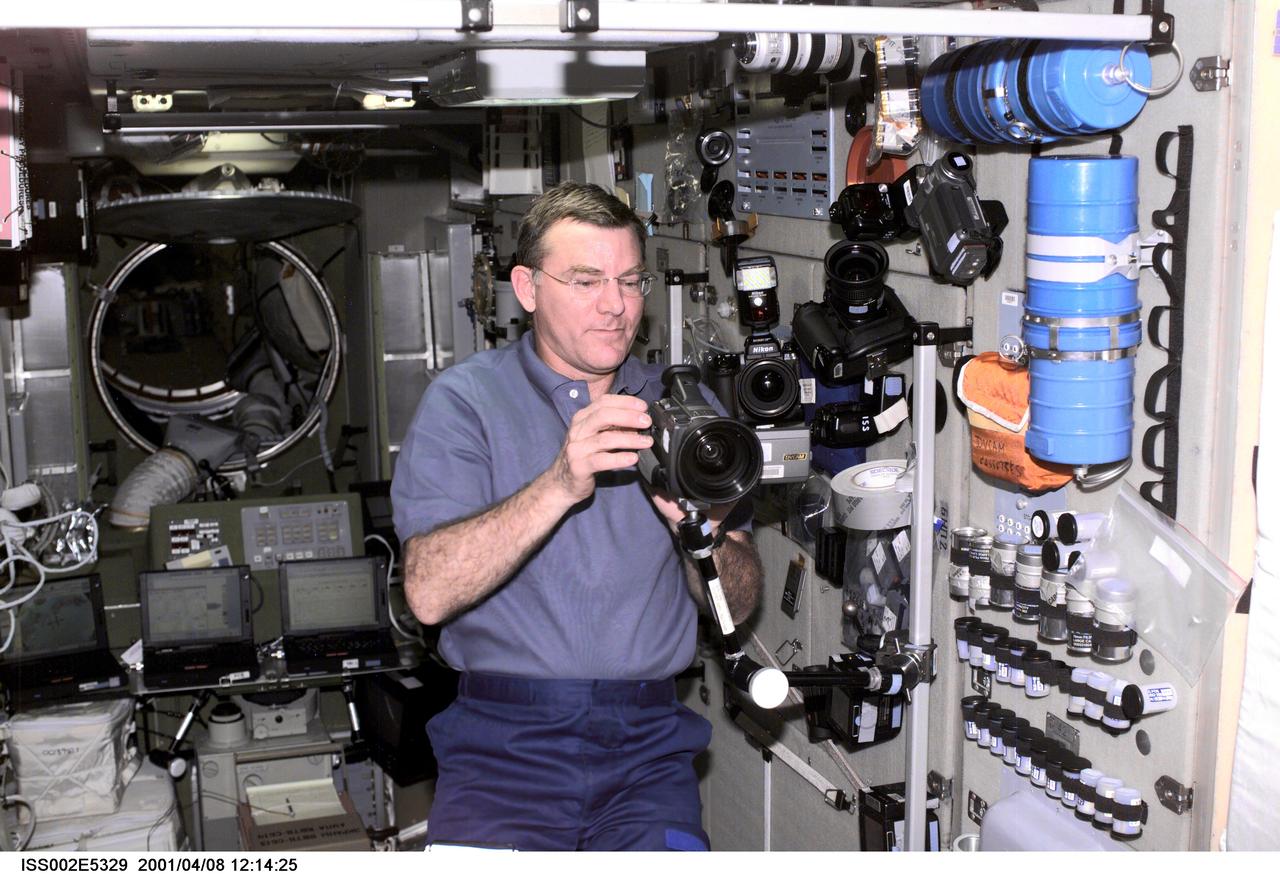
ISS002-E-5329 (08 April 2001) --- Astronaut James S. Voss, Expedition Two flight engineer, sets up a video camera on a mounting bracket in the Zvezda / Service Module of the International Space Station (ISS). A 35mm camera and a digital still camera are also visible nearby. This image was recorded with a digital still camera.
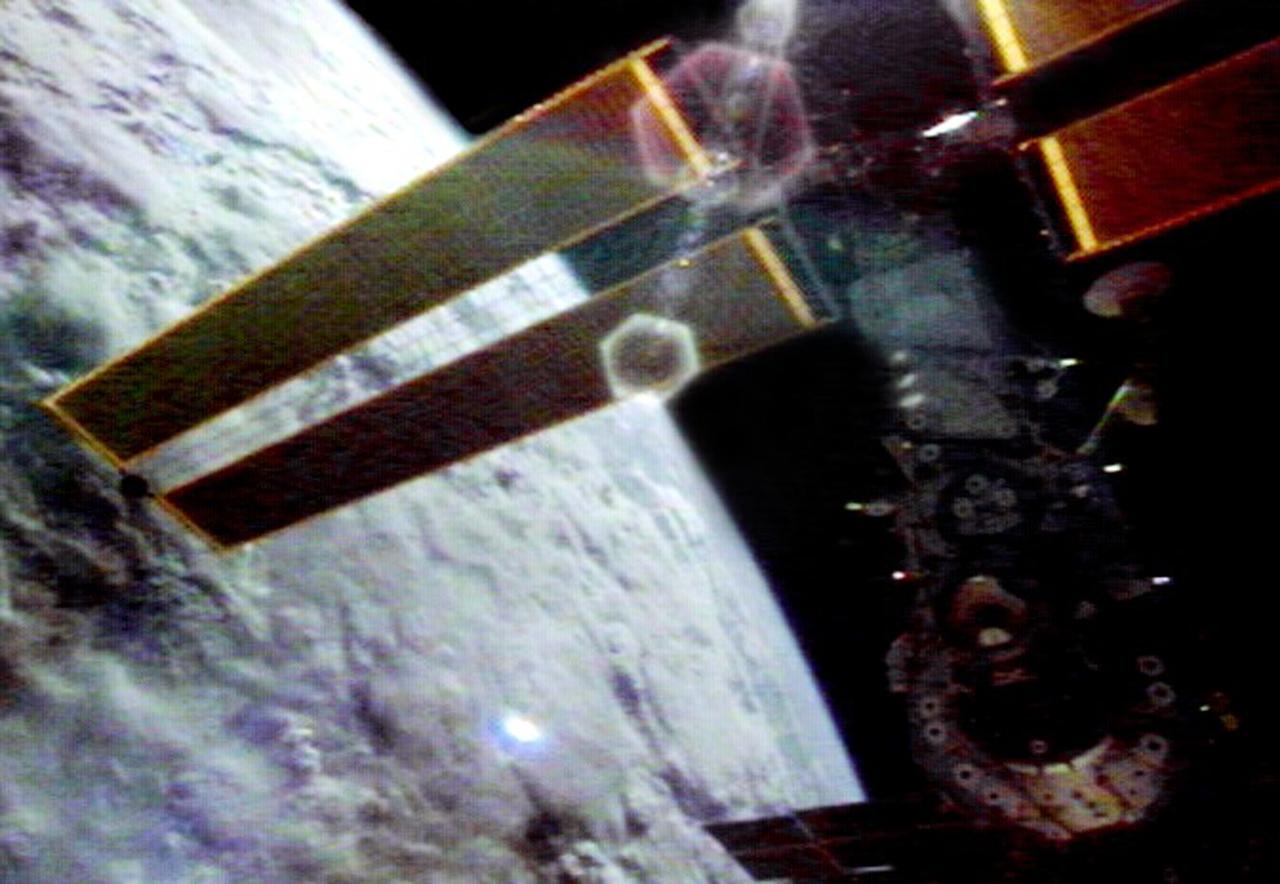
This video still depicts the recently deployed starboard and port solar arrays towering over the International Space Station (ISS). The video was recorded on STS-97's 65th orbit. Delivery, assembly, and activation of the solar arrays was the main mission objective of STS-97. The electrical power system, which is built into a 73-meter (240-foot) long solar array structure consists of solar arrays, radiators, batteries, and electronics, and will provide the power necessary for the first ISS crews to live and work in the U.S. segment. The entire 15.4-metric ton (17-ton) package is called the P6 Integrated Truss Segment, and is the heaviest and largest element yet delivered to the station aboard a space shuttle. The STS-97 crew of five launched aboard the Space Shuttle Orbiter Endeavor on November 30, 2000 for an 11 day mission.
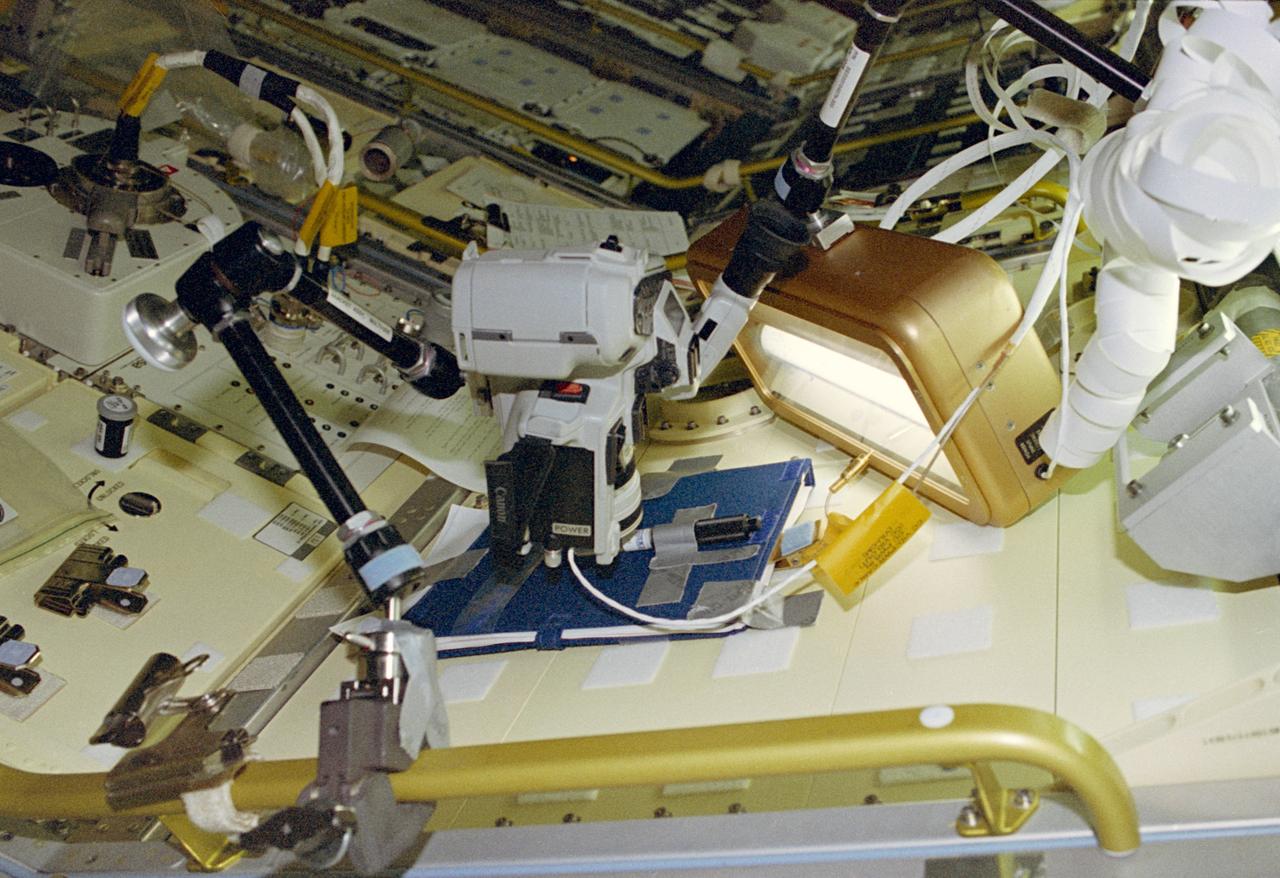
Video camcorder up close to a clyinder attached to a Spacelab locker.

Kennedy Space Center’s Tim Bass addresses co-workers inside the Florida spaceport’s Kennedy Learning Institute on Oct. 17, 2019, during the third in a series of five TED Talk-style informational sessions. Sponsored by Kennedy’s Launching Leaders and Leadership for the Future, NASAtalks focuses on the topic of intentional careers and aims to provide employees with tools and knowledge that can be utilized for career growth. The theme of this third session was customers, and additional speakers included Kennedy employees Ryan Richards, Mike Williams and Dave Grau.
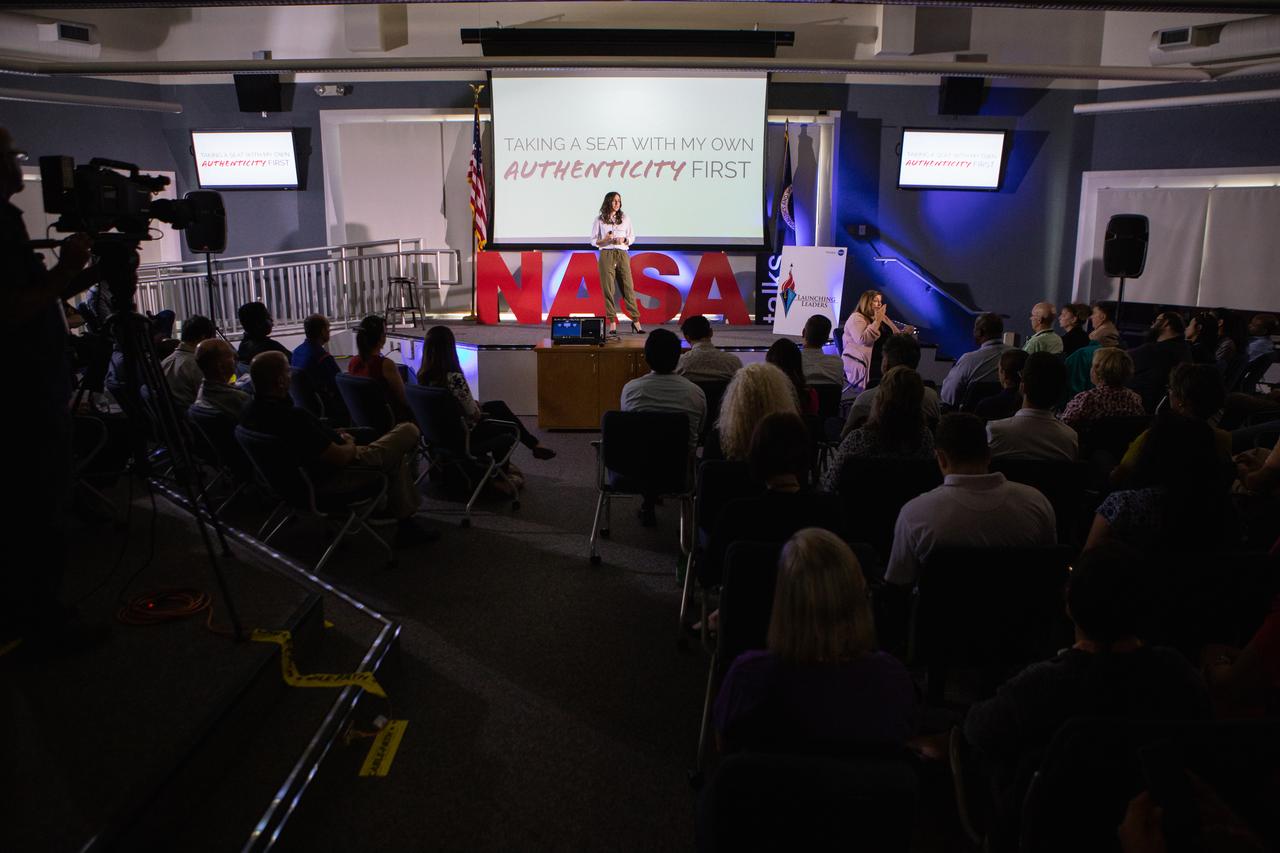
Kennedy Space Center’s Jennifer Lane addresses co-workers inside the Florida spaceport’s Kennedy Learning Institute on Oct. 10, 2019, during the second in a series of five TED Talk-style informational sessions. Sponsored by Kennedy’s Launching Leaders and Leadership for the Future, NASAtalks focuses on the topic of intentional careers and aims to provide employees with tools and knowledge that can be utilized for career growth. The theme of this second session was collaboration, and additional speakers included Kennedy employees Stephanie Martin and Skyler Kleinschmidt, with a skill-building section on networking in the digital age by Madison Tuttle.
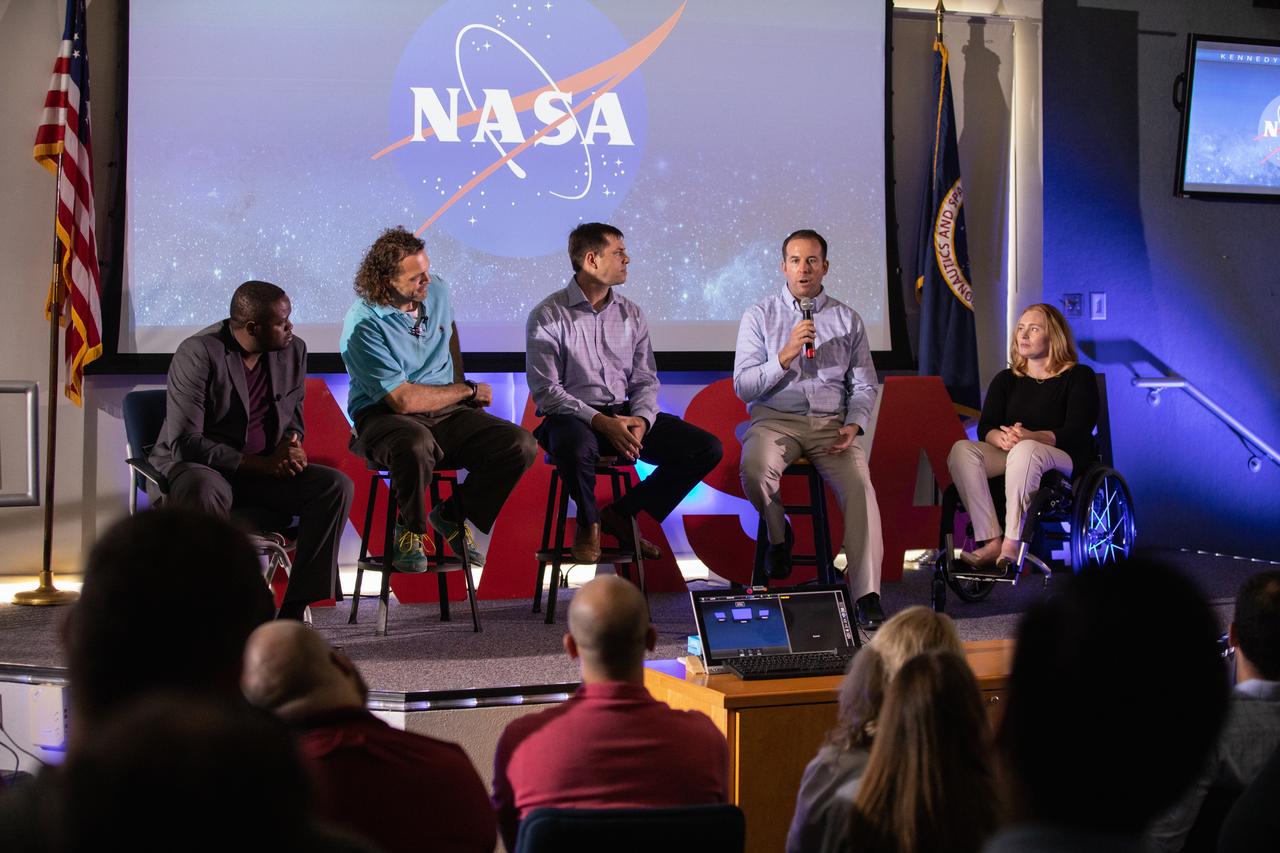
From left, Kennedy Space Center’s Ryan Richards, Tim Bass, Mike Williams, Dave Grau and Christine Shepperd participate in the third of a series of five TED Talk-style informational sessions on Oct. 17, 2019, inside the Florida spaceport’s Kennedy Learning Institute. Sponsored by Kennedy’s Launching Leaders and Leadership for the Future, NASAtalks focuses on the topic of intentional careers and aims to provide employees with tools and knowledge that can be utilized for career growth. The theme of this third session was customers.
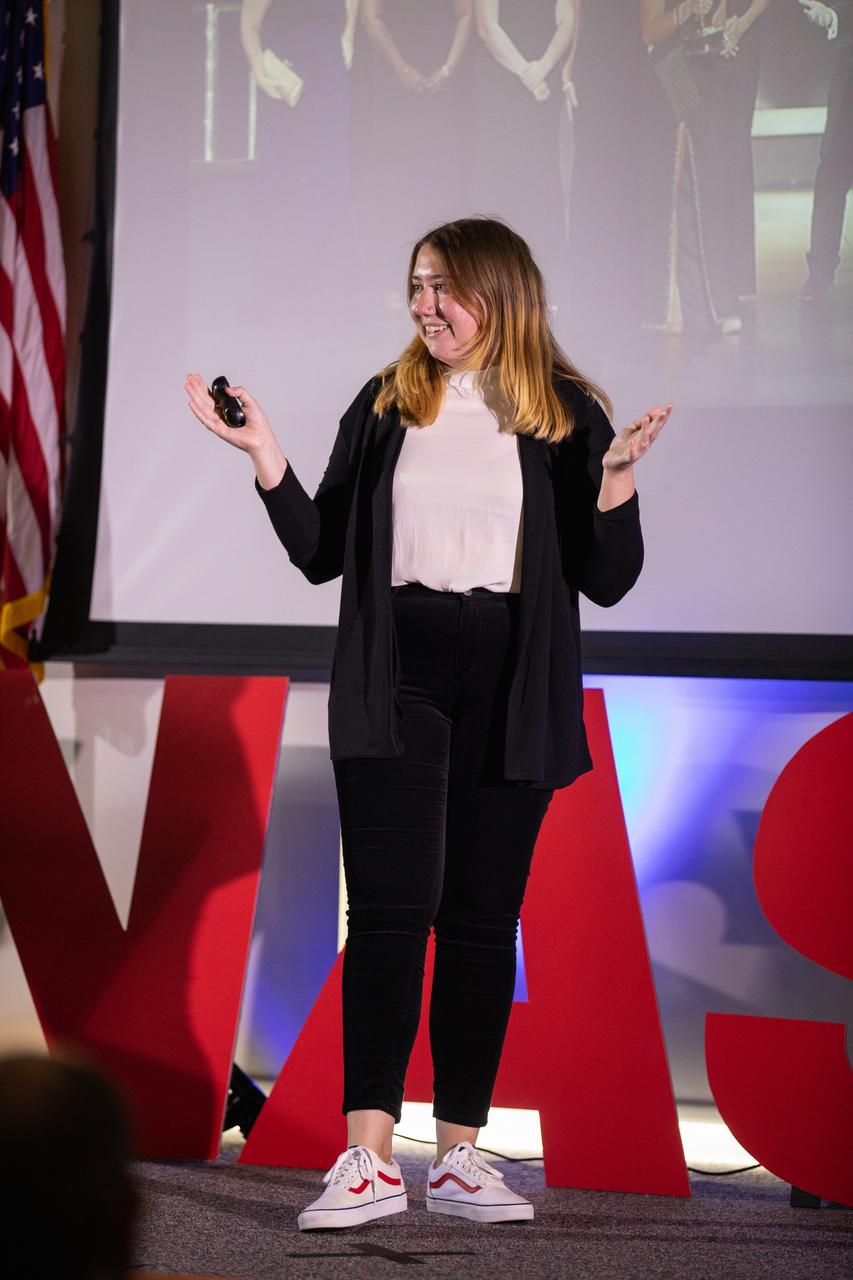
Madison Tuttle, a social media lead at NASA’s Kennedy Space Center in Florida, speaks at the second in a series of five TED Talk-style informational sessions on Oct. 10, 2019, in the Kennedy Learning Institute. Sponsored by Kennedy’s Launching Leaders and Leadership for the Future, NASAtalks focuses on the topic of intentional careers and aims to provide employees with tools and knowledge that can be utilized for career growth. The theme of this second session was collaboration, and additional speakers included Kennedy employees Jennifer Lane, Skyler Kleinschmidt and Stephanie Martin.
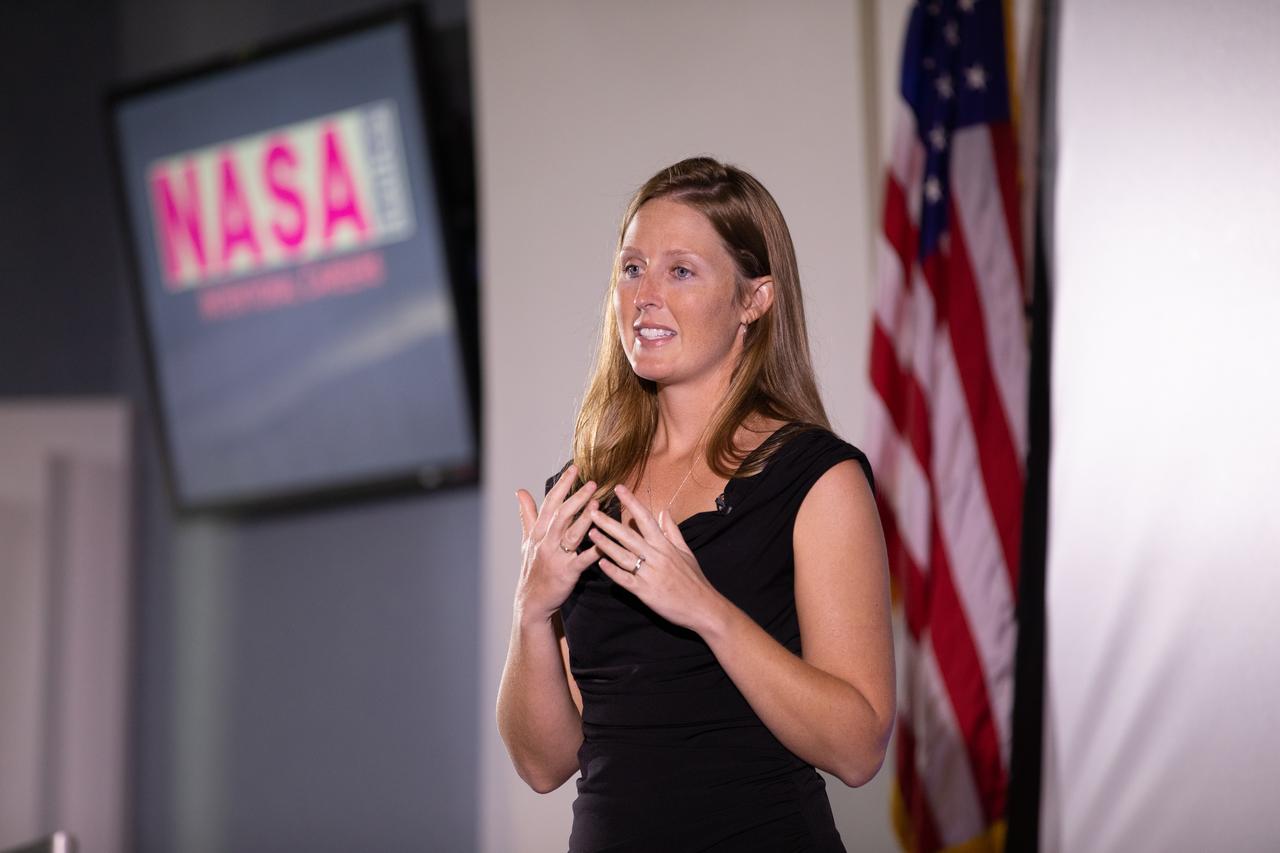
Kennedy Space Center’s Stephanie Martin speaks at the second in a series of five TED Talk-style informational sessions on Oct. 10, 2019, in the Florida spaceport’s Kennedy Learning Institute. Sponsored by Kennedy’s Launching Leaders and Leadership for the Future, NASAtalks focuses on the topic of intentional careers and aims to provide employees with tools and knowledge that can be utilized for career growth. The theme of this second session was collaboration, and additional speakers included Kennedy employees Jennifer Lane and Skyler Kleinschmidt, with a skill-building section on networking in the digital age by Madison Tuttle.
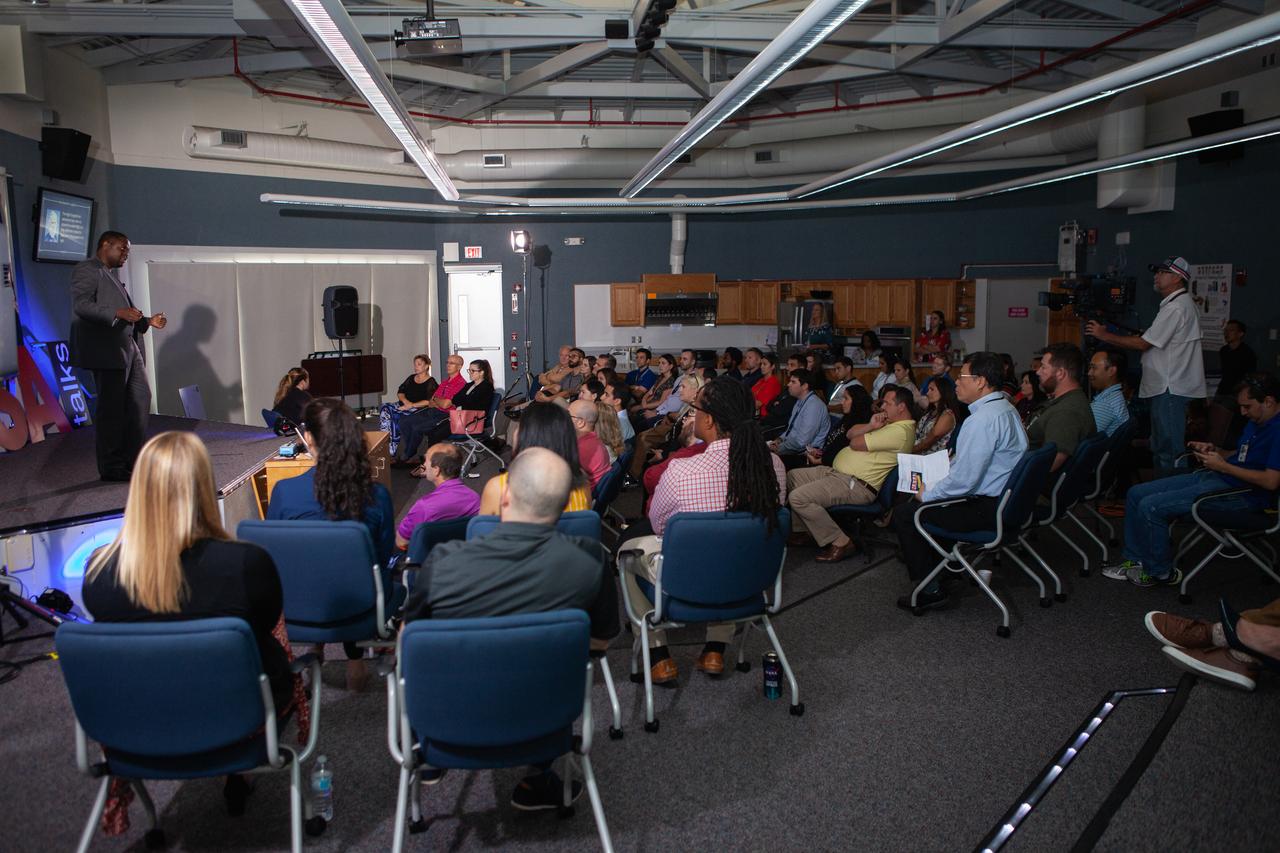
Kennedy Space Center employees attend the third in a series of five TED Talk-style informational sessions on Oct. 17, 2019, inside the Florida spaceport’s Kennedy Learning Institute. Sponsored by Kennedy’s Launching Leaders and Leadership for the Future, NASAtalks focuses on the topic of intentional careers and aims to provide employees with tools and knowledge that can be utilized for career growth. The theme of this third session was customers, and speakers included Kennedy employees Ryan Richards, Mike Williams and Dave Grau, with a skill-building section on active listening and negotiating by Tim Bass.

Kennedy Space Center’s Skyler Kleinschmidt addresses co-workers inside the Florida spaceport’s Kennedy Learning Institute on Oct. 10, 2019, during the second in a series of five TED Talk-style informational sessions. Sponsored by Kennedy’s Launching Leaders and Leadership for the Future, NASAtalks focuses on the topic of intentional careers and aims to provide employees with tools and knowledge that can be utilized for career growth. The theme of this second session was collaboration, and additional speakers included Kennedy employees Jennifer Lane and Stephanie Martin, with a skill-building section on networking in the digital age by Madison Tuttle.
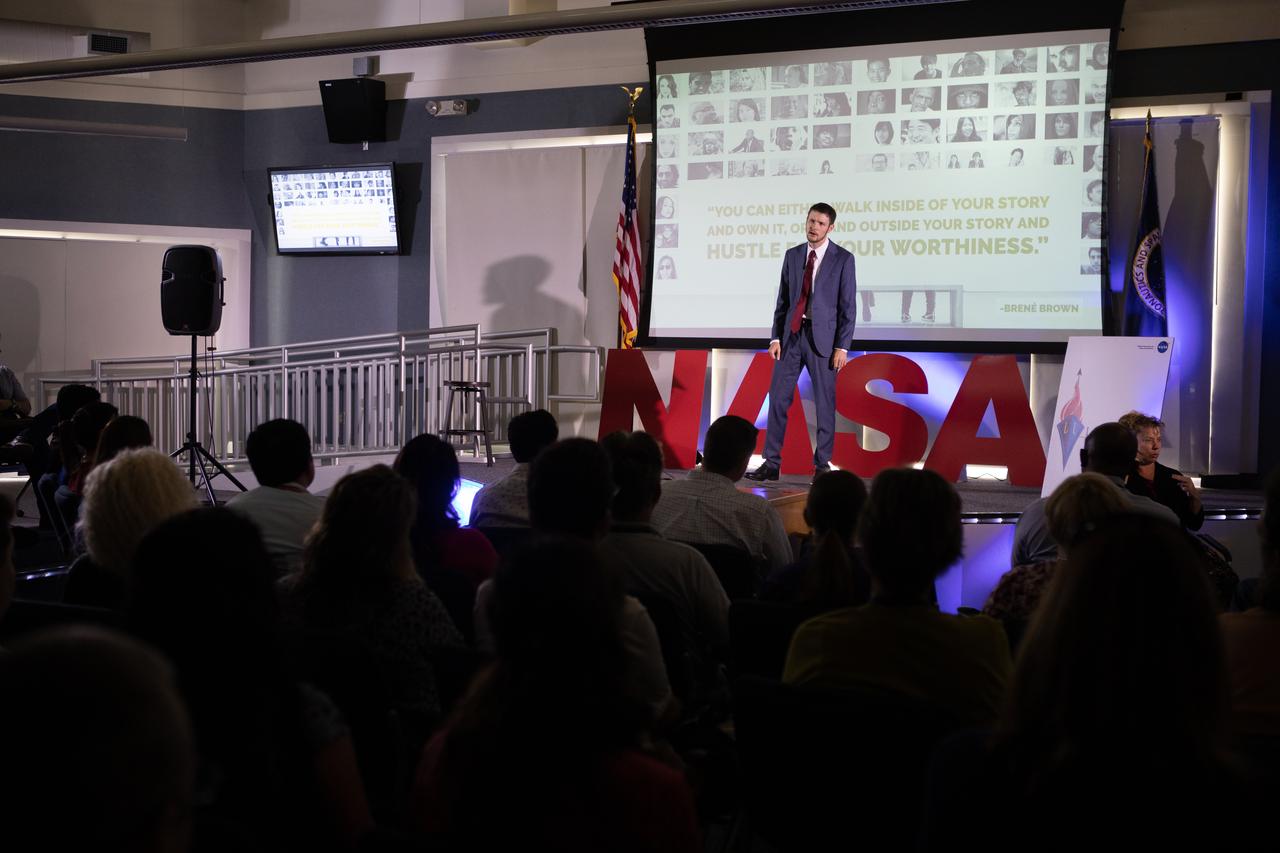
Kennedy Space Center’s Skyler Kleinschmidt addresses co-workers inside the Florida spaceport’s Kennedy Learning Institute on Oct. 10, 2019, during the second in a series of five TED Talk-style informational sessions. Sponsored by Kennedy’s Launching Leaders and Leadership for the Future, NASAtalks focuses on the topic of intentional careers and aims to provide employees with tools and knowledge that can be utilized for career growth. The theme of this second session was collaboration, and additional speakers included Kennedy employees Jennifer Lane and Stephanie Martin, with a skill-building section on networking in the digital age by Madison Tuttle.
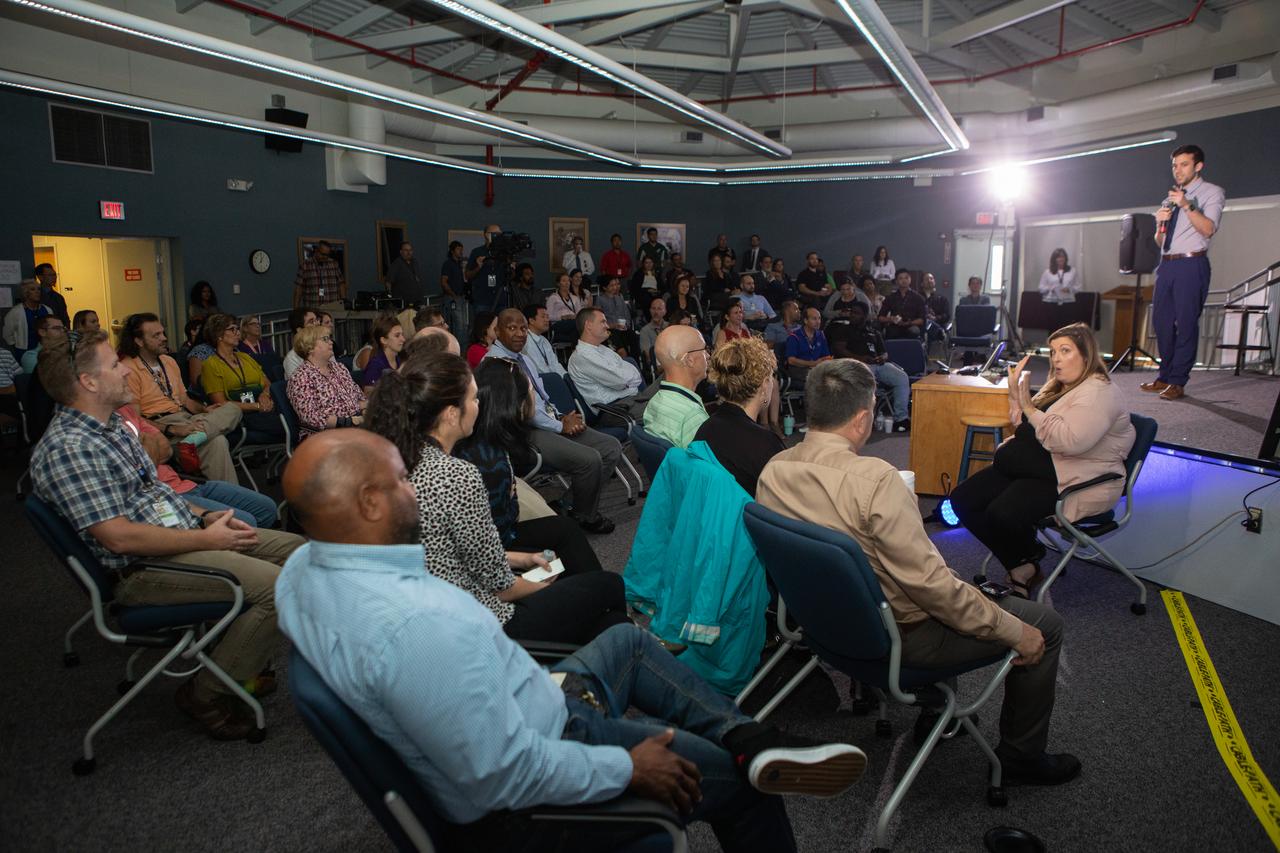
Kennedy Space Center’s Mac Russo addresses co-workers inside the Florida spaceport’s Kennedy Learning Institute on Oct. 10, 2019, during the second in a series of five TED Talk-style informational sessions. Sponsored by Kennedy’s Launching Leaders and Leadership for the Future, NASAtalks focuses on the topic of intentional careers and aims to provide employees with tools and knowledge that can be utilized for career growth. The theme of this second session was collaboration, and speakers included Kennedy employees Stephanie Martin, Skyler Kleinschmidt and Jennifer Lane, with a skill-building section on networking in the digital age by Madison Tuttle.
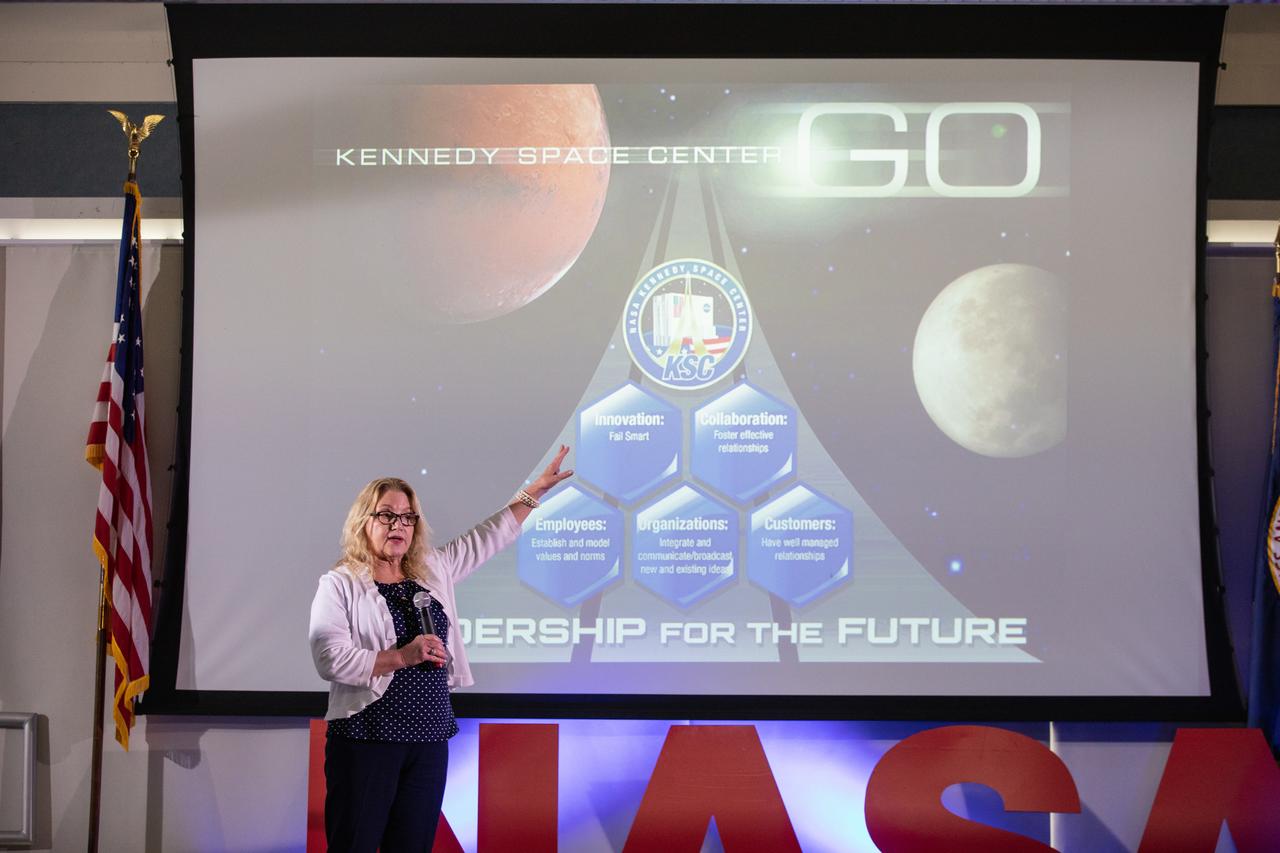
Susan Kroskey, chief financial officer at NASA’s Kennedy Space Center in Florida, speaks to Kennedy employees on Oct. 17, 2019, in the Kennedy Learning Institute during the third in a series of five TED Talk-style informational sessions. Sponsored by Kennedy’s Launching Leaders and Leadership for the Future, NASAtalks focuses on the topic of intentional careers and aims to provide employees with tools and knowledge that can be utilized for career growth. The theme of this third session was customers, and speakers included Kennedy employees Ryan Richards, Mike Williams and Dave Grau, with a skill-building section on active listening and negotiating by Tim Bass.
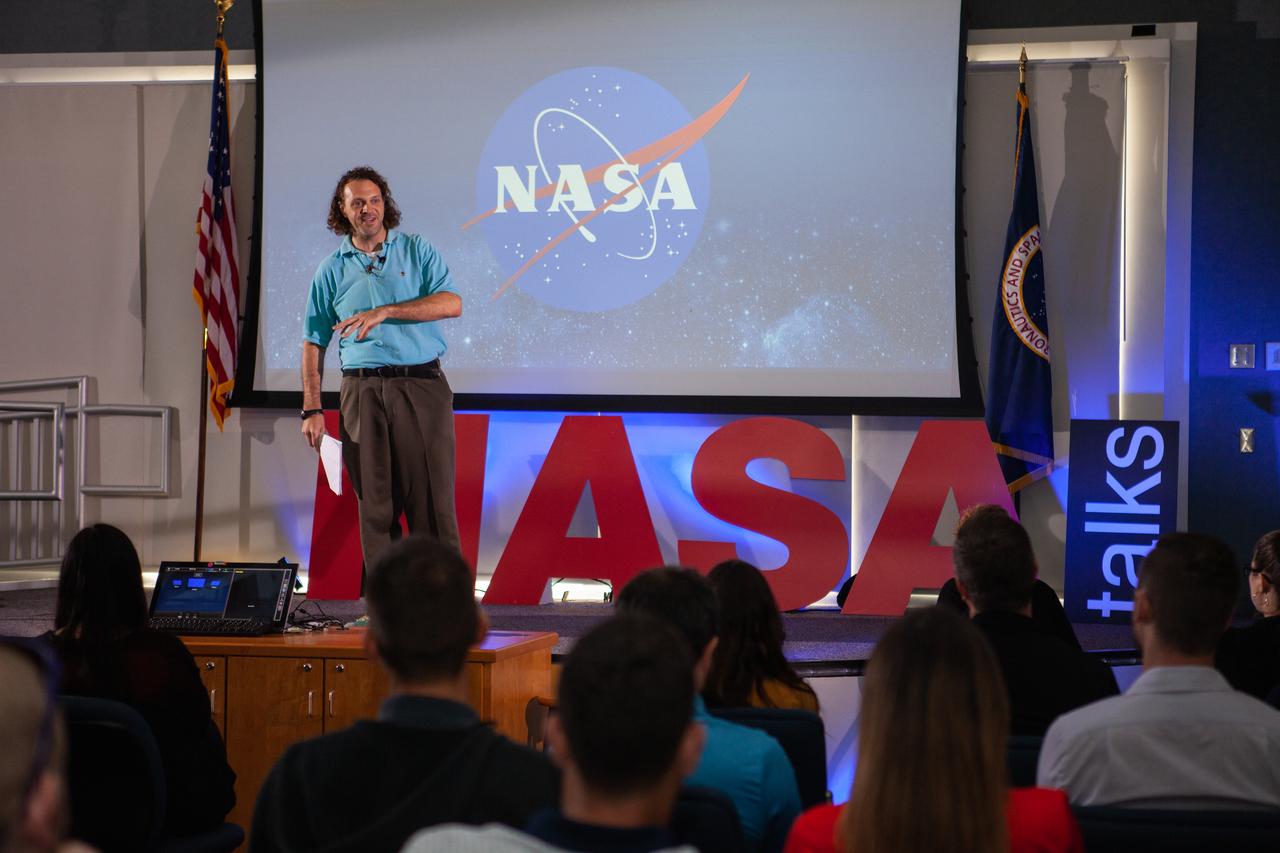
Kennedy Space Center’s Tim Bass addresses co-workers inside the Florida spaceport’s Kennedy Learning Institute on Oct. 17, 2019, during the third in a series of five TED Talk-style informational sessions. Sponsored by Kennedy’s Launching Leaders and Leadership for the Future, NASAtalks focuses on the topic of intentional careers and aims to provide employees with tools and knowledge that can be utilized for career growth. The theme of this third session was customers, and additional speakers included Kennedy employees Ryan Richards, Mike Williams and Dave Grau.
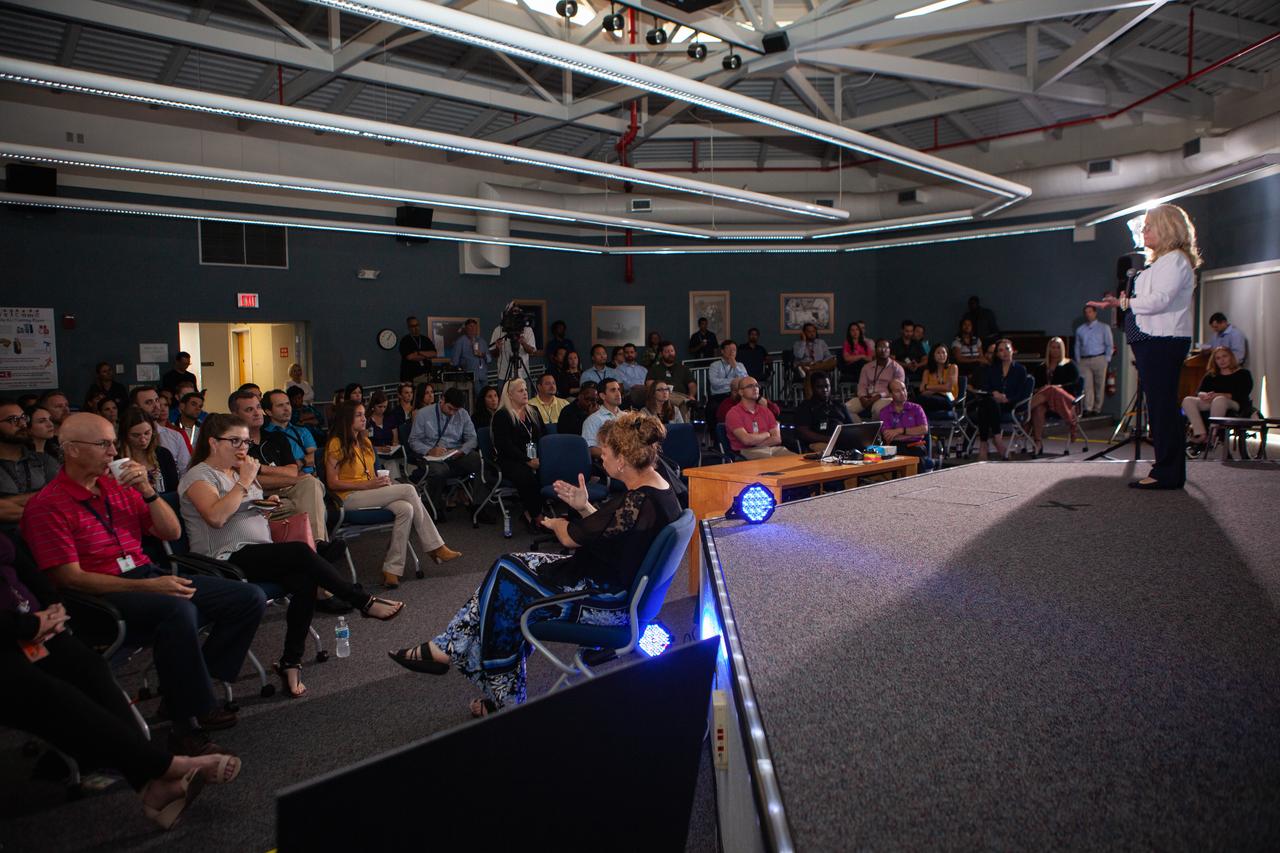
Susan Kroskey, chief financial officer at NASA’s Kennedy Space Center in Florida, speaks to Kennedy employees on Oct. 17, 2019, in the Kennedy Learning Institute during the third in a series of five TED Talk-style informational sessions. Sponsored by Kennedy’s Launching Leaders and Leadership for the Future, NASAtalks focuses on the topic of intentional careers and aims to provide employees with tools and knowledge that can be utilized for career growth. The theme of this third session was customers, and speakers included Kennedy employees Ryan Richards, Mike Williams and Dave Grau, with a skill-building section on active listening and negotiating by Tim Bass.

Kennedy Space Center’s Mike Williams addresses co-workers inside the Florida spaceport’s Kennedy Learning Institute on Oct. 17, 2019, during the third in a series of five TED Talk-style informational sessions. Sponsored by Kennedy’s Launching Leaders and Leadership for the Future, NASAtalks focuses on the topic of intentional careers and aims to provide employees with tools and knowledge that can be utilized for career growth. The theme of this third session was customers, and additional speakers included Kennedy employees Ryan Richards and Dave Grau, with a skill-building section on active listening and negotiating by Tim Bass.

Madison Tuttle, a social media lead at NASA’s Kennedy Space Center in Florida, speaks to co-workers inside the Kennedy Learning Institute on Oct. 10, 2019, during the second in a series of five TED Talk-style informational sessions. Sponsored by Kennedy’s Launching Leaders and Leadership for the Future, NASAtalks focuses on the topic of intentional careers and aims to provide employees with tools and knowledge that can be utilized for career growth. The theme of this second session was collaboration, and additional speakers included Kennedy employees Jennifer Lane, Skyler Kleinschmidt and Stephanie Martin.

Madison Tuttle, a social media lead at NASA’s Kennedy Space Center in Florida, speaks to co-workers inside the Kennedy Learning Institute on Oct. 10, 2019, during the second in a series of five TED Talk-style informational sessions. Sponsored by Kennedy’s Launching Leaders and Leadership for the Future, NASAtalks focuses on the topic of intentional careers and aims to provide employees with tools and knowledge that can be utilized for career growth. The theme of this second session was collaboration, and additional speakers included Kennedy employees Jennifer Lane, Skyler Kleinschmidt and Stephanie Martin.
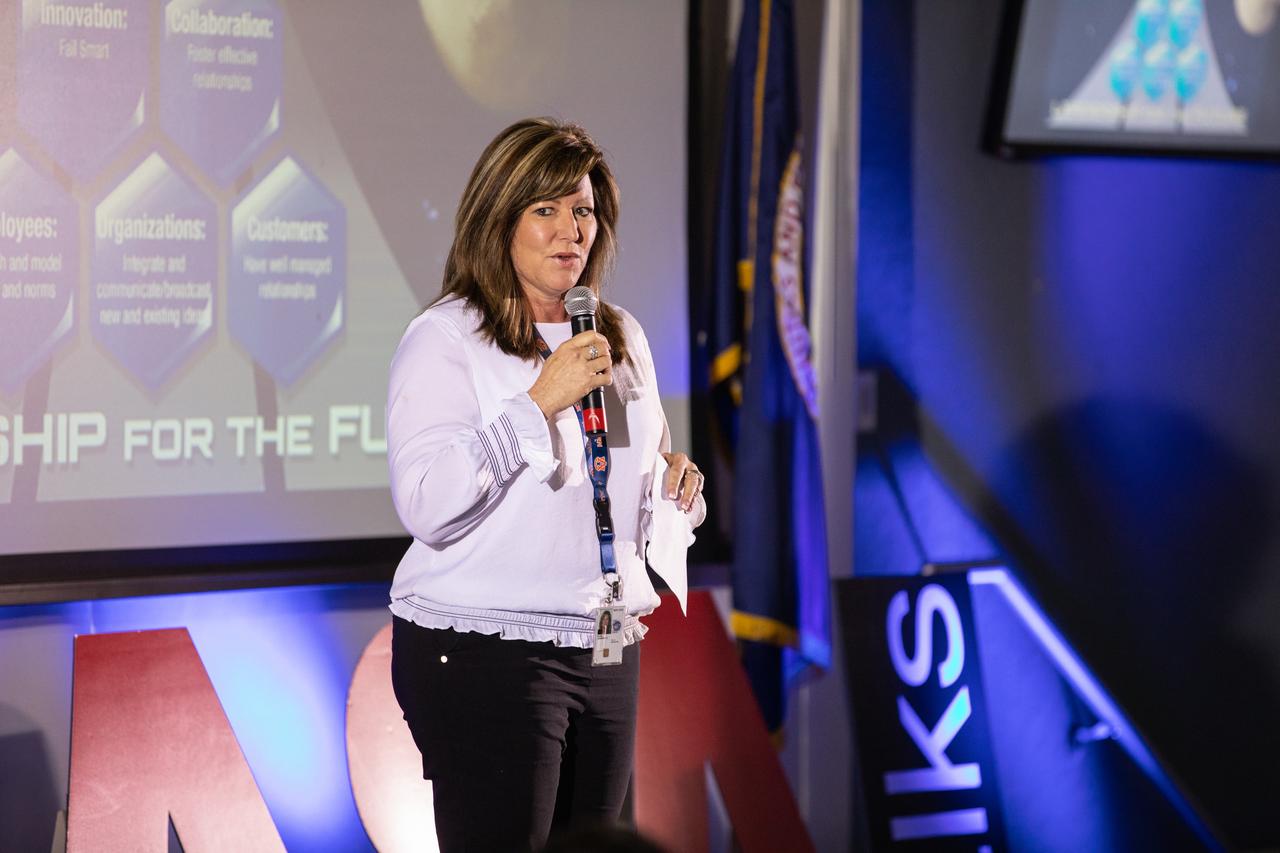
Jennifer Kunz, director of Safety and Mission Assurance at NASA’s Kennedy Space Center in Florida, addresses Kennedy employees on Oct. 10, 2019, in the Kennedy Learning Institute during the second in a series of five TED Talk-style informational sessions. Sponsored by Kennedy’s Launching Leaders and Leadership for the Future, NASAtalks focuses on the topic of intentional careers and aims to provide employees with tools and knowledge that can be utilized for career growth. The theme of this second session was collaboration, and additional speakers included Kennedy employees Skyler Kleinschmidt and Stephanie Martin, with a skill-building section on networking in the digital age by Madison Tuttle.

Kennedy Space Center’s Skyler Kleinschmidt speaks at the second in a series of five TED Talk-style informational sessions on Oct. 10, 2019, in the Florida spaceport’s Kennedy Learning Institute. Sponsored by Kennedy’s Launching Leaders and Leadership for the Future, NASAtalks focuses on the topic of intentional careers and aims to provide employees with tools and knowledge that can be utilized for career growth. The theme of this second session was collaboration, and additional speakers included Kennedy employees Jennifer Lane and Stephanie Martin, with a skill-building section on networking in the digital age by Madison Tuttle.
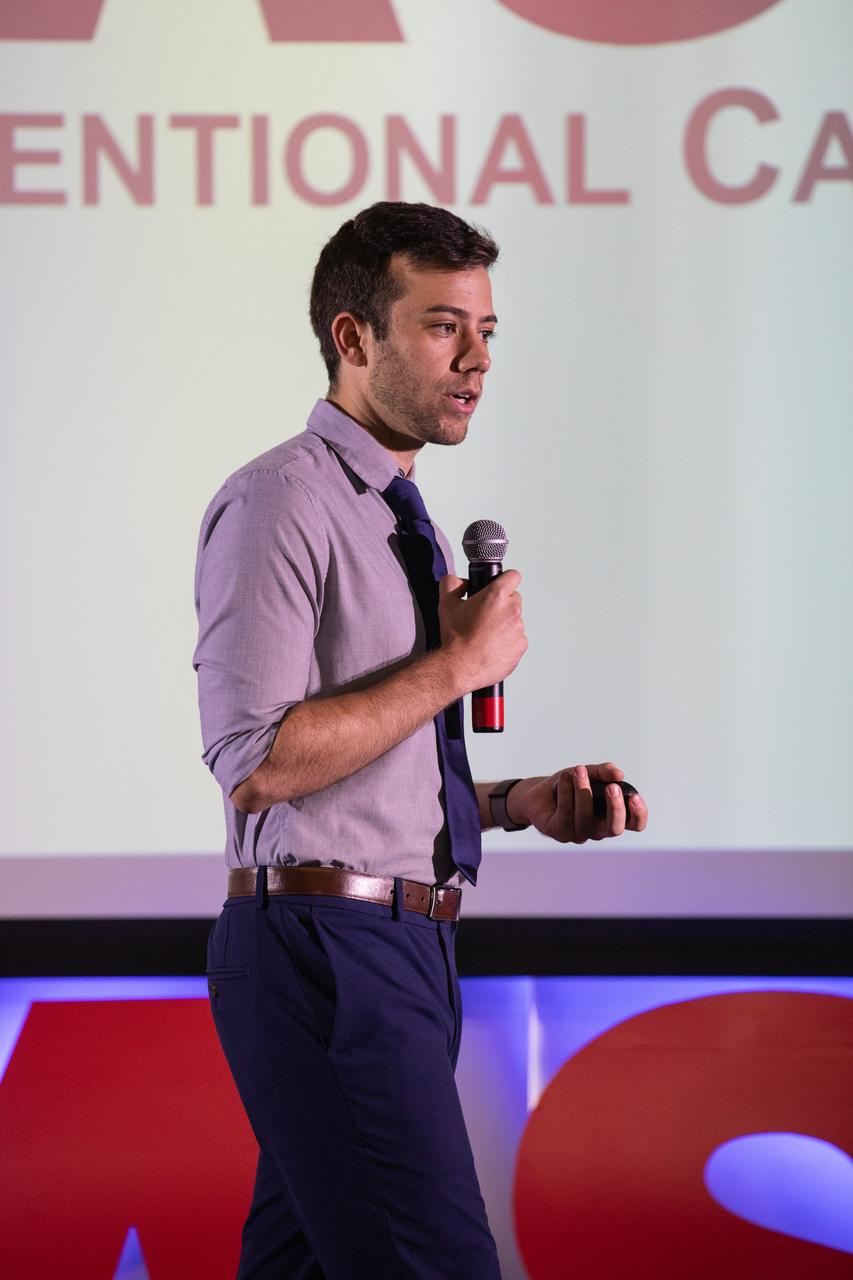
Kennedy Space Center’s Mac Russo introduces event speakers for the second in a series of five TED Talk-style informational sessions on Oct. 10, 2019, inside the Florida spaceport’s Kennedy Learning Institute. Sponsored by Kennedy’s Launching Leaders and Leadership for the Future, NASAtalks focuses on the topic of intentional careers and aims to provide employees with tools and knowledge that can be utilized for career growth. The theme of this second session was collaboration, and speakers included Kennedy employees Stephanie Martin, Skyler Kleinschmidt and Jennifer Lane, with a skill-building section on networking in the digital age by Madison Tuttle.

Kennedy Space Center’s Stephanie Martin speaks at the second in a series of five TED Talk-style informational sessions on Oct. 10, 2019, in the Florida spaceport’s Kennedy Learning Institute. Sponsored by Kennedy’s Launching Leaders and Leadership for the Future, NASAtalks focuses on the topic of intentional careers and aims to provide employees with tools and knowledge that can be utilized for career growth. The theme of this second session was collaboration, and additional speakers included Kennedy employees Jennifer Lane and Skyler Kleinschmidt, with a skill-building section on networking in the digital age by Madison Tuttle.
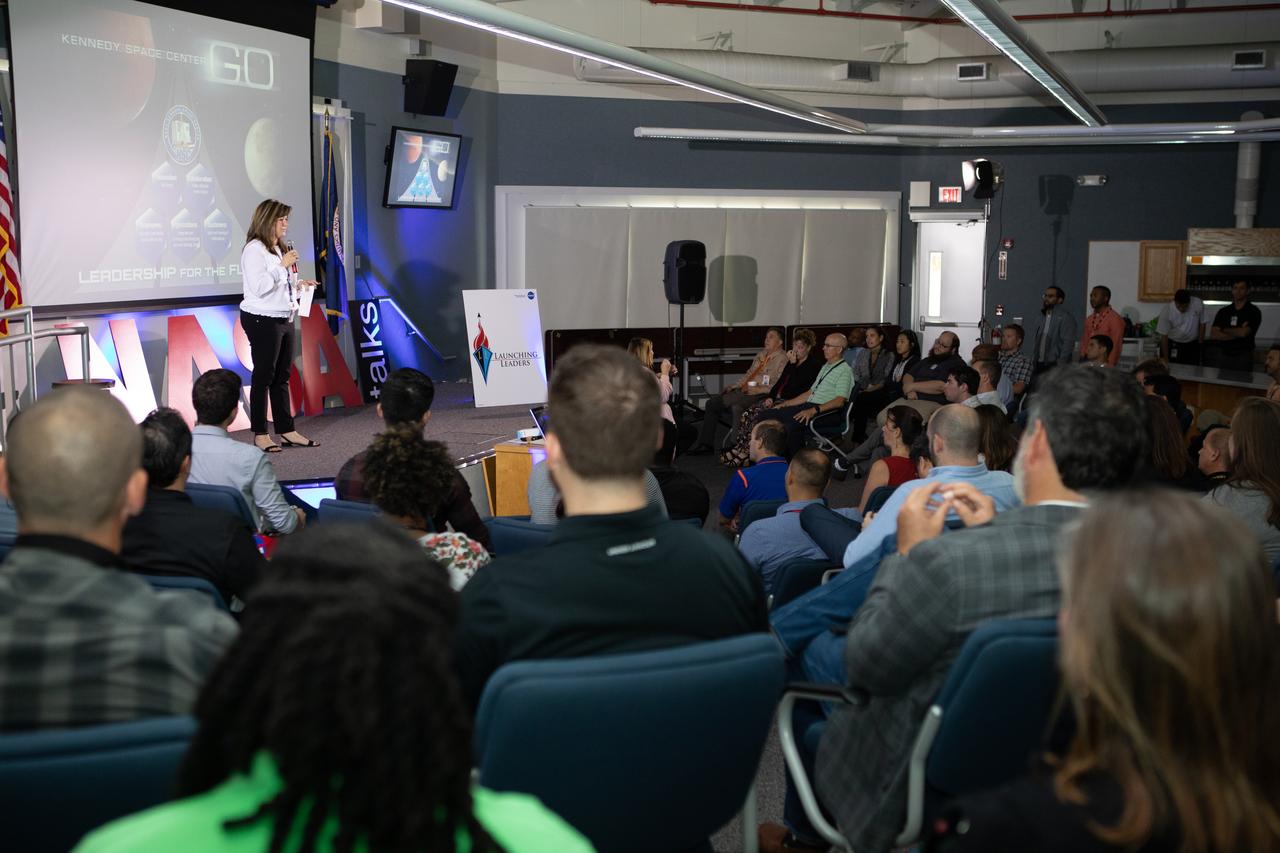
Jennifer Kunz, director of Safety and Mission Assurance at NASA’s Kennedy Space Center in Florida, addresses Kennedy employees on Oct. 10, 2019, in the Kennedy Learning Institute during the second in a series of five TED Talk-style informational sessions. Sponsored by Kennedy’s Launching Leaders and Leadership for the Future, NASAtalks focuses on the topic of intentional careers and aims to provide employees with tools and knowledge that can be utilized for career growth. The theme of this second session was collaboration, and additional speakers included Kennedy employees Skyler Kleinschmidt and Stephanie Martin, with a skill-building section on networking in the digital age by Madison Tuttle.
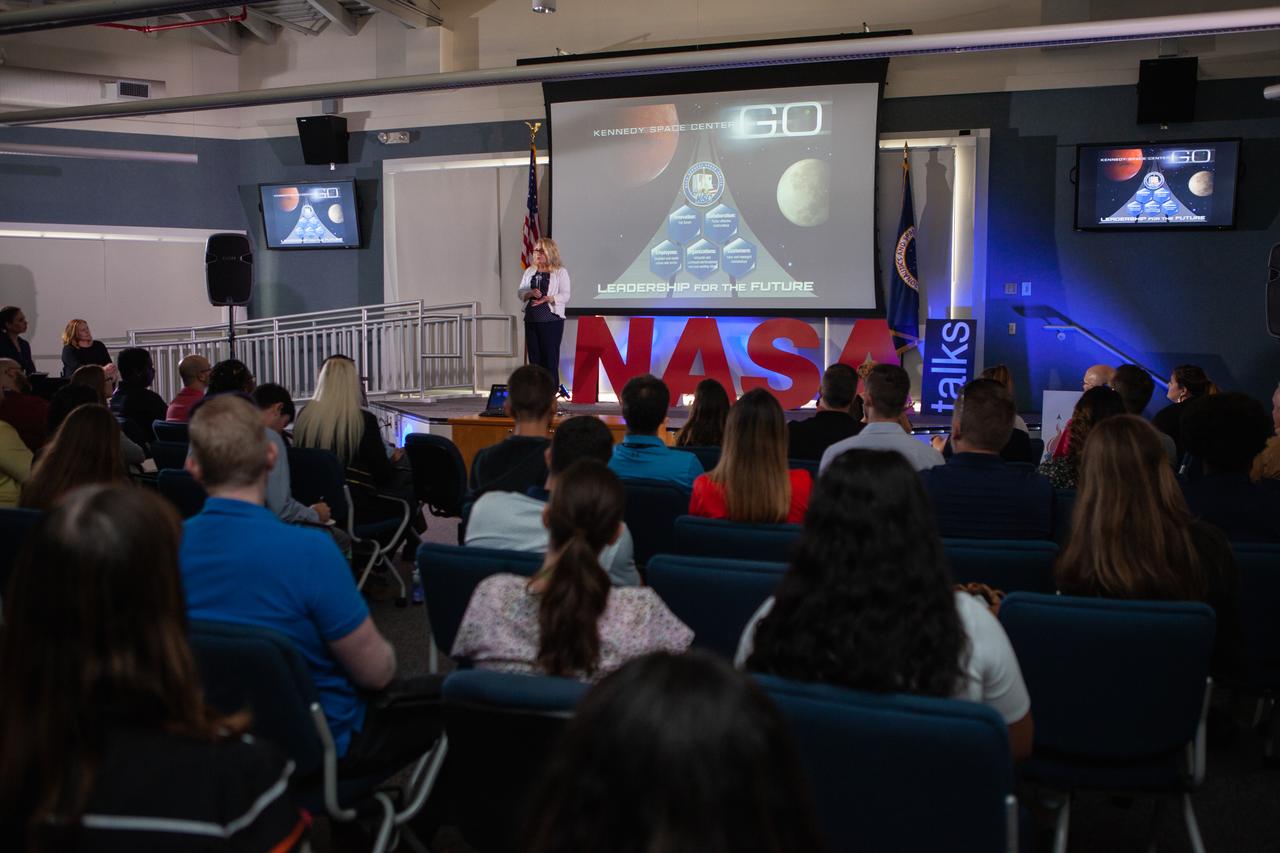
Susan Kroskey, chief financial officer at NASA’s Kennedy Space Center in Florida, speaks to Kennedy employees on Oct. 17, 2019, in the Kennedy Learning Institute during the third in a series of five TED Talk-style informational sessions. Sponsored by Kennedy’s Launching Leaders and Leadership for the Future, NASAtalks focuses on the topic of intentional careers and aims to provide employees with tools and knowledge that can be utilized for career growth. The theme of this third session was customers, and speakers included Kennedy employees Ryan Richards, Mike Williams and Dave Grau, with a skill-building section on active listening and negotiating by Tim Bass.
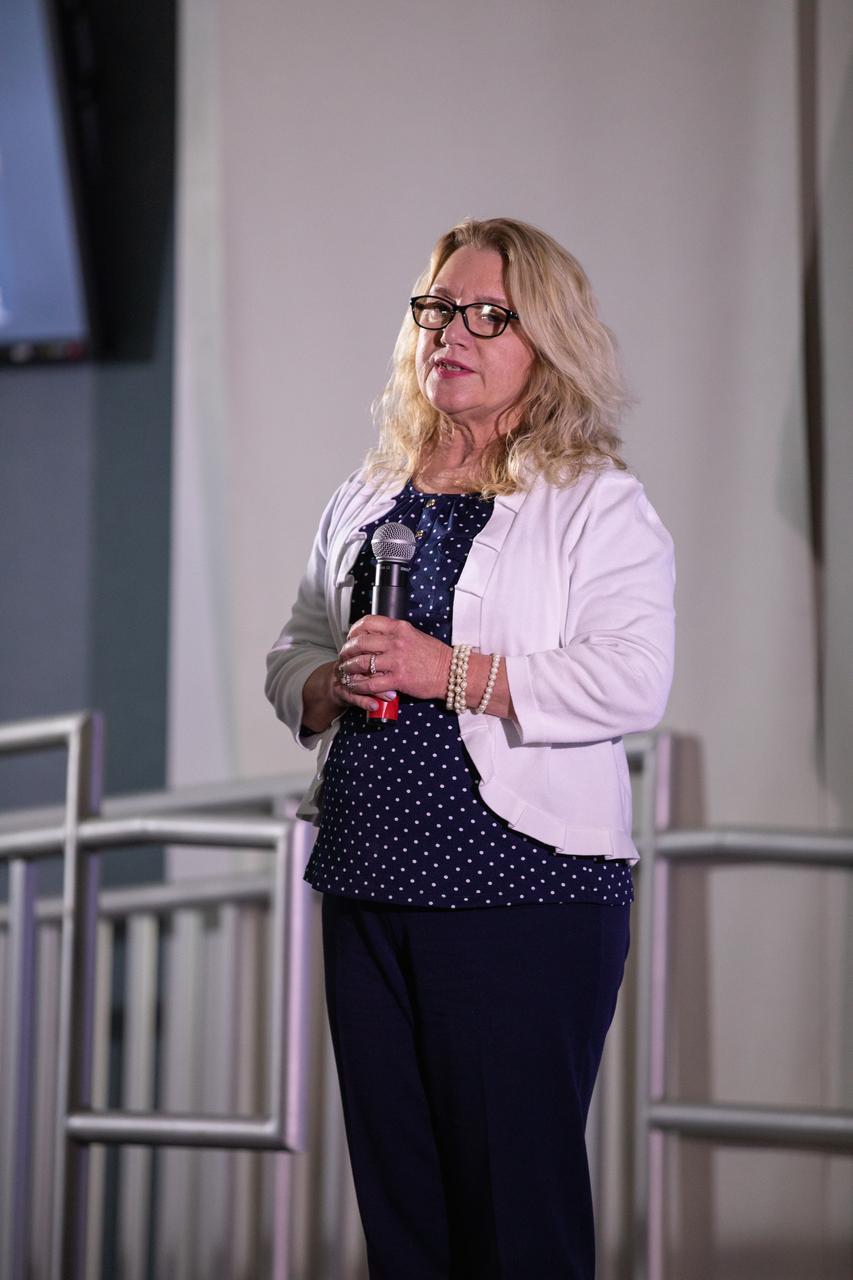
Susan Kroskey, chief financial officer at NASA’s Kennedy Space Center in Florida, speaks at the third in a series of five TED Talk-style informational sessions on Oct. 17, 2019, in the Florida spaceport’s Kennedy Learning Institute. Sponsored by Kennedy’s Launching Leaders and Leadership for the Future, NASAtalks focuses on the topic of intentional careers and aims to provide employees with tools and knowledge that can be utilized for career growth. The theme of this third session was customers, and speakers included Kennedy employees Ryan Richards, Mike Williams and Dave Grau, with a skill-building section on active listening and negotiating by Tim Bass.
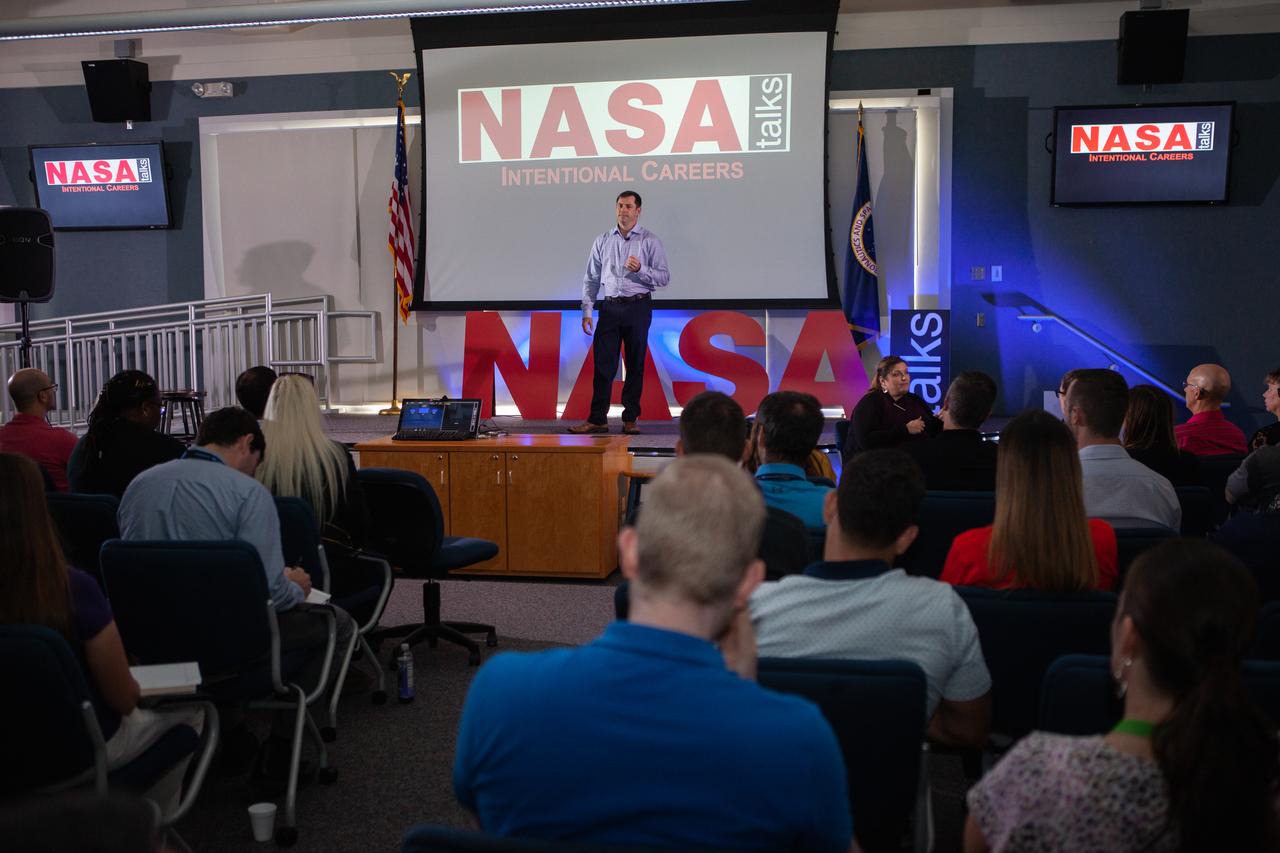
Kennedy Space Center’s Mike Williams addresses co-workers inside the Florida spaceport’s Kennedy Learning Institute on Oct. 17, 2019, during the third in a series of five TED Talk-style informational sessions. Sponsored by Kennedy’s Launching Leaders and Leadership for the Future, NASAtalks focuses on the topic of intentional careers and aims to provide employees with tools and knowledge that can be utilized for career growth. The theme of this third session was customers, and additional speakers included Kennedy employees Ryan Richards and Dave Grau, with a skill-building section on active listening and negotiating by Tim Bass.

Kennedy Space Center’s Jennifer Lane speaks at the second in a series of five TED Talk-style informational sessions on Oct. 10, 2019, in the Florida spaceport’s Kennedy Learning Institute. Sponsored by Kennedy’s Launching Leaders and Leadership for the Future, NASAtalks focuses on the topic of intentional careers and aims to provide employees with tools and knowledge that can be utilized for career growth. The theme of this second session was collaboration, and additional speakers included Kennedy employees Skyler Kleinschmidt and Stephanie Martin, with a skill-building section on networking in the digital age by Madison Tuttle.

Kennedy Space Center’s Ryan Richards addresses co-workers inside the Florida spaceport’s Kennedy Learning Institute on Oct. 17, 2019, during the third in a series of five TED Talk-style informational sessions. Sponsored by Kennedy’s Launching Leaders and Leadership for the Future, NASAtalks focuses on the topic of intentional careers and aims to provide employees with tools and knowledge that can be utilized for career growth. The theme of this third session was customers, and additional speakers included Kennedy employees Mike Williams and Dave Grau, with a skill-building section on active listening and negotiating by Tim Bass.
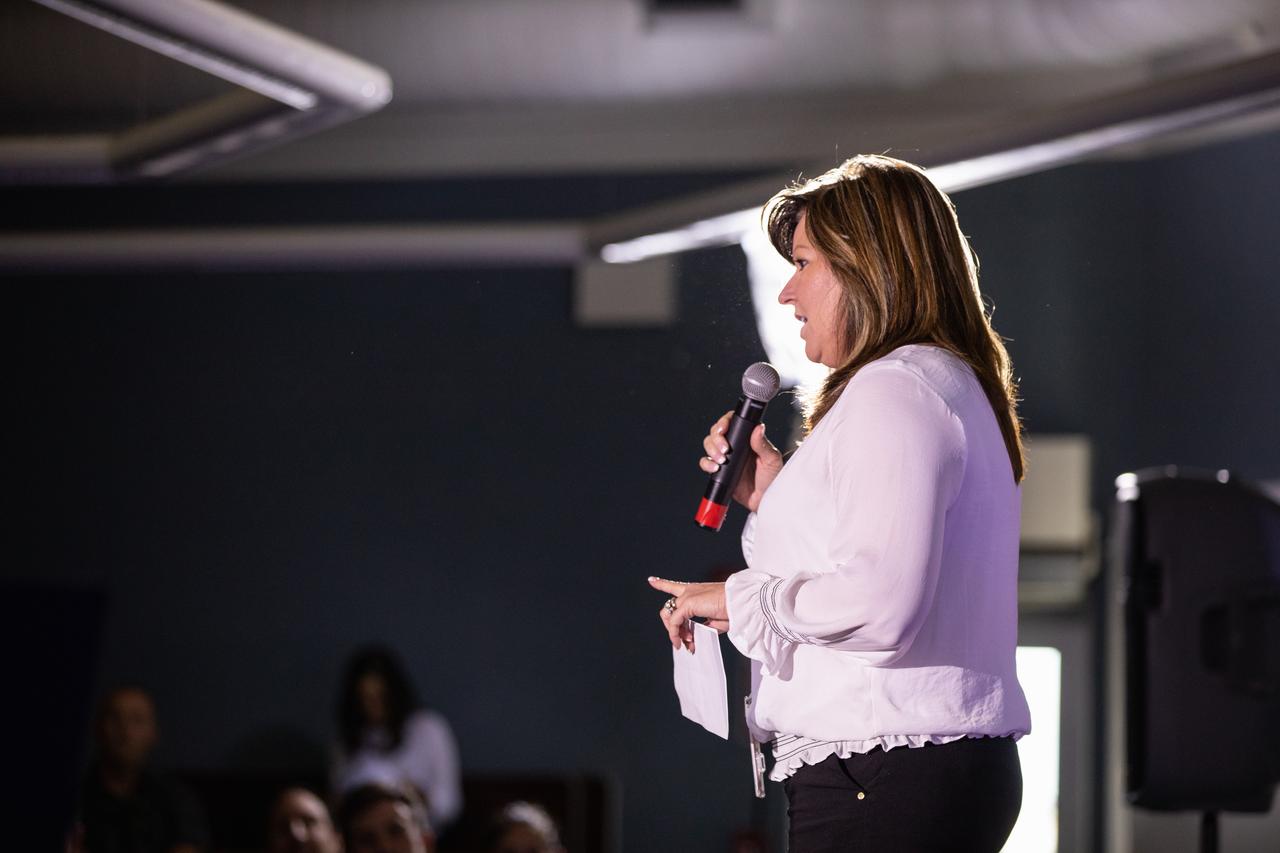
Jennifer Kunz, director of Safety and Mission Assurance at NASA’s Kennedy Space Center in Florida, addresses Kennedy employees on Oct. 10, 2019, in the Kennedy Learning Institute during the second in a series of five TED Talk-style informational sessions. Sponsored by Kennedy’s Launching Leaders and Leadership for the Future, NASAtalks focuses on the topic of intentional careers and aims to provide employees with tools and knowledge that can be utilized for career growth. The theme of this second session was collaboration, and additional speakers included Kennedy employees Skyler Kleinschmidt and Stephanie Martin, with a skill-building section on networking in the digital age by Madison Tuttle.
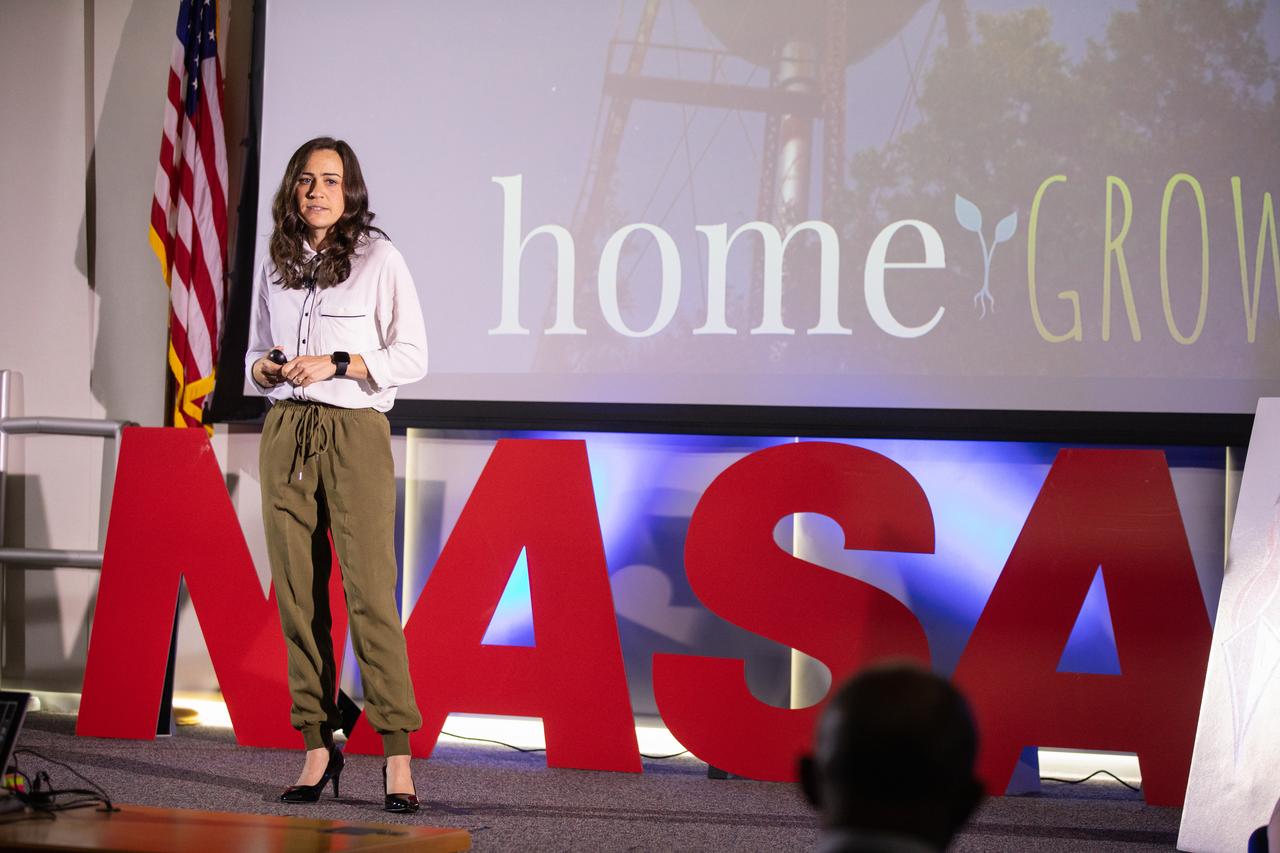
Kennedy Space Center’s Jennifer Lane speaks at the second in a series of five TED Talk-style informational sessions on Oct. 10, 2019, in the Florida spaceport’s Kennedy Learning Institute. Sponsored by Kennedy’s Launching Leaders and Leadership for the Future, NASAtalks focuses on the topic of intentional careers and aims to provide employees with tools and knowledge that can be utilized for career growth. The theme of this second session was collaboration, and additional speakers included Kennedy employees Skyler Kleinschmidt and Stephanie Martin, with a skill-building section on networking in the digital age by Madison Tuttle.
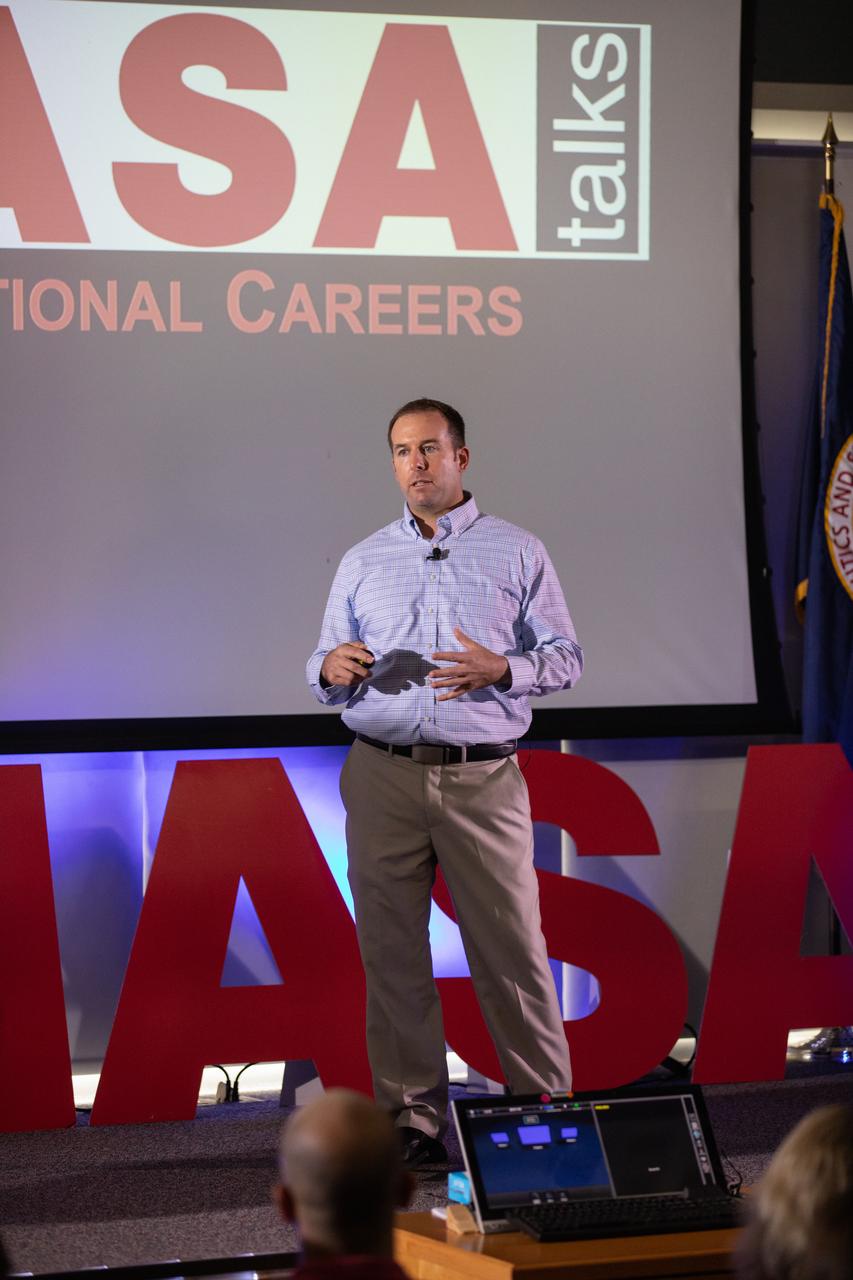
Kennedy Space Center’s Dave Grau addresses co-workers inside the Florida spaceport’s Kennedy Learning Institute on Oct. 17, 2019, during the third in a series of five TED Talk-style informational sessions. Sponsored by Kennedy’s Launching Leaders and Leadership for the Future, NASAtalks focuses on the topic of intentional careers and aims to provide employees with tools and knowledge that can be utilized for career growth. The theme of this third session was customers, and additional speakers included Kennedy employees Ryan Richards and Mike Williams, with a skill-building section on active listening and negotiating by Tim Bass.
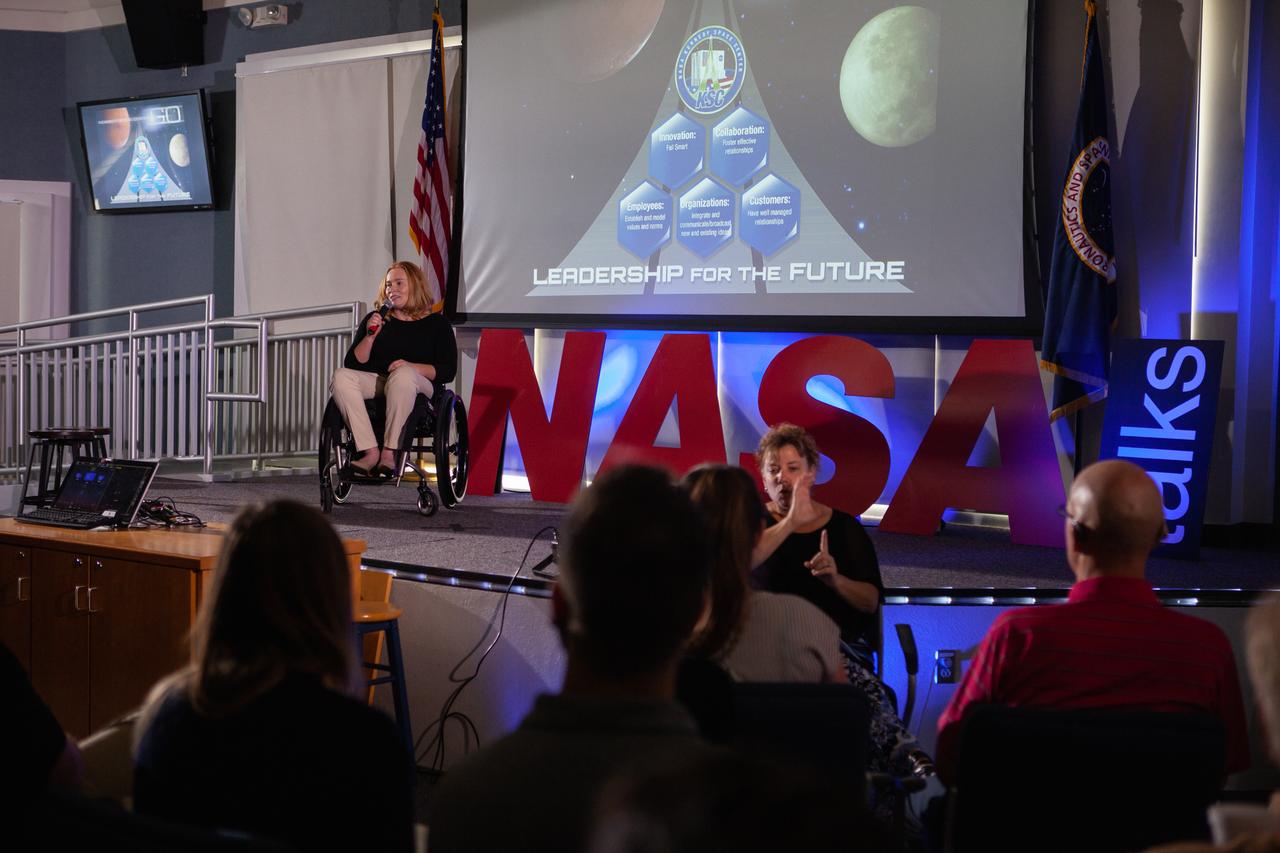
Kennedy Space Center’s Christine Shepperd addresses co-workers inside the Florida spaceport’s Kennedy Learning Institute on Oct. 17, 2019, during the third in a series of five TED Talk-style informational sessions. Sponsored by Kennedy’s Launching Leaders and Leadership for the Future, NASAtalks focuses on the topic of intentional careers and aims to provide employees with tools and knowledge that can be utilized for career growth. The theme of this third session was customers, and speakers included Kennedy employees Ryan Richards, Mike Williams and Dave Grau, with a skill-building section on active listening and negotiating by Tim Bass.
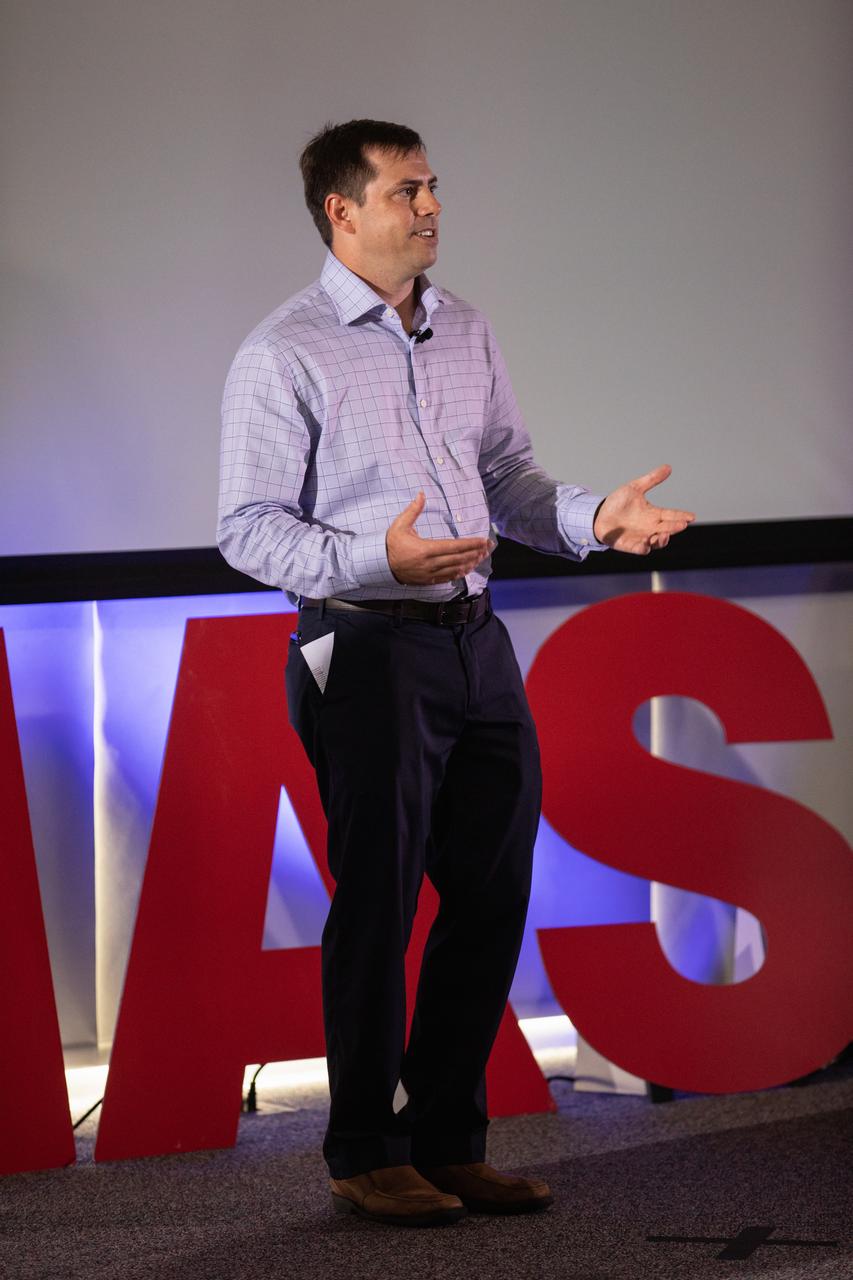
Kennedy Space Center’s Mike Williams speaks at the third in a series of five TED Talk-style informational sessions on Oct. 17, 2019, in the Florida spaceport’s Kennedy Learning Institute. Sponsored by Kennedy’s Launching Leaders and Leadership for the Future, NASAtalks focuses on the topic of intentional careers and aims to provide employees with tools and knowledge that can be utilized for career growth. The theme of this third session was customers, and additional speakers included Kennedy employees Ryan Richards and Dave Grau, with a skill-building section on active listening and negotiating by Tim Bass.
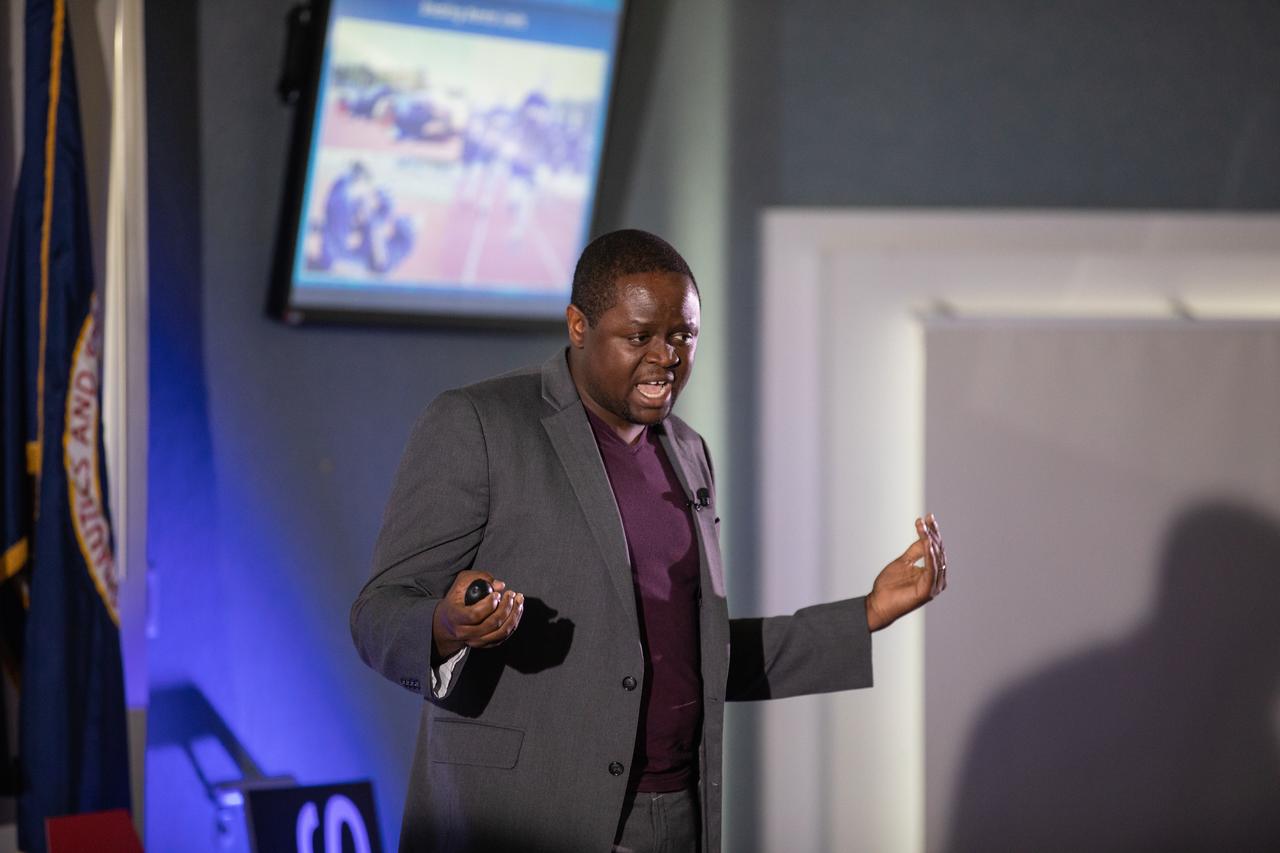
Kennedy Space Center’s Ryan Richards speaks at the third in a series of five TED Talk-style informational sessions on Oct. 17, 2019, in the Florida spaceport’s Kennedy Learning Institute. Sponsored by Kennedy’s Launching Leaders and Leadership for the Future, NASAtalks focuses on the topic of intentional careers and aims to provide employees with tools and knowledge that can be utilized for career growth. The theme of this third session was customers, and additional speakers included Kennedy employees Mike Williams and Dave Grau, with a skill-building section on active listening and negotiating by Tim Bass.
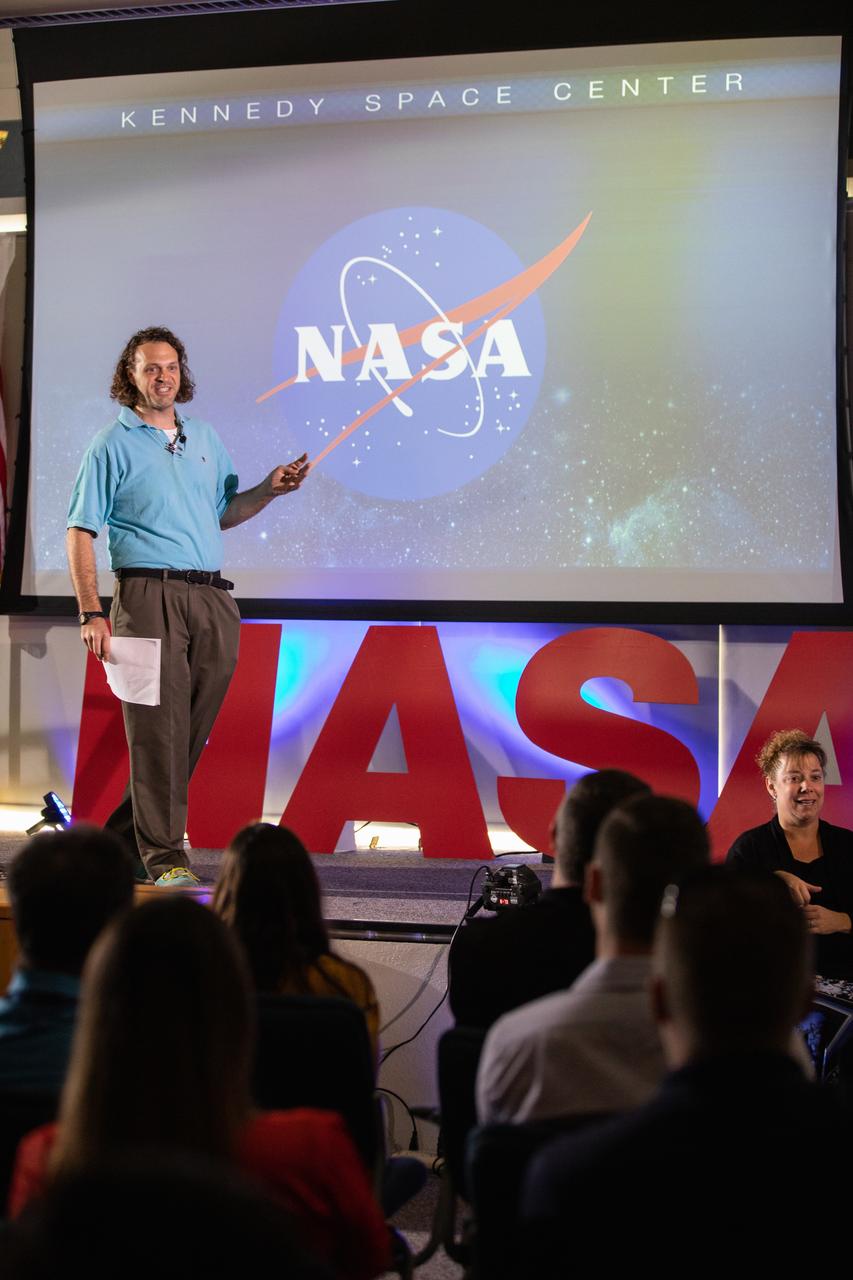
Kennedy Space Center’s Tim Bass addresses co-workers inside the Florida spaceport’s Kennedy Learning Institute on Oct. 17, 2019, during the third in a series of five TED Talk-style informational sessions. Sponsored by Kennedy’s Launching Leaders and Leadership for the Future, NASAtalks focuses on the topic of intentional careers and aims to provide employees with tools and knowledge that can be utilized for career growth. The theme of this third session was customers, and additional speakers included Kennedy employees Ryan Richards, Mike Williams and Dave Grau.
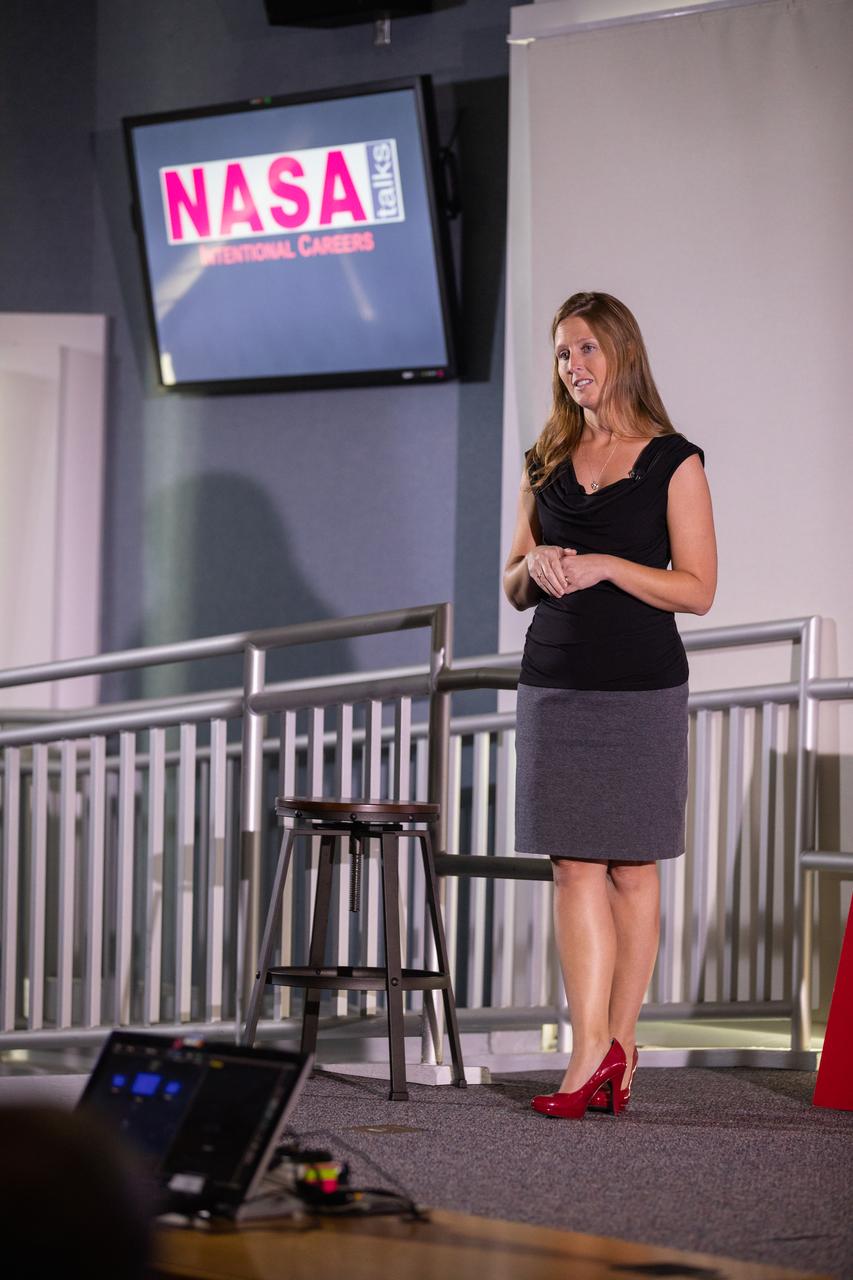
Kennedy Space Center’s Stephanie Martin addresses co-workers inside the Florida spaceport’s Kennedy Learning Institute on Oct. 10, 2019, during the second in a series of five TED Talk-style informational sessions. Sponsored by Kennedy’s Launching Leaders and Leadership for the Future, NASAtalks focuses on the topic of intentional careers and aims to provide employees with tools and knowledge that can be utilized for career growth. The theme of this second session was collaboration, and additional speakers included Kennedy employees Jennifer Lane and Skyler Kleinschmidt, with a skill-building section on networking in the digital age by Madison Tuttle.
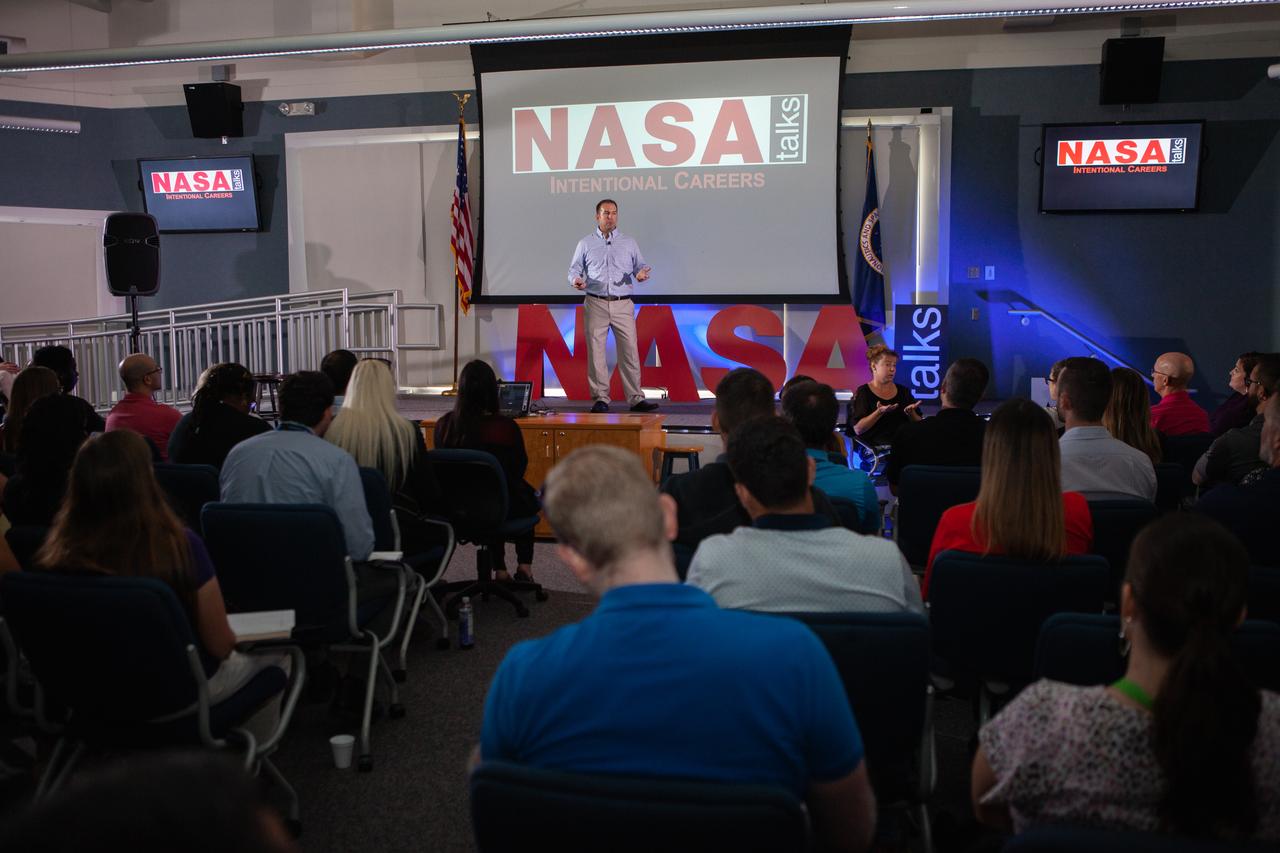
Kennedy Space Center’s Dave Grau addresses co-workers inside the Florida spaceport’s Kennedy Learning Institute on Oct. 17, 2019, during the third in a series of five TED Talk-style informational sessions. Sponsored by Kennedy’s Launching Leaders and Leadership for the Future, NASAtalks focuses on the topic of intentional careers and aims to provide employees with tools and knowledge that can be utilized for career growth. The theme of this third session was customers, and additional speakers included Kennedy employees Ryan Richards and Mike Williams, with a skill-building section on active listening and negotiating by Tim Bass.
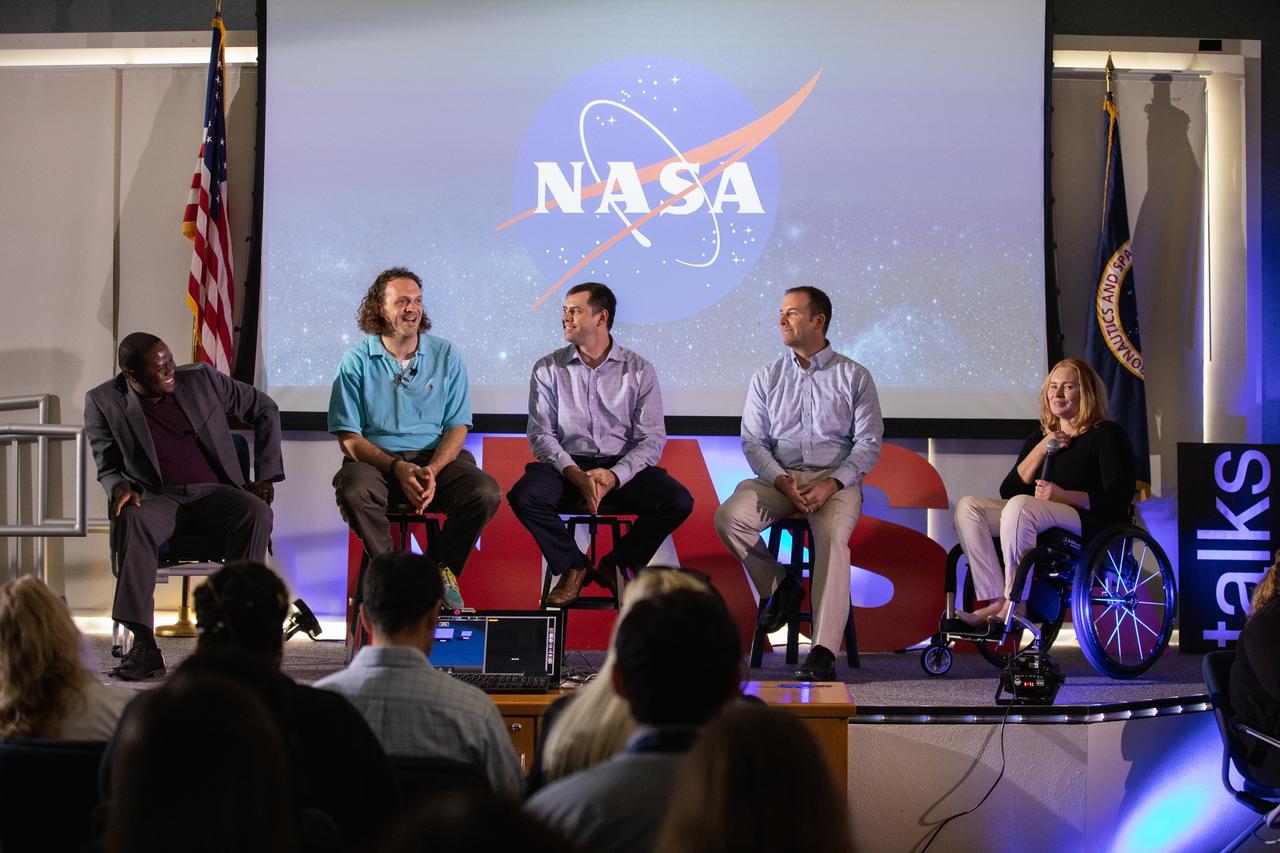
From left, Kennedy Space Center’s Ryan Richards, Tim Bass, Mike Williams, Dave Grau and Christine Shepperd participate in the third of a series of five TED Talk-style informational sessions on Oct. 17, 2019, inside the Florida spaceport’s Kennedy Learning Institute. Sponsored by Kennedy’s Launching Leaders and Leadership for the Future, NASAtalks focuses on the topic of intentional careers and aims to provide employees with tools and knowledge that can be utilized for career growth. The theme of this third session was customers.

Kennedy Space Center’s Christine Shepperd addresses co-workers inside the Florida spaceport’s Kennedy Learning Institute on Oct. 17, 2019, during the third in a series of five TED Talk-style informational sessions. Sponsored by Kennedy’s Launching Leaders and Leadership for the Future, NASAtalks focuses on the topic of intentional careers and aims to provide employees with tools and knowledge that can be utilized for career growth. The theme of this third session was customers, and speakers included Kennedy employees Ryan Richards, Mike Williams and Dave Grau, with a skill-building section on active listening and negotiating by Tim Bass.
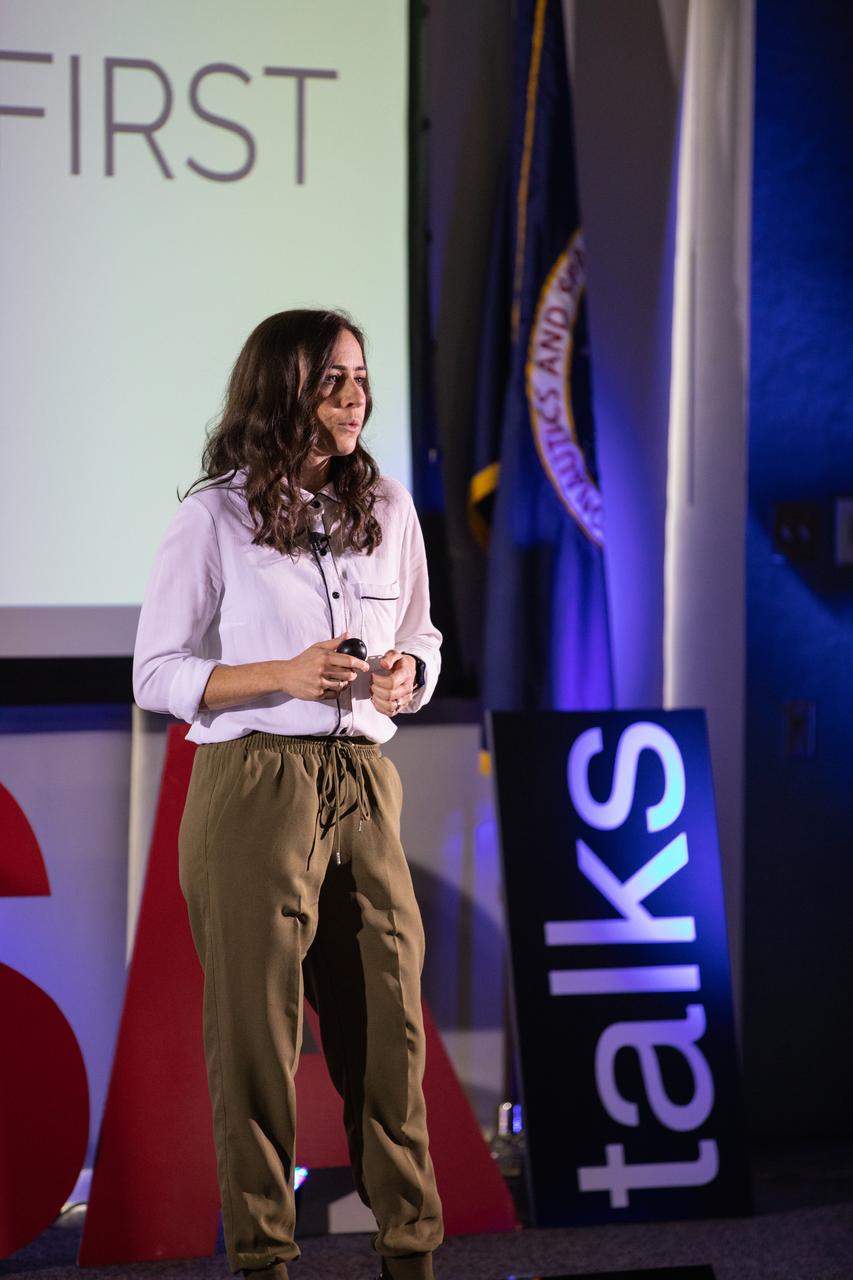
Kennedy Space Center’s Jennifer Lane speaks at the second in a series of five TED Talk-style informational sessions on Oct. 10, 2019, in the Florida spaceport’s Kennedy Learning Institute. Sponsored by Kennedy’s Launching Leaders and Leadership for the Future, NASAtalks focuses on the topic of intentional careers and aims to provide employees with tools and knowledge that can be utilized for career growth. The theme of this second session was collaboration, and additional speakers included Kennedy employees Skyler Kleinschmidt and Stephanie Martin, with a skill-building section on networking in the digital age by Madison Tuttle.

Kennedy Space Center’s Stephanie Martin addresses co-workers inside the Florida spaceport’s Kennedy Learning Institute on Oct. 10, 2019, during the second in a series of five TED Talk-style informational sessions. Sponsored by Kennedy’s Launching Leaders and Leadership for the Future, NASAtalks focuses on the topic of intentional careers and aims to provide employees with tools and knowledge that can be utilized for career growth. The theme of this second session was collaboration, and additional speakers included Kennedy employees Jennifer Lane and Skyler Kleinschmidt, with a skill-building section on networking in the digital age by Madison Tuttle.
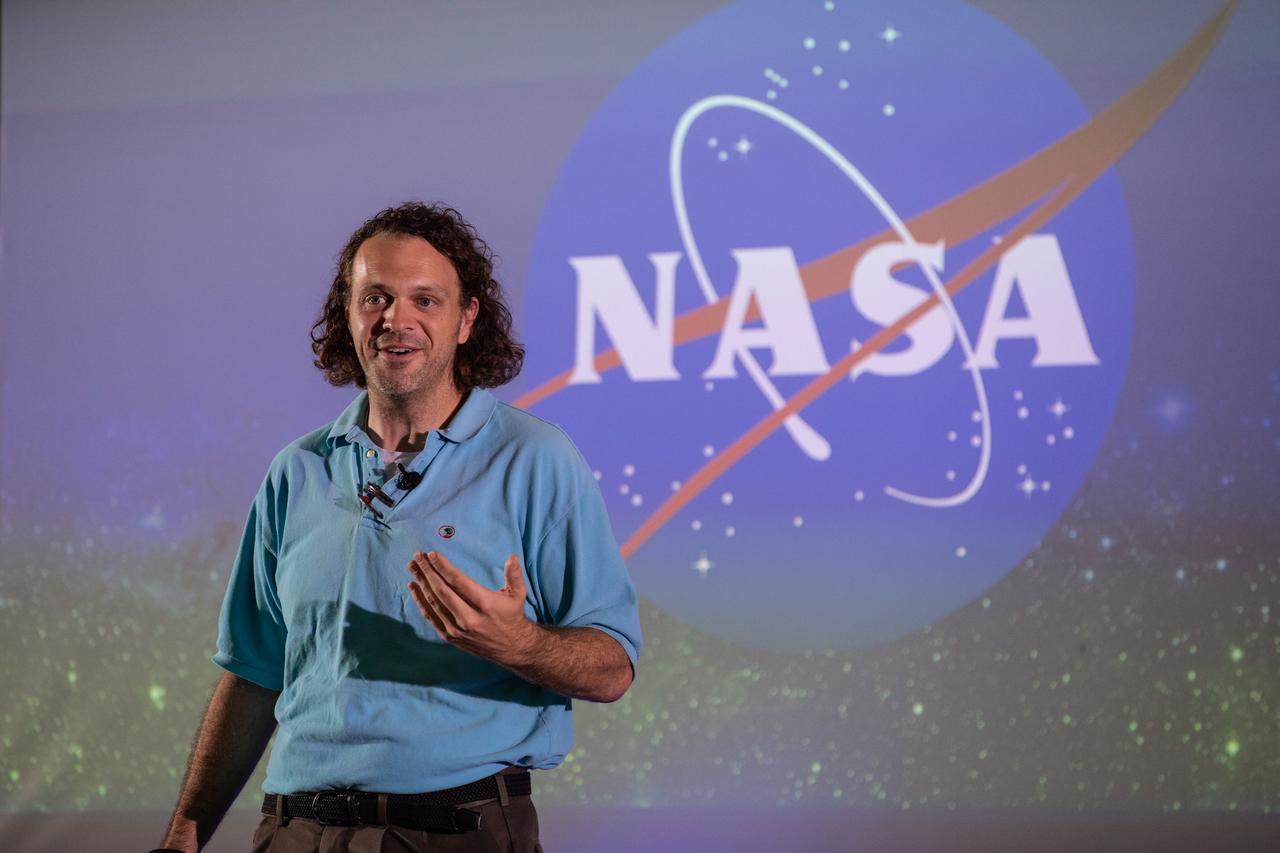
Kennedy Space Center’s Tim Bass speaks at the third in a series of five TED Talk-style informational sessions on Oct. 17, 2019, in the Florida spaceport’s Kennedy Learning Institute. Sponsored by Kennedy’s Launching Leaders and Leadership for the Future, NASAtalks focuses on the topic of intentional careers and aims to provide employees with tools and knowledge that can be utilized for career growth. The theme of this third session was customers, and additional speakers included Kennedy employees Ryan Richards, Mike Williams and Dave Grau.
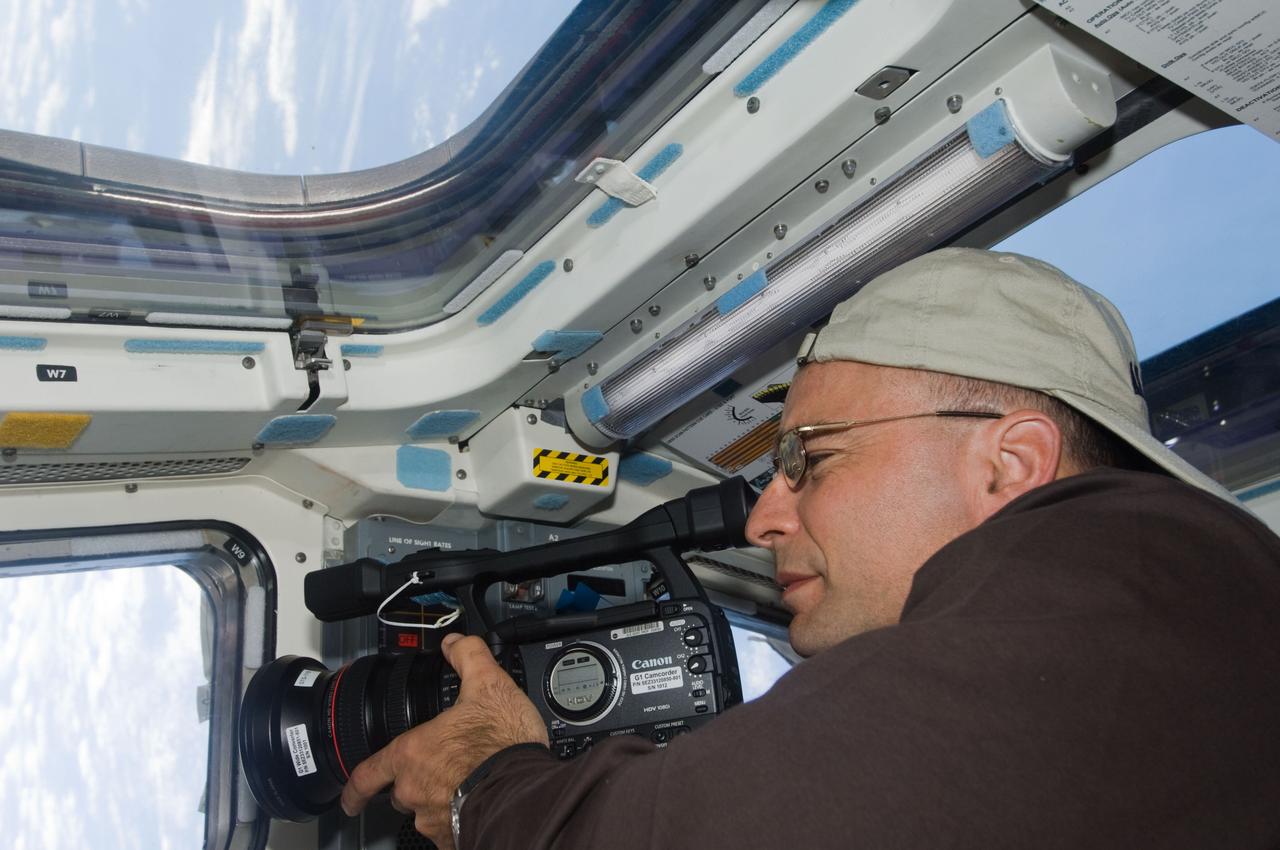
S119-E-006155 (16 March 2009) --- Astronaut Lee Archambault, STS-119 commander, uses a HD video camera at a window on the aft flight deck of Space Shuttle Discovery during flight day two activities.
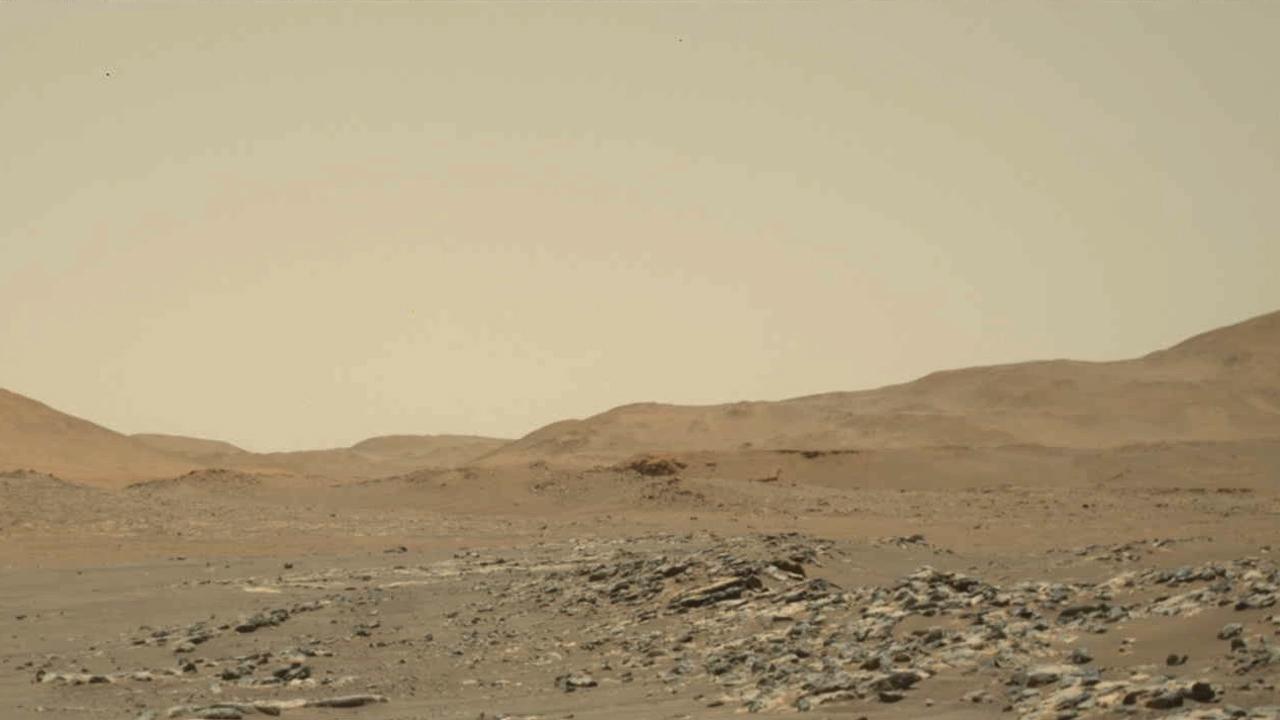
Video footage from NASA's Perseverance Mars rover provides a big-picture perspective of the 13th flight of NASA's Ingenuity Mars Helicopter. The 160.5-second reconnaissance sortie involved flying into challenging terrain and taking images of a specific rocky outcrop from multiple angles. Captured from a distance of about 980 feet (300 meters) by the rover's two-camera Mastcam-Z, Ingenuity is barely discernable near the lower left of frame at the beginning of the video. An annotated version of this video highlighting the location of Ingenuity can be found here. At 0:04 seconds into the video Ingenuity takes off and climbs to an altitude of to 26 feet (8 meters) before beginning its sideways translation to the right. At the video's 0:59 second point, Ingenuity leaves the camera's field of view on the right. Soon after (1:02), the helicopter returns into the field of view (the majority of frames that did not capture helicopter after it exited the camera's field of view were purposely not downlinked from Mars by the team) and lands at a location near its takeoff point. To obtain the footage, the "left eye" of the Mastcam-Z instrument is set for a wide-angle shot (26 mm focal length). The video is shot at 6 frames per second. Another view (PIA24979) is taken at the same time by Mastcam-Z's other ("right eye") imager and provides a closer perspective of the helicopter as it took off and landed. The Mastcam-Z investigation is led and operated by Arizona State University in Tempe, working in collaboration with Malin Space Science Systems in San Diego, California, on the design, fabrication, testing, and operation of the cameras, and in collaboration with the Neils Bohr Institute of the University of Copenhagen on the design, fabrication, and testing of the calibration targets. A key objective for Perseverance's mission on Mars is astrobiology, including the search for signs of ancient microbial life. The rover will characterize the planet's geology and past climate, pave the way for human exploration of the Red Planet, and be the first mission to collect and cache Martian rock and regolith (broken rock and dust). Subsequent NASA missions, in cooperation with ESA (European Space Agency), would send spacecraft to Mars to collect these sealed samples from the surface and return them to Earth for in-depth analysis. The Mars 2020 Perseverance mission is part of NASA's Moon to Mars exploration approach, which includes Artemis missions to the Moon that will help prepare for human exploration of the Red Planet. Movie available at https://photojournal.jpl.nasa.gov/catalog/PIA24978
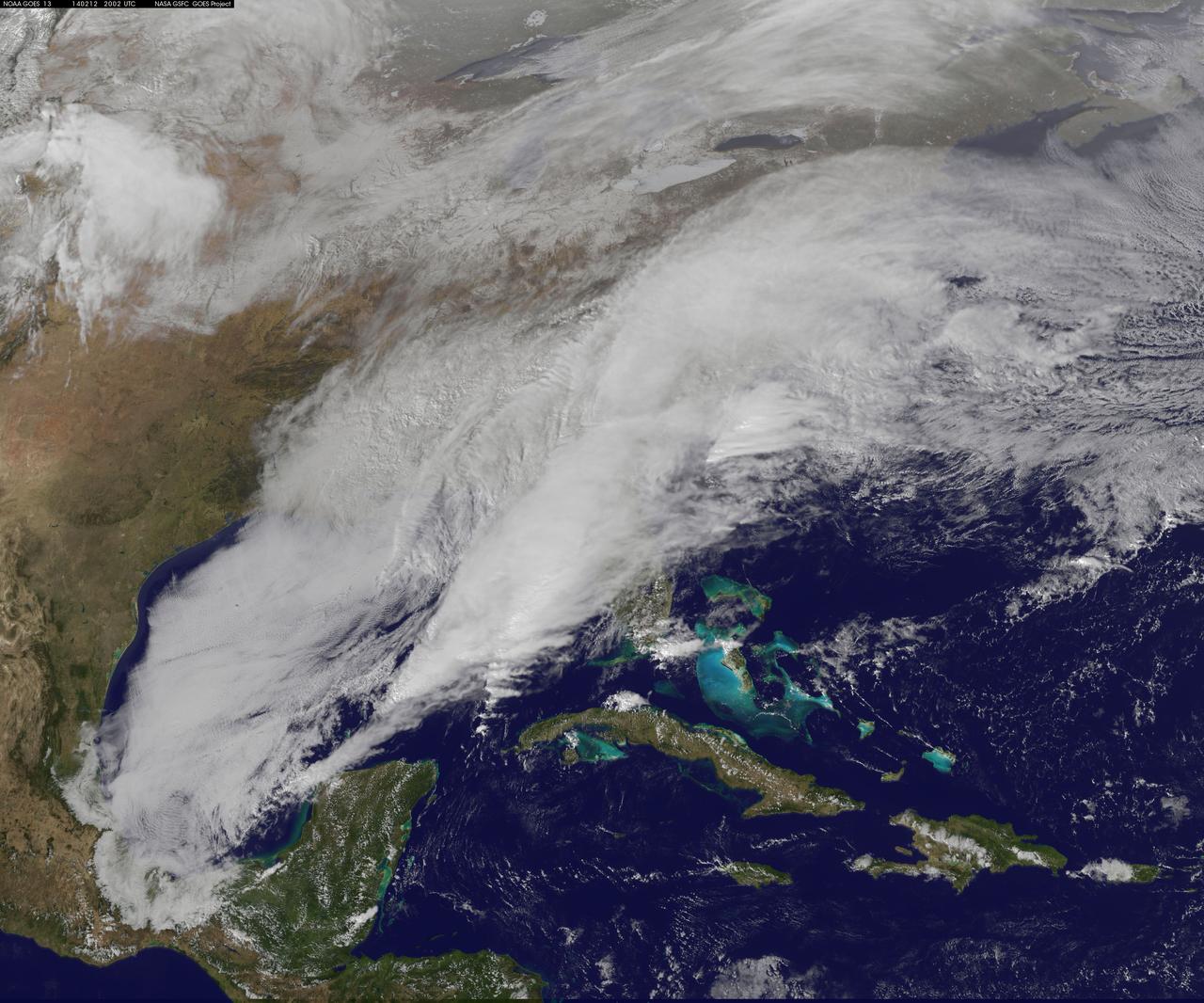
<b>View a video of the storm here: <a href="http://bit.ly/1m9aJFY" rel="nofollow">bit.ly/1m9aJFY</a></b> This visible image of the winter storm over the U.S. south and East Coast was taken by NOAA's GOES-13 satellite on Feb. 12 at 1855 UTC/1:55 p.m. EST. Snow covered ground can be seen over the Great Lakes region and Ohio Valley. On February 12 at 10 a.m. EST, NOAA's National Weather Service or NWS continued to issue watches and warnings from Texas to New England. Specifically, NWS cited Winter Storm Warnings and Winter Weather Advisories were in effect from eastern Texas eastward across the interior section of southeastern U.S. states and across much of the eastern seaboard including the Appalachians. Winter storm watches are in effect for portions of northern New England as well as along the western slopes of northern and central Appalachians. For updates on local forecasts, watches and warnings, visit NOAA's <a href="http://www.weather.gov" rel="nofollow">www.weather.gov</a> webpage. NOAA's Weather Prediction Center or WPC noted the storm is expected to bring "freezing rain spreading into the Carolinas, significant snow accumulations are expected in the interior Mid-Atlantic states tonight into Thursday and ice storm warnings and freezing rain advisories are in effect across much of central Georgia. GOES satellites provide the kind of continuous monitoring necessary for intensive data analysis. Geostationary describes an orbit in which a satellite is always in the same position with respect to the rotating Earth. This allows GOES to hover continuously over one position on Earth's surface, appearing stationary. As a result, GOES provide a constant vigil for the atmospheric "triggers" for severe weather conditions such as tornadoes, flash floods, hail storms and hurricanes. For updated information about the storm system, visit NOAA's WPC website; <a href="http://www.hpc.ncep.noaa.gov/" rel="nofollow">www.hpc.ncep.noaa.gov/</a> For more information about GOES satellites, visit: <a href="http://www.goes.noaa.gov/" rel="nofollow">www.goes.noaa.gov/</a> or <a href="http://goes.gsfc.nasa.gov/" rel="nofollow">goes.gsfc.nasa.gov/</a> Rob Gutro NASA's Goddard Space Flight Center <b><a href="http://goes.gsfc.nasa.gov/" rel="nofollow">Credit: NOAA/NASA GOES Project</a></b> <b><a href="http://www.nasa.gov/audience/formedia/features/MP_Photo_Guidelines.html" rel="nofollow">NASA image use policy.</a></b> <b><a href="http://www.nasa.gov/centers/goddard/home/index.html" rel="nofollow">NASA Goddard Space Flight Center</a></b> enables NASA’s mission through four scientific endeavors: Earth Science, Heliophysics, Solar System Exploration, and Astrophysics. Goddard plays a leading role in NASA’s accomplishments by contributing compelling scientific knowledge to advance the Agency’s mission. <b>Follow us on <a href="http://twitter.com/NASAGoddardPix" rel="nofollow">Twitter</a></b> <b>Like us on <a href="http://www.facebook.com/pages/Greenbelt-MD/NASA-Goddard/395013845897?ref=tsd" rel="nofollow">Facebook</a></b> <b>Find us on <a href="http://instagrid.me/nasagoddard/?vm=grid" rel="nofollow">Instagram</a></b>
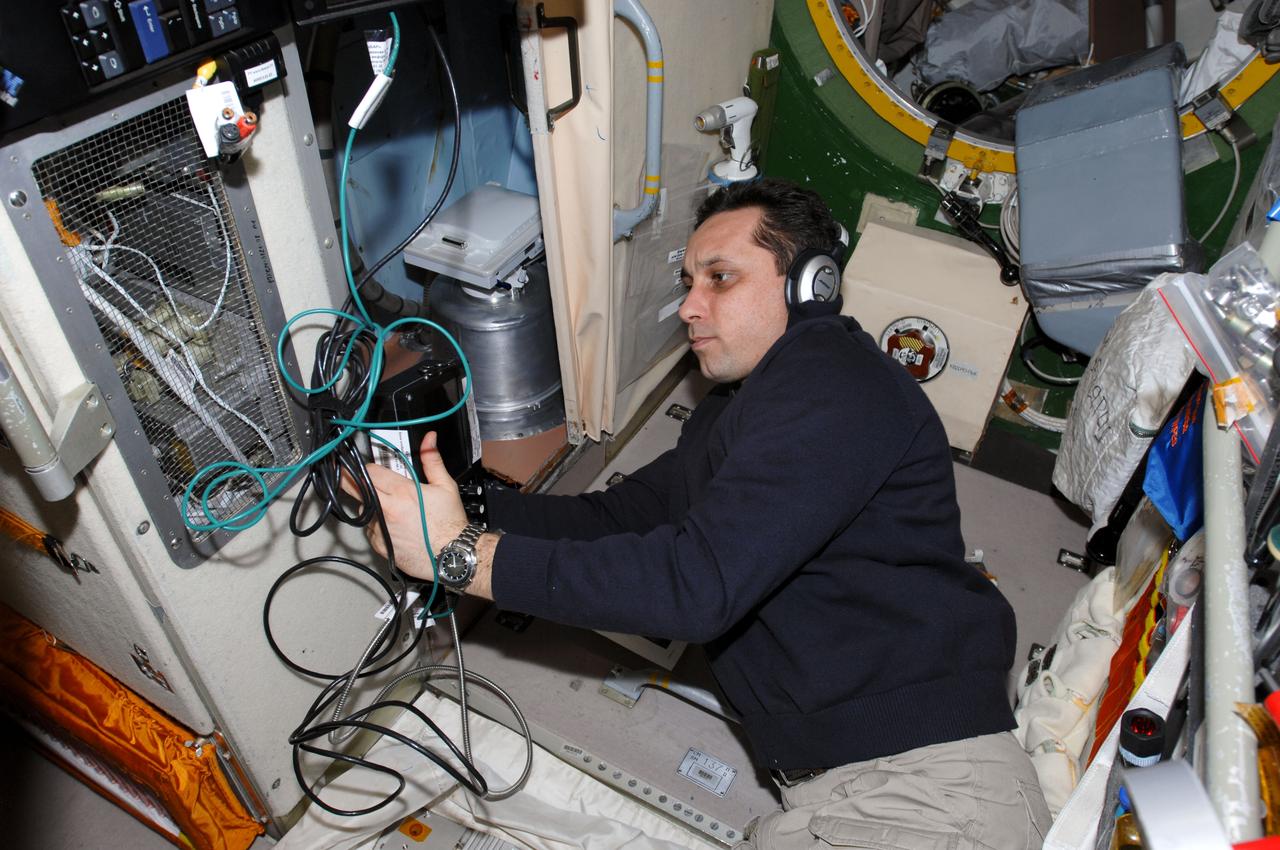
ISS030-E-021042 (5 Jan. 2012) --- Russian cosmonaut Anton Shkaplerov, Expedition 30 flight engineer, wears a communication system headset while working with a video display unit in the Zvezda Service Module of the International Space Station.
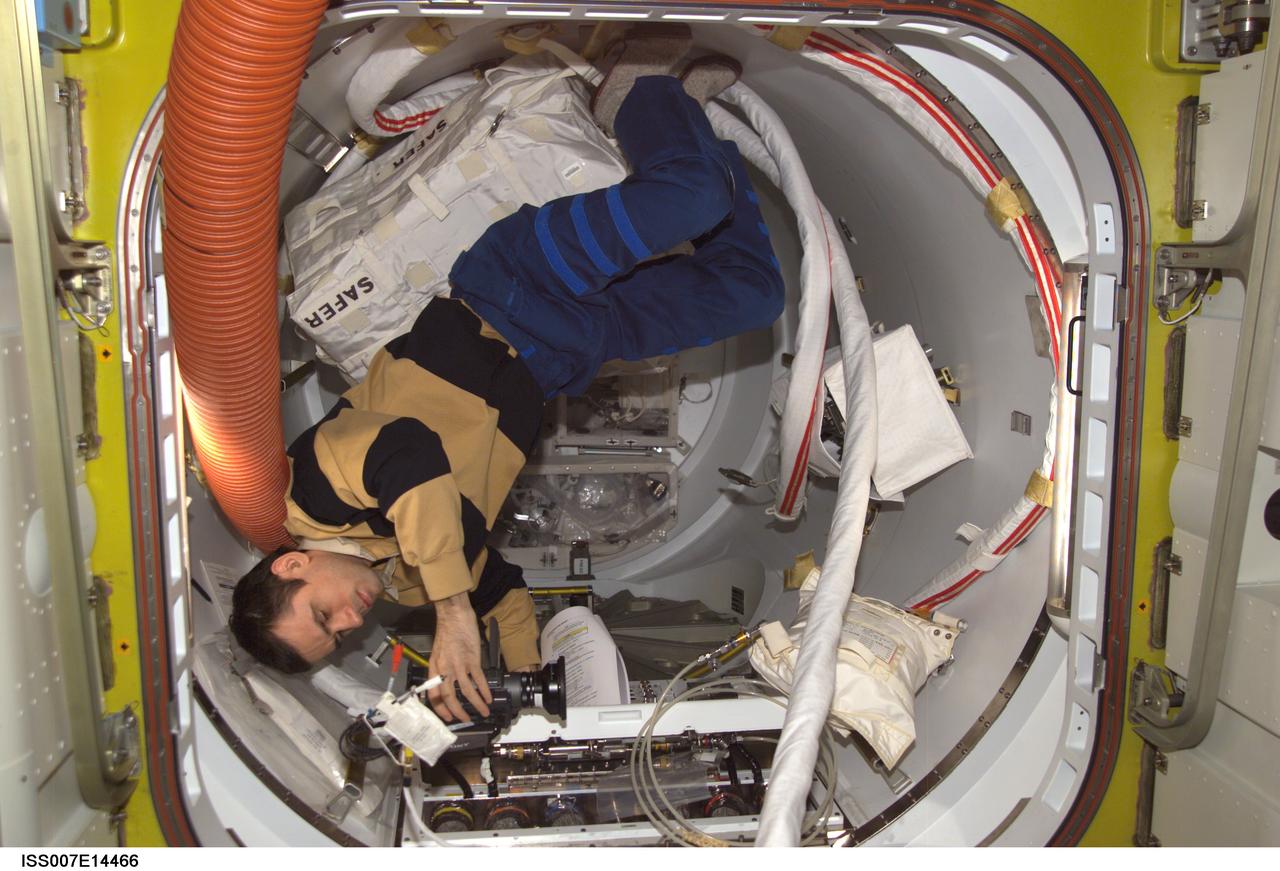
ISS007-E-14466 (5 September 2003) --- Cosmonaut Yuri I. Malenchenko, Expedition 7 mission commander, sets up a video camera to document a review of one of the Extravehicular Mobility Unit (EMU) space suits in the Quest airlock on the International Space Station (ISS). Malenchenko represents Rosaviakosmos.
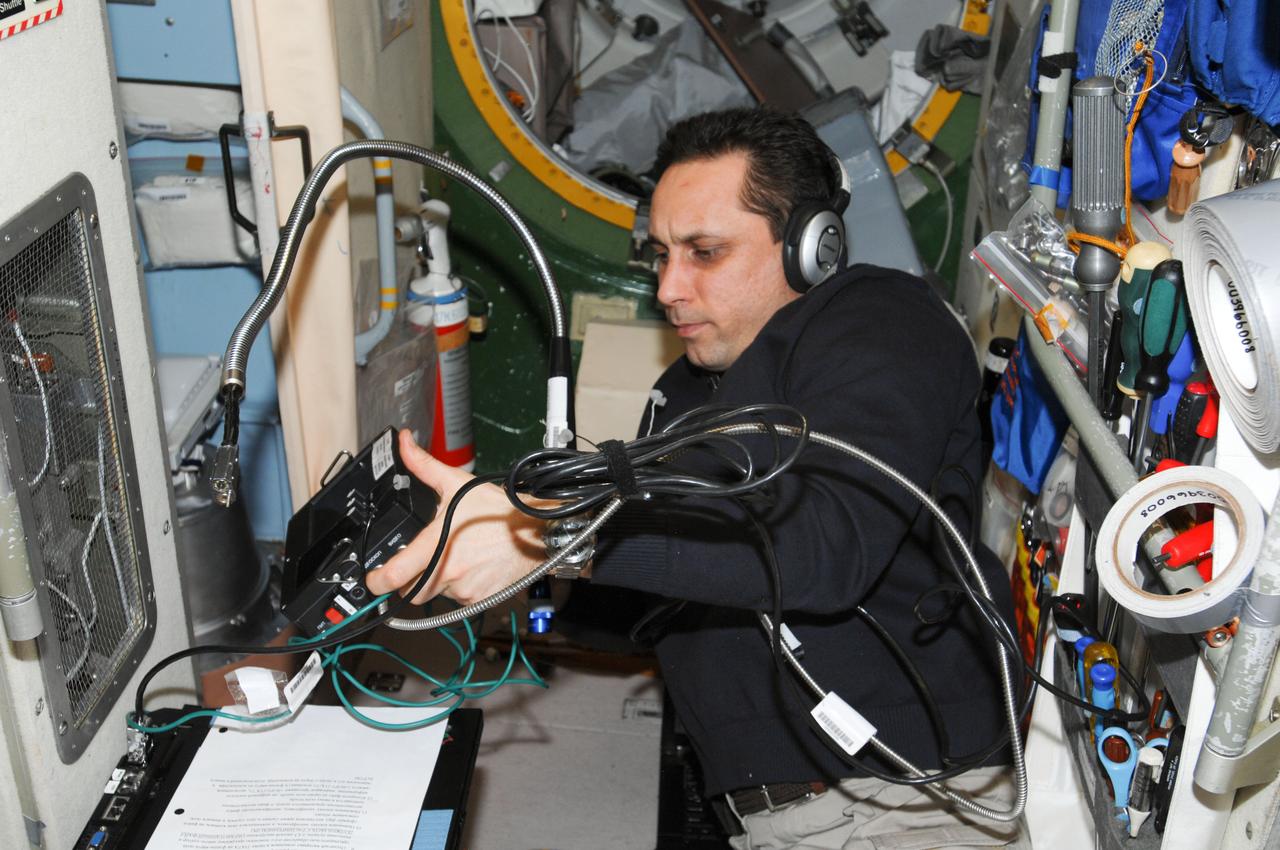
ISS030-E-021039 (5 Jan. 2012) --- Russian cosmonaut Anton Shkaplerov, Expedition 30 flight engineer, wears a communication system headset while working with a video display unit in the Zvezda Service Module of the International Space Station.
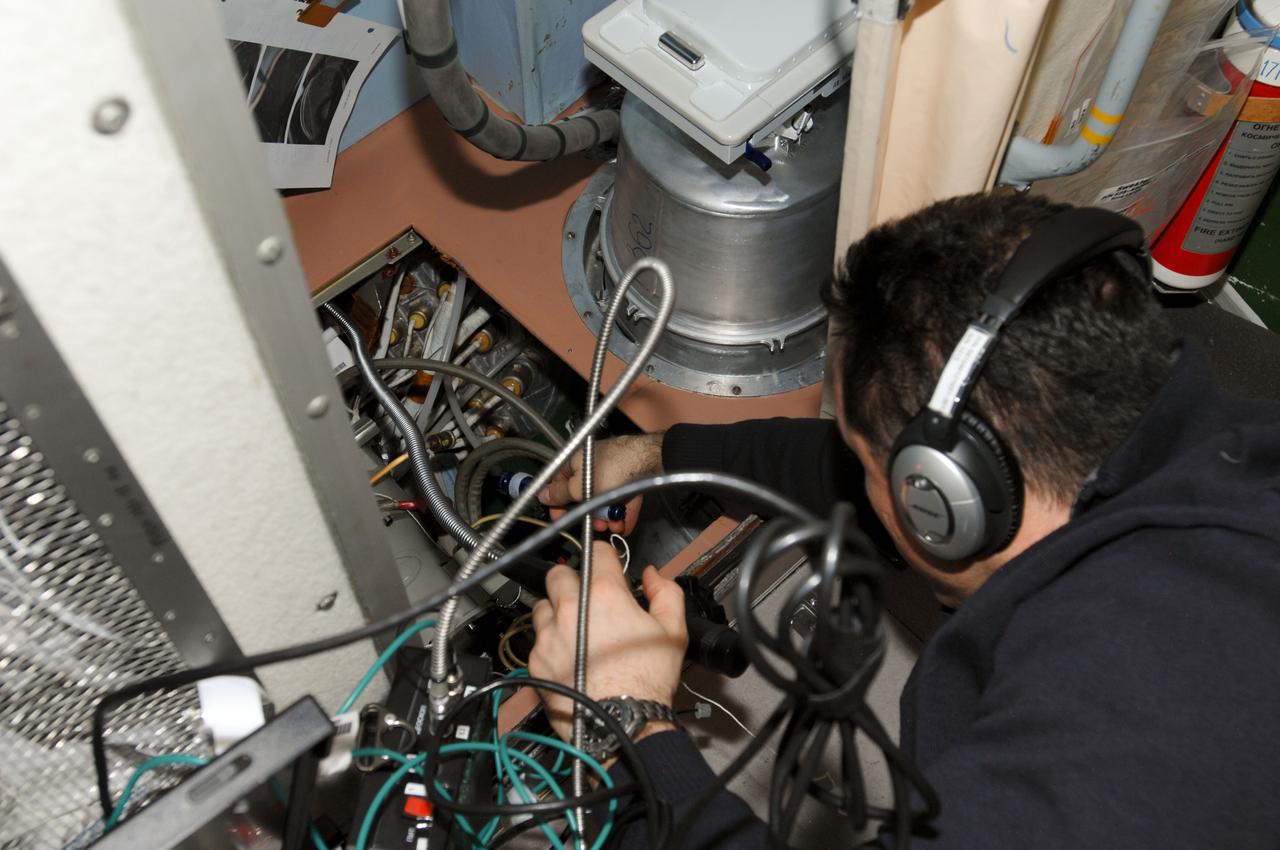
ISS030-E-021041 (5 Jan. 2012) --- Russian cosmonaut Anton Shkaplerov, Expedition 30 flight engineer, wears a communication system headset while working with a video display unit in the Zvezda Service Module of the International Space Station.
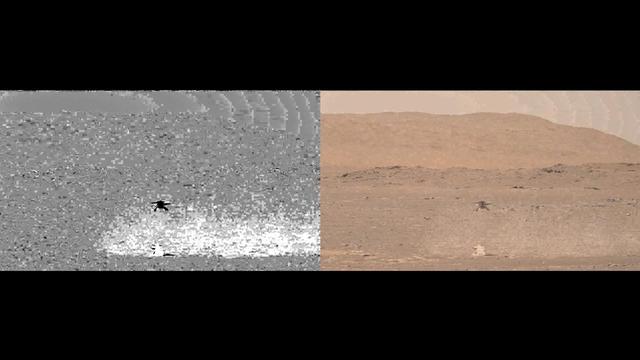
NASA's Ingenuity helicopter can be seen here taking off, hovering and then landing on the Martian surface on April 19, 2021. The Mastcam-Z imager aboard NASA's Perseverance Mars rover shot video of the helicopter's flight. The video is presented here in side-by-side formats that have both been enhanced to show a dust plume swirling during takeoff and again on landing. The view on the left uses motion filtering to show where dust was detected during liftoff and landing and the view on the right is enhanced with the motion filtering. Scientists use this image processing to detect dust devils as they pass by Mars rovers. An additional version of the video includes a timer that counts down until liftoff and then counts up until landing. A ghostly "cut-out" of the helicopter is visible in each side-by-side format; that's an artifact related to the digital processing. A key objective for Perseverance's mission on Mars is astrobiology, including the search for signs of ancient microbial life. The rover will characterize the planet's geology and past climate, pave the way for human exploration of the Red Planet, and be the first mission to collect and cache Martian rock and regolith (broken rock and dust). Subsequent NASA missions, in cooperation with ESA (European Space Agency), would send spacecraft to Mars to collect these sealed samples from the surface and return them to Earth for in-depth analysis. The Mars 2020 Perseverance mission is part of NASA's Moon to Mars exploration approach, which includes Artemis missions to the Moon that will help prepare for human exploration of the Red Planet. https://photojournal.jpl.nasa.gov/catalog/PIA24589

ISS030-E-060117 (1 Feb. 2012) --- In the International Space Station?s Destiny laboratory, European Space Agency astronaut Andre Kuipers, Expedition 30 flight engineer, routes video cable for the High Rate Communication System (HRCS). HRCS will allow for two additional space-to-ground audio channels and two additional downlink video channels.